We have a brand new updated website! Click here to check it out!

New broadband map shows swath of western Kansas without internet access

 
Kansas News Service

DODGE CITY – Where would we be if we couldn’t stream movies or music? Far-eastern Kansas counties and a broad swath of western Kansas.The newly released statewide broadband map shows in greater detail than ever before where 3.5% of Kansas residents don’t have adequate access to the internet. You can even search by your address … if you have internet, that is.

Telecom experts know it’s expensive to get service out to those areas, but advocates say it’s crucial to make up for the gap that’s been left in the wake of rural hospitals closing.

Kansas is bathed in shades of blue that stretch north to south, east to west. That’s not a reference to politics: It’s what the state looks like on the Federal Communications Commission’s Fixed Broadband Deployment map.

The map shows the approximate number of internet service providers within an area — the lighter blue represents fewer, the darker multiple. Considering the entire state is blue, you’d think internet service is available everywhere.

In reality, internet access has been a problem for Kansas residents, service providers, health care and lawmakers.

So a new map was created with information supplied by dozens of providers around the state. And the data shows that more than 95,000 people, or about 3.5% of the state’s population, do not have internet access; places like rural eastern Kansas.
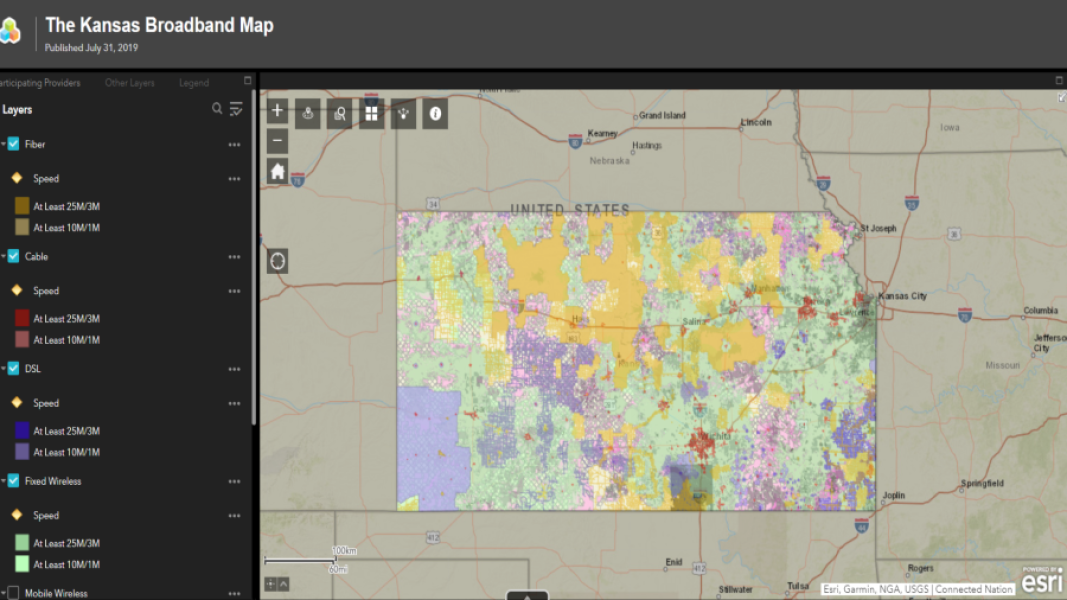
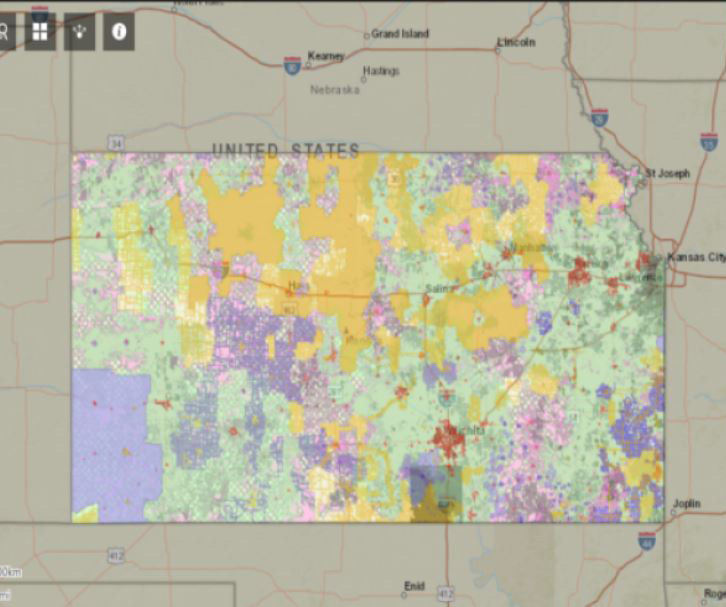
The new Kansas Broadband Map shows speeds, types of service available and features an address search feature. (Credit ArcGIS.com)

“We found, through this mapping exercise, that there actually are pockets of areas where people do live — here in Dodge City and even in the suburbs of Kansas City — that don’t have service, that need it,” said Brent Legg, who’s the vice president of government affairs with Connected Nation, at the State Independent Telephone Association Conference on July 30.

Connected Nation, a nonprofit, created the new map with a $300,000 grant from the Information Network of Kansas. It worked with internet service providers and deployed engineers to verify service providers’ data, so now multiple layers of broadband availability by speed and type are publicly available.

Seventy-two of the state’s 88 internet service providers voluntarily submitted data, and FCC data was used for the companies that declined to respond or participate (Legg said none was available for six providers).

Jason Smith is CEO of Rainbow Telecommunications based in Everest, Kansas. He said the map is “desperately needed.” Laying fiber outside of of Rainbow Telecommunications’ coverage area is expensive.

“When you’re looking at anywhere from $20 to $40,000 a mile to build fiber services, you can’t make a business case on that for a small pocket of 10, 20 customers — it will never pay for itself,” Smith said. “And so you’re going to need types of grant funding.”

But federal grant funding for expanding rural internet service uses FCC census block data, which in rural and remote areas are larger and may even be measured by square miles. The census block data can lead to long and costly application processes for providers like Rainbow Telecommunications.

“So you might consider an area that you could help expand broadband to, but if you base it off those maps … they weren’t accurate,” Smith said. “So you would spend time and effort and money to find out you couldn’t participate in that program.”

What areas lack

Nationally, 19 million people in the U.S. don’t have access to broadband, according to the FCC. That’s about 5.8% of the population. Kansas’ connectivity rate is better than the national rate, but the lack of internet access can deter people from moving to and working remotely from rural areas, where populations are generally declining.
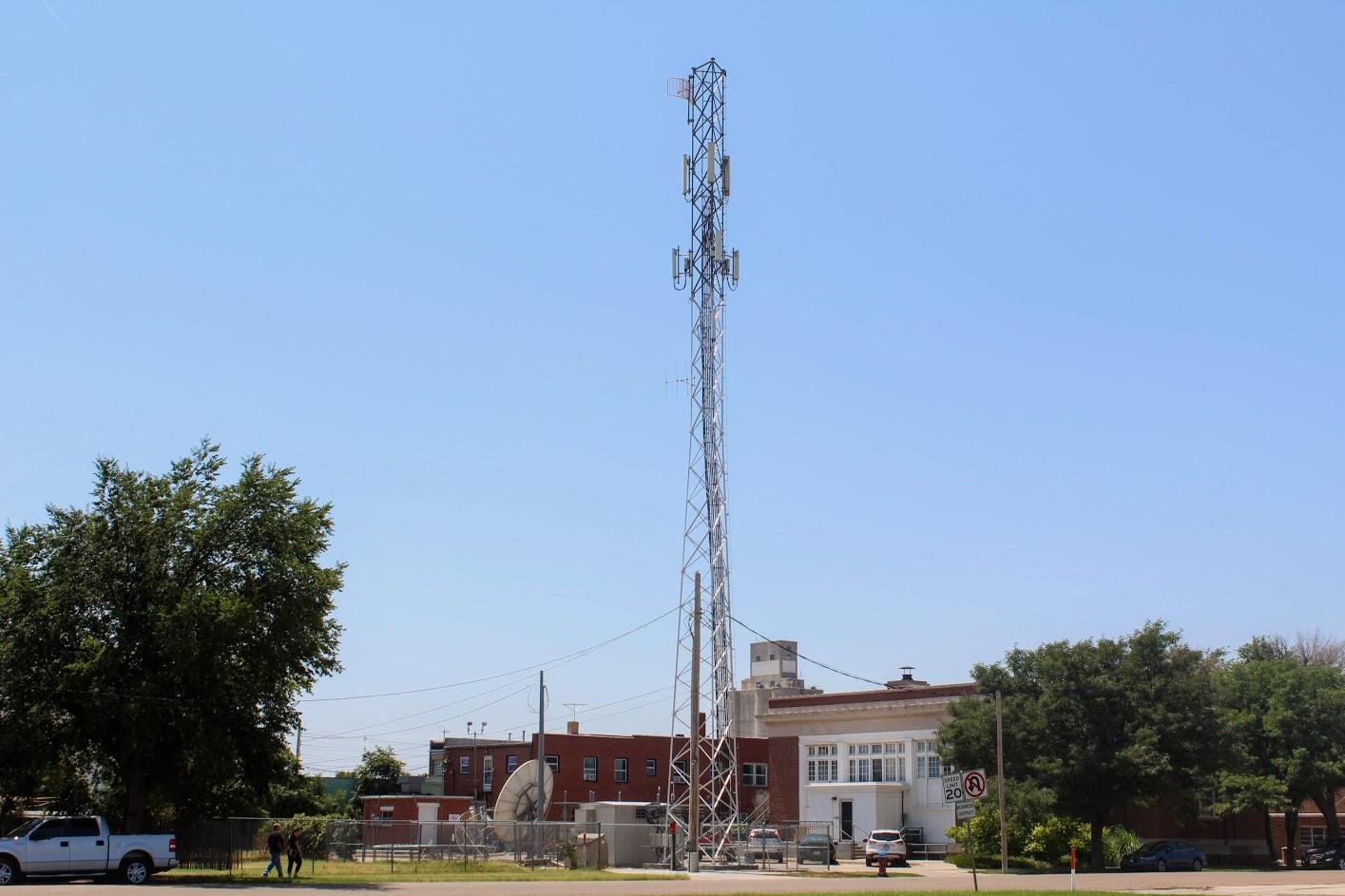
Earlier this year, some Kansans testified before the Statewide Broadband Expansion Planning Task Force about painfully slow internet speeds.

And some rural areas have seen hospitals close, Executive Manager of SITA Colleen Jamison said July 30, noting that broadband could deliver telemedicine to people who live hours away from specialized care.

“Maybe somebody who’s got a high-risk pregnancy in Ulysses, Kansas, and the nearest potential NICU for a birth maybe in Wichita,” Jamison said. “But that monthly or even weekly monitoring of maternal health could be so vitally important to that unborn child.”

And even though it may not be entirely useful for people who already don’t have internet, the new map contains an address search feature. For households without internet, searching online may involve traveling to a public place, but Legg said the new feature will be helpful to service providers that might be be unaware of unserved residents.

“So they may want to build out service into those areas,” Legg said. “It will also help service providers identify places where they could go apply for federal grant dollars to build out via the (U.S. Department of Agriculture) reconnect program, for instance.”

Pinks and purples on the new map indicate areas without internet, and some are found outside of eastern Kansas counties, including Atchison, Brown and Wabaunsee. Clicking on the unserved layers of the map shows where household are and how many don’t have access to internet.
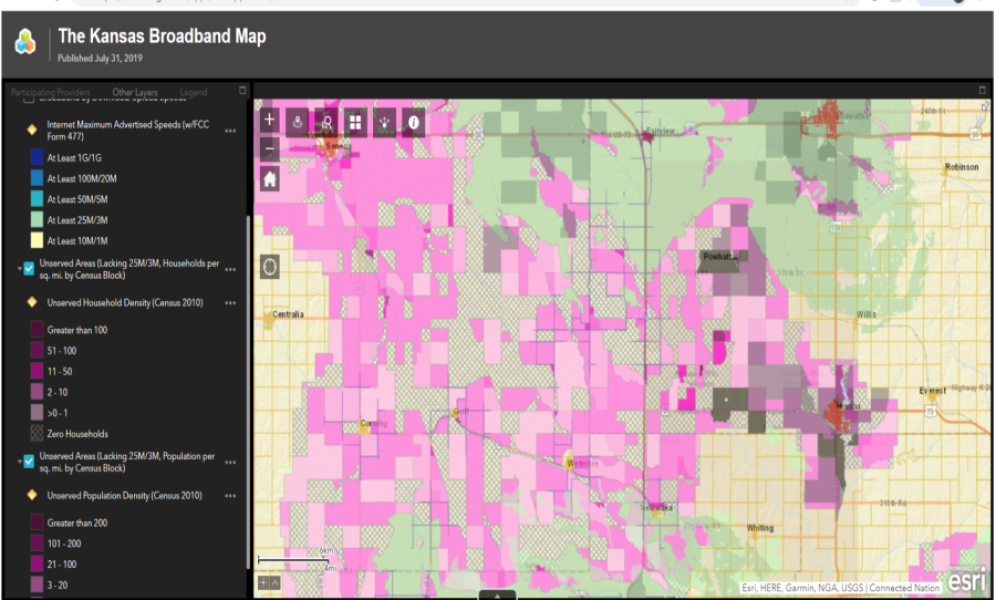
Areas without service are located under the “other layers” tab within the new broadband map. (Credit ArcGIS.com)

Jamison said legislation authorized the creation of a more accurate map allowed it to guide the state’s broadband task force. “The statewide broadband task force said, ‘Let’s look at what we recognize the issues that there are at the federal level.’ So let’s look at what can we do to ensure that Kansas is mapped as accurately as possible,” she said. “So that it guides the state efforts at the task force level and beyond.”

Corinne Boyer covers western Kansas for High Plains Public Radio and  the Kansas News Service. You can follow her on Twitter @corinne_boyer or  email cboyer (at) hppr (dot) org.

The Kansas News Service is a collaboration of KCUR, Kansas Public Radio, KMUW and High Plains Public Radio focused on the health and well-being of Kansans, their communities and civic life.

McCrae finishes second at Optimist International Junior Golf Championships

Courtesy photo

MIAMI, Fla. – Former Hays High standout golfer Tradgon McCrae recently finished second at the Optimist International Junior Golf Championships in Miami, Florida.

McCrae, who will play golf Hutchinson Community College, competed at the Trump National Doral Resort and Spa July 26 thought July 31st.

He finished the four-day tournament at even par 286, one shot behind the winner Angel Guerra, of Venezuela.

McCrae tallied four birdies and two bogeys and fired a first-round two-under 70 at the Blue Monster Course.

He followed day one with back-to-back rounds of 74. McCrae played the Blue Monster Course on day two and the Golden Palm, Black Course on day three.

In the final day of the tournament, back on the Blue Monster Course, McCrae turned in the lowest round of the day, a three-under 69.

Exploring Outdoors Kansas: Go watch a kite fly

Steve Gilliland

I stepped out the front door one spring morning a few years back just in time to see a large falcon-shaped bird glide low overhead. It landed in a tree a block away, so I hustled to get my binoculars and our Kansas bird book. The bird sat contentedly, almost posing for me as if making certain I correctly identified it.

It was a Mississippi Kite, and although my bird book doesn’t show or give details to differentiate between males and females, we figured it to be a female in town to nest. I often begin my day with a walk around our neighborhood and I’m usually greeted by as many as 6 Mississippi Kites in the neighbor’s tall dead tree. They seem to like the high open vantage point from which to survey the neighborhood.

Mississippi Kites are light gray and slightly smaller than a red tail hawk, and are built trim and sleek, much like a falcon. They derive their name from their unique soaring style called “kiting.” Picture how a child’s kite rides the wind, gliding and sliding sideways back and forth. That’s how Mississippi Kites soar, as if on a string, sliding and almost rocking back and forth from side to side as they float effortlessly on the Kansas summer thermals. They are summer residents here, arriving in mid-April and leaving again in mid-November.

They are slowly expanding their territory northward and are quite comfortable nesting in our Kansas cities and towns. Nesting females are known to become very aggressive when their chicks are about to leave the nest, often dive-bombing humans and pets that get too close to the nest to suit them. We try each year to find a Mississippi Kite nest to watch, but have been unsuccessful thus far. Mississippi Kites are very social birds and are often seen in large groups. One day this week in downtown McPherson as I waited in the car for my wife to return from an errand, I began seeing Kites soaring above me. One or two at a time they appeared until I lost count at fifteen.

Kites occasionally feed on small reptiles and snakes but are mostly insect eaters and are skilled at snagging locusts and other flying bugs in mid-air. Last Sunday while eating ice cream in a local Dairy Queen, I watched a Mississippi Kite having dinner on a power pole just outside. It would suddenly fly toward a small group of trees nearby and return with a snack. After eating its snack, it would fly again toward the same trees, always returning with a morsel of some sort. I’ve been seeing the first locusts of the summer, and I’m betting it was finding them too.

My wife Joyce grew up on a farm south of Meade, KS, and after we got married I began hearing stories about a man named James Parker who had come to their farm for years to watch and study Mississippi Kites. A friend still living in Meade did some research and found more details to the story.

According to newspaper clippings, it was mid-June 1982 when Dr James Parker from the University of Maine first visited the Friesen farm near Meade. He was indeed there to observe Mississippi Kites, but he brought with him some visitors. Stan and Gladys were Swallow Tailed Kite chicks rescued from a nest in the Florida swamps.

Swallow Tailed Kites, although larger with a huge ornate tail, are close cousins to Mississippi Kites and until the early 1900’s were common in the eastern Kansas skies. They hadn’t been seen in the state for decades and Dr Parker was there to explore the possibility of reintroducing Swallow Tailed Kites into Kansas by transplanting chicks into existing Mississippi Kite nests. Stan and Gladys were put into active nests and Parker stayed around to observe. After two or three weeks Stan grew weak, lost weight and died, but Gladys was accepted by her foster-parents and seemed to thrive. Although the time line is unclear, Parker spent parts of 14 summers in Meade during the 1980’s and 1990’s studying the local Mississippi Kite population.

No one seems certain whether any more Swallow Tailed Kites were transplanted into Kansas. They’re not listed in my Kansas bird book so I suspect there are none in the state today. No one knows what happened to Gladys either, but I can say with certainty that Mississippi Kites are here to stay in south central Kansas and are steadily expanding their summer range to the north and east. So watch the sky and you’ll soon know if Mississippi Kites have come to your neighborhood, as you’ll see them floating and gliding effortlessly on the Kansas winds. Continue to Explore Kansas Outdoors.

Steve Gilliland, Inman, can be contacted by email at [email protected].

Sheriff: Teen driver, 2 adults jailed after I-70 chase

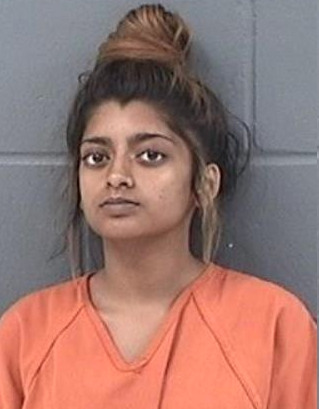
GEARY COUNTY — Law enforcement authorities are investigating three suspects after a traffic stop in Geary County.

Sharon Alphuis photo Geary Co.
Eddins photo Geary Co.

Just after 11a.m. Monday, deputies conducted a traffic stop on a Dodge Ram 1500 pickup truck at the eastbound Interstate 70  rest area just west of Moritz Road for allegedly following too closely and an unsafe lane change, according to a media release.

Deputies returned to their vehicle before re-establishing contact with the driver and asking him to step out of the pickup. The driver, who was later identified as a 17-year old teenager from Kentucky, fled in the Dodge Ram and led deputies on the three-county pursuit which ended with the arrest of the driver and two passengers.

Deputies arrested the driver, whose name has not been released, on suspicion of Felony Flee and Elude, Interference with Law Enforcement, Possession of Marijuana with the Intent to Distribute, Possession of Felony Drug Paraphernalia, Following too Closely and Unsafe Lane Change.

The passengers including Antonio Deshawn Eddins 30, and Sharon Alphuis, 18, both of Louisville, Kentucky were arrested on suspicion of Aggravated Child Endangerment, Interference with Law Enforcement, Possession of Marijuana with the Intent to Distribute and Possession of Felony Drug Paraphernalia.

There were no injuries.


Governor ends emergency declaration at Kansas prison

TOPEKA, Kan. (AP) — Gov. Laura Kelly has declared an end to an emergency at the state’s most-crowded prison that had officers there scheduled for 12-hours shifts.

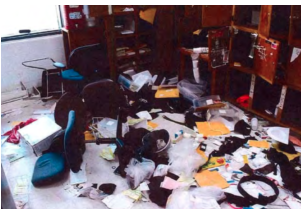
Damage at the El Dorado Correctional Facility in 2018-photos courtesy Cheryl Cadue Kansas Department of Corrections

The Department of Corrections said Monday that it expects the El Dorado Correctional Facility to return to a regular schedule of five, eight-hour days a week for officers in early October.

Kelly declared the emergency in February to allow the prison about 30 miles east of Wichita to schedule officers for four, 12-hour shifts a week. The prison houses more than 1,950 inmates.

The department said the number of vacancies among uniformed officers dropped to 50 in late July from 75 in mid-June. It attributed the decline to increased funding for higher wages that boosted starting pay to $18.26 an hour from $15.75.

McCrae finishes second at Optimist International Junior Golf Championships

MIAMI, FLA. – Former Hays High standout golfer Tradgon McCrae recently finished second at the Optimist International Junior Golf Championships in Miami Florida.

McCrae, who will play golf Hutchinson Community College, competed at the Trump National Doral Resort and Spa July 26 thought July 31st.

He finished the four-day tournament at even par 286, one shot behind the winner Angel Guerra, of Venezuela.

McCrae tallied four birdies and two bogeys and fired a first-round two-under 70 at the Blue Monster Course.

He followed day one with back-to-back rounds of 74. McCrae played the Blue Monster Course on day two and the Golden Palm, Black Course on day three.

In the final day of the tournament, back on the Blue Monster Course, McCrae finished turned in the lowest round of the day, a three-under 69.

Hutch man sentenced for threatening ex-wife, setting house on fire

RENO COUNTY — A Kansas man was sent to prison for threatening to kill his ex-wife and daughter and trying to burn down the couple’s house before it could be sold in a divorce settlement.

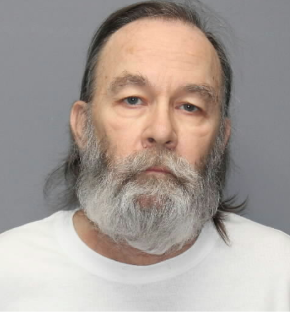
Getz photo KDOC

Kerry Getz, 65, Hutchinson, was sentenced Friday to 3½ years in prison, followed by five years of probation. He also was ordered to have no contact with his wife and daughter.

Getz was arrested in July 2017, for arson and interference with law enforcement. Authorities said he set his home on fire and blocked the driveway so firefighters couldn’t reach the property. At other times he threatened to kill his ex-wife and daughter.

In July 2016, Getz was sentenced to probation for an attack on a utility company sub-contractor who was at the Getz home replacing electrical meters.

Getz spent several months at Larned State Hospital but eventually was returned to Reno County, where was he was found guilty of arson and criminal threat.

The AP contributed to this report.

New Kansas governor brings sharp shift on LGBTQ foster kids

TOPEKA, Kan. (AP) — Kansas’ child welfare agency has drafted guidelines urging foster parents to allow LGBTQ kids in their care to “express themselves as they see themselves,” riling conservatives a little more than a year after the state granted legal protections to faith-based adoption agencies that do not place children in LGBTQ homes.

The Department for Children and Families issued draft “guidance”for “prudent parenting” in mid-July, six months after Democratic Gov. Laura Kelly took office. It said foster homes should recognize LGBTQ children “by their preferred identity if it differs from their sex assigned at birth.”

Conservatives read the document as a policy directive for reshaping foster families’ lives and an attempt to skirt a 2018 lawthat Kelly doesn’t like for protecting faith-based adoption agencies. It’s a sharp break in tone with that law, which prevents the state from barring agencies from providing services if they refuse to place children in homes violating their religious beliefs.

The department’s move drives home the difference Kelly’s election last year made on hot-button social issues. Her administration followed eight years of conservative Republican control in a state that still has a GOP-dominated Legislature and a Republican Party with a platform declaring, “We believe God created two genders, male and female.”

“It’s going to continue pushing this envelope,” said Kansas House Majority Leader Dan Hawkins, a conservative Wichita Republican, who worried in a recent newsletter about the department pursuing a “social experiment.”

The department presented the first draft of its guidelines during a quarterly meeting with private agencies that place abused and neglected children in foster and adoptive homes.

State officials said a final version could be ready later this month and won’t be formal policy or regulations, just principles for placement agencies and foster families. As such, they wouldn’t be subject to outside review — though Hawkins and other conservatives are considering legislative hearings.

Department officials said their first draft was a response to questions that private agencies passed along from foster parents who want to support LGBTQ youth. They said they’re picking up on best practices from other states and national groups.

“The fact of wanting children we’re caring for to feel safe and welcome in their foster homes just shouldn’t be a controversial issue to anybody,” Laura Howard, the department’s top administrator, said in a recent interview.

But Kelly’s views on LGBTQ rights already had conservatives on edge. Kansas said in June that it would allow transgender people to change their birth certificates to reflect their gender identities. Under Republican Gov. Sam Brownback, the state had some of the nation’s toughest rules for making such changes.

Kelly also said before taking office that she would try to avoid enforcing last year’s adoption law if she could. Conservatives link that stance and the department’s new guidance, though its officials say there is none.

“It looks like an end-run around the adoption-protection act,” said Chuck Weber, director of the Kansas Catholic Conference.

The department’s guidance says foster children have the right to wear clothing and hairstyles “that suit their gender identity” and that refusing to use their preferred pronouns “can endanger their physical and emotional well-being.”

Within days, the conservative Family Policy Alliance of Kansas criticized the guidance publicly as imposing an “invasive sexual agenda.” The first draft of the guidance included a “Q&A” discussion about transgender foster youth sharing rooms with other children and having sleepovers.

State Sen. Mary Pilcher-Cook, a conservative Kansas City-area Republican, said the guidelines endanger safety. For example, she said, the first draft tells foster parents that if space in their home is limited, a “biological boy” teenager can share a bedroom with a teenage girl.

Pilcher-Cook said both the foster parents and a child’s birth parents — who still might have parental rights — might object to the guidelines.

“It’s a problem when government takes such a heavy hand to coerce people to live out beliefs that they don’t embrace,” Pilcher-Cook said.

A later draft of the department’s guidance on its official letterhead dropped the Q&A section because, Howard said, “it’s really difficult to sort of script any particular situation.” Both drafts said case workers should ensure all children in a foster home are comfortable with the living arrangements.

The guidelines’ defenders said the state and placement agencies don’t require foster parents to take particular children and that the agencies work through issues before a placement. If issues arise after a placement, the agencies would attempt to work through them with families individually, rather than apply the guidelines as rules, they said.

And, they said, the goal always is to find foster homes that best fit children already traumatized by abuse or neglect.

“What it really boils down to is, we’re not going to be putting these kids in a hostile environment,” said Tom Witt, executive director of the LGBTQ-rights group Equality Kansas.

___

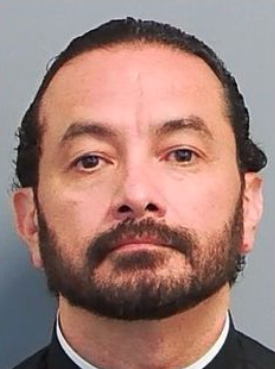
Former Kansas priest sentenced for theft from church

HUTCHINSON — A former South Hutchinson priest was granted probation for stealing from a local church.

Juan Gregorio Garza-Gonzalez courtesy photo

Reno County District Judge Trish Rose sentenced 51-year-old Juan Garza-Gonzalez to five months in prison, but granted a one-year probation for felony theft.

Reno County Sheriff’s Office detectives determined nearly $14,000 was missing from the church.

He had been the priest at Our Lady of Guadalupe in South Hutchinson since June of 2018, but was removed after the investigation began earlier this year.

Navy identifies Kansas sailor killed after traffic stop

VIRGINIA BEACH, Va. (AP) — Military authorities have released the name of a sailor who was fatally shot by security personnel at a Navy base in Virginia after a traffic stop.

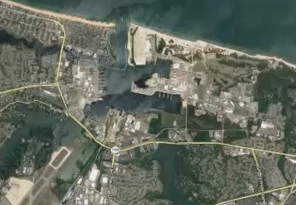
The Joint Expeditionary base in Virginia Google image

Navy officials on Monday identified the sailor as 25-year-old Juan Gerardo Medina-Reynaga.

Medina-Reynaga was a native of Kansas assigned to USS George H.W. Bush.

Investigators say security personnel stopped a 2016 Dodge Charger that was being driven erratically on the Virginia Beach military base Friday night.

Officials say Medina-Reynaga sped away from the traffic stop, hitting a gas pump while trying to avoid an automatic barrier.

Medina-Reynaga then led security officers on a foot chase that ended in a struggle. Officials say he was shot after assaulting security personnel and trying to take a weapon from a security officer.

Robert D. Dunham

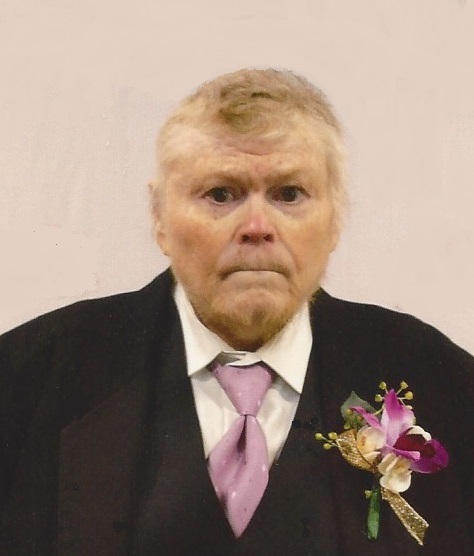
Robert D. Dunham, age 67, of Hays, Kansas died Friday, August 2, 2019, at his apartment. He was born September 9, 1951, in Lucas, Kansas to Dean Ford and Jewelene Mae (Coffman) Dunham.

He was raised in Minneapolis, Kansas and attended Minneapolis High School. He lived in Topeka before moving to the Hays area in 1974, and was a client with DSNWK. He lived a few years in the DSNWK Group Home in Victoria, then moved into Epworth Towers in Hays. He enjoyed watching TV, reading newspapers, and spending his days at the Reed Cent in Hays.

He is survived by his DSNWK family.

Memorial services will be at 11:00 A.M. Friday, August 9, 2019, at Cline’s-Keithley Mortuary of Hays, 1919 East 22nd Street, Hays, Kansas 67601.

A private inurnment will be at the Highland Cemetery District 9 Cemetery in Minneapolis, Kansas at a later date.

Friends may call from 10:30 to 11:00 A.M. Friday, at Cline’s-Keithley Mortuary of Hays. Memorials are suggested to DSNWK, 2703 Hall Street, Hays, Kansas 67601.

Condolences can be sent via e-mail to [email protected] or can be left by guestbook at www.keithleyfuneralchapels.com

Copyright Eagle Radio | FCC Public Files | EEO Public File