General Mills announced Tuesday a voluntary national recall of five-pound bags of its Gold Medal Unbleached All Purpose Flour with a better if used by date of September 6, 2020.
According to a release from the FDA, the recall is being issued for the potential presence of E. coli O26 which was discovered during sampling of the five-pound bag product. This recall is being issued out of an abundance of care as General Mills has not received any direct consumer reports of confirmed illnesses related to this product.
This recall only affects this one date code of Gold Medal Unbleached All Purpose Flour five-pound bags. All other types of Gold Medal Flour are not affected by this recall.
Consumers are asked to check their pantries and dispose of the product affected by this recall. Consumers who have had to discard products covered by this recall may contact General Mills Consumer Relations at 1-800-230-8103 or visit www.generalmills.com/flourExternal Link Disclaimer.
Guidance from the Food and Drug Administration (FDA) and the Centers for Disease Control (CDC) continues to warn that consumers should refrain from consuming any raw products made with flour. E. coli O26 is killed by heat through baking, frying, sautéing or boiling products made with flour. All surfaces, hands and utensils should be properly cleaned after contact with flour or dough.
This voluntary recall includes the following code date currently in stores or consumers’ pantries:
Gold Medal Unbleached All Purpose 5LB Flour
Package UPC
016000 196100
Recalled Better if Used by Date
06SEP2020KC
Although most strains of E. coli are harmless, others can make you sick. E. coli O26 is a potentially deadly bacterium that can cause bloody diarrhea and dehydration. Seniors, the very young, and persons with compromised immune systems are the most susceptible to foodborne illness.
Any consumers concerned about an illness should contact a physician. Anyone diagnosed by a physician as having an illness related to E. coli O26 is also urged to contact state and local public health authorities.
Dr. Bradford Wiles, KSRE Early Childhood Development Specialist, speaks with parent-educators at Early Childhood Connections in Hays Friday.
By BECKY KISER Hays Post
For years, scientists have known that what happens – or doesn’t happen – during a baby’s first few years makes a big difference in a child’s later life, and babies who do not get enough love and attention in infancy are less likely to be well-adjusted adults.
“I think we all want our kids to be smart and happy,” says Dr. Bradford Wiles, K-State Research and Extension (KSRE), a Manhattan-based specialist in early childhood development. “We aren’t born with the innate ability to be good parents.”
“What we do in these parent education and parent educator classes is essentially teach how to make smart kids.”
Wiles was in Hays last week presenting seminars about the importance of early brain development. Friday he worked with parent educators in the Parent As Teachers program at USD 489 Early Childhood Connections. Parent Educators meet regularly with parents in their home.
“We remove the things that are barriers to kids’ learning and to their social/emotional development. We encourage the things – like play – that are known to facilitate cognitive, social/emotional and physical development.”
Also important to child development is consistency and routine, with wiggle room allowed.
“First, it helps children to know what to expect. For all of us, knowing what to expect is a tremendous benefit. It reduces anxiety. It helps us to plan.
“When children are in an inconsistent environment, they don’t know what to expect. So learning new things becomes a lot more difficult. They tend to be a lot more anxious. They’re unable to focus very well because they have no expectations that they know are going to be met.”
Adults can modify a routine as needed. Children should not be randomly changing their routine, according to Wiles.
“If a parent sets 7:00 p.m. as bedtime and they want to take the child along with them to visit friends and won’t be home until 8:30 p.m., that’s fine. That’s the adult’s choice.
“When it’s the child randomly staying up until 8:30 p.m., that becomes very chaotic and doesn’t provide the structure children need to be able to process and learn things.”
Wiles says most people don’t recognize how important development is from birth to age 5.
“Those foundational years are what set the stage for all learning and development.”
From the moment a baby is born, every experience taken in by the five senses helps strengthen the neural brain connections that guide development.
Talking to a baby face-to-face builds the brain connections needed for both language skills and a healthy emotional bond.
“It would never occur to some parents to give baby a ‘play-by-play of what they’re doing, or use infant-directed speech in that really high-pitched voice… That’s what we’re after, to help people realize there’s simple things they can do that will make their kids smarter.”
Wiles says empathy and compassion are important when working with families and their children.
“Recognizing that all families have unique demands and needs, and tailoring what we can help them with to meet those needs is critical.”
Some parents are ready and able to implement more routines than other parents.
“We need to meet people where they are. Trying to implement everything all at once is going to be very difficult.”
With some parents, implementing micro-routines is a good way to start.
“Maybe it’s teeth brushing that needs the same routine morning and night. Maybe it’s book reading that’s the thing you start with by saying we’re going to do this at this time every other day. It’s a start.
“It’s really helping parents learn new skills and implement them at their own pace that will prove beneficial to the child.”
Wiles bases his presentations on “Better Brains for Babies,” developed by public and private agencies in Georgia. Created in 1998, the program is dedicated to promoting awareness and education about the importance of early brain development in the healthy growth and development of infants and young children
Additional resources are available in the KSRE book store in the Home and Family section.
OMAHA, Neb. (AP) — The amount of water flowing down the lower Missouri River this year is approaching the record set during the historic 2011 flood, and another round of flooding is expected this week after unusually heavy rains upstream, federal officials said.
KDOT image of flooding in Doniphan County in March 2019
Heavy rains dumped more than four times what is normal in parts of Montana, North and South Dakota and Nebraska last week — triggering flood warnings and forcing the forecast for how much water will flow down the Missouri River to jump by 4 million acre feet (1.22 million meters) to 58.8 million acre feet (17.92 million meters).
That will be second only to 2011’s 61 million acre feet (18.59 million meters), and it means the river has stayed high all year long. Previously, the second highest runoff year was 1997 when 49 million acre feet (14.94 million meters) of water flowed down the river and caused major flooding.
“2019 continues to be a very wet year throughout the basin,” said John Remus with the U.S. Army Corps of Engineers that operates the dams along the Missouri River.
This week’s third round of flooding along the Missouri River will likely be less severe than the first two but still significant, said National Weather Service hydrologist Dave Pearson. When the river crests near Omaha, Nebraska, on Friday and Saturday, parts of Interstates 29 and 680 could again be under water.
At Omaha, this week’s crest is projected to be 30.5 feet (9.3 meters). In March the river hit 34 feet (10.36 meters), and it registered 32 feet (9.75 meters) in the June flooding.
The Corps of Engineers doesn’t expect major problems or threats to cities with this week’s latest flooding — provided all the temporary repairs that have been made to levees since the spring hold up. But communities along the river are bracing for more problems in an exceptionally wet year.
Residents of Dakota Dunes, South Dakota, have been encouraged to evacuate their homes as a precaution because the river is already threatening that city. The river will peak there on Tuesday.
“When people call me and ask me what to do, I tell them, ‘Hey I relocated my family,'” Dakota Dunes Community Improvement District Manager Jeff Dooley told the Sioux City Journal. “If you wait until you know for sure, it’s too late.”
Downstream, residents of Hamburg, Iowa, will be keeping a close eye on the repaired levees around their town that was inundated in the spring to be sure the patches will hold up. Completely repairing the levees damaged in the spring is likely to take several years and cost more than $1 billion.
“Anybody I talk to I tell them to be prepared,” said Mike Crecelius, the emergency manager in the southwest Iowa county that’s home to Hamburg. “There’s been no relief at all this year.”
In March, massive flooding caused more than $3 billion in damage in Nebraska, Iowa, Kansas and Missouri. In June, flooding returned and inundated many of the same places because most damaged levees remained broken.
The river will remain high throughout the fall because the Corps of Engineers plans to continue releasing large amounts of water into the river to clear out space in the reservoirs ahead of winter.
The amount of water flowing into the lower Missouri was temporarily cut to 60,000 cubic feet (1699 cubic meters) per second this weekend, but it will increase to 80,000 cubic feet (2265.6 cubic meters) per second later this week.
SUMNER COUNTY — After four earthquakes over the past two days, the U.S. Geological Survey reported a 3.4 magnitude quake approximately 8 miles southeast of Caldwell in Sumner County Tuesday morning.
Just before 9p.m. Monday, the USGS reported a 3.2 magnitude quake approximately 8 miles east of Marion, Kansas. Just before 10a.m. Monday, a magnitude 3.6 quake shook the same area.
The quake follow a 3.9 magnitude quake at 2:37 a.m. Monday approximately 10 miles west of Cottonwood Falls in Chase County and a magnitude 2.8 quake at 10:30 a.m. Sunday in Reno County.
There are no reports of damage or injury. The threshold for damage usually starts at 4.0.
KANSAS CITY (AP) — A 21-year-old Kansas City man is charged with second-degree murder for allegedly killing a woman at a family cookout in a park.
Dodds photo Jackson Co.
Larry Dodds also is charged with armed criminal action in the Aug. 31 death of Angela Banks.
According to court records, Dodds and another man arrived while several family members were rapping to music. The court records say Dodds and the other man began to “trash talk,” leading to an argument. Dodds and the other man allegedly began shooting.
Banks was struck by the gunfire. She was pronounced dead at a hospital. A man also was shot and was treated at the hospital.
Dodds was arrested Saturday and is jailed on $250,000 bond. He does not have a listed attorney.
TOPEKA – The wait is finally over. The Nature Conservancy and Kansas Department of Wildlife Parks & Tourism announce the much-anticipated Little Jerusalem Badlands State Park will open on Saturday, Oct. 12. Located in southern Logan County, Little Jerusalem is easily accessed from Interstate 70 and U.S. 83. A grand opening celebration with speeches and a ribbon cutting will take place at 10:00 a.m. The two permanent trails will open after the ceremony and close at sundown, approximately 7:00 p.m. Free snacks and water will be available.
Grand opening activities include free, guided tours departing from the parking lot on Saturday at 11:30 a.m., 12:30 p.m., 1:30 p.m., 2:30 p.m., 3:30 p.m., 4:30 p.m., and 5:30 p.m. Space for the guided tours is limited and advance registration at nature.org/littlejerusalem is required. All visitors may hike the two permanent trails at Little Jerusalem at their own pace. The Overlook Trail extends one-quarter mile along a crushed rock surface to a scenic viewpoint. The Life on the Rocks Trail winds 1.5 miles along the rim of the formations from which visitors can enjoy a variety of views and two scenic overlooks. Visitors are not allowed off-trail unless accompanied by park staff on a guided tour.
The 332-acre area encompasses 220 acres of dramatic chalk rock formations and is owned by The Nature Conservancy, a global non-profit conservation organization. Beyond the impressive scenic views, the area serves as nesting habitat for ferruginous hawks and is home to rare plants. Little Jerusalem Badlands State Park was established by the Kansas Legislature in 2018 after The Nature Conservancy partnered with KDWPT to have the area designated as a state park. Together, the organizations developed two trails, parking and additional infrastructure at the park. A long-term agreement allows KDWPT to manage outdoor recreational activities in a manner that protects the fragile rocks while The Nature Conservancy continues to own the land and manage the natural resources.
Photo courtesy KDWPT
“The Nature Conservancy’s chief purposes for Little Jerusalem are, first, to protect the pristine natural features and, second, to provide opportunities for people to enjoy the natural beauty of the area,” said Conservancy director Rob Manes. “Striking that balance took time and we are confident that the partnership between The Nature Conservancy and KDWPT provides the public with the best possible experience. We can’t wait to share Little Jerusalem with everyone next month.”
“From the start, we’ve envisioned this property as a special kind of state park, where natural resource conservation is the highest priority,” agrees Linda Lanterman, KDWPT state parks director. “That means that public interaction with the landscape will necessarily be limited to only activities that have the least impact. We’ve struck a great balance with the trails that allow visitors to experience a diversity of views.”
After the grand opening, Little Jerusalem Badlands State Park will be open to visitors from sunrise to sunset daily, all year round. Visitors will be required to purchase a daily vehicle permit, currently $5, at the park or have an annual Kansas state parks vehicle pass. Guided tours provided by KDWPT staff will be available by appointment.
The Nature Conservancy is a global conservation organization dedicated to conserving the lands and waters on which all life depends. Guided by science, we create innovative, on-the-ground solutions to our world’s toughest challenges so that nature and people can thrive together. We are tackling climate change, conserving lands, waters and oceans at unprecedented scale, providing food and water sustainably and helping make cities more sustainable. Working in 72 countries, we use a collaborative approach that engages local communities, governments, the private sector, and other partners. To learn more, visit www.nature.org or follow @nature_presson Twitter. In Kansas, the Conservancy has protected 140,000 acres of the state’s most ecologically important lands and waters. To learn more, visit www.nature.org/kansas.
The mission of the Kansas Department of Wildlife, Parks and Tourism (KDWPT) is to conserve and enhance Kansas’ natural heritage, its wildlife and its habitats to assure future generations the benefits of the state’s diverse, living resources. The Department also strives to provide opportunities to use and appreciate the state’s natural resources. The Department provides opportunities to promote diverse communities, natural assets, and the State of Kansas as a tourism destination. It is a cabinet-level agency with a Secretary appointed by the Governor of Kansas. A seven-member, bipartisan commission, also appointed by the Governor, advises the Secretary and approves regulations governing outdoor recreation and fish and wildlife resources in Kansas. Visit KSOutdoors.com or TravelKS.com for more information.
We’re just a week away from the Governor’s Council on Tax Reform meeting in the Statehouse to consider ways to cut taxes. As lofty and nonpartisan as that title is, the real name could be “What Tax Cuts Will Get Us Elected or Re-elected.”
Yes, that’s what tax reform is. Finding the tax cuts that will get votes for you or your party and the way to do that is cutting the right taxes for the right voters and then telling them that you’ve done it in your upcoming campaign.
That’s why the “reforms” proposed by that council essentially turn into decisions on who gets what in the way of tax cuts. Corporations? Individuals? Grocery buyers? Property taxpayers?
That’s the real issue, though “reform” is a word that most of us like and which sounds noble. “Reform” can, in the Statehouse, be defined as finding what tax cuts will elect the most Republicans or Democrats in next year’s election when every Kansas House and Senate seat is up for election.
• • •
Now, it’s a little more complicated for Gov. Laura Kelly, who by executive order established that council. She, of course, has a government to run and that takes money and that means tax cuts…up to a point…but she needs to make sure the council leaves enough money in the State General Fund to keep the state, and its important programs, afloat. Nobody wants to be the governor of a state with no cash on hand.
• • •
So, what do we look for?
Most obvious is a recommendation from the council to the governor to reduce the 6.5% sales tax on groceries. But, remember the state’s sales tax is just the baseline. Local units of government put their own local sales taxes on those groceries, which is the reason that most food (and everything else) carries a sales tax of about 9%. But that council recommending cuts in local sales taxes isn’t a starter in the Legislature. So, the council probably ought to look at just state sales tax on groceries.
And then comes that word “reform” which may have some considering whether cutting the sales tax on bologna that poor people buy might be a little more noble than cutting the sales tax on steak and salmon that higher-income Kansans buy. Is that a “reform?”
Oh, and don’t forget that while cutting income taxes, possibly shuffling the break point between different rates, is also probably “reform” but it doesn’t show up before the election. A cut in rates on individual income taxes may show up as a few bucks a week in lower withholding from your paycheck but it’s not something that voters will see every time they drop into the grocery store for bread or soap or shampoo.
The sales tax? Those cuts could show up as early as…a couple weeks before the Aug. 4, 2020, primary election, and surely before the Nov. 3 general election.
That’s just one of those issues that can sound like “reform.”
Corporate income tax cuts? They can be sold to voters as ways to shore up employment and keep Kansas productive, but it’s not likely those corporate savings will trickle down very quickly to higher wages or more jobs and they can be portrayed in the elections as cuts for the wealthy business owners and executives. Nice crowd, probably good campaign contributors, but not a whole lot of votes in the executive offices…
Property tax cuts? That gets extremely complicated, and usually winds up with city, county and other local government coming to Topeka to battle over “separation of powers.”
Syndicated by Hawver News Company LLC of Topeka; Martin Hawver is publisher of Hawver’s Capitol Report—to learn more about this nonpartisan statewide political news service, visit the website at www.hawvernews.com
WICHITA, KAN. – A former treasurer for the city of Fontana in Miami County, Kan., was sentenced Monday to 12 months and a day in prison for embezzlement, according to U.S. Attorney Stephen McAllister.
Deborah Sell, 56, Fontana, Kan., pleaded guilty to one count of wire fraud and one count of filing a false tax return. In her plea, she admitted she used her position as treasurer to steal money from the city. She issued city checks to pay her personal expenses, withdrew cash using a city debit card for personal expenses, and deposited cash payments received from customers into her personal account.
At a sentencing hearing Monday, prosecutors told the court Sell embezzled a total of more than $174,000 from the city, including a debit card withdrawal of $414 at an ATM in a casino in Riverside, Mo.
She admitted her 2016 tax return failed to include more than $94,000 in income she embezzled that year.
Operation Christmas Child volunteers will be making crafts to place in shoebox gifts from 1 to 3 p.m. Sunday at Messiah Lutheran Church, 2000 Main.
Rachel Albin, area coordinator, said participants do not need to have special skills, and youth are welcome to participate.
“If you want to take some of the items you make for your own shoeboxes or for your church’s shoeboxes, that’s absolutely fine,” Albin said. She added that if participants have crafts they are working on for their own shoeboxes, they are welcome to bring them along.
“This will be a fun time when we can gather together as an interdenominational group and work on projects and share ideas.”
Operation Christmas Child is a project of Samaritan’s Purse, an international relief agency headquartered in Boone, N.C., and led by the Rev. Franklin Graham. Every Christmas thousands of individuals prepare shoeboxes filled with small toys, school supplies and hygiene items, which are then delivered to needy children around the world.
Children receiving shoeboxes also receive a booklet titled “The Greatest Gift,” which tells the children about Jesus and how much he loves them. For many of the children, the shoebox is the first gift they have ever received.
Albin said in 2018, individuals in Ellis County donated 2,615 shoeboxes. This year’s shoebox collection week is Nov. 18 to 25.
Donations for craft supplies are always accepted and appreciated, Albin said. More information is available by contacting her at (785) 639-1325 or at [email protected].
CARBONDALE, Ill. — Southern Illinois University Director of Athletics Jerry Kill announced on Monday he is leaving his position at SIU to accept a job on the football coaching staff at Virginia Tech, effective immediately. Kill will serve as special assistant to fourth-year head coach Justin Fuente.
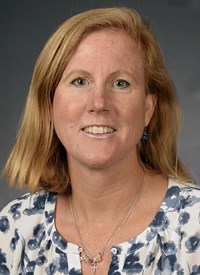
Chancellor John M. Dunn has appointed Liz Jarnigan — who has ties to Fort Hays State University — to replace Kill as athletic director. Jarnigan joined the athletics staff in July 2018 as associate director of athletics, overseeing all aspects of the program’s internal operations.
“The opportunity to serve as an administrator at SIU has been one of the most rewarding experiences of my professional career, and it was a difficult decision to leave so many wonderful friends and colleagues at Southern Illinois,” Kill said. “There is an outstanding leadership team in place within Athletics and I’m confident they will continue to build upon the foundation we’ve laid, allowing me to return to my passion, which is coaching football. I’ve tried to get away from football, but I just can’t.”
A three-time national coach-of-the year, Kill is a beloved figure in southern Illinois, where he led the Saluki football program to five-consecutive NCAA playoff appearances from 2003 to 2007. In addition to his many coaching awards, Kill has a long list of civic honors, stemming from his public advocacy for worthy causes, such as the Coach Kill Cancer Fund that he started in southern Illinois while coaching at SIU, and the Epilepsy Chasing Dreams Fund he began while at Minnesota.
“We’re grateful to Jerry for taking on the leadership of Saluki athletics at a critical time, and we respect his decision to return to his passion,” said SIU Chancellor John M. Dunn. He has worked diligently on behalf of the university and the athletics program. In just over a year, he has hired seven head coaches, reorganized the program’s administrative structure and dedicated himself to fundraising efforts. Notably, he was an architect of the 20-year, $10 million agreement with Banterra Bank to rename the SIU Arena the Banterra Center. We are fortunate to have had his energy and enthusiasm focused on SIU and know he will continue to do great things moving forward.
After leaving SIU in 2007, Kill made coaching stops at Northern Illinois and Minnesota, then tried his hand at athletic administration, working as an assistant AD at Kansas State in 2016, before returning to the sidelines as an assistant coach at Rutgers for one year.
Kill returned to SIU in February of 2018 as a special assistant to the chancellor, and two months later took over as AD. During his 16 months on the job, Kill replaced seven of the department’s 11 head coaches. His list of coaching hires includes Bryan Mullins (Men’s Basketball), Grant Williams (Soccer), Rosalind Joseph (Track & Field), Ed Allen (Volleyball), Danielle Kaufman (Women’s Golf), Geoff Hanson (Swimming & Diving) and Lance Rhodes (Baseball).
Kill also restructured the department’s administration, hiring Liz Jarnigan as his Senior Woman Administrator, plus senior-level administrators Jeff Jones (operations), Jimmy Karayiannis (community outreach), Kate Hanson (development), Katie Gerlach (facilities), Hilary Wittenborn (academics) and David Rule (athletic training).
Jarnigan came to SIU after serving for two years as senior women administrator for the Air Force Academy’s athletics program. Prior to that, she worked for eight years at San Jose State University, starting as the director for student-athlete success before being promoted to senior woman administrator. During her tenure at San Jose State, the department’s overall Academic Progress Rate (APR) rose from 925 to 972. The football team’s APR increased from 888 in 2008 to 975 in 2015. The overall student-athlete GPA reached an all-time high in 2016.
Jarnigan has also served as coordinator of student services and an associate athletic director for student services at the University of Tulsa. Her career in athletics administration began at Briar Cliff College, where she was an assistant athletic director and interim director of athletics. The 1987 graduate cum laude of St. Olaf College was a four-year letter-winner in volleyball. She received her master’s degree in athletic administration from Fort Hays State University in 1988.
At the time of Jarnigan’s hire to SIU, Kill said “this is the most important hire I’ve made in a long time.”
“She has the ability to solve complicated issues,” he added. “She’s much more qualified to be an athletic director than I am.”