ELLIS COUNTY — One person died in an accident just before 1p.m. Saturday in Ellis County.
The Kansas Highway Patrol reported a 2007 Saturn Ion driven by Monica Miller, 40, Columbia, Mo., was eastbound on Interstate 70 just east of the Yocemento exit.
The Saturn crossed the median and struck the front end of a 2015 Volvo semi driven by Daniel Czauz, 44, Thorton, Colorado.
The Saturn then spun down the side of the semi and hit a 2016 Freightliner semi driven by Donald R. Ryman, 57, Westmoreland, TN, and was pushed to the north shoulder of the westbound lanes.
Miller was transported to the hospital in Hays where she died. Czauz and Ryman were not injured. All three were properly restrained at the time of the accident, according to the KHP.
On Wednesday morning, I joined other Members of Congress on the steps of the Capitol in a moment of silence and prayer for those who perished on September 11, 2001. We also honored those first responders and troops who have fought and sacrificed since, and upheld the tradition of singing God Bless America. “One nation under God, indivisible…”
We will never forget.
WOTUS Rule Repealed
On Thursday, the Trump Administration announced the repeal of the Obama-era 2015 Waters of the United States (WOTUS) rule, bringing consistency and reliability back across all states.
This decision will scale back the federal government’s overreach of authority and restore longstanding and familiar Clean Water Act (CWA) regulations. The announcement is the first step of a two step process that will lead to a new definition of WOTUS that will limit the scope of waters regulated by the federal government.
For more information on the rulemaking process, repeal of the 2015 Rule, and the revised definition of WOTUS, click here.
Born-Alive Act Hearing
This week, I took part in a hearing on the Born-Alive Abortion Survivors Protection Act, which would protect babies born alive following an attempted abortion. As an OB-GYN who’s delivered over 5,000 babies, I never thought I’d be fighting harder to save babies’ lives in the halls of Congress than in the delivery room. I am appalled Nancy Pelosi and House Democrats have blocked a vote on this bill 80 times. To address this issue, I’m preparing to introduce new legislation which would provide funding to states ensuring abortion survivors receive appropriate health care. We must end infanticide. To see my questioning at the hearing, click here.
Honoring Fallen Soldiers Online
Recently, the VA announced the creation of the Veterans Legacy Memorial, the country’s first digital platform dedicated entirely to memory preservation for the millions of Veterans interred in VA national cemeteries. Each Veteran will have their own memorial page on a web-based platform, to provide a memorial that extends beyond the boundaries of a national cemetery. This a great use of 21st century technology to honor our Veterans for the rest of time.
For more information about the Veterans Legacy Memorial, click here.
American Cancer Society meeting
It was great to meet with Kansan patient advocates this week during the American Cancer Society’s Hill Day. Having worked with them over the past several years, I rely on them to provide me with updates on the value of basic medical research.
As a physician, I need innovative tools and medicine to help my patients and the National Institutes of Health (NIH) plays a vital role in basic medical research. To this end, I dedicate time each year advocating for robust funding to NIH. Another important topic we addressed was the need for palliative care and hospice education and training. H.R. 647, the Palliative Care and Hospice Education and Training Act, which was passed by the House last Congress, will award grants to improve the training of health professionals in palliative care. Additionally, it will enhance research in this field to build best practices for a more effective workforce.
K-State Leading On Agriculture Research
On Thursday, I met with Kansas State University’s Distinguished Professor of Agronomy, Dr. Charles Rice, was awarded the 2007 Nobel Peace Prize. Dr. Rice and I discussed my continued support for agricultural research funding.
We also discussed an announcement made earlier in the day by the U.S. Department of Agriculture awarding $77.8 million in research that will focus on sustaining a more abundant, nutritious, and accessible food supply. As part of this investment, eight land-grant universities, led by Kansas State University, will conduct projects aimed at integrating sustainable agricultural approaches covering the entire food production system. Over the next five years, this grant will fund up to ten faculty, twelve graduate students, and provide countless opportunities to undergraduates at K-State.
This project is part of a new program, Sustainable Agricultural Systems, within the National Institute of Food and Agriculture’s (NIFA) flagship competitive grants program, the Agriculture and Food Research Initiative (AFRI). For more information on these peer reviewed competitive grants, click here.
Growth Energy Fueling Growth Award
This week, I was honored to receive Growth Energy’s 2019 “Fueling Growth” Award presented by producers and supporters of the ethanol and biodiesel industries from across Kansas. As a co-chairman of the House Biofuels Caucus, I work with organizations like Growth Energy and their members in Kansas to help feed the world and fuel America in ways that achieve energy independence, improve economic well-being, and create a healthier environment for all Americans.
Kansas Electric Co-Op Meeting
It was great catching up with friends from the Kansas Electric Co-operatives, who were in town this week to discuss issues impacting co-ops across the state. We chatted about the ways that electric co-ops are partnering with regional and local partners to help with rural broadband deployment, utilizing some of the funds we included in last year’s Farm Bill.
We also discussed ways that electric co-ops are improving energy efficiency and including more environmentally friendly energy sources in their energy portfolios, such as solar and wind power.
Sunflower Electric from Hays was at the meeting, and I recently joined them as they broke ground on a new solar farm in southwest Kansas, two miles south of Johnson City.
Once completed it will be the largest solar farm in the state.
It’s great to hear how co-ops are innovating and using new technologies to improve service and drive down the costs for their customers.
Kansas Chamber of Commerce in D.C.
On Thursday morning, I met with the Kansas Chamber of Commerce, where I shared my thoughts on workforce development, health care, and trade. Across the state, industry leaders have been sharing concerns in retaining a qualified workforce, and are constantly looking for new partnerships to train the next generation to meet their growing demands. We also talked about my ideas to increase transparency, spur innovation, and increase consumerism as a way to drive down the overall cost of healthcare. Finally, we talked about trade and how agreements, such as USMCA, deliver wins for our farmers, ranchers, businesses and workers back home. It was great to spend the morning with them and I’m looking forward to continuing these conversations back in Kansas!
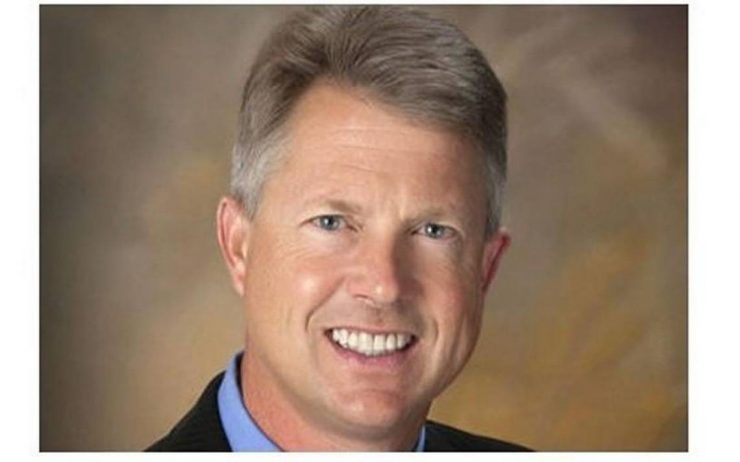
Dr. Roger Marshall, R-Great Bend, is the First District Congressman of Kansas.
SHAWNEE COUNTY —The Shawnee County Sheriff’s Office Criminal Investigation Division has been developing several suspects over the past couple of weeks in connection to the aggravated burglary that occurred in the 7600 block of SW Urish Road on August 26.
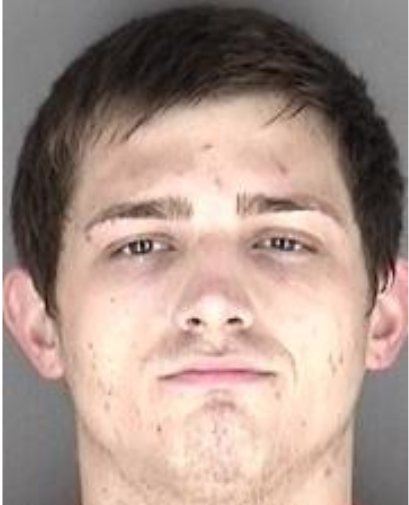
On September 10, officers from the Shawnee County Sheriff’s Office Criminal Investigations Division and Fugitive Warrants Unit arrested Matthew J. Kolbek Jr, 24, Topeka, in the 1200 Block of SW Belle Terrace after Kolbek jumped from a 2nd floor window and attempted to elude officers through a nearby park, according to Sgt. Todd Stallbaumer.
Authorities seized a firearm, ammunition, 8.3 lbs of Marijuana, over 60 THC vape cartridges, and approximately $3000 cash from the residence.
Additionally, Emily M. Kratochvil, 21, Sahayvian J. Griggs, 18, and Joshua M. Long, 23, all from Topeka, were located and arrested over the past couple of days in connection to the incident. The four suspects were booked into the Shawnee County Department of Corrections with the following requested charges includin gAggravated Battery – Use of a Deadly Weapon, Aggravated Assault – Use of a Deadly Weapon, Aggravated Burglary, Criminal Threat, Criminal Damage to Property and Criminal Use of a Firearm.
Kolbek has previous conviction for criminal threat, aggravated battery and stalking, according to the Kansas Department of Corrections.
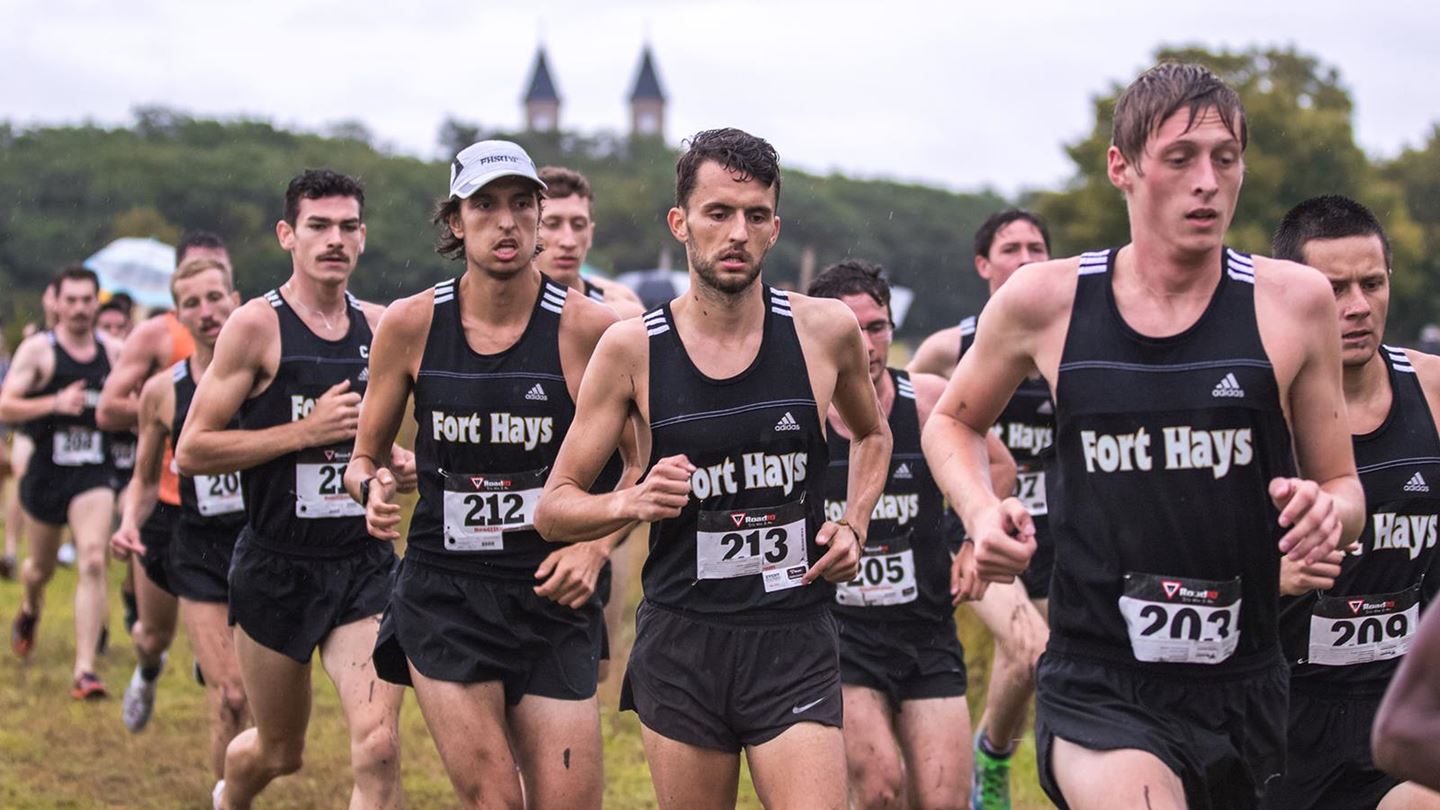
HASTINGS, Colo. – Fort Hays State accomplished the feat of posting a perfect score to win the Bronco Stampede hosted by Hastings College on Saturday. The Tigers swept the top five placements in the race for a perfect score of 15, topping a field of 10 teams. The top four Tigers nearly crossed the line all at the same time, led by Israel Barco.
Barco edged teammate Justin Moore for the individual title by just 0.2 seconds. Barco covered the 8K course in 26.35.7, while Moore posted 26:35.9. Reed Rome was just 0.3 seconds off Barco’s winning pace, hitting 26:36 flat. Robbie Schmidt was just 0.3 seconds behind Rome in 26:36.3. Only 0.6 seconds separated first through fourth.
Kaleb Crum gave the Tigers a perfect team score by crossing the line in 26:56.8. He was still nearly 10 seconds faster than sixth-place finisher Nelson Kemboi of Southeast (Neb.) Community College.
The Tigers still would have dominated the team scoring with their second wave of runners. Abraham Garcia finished eighth, Peter Franklin was ninth, Robert Loeffler was 11th, Seppe van ‘t Westende was 12th, and Michael Eisenbarth was 13th. Even Caleb Carrasco, Guillaume Plagneaux, and Jorge Gallegos were in the top 20.
Friends University was the closest competitor to the Tigers, finishing with 88 team points. Concordia (Neb.) was third with 123.
Fort Hays State returns to action in a couple of weeks at the Emporia State Invitational on Friday, September 27.
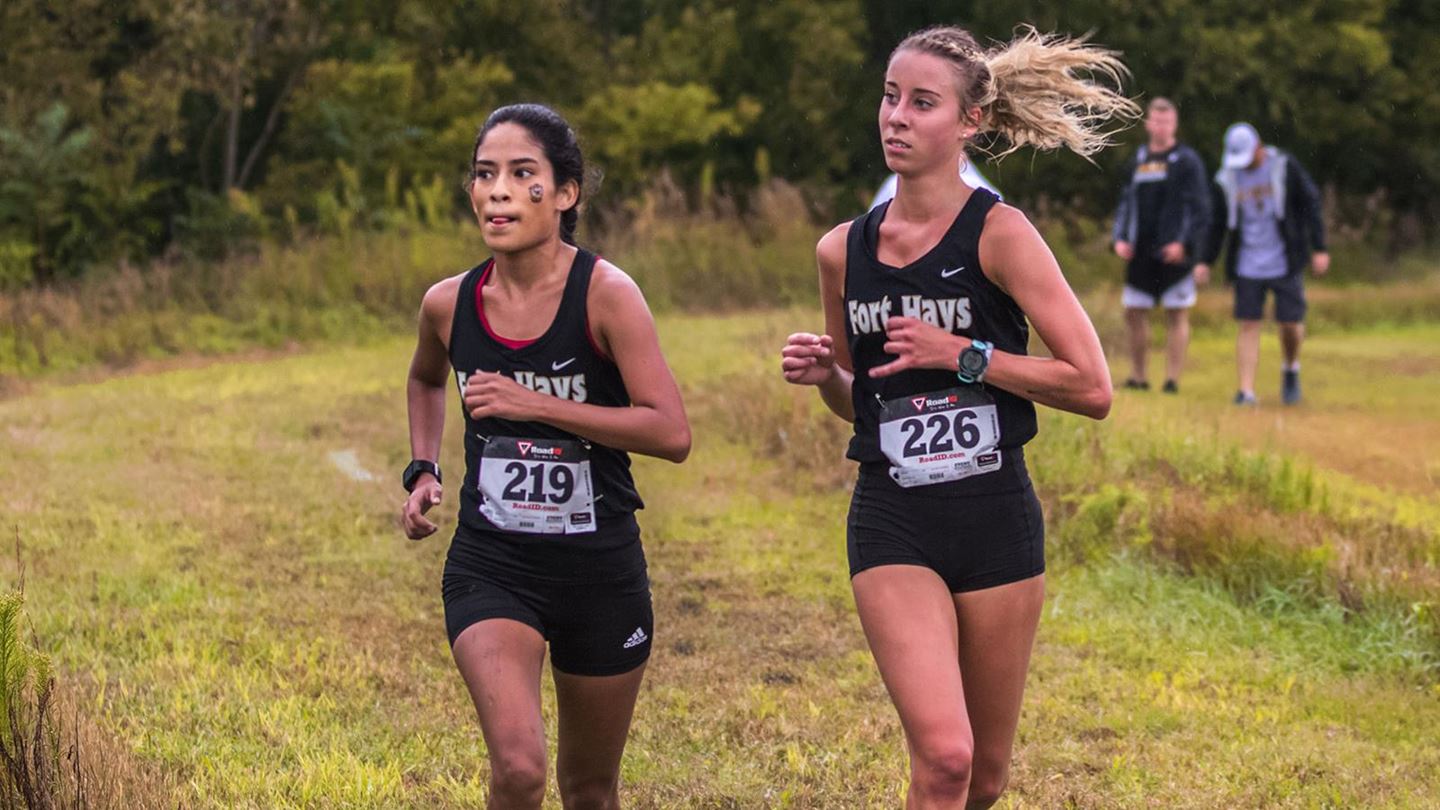
HASTINGS, Neb. – The Fort Hays State women’s cross country team claimed first at the Bronco Stampede, hosted by Hastings College on Saturday (Sept. 14). The Tigers topped a field of 11 teams and won by 11 points over Concordia University (Neb.). Abigail Stewart paced the Tigers with a second-place overall finish.
Stewart covered the 5K course in 19:41.7, finishing just six seconds behind individual champion Aileen Gurrola of Friends University. Teammate Brooke Navarro joined Stewart as one of six runners in the field that broke the 20-minute mark. Navarro finished fourth in a time of 19:48.1.
Tessa Durnell and Averi Wilson also turned in top-10 finishes. Durnell finished seventh in 20:02.2 and Wilson covered the course in 20:13.8. Emily Salmans was 14th overall, but scored 13 team points since one runner in the top 15 was unattached. She rounded out the top five for FHSU with a time of 20:31.9.
Fort Hays State was the only team in the field to place four in the top 10 of the race.
The team will take a week off before returning to action at the Emporia State Invitational on Friday, September 27.
STARKVILLE, Miss. (AP) — Skylar Thompson threw for 123 yards and a fourth-quarter touchdown to lead Kansas State 31-24 over Mississippi State on Saturday.
KSU (3-0) led 17-14 at halftime but trailed 24-17 in the fourth quarter. Then a 100-yard Malik Knowles kickoff return tied the game, and a 15-yard touchdown pass from Thompson to Dalton Schoen gave the Wildcats a 7-point lead with 5:37 remaining.
MSU (2-1) drove 55 yards on their final meaningful possession, but ultimately turned the ball over on downs at the Kansas State 20-yard line, one yard short of the first-down marker.
The Wildcats managed only 269 yards of total offense, 146 of it on the ground. Schoen caught a team-high three balls for 50 yards and James Mitchell rushed for 59 yards on 17 carries.
Mississippi State head coach Joe Moorhead benched senior transfer quarterback Tommy Stevens in the third quarter after his second interception and turned the Bulldog offense over to freshman Garrett Shrader. Shrader led the Bulldogs on a methodical 12-play, 79-yard drive, running the ball into the endzone himself to give the team its first lead. From there, though, he presided over three-and-outs on three of the next four drives and the Bulldogs never reached the end zone again.
MSU’s Osirus Mitchell led all receivers with 74 yards and Kylin Hill, the Southeastern Conference’s leading rusher, had a game-high 111 yards on 24 carries.
In the balmy Mississippi heat, both teams had a sloppy day with three turnovers apiece and a combined 142 yards in penalties.
THE TAKEAWAY
Kansas State: The Wildcats are not a flashy team, but they have a balanced offensive attack with lots of ways to beat you. This was a big road win for a program that needed it.
Mississippi State: Despite flashes of prowess, the Bulldogs looked sloppy and unprepared at some point in every phase of Saturday’s game. Big questions remain on both sides of the ball.
UP NEXT:
Kansas State has an open week before traveling to Oklahoma State.
Mississippi State returns to Southeastern Conference play next week, hosting Kentucky.
CASA of the High Plains is offering a raffle for an FHSU tailgate package.
Tickets are $20 each or six for $100. The prize package is valued at $1,200. See the flyer for a complete list of what is included in the prize package. Only 250 tickets will be sold. The drawing will be Oct. 4. You must be 21 or older to purchase tickets.
Raffle items will be on display at Big Creek Crossing.
Raffle tickets are available by calling 785-628-8641, at the CASA office at 107 W. 13th St., Hays, or from CASA board members.
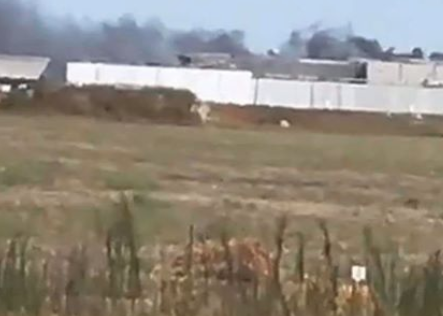
DODGE CITY, Kan. (AP) — Fire officials say one person suffered smoke inhalation in a fire at a meatpacking plant in southwestern Kansas.
Fire at Cargill meat processing plant in Dodge City-photo courtesy Holcomb Community Fire Dept.
The fire broke out Friday afternoon at the Cargill plant in Dodge City.
The station says Dodge City Fire Chief Robert Heinz reported the fire was on the roof of the rendering side of the plant, and crews found a fire in the area’s ventilation system. The blaze was extinguished in minutes.
Heinz says a spark from welding work being done at the plant ignited grease. He says one person had to be taken to a hospital for smoke inhalation, but is expected to recover.
DETROIT (AP) — Leaders of the United Auto Workers union have extended contracts with Ford and Fiat Chrysler indefinitely, but the pact with General Motors is still set to expire Saturday night.
The move, plus a widening corruption investigation of union leadership, puts added pressure on bargainers for both sides as they approach the contract deadline and the union starts to make preparations for a strike.
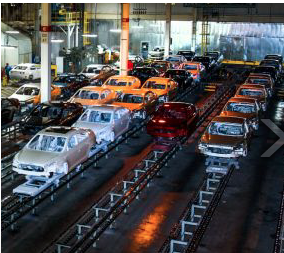
The General Motors Fairfax KC Assembly Plant (Photo by Susan McSpadden for Chevrolet)
The union has picked GM as the target company, meaning it is the focus of bargaining and would be the first company to face a walkout. GM’s contract with the union is scheduled to expire at 11:59 p.m. Saturday.
It’s possible that the four-year GM contract also could be extended or a deal could be reached, but it’s more likely that 49,200 UAW members could walk out of GM plants as early as Sunday because union and company demands are so far apart.
Picket line schedules already have been posted near the entrance to one local UAW office in Detroit.
Art Wheaton, an auto industry expert at the Worker Institute at Cornell University, expects the GM contract to be extended for a time, but he says the gulf between both sides is wide.
“GM is looking through the windshield ahead, and it looks like nothing but land mines,” he said, citing a possible recession, trade disputes and the expense of developing electric and autonomous vehicles. “I think there’s really going to be a big problem down the road in matching the expectations of the union and the willingness of General Motors to be able to give the membership what it wants.”
Plant-level union leaders from all over the country will be in Detroit on Sunday to talk about the next steps, and after that, the union likely will make an announcement.
But leaders are likely to face questions about an expanding federal corruption probe that snared a top official on Thursday. Vance Pearson, head of a regional office based near St. Louis, was charged with corruption in an alleged scheme to embezzle union money and spend cash on premium booze, golf clubs, cigars and swanky stays in California. It’s the same region that UAW President Gary Jones led before taking the union’s top office last year.
Jones and other union executives met privately at a hotel at Detroit Metropolitan Airport on Friday. After the meeting broke up, Jones’ driver and others physically blocked an Associated Press reporter from trying to approach him to ask questions. Jones has not been charged in the case.
Union spokesman Brian Rothenberg said Friday night that Jones remains in office, as does Pearson. “They didn’t make any changes,” he said.
In a 40-page criminal complaint, the government alleged that over $600,000 in UAW money was spent by union officials at businesses in the Palm Beach, California, area, including at restaurants, a golf resort, cigar shop and rental properties, between 2014 and 2017.
The union said the government has misconstrued facts and said the allegations are not proof of wrongdoing. “Regardless, we will not let this distract us from the critical negotiations under way with GM to gain better wages and benefits,” Rothenberg said.
At UAW Local 22 in Detroit, picket line schedules for three days were posted on the lobby windows. The local represents workers at a plant that straddles the border between Detroit and the hamlet of Hamtramck.
The 24-hour schedules don’t list any date to start but a separate schedule has a group reporting to the union hall at 6 a.m. on Sunday. The factory, which makes the Chevrolet Impala and Cadillac CT6, is one of four that GM plans to close.
Here are the main areas of disagreement:
— GM is making big money, $8 billion last year alone, and workers want a bigger slice. The union wants annual pay raises to guard against an economic downturn, but the company wants to pay lump sums tied to earnings. Automakers don’t want higher fixed costs.
— The union also wants new products for four factories GM wants to close. The factory plans have irked some workers, although most those who were laid off will get jobs at other GM factories. GM currently has too much U.S. factory capacity.
— The companies want to close the labor cost gap with workers at plants run by foreign automakers. GM’s gap is the largest at $13 per hour, followed by Ford at $11 and Fiat Chrysler at $5, according to figures from the Center for Automotive Research, an industry think tank. GM pays $63 per hour in wages and benefits compared with $50 at the foreign-owned factories.
— Union members have great health insurance plans but workers pay about 4% of the cost. Employees of large firms nationwide pay about 34%, according to the Kaiser Family Foundation. The companies would like to cut costs.
If there is a strike, it would be the union’s first since a short one against GM in 2007.
The union may have to strike at least for a while to show workers that it got as much from the company as it could, Wheaton said. Some workers, he said, mistrust union leaders due to the corruption scandal.
Negotiators are usually tight-lipped about the talks, but a week ago, UAW Vice President Terry Dittes wrote in a letter to local union leaders that GM has been slow to respond to union proposals. GM answered in a letter sent to factories that said it is moving as quickly as it can.
“We are working hard to understand and respond to UAW proposals and we have offered to meet as often as needed,” the letter said.
Just before 11:30 p.m., police attempted to stop a 2013 white Chevrolet Silverado for a traffic infraction, according to office Charley Davidson.
The vehicle was occupied by 29-year-old T.J. McMahan, 52-year-old Robert Boots, 24-year-old Skyler Bazil-Lounsbury all of Wichita and a known 25-year-old suspect.
McMahan, who was the driver, refused to stop, accelerated and fled from officers. A vehicle pursuit ensued and McMahan fired two shots at the officers while driving. The first shot fired was in the area of East 1st Street and North Spruce Street and the second was in the area of East 1st Street and North Estelle. The officers were not injured.
The pursuit continued south on Hillside and ended at Range Street after the truck’s tires were flattened by a tire-deflation device during the pursuit. All four suspects ran from the vehicle and into the neighborhood.
McMahan photo Sedgwick Co.
Officers set up a perimeter and utilized multiple police K-9s, drones, and a KHP helicopter to search for the suspects. McMahan, Boots, and Bazil-Lounsbury were located in the area and arrested without incident. Officers are working to locate the fourth known suspect.
McMahan is being held on a $250,000 bond on requested charges that include two counts of aggravated assault of a law enforcement officer, felony evade and elude, criminal possession of a firearm, as well as other drug and traffic-related charges. Boots of Wichita and Bazil-Lounsbury were both jailed for outstanding warrants, according to Davidson. Boots was no longer in custody Friday. Bazil-Lounsbury has a bond of $150,000 bond for probation violations, according to online jail records.
Officers also located methamphetamine, marijuana, a gun magazine and live ammunition in the vehicle. A handgun was also recovered during the investigation.
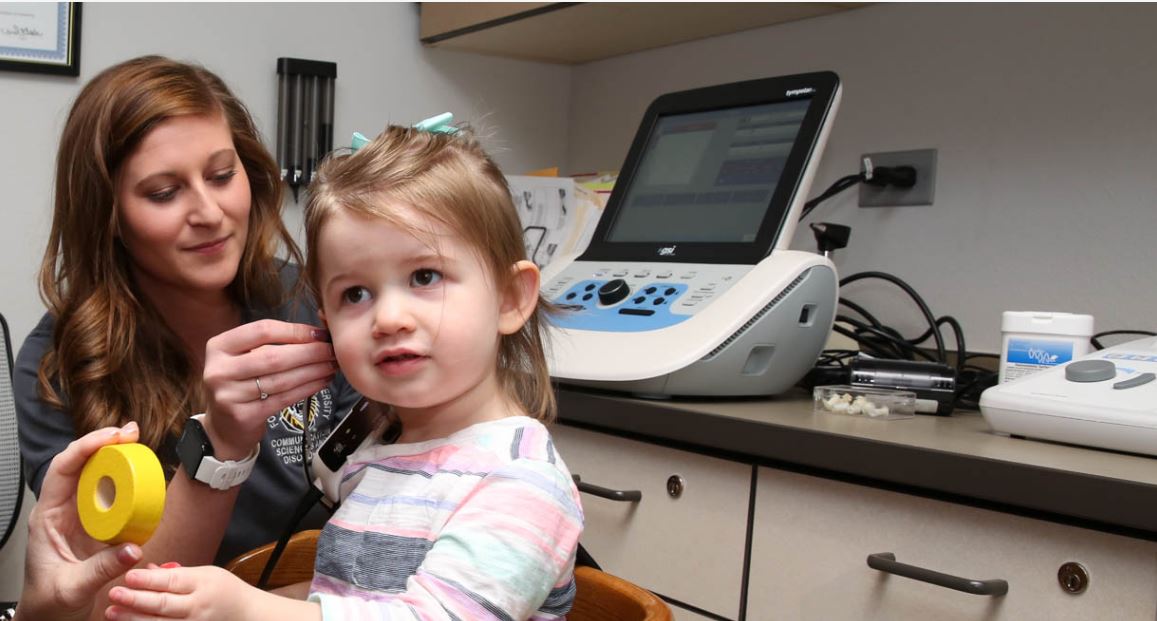
Russell will be the first of three free hearing screenings, funded by the Kansas Masons, offered again this fall in Western Kansas communities by Fort Hays State University.
“The FHSU Herndon Clinic in the Department of Communication Sciences and Disorders is very fortunate to have received a large grant from the Kansas Masons to support adult speech, language and hearing services in western Kansas,” said Marcy Beougher, speech-language pathologist and an instructor in the department.
The grant is continuing to provide numerous opportunities for individuals of all ages in western Kansas to receive important health screening services that are currently scarce or difficult to access.
“With Masonic support and funding, we have visited 18 different communities in three years and have screened over 670 people,” said Beougher.
“We are thankful to the Masons for the opportunity to learn more about the hearing needs in Western Kansas and to make necessary and important medical and audiological referrals. We are also very grateful for the clinical hours these screenings provide for our graduate students.”
The screening will be from 9 a.m. to 1 p.m. Friday, Sep. 20, at the Russell Masonic Lodge No. 177, 115 E. Wisconsin, Russell.
Appointments are encouraged to be scheduled ahead of time, but walk-ins will be welcomed on a first-come, first-served basis. Each site will have four stations, with each screening lasting approximately 15 minutes. Results, follow-up information and ear plugs will also be provided. There will be no hearing aid sales.
Screenings are provided by graduate students from the Department of Communication Sciences and Disorders. Beougher will organize the screenings.
Screenings will also be held in Sterling on Oct. 18 and Plainville on Oct. 25. Times, dates and actual screening sites will be announced later.
To schedule an appointment for the Russell screening, contact Daron Woelk at 785-483-7873 or [email protected].
For more information, visit fhsu.edu/herndon-clinic/ or contact the Department of Communication Sciences and Disorders at 785-628-5366.
There are 14 such sites in the United States., and the KU Cancer Center-Midwest Cancer Alliance site is the only one that focuses on rural communities.
As an NCORP MU community site, KU Cancer Center and Midwest Cancer Alliance will accrue individuals to NCI-approved cancer clinical trials and research studies that encompass cancer prevention, screening, supportive care and symptom management, treatment, quality of life and cancer care delivery.
“This grant is an affirmation and recognition of our scientific leadership and expertise in cancer prevention, survivorship, and cancer-care delivery research,” said Roy Jensen, MD, Director of the KU Cancer Center. “That we are the single site focused on rural communities underscores our vital role in helping our fellow Kansans.”
NCORP is a national network of investigators, cancer care providers, academic institutions and other organizations whose goal is to improve patient outcomes and reduce cancer disparities through clinical trials and research studies. NCORP grants are awarded to top institutions that have demonstrated a strong commitment to the communities they serve.
“As the outreach network of the cancer center, Midwest Cancer Alliance has partnered with hospitals, cancer centers and health care providers across Kansas for more than a decade,” said Hope Krebill, MSW, BSN, RN, executive director of Midwest Cancer Alliance. “This grant enhances our ability to leverage the expertise of our rural cancer providers and KU Cancer Center researchers to expand clinical trials and decrease barriers to participation, with the ultimate goal of eliminating cancer disparities and preventing and treating cancer more effectively,” Krebill said.
“Support from the grant strengthens the institutions’ commitment to advancing clinical trial access and quality of care in rural communities,” said breast oncologist and co-principal investigator Priyanka Sharma, MD. Sharma also noted that patients can now access benefits from several new cancer prevention, survivorship and cancer-care delivery clinical trials.
According to Gary Doolittle, MD, Midwest Cancer Alliance medical director and co-principal investigator for the NCORP grant, bringing clinical trials to a broader patient population may reduce disparities in cancer, given that providing clinical trials to cancer patients is considered a standard of care. Per numerous studies, including a 2017 study conducted by the Centers for Disease Control, people in rural America are more likely to die from cancer than those in the country’s metropolitan counties.
“While improvements in cancer care have been significant over the last several decades, the need to provide dedicated, comprehensive care continues to grow, particularly in rural areas,” Doolittle said. “We need to ensure that people across the landscape of our area have access to the highest quality cancer care, and this grant enables KU Cancer Center and Midwest Cancer Alliance to help do just that.”
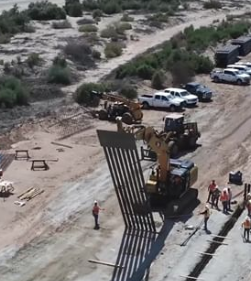
YUMA, Ariz. (AP) — On a dirt road past rows of date trees, just feet from a dry section of Colorado River, a small construction crew is putting up a towering border wall that the government hopes will reduce — for good — the flow of immigrants who cross the U.S.-Mexico border illegally.
Border wall construction photo courtesy White House
Cicadas buzz and heavy equipment rumbles and beeps before it lowers 30-foot-tall sections of fence into the dirt. “Ahí está!” — “There it is!” — a Spanish-speaking member of the crew says as the men straighten the sections into the ground. Nearby, workers pull dates from palm trees, not far from the cotton fields that cars pass on the drive to the border.
South of Yuma, Arizona, the tall brown bollards rising against a cloudless desert sky will replace much shorter barriers that are meant to keep out cars, but not people.
This 5-mile (8-kilometer) section of fencing is where President Donald Trump’s most salient campaign promise — to build a wall along the entire southern border — is taking shape.
The president and his administration said this week that they plan on building between 450 and 500 miles (724 and 806 kilometers) of fencing along the nearly 2,000-mile (3,218-kilometer) border by the end of 2020, an ambitious undertaking funded by billions of defense dollars that had been earmarked for things like military base schools, target ranges and maintenance facilities.
Two other Pentagon-funded construction projects in New Mexico and Arizona are underway, but some are skeptical that so many miles of wall can be built in such a short amount of time. The government is up against last-minute construction hiccups, funding issues and legal challenges from environmentalists and property owners whose land sits on the border.
The Trump administration says the wall — along with more surveillance technology, agents and lighting — is key to keeping out people who cross illegally.
Critics say a wall is useless when most of those apprehended turn themselves in to Border Patrol agents in the hope they can be eventually released while their cases play out in immigration court.
In Yuma, the defense-funded section of tall fencing is replacing shorter barriers that U.S. officials say are less efficient.
It comes amid a steep increase since last year in the number of migrant families who cross the border illegally in the Yuma area, often turning themselves in to Border Patrol agents. Many are fleeing extreme poverty and violence, and some are seeking asylum.
So far this year, Border Patrol agents in the Yuma sector have apprehended over 51,000 family units. That’s compared with just over 14,500 the year before — about a 250% increase.
The Yuma sector is the third busiest along the southern border, with officials building a temporary, 500-person tent facility in the parking lot of the Border Patrol’s Yuma headquarters in June.
It spent just under $15 million for the setup and services for four months, including meals, laundry and security, but officials are evaluating whether to keep it running past next month as the number of arrivals in Yuma and across the southern border have fallen sharply in recent months.
The drop is largely due to the Mexican government’s efforts to stop migrants from heading north after Trump threatened tariffs earlier this year to force Mexico to act.
The number of people apprehended along the southern border fell by 61 percent between this year’s high point in May and the end of August. In Yuma, it fell by 86 percent, according to government figures. Most people apprehended are either traveling as families or are unaccompanied children.
“Historically this has been a huge crossing point for both vehicles as well as family units and unaccompanied alien children during the crisis that we’ve seen in the past couple of months,” Border Patrol spokesman Jose Garibay said. “They’ve just been pouring over the border due to the fact that we’ve only ever had vehicle bollards and barriers that by design only stop vehicles.”
Victor Manjarrez Jr., a former Border Patrol chief who’s now a professor at the University of Texas, El Paso, was an agent when the government put up the first stretch of barriers along the southern border — in San Diego.
He’s seen barriers evolve from easily collapsible landing mats installed by agents and the National Guard to the sophisticated, multibillion-dollar projects now being done by private contractors.
Manjarrez says tall border fencing is crucial in some areas and less helpful in others, like remote stretches of desert where shorter barriers and more technology like ground sensors would suffice.
“One form doesn’t fit in all areas, and so the fence itself is not the one solution. It’s a combination of many things,” Manjarrez said.
The ease of construction varies by place and depends on things like water, Manjarrez said, adding that just because a plot of land is flat “doesn’t mean it’s not complex.”
He said building 450 to 500 miles (724 and 806 kilometers) of fence by the end of next year would be tough if that figure doesn’t include sections of the wall that have been built recently.
“As it stands now, contractors are building pretty fast,” Manjarrez said. The real question is whether the government needs to build that much fencing, he said.
The Trump administration may face those issues along with lawsuits from landowners who aren’t giving up their property so easily and environmentalists who say the barriers stop animals from migrating and can cut off water resources.
The Tohono O’odham tribe in Arizona also has expressed opposition to more border fencing on its land, which stretches for nearly 75 miles (120 kilometers) along the border with Mexico.
Near Yuma, the Cocopah Indian Tribe’s reservation is near the latest fencing project, and leaders are concerned it will block the view to its sacred sites, spokesman Jonathan Athens said.