To find out more about The Post Podcast, or subscribe to mobile notifications click here.
Month: September 2019
SPONSORED: Clinkscales will present on Alzheimer’s, Dementia
What to Know if the Diagnosis is Alzheimer’s or Dementia
Dementia vs. Alzheimer’s … What’s the Difference?
Please join presenter Randy Clinkscales at 10 a.m. or 3 p.m. Wednesday, Sept. 11, at The Venue at Thirsty’s, 2704 Vine, Hays.
There is no cost or obligation.

Click image for more
The man behind Kansas’ fastest growing CBD chain is gaining notoriety
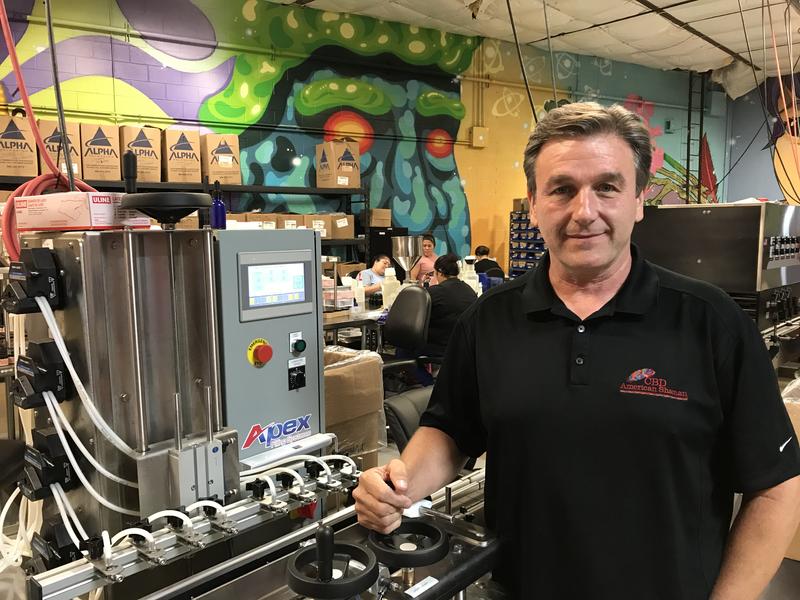

KANSAS CITY – As a teenager, Vince Sanders watched his father go to prison. He dropped out of school and ended up serving time himself.
It makes an unlikely history for the 55-year-old founder of a fast-growing retail chain who owes his fall and rise to the cannabis plant.
Nineteen years ago, Sanders went to prison for organizing and financing a scheme to sell marijuana. Federal officials tracked it for five years and valued his take at $2.5 million.
“It actually was a lot more than that,” Sanders said recently, flashing a mischievous grin.
Few beyond family and close friends know about Sanders’ criminal record. He readily acknowledged his past during an interview, calling it neither a secret nor a “talking point” for the business he’s in now.
Sanders heads CBD American Shaman, the Kansas City, Missouri,-based company he founded four years ago to market health-promising bottles of cannabidiol, or CBD.
CBD comes from hemp, which is a cannabis plant that has little or no tetrahydrocannabinol, or THC, the main psychoactive compound in marijuana that produces the high associated with the plant. Sales of CBD have been surging in recent years, and the industry gained a boost when the 2018 Farm Bill made it legal to grow hemp in the United States.
Sanders helped push for that change and to align state laws to accommodate hemp and CBD products through the U.S. Hemp Roundtable, on which he serves as one of eight board members.
“Personally, and for the industry, we’re big believers in second chances,” said Jonathan Miller, the group’s general counsel, who was unaware of Sanders’ marijuana conviction. He credited Sanders for “turning his life around, building a very legitimate and legal business model.”
That business model has put American Shaman stores in more than 30 states and garnered industry attention as a pioneer of CBD-specific stores. Most CBD operations have sold their products online or through other specialty health stores, drug stores and groceries.
Miller said American Shaman and similar businesses that have followed a brick-and-mortar path now have the rest of the industry thinking about CBD-focused stores themselves.
Sanders owns a group of companies that includes a franchising office at 2300 Main St. in Kansas City, manufacturing operations on Southwest Boulevard and a new hemp processing facility in Montana. Sanders said those businesses directly employ about 150 people.
Some CBD store rivals, who formerly did business with American Shaman, question Sanders’ tactics. They cite business practices that smack of retaliation. One rival said she felt “bullied” by American Shaman.
The extent of Sanders’ store network is difficult to pin down. He has claimed conflicting totals when asked how many American Shaman stores are open. And the company’s extensive list of “coming soon” locations includes several in the Kansas City area that aren’t intended to open at the addresses listed.
Other questions have been raised by American Shaman’s unusual reliance on former door-to-door vacuum cleaner salesmen, which has made it the target of a lawsuit in Ohio.
Local entrepreneur
Sanders grew up in Kansas City and said that, at times, he had a difficult life. His father struggled with problems that were exacerbated by drinking and had “drifted away,” Sanders recalled.
When Sanders was 15, a Kansas jury convicted his father of involuntary manslaughter. The charge sent Stephen Vincent Sanders to the Kansas State Penitentiary.
Sanders, whose full name is Stephen Vincent Sanders II, has described himself as a class clown who wasn’t into school. He dropped out of Southwest High School but said he later got his GED.
He married and became a father. The couple, now divorced, owned two homes in Kansas City and additional property in Overland Park. There also was a Corvette, a Mercedes-Benz and jewelry that included a ladies Rolex Chronometer.
Federal prosecutors said it was a lifestyle financed by illegal marijuana sales. Sanders’ guilty plea earned him a 32-month prison sentence, though he said he served only about a year. Prosecutors also sought forfeiture of $2.5 million, the alleged amount of Sanders’ ill-gotten gains, which he said they collected.
“Oh, I had it,” Sanders said.
Sanders said he has never held a paycheck job. Even as a teenager he ran his own auto detailing business — at a family-owned car wash at 77th Street and Wornall Road.
His other businesses manufactured an assortment of goods, from teeth whiteners and self-tanning lotions to male enhancement products and vape juice, or e-liquids, for electronic cigarettes.
Without an attentive father, Sanders said he became close to his mother’s uncle, Denny Van Tuyl, who was 11 years his senior. By Sanders’ account, Van Tuyl became something of a big brother or father figure to him.
It was Van Tuyl’s cancer that led Sanders back to cannabis — this time for the possible curative powers of CBD after traditional medicine seemed to fail his uncle. Van Tuyl died in 2012.
It’s a story Sanders tells often. Personal experiences with CBD are often the drivers of those in the CBD business.
But is it legal?
For Sanders, shifting from witnessing CBD’s promise to marketing CBD products came slowly.
For starters, there was that marijuana conviction in his past.
“There was a lot of hesitation and homework to make sure this is legal, right?” he said. “I talked to a lot of attorneys.”
Convincing others of its legality was nearly as painstaking. Sanders said he approached smoke shops, chiropractors, vitamin and health stores. Each store that carried his early American Shaman CBD products did so after extensive education about its legality and effectiveness, he said.
At that point, Sanders sold only wholesale. The chiropractors and shop owners were his sales force.
All of that changed when Brendon Hodgson came along.
Hodgson convinced Sanders that they could retail CBD directly and they opened The CBD Store at 18th and Oak in Kansas City. Sanders produced the CBD that the store sold under an Evolution brand.
It worked out, and Sanders said the city’s First Fridays were the key. The CBD Store held an open bar and pitched CBD while a captive audience waited for drinks.
A second store in Brookside, owned and run by two women whom Sanders said approached him with the idea, took a bit longer to succeed. After that, there was a third. More retailers followed, buying products from CBD American Shaman and reselling them to consumers.
The group grew to about 40 outlets when Sanders shifted to his current franchise business model.
That core business sells franchise rights to prospective store owners who are committed to buying CBD products from Sanders’ manufacturing company. All but six CBD American Shaman stores are owned by franchisees.
“He basically made his own customers with this franchise model. It’s really good,” said Cyrus Riahi, a Lenexa entrepreneur who briefly co-owned a store in Columbia, Missouri, and now operates rival Buddha Leaf stores.
Riahi said the franchising strategy has allowed American Shaman to dominate the Kansas City-area CBD market.
“I’ve only got two stores here in Johnson County, and they’re my lowest sales stores,” Riahi said.
Sanders credited one of his early wholesalers with another strategy that accelerated the store count growth. It’s called an affiliate program.
Under that program, franchise owners who bring in another franchisee earn a dime for every dollar of product that recruits buy from American Shaman. They can get a similar deal for recruiting smoke shops or others to buy American Shaman products wholesale.
According to Sanders, the affiliate program is also why so many of his franchisees are former Kirby vacuum cleaner salesmen.
That idea came from Jason Todack, who had been a Kirby vacuum distributor. Todack said Kirby worked the same way, and it helped attract fellow Kirby salesmen to American Shaman.
Today, Todack owns only one store but said he earns between $15,000 to $25,000 a week from the affiliate program.
In its lawsuit, which was filed a year ago in Ohio, the Kirby Co. tells a different story.
It claims American Shaman poached 20 or more Kirby salesmen. The suit names Sanders, American Shaman Franchise Systems Inc.; its president Bud Miley, a former president of Kirby Co.; and two other individuals who had been at Kirby. Todack is not a defendant in the suit.
Sanders said American Shaman “hasn’t done any Kirby people” since the lawsuit was filed. He called the lawsuit ridiculous.
Trademark grab
Sanders’ shift from wholesaling CBD to organizing a network of CBD franchise stores did not sit well with some of his early retailers.
Trevor Burdett, who was recruited by Todack, bought American Shaman products and sold them under the American Shaman store banner before there was a franchise system. When American Shaman wanted him to convert to a franchise arrangement, Burdett complained that he had only a week to review the lengthy legal document.
“I had to sign a franchise agreement or they would stop selling to me,” Burdett said.
He concluded there were no benefits to becoming a franchisee. He dropped American Shaman and began setting up his own CBD stores called Sacred Leaf.
When Burdett sought to trademark his Sacred Leaf brand in June 2018, he found Sanders had beaten him to it by two months.
“That seems to be their go-to. If you cross American Shaman, they will file a trademark on your name and try to shut you down before you even get into business,” Burdett said.
Public records show Sanders trademarked “SUNMEDCBD” about three months before Florida-based, Sunflora Inc. filed a trademark on “SUNMED CBD.” Sunflora, founded by a former American Shaman wholesaler, supplies SUNMED CBD products to Your CBD Stores through licensing agreements.
SunFlora acting CEO Marcus Quinn declined to comment for this story.
“He did it to us, too,” said Emily Christianson, whose CBD HempDropz brand Sanders claimed in a trademark filing in 2018.
Christianson, who previously bought American Shaman products wholesale, balked at the franchise offer and said she felt “bullied” by how American Shaman handled it.
She said the company set up an American Shaman franchise directly across from her CBD store in Springfield, Missouri. The plan, she was told, was for it to “crush” her as a former wholesaler turned competitor.
Kathleen Wade, who opened that American Shaman Springfield store, corroborated that the plan targeted Christianson.
Wade said she already had leased space in a different location in Springfield, but Sanders required her to open across from Christianson’s store.
Sanders denied any such requirement. He and Wade agreed that they have other disputes, and Wade said she “walked away” from the franchising company.
Burdett, Christianson and Wade all said Sanders turned on them suddenly.
“I swear he was a good guy until he turned out to be a snake,” Christianson said.
Did Sanders intend his trademark-grabbing tactics to stop his former customers from becoming rivals?
“Perhaps,” Sanders said. “Every one of these people started with us. We spent an enormous amount of time and effort training them and teaching them this industry. How do we protect ourselves from that kind of thing happening?”
As for being called a snake or turning on people, Sanders chalked up those sentiments to the rough-and-tumble world of business.
“This is a competitive world,” he said. “If you want to play in a competitive league, then step up.”
Coming soon?
How well Sanders’ American Shaman is faring in that competition is difficult to say.
As a privately owned company — Sanders said he owns it all and has no investors — American Shaman does not disclose financial information publicly.
One large CBD company does report financial details. CV Sciences Inc. sold $16.8 million of PlusCBD consumer products during April, May and June, chalking up a profit of $1.2 million.
The San Diego-based company doesn’t operate its own stores or offer franchises. Instead, it supplies products to 4,591 retail stores “mostly in the natural product industry” but also to 945 Kroger stores under a deal announced in July.
American Shaman’s distribution map looks more like rival SunFlora, whose website lists 290 locations for Your CBD Stores in 32 states.
But American Shaman’s store map is a bit fuzzy.
In a March interview, Sanders said the company had “a little over 300” stores, that 100 were “building out” or “finding locations,” and that the count “would be at 400” in 60 days.
“They’re writing 50-plus new franchises a month,” he said on Dick & Loy’s Media & Marketing Mayhem podcast.
On June 26, the American Shaman website listed addresses for 244 open stores in 30 states. The same month, however, Sanders told KCUR radio’s Andrea Tudhope that there were many more stores.
“We had 391 stores as of yesterday, open,” Sanders said when interviewed on June 20.
In a subsequent interview for this story in August, Sanders said the website’s 244 store count in June probably was accurate at the time. The larger number he’d given to KCUR in June must have included stores opening soon, he said.
After reviewing company records, Sanders said there were 299 American Shaman stores open, an additional 295 stores with leases and in the process of being built for opening, and 352 more store franchises that had been sold but were still scouting for locations.
American Shaman’s website lists addresses for hundreds of stores that are “coming soon.” Often these addresses are not specifically where the store expects to be opened. The company often “pins” an address in the general area where a franchise is being planned.
American Shaman CBD products also are sold through retail stores in six states where the company isn’t yet set up to offer franchises.
Several times during the August interview, Sanders said things were happening fast.
To wit: He wants to offer tours at the factory on Southwest Boulevard. The company’s CBD processing facility in Montana is now up and running after a year of work. He’s promoting more regulation of the industry to drive out “bad actors.” He’s taking steps to get into the white-label side of the business, which would mean selling CBD products through other retail outlets but not under the American Shaman label.
American Shaman will be reserved for the franchise stores, which Sanders now said will number 600 in November.
“We want to be the biggest,” Sanders said. “We don’t want to be a boutique brand. If you think CBD, I want you to think American Shaman.”
EDITOR’S NOTE: A CBD American Shaman franchise was opened in Hays in December by Jessica Moffitt, a Hays health educator.
KCUR’s Andrea Tudhope contributed to this story.
Mark Davis is a freelance writer in Kansas City.
Kan. among states reporting vaping-related lung illnesses to the CDC

NEW YORK (AP) — U.S. health officials on Friday again urged people to stop vaping until they figure out why some are coming down with serious breathing illnesses.
Officials have identified about 450 possible cases, including as many as five deaths, in 33 states. The count includes newly reported deaths in California, Indiana and Minnesota.
No single vaping device, liquid or ingredient has been tied to all the illnesses, officials said. Many of the sickened — but not all — were people who said they had been vaping THC, the chemical that gives marijuana its high. Many are teens.
Health officials have only been counting certain lung illnesses in which the person had vaped within three months. Doctors say the illnesses resemble an inhalation injury, with the body apparently reacting to a caustic substance that someone breathed in. Symptoms have included shortness of breath, fatigue, chest pain and vomiting.
The illnesses have all surfaced this year, and the number has been growing quickly in the last month as more states have begun investigations. A week ago, U.S. officials pegged the number at 215 possible cases in 25 states.
It’s unclear whether such illnesses were happening before this year.
“We’re all wondering if this is new or just newly recognized,” Dr. Dana Meaney-Delman of the Centers for Disease Control and Prevention told reporters Friday.
An Illinois health official, Dr. Jennifer Layden, said officials there don’t know when such illnesses first began, but she said there has been a marked increase since spring.
Deaths previously were reported in Illinois and Oregon .
Indiana officials said the person who died there was an adult, but they didn’t say when it happened or release other details. Health officials in Los Angeles said they were investigating a vaping death as well. And Minnesota health officials said that state’s first known vaping-related death was a person over 65 years with a history of lung problems who had vaped illicit THC products and died in August.
Recent attention has been focused on devices, liquids, refill pods and cartridges that are not sold in stores.
New York state has focused its investigation on an ingredient called Vitamin E acetate, which has been used to thicken marijuana vape juice but is considered dangerous if heated and inhaled. State investigators have found the substance in 13 cartridges collected from eight patients. In several cases, the ingredient made up more than half of the liquid in the cartridge.
CDC officials said they are looking at several ingredients, including Vitamin E acetate. But Meaney-Delman added that no single factor has been seen in every case.
Also Friday, the New England Journal of Medicine released a series of articles that give medical details about cases reported in Illinois, Wisconsin and Utah.
An article on 53 illnesses in Illinois and Wisconsin noted that nearly one-fifth of the cases were people who said they vaped nicotine and not anything that contained THC or CBD oil.
For that reason, doctors and health officials are continuing to suggest people stay away from all vaping products until the investigation establishes exactly what’s at the root of the illnesses.
Meaney-Delman said avoiding vaping is “the primary means of preventing this severe lung disease.”
It’s not yet clear what impact the recent illnesses are having on vaping rates, but some health officials are hoping more Americans will become wary.
There’s been a split among public health experts about the value of vaping nicotine. Some argue e-cigarettes are not as lethal as conventional cigarettes and can be a valuable aide to smokers trying to kick the habit.
But others say studies have not established that adult smokers who try vaping end up quitting smoking long term. And they fear that kids who might never have picked up cigarettes are taking up vaping.
The National Association of County and City Health Officials “has long been cautious about endorsing e-cigarettes even before the recent spate of illnesses, because little scientific evidence exists to show that e-cigarettes and other nicotine delivery devices are effective cessation devices,” spokeswoman Adriane Casalotti said in a statement.
The states reporting vaping-related lung illnesses to the CDC are Arkansas, California, Colorado, Connecticut, Delaware, Florida, Georgia, Iowa, Illinois, Indiana, Kansas, Kentucky, Louisiana, Maryland, Michigan, Minnesota, Montana, North Carolina, Nebraska, New Jersey, New Mexico, New York, Ohio, Oregon, Pennsylvania, South Carolina, Tennessee, Texas, Utah, Virginia, Vermont, Wisconsin, and West Virginia.
Man charged with stealing donation boxes at Islamic Center in Kansas
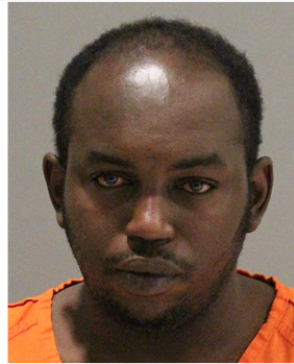


LAWRENCE, Kan. (AP) — A man has been charged with breaking into the Islamic Center of Lawrence last month and stealing two donations boxes.
Amadou Oury Bah, 32, was charged Thursday with burglary, theft and criminal damage to property. Police said previously that the donation boxes contained between $1,000 and $2,000 in cash.
Police previously asked for help identifying the break-in suspect, who was captured on surveillance video. Bah was arrested last week in Omaha, Nebraska, and is jailed on $15,000 bond.
1300 block of Main closes for pavement repairs

 CITY OF HAYS
Beginning on Monday, September 9, 2019 at 8 a.m. the 1300 block of Main St. in Hays will be closed to through traffic for pavement repairs.
Repairs are expected to be completed by the end of the day on Wednesday, September 11, 2019.
The city of Hays regrets any inconvenience this may cause to the public. If there are any questions, please call the Public Works Department at 628-7350.
Two FHSU students to travel to West Africa through IRES grant

 FHSU University Relations
Two Fort Hays State University students traveled to Douala, Cameroon, on the west coast of Africa to conduct geoscience research through an International Research Experience for Students grant funded by the National Science Foundation.
The three-year NSF IRES grant was awarded to FHSU’s Dr. Hendratta Ali, associate professor of geosciences, and her collaborator, Dr. Eliot Atekwana at the University of Delaware.
“The NSF-International Research Experience for Students is aimed at providing U.S. students an international experience participating in applicable and beneficial research conducted in a different country, providing experiences in culture, community, and international research,” said Ali.
FHSU Students Kalyn Compton, a junior majoring in biology (health professions) from Wichita, and Nicholas Counts, a junior majoring in geosciences (geology) from Colorado Springs, Colo., were in the Douala Estuary in June and July. This is the first time both FHSU students traveled outside of the United States.
Compton and Counts were two of only four students in the United States to be selected for this grant and research opportunity. They traveled to Cameroon with a student from California, a student from Delaware, and faculty research mentors Ali and Atekwana.
“This diverse group of four students from the U.S. partnered with Cameroonian peers from the local universities to conduct significant research on the estuary,” said Ali. “The students participated in water and sediment sampling and measurements in the estuary, water quality analysis, carbon cycling, and sediment chemistry to investigate processes that affect major river tributaries that released water into the ocean, from metamorphic, igneous and sedimentary terrain.”.
“The International Research Experience is the most exciting, challenging, and rewarding thing I have done in my entire life,” said Counts. “I learned so much about not only the field I plan to work in, but also the research process, and the culture of the people I came to know on the other side of the world.”
“From riding in a boat to collect samples while the driving rain lashed my skin, to licking my fingers after a eating delicious grilled fish prepared by the Cameroonian cooks, I have so many unforgettable experiences that I will value and utilize for the rest of my life,” he said.
“This year was a great experience for our participating students. I am pleased with the research conducted this year. Students will be involved in new research objectives each year of the grant and I look forward to next summer’s travel and continuing to work on this research with FHSU students,” said Ali.
Kansas to benefit from BLM oil/gas lease sale
 BLM
BLM
SANTA FE, N.M. — The Bureau of Land Management New Mexico raised $9,839,328 in its quarterly oil and gas lease sale held September 5, 2019. Nearly 50 percent of the revenue from the sale will go to the states where the oil and gas activity occurs—in this case New Mexico, Kansas and Oklahoma—while the rest will go to the U.S. Treasury.
For this sale, the BLM offered leases on 15 parcels totaling 3,174.08 acres. The highest bid per acre was $31,001 sold to Cimarex Energy Company for 40 acres in Lea County, New Mexico. The highest bid per parcel was a total of $3,176,397 sold to Platform Energy III, LLC in Lea County, New Mexico, for 396.68 acres.
For more details about the sale results, please visit: https://www.blm.gov/programs/energy-and-minerals/oil-and-gas/leasing/regional-lease-sales/new-mexico.
The BLM awards oil and gas leases for a term of 10 years and as long thereafter as there is production of oil and gas in paying quantities. If the leases result in producing oil or gas wells, revenue from royalties based on production is also shared with the state.
The BLM is a key contributor to the Trump Administration’s America First Energy Plan, which is an all-of-the-above plan that includes oil and gas, coal, strategic minerals, and renewable sources such as wind, geothermal, and solar, all of which can be developed on public lands.
The BLM’s policy is to promote oil and gas development if it meets the guidelines and regulations set forth by the National Environmental Policy Act of 1969 and other subsequent laws and policies passed by the U.S. Congress. The sales are also in keeping with the America First Energy Plan, which includes development of fossil fuels and coal, as well as renewable energy.
The BLM manages more than 245 million acres of public land located primarily in 12 Western states, including Alaska. The BLM also administers 700 million acres of sub-surface mineral estate throughout the nation. Diverse activities authorized on these lands generated $96 billion in sales of goods and services throughout the American economy in fiscal year 2017. These activities supported more than 468,000 jobs.
🎥 Green & Growing 2019 How Citizens Can Protect Our Local Water Supplies

As heavy rains hit Hays, and the surrounding area, be aware of what can run off into the water supply.
Star Wars fans of all ages enjoy Star Wars Day at the Sternberg

Exhibits at the Sternberg Museum usually feature wonders from earth’s natural history but on Saturday attendees had the opportunity to interact with characters from a long time ago in a galaxy far, far away as the museum hosted it’s annual Star Wars day.
The event featured costumes, informational displays and contests spread throughout the museum, including a build your own lightsaber sessions.
Take a look at this out of the world experience.


Kan. school districts double down on drug testing, targeting even middle schoolers
By LAURA UNGAR/KAISER HEALTH NEWS
FORT SCOTT, Kansas — Thirteen-year-old Aura Brillhart and her 11-year-old sister, Morgan, will face a new sort of test in school this year: a drug test.

The middle and high schools in their community of Fort Scott, Kansas, are among the latest to require random drug testing of students who want to participate in sports, clubs, dances or any other extracurricular activities.
“I hate that it’s even an issue for us to have to address,” said their mom, Jody Hoener. “But putting our heads in the sand isn’t going to make things any better.”
Fort Scott and the Bushland Independent School District near Amarillo, Texas, join the growing number of communities across America testing kids as young as 11 for illicit drug use.
Nationally, a federal government survey shows, nearly 38% of school districts had such policies in 2016, up from a quarter of districts a decade earlier.
But over that time, the number of schools employing other drug prevention strategies dropped. The latest School Health Policies and Practices Study shows that a declining number of districts require elementary schools to teach drug and alcohol prevention, have arrangements with off-site organizations to provide drug treatment and provide funding for professional development on drug prevention.
The rise in drug testing is a reaction to the still-raging opioid epidemic and liberalized marijuana laws spreading across the country, according to health experts and educators. “The biggest fear is that legalization will lead to more teen use,” said Dr. Paul Glaser, a child psychiatry professor at Washington University School of Medicine in St. Louis.
More schools are adopting drug testing even as research remains mixed on how effective it is at reducing teen drug use. Supporters say it gives kids a reason to say no to drugs and may identify students who need help with drug problems. But opponents argue it invades student privacy and diverts money from educational priorities like books.
Bushland’s program costs about $10,000 a year. Fort Scott’s costs about $4,000, which Superintendent Ted Hessong said is the costliest part of the district’s overall drug prevention strategy.
To Amber Toth, principal at Fort Scott High School, the cost-benefit ratio is clear. Stopping even one student from going down the costly path of drug abuse and addiction, she said, “is worth $4,000.”
Counteracting ‘peer pressure’
Chris Wigington, superintendent of the Bushland district in Texas, said the school board asked him to look into the idea of drug testing after he arrived less than two years ago. In his previous school systems, he said, testing helped kids resist peer pressure to take drugs.
“We all know peer pressure is very real,” he said.
The programs — allowed under a 2002 U.S. Supreme Court ruling — are similar in Bushland and Fort Scott, with random testing of a relatively small portion of the student body several times a year. Under Fort Scott’s policy, 10 middle school students and 20 high school students are randomly tested each month with a urine screening for 10 drugs.
If they test positive, they are suspended from extracurricular activities. In both Fort Scott and Bushland, results are disclosed only to students, parents and certain school staff members, such as the student’s principal. The information does not appear on academic records and isn’t shared beyond school walls.
Families in Fort Scott may opt out of testing. But if they do, their children can’t participate in activities or even park a car in the school parking lot. Toth said only a few families have opted out.
“Our policy is a little bit different than some of the policies of schools in our area,” said Toth, who wrote it. “It has a treatment component where a student can lessen their consequences.”
The school is partnering with a mental health provider offering free services to students who test positive. Hessong said the testing and treatment policies are part of a larger district drug prevention strategy that includes drug education in middle and high school health classes, a “Red Ribbon Week” awareness program in elementary schools and sweeps by drug-sniffing dogs brought in by local law enforcement in the middle and high schools. He said he’s not sure of the total cost of these efforts.
Toth said the district’s drug prevention efforts address a growing issue. A 2018 youth survey showed that pot and prescription drug abuse among middle and high school students was higher in Bourbon County, where Fort Scott is located, than the state average.
More than 8% of students in the county reported using marijuana in the previous month, for example, compared with a state average of 6.5%. And Toth said marijuana use has been rising among local students as other parts of the country have legalized it.
“They sort of view it as harmless,” she said.
Hoener, a former social worker who is now Bourbon County’s economic development director, said her eighth grader, Aura, has told her about friends caught with pot in their lockers.
Concerns linger
It’s unclear whether testing will make a difference. “It’s a mixed bag on the research,” said Washington University’s Glaser.
A 2015 report from the American Academy of Pediatrics said there’s a lack of convincing scientific data demonstrating that testing works. A previous study, directed by the National Center for Education Evaluation and Regional Assistance in 2010, examined seven school districts and compared substance use reported in high schools that tested and those that didn’t. It found that 16% of students subject to drug testing reported using drugs compared with 22% of students in schools that didn’t test. Testing didn’t change students’ reported intentions to use drugs in the future.
Glaser said some students find ways to use drugs outside of testing periods or choose ones that are not screened. Sometimes, he said, kids who are suspended from activities after testing positive may get depressed or bored, making them more likely to use drugs.
Lauren Bonds, legal director for the American Civil Liberties Union of Kansas, said the growth in such testing is concerning. “There are more effective ways to limit student drug use,” she said.
Glaser said districts would do best to have an array of drug prevention and treatment programs. One good strategy, he said, is identifying young children suffering from trauma or family problems and getting them help before they turn to drugs. He’s involved with such a program in Missouri that provides services to young children referred by schools and also gives students, teachers and families preventive information and education.
“It’s always harder to treat the brain after it’s been affected by these substances,” he said.
Aura said that even though she doesn’t use illicit drugs, she realizes she may be randomly chosen for testing at some point. “I’d be OK with it,” she said, “but it would also be weird.”
KHN senior correspondent Sarah Jane Tribble contributed to this report.
Laura Ungar: [email protected], @laura_ungar
Kohlrus, VanEpps earn Toastmaster Competent Communicator credentials
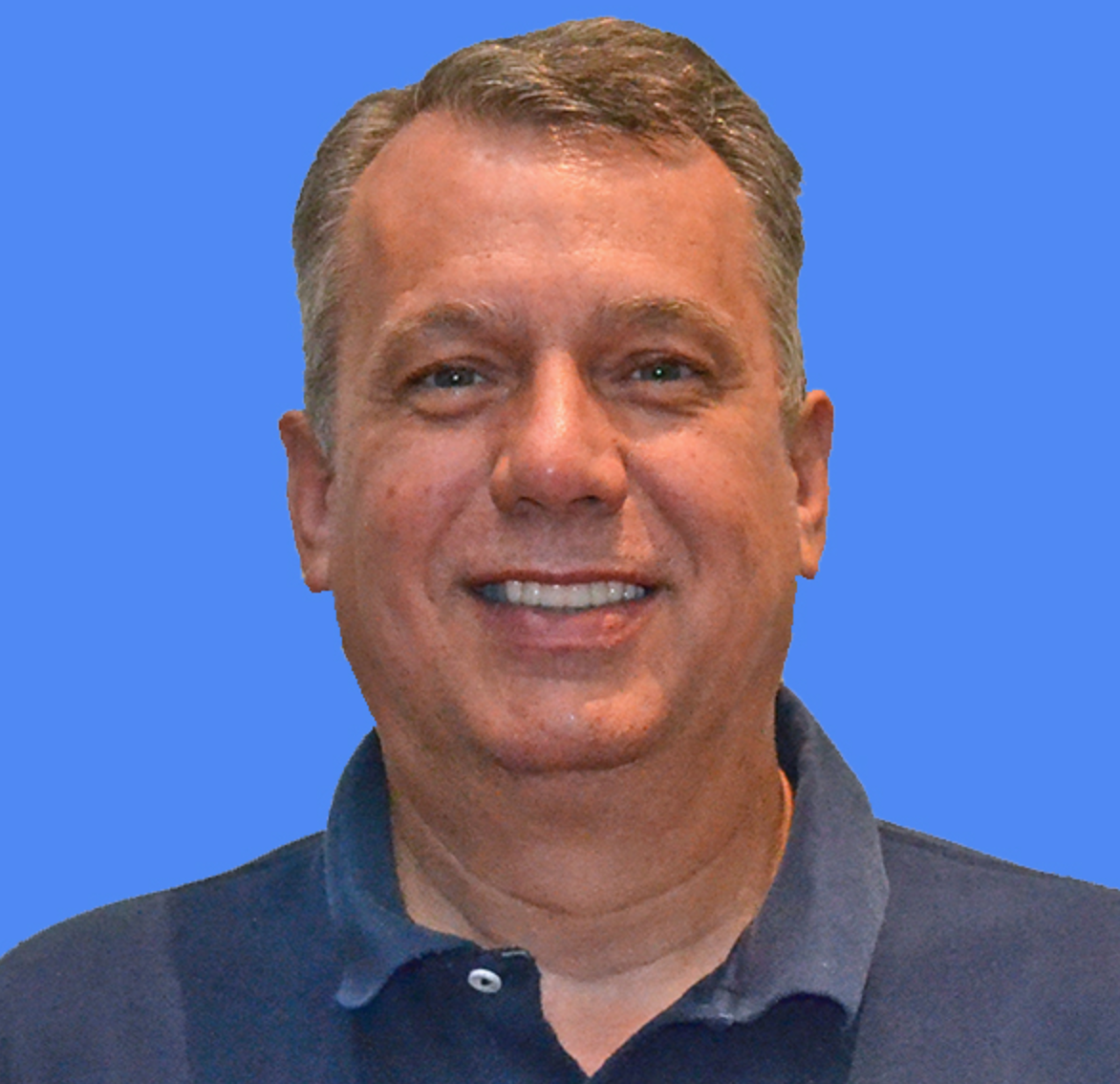

Travis Kohlrus and Ron VanEpps, members of Hays Toastmasters Club, have completed qualifications for the Competent Communicator level in Toastmasters International.
Kohlrus is senior vice president and general manager of Eagle Broadband, and VanEpps is network administrator for Midwest Energy.
To earn their Competent Communicator pins, each completed the 10 speeches in the Competent Toastmaster manual.

Hays Toastmasters, chartered in 1958, meets at noon each Wednesday at Thirsty’s Brew Pub and Grill, 2704 Vine.
For more information or to contact the club, visit www.toastmasters.org/Find-a-Club/00002609-hays-club.
‘Midnight Marauders’: The night they tried to rob the Kirwin Bank
 By KIRBY ROSS
Phillips County Review
In recognition of the Sesquicentennial celebration — the big 150th Birthday Party — which will be held in Kirwin on Saturday, Oct. 5, the Phillips County Review has been running original historical articles on the community.
It wasn’t unusual for some of us who grew up in Kirwin in the latter part of the 20th century to hear the tale of how the Kirwin Bank was robbed back in the “cowboy days.” As is common with the retelling of legends over decades of time, that story even had it that the bank was robbed by Jesse James.
And, as with many legends, there is usually a kernel of truth in there somewhere. In regard to this particular story, the kernel is that yes, somebody tried to rob the Kirwin bank, and yes, that attempt was made in the 1800s.
But it wasn’t made by Jesse James, and the attempt wasn’t a broad daylight strong-arm holdup with six-shooters and a posse–it was done in the dead of night with explosives, and was unsuccessful.
The Phillips County Review first started on the trail of this story after reading one of Fort Bissell Curator Ruby Wiehman’s great articles of her own she has been putting out in support of promoting the Kirwin Sesquicentennial celebration on Oct. 5.
In one article she ran on the pages of the Review several weeks ago, Ruby noted back in the 1890s attempts were made to rob the Kirwin Post Office and the Kirwin Bank a few months apart, and she wondered whether the two crimes might have been connected.
Maybe. After researching both, we’d have to say maybe.
With Ruby throwing clues our way, the Phillips County Review set out to track down “the rest of the story,” as Paul Harvey might have said, and here’s what we found out.
This particular tale starts out in the early morning hours of Fri., May 3, 1889, when a band of outlaws burglarized a Kirwin blacksmith shop and then proceeded to head over to the post office. Once there they forced their way through the street door and went to work on the safe.
Drilling through its double doors with the smithy’s tools they had just stolen, they then inserted an explosive and lit the fuse.
And, as if right out of a Hollywood movie produced a hundred years later, the resulting explosion blew the Kirwin Post Office’s doors off their hinges, propelling them across the room and wrecking the office interior in the process. The time of the robbery was afterwards estimated to be 3 a.m. based upon reports of “a low rumbling sound” that had been heard around town then.
The take that night was at least $100 the postmaster said was contained in the safe, plus an undetermined amount in a number of registered letters which had arrived on the 12:15 a.m. Missouri Pacific train.
The U.S. Land Office reported it was expecting a package containing $200, which was not found in the post office wreckage, making the total take at least $300 (equivalent to $8,000 in 2019 dollars).
This robbery was reported the very next day on the front page of the Topeka Daily Capital under a large-print headline, “MIDNIGHT MARAUDERS.” A subheadline noted “Robbers Force an Entrance Into the Kirwin Post Office and Secure Considerable Booty.”

Fast forward seven years to December 1896 when an attempt was made on the Kirwin State Bank by utilizing virtually the same modus operandi used on the post office.
That month had started out with a wave of burglaries in Kirwin. The clothing store of Charles W. Hull was hit, with “a quantity of cash stolen. A little later the dry goods store of A. Weaver was twice tapped,” said the Phillipsburg Herald.
Hull may have been specifically targeted. If he wasn’t, then he was just plain unlucky because two more efforts would be made against him over the next couple of weeks. Not only did he own Hull Clothing, he was also vice president of the Kirwin State Bank and owned a ranch just outside of town that straddled two miles of the Solomon River, on which he raised racing horses.
On December 11 Landes Meat Market was burglarized, and nine days later, on Sunday, December 20, the restaurant of George Doebler was ransacked, with a quantity of food and cigars being taken.
The night following the Doebler robbery was the big one though. The night after Doebler’s was the night they tried to rob the Kirwin bank.
It all came to a head that Monday, December 21, 1896. This time the bandits started out at the railyards, breaking into the section foreman’s tool chest where a large crowbar was taken. From there the plan was remarkably similar to the heist pulled at the post office several years earlier.
Using that crowbar to break into a blacksmith shop, the thieves stole smithy tools — a sledge, cold chisel, brace and drill bits.
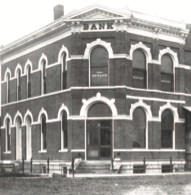
Shortly afterwards entering the Kirwin State Bank on the east side of the square through a back window, they went to work on the its substantial walk-in vault. While the thieves may not have known it, in 1884 that safe had been described as follows, “a fire proof vault, a heavy burglar proof steel chest with time locks.”
It would prove to be formidable.
Drilling a hole through the door just above the lock, the raiders then poured a quantity of gunpowder into that hole.
As reported by the Kirwin Globe, if the criminals thought they inserted enough powder to blow the door, “in this they were disappointed, as the door is so constructed that a bushel of powd’r would fall to the floor of the vault and even if exploded, would not effect the door.”
Having failed to breach the burglar-proof door, the gang then went to work on it with the cold chisel (a tool made of tempered steel used by blacksmiths to cut unheated metal). Being unsuccessful in trying to break the lock with the chisel, they finally abandoned the bank heist altogether and went on a burglary spree around the entire Kirwin business district.
Charles Hull’s store was broken into again that night, but by this time the clothier/banker had learned his lesson and didn’t leave any money on the premises.
Deterred again and moving on, the gang also broke into the lumber yard of C.E. Bradley and found his safe. This one was much easier to crack than the one in the bank — this one wasn’t even locked. Bradley reported he never used the safe to hold money — only books and papers.
The outlaws also hit Quintard’s grocery and men’s clothing store, where they forced two money drawers open and made a score of exactly $3.00. Quintard noted, “they overlooked fifty-one cents in pennies that was in one of the drawers.”
Which would have upped their total night’s take by 20 percent if they had grabbed those pennies.
The grand sum of loot hauled in after spending hours breaking into the bank and multiple businesses? — $3 cash money, a crowbar, a sledge hammer, a chisel, and a drill.
According to the Phillipsburg Herald, the Kirwin townsmen knew who the culprits were and put out the word they would be dealt with severely if the crime wave didn’t stop.
Said the Herald — “All this burglary and robbery has been very closely traced out until it stops at the doors of three men and two boys. A vigilance committee may be organized, and a great crash in the underbrush is not among the impossibilities.”
The Herald also accused the primary newspaper in Kirwin at the time, the Independent, which was housed in the basement of the bank building, of not reporting on the “Deviltry that is going on in Kirwin.” Accusing the Independent of being too focused on writing about happy things and not wanting to report about anything negative occurring in town, the Phillipsburg newspaper suggested the people of Kirwin were being put at risk due to the suppression of information they needed to know.
According to the Herald, “the Independent has been loth to mention” what had been going on “because it was thought to be the best policy to say nothing if it could not say something good.”
Six months after the attempted bank robbery, on Thursday, June 3, 1897, the safecracking efforts came back around full circle as the Kirwin Post Office was hit once again. And, once again, the safe was blown.
This time the thieves tore off a window screen and then broke a window to gain entry to the building.
As with the original post office robbery and the later failed effort at the bank, the safe was drilled, and explosives were poured in. And with that– “The safe was blown to pieces,” reported the Kirwin Globe. This time $95 in cash belonging to the U.S. government was taken, along with $100 in stamps.
The postmistress was also storing personal items in the safe that were taken, including jewelry, a gold watch and chain, $9 in cash and private papers. She retired shortly afterwards.
“The rascals left no clew by which they can be followed,” reported the Globe.
The Phillips County Review has not been able to find reports regarding anybody being brought to justice in any of these matters, either through the courts or by vigilante committees operating in the dead of night.
We were also unable to find any reports on safecracking continuing in Kirwin, so the Golden Age of blowing up the interior of Kirwin businesses to steal a hundred dollars or so appears to have passed.
The Kirwin State Bank continued operations for another quarter century. In 1922 it took over the bank in Cedar which was going under due to nonperforming loans. A year later the Kirwin State Bank itself ran into the same problem and failed on October 25. With an infusion of cash from local investors it soon after reopened as the Exchange State Bank under new management. No depositor lost money during this shutdown and reopening.
However this iteration of the most prominent bank Kirwin ever had lasted just three years before the failure of the 1926 Phillips County wheat crop resulted in a voluntary liquidation of Exchange Bank assets and the closing of its doors for good on June 10, 1926. This time no other financial institutions or townsmen would play white knight and come to the rescue as they had for the Cedar State Bank and Kirwin State Bank just a few years earlier.
Without anybody to bail it out, and seven years away before the creation of the Federal Deposit Insurance Corporation and government bailouts of banks, Kirwin depositors were paid off just 25 cents on the dollar.
No less worse, without a tenant the building itself would sit vacant for another eight decades. Over the years the structure, an architectural marvel in its heyday, slowly deteriorated and by the early 21st century had fallen into such disrepair that it had to be razed.
No trace of the bank remains, and now its tale, and that of the unknown would-be bank robbers who tried to blow the vault and clean it out 123 years ago, have now faded into the mists of time until all has become just another chapter in the Forgotten History of Phillips County.