We have a brand new updated website! Click here to check it out!

Federal judge in Kansas responds to reprimand over harassment, affair

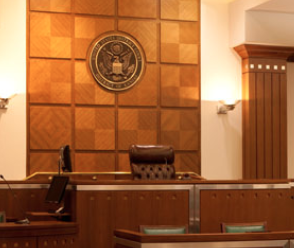
Photo courtesy U.S. District Court

The Judicial Council for the 10th U.S. Circuit Court of Appeals issued an order sanctioning U.S. District Judge Carlos Murguia, who is based in Kansas City, Kansas. The order said Murguia also was reprimanded for being “habitually late” to meetings and court proceedings for years.

Murguia was appointed to his federal judgeship in 1999 by then-President Bill Clinton, a Democrat, after serving as a Kansas district court judge in Kansas City. He was the first Hispanic federal judge appointed in Kansas.

He issued a statement Monday apologizing and saying that he took responsibility for his “inappropriate actions.” But he also said his actions “have not and will not interfere with the fair administration of justice.”

“As a result of this process, I have deeply reflected on my actions and have implemented self-imposed corrective measures, both personally and professionally,” Murguia said. “I am truly sorry and am committed to ensuring that such conduct is not repeated.”

The council’s order said there was no evidence that Murguia’s misconduct continued after he was notified of a complaint against him. But 10th Circuit Chief Judge Timothy Tymkovich wrote in the order that Murguia was “less than candid” after being confronted with the allegations.

“He tended to admit to allegations only when confronted with supporting documentary evidence,” Tymkovich wrote. “His apologies appeared more tied to his regret that his actions were brought to light than an awareness of, and regret for, the harm he caused to the individuals involved and the dignity of his office.”

Tymkovich appointed a special committee in August 2018 to investigate a complaint against Murguia, and it interviewed 23 people, according to the council’s order. A public reprimand as “the most severe sanction available” to the council, the order said.

The order said that female employees said that Murguia made sexually suggestive remarks and sent inappropriate texts to female employees and had “excessive, non-work-related contact” with them. It said the employees were “reluctant” to tell Murguia to stop “because of the power he held as a federal judge.”

“One of the employees eventually told him explicitly to stop his harassing conduct, but he continued,” the order said.

The order also said Murguia carried on a “years-long” extramarital sexual relationship with a “drug-using individual” who was on probation but was later imprisoned for probation violations.

“Judge Murguia placed himself in such a compromised position that he made himself susceptible to extortion,” Tymkovich wrote in the order.
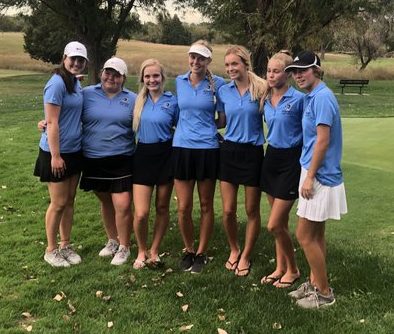
Monarchs girls’ golf finishes second at Hoisington Invite

Courtesy photo

GREAT BEND, Kan. – The TMP-Marian girls’ golf team finishes second at the Hoisington Invitational at the Lake Barton Golf Club. The Monarchs shot a 222, two shots behind Plainville.

Plainville’s Corbyn Marquess was top medalist with a 47. TMP’s Heleigh Spray was one of three golfers to shoot a 48 and finished third. Jenna Romme finished sixth with a 53.

Team Results
1. Plainville 220
2. TMP-Marian 222
3. Larned 223
4. Hoisington 236
5. Great Bend 239
6. Pratt 241
7. Hays JV 257
8. Dodge City 258

Top 10 Individual Results
1. Corbyn Marquess-PL 47
2. Halle Barker-LND 48
3. Addison Smith-HOIS 48
4. Heleigh Spray-TMP 48
5. Allyson Kaiser-GB 49
6. Jenna Romme-TMP 53
7. Darby Eakin-LND 54
8. Melinda Ruder-PL 56
9. Annika Larrison-PRT 56
10. Emily Norton-PL 57

Ellis man pleads guilty to second-degree murder in February shooting

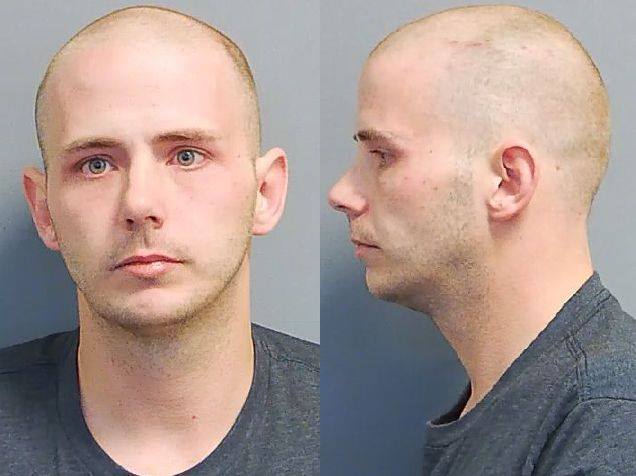
Thompson / HPD

By JONATHAN ZWEYGARDT
Hays Post

An Ellis man pleaded guilty to second-degree murder in the shooting death of a Hays man in February.

Ryan Paul Thompson faces more than 23 years in prison after pleading guilty Monday to shooting 26-year-old Diego Gallaway on Feb. 27 in the 2700 block of Indian Trail in Hays.

Thompson was originally charged with premeditated first-degree murder, criminal possession of a firearm by a convicted felon and possession of methamphetamine with the intent to distribute.

According to court documents, Thompson shot Gallaway in the back of the head while holding him in a choke hold.

Under the plea agreement, Thompson faces 272 months in prison for second-degree murder and another 15 months on the drug charge, for a total of 287 months in prison. The gun charge was dropped.

Thompson’s sentencing will be scheduled for later this year.

Also on Monday, Kylie Waldschmidt was bound over as charged with aiding and abetting first-degree murder during commission of inherently dangerous felony.

Ellis County Attorney Tom Drees said Waldschmidt and Thompson went to the 2700 block of Indian Trail to commit an aggravated battery or aggravated assault that escalated to murder.

Waldschmidt was also bound over for interference with law enforcement for allegedly lying to police.

A formal arraignment for Waldschmidt has not been set.

HAWVER: Governing by ‘council’ in Kansas

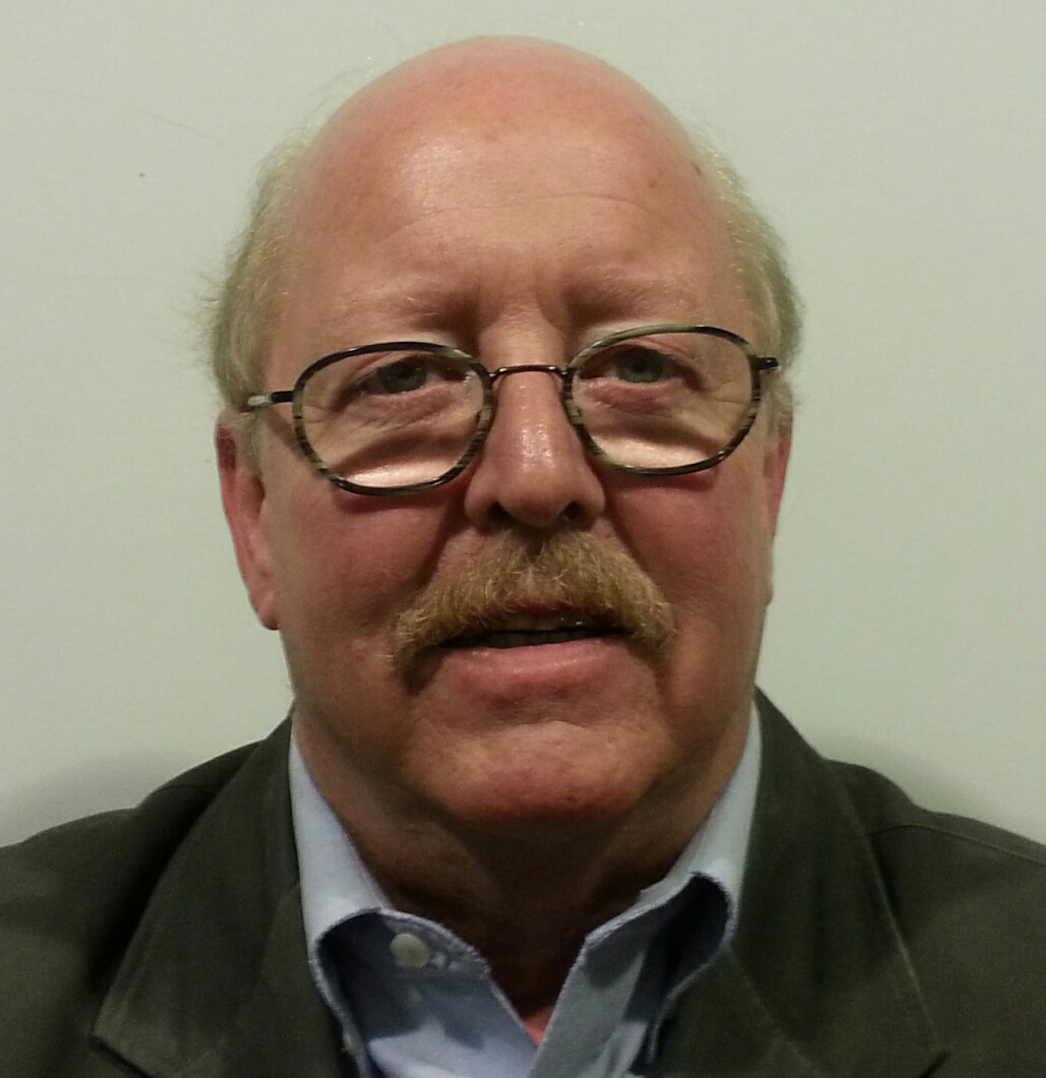
Martin Hawver
It’s starting to become apparent that Democrat Gov. Laura Kelly has devised a new tool to use to run the state that is essentially managed by a Republican-heavy Legislature.

Of course, Kansas government is basically run, its policies set, its benefits delivered by a majority of a quorum in legislative committees and a majority of members of the House and Senate.

Barring a veto (see last year’s two tax bills) which drives up the votes needed to override the governor, probably one of the most subtle tools is creation by a two- or three-page executive order which establishes “the Governor’s Council” on, well, whatever she wants.

In the first year of her administration, Kelly has made clear that she’s using that “Governor’s Council” to propose tax policy for the state and Medicaid expansion.

Now those councils are just advisory, they come up with policy for their assigned subjects and that policy is going to become the governor’s policy for the state.

Nope, it doesn’t get anything passed, but those council recommendations become a fence for the Kansas Legislature, setting boundaries for lawmakers’ actions. Approve most of whatever those “Governor’s Councils” propose, and it’s likely those bills will become law.

Get outside that fence, and the governor can veto a bill and cite—at length—that a specialized study group (and because a handful of Republicans is on those councils, she can refer to them as “nonpartisan”) considered and rejected those provisions.

Not a bad tactic.

Kelly’s first council, dealing with tax reform, has started its exhaustive look at Kansas tax policy, whom is taxed, what is taxed and what isn’t. It’s a big issue that will paint what tax changes produce…and what those changes may do to the state’s economy that most of us wouldn’t have thought of.

For example, continuing to under-fund the Kansas Department of Transportation doesn’t just take less money but it also is likely to damage the state’s economy through depreciating roads used for getting state products to out-of-state buyers, getting Kansans to their jobs, and even contributing to inadequate recreational bike trails to give cyclists a reason to stay in Kansas or come to Kansas to spend their lives.

Oh, and those roads that are now getting a little makeup with an inch or two of new asphalt and striping are actually deteriorating and will at some point require expensive rebuilding from the dirt to the road surface.

Now, does that sound like tax policy? No, but roads that are deteriorating faster than they are being preserved call for tax money to be spent.

And this week Kelly gives an introductory welcome to the Governor’s Council on Medicaid Expansion. That panel will, of course, propose expansion of Medicaid–we call it KanCare–and what that expansion should look like.

That’ll put some fences around the Legislature’s plans for expanding Medicaid which the House passed last session…and which the Senate never considered.

Look for the panel, of course, to deal with the social issues of caring for the health-care needs of the state’s poor, and then underline that expansion and accompanying federal funding with the possibility of more Kansas hospitals closing, jobs leaving small communities, and residents and workers leaving, too, with dire economic effects.

And look for the panel to disapprove legislative efforts to hinder that expansion through any number of provisions that would prohibit Kansans from becoming eligible for expanded Medicaid—like pre-existing conditions, or work requirements and such…

So, it’s just not the governor proposing tax and Medicaid plans, it’s a bipartisan council that helps draw fences around Medicaid legislation.

This governance by “council” might get interesting…

Syndicated by Hawver News Company LLC of Topeka; Martin Hawver is publisher of Hawver’s Capitol Report—to learn more about this nonpartisan statewide political news service, visit the website at www.hawvernews.com

Strategic Doing kicks back off with October session

The Heartland Community Foundation, which serves Ellis, Rooks and Trego counties, has scheduled the Strategic Doing meeting for Ellis County.

The Ellis County meeting will be held at 6 p.m., Tuesday, Oct. 8, at the Rose Garden Banquet Hall in Hays. Results of the working groups from the September meeting will be shared. Additionally, other project ideas will be identified, and project teams will be formed for discussion and action.

Strategic Doing is an engaging process that actively helps residents implement their ideas for community improvement projects. New ideas and working groups are encouraged to attend and start working through the Strategic Doing process.

“We hope all who attended the first event in September will join us, but also encourage anyone who was unable to attend the first meeting to come to this one as well,” said Sandy Jacobs, executive director. “There is much more input to be shared by many, as new issues come to the table all the time. Folks with projects that have stalled or those who need resources should also attend and share!”

Dinner will be served. There is no cost to attend, but registration is required. RSVP to [email protected] or 785-621-4090 by Oct. 4.

— Submitted

Exploring Outdoors Kansas: Signs, signs, everywhere are signs (maybe)

Steve Gilliland

I’m not a very opinionated man, but I do have a few annoyances. I try hard to keep these “pet peeves” on their leashes, but occasionally they break free.

Bad signs really irritate me; hard to read, too small, homemade looking, bad signs! For instance, a bad “for sale” sign might as well say” I really don’t want to sell this, but my wife won’t let it stay, so after you’ve read this sign, please just drive away.”

Speaking of bad signs, a major “pet peeve” of mine is trespassing and hunting without permission, and with the myriad of fall hunting seasons already underway, allow me to offer some pertinent information. I am a hunter and I have been a land owner, so I’ve been on both sides of this “fence” so to speak. Are you land owners and sportsmen aware that regulating trespassing and hunting on private property DOES NOT even require a “bad sign” but in fact, requires no sign at all?

In Kansas, law requires hunters to gain land owner permission even on unmarked property. Let me also note the difference between “hunting with permission only” and “hunting with WRITTEN permission only.” “Hunting with permission only” allows for any form of permission, written, verbal or over the phone, and requires the land owner’s signature on any ticket or formal complaint issued by the conservation officer. “Hunting with WRITTEN permission only” is satisfied only by permission in writing, and gives law enforcement personnel free rein to issue citations, and /or make arrests with no further authorization.

By the way, land owners, the fish and game dept. furnishes both the signs and permission slips, at no cost, for this type of posting. I’m sure we hunters have all seen the bright purple paint on fence posts and old tires along property lines. These purple markers along property boundaries also mean “hunting with WRITTEN permission only,” and corresponding compliance is required. The local conservation officer told me that trespassing violations are misdemeanors, so fines are determined and levied by the judge. A few years ago in McPherson County, the minimum was two hundred fifty dollars plus court costs of ninety-eight dollars, and could easily have run up to five hundred dollars depending on circumstances and the judge’s decision.

We hunt mostly deer and turkeys, and trap coyotes, raccoons and beavers. Lots of land owners, especially farmers, are willing to let respectful, responsible hunters help them control deer, turkey, predator and beaver populations on their land. In my assessment, there are very few reasons why hunting and trapping permission is denied. One is because the owner wants to reserve the privilege for themselves and their family. Another is because someone else has “beaten us to the punch.” There are also land owners who simply do not want game animals harvested. These are all legitimate reasons we hunters must respect. The explanation that makes me cringe is when a land owner denies hunting or trapping permission because of a bad experience with previous hunters or trappers. Trespassing, cut or broken-down fences, gates left open, muddy ruts in fields, indiscriminate shooting and other disrespectful actions toward the owner or his property; I’ve seen or experienced them all! Sadly, these actions by a few of our comrades adversely affect all hunters in the end.

Remember, NO SIGN of any kind is required to keep unwelcome hunters off your land, nor to have them prosecuted for trespassing! I was once denied permission to hunt deer during firearms season on a man’s property because years before he and his wife had dodged bullets whizzing through the trees as they attempted to cut firewood. Evidently the shooter had never before heard the sound a chainsaw makes…Continue to Explore Kansas Outdoors.

Steve Gilliland, Inman, can be contacted by email at [email protected].

‘Every state champ ever’: KSHSAA Gallery of Champions available online

The Kansas High School Activities Association has unveiled the KSHSAA Gallery of Champions.

The online feature, which can be found HERE, showcases “every state championship team, ever!” KSHSAA tweeted Monday.

The page includes a search function, which allows searches by name, school, activity or year. The database includes season results, championship histories, rosters and more.

Now That’s Rural: Charles Curtis

Ron Wilson is director of the Huck Boyd National Institute for Rural Development at Kansas State University.
By RON WILSON
Huck Boyd National Institute for Rural Development

Who is the only native Kansan ever to be elected President or Vice President? (If you guessed Dwight D. Eisenhower, you would be wrong. Although Eisenhower claimed Abilene, Kansas as his home, he was born during his family’s brief stay in Texas.) Who is the first Native American Indian ever to be elected President or Vice President? The answer to that question is the same as the correct answer to the first one: Charles Curtis is the first native Kansan and first Native American Indian to be elected to the nation’s second-highest office. His life is an amazing example of how education and hard work created a rags-to-riches success story. Thanks to the Kansas Historical Society and the U.S. Senate website for this information.

Charles Curtis was born in north Topeka. His father was Orren Curtis and his mother was Ellen Pappan who was one-quarter Kaw Indian. Charles was the great-grandson of White Plume, a Kansa-Kaw chief who had offered assistance to the Lewis and Clark expedition. White Plume’s daughter married a French-Canadian trader, so Charles grew up speaking French and Kansa before he learned English.

His mother died in 1863 at about the time his father left to fight in the Civil War. Charles was raised by his grandparents at the Kaw Reservation near the rural community of Council Grove, population 2,051 people. Now, that’s rural.

Young Charley learned to ride Indian ponies bareback. He became a successful jockey. He was also the hero of a cross-country run to warn Topeka about upcoming Cheyenne Indian raids.

After his grandfather’s death in 1873, Charles was headed to Indian territory. His grandmother advised him to get a formal education instead. “I mounted my pony and with my belongings in a flour sack, returned to Topeka and school,” Curtis recounted. “No man or boy every received better advice, it was the turning point in my life.”

In Topeka, he attended school while living with his other grandmother, a strong-minded woman. It was said of her that “she regarded being a Methodist and a Republican as essential for anyone who expected to go to heaven.”

Charles did well in school and went on to study law, supporting himself by working as a custodian and driving a horse-drawn taxi. When he had no customers, he would stop under streetlamps to read his law books.

After being admitted to the bar, the young lawyer opened his own firm, invested in real estate, and married Anna Baird. He was elected Shawnee County Attorney. Known as a law-and-order prosecutor, he won an upset victory over Democrat and Populist opponents for a U.S. House seat in 1892.

Curtis rose through the ranks in Congress. He was elected to the Senate where he ultimately served as majority leader. A strong advocate of farmers, he sponsored numerous bills related to agriculture and to Indian affairs. He was a master tactician who built strong relationships with both the conservative and progressive wings of his party. One senator described Curtis as “a great reconciler, a walking political encyclopedia, and one of the best political poker players in America.”

At the 1928 Republican convention, Charles Curtis was nominated for Vice President with Herbert Hoover. They were elected in a landslide but defeated for re-election in 1932.

After his term concluded, Curtis practiced law in Washington and continued his interest in politics. He liked to tell audiences that he was “one eighth Kaw and one hundred percent Republican.”

Curtis died in 1936 and is buried next to his wife Anna in a Topeka cemetery. The Charles Curtis State Office Building in downtown Topeka is named in his honor.

When the Curtis gravesite was rededicated, Vice President Dick Cheney sent a letter lauding Curtis as a “champion of the farmer and an advocate for women’s suffrage” and as a strong supporter of legislation granting citizenship to Native Americans.

Who was the first native Kansan and Native American Indian to be elected Vice President? It was Charles Curtis, whose education and hard work would make a difference and transform his life. We can be proud to claim him as a Kansan.

Kansas man dies after dump truck flips end over end

WASHINGTON COUNTY —One person died in an accident just before 3p.m. Monday in Washington County.

The Kansas Highway Patrol reported a 1992 International Dump truck driven by David Towner, 77, Ottawa, was northbound on Kansas 15 just east of Maple. The driver lost control, entered the east ditch and the truck flipped end over end after traveling down the embankment.

Towner was pronounced dead at the scene and transported to Ward Funeral Home. He was not wearing a seat belt, according to the KHP.

Copyright Eagle Radio | FCC Public Files | EEO Public File