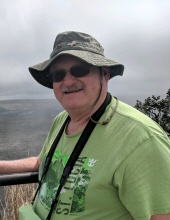
Jamie Lynn Kyger, age 47, passed away on Tuesday, October 22, 2019.
Services by Brock’s-Keithley Funeral Home and Crematory, 2509 Vine Hays, KS. A complete obituary and services are pending.
Jamie Lynn Kyger, age 47, passed away on Tuesday, October 22, 2019.
Services by Brock’s-Keithley Funeral Home and Crematory, 2509 Vine Hays, KS. A complete obituary and services are pending.

LAWRENCE, Kan. (AP) — A judge has denied a new trial for a Kansas home day care worker who was convicted in the death of a 9-month-old baby.
The sentencing for 44-year-old Carrody Buchhorn is now set for Nov. 18. She faces nine to 10 years in prison.
Her sentencing had been delayed while she argued that she deserved a new trial. She got new attorneys after she was convicted last year of unintentionally but recklessly causing the death of Oliver Ortiz in 2016 in Eudora.
Her new attorneys challenged the work of her trial attorneys and how they handled the testimony of the coroner, who ruled that the baby’s death was a homicide. A judge ruled last week that her trial attorneys “were not ineffective.”
LAWRENCE, Kan. (AP) — A Kansas prosecutor is retiring amid calls for her to step down after a Missouri judge overturned the double murder conviction of a man whom she helped send to prison more than two decades ago.

The Douglas County, Kansas, district attorney’s office said in a statement this week that Chief Assistant District Attorney Amy McGowan is transitioning her cases to other attorneys in preparation for her Nov. 1 retirement. The statement provided no other explanation.
McGowan didn’t immediately return a message from The Associated Press left for her through the prosecutor’s office.
McGowan had been the subject of recent protests by the KC Freedom Project after a judge found that, while working in the Jackson County, Missouri, prosecutor’s office, she failed to disclose exculpatory evidence in Ricky Kidd’s case. He was freed from prison in August after a judge found clear and convincing evidence that he was wrongfully convicted of the February 1996 deaths of George Bryant and Oscar Bridges in Kansas City, Missouri. Prosecutors subsequently decided not to retry him.
“She should be disbarred,” Kidd told The Kansas City Star’s Editorial Board in September.
McGowan also was accused of withholding evidence in the case against Richard Buchli II, a Kansas City attorney who spent about five years in prison in the 2000 death of his law partner before his conviction was overturned. Charges later were dismissed. And in 2013, the Kansas Supreme Court found McGowan made improper comments during closing arguments in five cases between 2007 and 2009. In one instance, the court vacated a sentence in a child-exploitation case.
After Kidd was freed, protesters held signs and chanted in Douglas County and in downtown Topeka in front of the state agency tasked with investigating complaints against attorneys.
Cheryl Wright Kunard, a spokesman for the Douglas County district attorney’s office, told the Lawrence Journal-World it would be inappropriate to respond to questions about whether the protests influenced McGowan’s decision to retire.
The Douglas County prosecutor’s office previously defended McGowan in a statement, saying that while she did make errors in Kidd’s case, the verdict was overturned primarily because the main witness recanted.
“False and grossly misleading rumors are being spread that Ms. McGowan was ‘found guilty,’ ‘convicted,’ and ‘disciplined,'” the statement said. “Ms. McGowan has never been convicted nor disciplined by the Missouri Court System or the Kansas Supreme Court.”
 Tonight’s Downtown Hays Market Farm to Fork dinner has been moved inside because of inclement weather.
The dinner will now be at the former Goodwin’s Building at 109 W. 11th St.
The dinner will be at 6 tonight. The event is sold out.
 Elizabeth J. “Betty” Buchholz, age 86, of WaKeeney, Kansas, passed away Tuesday, October 15, 2019, at Trego County Lemke Memorial Hospital in WaKeeney. She was born March 22, 1933, in Gorham, Kansas to Vincent and Delphine (Kuhn) Copp. She shared a happy life with her husband, Duane W. Buchholz.
Betty was a homemaker and enjoyed gardening and canning, sewing and hand quilting quilts, crocheting and was an accomplished seamstress. She was an incredibly giving, talented and creative person.
Betty is survived by her husband, Duane Buchholz of WaKeeney; a son, Eugene F. Buchholz and wife Michelle of Oakley, California; a daughter, Gail A. Jensen and husband Richard of WaKeeney; three brothers, Michael Copp of Olathe, Kansas, Dwayne Copp of Roseville, California and Lawrence Copp of El Segundo, California; three sisters, Patricia Roe of WaKeeney, Rosemary Mai of Salina and Mary Jane Wahlmeier of Norton; two grandchildren, Tara Harold and husband Thomas of Moorpark, California, Kimberly Pinto and husband David of Oakley, California as well as two great grandchildren, Caylee and Dominic Harold and many beloved nieces and nephews.
She was preceded in death by her parents and a brother, Vincent Copp Jr.
Memorial services will be 10:30 AM with memorial visitation from 9:30 until service time on Friday, October 25, 2019 at Brock’s-Keithley Funeral Chapel and Crematory 2509 Vine Hays, KS 67601. Inurnment will follow the Memorial Service at approximately 11:45 AM at the WaKeeney City Cemetery.
In Lieu of flowers memorial contributions are suggested to the Trego County Lemke Memorial Hospital/WaKeeney Family Care Center or the Bethlehem Lutheran Church of WaKeeney
Condolences may be left by guest book at www.keithleyfuneralchapels.com or by email at [email protected]
Steven A. “Steve” Herrs, 64, Salina, passed away October 22, 2019 at his home after an 8-year battle with soft tissue sarcoma cancer. He was born Jan. 4, 1955 in Washington, Kan, to Marvin and Clara (Ohlde) Herrs.
Steve graduated from Linn High School in 1973. He received an associate degree from Cloud County Comm. College in 1975, and his Bachelor of Science degree from Kansas State University in 1977.
Steve married Eunice M. Wiechmann, in 1975 in Barnes, Kan.
In 1977 the couple moved to Concordia, Kan, where Steve began his commercial broadcasting career at KNCK radio.
The couple moved to Norton, Kan, in 1978 where they made their home for the next 38 years. During that time Steve worked 12 years at KQNK radio. In 1990, Steve left broadcasting for a 26-year career in corporate communications at Rural Telephone/Nex-Tech, before retiring in 2017.
While in Norton, Steve was an active member of Immanuel Lutheran Church. Steve was also involved in the community, serving on the boards of the Norton County Extension Council, Norton Area Chamber of Commerce, Northwest Kansas Planning and Development Commission and Pioneer Country Development.
Steve is survived by: son, Dustin Herrs (Jessa) of Salina; daughter, Sheena Lobmeyer (Nicholas) of Hays; grandsons, Paxton, Elijah, and Tripp Herrs, and Isaac Lobmeyer; granddaughters, Annabelle and Lainey Herrs; brothers, Harvey Herrs of Horton, DeWayne Herrs (Roberta) of McPherson, and Rodney Herrs (Karen) of Tonganoxie; sisters-in-law, Anita Ohlde (Ronald) of Palmer, and Beverly Winter (Scott) of Manhattan; and many nieces, nephews, cousins and friends.
Steve was preceded in death by his wife, Eunice, his parents, brother, Ralph Herrs, sister-in-law, LaDean Herrs, and brother-in-law, Ronald Wiechmann.
Friends may call noon-8 p.m., Sunday, October 27th at Ryan Mortuary, Salina where the family will receive friends from 2-5 that afternoon.
Funeral services will be at 11 a.m., Monday, October 28th, at Christ the King Lutheran Church, Salina. Burial will be at approximately 3:00 pm Monday afternoon in the St. Peter Lutheran Church Cemetery, near Barnes. A time of food and fellowship will follow at the St. John’s Lutheran Church fellowship hall, Palmer.
Memorials are suggested to Christ The King Lutheran Church, Salina, Kan.
Kirby Lee VanDegrift, 64, passed away on October 24, 2019, at his home in Ness City, Kansas.
He was born on September 22, 1955, in Ness City, Kansas the son of Barry and Loretta (Schweitzer) VanDegrift.
Memorial service will be on Saturday, November 2, 2019, 10:30 AM, at the Fitzgerald Funeral Home, Ness City. Inurnment will follow in the Ness City Cemetery.
Memorial contributions may be given to the Kirby VanDegrift Funeral Fund.

KDHE
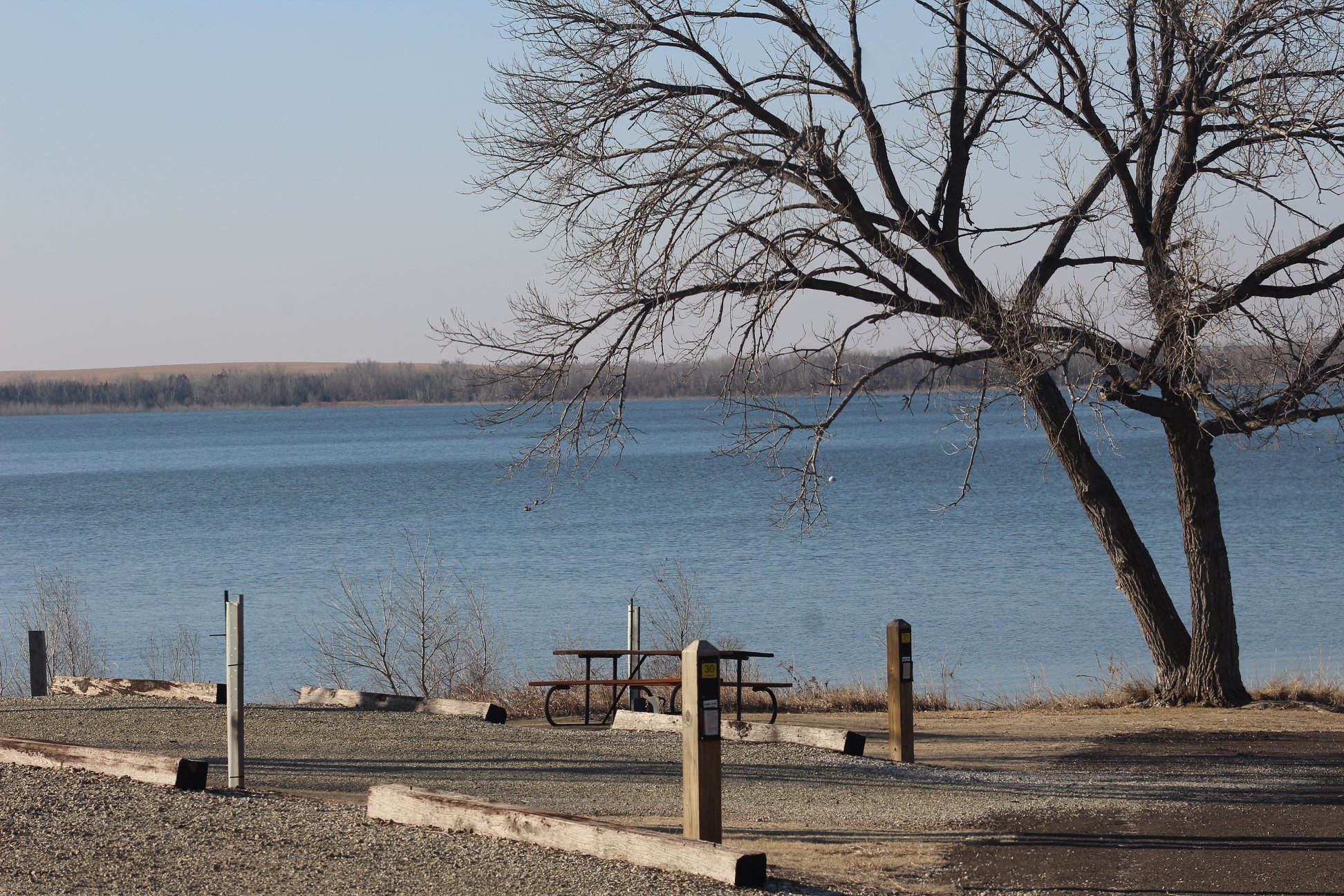
TOPEKA – The Kansas Department of Health and Environment (KDHE), in conjunction with the Kansas Department of Wildlife, Parks and Tourism (KDWPT), has issued public health advisories for Kansas lakes.
Warnings:
Jerry Ivey Pond, Saline County
Lake Jeanette, Leavenworth County
Lakewood Park Lake, Saline County (unchanged)
Lifted Warnings 10/24:
Central Park Lake, Shawnee County
Yates Center Kids’ Fishing Pond, Woodson County
When a warning is issued, KDHE recommends the following precautions be taken:
Watches:
Gathering Pond near Milford (Hatchery Supply Pond), Geary County
South Lake, Johnson County
Lifted Watches 10/24:
Carousel Lake (Gage Park), Shawnee County
Lake Afton, Sedgwick County
Rock Garden Pond (Gage Park), Shawnee County
Webster Reservoir, Rooks County
A watch means that blue-green algae have been detected and a harmful algal bloom is present or likely to develop. People are encouraged to avoid areas of algae accumulation and keep pets and livestock away from the water.
During the watch status, KDHE recommends the following precautions be taken:
KDHE samples publicly-accessible bodies of water for blue-green algae when the agency receives reports of potential algae blooms in Kansas lakes. Based on sampling results, KDHE reports on potentially harmful conditions.
Kansans should be aware that blooms are unpredictable. They can develop rapidly and may float around the lake, requiring visitors to exercise their best judgment. If there is scum, a paint-like surface or the water is bright green, avoid contact and keep pets away. These are indications that a harmful bloom may be present. Pet owners should be aware that animals that swim in or drink water affected by a harmful algal bloom or eat dried algae along the shore may become seriously ill or die.
For information on blue-green algae and reporting potential harmful algal blooms, please visit www.kdheks.gov/algae-illness/index.htm.
 Q: What did the triangle say to the circle?
A: You’re pointless!
Join fans of 99 KZ Country on Facebook: https://www.facebook.com/99KZCountry

By STEPHEN KORANDA
Kansas News Service
TOPEKA — A top Republican in the Kansas Senate said he’s designed a Medicaid expansion plan that aims to walk a fine line — one that can win over conservatives without losing support from moderate Republicans and Democrats.
But the proposal also risks satisfying neither faction.
Republican Senate Majority Leader Jim Denning outlined a proposal this week that would grow the Medicaid health care plan to cover an added 150,000 or so low-income Kansans.
His strategy includes a mix of policies inspired by ideas from Republicans and Democrats. But the plan also adds in the private insurance market, with the goal of stabilizing the federal health care exchange in Kansas where people without Medicaid buy private coverage.
The would-be bill passed an initial hurdle Wednesday. A special Senate committee recommended the plan get further study during the coming legislative session that kicks off in January.
Denning said the ultimate goal is securing health care coverage for as many Kansans as possible.
“There’s things to like about it on both sides of the fence,” Denning said.

It comes after years of wrangling over the issue. Supporters have failed to overcome opposition from leadership in the past. Coming into this session, some Republican leaders said they’re going to work on the topic.
To try to attract Democrats and moderate Republicans, the bill would expand health coverage. But it doesn’t take the simple path Democrats have pushed for of expanding Medicaid to cover people with incomes up to 138 percent of the federal poverty level.
Many of the new people covered would go into the regular Medicaid health care program. But the bill would also use private insurance for some low-income Kansans.
It would leverage $50 million in tobacco and vaping taxes to make plans sold through the federal health care exchange — established through the Affordable Care Act, or Obamacare — more generous and affordable. That’s intended to draw more people to that market.
Doing that could help stabilize costs on the health care exchange, Denning hopes.
“The exchange is in a death spiral,” Denning said, “and if we can leave those patients there and bring in new patients, we can probably save it.”
The blueprint would also require some people to pay 5 percent of their household income in premiums. If they fall too far behind, they’d be locked out of Medicaid coverage for six months.
Some conservative lawmakers want work requirements to be part of any expansion plan. Denning’s bill doesn’t include strict work rules, but people working fewer than 20 hours per week would be referred to a state program aimed at connecting them to jobs.
“Let’s find out why they’re not working and see if we can get them working,” Denning said.
That’s a good compromise to Republican Sen. Molly Baumgardner, who likes that it can inform unemployed people about services they might not know exist.
Baumgardner doesn’t support strict work requirements because she’s concerned it might create problems for people like single mothers, who may have to leave children in unsafe conditions or in unlicensed child care to meet a work requirement.
“What we see far too often is when a single mom is trying to work and care for children, that’s when the problems occur,” Baumgardner said.
Other Republicans would like a requirement insisting that at least some of the people getting health care through Medicaid get employment.
“If you don’t have children and you have an able body, I’d like to see effort for work,” Republican Sen. Ty Masterson said.
Masterson said the lack of stronger works rules and concerns over the cost mean he’s not backing the bill.
Expanding Medicaid would cost over $1 billion per year. Federal taxpayers would cover 90 percent of that, state money would pay for the rest. New fees on health care providers would help cover the cost under Denning’s plan.
The bill faces opposition from some Democrats. Adding private insurance into the plan adds additional complications, and Senate Minority Leader Anthony Hensley said that will lead to delays if the federal government doesn’t approve it.
Hensley wants to vote on a bill that simply expands Medicaid without adding other issues like private insurance.
“That ought to be the first step,” Hensley said. “That ought to be the only step that this Legislature passes this session.”
Denning’s bill includes a fail-safe. If the federal government doesn’t approve the private insurance proposals, the bill directs the state to submit a Medicaid plan without them.
Democratic Gov. Laura Kelly urged lawmakers last month not to over-complicate Medicaid expansion. She didn’t give Denning’s plan a warm reception.
“We don’t need to create extra bureaucratic red tape, raise taxes, and create more hurdles to access to health care,” Kelly said in a statement.
Advocates for Medicaid expansion are still digesting all the details in Denning’s proposal, but they’re feeling upbeat that lawmakers who previously opposed expansion are now bringing forward ideas.
“It looks like this is a good-faith effort,” said April Holman, executive director of the group Alliance for a Healthy Kansas. “We’re encouraged that we’re seeing this conversation happen.”
Stephen Koranda is Statehouse reporter for Kansas Public Radio and the Kansas News Service, a collaboration of KCUR, Kansas Public Radio, KMUW and High Plains Public Radio covering health, education and politics. Follow him on Twitter @kprkoranda or email [email protected].
 Charles Douglas “Charlie” Hall, 66 of Olivet, passed away Saturday, October 19, 2019 at the Coffey County Hospital in Burlington, Kansas.
He was born March 10, 1953 in Eureka, Kansas the son of Charles Willis and Alpha Celona Butler Hall. Charlie attended Eureka High School and graduated with the Class of 1971. He would go on to earn a Biology Degree from Emporia State University. He married the love of his life, Barbara “Amy” Long on July 14, 1973 in Eureka, Kansas.
During the summers of 1975 and 1976 while attending Fort Hays State University, Charlie worked as a fee ranger for the Corps of Engineers at Wilson Lake. He would complete his Masters in Range Management and serve as a 404 Tech from 1977 until moving to Iowa in July of 1979.
Charlie served as a park ranger at Rathbun Lake until May of 1980 when he and Amy made their home in Olivet, Kansas. Charlie took a position as a park ranger at Melvern Lake until transferring to the Corps of Engineers Kansas City District Office in the early 2000’s. He retired from the Corps of Engineers in 2016 and began working for FEMA as a disaster site planner, preparing environmental impact assessments.
Charlie held dual membership in Fidelity Lodge #106 AF & AM of Eureka and Lebo Masonic Lodge #152 of Lebo. He was an avid bird watcher and took every opportunity to travel and go camping with his wife Amy. His love for nature and the earth’s bounty was a gift that he proudly shared with his children and grand children. Charlie served as Scoutmaster for Troop #150 of Melvern for 20 years and achieved his Wood Badge certification, the highest level of training a scout leader can obtain.
He will live on in the hearts and memories of his wife, Barbara “Amy” Hall of their home in Olivet; a daughter, Heather Hall and her partner Matt Donnelly of Lawrence; sons, Nathan Hall and his wife Fleur Hopper of Portland, Maine and Matthew Hall of Lawrence; grandchildren, May Ann Donnelly, Ella Heikkila-Hall and Maxwell Hall; brothers, Allen Hall and his wife Sheridan of Eureka and Ron Hall and his wife Melinda of Eureka; numerous extended family and a host of former coworkers and dear friends. He was preceded in death by his parents and a brother, Larry Hall.
Cremation is planned with a memorial gathering and service is scheduled for 2:00 P.M., Saturday, October 26, 2019 at the Jones VanArsdale Funeral Home. Private family inurnment will take place in Eureka Cemetery. The family will receive friends from 1:00 P.M. until service time, Saturday at the funeral home.
The family requests that memorial contributions be made to the Kansas Chapter of The Nature Conservancy and sent in care of the Jones VanArsdale Funeral Home at P.O. Box #43, Lebo, Kansas 66856.


Kansas faces a prison crisis of crowded facilities and escalating costs to taxpayers. Fixing that requires addressing mental health, and the grim reality that our approach to the mentally ill is often to imprison them.
In fairness, America has evolved on this issue. Historically, states often forced the mentally ill—especially the poor—into state-run institutions where they faced involuntary sterilization. In Kansas, from 1913 to 1961, the state sterilized over 3,000 individuals, mostly with mental illnesses.
In the 1960’s, states started to deinstitutionalize the mentally ill, shifting the care burden to families, nursing homes, or other community-based settings. But states often failed to follow through on promises to fund these alternatives. This meant that more people with mental illness lacked access to adequate care, which often resulted in homelessness and incarceration.
As the state mental health apparatus withered in Kansas, the burden of care shifted to local communities that varied in their ability to meet that challenge. In many communities, county jails became the default mental health providers, and law enforcement officers increasingly became first responders to mental health crises.
Kansas also started imprisoning more people with mental illness. In 2018, the Kansas Department of Corrections reported that 33 percent of the nearly 10,000 inmates in state prisons were diagnosed with serious to severe mental illnesses, and 65 percent had some degree of mental illness. By comparison, the department reported that in 2006 only 38% of inmates were mentally ill.
Compounding that problem, experts show that mentally ill offenders are more likely to receive extended sentences and other punishments in prison due to behavioral incidents, and many return post-release because of incidents explicitly related to their illnesses.
Kansas also faces the challenge that companies contracted to provide prison services have often failed to meet contractual obligations. Local media reported earlier in 2019 that Corizon Health, which the Brownback administration hired to provide health services in Kansas prisons, had failed to provide adequate staffing and medication to cover mental health needs of prisoners.
Are there solutions?
First, Kansas has a patchwork of mental health services—and strong mental health advocates—that can help address the issue. Those providers need policy and financial support from local, state, and federal policymakers.
Second, some Kansas communities have trained law enforcement on defusing mental health crises. But how many do this and the effectiveness of that training is uncertain.
Third, as some politicians recognize, prison alternatives merit consideration. Other states have explored criminal justice reforms such as mental health courts, pretrial diversions that emphasize supervision and treatment over prosecution, and expanding services for offenders post-release to avoid reentry. Adapting those reforms to Kansas is worth exploring.
Fourth, some states have started reverting privatized prison services back to state functions. Some states have found that implementing services like mental health care effectively themselves is cheaper than contracting with corporations that require additional oversight, and that may botch program implementation in ways that increase state costs.
Yes, this costs money. But, the system now incurs great costs and sets many mentally ill Kansans up to fail. For both politicians and citizens, it is often easier to say that we care about mental illness, but harder to act on that financially. If we had cared financially decades ago, today’s prisons might not be leading mental health providers.
Patrick R. Miller is an Associate Professor of Political Science at the University of Kansas.
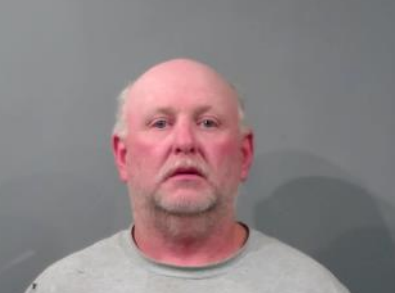
SEDGWICK COUNTY — Law enforcement authorities are investigating a Kansas man on child sex charges and have made an arrest.

Just before 6p.m. Tuesday, a police officer was attempting to contact 50-year-old Larry F. Brannan at a residence in the 11600 block of E. 71st Street South in Wichita, regarding an outstanding warrant for aggravated indecent liberties with a child, according officer Charley Davidson.
The officer located Brannon and attempted to take him into custody. Brannon resisted, battered the officer and nearly struck the officer with his vehicle.
The officer eventually arrested Brannon with the assistance of the his K9.
Brannon was treated at a local hospital for minor injuries from a dog bite and then booked into jail on requested charges of aggravated assault on a law enforcement officer, simple battery on a law enforcement officer, resisting arrest and the outstanding Sedgwick County Warrant.
He was held on a bond of $100,000, according to online jail records and is no longer in custody.