The Hays Public Library will hold a launch party on November 9 to kick off a new program to encourage parents and caregivers to read with children. The 1,000 Books Before Kindergarten initiative is a free reading challenge aimed at growing children’s literacy skills.
“Many children experience difficulty learning how to read. Those who are not proficient readers will have difficulty during their school years and beyond,” said Early Literacy Librarian Sara Schoenthaler. “The ability to read is THE gateway skill to learning and accessing the world. Those children who are read to and exposed to books consistently and from a young age are better prepared to read and succeed.
Parents and caregivers are the first and best teachers of their 0-5 year olds.”
Studies have shown that reading with a child provides a great opportunity for bonding. Reading together is fun and will create life-long memories for both the child and parent. Experts agree that children who learn the necessary skills early do better in school and later in life.
Participating in 1000 Books Before Kindergarten can help put children on the right track.
The Hays Public Library will provide logs to track the number of books read. Each time 100 books are read, a child gets a sticker from the children’s service desk. After completing 500 and 1000 books, a child will get to choose a free book to keep. As much fun as it is to read new stories, families are encouraged to count every time they reread a favorite book. The goal is not to read 1,000 NEW books but to read with their child 1,000 times, no matter if it is the same book over and over again.
Each November the library will host a “graduation” party for anyone that completed the program in the previous 12 months.
A launch party will be held at the library November 9 at 11:30 a.m. This event also will serve as the kickoff of Kansas Reads to Preschoolers Week.
You can find out more about this and other library programs at hayslibrary.org or by calling 785-625-9014.
Museum board president assures the city council it will reopen in the spring
By JAMES BELL Hays Post
ELLIS — In an effort to alleviate continued budget woes, the Walter P. Chrysler Boyhood Home and Museum Board of Directors has decided to close over the winter — but assured the Ellis City Council that the closure is temporary.
“The rumor that the house is closing is just a rumor,” Gordon Solomon, museum board president, told the council at Monday’s regular meeting. “We want to ensure everyone that it is not permanently closing. It will be open in the spring.”
The move became necessary as the museum was unable to break even and was using reserve funds to pay staff over the slower winter months.
“We have been struggling, budget-wise for a couple of years now,” Solomon said. “By doing the closure, we should be able to close out the budget this year about equal.
“Like most people, we have to learn to live within our means,” he said.
He acknowledged the council was funding the museum as much as possible, but ultimately the savings made by closing was needed to put the budget on track.
“Our goal is to just meet budget and we realize the city can’t increase what you are already doing to assist the home,” Solomon said.
During the meeting, he said attendance over the winter months is low, so the impact on tourism would be minimal.
As an example, Solomon said total admissions and sales for the museum in January and February of this year was only $82.35 — while wages and payroll taxes equaled $1,404.
With those numbers, he said, “Obviously we are not meeting budget, even with your assistance.”
While the board was actively seeking solutions to balance the budget over the summer, museum employees gave notice to the board they would be leaving on Sept. 6, spurring the board to make a decision at a special meeting on Aug. 29.
“As a board, we decided that we would stay closed through the remainder of September and then we proposed to the board to mirror the schedule of the Ellis Railroad Museum,” Solomon said. “Our intent in the future is to open in March and close at the end of September.”
In January, he said the board would begin looking for a new employee.
Even with the budget concerns alleviated, for the time being, Solomon said the board is still actively seeking ideas to bring more people to the museum, including continuing to strengthen the partnership with the Ellis Railroad Museum.
“That’s our goal. We want to try to mirror each other and support each other,” Solomon said.
This would continue the trend of the two museums operating in a similar manner to one another.
“We tried to structure them the same — hours, fees, everything,” Ellis Mayor David McDaniel said.
Solomon said the board is also looking at a discounted rated for visitors who go to both museums, or offering a discount to people visiting the Ellis Lakeside Campground.
“There is a lot of people coming to town that obviously don’t visit,” Solomon said, noting the large influx of people at the campground, even while museum attendance is low.
BARTON COUNTY — Law enforcement authorities are investigating a Kansas felon on new charges after a traffic stop.
Phillips photo Barton Co.
Just after 11p.m. Monday, a police officer conducted a traffic stop in the 4300 block of 10th Street in Great Bend for an equipment violation.
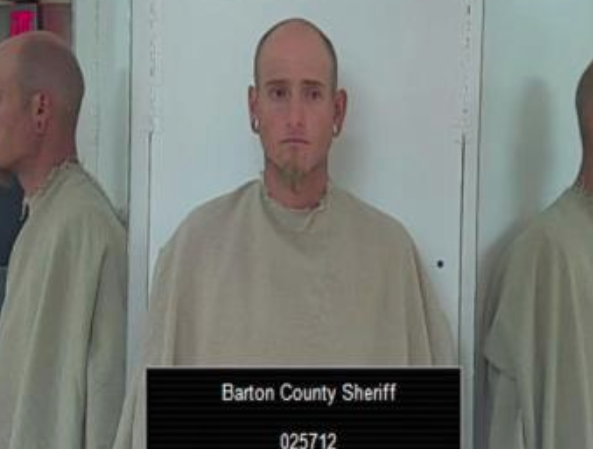
Officers contacted the driver and only occupant of the vehicle identified as 32-year-old Alan D. Phillips.
While checking Phillips’ driver’s license, Barton County Sheriff’s Office K9 Maxx arrived on scene. After preforming a sniff of the outside of the vehicle, K9 Maxx indicated to the presence of illegal narcotics. A search of the vehicle was conducted and methamphetamine and paraphernalia were located.
Police arrested Phillips and booked at the Barton County Jail on requested charges of possession of methamphetamine, possession of paraphernalia, driving while suspended and no proof of insurance.
He has two previous drug convictions, according to the Kansas Department of Corrrections.
EMPORIA – Hays High’s Taleia McCrae and Sophia Garrison both improved on their first round scores on day-two the 5A State Golf Tournament in Emporia. McCrae shot an 85 and Garrison a 91 on Tuesday.
McCrae finished 12th to bring home a medal. Garrison was just out of the top-20.
St. Thomas Aquinas won the team title with a two-day score of 690. St. James Academy was second with a 713.
Alison Comer of St. James Academy won the individual title with 12-over-par 156.
Faith Lochmann, human resources coordinator, presented data from that wage study.
Entry-level wages for USD 489 clerical staff ranged from $9.81 to $11.42 per hour.
Comparable school districts pay an average of $11.08, and comparable cities pay an average starting wage of $13.45. FHSU’s starting wages ranged from $12.71 to $13.98.
HaysMed indicated its lowest starting wage for clerical staff is $10.39, but it hires off a schedule that takes into account years of experience and often hires new staff at higher than the minimum based on that schedule. The average of all the comparable positions was $11.14 to $12.31 per hour for starting wages for clerical staff.
“The district is not ready to implement a full-blown wage schedule,” she said, “but we recognize a strong need to level-set our current employees based on their years of experience with us and where they are being compensated.”
To level the wages will cost the district an average of 84 cents an hour for clerical staff. However, Keith Hall, interim director of finance, said not all employees will receive the same raise. No employee’s pay will decrease. Some employees’ pay could stay the same. Others will increase based on their current pay and years of experience.
Annual cost for clerical staff raises will be $23,642.
The district also approved raises for nutrition staff, which Lochmann said was experiencing high turnover.
Documents describing the raises for the nutrition staff were presented to the board. They were not discussed, and they were not made available to the media as of time of publication. Hall and Lochmann also had not returned calls as of time of publication.
Pay for technology employees was also shown to be lower than their peers, but those wages have already been adjusted.
The total cost for the raises will be $101,000 annually.
Although the agenda item was set for discussion only Monday night, board member Greg Schwartz suggested the board vote on the plan so the raises could go into effect starting in November.
“It seems to be if this is where we think we need to go, I don’t know why we need to wait, just implement it and move forward,” he said.
Board member Paul Adams said he was not opposed to the raises, but he would like to see more time to implement the plan. He ultimately was the sole dissenting vote on the motion.
“Because we have some pending negotiations out of the same pool of money,” he said, “I would like to be able to look at the total impact on what we have available, so I think it is premature without looking at it. I support coming back to it in two weeks, but not until we run some numbers on it.”
Hall said eventually the district would like to create a pay schedule for classified staff; however, he said the finance staff is not ready to roll out a salary schedule at this time.
Oak Park Complex
The former Oak Park Medical Complex was renamed the USD 489 Early Childhood Complex at the meeting Monday.
The four-building center was recently renovated with federal grant funds. It houses Early Child Connections and other district early childhood programs. A ribbon cutting for the complex will be at 10 a.m. Thursday with an open house from 3:30 to 4:30 p.m.
Munjor building
The early childhood program that was in Munjor has been moved to the renovated Early Childhood Complex. The district owns only a portion of the property. The Catholic Church owns the rest of the property. The board discussed turning the entire property over to the Catholic Church now the school district is no longer using the property.
Board member Lance Bickle said he wanted to make sure the district would not need the space in the future before it turned over the property.
Negotiations
The school board met in executive session Monday to discuss negotiations. Representatives from the school and teachers met with a federal mediator Thursday night, but were still unable to come to an agreement on a contract. The board is considering next steps, but took no action Monday on negotiations.
The teachers and board have said pay and health insurance have been the stumbling blocks in reaching an agreement.
P-burg plant, two others in Canada, slated to lead North American production within year
By KIRBY ROSS Phillips County Review
PHILLIPSBURG — In Canada, the legal term for it is cannabis. In Kansas, hemp. And with Canadian corporate support and Australian financing, as well as Swedish technical know-how, in Phillips County it’s now called “local industry.”
Exactly one year ago on Thursday of last week, the possession, use, and sale of dry leaf form cannabis became legal in Canada, both for recreational purposes and medicinal.
Then on that one year anniversary other forms of Canadian cannabis — edibles — also became legal there, including cannabis cookies, pizza and soda pop, along with baking products, such cannabis flour, cooking oil, and butter.
Dovetailing into those developments in Canada, in April of last year Kansas Governor Jeff Colyer signed into law the “Alternative Crop Research Act” which allows the Kansas Department of Agriculture to oversee the cultivation of hemp for purposes of research.
Bruce Dawson-Scully, CEO Embark Health
A month later Gov. Colyer signed a related bill into law referred to as the “Updating Substances of the Uniform Controlled Substances Act.” That bill exempted cannabinoidiol, aka CBD oil, from the definition of marijuana, effectively legalizing it. CBD oil had earlier begun being used in food and beverage products in the United States in 2017.
And, according to the Kansas Department of Agriculture, in 2018 the U.S. Farm Bill–
“…removed federal restrictions on the establishment of commercial hemp programs and allows individual states to develop a plan to license the commercial production of hemp and further directs the U.S. Department of Agriculture to develop a plan for states that do not do so.
“In order to establish a program for the commercial production of industrial hemp, Kansas must develop a plan through KDA, in consultation with the Governor and Attorney General. Any such plan must be submitted to USDA for approval.”
The Kansas Department of Agriculture further notes–
“The opportunity to grow a new specialty oilseed crop in Kansas offers potential for diversification for Kansas farmers looking for an alternative crop, or for new farming enterprises interested in cultivating industrial hemp.
“The Kansas agriculture industry has developed a statewide strategic growth plan in recent years, and is committed to pursuing new and innovative opportunities to grow agriculture.
“The research generated by participants of this new industrial hemp program will be valuable data in identifying the growth potential offered in this sector.”
Enter Phillips County into the story. On the one year anniversary of widespread legalization in Canada, and on the occasion of the expansion of legalized byproducts of cannabis/hemp in Canada and Kansas, MMJ Group Holdings Ltd of Nedlands, Australia, revealed it has partnered with Canada-based Embark Health Inc. in expanding its multi-million dollar cannabis extraction plant right here in rural Phillipsburg, Kansas.
In support of the project, Embark, headquartered in Toronto, Canada, has received a $10 million infusion of new capital from investors, including $3.6 million from MMJ.
With Canada legalizing the adult use of cannabis, Embark, a privately held company helmed by Bruce Dawson-Scully, of Delta, British Columbia, has been taking a leading worldwide role in providing cannabis and derivative products utilizing cannabis extracts for the marketplace.
Toward the purpose of manufacturing those extracts, Embark has been doing business in Phillips County since April 29, 2019, with, according to sources, the support of Canadian and Swedish nationals.
MMJ Group’s newest investment with Embark, to be finalized no later than October 31, 2019, will raise MMJ’s 12 percent holdings in Embark up to a total of $9.8 million, almost triple its book value.
MMJ’s infusion of funding in the project is part of the $10 million capital mobilization conducted by Embark to finance the build-out of its cannabis extraction facility south of Phillipsburg, as well as two Canadian sister-facilities in Delta, British Columbia, and Woodstock, Ontario.
Regarding MMJ’s investment in the Phillips County and Canadian extraction plants, MMJ Chairman Peter Wall says, “This is another example of MMJ’s strong market and financial discipline identifying opportunities and bottlenecks in the cannabis value-chain in markets and acting quickly.”
The company further notes that when the Phillipsburg cannabis production facility and the two others are operational, “Embark Health will be a significant cannabis extraction producer servicing the Canadian and global medical and recreational markets.”
Regarding the processing of cannabis, Chairman Wall foresees Phillipsburg, Woodstock and Delta as playing a dominant role across the entire continent within a year.
Says Wall, “Embark Health has executed its business plan and is well positioned to become one of the largest cannabis extraction businesses in North America within twelve months. The investment demonstrates MMJ’s expertise to secure a private negotiated investment in listed and unlisted cannabis businesses.”
Embark Chief Executive Officer Bruce Dawson-Scully is founder of WeedMD of Aylmer, Ontario, Canada, which he notes is a “pharma-grade medical cannabis production facility.” Dawson-Scully has also served as a healthcare consultant to the Chinese government.
In a public statement MMJ states it believes there to be “A much larger market for cannabis products as consumption methods like vapes, edibles, and drinkables will drive most of the adoption and consumption in the mainstream.” Currently the most common method of cannabis consumption is through rolling papers and water pipes.
MMJ states “Embark intends to have two state-of-the-art THC, CBD, and CBG extraction facilities to service Canada’s medical and recreational markets in Delta, British Columbia and Woodstock, Ontario, in addition to optimising a C1-D1 hempseed extraction facility in Phillipsburg, Kansas.”
According to MMJ, in Phillipsburg, “This facility, to be operational in late 2020, will extract hemp seeds and produce hemp protein isolates and cooking oil in addition to CBD isolate. This facility will process 5,000 pounds of biomass per day.”
In order to process that amount per day by this time next year, the cannabis to be used will soon be in full production.
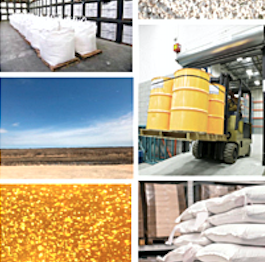
Embark’s website, which has a dedicated page on its Phillipsburg operations (seen at the right), lists the nature of the hemp protein isolates the facility will be creating–
“Delicious, nutritious and nutty in flavour, our hemp seed isolate powder and baking flour are both naturally white and will not change the colour of your baked goods. Paced with 21g of protein per serving, it is vegan, non-gmo, gluten-free, soy-free, lactose-free, kosher, keto and paleo.”
Regarding the hemp seed cooking oil, Embark says it is “Unlike any hemp seed oil available today, Embark’s golden oil has a high cooking point — you can cook with this nutritious oil up to a flash point of 400 degrees.”
Stockopedia provides a business profile of the multi-million dollar investor in Phillips County business operations, MMJ Group Holdings–
“MMJ Group Holdings Limited, formerly MMJ PhytoTech Limited, focuses on developing and commercializing medical cannabis (MC) and MC-based therapeutics.
“Its principal activities include production and distribution of cannabinoid-based food supplements across the Europe, and Pharmaceutical research and development of delivery technologies for administration of cannabinoids.
“Its segments include Cultivation; Processing and Distribution; and Clinical Research.
“The Cultivation segment’s activities include the various applications for cultivation and distribution licenses under the marijuana for medical purposes regulations (MMPR) by Health Canada.
“The Processing and Distribution segment’s activities include processing, manufacturing and distribution of cannabis-based, pharmaceutical, nutraceutical and cosmetics product across the European market.
“The Clinical Research segment’s activities include clinical research of delivery systems and devices.”
“The company’s portfolio includes Harvest One, PhytoTech Therapeutics, WeedMe, Fire and Flower, Bien, BevCanna, and others.”
Article reprinted from the Phillips County Review, with permission. The Phillips County Review has been named by the Kansas Press Association as being the state’s top newspaper in its circulation class for 2019, beating out over 180 other publications.
Editor and writer Kirby Ross, has also personally won over 20 Kansas Press Association Awards of Excellence for his newspaper work over the past three years, including first place recognition for news reporting, news and writing excellence, feature writing, political and government reporting, investigative reporting, editorial writing and news photography. He can be reached at [email protected].
Education: BS Industrial Technology Education and Elementary Education, Masters in Education Administration
Do you have a student currently attending USD 489 schools?
Yes, my son is a junior at Hays High School.
Qualifications? 35 years in education and served USD 489 for 31 years. Worked as a paraprofessional, K-12 teacher, coach, migrant director, transition coordinator, and 25 years of that was the elementary principal.
Do you support USD 489 trying for another bond issue? What do you think that bond should include? If you don’t support a bond issue, how do you think the school district should address its infrastructure needs?
The next board will need to use all avenues including a bond issue to raise funds to provide the necessary improvements needed to meet the current and future needs of the district. If a bond issue is to be attempted again, much work in involving and informing our community in all stages will be necessary. Our district needs to repair trust in our community. It must start in action steps that our community can see.
All K-12 levels need improvement in facilities, but our K-5 schools have been the most affected by recent board decisions. Their environment needs to be addressed soon. I was part of two successful bond elections in USD 489 and that experience could help in this process.
Our district needs to be creative. In past years teachers and administrators were encouraged and supported to help with facilities through substantial grants and donations. That culture has diminished and has not been encouraged or realized as often in our K-12 levels in recent years.
In the meantime, we cannot not wait for a bond issue. The past decade we have heard the board say we need a 10-year plan and no plan is available. A systematic approach of preserving the resources we have and building for the future needs to start now.
What would you do to secure the financial health of the school district?
My plan would be to work collaboratively together with the other board members to review all budgetary items as presented by the administration. Upon the review ask questions and make suggestions when appropriate. The Hays school board is at impasse with its teachers for the second year in a row. What would you do to improve relations with teachers?
It is unusual for school boards and teachers not agreeing on a contract two years in a row. Positive communication and a willingness to negotiate is necessary from both sides of the table. This process takes a commitment to invest many hours and allow the process to work.
Fair and equitable pay and fostering a culture of teamwork and respect for the work that teachers do would go a long way toward improved morale. If teachers have confidence and trust in the board, employees have less stress and higher energy for their daily tasks. Quality teachers and other employees are recruited and retained by competitive salaries and benefits.
Do you support the district’s current one-to-one technology policy? If not, what would you propose?
It is important to continue to provide the latest technology for our students and staff. By the time we purchase equipment it is often one or two years behind. We cannot afford to miss an update. Because technology is ever-changing, we need to provide inservice that is appropriate and valuable to the staff. Staff and administration spend many hours evaluating the latest technology that is appropriate for what they need. We need to listen and act accordingly.
How would you support the district in its work to improve student performance?
Research shows that one of the best ways to ensure students’ performance is an experienced and qualified teacher. We need to support all staff members and provide the tools they need to perform the task we ask them to do. Another way the board can help, is to be familiar with and show a strong support of (KESA) the Kansas plan for district improvement and provide inservice and time for teachers to implement the changes. The board plays a major role in creating a culture that fosters a positive learning and working environment.
Is there anything else you would like to add about you or your campaign?
“Kids and Families First” is the belief I will refer to on all decisions if I have the honor to serve on the USD 489 school board. My experience as an educator at all levels is to ask the question, “Is it best for kids?” If the answer is yes, correct decisions will follow.
Our district has a long history of being leaders in the state and on the cutting edge of new trends and practices. We are now seeing many changes and opportunities to advance our district and provide all our students with the best education possible. I want to be part of that movement, and together we can make a difference.
DIGHTON, Kansas — A billboard along Interstate 70 boasting about the productivity of Kansas farmers may say more about what’s happening in agriculture than those who put it there realize.
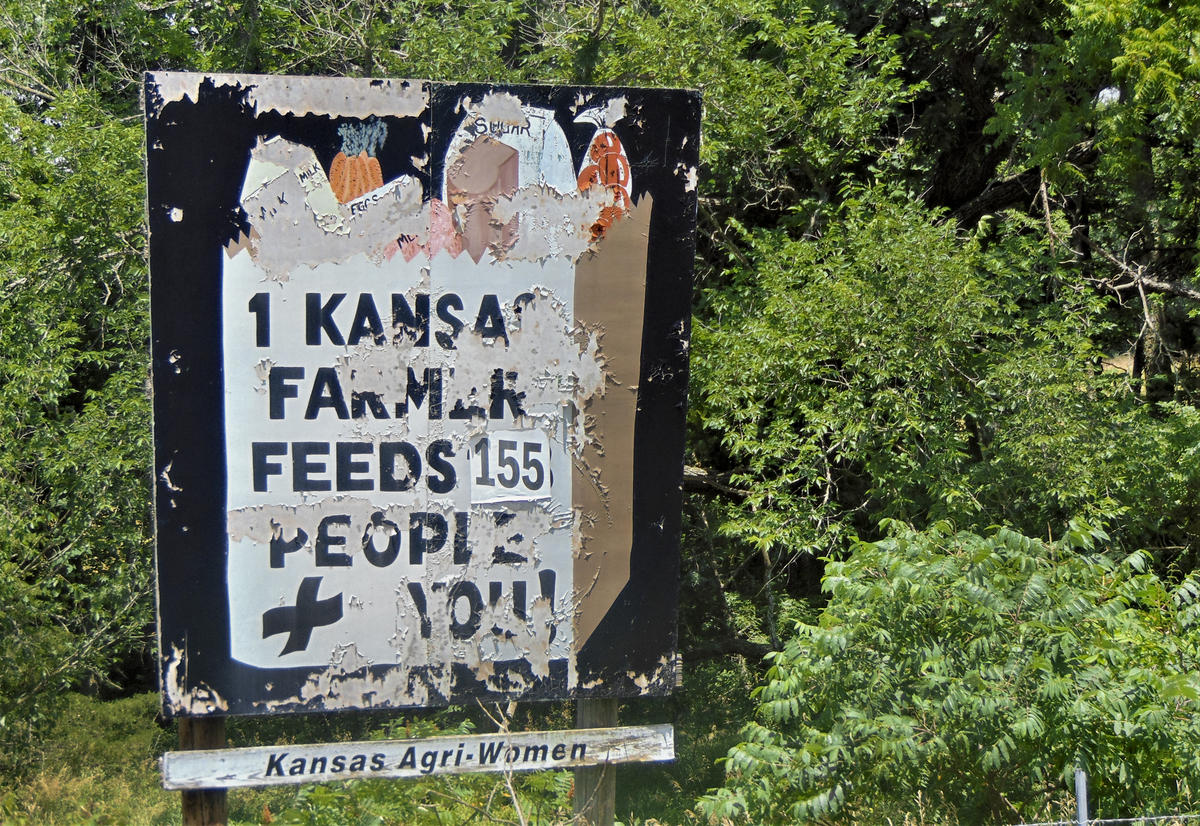
The message seems simple and straightforward: “1 Kansas Farmer Feeds 155 People + You!”
A closer look reveals it’s been crudely updated — an indication that the tally changes with some frequency.
The steady escalation of the number of people fed by a single Kansas farmer — from 73 in the 1970s to 155 today — reveals how lots of small farmers have been replaced by large farmers intent on getting even bigger.
That trend threatens scores of small towns that sprouted on the prairie in a different time, when larger numbers of small farmers depended on them.
Many of Kansas’ small towns look weathered, worn and neglected after more than a century of exodus. Most rose up more than a century ago, to meet the basic needs of farmers. They established banks and churches. Grocery stores and implement dealers prospered.
This sign stands along Interstate 70 between Topeka and Manhattan. Credit Jim McLean / Kansas News Service
Consider Atwood, the childhood home of former Gov. Mike Hayden.
The Atwood that Hayden knew growing up during the 1950s was a bustling town of about 2,000 people tucked into the northwest corner of the state. Well-kept shops lined Main Street. Hayden recalls six grocery stores, five car dealers, at least one pharmacy and a thriving local newspaper.
“It was,” he said, “Norman Rockwell’s America.”
Since then, the town lost nearly half its population. Most of those foundational businesses, Hayden said, “eroded away” and took the community’s core of civic leaders with them.
As governor in the late 1980s, Hayden spoke defensively about the decline of rural Kansas. A pair of East Coast academics — Frank and Deborah Popper — proposed returning expanses of rural Kansas and other Great Plains states to the buffalo as part of a massive nature preserve.
Hayden ridiculed the idea.
“I came out guns blazing,” Hayden said. “I thought the Poppers were off base and that they should perhaps go back east and we’d be just fine out here.”
He now says he was wrong.
“They were right about the out-migration they observed,” Hayden said. “In fact, it’s happening faster than they predicted.”
Several factors are responsible for the decline, Hayden said, including consolidation in the ag economy. He cited his family farm as an example.
In 1960, Hayden said, that farm supported 17 people. Most of them lived in and around Atwood. Today, it supports only three.
Today, that farm is bigger and churns out more grain than ever. But only one of the three people tending the land works at it full-time.
“My brother can do it all by himself,” Hayden said.
A report issued last year by the U.S. Department of Agriculture said that as recently as 1987, mid-sized farms between 100 and 1,000 acres covered nearly 60% of the nation’s cropland. By 2012, those midsize farms had lost about half their acreage to large farms — those of 2,000 acres or more.
Don Hineman’s western Kansas farm — located just south of Dighton — covered 3,000 acres when he returned from college in 1973 to help manage it.
It’s now 14,000 acres, or nearly 22 square miles, and still growing.
State representative and farmer Don Hineman has continually expanded the scale of his operation to keep pace with agriculture trends. Credit Chris Neal / For the Kansas News Service
“When you have opportunities for growth you’d better grab them,” said Hineman, a state representative who chairs the House Committee on Rural Revitalization.
Getting bigger, Hineman said, made him a more efficient farmer and a better steward of the land. He can afford the sophisticated equipment needed for the latest precision agriculture.
Those systems map fields in great detail and analyze nutrient levels in different patches of soil so satellite-guided planters and sprayers can deliver the smallest amount of seed and fertilizer to grow the most bountiful crops.
“It bothers me to some extent that what we’re doing on our farm is, in a way, contributing to the decline of the local community,” Hineman said. “But it’s a matter of self-preservation. You either get bigger or you get out.”
Gail Fuller contends that’s simply not true.
“We’ve been sold a bill of goods,” Fuller said.
He owns a small farm near Emporia and challenges the notion underlying much of U.S. agriculture policy that American farmers need to feed the world with commodity crops.
“We’re doing it at the expense of the climate, the environment,” Fuller said.
Large-scale commodity farming, he argues, puts farmers at the mercy of markets that often fail to return breakeven prices and saddles them with debt.
Fuller shrank his farm dramatically several years ago after a lengthy dispute over a crop insurance payment pushed him to the brink of bankruptcy.
“We’re a very diverse operation,” Fuller said, explaining that he grazes cattle on perennial grasses and grows only enough grain to feed his pigs and chickens.
Fuller markets pricey grass-fed beef and other products directly to consumers and said he’s just starting to turn a profit after years of being buried in debt.
Gail Fuller has turned away from commodity farming. Credit Jim McLean / Kansas News Service
“Most people hate paying income taxes,” he said. “I actually look forward to it after being beat up for 10 or 15 years.”
Even with farm bankruptcies on the rise, most ag economists say it’s unlikely that a significant number of Kansas commodity farmers will follow Fuller’s lead despite evidence that sticking with the status quo means the continued hollowing out of rural communities.
“We have seen these trends of population and economic decline going on for just about a century now,” said John Leatherman, a Kansas State University agricultural economist.
Those trends, Leatherman said, are being driven by major economic forces beyond the control of Kansas farmers, community leaders — or state policymakers.
Given that trajectory, Hineman, the state lawmaker and large-scale farmer, said he hopes that taxpayers in Kansas’ urban and suburban centers won’t tire of subsidizing rural communities as they fight for survival.
“We’re all in this together,” he said. “It’s unrealistic and unthinkable that urban Kansas would say, ‘Solve your own problems rural Kansas. We’re done with you.’”
This is the second in a series of stories investigating the decline in rural Kansas and efforts to reverse it. The next story looks at how communities can either shrink and whither, our find ways to thrive with a smaller population.
Support for this season of “My Fellow Kansans” was provided by the United Methodist Health Ministry Fund, working to improve the health and wholeness of Kansans since 1986 through funding innovative ideas and sparking conversations in the health community. Learn more at healthfund.org.
Jim McLean is the senior correspondent for the Kansas News Service, a collaboration of KCUR, Kansas Public Radio, KMUW and High Plains Public Radio covering health, education and politics. You can reach him on Twitter @jmcleanks or email [email protected].
KANSAS CITY, Mo. — In the seventh edition of the United Soccer Coaches national poll, released on Tuesday (Oct. 22), FHSU men’s soccer dropped to No. 23.
The Tigers were ranked No. 18 last week following victories over Oklahoma Baptist and Southern Nazarene. However, their latest loss to Northeastern State has seen Fort Hays State drop five spots. In their previous week of games, FHSU also defeated Rogers State, who received votes but did not enter into the Top-25 this week, for the second time in 2019.
Fort Hays State will play in a pair of pivotal home games this week against Harding University and Ouachita Baptist.
The match against Harding will occur on Thursday (Oct. 24). The Bisons hold second place in the Great American Conference. A black and gold defeat in this matchup would mean relinquishing first place in conference play as both teams would have accumulated 22 points on the season. FHSU has already beaten Harding in the current campaign, 8-1, after drawing against Ouachita Baptist. The two Tigers squads are slated to face off on Saturday (Oct. 26) for an 11 a.m. kickoff.
Years ago, a family brought a 25-year-old farmer into the emergency room with a gunshot hole over his heart and with no pulse or breathing for more than ten minutes. It was a self-inflicted wound and this young farmer would farm no more. The family was besides themselves with loud and sorrowful wailing that wrenched my soul. They told me that the impending harvest looked poor, the loan was coming due, and he had been isolating himself, drinking more and getting angry at every little thing. They had no clue he was at risk of suicide. Sure, he was a little down, but not this! He picked a permanent answer to a temporary problem.
Significant thoughts of suicide occur in one of four women and one of eight men. Although there are more attempts by women, more deaths occur by men. In 2017 there were 1.4 million attempts and 47,000 deaths due to suicide, and despite these high numbers, the money invested in depression and suicide research is sadly low.
Risk factors for suicide include family history or prior experience of depression or manic depression, a history of being abused or being an abuser, excessive use of alcohol, sleeping pills or substance dependence, a recent emotional loss or a significant medical illness. Also, there is higher risk during local epidemics of suicide in youth especially on reservations. Sometimes depression and suicide have no reason whatsoever.
How can any of us help ourselves or a person at risk? First, remember it never hurts to ask, “Are you thinking about suicide?” Those words will NOT bring it on but could encourage the person to find someone to give lifesaving assistance. If you sense there is an emotional downward change happening, encourage that person to get help. If depression is milder and NOT at the suicide level, nonmedicinal treatment can give relief. Examples abound such as daily 30-minute walks, regular interaction with friends and family and the regular opening of one’s heart to spiritual connectedness. If more help is needed, talk with your physician or care provider and consider medicines that effectively work for depression. Although two thirds of people with depression do not seek or receive help; when the one third who do get help are treated, four out of five of those folks are better in a month. Get help if needed.
Finally, if you are in crisis, call the Suicide Prevention Lifeline at 1-800-273-TALK (8255) which is available 24/7. Please don’t chose a permanent answer to a temporary problem.
Richard P. Holm, MD is founder of The Prairie Doc® and author of “Life’s Final Season, A Guide for Aging and Dying with Grace” available on Amazon. For free and easy access to the entire Prairie Doc® library, visit www.prairiedoc.org and follow Prairie Doc® on Facebook, featuring On Call with the Prairie Doc® a medical Q&A show streamed most Thursdays at 7 p.m. central.
Though we often think of soil testing as a spring chore, fall can actually be a better time. Soil-testing laboratories are often very busy during the spring resulting in a longer turnaround from submission to recommendations.
Also, soils in the spring are often waterlogged, making taking samples difficult. If your soil test suggests more organic matter, fall is a much better season because materials are more available than in the spring (tree leaves), and fresher materials can be used without harming young tender spring-planted plants.
Begin by taking a representative sample from at least six locations in the garden or lawn. Each sample should contain soil from the surface to about 6 to 8 inches deep. This is most easily done with a soil sampler.
Many K-State Research and Extension offices have such samplers available for checkout. If you don’t have a sampler, use a shovel to dig straight down into the soil. Then shave a small layer off the back of the hole for your sample. Mix the samples together in a clean plastic container and select about 1 to 1.5 cups of soil. This can be placed in a plastic container such as a resealable plastic bag.
Take the soil to your county extension office to have tests done for a small charge at the K-State soil-testing laboratory. A soil test determines fertility problems, not other conditions that may exist such as poor drainage, poor soil structure, soil borne diseases or insects, chemical contaminants or damage, or shade with root competition from other plants. All of these conditions may reduce plant performance but cannot be evaluated by a soil test.
If you have any questions, or would like more information, you can contact me by calling 620-793-1910, by email at [email protected] or just drop by the office located at 1800 12th street in Great Bend. This is Alicia Boor, one of the Agriculture and Natural Resources agents for the Cottonwood District which includes Barton and Ellis counties. Have a good week!
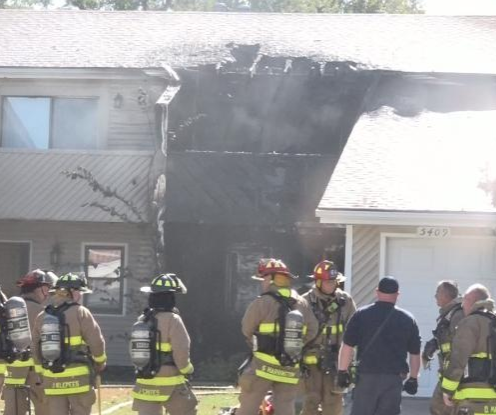
TOPEKA — A fire at a Kansas home on Tuesday in being blamed on careless smoking.
Tuesday afternoon fire at a duplex in Topeka photo courtesy WIBW TV
Just before 1p.m., fire crews responded to a structure fire at 5409 SW 23rd Street in Topeka, according to Fire Marshal Michael Martin.
Upon arrival, crews found smoke and flames coming from the two story wood frame residential duplex. Firefighters began an offensive fire attack.
The occupant of the residence self-evacuated prior to the fire departments arrival.
The preliminary investigation indicates the fire cause to be accidental, associated with improper disposal of smoking material. The estimated dollar loss is $35,000.00; of which $25,000.00 is associated with structural loss and $10,000.00 associated with contents loss, according to Martin.
Working smoke detectors were located within the residence.

 HPL
HPL