KINGMAN COUNTY — One person was injured in an accident just after 9p.m. Tuesday in Kingman County.
The Kansas Highway Patrol reported a 2013 Chevy Tahoe driven by Lacey A. Garrison, 40, Kingman, was westbound when it struck two cows in the roadway. The SUV then slid into the north ditch and rolled.
EMS transported Garrison to St. Francis Medical Center in Wichita. She was properly restrained at the time of the accident, according to the KHP.
HAYS – A split for the Hays High volleyball team at their own triangular Tuesday. The Indians lost in two to Maize 19-25, 23-25 then beat Salina Central.
Tasiah Nunnery had nine kills and seven assists against Maize. Sierra Bryant added five kills and Kaitlin Suppes nine assists and Brooklyn Schaffer seven digs.
Against the Mustangs, Tasiah Nunnery had nine kills and Kaitlin Suppes seven assists.
They finish the regular season 21-11 and will take on Wichita Northwest in their Sub-state at Maize South Saturday.
HAYS, Kan. – Fort Hays State fell to No. 3 ranked Washburn on Tuesday night at Gross Memorial Coliseum. The Tigers moved to 6-14 overall and 3-9 in the MIAA, while the Ichabods improved to 18-2 overall and 10-2 in the MIAA.
The Tigers put pressure on the Ichabods in the first set, making the opposition win by two. Washburn closed out the set with a kill by Allison Maxwell and then a ball handling error by the Tigers. FHSU tied the set at 24-24 after an attack error by the Ichabods and then a kill by Delaney Humm. Morgan Christiansen knotted the score at 25-25 with a kill before the Ichabods picked up the final two points.
From that point Washburn cruised by taking set two 25-19 and then set three 25-16. Washburn jumped out to a 6-1 lead in set two and kept FHSU at arm’s length the rest of the way. In set three, Washburn opened the set on a 14-0 run before the Tigers jumped on the board. However, FHSU outscored WU 16-11 the remainder of the set.
Humm was the only Tiger to reach double figures in kills with 13. Christiansen went errorless for the match and put down four kills to hit .400 individually. Katie Darnell provided 19 assists and Humm picked up a double-double with 17 digs. Abbie Hayes added 11 digs.
Erica Montgomery led a balanced attack for Washburn with 10 kills. Allison Maxwell and Kelsey Gordon each added nine kills, and Genna Berg had eight. Allison Sadler dished out 37 assists and Faith Rottinghaus led the defensive effort with 21 digs.
The Tigers head on the road this weekend to take on Newman University on Friday and then Central Oklahoma on Saturday.
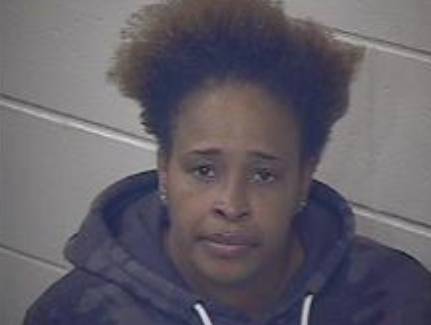
KANSAS CITY (AP) — A Kansas City woman is accused of slashing the tires on eight police vehicles one day after her arrest.
Fisher photo Jackson Co.
46-year-old Eunice A. Fisher is charged with first-degree property damage.
A caller told police at 3 a.m. Sunday that a burglary was in progress at a bank. It turned out to be a hoax, but Raytown officers who responded to the call found out a total of 18 tires were flat on eight police vehicles. Damage is estimated at around $2,500.
Police say surveillance video shows Fisher damaging the tires. The officer reviewing the video recognized Fisher — he had arrested her the day before.
Fisher does not have a listed attorney. She is on probation for drug, motor vehicle tampering and burglary convictions.
DUNCAN, Okla. – Fort Hays State Men’s Golf placed 17th at the Jerry Hrnciar Invitational, hosted by Cameron University. The Tigers shot rounds of 327 and 306 for a total of 633 at Territory Golf Club, a par-72 course.
Bryce Cowan led the Tigers with rounds of 81 and 73, finishing in a tie for 54th with a 154. Pete Carney was consistent with two rounds of 78, tying for 67th. Cole Gritton improved nine strokes on day two, shooting rounds of 85 and 76 to tie for 84th. Marcus Willey tied for 92nd with rounds of 83 and 81. Isaiah Grover also competed and had rounds of 86 and 79.
Oklahoma Christian won the tournament with a team score of 571, shooting 287 and 284 in the two rounds. St. Mary’s (Texas) was 11 strokes back in second, while Midwestern State was 16 off the winning pace in third.
Eight individuals finished under par in the tournament and two more shot even. Trevor Norby of Oklahoma Christian won the tournament at 3-under par.
This tournament wrapped up Fort Hays State’s fall schedule. The Tigers will resume their season in the middle of March during the spring.
Candidates for the Hays City Commission will take part in a candidate forum at 6:30 p.m. Tuesday from Beach/Schmidt Performing Arts Center at Fort Hays State University.
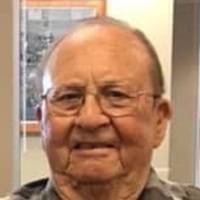
John H. Detmer, 87, passed away October 21, 2019, at Kansas Heart Hospital, Wichita. He was born on February 21, 1932, at Waterloo, to August & Anna (Rohling) Detmer. He married Helen C. Debes on September 5, 1964 at Great Bend. She died on September 3, 2015.
A Great Bend resident since 1965, coming from Cunningham, John was a farmer. He was a member of Prince of Peace Parish at St. Rose of Lima Catholic Church. He served in the United States Air Force during the Korean war. He owned EQ Muffler in Great Bend for many years. He loved restoring John Deere tractors, fishing and hunting, but especially enjoyed spending time with his grandchildren.
Survivors include, one son, Al Detmer of Wellington, CO; three daughters, Angela Maneth and husband David of Wichita, Connie Wagner and husband Mark of Greencastle, IN, and Cheryl Kohl and husband Wayne of Greeley, CO; one brother, Lonnie Detmer and wife Trevlyn of Pratt; one sister, Mary Lou Osner of Cunningham; and three grandchildren, Mary Maneth, Jessica Kohl, and John Kohl and wife Jessica. He was preceded in death by his parents; his wife, Helen Detmer; four brothers, Leo Detmer, Leonard Detmer, Andrew Detmer, and Martin Detmer; and four sisters, Christina Miller, Rita Goertz, Isadora Fisher, and Agnes Urban.
Visitation will be held from 1:00 to 9:00 p.m., Thursday, October 24, 2019, at Bryant Funeral Home, with Vigil Service at 7:00 p.m. Mass of Christian Burial will be held at 10:00 a.m., Friday, October 25, 2019, at St. Rose of Lima Catholic Church, Great Bend, with Father Don Bedore presiding. Interment will be in the Hillcrest Memorial Park, Great Bend, with Military Rites conducted by McConnell Air Force Honor Guard. Memorials are suggested to the Wounded Warrior Project or Capuchin Province of Mid-America, in care of Bryant Funeral Home.
Discover the ghostly history of Fort Riley Saturday. Photos and video courtesy HASFR
FORT RILEY — Have a spooky good time with a historical twist during the 23rd annual Ghost Tours Saturday at Fort Riley.
Nighttime adds to the spooky atmosphere.
The Historical and Archaeological Society of Fort Riley will offer the tours from 4 to 9 p.m. Saturday. Parking will be available west of Cavalry Parade Field, off Pleasanton Avenue. Tours will be on foot and the route will accommodate strollers.
The walking tours will begin every 20 minutes and are open to the public at no charge. Each tour will last from one hour to one hour and thirty minutes.
Costumed storytellers will guide visitors around the historic main post while narrating iconic classic stories like The Lady in Chains and The Custer House Teddy Bear Ghost, as well as stories from the 2014 Ghost Book.
Guests may purchase a Fast Pass for $5 to move to the front of the line. To get a Fast Pass visit https://squareup.com/store/HASFR/. Books that tell the stories of ghosts at Fort Riley will also be available for purchase. All proceeds support HASFR.
Under the Trusted Traveler Pilot Program, Department of Defense ID cardholders may escort up to seven guests in a vehicle who do not have a DoD ID card. All guests 16 years of age and older in the vehicle must present a valid government-issued photo ID. All other visitors will need to get a visitor pass from the Visitor Control Center near the Henry Gate at Exit 301 off of Interstate 70. The VCC is open seven days a week and closes at 4 p.m. on weekends. For details about access procedures, call 785-239-2982 or visit https://home.army.mil/riley/.
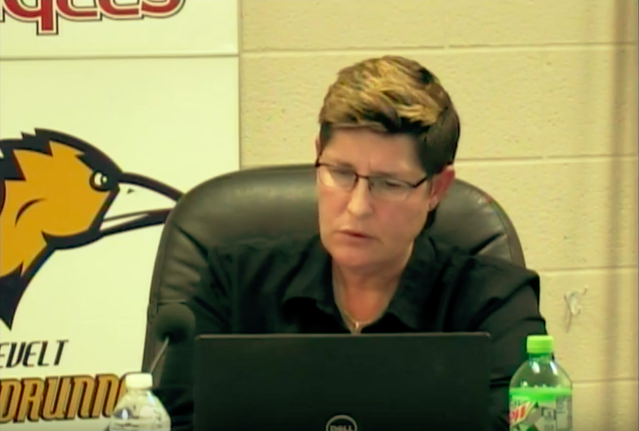
Faith Lochmann, human resources coordinator, presented data from that wage study.
Entry-level wages for USD 489 clerical staff ranged from $9.81 to $11.42 per hour.
Comparable school districts pay an average of $11.08, and comparable cities pay an average starting wage of $13.45. FHSU’s starting wages ranged from $12.71 to $13.98.
HaysMed indicated its lowest starting wage for clerical staff is $10.39, but it hires off a schedule that takes into account years of experience and often hires new staff at higher than the minimum based on that schedule. The average of all the comparable positions was $11.14 to $12.31 per hour for starting wages for clerical staff.
“The district is not ready to implement a full-blown wage schedule,” she said, “but we recognize a strong need to level-set our current employees based on their years of experience with us and where they are being compensated.”
To level the wages will cost the district an average of 84 cents an hour for clerical staff. However, Keith Hall, interim director of finance, said not all employees will receive the same raise. No employee’s pay will decrease. Some employees’ pay could stay the same. Others will increase based on their current pay and years of experience.
Annual cost for clerical staff raises will be $23,642.
The district also approved raises for nutrition staff, which Lochmann said was experiencing high turnover.
Documents describing the raises for the nutrition staff were presented to the board. They were not discussed, and they were not made available to the media as of time of publication. Hall and Lochmann also had not returned calls as of time of publication.
Pay for technology employees was also shown to be lower than their peers, but those wages have already been adjusted.
The total cost for the raises will be $101,000 annually.
Although the agenda item was set for discussion only Monday night, board member Greg Schwartz suggested the board vote on the plan so the raises could go into effect starting in November.
“It seems to be if this is where we think we need to go, I don’t know why we need to wait, just implement it and move forward,” he said.
Board member Paul Adams said he was not opposed to the raises, but he would like to see more time to implement the plan. He ultimately was the sole dissenting vote on the motion.
“Because we have some pending negotiations out of the same pool of money,” he said, “I would like to be able to look at the total impact on what we have available, so I think it is premature without looking at it. I support coming back to it in two weeks, but not until we run some numbers on it.”
Hall said eventually the district would like to create a pay schedule for classified staff; however, he said the finance staff is not ready to roll out a salary schedule at this time.
Oak Park Complex
The former Oak Park Medical Complex was renamed the USD 489 Early Childhood Complex at the meeting Monday.
The four-building center was recently renovated with federal grant funds. It houses Early Child Connections and other district early childhood programs. A ribbon cutting for the complex will be at 10 a.m. Thursday with an open house from 3:30 to 4:30 p.m.
Munjor building
The early childhood program that was in Munjor has been moved to the renovated Early Childhood Complex. The district owns only a portion of the property. The Catholic Church owns the rest of the property. The board discussed turning the entire property over to the Catholic Church now the school district is no longer using the property.
Board member Lance Bickle said he wanted to make sure the district would not need the space in the future before it turned over the property.
Negotiations
The school board met in executive session Monday to discuss negotiations. Representatives from the school and teachers met with a federal mediator Thursday night, but were still unable to come to an agreement on a contract. The board is considering next steps, but took no action Monday on negotiations.
The teachers and board have said pay and health insurance have been the stumbling blocks in reaching an agreement.
Museum board president assures the city council it will reopen in the spring
By JAMES BELL Hays Post
ELLIS — In an effort to alleviate continued budget woes, the Walter P. Chrysler Boyhood Home and Museum Board of Directors has decided to close over the winter — but assured the Ellis City Council that the closure is temporary.
“The rumor that the house is closing is just a rumor,” Gordon Solomon, museum board president, told the council at Monday’s regular meeting. “We want to ensure everyone that it is not permanently closing. It will be open in the spring.”
The move became necessary as the museum was unable to break even and was using reserve funds to pay staff over the slower winter months.
“We have been struggling, budget-wise for a couple of years now,” Solomon said. “By doing the closure, we should be able to close out the budget this year about equal.
“Like most people, we have to learn to live within our means,” he said.
He acknowledged the council was funding the museum as much as possible, but ultimately the savings made by closing was needed to put the budget on track.
“Our goal is to just meet budget and we realize the city can’t increase what you are already doing to assist the home,” Solomon said.
During the meeting, he said attendance over the winter months is low, so the impact on tourism would be minimal.
As an example, Solomon said total admissions and sales for the museum in January and February of this year was only $82.35 — while wages and payroll taxes equaled $1,404.
With those numbers, he said, “Obviously we are not meeting budget, even with your assistance.”
While the board was actively seeking solutions to balance the budget over the summer, museum employees gave notice to the board they would be leaving on Sept. 6, spurring the board to make a decision at a special meeting on Aug. 29.
“As a board, we decided that we would stay closed through the remainder of September and then we proposed to the board to mirror the schedule of the Ellis Railroad Museum,” Solomon said. “Our intent in the future is to open in March and close at the end of September.”
In January, he said the board would begin looking for a new employee.
Even with the budget concerns alleviated, for the time being, Solomon said the board is still actively seeking ideas to bring more people to the museum, including continuing to strengthen the partnership with the Ellis Railroad Museum.
“That’s our goal. We want to try to mirror each other and support each other,” Solomon said.
This would continue the trend of the two museums operating in a similar manner to one another.
“We tried to structure them the same — hours, fees, everything,” Ellis Mayor David McDaniel said.
Solomon said the board is also looking at a discounted rated for visitors who go to both museums, or offering a discount to people visiting the Ellis Lakeside Campground.
“There is a lot of people coming to town that obviously don’t visit,” Solomon said, noting the large influx of people at the campground, even while museum attendance is low.
COURTLAND, Kansas — Rural Kansas has a storied past, but decades of population decline stand poised to turn many once-vibrant places into ghost towns.
The struggle for survival reveals itself in emptied Main Streets, shuttered factories and tired-looking neighborhoods dominated by houses built before World War II.
An exodus that started more than 100 years ago and gained momentum during the Great Depression has now thinned the population of most of the state’s 105 counties to fewer than 10 people per square mile.
“Quite a few counties peaked in the 1890 Census in terms of total population and have never recovered,” said Kansas historian Virgil Dean.
At 2%, Kansas’ population growth rate lags far behind the nation’s 6%. And it’s uneven. Most of it is concentrated in the state’s urban areas — Kansas City, Wichita, Lawrence, Topeka and Manhattan. A forecast by researchers at Wichita State University projects growth in less than a fifth of the state’s counties over the next 50 years.
Still, Kansans fighting the trends cling to a different vision. They insist that population isn’t the only measure of a livable community.
Credit Chris Neal / For the Kansas News Service
“Rural Kansas is going to survive,” said state Republican Rep. Ken Rahjes from Agra in north-central Kansas. “We have that sense of pride in our communities. We’re not going to let them die.”
It will take more than defiance to save them, said journalist Corie Brown, a native Kansan whose career has taken her to newsrooms across the country. She recently returned to write a magazine article: “Rural Kansas is dying. I drove 1,800 miles to find out why.”
“As I’m driving around to these small towns, I realized there’s no one here,” Brown told the Kansas News Service.
Brown’s April 2018 article painted a stark picture of decline.
“The small towns that epitomize America’s heartland are cut off from the rest of the world by miles and miles of grain, casualties of a vast commodity agriculture system that has less and less use for living, breathing farmers,” Brown wrote.
Dramatic changes in agriculture hollowed out rural Kansas, Brown argues. Specifically, she blames the decades-long trend towards bigger farms that yield ever more abundant crops of wheat, corn and soybeans. Those bountiful harvests often don’t return a breakeven price to farmers forced into debt to buy land and the sophisticated machinery needed to work more acres with fewer people.
“That image — abundance at the center of a depopulated landscape — sums up the reality of rural Kansas,” Brown wrote. “It masks a harder truth: Kansas’s plentiful grain crop has come at the expense of nearly everything else.”
The move toward bigger farms run by fewer farmers — along with other changes in the economy — threatens the existence of towns that sprouted up to support larger family operations and to supply workers for railroads, mines and homegrown manufacturers.
But like the economic factors that forced railroads to consolidate and sent many of America’s factory jobs to foreign shores, those driving change in the ag sector can’t be reversed, said John Leatherman, an agriculture economist at Kansas State University.
“There are economic forces at play,” he said, “that we can’t make go away.”
It’s not realistic, he said, to “turn back the clock” to a time when smaller family farms dominated the rural landscape.
Credit Celia Llopis-Jepsen
“That is going backward in time and that is not what happens in life,” he said.
Luke Mahin merely wants to slow the pace of decline. He hopes to give those fighting to save rural communities a chance to experiment with new strategies.
“I see more energy now, more coordinated effort,” said Mahin. At age 28, he returned to his hometown of Courtland, population 285, to run Republic County’s economic development organization.
Communities that competed against each other for generations, Mahin said, now join forces in desperate attempts to revitalize entire regions. They want to make them more inviting to people looking to return to their rural roots — particularly young people.
“We want to connect those dots for people who are looking for housing, looking for resources to start their business,” he said. “We know there’s more people out there who want to come back than we have opportunities for.”
It’s a tough sell. Measures of net migration typically rank Kansas in the bottom teir of states. One shows it losing 25- to 29-year-olds faster than any other state.
Still, Mahin and others working to stem the depopulation tide may soon get help from two new state initiatives. One launched by Democratic Gov. Laura Kelly, the other by the Kansas Legislature.
Credit Chris Neal / For the Kansas News Service
Soon after taking office in January, Kelly created the Office of Rural Prosperity in the Kansas Department of Commerce and put her lieutenant governor, Lynn Rogers, in charge.
Rogers crisscrossed the state over the summer on what he called a “rural prosperity listening tour.” He’s now working on a set of policy recommendations aimed at helping rural communities tackle some of their biggest challenges — spotty access to the internet, crumbling infrastructure, financially stressed hospitals and a shortage of affordable, modern housing.
“Now,” Rogers said, “we have to do something.”
This is the first in a series of stories investigating the decline in rural Kansas and efforts to reverse it. The next story looks into the role that changes in the farm economy have played in that decline.
Support for this season of “My Fellow Kansans” was provided by the United Methodist Health Ministry Fund, working to improve the health and wholeness of Kansans since 1986 through funding innovative ideas and sparking conversations in the health community. Learn more at healthfund.org.
Jim McLean is the senior correspondent for the Kansas News Service, a collaboration of KCUR, Kansas Public Radio, KMUW and High Plains Public Radio covering health, education and politics. You can reach him on Twitter @jmcleanks or email [email protected].
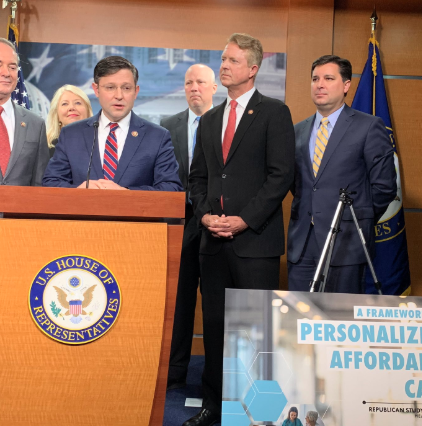
GOP news conference to reveal a health care plan they say will protect pre existing conditions, reduce cost of health care overall, and empower patients and doctors with freedom and choice -photo courtesy Rep. Mike Johnson
RSC is the largest caucus in Congress, and today’s proposal is phase one of a two-phase framework to reform and improve our nation’s health care system.
Carefully crafted over a year of research and stakeholder discussions, the RSC’s framework to achieve more personalized, affordable care is designed to empower patients and doctors rather than bureaucrats and insurance companies. Congressman Marshall was selected to lead the RSC’s Health Care Task Force due to his intensive knowledge and experience of the health care industry, having worked as a physician for over 25 years.
The RSC Health Care Plan is presented as an alternative to Democrat proposals to force all Americans off their current insurance plans – including those with employer-sponsored coverage – and into a government-run, one-size-fits-all, health care system, which would cost over $30 trillion.
“With the introduction of our plan today, we are beginning a desperately-needed conversation on how to save our country’s broken health care system. The status quo is not working for hardworking Americans. The one thing in Washington both parties agree on is that our existing health care system does not work. It does not adequately protect those living with pre-existing conditions, all while premiums and deductibles continue to skyrocket for families,” Marshall said. “With the first phase of the framework introduced today, we will work with our colleagues to define legislation that will deliver the choice and control Americans want, the affordability they need, the ease they desire, and the quality everyone deserves.”
You can see more about the framework here. Specifically, this plan will:
PROTECT Americans with pre-existing conditions
Extend HIPAA portability and pre-existing condition protections that have long benefited Americans with employer-sponsored insurance to people moving into the individual marketplace.
Establish federally-funded, state-administered Guaranteed Coverage Pools to ensure individuals with high-cost illnesses have access to quality and affordable coverage.
Repackage existing funding for ACA premium subsidies and Medicaid expansion to fund state-administered flex-grants to subsidize health insurance for low-income individuals.
Reduce regulatory barriers to give Americans access to quality care.
EMPOWER Americans with greater control over their health care decisions and dollars
Reform the tax code to provide equal tax treatment in the employer and individual health insurance markets.
Unleash Health Savings Accounts (HSAs) by empowering Americans to use their money – tax-free – to cover more health-related expenses including insurance premiums, direct primary care service fees, and health sharing ministry dues.
Increase allowable, pre-tax contributions to HSAs from $3,500 to $9,000 for individuals and from $7,000 to $18,000 for families.
PERSONALIZE health care to meet individual needs.
Eliminate ACA mandates forcing Americans to pay more for coverage they do not want or need.
Enhance HSAs in a way that allow for individuals to effectively own their personalized health care plans so they can take their plan from job to job.
Embrace and remove barriers on innovative health care solutions such as telemedicine, direct primary care, association health plans, and health sharing ministries.
Phoebe Lynn (Shaner) Popp, known as Lynn, was born on March 14, 1942, in Oak Park, Illinois. She went to be with her precious Lord and Savior, Jesus, on October 21, 2019, at the age of 77.
Her father, Myron Hale Shaner, was a dentist and her mother, Mildred (Babka) Shaner, was a teacher. Myron joined the Air Force and the family lived in Illinois, Florida, Germany, Wyoming, New Hampshire, Alaska and Washington. It was in their church youth group in Washington that she met David Popp (he was in the Army). She completed one year at Bethel College (now University) in St. Paul, Minnesota, before marrying Dave in Tacoma, Washington, on August 12, 1961. Dave brought her home to the farm in rural Sheridan County and she always told stories of how the city girl adjusted to farm life.
They had only been married a short time when Dave was recalled to the army and again stationed in Washington state. He had just planted his wheat and hated to leave Kansas but she was so happy to be able to have her first baby close to her family and friends. Kenneth David Popp was born in June of 1962.
The young family returned to Kansas and farm life, buying the family home thirteen miles southeast of Hoxie in 1963. Corinne was born in March, 1964. In May of 1966 the family suffered a terrible tragedy when Kenny was killed in a farm accident. Lynn and Dave often talked of Kenny. Kristin was born in September 1966, followed by Laura in February 1968, Kevin in September 1969, and Lisa in August 1974.
Lynn and Dave cared for at least 12 other children as well, as foster parents and in taking in children of friends and family. Lynn was an amazing mother and hostess. There were almost always guests at the Sunday dinner table and many friends enjoyed birthday parties, slumber parties, etc.
As the children got older Lynn spent a few years cooking at the Hoxie Grade School and the Hoxie Sale Barn. She and Dave enjoyed traveling, including a trip to Portugal and at least seven trips to Alaska (one on a cruise). Lynn became known for her generosity, sending many birthday and other cards each month. She was uniquely able to connect with people, showing each one how much she cared for them.
Lynn believed in Jesus as her Savior at a young age and wanted everyone she met to also experience this gift of salvation. She wanted everyone to know that there isn’t anything we can do to be right with God, but only Jesus can make us right: Romans 10:9: If you confess with your mouth the Lord Jesus and believe in your heart that God has raised Him from the dead, you will be saved.
Because of her love for Jesus she served Him wholeheartedly. As well as her outreach to everyone she met, she was very active at Mt. Pleasant Baptist Church. She taught or helped with Sunday school (until a month ago) and evening discipleship classes, helped with innumerable church dinners, and rarely missed a service. She was an amazing prayer warrior.
Lynn is now reunited in Heaven with Kenny and with her parents and parents-in-law. She is survived by her husband, Dave, of Hoxie Long Term Care; her children, Corinne (Bob) Talbott; Kristin (Rick) Johnson, Laura (Bryan) Anderson, Kevin (Karie) Popp, and Lisa Popp. The Andersons live in White Bear Lake, Minnesota and the others live on farms southeast of Hoxie. She is also survived by twelve grandchildren: Stephen Anderson, Donna Talbott, Jeni Anderson, Lincoln Talbott, Mitchel Johnson, Graham Talbott, Grant Johnson, Chloe Johnson, Becky Anderson, Clay Johnson, Alyssa Popp, and Riley Popp; by her sister, Karen (Peter) Jordahl of Austin, Texas, and by many nieces, nephews, sisters and brothers- in- law, etc.
A funeral service is planned for Saturday, October 26, 2019, 10:00 A.M. at the Mount Pleasant Baptist Church with Pastor Gary Simon and Stan Smith presiding. Interment will be in the Mount Pleasant Community Cemetery. Visitation is being held on Friday, October 25, 2019 at Mickey-Leopold Funeral Home, Hoxie from 11;00 A.M. until 7:00 P.M. with family receiving friends from 5:00 P.M. until 6:30 P.M. In lieu of flowers the family suggests memorials to the Mount Pleasant Baptist Church Awana Program and they may be sent to Mickey-Leopold Funeral Home, PO Box 987, Hoxie, Kansas 67740. Words of comfort for the family may be shared at www.mickeyleopoldfuneral.com
Lynn loved well and was greatly loved by many. She will be sorely missed.