The Hays USD 489 school board will try to come to an agreement on a name for the former Oak Park Medical Complex at its meeting on Monday.
The center on 13th Street was recently renovated using federal grant funds and early childhood programs, including Early Childhood Connections are now located in the four-building complex.
The public has submitted a list of about two dozen possible names.
The administration proposed naming the complex the Early Childhood Center, but that motion failed to pass on a vote of 3-1.
A ribbon-cutting ceremony and open house is set at the center on Thursday, Oct. 24.
The board will discuss negotiations in executive session, if needed. The board reached impasse with the teachers this year for the second year in a row. Representatives from the board and the teachers met with federal mediators Thursday night.
The stumbling block in negotiations have been teacher pay and health insurance.
The board will hear a presentation from the Hays High School Trapshooting Club.
It will also present USD 489 Making a Difference Award, USD 489 Student Spotlight Award and USD 489 Achievement of Excellence Recognition.
Steve GillilandChronic Wasting Disease is a debilitating, fatal disease that attacks the central nervous system of whitetail deer, mule deer and Rocky Mountain elk, actually resulting in small holes developing in their brains.
CWD was first diagnosed in captive animals in Colorado and Wyoming in the late 1960s and 1970s, and was seen in free ranging animals in the early 1980s. Kansas’s fish and game officials have been testing hunter-harvested Kansas deer since 1996, and during the 2005 firearms season, the first documented case was discovered in a whitetail doe taken near the Cheyenne County town of St. Francis, in the northwestern corner of the state.
Later that year, KDWPT staff harvested 50 deer, 29 mule deer and 21 whitetails within a 15-mile radius of where the infected doe was shot. Tissue samples from each deer were collected at a field lab and sent to KSU for analysis, and all 50 dear tested negative for CWD. To date over 28,000 tissue samples have been tested, but sadly 216 Kansas deer have tested positive for Chronic Wasting Disease, with most found in Decatur, Rawlins, Sheridan and Norton counties in Northwestern Kansas.
In 2018, more than 350 tissue samples were tested from hunter-harvested Kansas deer, with the target area being the southwestern part of the state. Thirty-seven of those deer tested positive for CWD. Positive tests came from the counties of Cheyenne, Rawlins, Decatur, Norton, Phillips, Smith, Thomas, Sheridan, Gove, Rooks, Scott, Lane, Hamilton, Hodgeman, Ford, and Stafford, and sadly the counties of Haskell, Edwards, Pratt, Osborne and Reno were added to the list last year, showing that the disease is spreading south and east.
CWD appears to target animals older than I year, and it can be several months or up to two years before outward symptoms become apparent. Animals in advanced stages of the disease will seem listless, may walk in repetitive patterns with their head lowered, will probably exhibit excessive salivation and a blank expression, and will look to be in very poor overall health; in short, they will appear zombie-like. If you witness deer or elk with any of these symptoms, report it to a conservation officer immediately!
Despite ongoing research, there is currently no known cure for Chronic Wasting Disease, and quite frankly I don’t have a clue how a cure would ever be administered if one were found. To date, the only tool to prevent it’s spread is to restrict the transport of deer carcasses from areas where CWD is known to exist. Once an infective particle (a “miss-folded” protein called a prion) is deposited in the environment, either from an infected carcass or from a live infected animal, it may remain capable of infecting a healthy animal for decades. Other diseases of this same group are scrapie in sheep and goats and mad cow disease in cattle.
Although CWD is always fatal to infected deer or elk, humans have never been known to contract the disease. Cattle and other domestic livestock appear to be naturally resistant to CWD. Common sense should dictate not to consume any part of a known infected animal. Special precautions are also urged for hunters harvesting deer or elk from an area known to have produced an infected animal. All meat from these carcasses should be boned-out, and none of the brain, spinal cord tissue, eyes, spleen or lymph nodes should be consumed. Extra care should also be taken to thoroughly wash and disinfect hands and butchering equipment. Carcass waste should be left or buried on the property where the deer was taken or double-bagged and taken to a landfill. Online electronic check -in is available to allow hunters to transport boned-out deer harvested with an antlerless permit.
I like to end these columns with some snappy, witty comments, and I could get a lot of traction from the title Zombie Deer, especially near Halloween. But I can’t bring myself to go there this time, given the implications of Chronic Wasting Disease on the Kansas deer population and on Kansas deer hunting. Let’s pray that God allows research to find something to conquer this disease…. Continue to Explore Kansas Outdoors.
Steve Gilliland, Inman, can be contacted by email at [email protected].
MORTON COUNTY — One person died in an accident just after 6p.m. Sunday in Morton County.
The Kansas Highway Patrol reported a 2000 Chevy Tahoe driven by Edgar Rodriguez, 16, Hugoton, was eastbound on Road Z at County Road 27 fourteen miles north of Rolla. The SUV ran off the roadway to the right, entered the south ditch overturned and ejected the driver.
Rodriguez was transported to the Stanton County Hospital where he died. EMS transported a passenger Juan Fraire, 16, Hugoton, to Wesley Medical Center. Rodriguez was not wearing a seat belt, according to the KHP.
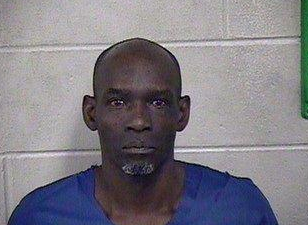
KANSAS CITY (AP) — A 59-year-old convicted sex offender linked by DNA to a 2016 sexual assault in Kansas City has been sentenced to life in prison.
Norman photo Jackson Co.
Arthur Norman Jr. was sentenced Friday to life for the rape, plus 10 years for armed criminal action. Norman was found guilty of the counts during a May bench trial.
The victim told police a man forced his way into her locked bedroom, held a knife to her throat and assaulted her. DNA collected at the time was matched to Norman in January 2018. Court records say Norman told police he knew the victim but denied any sexual contact or relationship with her.
Norman was previously convicted of sex crimes in Eudora, Arkansas and Missouri, according to the Sex Offender Registry.
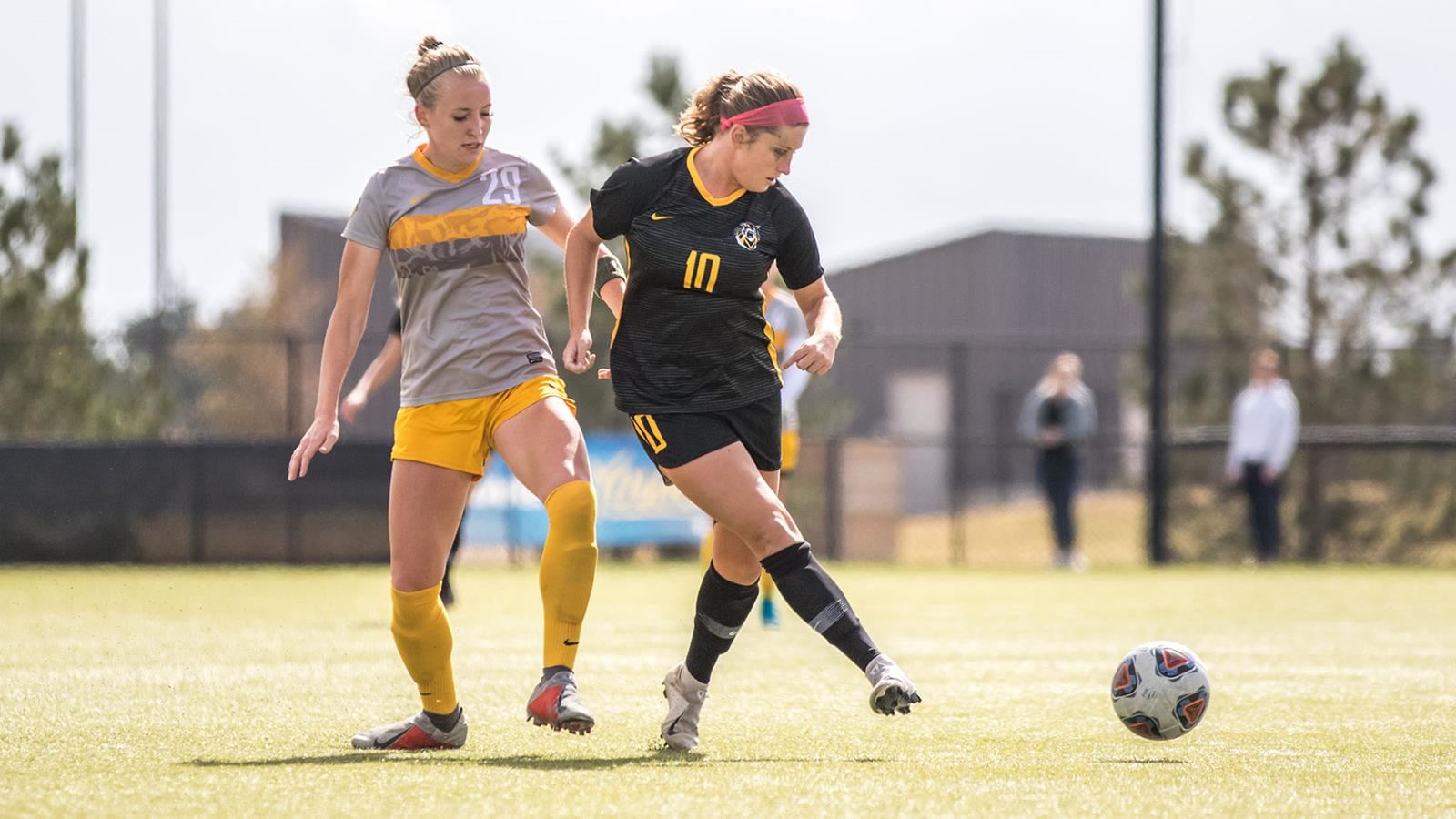
HAYS, Kan. — After only playing 28 minutes Friday night before weather interfered, the Tigers were back in action on Sunday against Missouri Southern. The defense stood tall all afternoon and the offense put three goals on the board, as Fort Hays State ended the weekend with a 3-0 victory. The Tigers improved their record to 8-3-1 (4-1-1 MIAA), while the Lions fell to 2-11-2 (1-5-1 MIAA).
The Tigers tested goalkeeper Riley Laver (2-9-1) from opening kick. After putting nine shots on goal, Cailey Perkins was able to make the tenth shot in the 25th minute off assists from Darby Hirsch and Jenna Prince. Hirsch threaded a pass through to Jenna Prince near midfield, then Prince found Perkins ahead at the top of the box where she rifled in her third goal of the year. Fort Hays put six more shots on goal, while the defense only allowed three shots before ending the first half with a 1-0 lead.
The second half was exactly like the first as the wind shifted around and favored the Tigers once again. After five more shots, Perkins scored her second of the day and her fourth of the year in the 62nd minute. Off a corner kick, Darby Hirsch crossed the ball into the box and Perkins headed it past Laver to double the lead. Hirsch also picked up her second assist of the day on that goal. Sophomore defender Karli Potts checked into the match following the second goal from Perkins. Six minutes later, she was able to find the back of the net for her first career goal. Potts capitalized on MSSU’s inability to clear the ball, and she cashed in on a loose ball chance in front of the net to put the Tigers up 3-0. Following another great defensive performance from the back line and senior goalkeeper Megan Kneefel (7-2-1), the Tigers closed out their eighth victory of the year and seventh shutout of the 2019 campagin.
The offense came alive in this match as the Tigers attempted 24 shots throughout the 90 minutes with 12 on goal. Nine different Tigers were able to put pressure on the Lion’s back line with shot attempts. Perkins led the team with 5 shots (4 on goal) and Hirsch followed with four shots and one on goal.
The Tiger defense was a brick wall, allowing just four shots and one on goal to Missouri Southern. Kneefel recorded her 15th career shutout, placing her in a tie for second place all-time with Abbie Flax (2014-16) for career shutouts. Darby Hirsch also made a mark in the record books on the first goal of the match. She picked up career assists 16 and 17 and now owns the record for most career assists in the FHSU women’s program history.
The Tigers continue their home stand with another match Friday night (Oct. 25) against the Hillcats of Rogers State. Kickoff is set for 7 p.m. at FHSU Soccer Stadium.
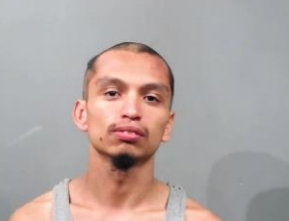
SEDGWICK COUNTY — Law enforcement authorities are investigating a Kansas felon on new charges after a Friday arrest.
Antonio Johnson photo Sedgwick County
Just before 12:30 p.m., police were conducting follow-up at a residence in the 4400 block of East Boston, stemming from the earlier shooting on East Bayley, according officer Charley Davidson.
While investigating, the officers observed 22-year-old Antonio Johnson fire a shot into the air from a shotgun. There was no damage and no injuries.
The officers quickly arrested Johnson without further incident and recovered the shotgun, according to Davidson. No shots were fired towards officers. Johnson was not involved an an earlier fatal shooting on East Bayley, according to Davidson.
Johnson is being held on requested charges that include criminal discharge of a firearm, felon in possession of a firearm and an outstanding warrant.
KANSAS CITY (AP) — A 37-year-old Missouri man who was missing for a week after wrecking his car in a ravine has died.
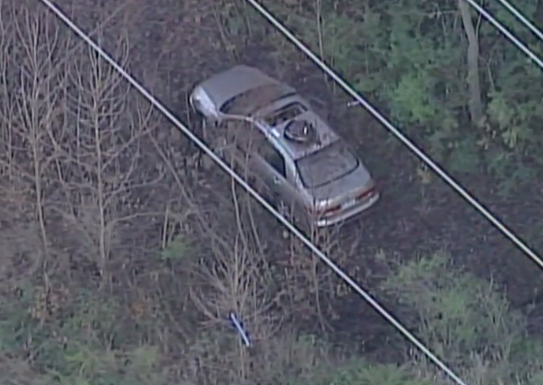
Police in Lee’s Summit, Missouri, said Ryan Linneman died Saturday at a hospital. He was found Wednesday in his vehicle at the bottom of a wooded ravine along Interstate 470 by a dirt bike rider.
Police asked the public for help finding Linneman after he was last seen driving his car on Oct. 9.
Crash investigators determined Linneman’s car ran off of Interstate 470 and went down a 50-foot incline. The vehicle landed in a gully that was obscured from the view of passing motorists.
KANSAS CITY(AP) — A 37-year-old man who had been missing for a week is hospitalized after being found in a wrecked car at the bottom of a ravine.
Lee’s Summit police say a dirt bike rider found Ryan Linneman, of Lee’s Summit, Wednesday evening in the wreckage along Interstate 470 in Kansas City.
Linneman was taken to a hospital with critical injuries. Lee’s Summit police spokesman Sgt. Chris Depue says he did not have an updated condition report Thursday.
Police asked the public for help finding Linneman after he was last seen driving his car on Oct. 9.
The crash investigators determined Linneman’s car ran off of Interstate 470 and went down a 50-foot incline. The vehicle landed in a gully that was obscured from the view of passing motorists.
ADA, Okla. (AP) — Oklahoma’s history is so deeply intertwined with the 39 Native American tribes located there that the state’s creation in 1907 was celebrated with a symbolic wedding ceremony between the Indian and Oklahoma territories.
Photo courtesy First Council Casino
The relationship between Oklahoma and the tribes has sometimes been contentious, but one of its undisputed successes has been a 15-year-old agreement to expand gambling in the state.
Since the tribes got the exclusive right to open casinos, Native American gambling has become a bigger economic factor in Oklahoma than in any other state except California. Dozens of casinos, including several glittering Las Vegas-scale complexes, generate more than $2 billion a year, with $139 million going to the state’s coffers last year.
But gambling money has changed more than the tribes’ bank accounts. It has greatly increased their political muscle, as the state’s new Republican governor recently discovered. After a clash with tribal leaders, Gov. Kevin Stitt and political supporters are facing a test of tribal power that now extends well beyond the state’s Native American population into the economy of many Oklahoma towns.
The dispute flared up suddenly when Stitt, a businessman who won election last year, announced in an op-ed piece plans to renegotiate the state’s share of casino revenue, which now ranges from 4% to 10% and funds mostly schools. Stunned, the tribes unleashed a multimillion-dollar advertising and political offensive to kill the idea.
The campaign, which took many political leaders by surprise, underscored a new reality in a place once ruled primarily by the oil and gas industry, but where tribal money now buys firetrucks, pays for school trips, floats rural economies and supports nearly 100,000 jobs statewide.
“The tribes are the best friend the state of Oklahoma has right now,” said Rep. Matt Meredith, whose district in eastern Oklahoma is home to the Cherokee Nation, the largest tribe in the U.S. “The last thing you want to do with your best friend is get in a legal battle with them.”
How the dispute will be resolved is unclear. The governor insists the current revenue agreement expires Jan. 1, while the tribes say it automatically renews. The state has hired a national law firm to negotiate with Native American leaders, who are calling on support from their wide network of local allies.
The governor and Attorney General Mike Hunter both declined to discuss the talks because of the “dynamic and delicate nature” of the matter, said Alex Gerszewski, spokesman for the state attorney general’s office.
For years Native American tribes have struggled to improve their economic position in what was once Indian Territory. The federal government resettled dozens of tribes in this part of the nation’s midsection after expelling them from other regions in the 19th century, but then gradually whittled away at the tribes’ communal property here to make way for white settlement and eventual statehood. In the last century, the tribes in Oklahoma used their remaining assets to operate businesses and provide clinics, housing and other services for their members.
But the financial picture, both for the tribes and the state, changed dramatically after Oklahoma voters approved casino gambling in 2004 and the tribes received an exclusive concession. The overall economic impact on Oklahoma has amounted to $9.2 billion annually, according to a 2019 study.
Massive resort-style hotel casinos that feature a parade of major entertainment acts have popped up in large cities — the Tulsa area alone has a half dozen — and along the state’s border with Texas, which only has limited gambling and provides a wealthy flow of customers.
At the first exit north of the Red River lies the Winstar World Casino and Resort, with the largest gambling floor in the nation, surpassing those on the Las Vegas strip. Owned by the Chicakasaw Nation, the resort has 1,400 rooms in three hotel towers, two 18-hole championship golf courses, shops and more than a dozen restaurants.
On the state’s northeastern border with Kansas and Missouri lies the Downstream Casino Resort, owned by the 3,240-member Quapaw Nation. Tribal leaders started a cattle operation to supply food for the casino, along with a brewery and other businesses.
“Before gaming we had less than 40 employees, and today we employ close to 2,000 people all in,” said the tribe’s chairman, John Berrey.
Even small towns in rural areas have their own mini-casinos, and the money filters through counties that had been declining economically.
In downtown Sulphur, 90 minutes south of Oklahoma City, the Chickasaw Nation built a four-story hotel and spa that hosts prom night for half a dozen area high schools. A new state-of-the art, 72-bed medical facility in Ada employs 1,600 people.
The benefits have come with social ills, including cases of problem gambling, embezzlement and family disruption that have prompted continued opposition from some community groups and social conservatives.
But the economic boost has lifted spirits where there long had been hardship, said Bob Blackburn, the Oklahoma Historical Society director and author of a book on the Cherokee Nation. He cited a growing sense of “self-determination, self-reliance.”
Stitt has said the state’s share of tribes’ casino revenue was “fair to help introduce the gaming industry” years ago but that today, “Oklahoma’s fees are the lowest in the nation.”
But available data from the 24 states with Native American gambling shows a wide variance. A 2015 federal analysis of 276 tribal compacts shows Oklahoma’s 6% average revenue share close to the national median. More than 100 tribes pay no fees while about 120 pay more than 10%. About a dozen pay between 20% and 25%. Oklahoma’s 4% to 10% revenue share varies depending on the type of game.
In addition to the blast of television and social media ads emphasizing the casinos’ economic importance, the tribes have spent to influence policy makers. Tribes doled out more than $1.1 million during the last two election cycles to state candidates from both parties.
The annual legislative retreats for both House Republicans and House Democrats were held this year at tribal resorts.
Since Stitt’s election last year with 54% of the vote, the majority Republican legislature has been supportive of his initiatives, including giving him expanded powers to appoint heads of state agencies. But many wonder whether even a popular Republican governor now has the clout to challenge the tribes in Oklahoma.
“The tribes are so influential now, and they’ve ramped it up a lot,” said Rep. Lewis Moore, a Republican from the Oklahoma City area. “And the way they’re going to do that is through their lobbyists. And if you personally have a business or live in these tribal areas, you’re going to get even more pressure.”
LAWRENCE, Kan. (AP) — A judge has pushed back the trial date for a University of Kansas student who is charged with making a false rape report.
The start of the trial was moved to Jan. 6 after the prosecution argued that the defense provided information about expert witnesses too close to the initial trial date of Oct. 28. Judge Amy Hanley found that the timing wasn’t an appropriate reason to exclude the witnesses.
The prosecution says the woman fabricated being raped by the friend of her ex-boyfriend in September 2018 out of regret and to get revenge. Police say her text messages showed that the sex was consensual.
But the woman attorneys say she is innocent and was making light of what happened in the texts.
After expanding their trade area, Topeka-based Logan Business Machines is set to open a location in Hays in the next few weeks at Oak Plaza, 107 E. 27th.
The company primarily sells, services and supplies Sharp, Lexmark and HP printers, but also sells LED interactive displays and will offer marketing material printing in their newest location.
The Hays location will be the third for the third-generation, family-owned and operated business that began in 1972.
“This territory with Sharp became available and so we put in for it and got it — so really Hays is going to be our connection back to Abilene, Salina, Junction City and sometimes Manhattan,” said Chris Martin, LBM executive vice president and partner.
The Hays location will allow the company to provided faster service to areas where it already operated and will allow expansion west.
“It was kind of playing connect the dots with Hays,” Martin said of the expansion that will allow the company to provide service to Hays, Russell and as far west as Colby.
He said the company looked at Hays for around six months before deciding to open the location but believes it will be a good fit.
“We love it. We think Hays is growing,” Martin said.
He is also pleased with the location picked in Hays. After looking a locations in various areas of town, he said after speaking with the owner of Oak Plaza he was sold.
“She has a vision of this strip mall to become more than it is now and our company is all about being a part of change and helping the community,” Martin said. “It’s a great location, just off Vine.”
The majority of LBM clients are business to business, so Martin said he does not expect a lot of foot traffic, but having a location for looking at and testing equipment is important for business owners to make decisions on their equipment.
“For most small to medium businesses, the copy machine is a pretty good investment,” he said. “We want them to touch it and feel it and bring in some jobs where we can print their jobs off of the machine they are looking at and get them completely comfortable with the machine being able to fit into their environment. That’s really why we do this. We feel that helps small businesses a lot,” Martin said.
This location will also be a production facility where customers can print blueprints and do plotter printing along with standard walk-in printing.
They also plan to print marketing materials at some point in the future as well.
“Just about anything you can put your name on,” Martin said.
The location will open with a few employees, but Martin said he hopes to be fully staffed with a team of six in 18 to 24 months as the business grows.
While the Hays storefront is still being completed, he said they are already servicing clients and hopes to have the location open for customers soon. A Nov. 21 ribbon cutting with the Hays Area Chamber of Commerce is planned.
A private insurer’s 2018 premiums in Kansas ran too high — at least compared to the medical bills it had to pay for customers that year.
CELIA LLOPIS-JEPSEN / KANSAS NEWS SERVICE
That means thousands of Kansans get money back this fall because they got overcharged last year.
Sunflower, a subsidiary of Centene, ran afoul of rules in the Affordable Care Act, or Obamacare. That forced rebates of more than $25 million dollars to nearly 19,000 customers who bought Ambetter individual health plans.
Sunflower is looking to cut premiums for 2020 by more than 8%.
In past years, total Kansas rebates under the ACA never topped $5.5 million. But this year Kansas leads the nation. Sunflower’s hefty refund puts the average rebate in the state at more than $1,000, or seven times the national average.
Sunflower and Centene didn’t respond to requests for an interview this week.
Federal law requires insurers to spend a certain proportion of what they collect in premiums — normally at least 80 percent — on their customers’ health care. The rest can go toward the company’s own costs and profits.
When companies miss the mark, they have to give money back, either as direct payments to their customers or reductions to their upcoming premiums. (In the case of employer plans, the rebates can go to the employer to be used in certain ways, such as discounting employee premiums.)
This fall saw massive rebates.
Companies across the country broke the ACA rule, triggering a national record of $1.37 billion in rebates.
In Kansas, they owed more than $27 million back to customers, almost all of which relates to Sunflower’s individual plans. Smaller amounts involved insurers on the small- and large-employer markets.
What caused this year’s high premiums in Kansas and nationally?
Health care economist David Slusky said insurance companies have gradually adjusted to how the Affordable Care Act changed their markets since it became law in 2010. At the same time, corporate taxes are down and the for-profit world is thriving.
“Profit has increased as the market has stabilized,” the University of Kansas economics professor said. “I think that increasing profit has resulted in more rebates. But I wouldn’t read too much into an individual company, especially in an insurance market where there’s so many things out of their control.”
“You’re watching to see what happens to your policyholders,” Slusky said, “but you’re not the patient and you’re not the (health care) provider.”
The Kansas Insurance Department regulates premiums and has asked Sunflower for information about how it landed so far afield of the ACA threshold.
“We’re in discussions … to determine what happened,” said assistant director of health and life Craig Van Aalst. “We’re not the only state that (Centene is) issuing refunds in.”
Sunflower has asked the department for permission to lower its premiums starting in January. Van Aalst said conversations with the company indicate it is trying to correct its rates based on its early experience in Kansas.
A few confounding factors may have made it difficult for Sunflower to get premiums right in 2018, Van Aalst said. It was the company’s first year on the individual market in Kansas, where it focused on the Kansas City area. It joined just as another major insurer, Blue Cross Blue Shield of Kansas City, pulled out.
“It certainly complicates membership prediction,” Van Aalst said.
Additionally, rebates normally reflect a three-year rolling average of premiums and health care spending, but Sunflower’s recent arrival means its Kansas rebates reflect just one year.
The state insurance department signs off on premiums and can only reject them with a legal basis and based on actuarial evidence — the numbers that underpin or contradict a company’s prediction of medical costs. State officials said they haven’t had reason to reject Sunflower’s rate requests.
The federal government posts each company’s actuarial memorandum on a website meant to help hold insurers accountable, but the documents are heavily redacted.
The Affordable Care Act’s 80-20 ratio aims to protect against excessive premium charges. Experts note, however, that the rule isn’t perfect and can come with unintended consequences. Among them, they say, it can create an incentive for higher health care spending. So if an insurance company’s fees are tied to overall medical costs, higher expenses allow bigger premiums and profits.
“That’s the one thing that doesn’t get talked about a lot here,” said Christopher Garmon, a professor of health administration at the University of Missouri-Kansas City. “It may be one reason why costs have not been down as much as we would hope in the last 10 years.”
Celia Llopis-Jepsen reports on consumer health and education for the Kansas News Service. You can follow her on Twitter @Celia_LJ or email her at celia (at) kcur (dot) org.