We have a brand new updated website! Click here to check it out!

PREVIEW: Fall Radio Auction Oct.18

The final day of the Eagle Radio Auction kicks off at 8 a.m. Friday on radio stations 101.9 KKQY and 94.3 FM and 1400 AM KAYS.

There are thousands of items to bid on and buy, including a 1997 Honda Goldwing GL 1500 Aspencade from Day Motorsports in WaKeeney.

This bike looks new and is in great shape. Features include saddle bags, a trunk, a fairing, and is pearl white in color. The bike has 58,555 miles and was a local trade. The retail price of this motorcycle is $5,895.

For more information on this motorcycle, call Day Motorsports at 785-743-5723.

Slain Kansas girl’s dad says killer’s helper shouldn’t get parole

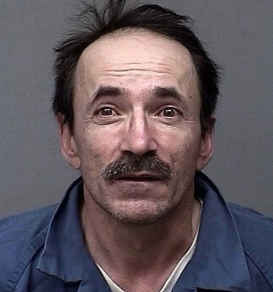
WICHITA, Kan. (AP) — A man who helped kidnap a 9-year-old girl in Wichita and assisted her killer is up for parole for the fifth time.

Wacker is currently being held in the Larned Correctional Mental Health Facility

Bo Shoemaker told members of the Prisoner Review Board on Wednesday that 56-year-old Donald Wacker should remain behind bars for failing to help his daughter, Nancy Shoemaker.

Wacker has a parole hearing next month. He’s already spent 27 years in prison for helping Doil Lane kidnap Nancy near her south Wichita home in 1990. After the abduction, the men drove Nancy to a Sumner County field where Lane raped her and strangled her with a belt as Wacker watched. Her body was found more than six months later.

The Shoemaker family now lives in Florida but traveled to Derby for the latest Kansas Department of Corrections public comments session.

KBI announces findings from their sexual assault kit initiative

Kansas Bureau of Investigation

TOPEKA–The Kansas Bureau of Investigation (KBI) on Thursday announced findings and recommendations resulting from a five-year collaborative effort to identify, inventory, and test previously unsubmitted sexual assault kits in Kansas. Achievements of the Kansas Sexual Assault Kit Initiative (SAKI) were detailed, and a new statewide public awareness campaign to confront social biases related to sexual assault was launched.

In 2014, the KBI formed the Kansas SAKI project. In 2017, Kansas became the first state in the country to complete the statewide inventory with 100 percent voluntary law enforcement participation. As a result, 2,200 previously unsubmitted sexual assault kits were identified. Local law enforcement agencies submitted the majority of those kits to a forensic laboratory for analysis. Testing has been completed on nearly 2,000 kits. Testing on the remaining kits is expected to be completed by the end of October.

“Because of our leadership role in public safety, it was important for us to initiate this project and collaborate with key stakeholders to implement a statewide strategy that we believe will help solve crimes and prevent additional victimization of our citizens,” KBI Director Kirk Thompson said. “Having substantially completed testing on so many kits using in-state laboratories was a significant undertaking, and a noteworthy accomplishment. As a result, we have identified serial sexual offenders and solved cases.”

To date, forensic testing enabled 373 biological profiles from evidence to be entered into the Combined DNA Index System (CODIS) and resulted in 234 CODIS hits, each of which may be considered a new investigative lead in a criminal case. As a result of the SAKI project, two cases were successfully prosecuted and one other resulted in an acquittal. Several criminal cases are still pending review by local law enforcement and prosecutors.

“Since the KBI proactively initiated these efforts more than five years ago, a great amount of work has been done to test the backlog of kits and to address the underlying issues that led to the backlog,” Kansas Attorney General Derek Schmidt said. “I am grateful to the remarkable group of experts who came together to make this happen, and I’m confident that we will continue to experience SAKI’s positive impact on victims and investigations of sexual assault in Kansas moving forward.”

Evaluating the kits associated with this Initiative also provided valuable information about the link between sexual assault and other violent crimes – something the KBI researched extensively. They found that 93% of the suspects named in the SAKI cases had criminal histories that included other violent offenses. Collectively, these same individuals committed over 7,000 additional crimes. The multidisciplinary working group felt strongly that these staggering numbers demanded more proactive attention and action.

Beyond generating new investigative leads in criminal cases, they kindled efforts to reform law enforcement practices, increase laboratory resources, increase victims’ access to services and support, and improve the outcome of criminal cases. Through the SAKI project, over 1,300 Kansas professionals were trained on trauma-informed sexual assault investigation and the importance of a multidisciplinary response to sexual assault.

“Responses to sexual assault have historically been fragmented. Victims often have to navigate difficult systems with limited support,” said Joyce Grover, executive director of the Kansas Coalition Against Sexual and Domestic Violence. “This project has addressed work that was long overdue in Kansas. By coordinating our efforts and recognizing the importance of advocacy and a trauma-informed response, I am hopeful we have made and will continue to make big changes in Kansas.”

The KBI used SAKI project funding to commission the development of a unique statewide public awareness campaign focused on educating Kansans about the prevalence and realities of sexual assault. The campaign also seeks to overcome the normalization of sexual violence, and other common biases surrounding sexual assault.

The campaign, titled “Yes, This Room,” includes broadcast TV and digital messages directing viewers to a website that includes conversation guides for the general public, parents, medical providers, and university students. To view the website and conversation guides, visit https://YesThisRoom.com.

“Through SAKI, we became keenly aware of how infrequently sexual perpetrators are held accountable for the crimes they commit and how often they go on to commit other acts of violence. This demanded our immediate attention,” said Katie Whisman, KBI executive officer and Kansas SAKI project director. “We quickly realized that increasing offender accountability also required involvement of the public, and the idea for a statewide public awareness campaign was born.”

The “Yes, This Room” campaign calls on Kansans to become familiar with the facts, myths, and biases about sexual assault, and to use that information to shift the current narratives surrounding sexual assault. It encourages Kansas to focus on the offender’s role in sexual violence so our communities will be safer places to learn, work, and live.

Former prosecutor drops out of US Senate race in Kansas

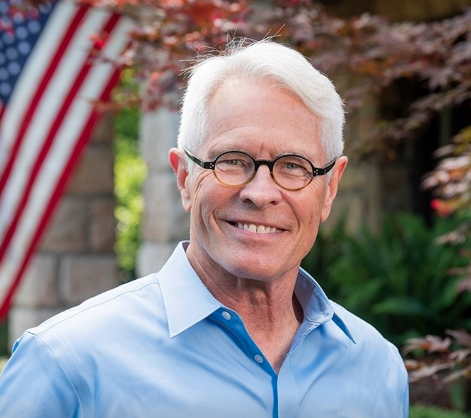
Barry Grissom urged Democrats to unite behind state Sen. Barbara Bollier, a retired Kansas City-area anesthesiologist who made headlines in December by defecting from the Republican Party. Bollier was formerly a GOP moderate often at odds with the party’s more conservative leaders and is running as a “pragmatic” Democrat and centrist.

Grissom’s move comes with some top Republicans worried that former Kansas Secretary of State Kris Kobach, a take-no-prisoners conservative who built a national profile by advocating for tough immigration policies, will capture the GOP nomination next year. Kobach, a former Kansas secretary of state, lost last year’s governor’s race to Democrat Laura Kelly.

Republicans had attacked Grissom over a federal judge’s ruling in August that the U.S. attorney’s office for Kansas had improperly listened to recorded conversations between inmates at a federal detention center in Leavenworth from 2010 and 2017. Grissom was the U.S. attorney for much of that time but has said he didn’t know about his subordinates’ actions.

Democrats haven’t won a U.S. Senate race in Kansas since 1932, but they see Kobach winning the Republican nomination as their best chance for picking up the seat held by Republican Sen. Pat Roberts, who isn’t seeking a fifth term.

“If we’re going to make history in Kansas, it will require an extraordinary commitment to changing the trajectory of our country, and maybe a little bit of luck, too,” Grissom said in a statement posted on his campaign website. “I know a drawn-out primary would be unquestionably harmful and set us all back in this fight.”

Bollier immediately issued a statement saying she’s honored by Grissom’s endorsement and thanking him for his “steadfast commitment to the people of Kansas.”

Grissom’s announcement doesn’t completely clear the Democratic field for Bollier, as Manhattan Mayor Pro Tem Usha Reddi is also seeking the party’s nomination.

Besides Kobach, other Republican candidates include U.S. Rep. Roger Marshall, of western Kansas; Kansas Senate President Susan Wagle, and Dave Lindstrom, a Kansas City-area businessman and former Kansas City Chiefs player.

Grissom is a Kansas City-area attorney and an executive in a company that invests in the legal marijuana industry. He was U.S. attorney for Kansas from 2010 until 2016 under Democratic President Barack Obama.

Some Democrats think Bollier has a good chance of attracting moderate GOP votes in a general election campaign, particularly if the Republican nominee is Kobach.

“I think reality sunk in and Barry decided, ‘It’s probably better for me to just endorse Barbara Bollier,'” said Kansas Senate Minority Leader Anthony Hensley, a Topeka Democrat.

___

Flags at half-staff in memory of Cummings

According to a presidential proclamation, flags are to be flown at half-staff through Friday in memory of Maryland Rep. Elijah E. Cummings, who died Thursday of complications from longstanding health problems. He was 68.

Peggy Sue Giess Mai

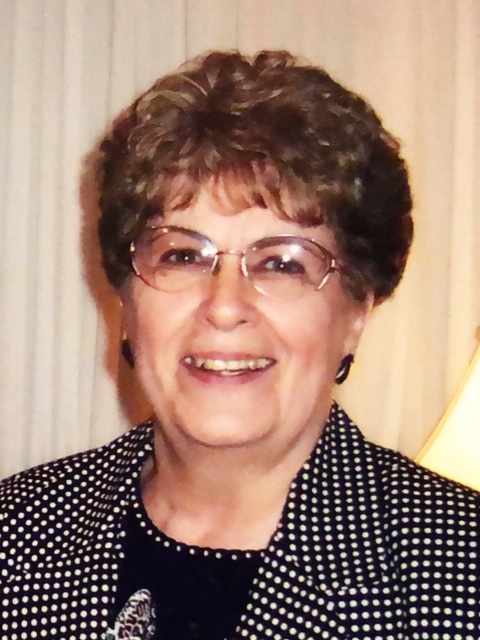
Peggy Sue Giess Mai, age 86, of Utica, Kansas passed away Wednesday, October 16, 2019 at Hays Medical Center in Hays. She was born February 11, 1933 in Carthage, Missouri to Ralph and Emma Lou (Kollenburn) Hunt Jr. She married Robert “Bob” Giess on September 12, 1953. He preceded her in death on October 2, 1988. She married Raymond Mai July 8, 1989.

Peggy had worked as a secretary Ransom school district and bookkeeper for the Deines Corporation in Ransom. She enjoyed crafts, making floral arrangements, and doll collecting. She was a member of the Arnold Methodist Church where she was very active in the choir and other church activities.

She is survived by her husband, Raymond Mai of Utica, Kansas; three sons, Mike Giess and wife Julie of Hays, Rob Giess of Eudora, KS and Dave Giess and wife LaVonne of Hays; three step daughters, Delma McCalister and husband Larry of Wichita, Dana Fagan and husband Roger of Bennington, KS and Debbie Friess and husband Mort of Ransom; six grandchildren, Tyler Giess, Tracer Giess, Cody Giess, Wacy Giess, Ashley Briand and MaKenzie Giess as well as numerous step grandchildren and great grandchildren.

She was preceded in death by her parents; her first husband, Robert Giess; two sons, Randy and Roger Giess and a granddaughter, Tara Giess.

Funeral services will be 10:00 AM Saturday, October 19, 2019 at the Arnold United Methodist Church 105 Main Arnold, KS. Burial will follow in the Arnold Cemetery.

Visitation will be Friday 5 Pm – 7 PM at Brock’s-Keithley Funeral Chapel and Crematory 2509 Vine Hays, KS 67601.

Saturday visitation will be at the church from 9 AM until service time.

Memorial contributions are suggested to DSNWK/Employment Connections or the Arnold United Methodist Church.

Condolences may be left by guest book at www.keithleyfuneralchapels.com or by email at [email protected]

Michael T. ‘Mickey’ McGee

Michael T. “Mickey” McGee, son of Robert and Waneta (Schawe) McGee, was born October 23, 1954, in Parsons, Kansas, and passed away at Kearney Regional Medical Center in Kearney, Nebraska, on October 16, 2019, at the age of 64.

Mickey moved with his family to Dodge City, Kansas, where he attended the local schools. He received his Associate Degree through Dodge City Community College. In 2007, he went to work for Valley Hope as a substance abuse counselor and moved to Norton. On October 23, 2009, Mickey married his longtime sweetheart, Penny McAfee, in Norton, where they made their home.

Mickey enjoyed many different things including drawing, walking, woodworking and metal detecting. His greatest joy was spending time with his family and friends.

Survivors include: his wife, Penny, of their home in Norton; one son, Evan McGee, Hutchinson, Kansas; one brother, Dan McGee, Washington state; one sister, Peggy Powers, Dodge City; one grandchild; his longtime best friend, Jack Stuart, Dodge City; other relatives and many friends.

Mickey was preceded in death by his parents.

Cremation has taken place with private family inurnment.

Private family services will be held at a later date.

Lori Dinkel

Lori Dinkel, age 62, of Collyer, Kansas, passed away on Wednesday, October 16, 2019, at Gove County Medical Center, Quinter, Kansas.

Arrangements are pending with Schmitt Funeral Home, Quinter.

UTV/ATV Pumpkin Run will raise money for Graham County resident

There will be an ATV/UTV Pumpkin Run to benefit local Graham county resident Christine Nickelson on Oct. 19, brought to you byRiders Inc a local Graham County ATV and UTV group

Details: Registration starts from 11am- 1pm.

Fee: $20 per UTV/ATV and $10 for pumpkin game card, and can riders can buy as many of those as they want too.

There is an optional and additional charge of $7 to enter into Jack Creek pumpkin patch before or after the ride.

Ride starts at 1pm- 4:30 at Jack Creek Pumpkin Patch.

Game Card Winner of the Pumpkin Run receives a Traeger Grill donated by Crawford Supply.

After the Pumpkin Run is complete, Jack Creek Patch will have food available to purchase at additional cost along with entertainment of music at their Barn Patio, so you can enjoy the Fall Season and evening stars by the fire at Jack Creek Patch!

More info at: https://www.facebook.com/Jack-Creek-Salvage-502663500091366/

INSIGHT KANSAS: The common sense of ranked-choice voting

Burdett Loomis, Professor, Political Science, College of Liberal Arts and Science, University of Kansas

As the dust settled after the 2018 Republican gubernatorial primary election, Secretary of State Kris Kobach defeated incumbent governor Jeff Colyer by 350 votes, of 128,838 total votes (40.6%). Lagging far behind were moderate Jim Barnett (8.8%), Insurance Commissioner Ken Selzer (7.8), and three other candidates, who garnered 2.2% of the vote.

In assessing the results, Republican political pros were despondent and Democrats gleeful. Republicans had nominated the candidate who was, by far, the most likely to lose the general election to Democrat Laura Kelly. Indeed, that is exactly what happened, as Kobach extreme’s conservatism turned off many Republicans and independents in the November contest.

It is a truism that the rules often help determine who wins a contest. Political scientists have long understood that rules are never neutral. But there are ways to produce better outcomes than Kobach’s 2018 candidacy. Most notably, Republicans could have used ranked choice voting (RCV) to determine the primary winner, with voters ranking the candidates in order of their preference. If no candidate receives a clear majority (50 percent), the candidate with the lowest number of votes is eliminated, and his or her votes are distributed to the second-place choices. This continues until a winner is receives a majority in an “instant runoff.”

In 2018, Governor Colyer would almost certainly have emerged as the winner, since the trailing candidate with the largest cache of votes, Jim Barnett, would have had his tallies go overwhelmingly to Colyer, as would have a fair number of Selzer’s.

The benefits of RCV are numerous, but let’s consider just two. First, Republicans would have put forward their strongest candidate. Second, those voters who supported either Barnett or Selzer could have made a sincere first vote choice, backed up with a strategic second choice.

Nor is the Kobach example singular in Kansas GOP politics. In 2018, newcomer Steve Watkins won the 2nd District Republican nomination with 26.5 percent (20,052) of all votes. RCV procedures would have likely given the nomination to one of his establishment GOP challengers, as most Republican voters viewed Watkins as unqualified. Still, with just a quarter of the primary vote, he won the right to run (and narrowly win) as a Republican in the general election.

A similar scenario propelled Tim Huelskamp into office in the 1st District in 2010, when the ultra-conservative state senator won the nomination with less than 35 percent of the vote. His election in this traditionally Republican seat led to three terms of controversy, before Roger Marshall unseated him in the 2016 primary.

Next spring, Kansas Democrats will use RCV in their May presidential primary; by then, several candidates will have dropped out. The system might be best employed when a large number of candidates remain in the race. Still, it’s a step in the right direction.

Across the nation, many cities have adopted RCV, and Maine has used it in a general election. Indeed, the Maine results demonstrate the impact of RCV, as the Democratic challenger in the 2nd congressional district trailed the Republican incumbent by 2,171 votes, only to emerge victorious by 3,519 votes when two independent candidates’ second-choice votes were redistributed.

A majority candidate thus won election, and more than 16,000 independents did not “waste” their votes.

As we worry about legitimacy, representation, and participation, ranked choice voting is fast becoming a highly attractive option to encourage voting by all factions while producing majority victors. A win-win situation for parties and voters.

Burdett Loomis is an emeritus professor of political science at the University of Kansas.

Manhattan to allow women to go topless, with restrictions

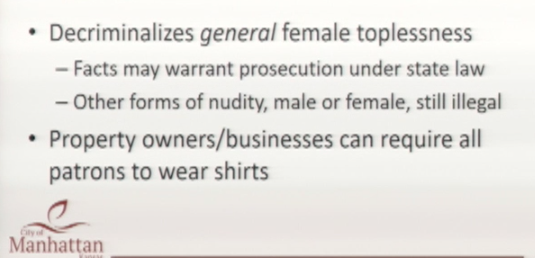
MANHATTAN, Kan. (AP) — Women are now legally allowed to go topless in Manhattan, with some restrictions.

The Manhattan City Commission on Tuesday unanimously decided to amend the city code to allow females to go topless. Watch the board meeting here.

However, property owners and businesses may still require all patrons to wear shirts.

City Attorney Katie Jackson recommended the change to avoid potential lawsuits. She said the code could be changed again later.

Jackson cited a federal ruling in February 2017 that blocked Fort Collins, Colorado, from enforcing a law against women going topless. Fort Collins is in the 10th Circuit Court of Appeals, as is Kansas.

She said the government could still prosecute a topless woman who is acting in a lewd manner, which is against state law.

Copyright Eagle Radio | FCC Public Files | EEO Public File