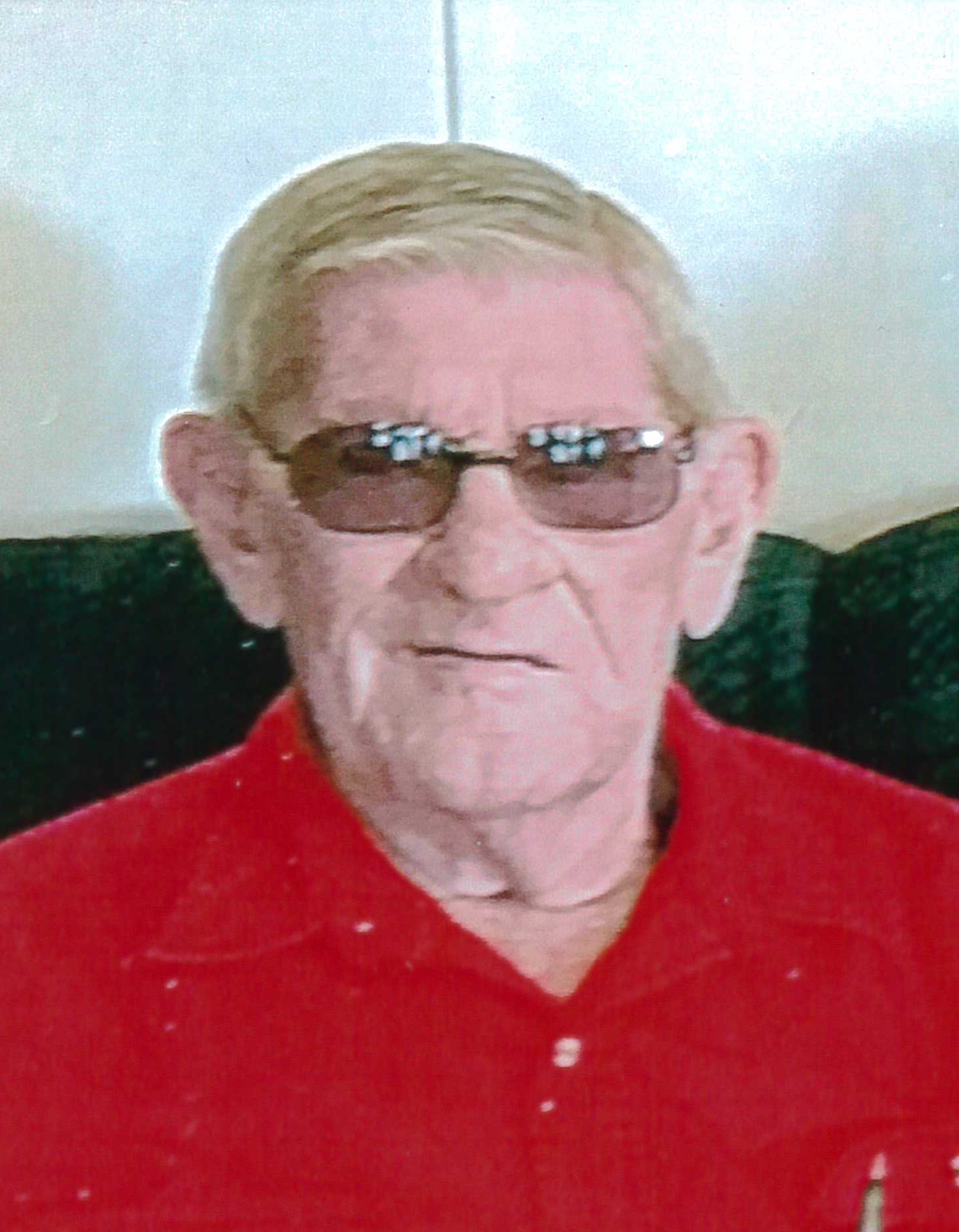
Dorothy V. (Lohr) Mangus, age 92, lifetime resident of Kanorado passed away Monday, October 14, 2019 at Topside Manor in Goodland.
Dorothy was born October 31, 1926 to Theodore Edward and Elma (Radar) Lohr in Denver, Colorado. She grew up and went to school in Kanorado. On April 4th, 1945 she married Garth Dewaine Mangus in Goodland.
Dorothy worked as a switch board operator and a farm wife. She was a member of the Emmanuel Lutheran Church of Goodland. She enjoyed playing cards, dancing on Saturday nights and dearly loved spending time with her family and friends.
Preceding her in death are her parents and grandparents; husband, Garth; son, Mickey Pug; sisters and brother-in-laws, Phyllis and Boyd Billenwillms and Gladys and Dale McBride.
She is survived by her son, Danny (Charlene) Mangus of Kanorado, KS; brother, Theodore Edward (Darlene) Lohr of Castle Rock, CO; sister, Marsha McGillivaray of Goodland, KS; grandsons, Michael (Filippa) of Raleigh, NC; Steven (Chynna) of Goodland, KS; Devin (Shelby) Des Moines, IA; granddaughter, Dani (Kyler) Zweygardt of Hays, KS; great granddaughter, Danica; and many nieces and nephews.
Graveside service will be Saturday, October 19, 2019 at 10:30 a.m. MT at the Kanorado Cemetery, 301 Locust Street in Kanorado. Memorials will be designated to the Kanorado Senior Center and may be left at the service or mailed to Bateman Funeral Home, P.O. Box 278, Goodland, KS 67735. Online condolences and information www.batemanfuneral.com
James Arnold Schindler, age 81, passed away on Tuesday, October 15, 2019 at the Scott County Hospital in Scott City, Kansas. He was born on October 23, 1937 in Goodland, Kansas, the son of John and Frances Nestor Schindler. Arnold graduated from Sherman Community High School in 1955. He started working at Newton Machine Shop and Auto Parts and then went to work at Finley Pontiac until 1968.
He met and married Beulah Riddle in December of 1957. They have two children, Rhonda & Clete Hertensen of Shawnee, Oklahoma, and Rick Schindler of Texas. Arnold has five grandchildren, Dustin, Brandi, Reid, Rance and Sara, and five Great Grandchildren, MaHaley, Nevaeh, Piper, Karsten and Elle.
Arnold and his wife Beulah moved to Liberal, Kansas where he taught at the Liberal Vo Tech in the Auto Mechanic department for 18 years. He divorced Beulah in 1983.
In January of 1984 he married Marilyn K. Boehme Michael in Oahu, Hawaii. Marilyn brought two daughters to this relationship, Anita Michael of Goodland, Kansas, and Lori & George Frecks of Stratton, Colorado and Five Grandsons, Paul, Lucas, Christopher, Tim & Katee, and Josh & Carly and Eight Great Grandchildren, Andrew, Hunter, Daxton, Paisley, Aveya, Allee, Bentley and Colton & Zoey.
During this marriage they lived in Kingman, Kansas and then in Brewster, Kansas before settling in Scott City, Kansas. Arnold & Marilyn owned and operated A&M Auto Sales, Flatlander Snack Foods and the Brewster Grocery Store where Arnold was known for his sausage making ability and his fresh meat market. They left the business and moved to Scott City, Kansas in 2007 to enjoy retirement.
Arnold is survived by his Wife – Marilyn of Scott City, Kansas, One Son – Rick Schindler of Texas, One Daughter – Rhonda & Clete Hertensen of Shawnee, Oklahoma, Two Step Daughters – Anita Michael of Goodland, Kansas and Lori & George Frecks of Stratton, Colorado, One Sister – Mary Puttroff of Goodland, Kansas, One Sister In Law – Evelyn Schindler of Goodland, Kansas, Ten Grandchildren and Fourteen Great Grandchildren.
Graveside Memorial Services will be held at 2:00 p.m (1:00 p.m. MST) on Friday October 25, 2019 at the Goodland Cemetery in Goodland, Kansas with Mike Baughn presiding.
Memorials can be made to the Arnold Schindler Memorial Fund in care of Price & Sons Funeral Homes.
Interment will be in the Goodland Cemetery in Goodland, Kansas.
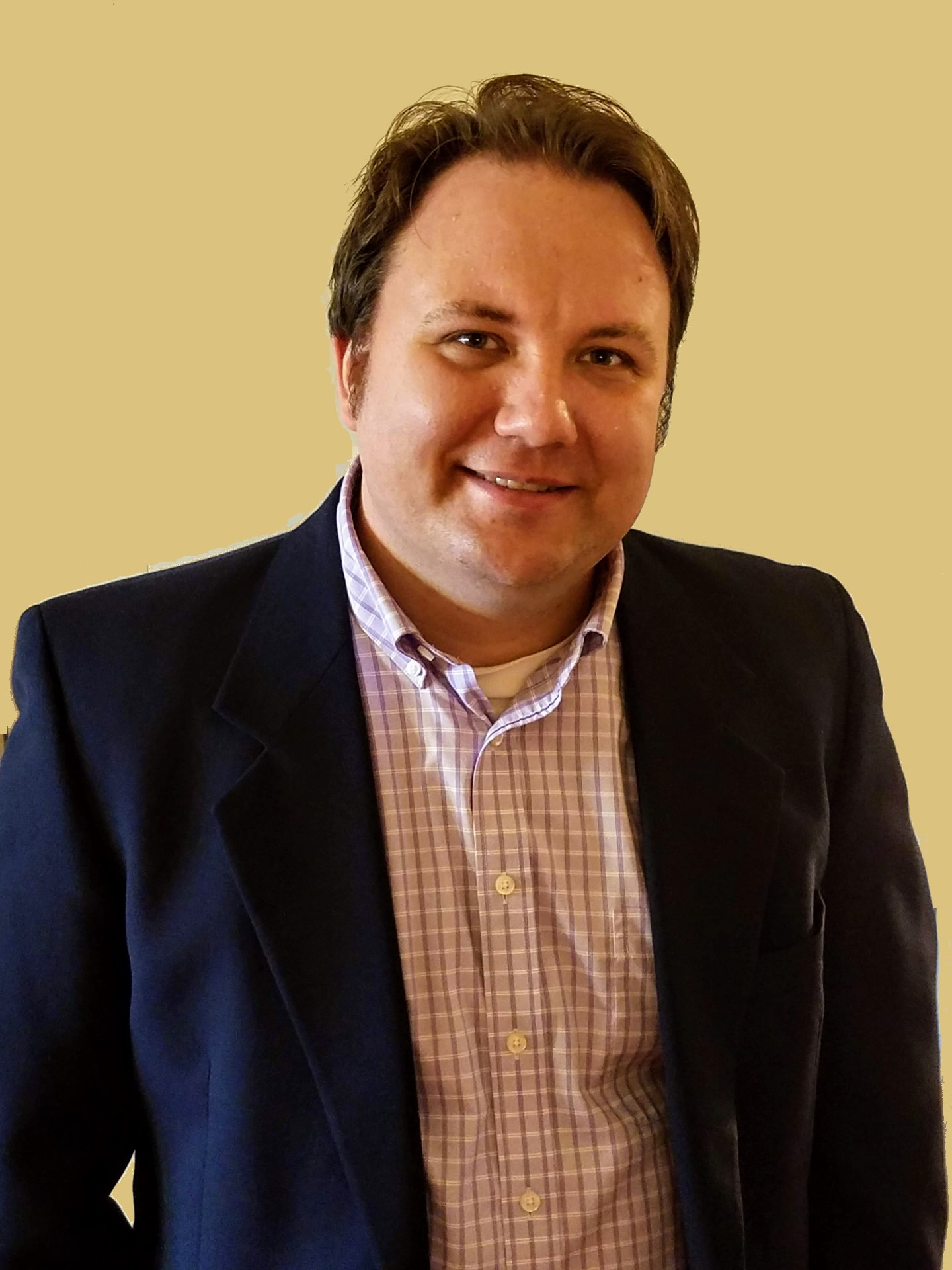
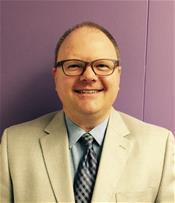
Collin BielserCollin Bielser has been appointed as the new assistant city manager for the City of Hays, City Manager Toby Dougherty announced in a news release Wednesday.
Bielser was selected for the position out of 100 candidates after a lengthy and extensive national search. He will assume his duties Jan. 6.
Bielser comes to the City of Hays from Fairbury, Neb., where he has served as the city administrator since July 2015. Prior to Fairbury, Bielser worked for the City of Baldwin City and the City of Eudora. He is a native Kansan, growing up in Colby.
Bielser graduated from the University of Kansas with a master’s degree in public administration and a master’s urban planning.
“Having grown up in a small town in Western Kansas, coming to Hays is a perfect fit for me and my family,” Bielser said. “I’m excited to be able to contribute to the area that provided such a good foundation for my career. We are eager to join the community and I look forward to working with the Commission, City Manager Dougherty, and staff to advance the future of Hays.”
“Collin will be a tremendous asset for the City of Hays,” Dougherty said. “His education and experience will allow him to hit the ground running.”
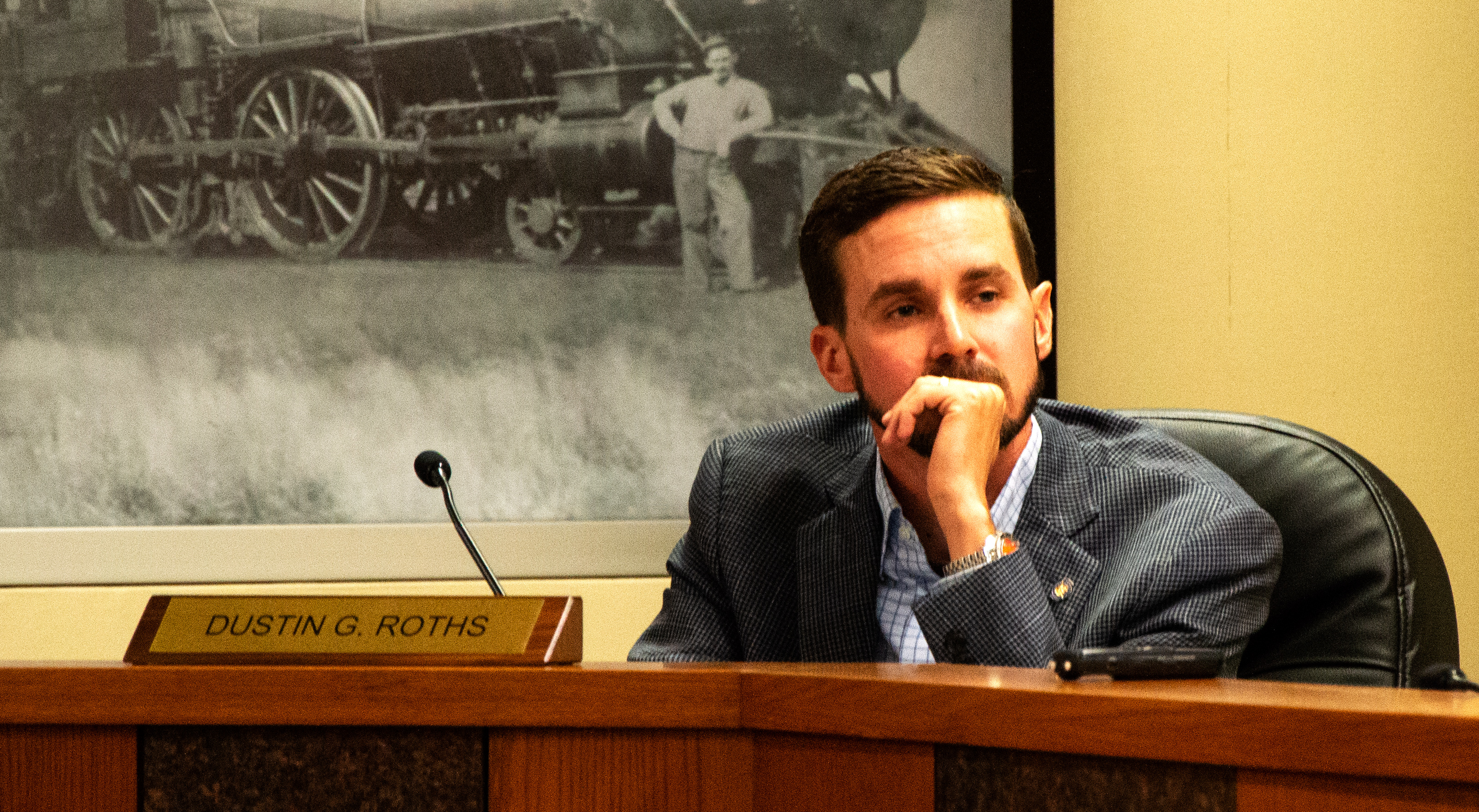
The Hays Area Planning Commission will conduct two public hearings beginning at 6:30 p.m. Monday to consider changes in the Unified Development Code regarding development density.
The commission will also consider setting a Nov. 18 public hearing for a requested zoning change to accommodate a proposed travel plaza.
City staff has proposed eliminating the minimum area required for a proposed lot development, allowing developers more flexibility in providing lots for businesses with different uses. Staff believes it would make the use of land more efficient and potentially increase the density of developments.
The current minimum size of a parcel for a hotel/motel new development is three acres. Staff believes the requirement is too restrictive if not that much space is needed, provided the other requirements are met.
A second public hearing will address parking in new developments.
Staff is recommending adding proposed language to the UDC to allow limited on-street parking to be counted toward total parking requirements.
The benefit would be less impervious surface and potentially reduced costs for new construction of stormwater requirements.
In other business, the commission will consider setting a public hearings for a request to rezone a portion of 700 W. 48th from C-2 (Commercial General) to A-L (Agricultural).
According to information provided to the commission, this property was formerly Mid Kansas Auto Auction. Owner Mark Ottley has changed business plans for the location and is requesting a change of zoning.
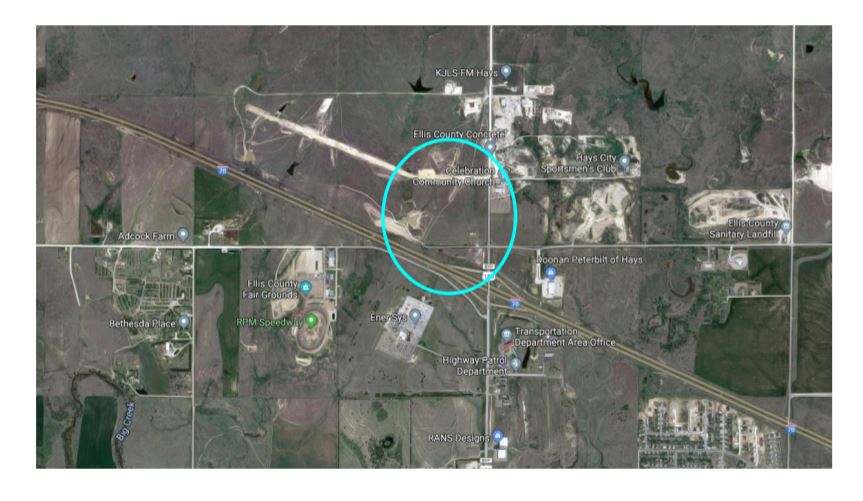
A second public hearing date will be set for a request to rezone a 35-acre tract of land on 230th Ave. owned by Hess Land LLC and a 4.4 acre tract owned by the city of Hays at 5890 230th Ave. from A-L (Agricultural) to C-2 (Commercial General). The location is the northwest corner of the 230th Ave. and 55th St. intersection near the Interstate 70 Exit 157.
The comprehensive plan identifies the area as Business Park, which includes a mix of commercial and light industrial uses.
According to information provided to the commission, a development group has come forward with plans to develop the property that would accommodate local and the traveling public.
The properties are not in city limits and will be requesting annexation. There are no city utilities at the properties. The developer plans to extend water and sewer utilities across I-70. The developer will also be making improvements to 230th Avenue and 55th Street as part of the project.
After serving as the Ellis County administrator for more than three years and helping to guide the county through several major projects, Phillip Smith-Hanes has been named the Saline County administrator.
Smith-Hanes, who was hired in December 2015 and began working in Ellis County in March 2016, said Tuesday he is excited for the opportunity.
“It’s a larger community closer to where I grew up, but I’m sad to be leaving Ellis County,” said Smith-Hanes, who grew up in Marion County. “Ellis County’s been very good to me.
“I wasn’t out there looking for a new job,” he added. “This is just something that popped up that was kind of the right opportunity at the right time.”
Ellis County Commission Chairman Dean Haselhorst praised the work Smith-Hanes has done for Ellis County and said he wishes him well.
“He served Ellis County very well,” Haselhorst said. “Phil did us a great job on budget and saving us money and a lot of reorganizational stuff Phil took care of where it would be some more money-saving chances.”
During his time in Ellis County, Smith-Hanes helped oversee the purchase of the County Administrative Center, 718 Main, the purchase and renovation of the new county health department, 2507 Canterbury, and the renovation of the Cottonwood Extension District office, 601 Main.
“I’ve bought two buildings since I’ve been here,” said Smith-Hanes. “I’ve never had the opportunity to buy a building for a local government prior to coming here.
“We’ve made some changes to the physical plant of Ellis County and what we’re able to offer the taxpayers, but we’ve also make a lot of changes on policy side,” he said. “Getting the personnel policies updated, getting new policies for everything from safety to employee recognition.”
Smith-Hanes became only the second county administrator after Greg Sund stepped down in 2015. Haselhorst said Smith-Hanes helped turn around a difficult situation.
“He has great organization skills, and he really got us back to where we needed to be,” Haselhorst said.
Smith-Hanes was quick to credit to the employees of Ellis County.
“I’ve had great department heads to work with and certainly have enjoyed working with all the commissioners and it’s never one person, it’s always a team effort,” Smith-Hanes said. “I think I’ve helped to stabilize the environment a little bit, compared to where it was.”
He said is “a little sad” he won’t get to see what happens with the sales tax vote in the spring but will be helping to spearhead a number of projects in Saline County.
“They are working on a jail expansion project and they are looking at doing something with their Expo Center,” Smith-Hanes said. “Both of those things are neat opportunities and similar to stuff that I’ve dealt with here in Ellis County so hopefully I have a little bit to offer them and a lot to learn.”
Haselhorst said he doesn’t anticipate the commission hiring a new county administrator right away.
“We’re going to name an interim person in the future and we’ll just see going forward with the budget and different things what direction we truly do go,” Haselhorst said. “We’ll just see, going forward, what that position does look like.”
Smith-Hanes will continue working for Ellis County through the end of November before starting in Saline County Dec. 2.
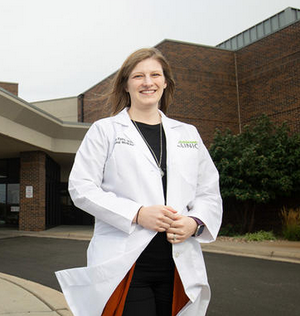
Sara Ritterlings Patry, one of University of Kansas School of Medicine-Salina’s first graduates, practices internal medicine in Hutchinson. Aaron Patton / for Kaiser Health News
SALINA — The University of Kansas School of Medicine-Salina opened in 2011 — a one-building campus in the heart of wheat country dedicated to producing the rural doctors the country needs.
Now, eight years later, the school’s first graduates are settling into their chosen practices — and locales. And those choices are cause for both hope and despair.
Of the eight graduates, just three chose to go where the shortages are most evident. Two went to small cities with populations of fewer than 50,000. And three chose the big cities of Topeka (estimated 2018 population: 125,904) and Wichita (389,255) instead.
Their decisions illustrate the challenges facing rural recruitment: the lack of small-town residencies, the preferences of spouses and the isolation that comes with practicing medicine on one’s own.
But the mission is critical: About two-thirds of the primary care health professional shortage areas designated by the federal Health Resources and Services Administration in June were in rural or partially rural areas. And it’s only getting worse.
So Salina’s creation of a few rural physicians a year is a start, and, surprisingly, one of the country’s most promising.
Only 40 out of the nation’s more than 180 medical schools offer a rural track. The Association of American Medical Colleges ranked KU School of Medicine, which includes Salina, Wichita and Kansas City campuses, in the 96th percentile last year for producing doctors working in rural settings 10 to 15 years after graduation.
“The addition of one physician is huge,” said William Cathcart-Rake, the founding dean of the Salina campus. “One physician choosing to come may be the difference of communities surviving or dissolving.”
The Draw Of Rural Life
By placing the new campus in Salina (population: 46,716), surrounded by small towns for at least 50 miles in every direction, the university hoped to attract and foster students who had — and would deepen — a bond to rural communities.
And, for some, it worked out pretty much as planned.
One of the school’s first graduates, Sara Ritterling Patry, lives in Hutchinson (population: 40,623). Less than an hour from Wichita, it isn’t the most rural community, but it’s small enough that she still runs into her patients at Dillons, the local grocery store.
“Just being in a smaller community like this feels like to me that I can actually get to know my patients and spend a little extra time with them,” she said.
With a population under 41,000, Hutchinson isn’t the most rural community, but it’s small enough that Ritterling Patry still runs into her patients at the grocery store. Credit Aaron Patton / for Kaiser Health News
After all, part of the allure of a rural practice is providing care womb to tomb. The doctor learns how to deliver the town’s babies, while serving as the county coroner and the public health expert all at once, said Robert Moser, the head of the University of Kansas School of Medicine-Salina and former head of the state health department.
He would know — he worked for 22 years in Tribune, Kansas (population: 742).
For another of the original Salina eight, Tyson Wisinger, that calling brought him back to his hometown of Phillipsburg (population: 2,486) after his residency. His kids will go to his old high school, where his graduating class was all of 13 people, and he’ll take care of their baseball teammates. Plus, they’ll grow up living minutes away from generations of extended family.
“I can’t have imagined a situation that could have been more rewarding,” Wisinger said.
The Rural Challenge
But the road to rural family medicine also includes a thing called “windshield time” — the amount of time needed to travel between clinics or head to the closest Walmart.
Then there’s figuring out just how far their patients will need to drive to get to the nearest hospital — which for Drs. Daniel Linville and Jill Corpstein Linville is a solid four hours for more advanced care from their new practice in Lakin, Kansas (population: 2,195).
Their outpost in southwestern Kansas can feel a little bit like a fishbowl. “We do life with some of our patients,” Corpstein Linville said.
Already, the Linvilles have delivered babies and handled a variety of ailments there.
The pair met and married during their four years in Salina — they jokingly call it a “full-service med school.” They completed a family medicine residency in Muncie, Indiana. Then they were recruited by a rural practice that helped them avoid what Moser calls the most dreaded words in rural medicine: “solo practice.”
New doctors don’t want to practice alone, especially as they develop their sea legs, due to the strains of constantly being on call and having singular responsibility for a town. Telemedicine, where doctors can easily consult with other physicians around the country via web video or phone, is helping, as are physician assistants.
Diverging From The Path
Claire Hinrichsen Groskurth, another member of the first graduating class, always intended to return to a small town similar to where she grew up.
“The first thing that threw me off was I fell in love with surgery and OB-GYN,” she said. “Then the second thing that threw me off was marrying another doctor,” whose life goals headed in a different direction.
She’d been a member of the Scholars in Rural Health program at Kansas University that seeks out rural college students who are interested in medicine. She also had committed to the Kansas Medical Student Loan program, which promises to forgive physicians’ tuition and gives a monthly stipend if they agree to work in counties that need physicians, or in other critical capacities.
But when she realized she might specialize, she decided to take out federal loans for her final years. She had to pay back the first year of the special loan with 15% interest.
Plus, her now-husband, who went to Kansas University’s Wichita campus, needed to be in a large enough city to accommodate further training to become a surgeon. So Hinrichsen Groskurth delivers babies as she thought she would — but in Wichita.
The spousal coin can flip both ways: Ritterling Patry needed to find a place that worked for her husband’s farming of corn, sorghum, soybeans and wheat. So the smaller city of Hutchinson it was.
Flaws In The Pipeline
Most medical school students come from urban areas and are destined to stay there, said Alan Morgan, the head of the National Rural Health Association. Producing doctors for the vast swaths of rural America needs to be more of a priority at every step in the education pipeline, experts said.
Many academic centers sell students on the party line that they’ll be overworked, underappreciated and underpaid, according to Mark Deutchman, director of the University of Colorado School of Medicine’s rural program. “They take people who are interested in primary care or rural and beat it out of them throughout their training,” he said.
And that kind of rhetoric often influences the opinion of their medical school peers, which those in rural health might resent.
“Small does not mean stupid,” Moser said.
Medical students everywhere should be exposed to rural options, according to Randall Longenecker, who runs Ohio University Heritage College of Osteopathic Medicine’s rural programs.
“If a medical student never ever goes to a rural place, they never find out,” he said. “That’s why students need to meet rural doctors who love what they do.”
The federal government recently allocated $20 million in grants to help create 27 rural residency programs — programs where newly minted doctors go for practical training before they can be fully licensed. That’s a big jump from the 92 programs now active.
For Jill Corpstein Linville, the pipeline also needs to start at more schools like Salina that are promoting rural medicine from Day One.
“So when you hear rural medicine, you know that it’s a thing and don’t kind of cringe,” she said. “You don’t think it’s someone taking care of a cow.”
KANSAS CITY (AP) — Authorities say a kindergartner brought an unloaded gun to a Kansas City elementary school in a backpack, apparently without knowing it was there.
Kansas City Public Schools said in a news release that a teacher was notified after the Faxon Elementary School student found the weapon Tuesday. Police said that the school’s security then secured the gun. The student’s parents and state welfare officials were notified.
The district statement said, “There is every reason to think that the child was unaware that a firearm had been placed in the backpack.” The district said it was unable to comment further because of the ongoing investigation and student confidentially requirements.
Large skull has been donated to Sternberg Museum in Hays
KDWPT
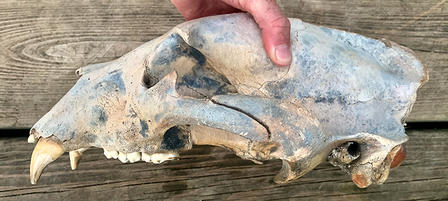
EMPORIA – A mid-August kayak trip down the Arkansas River in south-central Kansas took a fascinating turn for sisters Ashley and Erin Watt when they happened upon a massive skull protruding from a sandbar. It was partially buried nose down, but they immediately knew the shape was unique. When they pulled it from the sand and saw the large teeth of a carnivore, they knew they had something special.
With a little research, Ashley and Erin determined they had likely found a bear skull. They shared their exciting discovery in a Facebook post, which caught the eyes of local Kansas Department of Wildlife, Parks and Tourism (KDWPT) game warden Chris Stout. Stout shared the photos with colleagues, and they eventually reached Sternberg Museum of Natural History paleontologists Dr. Reese Barrick and Mike Everhart who provided insight into the significance of the finding.
While Barrick and Everhart quickly verified the sisters’ suspicions that this was a bear skull, the large size – approximately 16 inches long by 8.5 inches wide – and fossilized appearance left them questioning whether this was a modern grizzly or a more primitive species from the past. The skull is believed to have been deposited into the Ark River sands – an excellent substrate for preservation – and maintained there until it was displaced by this year’s historic floods.
“The bear skull was washed out of the same river sediments that routinely produce the skulls and bones of the American bison, some of which could date back as far as the last Ice Age,” said Everhart, who serves as the Adjunct Curator of Paleontology at the Sternberg Museum. “Whether it is hundreds or thousands of years old, the skull gives us a better insight into the richness of life on the plains before Western man.”
Grizzly bears are native to Kansas and are thought to have occurred throughout most of the state, but history suggests the species was likely extirpated by the middle 1800s. Perhaps the most likely scenario is that this skull did belong to the modern species. Though old enough to have partially fossilized, the skull is in excellent condition; except for the loss of a few minor teeth, it is largely intact and minimally worn.
Though there are several historical accounts of grizzly bears in Kansas, this could be the first physical evidence of their former presence, pending species verification, of course.
“It’s been pretty amazing not only discovering the skull but also the crowdsourcing used to determine how truly exceptional this find is,” said Ashley. “We can’t wait to see what further information can be uncovered about this incredible animal.”
Ashley, a former agriculture teacher at Oxford Jr/Sr High School, and Erin, an Animal Science student at West Texas A&M University, have graciously donated the specimen to the Sternberg Museum in Hays.
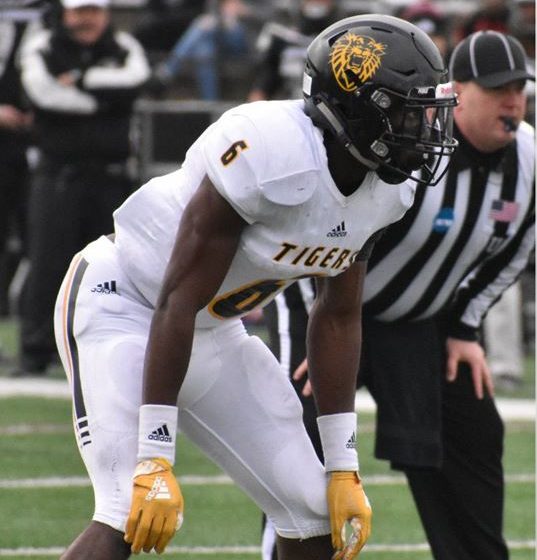
DALLAS – The Dallas Renegades of the newly reformed XFL professional football league selected former Fort Hays State standout safety Doyin Jibowu in the 2019 XFL Draft on Wednesday. Jibowu was an undrafted free agent signing in the spring of 2019 with the Chicago Bears of the NFL, but was released prior to the start of the regular season in September.
Jibowu played in four preseason games with the Chicago Bears in 2019 before his release when the Bears trimmed their roster for the regular season. Over the four games, he recorded seven tackles and one interception.
Training camps for XFL teams will begin in November of 2019. The first regular season games are set to begin in February of 2020. The regular season will consist of 10 weeks, while the playoffs and championship game will be in April. The Dallas Renegades will be playing home games inside of Globe Life Park in Arlington, Texas, the long-time home of the Texas Rangers of Major League Baseball.
Jibowu was a two-time All-America selection by the Don Hansen Football Committee and finished his senior year of 2018 with 57 tackles, including 6 for loss, 2 interceptions, 1 sack, and 11 pass breakups. He wrapped his impressive four-year career at FHSU with 276 tackles, 27.5 tackles for loss, 5.0 sacks, 9 interceptions, and 26 pass breakups. Jibowu was a three-time All-MIAA First Team selection at defensive back and received Academic All-America honors from CoSIDA in his time at FHSU. Jibowu helped FHSU to back-to-back MIAA Championships and NCAA Playoff appearances in 2017 and 2018 and a pair of bowl game appearances in 2015 and 2016.
Former University of Oklahoma head coach Bob Stoops is the head coach and general manager of the Renegades.
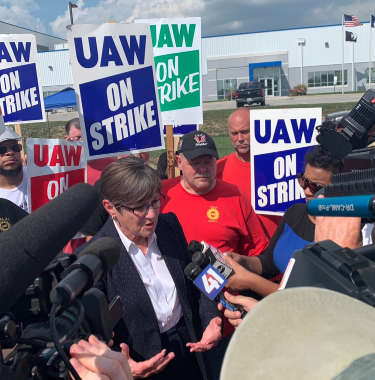
DETROIT (AP) — Bargainers for General Motors and the United Auto Workers reached a tentative contract deal on Wednesday that could end a monthlong strike that brought the company’s U.S. factories to a standstill.
Governor Laura Kelly met with striking workers in Kansas last month-photo courtesy office of Kansas Governor
The deal, which the union says offers “major gains” for workers, was hammered out after months of bargaining but won’t bring an immediate end to the strike by 49,000 hourly workers. They will likely stay on the picket lines for at least two more days as two union committees vote on the deal, after which the members will have to approve.
Terms of the tentative four-year contract were not released, but it’s likely to include some pay raises, lump sum payments to workers, and requirements that GM build new vehicles in U.S. factories. Early on, GM offered new products in Detroit and Lordstown, Ohio, two of the four U.S. cities where it planned to close factories.
The company offered to build a new electric pickup truck to keep the Detroit-Hamtramck plant open and to build an electric vehicle battery factory in or near Lordstown, Ohio, where GM is closing an assembly plant. The battery factory would employ far fewer workers and pay less money than the assembly plant.
GM and the union have been negotiating at a time of troubling uncertainty for the U.S. auto industry. Driven up by the longest economic expansion in American history, auto sales appear to have peaked and are now heading in the other direction. GM and other carmakers are also struggling to make the transition to electric and autonomous vehicles.
Meanwhile, President Donald Trump’s trade war with China and his tariffs on imported steel and aluminum have raised costs for auto companies. A revamped North American free trade deal is stalled in Congress, raising doubts about the future of America’s trade in autos and auto parts with Canada and Mexico, which last year came to $257 billion.
Amid that uncertainty, GM workers have wanted to lock in as much as they can before things get ugly. They argue that they had given up pay raises and made other concessions to keep GM afloat during its 2009 trip through bankruptcy protection. Now that GM has been nursed back to health — earning $2.42 billion in its latest quarter — they want a bigger share.
If approved, the contract agreement will set the pattern for negotiations at Fiat Chrysler and Ford. It wasn’t clear which company the union would bargain with next, or whether there would be another strike.
The union’s bargainers have voted to recommend the deal to the UAW International Executive Board, which will vote on the agreement. Union leaders from factories nationwide will travel to Detroit for a vote on Thursday. The earliest workers could return would be after that.
In past years, it’s taken a minimum of three or four days and as long as several weeks for the national ratification vote. Workers took almost two weeks to finish voting on their last GM agreement, in October of 2015. Then skilled trades workers rejected it, causing further delays.
“The No. 1 priority of the national negotiation team has been to secure a strong and fair contract that our members deserve,” union Vice President Terry Dittes, the chief bargainer with GM, said in a statement Wednesday. The agreement, he said, has “major gains” for UAW workers.
This time around — with a federal corruption investigation that has implicated the past two UAW presidents and brought convictions of five union officials — many union members don’t trust the leadership and likely won’t want to return to work until they’ve gotten a chance to vote on the deal themselves.
In August, the FBI raided the suburban Detroit home of UAW President Gary Jones. He has not been charged and has not commented on the raid. Earlier this month, Jones’ successor as union regional director in Missouri was charged in a $600,000 embezzlement scheme, and another UAW official pleaded guilty to taking kickbacks from union vendors. Eight other people — including five UAW officials — have been convicted over the past two years of looting a jointly run Fiat Chrysler-UAW training center for blue-collar workers. Another official was charged in September.
There’s also no guarantee that the first contract deal with GM will pass. Some workers on the picket lines have said they may not vote for the first offer.
“We’re not just going to take the first thing that they give us,” worker Tina Black said last month from the picket line at an engine and transmission plant in Romulus, Michigan, near Detroit’s main airport.
But Louis Rocha, president of a UAW local in Orion Township, Michigan, said recently that union bargainers have taken strong positions against the company. “I think we’re going to be OK,” he said of the ratification vote.
The strike had shut down 33 GM manufacturing plants in nine states across the U.S. It was the first national strike by the union since a two-day walkout in 2007 that had little impact on the company.
SALINE COUNTY — Law enforcement authorities are investigating a suspect on drug charges after a traffic stop in Salina.
Photo Saline Co. Sheriff
Just after 1a.m. Wednesday, a 2019 Dodge Durango driven by Alberto Lopez, 49, of Louisville, Ky., was southbound on Interstate 135, according Saline County Sheriff Roger Soldan.
A deputy sheriff stopped the SUV after the driver allegedly exited onto State Street without stopping at the stop sign.
During the traffic stop, the deputy noticed an open beer container in the vehicle and tested Lopez, but did not arrest him for driving under the influence.
Lopez photo Saline Co.
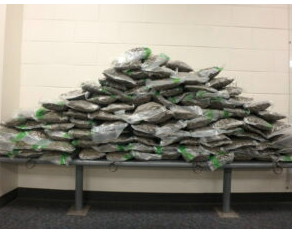
The Salina Police Department’s K-9, Karma, was called in and hit on the scent of marijuana in the vehicle, according to Soldan. Deputies located 106 pounds of marijuana divided into 98 packages in the back of the vehicle.
Deputies arrested Lopez on requested charges that include Possession of marijuana with intent to distribute, No tax stamp, Possession of drug paraphernalia, Having an open container of alcohol and Failure to stop at a stop sign.
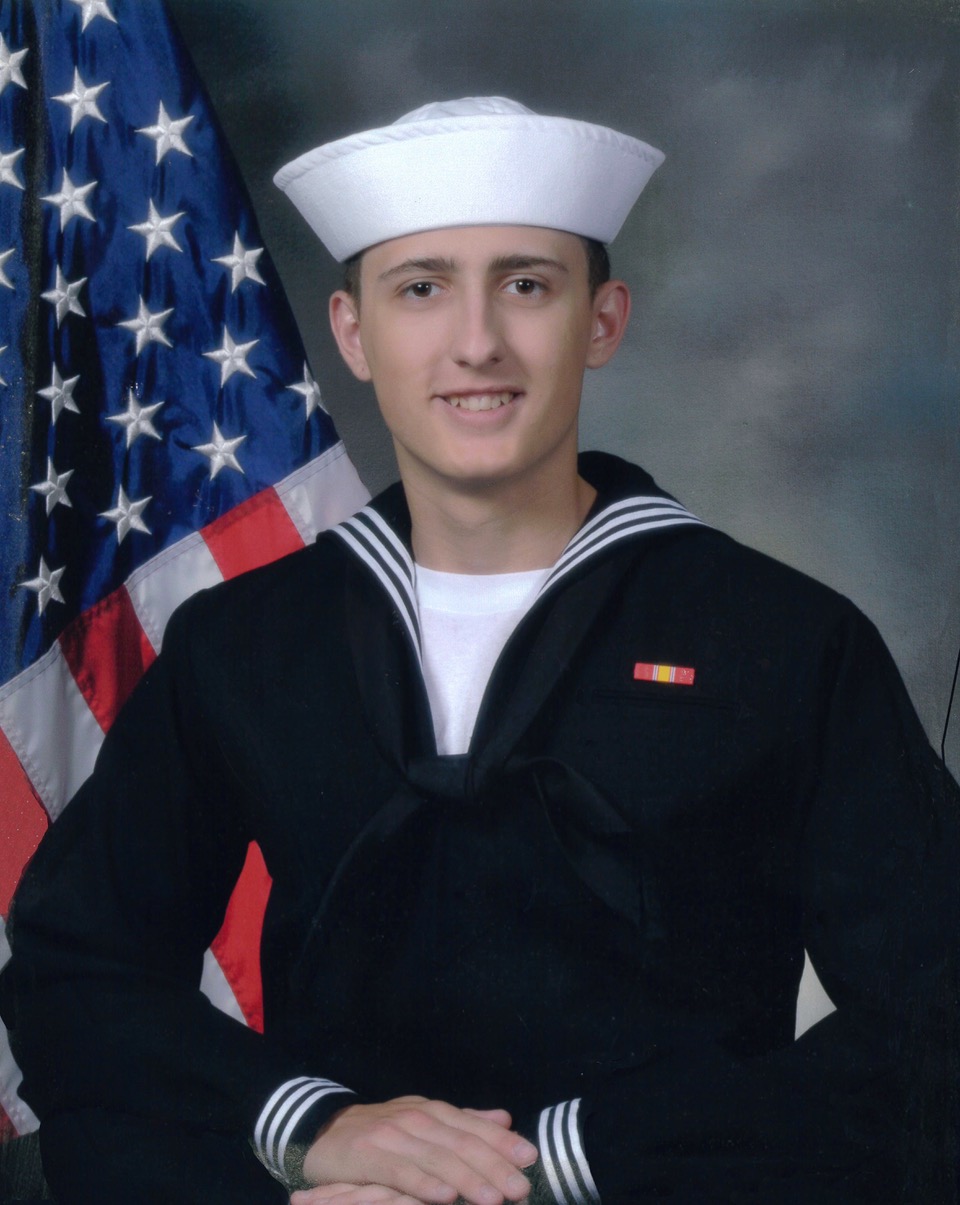
James Ray Dyer, 23, passed away on Oct. 6, 2019, in Haginta, Guam.
He was born April 8, 1996, in Springfield, Mo., the son of Ryan and Yvonne (Harris) Dyer. He graduated from Scott Community High School in 2014. He joined the U.S. Navy in July 2014. Following basic training, he attended Machinist Mate A School, graduating on Nov. 26, 2014. During his first tour of duty, he served on the USS Donald Cook (DDG75) that was homeported in Rota, Spain, from January 2015 to March 2018. He then checked aboard the Explosive Ordnance Disposal Mobile Unit FIVE (EODMU FIVE) in May 2018.
He received special qualifications as an Expeditionary Warfare Specialist in June 2019. Other ribbons and awards include: Navy and Marine Corps Achievement Medal, Navy “E” Ribbon, Good Conduct Medal, National Defense Service Medal, Global War on Terrorism Service Medal, Sea Service Deployment Ribbon, Navy and Marine Corps Overseas Service Ribbon, Marksman M16/M4 Rifle, and Sharpshooter 9mm Pistol qualification. He received both the Sea Service Deployment Ribbon and the Navy and Marine Corps Overseas Service Ribbon four times. He had been a 4-Her, member of Boy Scouts and a volunteer for the USO while serving in Guam.
Survivors include, his parents, Ryan Dyer, Garden City, and Yvonne (Harris) Hall and husband, Kevin, Scott City; one brother, Zachery Dyer and wife, Shayna, Springfield, Mo; a sister, Hayley Kane-Rigney, Wichita; grandparents, Randy Shearmire and James Harris and wife, Linda, Springfield, Mo; step-sisters, Kelsi Meireis, Kimberly Hall and Kassandra Hall, all of Scott City; a step-brother, Christopher Hall and wife, Sara, Scott City; Two aunts, Raeanna Jenkins, Clever, MO and Patricia Christian and husband Dennis, Topeka; two uncles, Donald Shearmire and wife Sharon, Enid, OK and Travis Shearmire and wife Teresa, Springfield, Mo and numerous nieces, nephews and cousins.
He was preceded in death by a grandmother, Kathi Shearmire; one uncle, Darrel Jenkins
Funeral services will be held at 10:30 a.m. Saturday, October 19, 2019 at the First Christian Church in Scott City, Kansas with Raul Silva Sr. and Rodney Hopper presiding.
Memorials are suggested to the James Dyer Memorial Fund in care of the funeral home, 401 South Washington St., Scott City, Ks. 67871.
Interment will be in the Modoc Cemetery in Modoc, Kansas.
Visitation will be from 11:00 a.m. until 8:00 p.m. Friday at Price & Sons Funeral Home in Scott City, Kansas.
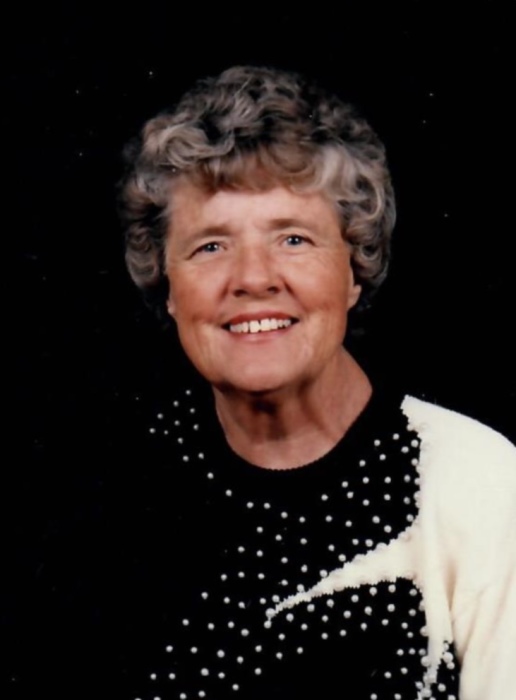
 Dorothy V. (Lohr) Mangus, age 92, lifetime resident of Kanorado passed away Monday, October 14, 2019 at Topside Manor in Goodland.