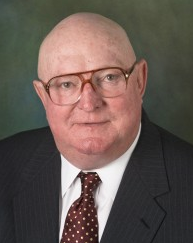
Brent Lee Emery, age 27, of Topeka passed away Thursday evening October 3, 2019 in Colby, KS. Brent was born August 14, 1992 the son of Gary and Terry Coulter Emery, Jr. Brent attended school at Shawnee Heights High School. He currently was working at Hi-Plains Coop in Gem, Kansas.
Brent is survived by his mother, Terry (David) Hause of Brewster, KS; his father, Gary Emery Jr. of Ellsworth; maternal grandmother, Dorothy Emery of Meriden; maternal grandmother, Sharon Bath of Gypsum, KS; two brothers, Aaron Rhoads of Topeka and Ryan Hause of Brewster, KS; three sisters, Lindsay Koch of Topeka, Taylor Rhoads of Topeka and Hanna Hause of Brewster, KS; aunts, Tracy (Matt) Nicolay and Amy Busey; uncles, Jason Bath and Scott Bath; nephew, Dayton Orester and two nieces, Layla and Maycee Orester; and cousins, Paige and Sloan Nicolay, Wyatt Flewelling, Courtney Coker and Derek Busey.
Memorial service will be Friday, October 11, 2019 at 10:00 a.m. at the Davidson Funeral Home. Memorial contributions may be made to the Helping Hands Humane Society or the Brent Emery Memorial Fund to assist with funeral expenses. davidsonfuneral.com.
RENO, Nev. (AP) — Jan Bennett learned a lot of lessons on her solo bicycle ride across the entire 2,220-mile Pony Express Trail from St. Joseph, Missouri to Sacramento, California.
She already had endured food poisoning, hail and near misses with tornado weather by the time she made it to a remote stretch of northern Nevada as part of her effort to map out a bike-packing route the historic trail.
But she told the Reno Gazette Journal recently it was a “little bit of a gut check” when she had to walk her bike up a canyon road where the water was scarce.
She remembered a piece of advice she had received about endurance riding: “If you have to cry, cry while you are moving.”
NEW YORK (AP) — Federal judges in three states on Friday temporarily blocked Donald Trump’s policy to deny green cards to many immigrants who use Medicaid, food stamps and other government benefits, dealing a setback to one of the president’s most aggressive moves yet to cut legal immigration and make it more based on employment skills than family ties.
The rulings in California, New York and Washington came in quick succession four days before the new rules were set to take effect. The judges ruled in favor of 21 states and the District of Columbia, which challenged the policy almost immediately after it was announced in August.
U.S. District Judge George Daniels in New York said the policy redefined longstanding immigration laws with a new framework that had “no logic.” Allowing the policy to go into effect now, he said, would have a significant impact on “law-abiding residents who have come to this country to seek a better life.”
“Overnight, the rule will expose individuals to economic insecurity, health instability, denial of their path to citizenship and potential deportation,” Daniels wrote. “It is a rule that will punish individuals for their receipt of benefits provided by our government, and discourages them from lawfully receiving available assistance intended to aid them in becoming contributing members of society.”
Ken Cuccinelli, acting director of U.S. Citizenship and Immigration Services, expressed confidence that the administration would eventually prevail and framed the policy as a legal attempt to ensure that those who settle in the United States can support themselves financially.
“An objective judiciary will see that this rule lies squarely within long-held existing law,” Cuccinelli wrote on Twitter. “Long-standing federal law requires aliens to rely on their own capabilities and the resources of their families, sponsors, and private organizations in their communities to succeed.”
White House press secretary Stephanie Grisham added that the rulings were “extremely disappointing” and “the latest inexplicable example of the administration being ordered to comply with the flawed or lawless guidance of a previous administration instead of the actual laws passed by Congress.”
While Trump has focused much of his attention on illegal immigration — including his pledge to build a wall on the Mexican border — he has also trained his sights on curbing legal immigration by moving away from a system that is largely based on family ties. He outlined his plans early in his administration in discussions with Congress to overhaul the nation’s immigration laws, turning to executive actions after those efforts failed.
Just last week, Trump issued a presidential proclamation that says immigrants will be barred from the country unless they are covered by health insurance within 30 days of entering or have enough financial resources to pay for any medical costs. The measure, which is scheduled to take effect Nov. 3, could prohibit the entry of about 375,000 people a year, mainly family members who account for a majority of people getting green cards from abroad, according to the Migration Policy Institute, a nonpartisan think tank.
Friday’s rulings put the policy to deny green cards to more immigrants on government aid on hold while lawsuits proceed. Federal law already requires immigrants seeking to become permanent U.S. residents to prove they will not be a burden on the country — a “public charge,” in legal terms —but the new rules detail a broader range of programs that could disqualify applicants.
On average, 544,000 people apply for green cards every year, with about 382,000 falling into categories that would be subject to the new review, according to the government. Guidelines in use since 1999 refer to a “public charge” as someone primarily dependent on cash assistance, income maintenance or government support.
Under the new rules, the Department of Homeland Security has redefined a public charge as someone who is “more likely than not” to receive public benefits for more than 12 months within a 36-month period. If someone uses two benefits, that is counted as two months. And the definition has been broadened to include Medicaid, housing assistance and food assistance under the Supplemental Nutrition Assistance Program, or SNAP.
Factors like the immigrant’s age, employment status and English-language ability would also be looked at to determine whether they could potentially become public burdens at any point in the future.
While the administration argues that the rule changes would ensure that those gaining legal residency status are self-sufficient, critics say they are discriminatory and would have the effect of barring immigrants with lower incomes in favor of those with wealth. They consider it a betrayal of Emma Lazarus’ words on the Statue of Liberty, “Give me your tired, your poor, Your huddled masses yearning to breathe free.”
New York Gov. Andrew Cuomo called the ruling “an important win for our country (that) sends a clear message that we will not allow these hateful policies imposed by the Trump administration to tear our country apart. Xavier Becerra, California’s attorney general, said it stops a “heartless attempt to weaponize” health care, housing and other essential public services.
Daniels’ ruling in New York was in a lawsuit filed by the states of New York, Connecticut and Vermont. The Washington decision, authored by U.S. District Judge Rosanna Molouf Peterson in Spokane, was in a lawsuit by the state of Washington and 13 others: Colorado, Delaware, Hawaii, Illinois, Maryland, Massachusetts, Michigan, Minnesota, Nevada, New Jersey, New Mexico, Rhode Island and Virginia.
U.S. District Judge Phyllis Hamilton in Oakland, California, ruled in favor of California, Maine, Oregon, Pennsylvania and the District of Columbia. Her decision applies only in those states, a moot point because the other two injunctions are nationwide.
Daniels and Hamilton were appointed by President Bill Clinton. Peterson was appointed by President Barack Obama.
TOPEKA — The Kansas Supreme Court has adopted new child support guidelines that will take effect January 1, 2020.
The court adopted the updated guidelines through Administrative Order 307, which says they are to be used as a basis for establishing and reviewing child support orders in Kansas district courts.
The new guidelines are available on the Kansas judicial branch website at www.kscourts.org:
Kansas Child Support Guidelines are rules judges and hearing officers follow to decide how much child support each parent is to pay toward raising their children. At the most basic level, they guide parents to create a fair and balanced distribution of resources essential to raising children: time and money.
Child support pays for housing, clothing, transportation, recreation, health care, child care, and other expenses that would have been shared by the parents had the family remained intact.
Federal law requires states to review their child support guidelines every four years. In Kansas, an advisory committee reviews Kansas’ guidelines to ensure that the roughly $35 million mothers and fathers pay in support each month is equitable for the parents and appropriate for the day-to-day essential needs of the children they support.
Kansas has reviewed and revised its guidelines 10 times since they were initially established in 1989. The advisory committee that has done the reviews has included parents who either pay or receive child support, tax professionals with expertise in child support, attorneys, and judges. An economist is enlisted to help with the review.
The current committee spent nearly a year reviewing the guidelines and making proposed updates. The updates were made available for public comment this summer, and comments were considered by the Supreme Court before the updates were adopted this week.
Two BNSF locomotives collided on Friday night around 11 p.m. approximately 11 miles east of Alliance or a few miles west of Antioch, Nebraska.
According to BNSF public affairs director Andy Williams, one of the trains was stopped as another train hit the other in the rear while slowing down to stop. Both came off the train tracks. All the coal cars on the trains were empty.
Photo By KALIN KROHE
The trains were westbound going to Wyoming.
Williams said, Hulcher Services helped lift the empty train cars and set them back on the tracks.
ABILENE — Former White House Press Secretary Marlin Fitzwater is returning to the Eisenhower Presidential Library, Museum, and Boyhood home, according to a media release from the museum.
Marlin Fitzwater courtesy photo
Abilene’s very own Marlin Fitzwater returns to discuss his new book, Calm Before the Storm: Desert Storm Diaries & Other Stories, during the next Eisenhower Presidential Library’s Lunch & Learn program.
The program is scheduled for noon Wednesday in the Eisenhower Presidential Library Visitors Center Auditorium, 200 SE 4th, Abilene. Free and open to the public, a light lunch is included on a first come, first serve basis. A sign-language interpreter will be available for this program.
Fitzwater’s front row seat as White House Press Secretary to some of America’s most defining moments provides an intimate look at what transpired inside the White House.
Fitzwater is an American writer who served as White House Press Secretary for President Ronald Reagan and President George H.W. Bush from 1983 to 1993. Fitzwater was awarded the Presidential Citizens Medal in 1992. He is the founder of the Marlin Fitzwater Center for Communication located at Franklin Pierce University in Rindge, New Hampshire. He is married and lives in Maryland, in a village on the Chesapeake Bay.
A book signing will follow Fitzwater’s presentation. Copies of his book are available for sale in the gift shop and online at www.ILikeIkeStore.com.
The Lunch & Learn series is made possible courtesy of the Eisenhower Foundation and the Jeffcoat Memorial Foundation.
Alex Ford, HHS metals teacher, discusses the school’s new computer numerical control (CNC) machine during a school board tour Monday night.
By CRISTINA JANNEY Hays Post
The Hays school board and guests toured the Career and Technical Education wing of Hays High School on Monday night, learned about some of the needs of the programs and discussed hopes for a renovation of the program’s space.
As Hays High sees an increase in enrollment, the demand for CTE classes is also increasing. However, the school is limited in adding more course offerings by both staff and space.
For the fall semester of 2019-20, HHS has 888 students (seat-time) in its CTE programs.
From left, school board members Paul Adams and Mike Walker and HHS Principal Martin Straub look at a hydroponics experiment that one of the HHS ag students is preparing to plant. The HHS greenhouse was repaired this summer after being damaged in a hail storm.
Martin Straub, HHS principal, said he would like to double the size of its health care pathway. A room that used to be occupied by a preschool program is now being used used by a NCK Tech teacher to offer allied health classes.
The preschool program was moved to the former Oak Park Medical Complex with the Early Childhood Connections program.
Straub said he would like to be able to have a health pathways instructor on staff, but the shared instruction is working for now. HaysMed recently donated hospital beds for that program.
Although it is not related to CTE, there is a transitional living room in the CTE wing. The room is set up like an apartment. Students in functional special education learn life skills in that program, such as cooking meals, cleaning, budgeting and shopping.
The addition of this room means students don’t have to go off campus to learn these skills. The class averages about 20 students.
Metal shop
The metal shop recently added a new lathe and computer numerical control (CNC) machine. However, metals teacher Alex Ford said the program lacks the space and the equipment to teach all of the skills he said he thinks students need to be prepared for the work world.
Chris Dinkel, CTE instructor, said the department would like to knock down one of the walls and expand the shop into the adjacent room. The program would also like to put in an overhead door on the back of the shop so students could bring in larger projects like trailers, which now have to be worked on outside.
“His student-to-equipment ratio — you have 20 students in here and you have two lathes,” Dinkel said. “That’s a problem. You count the number of machine shops we have within a five-, six-county area, it’s well over a dozen. There is an employment issue too.”
Ford said, “I have one mill. It’s a great machine, but I have 20 students. I can’t teach anything on it. I can’t have 20 students on one machine. I actually need two or three of them. I need four lathes if I want to really teach my students. I have all the welders I can ask for, but I don’t have the machining capability.”
He continued, “CNC is the biggest push right now. I have one CNC machine. I would like to have two or three more. I would like to have classes just on that.”
Lathes cost $5,000 to $10,000. A mill can cost $15,000 to $20,000.
Dinkel said High Plains Machine Works has a large mill it would like to donate to the program, but the high school has no place to put it.
Radio/TV
HHS has an award-winning radio and broadcast program. However, Dan Balman, broadcast instructor, said the classroom space doesn’t fit the program. Balman also teaches American government. When his broadcast students need to shoot video, they have to move all of the desks out and set up the green screen and all of the audio and video equipment.
He would like to see a room that is adjacent to the program’s radio studio reconfigured into a broadcast studio. The room is currently being used for storage. The school board has already approved construction of a metal storage building for HHS, but that building has yet to be constructed.
What is now being used by Heath Meder for the graphics arts program could be converted into an editing classroom for the broadcast program. The CTE program would like to add a door between the two rooms that would be used for the broadcast program. Graphic arts could be moved to what is now being used by Allied Health.
Art
HHS art teacher Heath Meder explains more space is needed at HHS for the jewelry program to protect the safety of students.
Art teacher Heath Meder offers a jewelry making course. The space is shared with the ceramics program. Meder said the space is so tight it is unsafe for students.
The CTE program would like to knock out a wall to expand the jewelry program’s space into an adjoining classroom. They also are proposing adding a dividing wall between ceramics and jewelry.
Jewelry is a popular class. It has about 60 requests per enrollment period, but only 20 spots are available.
HHS art program’s new gas-fired kiln.
The student learn lost-wax casting. Students who may not take any other shop classes learn to use drill presses and buffers.
“It is a [class] we are talking about math, science, metallurgy. They are using things that I don’t think they will if they don’t have an opportunity in a class like this,” Meder said.
Meder found an aluminum foundry that has been at the school since it was built. Meder said he would like to use foundry in his art classes. A new shed was added outside of the ceramics studio for a new gas-fired kiln, and that area could be used for the foundry.
Jennifer Younger, art teacher, said other art classes, including art exploration, drawing and painting also are usually full, and the department has had to turn away students. The program does not have a dedicated room for painting, so the students can’t leave their art pieces out.
Younger said the art department would like to have a dedicated art exploration teacher, so she and Meder could concentrate on their specialities. Straub said HHS at one time had three full-time art teachers, but that position was cut.
“Right now, we are stretched pretty thin,” Younger said. “We are trying to teach everything. Students want to be in here. It kills us to have to turn away, but we are full, and there’s only two of us.”
Wood shop/drafting
Woods teacher Chris Dinkel discusses equipment needs in the wood shop during a school board tour Monday night.
A surface plainer and a table saw were recently replaced in the wood shop. However, Dinkel said the school needs a CNC machine for woods to prepare students for what they will experience in the work world.
“What does CNC do for us in here?” Dinkel said. “That is what many shops are doing. You go to Westlake in Salina or you go to Kansas City to these big cabinet manufacturers, once that piece of material runs through the process, especially when it comes to the finishing, a hand does not touch it. It is all on conveyor— sanding, the finishing, the staining process, the drying process.”
In order to make a place for a CNC, machine, the shop will need to be reconfigured. The CNC machine would need to be placed where the student projects are now being stored towards the center of the shop. Those projects would need to be moved to a storage room, but that space would need to be adjusted to allow enough room for both storage and a set of stairs that go to an upper wood storage space. That set of stairs right now butts up against a wall.
This would require a wall being removed and a support beam being added. The stairs could be extended out into the shop area.
Dinkel also teaches drafting. He said the monitors that the students are using are old and small for the large house plans they create.
Ag
HHS ag teacher Curt Vajnar displays a drone used in the ag program.
The glass for the greenhouse that is used by the ag program was recently replaced. The greenhouse was damaged in a hail storm and insurance covered the cost.
Curt Vajnar, ag teacher, said he now has his drone license and is teaching students drone applications in the ag industry.
He also has students involved in ag research. One student is studying water needs of various grasses with the help of Holly Dickman, City of Hays water conservation specialist. Another student is preparing for a hydroponic experiment and yet another student will be working on a hatching experiment.
The group did not tour the business and marketing or the culinary arts programs.
High school officials hope the renovations to the CTE wing could be done in phases with the total cost of about $150,000.
When the renovations to the CTE wing would be complete is uncertain at this time. The work is contingent on approval of the school board.
HHS Assistant Principal John Linn said work could begin on the renovations as soon as they are approved by the school board.
Kansas farmer Luke Ulrich faces long hours and low pay in part because of President Trump’s trade policies, but he still backs Trump.-photo by FRANK MORRIS
Most farmers haven’t had a single good year since President Trump took office, and Trump’s policies on trade, immigration and ethanol are part of the problem.
Yet farmers, who broadly supported Trump in 2016, are sticking with him as the impeachment inquiry moves forward.
“You see everyone circling their wagons now, and the farm community is no different in that,” says John Herath, the news director at Farm Journal.
The farm magazine polls more than a thousand farmers monthly. Herath says Trump’s popularity slumped a bit in the summer, but he notes it bounced back to 76% favorable the week the U.S. House launched its impeachment inquiry.
‘Scratching our heads’
Farmer Luke Ulrich says he works at least 12 hours a day, almost every day, tending his crops and cattle near Baldwin City, Kansas.
Ulrich anticipates a decent corn and soybean crop this year. But his expenses are so high, and the prices he’s getting for his crops and cattle are so low, he’s budgeting less than $25,000 in income for the whole year.
“We more or less live off my wife’s income,” says Ulrich, looking up from the combine he’s fixing. “She carries the benefits. If it wasn’t for her we’d probably be sunk.”
President Trump is partly to blame for low grain prices. China retaliated against his tariffs by all but closing a giant export market for Ulrich’s soybeans.
“I’d probably be lying if I said some of us aren’t scratching our heads every once in a while,” says Ulrich. “I sometimes wonder if he didn’t bite off a little more than he could chew.”
The Trump administration hurt demand for corn by allowing dozens of oil refineries to sidestep their legal obligations to use billions of gallons of corn-based ethanol in gasoline blends.
Still, Ulrich says he’s not mad at Trump. He loves Trump’s hands-off approach to environmental regulations, and he appreciates the $28 billion aid package that Trump’s agriculture department has distributed to compensate farmers for what they’re losing in export sales.
Walking the line
Pat Westhoff, who directs the Food and Agricultural Policy Research Institute at the University of Missouri, says farm bankruptcies are up sharply this year and says the so-called “trade aid” payments are crucial.
“Every dollar counts right now, so it’s a difference between profit and loss for many producers,” says Westhoff.
Trump has mitigated some of the problems he’s caused farmers. Sara Wyant, president of Agri-Pulse Communications, has been polling farmers about Trump for years and says they’ve stood by him through it all.
“That is not going to hold forever,” warns Wyant. “That is going to be a position that when some of them start to face, well, either it’s Trump or going out of business, they’re not going to be still voting for Trump.”
But many farmers are keeping their hopes up. That’s what they tell Jim Mintert, director of the Center for Commercial Agriculture at Purdue University. Mintert says two-thirds of the 400 farmers he polls each month look for a happy ending to the trade wars.
“I wouldn’t say that we’ve seen any evidence of people becoming, less supportive of the administration’s trade policy,” says Mintert. “That’s not to say farmers aren’t concerned. They are very definitely concerned.”
Deeply personal politics
Trump’s tried to ease those concerns. He’s promised progress on trade, pledged to force oil companies to use billions of gallons more ethanol.
And then there are the $28 billion in so-called “market facilitation payments” over and above other farm subsidies and disaster assistance.
And politics are deeply personal these days, according to Chris Larimer, a political science professor at the University of Northern Iowa. Larimer says farmers have to square their economic differences with Trump, with their partisan allegiance to him.
“These partisan identities are hardening,” says Larimer. “So, you kind of have forces pushing in both ways. And it’s sort of this ongoing experiment to see which one breaks first.”
For now, political ideology seems to be winning. While there’s a lot of grumbling about Trump among farmers, neither the trade wars nor the impeachment investigations seem to be driving them away from him, yet.
Frank Morris is a national NPR correspondent and senior editor in conjunction with the Kansas News Service. You can reach him on Twitter @FrankNewsman.
Fort Hays State University’s Center for Entrepreneurship will host a local women business owners panel on Tuesday, Oct. 22, from 12 to 1:15 p.m. in the Memorial Union Black and Gold Room as part of “Women Entrepreneurship Week.”
A question and answer session will be followed by a reception with refreshments.
The panel discussion will feature five successful local women entrepreneurs: Deanna Doerfler, owner of Doerfler’s Harley Davidson; Lisa Kisner, founder of Lisa’s Custom Interiors; Bonnie Pfannenstiel, owner of PoPt! Gourmet Popcorn; Kiley Rupp, founder of Body and Soul Day Spa; and Tammy Wellbrock, founder of Girl Twin Solutions, LLC.
Admission is free and open to all of the Fort Hays State community.
For more information, visit https://www.fhsu.edu/cob/entrepreneurship/
COLBY — YouTube and TV stars Backtrack — a five-person pop vocal group from New York City — will perform Sunday, Oct. 20. The concert begins at 3 p.m. CDT at the Cultural Arts Center, 1255 S. Range, Colby. The program is sponsored by Western Plains Arts Association, part of the local arts organization’s 50th anniversary season.
Admission is by WPAA season ticket or at the door, $20 adults and $10 students.
Backtrack’s exciting arrangements transform familiar tunes and showcase the top-notch vocal (and beatboxing) abilities of all of the members. The group takes the stage around the nation at performing arts centers, corporate events, music festivals, schools and more. They infuse heart and humor into every performance and cover genres from pop to Motown to classical, as well as perform original compositions.
Backtrack got its start on YouTube, where the group now has over 10 million views and 110,000 subscribers. They’ve appeared on PopTV & Scary Mommy’s “Lullaby League” hosted by Parks and Recreation star Jim O’Heir; Steve Harvey’s daytime show, STEVE! and Broadway’s Kinky Boots. They recently won New York’s Got Talent Season 6.
The individual members also have distinguished resumes. Come enjoy this outstanding group of performers
WPAA’s 50th season has been made possible by numerous business and individual donors throughout the area.