We have a brand new updated website! Click here to check it out!

NW Kansas ranchers take part in trade mission to Uruguay

A team of Kansas beef cattle producers traveled on a state-sponsored trade mission to Uruguay in September, where they visited with the current president and two past presidents of the Uruguay Charolais Association (from left): Enrique Crotto, José Boismenu, Megan Larson, Shirley Acedo, Horacio Bianchi Jr., Gerri Schumacher, Kelly Younkin and Horacio Bianchi Sr.

MANHATTAN — In September, the Kansas Department of Agriculture participated in a trade mission to Uruguay, where the team attended the Rural del Prado 2019, the most prominent livestock show in the country. In addition, the Kansas delegation had the opportunity to meet with officials from the U.S. Embassy and visited three ranches in western Uruguay: El Caballero, Durazno; Rincón de los Tapes, Durazno; and Curupí del Salvador, Mercedes.

Representing Kansas on the trade mission were: Megan Larson, Fink Beef Genetics, Olsburg; Gerri Schumacher, Schumacher Trust Ranch, Hays; Kelly Younkin, Smoky Y Ranch Red Angus, Oakley; and Shirley Acedo, KDA agribusiness development coordinator.

Uruguay is a relatively small beef producer especially when compared to its neighbors, Brazil and Argentina. Despite its status as a small producer, Uruguay has strict sanitary protocols and an extensive traceability system and is well positioned as a leading exporter of beef to markets such as China and the EU. Because of this, Uruguayan breeders are expected to continue to enjoy higher-than-normal returns in 2020. During this time of profitable production, cattlemen in Uruguay are seeking improved and diverse genetics — Kansas producers see this as an excellent export opportunity.

“The Kansas Department of Agriculture provided the opportunity to meet face to face with producers from Uruguay, which is more personable than communicating via email or phone,” said Larson. “It was a way for me to learn more about their type of cattle and provide insights on the advantage of Kansas genetics to their operations.”

Younkin agreed. “I greatly appreciated the opportunity to make this very informative trip to Uruguay. I believe Smoky Y could extend the phenotypic strength of Uruguayan beef cattle while infusing genetic diversity, which matches the core values of Smoky Y Ranch.”

“Trade missions like these are vital to connect Kansans with export opportunities. Trade is contingent upon relationships which are essential to trade exploration and growth,” stated Acedo. U.S. total exports of agricultural products to Uruguay totaled $77 million in 2018. Over the past 5 years, Kansas has exported nearly $1.4 million in agricultural commodities to Uruguay, primarily residues.

The trade mission was organized by KDA and the U.S. Livestock Genetics Export, Inc. KDA strives to encourage and enhance economic growth of the agriculture industry and the Kansas economy by exploring and expanding both domestic and international marketing opportunities. The Kansas Ag Growth Project identified beef as a key component for state growth.

KDA is offering two upcoming opportunities to Kansas farmers, ranchers and agribusinesses to participate in State Trade Expansion Program (STEP) grant trade missions planned for 2020: VICTAM Asia/Petfood Forum Asia, Bangkok, Thailand, March 24-26; and NAMPO Harvest Day, Bothaville, South Africa, May 12-15. Interested persons should contact Suzanne Ryan-Numrich at [email protected] or 785-564-6704.

— KDA

A team of Kansas beef cattle producers traveled on a state-sponsored trade mission to Uruguay in September, where they attended the Rural del Prado in Montevideo. Pictured (from left): Kelly Younkin, Gerri Schumacher, Megan Larson, and Shirley Acedo.

SCHROCK: Teacher shortage — moving, leaving and not entering

John Richard Schrock is a professor at Emporia State University.

Teacher shortages are growing nationwide. Fewer students are entering teaching. More veteran teachers are leaving the classroom. There has always been a shortage in inner city schools, and in specific disciplines such as special education and secondary physics. But now, teacher shortages extend into all disciplines including elementary education. With no overall solutions, more states are lowering the bar, filling positions with online-“trained,” tested-out, or other alternate route “teachers.” In some states, veteran teachers call these recruits “heartbeat” teachers because that appears to be their only qualification, and experienced teachers have the burden of assisting their clueless new colleagues.

Surveys have attempted to assess the reasons for this growing shortage, but few are asking the right questions, often using a query about “school climate” without detailing what specific factors are involved: respect from administrators, threats involving test scores, support of disciplinary actions, etc.?

The National Center for Educational Statistics conducted a nationwide “Schools and Staffing Survey” seven times between 1987 through 2011 and has conducted a “National Teacher and Principal Survey” since. Nearly every state tabulates the extent of its teacher shortage, although there is much variation in the way permit teachers, emergency teachers, teachers with waivers, and other non-standard-licensed or uncertified teachers are counted in or out of the shortage. These variations make it difficult to tally a common set of reasons or extent of the real shortage.
But I have a network of former students who are now secondary teachers, along with a cohort of teachers coast-to-coast who read this column and are eager to share their concerns. Their narrative into why they are losing colleagues provides insight into the complex situations in public schools.

Those teachers fortunate enough to teach in an affluent community were mostly unaffected by the No Child Left Behind (NCLB) shift to testing. Indeed, some teachers from poorer or rural districts felt fortunate when they were hired into an affluent district. However, this has left less affluent districts with much higher rates of teacher shortage. —So, different schools, different problems.

The foremost cause of leaving teaching is their loss of professional responsibility caused by the shift to external testing under NCLB. Science teachers were first to leave when they were unable to continue offering genuine labwork and field trips. With the reputation of their school and even their job depending on test results, classwork shifted to teaching-to-the-test rote memorization. Many teachers had to stop using printed textbooks and were directed to use all-online materials. Principals would write in professional journals how the new generation of tech-savvy student teachers were to be preferred to the old veteran teachers who resisted this digital futurism. Some veteran teachers became fed up and retired early or entered science vocations outside of teaching. Teachers in other disciplines likewise retired in growing numbers, expressing relief they got out. Some teachers became mere monitors of a room of laptops under the ironically impersonal “personalized education.” In these last two decades, public school students have seen their teachers de-professionalized; this has a major impact, discouraging this next generation of students from wanting to become teachers. They wanted to change students’ lives, not drill-and-kill student interest.

The second important reason, often hidden in surveys under “school climate,” is classroom discipline and lack of administrative support. Veteran teachers remember when a student who got in trouble at school also got in trouble when they got home. Now it is likely the parent of the misbehaving student will arrive at school the next day to blame the teacher. A survey in the October 6 Education Week found that 69 percent of administrators felt their teachers were empowered to bring problems to them; only 25 percent of teachers agreed. Lack of administrative support is now a serious concern of many teachers.

Money usually is not the reason for rejecting teaching. But more teachers are now finding they cannot afford housing in their school’s community. Potential teachers value education and when the cost of higher education exceeds their ability to pay for their own children’s tuition, it is natural that they choose another vocation. States have failed to keep school teachers’ professional salaries adequate.

Universities that attempt to lure teaching candidates from other fields and train them online and send them into classrooms as rookies with a masters degree (and therefore higher salary) also anger regular licensed teachers who are well-trained and experienced, but paid less with their bachelors degrees.

Finally, lack of respect from our society at-large figures into some teachers decision to leave teaching and in the drop in students entering teaching. In countries that respect teachers, in Europe and Asia, only 2–3 percent leave teaching annually; in the United States, that figure is over 8 percent.

John Richard Schrock is a professor at Emporia State University.

Police arrest 2 for allegedly passing fake $100 bills

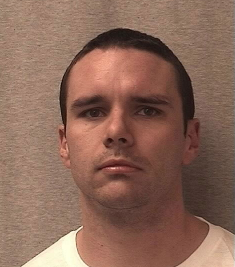
Langley photo KDOC

HUTCHINSON, Kan. — Two people have been arrested in connection with the phony $100 bills that have been passed in Hutchinson, according to a media release.

Authorities took 50-year-old Brian Conrad into custody Tuesday on suspicion of distributing counterfeit money. He is currently free on bond.

They also arrested 31-year-old Cody Langley Wednesday. He is being held without bond suspicion of three counts of distributing counterfeit money and several drug possession charges.  He has previous convictions for forgery, according to the Kansas Department of Corrections.

Several of the $100 bills were passed at the two South Hutchinson liquor stores and others have been passed elsewhere in Hutchinson including Cox cable.

Authorities warn that more of these counterfeit bills could still be around and warn businesses to be aware of the currency they receive.

Copyright Eagle Radio | FCC Public Files | EEO Public File