WYANDOTTE COUNTY — One person died in an accident just before 10a.m. Saturday in Wyandotte County.
The Kansas Highway Patrol reported a 2006 Kenworth Cement truck driven by Gustavo Hernandez, 43, Kansas City, was westbound on Kansas 32 and turned south onto a private drive at 7241 Kaw Drive.
The truck struck the front of a westbound Union Pacific train.
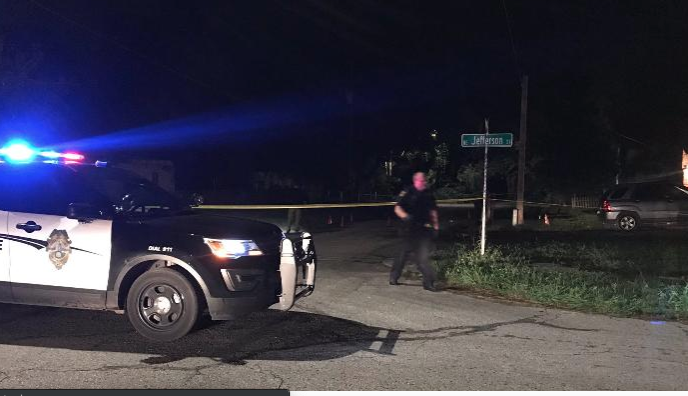
Officers working a fatality accident involving a train, in the area of 73rd and Kaw Drive.
KANSAS CITY (AP) — Authorities have arrested a mother who is suspected of ramming three juveniles with her vehicle in Kansas City after witnessing a fight involving her daughter.
The mother was taken into custody Wednesday. Police say the daughter told investigators that she was headed home from school Tuesday when a group of juveniles attacked her. The daughter said there is an ongoing issue between her family, and a former classmate.
Police say the mother arrived during the assault and accelerated her vehicle, striking the three juveniles. They were checked out by emergency crews at the scene and refused additional treatment.
HAYS, Kan. – No. 21 Fort Hays State men’s soccer defeated the Newman Jets at home on Saturday, Oct. 5 by a score of 4-0. Notching four goals in the victory, the Tigers continue their relentless streak, netting 12 shots in two games.
The black and gold found their first goal in the 21st minute. Senior Sergio Villalba fired a shot from 25-yards away from goal and pinned it in the upper 90.
10 minutes later, a handball was called on Newman’s Andrey Rios inside of the 18-yard box. Rios began calling for an appeal, but the central referee proceeded with his point to the penalty spot. Stepping up to the spot was ju Moritz Walther. Remaining poised, he struck the ball into the bottom left of the goal for the second score of the contest.
Now, with two goals under their belts to open up the match, the Tigers only needed four more minutes to grab the third. On the strike of a corner kick, Walther and sophomore Alec Bevis leaped into action to win the header – both flicking the ball on, across the six-yard box. Controlling it at his feet was leading goal scorer Santiago Agudelo, who tucked the ball into the back of net from just four yards out.
While the first three goals had come in rapid succession, the next tally waited over 40 minutes. Arsenio Chamorro was set free down the right side of the field by defender Jurgen Ramirez. Chamorro, only requiring one touch with a defender at his back, chipped goalkeeper Jean Consol. That play registered two FHSU firsts – Chamorro for notching his first goal of the season and Ramirez collecting his first collegiate assist.
The Tigers remained in control for the entirety of the match, producing 17 shots, 11 of which were on target, compared to only six that Newman could manage to strike.
Defensively, Fort Hays State held a rock solid back line. Each man of the defense played the entirety of the 90 minutes, including goalkeeper Kieran Brown who added two saves to the score sheet.
With the victory, Brown marked his second career victory and his first clean sheet in collegiate play.
Now 5-3-1 in 2019, the Tigers will be back in action on Thursday, Oct. 10 when they take on Oklahoma Baptist (3-6). FHSU is 4-0 all time against the Bisons.
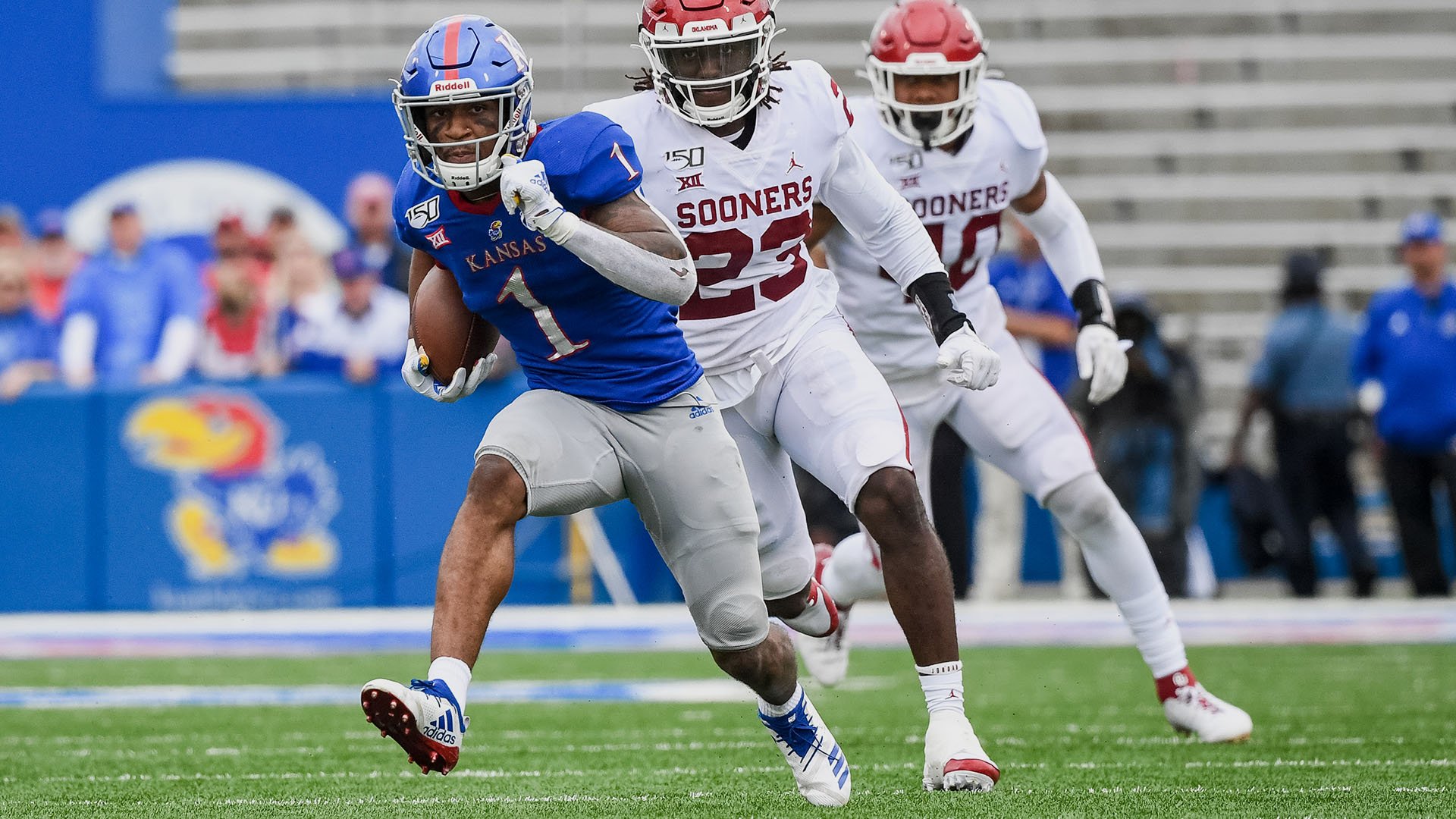
LAWRENCE, Kan. (AP) — Oklahoma’s Lincoln Riley was dissecting his team’s latest easy victory, this time a 45-20 blowout of Kansas, when he was interrupted by the sound of a toilet flushing in the nearby visiting locker room.
“That’s what they thought of my play-calling,” Riley said with a sardonic grin.
It wasn’t that bad, coach.
Heisman Trophy hopeful Jalen Hurts threw for 228 yards and two touchdowns while running for two more. Rhamondre Stevenson added 109 yards rushing and a score on just five carries. And the sixth-ranked Sooners (5-0, 2-0 Big 12) still ripped off seven straight scores to put the game away early.
Not to mention allow them to cruise to their 22nd straight true road win, the second-longest streak since at least World War II in major college football. Bud Wilkinson’s Sooners won 25 from 1953-58.
“Every team in the country circles our team and the offense and we like that,” said Riley, whose Sooners had 545 yards. “What’s exciting is you see glimpses of what it can be, and it’s on us to turn those glimpses into longer stretches of dominant play.”
It might take some better play in next weekend’s Red River Showdown with No. 11 Texas.
“I know that’s always a hot topic on the outside,” Riley said, “but that wasn’t mentioned before the game, not one time. Maybe we didn’t handle the early start, whatever it was. But we can do better.”
Carter Stanley threw for 230 yards and three touchdowns for Kansas (2-4, 0-2), including a pair to Stephon Robinson, while sophomore running back Pooka Williams followed his breakthrough 252-yard rushing performance against the Sooners a year ago with 137 on Saturday.
“Our football team, I talked to them coming off the field. There’s no hang-dog,” Kansas coach Les Miles said. “They want to do what we set out to do. They’re going get there. And it’s going to be — they are going to take the strides they need to have the success they want to have.”
The rout most people anticipated didn’t happen right from the start.
In fact, the Jayhawks outplayed the Sooners throughout most of the first quarter.
They had forced a punt but were pinned at their goal line midway through the quarter when Stanley marched them 98 yards. And when the senior quarterback lofted a pass to Daylon Charlot for a 22-yard TD, the home fans that stuck out a 30-minute lightning delay cheered the 7-0 lead.
“There’s still improvement,” Miles said afterward. “You can see it.”
Hurts and the Sooners eventually got on track, though.
They answered the touchdown with one of their own when Trey Sermon plunged in from 2 yards out. Hurts added a TD run of his own, then found CeeDee Lamb just before halftime to give Oklahoma a 21-7 lead.
Hurts kept adding to his impressive stat line after the break.
He ran for 36 yards, completed both of his passes and scored a TD to cap an 84-yard drive, then ran for 53 yards before hitting Sermons with a 15-yard touchdown pass.
Stevenson ripped off a 61-yard touchdown run early in the fourth quarter to punctuate the win.
Still, it wasn’t a perfect performance by the Sooners.
They had a long punt return TD brought back by a penalty, and Hurts threw his first interception of the season in the fourth quarter. And while the Oklahoma defense held the Jayhawks in check outside of their long touchdown drive, new coordinator Alex Grinch’s bunch failed to produce a turnover.
It was still plenty good enough to remain unbeaten as the Sooners set their sights on Dallas.
“Early on we left them off the hook in some situational deals,” Grinch said, “and our inability to finish changes your outlook in the postgame news conference.”
QUOTEABLE
“It took us a little while to get on track, then we had a really nice surge there end of the first half, even despite a couple of really, really dumb calls by me that set us back.” — Riley.
THE TAKEAWAY
Oklahoma could be forgiven for getting off to a slow start. Lightning delayed kickoff, and periods of heavy rain hurt an already sparse crowd that contributed to a sleepy atmosphere.
Kansas was battered so soundly by TCU last week that fans were bracing for the worst, but coach Les Miles at least kept his team in the game into the second half. That constitutes progress in Lawrence.
UP NEXT
Oklahoma heads to the State Fair of Texas to face the Longhorns next Saturday.
Kansas gets next week off before its own shot at the Longhorns.
LAWRENCE — We’ve entered the golden age of legal nonsense.
“It’s a problem partly because of a lack of knowledge, but partly just a feeling people have that the courts won’t help them. And they’re looking for anything to fix that,” said Colin McRoberts, a lecturer with the University of Kansas School of Business.
McRoberts’ article “Tinfoil Hats and Powdered Wigs: Thoughts on Pseudolaw” can be found in this month’s Washburn Law Journal. The piece probes why a rise in legal scams and frauds is gumming up the court system and harming those gullible enough to be duped.
“For a long time, we’ve had weird, unusual, damaging and predatory legal ideas. But for a long time they grew in tiny little communities that communicated by word of mouth or newsletter. Now it’s online. And now you get much weirder ideas building on top of weird ideas that have always been there.”
Colin McRoberts
A Harvard Law School graduate and former litigator, McRoberts became immersed in the wacky underground community of pseudolaw when he embarked on the 2016 Conspira-Sea Cruise.
“This a cruise by conspiracy theorists for conspiracy theorists,” said McRoberts, who joined writers from Popular Mechanics and Jezebel as the other observing skeptics.
“You spend a couple thousand bucks, which I crowdfunded, and get to listen to a week’s worth of people talking about psychic vampires, Hillary Clinton is a shape-shifting alien, secret ways to avoid paying income tax and all kinds of that stuff.”
The trip also introduced him to Winston Shrout, whose unforgettable name is matched by the unforgettable tales McRoberts divulges about the man in his article. In “Tinfoil Hats,” he describes Shrout as “a prolific lecturer and self-declared Earth delegate to the interdimensional Galactic Round Table. He is also a felon and currently a fugitive from justice.”
This convicted tax dodger capped a weeklong excursion on the Pacific Ocean by telling a room full of rapt theorists that he worked with the Queen of the Fairies to move the international dateline from London to France because it would disrupt international transactions.
McRoberts said, “It was bizarre because I’d watched him sell consulting services, DVDs and books to people on this cruise the whole week. And here was the finale where all the speakers provide their quick high points. And I thought, ‘This is the end of a scam.’ Because the people who are paying to have a private consulting side are now seeing him talk about the Queen of the Fairies. How can they go home and keep sending in money?
“But when I looked around the room, people were nodding and into it.”
The nature of how and why individuals could be so susceptible to this type of wild misinformation became the real revelation for McRoberts. He equates it to the “boiled frog” concept, where progressive exposure to distorted reality takes people to places they never would have gone previously.
McRoberts reveals the informal legal term that embodies this skewed subset: “replacement law.”
“It’s the idea that there is an alternative universe of law,” he said. “That’s the universe where my birth certificate makes me a literal vessel, like a ship, instead of a person. And there is a law saying that. There’s not. It’s the attempt to take that fake universal law and staple it to the real world, without ever bothering to find out whether it’s true.”
While the tinfoil crowd is unquestionably hilarious on the surface, there is plenty of genuine erosion beneath. This type of pseudolaw leaves a trail of casualties.
“If somebody goes to court for not paying taxes because they fell for pseudolaw, and they defend themselves in the tax fraud charges using pseudolaw, they get hurt. And we think of them as the villain in the case — but maybe they were just desperate and fell for some professional guru’s sales pitch. Yet that person never gets in trouble,” he said.
McRoberts contends this is because people viewed as “goofballs” are considered a low priority for law enforcement. In fact, in order for litigious perpetrators to be held accountable, they typically have to stop paying taxes.
That’s what happened to Shrout.
The self-proclaimed “sovereign citizen” mailed more than 1 quadrillion dollars in fake “International Bills of Exchange” to a bank, claiming the U.S. Treasury would honor them. Instead, the government brought him to trial and sentenced him to 10 years for numerous charges, primarily tax evasion. In March, he neglected to turn himself into authorities and is now a wanted man (which hasn’t stopped him from posting his seminars online).
“The reason pseudolaw has grown to be a problem is that people try it, and it fails. But they don’t understand why it failed because the court never explained it or because they don’t have any access to legal understanding and education. So they only know it failed, but not why. And they attribute that to the same shadowy conspiracies that have been plaguing them the whole time,” McRoberts said.
The lawyer wonders why, rather than indulge in pseudolaw, they can’t simply study actual law.
“Why don’t they take the same classes lawyers and judges take?” he said. “And I have yet to find anybody who would even consider taking one of those classes.”
McRoberts started at KU less than a month ago, but his wife has worked nearly four years as a professor in anthropology at the university. Prior to his higher education career, he was a consultant with his own firm, Vasher McRoberts, and with the SAB Group. The Texas native was also a litigator with the Chicago office of Steptoe & Johnson.
His academic expertise is in legal persuasion.
McRoberts admits sometimes it’s tricky to determine what appears more absurd: a tinfoil hat or a powdered wig.
He said, “If you give an average person a page of real law and a page of pseudolaw, it’s kind of hard to tell the difference. They both look ridiculous.”
Sabrina Ann Trout-Shrum, 24, passed away Tuesday October 1, 2019, in Kingfisher, Oklahoma. Sabrina was born September 6, 1995, in Great Bend, Kansas the daughter of Paul and Melissa (Roberts) Trout.
She was a 2014 graduate of Central Plains High School, Claflin, Kansas.
Sabrina was a member of St. Paul’s United Church of Christ, Holyrood and the Driftwood Fellowship, Enid. She loved music, singing, computer games, movies, and was an animal lover.
She is survived by parents, Lonnie and Melissa Watson of Holyrood, and Paul and Alana Trout of Oregon; her former husband Cody Shrum of Enid, Oklahoma, grandmother, Cheryl Montoya of Holyrood; sisters, Vanessa Watson of Hoisington, Kristen Watson of Holyrood; half brothers and sisters, Dayson Trout, Trenton Trout, Sariah Trout, Elise Trout, Lorelia Trout; and many aunts, uncles, nieces, nephews, cousins, and many friends.
She was preceded in death by her grandparents, Alberta Watson, Steve Montoya, Glenn & June Gabbard, and Mike and Fran Roberts.
Friends may sign the book 9 a.m. to 5 p.m., Monday through Wednesday at the funeral home. There will be no viewing as cremation has taken place.
Memorial service will be 11:00 a.m., Thursday, October 10, 2019, at St. Paul’s United Church of Christ, Holyrood.
In lieu of flowers memorials may be made to the Sabrina Shrum Funeral Expense Fund, in care of Nicholson-Ricke Funeral Home, PO Box 146, Hoisington, KS 67544.
Norton resident Margarette Daphne (Ebborn) Nyland was born January 18th, 1938 in Gloucester England to Karl and Dorothy Ebborn (Nee) Harper. She passed away Wednesday, October 2nd, 2019 at her home at the age of 81.
The family lived most of Margarette’s young years in the Forest of Dean until moving to Cheltenham Gloucestershire, where Margarette grew to womanhood. In 1970 she moved to Norton, Kansas where she met and married Veryl Nyland on November 19th, 1975.
She leaves behind her husband, Veryl of Norton; 1 brother in England; and 3 step-daughters, Lois Peters of Inman, KS, Karen Smith of Norton, KS and Joyce Rogers of Long Island, KS.
She was preceded in death by her parents and step-daughter, Marj Lambert.
Cremation was planned. No services are scheduled at this time.
HAMILTON COUNTY — A 62-year-old Kansas man was killed in a single vehicle accident just after 11 a.m. Friday.
The Kansas Highway Patrol reported a 1997 Ford pickup driven by William R. Reed, Coolidge, was southbound on Kansas 27 when the truck left the roadway and entered the west ditch. The pickup went through a field and struck a utility pole.
Reed was transported to St. Catherine’s Hospital. It was unknown if he was wearing a seat belt, the KHP reported.
TOPEKA (AP) — An autopsy reports says a 50-year-old Topeka woman suffered methamphetamine intoxication when she collapsed and died while fleeing a home she apparently was burglarizing.
The report, released Friday, said her death in June was accidental.
The Topeka Capital-Journal acquired a copy of the report from the Shawnee County District Court Clerk’s office.
Topeka police Lt. Andrew Beightel said officers found Henderson had collapsed near a home. The autopsy said she fled the home and was seen on video collapsing three times.
Kansas Department of Corrections records show Henderson was paroled in 2012 after serving prison time for two counts each of burglary, robbery and theft and one count each of aggravated robbery and obstructing the legal process. The crimes were committed in Shawnee, Wyandotte, Butler and Sedgwick counties.
TOPEKA (AP) — Police in Topeka say a man has been killed in an overnight shooting.
Topeka police say in a news release that officers were called to a northeast Topeka neighborhood around 2 a.m. Saturday for a report of gunshots. Arriving officers found a man suffering from several gunshot wounds. The man was taken to a local hospital, where he died.
Police have not released the victim’s name pending notification of his family members.
No arrests had been reported by late Saturday morning, and police asked anyone with information to contact CrimeStoppers.
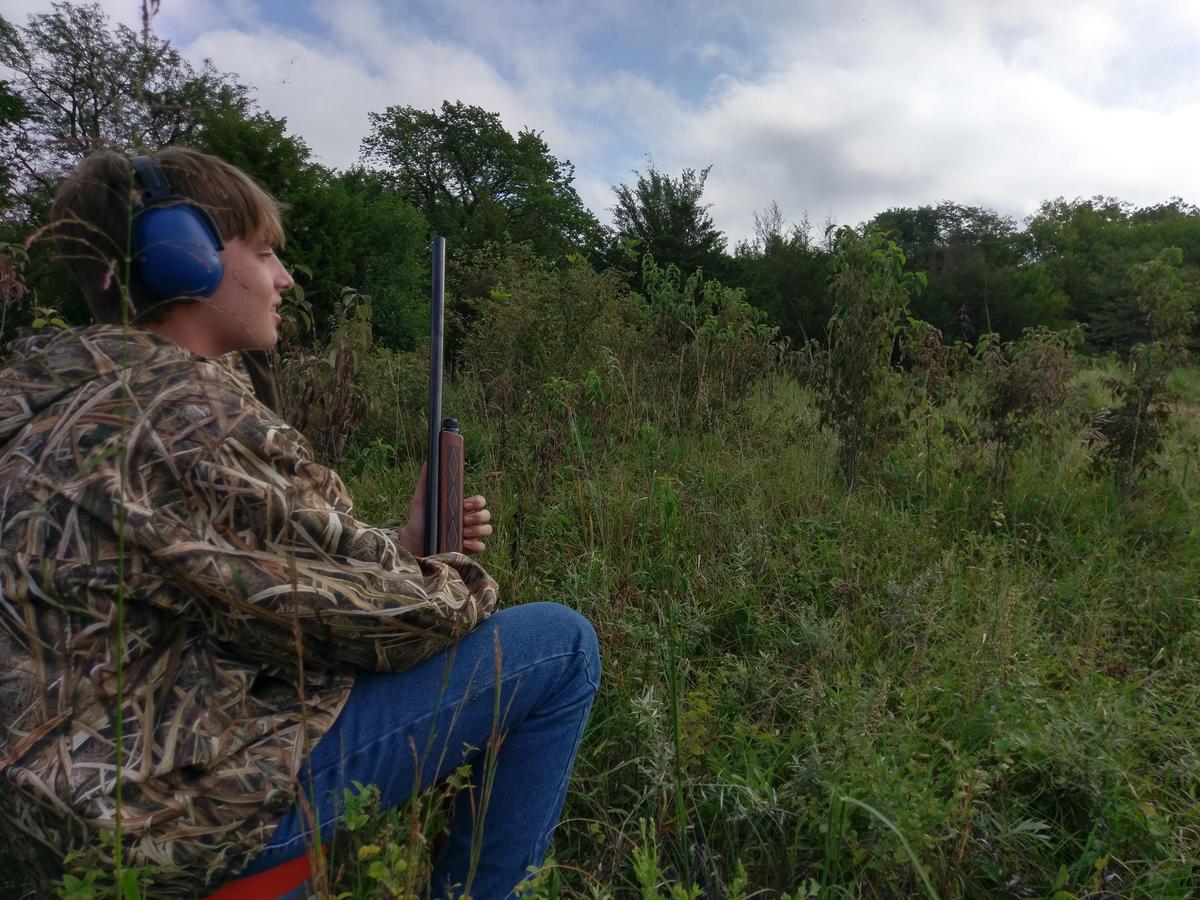
A flight of doves breaks above the tree line. Fourteen-year-old Robert Goodall fires his shotgun. The birds continue on their path unharmed.
“Never shoot at the bird,” Robert’s grandfather, Richard Funk, said. “Always in front of it.”
Robert enjoys going hunting when his grandfather asks him to go along. But the morning’s been slow. He’d prefer something a little more exciting, like football.
“Dove hunting — you’re kind of just sitting there,” Robert said. “In football, you get to go hit people.”
Hunters come to Kansas from across the country for a shot at the state’s deer, elk and turkey. But older Kansas hunters are setting down their rifles, and guided youth hunts — Kansas’ go-to method for attracting the next generation of hunters — aren’t stopping the decline among the next generations.
So the state is now working on a plan that focuses on what it stands to lose: 60% of Kansas’ conservation dollars (the rest comes from taxes on firearms and ammunition sales).
“We’re at that point where it’s like, hey, the bells and whistles are going off,” said Tim Donges, president of the Kansas branch of Quality Deer Management, a nonprofit hunting organization. “We’ve got a problem.”
Hunting’s decline and the results
More Americans are spending time outdoors, according to the U.S. Fish and Wildlife Service. Additional fishing lines are being cast. Would-be wildlife photographers are growing in numbers. But 2 million fewer hunters took to the field between 2011 and 2016.
Kansas has remained popular for out-of-state hunters, with the total number of licenses and permits more than doubling over the past two decades to over 150,000 total. In-state, though, hunting licenses have declined about 14%.
Hunting licenses of all kinds contribute about $28 million to the state’s conservation coffers. Out-of-state licenses cost more, and their popularity has made up for having fewer Kansas hunters. But 2019 was the first in five years where non-resident sales decline, showing there is not a guaranteed way of covering the cost of identity and protecting endangered Kansas species.
Hunting advocates blame several factors: There’s the other entertainment options competing for kids’ attention, from sports to Netflix. Plus, more Kansans live in cities, which requires a road trip to bag a buck.
Yet the biggest concern hunting advocates point to is a lack of public hunting land, the same thing that draws out-of-state hunters in. That is to say, a vacationing hunter with money can lease a ranch owner’s property, giving himself or herself a large stretch of open land.
But less than two percent of Kansas land is free and open to the public, according to the Kansas Department of Wildlife and Tourism. That’s less than nearly every other state.
“The state behind us is Rhode Island, so it’s not great,” said Brad Loveless, secretary of the Kansas Department of Wildlife and Tourism.
The mainstay won’t stay
For years, Kansas encouraged younger hunters by taking kids out on guided hunts. Organized trips could break down the access barrier created by the limited amount of public hunting land. Mentors passed down hunting knowledge to kids whose parents didn’t participate in the sport. And the state figured that early exposure may lead to a lifelong interest.
It worked for 27-year-old Justin Saathoff: He killed his first deer on a youth hunt at Evergy’s Jeffrey Energy Center in Saint Mary in the northeast part of Kansas.
Justin Saathoff (right) leads a youth dove hunting event in September at the Jeffrey Energy Center near Saint Mary.
Saathoff, now a labor relations specialist at Evergy, gives back by leading youth hunts.
“Somebody does not have a true understanding of what hunting is until they actually go do it themselves,” Saathoff said.
Still, the youth numbers are declining. Hunting advocates say part of the problem is that it often takes several hunts to get someone hooked. Recruits can spend hours in the field without a guarantee of excitement or anything to show for the effort. For experienced hunters, that wait is worth it.
“It takes more than one time for somebody to understand what it takes to go out and hunt and be successful,” said Jim Pitman, a district biologist for the National Wild Turkey Federation. “We need to be putting mentors with these people that can take them out multiple times.”
That requires a lot of volunteer hours and mentors. Evergy says it’s not short of mentors willing to lead the hunts, but younger guides like Saathoff are the exception. Mentorship programs are starting to see the same problem that hunting at large faces — the need to find young replacements.
The next steps
Past recruitment efforts emphasized the importance of continuing Kansas’ grand hunting heritage. “Carry on the tradition” is the subtitle for Kansas’ previous hunter recruitment plan, which was created in the 1990s under former Gov. Bill Graves. Funding the state’s conservation efforts came second.
“I don’t know that it’s ever going to be as popular as soccer or football,” said John Ritchey, the Kansas director for the conservation group Ducks Unlimited. “But there is a deep tradition and heritage that follows hunting that would be the saddest thing if it were to disappear.”
“My dad and brothers hunted, and I didn’t necessarily feel welcome to go out with them even though they invited me.”
So, while continuing the youth hunt tradition, the state is looking to flip that by leading with the conservation message.
Last year, Kansas hired 23-year-old Tanna Fanshier to be the Department of Wildlife and Tourism’s new hunting recruitment coordinator. She said the traditionalist message doesn’t work for the young Kansans she’s trying to recruit, and is betting causes like protecting wildlife will reach their ears.
“We’re kind of the ‘Go Fund Me’ generation,” Fanshier said. “We want to give our money to something that’s important to us.”
The department is looking to attract groups they know have historically been underrepresented in Kansas’ hunting scene. New women-only hunting education events will be led by women instructors.
“My dad and brothers hunted, and I didn’t necessarily feel welcome to go out with them even though they invited me,” Fanshier said.
Plus, Kansas is looking at starting gear-rental programs at colleges so students don’t have to have the money to buy or the space stash hunting equipment.
Kansas is also taking inspiration from other movements, like farm-to-table. Think field-to-fork: a way to encourage urban-dwelling Kansans to get some of their food from hunting for the same reasons they eat local. Fanshier has experimented with going to farmers’ markets to give away samples of meat gathered from a hunt, showing shoppers that game doesn’t have to taste gamey.
The full recruitment plan is about six months off. The overall goal isn’t to get the number of Kansas hunters back to where it was 50 years ago, Fanshier said. It’s keeping tradition alive, the conservations coffers filled and having urban dwellers spend a little less time in the city and more time connecting with the Kansas prairie.
Stephan Bisaha reports on education and young adult life for the Kansas News Service. You can follow him on Twitter @SteveBisaha or email him at bisaha (at) kmuw (dot) org. The Kansas News Service is a collaboration of KCUR, Kansas Public Radio, KMUW and High Plains Public Radio focused on the health and well-being of Kansans, their communities and civic life.
DODGE CITY – It is with great pleasure that the Depot Theater’s board of directors announces a new 2019-2020 season under the artistic direction of Christopher King of Mullinville. King has volunteered to serve and will be the fourth person to lead the theater company established by Don Steele in 1984 as the Boot Hill Repertory Company at the Boot Hill Museum Complex.
Born and raised in Kansas, King’s 35-year theater career includes directing theater programs in New York, Philadelphia, and Kansas City. In addition, he holds directing credits in more than 30 productions including Our Town, Sordid Lives, The Miracle Worker, Joseph and the Amazing Technicolor Dreamcoat, and Fiddler on the Roof.
“I am so honored to follow in the amazing footsteps and traditions of the Depot Theater Company,” said King. “Not only is this an exceptional theater, but the performing arts community, volunteer traditions and the quality of past productions have set a high bar. I look forward to meeting our partners, volunteers, actors and directors, production teams as well as getting to know the region better.”
King recently moved to Mullinville where he is renovating a home. “When I saw that the Depot Theater needed volunteer help, I was more than glad to step up to help ensure the future of performing arts in my adopted region.”
“It is with the utmost respect and appreciation for the tradition of providing high quality theater by actors, directors, technical, costuming and stage crews making up the Depot Theater Company that we announce this new era in theater in southwest Kansas,” said Katie Ruthi, president of the Depot Theater board of directors. “Countless hours of volunteer talent, effort and dedication have filled the Depot Theater and it is inspiring to have Christopher’s volunteer commitment as we build a sustainable future.”
Barbara Straight, president of the Depot Theater Guild and member of the board of directors said “We invite all Company members to continue their involvement with and dedication to the Depot Theater as well as invite community members to join the effort. We’re looking forward to future performances.”
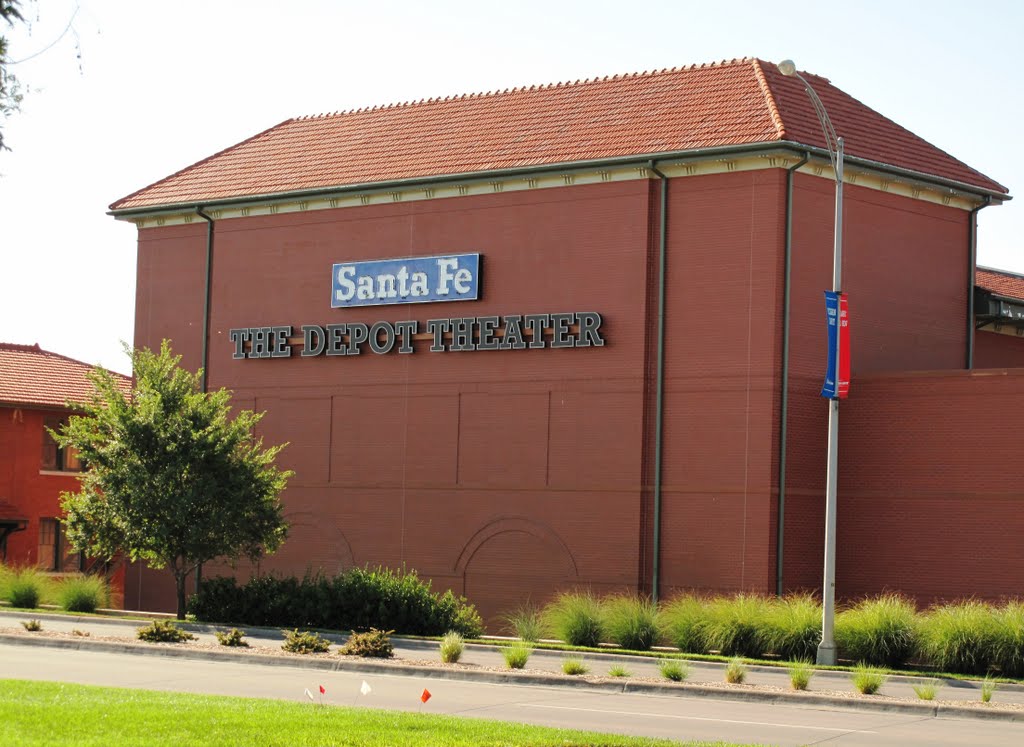
The Depot Theater is housed in the historic Dodge City Union Pacific railroad depot.
Operations of the Depot Theater, 201 E. Wyatt Earp Blvd., were temporarily paused on August 19, 2019, and since that time the board of directors has received an outpouring of support and ideas for future direction. In addition, the board has been conducting intense evaluation toward the goal of reorganizing and refocusing on its mission in order to develop a sustainability plan for the future.
The mission of the Depot Theater is to provide space for theater and performance arts and education to enhance the quality of life for our diverse community. All sponsors, patrons and community partners will be contacted as we move forward with a revised season.
With the support of the Mariah Fund, Kent Stehlik and Kathleen Holt have been working to establish a campaign Get on Board to revitalize and develop a fiscally sound plan for operations. While the event calendar remains in full swing, theater performances will resume before the end of the year with the spring season to be announced in the next few days. The Homestead Haunted House will be the next scheduled event.
As the board of directors continues its revitalization and sustainability plan, all are invited to contribute positive ideas by visiting https://depottheaterco.com/ . The board and constituents of the Depot Theater deeply appreciate your patience as well as your many messages of on-going support.