We have a brand new updated website! Click here to check it out!

TMP-Marian girls’ golf third at Clay Center

CLAY CENTER, Kan. – The TMP-Marian girls golfers finished in third place at the Clay Center Invitational held at the Clay Center Country Club Thursday. Wamego won the team title with a 177. Concordia finished second with a 196 and the Monarchs right behind at 198.

Jenna Romme led TMP with a 42 and finished third. Abby Heimerman shot a 47 and placed ninth.

Team Results
1. Wamego – 177
2. Concordia – 196
3. TMP-Marian – 198
4. Salina-Central – 205
5. Clay Center Community – 229
6. Council Grove – 233
7 Manhattan – 243

Top-20 Individual Results
1. Abby Donovan-CON-41
2. Kelly Lonker-WAM-41
3. Jenna Romme-TMP-42
4. Bridgit Conway-SCN-42
5. Gracyn Nutsch-WAM-44
6. Samantha Wick-WAM-46
7. Toree Hoobler-WAM-46
8. Ashten Pierson-WAM-46
9. Abby Heimerman-TMP-47
10. Harlee Long-SCN-47
11. Haley Lewis-CON-47
12. Kirby McKee-WAM-48
13. Carissa Dalquest-CG-51
14. Shea Trecek-CON-53
15. Haleigh Spray-TMP-53
16. Kinzlee Wallace-CC-55
17. Bethany Trost-CON-55
18. Maddie Blochlinger-CON-56
19. Kealy Lhuillier-MAN-56
20. Emma Dinkel-TMP-56

HHS volleyball goes 1-2 at home quad

HAYS – The Hays High volleyball teams goes 1-2 at their own quadrangular Thursday at the Hays High gym. The Indians dropped their first match to Salina 25-23, 15-25, 23-25; the fell to Abilene 20-25, 19-25. They won their final match against Norton 25-20, 25-18.

Tasiah Nunnery had 11 kills and nine assists against Salina South. Sierra Bryant added six kills and had three solo blocks.

Nunnery had five kills and seven assists and Sierra Bryant added five kills against Abilene.

In the Norton match, Kaitlin Suppes had nine assists and Brooklyn Schaffer seven digs.

The Indians are now 11-7 on the season. They play in Great Bend Saturday.

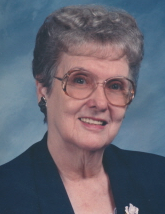
Virginia Lee (Sherling) Hooper

Virginia Lee (Sherling) Hooper, age 88, passed away at her home in Bogue, Kansas Friday, September 20, 2019, after several years of failing health.

Virginia was born in Kirwin, Kansas, October 1, 1930, to Jeffe W. and Myrtle (Powers) Sherling. The family later moved to Phillipsburg, where she spent most of her youth. To family, Virginia was known by the nickname “Wimpy.” After marrying William Edward “Bill” Hooper in 1949, the couple lived many years in Logan before moving to Bogue in 1959.

To their marriage were born four children: Linda Gail, Annetta Sue, Billie Lea and Bryce Edward.

Virginia was always active in the community where she lived, working as a telephone operator in Phillipsburg, and a cook as well as school secretary at Bogue Grade School. She was later a volunteer “coach” for Hill City Grade School reading program. She worked with the Graham County Hospital Auxiliary and helped with the local 4-H. club. Virginia was also active in the Bogue American Legion Auxiliary.

She was involved in the Bogue United Methodist Church, teaching Sunday school class. She provided children’s messages and Bible studies and was an active member of United Methodist Women’s organization. Add to that, her devotion as a loving mother, wife, and homemaker.

Virginia was preceded in death by her parents; her beloved husband Bill; their daughter Linda Gai; two sisters: Ella Beth Gibson and Ada Jean Tomlinson, as well as two brothers: Jess Eugene and William, who died in infancy. One infant granddaughter, Holly Leigh Desbien, also preceded Virginia in death.

Virginia is survived by three children: Annetta Sue Hooper-Rome and friend Randy Loos of Bogue; Billie Lea and husband Steve Desbien of Lamar, Missouri; and Bryce Edward and wife Suzy of Yelm, Washington. Other survivors include her sister Bernittia (Sherling) Follis and husband Norman of Phillipsburg, and sister-in law Sandy Sherling of San Antonio, Texas.

Others left to mourn include nine grandchildren, thirty great grandchildren, ten great-great grandchildren – as well as numerous nephews and nieces, cousins, including Hooper and Jacobson family members, and many friends.

Hundreds of accused priests living under radar with no oversight

These priests, deacons, monks and lay people now teach middle-school math. They counsel survivors of sexual assault. They work as nurses and volunteer at nonprofits aimed at helping at-risk kids. They live next to playgrounds and day care centers. They foster and care for children.

And in their time since leaving the church, dozens have committed crimes, including sexual assault and possessing child pornography, the AP’s analysis found.

A recent push by Roman Catholic dioceses across the U.S. to publish the names of those it considers to be credibly accused has opened a window into the daunting problem of how to monitor and track priests who often were never criminally charged and, in many cases, were removed from or left the church to live as private citizens.

Each diocese determines its own standard to deem a priest credibly accused, with the allegations ranging from inappropriate conversations and unwanted hugging to forced sodomy and rape.

Dioceses and religious orders so far have shared the names of more than 5,100 clergy members, with more than three-quarters of the names released just in the last year. The AP researched the nearly 2,000 who remain alive to determine where they have lived and worked _ the largest-scale review to date of what happened to priests named as possible sexual abusers.

In addition to the almost 1,700 that the AP was able to identify as largely unsupervised, there were 76 people who could not be located. The remaining clergy members were found to be under some kind of supervision, with some in prison or overseen by church programs.

The review found hundreds of priests held positions of trust, many with access to children. More than 160 continued working or volunteering in churches, including dozens in Catholic dioceses overseas and some in other denominations. Roughly 190 obtained professional licenses to work in education, medicine, social work and counseling _ including 76 who, as of August, still had valid credentials in those fields.

The research also turned up cases where the priests were once again able to prey on victims.

After Roger Sinclair was removed by the Diocese of Greensburg in Pennsylvania in 2002 for allegedly abusing a teenage boy decades earlier, he ended up in Oregon. In 2017, he was arrested for repeatedly molesting a young developmentally disabled man and is now imprisoned for a crime that the lead investigator in the Oregon case says should have never been allowed to happen.

Like Sinclair, the majority of people listed as credibly accused were never criminally prosecuted for the abuse alleged when they were part of the church. That lack of criminal history has revealed a sizable gray area that state licensing boards and background check services are not designed to handle as former priests seek new employment, apply to be foster parents and live in communities unaware of their presence and their pasts.

It also has left dioceses struggling with how _ or if _ former employees should be tracked and monitored. Victims’ advocates have pushed for more oversight, but church officials say what’s being requested extends beyond what they legally can do. And civil authorities like police departments or prosecutors say their purview is limited to people convicted of crimes.

That means the heavy lift of tracking former priests has fallen to citizen watchdogs and victims, whose complaints have fueled suspensions, removals and firings. But even then, loopholes in state laws allow many former clergy to keep their new jobs even when the history of allegations becomes public.

“Defrocked or not, we’ve long argued that bishops can’t recruit, hire, ordain, supervise, shield, transfer and protect predator priests, then suddenly oust them and claim to be powerless over their whereabouts and activities,” said David Clohessy, the former executive director of the Survivors Network of those Abused by Priests, who now heads the group’s St. Louis chapter.

“IT WAS SUPPOSED TO MAKE ABUSE HISTORY”

When the first big wave of the clergy abuse scandal hit Roman Catholic dioceses in the early 2000s, the U.S. bishops created the Dallas Charter, a baseline for sexual abuse reporting, training and other procedures to prevent child abuse. A handful of canon lawyers and experts at the time said every diocese should be transparent, name priests that had been accused of abuse and, in many cases, get rid of them.

Most dioceses decided against naming priests, however. And with the dioceses that did release lists in the next few years_ some by choice, others due to lawsuit settlements or bankruptcy proceedings _ abuse survivors complained about underreporting of priests, along with the omission of religious brothers they believed should be on those lists.

“The Dallas Charter was supposed to fix everything. It was supposed to make the abuse scandal history. But that didn’t happen,” said the Rev. Thomas Doyle, a canon lawyer who had tried to warn the bishops that abuse was widespread and that they should clean house.

After the charter was established in 2002, some critics say dioceses were more likely to simply defrock priests and return them to private citizenship.

Before 2018’s landmark Pennsylvania grand jury report, which named more than 300 predator priests accused of abusing more than 1,000 children in six dioceses, the official lists of credibly accused priests added up to fewer than 1,500 names nationwide. Now, within the span of a little more than a year, more than 100 dioceses and religious orders have come forward with thousands of names _ but often little other information that can be used to alert the public.

Some of the lists merely provide names, without details of the abuse allegations that led to their inclusion, the dates of the priests’ assignments or the parishes where they served. And many don’t disclose the priests’ status with the church, which can vary from being moved into full retirement to being banished from performing public sacraments while continuing to perform administrative work. Only a handful of the lists include the last-known cities the priests lived in.

Over nine months, AP reporters and researchers scoured public databases, court records, property records, social media and other sources to locate the ousted clergy members.

That effort unearthed hundreds of these priests who, largely unwatched by church and civil authorities, chose careers that put them in new positions of trust and authority, including jobs in which they dealt with children and survivors of sexual abuse.

At least two worked as juvenile detention officers, in Washington and Arizona, and several others migrated to government roles like victims’ advocate or public health planner. Others landed jobs at places like Disney World, community centers or family shelters for domestic abuse. And one former priest started a nonprofit that sends people to volunteer in orphanages and other places in developing nations.

The AP determined that a handful adopted or fostered children, sponsored teens and young adults coming to the U.S. for educational opportunities, or worked with organizations that are part of the foster care system, though that number could be much higher since no public database tracks adoptive or foster parents.

Until February, former priest Steven Gerard Stencil worked at a Phoenix company that places severely disabled children in foster homes and trains foster parents to care for them. Colleagues knew he was a former priest, but were unaware of past allegations against him, according to Lauree Copenhaver, the firm’s executive director.

Stencil, now 67, was suspended from ministry in 2001 after a trip to Mexico that violated a diocese policy forbidding clerics from being with minors overnight. Around that time, a 17-year-old boy also complained that Stencil, then pastor of St. Anthony Parish in Casa Grande, Ariz., had grabbed his crotch in 1999 in a swimming pool. The diocese determined it was accidental touching, but turned the allegations over to police. No criminal charges were filed.

Since 2003, Stencil’s name has appeared on the Tucson diocese’s list of clerics credibly accused of sexually abusing children, and his request to be voluntarily defrocked was granted in 2011.

Copenhaver said Stencil passed a fingerprint test showing he did not have a criminal history when he was first hired part time by Human Services Consultants LLC 12 years ago.

“We did not have any knowledge of his indiscretions, and had we known his history we would not have hired him,” she said, emphasizing that he did not have direct access to children in his job.

Stencil was fired from the company for unrelated reasons earlier this year. He later said in a post on his Facebook page that he was working as a driver for a private Phoenix bus company that specializes in educational tours for school groups and scout troops.

“I have always been upfront with my employers about my past as a priest,” Stencil wrote in an email to the AP when asked for comment. He said he unsuccessfully asked years ago for his name to be removed from the diocese’s list, adding, “Since then, I have decided to simply live my life as best I can.”

The AP’s analysis also found that more than 160 of the priests remained in the comfortable position of continuing to work or volunteer in a church, with three-quarters of those continuing to serve in some capacity in the Roman Catholic Church. Others moved on as ministers and priests in different denominations, with new roles such as organist or even as priests in Catholic churches not affiliated with the Vatican, sometimes despite known or published credible accusations against them.

In more than 30 cases, priests accused of sexual abuse in the U.S. simply moved overseas, where they worked as Roman Catholic priests in good standing in countries including Peru, Mexico, the Philippines, Ireland and Colombia. The AP found that in all, roughly 110 clergy members moved or were suspected of moving out of the U.S. after allegations were made.

At least five priests were excommunicated from the Roman Catholic Church because of their refusal to stop participating in other religious activity.

More than three decades ago, James A. Funke and a fellow teacher at a St. Louis Catholic high school, Jerome Robben, went to prison for sexually abusing male students together. Funke, released in 1995, was eventually bounced from the priesthood. But years later, the two men joined together again, promoting Robben as the leader of a church of his own making.

Since 2004, Missouri records show that Robben has listed his St. Louis home as the base for a religious organization operating under at least three different names. Beginning in 2014, those papers have identified Funke as the order’s secretary and one of its three directors.

Mary Kruger, whose son committed suicide when he was 21 after being abused by the men in high school, said she raised fresh concerns about Robben in 2007 when she heard he was presenting himself as a cleric.

At the time, he was being considered for promotion to bishop in a conservative Christian order based in Ontario, Canada. Kruger said members of the order told her that Robben had dismissed questions about his abuse conviction, claiming he had merely rented an apartment to Funke and that police blamed him for not knowing what went on inside.

Robben eventually was defrocked from the Christian order, and apparently then started his own. Until last year, when its paperwork expired, the group was registered with Missouri officials as the Syrian Orthodox Exarchate. However, a Facebook post from 2017 identified Robben _ photographed wearing a crown and gold vestments _ as the leader of a Russian Byzantine order raising money to build a monastery in Nevada.

Funke refused comment when approached by an AP reporter, and Robben did not respond to requests for comment.

“If they could wind up in jail next week, I’d be ecstatic,” Kruger said. “I think as long as they’re alive, they’re dangerous.”

LEFT THE CHURCH, COMMITTED CRIMINAL OFFENSES

As early as 1981, church officials knew of allegations that Roger Sinclair had acted inappropriately with adolescent boys. Two mothers at St. Mary’s Parish in Kittanning, Penn., wrote a letter to the then-bishop saying that Sinclair had molested their sons, both about 14 at the time.

Sinclair played a game where he would shake hands and then try to shove his hand at their genitals, the mothers said in their letter, parts of which were made public last year as part of the landmark report in Pennsylvania. They said he also tried to put his hands down one of the boy’s pants.

Other accusations emerged about Sinclair showing dirty movies to boys in the rectory, exposing himself and possibly molesting a teen he had taken on a trip to Florida a few years earlier. After a group of mothers called the police for advice, the police chief told them he had heard the rumors but took no action, according to documents reviewed by the Pennsylvania grand jury.

The church sent Sinclair for treatment, returned him to ministry and provided him with a letter that listed him as a priest in good standing so he could be a chaplain in the Archdiocese of Military Services, according to the grand jury. That assignment took him to at least four different states, including Kansas, where in the early ‘90s he was a chaplain at the Topeka State Hospital, a now-closed state mental hospital that had a wing for teenagers.

He was fired from that assignment in 1991 after trying multiple times to check out male teenage patients to go see a movie. Administrators said he had managed “to gain access to a locked unit deceitfully.”

Sinclair was removed from ministry in 2002 while the diocese investigated claims from a victim who said the priest sexually abused him in the rectory and on field trips beginning at Sinclair’s first assignment as a priest. He resigned a few years later, before the church concluded proceedings to defrock him.

When he started serving on the board of directors of an Oregon senior center and working as a volunteer there, he was required to pass a background check because the center received federal dollars for the Meals on Wheels program. But no flags were raised because he was never charged in Pennsylvania.

According to accounts from both former center staffers and law enforcement officials, Sinclair’s downfall began when the center’s then-director looked outside and saw him with his hand down the young man’s pants. He immediately barred Sinclair from the center, but left it up to the man’s family to decide whether to press charges. Three months later, after learning why Sinclair had been absent, an employee went to the police out of fear the former priest would target someone else.

Now-Sgt. Steven Binstock, the lead investigator in Oregon, said Sinclair immediately confessed to committing multiple sexual acts with the developmentally disabled man. He also confessed to sexual contact with minors in Pennsylvania 30 years earlier.

“He was very vague, but he did tell us that it was some of the same type of behaviors, the same type of incidents, that had occurred with the victim that happened here,” Binstock told the AP.

The Pennsylvania diocese had never warned Oregon authorities about Sinclair because it stopped tracking him after he left the church. The diocese, which did not tell the public Sinclair had been accused of abuse until it released its list in August 2018, declined to comment on his case.

The AP’s analysis of the credibly accused church employees who remain alive found that more than 310 of the 2,000 have been charged with crimes for actions that took place when they were priests. Beyond that, the AP confirmed that Sinclair and 64 others have been charged with crimes committed after leaving the church, with most of them convicted for those crimes.

Some of the crimes involved drunken driving, theft or drug offenses. But 42 of the men were accused of crimes that were sexual in nature or violent, including a dozen charged with sexually assaulting minors. Thirteen were charged with distributing, making or possessing child pornography, and several others were caught masturbating in public or exposing themselves to people on planes or in shopping malls.

Five failed to register in their new communities as sex offenders as required due to their sex crime convictions.

Priests and other church employees being listed on sex offender registries at all is a rarity _ the AP analysis found that only 85 of the 2,000 are. That’s because church officials often successfully lobbied civil authorities to downgrade charges in exchange for guilty pleas ahead of trials. Convictions were sometimes expunged if offenders completed probationary programs or the charges were reduced below the level required by states for registration.

Since sex offender registries in their current searchable form didn’t begin until the 1990s, dozens also were not tracked or monitored, because their original sentences already had been served before the registries were established.

The AP also found that more than 500 of the credibly accused former priests live within 2,000 feet of schools, playgrounds, childcare centers or other facilities that serve children, with many living much closer. In the states that restrict how close registered sex offenders can live to those facilities, limits range from 500 to 2,000 feet.

Decades after Louis Ladenburger was temporarily removed from the priesthood to be treated for “inappropriate professional behavior and relationships,” he was hired as a counselor at a school for troubled boys in Idaho.

Ladenburger was arrested in 2007 and accused of sexual battery; in a deal with prosecutors, he pleaded guilty to aggravated assault. He served about five months in prison.

According to Bonner County, Idaho, sheriff’s reports, students said Ladenburger told them he was a sex addict. During counseling sessions, they said, the former Franciscan priest rubbed their upper thighs and stomachs, held their hands and gave them shoulder and neck massages. If students expressed confusion about their sexual identities, the sheriff’s reports say he fondled them and performed oral sex on them.

Ladenburger was fired from the school. In an interview with sheriff’s officials at the time, he “admitted being a touchy person,” kissing many students and having his “needs met by the physical contact” with the boys.

By then, he’d been gone from the church for more than a decade _ in 1996, the Vatican had granted his request to be released from his vows. No officials from his religious order or from the dioceses in six different states where he had served had warned the school or provided details of the allegations against him when he was a priest.

In a lawsuit involving a sexual abuse allegation against another member of the Franciscan order, the complaint cited Ladenburger as an example of the harm done when church officials don’t report accusations of abuse to law enforcement, saying he likely never would have been hired at the school if the Franciscans had reported him when they first became aware.

“For all intents and purposes, they set loose a ticking time bomb that exploded in 2007,” the lawsuit said.

WHY FORMER PRIESTS AREN’T TRACKED

If priests choose to leave their dioceses or religious orders _ or if the church decides to permanently defrock them in a process known as laicization _ leaders say the church no longer has authority to monitor where they go.

After the Dallas Charter came a rush to laicize, resulting in more than 220 of the priests researched by the AP being laicized between 2004 and 2010. Roughly 40% of all the living credibly accused clergy members had either been laicized or had voluntarily left the church.

The laicized priests also are increasingly younger, giving them even more years to lead unsupervised lives, according to Deacon Bernie Nojadera, the executive director of the U.S. Conference of Catholic Bishops’ Secretariat of Child and Youth Protection.

“That does create an opportunity for them to seek a second career,” Nojadera said. “So this is something a number of dioceses are grappling with and trying to figure out.”

For priests who don’t leave the church, dioceses and religious orders have more options to impose restrictions and monitoring. But how and whether that’s done ranges widely from diocese to diocese, since the U.S. Conference of Catholic Bishops cannot mandate specific regulations or procedures.

The AP found that the dioceses that released lists more than a decade ago have the most robust of the handful of existing programs.

In Chicago, accused priests who are removed from ministry can opt to join a program started in 2008 in which they continue to receive treatment, benefits and help, and get to “die a priest.” In exchange, they must sign over their right to privacy and agree to obey rules such as not living near a school.

“The monitoring is intrusive … I track their phone usage, I require daily logs of where they go, I track their internet usage and check their financial information and records. They have to tell me where they are going to be, who they will be with. And they have to meet with me twice a month face-to-face,” said Moira Reilly, the case manager in charge of the Chicago Archdiocese’s prayer and penance program.

Reilly, a licensed social worker, said many Catholics don’t understand why the church runs the program, instead pushing for every priest accused of abuse to be defrocked.

“If we laicize them or if we let them walk away … no one is watching them,” she said. “I do this job because I truly believe that I am protecting the community. I truly believe that I am protecting children.”

In 2006, the Archdiocese of Detroit hired a former parole officer to monitor priests permanently removed from ministry after credible abuse allegations. Spokesman Ned McGrath said the program requires monthly written reports from the priests that include any contact or planned contact with minors and information on whether they attended treatment among other things.

In other dioceses, priests are sent to retirement homes for clergy or church properties that are easy to monitor, but also are often in close proximity or even share space with schools or universities.

The analysis found that many of the accused clergy members still receive pensions or health insurance from the church, since pensions are governed by federal statute and other benefits are dictated by the bishops in each diocese.

Victims’ advocates and others have suggested dioceses devise a system in which those benefits are contingent upon defrocked priests self-reporting their current addresses and employment.

“All a bishop has to do is tell a predator: ‘Here’s your choice. You’ll go live where I tell you, and you’ll get your pension, health insurance, etc. and be around your brothers but be supervised,’” SNAP’s Clohessy suggested, adding that if the former priests don’t agree, their benefits could be withheld.

But several church officials and lawyers note that robust federal laws prohibit withholding or threatening pensions.

Other experts who study child abuse have suggested the church create a database similar to the national sex offender registry that would allow the public and employers to identify credibly accused priests. But even that measure would not guarantee that licensing boards or employers flag a priest credibly accused but not convicted of abuse.

Doyle, the canon lawyer, said the bishops might not believe they can monitor defrocked priests, but that they could be forthcoming about allegations when potential employers call and could also be required to call child protective services in the states where laicized priests move.

The bishops also could address the issue of oversight by initiating a new framework along the lines of the groundbreaking Dallas Charter, which was approved by the pope, Doyle said. But he added that he didn’t trust the current church leadership to meaningfully address the issue.

“The bishops will never admit this, but when they do cut them loose, they believe they are no longer a liability,” he said, referring to the defrocked priests. “I severely doubt there is an incentive for them to want to fix this problem.”

Nojadera noted that it isn’t that simple, since decisions default to the individual bishops in each diocese.

“We have 197 different ways that the Dallas Charter is being implemented. It’s a road map, a bare minimum,” he said. “We do talk about situations where these men are being laicized and what happens to them. And our canon lawyers are quick to say there is no purview to monitor them.”

LICENSED TO TEACH AND COUNSEL

In many cases, the priests tracked by the AP went on to work in positions of trust in fields allowing close access to children and other vulnerable individuals _ all with the approval of state credentialing boards, which often were powerless to deny them or unaware of the allegations until the dioceses’ lists were released.

The review found that 190 of the former clergy members gained licenses to work as educators, counselors, social workers or medical personnel, which can be easy places to land for priests already trained in counseling parishioners or working with youth groups.

One is Thomas Meiring who, after asking to leave the priesthood in 1983, began working as a licensed clinical counselor in Ohio, specializing in therapy for teens and adults with sexual orientation and gender identity issues.

Meiring maintained his state-issued license even after the diocese in Toledo settled a lawsuit in 2008 filed by a man who said he was 15 when Meiring sexually abused him in a church rectory in the late 1960s.

It wasn’t until 2016 that the Toledo diocese’s request to defrock Meiring was granted. State records show that Ohio’s Counselor, Social Worker and Marriage & Family Therapist Board has never taken disciplinary action against the 81-year-old, who is among several treatment providers listed by a municipal court in suburban Toledo.

“We made noise about him years ago and nobody did anything. It’s mind-blowing,” said Claudia Vercellotti, who heads Toledo’s chapter of SNAP.

But Brian Carnahan, the licensing board’s executive director, said the law grants the authority to act only when allegations have resulted in a criminal conviction.

Multiple calls to Meiring at his home and office were not returned.

Few state licensing boards for professions like counselors or teachers have mechanisms in their background check procedures that would catch allegations that were never prosecuted. Some standard checks are conducted in every state, but the statutes regulating what can be taken into consideration when granting or revoking licenses vary. And because the lists of priests with credible allegations against them were so thin until the past year, there was little to cross-check.

Danielle Irving-Johnson, the career services specialist for the American Counseling Association, said criminal background checks are standard when licensing counselors, but that dismissing an application due to an unprosecuted allegation would be unusual.

“There would have to be substantial evidence or some form of documentation to support this accusation,” Irving-Johnson said.

The Alabama Board of Examiners in Psychology was not aware of the allegations against former priest William Finger when he was licensed as a counselor in 2012. The Brooklyn diocese publicly named Finger only in 2017, even though he had been laicized since 2002 because of abuse allegations.

According to a complaint filed in January with the board, a woman who asked not to be named contacted Finger’s employer last year to say he had abused her for a decade, beginning when he was a priest and she was 12 years old. She said he kissed her, fondled her and digitally penetrated her and also alleged he had sexually abused her sister and a female cousin.

The employer fired Finger, now 83, and reported the allegations to the state’s licensing board.

In many states, allegations dating from before someone was licensed or that never made it to court would have been dismissed. But Alabama’s board issued an emergency suspension because it is allowed to consider issues of “moral character” from any point in a licensed individual’s life.

The decision whether to permanently suspend Finger’s license is pending. He did not return multiple messages from the AP but denied the allegations in a statement to the licensing board. He also remains licensed as a counselor and hypnotherapist in Florida.

The AP also found that 91 of the clergy members had been licensed to work in schools as teachers, principals, aides and school counselors, only 19 of whom had their licenses suspended or revoked. Twenty-eight still are actively licensed or hold lifetime certifications.

That’s almost surely an undercount, since some private, religious or online schools don’t require teachers to be licensed and states like New Jersey and Massachusetts don’t have public databases of teacher licenses.

School administrators in Cinnaminson, New Jersey, knew for years that sixth-grade teacher Joseph Michael DeShan had been forced from the priesthood for impregnating a teen parishioner. But nearly two decades later, he remained in a classroom.

DeShan, now 60, left the Bridgeport, Connecticut, diocese in 1989 after admitting having sex with the girl beginning when she was 14. Two years later, she got pregnant and gave birth. The diocese did not report DeShan to the police, and he was never prosecuted.

By 2002, he was working as a teacher in Cinnaminson when church disclosures about his past raised alarms. After a brief investigation, administrators allowed DeShan to return to the classroom, where he remained until last year, when a new generation of parents renewed cries for his removal.

The school board tried to fire him, citing both his conduct as a priest and recent remarks to a student about her “pretty green eyes.” In April, a state arbitrator ruled against the district, saying it had been “long aware” of DeShan’s conduct as a priest.

The state confirmed DeShan, who did not return calls for comment, still holds a valid teaching license, but that the licensing board is seeking to revoke it. Parents say he is not in a classroom this fall, but his profile remains posted on the school website and the idea he could be allowed back is troubling, said Cornell Jones, whose daughter was in DeShan’s class last year.

“When I found out about this guy being her teacher I was just, ‘No way _ there’s no way possible,’” Jones said. “I get a traffic violation and they make me pay. You violate a child and they just put you in a different zip code. How fair is that?”

The AP determined that one former priest had been licensed as recently as May. Andrew Syring, 42, resigned from the Omaha Diocese in November after a review of allegations that included inappropriate conversations with teens and kissing them on the cheeks. No charges were filed.

Dan Hoesing, the superintendent of the Schuyler Independent School DIstrict in Nebraska, said he could not disqualify Syring when he applied to be a substitute teacher because the former priest had not been accused of outright abuse or criminally charged. But Hoesing instituted strict rules requiring Syring to be supervised by another adult at all times, even while teaching, and banning him from student bathrooms or locker rooms.

Syring did not return messages for comment left with family members.

In many of the cases where a teaching license was revoked, the AP found the former priests went on to seek employment teaching English as a second language in private clinics, as online teachers or at community colleges.

“If these guys simply left and disappeared somewhere, it wouldn’t be a problem,” said Doyle, the canon lawyer. “But they don’t. They get jobs and create spaces where they can get access to and abuse children again.”

FILLING THE VACUUM

To a large extent, nonprofits, survivors groups and victims have stepped in to fill the void in tracking and policing these clergy members while they await stronger action.

Nojadera, with the bishops’ youth protection division, said more and more of his emails about priests are from concerned parishioners who are taking up the cause of protecting children.

“The lay faithful definitely seem to be stepping in,” he said. “Part of that is the awareness of the community in many ways based on the trainings we are having for our children and others in the parish communities.”

Gemma Hoskins, one of the stars of the documentary series “The Keepers” about abuse in a Baltimore Catholic school, also is taking up the cause.

Hoskins and a handful of volunteers have started a homegrown database using spreadsheets of clergy members created by a nonprofit called BishopAccountability.org to locate priests accused of abuse and post their approximate addresses.

“We’re careful. If their address is 123 Main Street, we’ll say the 100 block of Main Street like the police do,” she said. “We don’t want any of our volunteers to get in trouble, but it’s something all of us feel is necessary. If the priests are laicized, it’s even scarier … because it means the church isn’t tracking where they are living. They’re out there in the world as unregistered sex offenders.”

David Finkelhor, director of the Crimes against Children Research Center at the University of New Hampshire, said reports of abuse in the church have decreased and that all indications are that fresh allegations are being properly reported.

He also said that while keeping tabs on the accused abusers is important, the public shouldn’t assume all the former priests pose a big risk, noting that roughly one in every five child molesters reoffends.

“That’s lower than for a number of other violent crimes,” he said.

Still, he feels church leaders need to do far more to help track these clergy members, since anemic reporting in the past means little now prevents many of the priests from once again getting close to children.

“Tracking them is something they could have done as part of a general display of responsibility for the problem that they had helped contribute to,” Finkelhor said.

__

Webster Reservoir remains under Public Health Watch

Blue green algae

KDHE

TOPEKA – The Kansas Department of Health and Environment (KDHE), in conjunction with the Kansas Department of Wildlife, Parks and Tourism (KDWPT), has issued public health advisories for Kansas lakes.

Warnings:

Atchison County Park Lake, Atchison County (unchanged)

Central Park Lake, Shawnee County (new 10/3)

Elk Horn Lake, Jackson County (unchanged)

Gathering Pond near Milford (Hatchery Supply Pond), Geary County (unchanged)

Hiawatha City Lake, Brown County (unchanged)

Jerry Ivey Pond, Saline County (unchanged)

Lake Jeanette, Leavenworth County (unchanged)

Lakewood Park Lake, Saline County (unchanged)

Marion County Lake, Marion County (unchanged)

Meadowbrook Park Lake, Johnson County (unchanged)

Webster Reservoir, Rooks County (unchanged)

Yates Center Kids’ Fishing Pond, Woodson County (unchanged)

When a warning is issued, KDHE recommends the following precautions be taken:

  • Lake water is not safe to drink for pets or livestock.
  • Lake water, regardless of blue-green algae status, should never be consumed by humans.
  • Water contact should be avoided.
  • Fish may be eaten if they are rinsed with clean water and only the fillet portion is consumed, while all other parts are discarded.
  • Do not allow pets to eat dried algae.
  • If lake water contacts skin, wash with clean water as soon as possible.
  • Avoid areas of visible algae accumulation. 

Watches:

Big Eleven Lake, Wyandotte County (unchanged)

Camp Hawk Lake, Harvey County (unchanged)

Carousel Lake (Gage Park), Shawnee County (unchanged)

Hodgeman County State Fishing Lake, Hodgeman County (unchanged)

Lake Afton, Sedgwick County (unchanged)

Lebo Kids’ Pond, Coffey County (unchanged)

Neosho State Fishing Lake, Neosho (unchanged)

Rock Garden Pond (Gage Park), Shawnee County (unchanged)

South Lake, Johnson County (unchanged)

Yorkshire Channel, Douglas County (new 10/3) – note this is an unnamed stormwater drainage stream in Lawrence, from North Crestline Drive, traveling east through Peterson Park, crossing N. Iowa and N. Michigan Streets and passing through Pinckney Neighborhood to the Kansas River at Burcham Park. It may be known locally as Yorkshire Channel or Hallmark Tributary.

Lifted

The warnings for Melvern Outlet Pond and Melvern Swim Pond, Osage County and the warning for Westlake in Gage Park, Shawnee County, have been lifted effective October 3.

A watch means that blue-green algae have been detected and a harmful algal bloom is present or likely to develop.  People are encouraged to avoid areas of algae accumulation and keep pets and livestock away from the water.

During the watch status, KDHE recommends the following precautions be taken:

  • Signage will be posted at all public access locations
  • Water may be unsafe for humans/animals
  • Avoid areas of algae accumulation and do not let people/pets eat dried algae or drink contaminated water.
  • Swimming, wading, skiing, and jet skiing are discouraged near visible blooms
  • Boating and fishing are safe. However, inhalation of the spray may affect some individuals. Avoid direct contact with water, and wash with clean water after any contact.
  • Clean fish well with potable water and eat fillet portion only.

KDHE samples publicly-accessible bodies of water for blue-green algae when the agency receives reports of potential algae blooms in Kansas lakes. Based on sampling results, KDHE reports on potentially harmful conditions.

Kansans should be aware that blooms are unpredictable. They can develop rapidly and may float around the lake, requiring visitors to exercise their best judgment. If there is scum, a paint-like surface or the water is bright green, avoid contact and keep pets away. These are indications that a harmful bloom may be present. Pet owners should be aware that animals that swim in or drink water affected by a harmful algal bloom or eat dried algae along the shore may become seriously ill or die.

For information on blue-green algae and reporting potential harmful algal blooms, please visit www.kdheks.gov/algae-illness/index.htm.


KZ Country Cheesy Joke of the Day 10/4/19

khaz cheesy joke logo 20110802Finest Golf Equipment

Morris had been playing golf for years and he had the finest golfing
equipment, but his technique never improved a bit.

As his friend watched, he teed up at the first hole and promptly drove a
brand-new ball into the woods. On the second hole, he drove another new
ball into a lake. On the third, he lost a new ball in another part of
the woods.

“Why don’t you use an old ball?” his friend Sam asked.

“I’ve never had an old ball,” Morris said.


Join fans of 99 KZ Country on Facebook:  https://www.facebook.com/99KZCountry


Brian E. Williams

Brian E. Williams, 49, passed away October 2, 2019, at his home in Olathe. He was born February 23, 1970, in Madera, California to Tommy E. and Carol (Klotz) Williams. He married Christi Fox in 2000 at Kansas City and they later divorced.

After graduating from Great Bend High School, Brian moved to the Kansas City area. He worked for NIC, Inc. in Olathe as an IT network engineer III, fulfilling his love of computers and electronics. Brian loved being outside. He was an avid gun advocate, a very patriotic person, and was in the United States Army. He loved coming home to Great Bend for the 4th of July and Thanksgiving to spend time with his family, but he especially loved his children and spending time with them.

Survivors include, one son, Andrew Williams of Olathe; two daughters, Caitlin Williams and Aby Williams, both of Olathe; his mother, Carol Durant of Great Bend; one stepdaughter, Felicia Gonzalez of Great Bend; grandmother, Bernice (Klotz) Henderson of Great Bend; and one brother, Randy E. Williams of Great Bend. He was preceded in death by his father, Tommy E. Williams; stepfather, Max Durant; and grandparents, Lewis and Eula Williams; and grandfather, Eugene Klotz.

Visitation will be held from 1:00 to 9:00 p.m., Monday, October 7, 2019, at Bryant Funeral Home, with family receiving friends from 5:00 to 6:30 p.m. Funeral Service will be held at 10:00 a.m., Tuesday, October 8, 2019, at Bryant Funeral Home, with Pastor Larry Schumacher presiding. Interment will be in Hillcrest Memorial Park, Great Bend.

Memorials are suggested to the American Cancer Society, in care of Bryant Funeral Home.

Hays developer transforming Villa motel into apartments

The former Villa Budget Inn at Vine and Eighth streets is being renovated into 39 one-bedroom and eight studio apartments.
Workers work on the future studio apartments at the former Villa Budget Inn.

By CRISTINA JANNEY
Hays Post

A Hays developer is hoping to breathe new life into an old motel by renovating it into apartments.

Mark Ottley is renovating the Villa Budget Inn on the corner of Eight and Vine streets into studio and one-bedroom apartments.

The project began in April, and Ottley hopes to have the first phase of the project open after the first of the year. He said he hopes to have all three phases of the complex open by this spring.

The studio apartments will be about 400 square feet with one bedrooms in the 700 square-foot range. Eight of the 39 units will be studios with the rest will be one-bedrooms.

Mark Ottley, developer, hopes to replace the pool in the apartment complex’s courtyard, making it one of the only complexes in the city with a pool.

The eight studios will be in the two-story section of the former motel that faces Seventh Street.

Kitchen additions are being built onto the sections of the hotel that face-east/west.

The motel’s former office will be torn down. The complex will eventually have its own laundry facility on site, and Ottley said he hopes to replace the pool in the motel’s courtyard. The apartments will have small patios that will open onto the courtyard, which will include new grass and seating areas.

The apartments will have two entrances/exits, one of which will open onto the courtyard.

The complex will also have off-street parking.

The one-bedroom apartments at the renovated Villa motel will be about 700 square feet.

Ottley has yet to determine the rents for the apartments, but said he believes there is a demand for this type of housing in Hays.

He owns other rental properties in town, and said he sees the greatest demand for one- and two-bedroom units.

He said he decided to take on the project after observing it from the property across the street. He owns and renovated the former service station also at the corner of Eight and Vine streets. His son now runs Happy Auto Sales at that location, 801 Vine.

He said he hopes the renovation of the hotel will further improve the image of the Eighth Street corridor. The Cenex station behind the motel on Vine Street was also recently renovated. Ottley said he hoped the renovations of all three businesses will project a better image for people entering the city from the south on U.S. 183.

Ottley was not sure when the hotel was built or when it closed for operation, but it has been vacant for some time.

Hays Public Library hires outreach coordinator

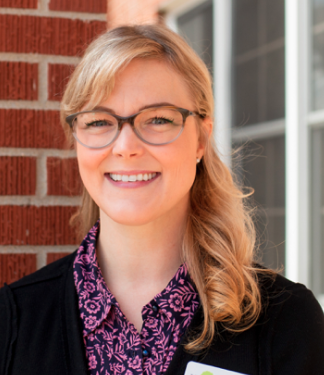
Holly Ray

HPL

The Hays Public Library has hired Holly Ray to serve as its outreach coordinator. In this role, Ray will oversee the library’s efforts to increase library access in the community.

Ray has previously worked in the library’s Young Adult Department and most recently as a graduate research assistant at FHSU’s Forsyth Library. Ray is graduating from Fort Hays State University with a master’s in English and is earning a master of science in information from Florida State University. As a former middle school English language arts teacher, Ray is particularly passionate about helping schools, students, and families expand their literacy resources and opportunities.

Ray said she is most excited about the library’s plan to introduce Bookmobile service in spring 2020.

“The HPL Bookmobile will absolutely revolutionize the way in which we support and interact with our local community,” she said. “Through generous grants from the Dane G. Hansen Foundation and the Hays Public Library Foundation, we will be able to deliver library resources to more patrons and places than ever before.”.

The library’s outreach initiatives provide books, media, and programming to the schools, assisted living facilities, and other community organizations around Hays and Ellis County. Ray began working at the library on Sept. 30.

Find out more about this and other library programs by calling 785-625-9014.

INSIGHT KANSAS: Early childhood education — the time has come

Dr. Sharon Hartin Iorio is Professor & Dean Emerita at Wichita State University College of Education.

“When an ir-re-sistible force, meets an old im-mov-able object like this, you can bet just as sure as you live, something’s got to give.” Johnny Mercer wrote it. Frank Sinatra sang it, and we all fell in love with its optimistic take on inevitability.

Today, the romantic 1950s lyrics evoke a circumstance Kansans may soon face. It’s the collision of a contemporary force with an immovable object and it’s set to happen when the irrepressible progress of early childhood education meets the politics of school funding affordability.

The result may soon be coming based on findings of a 2018, $4.5 million needs assessment grant.

The Preschool Development Grant Birth through (age) Five was awarded to the Kansas State Department of Education. The Children’s Cabinet and Trust Fund, the Department for Children and Families and the Department of Health and Environment are leading this work with KSDE.

The early childhood needs were assessed by a variety of methods including a listening tour, social media queries and interviews with parents, health-care providers, teachers, child-care workers and other groups who confirmed what many expected—uneven program coverage and quality.

Kansas’ youngest citizens currently are taught and cared for in a broad, loose network made up of home, charitable, paid-private and public resources. While the assessment did show many good outcomes across the state, two key findings revealed the sources of the concerns.

First, the findings showed that experiences of families with young children in Kansas are shaped by where they live. Not only did program and service delivery vary across the state but differences also existed from place to place within communities.

The second key finding was that some young children are growing up in families where health, social-emotional growth and basic learning needs are not being met. The research found seven potential issues may be causing this problem. Families with young children find entry to high-quality programs and services difficult to access or unavailable or hard to navigate across systems.

The research findings implied that the departments need to work together to address the remaining needs. These revolve around aligning the programs and services for efficiency and robust quality, increasing collaboration and coordination among the departments and addressing facilities and workforce needs. A vision statement that ties together the early childhood missions of the four departments will be formed. Increasing public/private partnerships also may be considered.

Getting the right balance between individual responsibilities (for families) and shared responsibility (from local, state and federal funding) is a complex challenge.

Even though much progress can be made, tightening systems and encouraging non-governmental funding cannot fully provide programs and services where none exist. As a result, the most important decisions for Kansans in the future will be the allocation of public resources for early childhood needs.

A National Scientific Council research report released in 2007 provided a powerful finding—responsible citizenship and lifetime productivity depend on the ability of government to invest wisely in our youngest citizens.

Effective early childhood policies will not eliminate all social inequalities or guarantee economic development. Nevertheless, when early childhood programs and services are provided in the lives of individual children, the well-being of both the young and the larger community is advanced.

Supported by research and backed by the public “something’s gotta give” to enable comprehensive, highest-quality early childhood initiatives in Kansas.

Dr. Sharon Hartin Iorio is Professor & Dean Emerita at Wichita State University College of Education.

ROSS: The 1888 Great Fire of Kirwin

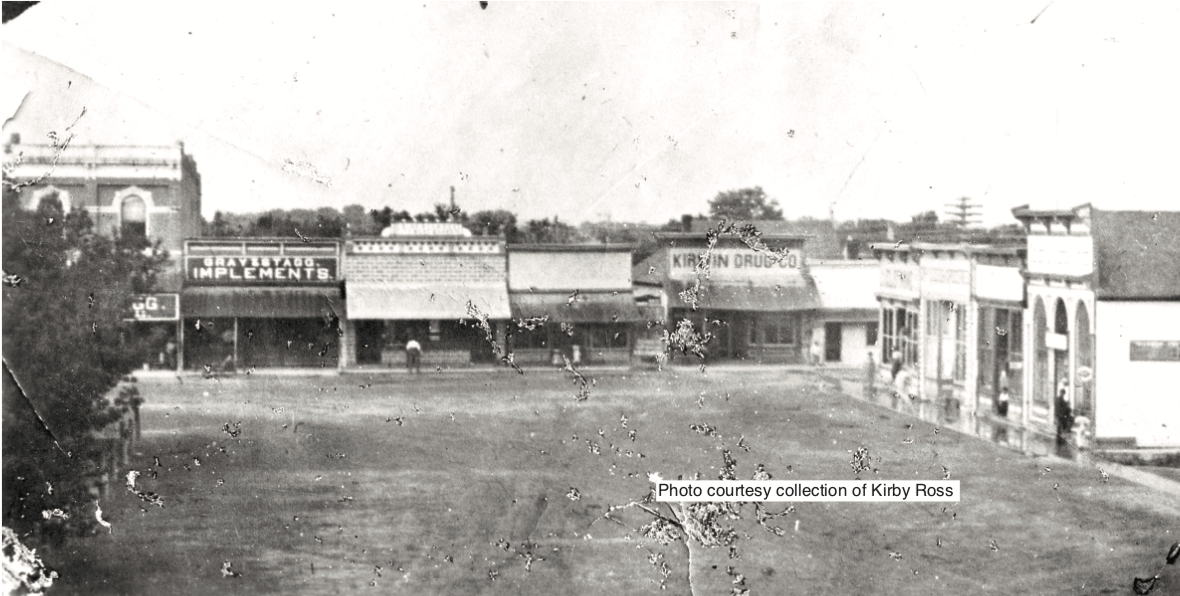
Site of 1888 Great Fire, Southeast Kirwin Square

Political rally results in mass destruction

By KIRBY ROSS
Phillips County Review

Note: The big day is finally upon us — the Kirwin Sesquicentennial will be held this Saturday, Oct. 5, with the parade getting underway at 10 a.m.  In recognition of that rare celebration, the Phillips County Review has been running original historical articles on the community.

Kirwin, Kansas, was born in fire.  Literally.  Founded in 1869, it was not until December 1870 that it was platted and the Kirwin Town Company formed.

Just months later a massive prairie fire swept over the community, destroying most of what little progress had been made in building the frontier settlement.

Rising from the ashes, for the next 20 years Kirwin became the most prominent town in northwest Kansas.  During that time fire continued to be Kirwin’s constant nemesis, threatening it through accidents, acts of god, and the malice of man.

While prairie fires regularly swept around the outpost on plains, and accidents with lanterns, chimneys and fireworks caused damage to structures in town on a regular basis, it was the malice of man that caused the most destructive fire in the history of Kirwin, consuming the better part of the east side of the town square in 1888, as well as a portion of the south side.

Violent Political Conflict Explodes In Phillips County

Late that year prairie fires, while dangerous, were the least of Phillips County’s problems as “incendiaries” had been engaging in a campaign of destroying entire business districts in the late 1880s.

The same week as the most recent Kirwin prairie fire swept around Kirwin in October 1888, the main block of the Logan business district was destroyed in a large blaze.  Occurring at the tail end of a very heated election season, the Logan outbreak took place the very same day as the Phillips County Union Labor political party convention, chaired by L.F. Fuller of Logan.

At the time it was widely believed to have been “incendiary” in origin, with fingers of accusation being pointed back and forth between Union Laborites, Republicans and Democrats.  Incendiary was the term used back then for arson.

This fire came in the midst of considerable political strife taking place throughout Kansas generally and Phillips County in particular.  “Kansas Populism,” as it was called, was spreading across the state and was being embraced by farmers, threatening the entrenched political power structure.

The Union Labor Party, an early form of the Populist Party,  had been established in the American Midwest in 1887 and was a grassroots partnership of farmers and factory workers challenging both the Democratic Party and the Republican Party for the votes of disaffected blue collar workers politicized by industrial conflicts, low wages, low farm prices, and farm foreclosures.

The Union Labor Party was a successor organization to the National Farmers Alliance and Greenback Party movements of the 1870s and early-1880s.  Both had been agrarian organizations whose goals mirrored those of the Farmer’s Grange, and evolved into the Union Labor Party by the late 1880s.  After the 1888 election the Union Labor Party itself was absorbed into the broader Populist Party of the 1890s.

Establishing a nationwide platform of increasing grain prices, raising wages and reducing factory employee hours, Union Laborites were attacked by their political opponents as being “anarchists.”  Despite this,  they were very well organized in Phillips County in 1888, having a large county membership and formal party organizations in 24 out of the county’s 30 townships.

That same year there were at least eight Union Labor-supporting newspapers in the county and the surrounding area, including the Logan Freeman, the Athol People’s Friend, the Kensington Union Labor Trumpet, the Hill City Sun, the Phillipsburg Democrat, the Long Island Inter Ocean, the Almena Plaindealer and the Kirwin Independent.

The Union Labor leadership in Phillips County came from Logan, Kirwin, Marvin (Glade), Big Bend (Speed), Stuttgart, and Agra with the significant membership lists including surnames which would sound familiar to 21st-century residents.

And their county convention had just been held in Phillipsburg on October 10, 1888, with Logan burning that night.

This convention seemed to agitate the volatile local political situation in the lead up to the Logan fire, and the even larger one that was about to hit Kirwin.

Almost sensing a problem was heading towards Kirwin in the immediate aftermath of the Logan fire, the Kirwin Chief used the controversy to chime in regarding that town’s own vulnerability to fire–

“This was about the best business block in Logan, and will be a great loss to the town.  We might say here that this is another reminder that Kirwin has no protection against fire.”

In the same issue of the newspaper and for the first time in all of its many months of pleas urging the creation of a fire defense infrastructure, the Chief even went so far as to urge its readers to buy fire insurance.

The Fuse Gets Lit

Matters finally came to a head when a major Union Labor rally was planned to be held at the Kirwin Opera House on Saturday, October 27, 1888, with the keynote speaker being Populist firebrand Sarah E.V. Emery, author of  “Seven Financial Conspiracies.”

Republican politician–turned Greenbacker–turned Populist U.S. Congressman John Davis, Junction City, said of Emery’s publication, “In the year 1888, 50,000 copies of Mrs. Emery’s little book were showered among the people of Kansas.  Under their fructifying influence the seeds of thought began to spring up in every heart.  The rage of the enemy knew no bounds.  Great lawyers and judges of courts wrote pamphlets and newspaper broadsides which were circulated by Republican committees and corporation newspapers as campaign documents.  Smaller men called the little book ‘The Union Labor Bible.’  They cursed it in their speeches, tore it to pieces in the presence of their audiences, dashed it to the floor, spat upon it, trampled it under foot.  All this but proved the rage of the lion that had been wounded, the pain of the whale that was pierced, or the bird that was hit.”

Philip Campbell

After the announcement of the Kirwin Union Labor rally was made there was a major pushback from opposing political forces.  With Kirwin community leaders receiving at least two letters threatening the town’s destruction should it follow through on its plans, the event moved forward as scheduled.

On the appointed afternoon the rally got underway in the midst of a huge crowd.  With Emery taking to the podium, the Kirwin Chief reported, “the Kirwin Opera House was packed to its utmost capacity.  Mrs. Emery spoke for about one hour and a half, during which she spoke of the farmers being in debt.  That their farms were mortgaged for all they were worth, that the people were reduced to poverty and that it had been brought about by class legislation.”

The Chief continued, “She attempted to show that leaders had entered into a conspiracy with the shylocks of Wall Street to allow the monopolists to obtain control of the finances of the country.”

With Emery blaming the Republican Party for this state of affairs, after she finished the G.O.P had a rebuttal speaker, Philip P. Campbell, Pittsburg, address the capacity crowd.  At the time Campbell was a lawyer, but a decade later would be elected as Kansas’ Third District Representative to the United States Congress and serve in that role for two decades.

According to the Chief, “Mr. Campbell made a forcible though impromptu speech, and handled the unproven assertions and wild theories of his opponent in a merciless manner.  He gave his hearers some logical facts about the relations of labor and capital; about the causes of hard times.  He said that class legislation was not responsible for a failure of crops, and that it was impossible for farmers to flourish when the country was suffering from an almost total failure of crops.  He then devoted some time to the wild theories in the little book of which Mrs. Emery was the inspired author.”

C J Lamb

As the town was still on edge from the afternoon’s excitement, that night the Union Laborites gathered for a second rally, with a lead-off speech by the party’s county chair, L.F. Fuller, Logan.  Fuller had just arrived in Kirwin after having spent the day in Kensington, where another large Union Labor rally/Republican counter-rally had also been held.

With Emery following Fuller, also addressing this evening Kirwin rally was 39-year-old attorney and editor of the Kirwin Independent, Clayton “C.J.” Lamb.  Lamb was one of seven men on the Phillips County Union Labor Central Committee, as well as one of six men on the State of Kansas Union Labor Central Committee.

While Lamb was in the midst of his speech, he was suddenly yanked from the podium, arrested, and taken to Phillipsburg in custody.

As the day’s controversies were echoing up and down the streets of Kirwin, Emery checked into the Commercial Hotel on East Main Street.

Then, just mere hours later, fire broke out in four different places on the east and south sides of the Kirwin Square.  One of those primary points of ignition was in the back offices of C.J. Lamb’sKirwin Independent.

The Alarm is Sounded

The alarm for the Kirwin conflagration was sounded not long after midnight, Sunday morning, Oct. 28, 1888, with flames appearing simultaneously on the east and south sides of the square.

On the east side the block was anchored on its north by the brick First National Bank building (also known as the Kirwin State Bank) and on the far south by the home of R.I. Palmer, an owner of the Kirwin Chief.  In between the bank and Palmer’s house were wall-to-wall adjoining wood frame buildings. Tinderboxes.

The fire on this side of the square was started in three places — at the rear of the Kirwin Independent newspaper, in Bradley’s Lumber Yard and in Noble’s Livery Stable, just north of Palmer’s home.

A fourth site on the south side of the square was also targeted by the incendiaries.  This smaller block was anchored by C.C. Stone’s Clothing Store on its east, and Ingersoll’s, the largest mercantile store in Phillips County, on the west.  In between was Streble’s building and a store owned by August Stockmann.

The fire on this side was started behind Stone’s place.

Kirwin had two newspapers at the time — the Chief, and the Independent.  By morning it would have just one, with the Independent ceasing to exist.

The Great Fire Rages

A report in the Phillipsburg Democrat told the tale–

“The people of Kirwin were startled last Sunday morning about 1 o’clock, by hearing the cry, fire! The fire was seen to break out in four different places. It broke out on the south side of the square just behind Stone’s store.  On the east side it broke out in Bradley & Co.’s lumber yard, and just behind C.J. Lamb’s printing office, and Noble’s livery barn. It is reported that a letter was written to a gentleman in Kirwin stating that Kirwin was doomed.”

Opera House

According to the reporting of the Chief

“Early last Sunday morning one of the most destructive fires in the history of the city occurred.  The alarm of fire was given and our drowsy citizens on going to their doors and windows were horror-stricken to find the entire southeast corner of the square was already in flames.

“It was only a few minutes before hundreds of willing hands were ready to do anything which was possible to check the flames, but with no available means of fighting the fire little could be done.

“The stores were opened as soon as it was found impossible to save them and goods were carried out into the street a safe distance from the fire and thus the damage was made as light as possible.

“Men, women and children worked like superhuman beings, some men doing more work in thirty minutes than they had done before in a whole year.

“The fire was evidently the work of incendiaries, though no positive clue has yet been obtained as to the parties who did the work.

“From the fact the fire was set in different places at the same time, there is no possibility of its being accidental.

“Several theories have been advanced and we hope in a short time the truth will have been ascertained.”

The Chief report continued, “A number of parties burnt out will erect brick buildings in the spring if they do not before.

“The noble ladies of Kirwin cannot be too highly commended for their bravery and noble work in saving property.  Thousands of dollars were saved through their efforts.

“It is said there was less noise made than at any other fire on record.  Some men slept within three blocks of the fire and did not know it until morning.”

The Damage

Totally destroyed on the east side were Stone’s Grocery (building owned by August Stockmann), Keckley Bros. Merchandise, George Noble Livery, Osborne & Co. Implement, Bradley Lumber, Bartlett Produce, Kimberly Produce, Camp Produce, the Kirwin Independent newspaper, Walker Furniture (building owned by August Stockmann), Oliver & Boddington Meat & Fur, Wilcox Barber Shop, Stockmann Mercantile, Troup’s Novelty Store, Taylor Notions (building owned by August Stockmann).  The First National Bank building was damaged.

On the south side, Ingersoll & Co. was damaged, as was the Streble Building and another store owned by Stockmann.  Stone Clothing was totally destroyed.

The Cause

There was ample evidence arson was involved, with the Phillipsburg Dispatch laying out the case that same week in a report stating–

“The cause of the fire will, we presume, always be a mystery, but was undoubtedly set on fire by some malicious persons.

“The fire was discovered in the Charles Hull building occupied by C.C. Stone, and in a few seconds, even before the fire had broken through this building, the second fire was discovered in or near the rear of C.J. Lamb’s printing office, and before these could have thrown out any sparks or sufficient heat to cause fire in other places, it was discovered that the inside of the livery barn, south of those already mentioned, was on fire.

Both the Dispatch and Democrat reported threatening letters being received prior to the blaze, with the Dispatch providing the most details–.

“It is reported Dr. R.H. Trusdle had received a letter before this fire occurred stating there was a move on foot to burn Phillipsburg and Kirwin.  But he had failed to inform the city authorities as to this matter.

“If this letter had been made public the people would have doubtless been on the alert.”

In a special report just two days after the blaze the Topeka Daily Capital said–

“It is evident the fire  was the work of incendiaries, but there is as yet no clue as to the perpetrator or perpetrators of the dastardly deed.

“One young lady, Miss Lizzie Bannister, the operator in the Central Telephone office, covered herself with glory by starting to mount a ladder with a pail of water to pour on the flames which were menacing the First National Bank.  She was restrained from making the perilous ascent only by the interference of several gentlemen who held her back.

“A number of the parties will rebuild in a short time.  Several of them will erect brick buildings.”

Who Set The Fire…And Why?

With different political factions accusing one another of starting the inferno, the only thing which was certain was that a major part of the economic base of the Kirwin community was destroyed.

The arrest of C.J. Lamb, and both the timing of the fire on the night of the rally and the fact one ignition site of the fire was in Lamb’s offices were all major issues of discussion.

Even the arrest prominently pitted one political party against the other.  Kirwin’s C.J. Lamb was a noted Union Laborite, an attorney, and the publisher of the Kirwin Independent.  The warrant under which Lamb had been taken into custody in the midst of making his speech had been issued against him by Lamb’s polar opposite — Phillipsburg’s George W. Stinson, a noted Republican, an attorney and former publisher of the Phillipsburg Herald.

The two men had been in conflict for some time, with it reaching a breaking point after Lamb reprinted a September 6, 1888 story from the Logan Republican reporting on Stinson being the father of an unborn child of Blanche Ford, the cousin of Stinson’s recently deceased wife.

The Republican article stated Stinson, upon finding out Ford was with child, left for parts unknown, resulting in Ford attempting suicide.

Stinson had a criminal libel warrant issued against Lamb for running the article (Stinson took no action against the Republican), with that warrant being held and then finally served two months later as Lamb was making his speech at the Union Labor rally in Kirwin.

However within a short time after the Kirwin conflagration Lamb turned the tables, as Stinson himself was arrested for bastardy, with the charges against Lamb being dismissed.

Miss Ford, being unmarried and pregnant, was afterward incarcerated and held as an inmate at the Phillips County Poor Farm.

This was all but a sideshow to the identification of the incendiaries setting Kirwin ablaze, with the finger-pointing first placing blame on Stinson for the mass destruction of a major part of the Kirwin business district.

As more information came to light the conflict between the Union Labor Party and the Republican Party was blamed and took center stage as being the real cause.  And, as with any good political conflict, each side began blaming the other.

On November 1 the Cawker City Public Record reported on the carnage in Kirwin, noting “the fire is supposed to have been instigated by the anarchistic element which predominates in Phillips County.”

On November 1 the Phillipsburg Dispatch wrote–

“There are various rumors as to the cause of this fire; many think it the plot of an element of anarchy, now in private organization.  Our citizens should be well guarded against these out-laws.  A Kirwin gentleman was heard to say the day after the fire that if a Union Labor rally was held in Phillipsburg the city should put on twenty night watchmen or have the town burned.”

Also on November 1 the Logan Freeman, after first pointing out Lamb’s controversial Union Labor newspaper story on Stinson originated in a Republican newspaper, wrote–

“The arrest of Lamb for a libel committed in September and his arrest followed by the burning of his office together with 12 other buildings in Kirwin while he was absent, are coincidence that will bear study upon the part of thinking men all over the country.  Look carefully at the ones who shout anarchy and you will see a true anarchist, or his pliant tool.”

In a separate article in that same issue, the Freeman observed–

“Next followed the arrest of C.J. Lamb, editor of the Union Labor paper.  Lamb was taken to Phillipsburg and while away from home his office and everything in it, on which there was not one cent of insurance, was burned.

“This fire occurred on the night of Mrs. Emery’s meeting in Kirwin — breaking out at the same hour in the night as the Logan fire and in several places at once.  The same identical howl about Union Labor men setting the fire was raised by the same class of men that raised the howl in Logan, and have been howling ‘anarchy’ for months past.  What are they trying to cover up?

“Before the fire a leading Republican of Kirwin remarked to a man who was collecting a fund to pay expenses of the meeting to be held, asking if he was taking up a collection to buy rope to hang C.J. Lamb and others like him.

“They have no ground for talking as they do unless it is for the purpose of throwing suspicion on innocent parties in order to cover up their dirty work.

“Will the people aid these excrescences upon society to carry out their infernal schemes on election day?”

On November 2 the Cawker City Times referred to the debate going on regarding the Kirwin incendiary’s identity and motive, writing “It was supposed to be the work of political spite.”

Also on November 2, from the Winfield Weekly Visitor

“The office of the Kirwin Independent, a Union Labor paper, was burned last week.  It was the work of an incendiary.”

By November 9, almost two weeks after the fire, the Kansas City Gazette noted–

“The recent fire at Kirwin is now laid to Union Labor miscreants.”

More details became available on November 14, as the Concordia Kansas Kritic explored the “political spite” motive–

“And now worse than any comes the news from Kirwin.  Mrs. Emery was billed to speak there. Prominent Republicans said she should not speak there, and if she did speak the town would suffer in consequence.

“She did speak, and in the midst of the meeting, the editor of the Kirwin Independent, C.J. Lamb, chairman of the Union Labor Congressional Committee, was arrested on an old trumped up charge of libel.

“He was taken to Phillipsburg, the county seat from where he did not get back until Sunday morning.

“During the night a fire broke out in different places and property was destroyed to the amount of $50,000.

“One of the places the fire was first discovered was in Mr. Lamb’s printing office which was then completely enveloped in flames.

“The fire is conceded by all to be the work of incendiaries.  The cry of ‘anarchy’ was at once raised and an attempt made to fasten the crime on to the Union Labor men, until it was discovered that on Mr. Lamb’s property there was not one dollar of insurance, while a Republican, whose loss was about $5,000 carried insurance.

“Could circumstantial evidence be more conclusive?  Not only will they resort to falsehood and the vilest slander but they will use dynamite and fire to defame the character of the men whose arguments they can not answer.”

The Kirwin Independent remained closed for a full year, before reopening under a new owner who espoused independent politics.  Afterwards evolving the newspaper’s slant towards Republican, in 1902 it changed its name to the Kirwin Kansan, continuing operations until its October 1, 1942 issue — it’s Kirwin Old Settlers Day issue.

“This announcement comes at a time when many old timers plan to gather in Kirwin on Tuesday, October 6, 1942 to recall the past history of this splendid community,” the newspaper wrote.  “We have made arrangements with the Phillips County Review to fulfill our subscription obligations.  You will receive this splendid county paper for whatever period you have paid your subscription in advance.”

Within weeks of the big fire Clayton J. Lamb moved to Lawrence, Kansas, serving for a time as the associate editor of the Jeffersonian Gazette.  Eventually ending up back in the state of his birth, Michigan, Lamb ran unsuccessfully as a Social Democrat for lieutenant governor there in 1900 and for governor in 1904.  Lamb passed away in Glendale, California, in 1908.

Rebuilding — Again

Just as the town had done after the prairie fire swept over it in 1871, Kirwin immediately began rebuilding.

With most of the contents of the buildings having been saved by the townspeople during the 1888 destruction, within 72 hours of the fire most businesses had set up their operations at other points around the square.

Keckley Bros. Merchandise moved into the Traders Bank on the northeast part of the square — but not for long.  Keckley’s store, being made of stone, was quickly repaired and reopened in the burnt district two weeks after the fire.

Oliver & Boddington Meat Market and Fur Buyers set up shop on the bandstand in the center of the town square, and within a week was boldly announced its continuing existence by advertising, “Oliver & Boddington will pay more for hides than any other shop in Phillips County.”

In short order they were moving into a store on the southwest side and proceeding as before.

While he rebuilt, August Stockmann moved into a Streble building near other properties he owned on East Main Street, before moving into the Downs Hardware & Implement building on the west side of the square.

Within a year Stockmann had constructed a new store, bigger and better than ever, putting up a grand seamless brick extension to the bank building back on the east side that would define Kirwin for over a century to come.

Walker Furniture moved into the Styles Building in the northwest square and made the best out of a bad situation — they held a fire sale, literally, just days after the conflagration.

“I am offering some furniture which was slightly damaged in the fire at Great Bargains,” Walker’s advertising said.

Troup’s moved into Barnard’s on the northeast square, with their sale ads shouting “Fire! Fire!! Great reduction in prices since the fire at the Troup Novelty Store.”

     C.E. Bradley of Bradley Lumber, in a tight financial bind, sent out a plea asking his customers to whom he had extended credit to come to his aid.

“Having sustained a severe loss in the fire, I desire to say to the parties who are owing me that I need the money badly to start in business again and shall regard it as a great favor if you will call and settle at once.  I expect to at once open up a lumber and coal yard in Kirwin and need what you owe me in order to do so.”

Ever the entrepreneur and seeing a business opportunity, three days after the disaster Kirwin insurance salesman and real estate agent W.J. Palmer was pressing other businesses in town to come to him and get their buildings insured against fire.

And eleven days after the Great Fire of Kirwin the Kirwin Chief was observing, “The Streble building which was badly damaged by the fire has been repaired this week.”

Led by Stockmann and his iconic new mercantile building, the entire east side was rebuilt with striking designs in either stone or brick.  While one of those “new” buildings would burn in the 1950s, because of the materials used this time the fire didn’t spread and destroy the entire block.

The rest of those early buildings stood for many decades before every one of them, except for one minor structure, succumbed to old age.

They finally fell not because of fire, but because of time.

————————–

Article reprinted from Phillips County Review, with permission.  The Phillips County Review has been named by the Kansas Press Association as being the state’s top newspaper in its circulation class for 2019, beating out over 180 other publications.
 
Editor and writer Kirby Ross, a past nominee for the Western Writers of America Spur Award and the National Cowboy Hall of Fame’s Western Heritage Award, has had two books of historical nonfiction published by major university presses.  He has also personally won over 20 Kansas Press Association Awards of Excellence for his newspaper work over the past three years, including first place recognition for news reporting, news and writing excellence, feature writing, political and government reporting, editorial writing and news photography.

Police: Kansas man cited devil during alleged sexual assault

LAWRENCE, Kan. (AP) — A Kansas man has been arrested for allegedly assaulting a woman after telling her that the devil wanted her dead.

Hiller photo Douglas Co.

34-year-old Lawrence resident Donavan Ryan Hiller faces three felonies and a misdemeanor for the alleged Aug. 30 attack at his house, including aggravated sexual battery and aggravated battery.

According to a police affidavit, the woman says Hiller asked her to go to his bedroom to see his cats. She says he then ripped off her pants and attacked her.

She says he told her that the devil said she needed to die and hit her in the head twice with a skillet before she escaped.

Hiller is in jail on a $50,000 bond. His attorney didn’t immediately return an Associated Press request for comment Thursday.

Copyright Eagle Radio | FCC Public Files | EEO Public File