To find out more about The Post Podcast, or subscribe to mobile notifications click here.
Year: 2019
USGS: Series of earthquakes reported in north-central Kansas
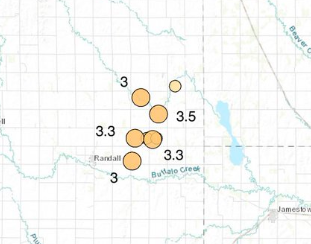
JEWELL COUNTY — A series of earthquakes shook north central Kansas over the past 24-hours.

The ten quakes measured from a magnitude 2.1 to 3.5, according to the U.S. Geological Survey.
The first just after 6:45p.m. measured 3.3 and was centered just east of Randall, Kansas. The strongest of the quakes measured 3.5 and was centered in the same area.
There are no reports of damage or injury, according to the Jewell County Sheriff’s office.
Pro racer killed in Kansas street drags competition

MONTGOMERY COUNTY —One person died in an accident just after 4p.m. Saturday during the street drag races at the Coffeyville Industrial Park.

The Kansas Highway Patrol reported a 2000 Pontiac Firebird 2-door driven by Joseph K. Hunt, 27, Carter Lake, ID., and a 1980 Ford truck driven by Jason L. Maxey, 43, Carthage, Mo., were westbound on B Street.
Hunt lost control of the Pontiac. It struck the driver’s side of the Ford, entered the north ditch and collided with a sewage drain pipe.
The Ford entered the north ditch and came to rest in the grass. Hunt was pronounced dead at the scene. Maxey was not injured.
Kansan receives Association of Fish and Wildlife Agencies national award

TNC
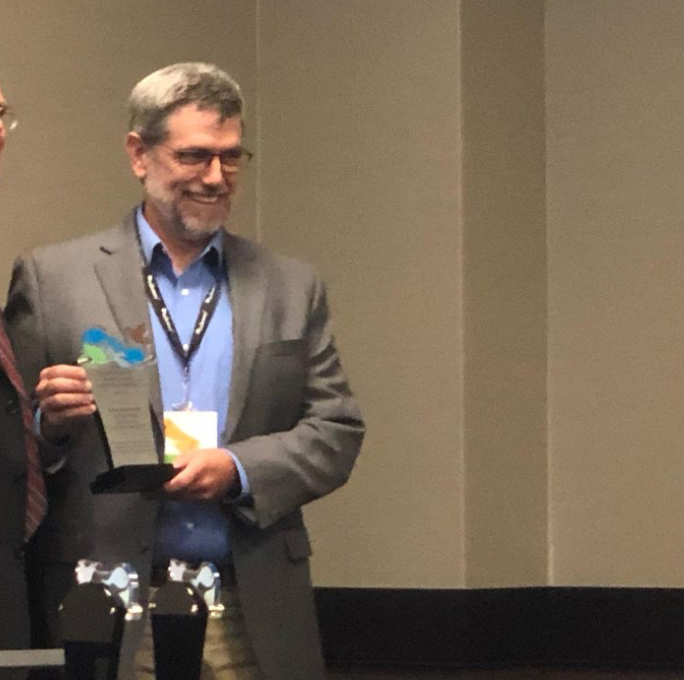
TOPEKA – The Nature Conservancy (TNC) has been honored as two of its employees receive Climate Adaptation Leadership Awards for Natural Resources from the Association of Fish and Wildlife Agencies. The Climate Adaptation Leadership Award, established in 2016, recognizes exemplary leadership by individuals, agencies, businesses, and other organizations to reduce impacts and advance adaptation of the Nation’s vital natural resources and the many people who depend on them in a changing world.
Brian Obermeyer, director of Protection and Stewardship for the Conservancy’s Kansas program, and Chris Hise, associate director of Conservation for the Conservancy’s Oklahoma program, were jointly recognized in the Nongovernmental Organization category for their work creating Site Wind Right, which identifies areas in 17 Midwest states where wind development is unlikely to encounter significant wildlife-related impacts. Projects in low-impact places are also less likely to be delayed or cancelled, resulting in more reliable and efficient renewable energy deployment.
“The Site Wind Right project was truly a team effort, with contributions from Conservancy scientists and GIS staff across the central U.S.,” Hise said. “We sincerely appreciate this award from AFWA.” Hise is a lifelong resident of the Great Plains, and has managed The Nature Conservancy’s conservation efforts in western Oklahoma since 2000.
“The Site Wind Right team, including myself and Mr. Hise, are honored that AFWA recognized the Conservancy’s science-based approach to steer wind energy away from ecologically important habitats and landscapes,” added Obermeyer.
Obermeyer has led the Conservancy’s Flint Hills Initiative for nearly two decades and was recently named director of protection and stewardship for the state.
The Nature Conservancy is a global conservation organization dedicated to conserving the lands and waters on which all life depends. Guided by science, we create innovative, on-the-ground solutions to our world’s toughest challenges so that nature and people can thrive together. We are tackling climate change, conserving lands, waters and oceans at unprecedented scale, providing food and water sustainably and helping make cities more sustainable. Working in 72 countries, we use a collaborative approach that engages local communities, governments, the private sector, and other partners. To learn more, visit www.nature.org or follow @nature_press on Twitter.
In Kansas, the Conservancy has protected 140,000 acres of the state’s most ecologically important lands and waters. To learn more, visit www.nature.org/kansas.
Teacher of the Month: English teacher challenges students to look beyond words


By CRISTINA JANNEY
Hays Post
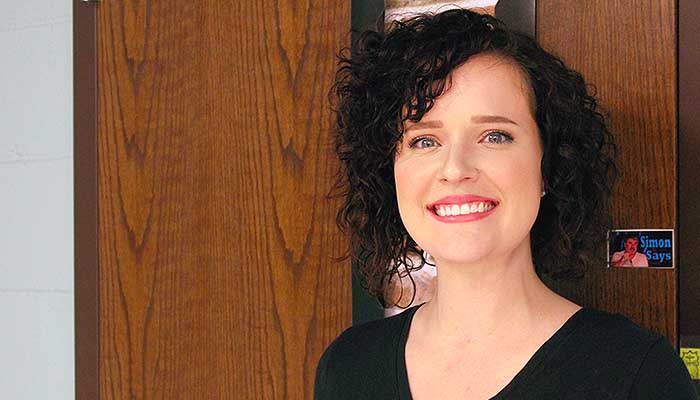
Jaici Simon, reading and language arts teacher at Hays Middle School, might only be in her second year as a teacher, but she has a passion for her students and her profession.
Simon was nominated for the Hays Post September Teacher of the Month by student Taylor Freed, who said, “I would like to nominate Mrs. Simon because she teaches in a way that makes the subject easy to understand. I also feel she is patient and easy to talk to if I have questions.”
Simon is a Hays native. She attended Kennedy Middle School, Hays High School, and earned her teaching and English degrees from Fort Hays State University.
Simon’s mother encouraged her to enter the teaching profession.
“She reminded me when I was in college, I did really love to read and I love to learn and that is the way I explored the world and learned about the world,” Simon said.
She said she was also encouraged by the examples of some amazing teachers in USD 489.
One of those teachers was reading teacher Misti Norris, who still works at HMS.
“She has always been a positive and uplifting person,” Simon said. “She has a huge passion for English and for reading, especially. She tries to help find kids their kind of book and encourage them to read.”
At HHS, Diane Mason influenced Simon.
“She challenged me to think beyond the words on the page,” Simon said. “She always challenges her kids to analyze beyond just what is present and look beyond characters’ decisions. She is incredibly positive as well.”
Kathy Wagoner was Simon’s mentor as a student teacher, and she said Wagoner prepared her for her career as a teacher.
“She taught me to write properly and for English comp exams and what I should expect when I went to college. She was a very positive figure in my life — she still is to this day,” Simon said. “She is a role model to me, and I hope I can be as half as good an English teacher as she is.”
Just like millions of other kids, Simon loved J.K. Rowling’s Harry Potter series when she was a middle school student. She envisioned herself as Hermione Granger on adventures with Harry and Ron Weasley at the infamous Hogwarts School of Witchcraft and Wizardry.
“She grows a lot throughout the series,” Simon said of the Granger character. “She is also not afraid to be who she is, and I think that is very admirable.”
She said she was also inspired by the “Diary of Anne Frank,” which she read in the seventh grade.
“I have always been fascinated about learning more about history,” Simon said, “and how literature and history are very interwoven with one another.”
Often, history is told through history books, but the “Diary of Anne Frank” is told through the eyes of a teenage girl.
“It makes that experience more real,” she said, “especially when reading it when you are her age. You imagine walking beside this person who went through so much and experienced a lot of trials and tribulations. … It made me think a lot about how blessed I was to have the childhood that I did have.”
Simon said her No. 1 goal as a teacher is for her students to feel her classroom is a safe place.
“I want them to feel no matter where they are in life, no matter who they are, they can come here and feel safe and cared for,” she said.
She also wants her students to find a love of reading and writing, even if it is not their favorite subject.
“I want them to learn more about the world,” Simon said. “I want them to be able to ask tough questions and not be nervous or scared because it is important for us to grow as humans to ask those tough questions—for us to be able to learn in an environment that is safe and comforting—and to reach beyond our comfort zones to learn more about who we are.”
Other adults might be intimated by the pre-teen crowd — not Simon. Her favorite aspect of teaching is the kids.
“It is a time of learning who you are and what you like and who you are going to be for the rest of your life,” she said. “I love the kids. I think they are at a great age. They are trying to figure things out. I like that about this age.”
Simon also coaches cheerleading at HMS. She has been a dancer since she was 6 at Jackie Creamer’s Vision Dance Company and was a member of the dance team at HHS.
“I think kids need an outlet outside of school,” she said, “because kids come to school and they work so hard and they try and they are successful, but it takes a lot of brain power and it takes a lot of dedication. I think in a coaching capacity, coaches are able to connect with kids on a different level— being able to exercise, being able to do a physical activity where they are out of their seats. …”
“I think it creates a special bond between the kids and the coach.”
As a young teacher, Simon said she hopes to continue to grow.
“I never want to become a teacher who becomes stagnant or who doesn’t have a goal in mind each school year,” she said. “I know there will always be some area in which I need to grow.”
Simon said she was shocked she was nominated for Teacher of the Month, because there are so many great teachers in Hays.
“And to have a student nominate me was incredibly special and makes me feel like I am right where I am supposed to be,” she said. “I am with the right age. I am in the right school district. I’m where I need to be.”
Submit your nomination for Hays Post’s Teacher of the Month honor!
Hays Post and Eagle Radio are seeking nominations for Teacher of the Month for 2019-20.
Through April, Hays Post will solicit nominations from through the area from parents, students and colleagues. Nominate your favorite educator by sending the following information to [email protected]. Nominations will be kept through the entire school year, so you only need to nominate your favorite teacher once in a school year. If you nominated a teacher in a past year and he or she did not win the Teacher of the Month honor, you can nominate them again this school year.
• Your name and telephone number (will not be published).
• Teacher’s name
• Teacher’s school
• Tell us why you are nominating this teacher
Census: Inequality grew, including in heartland states
ORLANDO, Fla. (AP) — The gap between the haves and have-nots in the United States grew last year to its highest level in more than 50 years of tracking income inequality, according to Census Bureau figures.

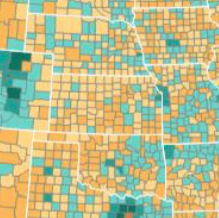
Income inequality in the United States expanded from 2017 to 2018, with several heartland states among the leaders of the increase, even though several wealthy coastal states still had the most inequality overall, according to figures released Thursday by the U.S. Census Bureau.
The nation’s Gini Index, which measures income inequality, has been rising steadily over the past five decades.
The Gini Index grew from 0.482 in 2017 to 0.485 last year, according to the bureau’s 1-year American Community Survey data. The Gini Index is on a scale of 0 to 1; a score of “0” indicates perfect equality, while a score of “1” indicates perfect inequality, where one household has all the income.
The increase in income inequality comes as two Democratic presidential candidates, U.S. Sens. Bernie Sanders and Elizabeth Warren, are pitching a “wealth tax” on the nation’s richest citizens as a way to reduce wealth disparities.
The inequality expansion last year took place at the same time median household income nationwide increased to almost $62,000 last year, the highest ever measured by the American Community Survey. But the 0.8% income increase from 2017 to 2018 was much smaller compared to increases in the previous three years, according to the bureau.
Even though household income increased, it was distributed unevenly, with the wealthiest helped out possibly by a tax cut passed by Congress in 2017, said Hector Sandoval, an economist at the University of Florida.
“In 2018 the unemployment rate was already low, and the labor market was getting tight, resulting in higher wages. This can explain the increase in the median household income,” Sandoval said. “However, the increase in the Gini index shows that the distribution became more unequal. That is, top income earners got even larger increases in their income, and one of the reasons for that might well be the tax cut.”
A big factor in the increase in inequality has to do with two large population groups on either end of the economic spectrum, according to Sean Snaith, an economist at the University of Central Florida.
On one side, at the peak of their earnings, are baby boomers who are nearing retirement, if they haven’t already retired. On the other side are millennials and Gen Z-ers, who are in the early stages of their work life and have lower salaries, Snaith said.
“I would say probably the biggest factor is demographics,” he said. “A wealth tax isn’t going to fix demographics.”
The area’s with the most income inequality last year were coastal places with large amounts of wealth — the District of Columbia, New York and Connecticut, as well as areas with great poverty — Puerto Rico and Louisiana.
Utah, Alaska, Iowa, North Dakota and South Dakota had the most economic equality.
Three of the states with biggest gains in inequality from 2017 to 2018 were places with large pockets of wealth — California, Texas and Virginia. But the other six states were primarily in the heartland — Alabama, Arkansas, Kansas, Nebraska, New Hampshire and New Mexico.
A variety of factors were at play, from a slowdown in agricultural trade and manufacturing to wages that haven’t caught up with other forms of income, economists say.
While some states have raised the minimum wage, other states like Kansas haven’t. At the same time, the sustained economic growth from the recession a decade ago has enriched people who own stocks, property and other assets, and have sources of income other than wages, said Donna Ginther, an economist at the University of Kansas.
“We’ve had a period of sustained economic growth, and there are winners and losers. The winners tend to be at the top,” Ginther said. “Even though we are at full employment, wages really haven’t gone up much in the recovery.”
68 Kansas counties’ populations peaked in 1890; Ellis Co. peaked in 2010
 KU News Service
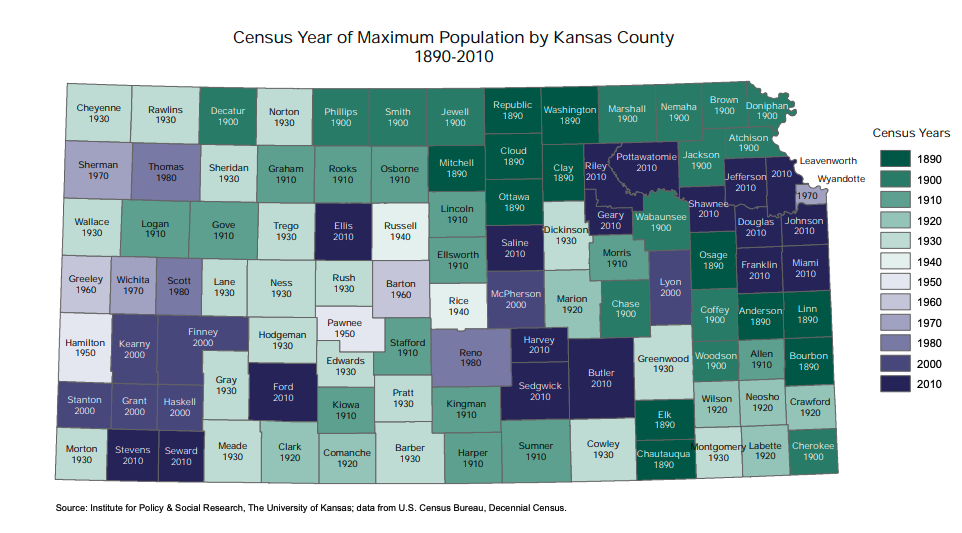
LAWRENCE — Sixty-eight of 105 counties in Kansas peaked in population before the Dust Bowl. The most recent Kansas Statistical Abstract includes this and other interesting facts about Kansas.
The Institute for Policy & Social Research at the University of Kansas recently published the 53rd Edition of the Kansas Statistical Abstract, which contains social and economic data broken down by state, county and city.
“It is important for business and community leaders as well as policymakers to understand the changing demographic, social and economic characteristics of Kansas,” said Genna Hurd, IPSR associate researcher and KSA editor. “The KSA covers data on Kansas from climate to crime, parks to population, and energy to employment. We are honored that IPSR and KU have been able to provide this service to the people of the state for more than 50 years.”
This year’s KSA presents several new data visualizations.
“Our maps and graphs bring the data to life to illustrate patterns across the state,” said Xanthippe Wedel, IPSR senior research data engineer and State Data Center lead.
These visualizations reflect ongoing areas of interest for Kansans, such as a county-by-county look at the average small business loan amount at origination and a map of natural attractions and scenic byways in Kansas. And, with a presidential election coming up in 2020, one new map shows voter participation rates in the United States, by state, for the November 2016 election.
A new graph shows poverty rates by state and compares rates from 2011 to rates from 2017. The Kansas poverty rate increased to 14.7 percent in 2017, putting Kansas in the top 10 among states for the highest poverty rate.
More sobering data includes a map of infant mortality rates in Kansas by county and life expectancy at birth in Kansas by county. According to the data behind the life expectancy map, young children in Johnson County have a life expectancy that is nearly 8 years longer than their peers in Comanche County.
Each year, the KSA is compiled from state and federal data sources ranging from the Kansas Board of Regents to the Census Bureau. It is available at no cost from the IPSR website at https://ipsr.ku.edu/ksdata/ksah/.
“Working on the KSA has been an incredible and unique experience. I am lucky to be involved in research and data collection at IPSR, and I think the KSA showcases how useful this research can be on a local, state and national level,” said Abigail Byrd, IPSR student research assistant and KU 2019 Student Employee of the Year.
Illustration: Map showing Census year of maximum population for each county in Kansas. In Linn, Bourbon, Anderson, Osage, Elk, Chautauqua, Washington, Clay, Republic, Cloud, Ottawa and Mitchell counties, the maximum population census was in 1890. In Leavenworth, Johnson, Miami, Jefferson, Douglas, Franklin, Shawnee, Pottawatomie, Riley, Geary, Butler, Saline, Harvey, Sedgwick, Ellis, Ford, Stevens and Seward counties, the maximum population census was in 2010. Data sources available in Population in Kansas, by County, 1860 – 1970 (https://ipsr.ku.edu/ksdata/ksah/population/2pop16.pdf) and Population and Population Change in Kansas, by County, 1980 – 2010 (https://ipsr.ku.edu/ksdata/ksah/population/2pop12.pdf).
History commentary written by Fort Hays State professor

FHSU University Relations
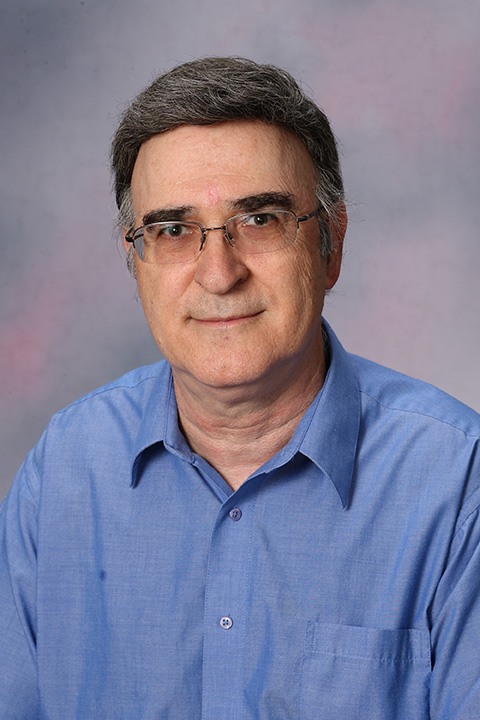
Dr. Raymond Wilson, professor emeritus of history and former chair of the History Department, wrote an invited commentary for “Spirit of the Indian Warrior,” edited by Michael Oren Fitzgerald and Joseph A. Fitzgerald.
This collection contains observations and speeches by American tribal leaders providing insights into their values, spirituality and understanding of the changes that were imposed on them from encroaching Europeans.
Warriors fought for their territory and defended against raids from other tribes and, later, American military. These Great Plains Indian warrior societies maintained cultural order and were the peacekeepers and disciplinarians of native society.
“The book is beautifully illustrated and contains profound comments by Indian warriors explaining the reasons they went to war,” Wilson said.
“Using today’s appropriate statement often spoken to our U.S. military, ‘thank you for your service,’ can indeed be applied to Indian combatants engaged in warfare to protect their loved ones and ways of life,” he said
The book is available now from World Wisdom Publishers.
🎥 Watch last week’s TriSpective event from Grow Hays


On Sept. 23, Grow Hays hosted TriSpective at BriefSpace, 219 W. 10th.
Speakers were Paul McDonald, Kris Munsch and Mike Keller. Watch the event below.
Portion of Main will be closed this week for repairs

Beginning at 8 a.m. Monday, the 1800 block of Main will be closed to through traffic for pavement repairs.
Repairs are expected to be completed by the end of the day on Wednesday.
For more information, call (785) 628-7350.
🎥 Green & Growing 2019: Dealing with broadleaf weeds

If you are having problems with dandelions, listen to these helpful tips about broadleaf weed prevention.
Tigers roll to big win over Missouri Southern State



HAYS – After a sluggish start offensively, Fort Hays State scored 28 points over a seven minute stretch of the second and third quarters and cruised to a 44-3 win over Missouri Southern State in front of 5,832 on cool damp evening at Lewis Field. The Tigers have won two straight following an 0-2 start. The Lions fall to 1-3 under first year head coach Jeff Sims.
The Tiger defense was solid from start to finish, picking off four Lions passes and had three stops on fourth down. The Lions only points came on a 30-yard Riley Hathorn field goal late in the third quarter. They had seven tackles for loss an four sacks, two from Drew Harvey who led them with 12 tackles. Hayden Kreutzer had two interceptions with Tanner Hoekman and Isaiah Creal-Musgray getting the others.
Five of Fort Hays State’s first seven possessions started inside Lions territory, but they were held to a pair of 41-yard Dante Brown field goals until Manny Ramsey’s 17-yard touchdown catch from Chance Fuller with 5:21 to play in the second quarter.
Harley Hazlett then tip-toed down the Tiger sidelines on a 51-yard screen pass for a touchdown with 4:16 left in the half to push the lead to 20-0.
Te’Corey Tutson’s 93-yard kickoff return to open the third quarter gave the Tigers the ball at the MSSU 3-yard line setting up a 3-yard touchdown pass from Fuller to Hazlett. The two would connect on a 22-yard strike following a Hayden Kreutzer interception to give FHSU a 34-0 lead with 13:25 to play in the third.
Hazlett would finish with eight receptions for a career-high 123 yards and a three touchdowns.
D.J. Hickman, who rushed for 90 yards on 16 second half carries, scored on a 3-yard run with 9:27 left in the third to five the Tigers a 41-0 lead.
Chance Fuller completed 20 of 36 passes for 255 yards and four touchdowns and one interception. Charles Tigner rushed for 87 yards on 17 carries.
FHSU finished with 437 total yards of offense, 182 on the ground, and 255 through the air. The Lions had 344 yards, 64 on the ground and 280 through the air.
Missouri Southern’s Jacob Park threw for 173 yards on 22-of-48 passing with four interceptions. Sean Kelly completed 7-of-16 passes for 107 yards before leaving with an apparent severe leg injury in the second half.
The Tigers travel to Edmond, Okla. to play Central Oklahoma Saturday (Oct. 6) at 1 p.m. The Bronchos dropped to 2-2 following a 59-10 loss at No. 7 Northwest Missouri State.
K-State drops Big 12 opener at Oklahoma State
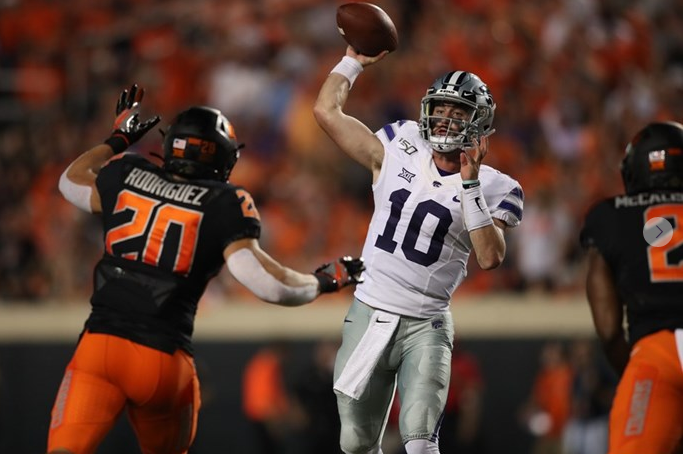
STILLWATER, Okla. (AP) — Chuba Hubbard ran for 296 yards and a touchdown on just 25 carries, and Oklahoma State shut down No. 24 Kansas State’s own vaunted rushing attack in a weather-delayed 26-13 victory Saturday night.
Hubbard hardly carried at all in the first quarter for the Cowboys (4-1, 1-1 Big 12), who built a 13-0 lead when the game was halted more than an hour in the second quarter due to lightning. But the breakout star finished with runs of 53, 84 and 44 yards in his dominant performance.
Spencer Sanders added 153 yards passing and a touchdown for Oklahoma State. Most of that went to Tylan Wallace, who hauled in eight passes for 145 yards.
Skylar Thompson was 11 of 23 for 118 yards for the Wildcats (3-1, 0-1), who were coming off a bye following their big win at Mississippi State. But any momentum they gained from their foray into SEC country was wiped out by their return to the Big 12.
By the time lightning hit and the officials ordered everyone off the field, the Cowboys had a 208-32 edge in offensive yardage. And when the game resumed, Kansas State kicked a field goal only for Oklahoma State to answer with a touchdown drive to take a 16-3 lead into halftime.
Hubbard added his 84-yard touchdown run in the third quarter before the Wildcats tacked on a field goal by Blake Lynch and a short touchdown run by James Gilbert to make it a game.
Oklahoma State added a field goal in the closing seconds when the outcome was already decided.
TAKEAWAY
Kansas State entered the game 10th in the nation in rushing, averaging 280 yards, but struggled for most of this one. Through the first half, new coach Chris Klieman’s team gained just 18 yards on 13 carries, and had just 68 heading into the final couple minutes of the third quarter. In the end, the Wildcats wound up with 126 yards on 32 carries.
Oklahoma State had issues capitalizing in the red zone in its previous game, a 36-30 loss at No. 11 Texas. And once again, the Cowboys could not punch the ball in from inside the 20. It was a pair of turnovers and a turnover-on-downs against the Longhorns, while it was three field goals against Kansas State. The only difference Saturday night was the outcome.
Kansas State returns home to take on Baylor next Saturday.
Oklahoma State heads to Lubbock next Saturday to face Texas Tech.