We have a brand new updated website! Click here to check it out!

Organic certification cost share program accepting applications

KDA 

MANHATTAN — The Kansas Department of Agriculture has funds available for the national Organic Certification Cost Share Program (OCCSP). Through this program, farms, ranches and businesses that produce, process or package certified organic agricultural products may be reimbursed for eligible expenses.

The purpose of the OCCSP is to defray the costs of receiving and maintaining organic certification under the National Organic Program. The program allows state agencies to provide reimbursement to certified organic operators for up to 75% of the operation’s total allowable certification costs, up to a maximum of $750 per certification scope. Scopes include the areas of crops, livestock, wild crops and handling (i.e., processing).

The U.S. Department of Agriculture Farm Service Agency administers two organic certification cost share programs, and awards the OCCSP funds to eligible state agencies that serve as administering entities who work directly with organic operations to reimburse organic certification costs. The current period of qualification for organic operations seeking reimbursements is from Oct. 1, 2018, through Sept. 30, 2019, and applications will be accepted through December 15, 2019, or until all funds are expended, whichever comes first.

KDA is committed to serving all Kansas farmers, including lending support to those who wish to market and sell their products as certified organic. For more information, go to the KDA website at agriculture.ks.gov/organic or contact KDA economist Peter Oppelt at [email protected] or 785-564-6726.

Number of abortions in US falls to lowest since 1973

NEW YORK (AP) — The number and rate of abortions across the United States have plunged to their lowest levels since the procedure became legal nationwide in 1973, according to new figures released over the past week.

The report from the Guttmacher Institute, a research group that supports abortion rights affiliated with Planned Parenthood, counted 862,000 abortions in the U.S. in 2017. That’s down from 926,000 tallied in the group’s previous report for 2014, and from just over 1 million counted for 2011.

Guttmacher is the only entity that strives to count all abortions in the U.S., making inquiries of individual providers. Federal data compiled by the Centers for Disease Control and Prevention excludes California, Maryland and New Hampshire.

The new report illustrates that abortions are decreasing in all parts of the country, whether in Republican-controlled states seeking to restrict abortion access or in Democratic-run states protecting abortion rights. Between 2011 and 2017, abortion rates increased in only five states and the District of Columbia.

One reason for the decline in abortions is that fewer women are becoming pregnant. The Guttmacher Institute noted that the birth rate, as well as the abortion rate, declined during the years covered by the new report. A likely factor, the report said, is increased accessibility of contraception since 2011, as the Affordable Care Act required most private health insurance plans to cover contraceptives without out-of-pocket costs.

According to the report, the 2017 abortion rate was 13.5 abortions per 1,000 women aged 15-44 — the lowest rate since the Supreme Court’s 1973 Roe v. Wade decision legalizing abortion. Following that ruling, the number of abortions in the U.S. rose steadily — peaking at 1.6 million in 1990 before starting a steady, still-continuing decline. The abortion rate is now less than half what is was in 1990.

Guttmacher noted that almost 400 state laws restricting abortion access were enacted between 2011 and 2017, but it said these laws were not the main force behind the overall decline in abortions. It said 57% of the nationwide decline occurred in the 18 states, plus the District of Columbia, that did not enact any new restrictions.

Between 2011 and 2017, the number of clinics providing abortion in the U.S. declined from 839 to 808, with significant regional disparities, the report said. The South had a decline of 50 clinics, including 25 in Texas, and the Midwest had a decline of 33 clinics, including nine each in Iowa, Michigan and Ohio. By contrast, the Northeast added 59 clinics, mostly in New Jersey and New York.

Over that period, the abortion rate dropped in Ohio by 27% and in Texas by 30%, but the rate dropped by similar amounts in states that protected abortion access, including California, Hawaii and New Hampshire.

Areas with the highest abortion rates in 2017 were the District of Columbia, New Jersey, New York, Maryland and Florida. Rates were lowest in Wyoming, South Dakota, Kentucky, Idaho and Missouri — many women from those five states go out of state to obtain abortions .

One significant trend documented in the report: people who have abortions are increasingly relying on medication rather than surgery. Medication abortion, making use of the so-called abortion pill, accounted for 39% of all abortions in 2017, up from 29% in 2014.

The report, which focuses on data from 2017, does not chronicle the flurry of sweeping abortion bans that were enacted earlier this year in several GOP-controlled states, including a near-total ban in Alabama and five bills that would ban abortion after a fetal heartbeat is detected, as early as six weeks into pregnancy. None of those bans has taken effect; their backers hope that litigation over the laws might eventually lead to a Supreme Court ruling weakening or overturning Roe v. Wade.

Guttmacher’s president, Dr. Herminia Palacio, said abortion restrictions, regardless of whether they lead to fewer abortions, “are coercive and cruel by design,” with disproportionate impact on low-income women.

However, the push for tougher restrictions continues. Just last week, Texas Right to Life and some allied groups urged Gov. Greg Abbott to call a special session of the Legislature to “abolish every remaining elective abortion” in the state.

The report comes amid upheaval in the federal family planning program, known as Title X. About one in five family planning clinics have left the program, objecting to a Trump administration regulation that bars them from referring women for abortions. Title X clinics provide birth control and basic health services for low-income women.

“If your priority is to reduce abortions, one of the best things you can do is make sure that women have access to high-quality, affordable and effective methods of birth control,” said Alina Salganicoff, director of women’s health policy for the nonpartisan Kaiser Family Foundation.

Teen enters plea deal in fatal Kansas drug sale gun fight

HUTCHINSON— The second of two men accused of murder for the shooting death of a Hutchinson man during a drug sale waived his right to a jury trial Friday and entered a plea in the case.

Delaney-photo Reno County
Garcia -photo Reno County

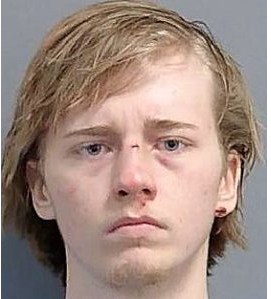
Tristan Delaney, 18, Hutchinson, entered a plea to reckless second degree murder in the death killing of Norman Cushinberry.  His co-defendent 26-year-old Curtis Garcia entered a similar plea agreement September 13.

Delaney and Garcia were originally charged with first-degree murder for the killing.

Investigators said the crime involved Delaney and Cushinberry purchasing drugs. According to court testimony, Delaney and Garcia had been texting the day of the shooting about the purchase of around a quarter pound of marijuana.

There is also some indication over phony money being involved. Garcia claims he was there to sell an Xbox and not drugs.

According to court testimony, Delaney came out of the home in the 500 block of Washington Street in Hutchinson with a shotgun. That gun was later found near Cushinberry.

Police found Cushinberry in the street suffering from gunshot wounds to his upper chest. Efforts to revive him were unsuccessful.

Garcia is scheduled to be sentenced on Oct. 25. Delaney will be sentenced on Nov. 1.

New season of live theater comes to FHSU stage Oct. 3

FHSU University Relations

A season of comedy is planned for the 2019-20 season of theatre at Fort Hays State University, beginning Oct. 3 with “The Drowsy Chaperone,” a parody of 1920s-style musicals starring Man in Chair.

The season progresses through Ken Ludwig’s “Comedy of Tenors,” and Jane Austen’s “Pride and Prejudice,” as adapted by Kate Hamill for a cynical and modern but funny sensibility by Kate Hamill.

The season-ending opera, scheduled for April, has not yet been selected.

“It has been our privilege to delight and entertain people through the magic of live theatre,” said Tomme Williams, director of FHSU Theatre.

“We come to the theatre to unite as artists and audiences in performances that create unique and inspiring experiences, taking us out of our everyday lives and into the realm of imagination,” she said. “This season is about exactly that: coming together – whether in celebration, hope, faith, love, perseverance, or risk, the stories of this season are of people reaching out and trying to overcome divides between each other.”

All productions are in the Felten-Start Theatre in Malloy Hall on the FHSU campus.

The Drowsy Chaperone
Oct. 3, 4, 5, Thursday, Friday, Saturday, 7:30 p.m. curtain
Sunday, Oct. 6, matinee at 2:30 p.m.
Winner of five Tony Awards, “The Drowsy Chaperone” is a loving valentine to musical comedy, hosted by the narrator and theatre aficionado Man in Chair, who invites the audience to listen to his favorite LP record of a fictitious 1928 musical, which comes magically to life around him.

The musical is full of the song and dance and the plot twists that were features of 1920s musicals.

A Comedy of Tenors
Nov. 14, 15, 16, Thursday, Friday, Saturday, 7:30 p.m. curtain
Sunday, Nov. 17, matinee at 2:30 p.m.
Comic genius Ken Ludwig wrote this sequel to his 1989 Tony Award winning comedy “Lend Me a Tenor.” The setting is 1930s Paris with one hotel suite, four tenors, two wives, three girlfriends, and a stadium full of screaming fans. The stage is set for the concert of the century – as long as producer Henry Saunders can keep Italian superstar Tito and his hot-blooded wife, Maria, from causing runaway chaos.

This ride is full of mistaken identities, bedroom hijinks and farcical delight.

Pride and Prejudice, adapted by Kate Hamill
March 5, 6, 7, Thursday, Friday, Saturday, 7:30 p.m. curtain
Sunday, March 8, matinee, at 2:30 p.m.
This bold, surprising and boisterous retelling of Jane Austen’s “Pride and Prejudice” puts a modern outlook in Georgian dress. This “Pride and Prejudice” for a new era explores the absurdities and thrills of finding your perfect (or imperfect) match in life. One of literature’s greatest tales of latent love has never been so theatrical and full of life.

Opera
April 17, Friday, 7:30 p.m. curtain
Sunday, April 19, matinee at 2:30 p.m.
Dr. Joseph Perniciaro, director of opera at Fort Hays State, has presented works spanning from Mozart to Bernstein.

Season ticket prices are $25 for students, up to age 18 or an FHSU student with ID; $30 for senior citizens, age 60 and up; and $50 for the public.

Individual tickets $10 for students or senior citizens and $15 for the public. For a complete listing, visit the website at www.fhsu.edu/music-and-theatre/arts-calendar. For more information, call 785-628-4533.

“Our goal is to bring the best theatre experience we can, so we ask everyone to please grab a friend and join us,” said Williams. “A spectacular season awaits and everyone is invited.”

🎥 Go Truck Go goes great in new location

By BECKY KISER
Hays Post

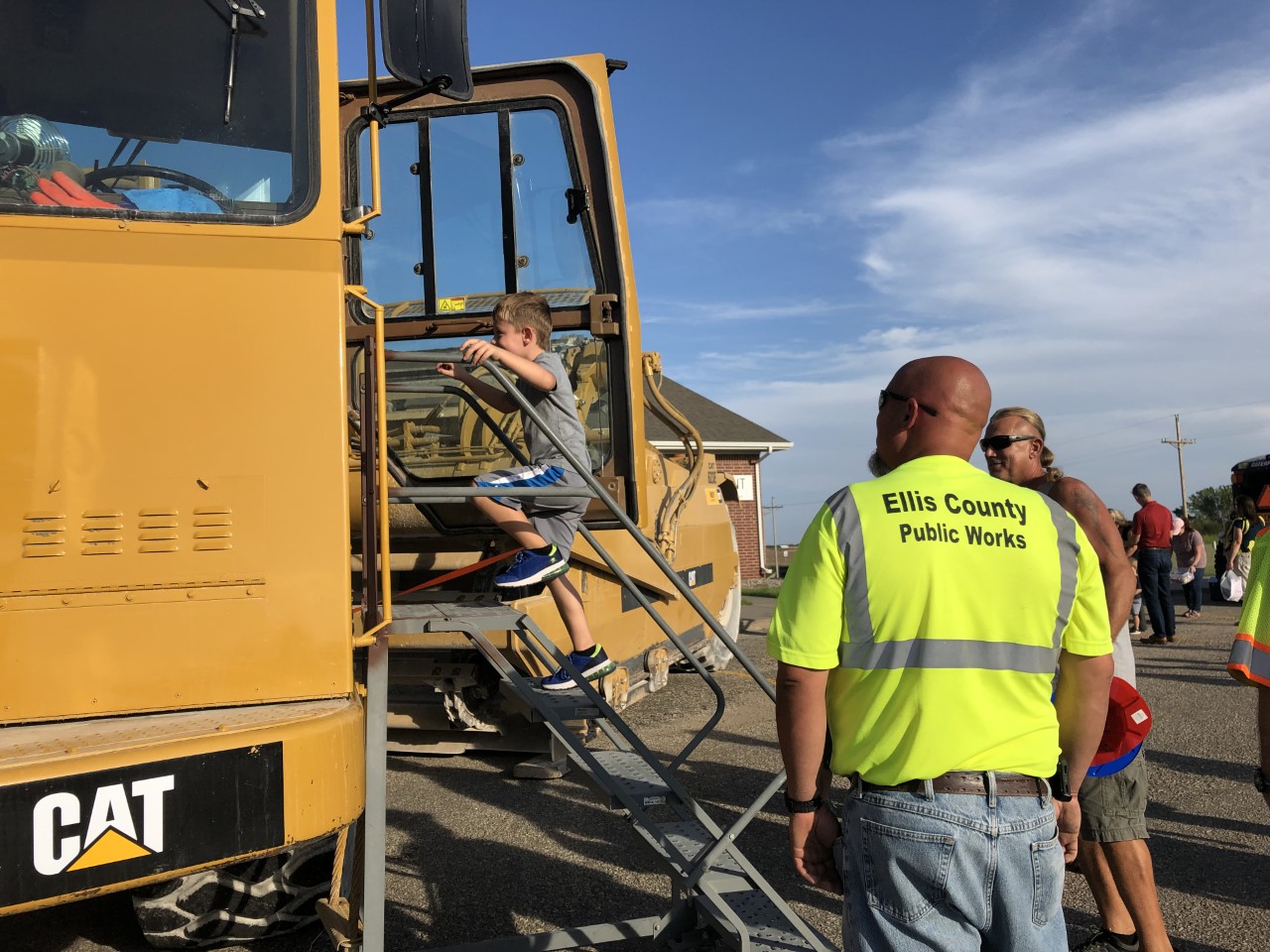
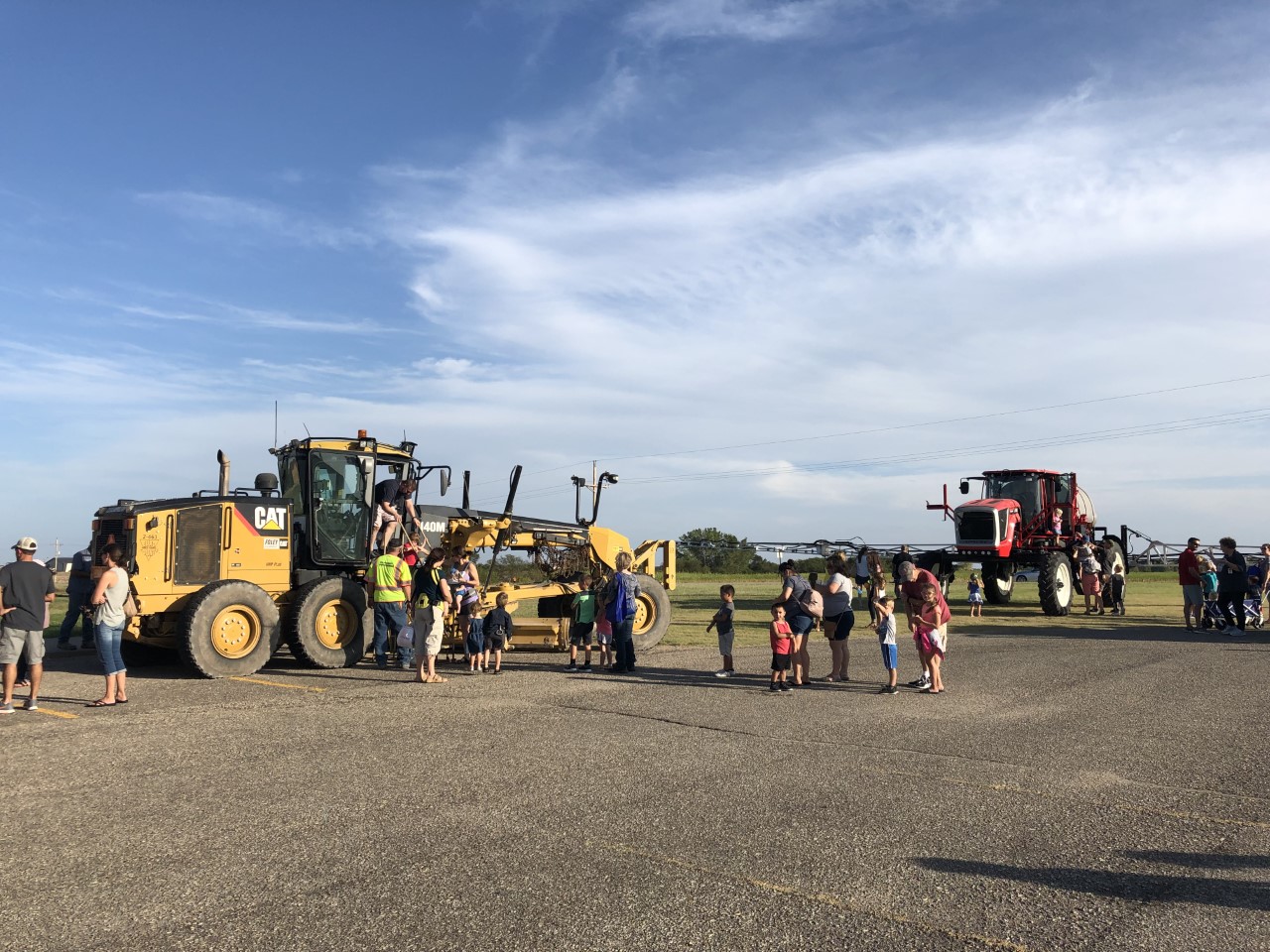
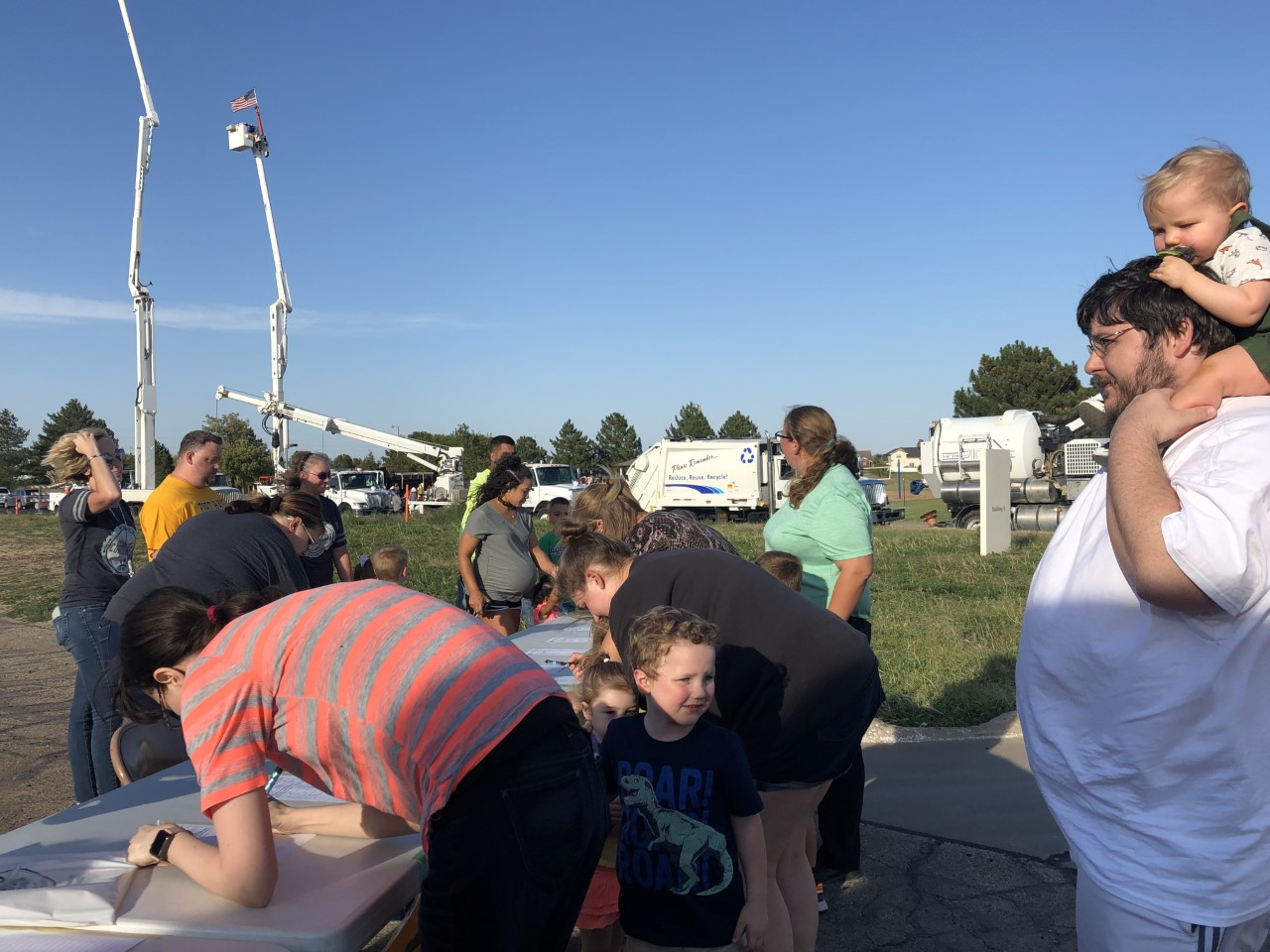
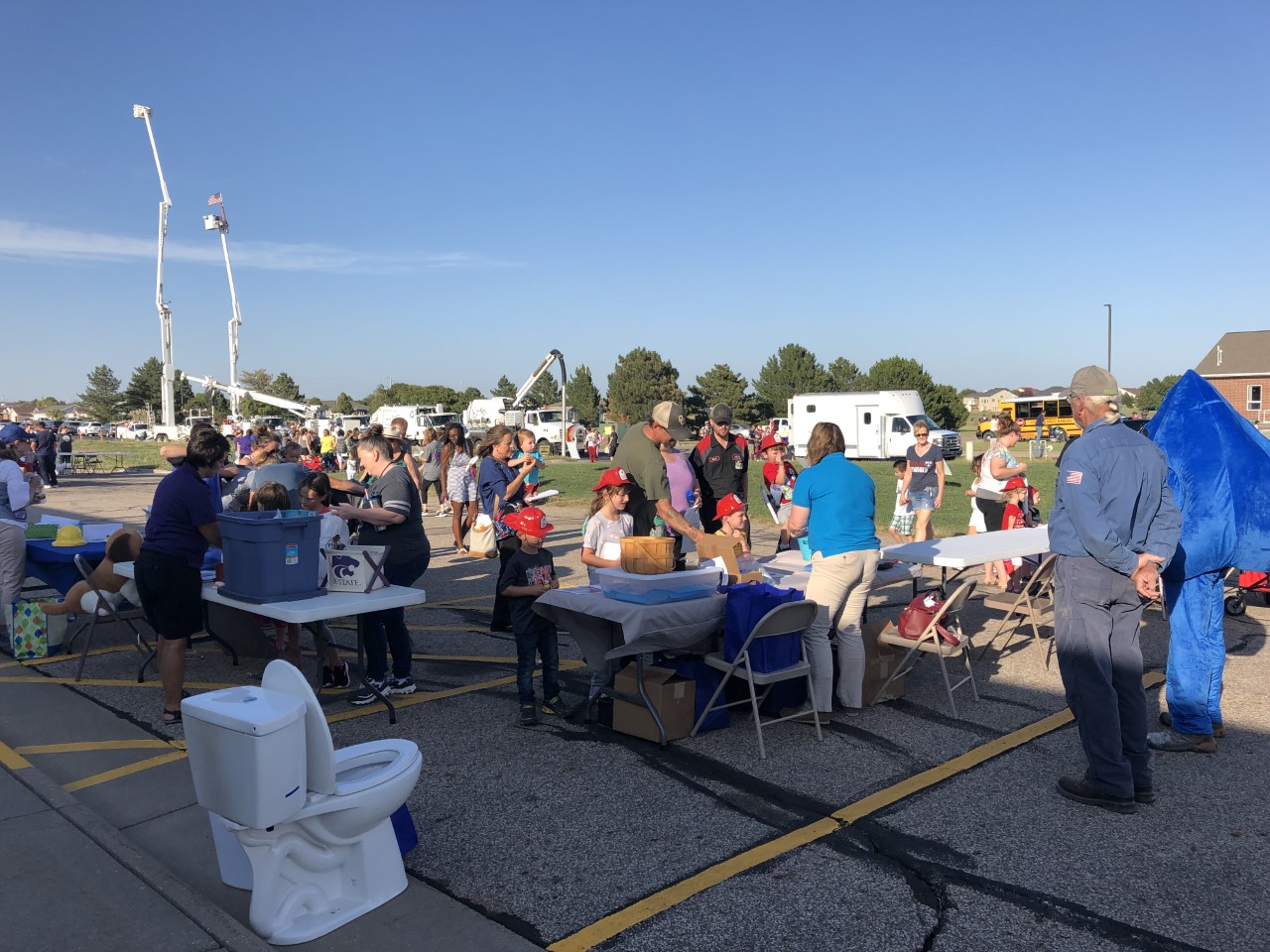
The parking lot was full and overflowed to neighborhood streets for Thursday’s Go Truck Go in Hays.

Children and their parents were invited to the popular annual event sponsored Hays USD 489 Early Childhood Connections for a closeup experience with large work vehicles — and their drivers — used in and around Hays.

The two-hour event was held for the first time at the former Oak Park Medical Complex, 2501 E. 13th, now home to all of the school district’s early childhood programs. The Hays school board will consider suggested new names for the four-building complex at its Monday meeting.

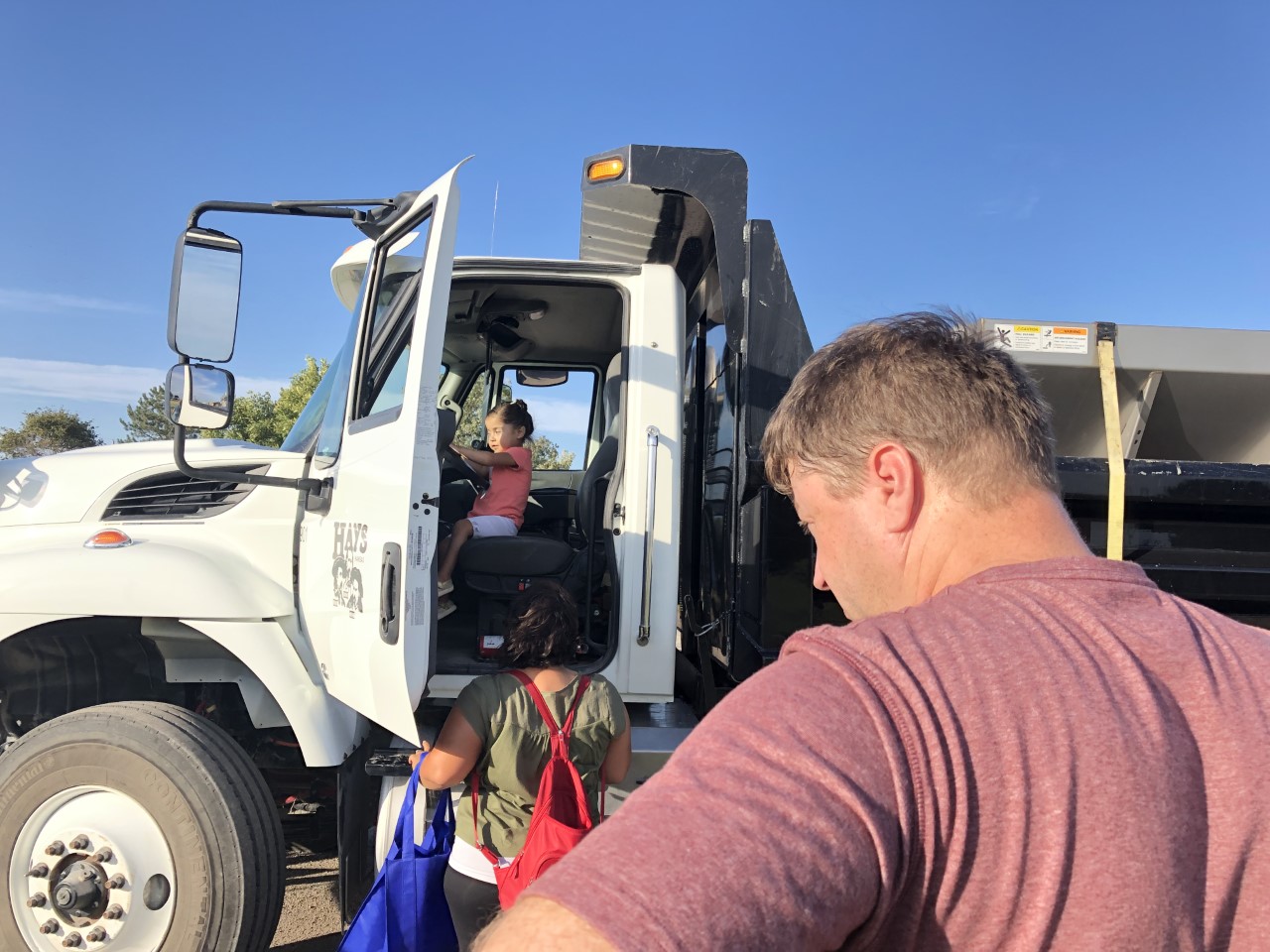
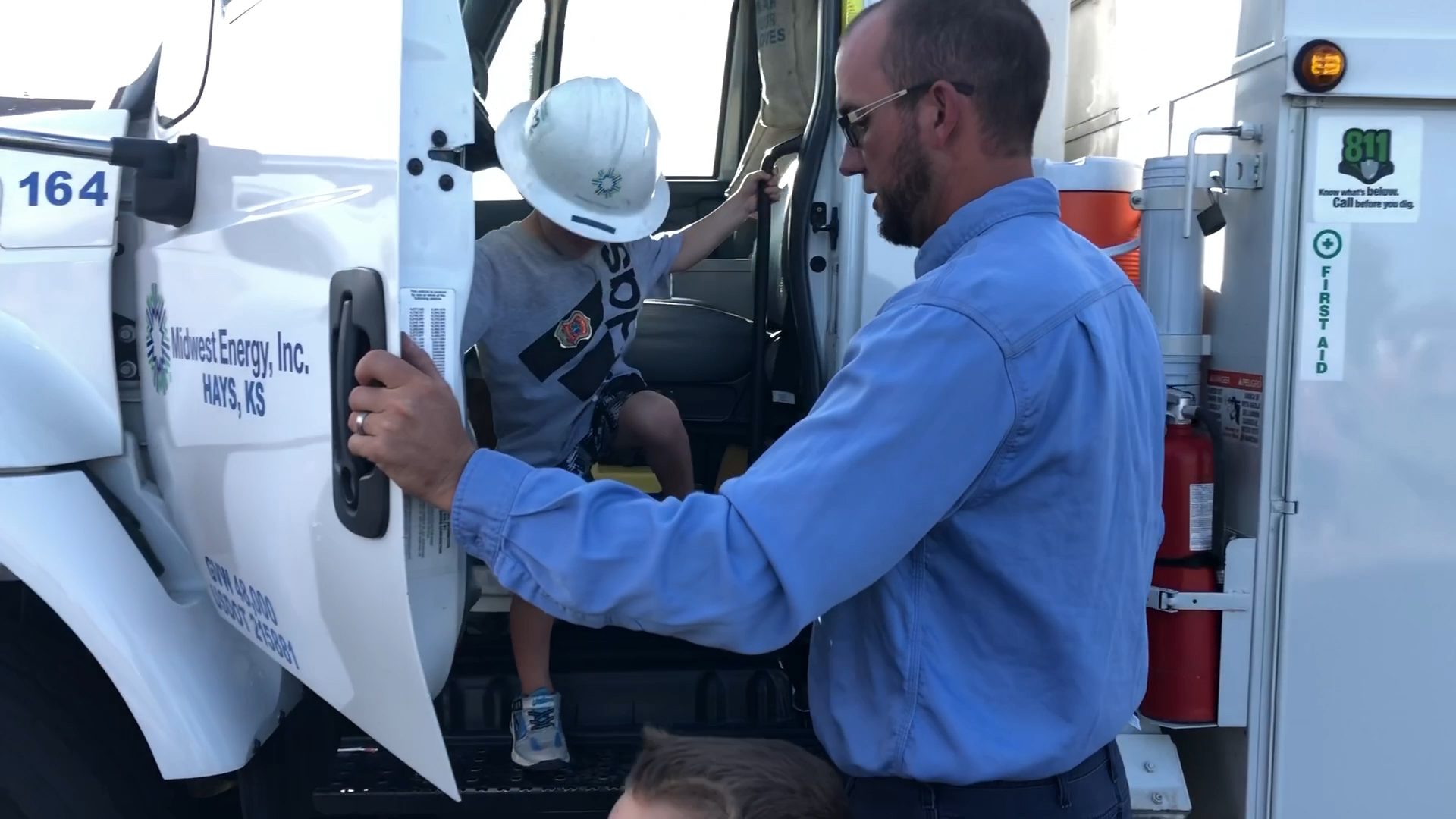
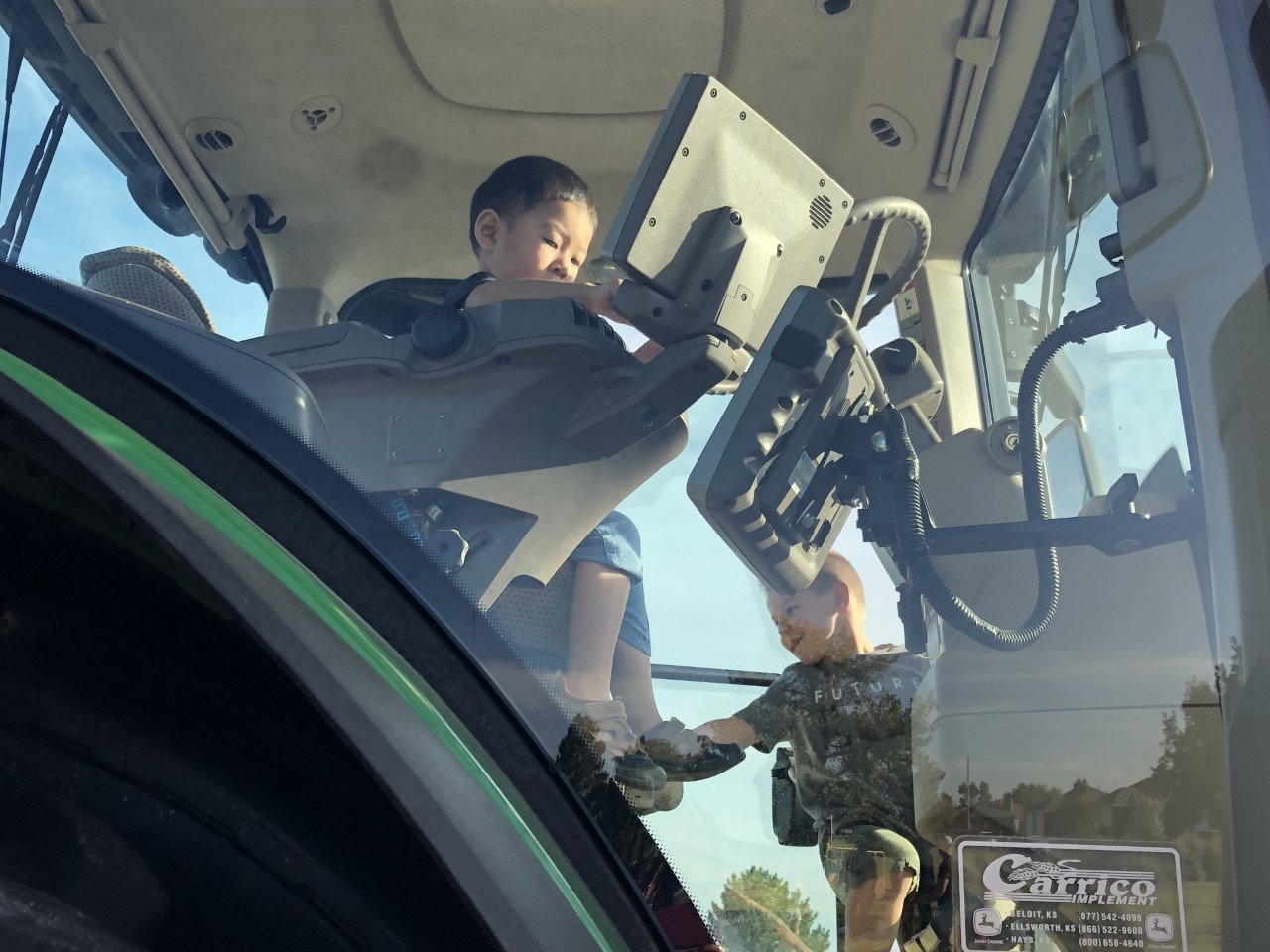
Youngsters got up close and personal with the operators of the huge vehicles who lifted the smallest kids up into high cabs while talking about their job and how the vehicle is used. Other children took pride in clambering up by themselves and posing for pictures taken by their parents.

The vehicles were parked on the east side of the school complex.

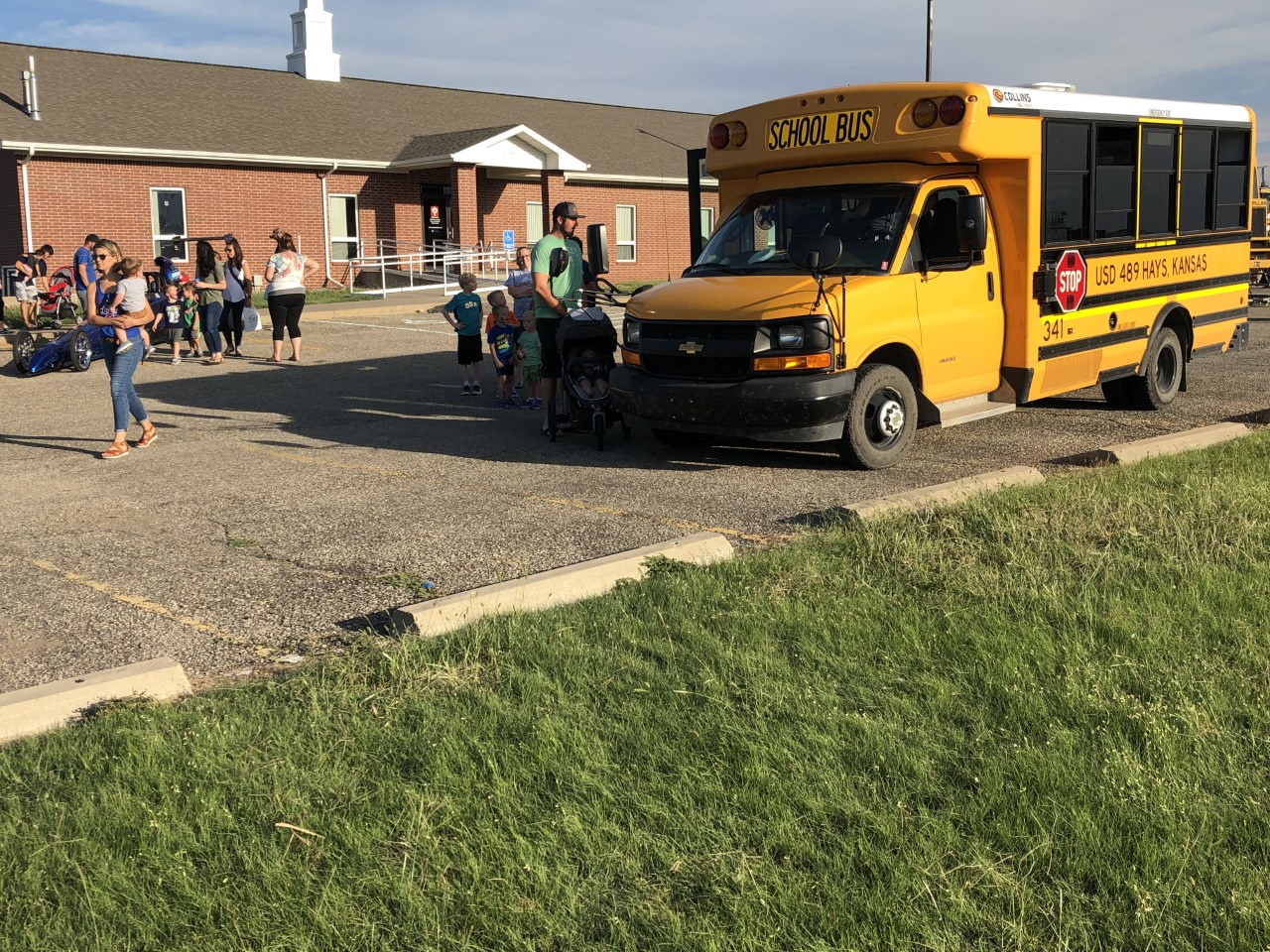
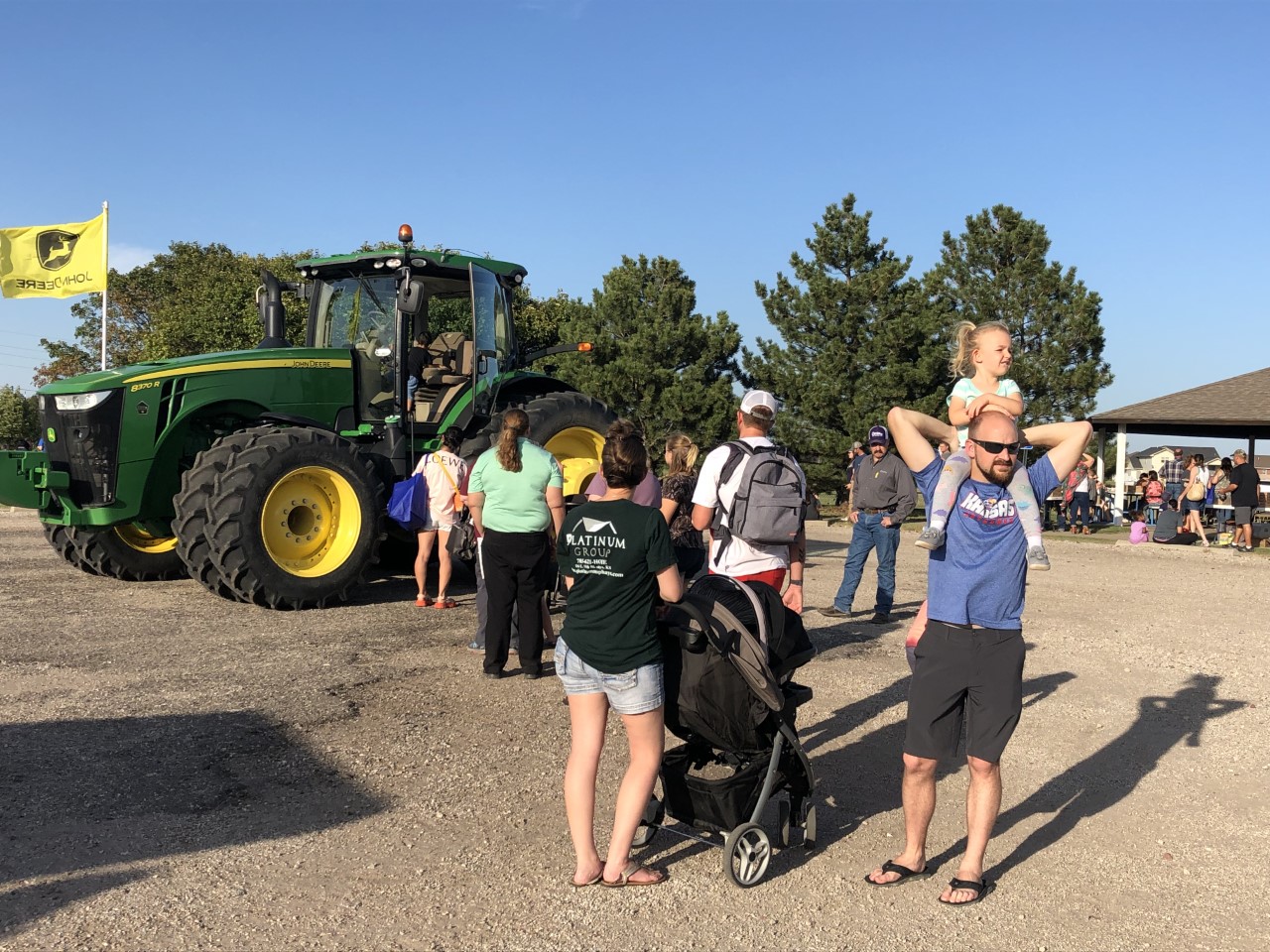
Walking alongside the vehicle lineup was also a lesson in learning colors as parents pointed out the bright red Hays fire truck, a yellow USD 489 school bus near a yellow Ellis County Public Works road grader, the John Deere green tractor from Carrico Implement, gleaming white Midwest Energy bucket trucks, and a blue semi from Simpson Farm Enterprises.

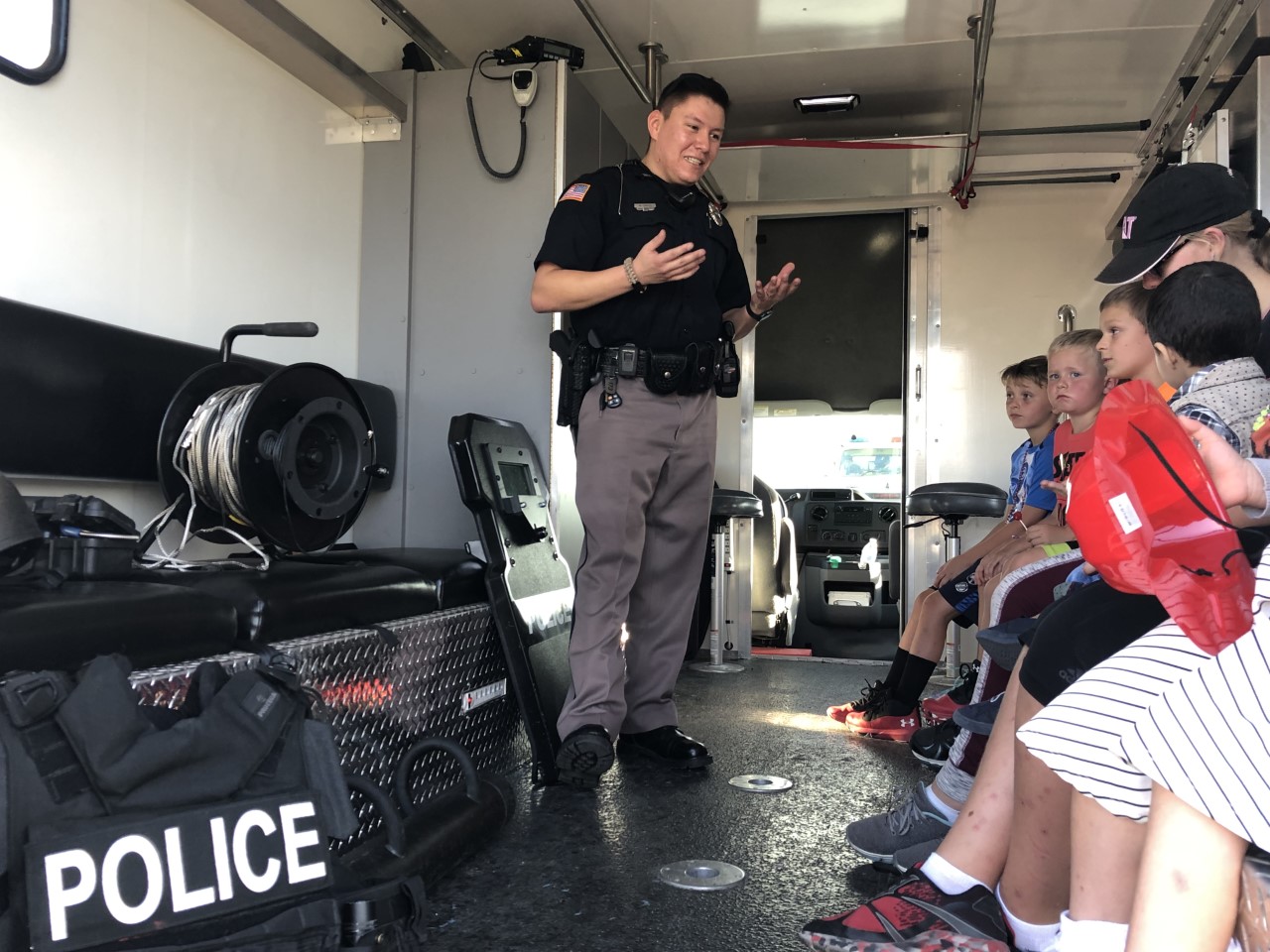
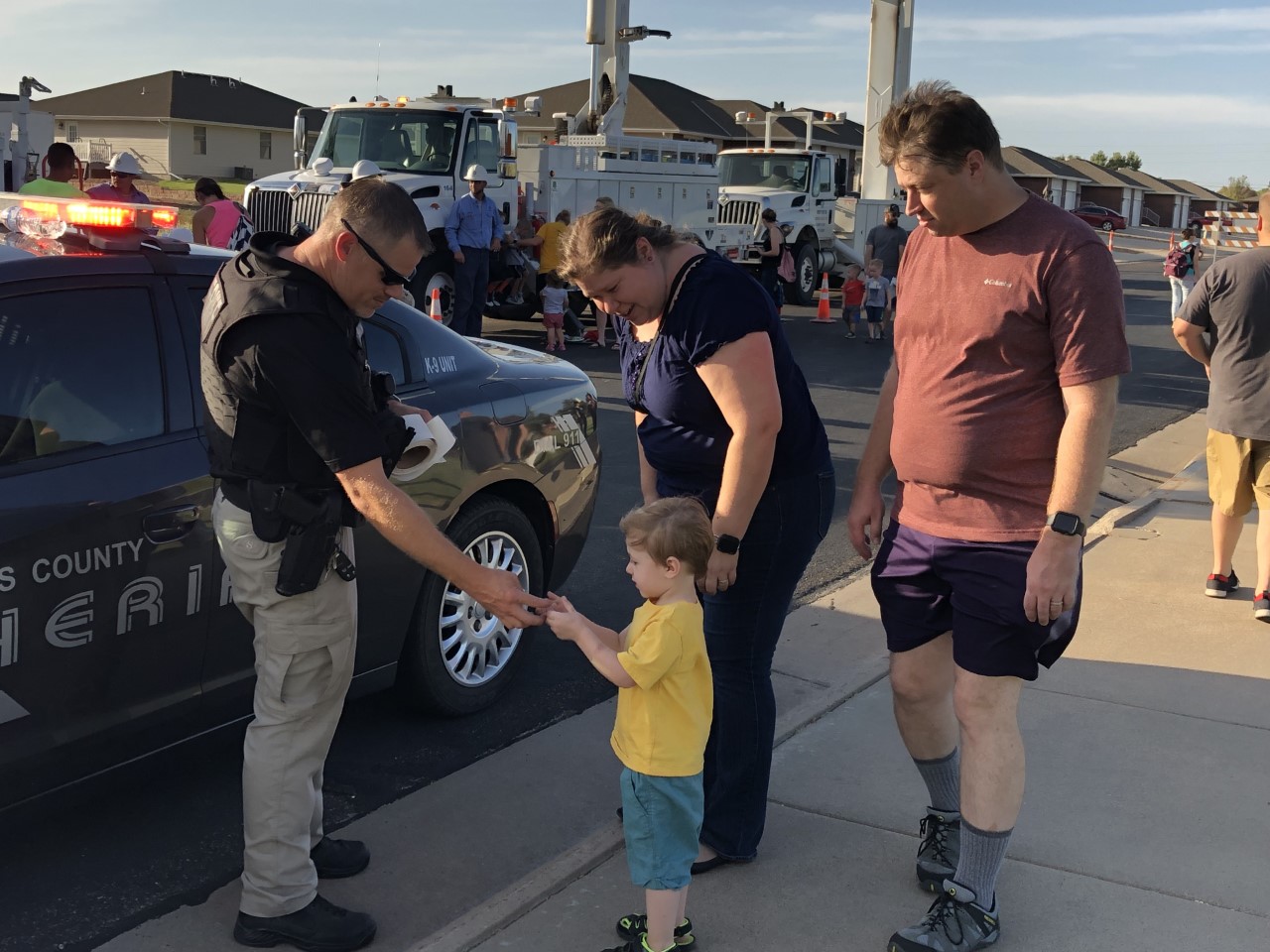
First responders from Ellis County showed curious youngsters the equipment aboard their fire truck, ambulance, and police and sheriff’s vehicles.

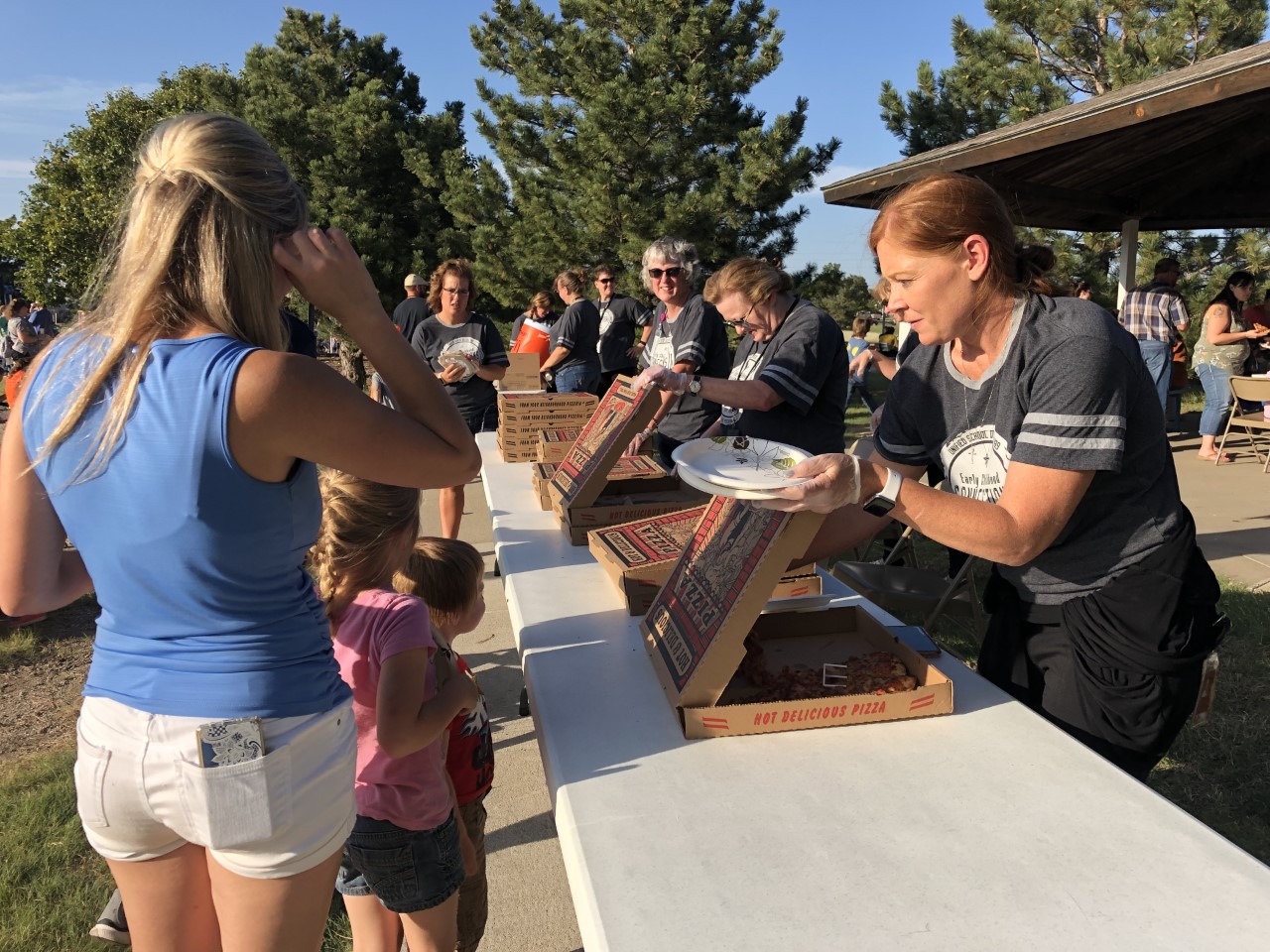
Free food and drinks were also available for the families, many of whom took advantage of the adjacent Kiwanis Park to enjoy a picnic.

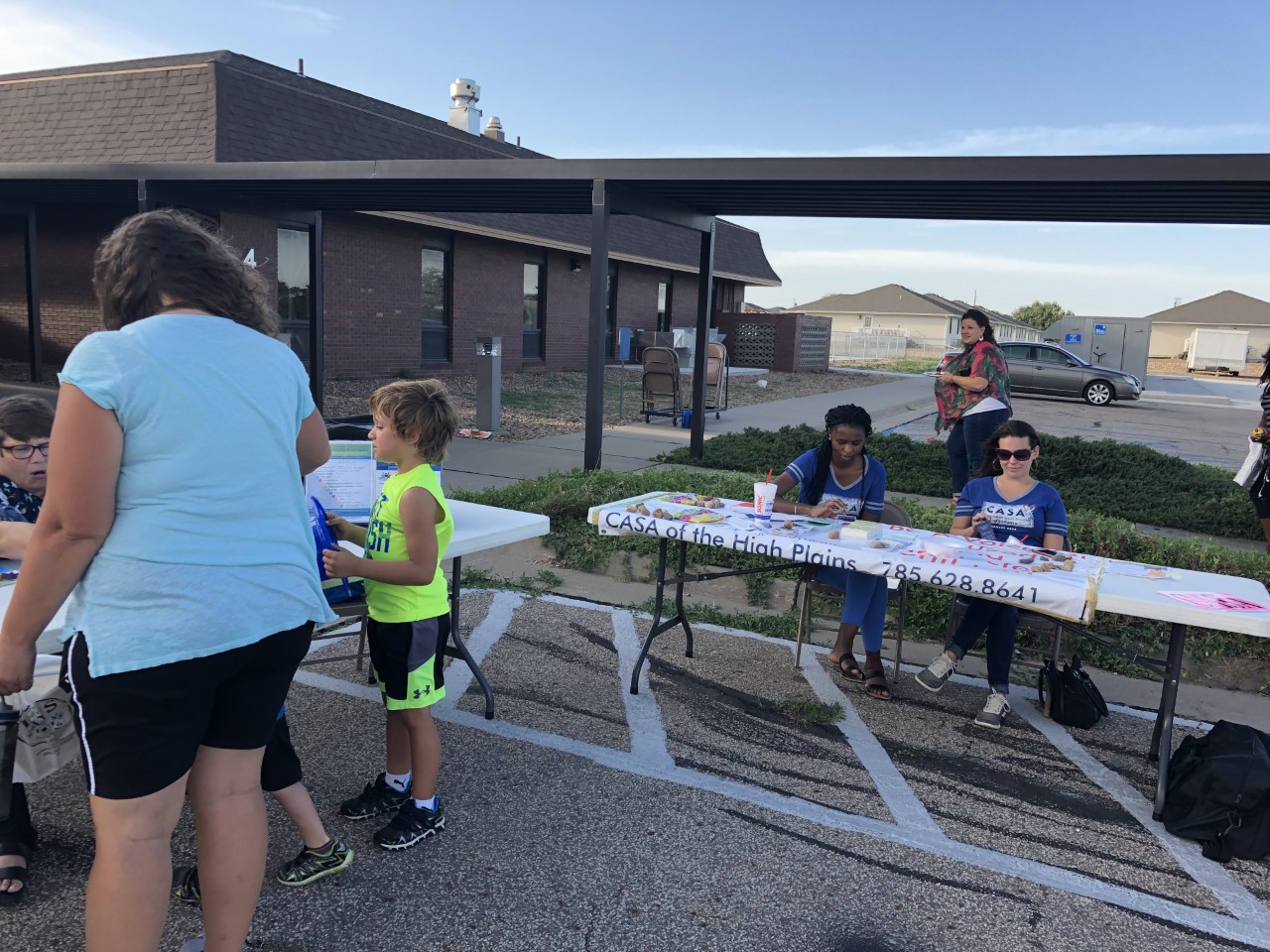
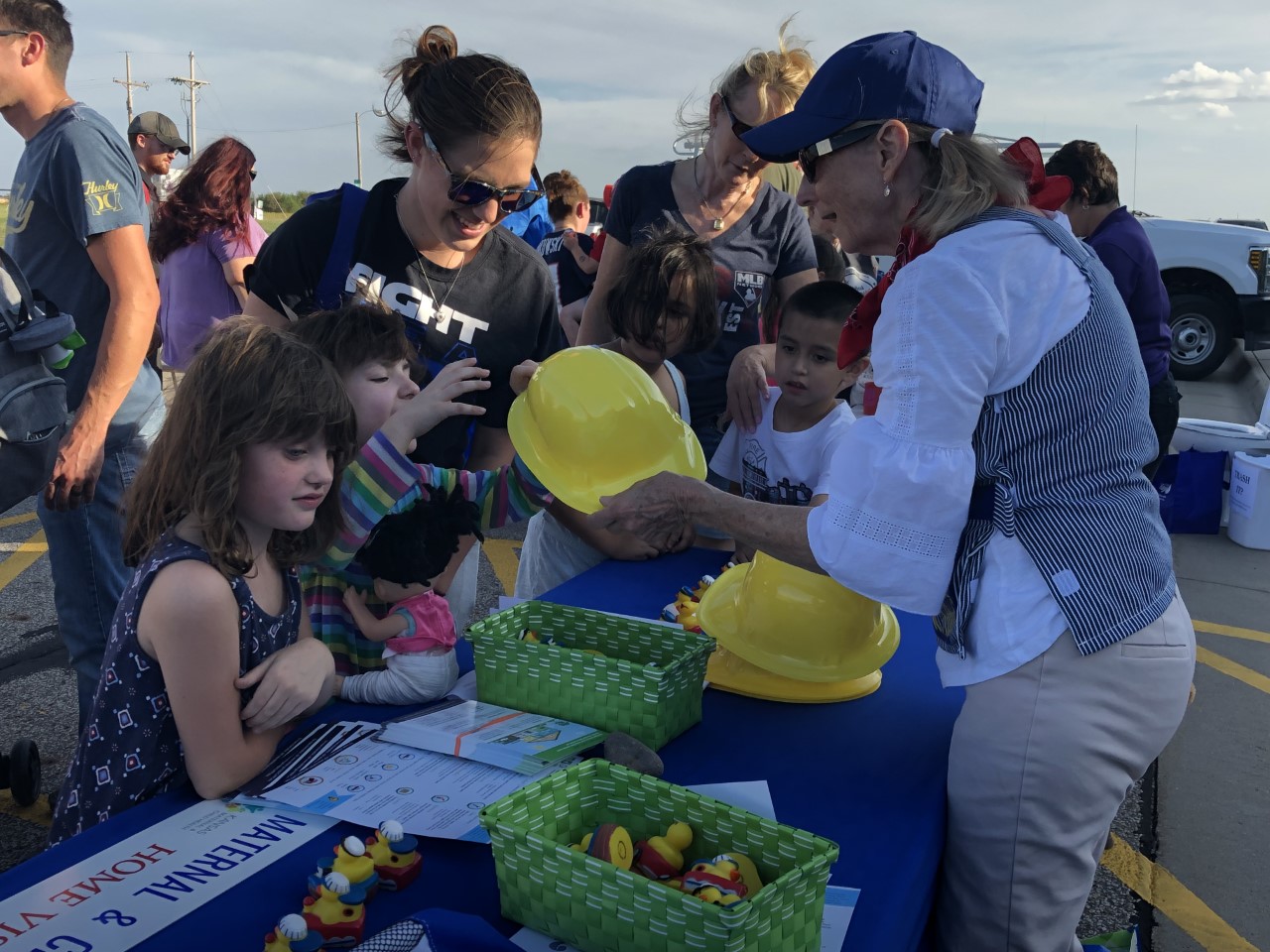
Several agencies provided information and giveaways from their groups including Girl Scouts, CASA of the High Plains, Cottonwood Extension District and the city of Hays Water Resources Department.

With Millions In Federal Aid At Stake, Kansas Urges Latinos Not To Skip 2020 Census


TOPEKA, Kansas  When Gov. Laura Kelly signed a proclamation recognizing Hispanic Heritage Month in Kansas this week, she hailed the culture and diversity that Latinos bring to the state. She also gave a serious warning. 

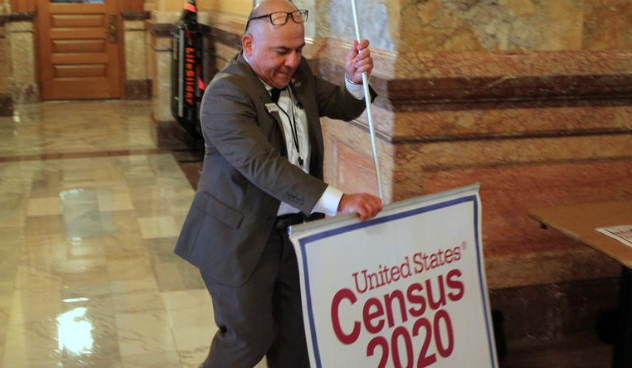
Carlos Urquilla-Diaz takes down a sign after a news conference at the Kansas Statehouse on Wednesday. He’s a partnership specialist with the U.S. Census and is traveling the state to talk about the importance of the count.
STEPHEN KORANDA / KANSAS NEWS SERVICE

If the state’s 350,000 Latinos don’t take part in the 2020 census, she said, Kansas could lose federal money and, potentially, representation in Congress.

The census approaches as the national immigration debate is wrapped in intense rhetoric, calls for building a wall on the southern border and an uptick in federal enforcement actions

“I’m concerned that they will be afraid to be counted,” Kelly said. “I just want to reassure them they have nothing to worry about. Their voice counts.”

That’s why it’s a top priority for the executive director of the administration’s Kansas Hispanic and Latino American Affairs Commission, Audé Negrete. 

She said there are multiple challenges: Census documents are printed in Spanish, but some Spanish-speakers may be nervous about talking to a census worker who doesn’t speak the language. She also is combating misconceptions that census data could be used by immigration enforcement.

“If they have a mixed-status family, they might not want the one person to be in danger if they were to answer the census,” she said.

Census data is confidential, and Negrete’s group has been working to let people know that there will not be a citizenship question on the form because the U.S. Supreme Court blocked it.

Why it matters

The federal government uses census data to determine how to distribute funding for everything from school lunches to transportation. Private developers analyze it when planning housing projects and new businesses. So, an inaccurate count could mean the state misses out on federal money and development.

“If only 20 people answer the census but 100 live in a town, we’re going to have resources for 20 but have to serve 100,” Negrete said.

Plus, state lawmakers use census data to redraw legislative districts, which will happen in 2022, and the federal government doles out seats in the U.S. House of Representatives based on the numbers.

Negrete’s group is holding listening sessions around Kansas to  get a feel for which issues are on the minds of Latinos. In general, people aren’t asking about the census, and Negrete said she’s bringing up the topic to get ahead of that knowledge gap. 

It’s not just state officials working to raise awareness and dispel concerns. The U.S. Census Bureau also has staff working in Kansas.

Carlos Urquilla-Diaz, a partnership specialist with the census, unfurled large banners and distributed printouts with census data ahead of Wednesday’s proclamation signing. He’s been traveling the state meeting with anyone who wants to know about the census.

“We bring information, we teach,” he said. “We go to different communities and we start with the highest elected official, in most cases, of that community.”

Kansas won’t have another shot to get an accurate count until 2030, and Negrete said it has long-term impacts.

“Elections are two years, four years, six years. The census is 10 years,” she said. “It affects everyone.”

Stephen Koranda is Statehouse reporter for the Kansas News Service. Follow him on Twitter @kprkoranda or email skoranda (at) ku (dot) edu.

Phi Delta Theta fraternity starting on FHSU campus

FHSU University Relations

Phi Delta Theta, an international fraternity, is establishing a new group on Fort Hays State University’s campus this semester.

Founded in 1848 at Miami University in Oxford, Ohio, by six men, the fraternity was built on three principles, friendship, sound learning and rectitude.

“We are excited to have Phi Delta Theta join our community,” said Stephen Hopson, coordinator of student engagement at FHSU. “They have a good reputation for being an organization that attracts a diverse array of students and helps support them through their college journey. We are excited to have Phi Delta Theta grow and strengthen the fraternity community.”

“Helping every individual to meet his true potential is the bedrock of the Phi Delta Theta fraternity,” said Austin Dean, a Phi Delta Theta leadership consultant.

“Rather than try to find young men to mold into some ideal, we celebrate the uniqueness of each individual,” he said. “Through encouragement, values, example and brotherhood, we empower every brother to exceed his personal expectations.”

Since its founding, Phi Delta Theta has initiated over 270,000 men and currently has 191 chapters and colonies in the United States and Canada.

Their national philanthropy of choice is the LiveLikeLou Foundation which is committed to making an impact on ALS research while it supports the children and families affected by ALS.

Lou Gehrig was a member of Phi Delta Theta during his college years at Columbia University. He went on to play for the New York Yankees and was later diagnosed with ALS. In honor and support of their brother, Phi Delta Theta’s across the nation raise money every year for research to find a cure for ALS.

Chapters also locate local ALS families and reach out to them to provide help and support in any way they can to the family.

Phi Delta Theta is looking for the opportunity to become a driving force for improvement on the FHSU campus and offer a different fraternity experience from those that currently exist.

“I became a founding father of Phi Delta Theta because I want to help give rise to a new set of leaders at FHSU. Leaders that are held accountable, have a strong sense or right and wrong, and push one another to become the best versions of themselves,” said Eiran Saucedo-Rodarte, a Wichita junior majoring in general studies.

“I joined Phi Delta Theta because it had an aspect of leadership to it which was inspiring and it gives you an opportunity to make your mark on campus by creating something different from the ground up,” said Jacob Quiggle, a Maize freshman majoring in history.

For more information about Phi Delta Theta, visit FuturePhiDelt.org.

Kansas man dies in ATV accident

LANE COUNTY — One person died in an accident just after 8p.m. Saturday in Lane County.

The Kansas Highway Patrol reported a Suzuki driven by Jason Penka, 44, Healy, was southbound leaving Healy on Dodge Road.

As the driver attempted to make left turn at County Road 200, the vehicle overturned an unknown number of times.

EMS transported Penka to the Lane County Hospital where he died. He was not wearing a helmet, according to the KHP.

New music series at FHSU to honor influential music couple

FHSU University Relations

Twenty-five years after she defected from the Soviet Union, Luba Edlina Dubinsky met and mentored a doctoral piano student who is now an associate professor of music at Fort Hays State University.

This year, a year after the death of Luba Edlina, Dr. Irena Ravitskaya and the Department of Music and Theatre at Fort Hays State University are beginning a classical music series in memory of Luba Edlina and her husband, Rostislav Dubinsky, who died in 1997.

“The Rostislav and Luba Edlina Dubinsky Classical Music Series is designed to play a distinctive role in the lives of our students and the community by cultivating classical music appreciation,” said Ravitskaya.

The series will feature musicians from around the world and across the United States, many of whom studied under the Dubinsky’s. While on campus, guest musicians will offer presentations and masterclasses.

The first concert of the series, 7:30 p.m. Friday, Sept. 27, in the Beach/Schmidt Performing Arts Center, will feature Ravitskaya, piano, Ben Cline, chair of the Department of Music and Theatre, cello, and a guest artist Sharon Stanis, violin. The concert is free.

Stanis is a founding member of the world famous Lafayette String Quartet. She studied violin and chamber music with Dubinsky at Indiana University. Currently Stanis teaches violin and coaches chamber music at the University of Victoria, Canada.

While attending Indiana University for her doctoral degree, Ravitskaya studied piano under Luba Dubinsky.

“She became a dear friend and mentor,” said Ravitskaya. “I would visit her once a year until her death, observing her lessons, going to concerts, listening to recordings, talking about music and life, and just enjoying every day spent with her.”

Born in the Soviet Union, Luba Edlina and Rostislav Dubinsky studied music at the Moscow State Tchaikovsky Conservatory. In the 1980s, they immigrated to the United States to teach at the Indiana University school of music.

The Dubinskys were founding members of the Dubinsky Duo and the Borodin Trio demonstrating chamber music at the highest international level.

“The Dubinskys brought a wealth of knowledge to their teaching, not only from their vast performing experience, but also because of their training by the foremost masters of the Russian school of violin and piano playing,” said Ravitskaya.

Other performances in the inaugural year of the Dubinsky Classical Music Series are:

• Saturday, Nov. 9: Mei-Hsuan Huang, originally from Taiwan, will play piano with Borivoj Martinic-Jercic, from Croatia, on violin. Both now teach at Iowa State University.

• Sunday, Nov. 17: Kristin Jonina Taylor is an Icelandic-American pianist who teaches at the University of Nebraska–Omaha.

• Sunday, April 5: Zsuzsa Kollar, is a piano teacher at the Liszt Ferenc Academy of Music in Budapest.

All concerts are free.

To help sponsor the Rostislav and Luba Edlina Dubinsky Classical Music Series, contact Irena Ravitskaya at [email protected].

Discovering wild medicine and foods on the Kansas prairie

FHSU University Relations

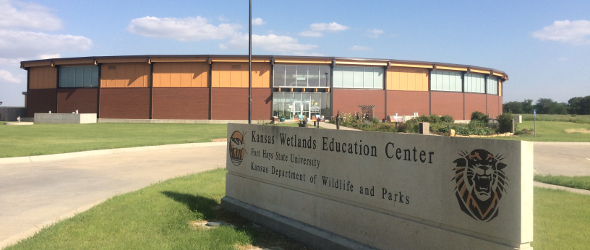
Join the Kansas Wetlands Education Center at 2 p.m. Sunday, Oct. 6, for the Wild Foods and Medicine from the Cheyenne Bottoms Area: A plant hike field trip with Kelly Kindscher.

Participants will start the afternoon at the KWEC, 592 NE K-156 Highway, Great Bend, and then carpool out to a field site where they will take a short hike and identify native plants that are edible or have medicinal qualities.

“The Cheyenne Bottoms is a mix of wet prairie and wetland which offers a diverse range of plant life,” said Kindscher.

Kindscher is a senior scientist at the Kansas Biological Survey and a professor in environmental studies at the University of Kansas. He has also written several books, including “Medicinal Wild Plants of the Prairie” and “Edible Wild Plants of the Prairie.”

Kindscher grew up with a family farm in Nebraska that sparked his interest from a young age in studying the plants growing in the prairie meadows.

With his work on the cultural use of plant materials, Kindscher has studied Native American uses for plants and how to share the story of each plant.

Throughout his career, Kindscher has collaborated with researchers to study the Cheyenne Bottoms region, written publications about the area, and helped with wetland restoration projects.

“I believe that learning about native plants, our use of them and how they affect us can deepen our respect for the variety of human lifeways and our recognition of the richness just beyond our doors,” said Kindscher.

Participants should wear comfortable, close-toed shoes and be able to walk short distances over uneven terrain as well as spend the duration of the program outside.

Satellite study of Amazon rainforest land cover gives insight into 2019 fires

KU NEWS SERVICE

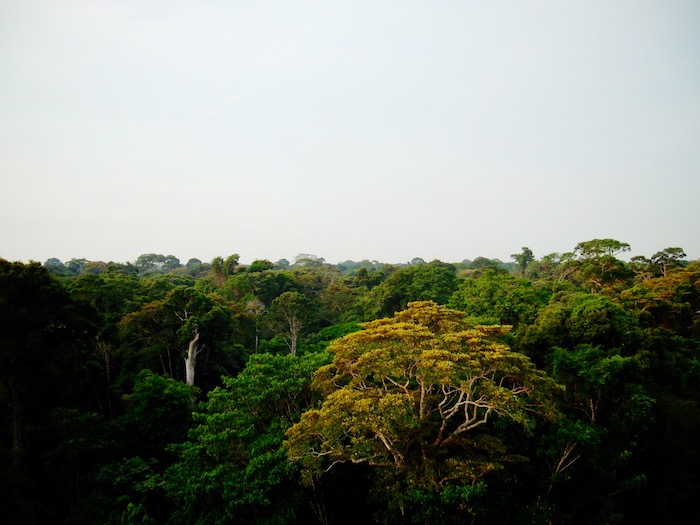
LAWRENCE — Throughout August and early September 2019, media around the world have reported on the extensive forest fires ravaging Brazil’s Amazon rainforest. Much of the concern stems from the Amazon’s significance to regulating the world’s climate. According to the Associated Press, the Amazon absorbs 2 billion tons of carbon dioxide every year — about 5% of global emissions. Thus, fires in the region eat away at this carbon-absorbing capacity while at the same time adding carbon to the air through burning.

Gabriel de Oliveira

recent study in the peer-reviewed journal Ecohydrology headed by University of Kansas researcher Gabriel de Oliveira gives important context to the fires burning big swaths of the Amazon today, most of which were set intentionally by farmers and ranchers to convert forest into land suitable for grazing animals or growing crops. The researchers sought to discover how these changes to land cover affect the exchange of water and heat between the surface of the Amazon and the atmosphere overhead.

“This is the first study to examine the biosphere-atmosphere interactions in the Amazon with such high spatial resolution satellite imagery,” said de Oliveira, a postdoctoral researcher in the Department of Geography & Atmospheric Science at KU. “We tried to understand the impacts of land-cover changes and deforestation in general. When you clear-cut the forests, and you convert it either to pasture or agriculture — or cut the forest, but for some reason don’t plant anything and then have a type of vegetation called ‘secondary succession’ — our idea was to try to understand how that impacts energy, like the radiative fluxes and water fluxes, or evaporation in general.”

In the paper, de Oliveira and his colleagues analyzed information from both satellites in space and weather stations on the ground in the Amazon. With data from the Advanced Spaceborne Thermal Emission and Reflection Radiometer (ASTER) and Large‐Scale Biosphere‐Atmosphere Experiment in Amazonia (LBA), they examined surface energy and water changes over different land‐cover types in one wet year and one drought year in eastern Rondônia state, Brazil. The team also found statistically significant differences in several important measures prior to and after one year of deforestation.

“Using NASA satellite images with high spatial resolution (15m) obtained by the ASTER sensor in Rondônia state, in the south-western Brazilian Amazon, we found that deforestation and consequent transition to pasture or agriculture to grow soybean tend to increase in two to four times the soil and air temperatures in the region,” de Oliveira said. “We also observed an approximately three times higher evapotranspiration over forested areas in comparison with nonforested areas.”

The researchers discovered significant variances between areas on opposite sides of the Ji-Paraná River, one side of which had suffered more deforestation than the other side, located within the Jaru Biological Reserve protected area. They measured spatial variation of albedo (or the fraction of the incident sunlight that the surface reflects), net radiation (or the total energy, derived from sunlight, that’s available at the surface), soil and sensible heat fluxes (or how much heat is transferred from the surface to the atmosphere), and evapotranspiration (the process by which water is transferred from the land to the atmosphere by evaporation from the soil and by transpiration from plants).

De Oliveira, who was raised in Brazil, said the rest of the world depends on the Amazon region to help moderate global climate.

“It’s important because it’s the largest rainforest in the world,” he said. “Precipitation in the tropics, all the water fluxes that go on in the tropics, affect the whole world. The Amazon has a very important role in that. There’s no other area in the world like the Amazon’s unique ecosystem. It’s pretty fascinating. I’m from South Brazil, a totally different environment than the Amazon. You could compare it with Kansas. But when I started studying for my master’s degree, my adviser told me, ‘You’re going to work in the Amazon rainforest.’ And I told her I’d never been there. But I spent two months in the rainforest doing research. And of course, you know, I fell in love. I’m very passionate about the Amazon and have been there so many times since then, so I have a lot of experience and stories of things that have happened there.”


The KU researcher cautioned that although forest fires in the Amazon have received attention in the media this year, the fires happen to a greater or lesser degree every year.

“Fires in the Amazon happen every year during the dry season,” de Oliveira said. “We have agricultural areas, areas that were deforested in the past — but in order to clear the area for the next year, or to make the soil a little bit better for the next year, they set a fire. They claim they’re only setting fire to burn agricultural lands. But sometimes the fire gets out of control, and it plays a part in more deforestation. Fires get out of control in agricultural land and reach the forest and burn the forest. But these fires happen in the Amazon every year, so it’s pretty straightforward. The worst years were in 2005, 2010 and 2015 because of severe drought events. Everything was really dry, and the fires would get out of control. There are no natural fires in the Amazon. They’re all set by human beings.”

De Oliveira’s co-authors on the study were Nathaniel Brunsell, professor and chair of KU’s geography & atmospheric science department; Elisabete Moraes, Yosio Shimabukuro, Celso von Randow and Luiz E.O.C. Aragao of the Brazilian National Institute for Space Research; Thiago dos Santos of the University of Michigan and Renata de Aguiar of the Federal University of Rondônia.

Copyright Eagle Radio | FCC Public Files | EEO Public File