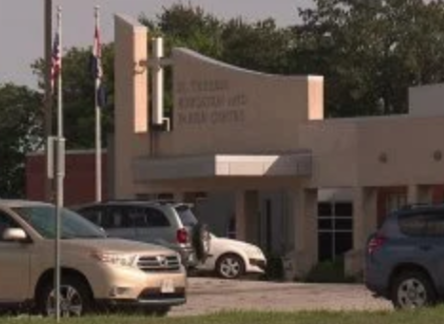
Google imageKANSAS CITY (AP) — Jurors have ruled against a teacher who alleged that she was fired from a Catholic school in Kansas City, Missouri, because she was pregnant, unmarried and refused to have an abortion.
Jurors sided Wednesday with the Diocese of Kansas City-St. Joseph, which said St. Therese School teacher Michelle Bolen was let go in 2015 because of poor performance. Bolen testified that a priest told her that had she terminated her pregnancy, the school would not have to deal with the “scandal” of a pregnant, unmarried teacher.
Her attorney, E. E. Keenan, says state law exempts churches from being sued for pregnancy discrimination. Instead he argued that the diocese violated a state law that protects women from being fired for refusing to have an abortion.
The 21st annual Western Summit sponsored by the Hays-area chapter of AARP will be held on Thu., October 10 at the Rose Garden Banquet Hall, 2350 E. 8th St., Hays, from 8 a.m to 2:30 p.m. The cost for the luncheon and registration fee, to be paid at the door, is $11.
Information will focus on areas of concern for seniors and how to decrease your susceptibility to these concerns.
Coffee and doughnuts are served from 8 to 9 a.m. while you peruse informational booths related to seniors. Some vendors will have free giveaways for you to sign up for. There will be door prizes to giveaway at the end of the Summit.
To register call 785-625-6896 or 785-623-7412 on or before October 3.
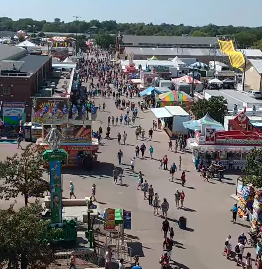
HUTCHINSON — The Kansas State Fair announced that they saw an increase in attendance for this year’s event from last year. Officials say the great weather, along with new programming helped boost Kansas State Fair attendance by about 3 percent in 2019. according to a media release.
More than 337,400 people came to the state’s largest gathering, which ended Sunday. Those figures don’t include visitors who came in free before 11 a.m. on the Fair’s kickoff day — Friday, Sept. 6. Fair officials estimate another 6,000 to 10,000 people strolled through the gates on that first morning. About 328,000 people attended the 2018 Kansas State Fair.
“This year’s Fair took an already wonderful Kansas event to new heights, bringing residents from all across the state together to celebrate everything that makes Kansas so special,” General Manager Robin Jennison said. “We had beautiful weather, and we also made some positive improvements.”
The Fair launched a new logo and new brand in January that focuses on “Celebrating All Things Kansas.” To incorporate the mission, the Fair added an Explore Kansas Festival the first weekend, which showcased more than 40 Kansas communities in Gottschalk Park. The event was so successful that community officials have expressed an interest in coming back in 2020 to help expand the festival.
The Fair ended its 10 days on a high. The final Sunday focused on promoting Kansas outdoor tourism with children and families learning more about fishing and shooting sports. The Fair’s first-ever Pronto Pup eating contest was so successful it will be expanded next year. The All-Star Monster Truck Tour packed the grandstand with more than 5,000 people attending the event. Children 5 and under were free and were not included in that count.
“This event replaced the Outlaw Truck and Tractor Pull, which drew about 2,500 people for the past several years,” Jennison said. “We wanted to find a family-friendly event, and the monster trucks worked. Many fairgoers told me that it was the most people they have seen in our grandstands in a long time. It was a great show and a great way to end the Fair.”
Fair officials are still figuring vendor revenue. However, many vendors said the strong weekend crowds will help boost this year’s bottom line. Pat Repp, with North American Midway Entertainment, the Fair’s carnival company, called it one of the best fairs the company has experienced in several decades. The carnival saw a 13.3 percent increase in midway sales over 2018. “That is the highest gross in the history of the Kansas State Fair on the carnival side,” Repp said. “We had perfect weather. The attendance was awesome. The Fair did a great job with promotions. We had one of those dream fairs where everything worked out, and we hope to keep up the momentum next year.”
Jennison noted while there were many successes, there are always areas that need improvement. Those changes will be explored in the coming months as the staff begins to work on the 2020 Fair.
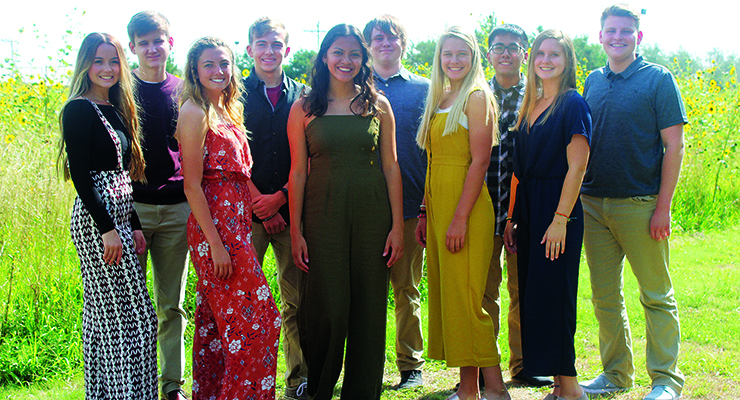
Front row, left to right: Avery Jones, daughter Paul and Steph Jones, and Elodie Jones; Maddie Lohmeyer, daughter of Joe and Misty Lohmeyer; Yesenia Maldonado, daughter of Lacho and Patty Maldonado; Madelyn Waddell, daughter of Josh and Tina Waddell; Cassidy Prough, daughter of Brandon and Shaina Prough. Back row, left to right: Ben Boland, son of Roger and Camber Boland; Nathan Erbert, son of Greg and Lisa Erbert; Tommy Brooks, son of Matt and Krista Brooks; Derrick Aragon, son of Inez Gutierrez; Carson Ackerman, son of Jeff and Kelly Ackerman.
Hays High School has announced 2019 Homecoming candidates and unveiled this year’s schedule of events.
Homecoming Week activities begin this weekend with a color run and float building. The crowing of the king and queen will take place at halftime of the varsity football game against Garden City, which is scheduled to kick off at 7 p.m.
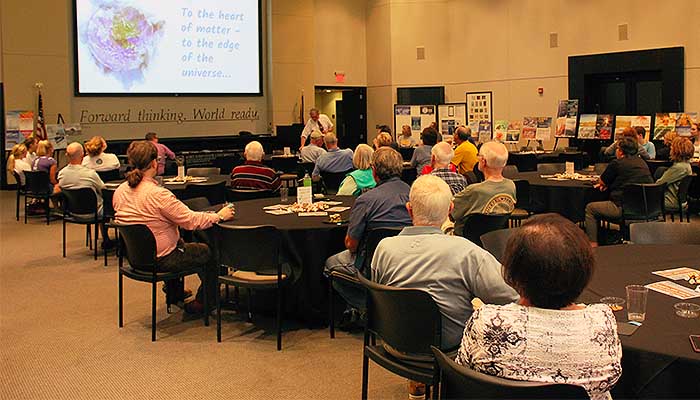
Fort Hays State University celebrated its 100th Science Cafe on Monday night by encouraging audience members to become citizen scientists.
Dr. Paul Adams, director of the FHSU Science and Mathematics Education Institute, presented the lecture at the Robbins Center Monday looking back on the last 99 lectures, looking forward to future lectures and offering suggestions on how every day people can become involved in science.
“What I am asking you to do and to take the challenge with me is to get more engaged in the scientific enterprise — be part of the science ecosystem in our area,” he said. “That means to become a citizen scientist.”
Adams said science educators when working with children will ask them to draw a picture of a scientist.
They often draw a picture of a white person, wearing glasses, in a lab with test tubes or an older man with a beard looking at the stars. Adams said as a science educator, he is trying to change that perception.
Dr. Paul Adams gives the 100th Science Cafe lecture Monday at the Robbins Center.
“It is not them,” he said. “The idea is that science is done by other people for others. It is not doing science for ourselves. This is a challenge for you. How can you be part of this? How can you be a scientist?”
Citizen science involves non-scientists, includes scientific processes and research standards, and has a goal of advancing scientific knowledge.
Citizen science is not new. The Chinese have records for 3,500 years of locust outbreaks. The royal courts in Japan have 1,200 years of records when the cherry blossoms bloomed. The French have 640 years of records of grape harvest data. The United States has a long record of citizens who keep track of weather data and harvests.
These records weren’t kept by scientists or the government. They were kept my citizens, Adams said.
In recent years, citizen science has improved with the aid of technology.
There are more than 1,000 choices available through clearinghouses online you can choose from to be a citizen scientist. Adams highlighted a selection of these during his talk on Monday. Most of these projects can be accessed online or through apps.
An early online citizen scientist project was Galaxy Zoo.
“This is taking images from deep space. Nobody has seen them. You can be the first person to tell if it is a bar or spiral,” he said. “Computers can’t read these. Computers can’t interpret it.”
What are now called green pea galaxies where discovered using crowd sourcing such as this.
“They found these galaxies no one had classified before, and we learned our models weren’t right because of the science citizen scientists did,” Adams said.
Globe at Night asks citizens to make a monthly reports on what stars and constellations are visible from their locations. This global initiative is gathering data on light pollution. You don’t have to have a telescope. You make your observations with the naked eye. The app has a constellation ID tool. Training takes only a few minutes. Adams said this is a great app to use with students.
Adams said he tells his students,”Don’t worry about getting it right, because we don’t know what right is.”
Some of these programs use large number of observers to report data, and then they pinpoint what statistically most of the observers report. If the observers can’t agree, then scientists may need to look more closely at what is being observed to determine if there is an anomaly present. This is how the green pea galaxies were discovered.
Journey North asks citizens to help track migration patterns for birds, monarch butterflies and other creatures.
Budburst ask users to track when flowers start to bloom, which is also an indicator of climate change.
Global Explorer asks users to look at satellite imagery to determine if archeological sites have been looted.
Stall Catchers is a game that is used as tool in Alzheimer’s research.
eBirds looks at bird populations; iNaturalist asks you to take pictures of different species of animals in your area.
Dust Storms asks you to take picture of dust storms and report their location. This data is also being used to monitor climate change, which scientist believe is going to spark more dust storms.
If you are interested in social sciences, there are projects that ask people to transcribe works from contemporaries of William Shakespeare or notes from U.S. Supreme Court justices. Look for more projects on Zooniverse.
Computers can’t interpret some data, such as handwriting. That is why scientists use crowd sourcing.
“Satellites work, but they aren’t perfect. They need people to validate, interpret and understand,” Adams said. “On Globe Observer, you can do clouds. You can do trees. You can do mosquitoes. You can do dust storms. The reason you do this, and this a direct quote from a scientist, ‘Satellites don’t see mosquitoes.’ Even though the technology is good. Even though they can read license plates in Russia, we are told, they can’t see mosquitoes.”
Knowing more information on mosquitoes helps to track the spread of diseases such as West Nile and Zika.
“A satellite can tell us where it is wet, but it can’t tell if the mosquitoes are going crazy,” Adams said.
He said he would like to see the residents of the Hays come together to do a citizen science project as a community, and he said he is entertaining ideas of what that project could be.
Science Cafe is supported through private donations. The lectures are free and open to the public.
The next Science Cafe will be at 7 p.m. Monday, Oct. 14, at The Venue at Thirsty’s in Hays. You can order food or beverages at your own cost from Thirsty’s.
Keri Maricle, biology instructor at the North Central Kansas Technical College, will present “Importance of Scientific Education in Western Kansas.”
Holly Dickman, water conservation specialist for the city of Hays, will be back this year to talk about water conservation. Another speaker will discuss virtual and augmented reality. Adams said someone had suggested bringing in a speaker to talk about cultured meat (lab grown not from animals), and he has also considered giving a lecture on fire walking, which he used to participate in.
Videos of some of the previous Science Cafes are available online. If you wish to learn more about the lecture series or suggest a topic for an upcoming lecture, contact Cari Rohleder at [email protected] or 785-628-4743.
LAWRENCE, Kan. (AP) — Two suspects are being penalized after they allegedly stole a life-sized cutout of Kansas City Chiefs quarterback Patrick Mahomes, then had a wreck as they fled.
Image courtesy KC Chiefs
Lawrence police spokesman Patrick Compton says a man and woman grabbed the cutout at a McDonald’s restaurant Monday, ran out the door, then jumped into a car and sped away.
Officers investigating a two-car accident nearby saw the cutout in one of the vehicles. Compton said the vehicle also matched the description of the car that drove away from the McDonald’s.
The two were issued notices to appear for theft and were cited in the accident. One person was treated for minor injuries.
The cutout of the popular Chiefs quarterback wasn’t damaged and is back on display at the McDonald’s.
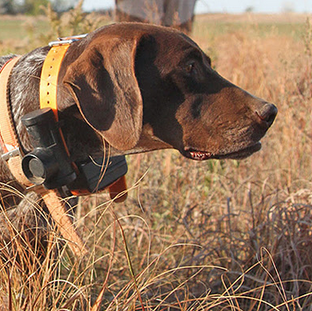
KDWPT says upland bird hunting prospects are looking “good” for fall. Photo courtesy KDWPT
KDWPT
PRATT – Surveys are complete, data is in, and the 2019 Kansas Upland Bird Hunting Forecast is ready for viewing.
The highly-anticipated annual forecast predicts what pheasant, quail and prairie chicken hunters can likely expect going into the new seasons. Based on this year’s crow counts for pheasants, whistle counts for quail, and lek counts for prairie chickens, overall upland bird hunting prospects are looking “good” for fall.
PHEASANT
Pheasant hunting in Kansas should be fair to locally good this year. Heavy winter precipitation made hunting conditions tough in 2018 but provided ample soil moisture entering the 2019 nesting season. A few late winter storms raised some concern in western Kansas, but the spring crowing index remained the same as 2018, indicating there was no measurable impact on over-winter survival. Heavy rainfall continued throughout the spring and resulted in high levels of nest abandonment. However, nests that did hatch appear to have responded to the plentiful cover with relatively high chick survival, indicated by larger brood sizes. In wet years like 2019, the nesting season becomes longer, allowing for multiple re-nesting attempts. Overall, the large brood sizes, combined with production from re-nesting birds appear to have compensated for the losses from extreme spring weather.
The counts through much of central Kansas decreased while numbers farther west increased or remained similar to last year. Kansas continues to maintain one of the best pheasant populations in the country and the fall harvest should again be among the leading states.
The highest densities this year will likely be in the High Plains regions of western Kansas.
QUAIL
Quail hunting in Kansas should be good in 2019. Kansas is still supporting above-average quail populations after a recent population boom. While total harvest has remained below average due to decreasing hunter participation, the average daily bag has remained at some of the highest levels observed in 20 years.
The bobwhite whistle survey in spring 2019 saw a modest decline following a generally poor production season in 2018. However, this is relative to a 20-year high in 2017, so despite the decline, spring densities were still well above average. The 2019 roadside survey index was just slightly higher than 2018, suggesting production compensated for any reductions previously recorded. However, regional quail densities have changed. Heavy precipitation and associated flooding across the eastern regions reduced productivity. While rainfall was also high across the western regions, a mid-summer dry period and improved habitat increased production. While densities in the eastern-most regions have decreased, all remaining regional indices remain at or above their respective long-term averages.
Kansas maintains one of the premier quail populations in the country and harvest will again be among the highest this year.
The best opportunities will be found in the central regions, extending east into the northern Flint Hills and west into the Southern High Plains.
PRAIRIE CHICKEN
Kansas is home to both greater and lesser prairie chickens. Both species require a landscape of predominately native grass and benefit from a few interspersed grain fields. Lesser prairie chickens are found in west-central and southwestern Kansas in native prairie and nearby stands of native grass established through the CRP.
Greater prairie chickens are found primarily in the tallgrass and mixed-grass prairies that occur in the eastern third and northern half of the state. Greater prairie chickens have expanded in numbers and range in the northwestern portion of the state while declining in the eastern regions. Hunting opportunities will be best in the Northern High Plains and Smoky Hills regions this fall, where populations have either been increasing or stable, and public access is more abundant.
The Southwest Prairie Chicken Unit, where lesser prairie chickens are found, will remain closed to hunting this year. Greater prairie chickens may be harvested during the early prairie chicken season and the regular season with a two-bird daily bag limit in the Greater Prairie Chicken Unit. All prairie chicken hunters are required to purchase a $2.50 Prairie Chicken Permit.
To view the complete forecast, including regional breakdowns for all three species, visit ksoutdoors.com/Hunting/Upland-Birds or pick up a printed copy at any Kansas Department of Wildlife, Parks and Tourism office (available soon). The full forecast will also be featured in the 2019 November/December issue of Kansas Wildlife and Parks Magazine, available for $2.75 by calling (620) 672-5911.
There are a lot of different logos used by the city of Hays – at least 20 – in all type of media, signage, letterhead and even employee clothing.
City staff believes it’s time to update to a single organizational logo, standardizing the various logos being used by all departments.
The “3 Amigos” logo has been used for many years, depicting the Old West history of Hays and its connection to General George A. Custer, James B. “Wild Bill” Hickok and William “Buffalo Bill” Cody at historic Fort Hays.
“It’s been on letterhead, city vehicles, city pins. That logo is fine but it doesn’t transcend well to a shirt logo, the Convention and Visitors Bureau, or the water tower,” says Toby Dougherty, city manager.
“Over the years we’ve developed one-off logos. These have all been organic, rather than a concerted effort,” he explained.
Dougherty pointed to many other city entities, each with its own logo, including the Hays Aquatic Park, Bickle-Schmidt Sports Complex and wayfinding signage. “The Parks Department has a different letterhead that involves bison.”
City staff began talking about the need for a singular logo early this year and contracted with local artist Scott Gross to come up with some design concepts.
Several designs were reviewed by Dougherty, Melissa Dixon, CVB executive director and staff members.
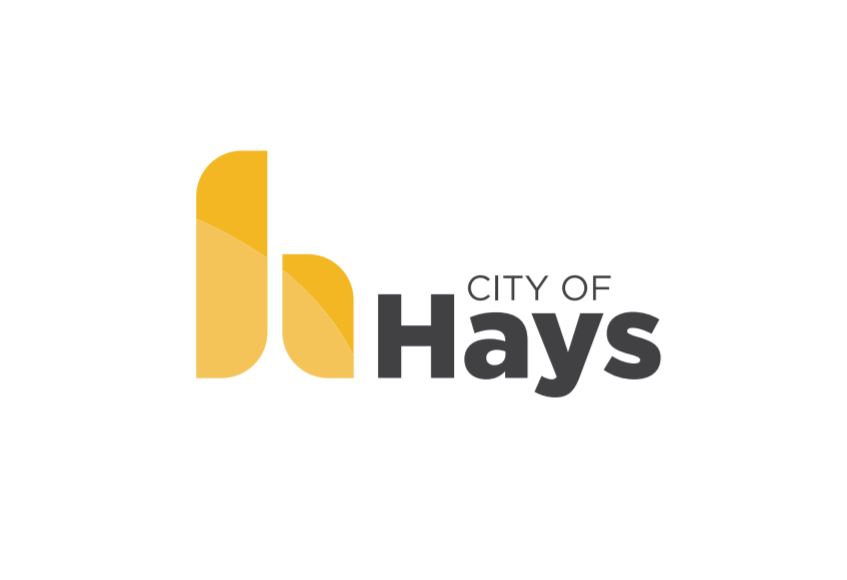
City staff is proposing the top design as the new organizational logo for the city of Hays.
They settled on one simple design with three variations. Those will be presented to the Hays city commission during their work session tonight.
“The goal is to create an organizational logo – the city of Hays logo. It’s not meant to represent Hays as a city; it’s the city of Hays as an organization,” Dougherty emphasized.
“Therefore we tried to keep it as neutral and sterile as possible. No history, no wheat, no oil, no Volga-German. It’s not mean to represent anything except the city of Hays as an organization.”
If city commissioners reject the proposed logo change, Dougherty said the city would likely continue as is using the existing multiple logos.
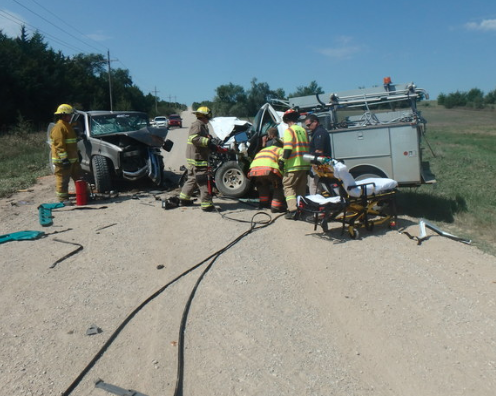
SALINE COUNTY — Two people were injured in an accident just after noon Wednesday in Saline County.
Photos Saline Co. Sheriff
The Saline County Sheriff’s office reported a 1998 Chevrolet pickup driven by Chris Giroux, 22, of Marquette, was eastbound on Water Well Road behind a Dodge pickup kicking up a lot of dust near South Burma Road.
The pickup in in the disorienting dust cloud collided nearly head-on with a 2002 Chevy Utility pickup driven by Randy Choitz, 40, Salina.
Giroux was ejected through the driver’s side window, according to Saline County Sheriff’s Captain Jim Hughes.
Giroux’s pickup
Choitz was trapped and had to be extricated from his pickup.
EMS transported both drivers to Salina Regional Health Center with serious injuries that did not appear to be life threatening, according to Hughes.
The drivers were not wearing seat belts, according to Hughes.
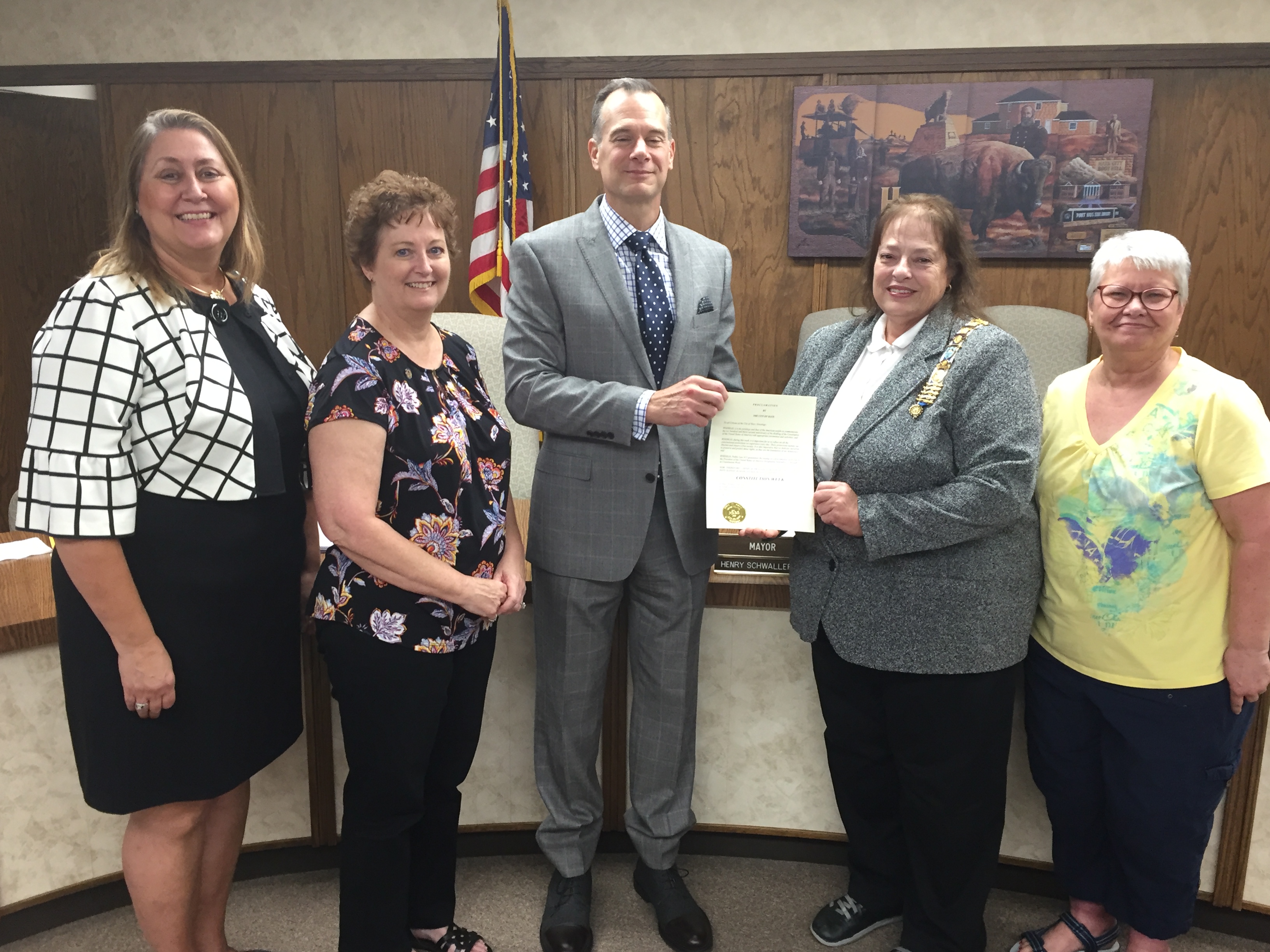
Members of the Daughters of the American Revolution Courtney-Spalding Chapter members Bunnie Bowen, Susan Unrein, Sherrie Smith and Judy Sherard with Hays Mayor Henry Schwaller.
Schwaller recently signed a proclamation declaring Sept. 17-23, 2019 as Constitution Week in the city of Hays.
Its current goals stress membership growth, conservation, American history and Good Citizenship Awards to further the education and historic values of youth. The chapter focuses on U.S. flag presentations, supporting patriotism throughout the nation and supporting troops in Project Patriot.
With all the bids tallied and tickets totaled, the 10th annual Tiger Auction and Dinner was another record-setting event for FHSU Athletics. Following the sale of 93 live items and 239 silent items, alongside dinner and raffle tickets, the FHSU Athletic Department raised a net total of $377,402, eclipsing 2018’s record total of $343,000. The last two auctions have benefitted greatly from a pair of $100,000 matching gifts towards Live Auction Item #40. Patty Baconrind provided the match in 2018 while Stephen Tebo provided the match this year.
Total dollars generated was not the only record set, however, as 668 supporters were in attendance, 80 more than the previous high set last year. The Auction and Dinner was held inside the Schmidt-Bickle Indoor Training Facility for a third time in 2019, allowing for more attendees and more space for viewing items.
Funds from this year’s Live Auction Item #40 will address improvements to numerous athletics facilities. The list includes new basketball goals inside Gross Memorial Coliseum, an expansion of the wrestling practice room, a new wrestling mat, NFL style goalposts (uprights) at Lewis Field, upgraded speakers and a new scoreboard at Tiger Stadium (softball), backstop netting and new batting cages at Larks Park (baseball) and acoustical upgrades to two of the auxiliary gyms in Cunningham Hall. Donations for Item #40 are accepted throughout the year. They are 100% tax deductible and can be paid in installments through the fiscal year ending June 30, 2020. Individuals or businesses interested in donating can contact the athletics office at (785) 628-4050 to set up a gift.
Stephen Tebo provided a generous matching gift of $100,000 toward Live Auction Item #40, while the Fleharty family donated $19,000 towards the new scoreboard at Tiger Stadium. Attendees at the auction contributed $114,000 towards Item #40.
“The success of this year’s record breaking Tiger Auction and Dinner could not have happened without the hard work and dedication from our auction committee, everyone who donated an item, everyone who attended, and our corporate sponsor Eagle,” said assistant athletic director Matt Cook.
The annual event has seen more than 5,000 attendees and raised over $2 million for Tiger Athletics over the last 10 years, with generous individuals and businesses in the Hays community donating nearly 3,000 items.
Fans can mark their calendars for the 11th annual Tiger Auction and Dinner, scheduled for Saturday, August 22, 2020 in the Schmidt-Bickle Indoor Training Facility. Information regarding next year’s event will be released in the spring of 2020.