Judy Ann Wondra, 74, passed away September 14, 2019, at Olathe Medical Center Hospice House, Olathe. She was born November 7, 1944, in Hoisington, to Joseph and Burga (Kinzel) Steiner. Judy married Jerome Anthony Wondra Oct. 10, 1969, at Great Bend. He died July 20, 2019.
Judy, a life time resident of the Odin area, was a homemaker, farm wife, and librarian for the Independent Township Library in Claflin. She was a member of Holy Family Catholic Church, Odin, where she served on the Altar Society and taught CCD.
Judy is survived by five children, Jeff Wondra and wife Dede of Holyrood, John Wondra and wife Ashley of Manhattan, Joe Wondra and wife Chrissy of Olathe, Jennifer Berens and husband Chris of Olathe, and Julie Wondra of McPherson; two sisters, Jeanette Shields of St. John and Joan Steiner-Adler of Port St. Lucie, Fla.; and five grandchildren, Rachel, Ryan, Abby, Aubrey and Gracie.
She was preceded in death by her parents; husband, Jerome; and two brothers, Hubert Steiner and Jim Steiner.
Visitation will be from 9:00 a.m. to 8:00 p.m., Tuesday, September 17, 2019 at Nicholson-Ricke Funeral Home, 415 N. Main, Hoisington, with family present from 6:00 to 8:00 p.m., and vigil with Altar Society Rosary at 7:00 p.m. Mass of Christian Burial will be 10:30 a.m. Wednesday, September 18, 2019, at Holy Family Catholic Church, Odin, with Father Terrance Klein. Interment will follow at Holy Family Cemetery, Odin.
Memorials are suggested to Independent Township Library, Holy Family Cemetery Fund or St. Ann’s Altar Society of Holy Family Parish, in care of Nicholson-Ricke Funeral Home, PO Box 146, Hoisington, KS, 67544.
Listen to Theresa Trapp Monday, September 16-Friday, September 20, 2019 for chances to call 785-628-2995 and win an album.
No age requirement to win.
Winners will need to pick up their albums at the KZ Country Studio, 2300 Hall, Hays, KS within 30 days of winning.
Disc One:
1. Can the Circle Be Unbroken (Bye and Bye) – The Carter Family
2. Mule Skinner Blues (Blue Yodel No. 8) – Jimmie Rodgers
3. Fox Chase – DeFord Bailey
4. I’m Thinking Tonight Of My Blue Eyes – The Nitty Gritty Dirt Band
5. Mountain Dew – Grandpa Jones and His Grandchildren
6. I Want to Be a Cowboy’s Sweetheart – Patsy Montana and the Prairie Ramblers
7. New San Antonio Rose – Bob Wills and His Texas Playboys
8. Wabash Cannon Ball – Roy Acuff and His Smoky Mountain Boys
9. Honky Tonkin’ – Hank Williams with his Drifting Cowboys
10. It’s Mighty Dark to Travel – Bill Monroe and His Blue Grass Boys
11. New Mule Skinner Blues – Maddox Brothers and Rose
12. Foggy Mountain Breakdown – Lester Flatt, Earl Scruggs and the Foggy Mountain Boys
13. It Wasn’t God Who Made Honky Tonk Angels – Kitty Wells
14. I’m So Lonesome I Could Cry – Hank Williams with his Drifting Cowboys
15. Crazy Arms – Ray Price
16. The Long Black Veil – Lefty Frizzell
17. El Paso – Marty Robbins
18. Ring of Fire – Johnny Cash
19. Crazy – Patsy Cline
20. I Can’t Stop Loving You – Ray Charles
21. Coal Miner’s Daughter – Loretta Lynn
22. Kiss an Angel Good Mornin’ – Charley Pride
23. Hungry Eyes – Merle Haggard and the Strangers
Disc Two:
1. Stand by Your Man – Tammy Wynette
2. You Ain’t Going Nowhere – The Byrds
3. Me and Bobby McGee – Kris Kristofferson
4. Girl from the North Country – Bob Dylan with Johnny Cash
5. Are You Sure Hank Done It This Way – Waylon Jennings
6. Jolene – Dolly Parton
7. Boulder to Birmingham – Emmylou Harris
8. Whiskey River – Willie Nelson
9. Pancho and Lefty – Willie Nelson and Merle Haggard
10. He Stopped Loving Her Today – George Jones
11. Don’t Get Above Your Raisin’ – Ricky Skaggs
12. Somebody Should Leave – Reba McEntire
13. Why Not Me – The Judds (Wynonna and Naomi)
14. Streets of Bakersfield – Dwight Yoakam with Buck Owens
15. Where’ve You Been – Kathy Mattea
16. Go Rest High on That Mountain – Vince Gill
17. I Still Miss Someone – Rosanne Cash
18. Will the Circle Be Unbroken – The Nitty Gritty Dirt Band
Congrats Linda Palmberg, Kim Barnes, Josh Stramel, Jane Younger and Kenny Raudis!
DETROIT (AP) — More than 49,000 members of the United Auto Workers walked off General Motors factory floors or set up picket lines early Monday as contract talks with the company deteriorated into a strike.
Workers strike early Monday photo courtesy WROC TV
Workers shut down 33 manufacturing plants in nine states across the U.S., as well as 22 parts distribution warehouses.
It wasn’t clear how long the walkout would last, with the union saying GM has budged little in months of talks while GM said it made substantial offers including higher wages and factory investments.
It’s the first national strike by the union since a two-day walkout in 2007 that had little impact on the company.
GM workers joined striking Aramark-employed janitors assigned to GM facilities on the picket lines Sunday night at a sprawling factory on the border between Detroit and the small town of Hamtramck.
Worker Patty Thomas said she wasn’t scheduled to picket, but came out to support her colleagues at the car plant, which GM wants to close.
She’s heard talk that GM may keep the factory open and start building electric pickup trucks there, but she’s skeptical.
“What are they going to take away?” she asked. “That’s the big issue.”
She said workers gave up cost-of-living pay raises to help GM get through bankruptcy, and workers want some of that back now that the company is making profits.
Striking GM employees were joined on the picket lines by workers from Ford and Fiat Chrysler, who are working under contract extensions.
Night shift workers at an aluminum castings factory in Bedford, Indiana, that makes transmission casings and other parts shut off their machines and headed for the exits, said Dave Green, a worker who transferred from the now-shuttered GM small-car factory in Lordstown, Ohio.
Green, a former local union president, said he agrees with the strike over wages, plant closures and other issues.
“If we don’t fight now, when are we going to fight?” he asked. “This is not about us. It’s about the future.”
UAW Vice President Terry Dittes, the union’s top GM negotiator, said a strike is the union’s last resort but is needed because both sides are far apart in negotiating a new four-year contract. The union, he said Saturday, does not take a strike lightly.
“We clearly understand the hardship that it may cause,” he said. “We are standing up for fair wages, we are standing up for affordable quality health care, we are standing up for our share of the profits.”
GM, however, said it offered pay raises and $7 billion worth of U.S. factory investments resulting in 5,400 new positions, a minority of which would be filled by existing employees. GM would not give a precise number. The company also said it offered higher profit sharing, “nationally leading” health benefits and an $8,000 payment to each worker upon ratification.
Because public statements from both sides conflict, it’s hard to tell how long the strike will last, said Kristin Dziczek, vice president of labor and industry at the Center for Automotive Research, an industry think tank. The length “depends on how far apart they really are and where the lines in the sand are drawn,” she said.
Talks were scheduled to resume at 10 a.m. EDT on Monday.
The union’s contract with GM expired Saturday night, but pacts with the company’s crosstown rivals, Ford and Fiat Chrysler, were extended indefinitely. The union has picked GM as its target company this year, and any deal it negotiates will be used as a template for the others. GM was picked because it’s the most profitable of the three, and because its plans to close four U.S. factories have angered union members.
On Sunday, about 200 plant-level leaders voted unanimously to strike against GM if no deal could be reached by Sunday night. Although talks were halted over the weekend, UAW spokesman Brian Rothenberg said there was still dialogue.
Before the talks broke off, GM offered to build a new all-electric pickup truck at a factory in Detroit that is slated to close next year, according to a person who spoke to The Associated Press on condition of anonymity. The person wasn’t authorized to disclose details of the negotiations.
The automaker also offered to open an electric vehicle battery plant in Lordstown, Ohio, where it has a huge factory that has already stopped making cars and will be closed. The new factory would be in addition to a proposal to make electric vehicles for a company called Workhorse, the person said.
It’s unclear how many workers the two plants would employ. The closures, especially of the Ohio plant, have become issues in the 2020 presidential campaign. President Donald Trump has consistently criticized the company and demanded that Lordstown be reopened.
Rothenberg said UAW was striking for fair wages, affordable health care, profit sharing, job security and a path to permanent employment for temporary workers.
GM has factories in Michigan, Ohio, New York, Kentucky, Tennessee, Texas, Missouri, Indiana and Kansas.
A strike would bring to a halt GM’s U.S. vehicle and parts production, and would likely stop the company from making vehicles in Canada and Mexico as well. That would mean fewer vehicles for consumers to choose from on dealer lots, and it would make it impossible to build specially ordered cars and trucks.
Analysts at Cox Automotive said GM has enough vehicles on dealer lots to last about 77 days at the current sales pace. That’s well above the industry average of 61. But supplies of the Chevrolet Tahoe and Suburban large SUVs, which generate big money for the company, are well below the industry average.
The talks this year have been overshadowed by a growing federal corruption probe that snared a top union official on Thursday. Vance Pearson, head of a regional office based near St. Louis, was charged in an alleged scheme to embezzle union money and spend cash on premium booze, golf clubs, cigars and swanky stays in California. It’s the same region that UAW President Gary Jones led before taking the union’s top office last year. Jones himself has been touched by the investigation, leading some union members to call for him to step down, but he hasn’t been charged.
This year’s talks between the union and GM were tense from the start, largely because of GM’s plan to close four U.S. factories, including the one on the Detroit border with the enclave of Hamtramck, as well as Lordstown and factories in Warren, Michigan, and near Baltimore.
Here are the main areas of disagreement:
— GM is making big money, $8 billion last year alone, and workers want a bigger slice. The union wants annual pay raises to guard against an economic downturn, but the company wants to pay lump sums tied to earnings. Automakers don’t want higher fixed costs.
— The union also wants new products for the four factories slated to close. GM currently has too much U.S. factory capacity, especially to build slower-selling cars.
— The companies want to close the labor cost gap with workers at plants run by foreign automakers. GM pays $63 per hour in wages and benefits compared with $50 at the foreign-owned factories. GM’s gap is the largest at $13 per hour, according to figures from the Center for Automotive Research.
— Union members have great health insurance plans and workers pay about 4% of the cost. Employees at large firms nationwide pay about 34%, according to the Kaiser Family Foundation. Automakers would like to cut costs.
————————
DETROIT (AP) — The United Auto Workers union announced Sunday that its roughly 49,000 workers at General Motors plants in the U.S. would go on strike just before midnight because contentious talks on a new contract had broken down.
About 200 plant-level union leaders voted unanimously in favor of a walkout during a meeting Sunday morning in Detroit. Union leaders said the sides were still far apart on several major issues and they apparently weren’t swayed by a GM offer to make new products at or near two of the four plants it had been planning to close, according to someone briefed on the matter.
“We stood up for General Motors when they needed us most,” union Vice President Terry Dittes said in a statement, referring to union concessions that helped GM survive bankruptcy protection in 2009. “Now we are standing together in unity and solidarity for our members.”
It’s still possible that bargainers could return to the table and hammer out an agreement, but union spokesman Brian Rothenberg said at a news conference that it would be unlikely because it is hard to believe they could resolve so many issues before 11:59 p.m.
GM on Friday offered to build a new all-electric pickup truck at a factory in Detroit that is slated to close next year, according someone who spoke to The Associated Press on the condition of anonymity because that person wasn’t authorized to disclose details of the negotiations, which hadn’t been released to the public. The automaker also offered to open an electric vehicle battery plant in Lordstown, Ohio, where it has a plant that has already stopped making cars. The new factory would be in addition to a proposal to make electric vehicles for a company called Workhorse, the person said.
It’s unclear how many workers the two plants would employ. The closures, especially of the Ohio plant, have become issues in the 2020 presidential campaign. President Donald Trump has consistently criticized the company and demanded that Lordstown be reopened.
The UAW’s Rothenberg said the company made general statements about why it is planning to strike, but he would not comment further on GM’s offer. The union said it would strike for fair wages, affordable health care, profit sharing, job security and a path to permanent employment for temporary workers.
In a statement, GM also said the offer made to the union on Saturday included more than $7 billion in U.S. factory investments and the creation of 5,400 new positions, a minority of which would be filled by existing employees. GM would not give a precise number. The investments would be made at factories in four states, two of which were not identified.
The statement also said the company offered “best in class wages and benefits,” improved profit sharing and a payment of $8,000 to each worker upon ratification. The offer included wage or lump sum increases in all four years of the deal, plus “nationally leading” health benefits.
The announcement came hours after the union let its contract with GM expire Saturday night.
If there is a strike, picketers would shut down a total of 53 GM facilities, including 33 manufacturing sites and 22 parts distribution warehouses. GM has factories in Michigan, Ohio, New York, Kentucky, Tennessee, Texas, Missouri, Indiana and Kansas.
On Saturday, Dittes, the union’s chief bargainer, said in a letter to GM members that after months of bargaining, both the union and GM were far apart on issues such as wages, health care, temporary employees, job security and profit-sharing. The letter to members and another one to GM were aimed at turning up the pressure on GM negotiators.
A strike would bring to a halt GM’s U.S. production, and would likely stop the company from making vehicles in Canada and Mexico as well. That would mean fewer vehicles for consumers to choose from on dealer lots, and it would make it impossible to build specially ordered cars and trucks.
The strike would be the union’s first since a two-day work stoppage at GM in 2007.
On Friday, union leaders extended contracts with Ford and Fiat Chrysler indefinitely, but the pact with General Motors was still set to expire Saturday night.
The union picked GM, which is more profitable than Ford and Fiat Chrysler, as the target company, meaning it’s the focus of bargaining and would be the first company to face a walkout.
Talks between the union and GM were tense from the start, largely because GM plans to close four U.S. factories, including the one on the Detroit border with the enclave of Hamtramck, and Lordstown. The union has promised to fight the closures.
Here are the main areas of disagreement:
— GM is making big money, $8 billion last year alone, and workers want a bigger slice. The union wants annual pay raises to guard against an economic downturn, but the company wants to pay lump sums tied to earnings. Automakers don’t want higher fixed costs.
— The union also wants new products for the four factories GM wants to close. The factory plans have irked some workers, although most of those who were laid off will get jobs at other GM factories. GM currently has too much U.S. factory capacity.
— The companies want to close the labor cost gap with workers at plants run by foreign automakers. GM pays $63 per hour in wages and benefits compared with $50 at the foreign-owned factories. GM’s gap is the largest at $13 per hour, followed by Ford at $11 and Fiat Chrysler at $5, according to figures from the Center for Automotive Research.
— Union members have great health insurance plans and workers pay about 4% of the cost. Employees at large firms nationwide pay about 34%, according to the Kaiser Family Foundation. The automakers would like to cut costs.
———–
DETROIT (AP) — The United Auto Workers union announced Sunday that its roughly 49,000 workers at General Motors plants in the U.S. would go on strike just before midnight because contentious talks on a new contract had broken down.
About 200 plant-level union leaders voted unanimously in favor of a walkout during a meeting Sunday morning in Detroit. Union leaders said the sides were still far apart on several major issues and they apparently weren’t swayed by a GM offer to make new products at or near two of the four plants it had been planning to close, according to someone briefed on the matter.
“We stood up for General Motors when they needed us most,” union Vice President Terry Dittes said in a statement, referring to union concessions that helped GM survive bankruptcy protection in 2009. “Now we are standing together in unity and solidarity for our members.”
It’s still possible that bargainers could return to the table and hammer out an agreement, but union spokesman Brian Rothenberg said at a news conference that it would be unlikely because it is hard to believe they could resolve so many issues before 11:59 p.m.
GM on Friday offered to build a new all-electric pickup truck at a factory in Detroit that is slated to close next year, according someone who spoke to The Associated Press on the condition of anonymity because that person wasn’t authorized to disclose details of the negotiations, which hadn’t been released to the public. The automaker also offered to open an electric vehicle battery plant in Lordstown, Ohio, where it has a plant that has already stopped making cars. The new factory would be in addition to a proposal to make electric vehicles for a company called Workhorse, the person said.
It’s unclear how many workers the two plants would employ. The closures, especially of the Ohio plant, have become issues in the 2020 presidential campaign. President Donald Trump has consistently criticized the company and demanded that Lordstown be reopened.
The UAW’s Rothenberg said the company made general statements about why it is planning to strike, but he would not comment further on GM’s offer. The union said it would strike for fair wages, affordable health care, profit sharing, job security and a path to permanent employment for temporary workers.
In a statement, GM also said the offer made to the union on Saturday included more than $7 billion in U.S. factory investments and the creation of 5,400 new positions, a minority of which would be filled by existing employees. GM would not give a precise number. The investments would be made at factories in four states, two of which were not identified.
The statement also said the company offered “best in class wages and benefits,” improved profit sharing and a payment of $8,000 to each worker upon ratification. The offer included wage or lump sum increases in all four years of the deal, plus “nationally leading” health benefits.
The announcement came hours after the union let its contract with GM expire Saturday night.
If there is a strike, picketers would shut down a total of 53 GM facilities, including 33 manufacturing sites and 22 parts distribution warehouses. GM has factories in Michigan, Ohio, New York, Kentucky, Tennessee, Texas, Missouri, Indiana and Kansas.
On Saturday, Dittes, the union’s chief bargainer, said in a letter to GM members that after months of bargaining, both the union and GM were far apart on issues such as wages, health care, temporary employees, job security and profit-sharing. The letter to members and another one to GM were aimed at turning up the pressure on GM negotiators.
A strike would bring to a halt GM’s U.S. production, and would likely stop the company from making vehicles in Canada and Mexico as well. That would mean fewer vehicles for consumers to choose from on dealer lots, and it would make it impossible to build specially ordered cars and trucks.
The strike would be the union’s first since a two-day work stoppage at GM in 2007.
On Friday, union leaders extended contracts with Ford and Fiat Chrysler indefinitely, but the pact with General Motors was still set to expire Saturday night.
The union picked GM, which is more profitable than Ford and Fiat Chrysler, as the target company, meaning it’s the focus of bargaining and would be the first company to face a walkout.
Talks between the union and GM were tense from the start, largely because GM plans to close four U.S. factories, including the one on the Detroit border with the enclave of Hamtramck, and Lordstown. The union has promised to fight the closures.
Here are the main areas of disagreement:
— GM is making big money, $8 billion last year alone, and workers want a bigger slice. The union wants annual pay raises to guard against an economic downturn, but the company wants to pay lump sums tied to earnings. Automakers don’t want higher fixed costs.
— The union also wants new products for the four factories GM wants to close. The factory plans have irked some workers, although most of those who were laid off will get jobs at other GM factories. GM currently has too much U.S. factory capacity.
— The companies want to close the labor cost gap with workers at plants run by foreign automakers. GM pays $63 per hour in wages and benefits compared with $50 at the foreign-owned factories. GM’s gap is the largest at $13 per hour, followed by Ford at $11 and Fiat Chrysler at $5, according to figures from the Center for Automotive Research.
— Union members have great health insurance plans and workers pay about 4% of the cost. Employees at large firms nationwide pay about 34%, according to the Kaiser Family Foundation. The automakers would like to cut costs.
Fort Hays State University, with almost a third of its enrollment over the age of 25, has been recognized for being among the best four-year colleges in the United States for modern students.
This marks the second consecutive year the university earned top-10 honors in Washington Monthly magazine’s annual Best Colleges for Adult Learners rankings. Fort Hays State University President, Tisa Mason, believes this recognition is again the result of the university’s keen focus on meeting the needs of the modern adult learner.
“Serving the needs of the non-traditional learner has long been the focus of our university,” she said. “Whether our students pursue their educational goals on campus in Hays, online, or in their hometown, they all benefit from the unique blend of academic challenge, personal attention and unmatched affordability that are the hallmarks of a Fort Hays State University experience.”
Fort Hays State University is the only public university in Kansas to earn a top-100 ranking. MidAmerica Nazarene, a private liberal arts college in Olathe, earned a No. 46 ranking.
“Over the last 15 years, we’ve steadily added new data to our rankings of what colleges do for their country by promoting social mobility, research, and public service,” said Kevin Carey, director of the Education Policy Program at New America, editor of The Washington Monthly’s 2019 College Guide.
The Monthly used data from several sources: the federal government; the Annual Survey of Colleges; the College Board; and university records on enrollment, graduations and other information.
The magazine considers eight primary criteria in reaching its adult learner rankings: (1) Ease of transfer or enrollment: not only how easy it is for students to enroll or transfer in, but also whether students can transfer in at an upper level and whether a transfer advisor is available. (2) Flexibility of programs. (3) Services available for adult students: financial aid counseling, on-campus daycare, counseling and job placement services and veterans services. (4) The percent of adult students (age 25 and older): “the age at which students are automatically considered independent from their parents for financial aid purposes.” (5) Graduation rates of part-time students: “part-time graduation rates are more relevant for students who will be juggling work, school, and family obligations all at the same time.” (6) Mean earnings of adult students 10 years after entering college: a three-year average of data gathered from the College Scorecard. (7) Loan repayment rates of adult students five years after entering repayment: based on a three-year average of College Scorecard data to get a percentage of independent students who “were able to pay down at least $1 of their loan’s principal.” (8) Tuition and fees for in-district students: for the adult learner category, a measure of affordability based on federal data rather than a ranking of net prices, which mainly apply to first-time, full-time students.
Fort Hays State was also No. 27 Best Bang for the Buck of the 372 institutions in the 12-state Midwestern Region. This category, separated into five geographic areas, ranks institutions “according to how well they help non-wealthy students attain marketable degrees at affordable prices.” It focuses on the Social Mobility set of criteria from the overall four-year university rankings.
Washington Monthly’s overall four-year rankings are based on three sets of criteria:
• Ten social mobility measures, including percentage of students graduating within eight years, a first-generation performance rank and a net price rank; the number and success rate of Pell Grant recipients and first-generation students;
• Two research criteria – total amount of money spent on research and the number of “bachelor’s recipients who go on to receive Ph.D.s, relative to college size”;
• and five service criteria, two based on the number of alumni who serve in the Peace Corps, another on ROTC service, Work Study funds spent on service grants, AmeriCorps matching grants and voting engagement points.
FHSU was the top institution in Kansas in its category, Master’s Universities, which covered 606 colleges that offer a “significant number” of master’s degrees but few or no doctorates.
The other categories for four-year institutions are National Universities, which award “a significant number of doctoral degrees”; Liberal Arts Colleges, baccalaureate colleges that focus on arts and sciences; and Bachelor’s Colleges, which confer bachelor’s degrees “almost exclusively.”
A meme is an idea, thought or piece of information that is passed from generation to generation through imitation and behavioral replication. A meme can be life-changing for sure.
One I saw recently resonates with the work I do as an Extension Educator. It said, “If you do not make time for your wellness, you will be forced to make time for your illness.” That is a powerful statement and a perfect segway to the message I want to share during National Wellness Month.
At my recent Extension Agent update, a team of 5 educators had returned from a study trip to Greece. It was amazing to hear stories of their visit to a Blue Zone in Ikaria, Greece. There are five recognized Blue Zones in five locations around the world where a significant percentage of people live a healthful life into their 90’s and even 100. Through interviews and immersing themselves into the culture for a period of time, our team learned about nine healthy lifestyle habits shared by people who have lived the longest.
Down shift – Improve your overall wellness by finding a stress relieving strategy that works for you. Purpose – Wake up with purpose each day to add up to 7 years to your life. Plant slant – Put less meat and more plants on your plate. Wine @ 5 – Responsibly enjoy a glass of wine with good friends each day. Family first – Invest in spending time with family and add up to 6 years to your life. 80% rule – Eat mindfully and stop when 80% full. Move naturally – Find ways to move more! You’ll burn calories without thinking about it. Right tribe – Surround yourself with people who support positive behaviors. Belong – Belong to a faith-based community and attend services four times a month to add 4-14 years to your lifespan.
You will hear more about the Power 9 when the 2020 Walk KS program rolls around next March. But for now, let’s focus on making small changes. Don’t try to do the entire list in one week. Focus on one suggestion at a time. So, let’s talk about the first one – Down Shift. Find something that helps you relieve stress. Those of you who know me well can probably guess that a bike ride would be my first choice to relieve stress. Thankfully it has worked to bike commute to work on most days the past few years and that can provide 48 minutes of exercise into my day. Other stress relievers for me include sitting down and playing the piano for a few minutes whenever time allows, or hand stitching a quilting project.
Consider ways to make wellness a priority in your life in the weeks ahead!
Donna Krug is the Family & Consumer Science Agent and District Director for the Cottonwood Extension District. You may reach her at: (620)793-1910 or [email protected]
GEARY COUNTY — Law enforcement authorities are investigating an accident that injured two people just after 9p.m. Sunday in Geary County.
The Kansas Highway Patrol reported a 2006 Nissan Maxima driven by Denilson Acosta Rodriguez, 19, Manhattan, was eastbound in the westbound lanes of Kansas 18 three miles from Interstate 70.
The Nissan struck a 2013 Chevy Cruz driven by Christina D. Tanguay, 17, Junction City, and a 2005 Nissan Altima driven by Tori A. Lamb, 19, Ellsworth, head-on.
EMS transported an unidentified occupant in the Nissan and a passenger in the Chevy Hannah R. Burkhart, 17, Fort Riley to KU Medical Center.
Acosta Rodriguez fled the scene of the accident, according to the KHP.
Tanguay, a passenger in the Maxima Odalis M. Castaneda Carranza, 20, La Puente, CA., and Lamb were not injured. All were properly restrained at the time of the accident, according to the KHP.
Planning a yard sale this weekend? Submit your weekend garage sale listings to Hays Post. Submissions will be compiled and published FREE on Friday and Saturday via HaysPost.com and social media. Simply fill out and submit the form below!
Jeremy Miller takes his current mission personally. Miller, a veteran, is walking across the United States to raise awareness of veteran suicides.
Miller spoke with Salina Post during a stop in Kanopolis Sunday afternoon.
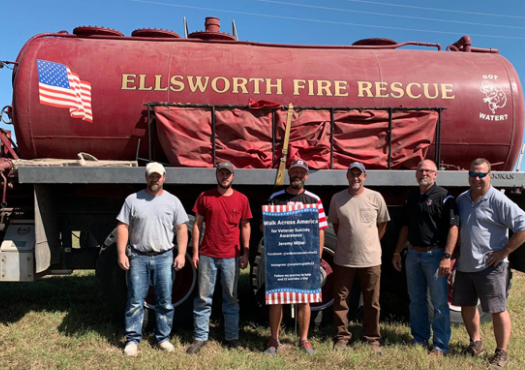
Veteran Jeremy Miller with members of the Ellsworth Fire Department. Photo courtesy Jeremy Miller
Miller, who was a Specialist E4 with the Army Reserve out of Idaho, said he began his journey on May 22 in Crescent City, Calif. His plan is to walk to Arlington National Cemetery in Arlington, Va., by the end of November.
Miller explained that his Army Reserve group did not lose anyone while deployed in Iraq in 2011, however, upon their return to the United States, three of the soldiers killed themselves, Miller said. Miller, himself, attempted suicide, and continues to suffer from post traumatic stress disorder (PTSD), depression, and anxiety, he said.
Deciding that he needed to turn his life around and get his mind in a better place, Miller decided to walk across the U.S. to raise awareness of the high rate of veteran suicides, he said.
“You have to find your happiness and I decided that this walk is the best for me,” Miller explained. “You also have to be vulnerable and talk about what you are going through. It’s good to talk and get it off your chest.”
Walking veterans’ paths cross in Ellsworth
Miller said that while he was in Ellsworth over the weekend, he got to meet Michael Gmur, a Marine veteran who is walking across the U.S. to raise awareness of and funds for homeless veterans.
With route change, Gmur plans to walk into Salina on Thursday
Gmur, who is walking from Portland, Maine, to San Diego, Calif., switched his route last week and spent the night Thursday in Salina. He continued west on Kansas Highway 140 Friday morning and met up with Miller in Ellsworth.
The two spent a good part of Saturday hanging out with the Ellsworth Fire Department.
Miller plans to make it to Salina on Tuesday, and from here will continue walking east on Old Highway 40. He said he tries to walk 20-25 miles per day, but would like to get to the point where he is walking 30 miles per day.
Miller said he was appreciative of how kind and supportive Kansans have been to him. He said that the Ellsworth Fire Department put out a collection jar for him at the barbecue fundraiser they were having. Others have provided meals, places to stay, a haircut, and even followed along behind him to make sure he didn’t get hit by a vehicle.
Once he completes his journey, Miller said he would like to start a non-profit organization that continues to draw attention to the serious issue of veteran suicides.
You can follow Miller’s journey through his Facebook page: Walk Across America. The page also contains a link to his GoFundMe page.
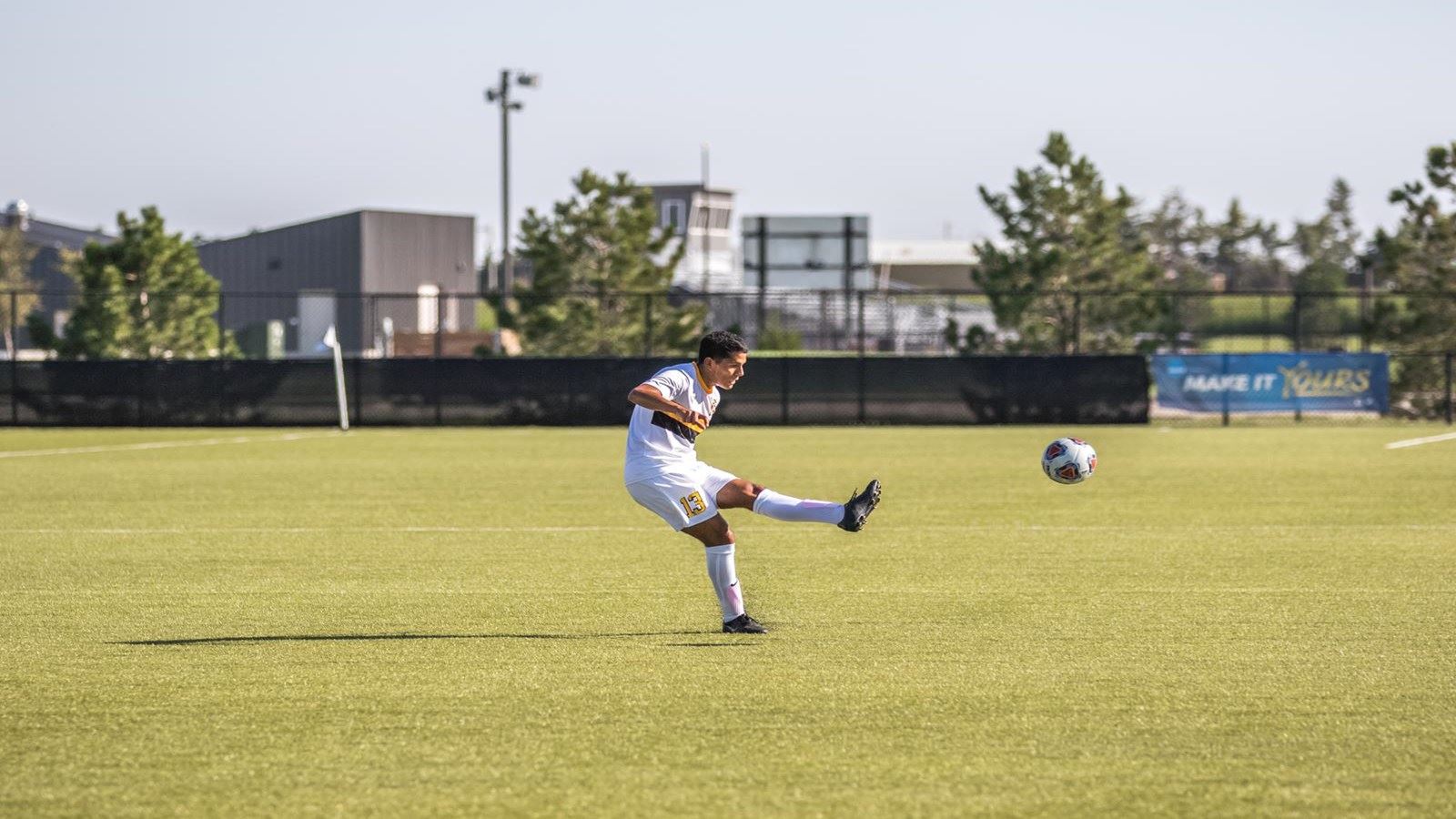
DENVER – The No. 12 Fort Hays State University men’s soccer team faced off against the Regis University Rangers on Sunday afternoon. The Tigers entered into the matchup on a two-game skid and that form continued as the match resulted in a 3-0 loss.
Fort Hays State found themselves behind early in the match. Just one minute into the contest, Regis’ Ben Shepherd slid a ball past goalkeeper Cullen Fisch to begin the score tally.
With only five minutes remaining in the first half, the Rangers struck again. Parker Klein ripped his shot to Fisch’s left-hand side for a 2-0 lead.
Following halftime, the Rangers marched down the field. Defending inside of their own 18-yard box, the Tigers were backed into an uncomfortable position. Mariano Benitez made contact within the box and was called for a foul. Shepherd stepped up to the spot for the Rangers and tucked his shot away to mark the third goal of the contest.
Fort Hays State took 10 shots through the duration of the match. Goalkeeper Cullen Fisch was kept busy in net as he faced 15 shots and made six saves.
Within the 90 minutes, six yellow cards were handed out. The Tigers’ Santiago Agudelo, Alec Bevis, and Alonso Rodriguez all had bookings.
For the Tigers, this marks their second-worst start to a regular season in program history, with 2017 being the only one to top this in those ranks. FHSU started 0-4-2 in 2017, but went on an 11-1 tear over its next 12 and made the NCAA Tournament, finishing the year at 11-6-2.
The black and gold were knocked out of the NCAA Championship tournament in 2017 by Northeastern State University, but FHSU defeated Northeastern State in all three meetings last year (NCAA Tournament included). On Thursday, Sept. 19 the Tigers square off with their long-time conference rival, but this time playing as members of the Great American Conference. The Tigers are 9-7-5, all-time against Northeastern State.
This will be FHSU’s first game played in Hays since its victory over Rockhurst in the season-opener and its first game in Great American Conference play. The men’s soccer program still holds a 17-game home win streak and will look to keep that alive.
DENVER (AP) — Eddy Pineiro kicked a 53-yard field goal as time expired, giving the Chicago Bears a wild 16-14 win over the Broncos and their former defensive coordinator Vic Fangio, whose gutsy 2-point call 31 seconds earlier had given Denver the lead.
The Broncos (0-2) thought time had expired when Mitchell Trubisky stepped up and threw a 25-yard pass to Allen Robinson on fourth-and-15 from his 40-yard line. Robinson was tackled at the Denver 35 by Chris Harris Jr.
The clock showed all zeroes and both teams milled around on the field not knowing whether to celebrate a win or lament a loss. Then referee Adrian Hill announced there was 1 second remaining and Chicago was using its last timeout.
Pineiro’s winner sent the Bears (1-1) streaming back onto the field in celebration of a victory that seemed so unlikely after they’d surrendered the lead moments earlier.
In a whipsaw of emotion, cornerback Kyle Fuller, whose goal-line interception with five minutes left seemingly sealed Chicago’s win, surrendered a 7-yard tiptoe TD to Emmanuel Sanders. Sanders barely got both feet toes down in the right corner of the end zone.
The Broncos lined up for 2 but a delay pushed them back 5 yards. Fangio sent Brandon McManus out instead for the extra point and the tie. But McManus was wide right and the Bears went wild.
Hold on: a flag on Chicago.
Buster Skrine was offside and the Broncos moved up to the 1. Out came their offense again, and with an empty backfield, Joe Flacco backpedaled and hit Sanders at the goal line in front of Fuller to give Denver a 14-13 lead.
For the second straight game, the Broncos failed to get a sack, but linebacker Bradley Chubb came close, hitting Trubisky just as he got off a throw to tight end Trey Burton for 10 yards. A debatable roughing call on Chubb tacked on 15 yards and the Bears were suddenly in business at the Broncos 45-yard line.
Three incompletions were followed by a 12-men-in-the-huddle infraction, however, and the Bears were facing fourth-and-15 from their 40 with 9 seconds remaining.
Trubisky found Robinson over the middle in the nick of time. Harris’ tackle came one second too early for the Broncos, who saw their 13-home-game September winning streak snapped.
HONORING MR. B
The Broncos held a moment of silence before kickoff for late owner Pat Bowlen, who died in June at age 75, two months before he was inducted into the Pro Football Hall of Fame.
INJURIES:
Bears starting DT Bilal Nichols was knocked out with a hand injury in the third quarter. … Broncos starters ILB Todd Davis (calf) and CB Bryce Callahan (foot) were held out for the second straight week.
KANSAS CITY, Kan. (AP) — A Kansas man has been convicted of fatally shooting a Baptist church pastor and choir director three decades ago in Kansas City, Kansas.
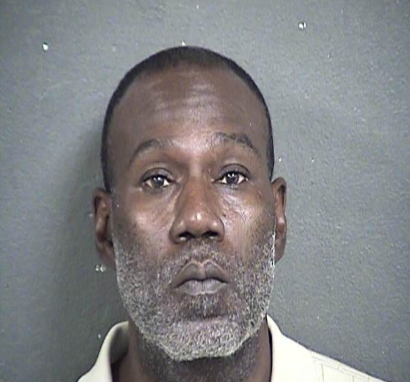
Shields photo Wyandotte Co.
Wyandotte County prosecutors announced Thursday that 51-year-old Melvin Shields of Wichita was found guilty of two counts of first-degree murder in the April 1988 killings of 27-year-old Jolene Jones and 33-year-old Steve Ray.
The victims were longtime friends who had a daughter together. They had met for lunch one day before their bodies were found in a secluded area near the Kansas River. Authorities say Jones’ purse was found several blocks away, and her car was abandoned.
A few months after the killings, Jones was sentenced to prison for unrelated burglary and theft convictions. He later was convicted of other crimes, including aggravated battery and burglary.

 Judy Ann Wondra, 74, passed away September 14, 2019, at Olathe Medical Center Hospice House, Olathe. She was born November 7, 1944, in Hoisington, to Joseph and Burga (Kinzel) Steiner. Judy married Jerome Anthony Wondra Oct. 10, 1969, at Great Bend. He died July 20, 2019.
 We are giving away the soundtrack of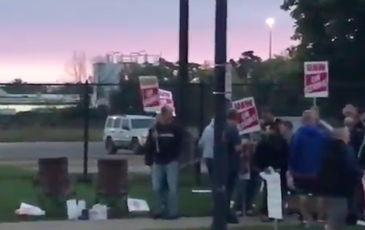









 Planning a yard sale this weekend? Submit your weekend garage sale listings to Hays Post. Submissions will be compiled and published FREE on Friday and Saturday via