
To read more about the event, click here.
To find out more about The Post Podcast, or subscribe to mobile notifications click here.
Year: 2019
Missouri Investigation: 12 Catholic clergy could face prosecution

KANSAS CITY (AP) — Missouri Attorney General Eric Schmitt is referring 12 former clergy for potential criminal prosecution after his office completed a 13-month investigation of sexual abuse within the Roman Catholic Church.
Schmitt on Friday released details of the investigation of religious leaders within the Archdiocese of St. Louis and the dioceses of Kansas City-St. Joseph, Springfield-Cape Girardeau and Jefferson City.
Missouri is among several states that launched investigations last year after a Pennsylvania report cited abuse of more than 1,000 children by hundreds of priests there since the 1940s, and efforts by church leaders to hide it.
The Missouri investigation began in August 2018 under then-Attorney General Josh Hawley. Hawley was elected to the U.S. Senate in November, and Schmitt, a fellow Republican, took over the investigation after he was appointed to replace him.
Schmitt said the 12 referrals are the most by any state attorney general since the Pennsylvania report.
“The betrayal of trust and of innocence is devastating and in many instances incomprehensible,” Schmitt, himself a Catholic, said at a news conference in St. Louis.
The investigation reviewed personnel records for every priest serving in Missouri dating to 1945 — more than 2,000 priests and 300 deacons, seminarians and religious women, Schmitt said. Investigators also spoke to abuse survivors and their relatives who contacted the attorney general’s office.
Investigators found 163 priests or clergy members accused of sexual abuse or misconduct against minors. Eighty-three have died. Of the 80 still alive, the statute of limitations has run out on 46 of the crimes, Schmitt said.
One case is still under open investigation by the Catholic Church. Schmitt said 16 cases have been previously referred for local prosecution and five cases have been or are being investigated by prosecutors, leaving the 12 potential cases Schmitt is referring for prosecution.
Schmitt said it was clear the church was involved in a “long, sustained and far-reaching cover-up,” but said his office didn’t consider recommending charges against anyone in the church hierarchy because the focus was on the “perpetrators of the crimes.”
David Clohessy of the Survivors Network of those Abused by Priests called that decision “tragic.” Clohessy said Schmitt also should have released more details about the alleged crimes and where they occurred.
“Even without naming individual names, he could still provide much more helpful information than he has,” Clohessy said.
Spokeswomen for the Jefferson City and Springfield-Cape Girardeau dioceses said they had not seen the report and declined comment. Phone messages left with the St. Louis archdiocese and the Kansas City-St. Joseph diocese were not immediately returned.
Schmitt’s office also provided recommendations to the Catholic Church. They included assuming greater responsibility and oversight of religious order priests and those visiting from other dioceses; developing independent review boards composed entirely of lay people; and being more open when a priest is removed from the ministry.
Schmitt said the clergy abuse hotline will remain open and he encouraged any additional abuse victims to come forward.
Each of the state’s Roman Catholic jurisdictions conducted its own internal investigation , too.
The St. Louis investigation released in July found 61 clergy with what the archdiocese called “substantiated” allegations of sexual abuse of children. Thirty-four of the priests are deceased. The archdiocese said all of the living priests have been removed from the ministry. The list separately named three additional priests accused of possessing child pornography.
The Kansas City-St. Joseph Diocese released its report last week, citing 19 clerics, none of them currently serving. Thirteen have died, two have been removed from ministry, and four have been removed from ministry. One of the laicized clerics, Shawn Ratigan, is serving 50 years in federal prison on a 2013 conviction for producing or attempting to produce child pornography.
The other two dioceses released similar lists of accused religious leaders last year. The Diocese of Springfield-Cape Girardeau identified 16 priests with credible accusations of sexual abuse of children. The Diocese of Jefferson City listed 35 credibly accused church officials, including 30 priests and five members of a religious order.
James Richard ‘Dick’ Krewson Jr.

 James Richard “Dick” Krewson Jr., 68, passed away September 13, 2019 in Spearville, KS.
He was born February 25, 1951 in Springfield, Ohio, the son of James Richard Krewson Sr. and Joan Duckwall (Krewson) Kemper. A longtime area resident, he was in retail management.
He was raised Southern Baptist. He was a family man and enjoyed hunting, fishing and Golden Retrievers.
On September 13, 1986, he married Sandi Barker in Great Bend, Ks. She survives.
Other survivors include: his mother, Joan Kemper, Memphis, TN; two daughters, Rebecca (Jason) Lutz, Spearville, KS, Sara (Trent) Bailey, Holcomb, KS; brother, Greg (Anita) Krewson, Memphis, TN; sister, Pam Krewson, Austin, TX; three grandchildren, James Lutz, Zoe Lutz and Jordan Bailey.
He was preceded in death by his father, James Richard Krewson Sr. and a sister, Barbara Krewson.
Cremation has taken place and a private family celebration will be held at a later date.
In Lieu of flowers memorial may be given to Kansas Wildlife and Parks Youth Programs, Friends of HorseThief Reservoir and Leave A Legacy Foundation in care of Beckwith Funeral Home, Box 663 Jetmore, KS 76854.
Kansas teen hospitalized after rollover crash on gravel road

SALINE COUNTY — One person was injured in an accident just after 4:30p.m. Thursday in Saline County.

A 2001 Pontiac Grand Prix driven by driven by Braden Valentine, 17, Salina was northbound in the 8000 block of South Ohio Street, according to Saline County Sheriff Roger Soldan. The driver lost control of the vehicle. It rolled into the east ditch.
Valentine was able to get out and kick out a window so his 13-year-old passenger could get out. EMS transported the passenger to the hospital in Salina. Valentine refused treatment.
Both were properly restrained at the time of the accident, according to Soldan. Valentine was cited for unsafe speed for the gravel road.
Teachers, Hays USD 489 locked in dispute over wages, insurance

By CRISTINA JANNEY
Hays Post
Disputes over wages and insurance led the USD 489 school board to declare impasse in negotiations with teachers Wednesday.
This is the second year in a row the school district and teachers have been unable to come to an agreement.
The district wants to decrease the percentage it pays toward dependent health insurance, which is currently about 83 percent. The district proposed continuing to pay 100 percent for single plans.

Board president and member of the district negotiating team Mike Walker said a recent study commissioned by the school district indicated peer districts are paying 55 percent to 65 percent of teacher dependent insurance premiums.
The district proposed capping the amount the district pays for dependent plans at $1,000. Having a set amount the district pays for dependent insurance rather than a percentage would help the district in setting its annual budget, Walker said.
The district proposed the change in the insurance take affect next year. Teachers would next enroll for benefits as of July 1 at the beginning of the district’s fiscal year. Walker said the district suggested postponing the insurance change to give families an opportunity to evaluate insurance options.

Kim Schneweis, Hays NEA board president and member of the teacher’s negotiating team, said the teachers oppose locking themselves into an agreement on insurance a year in advance. Schneweis said the teachers are not completely opposed to changes in insurance, but they are proposing a committee be formed to further study employee insurance needs.
There is supposed to be a district committee already in place to do just that. However, Schneweis said two of the three teachers who were on the committee have moved out of Hays and the committee is not functioning adequately.
She said some teachers have complained about the district’s switch from the state Blue Cross Blue Shield plan to Aetna. Although several plans with varying deductibles were offered, some teachers ended up with higher deductibles under Aetna, Schneweis said.
“We have had several teachers that have told me personally they have neglected health needs because of the cost of our deductible,” she said.
Other teachers have complained about service under Aetna. Schneweis noted the state recently cited Aetna after doctors and hospitals complained about problems receiving reimbursements through Aetna’s Medicaid plan.
Premiums did not increase for the district this year, she said. The district saved money when it switched to Aetna, but the teachers are not reaping the benefits of that, she said.
Wages
The district also proposed allowing for horizontal and vertical moves on the pay schedule for teachers as well as a flat $1,300 per year pay increase for both teachers and classified staff.
The approximate cost for raises for both certified and classified staff would be $750,000 of the $1.3 million additional funds the district will receive this year from the state.
“Our position on the salary is that they are receiving $1.3 million. It is our ardent statement that they pass this to teachers for salaries in Kansas,” Schneweis said.
Teachers first proposed to increase each cell on the pay schedule by $2,580 per year. That would have brought starting salary for teachers to $40,000 per year. Schneweis noted 80 school districts in the state have $40,000 or more starting pay for teachers.
This is needed to attract and retain quality teachers, she said.
During negotiations, teachers came back with an offer of a $2,000 per year increase for teachers, but as of Wednesday, teachers and the district were still far apart on that number.
Walker said the district wants to give raises to teachers, but it has other issues it needs to address with the additional funds from the state. He said increasing starting teacher pay to $40,000 is a good goal, but the district is going to need more than one year to do that.
The district is also trying to establish a new pay schedule for clerical and secretarial staff, which are below their peers.
The district still doesn’t have the amount recommended for a district of its size in contingency. Walker said that fund could be used to pay salaries in the case of issues with state funding. It is also needed in the case of disasters or major unforeseen facility needs. Last year, the district had to complete significant plumbing repairs at Roosevelt Elementary School. Hays Middle School is undergoing repairs this fall for storm damage the day before school was set to start.
“We need those savings so we can react to big problems, and we may need that to pay salaries down the road,” Walker said.
The textbook fund was also drained during the recession and years after that when budgets were tight for the district.
Schneweis said the outlook for state funding is positive, and she was optimistic teachers will be able to reach an equitable deal in mediation.
“It’s frustrating to us because people worked so hard to get money to schools,” she said. “Hays was one of the founding members of Schools for Fair Funding if you remember years ago when it very first started. It is very disappointing now that we have finally seen the results of these lawsuits, and the legislators have seen the wisdom of funding schools properly that our local school board wants to spend the money elsewhere or add to their contingency reserve, which they have bee adding to quite a bit.
“We really want to see that money put into teacher salaries because that is what that money was intended for. It is not meant to line our pockets,” she said. “It is really meant to shore up the profession of teaching — to attract and retain good teachers — because in the end that is what is best for our students.”
The school board asked school officials to file the impasse paperwork after meeting with teachers Wednesday night. A date has not yet been set to meet with federal mediators.
New season of live theater comes to the Fort Hays State stage on Oct. 3

FHSU University Relations
A season of comedy is planned for the 2019-20 season of theater at Fort Hays State University, beginning Oct. 3 with “The Drowsy Chaperone,” a parody of 1920s-style musicals starring Man in Chair.
The season progresses through Ken Ludwig’s “Comedy of Tenors,” and Jane Austen’s “Pride and Prejudice,” as adapted by Kate Hamill for a cynical and modern but funny sensibility by Kate Hamill.
The season-ending opera, scheduled for April, has not yet been selected.
“It has been our privilege to delight and entertain people through the magic of live theatre,” said Tomme Williams, director of FHSU Theatre.
“We come to the theatre to unite as artists and audiences in performances that create unique and inspiring experiences, taking us out of our everyday lives and into the realm of imagination,” she said. “This season is about exactly that: coming together – whether in celebration, hope, faith, love, perseverance, or risk, the stories of this season are of people reaching out and trying to overcome divides between each other.”
All productions are in the Felten-Start Theatre in Malloy Hall on the FHSU campus.
The Drowsy Chaperone
Oct. 3, 4, 5, Thursday, Friday, Saturday, 7:30 p.m. curtain
Sunday, Oct. 6, matinee at 2:30 p.m.
Winner of five Tony Awards, “The Drowsy Chaperone” is a loving valentine to musical comedy, hosted by the narrator and theatre aficionado Man in Chair, who invites the audience to listen to his favorite LP record of a fictitious 1928 musical, which comes magically to life around him.
The musical is full of the song and dance and the plot twists that were features of 1920s musicals.
A Comedy of Tenors
Nov. 14, 15, 16, Thursday, Friday, Saturday, 7:30 p.m. curtain
Sunday, Nov. 17, matinee at 2:30 p.m.
Comic genius Ken Ludwig wrote this sequel to his 1989 Tony Award winning comedy “Lend Me a Tenor.” The setting is 1930s Paris with one hotel suite, four tenors, two wives, three girlfriends, and a stadium full of screaming fans. The stage is set for the concert of the century – as long as producer Henry Saunders can keep Italian superstar Tito and his hot-blooded wife, Maria, from causing runaway chaos.
This ride is full of mistaken identities, bedroom hijinks and farcical delight.
Pride and Prejudice, adapted by Kate Hamill
March 5, 6, 7, Thursday, Friday, Saturday, 7:30 p.m. curtain
Sunday, March 8, matinee, at 2:30 p.m.
This bold, surprising and boisterous retelling of Jane Austen’s “Pride and Prejudice” puts a modern outlook in Georgian dress. This “Pride and Prejudice” for a new era explores the absurdities and thrills of finding your perfect (or imperfect) match in life. One of literature’s greatest tales of latent love has never been so theatrical and full of life.
Opera
April 17, Friday, 7:30 p.m. curtain
Sunday, April 19, matinee at 2:30 p.m.
Dr. Joseph Perniciaro, director of opera at Fort Hays State, has presented works spanning from Mozart to Bernstein.
Season ticket prices are $25 for students, up to age 18 or an FHSU student with ID; $30 for senior citizens, age 60 and up; and $50 for the public.
Individual tickets $10 for students or senior citizens and $15 for the public. For a complete listing, click HERE. For more information, call 785-628-4533.
“Our goal is to bring the best theatre experience we can, so we ask everyone to please grab a friend and join us,” said Williams. “A spectacular season awaits and everyone is invited.”
Armbrust to lead business development for bioscience and technology sectors
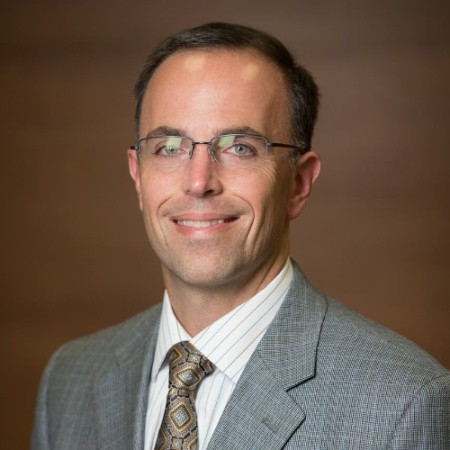

TOPEKA – Secretary of Commerce David Toland announced Trent Armbrust will join the Kansas Department of Commerce as director of strategy for Bioscience and Technology effective Sept. 23.
This newly created role and Armbrust’s appointment come as Kansas Governor Laura Kelly and Secretary Toland aggressively target the bioscience and technology sectors for growth in the state. Armbrust will develop a strategy to reengage these key sectors, helping them achieve sustained success in Kansas.
“Creating an ecosystem that facilitates the growth of tech companies in Kansas is a priority for Governor Kelly and the Department of Commerce,” Secretary Toland said. “We are thrilled to have Trent join the Commerce team and lead the effort to reengage the state as a partner in growing knowledge jobs in Kansas.”
Armbrust comes to Commerce following seven years in Economic Development for the Manhattan Area Chamber of Commerce. An active member of several economic development, bioscience and community organizations, Armbrust earned his bachelor’s degree in Biology and master’s degree in Plant Physiology from Kansas State University and is a graduate from the Economic Development Institute at the University of Oklahoma.
Speaking of his new role, Armbrust said, “It’s truly exciting to join the Kansas Department of Commerce as Governor Kelly and Secretary Toland build a new vision for Kansas as a preeminent state for business location and success.”
Armbrust will serve as a member of the Commerce leadership team and be responsible for rebuilding relationships with private- and public-sector partners as the state seeks to help advance new technologies, support innovative research, create new jobs and further advance Kansas’ leadership across key bioscience sectors.
13-year-olds charged with bringing guns to Kan. middle school
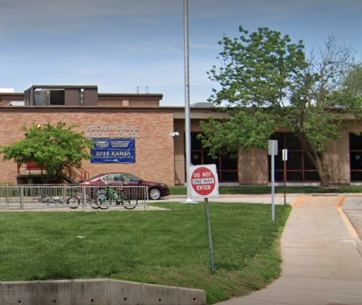
SHAWNEE, Kan. (AP) — Two 13-year-olds have been charged with bringing guns to a suburban Kansas City middle school.

Prosecutors in Johnson County, Kansas, announced Thursday that the teens are charged with being juveniles in possession of a firearm. The announcement was made one day after the guns were found in the students’ backpacks at Hocker Grove Middle School in Shawnee.
Principal Chris Kase said in a letter to parents that administrators were tipped off by concerned classmates. The principal noted that no evidence suggests that the teens planned to use the guns at the middle school.
Johnson County District Attorney’s Office spokeswoman Kristi Bergeron says other details, including the teens’ names, won’t be released because of their age.
Lawrence ‘Larry’ Garman
Phillipsburg resident Lawrence “Larry” Garman passed away Sept. 11, 2019 at the Phillips County Hospital in Phillipsburg at the age of 88.
Survivors include his wife Dora Lee of the home; son Curtis of Phillipsburg; daughters, Cindy Dietz of Phillipsburg and Karen McCall of Derby; 6 grandchildren & 6 great grandchildren.
Cremation was chosen. The family will receive friends from 2:00 to 4:00 p.m. Saturday at the Olliff-Boeve Memorial Chapel, Phillipsburg.
Police: Kansas woman jailed after violent stabbing
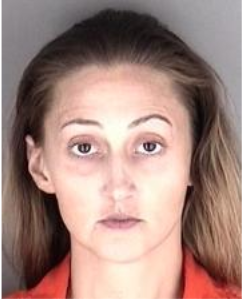

SHAWNEE COUNTY — Law enforcement authorities are investigating a stabbing and have a suspect in custody. Just after 9:30a.m. Thursday, police received report of a violent attack with a knife at a residence in the 700 Block of SE Ridgewiew Drive in Topeka, according to police spokesperson Gretchen Koenen.
Officers arrived on scene and located a victim identified as 34-year-old Michael Ortiz suffering from life-threatening injuries consistent with a stabbing. The victim was transported to a local hospital by American
Medical Response and is expected to survive.
Following an investigation, police arrested 34-year-old Tiffany A. Riley. She is being held in the Shawnee County Department of Corrections on a requested charge of aggravated battery
TALLMAN: Increasing student needs driving special-ed costs, staff shortages
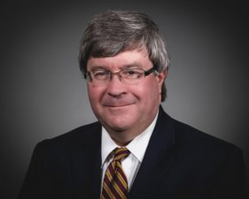
 By MARK TALLMAN
Kansas Association of School Boards
Rising numbers of young children with severe behavioral, emotional and mental health needs and speech and language issues are driving up school district costs and worsening an already critical shortage of qualified staff and services.
That was the assessment of education leaders at three KASB workshops on the federal Individuals with Disabilities Education Act held in Topeka, Dodge City, and Salina at the end of August.

Chip Slaven, Chief Advocacy Officers for the National School Boards Association, spoke at the workshops on NSBA’s push to update and fully fund IDEA. He said Congress is considering “reauthorizing” – a review that can lead to major changes in legislation – the IDEA for the first time since 2004.
Kansas Senator Pat Roberts, a member of the Senate Health, Education Labor and Pensions Committee, has publicly backed the goal of increasing federal funding from the current 16 percent to 40 percent of special education costs.
Special education leaders say increased funding would allow them to provide better services to students and families through better staffing and reduce the drain on other school programs.
Growing demands, especially at early ages
The number of Kansas students receiving services under IDEA, including those in private schools, is increasing rapidly, up 20.3 percent from 2001 to 2018, according to federal reports. That is four times the rate of increase in all students in Kansas public school districts. Special education leaders say the biggest reason is the growing identification of young children with special needs.
The number of three-to-five-year-olds receiving special education in Kansas increased by over 4,000, or 52.3 percent, since 2001. That helps explain the growth in total special education enrollment, because once students are identified, they usually remain in the system.
Educators agree that part of the growth is due to stronger efforts to identify students with special needs earlier. With more districts providing all-day kindergarten and preschool programs, more students are enrolled and those with special needs can be spotted. Districts are also expected to seek out high need students before they enroll in kindergarten.
The biggest challenges are growing numbers of students with aggressive behaviors, who can’t regulate themselves, can’t interact with other students and may be dangerous to themselves and others and destroy school property; and those lacking in speech and language skills.
What educators are not sure about is why those numbers are growing so fast.
One theory is that too many young parents either haven’t been taught appropriate skills to raise children or are too stretched or stressed by work or other obligations to provide such care. Related is the suggestion that children who used to be raised by parents and grandparents are now in foster care, a system with substantial, well-documented problems.
A growing concern is “screen time;” that young children are given a phone or tablet to distract, occupy or amuse them at the expense of interaction with parents or peers, making them less prepared for interaction with other adults and children and less able to pay attention to a teacher. A classroom can put stress on children not used to being in a structured setting or struggling to meet higher academic goals before learning basics like socializing with others and toileting.
The high cost and limited availability of childcare is one reason many children have no experience outside their immediate home and family when they arrive at school, and lack language and social skills. Such students lag behind their peers from the beginning and often never catch up. As one school leader said, students can quickly “internalize” that they are “failures” and don’t believe they can learn.
The dwindling support for children and families from other providers, such as mental health providers, means problems become worse until the child arrives at school, which may be the only way a family can get assistance. As one special education administrator notes: “No matter how difficult the issues might be, the public school is the one place children can always legally go to.” Other providers don’t have to provide services without funding or can limit services to those who can pay. That leaves out many of the highest need cases – until the school steps in.
Rising toll on the staff and schools
School leaders say the growing demands on special education are straining programs that have long experienced a shortage of teachers. More students require more teachers. When they can’t be found, caseloads increase, leading to teacher frustration, burn-out and turnover. Parents are frustrated by the lack of consistency, which also hurts relationships between families and the school. Schools turn to using substitutes who may not have a full license and to paraprofessionals who don’t have training as teachers. Administrators say they do the best they can to meet student needs but could do better with better-trained staff.
A study released last year by the Kansas Division of Legislative Post Audit found that school districts would need to hire an additional 700 special education teachers and 2,600 other licensed professionals like speech pathologists to meet “best practices” guidelines. If that were done, districts could cut between 1,700 and 3,900 paraprofessional positions, but would still require more funding because licensed staff earn significantly more than unlicensed paras.
In addition to better services, district leaders say they are urgently concerned about students – especially those at very young ages – who are dangers to themselves, other students and staff. This may be due to uncontrolled anger, suicide and other self-harm, or potential violence against others like school shooting, each of which can be caused by depression, emotional disturbance or other mental illness.
To address these issues, schools are trying early identification, therapeutic preschools, one-on-one support, partnering with other agencies and providers and trying to build deeper relationships with student and families – all of which are promising but require personnel, training and funding. School leaders also acknowledge that other agencies, from community mental health to foster care, also face diminished resources and staff shortages, and may be in competition for the same people.
How more funding could help
When originally passed in 1975, Congress said it intended to cover 40 percent of special education costs required by the new law. Currently, federal funding only covers about 16 percent of costs. Kansas school districts receive over $100 million in federal aid for special education.
The state of Kansas also created a state aid program for special education, which according to state law should pay 92 percent of the “excess cost” of special education (the cost of special education after subtracting the “regular” cost of educating students with disabilities and federal aid). However, state aid has also been consistently below that target, currently covering an estimated 78.2 percent. Local school districts must make up for what federal and state aid doesn’t cover.
Special education leaders say additional funding would not immediately solve the special education teacher shortage, but it would allow districts to raise teacher salaries to attract and retain new people over time. It could also help districts assist individuals in paying for college to become special education teachers, and work to provide more mental health services and more family outreach.
More special education funding would also reduce the need to shift money from regular education programs. For example, because the state special education aid program is only funded at 78 percent of excess cost, rather than 92 percent as provided in state law, districts must shift over $110 million statewide from general state aid to special education.
The percentage of excess cost is based on the statewide total of special education costs compared to total state appropriations for special education aid. However, the funding is distributed to individual districts based on transportation costs, the number of teacher and paraprofessionals, and funding for very high-cost individual students. As a result, individual districts may receive more or less than the statewide percentage.
For more information:
KASB Report: Special Education By the Numbers
Kansas Legislative Post Audit Report: Evaluating Special Education Costs
National School Boards Association: IDEA Fact Sheet
Mark Tallman is the executive director for advocacy for the Kansas Association of School Boards.
Police investigate shooting in parking lot near Manhattan High School
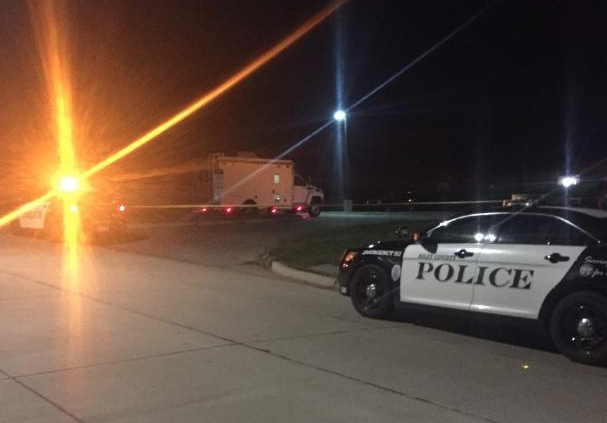
RILEY COUNTY —Law enforcement authorities are investigating a report of shots fired Thursday in Manhattan.

Just before 7p.m., police received multiple reports of shots fired in the area of Westwood and Oak Street in Manhattan, according to Riley County Police Captain Josh Kyle.
Upon arrival officers discovered several spent shell casings in a parking lot off of Oak Street which is south of the Manhattan High School West Campus.
Information on scene indicates that two vehicles met in the parking lot. The occupants of the vehicles interacted for a while before shots were fired. Both vehicles then fled the area. A house in the 200 Block of Ridge was struck by a bullet, according to Kyle.
A witness on scene provided a tag number for one of the vehicles. Kansas Highway Patrol Troopers from the Kansas Turnpike Authority were able to locate this vehicle eastbound on I-70.
A pursuit ensued which involved at least one other agency (Contact the KHP-KTA for further information.) The vehicle was eventually stopped and four people were taken into custody (The driver was arrested by the KHP-KTA for the offenses in their presence.) The occupants were interviewed by Riley County Police detectives.
Currently the RCPD is following up on investigative leads as to the identity of the other vehicle and its occupants.
There is no indication that the individuals involved are affiliated with Manhattan High School, the parking lot happened to be a meeting location. There have been no reports of injuries.
The RCPD have not made an arrest.
Charlene Marie Fitzmorris
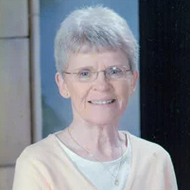
 Charlene Marie Fitzmorris, 76, of McPherson, Kansas, passed away at 11:12 a.m., Wednesday, September 11th, 2019 while in the company of family members, at Cedars House.
Charlene was born in St. Charles, Missouri on February 25, 1943, a daughter of Charles Joseph and Margarette (Purdon) Moriarty.
Charlene attended elementary school at St. Mary’s Catholic School and graduated from St. Patrick’s High School, Parsons, Kansas. She then attended Parsons Junior College, Parsons, Kansas and later graduated from Fort Hays State University, Hays, Kansas with a degree in Elementary Education.
She was a member of St. Joseph’s Catholic Church in McPherson, where she was a member of the Altar Society.
Charlene was a homemaker and she took great pride in providing for her family in this manner. She was a bookkeeper for Lucas Motor Company, Lucas, Kansas, and taught for 28 years starting at Sylvan Grove Elementary School, Sylvan Grove, Kansas and retired from Washington Elementary School, McPherson, Kansas after 2 years.
Charlene was a member of KNEA and the NEA.
Charlene enjoyed raising her children, teaching, and spending time with her family, particularly her grandchildren.
Charlene Marie Moriarty was united in marriage to Larry Joe Fitzmorris on August 17, 1963 at St. Mary’s Catholic Church, Parsons, Kansas. The young couple established their first home together in Parsons for a year before moving to Lucas, Kansas where they lived for 39 years. After retirement, they moved to McPherson in 2003.
She is survived by husband Larry Fitzmorris, of McPherson, Kansas; son Douglas Fitzmorris and his wife Danica, of McPherson, Kansas; daughter Kelly Kohl and her husband Rick, of Moundridge, Kansas; son Shawn Fitzmorris and his wife Christy, of Kansas City, Missouri; son Ryan Fitzmorris and his wife LaChelle, of Hays, Kansas; brother James Moriarty and his wife Sheri, of Kansas City, Missouri. She is also survived by 10 grandchildren – Riley Fitzmorris, Trevor Kohl, Addie Fitzmorris, Rory Fitzmorris, Collin Kohl, twins Jase Fitzmorris and Josie Fitzmorris, Declan Fitzmorris, Kellan Fitzmorris, and Quinn Fitzmorris.
Charlene was preceded in death by her parents and a grandson Pierce Fitzmorris.
Visitation will be held on Sunday, September 15, 2019 from 5:00 p.m. – 7:00 p.m. at St. Joseph’s Catholic Church with Rosary at 7:30 p.m..
A Mass of Christian Burial will be celebrated on Monday, September 16 , 2019 at 10:00 a.m. at St. Joseph’s Catholic Church, McPherson, Kansas, with Fr. Ben Shockey officiating.
Burial will be at McPherson Cemetery McPherson, Kansas.
In lieu of flowers, memorial contributions may be made to St. Joseph’s Catholic School and they can be sent to Glidden-Ediger Funeral Home, 222 W. Euclid St., McPherson, Ks. 67460.