We have a brand new updated website! Click here to check it out!

CAMPBELL: Recommendations for fall planting of alfalfa

Alfalfa, often considered the “Queen of Forages”, produces high yields that are highly digestible and high in protein. Alfalfa is a very important leguminous crop for dairy and other livestock operations in Kansas. Late summer and early fall are often the best times to plant alfalfa in Kansas due to less weed pressure than spring planting (Figure 1).

Figure 1. Alfalfa seedlings. Photo by Doohong Min, K-State Research and Extension.

Much of Kansas has seen above-average rainfall this summer and soil moisture within the profile is adequate, if not surplus, in many areas. Available moisture at planting is crucial for alfalfa establishment, but too much moisture can increase seedling disease incidence and reduce alfalfa nodulation and nitrogen fixation.

If soil moisture is available, growers in northwest Kansas can plant as early as mid-August. Those in southeast Kansas can plant in mid-to-late September. In other parts of Kansas, the optimal planting time is late August or early September. Producers just need to plant early enough to have three to five trifoliate leaves before the first frost.

Alfalfa is a three- to five-year, or longer, investment and therefore it is crucial to ensure proper establishment. Some producers shy away from alfalfa because of its high establishment cost and risk of stand failure. In the end, however, it is relatively inexpensive, if amortized over the life of the crop.

Under proper management and favorable weather conditions, dryland alfalfa can produce 3 to 6 dry matter tons of forage per acre per year. Irrigated fields can produce 6 to 8 dry matter tons per acre per year or more.

Stacy Campbell is Agriculture & Natural Resources Extension Agent for the Cottonwood Extension District.

When planting alfalfa, producers should keep the following in mind:

Soil test and correct soil acidity. Alfalfa grows best in well-drained soils with a pH of 6.5 to 7.5, and does not tolerate low soil pH. For areas east of the Flint Hills, if the pH drops below 6.4, add lime to raise soil pH to 6.8 before planting. For the Flint Hills and areas west, lime is recommended when the pH drops below 5.8 with a target pH of 6.0. Ensuring appropriate soil pH levels prior to planting is essential, especially as lime is relatively immobile in the soil profile and the field will not be worked for the next 3-5 years. For more information on liming alfalfa fields, see the previous eUpdate article published on July 26, 2019: “Liming prior to fall seeding of alfalfa”.

Soil test and meet fertilization needs. Apply the needed phosphorus (P) and potassium (K) amounts according to soil test recommendations. Phosphorus fertilizer will be required if soil test P levels are below 25 ppm, and potassium fertilizer will be required if soil K levels are below 130 ppm. Even soils that test higher than these thresholds may need additional fertilizer. Small amounts of N fertilizer (15 to 20 lb/acre) as a starter at planting are beneficial for alfalfa establishment.

Plant certified inoculated seed. Ensuring the correct Rhizobium inoculation is crucial for alfalfa seedlings to fix available soil nitrogen to meet the needs of growing alfalfa for optimum production.

Plant in firm, moist soil. A firm seedbed ensures good seed-soil contact; therefore, use a press wheel with the drill to firm the soil over the planted seed. No-till planting in small-grains stubble will usually provide a good seedbed.

Do not plant too deeply. Plant one-fourth to one-half inch deep on medium- and fine-textured soils and three-fourths inch deep on sandy soils. Do not plant deeper than 10 times the seed diameter.

Use the right seeding rate. Plant 8 to 12 pounds of seed per acre on dryland in western Kansas, 12 to 15 pounds per acre on irrigated medium- to fine-textured soils, 15 to 20 pounds per acre on irrigated sandy soils, and 12 to 15 pounds per acre on dryland in central and eastern Kansas. Double drilling, with the second seeding drilled 45 degrees to the first planting can help ensure a good uniform stand. If using the double drill method, each pass should be planted at 50% for the total seed rate to be 100%.

Check for herbicide carryover that could damage the new alfalfa crop – especially when planting no-till alfalfa into corn or grain sorghum stubble. In areas where row crops were drought-stressed and removed for silage, that sets up a great seedbed for alfalfa, but may still bring a risk of herbicide damage.

Choose pest-resistant varieties. Resistance to phytophthora root rot, bacterial wilt, fusarium wilt, verticillium wilt, anthracnose, the pea aphid, and the spotted alfalfa aphid is essential. Some varieties are resistant to even more diseases and insects.

Purchase alfalfa varieties with a fall dormancy rating ranging from 4 – 6 for Kansas. Fall dormancy relates to how soon an alfalfa variety will stop growing in the fall and how early it will begin growing in the spring or late winter. Simply put, it would be better not buy a variety with fall dormancy of 9-10, which can be more suitable for California and regions where alfalfa can keep growing year-round under irrigation. 

Find more information about growing alfalfa in Kansas in the Alfalfa Production Handbook. This publication is available on the web at: www.ksre.ksu.edu/bookstore/pubs/c683.pdf

Also see Alfalfa Growth and Development, available on the web at: https://www.bookstore.ksre.ksu.edu/pubs/MF3348.pdf

Kansas man dies after crash while making U-turn

WILSON COUNTY — One person died in an accident just before 2p.m. Tuesday in Wilson County.

The Kansas Highway Patrol reported a 1994 Dodge pickup driven by David L. Rasmussen Jr., 46, Fredonia, was eastbound on U.S. 400 at Jade Road one mile southeast of Fredonia.

A 2011 Volvo semi driven by Scott M. Gronau, 50, Pittisburg struck the pickup as it was making a U-turn.

Rasmussen was transported to Fredonia Regional Hospital where he died.  Granau was not injured. Rasmusen was not wearing a seat belt, according to the KHP.

HMS tour reveals a school bursting at the seams

Principal Tom Albers discusses cafeteria space issues during a recent school board tour of HMS.

By CRISTINA JANNEY
Hays Post

Hays Middle School is out of room, Principal Tom Albers told the Hays school board during a tour Monday night.

HMS enrollment is at 686 students, the largest being the sixth-grade class of 248.

The gradually increasing enrollment has meant an already cramped lunch room is faced with even bigger challenges, the school is out of classroom space, has teachers on carts and class sizes are getting even larger.

“Every sixth-grade class is big,” Albers said. “We are talking 24 to 30 kids and some even bigger. We’re tight.”

Albers said he would love to have more electives for the students, but if the district added staff, he said more teachers are need for core courses to reduce class sizes. HMS is offering half-year English classes for seventh- and eight-graders, and they would like to make those full-year classes.

USD 489 school board members tour a special education classroom at HMS.

However, if HMS added staff, there is the question of where they would put the teachers. On carts, move in trailers? The options are limited.

The last renovations to the HMS were finished in 2014, which included HMS’ tornado shelter.

“People ask, ‘You put these new buildings in. How can you be short? How can you not have room?’ ” Albers said. “One of the reasons is our need for special education.”

Special education is taking up three rooms at HMS now, when at one time it took up just one. More paras and aides are required, the number of students in the program has increased and newer teaching methods require more space. One of the rooms that is being used as a special-ed classroom used to be the teachers’ lounge.

Albers is in his second year in his position at the middle school. He said several times during the tour he knew there were space issues at HMS, but until he actually saw it, he didn’t really understand how much HMS was doing in its existing spaces.

One of these areas is the cafeteria, which was not designed to handle as many students as it does today.

The cafeteria gets very noisy because of the number of students crammed into such a small space. HMS serves lunch from 11 a.m. to 12:45 p.m. Students have 20-minute lunch periods, but really don’t have that long to eat once they get through the line, are seated, and must clean up and line up.

“It’s definitely complicated. It is like ant farm — kids everywhere,” said Shauna Zweifel, HMS assistant principal.

HMS boiler room

Albers said, “It does work, but it doesn’t work well.”

HMS is also serving 150 to 200 students breakfast.

One plan school officials have considered is expanding the lunchroom into an old boiler room adjacent to the existing cafeteria. It is currently being used for storage.

Although the gym is nice and is in good repair, it also has to hold a lot of kids.

With two physical education classes and a weights class going on in the upper deck simultaneously, there can be 110 students in the gym per class period.

Albers described three different teachers using intercoms and bullhorns to direct students all at they same time.

“You had this going on. You had this going on. You had that going on. I was like this is crazy. It was crazy that we would put this many kids in the gym at one time, but it is the only option we have,” Albers said.

HMS Principal Tom Albers points out an uneven point in the HMS track that can be a tripping hazard.

The HMS track is in disrepair. Albers pointed out a large crack in the asphalt that has been repaired with a tar patch and is a tripping hazard. HMS can’t host meets at the school because of the condition of the track. HMS had 177 kids out last year for track.

The school has changed its drop-off procedures with the installation of a new secure entrance at the front of the school. During school hours, visitors buzz into the school and enter through the office. Students are required to enter in the morning through the west doors and check in through the gym.

Albers said the west door drop-off gives the school better control of the students’ movement through in the morning.

The school is working on plans to improve traffic control in the parking lot during drop off. Within the next month, the school plans to convert the parking lot to one-way traffic. Facilities also plans to paint a white area in the parking lot that will be a designated student drop-off zone.

August storm damage on the west side of HMS.

HMS is still working with insurance to complete repairs to the west side of the school that was damaged during a wind and hail storm in August.

Jimenez slam helps White Sox power past Royals

CHICAGO (AP) – Rookie Eloy Jimenez hit his first career grand slam, Yoan Moncada launched a monster two-run homer and the Chicago White Sox beat the Kansas City Royals 7-3 on Tuesday night.

Adam Engel added a solo shot for as the White Sox won their second straight, but just their fourth in 14 games.

Adalberto Mondesi, Alex Gordon and Ryan O’Hearn went deep for the Royals on a warm night where the ball carried well and every run was scored on a homer.

Ivan Nova (10-12) allowed three runs in 5 2/3 innings to snap his three-game losing streak. The right-hander yielded six hits, including the Royals’ three solo shots, while walking none and striking out five.

Jakob Junis (9-13) permitted five runs in five-plus innings in losing for the third time in four decisions.

Mondesi homered in the top of the first to put Kansas City ahead.

The White Sox loaded the bases with one out in the bottom of the inning when Moncada’s hot comebacker glanced off the heel of Junis’ glove for an infield single. Jimenez followed, and he lined his 25th homer into the visitors’ bullpen in right on a 1-1 pitch.

Gordon and O’Hearn went deep back-to-back to start the second. O’Hearn’s blast bounced high off the center-field batter’s eye.

Engel homered on the first pitch in the bottom half.

Moncada’s 23rd homer, off Kevin McCarthy in the seventh, also landed high in the batter’s eye and was measured at 452 feet.

SOUTH SIDE CROWN?

White Sox shortstop Tim Anderson entered the game with an AL-leading .334 batting average, but went 0 for 4 to drop to .331. Other numbers are at play as the 26-year-old seeks to become the third batting champion in White Sox history, following Hall of Famers Frank Thomas (1997) and Luke Appling (1936 and 1943).

Anderson has only 435 at-bats because he missed five weeks with a right ankle sprain. To qualify for the batting title, a hitter needs 502 at-bats. Chicago has 18 games remaining.

Manager Rick Renteria said he’ll try to get Anderson the at-bats he needs, but not at the expense of his “physical well-being.”

“Obviously you know that something is at stake for him as well and you try to balance it as best you can,” Renteria said.

FIRST LOOK

First baseman Andrew Vaughn, drafted No. 3 overall and signed by the White Sox out of Cal-Berkeley in June, made his first trip to Guaranteed Rate Field and met with players and coaches. Rated by Baseball America as the top hitter in the 2019 draft, Vaughn played for two Class-A teams this season.

RUFF NUMBERS

In addition to 15,196 human fans, 1,236 canines attended on Dog Night.

TRAINER’S ROOM

Royals: RHP Jake Newberry (shoulder) was reinstated from the 10-day IL. He last pitched on Aug. 19.

White Sox: Renteria was back in the dugout – with his right arm in a sling – after undergoing right rotator cuff surgery on Friday and missing Chicago’s weekend series against the Angels. Renteria attributed the injury mostly to “wear and tear,” but said one throw earlier this year worsened his shoulder to a point where he needed surgery.

UP NEXT

Royals RHP Glenn Sparkman (3-11, 5.97 ERA) faces White Sox RHP Reynaldo Lopez (9-12, 5.17) on Wednesday night. Lopez threw an 11-strikeout one-hitter at Cleveland last Thursday.

HHS girls’ golfers finish runner-up in Salina

SALINA – The Hays High girls’ golf team shot a 178 and finished in second place, one shot behind Manhattan at the Salina Central Invitational at the Salina Municipal Golf Course. Taleia McCrae and Sophia Garrison both shot rounds of 40. McCrea won the individual title by scorecard playoff and Garrison was second.

Team Finish
1. Manhattan 177
2. Hays High 178
3. Great Bend 183
4. Salina-South 192
5. Hutchinson 200
6. Emporia 202
7. Newton 204
8. Salina-Cenrtal 211
9. Concordia 215
10. Hays High JV 217
11. Clay Center Com. 246

Top 10 Medalists
1. Taleia McCrae-Hays High-40
2. Sophia Garrison-Hays High-40
3. Kami Bussman-Manhattan0-41
4. Zoe Norton-Salina South-41
5. Reaghan Martin-Hutchinson-42
6. Cailee McMullen-Great Bend-44
7. Ashlyn Harbaugh-Great Bend-44
8. Phys Phipps-Manhattan-44
9. Andi Siebert-Manhattan-44
10. Taylor Bistodeau-Junction City-45

Kansas woman sentenced after violent attack on neighbor’s dog

WICHITA —  A Kansas woman arrested after a violent dog attack in November has entered a guilty plea in Sedgwick County.

McPherson -photo Sedgwick County

On Monday, Carlett McPherson, 31, entered the plea to one count of misdemeanor cruelty to animals. After her guilty plea, she was sentenced to six months of probation by agreement of the parties involved, according to the Sedgwick County District Attorney.

On November 16, 2018,  McPherson’s dog entered her neighbor’s yard where the neighbor’s grandson and the neighbor’s dog, Smokey, were located, according to the district attorney.

McPherson’s dog attacked the neighbor’s dog, Smokey.  McPherson tried to break up the dog fight with a broom but was unsuccessful.

She called for help, and a man entered the yard with a tire iron.

The unknown man tried to separate the animals with the tire tool, striking Smokey. There was no evidence that McPherson ever wielded the tire iron that struck Smokey or directed the man to strike Smokey with the tire iron, according to the district attorney.

McPherson left the yard to get a phone to call 911. When she returned, two more of her dogs followed her back to the yard and again attacked Smokey.

Smokey was later euthanized after his bites became infected.  McPherson was charged with one count of misdemeanor cruelty to animals for allowing her dogs to attack the neighbor’s dog, Smokey.

In addition to the probation, the court also ordered her to pay the veterinary bill. Wichita Police continue to search for the man with the tire iron.

Under Kansas law, cruelty to animals includes knowingly but not maliciously killing or injuring an animal. McPherson pled guilty to injuring Smokey. There was no evidence that she intentionally killed the victim animal, Smokey, according to the district attorney.

——–
SEDGWICK COUNTY – Law enforcement authorities are investigation a case of alleged animal cruelty.

McPherson -photo Sedgwick County

Just after 4:30p.m. Friday November 16, police responded to a suspicious character with a weapons call at a residence in the 1000 Block of North Poplar in Wichita, according to officer Charley Davidson.

A suspect later identified as 30-year-old Carlett McPherson was reported beating a dog with a tire iron and releasing other dogs to attack a victim dog.

At the scene, officers did find several dogs involved in a physical disturbance in the front yard of the residence.  Officers worked to separate the animals and with the assistance of animal control officers, the aggressive dogs were captured without incident. The victim dog was transported to a local animal hospital where it died from the injuries.

On December 1, as a result of the investigation, McPherson was arrested and booked into the Sedgwick County Jail on requested charges of animal cruelty, according to Davidson.  She is being held on a 25,000 Bond, according to the jail booking report.

Police will present the case to the district attorney this week.


FHSU’s Fisch earns GAC Goalkeeper of the Week

FHSU Athletics

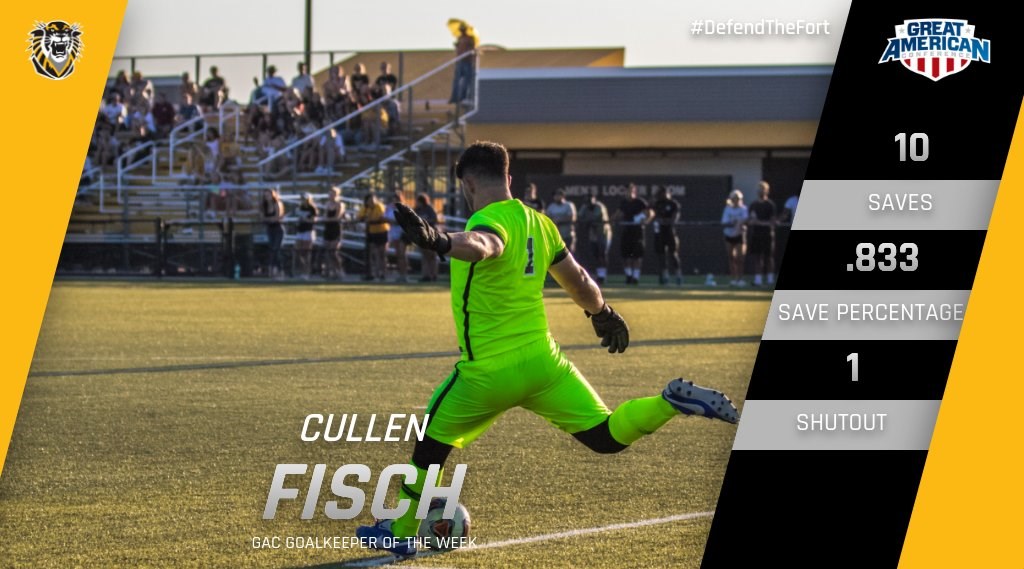
RUSSELLVILLE, Ark, – Fort Hays State senior goalkeeper, Cullen Fisch has been awarded the Great American Conference (GAC) Goalkeeper of the Week, as announced on Tuesday (Sept. 10) by the league office. This is the first time a Tiger athlete has been selected as a receipient of this honor.

Fisch helped propel No. 3 Fort Hays State to a 3-0 victory against Rockhurst in their home-opener by notching five saves and a clean sheet. In their loss to Eastern New Mexico, the La Vista, Neb. native proved to be a bright spot tallying another five stops. Fisch begins his season with an .833 save percentage adding 10 saves to his stat line.

The Tigers will go on the road to face Maryville University on Wednesday (Sept. 11) from Kansas City, Mo. Kickoff is set for 3 p.m.

TMP girls golf finishes third at Goodland

The TMP-Marian girls golf team grinded out a third place finish Tuesday on a hot day at the Goodland Invitational at the Sugar Hills Golf Course in Goodland.

Goodland won the team title with a score of 393. Colby was 30 shots back in second place and the Monarchs finished in third with a team score of 426.

TMP’s Heleigh Spray finished fifth with a 24-over 95. Jenna Romme also medaled for the Monarchs, she fired a 28-over 99 to finish eighth.

Goodland’s Kerrigan Rudolph won the individual title with an 11-over 82.

The Monarchs next action will be on Sept. 19 at the Larned Invitational.

Due To Impending Weather Men’s Soccer Moves Game To Wednesday

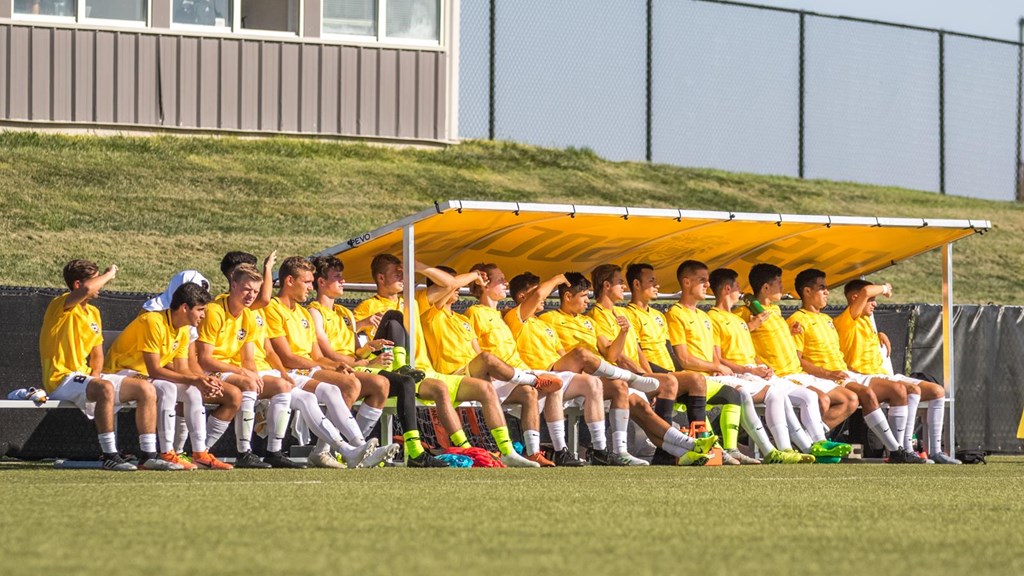
HAYS, Kan. – The Fort Hays State men’s soccer program has announced a schedule change for this weeks game. Due to impending weather, the Tigers men’s soccer game will be moved from Thursday (Sept. 12) at 3 p.m. to Wednesday (Sept. 11) at 3 p.m. The location of the contest will be at Swope Soccer Village in Kansas City, Mo.

The Tigers are set to take on Maryville University, a team they have yet to face in program history. The Saints enter the match, 2-0, scoring five goals in a pair of games while FHSU is 1-1 having only scored their season opener.

Coroner: Skeletal remains are of man with connection to Kansas woman

ANDERSON, Ind. (AP) — Skeletal remains found last spring in a central Indiana park have been identified as those of a man who vanished more than a year ago.

Mandrell photo courtesy Madison Co. Sheriff

Madison County Coroner Danielle Noone says a DNA match obtained by Indiana State Police determined the skeletal remains are those of 52-year-old Ronald Mandrell, who had been an Anderson resident but was homeless when he died.

Mandrell’s cause of death and manner of death are undetermined, but Anderson police continue to investigate his death.

Mandrell vanished in July 2018. Mushroom hunters found his remains in April at Anderson’s River Bend Park.

Amy Copeland of Kansas City, Kansas, tells The Herald Bulletin she and Mandrell have a now-adult daughter. Copeland hadn’t spoken to Mandrell in years.

She says his death “just makes me sad.”

FHSU Women’s Golf Finishes 12th in NSU Golf Classic

TAHLEQUAH, Okla. – The Fort Hays State women’s golf team turned in a 12th place finish at the 21st Annual NSU Golf Classic Monday and Tuesday (Sept. 9-10) at Cherokee Springs Golf Course. The Tigers battled hot and blustery conditions both days, posting team scores of 325 and 333 on the par-72, 5,964-yard course.

Taylor DeBoer finished in a tie for 17th with a two-round score of 12-over 156. The senior was tied for eighth after a first-round 76 before signing for an 80 in round two. Kira Mestl posted consecutive rounds of 7-over 79 to finish with a 158, good for 32nd place. The sophomore was the lone Tiger to record multiple birdies on the week, picking up one birdie in both rounds.

Freshman Kate Peterka fired rounds of 83 and 84 to record a tournament total of 167, finishing in a tie for 52nd. Peterka was successful at evading the big number, leading the team with just one double or worse on the week. Madison Roether (87-91-178) finished T64 and Katie Brungardt (94-90-184) placed 67th to round out the scoring for the Tigers.

The Tigers sat in 10th after their first-round 325 before finishing the tournament with a two-round score of 658. MIAA-newcomer Rogers State took the team title with rounds of 307 and 302 while Aitana Hernandez from host Northeastern State took the individual crown with a 3-over 147 (72-75).

Fort Hays State has a week off before heading back out on the road September 24-25. Next up is a short trip north to Awarii Dunes Golf Course outside Kearney, Neb. for the MIAA Fall Preview.

News from the Oil Patch, Sept. 10

BY JOHN P. TRETBAR

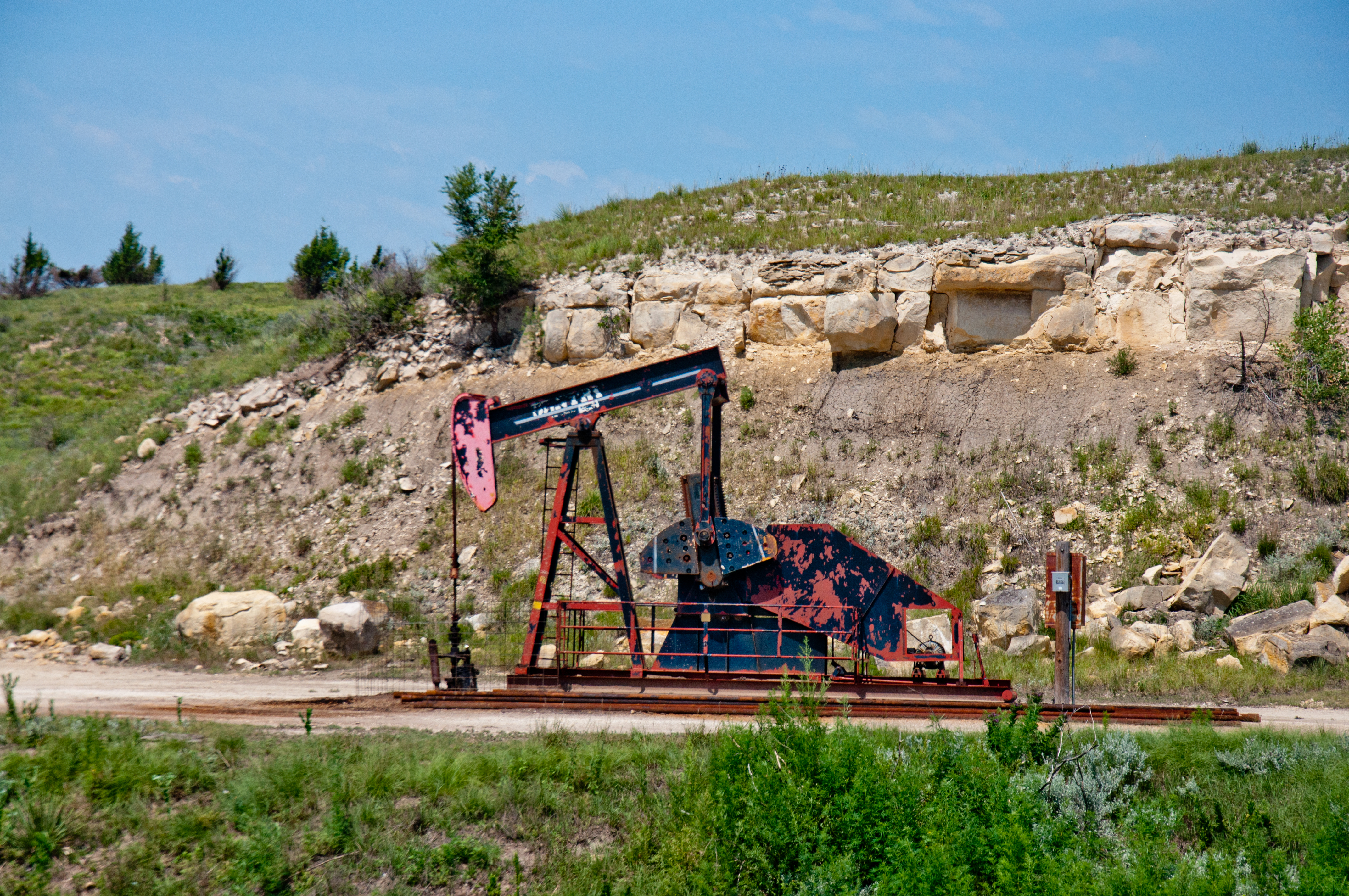
The weekly rig count from Independent Oil & Gas Service shows four active drilling rigs in eastern Kansas, down two from the week before, and 25 west of Wichita, up one. Drilling was underway at one lease in Barton County, one in Ellis County and one in Russell County. Baker Hughes reported 898 active drilling rigs across the U.S. Friday, down four oil rigs from a week earlier, and down two seeking natural gas. The count in Oklahoma was down five, Texas was down three, and North Dakota was up three.

Independent Oil & Gas Service reports 15 newly-completed wells across Kansas last week, 12 of them west of Wichita. Regulators approved 15 new drilling permits across state, eight of them east of Wichita, and seven in Western Kansas, including one in Barton County.

Kansas regulators report 94 new intent-to-drill notices across the state last month, down from 111 the month before and less than half the 236 intents reported in August of last year. The Kansas Corporation Commission reports seven new intents on file in Barton County, six in Ellis County and two in Stafford County. The year-to-date total is just 735 intents, compared to 1,303 intents through August of last year.

The U.S. Energy Information Administration reported domestic crude oil production dropped slightly from last week’s all-time record high. The government says U.S. producers pumped 12.354 million barrels per day for the week ending August 30, the second biggest weekly production total ever. That’s down 146,000 barrels from the record 12.5 million barrels produced the week before.

The government said U.S. commercial crude oil inventories dropped by 4.8 million barrels from the previous week to 423 million barrels, right at the five-year average for the time of year.

EIA reported a big increase in crude-oil imports, which were 976,000 barrels per day higher than last week at 6.9 million barrels per day. The four-week average is about 12.5% less than the same four-week period a year ago.

In its latest monthly crude-oil production report, the Energy Information Administration said U.S. operators produced 12.082 million barrels of crude oil in June, a slight drop from May’s total but more than 13% higher than the figure from June of last year. In Kansas, June production reached 92 million barrels, which is up two percent from the month before but down more than five percent from a year earlier.

Gasoline prices are up to a dime cheaper than last week in all but four states. AAA says two of those states saw rising prices because of Hurricane Dorian. Across Kansas, motorists are paying an average of $2.336 per gallon for regular gasoline, which is more than 12 cents cheaper than a month ago. The national average is $2.573. We spotted $2.21 a gallon at several locations in Hays and $2.17 across Great Bend. Your 15-gallon fill-up will cost nearly two dollars more than a month ago, but six dollars less than last year at this time.

Maturing debts in the Permian Basin are driving a spike in bankruptcy declarations. The Wall Street Journal reports that so far this year we’ve already nearly matched last year’s total of 28 producer bankruptcies. The Journal reports there’s still about nine billion dollars in notes set to mature through the rest of this year. According to S&P, there’s another $137 billion coming due between 2020 and 2022. Defaults are on the rise, as companies struggle to service debt, bring in new financing and refinance existing debt, according to the report.

Oil-by-rail continued to increase last month, despite a continuing decline in monthly numbers for all freight train traffic. The Association of American Railroads said that in August, eight of the 20 commodity categories they track saw increases compared with a year earlier. Leading the way was petroleum and petroleum products, which were up 7.8 percent. AAR Senior Vice President John T. Gray said total U.S. freight carloads have fallen on a year-over-year basis for seven straight months. AAR said petroleum rail traffic gained half a percent in the week ending August 31 compared to a year earlier. Oil-by-rail in Canada was up more than 12 percent.

Adams County, Colorado on Tuesday became that state’s first county to adopt new oil and gas regulations since the state passed a law that bolstered local control over fossil fuel development. Adams County Commissioners on Tuesday doubled the current setback limits, from 500 to 1,000 feet between oil and gas development and occupied buildings and homes. Operators can request exemptions, which would require a public hearing. The state’s largest oil and gas industry group calls the new county rules “unreasonable.” The Colorado Oil and Gas Association says they will hurt the more than 5,000 families who depend on oil and gas development.

The Interstate Oil and Gas Compact Commission, a group of energy-state regulators, has come out very loudly against the so-called “Green New Deal.” Chairman Wayne Christian of the Railroad Commission of Texas said Senator Bernie Sanders’ version of the environmental plan would cost $16.3 trillion and would cripple the Texas economy. Christian said “Over my dead body will I allow out-of-state forces to eliminate jobs, decrease state revenue, and increase the cost of living on the constituents I represent.” The Commission passed a resolution urging the federal government to reject the Green New Deal “…in the spirit of cooperative federalism.” They’re sending copies of the resolution to top administration and congressional officials to encourage them to oppose the Green New Deal and any substantially similar legislation.

Exxon Mobil is poised to drop out of the S&P 500 Index’s 10 biggest companies for the first time since the index’s inception some 90 years ago. According to data compiled by Bloomberg, Visa replaced Exxon as the 10th biggest member of the index Aug. 1 and two weeks later Procter & Gamble overtook the oil giant. The growth of technology giants like Facebook, Amazon and Microsoft over the past decade coincided with an energy slowdown caused by a global glut brought on by the shale revolution.

Copyright Eagle Radio | FCC Public Files | EEO Public File