We have a brand new updated website! Click here to check it out!

Royals shutout in finale with Marlins

MIAMI (AP) — Sandy Alcantara became the first Marlins pitcher with two shutouts in his rookie season since Dontrelle Willis, and Miami beat the Kansas City Royals 9-0 Sunday.

Alcantara (5-12) threw a four-hitter with two walks and eight strikeouts for his first victory since the All-Star break. Willis had two shutouts while winning Rookie of the Year in 2003.

Starlin Castro hit his 18th home run and drove in two for the Marlins, who pounded out 13 hits to avoid a sweep after being held to two runs and 11 hits over the first two games.

Alcantara, pitching a day after his 24th birthday, was 0-4 with a 4.99 ERA in his previous 10 starts after being named to his first All-Star team. The right-hander also pitched a two-hitter against the Mets in May.

Kansas City starter Mike Montgomery (3-8) allowed five runs and eight hits in four innings. Montgomery was the last pitcher in the majors to throw two shutouts as a rookie, doing it in 2015 with Seattle.

Adalberto Mondesi and Hunter Dozier had the only hits for the Royals, who still won their third consecutive series of three or more games for the first time since July 2017.

Miami’s Lewis Brinson and Harold Ramirez each knocked in two runs, and Garrett Cooper had three hits.

Castro homered to left in the first inning, and the Marlins plated four runs in the fourth on five singles.

Four walks issued by Kyle Zimmer in the fifth helped the Marlins extend their lead to 7-0.

TRAINER’S ROOM

Royals: RHP Jake Newberry (shoulder) is nearing a return after throwing well Saturday. “We were going to do a simulated game on Tuesday, but if he feels good, we might just activate him Tuesday,” manager Ned Yost said.

Marlins: RHP Jordan Yamamoto (forearm) is looking to make his return to the mound before the season ends.

UP NEXT

Royals: RHP Jakob Junis (9-12, 4.94 ERA) will begin a three-game series at the Chicago White Sox on Tuesday. He is 2-0 with a 2.84 ERA in two starts against the White Sox.

Marlins: RHP Robert Dugger (0-1, 4.00) opens a four-game home series with the Milwaukee Brewers on Monday with his fourth start of the season.

Concealed carry application numbers continue to decline in Kansas

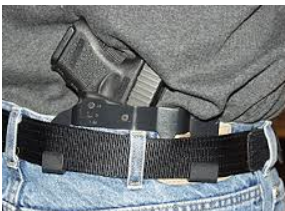
TOPEKA – – Despite the Legislature’s temporary reduction of the application fee for new concealed carry licenses, the number of Kansans applying continued to decline in 2019 fiscal year,  according to Kansas Attorney General Derek Schmidt.

Between July 1, 2018, and June 30, 2019, the attorney general’s Concealed Carry Licensing Unit received 3,841 new applications. The figures represent a more than 21 percent decrease from the prior fiscal year and the lowest number of applications received in a fiscal year since the licensing program began in 2006.

Last year, the application fee for new licenses was reduced for one fiscal year from $132.50 to $112. Effective July 1, 2019, that new-license fee returned to $132.50. The cost for license renewals remains unchanged at $25. Renewal applications submitted after expiration do increase to $40. Licenses six months or more past expiration without submitting a renewal application are considered permanently expired and must reapply in order to regain their license.

While the number of new applications has waned, most Kansans who already have licenses are choosing to keep their licenses active. The Concealed Carry Licensing Unit received more than 16,400 renewal applications during the 2019 fiscal year.

Licenses are still required in most states, and Kansas licenses are currently recognized in 40 states. Currently, more than 82,300 Kansans have active concealed carry licenses.

“Many Kansans continue to recognize the benefits of obtaining a license, including our reciprocity agreements with other states,” Schmidt said. “We continue to work with other states to ensure Kansas licenses are recognized.”

A legislative change in 2015 allows eligible Kansans to carry concealed without a license. Schmidt also encouraged all Kansans who intend to carry firearms to pursue training opportunities whether or not required by law. He reminded all Kansans who choose to carry firearms to comply with properly posted signage and all applicable laws.

More information on the concealed carry licensing program is available on the attorney general’s website at www.ag.ks.gov/concealed-carry.

Marlin Dale Smith

KENSINGTON- Marlin Dale Smith, age 77, passed away Thursday, September 5, 2019 at the Smith County Memorial Hospital in Smith Center, KS.

He was born June 13, 1942 in Smith Center, KS to Clarence A. and Gladys (Mick) Smith. He was a farmer.

Marlin is survived by his wife Ginger of Kensington, KS; daughters, Marla (Greg) Bernard of Tuscon, AZ and Carla (Jason) Hajek of Seneca, KS; grandchildren Miles Bernard, Cooper, Carter and Cormik Hajek; sisters, Ruth Levin and Donna (Royce) Levin.

Click HERE for service details.

The man behind Kansas’ fastest growing CBD chain is gaining notoriety

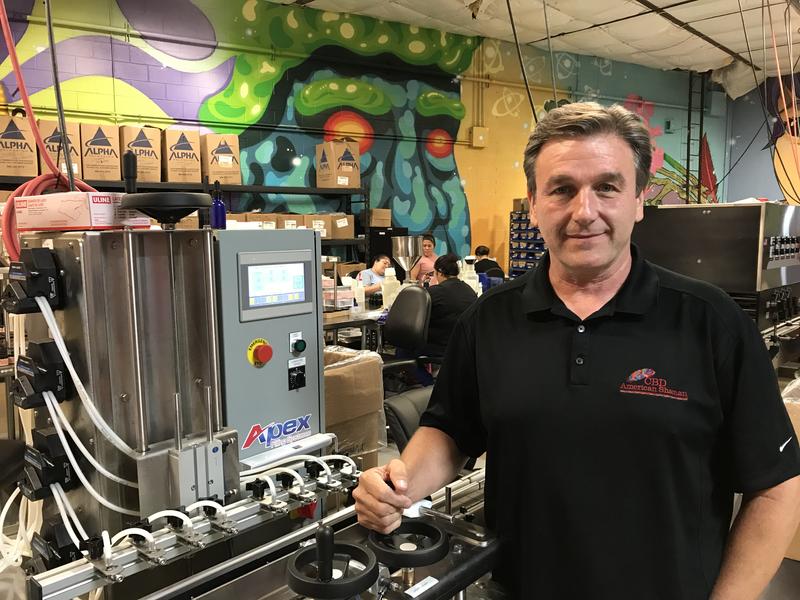
Vince Sanders, CEO of CBD American Shaman, heads a group of companies that employs more than 150 people, mostly in the Kansas City area.

By MARK DAVIS

KANSAS CITY – As a teenager, Vince Sanders watched his father go to prison. He dropped out of school and ended up serving time himself.

It makes an unlikely history for the 55-year-old founder of a fast-growing retail chain who owes his fall and rise to the cannabis plant.

Nineteen years ago, Sanders went to prison for organizing and financing a scheme to sell marijuana. Federal officials tracked it for five years and valued his take at $2.5 million.

“It actually was a lot more than that,” Sanders said recently, flashing a mischievous grin.

Few beyond family and close friends know about Sanders’ criminal record. He readily acknowledged his past during an interview, calling it neither a secret nor a “talking point” for the business he’s in now.

Sanders heads CBD American Shaman, the Kansas City, Missouri,-based company he founded four years ago to market health-promising bottles of cannabidiol, or CBD.

CBD comes from hemp, which is a cannabis plant that has little or no tetrahydrocannabinol, or THC, the main psychoactive compound in marijuana that produces the high associated with the plant. Sales of CBD have been surging in recent years, and the industry gained a boost when the 2018 Farm Bill made it legal to grow hemp in the United States.

Sanders helped push for that change and to align state laws to accommodate hemp and CBD products through the U.S. Hemp Roundtable, on which he serves as one of eight board members.

“Personally, and for the industry, we’re big believers in second chances,” said Jonathan Miller, the group’s general counsel, who was unaware of Sanders’ marijuana conviction. He credited Sanders for “turning his life around, building a very legitimate and legal business model.”

That business model has put American Shaman stores in more than 30 states and garnered industry attention as a pioneer of CBD-specific stores. Most CBD operations have sold their products online or through other specialty health stores, drug stores and groceries.

Miller said American Shaman and similar businesses that have followed a brick-and-mortar path now have the rest of the industry thinking about CBD-focused stores themselves.

Sanders owns a group of companies that includes a franchising office at 2300 Main St. in Kansas City, manufacturing operations on Southwest Boulevard and a new hemp processing facility in Montana. Sanders said those businesses directly employ about 150 people.

Some CBD store rivals, who formerly did business with American Shaman, question Sanders’ tactics. They cite business practices that smack of retaliation. One rival said she felt “bullied” by American Shaman.

The extent of Sanders’ store network is difficult to pin down. He has claimed conflicting totals when asked how many American Shaman stores are open. And the company’s extensive list of “coming soon” locations includes several in the Kansas City area that aren’t intended to open at the addresses listed.

Other questions have been raised by American Shaman’s unusual reliance on former door-to-door vacuum cleaner salesmen, which has made it the target of a lawsuit in Ohio.

Local entrepreneur

Sanders grew up in Kansas City and said that, at times, he had a difficult life. His father struggled with problems that were exacerbated by drinking and had “drifted away,” Sanders recalled.

When Sanders was 15, a Kansas jury convicted his father of involuntary manslaughter. The charge sent Stephen Vincent Sanders to the Kansas State Penitentiary.

Sanders, whose full name is Stephen Vincent Sanders II, has described himself as a class clown who wasn’t into school. He dropped out of Southwest High School but said he later got his GED.

He married and became a father. The couple, now divorced, owned two homes in Kansas City and additional property in Overland Park. There also was a Corvette, a Mercedes-Benz and jewelry that included a ladies Rolex Chronometer.

Federal prosecutors said it was a lifestyle financed by illegal marijuana sales. Sanders’ guilty plea earned him a 32-month prison sentence, though he said he served only about a year. Prosecutors also sought forfeiture of $2.5 million, the alleged amount of Sanders’ ill-gotten gains, which he said they collected.

“Oh, I had it,” Sanders said.

Sanders said he has never held a paycheck job. Even as a teenager he ran his own auto detailing business — at a family-owned car wash at 77th Street and Wornall Road.

His other businesses manufactured an assortment of goods, from teeth whiteners and self-tanning lotions to male enhancement products and vape juice, or e-liquids, for electronic cigarettes.

Without an attentive father, Sanders said he became close to his mother’s uncle, Denny Van Tuyl, who was 11 years his senior. By Sanders’ account, Van Tuyl became something of a big brother or father figure to him.

It was Van Tuyl’s cancer that led Sanders back to cannabis — this time for the possible curative powers of CBD after traditional medicine seemed to fail his uncle. Van Tuyl died in 2012.

It’s a story Sanders tells often. Personal experiences with CBD are often the drivers of those in the CBD business.

But is it legal?

For Sanders, shifting from witnessing CBD’s promise to marketing CBD products came slowly.

For starters, there was that marijuana conviction in his past.

“There was a lot of hesitation and homework to make sure this is legal, right?” he said. “I talked to a lot of attorneys.”

Convincing others of its legality was nearly as painstaking. Sanders said he approached smoke shops, chiropractors, vitamin and health stores. Each store that carried his early American Shaman CBD products did so after extensive education about its legality and effectiveness, he said.

At that point, Sanders sold only wholesale. The chiropractors and shop owners were his sales force.

All of that changed when Brendon Hodgson came along.

Hodgson convinced Sanders that they could retail CBD directly and they opened The CBD Store at 18th and Oak in Kansas City. Sanders produced the CBD that the store sold under an Evolution brand.

It worked out, and Sanders said the city’s First Fridays were the key. The CBD Store held an open bar and pitched CBD while a captive audience waited for drinks.

A second store in Brookside, owned and run by two women whom Sanders said approached him with the idea, took a bit longer to succeed. After that, there was a third. More retailers followed, buying products from CBD American Shaman and reselling them to consumers.

The group grew to about 40 outlets when Sanders shifted to his current franchise business model.

That core business sells franchise rights to prospective store owners who are committed to buying CBD products from Sanders’ manufacturing company. All but six CBD American Shaman stores are owned by franchisees.

“He basically made his own customers with this franchise model. It’s really good,” said Cyrus Riahi, a Lenexa entrepreneur who briefly co-owned a store in Columbia, Missouri, and now operates rival Buddha Leaf stores.

Riahi said the franchising strategy has allowed American Shaman to dominate the Kansas City-area CBD market.

“I’ve only got two stores here in Johnson County, and they’re my lowest sales stores,” Riahi said.

Sanders credited one of his early wholesalers with another strategy that accelerated the store count growth. It’s called an affiliate program.

Under that program, franchise owners who bring in another franchisee earn a dime for every dollar of product that recruits buy from American Shaman. They can get a similar deal for recruiting smoke shops or others to buy American Shaman products wholesale.

According to Sanders, the affiliate program is also why so many of his franchisees are former Kirby vacuum cleaner salesmen.

That idea came from Jason Todack, who had been a Kirby vacuum distributor. Todack said Kirby worked the same way, and it helped attract fellow Kirby salesmen to American Shaman.

Today, Todack owns only one store but said he earns between $15,000 to $25,000 a week from the affiliate program.

In its lawsuit, which was filed a year ago in Ohio, the Kirby Co. tells a different story.

It claims American Shaman poached 20 or more Kirby salesmen. The suit names Sanders, American Shaman Franchise Systems Inc.; its president Bud Miley, a former president of Kirby Co.; and two other individuals who had been at Kirby. Todack is not a defendant in the suit.

Sanders said American Shaman “hasn’t done any Kirby people” since the lawsuit was filed. He called the lawsuit ridiculous.

Trademark grab

Sanders’ shift from wholesaling CBD to organizing a network of CBD franchise stores did not sit well with some of his early retailers.

Trevor Burdett, who was recruited by Todack, bought American Shaman products and sold them under the American Shaman store banner before there was a franchise system. When American Shaman wanted him to convert to a franchise arrangement, Burdett complained that he had only a week to review the lengthy legal document.

“I had to sign a franchise agreement or they would stop selling to me,” Burdett said.

He concluded there were no benefits to becoming a franchisee. He dropped American Shaman and began setting up his own CBD stores called Sacred Leaf.

When Burdett sought to trademark his Sacred Leaf brand in June 2018, he found Sanders had beaten him to it by two months.

“That seems to be their go-to. If you cross American Shaman, they will file a trademark on your name and try to shut you down before you even get into business,” Burdett said.

Public records show Sanders trademarked “SUNMEDCBD” about three months before Florida-based, Sunflora Inc. filed a trademark on “SUNMED CBD.” Sunflora, founded by a former American Shaman wholesaler, supplies SUNMED CBD products to Your CBD Stores through licensing agreements.

SunFlora acting CEO Marcus Quinn declined to comment for this story.

“He did it to us, too,” said Emily Christianson, whose CBD HempDropz brand Sanders claimed in a trademark filing in 2018.

Christianson, who previously bought American Shaman products wholesale, balked at the franchise offer and said she felt “bullied” by how American Shaman handled it.

She said the company set up an American Shaman franchise directly across from her CBD store in Springfield, Missouri. The plan, she was told, was for it to “crush” her as a former wholesaler turned competitor.

Kathleen Wade, who opened that American Shaman Springfield store, corroborated that the plan targeted Christianson.

Wade said she already had leased space in a different location in Springfield, but Sanders required her to open across from Christianson’s store.

Sanders denied any such requirement. He and Wade agreed that they have other disputes, and Wade said she “walked away” from the franchising company.

Burdett, Christianson and Wade all said Sanders turned on them suddenly.

“I swear he was a good guy until he turned out to be a snake,” Christianson said.

Did Sanders intend his trademark-grabbing tactics to stop his former customers from becoming rivals?

“Perhaps,” Sanders said. “Every one of these people started with us. We spent an enormous amount of time and effort training them and teaching them this industry. How do we protect ourselves from that kind of thing happening?”

As for being called a snake or turning on people, Sanders chalked up those sentiments to the rough-and-tumble world of business.

“This is a competitive world,” he said. “If you want to play in a competitive league, then step up.”

Coming soon?

How well Sanders’ American Shaman is faring in that competition is difficult to say.

As a privately owned company — Sanders said he owns it all and has no investors — American Shaman does not disclose financial information publicly.

One large CBD company does report financial details. CV Sciences Inc. sold $16.8 million of PlusCBD consumer products during April, May and June, chalking up a profit of $1.2 million.

The San Diego-based company doesn’t operate its own stores or offer franchises. Instead, it supplies products to 4,591 retail stores “mostly in the natural product industry” but also to 945 Kroger stores under a deal announced in July.

American Shaman’s distribution map looks more like rival SunFlora, whose website lists 290 locations for Your CBD Stores in 32 states.

But American Shaman’s store map is a bit fuzzy.

In a March interview, Sanders said the company had “a little over 300” stores, that 100 were “building out” or “finding locations,” and that the count “would be at 400” in 60 days.

“They’re writing 50-plus new franchises a month,” he said on Dick & Loy’s Media & Marketing Mayhem podcast.

On June 26, the American Shaman website listed addresses for 244 open stores in 30 states. The same month, however, Sanders told KCUR radio’s Andrea Tudhope that there were many more stores.

“We had 391 stores as of yesterday, open,” Sanders said when interviewed on June 20.

In a subsequent interview for this story in August, Sanders said the website’s 244 store count in June probably was accurate at the time. The larger number he’d given to KCUR in June must have included stores opening soon, he said.

After reviewing company records, Sanders said there were 299 American Shaman stores open, an additional 295 stores with leases and in the process of being built for opening, and 352 more store franchises that had been sold but were still scouting for locations.

American Shaman’s website lists addresses for hundreds of stores that are “coming soon.” Often these addresses are not specifically where the store expects to be opened. The company often “pins” an address in the general area where a franchise is being planned.

American Shaman CBD products also are sold through retail stores in six states where the company isn’t yet set up to offer franchises.

Several times during the August interview, Sanders said things were happening fast.

To wit: He wants to offer tours at the factory on Southwest Boulevard. The company’s CBD processing facility in Montana is now up and running after a year of work. He’s promoting more regulation of the industry to drive out “bad actors.” He’s taking steps to get into the white-label side of the business, which would mean selling CBD products through other retail outlets but not under the American Shaman label.

American Shaman will be reserved for the franchise stores, which Sanders now said will number 600 in November.

“We want to be the biggest,” Sanders said. “We don’t want to be a boutique brand. If you think CBD, I want you to think American Shaman.”

EDITOR’S NOTE: A CBD American Shaman franchise was opened in Hays in December by Jessica Moffitt, a Hays health educator.

KCUR’s Andrea Tudhope contributed to this story.

Mark Davis is a freelance writer in Kansas City.

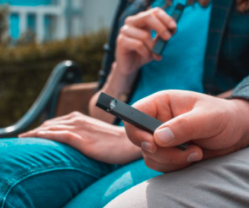
Kan. among states reporting vaping-related lung illnesses to the CDC

NEW YORK (AP) — U.S. health officials on Friday again urged people to stop vaping until they figure out why some are coming down with serious breathing illnesses.

Officials have identified about 450 possible cases, including as many as five deaths, in 33 states. The count includes newly reported deaths in California, Indiana and Minnesota.

No single vaping device, liquid or ingredient has been tied to all the illnesses, officials said. Many of the sickened — but not all — were people who said they had been vaping THC, the chemical that gives marijuana its high. Many are teens.

Health officials have only been counting certain lung illnesses in which the person had vaped within three months. Doctors say the illnesses resemble an inhalation injury, with the body apparently reacting to a caustic substance that someone breathed in. Symptoms have included shortness of breath, fatigue, chest pain and vomiting.

The illnesses have all surfaced this year, and the number has been growing quickly in the last month as more states have begun investigations. A week ago, U.S. officials pegged the number at 215 possible cases in 25 states.

It’s unclear whether such illnesses were happening before this year.

“We’re all wondering if this is new or just newly recognized,” Dr. Dana Meaney-Delman of the Centers for Disease Control and Prevention told reporters Friday.

An Illinois health official, Dr. Jennifer Layden, said officials there don’t know when such illnesses first began, but she said there has been a marked increase since spring.

Deaths previously were reported in Illinois and Oregon .

Indiana officials said the person who died there was an adult, but they didn’t say when it happened or release other details. Health officials in Los Angeles said they were investigating a vaping death as well. And Minnesota health officials said that state’s first known vaping-related death was a person over 65 years with a history of lung problems who had vaped illicit THC products and died in August.

Recent attention has been focused on devices, liquids, refill pods and cartridges that are not sold in stores.

New York state has focused its investigation on an ingredient called Vitamin E acetate, which has been used to thicken marijuana vape juice but is considered dangerous if heated and inhaled. State investigators have found the substance in 13 cartridges collected from eight patients. In several cases, the ingredient made up more than half of the liquid in the cartridge.

CDC officials said they are looking at several ingredients, including Vitamin E acetate. But Meaney-Delman added that no single factor has been seen in every case.

Also Friday, the New England Journal of Medicine released a series of articles that give medical details about cases reported in Illinois, Wisconsin and Utah.

An article on 53 illnesses in Illinois and Wisconsin noted that nearly one-fifth of the cases were people who said they vaped nicotine and not anything that contained THC or CBD oil.

For that reason, doctors and health officials are continuing to suggest people stay away from all vaping products until the investigation establishes exactly what’s at the root of the illnesses.

Meaney-Delman said avoiding vaping is “the primary means of preventing this severe lung disease.”

It’s not yet clear what impact the recent illnesses are having on vaping rates, but some health officials are hoping more Americans will become wary.

There’s been a split among public health experts about the value of vaping nicotine. Some argue e-cigarettes are not as lethal as conventional cigarettes and can be a valuable aide to smokers trying to kick the habit.

But others say studies have not established that adult smokers who try vaping end up quitting smoking long term. And they fear that kids who might never have picked up cigarettes are taking up vaping.

The National Association of County and City Health Officials “has long been cautious about endorsing e-cigarettes even before the recent spate of illnesses, because little scientific evidence exists to show that e-cigarettes and other nicotine delivery devices are effective cessation devices,” spokeswoman Adriane Casalotti said in a statement.

The states reporting vaping-related lung illnesses to the CDC are Arkansas, California, Colorado, Connecticut, Delaware, Florida, Georgia, Iowa, Illinois, Indiana, Kansas, Kentucky, Louisiana, Maryland, Michigan, Minnesota, Montana, North Carolina, Nebraska, New Jersey, New Mexico, New York, Ohio, Oregon, Pennsylvania, South Carolina, Tennessee, Texas, Utah, Virginia, Vermont, Wisconsin, and West Virginia.

Man charged with stealing donation boxes at Islamic Center in Kansas

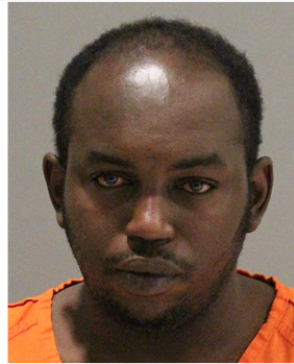
Amadou Oury Bah -photo Omaha police
Surveillance images courtesy Lawrence Police

LAWRENCE, Kan. (AP) — A man has been charged with breaking into the Islamic Center of Lawrence last month and stealing two donations boxes.

Amadou Oury Bah, 32,  was charged Thursday with burglary, theft and criminal damage to property. Police said previously that the donation boxes contained between $1,000 and $2,000 in cash.

Police previously asked for help identifying the break-in suspect, who was captured on surveillance video. Bah was arrested last week in Omaha, Nebraska, and is jailed on $15,000 bond.

1300 block of Main closes for pavement repairs

CITY OF HAYS

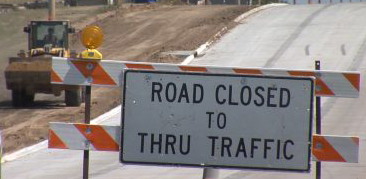
Beginning on Monday, September 9, 2019 at 8 a.m. the 1300 block of Main St. in Hays will be closed to through traffic for pavement repairs.

Repairs are expected to be completed by the end of the day on Wednesday, September 11, 2019.

The city of Hays regrets any inconvenience this may cause to the public. If there are any questions, please call the Public Works Department at 628-7350.

Two FHSU students to travel to West Africa through IRES grant

FHSU University Relations

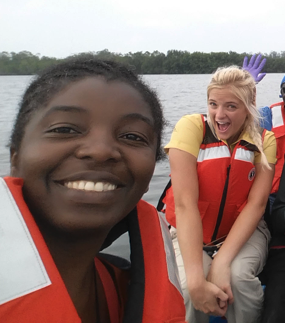
Two Fort Hays State University students traveled to Douala, Cameroon, on the west coast of Africa to conduct geoscience research through an International Research Experience for Students grant funded by the National Science Foundation.

The three-year NSF IRES grant was awarded to FHSU’s Dr. Hendratta Ali, associate professor of geosciences, and her collaborator, Dr. Eliot Atekwana at the University of Delaware.

“The NSF-International Research Experience for Students is aimed at providing U.S. students an international experience participating in applicable and beneficial research conducted in a different country, providing experiences in culture, community, and international research,” said Ali.

FHSU Students Kalyn Compton, a junior majoring in biology (health professions) from Wichita, and Nicholas Counts, a junior majoring in geosciences (geology) from Colorado Springs, Colo., were in the Douala Estuary in June and July. This is the first time both FHSU students traveled outside of the United States.

Compton and Counts were two of only four students in the United States to be selected for this grant and research opportunity. They traveled to Cameroon with a student from California, a student from Delaware, and faculty research mentors Ali and Atekwana.

“This diverse group of four students from the U.S. partnered with Cameroonian peers from the local universities to conduct significant research on the estuary,” said Ali. “The students participated in water and sediment sampling and measurements in the estuary, water quality analysis, carbon cycling, and sediment chemistry to investigate processes that affect major river tributaries that released water into the ocean, from metamorphic, igneous and sedimentary terrain.”.

“The International Research Experience is the most exciting, challenging, and rewarding thing I have done in my entire life,” said Counts. “I learned so much about not only the field I plan to work in, but also the research process, and the culture of the people I came to know on the other side of the world.”

“From riding in a boat to collect samples while the driving rain lashed my skin, to licking my fingers after a eating delicious grilled fish prepared by the Cameroonian cooks, I have so many unforgettable experiences that I will value and utilize for the rest of my life,” he said.

“This year was a great experience for our participating students. I am pleased with the research conducted this year. Students will be involved in new research objectives each year of the grant and I look forward to next summer’s travel and continuing to work on this research with FHSU students,” said Ali.

Kansas to benefit from BLM oil/gas lease sale

BLM

SANTA FE, N.M. — The Bureau of Land Management New Mexico raised $9,839,328 in its quarterly oil and gas lease sale held September 5, 2019. Nearly 50 percent of the revenue from the sale will go to the states where the oil and gas activity occurs—in this case New Mexico, Kansas and Oklahoma—while the rest will go to the U.S. Treasury.

For this sale, the BLM offered leases on 15 parcels totaling 3,174.08 acres. The highest bid per acre was $31,001 sold to Cimarex Energy Company for 40 acres in Lea County, New Mexico. The highest bid per parcel was a total of $3,176,397 sold to Platform Energy III, LLC in Lea County, New Mexico, for 396.68 acres.

For more details about the sale results, please visit: https://www.blm.gov/programs/energy-and-minerals/oil-and-gas/leasing/regional-lease-sales/new-mexico.

The BLM awards oil and gas leases for a term of 10 years and as long thereafter as there is production of oil and gas in paying quantities. If the leases result in producing oil or gas wells, revenue from royalties based on production is also shared with the state.

The BLM is a key contributor to the Trump Administration’s America First Energy Plan, which is an all-of-the-above plan that includes oil and gas, coal, strategic minerals, and renewable sources such as wind, geothermal, and solar, all of which can be developed on public lands.

The BLM’s policy is to promote oil and gas development if it meets the guidelines and regulations set forth by the National Environmental Policy Act of 1969 and other subsequent laws and policies passed by the U.S. Congress. The sales are also in keeping with the America First Energy Plan, which includes development of fossil fuels and coal, as well as renewable energy.

The BLM manages more than 245 million acres of public land located primarily in 12 Western states, including Alaska. The BLM also administers 700 million acres of sub-surface mineral estate throughout the nation. Diverse activities authorized on these lands generated $96 billion in sales of goods and services throughout the American economy in fiscal year 2017. These activities supported more than 468,000 jobs.

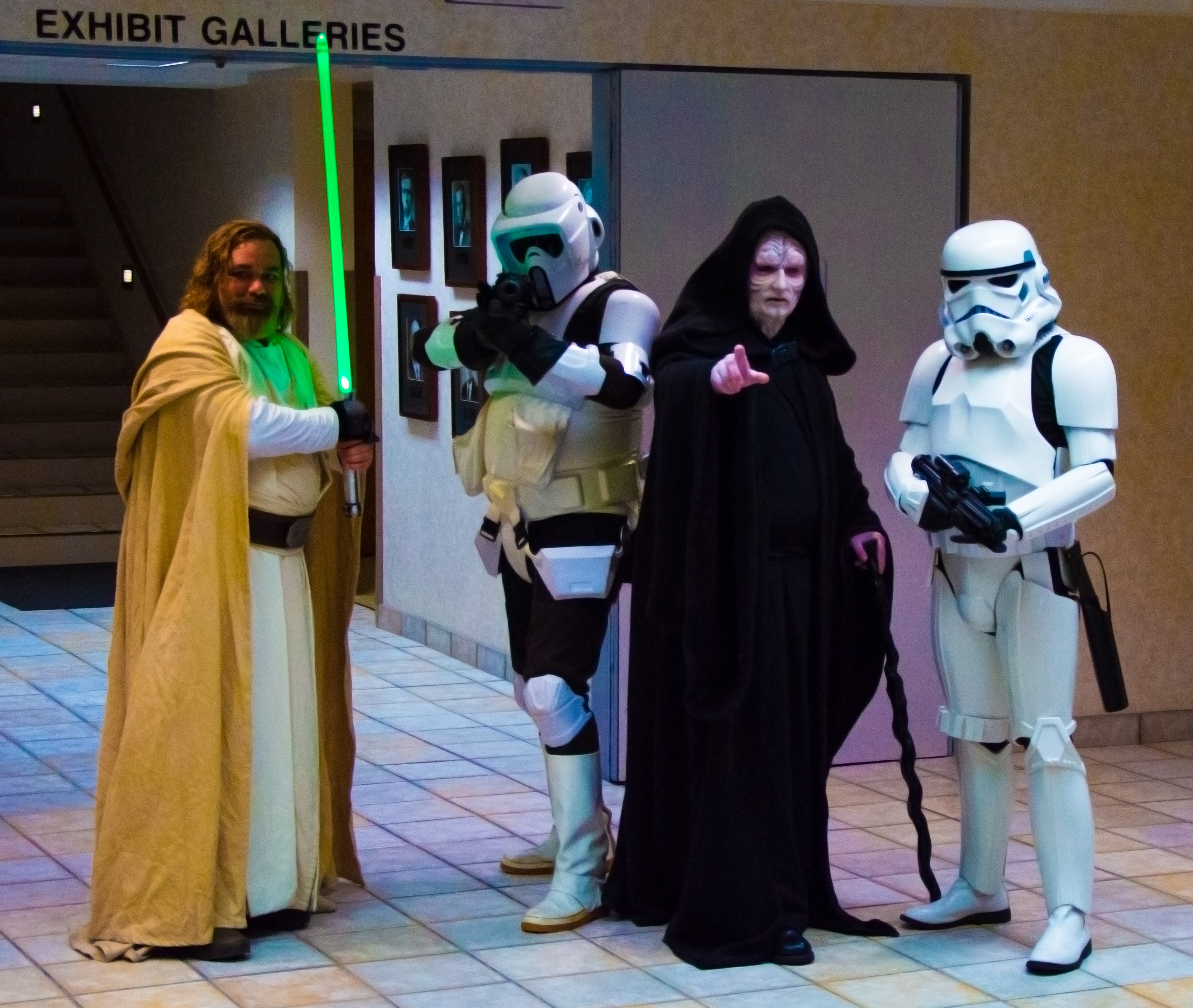
Star Wars fans of all ages enjoy Star Wars Day at the Sternberg


Exhibits at the Sternberg Museum usually feature wonders from earth’s natural history but on Saturday attendees had the opportunity to interact with characters from a long time ago in a galaxy far, far away as the museum hosted it’s annual Star Wars day.

The event featured costumes, informational displays and contests spread throughout the museum, including a build your own lightsaber sessions.

Take a look at this out of the world experience.


Copyright Eagle Radio | FCC Public Files | EEO Public File