

Year: 2019
15 and 18-year-old brothers charged in Kansas City killing

KANSAS CITY (AP) — An 18-year-old Kansas City man and his 15-year-old brother have been charged with killing another man in a case that prosecutors allege was motivated by revenge for an earlier shooting in which the younger brother was wounded.

The older brother, Taylor Mackey was charged Thursday with second-degree murder and three other felonies in the death of Isaac Louis Brown. No attorney is listed for him in online court records. The younger brother is charged as a juvenile with first-degree murder and armed criminal action.
Court records say Mackey told detectives he believed Brown was responsible for shooting his brother and wanted him to feel the same pain. He says he was thinking it was time to “Get him” before he and his brother pulled out guns and shot Brown one time each.
Applications open for KDOT’s new Cost Share Program
 KDOT
KDOT
TOPEKA – The Kansas Department of Transportation (KDOT) has launched a new program designed to provide state funding for transportation projects while also leveraging local and private funding. The new Cost Share Program will provide funding to local entities for transportation projects that improve safety, support job retention and growth, improve access or mobility, relieve congestion and help areas across the state improve the transportation system.
Up to $50 million will be available in the program for fiscal year 2020. The on-going program, which has at least $11 million available, requires a minimum of 15% non-state cash match. Additional consideration will be given to project applications that commit more than the minimum required match amount. The funding above the base $11 million comes from a one-time, $50 million State General Fund transfer. A minimum 25% match is required for projects to qualify for the one-time funds.
The Cost Share Program is open to all transportation projects including roadway (on and off the state highway system), rail, airport, bicycle/pedestrian and public transit. Funds from the program can only be used for construction.
“Creating the Cost Share Program allows us to leverage both state and local dollars to help address important transportation needs across Kansas,” said Kansas Secretary Julie Lorenz. “We look forward to working with Kansas communities to build projects that improve safety and keep the Kansas economy moving.”
Funding for the program is part of the $216 million in sales tax authorized by the Legislature and Gov. Laura Kelly to remain in the state highway fund in fiscal year 2020. In addition to the Cost Share Program, those funds are being used to increase highway preservation, help complete delayed T-WORKS projects, improve safety and provide new funding opportunities for cities and counties.
Applications will be accepted on an ongoing basis beginning Sept. 3, 2019, and will be reviewed twice annually, in October and March. To be included in the first review period, applications must be submitted by Oct. 11, 2019. Selection criteria will include consideration of projects that meet program objectives, eligibility categories and requirements. Geographic distribution also will be considered during project selection.
Application and a fact sheet on the Cost Share Program can be found at www.KSDot.org or with the links below:
Great Bend teen hospitalized after rollover accident

BARTON COUNTY— One person was injured in an accident just after 10:30a.m. Saturday in Barton County.
The Kansas Highway Patrol reported a 2007 Ford Focus driven by Angela Natalie Enriquez, 18, Great Bend, was northbound in the 100 Block of 20th Avenue.
The driver lost control of the vehicle. It left the roadway to the right, entered the ditch, struck a culvert and rolled into a field on the east side of the road.
EMS transported Enriquez to the hospital in Great Bend. She was properly restrained at the time of the accident, according to the KHP.
Kansas First-District congressman launches U.S. Senate campaign

TOPEKA, Kan. (AP) — Western Kansas’ congressman launched a Senate campaign on Saturday, pitching himself to fellow Republicans as a pragmatic conservative who can keep the seat in GOP hands by thwarting immigration hardliner Kris Kobach’s bid for the party’s nomination.
Two-term Rep. Roger Marshall entered the race facing some skepticism from the right despite his anti-abortion and gun-rights views and a consistent record of voting with President Donald Trump. Marshall ended June with $1.4 million in campaign funds, giving him a jump on fundraising.
Marshall kicked off his campaign at the state fair. In an AP interview beforehand, he stressed his rural ties and portrayed himself as part of a line of western Kansas congressmen who later served in the Senate, including former Senate Majority Leader and Kansas political icon Bob Dole.
Marshall and Kobach are among five GOP candidates actively campaigning to replace four-term Republican Sen. Pat Roberts, who is not seeking re-election in 2020. Kobach, a former Kansas secretary of state, built a national profile by advocating tough immigration policies, though he lost the Kansas governor’s race last year after his take-no-prisoners style alienated moderate voters.
“Nobody is more pro-life or pro-Second Amendment than I am,” Marshall said. “Am I a kinder, gentler voice? Probably. Am I going work across the aisle to solve problems? You bet.”
Many Republicans fear a repeat of last year, when Kobach narrowly won a crowded GOP primary only to lose the governor’s race to Democrat Laura Kelly. Some prominent Republicans have been nudging U.S. Secretary of State Mike Pompeo to jump in, though Marshall said Pompeo was “encouraging” about Marshall’s candidacy when they spoke a few weeks ago.
Marshall, who describes himself as a “fifth-generation farm kid,” said he is confident he can win a crowded GOP primary by building on his western Kansas political base. His 1st District covers roughly 60 percent of the state and Dole, Roberts and Kansas’ other senator, Republican Jerry Moran, all held the House seat previously.
The safe Republican district’s GOP voters tend to turn out in disproportionately high percentages in primaries, putting Marshall in “a very good spot,” said Bob Beatty, a Washburn University political scientist.
“He fits the classic Kansas U.S. Senate mold, the traditional mold,” Beatty said.
Kobach relied on a strong conservative base to win the Republican nomination for governor. He contends that he’ll benefit from the greater voter turnout in a presidential election year and a focus on issues such as immigration. He said in opening his campaign in July that Kansas doesn’t need “a quiet senator.”
Marshall said he’s determined to fight what he calls “socialist” proposals from Democrats, such as “Medicare for All” government health coverage and the sweeping Green New Deal aimed at combatting climate change.
Some Republicans question whether Marshall can win over the hard right and even described him as a moderate in the weeks before he entered the race. The conservative interest group Club for Growth gives him a 61 percent rating through 2018, which is the lowest for any Republican member of Kansas’ congressional delegation.
Marshall, a 59-year-old physician, won his House seat in 2016 by ousting tea party Rep. Tim Huelskamp in the GOP primary. Huelskamp had clashed with House leaders and was stripped of the state’s traditional seat on the Agriculture Committee, which was returned to Marshall.
“He can’t get the Huelskamp people,” said Tim Shallenburger, a former state treasurer and Kansas Republican Party chairman.
Also actively campaigning for the GOP nomination are Kansas Senate President Susan Wagle, Dave Lindstrom, a Kansas City-area businessman and former Kansas City Chiefs player, and Bryan Pruitt, a conservative gay commentator. Matt Schlapp, the American Conservative Union’s president, and Alan Cobb, president and CEO of the Kansas Chamber of Commerce, also are considering the race.
The Democrats with active campaigns are former Rep. Nancy Boyda, former federal prosecutor Barry Grissom and Usha Reddi, a city commissioner in the northeast Kansas town of Manhattan.
Marshall had the backing of the U.S. Chamber of Commerce in his 2016 race against Huelskamp. But Scott Reed, who is the group’s senior political strategist and who managed Dole’s 1996 presidential campaign, said it also has encouraged Cobb to explore the race and is waiting to see who runs and “who’s making their marks.”
“We’ll get with many of the other right-of-center groups in D.C. and in Kansas and try to make a decision all together,” he said. “This is a must win.
FHSU Foundation appoints eight new members to board of trustees

 FHSU University Relations
The Fort Hays State University Foundation recently appointed eight new members to its Board of Trustees: Joe Bain, Paul Kitzke, Jamie Kuehl, Don Reif Jr., Steve Shields, Peter Werth, David Younger, and Katie Zogleman.
Joe Bain earned his undergraduate degree in political science from Fort Hays State University in 2002 and his Juris Doctorate from the University of Kansas School of Law in 2005. In 2017, he was featured in Ingram’s magazine’s “50 Kansans You Should Know” list. A former member of the Kansas Board of Regents, trial lawyer and litigator – Bain is also the new general counsel of FHSU. Bain, his wife, Shaudel, and their three children, recently moved to Hays.
Paul Kitzke is a member/attorney with Tate and Kitzke, LLC, in Hugoton. He is a 2002 FHSU political science grad and a 2005 Washburn Law School graduate. Kitzke is involved with Knights of Columbus and serves on the Stevens County Fair Board and the Equity Bank Board of Trustees. He and his wife, Sarah, and three children, reside in Hugoton.
Jamie Kuehl is a 2007 graduate of Fort Hays State University with a degree in organizational leadership. He previously served as the FHSU head men’s golf coach and now owns and operates multiple McDonald’s locations. Kuehl has several corporate and professional affiliations including Big Brothers Big Sisters and the Dodge City Chamber of Commerce. Kuehl resides with his wife, Kelsey, and two children in Dodge City.
Don Reif Jr. is the owner of Donald E. Reif Jr. Attorney at Law in Hoisington. He previously served as city attorney of Hoisington and as a municipal court Judge. Reif is a 1982 history and political science graduate from FHSU and received his Juris Doctorate from Washburn University in 1988. He is also a former FHSU student government association president. Reif has been involved with Kansas CASA, Hoisington USD 431 Board of Education, the Kansas Chamber of Commerce, and several other corporate and professional affiliations. Reif recently established a scholarship at Fort Hays State University in support of students studying political science with an emphasis in pre-law.
Steve Shields attended Fort Hays State University from 1974 to 1976 and received a degree in social work and gerontology from Kansas State University in 1994. He serves as chairman and CEO of Action Pact Holdings, Inc., and is an internationally recognized specialist in the world of senior living. Shields is a co-chair for FHSU’s $100 million Journey campaign, was a recipient of FHSU’s Distinguished Service Award, has numerous professional affiliations and honors and is a longtime supporter of FHSU.
Peter Werth is a 1959 alumnus of FHSU with degrees in chemistry and math, and was a 2013 recipient of the Alumni Achievement Award at Fort Hays State. Werth earned a master’s degree in organic chemistry from Stanford University and founded ChemWerth, Inc. in Woodbridge, Conn., to develop active pharmaceutical ingredients to produce generic drugs. Werth has received numerous awards and honors for his philanthropy and professional accomplishments. He is the namesake of FHSU’s Peter Werth College of Science, Technology and Mathematics.
David Younger received his elementary education degree from Fort Hays State in 1987. He then went on to receive his master’s in education and supervision from Wichita State University and a master in district level leadership from Friends University. Younger is a member of Rotary, the Kansas/Missouri Superintendent Leadership Forum, and the Kansas Council for Superintendents. He resides in Ulysses with his wife, Kelly, where he serves as superintendent of Ulysses USD 214.
Katie Zogleman serves as shareholder and executive committee member for Seigfreid Bingham, PC, in Kansas City, Mo. She is a 2000 psychology graduate of FHSU and a 2003 graduate from the University of Kansas School of Law. Zogleman has received the Missouri and Kansas Rising Star award in business and corporate law and is a member of the American, Missouri, Kansas and Kansas City Metropolitan Bar Associations. She and her husband, Chad, reside in Belton, Mo., with their two children.
The current Foundation board is composed of 58 alumni and friends of the university with each trustee serving a four-year term. Each trustee actively participates in a variety of activities contributing to the educational and financial success of the university and the FHSU Foundation.
Foundation trustees come from a variety of education and industry backgrounds representing all five colleges at Fort Hays State University. Current trustees reside in a variety of states including Kansas, Missouri, Texas, California, Colorado, Connecticut, Illinois and Indiana. For a full list of trustees, visit https://foundation.fhsu.edu/about/board.php.
More than 50 board members recently met for a weekend on FHSU’s campus for their annual board meeting.
“It’s such an honor to be a member of the FHSU Foundation Board of Trustees,” said Coleen Ellis, a 1987 graduate of Fort Hays State University. “Our weekend back on campus is always off-the-charts moving and inspiring for me!”
In addition to their annual business meeting, board members toured the Department of Allied Health, received a presentation from student affairs on the new Fischli-Wills Center for Student Success, were entertained by the Department of Music and Theatre, and saw the new simulation lab within the Department of Nursing.
Their day of campus tours ended with a reception among students presenting their original research formerly shown at FHSU’s John Heinrichs Scholarly and Creative Activities Day.
“Fort Hays State University is, and always has been, such an energized campus – truly my happy place,” said Ellis. “It’s the heartbeat of our students, and a reminder of why the work we do as Foundation trustees is so important.”
The Foundation is the fundraising arm of FHSU. It raises and manages all funds that are entrusted to it for the benefit of various needs in support of the university, and works closely with FHSU to support the university’s initiatives.
To learn more about the Fort Hays State Foundation, visit https://foundation.fhsu.edu or contact the office at 785-628-5620 or [email protected].
Listen to the Holthus Hotline with ‘Voice of the Chiefs’ Mitch Holthus


Listen as the ‘Voice of the Chiefs’ Mitch Holthus as he previews the Chiefs season opener Sunday afternoon at Jacksonville.
The Holthus Hotline airs Saturday mornings on your home for Chiefs football, KFIX (96.9-FM), at 8 a.m. during the Chiefs season.
Children to bring crazy characters of ‘Seussical’ the musical to life


By CRISTINA JANNEY
Hays Post
Local children will take audiences on a fanciful tour through the world of Dr. Seuss during performances next weekend of the musical “Seussical.”

The musical is the annual children’s production sponsored by Hays Community Theatre. Performances will be at 7:30 p.m. Friday, Sept. 13 and 10:30 a.m. and 7:30 p.m. Saturday, Sept. 14 in the gym of Celebration Community Church. Tickets are $5 and can be purchased at the door or online at www.hctks.com.
“Seussical” is by Lynn Ahrens and Stephen Flaherty and is based on the Dr. Seuss stories. Although the musical does not follow exactly any of the Seuss plots, you will recognize many of the Seuss characters. The plot is most closely related to the story of “Horton Hears a Who.”
“It is a lot of singing. It is a lot of Dr. Seuss characters all in one story,” Wendy Richmeier, director, said. “We have the Whoes. We have the Grinch. We have The Cat in the Hat. We have Horton. We have a lot of Seussical-like jungle creature and circus creatures. It is all one ‘think’ rolled into one.”
Richmeier and student director and choreography 15-year-old Faith Fondoble have taken on quite a challenge with a cast of 40 kids ages 7 to 14 plus an eight-student stage crew. Fondoble, Ellis High School sophomore, assisted with choreography last year in HCT’s youth production of “Junie B Jones” and stepped into a larger role this year.
“She is wearing a big hat this year,” Richmeier said of Fondoble. “She has done a great job. I am very proud of her. It has to be very nerve-racking — one, taking this role when she has never done it and also doing choreography. She knows she has 40 kids that she has to choreograph a dance for.”
The production has put as much color and fantasy in the props, costumes and set design as possible.
“A zebra is not going to look like a regular zebra,” Richmeier said. “It is going to be a colorful Dr. Seuss zebra. A tiger is not going to look like a regular tiger. It is going to look like a Dr. Seuss tiger. Kids’ imagination is what it is.”
Richmeier said not every child is athletic or academic. Theater gives some kids a niche and a place to be, she said.

“They meet new friends. They learn new things about themselves. Some of them just wanted to try it,” she said. “Maybe they will find this isn’t for them or maybe they will find this is my love, my passion.
“We see a lot of kids just grow. We have some kids with our children’s theater program since our very first show. We have some from this who have gone on to vocal lessons because they enjoy singing — they enjoy doing musicals. It is really getting them out of their box and out of their normal shell — trying something new.”
Although this a children’s story performed by children, Richmeier said she thought it is a musical all ages can enjoy.
“I think everybody read Dr. Seuss at one time, whether it was to themselves or to a child or to a classroom, so this is an opportunity to see a little Dr. Seuss come alive on stage,” she said.
Despite having the roof ripped off its worship center in August, Celebration Community Church is again hosting the HCT youth production. The production will be in the gym, which has been converted into the church’s worship center pending repairs to the main hall. A free-will donation to benefit the church repairs will be taken during all three performances.
“Our kids show is all about the kids learning and having fun and experiencing something new,” Richmeier said. “The one thing that I never worry about is perfection. This is about them. This is what makes our children’s productions so enjoyable to direct is seeing them have a good time, try something new and just enjoying themselves.”
Cast and crew list
- Addy Brull – JoJo
- Avery Koehn – The Cat in the Hat
- Nathan Stecklein – Horton the Elephant
- Jesse Staab – Mr. Mayor
- Brooke Leiker – Mrs. Mayor
- Chloe Rice – Gertrude McFuzz
- Elizabeth Noble – Maizie La Bird
- Owen Appelhans – Wickerhsam Monkey
- Brynn Harbaugh – Wickerhsham Monkey
- Josiah Hill – Wickersham Monkey
- Judah Bloom – Wickersham Monkey
- Clare Tholstrup – Bird Girl
- Maycie Holdeman – Bird Girl
- Jenna Kisner – Bird Girl
- Bailey Barnes – Sour Kangaroo
- Genevieve “Evie” Dietz – Young Kangaroo
- Micah Harbaugh – Judge Yertle the Turtle
- Ainsley Harbaugh – Vlad Vladikoff, Courtroom Attendant
- Christian Miller – The Grinch
- Emmalyn Harbaugh – Thing 1
- Aliyah Conner – Thing 2
- Conner Miller – Who Family Dad
- Ahnalyn Leiker – Who Family Mom
- Malachi Miller – Who Family Kid
- Blair Paul – Who Family Kid
- Isaac Bloom – Ring Master, Who Family Dad
- Janessa Miller – Who Family Mom
- Greta Harbaugh – Who Family Kid
- Annalise Harbaugh – Who Family Kid
- Ella Pfeifer – Jungle Creature, Fish
- Savannah Wittkorn – Jungle Creature, Fish
- Lydia Hickel – Jungle Creature, Fish
- Rexton Leiker – Jungle Creature, Boy Hunter
- Makailyn Leiker – Jungle Creature, Girl Hunter
- Claire Myers – Jungle Creature, Circus Animal
- Michaela Lane – Jungle Creature, Girl Hunter
- Micah Hill – Jungle Creature, Circus Animal
- Zachary Leiker – Jungle Creature, Circus Animal
- Silas Hill – Jungle Creature, Circus Animal, Courtroom Attendant
- Loucinda Meade – Jungle Creature, Circus Animal, Courtroom Attendant
- Faith Fondoble – Student Director / Choreography
- Silas Hill – Stage Crew, Props
- Grace Wente – Stage Assistant / Production Assistant
- Jacob Wente – Stage Assistant / Production Assistant
- Anna Brull – Stage Assistant / Production Assistant
- Reese Myers – Set Design Assistant / Production Assistant
- Annie Wasinger – Production Assistant
- Wendy Richmeier – Show Director
- Amy J Staab – Music Director
- Sharona Fondoble – Costume Design
- Chelsie Nelson – Costume Design
- Jerrett Leiker – Set Design / Build
- Many, many parents – prop, set, costume collaborators!
Kansas makes good use of wind power, but other renewables … not so much


By BRIAN GRIMMETT
Kansas News Service
WICHITA— Kansas is a national leader in wind energy, but a new report shows the state lags in the adoption of other so-called green technologies.
Find out how Kansas compares to the rest of the country.
Wind
Kansas and other Plains states produce the majority of the nation’s wind energy. While that’s mostly because the area has the highest average sustained wind speeds, the leading wind states have put in place regulatory policy and tax incentives aimed at attracting wind developers.
In 2018, developers installed 543 megawatts of new wind generation in Kansas, according to a new U.S. Department of Energy study. That’s good enough for sixth in the country.

As far as overall capacity, Kansas ranks fifth.

And since 2009, the amount of wind-generated electricity produced in Kansas has grown sevenfold, the third most of any state during the same time period.
Solar
Like with wind, Kansas is in a great position to turn abundant solar radiation into electricity.
Unlike with wind, it hasn’t.
A report from the environmental advocacy group Environment America ranks Kansas 45th in solar energy growth from 2009 to 2018.

In 2018, only 36 gigawatt hours (GWh) were produced in the state. That’s compared to nearly 40,000 GWh coming from the nation’s top state, California.

Everything Else
Kansas has adopted other new green technologies slower than most of the country, too. Cumulative electric vehicle sales in Kansas through 2018 is only 2,621 vehicles — ranking 33rd among U.S. states.
Major electric utility companies in Kansas haven’t invested in any large-scale battery storage projects, either. That’s not unique — it’s a relatively new technology — but the Environment America report shows adoption in the rest of the country is growing quickly.
But thanks to Kansas’ quick adoption of wind energy and developers’ willingness to build here, the state still ranks high when it comes to the amount of renewable energy it produces in relation to how much energy it consumes.
In 2018, 47% of the electricity the state used came from wind or solar, the second- highest percentage in the country.
Brian Grimmett reports on the environment, energy and natural resources for KMUW in Wichita and the Kansas News Service. You can follow him on Twitter @briangrimmett or email him at grimmett (at) kmuw (dot) org. The Kansas News Service is a collaboration of KCUR, Kansas Public Radio, KMUW and High Plains Public Radio focused on the health and well-being of Kansans, their communities and civic life.
Workshop seeks to provide guidance to veterans with hearing and vision loss

By JAMES BELL
Hays Post
Dealing with either hearing or vision loss can be a major adjustment for anyone. But for veterans dealing with both, the effort required to maintain an active lifestyle can be overwhelming.
With a goal of providing information and strategies to cope with vision and hearing loss, a group of area businesses and organizations have worked together to bring the first of its kind workshop to Hays on Sept. 18 at the Sternberg Museum, 3000 Sternberg, starting with vision and hearing screenings at 8 a.m.
“Basically, it’s a one-day workshop for vision- and hearing-impaired veterans, how to cope with it, what are some of the assistive technologies available, and then to identify these veterans that need the services and plug them into the resources that the VA has available,” said Hays optometrist Dr. Kendall Krug.
Both vision and hearing services are available at the VA hospital in Wichita, but services available at the local clinics are much more limited.
 “Unfortunately, those are not available at the local clinic,” Krug said. “So a couple of years ago, the vision services coordinator in Wichita, a man by the name of Bob Hamilton, approached me with the idea of having a workshop in Hays.
“We have had low vision fairs and things like that in the past, but never in conjunction with the agencies that will be involved in this program,” he said. “The twist we put in is the Lions Club to utilize their special screening bus that the Lion’s Sight Foundation has available.”
“The Lions’ Club has always supported vision, that’s been our main push for years,” said Jim Huenergarde, second vice president of the Hays Lion’s Club. “With the grant that the Lions Club applied for here in Hays, we were able to put together the funding to bring this seminar into Hays and to be able to bring this mobile screening unit out.”
A nationally known trainer from the Helen Keller National Center in Atlanta will present the seminars during the workshop, Krug said.
”They are the presenters. This is their program,” he said. “They are the experts in combined hearing and vision impairment.
“It’s an interesting tie in having the Lions involved because Helen Keller was the person that got the Lions Club tied into vision impairment back in 1924,” Krug said. “She asked the Lions to be the ‘knights of the blind,’ that’s why the center is named after her.”
With the screenings available before the workshop begins, Krug said he hopes participants will have a better understanding of their individual needs.
“Our thought was it would be nice for the veterans going in to know, am I mildly impaired, or do I have a moderate impairment, and then as they go through the workshop, they are going to have a better idea of which resources they need to get plugged into,” Krug said.
In conjunction with Krug, the Lions Club, the Helen Keller National Institute and the Robert J. Dole VA Medical Center, Fort Hays State University’s Communication Sciences and Disorders and Leadership Studies Departments will provide services during the event.
The Ellis County Ministerial Alliance, Northwest Kansas Area Agency on Aging, the Blinded Veterans Association, Independent Living Center of Northwestern Kansas and the Hays Senior Center will also be involved with the event.
Following the screenings, the workshop will be in a classroom setting with sessions that focus on dealing with hearing and vision loss, assistive technology available resources in Kansas, and grants that are available to those in need.
The event will be limited at around 50 people and participants are asked to register by Sept. 9, if possible.
To sign up or for more information, contact Huenergarde at 785-650-7338 or [email protected].
Reconstruction of 100 block of Ash Street begins next week

 Beginning on Monday, the 100 block of Ash Street in Hays will be closed from Elm to Second for complete reconstruction.
This area will remain closed for the next few months as Ash Street is reconstructed from Elm to Fourth.
Signs will be in place to direct the traveling public. The traveling public should use caution and if possible avoid areas of construction.
The city of Hays regrets any inconvenience this may cause to the public.
If there are any questions, call the Office of Project Management at 628-7350 or the contractor, Morgan Brothers Construction at 432-3104 or 394-1777.
— City of Hays
Kansas teachers compete with Netflix for students’ attention in classrooms


By STEPHAN BISAHA
Kansas News Service
WICHITA — Smartboards have been replacing chalkboards in Kansas for more than a decade. Yet districts are still figuring out tech’s place in the classroom.
Arming each student with a tablet makes it easier to create individualized lesson plans, and schools and parents can better keep track of student progress and assignments. But without the proper barriers, technology can distract more than assist (for example, parents can’t as easily regulate their kids’ screen time).
Still, Kansas schools believe the slow adjustment to tech-heavy classrooms is worth the trouble considering growing demands for digital skills in the workforce.
“This is the reality you have to deal with,” said Mark Tallman, associate executive director of communications at the Kansas Association of School Boards, “but the districts are struggling to find a way to make sure they’re not a distraction.”
Counterprogramming Netflix
Many school districts in Kansas have been providing computers for each student for years, and in Shawnee Mission, students started getting a tablet or laptop in 2014.
It was a rollout Shawnee Mission East High School teacher Linda Sieck described as “fast and furious.” She said the first year was marked by trial and error as teachers figured out how screen-based education would work.
In the five years since, Shawnee Mission teachers have better adapted to the technology, but still worry about how distracting the devices can be.
The district controls what apps and websites students can use on the devices. Enterprising students, however, have found ways to play games during class or pull up an entertainment app like Netflix when a teacher’s back is turned, pitting teachers against Stranger Things and Thirteen Reasons Why for attention.
“You’d get a hallelujah from people if we would just block Netflix,” Sieck said.
BYOD: Bring Your Own Device
Schools have less control over devices students bring in, namely cellphones. Some districts let students use cellphones in class, often only with permission by a teacher and restricted to high schoolers.
At Hays Middle School, students must stash their phones in lockers.
At Highland Park High School in Topeka, some classes require students to put their phones in special locked pouches. In Wichita, phones are allowed between class time at high schools, a change made in 2018 when the district’s strict ban on cellphones failed to stop students from using them.
But there’s no guarantee every student has a cellphone or that all the phones will work the same.
“Many districts tried a BYOD approach — bring your own device,” said Boyd Adolfsson, vice president of technology for the education consulting group IDE Corp. “And that’s really what brought to the forefront the equity concerns.”
That’s part of the philosophy behind districts providing the computers: Giving every student the same device ideally would help even the education and technology playing field (though students without internet access at home are still at a disadvantage when it comes to tech-driven curriculums).
Workforce training
The main reason the Lansing School District in the Kansas City metro area started giving students computers was to better prepare them for the growing number of jobs that require computer skills.
In 2017, those types of employment made up 6.9 percent of the United States’ GDP. And no matter what, most jobs today require at least moderate level digital skills, according to the Council on Foreign Relations.
Superintendents believe developing students’ computer expertise is worth the distractions.
“You’re not going to be able to segregate yourself from all things technology and still be a functional member of our society,” said Dan Wessel, the interim superintendent at the Lansing School District.
Teachers at Shawnee Mission found the computers gave them more options for assignments. Students could research beyond the topics printed in a textbook and tasks delivered through an app were less likely than a paper copy to get lost on the trek from school to home.
Shawnee Mission Northwest High School junior Kelly VandenBos said working on a Macbook made it easier to take control of what she was learning. But that flexibility is often undercut by technical issues. Connection problems with the district’s virtual private network frequently keep students from accessing homework assignments outside of school.
“It’s a daily occurrence,” VandenBos said. “I haven’t had as many issues but I know a lot of people in my classes that complain about how they’re not getting their problems taken care of.”
For parents, the reliance on devices means they have less control over their kids’ screen time.
In November, about a dozen parents in the district spoke out against Shawnee Mission’s tech policy during a school board meeting. They were concerned that the screens could be addictive and harm brain development, along with other issues.
So, Shawnee Mission created a task force to evaluate the policy, and in a report delivered in June, the panel recommended that the district’s tech be used with more care. It suggested better integrating tech into individualized plans for each student and balance with time away from screens.
Other school districts in Kansas have faced controversy over their tech policies too. The Wellington school district started using an online classroom tool called Summit Learning in 2018, but parents threatened to pull students out of the school over frustration with the program.
Wellington student Michaela Washington-Adkins said that while the tech-driven curriculum took some adjustment, she was able to use it to skip her junior year.
“The Summit platform was probably one of the reasons why I was able to graduate early because, as I was able to pace myself, a lot of my classes I finished before the year even ended,” Washington-Adkins said during a Kansas Leadership Center event on Kansas school redesigns last week.
The Shawnee Mission district sent a letter to its principals earlier this month recommending computers be put away during recess and special classes like art and music.
For Gretchen Shanahan, whose kids go to Shawnee Mission schools, this is a welcome step. But she is still not convinced about the value of having screens in the classroom.
“I’m not a Luddite,” Shanahan said. “But it is also about determining how is this beneficial.”
Stephan Bisaha reports on education and young adult life for the Kansas News Service. You can follow him on Twitter @SteveBisaha or email him at bisaha (at) kmuw (dot) org. The Kansas News Service is a collaboration of KCUR, Kansas Public Radio, KMUW and High Plains Public Radio focused on the health and well—being of Kansans, their communities and civic life.
INSIGHT KANSAS: Is the Third District in Kansas anymore?
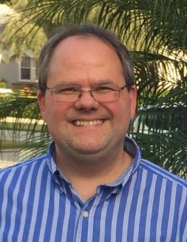


Davids became Kansas’ only Democrat in Congress after defeating incumbent Kevin Yoder by nearly ten points in 2018. Democrats had taken notice after Presidential candidate Hillary Clinton narrowly won this district in 2016. The Kansas City-area third district includes all of Johnson and Wyandotte Counties, and northern Miami County. In the 1990s and early 2000s, earlier versions of it were represented by moderate Democrat Dennis Moore.
Moore was a white, married, heterosexual male and a prominent local attorney. Davids is a self-described policy wonk, lesbian, Native American member of the Ho-Chunk nation, and former Mixed Martial Arts fighter. She defeated democratic socialist Brett Welder to win the Democratic nomination in 2018, then benefited from the anti-Trump sentiment that fed a nationwide “wave” election. Democrats, including many women, did particularly well in suburban districts, especially among college-educated female voters.
Since taking office, Davids has focused on quiet, policy-based leadership, a stark contrast with other newly-elected Democratic women like Alexandria Ocasio-Cortez, Rashida Tlaib and Iihan Omar. Locally, she has been“shadowing” workers in her district to learn more about their jobs. Davids is cautious, refusing to sign policies such as the Green New Deal and Medicare for All, arguing that they may not be in the best interest of her constituents.
Davids is smart to stay active and connected. Wave elections like 2018 are often followed by self-correcting ones, when many of the newly-elected officials are culled and the districts return to their original party leaning. For example, in 2010, Republicans won back the U.S. House largely by defeating Democrats who had been elected in 2006 and 2008, which had been good years for Democrats. Of 52 Democrats defeated in 2010, 22 had been elected just two years earlier, 11 more in 2006, and one in a 2009 special election. Republicans also won most open seats, and President Obama suffered the biggest setback of his presidency.
Two Republican challengers have already filed, both women. Amanda Adkins is a corporate executive who served in the Brownback Administration. Sarah Hart Weir is the former CEO of the National Down Syndrome Society.
These candidates may seek to differentiate themselves from national party leadership, but order to win the primary, they may still have promise tax cuts, criminalization of abortion, absolutist stances on gun rights and support for President Trump. This could help Davids, because issues like education, public health and “common sense gun legislation” now play better with many suburban voters than do the old Republican themes of “God, guns, and gays.”
If Davids survives 2020, her next big test will be redistricting after the 2020 Census. Presumably, the district will still center on Johnson County.
What does this mean for Kansas? First, Democrats are likely to retain their majority in the House, so it makes sense for the state to have representation there. Davids’ seat on the Transportation and Infrastructure Committee affects the trucking and aircraft industries so important to Kansas’ economy. Second, other urban and suburban districts in Kansas could eventually shift as well.
In 2018, Democrat Paul Davis nearly won in the 2nd district, winning its population centers of Topeka and Lawrence. In Wichita, the voters of Sedgwick County backed Sam Brownback in 2010 and 2014, but chose Laura Kelly over Kris Kobach last year. Most Kansans today live in metropolitan areas, and they are not immune from the political changes seen in similar communities around the country.
Michael A. Smith is a Professor of Political Science at Emporia State University.