We have a brand new updated website! Click here to check it out!

Police: Student arrested after alleged threat at Kan. high school

HARVEY COUNTY —Law enforcement authorities and USD 440 officials are investigating an alleged school threat and have made an arrest.

Just after 2:30p.m. Friday, police learned of a potential threat at Halstead High School, according to a media release from Police Chief Josh Orem.

Authorities identified a suspect and took a juvenile into custody on suspicion of criminal threat. The situation appears to be an isolated incident, according to Orem and there is no additional threat to the school.

The police department commended USD 440 staff for their quick action in notifying law enforcement about the situation.

Police did not release additional details.

College Board reverses course on controversial SAT ‘adversity score’

By CAROLYN THOMPSON, Associated Press

The company that administers the SAT college admissions test is replacing the so-called adversity score with a tool that will no longer reduce an applicant’s background to a single number, an idea the College Board’s chief executive now says was a mistake.

Amid growing scrutiny of the role wealth plays in college admissions, the College Board introduced its Environmental Context Dashboard about two years ago to provide context for a student’s performance on the test and help schools identify those who have done more with less.

The version used by about 50 institutions in a pilot program involved a formula that combined school and neighborhood factors like advanced course offerings and the crime rate to produce a single number.

But critics called it an overreach for the College Board to score adversity the way it does academics.

David Coleman, College Board’s chief executive, said some also wrongly worried the tool would alter the SAT results.

“The idea of a single score was wrong,” he said. “It was confusing and created the misperception that the indicators are specific to an individual student.”

The New York City-based College Board announced several changes to the tool Tuesday, including the decision to give students access to the information about their schools and neighborhood starting in the 2020-2021 school year.

Renamed “Landscape,” the revised tool will provide data points from government sources and the College Board that are seen as affecting education. They include whether the student’s school is rural, suburban or urban, the size of the school’s senior class, the percentage of students eligible for free- and reduced-price lunch, and participation and performance in college-level Advanced Placement courses at the school.

Admissions officers also will see a range of test scores at the school to show where the applicant’s falls, as well as information like the median family income, education levels and crime rates in the student’s neighborhood.

The tool’s creation was an acknowledgment of persistent criticism of the use of admissions tests in an era of concern with unequal access to advanced coursework and high-priced tutors that further advantage those with the means to access them.

This year’s “Varsity Blues” scandal , which exposed cases of affluent parents cheating the admissions system, has brought further scrutiny.

Colleges and universities have for several years been acting on the concerns, with an increasing number no longer demanding SAT or rival ACT scores from applicants. More than 1,000 schools, including elite liberal arts colleges, as well as research universities and for-profit schools, are test-optional, according to the nonprofit group FairTest, which argues standardized tests are biased against minority groups.

Yale University piloted the Environmental Context Dashboard, and admissions dean Jeremiah Quinlan said it’s a consistent way to see information that its admissions officers have always considered when culling through an application pool of 38,000.

Just over 1,500 students recently arrived for their first year, more than 20% of them eligible for income-based federal Pell Grants, he said. That compares with about 16% before the dashboard and 12% six years ago.

“It helps us identify students who have excelled in their context in a more clear and convincing way than we ever could have in the past,” said Quinlan, dean of undergraduate admissions and financial aid.

Eddie Comeaux, vice chair of the University of California’s Board of Admissions and Relations with Schools, said the improved clarity and transparency of Landscape addressed some of his initial concerns.

He still worries, though, about potential implicit bias among admissions officers, a problem that predates the context tool and is a focus of his work on the board, which regulates admissions practices.

“We want to look at implicit bias training and the ways in which certain indicators might signal a way in which (application) readers advantage or disadvantage certain applications and consciously or unconsciously not be aware of it,” he said.

“I’m less concerned about Landscape,” he said, “than I am about those who are making the decisions utilizing Landscape.”

Between 100 and 150 institutions are expected to pilot the new tool this year before it becomes broadly available next year.

Former Hays woman who bought out Payless store for flood victims again paying it forward

Abby Tritt, formerly of Hays on “Ellen” this spring. Photo courtesy of KWCH

Courtesy of KWCH

About four months after being recognized on “Ellen” for paying out a local Payless Shoe Source store and sending shoes to help flood victims in Nebraska, Addy Tritt, FHSU grad and former Hays resident, is paying it forward again.

Tritt is now using a donation from Ellen to buy $20,000 worth of merchandise from another store going out of business, Charming Charlie. Tritt plans to donate the merchandise to women impacted by domestic violence.

“My plan is to create a “closet” for women in domestic violence shelters to come pick out a new outfit and accessories,” Tritt said. “I couldn’t have done it without Ellen.”

RELATED STORY: Hays women buys out Payless store, sends shoes to flood victims

Strategic Doing meetings set for Ellis, Rooks and Trego counties

The Heartland Community Foundation, which serves Ellis, Rooks and Trego counties, has scheduled the next round of Strategic Doing meetings for each county.

Strategic Doing is an engaging process that actively helps residents implement their ideas for community improvement projects. Current working groups who attend will report on their progress and continue work to move their projects forward. New ideas and working groups are also encouraged to attend and start working through the Strategic Doing process.

The Ellis County meeting will be held at 6 p.m., Monday, September 9, at the Rose Garden Banquet Hall in Hays.

The Trego County meeting will be held at 6 p.m., Wednesday, September 11, at Western Cooperative Electric in WaKeeney.

The Rooks County meeting will be held at 6 p.m., Thursday, September 12, at the RCH Education Center, Highway 183 and Washington Street in Plainville.

Dinner will be served at each location. There is no cost to attend, but registration is required. RSVP with your name and county to [email protected].

— HCF

Go Truck Go will be next month in Hays

The annual “Go Truck Go!” event will be from 5 to 7 p.m. Thursday, Sept. 19, at the new USD 489 Early Childhood Connections complex, 2501 E. 13th.

The free family event allows children to get an up-close and personal look at their favorite vehicles. Free information will be available from local early childhood resources. Free food and drink are provided.

— Submitted

Portions of Feedlot Road will be closed beginning Wednesday

The Ellis County Public Works Road & Bridge Division announced last week that prime oil will be placed on the 1200, 1400 and 1500 blocks of Feedlot Road, in preparation for a chip and sand seal project.

On Wednesday, Sept. 4, weather permitting, the 1200, 1400 and 1500 blocks of Feedlot Road will be closed to through traffic beginning at 10 a.m. and will remain closed until the project is completed. Motorists traveling in the affected closure area should use alternate routes of travel until the project is complete.

For more information, call 785-628- 9455.

Entries open for Kansas Water Office photo contest

2018 Winner of Grows on Water: Backyard Visitor by Chuck Gibson, Jewell

KWO

TOPEKA – Welcome to the 2019 Kansas Water Office Photo Contest. Kansas is filled with amazing scenery, and photographers like you are the reason everyone can enjoy it’s beauty.

KWO will be accepting photos August 14 through October 11, 2019. Lakes & Landscapes, Sunrises & Sunsets, Grows on Water, Water at Play, Creativity with water and a Youth Division for those 18 and under will be the categories again this year.

See below for more details on the contest, including deadlines, information on the categories and to view past photo winners. Please remember to submit all of the requested information with your pictures.

KWO Photo Contest

Categories

Please remember that water must be visible in all pictures.

Lake/Landscape:   What amazing scenery Kansas can provide us. Whether on the water or off, in the hills or in the plains please share your images here of any and all bodies of water and landscapes during any season.

Sunrise/Sunset:  Kansas has beautiful skies that can be even more beautiful when viewed over water. If you have a photo showcasing the wonders of a Kansas sunrise/sunset taken around water, please submit it to this category.

Grows on water:  Images submitted to this category cover a wide variety of items including livestock, pets, wild animals, irrigation/farming or other items that would grow by using water.

Water at play:  Images submitted to this category should showcase any of your recreational photos whether kayaking/boating, fishing/hunting, swimming, or just plain playing in the water.

Creativity with water:  Seriously….get creative! Did you skip a rock across the water, did you make a giant wave, capture an image of water drops? Use your imagination.

Youth Division – All Things Water:   This division will be submitted and judged separate from the categories above. No category for this division, just anything water related. If you have a photo that showcases water in Kansas and are 18 years old or younger please submit it here.

Eligibility

Only pictures taken in Kansas are eligible to enter the contest. We ask that all photo submissions are not digitally manipulated or enhanced. Photos that have been altered will be disqualified. Photos that have been edited using Instagram filters will not be accepted. Normal cropping, color correction, etc. are acceptable. Please remove watermarks/trademarks before entering.

Judged on creativity and photo composition, winning photos will be used on the department’s website, social media, publications, brochures, and may be displayed around the KWO building. Prior photo submissions to the KWO contest are not eligible for reentry, but photos taken before 2018 are acceptable.

How to Enter

The contest is open to Kansas residents only.

Photo entries should be submitted by emailing high resolution photos to [email protected].

Entries must include:

  • A title and brief description of each photo
  • When and where the photo was taken
  • Photographer’s full name
  • Email address
  • And Category being entered

Judging Criteria

The KWO staff and select Water Authority Member’s will vote on the entries to select fifteen images, the top three from each category. These will then be displayed and voted on at the Governor’s Water Conference in November by conference attendees.

Prizes

The top three photos will be displayed in the Kansas Water Office and Kansas Capitol. The winning photo will be featured at the 2019 Governor’s Conference on the Future of Water in Kansas.

Terms

By submitting photos, the photographer gives the Kansas Water Office permission to use the photos in any publications, social media, websites, displays and other places without payment or other consideration. Additionally, by submitting a photo that includes human subjects, the photographer is indicating that they have obtained full permission from those subjects for the photograph to be used in department medium as well.

Colorado judge arrested on suspicion of DUI in SW Kansas

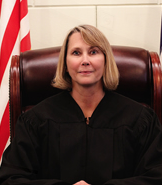
DENVER (AP) — A part-time county judge in Colorado has been arrested on suspicion of driving under the influence in Kansas.

Debra Gunke photo courtesy Colorado Judicial Branch

Baca County Judge Debra Gunkel was arrested outside Tribune, Kansas, on Aug. 17. Greeley County, Kansas, prosecutor Charles Moser said no decision has been made on filing charges.

No phone number could be found for Gunkel. The newspaper says her attorney didn’t return a phone call or email.

Court records show Gunkel pleaded guilty in October to driving under the influence in Colorado and was given a deferred sentence, meaning that case could be dismissed if she doesn’t commit another crime for two years and completed other requirements.

Colorado courts spokesman Rob McCallum says officials are awaiting the outcome of the Kansas case before before taking any action.

Police: Kansas man accused of DUI, driving motorcycle 100 mph

SEDGWICK COUNTY — Law enforcement authorities are investigating a suspect after a wild ride observed by police.

Dylan Garcia photo Sedgwick Co.

Just after 9:30p.m. Thursday, police observed two motorcycles traveling at speeds over 100 miles per hour in the 5400 Block of East Kellogg, according to officer Charley Davidson.

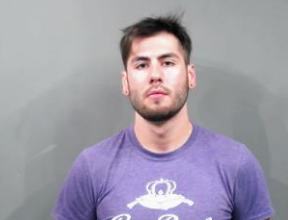
Due to the speed, police were unable to catch them. One rider later identified as Dylan Garcia, 21, Derby, was seen exiting and came to a stop at the intersection of Washington and Lewis, according to Davidson.  Police caught him there and made an arrest.

Garcia was jailed on requested charges of speeding, evade and elude, reckless driving and driving under the influence, according to Davidson.

The case remains under investigation and will be presented to the city prosecutor’s office.

Kansas City council approves 2 ordinances to keep guns from minors

KANSAS CITY (AP) — The Latest on gun violence in Kansas City (all times local):

Kansas City leaders have approved two ordinances aimed at keeping firearms out of the hands of minors.

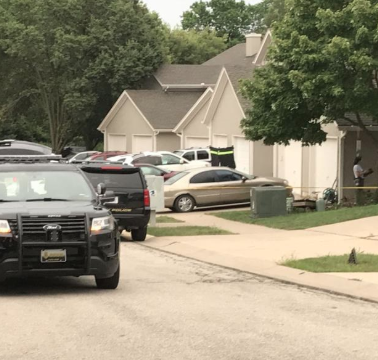
Police on the scene of a fatal shooting investigation involving teens in a Kansas City suburb- photo courtesy KCTV

One ordinance approved Thursday draws on federal law to make it a local offense for minors to have handguns. The other, citing state law, prohibits adults from recklessly giving minors guns without parental permission.

Kansas City Mayor Quinton Lucas says the idea behind the ordinances is to give police tools to seize firearms from minors. Lucas’ general counsel, Jane Pansing Brown, says there is a federal law barring minors from possessing handguns, but she said it’s rarely enforced by federal prosecutors.

Councilman Brandon Ellington abstained from the vote. He argued that the measures unnecessarily duplicated existing state and federal law and that most homicides don’t involve minors.

____

The Latest: Royals ownership agrees to sell club to KC-based group

KANSAS CITY, Mo. (AP) — David Glass and his family on Friday announced the sale of the Kansas City Royals to an ownership group led by local entrepreneur John Sherman in a deal expected to be worth about $1 billion.

The Royals announced the sale just days after word began to leak that the Sherman group was closing in on an agreement. Sherman and his co-investors will become the third owners since another local businessman, Ewing Kauffman, founded the club in 1969.

The 83-year-old Glass and his family helped serve as caretakers of the club following Kauffman’s death in 1993, and they took ownership of the club for $96 million in April 2000.

“The decision to sell the Royals was difficult for our family,” said Glass, whose son Dan has served as the Royals’ president. “Our goal, which I firmly believe we’ve achieved, was to have someone local, who truly loved the game of baseball and who would be a great steward for this franchise going forward. In John Sherman we have found everything we were looking for in taking ownership.”

The 64-year-old Sherman has lived in Kansas City for more than four decades, even after he bought an interest in the Cleveland Indians. He founded, built and then sold a series of energy companies and has remained an influential local businessman, dabbling in agriculture in biosciences.

Sherman, who played quarterback at nearby Ottawa University, is also a well-respected civic leader, even though he keeps a low profile. He has given time and money to the Truman Presidential Library in nearby Independence, the Negro Leagues Museum in Kansas City, and several local schools. He and his wife, Marny, have also worked with Teach for America and other organizations.

“I am enormously grateful to David and the Glass family for this extraordinary opportunity,” Sherman said, “and am humbled by the chance to team up with a distinguished group of local investors to carry forward and build on this rich Kansas City Royals legacy.

“Our goal will be threefold: to compete for a championship on behalf of our fans; to honor their passion, their experience and their unwavering commitment; and to carry their hopes and dreams forward in this great Kansas City region we all love for decades to come.”

Sherman will need to divest his interest in the Cleveland Indians, believed to be about 30 percent of the franchise, and the deal is subject to the approval of Major League Baseball.

Those hurdles should be cleared before owners vote on the sale at their meeting Nov. 21.

“We’re very supportive of John and his group reaching an agreement to acquire ownership of his hometown Kansas City Royals,” Indians president Paul Dolan said. “His acquisition of the Royals is good for the game of baseball and I wish him nothing but the best.”

Sherman was introduced by Dolan by Steve Greenberg, the son of Hall of Famer Hank Greenberg. His financial involvement allowed the team to push its payroll over the years, including in 2016, when the Indians acquired All-Star reliever Andrew Miller from the Yankees before the trading deadline.

KANSAS CITY, Mo. (AP) — David Glass and his family have agreed to sell the Royals to an ownership group led by Kansas City entrepreneur John Sherman in a deal that is expected to be worth about $1 billion.

The Royals announced the sale in a statement Friday, just days after word began to leak that the Sherman group was closing in on an agreement. Sherman and his co-investors will become the third owners since another local businessman, Ewing Kauffman, founded the club in 1969.

The 83-year-old Glass and his family served as caretakers of the franchise following Kauffman’s death, and they took ownership of the club for $96 million in April 2000.

Sherman will need to divest his interest in the Cleveland Indians, believed to be about 30 percent of the franchise, and the deal is subject to the approval of Major League Baseball.

None of those issues is expected to be stumbling blocks to a final sale.

Copyright Eagle Radio | FCC Public Files | EEO Public File