We have a brand new updated website! Click here to check it out!

INSIGHT KANSAS: School redesign — outcomes for the future

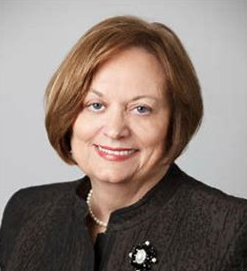
Dr. Sharon Hartin Iorio is Professor & Dean Emerita at Wichita State University College of Education.

Kansas Can, launched by the Kansas State Board of Education is a visionary project to create more effective PreK-12 learning. Begun in 2017 with seven schools, today Kansas Can has grown to include 66 of the 286 districts in Kansas.

Aimed at statewide, overall school redesign, the KSDE board laid out a concept for the project then engaged teachers to drive the course of action. All districts are expected to join the redesign process by 2026.
How much do we know about this ambitious undertaking to make the changes required for student success in today’s world?

Redesign emerged from conversations held in 2014 by then newly named KSDE Commissioner Randy Watson. Watson traveled the state conducting focus groups that totaled more than 2,000 people to learn their thoughts on the future of Kansas public education.

Kansans interviewed said that students needed to be better prepared upon graduation. Many said students should be learning “soft skills” including team work and responsibility.

Based on the feedback, the KSDE board established five redesign outcomes for measuring progress. Teachers in participating schools will measure steps taken for students to engage social-emotional development, kindergarten readiness and creating a plan of study focused on career interest. The outcomes also require collecting data on changing high school graduation rates and data on student participation in or completion of post-secondary learning.

At this point, the five KSDE board outcomes have been presented to school districts that volunteered to participate. No extra funding is allocated from KSDE or state education budgets. The work is school-site specific enacted by teachers in the 160 schools within the 66 currently participating districts.

For example, in Stockton, to promote social/emotional growth, the school provides for students and adult employees to meet regularly in a multi-age, small community to cultivate commitment to democratic values and participation in improving society on behalf of all people. In Wellington personalized learning through basic academic content is offered by a free online/computer-based program within a limited number of carefully selected classrooms.

Neither online learning nor school communities are required as part of current school redesign—redesign rests with how teachers in each school interpret the KSDE outcomes.

School redesign is well known by educators but not widely known by the public, except in districts where there has been criticism of the new activities, often centered around classrooms where online learning covers basic content instruction.

While many Kansans support the current, free KSDE online learning opportunities that serve individual students away from teacher-led instruction, the public opinion jury is still out on whether shifting substantial group time to online for academic study is more beneficial than regular school.

Voters in Wellington will help make that call. This fall’s local school board election will see three open board positions contested by candidates, whose platforms, in part, address online classroom learning.

Change is often needed, but change also can be stressful and occasionally not productive. The important point to remember is that online classrooms are just one way to implement one part of the much larger redesign project—not the defining element of the KSDE redesign’s critical and far-reaching mission for each Kansas student to succeed.

Kansans can make redesign, though challenging, a change for the better. After all, redesign is not nearly as challenging as sending a man to the moon.

Dr. Sharon Hartin Iorio is Professor & Dean Emerita at Wichita State University College of Education.

SPONSORED: United Way seeks executive director

The Board of Directors of the United Way of Ellis County (Hays, KS), a local affiliate of the national charitable organization, is seeking an experienced and motivated

Executive Director. The Executive Director of the United Way of Ellis County is a visionary with the qualities of effective leadership and ability to lead change initiatives; has a proven track record of successful donor cultivation; is an effective relationship builder with a diverse, wide spectrum of constituencies, including corporate and community leaders and partner agencies.

Reporting to and working cooperatively with the Board of Directors, the Executive Director is directly responsible for leading and developing staff, and day-to-day operations including resource development, community investment, and maintaining/strengthening the relationship with partner agencies. This individual must be a powerful communicator in telling the United Way’s story of “lives changed” and “people mobilized” within our community.    

Qualifications:

  • Bachelor’s Degree or equivalent experience required
  • Must be able to pass a background check
  • Must be able to obtain a bond
  • Demonstrate integrity and  high energy
  • Business insight
  • Experience managing and leading an organization or business unit of comparable size.

Salary:  Beginning compensation between $35,000 and $45,000 based on experience with opportunity for bonus pay based upon performance. 

Qualified candidates should send an application, résumé and cover letter including your vision of how to be a successful Executive Director, three references, three year salary history and requirements via e-mail to: [email protected].  Applications are available online at www.liveunited.us.  All submissions will be confidential, and references will not be contacted without the candidate’s approval. Priority deadline is September 6, 2019.  Review of applications will begin after the deadline and continue until the position is filled.

Please visit www.liveunited.us for more information about the United Way of Ellis County.

United Way of Ellis County is an Equal Opportunity Employer.

CAMPBELL: Make an informed decision when selecting the best wheat variety

Stacy Campbell is Agriculture & Natural Resources Extension Agent for the Cottonwood Extension District.

In recent years, wheat producers are faced with an increasing number of varieties from which to choose. One of the reasons behind having so many available varieties is that many public and private institutions are breeding wheat varieties in the Great Plains: Colorado State University, Kansas State University, Oklahoma State University, Texas A&M University, University of Nebraska, AgriPro/Syngenta, Limagrain, and WestBred/Monsanto. Additionally, several companies license varieties from existing breeding programs, such as AGSECO, Dyna-Gro, AgriMaxx among others.

Producers can use different tools and publications to study each variety’s strengths and weaknesses, selecting varieties that best match their needs.

Making a better decision: Steps to select a wheat variety

The following information provides a step-by-step guideline, as well as relevant resources, to help producers make a better decision when selecting one or a few varieties to plant in their operation.

  1. Select several varieties that are adapted to your region of the state.

Regardless whether you intend to plant one variety or several on your farm, it is important to start out with a list of several good candidate varieties. The final product of interest is grain yield and therefore, it is crucial to select varieties that have shown consistent performance and excellent yield record in the region. Varieties that worked well for you and your neighbors in the past should be considered, but also make sure and check yield results from nearby K-State (and other universities’) variety performance tests and demonstration plots. It is important to take into consideration the conditions experienced during the year in question. For instance, results from central Kansas during 2019 season were extremely variable due to excessive rainfall at several locations. Thus, when looking at these results it is very important that results from more than a single year, and possibly more than a single nearby location, are taken into consideration.

A few good resources to consult are:

  1. K-State variety performance test: Start searching by year, narrow down your search by region and finally by site. Choose the site(s) nearest to you and look for varieties that are consistently toward the top. Repeat the procedure for different years to check the consistency of the variety performance. Go to our web site www.cottonwood.ksu.edu to access the K-State wheat variety performance test results.
  2. Colorado Wheat Variety Database: This database encompasses replicated trial results from Colorado, Kansas, Oklahoma, and several other public state trials, so producers throughout the Plains can benefit. It is an excellent, easy-to-use resource that allows you to dig into data from single location, multiple locations, multiple years, and also allows for head-to-head variety comparisons. We suggest that users start by looking at “Single Location Trial Data”, selecting the location nearest to you, and repeating this step for several years of data for that location. Check for varieties that tend to be consistently toward the top. Afterwards, look at “Multiple Location Trial Data,” which will allow you to look at yields spanning a wider geographical region instead of a single location for one, two, three, or four years combined. Depending on region and number of years selected, you might be looking at more than 15 replicated trials combined. Thus, if a given variety remains a top yielding variety across all these replicated trials, it is a pretty good argument that you should at least look at that variety’s characteristics and consider it in your farming operation. Finally, after selecting a few potential candidates based on their performance, we suggest that users click on “Head-to-head comparisons”, so they can test whether those candidates performed statistically different over a wide range of environments. That web address is www.ramwheatdb.com/

Additional Resources

A few great resources to help you walk through each variety’s characteristics as far as maturity, disease ratings, drought, straw strength, winterhardiness, and other agronomic characteristics are:

  1. K-State Wheat Variety Disease and Insect Ratings 2019: This comprehensive guide to wheat varieties will allow you to compare different varieties in their agronomic and disease resistance characteristics in detail. Many varieties are individually described, others are shown in a table format which allows for easy and fast comparison. It is available on our web site www.cottonwood.ksu.edu
  2. Wheat Varieties for Kansas and the Great Plains by Layton Ehmke: This private-sector book is also an excellent, comprehensive source of information regarding different varieties and their characteristics. It provides detailed ranking of varieties by traits of interest, making it easy to use. It also has a good summary of several variety performance tests in the Great Plains. While not available online, producers can purchase it at https://thewheatfarmer.com/

Information provided by  Romulo Lollato, Extension Wheat and Forages Specialist and Erick DeWolf, Extension Plant Pathologist.

Surgeon General: This ain’t your mother’s marijuana

WASHINGTON (AP) — Federal health officials issued a national warning Thursday against marijuana use by adolescents and pregnant women, as more states legalize the increasingly potent drug for medicinal and recreational use.

Marijuana
FILE PHOTO / WIKIMEDIA COMMONS

Health and Human Services Secretary Alex Azar and Surgeon General Jerome Adams made the announcement, with Azar calling marijuana “a dangerous drug.” Officials said President Donald Trump has donated $100,000 — one-quarter of his annual government salary — toward a digital campaign to raise awareness of the risks. Trump has forgone his official salary since taking office.

The warning comes as legal marijuana has grown into a $10-billion industry in the U.S. with nearly two-thirds of states legalizing it, mainly for medical uses. An increasing number of states and localities are also allowing personal, recreational use.

Countering the opioid epidemic is a top issue for the White House, but marijuana had not gotten such high-level attention.

Adams said science shows that marijuana is harmful to the developing brains of teenagers and to the human fetus. The drug has also gotten stronger, with a three-fold increase in the concentration of the active ingredient THC in cultivated plants over the last 20 years.

“This ain’t your mother’s marijuana,” said Adams.

While many states have changed their marijuana laws, federal law still treats it as a controlled substance akin to opioids.

Federal officials say they fear the trend toward legalization may make it more enticing for teenagers to try marijuana. It’s a commonly used drug among youths, they said, along with alcohol and e-cigarettes. No states allow legal marijuana use by teens.

Adams said that for teens it carries a risk of affecting brain development, which continues in the 20s. Frequent marijuana use by teenagers is associated with changes in parts of the brain that are involved with attention, memory, decision-making and motivation.

Among pregnant women, marijuana is the most commonly used illicit drug, with about 7% reporting they had used it within the past month in a 2017 study. The American College of Obstetricians and Gynecologists and the American Academy of Pediatrics advise women not to use marijuana during pregnancy, and to discontinue the drug if they find out they are pregnant.

HHS Assistant Secretary for Health Brett Giroir said pregnant women taking marijuana to relieve morning sickness should stop. “If you have morning sickness, talk to your physician,” he said.

Dorothy Staab

Dorothy Staab, age 97, of Victoria, KS passed away Thursday August 29, 2019 at Via Christi Village – Hays.

Funeral services will be 10 AM Tuesday, September 3, 2019 at St. Catherine’s Catholic Church in Catharine, KS. Burial will follow in the St. Catherine Cemetery, Catharine.

Visitation will be Monday, September 2, 2019 from 4 PM – 8 PM with a Rosary service at 6:30 PM by the Christian Mother’s Alter Society of St. Catherine, followed by a Parish Vigil service at 7 PM all at Brock’s-Keithley Funeral Chapel and Crematory 2509 Vine Hays, KS 67601.

A complete obituary will soon follow.

Condolences may be left by guest book at www.keithleyfuneralchapels.com or by email at [email protected]

Jury: Man guilty of murder for Kan. woman’s death fleeing alleged rape

KANSAS CITY, Kan. (AP) — A 35-year-old Kansas man has been convicted of murder after a woman died in a traffic crash while fleeing from an alleged rape.

Taylor -photo Wyandotte Co.

A Wyandotte County jury on Wednesday found Orlando Taylor guilty of first-degree murder in the August 2017 death of 39-year-old Shannon Keithley of Kansas City, Kansas.

Investigators say Keithley died when the car she was driving hit a concrete pillar near her home while she was calling 911.

Officers arrested Taylor after finding him hiding under the deck of Keithley’s house.

A knife was found in the driveway.

The Kansas City Star reports that after Taylor was initially charged with burglary and rape, Keithley’s family and friends pushed prosecutors to charge him with murder as well.

Man wanted in 2012 killing in Dodge City arrested in Mexico

DODGE CITY, Kan. (AP) — A suspect in a 2012 murder in Ford County has been returned to Kansas after being arrested and extradited from Mexico.

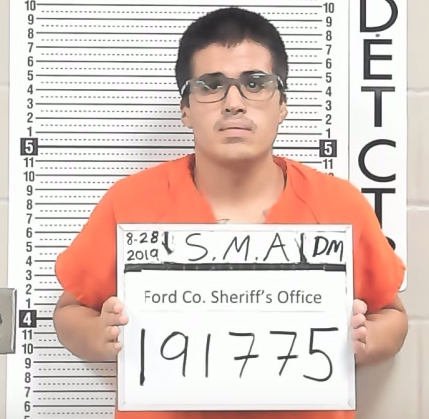
Solis photo Ford Co. Jail

Ford County Attorney Kevin Salzman said 23-year-old Miguel Solis is a suspect in the death of Miguel Tol Juarez, who died in August 2012.

Solis is charged with first-degree murder, two counts of aggravated battery, one count of attempted aggravated robbery and one count of criminal possession of a firearm.

He is being held on $4 million bond.

Investigators say Solis was one of three Dodge City males who shot Tol Juarez at his home during an attempted robbery. The other two suspects were arrested shortly after the death but Solis fled to Mexico.

Solis’ next hearing is scheduled for Sept. 5.

Man who fled Missouri, Nebraska sentenced on 23-year-old sex charges

OREGON CITY, Ore. (AP) — An Oregon man who turned himself in for multiple sex crimes after 23 years on the run has been sentenced to more than 16 years in prison.

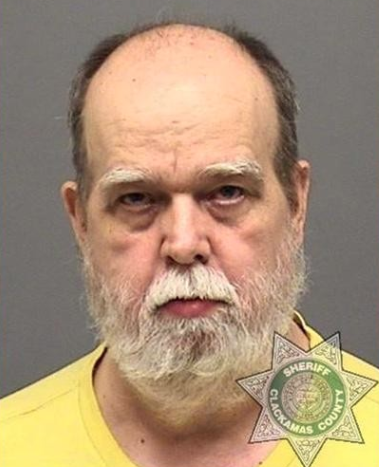
The Oregon City Police Department said 62-year-old Wayne Arthur Silsbee was sentenced Wednesday after he turned himself in to authorities in May.

He was wanted on FBI arrest warrant dating to 1996, when he was under investigation for sexually abusing at least three girls between the ages of eight and 10.

Authorities say he babysat the girls or took them to events.

Silsbee photo Clackamas County Jail

Silsbee is believed to have lived in Nebraska and has ties to Missouri; the San Francisco Bay area; Colorado; Arizona and Washington state.

Police say anyone who knows about Silsbee’s activities during the past 23 years should call them.

UMKC settles lawsuits with professor who alleged retaliation

KANSAS CITY (AP) — A University of Missouri-Kansas City associate professor whose complaints led to the eventual ouster of a top pharmacy professor has agreed to a $360,000 settlement of two lawsuits he filed alleging that university officials retaliated against him because of his allegations.

Mirdul Murkherji photo UMKC

The University of Missouri system’s governing board reached the settlement with Mirdul Murkherji, of Lenexa, Kansas, two weeks before a trial was scheduled to begin on Murkherji’s complaints of employment discrimination and work harassment, The Kansas City Star reported.

Murkherji’s attorney, Gerald Gray, could not discuss the settlement terms but said Murkherji is “happy with the outcome and that he retained his job at UMKC.”

In lawsuits filed in 2016 and 2018, Murkherji, claimed his former boss, Ashim Mitra, was abusive to him and others who had reported Mitra to school officials. The lawsuits also claimed university officials retaliated against Murkherji for complaining that Mitra mistreated foreign students.

Mitra was suspended in November after an investigation by the Star found he had for decades used doctoral candidates from India who were in the U.S. on student visas as servants by forcing them to house sit, clean and serve food at social functions. Some of the students said they agreed to work for Mitra, who had brought the university millions of dollars in research grants, because he had the power to force them out of school, which would cost them their visas.

Murkherji discussed the problems with the newspaper and mentioned the mistreatment of the students in his lawsuit, which prompted a university investigation.

Mitra resigned in March after the university alleged in a lawsuit that he had stolen a student’s research and secretly sold it to a pharmaceutical company, costing the school millions of dollars.

Last Friday, the university fired Anil Kumar, who until last year was chairman of the school’s pharmacology division. The university has refused to say what led to the firing because it was a personnel decision.

Excel Industries announces it will lay off workers at Kan. plant

HESSTON — Excel Industries Inc.  announced Thursday it was laying off 70 workers at the Hesston facility. According to a statement from the company, production and office positions are part of the reduction in workforce.

The company will continue operating both a first and second shift.

“The decision is the result of a loss in business from a mass retail partner. While the impact on our company is significant, the company says their longstanding commitment to smaller, independent dealers remain the bulk of their business,” the company said in a statement.

The statement went on to say the company will continue its strategy to grow the commercial market and that it is committed to an ongoing strategy that includes mass retail partners.

The company said it will provide access to employment and training services, assistance with health benefits, and transition payments to those affected.

Two arrested in Hays on suspicion of passing counterfeit hundreds

Gresock / Ellis Co. photo

By JAMES BELL
Hays Post

On Sunday, the Hays Police Department arrested two people at a local hotel after investigating reports of fake currency being used at several Hays businesses.

“We had a number of business report that they had received $100 bills that were fake,” said Hays Police Lt. Tim Greenwood.

During the investigation, the same two suspects were observed at the locations and tracked to a local hotel. They were later identified as Gregory Gresock, 48, Ellis, and Amanda O’Brien, 34, Hays.

“They knew that they were counterfeit and passing them as legitimate bills,” Greenwood said.

After contact was made, Gresock and Obrien were taken into custody and a search warrant was obtained for a hotel room.

During the search of the room, more bills were located, Greenwood said, adding methamphetamine and drug paraphernalia were found on Gresock and O’Brien.

“Based on information received during their interview, we were able to apply for, receive and execute a search warrant out in the county at a residence and recovered more bills, drugs and paraphernalia,” Greenwood said.

He believed at least one of the suspects was working in Hays but did not know why they had procured a hotel room.

While the use of fake bills led to arrests, several of the business suffered losses after being paid with fraudulent bills.

“There were some losses because they had already provided services or goods and then they realized after the fact that the bill was fake,” Greenwood said.

The bills were described as having Asian writing on them, but Greenwood said he was unsure where the bills had come from and no manufacturing devices had been found during the investigation.

“There was no indication that they were making them themselves,” he said.

While fake currency can sometimes be hard to detect, Greenwood said, if a bill is presented with markings, or if the bills feel suspicious, he advised asking for another form of payment.

“When in doubt, don’t take it,” he said.

Greenwood said he was happy with the investigation by the department.

“Our guys did well here,” he said. “They recovered over 40 counterfeit bills, and two people will face the charges.”

O’Brien was arrested on suspicion of two counts of suspicion of possession or intent to distribute counterfeit currency, two counts of theft by deception, drug possession and possession of drug paraphernalia.

Gresock was arrested on suspicion of six counts of suspicion of possession or intent to distribute counterfeit currency, four counts of theft by deception, theft, drug possession and possession of drug paraphernalia.

Both Gresock and O’Brien are presumed innocent until proven guilty in a court of law, Greenwood said.


Copyright Eagle Radio | FCC Public Files | EEO Public File