To find out more about The Post Podcast, or subscribe to mobile notifications click here.
Year: 2019
Kansas couple remain jailed after 5 young children found home alone

SEDGWICK COUNTY — Law enforcement authorities are investigating a couple after police discovered five children home alone in Wichita.


In April, police responded to a report of children left alone at a residence in the 3000 block of South Broadway, according officer Kevin Wheeler.
They found the children ages 2- months, 3, 6 and 8 alone and in conditions not suitable for them, according to Wheeler.
Police placed the children into protective custody at that time.
On Thursday, Sedgwick County Sheriff’s Deputies arrested 35-year-old JT Rowe and 29-year-old Jessica Thompson on requested charges that include four counts of aggravated child endangerment and one count of endangering a child, according to online jail records. They remain in custody on a $50,000 bond.
Taiwan Agricultural Youth Exchange accepting applications

KDA
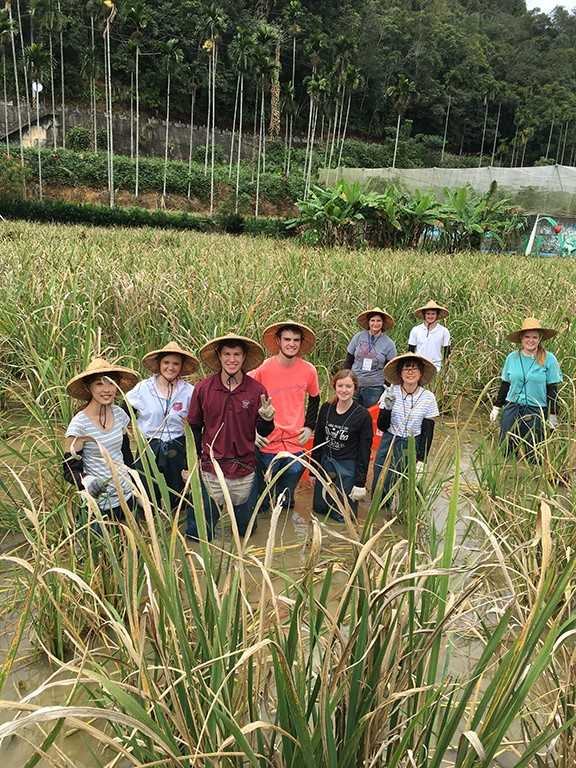
MANHATTAN — The 2019 Taiwan Agricultural Youth Exchange Program is currently accepting applications from high school seniors or college freshmen who are passionate about agriculture and are interested in representing Kansas in a week-long exchange program October 26 through November 3, 2019.
Each year the National Taichung Agricultural Senior High School in central Taiwan hosts students from the U.S. Midwest for this program. Selected students will tour agricultural facilities and businesses in Taiwan and learn about Taiwanese agriculture.
“The entire experience was amazing,” said Sage Collins, 2018 program participant. “Immersing myself in a new culture, experiencing all the aspects of Taiwan and learning about their agricultural practices was an eye-opening experience for me.”
Exports play an important role in Kansas agriculture. According to Euromonitor, Kansas exported over $129 million in agriculture products to Taiwan in 2018, including beef, oil seeds, cereal grains and wheat flour. Globally, exports of agriculture products contributed over $3.6 billion to the Kansas economy in 2018.

“The Taiwan Agricultural Youth Exchange Program is a tremendous opportunity for students who have an interest in agriculture,” said Suzanne Ryan-Numrich, international trade director for the Kansas Department of Agriculture. “Students are able to return from Taiwan with a broader understanding of international agriculture and the role that exports play in their local communities.”
Two students will be selected to represent Kansas. To be eligible to apply, students must meet the following requirements:
- High school senior or college freshman.
- At least 18 years of age by the beginning of the trip.
- Strong Kansas agricultural background.
- Valid U.S. passport by time of exchange program selection.
- Able and willing to pay for airfare costs (approximately $1,000).
Applications must be submitted by August 30 for the student to be considered. Students interested in applying can find more information at agriculture.ks.gov/AgEd. The Taiwan Agricultural Youth Exchange Program is sponsored by the Kansas Department of Agriculture, the Kansas FFA Association and Kansas 4-H.
For more information, contact Robin Blume, KDA education and events coordinator, at [email protected] or 785-564-6756.
Storm winds blow trains off tracks in Kansas


WALTON, Kan. — Strong winds from a line of thunderstorms blew over two BNSF freight trains in Harvey County Saturday night near the small town of Walton, or about 7 miles northeast of Newton.
The winds, estimated at nearly 70 miles per hour, pushed over an intermodal train on the mainline and an empty LP gas tank car train on the siding. 
Emergency crews were on the scene throughout the day trying to clear the wreckage so trains could start moving again. Two portions of the nearly two-mile-long intermodal train left the tracks while the entire train hauling the tank cars fell on its side. The wreck also stopped Amtrak’s Southwest Chief heading west before it could reach Newton.
 The line is one of BNSF’s transcontinental routes and sees about 45 trains per day. Officials with BNSF were not available for comment.
HaysMed implements smartphones to improve patient care

 HAYSMED
HaysMed recently launched a new initiative to coordinate patient care. The Voalte Platform™ helps enhance patient care and communication through the use of smartphones. The system integrates Apple® iPhones with multiple alarm sources and HIPAA compliant messaging to ensure physicians, nurses and support staff always have the most up-to-date patient information.
The Voalte Platform implementation will include Voalte One™ on shared smartphones for nurses at the point of care, Voalte Me™ for physicians and others using personal smartphones outside the hospital, and the Voalte Messenger™ web client for unit coordinators and secure calling and messaging, bringing together all forms of communication on one powerful, smartphone-based platform.
“As hospital dedicated to providing high-quality healthcare to our community, we look for solutions to improving patient care,” said Bryce Young, Chief Operating Officer. “We want our employees to have the most up to date technology as the foundation for communication across the hospital to ensure that care teams can access and exchange information securely, and collaborate efficiently on patient care.”
With this system physicians and nurses will be able to collaborate quickly and efficiently on an easy-to-use smartphone, and provide the best possible patient care.
“The ability to streamline care team communication and improve access to vital patient information is invaluable” said Young.
More rain, wind damage in Hays; Flash Flood Warning for Ellis County

By BECKY KISER
Hays Post
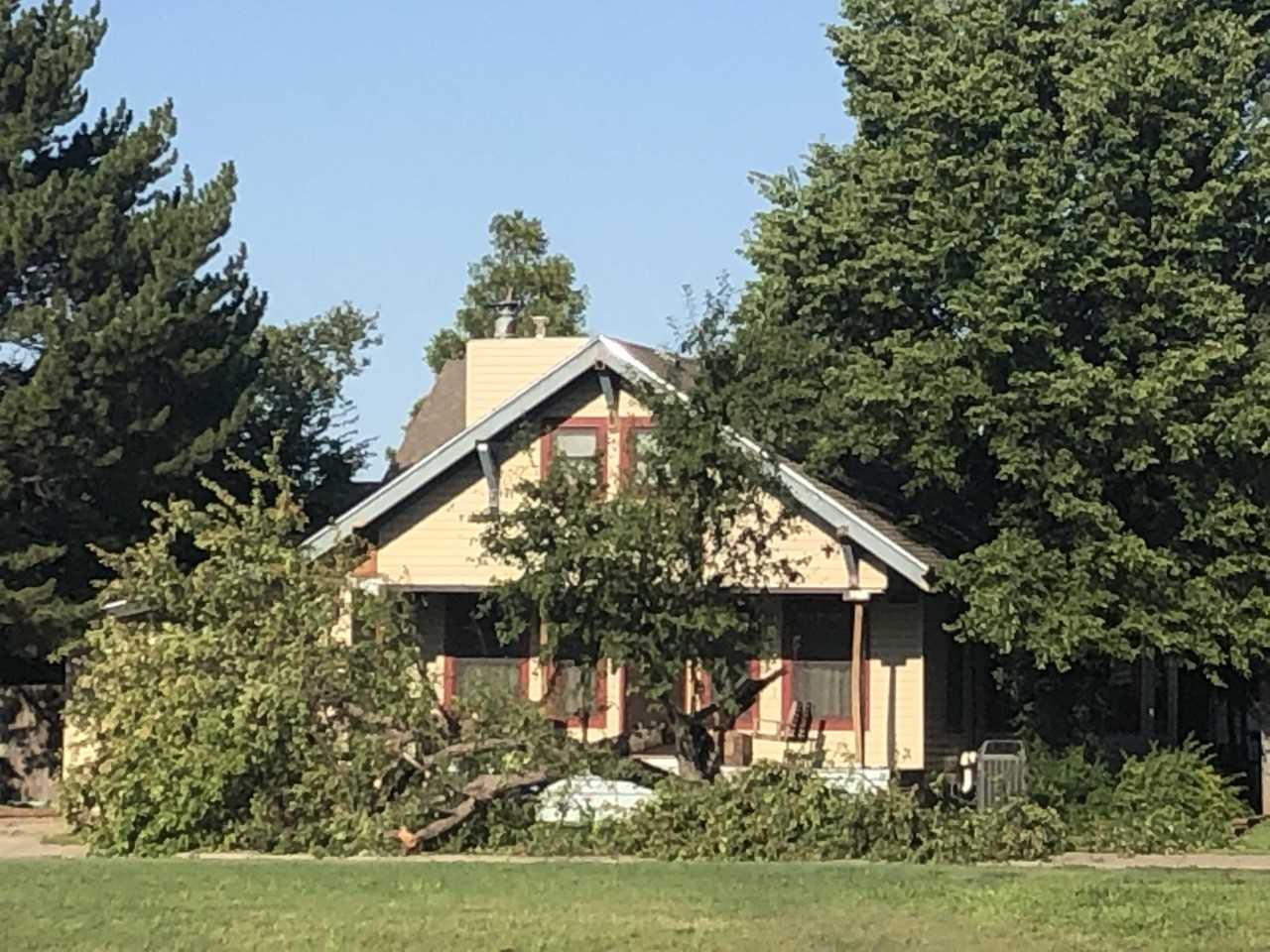
Another stormy night in Hays, the third time in five days.
Three waves of thunderstorms cut through Saturday night into early Sunday morning – at 9:20 p.m., 11 p.m. and 3:45 a.m. – according to official records at the K-State Agricultural Research Center south of town.
Weather keeper Joe Becker says the storms included high damaging winds, driving rain, ground lightning and thunder, with some small hail in the final wave.
The peak wind gust recorded at the research center was 65 mph at 10:10 p.m. At the Hays Regional Airport, a peak wind gust of 69 mph was recorded out of the southwest at 1:56 a.m. Sunday, with sustained wind of 53 mph.
The official rainfall amount was 2.72 inches. At the airport, 2.15 inches was recorded.
So far in August Hays has received 5.61 inches of rain, far exceeding the average total rainfall of 2.97 inches for August.
Total moisture recorded far the year to date is 20.25 inches. The average is 17.57 inches by the end of August.
The National Weather Service in Dodge City has issued a Flood Warning for Ellis County until 5:15 a.m. Monday, with radar-indicated rainfall amounts ranging from 3 to 7 inches across the area.
Kansas Lottery transfers more money to state this fiscal year

 KS LOTTERY
TOPEKA – The Kansas Lottery is pleased to announce it transferred more revenue to the State of Kansas in Fiscal Year 2019 than in Fiscal Year 2018.
The combined transfer from the traditional lottery and state-owned and operated casino gaming revenue totaled $173.6 million.
The total revenue transferred to the State through traditional lottery game sales was $74.9 million. Revenue transferred from state-owned and operated casino gaming totaled $98.7 million. Kansas Lottery retailers saw record commissions in FY19 of $17.3 million.
Traditional lottery sales in Fiscal Year 2019 were $295.3 million. Lottery sales were 9.79 percent higher than in FY18 when sales were $268.9 million.
“It’s the Kansas Lottery’s mission to engage our players in a fun and secure way while also doing our best to try and maximize a return to the State,” said Kansas Lottery Executive Director Stephen Durrell. “We do that by looking at ways to keep our players interested and excited about our games. The Lottery is continuing to add new games and second-chance promotions that offer unique experiences, and we thank all of our players and retailers for their continued support.”
A portion of proceeds from traditional lottery sales was dedicated to paying for the 272 Lottery vending machines being rolled out to select retailers across the state. The Kansas Lottery avoided interest and financing costs by paying for the vending machines from operating funds.
“Our vending machine roll-out has been methodical as we try to look for the best retailers to maximize the effectiveness of the machines,” Durrell said. “We look forward to the opportunity for increasing our sales and transfer to the state through vending machine sales. Vending machines offer easier access for our players to find their favorite games and takes the burden off our retailers during times of high retail sales.”
The Kansas Lottery also transferred a combined $8.3 million to the Problem Gambling and Addictions Grant Fund. The transfer included $80,000 from traditional lottery games and $8.22 million from state-owned and operated casino gaming, as required by state law.
“The Kansas Lottery values its relationship with the four managers the State contracted with to manage these casinos,” Durrell continued. “The casinos generate millions of dollars for the state and helps the Lottery accomplish its mission by maximizing the State’s revenue.”


Where Does the Money Go?
Traditional Lottery Revenue
Traditional lottery revenue goes into the State Gaming Revenues Fund. On a yearly basis, the first $50 million is divided by a formula which first transfers $80,000 to the Problem Gambling and Addictions Grant Fund. Then 85 percent of the balance is transferred to the
Economic Development Initiatives Fund, 10 percent to the Correctional Institutions Building Fund, and 5 percent to the Juvenile Detention Facilities Fund.
The Economic Development Initiatives Fund supports state programs that create and retain jobs in Kansas. Those include Kansas Department of Commerce programs, Tourism and Parks programs in the Kansas Department of Wildlife & Parks, the Kansas Board of
Regents for vocational education programs, and many more.
Other portions of traditional lottery revenue are specifically appropriated for veterans’ programs and, beginning in Fiscal Year 2020, mental health programs. All other net revenues in excess of $50 million must be transferred to the State General Fund. In Fiscal Year 2020, up to $8 million of the net profits generated from vending machine sales will be directed to mental health programs throughout the state.
Veterans Games
Included in the Fiscal Year 2019 transfer of traditional lottery was $1.2 million from the sale of special $1 and $2 Veterans Benefit instant scratch tickets. Proceeds from the tickets go to state programs benefiting Kansas Military veterans. Some of the programs include Veterans Enhanced Service Delivery Program, National Guard scholarships and Kansas Veterans homes and cemeteries.
Expanded Lottery (Casino) Revenue
The 2007 Kansas Expanded Lottery Act created the Expanded Lottery Act Revenues Fund (ELARF). The State’s share of revenue from state-owned and -operated casino gaming is transferred from the ELARF for purposes of reduction of state debt, state infrastructure improvements and reduction of local ad valorem tax; and/or for other purposes as directed by the Kansas Legislature, such as Kan-Grow Engineering Funds at state universities and the reduction of unfunded actuarial liability of the Kansas Public Employees Retirement
System (KPERS).
Police: 17-year-old boy jailed for murder of 18-year-old Kan. girl

TOPEKA, Kan. – Law enforcement authorities are investigating a fatal shooting and have a suspect in custody.

Just before 1;30 p.m. Saturday, police responded to a call for service reporting an Aggravated Battery in the 2200 Block SE Ohio Street in Topeka, according to Lt. Jerry Monasmith. Upon arrival, officers found a
an 18-year-old victim identified as Ashley T. Usher of Topeka inside the residence suffering from what appeared to be a gunshot wound.
Officers were able to secure the scene, while first responders performed first aid.
EMS transported her to a local hospital initially with what was thought to be non-life threating injuries.
She died at the hospital, according to Monasmith.
As a result of the investigation, police have arrested and booked one 17-year-old juvenile male was booked into the Shawnee County Juvenile Department of Corrections on charges of murder in the 2nd degree, criminal use of, a weapon and theft, according to Lt. Jennifer Cross.
USGS: Another strong earthquake shakes Reno County
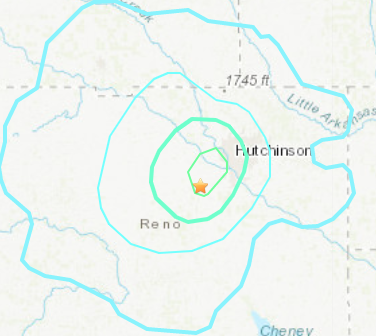
RENO COUNTY — Another earthquake shook residents in south-central Kansas early Sunday. The quake at 3:45 a.m. measured a magnitude 4.1 and was centered approximately 3 miles west of South Hutchinson, according to the U.S. Geological Survey.

This follows six quakes in Reno County over a 24-hour period including a 4.2 magnitude quake just before 8 a.m. Friday that was felt over much of the state and that caused some minor damage.
The other five quakes all were 3.1 or smaller, according to the U.S.GS.
🎥 Green & Growing 2019 Main Street Gardens

Visit the beautiful gardens maintained by the extension office at 601 Main Street, in downtown Hays, KS.
Midwest Energy asks Hays customers to conserve power Monday, Tuesday
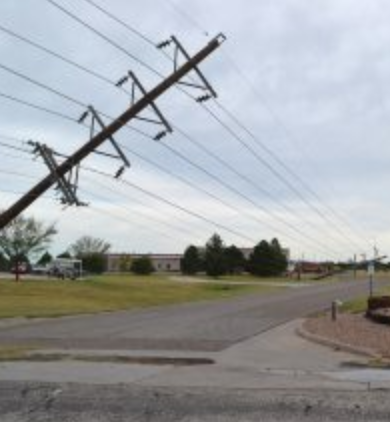

Midwest Energy is asking its Hays customers to conserve electricity on the afternoons of Monday and Tuesday between the hours of noon and 7 p.m.
The request is being issued following the downing of several key power lines in northwest Hays during a storm the evening of Aug. 13.
With several key lines out of service, Hays is being supplied using powerlines from the South and East.
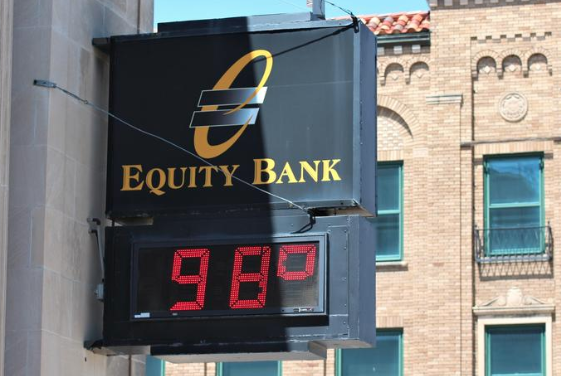
Bill Dowling, Midwest Energy’s Vice President for Engineering and Energy Supply, said that under normal conditions, these other lines can easily meet the city’s power needs. But on Monday and Tuesday, with forecasted temperatures near 100 degrees, the company is asking customers to conserve power between peak hours of noon to 7 p.m., to ensure these lines don’t become overloaded.
“We would ask that people set their thermostats a few degrees higher than they normally would during those noon to 7 p.m. periods,” Dowling said. “If you can delay chores like using the clothes dryer, and maybe cook dinner on the stovetop instead of in the oven, those simple things will go a long way in helping us avoid overloading these lines.”
Most of the poles downed during the storm were replaced within 24 hours, but the 25 transmission poles downed along 230th Avenue are 65 to 75 feet tall, nearly double the size of the 40-foot tall poles seen throughout town. Spring and summer storms have damaged an extraordinary number of tall structures within Midwest Energy’s service area, depleting the company’s normal supplies of tall poles.
Midwest Energy will continue to monitor weather forecasts and alert customers if any additional conservation measures are needed until the line is back up.
— MWE
Kidney stones, other health worries you didn’t know climate change would bring to Kansas
By CELIA LLOPIS-JEPSEN
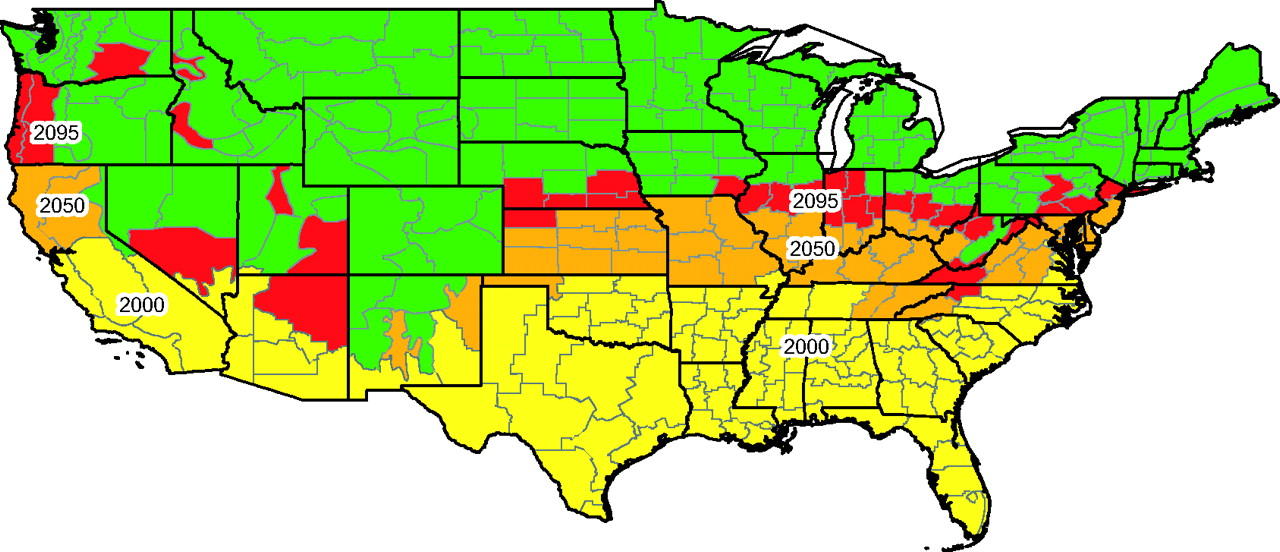
TOPEKA ― The “Kidney Stone Belt” is a thing, and it’s coming for Kansas.

CELIA LLOPIS-JEPSEN / KANSAS NEWS SERVICE
Climate change is expanding that swath of America, currently in the south and southeast, that suffers much higher rates of this sometimes-excruciating renal complication.
By 2050, the belt will include Kansas, according to a new review by the Kansas Health Institute.
The nonprofit, which along with the Kansas News Service receives funding from the Kansas Health Foundation, looked at the best science on how hotter temperatures and other changes will affect our bodies here in the Wheat State.
Here are some highlights.
Your kidneys
When temps rise, you sweat more and urinate less. That means more kidney stonesand chronic kidney damage.
Already, the health institute says, research shows more kidney failures happen during heat waves. And Kansas risks seeing a lot more heat.
Though climate change will mean a drier western Kansas and a wetter eastern Kansas, scientists predict the whole state will get warmer. How much? Compared to the first 60 years of the 20th century, Kansas will grow anywhere from 2 to 14 degrees Fahrenheit warmer — and maybe more. (That range reflects the fact that policymakers may or may not take action to curb climate change, the report explains.)
Your heart
Most Kansas residents now believe in climate change, according to the Yale Program on Climate Change Communication, but only about half pin the blame on humans despite ample scientific evidence.
Regardless, people should expect more cardiovascular disease in the coming decades. As with so many other health conditions, more people land in the hospital with heart problems when summer heat is at its worst.
Put irregular heartbeat and ischemic heart disease on the list of problems that may increase (the latter is when arteries narrow, reducing the flow of blood and oxygen to the heart and potentially causing heart attacks).
Your lungs
In the past few decades, the annual pollen season in the Heartland has lengthened 10 to 18 days.
But that’s not all that’s changing. Bigger daily doses of smog, carbon dioxide and other kinds of pollutants will take their toll on our respiratory systems and compound the effects. Pollution can exacerbate fungal spores and other sneeze-worthy things, especially for those already affected by things like asthma, KHI’s research brief notes.
Tiny airborne pollutants also get stuck in our lungs or make it into our bloodstream, the institute says, and science links that to wheezing, lung cancer, chronic obstructive pulmonary disease and shorter lives. A new study of several U.S. cities found today’s ozone levels already cause lung damage normally associated with heavy smokers.
The rest of your body
Milder winters bolster the ranks of mosquitoes and ticks out there, and longer summers give them more days to bite you.
Compared to half a century ago, the season for mosquito-borne illnesses has lengthened 18 days in the state’s south and 13 in the north, the Kansas Health Institute says. From 2004 to 2016, the number of people getting sick from tick bites increased 20 times over.
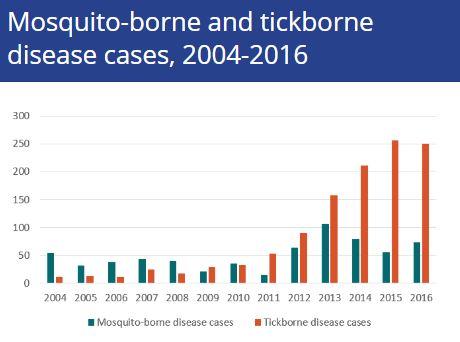
That’s annoying enough, but of course most important is what they spread — West Nile virus and Lyme disease, which can cause fatigue, fever, joint pain, spinal inflammation and more.
We can mitigate the risk of these diseases and other problems brought by global warming to some extent. But it’ll take work, and lots of it. This could range from greater public investments in mosquito control to better educating ourselves on the habits that help stave off kidney stones. (Hint: Cutting back on meat, eating at home more often, and downing loads of water.)
Who’ll have it worst?
People with physical disabilities or mental illness or living in cities. Infants. The elderly, especially those who have conditions like dementia. Workers who pave roads and toil on farms, and others constantly in the sun.
KHI says these groups of people are more vulnerable to heat stress and other health risks.
Because the U.S. already has glaring health disparities in poor neighborhoods and communities of color, the American Public Health Association says, they’ll be disproportionately affected by the changes, too.
Celia Llopis-Jepsen reports on consumer health and education for the Kansas News Service. You can follow her on Twitter @Celia_LJ or email her at celia (at) kcur (dot) org. The Kansas News Service is a collaboration of KCUR, Kansas Public Radio, KMUW and High Plains Public Radio focused on the health and well-being of Kansans, their communities and civic life.
Dogs dive in at Hays Aquatic Park
CRISTINA JANNEY
Hays Posst
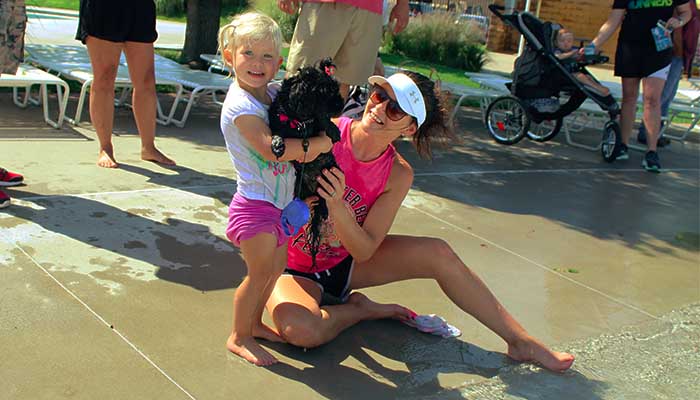
About 90 dogs were already in the pool by 11:30 a.m. Saturday for the Hays Aquatic Park’s annual dog swim. The poll expected even more pouch paddlers before the event ended. Last year the pool welcomed 150 dogs for the last day of pool operation. The pool will be drained for the season after the dog swim.


