Hard to believe that the golden anniversary is here. Western Plains Arts Association board members representing large and small northwest Kansas communities hope you will join in an all-year celebration of the organization’s 50th Season.
As usual WPAA offers a large number of quality programs — a whopping 20 for the 2019-2020 season. An adult season ticket is still a great value of just $50. Student tickets, high school senior or younger, are just $15 a season. Family memberships are $110; families receive two adult tickets plus one student ticket for each child in the family who is high school senior age or under. Adult tickets for many of the individual programs are $20, while student tickets are as much as $10.
Special to the season is the “Fiftieth Anniversary Celebration Show,” Feb. 16. At this free show we will take a stroll down memory lane of several of the highlights since the debut season of 1969-1970. We will also feature WPAA board member and affiliate local talent, and host a reception, all at the cultural arts center in Colby.
With so many season programs, WPAA is sure to have several you and your family will not want to miss. Still trying to graduate since the 1950s, The Four Freshmen will open the season Sept 8 at the Oakley High School Auditorium.
Hear one of the best traditional and Dixieland jazz groups in the Rocky Mountain region as Denver’s Queen City Jazz Band comes to Goodland High School Auditorium Sept. 15. The band also features jazz-blues singer Wende Harston.
Enjoy some of the greatest Big Band music of all time as The Glenn Miller Orchestra rounds out the first month Sept. 29 at Colby’s Cultural Arts Center.
Here is a look at the rest of the tentative schedule for 2019-2020.
* Jana Jae, fiddler, with her western swing band, Oct. 13, Colby.
* Wichita Chidren’s Theatre, Three Billy Goats Gruff, Oct. 14-16, area schools: Hoxie, Atwood, Winona, Sharon Springs and Colby.
* Backtrack, New York City vocal ensemble, Oct. 20, Colby.
* Duane Laflin of Branson’s Grand Magic Show, Nov. 3, Hoxie.
* Adam Gardino, guitarist and fiddle, Nov. 10, Bird City.
* Derik Nelson and Family present Seasons, Nov. 17, Colby.
* Take Three Christmas show, Dec 1, Colby.
* Shades of Buble, tribute to Michael Buble, Jan. 19, Oakley.
* Acoustic Eidolon, Celtic, folk & classic duo, Jan. 26, Sharon Springs.
* Mollie O’Brien, folk singer, Feb. 9, St. Francis.
* 50th Anniversary Celebration Show, Feb. 16, Colby.
* Jay & Leslie Cady, juggling & other nonsense, March 1, Quinter.
* Forever Young musical theater production, March 8, Oakley.
* Marimba Sol de Chiapas, marimba ensemble, Hoxie.
* Nashville Legacy, March 27, Oakley.
* Ball in the House, a cappella, April 19, Oakley.
* Lezlee & Paul, formerly called En Power & Light, April 26, Atwood.
Please contact any local board member for season tickets. Contact information is at the organization’s website: wpaa.us. Season tickets may also be purchased upon arrival to any of the early season program, or on-line with PayPal. Single program tickets are always available at the door. All Sunday show times begin at 3 p.m. Central, irregardless of the local time zone of the host community. Further information about each program will generally appear a full one-to-weeks in advance. Most area newspapers and radio stations partner with WPAA to provide media releases in advance of each program. Western Plains programing is only possible through a number of generous grants, business sponsors and private supporters of arts programming.
Sessions will focus on decisions to consider, tools to help with decisions
MANHATTAN – With every new farm bill comes new decisions for farmers to make that can have lasting implications for their businesses. The most recent legislation is no exception. To help agricultural producers determine the best course of action, Kansas State University’s Department of Agricultural Economics will host 10 Farm Bill meetings around the state, starting in late August.
The meetings will cover commodity programs, including the economics of the Agriculture Risk Coverage/Price Loss Coverage (ARC/PLC) programs, Supplemental Coverage Option and a new decision tool available for producers.
K-State Research and Extension agricultural economists, extension agents, USDA Farm Service Agency and Natural Resources Conservation Service representatives will provide a big picture perspective, as well as a more local view for each area.
Dates and locations include:
Mon., Aug. 26 – Hill City – 1-4:30 p.m. – Graham County Fairgrounds.
More information and registration is available online or by contacting Rich Llewelyn at 785-532-1594 or [email protected] .
Alicia Boor is an Agriculture and Natural Resources agent in the Cottonwood District (which includes Barton and Ellis counties) for K-State Research and Extension. You can contact her by e-mail at [email protected] or calling 620-793-1910
In the past few years, social media companies have faced intense criticism for not taking a more active role in stopping the spread of hate speech and misinformation on their platforms. Meanwhile, the White House thinks those same companies are going too far in their efforts to regulate content and is currently drafting an executive order called, “Protecting Americans from Online Censorship,” which would give the Federal Communications Commission oversight over these decisions.
The order seems to be an outgrowth of the social media summit that President Trump held last month, where his 2020 campaign manager Brad Parscale said, “At a time when social media platforms are banning conservative voices and supporters of the president, it’s important for President Trump to emphasize that he appreciates their support and wants to protect their First Amendment rights.”
The executive order hasn’t been released yet. If and when it is I’m sure there will be plenty of ink spilled over whether it’s constitutional and whether Twitter and Facebook are truly biased against conservatives. But let’s put that aside for a moment. At a time when people across the political spectrum are upset with tech companies, albeit for different reasons, I’d like to posit that the real problem with social media isn’t that it allows hate to spread or that it discriminates against users based on their points of view. It’s that we only become aware that those things are happening when they involve famous or powerful people.
The First Amendment prevents the government from censoring our speech, but it doesn’t apply to private companies. Social media companies actually have their own First Amendment rights and are free to create their own policies that ban whatever kinds of content they want. Most platforms do have rules or community guidelines that ban content that threatens or harasses other users. And in the wake of recent controversies, many platforms have gone further than that. Facebook currently bans hate speech, which it defines as a direct attack on someone because of characteristics like race, ethnicity, national origin, religion, gender, sexual orientation or disease. YouTube bans content that promotes violence or incites hatred against individuals or groups because of these characteristics. Twitter threads the needle a bit, not banning hate speech but banning “hateful conduct,” meaning hateful messages that actually target specific people.
All of these content policies censor speech that would be protected by the First Amendment, but again, these platforms don’t have to comply with the First Amendment. Facebook is a private company and it has no more obligation to host you than a restaurant has to serve a customer who hurls insults at the waiters or refuses to wear shoes. What’s more troubling is how inconsistently enforced these policies are. A restaurant with a strict dress code isn’t necessarily controversial; a restaurant that bans some patrons for not adhering to the dress code, allows others to walk in naked and has an ever-shifting definition of what qualifies as a bowtie is infuriating.
To be fair, the sheer volume of content posted on social media platforms makes it difficult for them to consistently moderate content. They use a combination of algorithms and human moderators to identify posts that violate their policies — and it doesn’t always work that well.
Determining whether a post is hateful depends on context, but algorithms aren’t sophisticated enough yet to look at that — they have to use specific rules to weed out content. In 2017, an investigation by ProPublica into Facebook’s hate speech standards revealed that a post advocating for killing all radicalized Muslims didn’t count as hate speech because it targeted a subgroup of a protected category — radicalized Muslims, not all Muslims. The algorithm was programmed to designate speech attacking a category as a whole as hate speech, not speech targeting a subset.
Meanwhile, many users were banned for uploading screenshots of racist or sexist messages they had received in order to raise awareness of hate speech. This isn’t dissimilar to Twitter’s decision last week to freeze the campaign account of Senate Majority Leader Mitch McConnell for tweeting out a video showing several protesters shouting violent threats against McConnell outside his home. Twitter’s rules ban users from posting content containing threats of violence, even if it’s the target of the threats doing the posting. (Twitter quickly reversed its decision after rampant criticism from Republicans.)
Social media platforms can and do fine tune their content rules when controversies arise. For instance, Facebook’s policy does allow for hate speech that’s shared with the intention of educating others. Twitter made an exception for McConnell’s tweet because of its “intent to highlight the threats for public discussion.” But case in point, these changes usually occur when celebrities or public figures create negative publicity for the companies. Another way that business interests factor into how content rules are enforced? According to a group of former and current YouTube content moderators, high-profile content creators who draw the most advertising revenue “often get special treatment in the form of looser interpretations of YouTube’s guidelines prohibiting demeaning speech, bullying and other forms of graphic content.”
Which means that while certain people have a disproportionate amount of power to change, challenge and skirt content rules, the average person has none.
Lata Nott is executive director of the First Amendment Center of the Freedom Forum Institute.Contact her via email at [email protected], or follow her on Twitter at @LataNott.
JEFFERSON COUNTY — Two people died in an accident just before 10:30p.m. Saturday in Jefferson County.
The Kansas Highway Patrol reported a 2002 Chevy Silverado driven by John F. Lewis, 43, Ozawkie, was northbound on K237 four miles north of U.S. 24.
The driver failed to negotiate a curve. The pickup left the roadway to the west and rolled.
Passengers Christopher T. Webb, 46, Topeka, and Luke A. Puccinelli, 20, Oskaloosa, were pronounced dead at the scene and transported to Frontier Forensics.
Jefferson County EMS transported Lewis and passenger Gavin M. Lewis, 20, Nortonville, to Stormont Vail in Topeka. None of the occupants were wearing seat belts, according to the KHP.
TOPEKA – Governor Laura Kelly appointed Brad Allen and Lisa Sisley to Humanities Kansas, which was formerly named the Kansas Humanities Council.
“The Humanities Kansas board is dedicated to ensuring that people across our state have access to programs to help enrich their communities,” Kelly said. “Brad and Lisa are passionate about generating new ideas and strengthening our democracy. They will be a wonderful addition to the team.”
Brad Allen, Lawrence, has worked as the executive director of the Lawrence Public Library for seven years. Previously, he worked as the branch manager and programming coordinator for the Everett Public Library in Everett, Wash. Allen received a master’s degree in Afro-American Studies from the University of Wisconsin-Madison, a Master of Science in library and information science from University of Illinois at Urbana-Champaign and a bachelor’s degree in American studies and psychology from the University of Kansas.
Lisa Sisley, Manhattan, has worked as the principal for New Boston Creative Group, LLC, for 13 years. Previously, she worked as a writer for the dean’s office at Kansas State University’s College of Human Ecology, and owned Lisa Sisley Writing Services. Sisley earned a bachelor’s degree in English literature from Kansas State University.
Humanities Kansas is an independent nonprofit group that works to strengthen civic life by pioneering programming, grants and partnerships to connect communities with history, traditions and ideas. Kansans can visit www.humanitieskansas.org to request a speaker, explore stories about our state, find a humanities-related event nearby and more.
The governor’s appointments to Humanities Kansas are not subject to Senate confirmation.
LAWRENCE — Attitudes toward transgender people have become increasingly scrutinized during the last few years. But those attitudes intersect with actual policy most visibly in the military.
A new research study titled “Public Attitudes on Transgender Military Service: The Role of Gender,” published in the current issue of Armed Forces & Society, examines how cultural opinion affects the shifts in acceptance.
Don Haider-Markel
“It fundamentally shows the values of not only egalitarianism and traditionalism but also the role of sex and gender conformity in shaping these attitudes,” said Don Haider-Markel, professor and chair of political science at the University of Kansas.
Together with KU Associate Professor Patrick Miller, Haider-Markel seeks to establish a more concrete frame of reference for this subject, as well as surveying how it’s both similar and distinct from gay and lesbian concerns.
“Significant portions of the public — around 30 percent — still don’t have clear attitudes on transgender policy-related issues. That itself is important so we get some kind of baseline for analysis. Only in the past seven or eight years did we get the first real national polling data about transgender issues. To even develop some initial measures and predictors of those attitudes is still relatively unique,” said Haider-Markel, whose co-authors also include Daniel Lewis, Barry Tadlock, Andrew Flores and Jami Taylor.
Their initial research hypothesized that “personal experiences with the military and with transgender people, along with values, personality predispositions and religion, are likely to influence individual attitudes.” They tested this using data from a unique 2015 national survey of American adults. The results suggest interactions, opinions on gender roles and religiosity had the most substantial (albeit conditional) effects on viewpoints regarding transgender military service.
Haider-Markel became interested in exploring this topic when he came across an unusual statistic discovered by the Williams Institute at UCLA School of Law: Transgender individuals are more likely to have served or be serving in the U.S. military when compared to the general population.
“Ironically, as an institution, the military is seen as one where gender norms are pretty rigid,” he said. “So it may actually be attractive to some transgender people prior to fully coming out. At the time when people enlisted or went to officer training school, they were perhaps trying to rigidly conform to a gender they had already started to feel uncomfortable with, and they thought the military might help.”
A veteran of the Air Force, Haider-Markel served until 1993. He may not have knowingly served with anyone transgender, but he says that was a genuine possibility.
“When I was 18 and in tech school, I was surprised at the number of male soldiers who on the weekend would leave the base and wear makeup or do other forms of cross-dressing or gender-nonconforming kinds of things,” he said. “But even in the mid-to-late 1980s, that was a big surprise to me.”
This latest research builds on the work of a group that has earned the nickname “Team Kansas.” After producing nine articles on the topic, Haider-Markel’s team published its first book: “The Remarkable Rise of Transgender Rights” (University of Michigan Press, 2018).
“It’s probably the most efficient and effective research team I’ve ever worked with,” he said.
Having spent 22 years at KU, Haider-Markel’s work focuses on public policy and public opinion, with an emphasis on civil rights, criminal justice and counterterrorism.
Earlier this year, the Trump administration reinstated a near-total ban on transgender individuals serving in the military. This was supposedly based on the “tremendous medical costs and disruption” of allowing these troops to serve.
Will Trump’s ban be overturned?
“I don’t know if it will be the next president or if it will be before that,” Haider-Markel said. “But the pathway is difficult to change. We can see these temporary setbacks, but the movement itself is well-established. A march toward full civil rights for LGBT people is just a matter of time.”
SALINA – The executive board of the Silver Haired Legislature held their annual mid-summer issues meeting on Wednesday, July 31 in Salina.
The Executive Board is composed of the SHL chairperson from each of the eleven PSA (Planning and Service Area) districts across the state of Kansas, plus the officers of the overall membership of the organization. These include the Speaker, Speaker Pro Tem, and the Floor Leader. Jay Rowh, Mitchell County SHL representative who is the out-going president of the Executive Board, chaired the meeting.
The meeting began with the bi-annual election of the officers of the Executive Board. Newly elected officers were Bill Otto, PSA 7 (Coffey County – Leroy), who will take over the reins from Rowh as the new President, and Ross Boelling, PSA 8 (Dickinson County – rural Junction City), who replaces Thomas Gordon, PSA 1 (Wyandotte County – Kansas City), as the new Vice-President of the Executive Board. These two officers will serve in their new capacity for a two-year term. Rowh will continue on the Executive Board as the Immediate Past President, and Gordon will also serve as the current chair of PSA 1 (Wyandotte County). Donna Lehane, PSA 2 (Sedgwick County – Wichita) was then appointed by new President Bill Otto to serve as the Secretary of the SHL.
In the spring and early summer, the SHL members within each of the eleven PSA districts meet to decide what issues are important to Senior Citizens in their district. These issues are then brought to the state issues meeting, where they are discussed, debated, and whittled down to a select few. The resulting finalists will subsequently be presented to the entire SHL membership for their consideration at the annual conference in Topeka on October 1-3.
A total of 26 local issues were initially brought to the Executive Board. From this list, a total of seven issues were selected to be presented to the full membership in October. These issues will be forwarded in the form of resolutions, as they are carryover bills from the 2019 Kansas Legislative Session. A SHL resolution indicates support from the organization for that legislation should it meet with approval when voted upon by the entire SHL body in the fall.
Six of these measures were SHL carryovers from last year: 1) Support for Medicaid Expansion; 2) Continued support for the KDOT Rural Public Transportation program; 3) Support for the State of Kansas to fully fund KPERS as the law stipulates, and to pass a Cost of Living Allowance (COLA) for KPERS beneficiaries; 4) Protect Grandparents Rights in Child Custody and Visitation cases, plus providing financial assistance in Guardianship matters; 5) Support for the Removal of Sales Tax on Food; and 6) Support for Legalizing the Sale of Medicinal Cannabis in Kansas.
The one new resolution deals with Support and/or Expansion of the Senior Care Act in Kansas, the act that allows qualifying Seniors to stay in their own home with just a minimum of financial support. This financial aid averages approximately $240 per month, and helps in such tasks as cleaning, washing clothes, meal purchase and/or preparation, and medication assembly for the week. If the Senior does not get this help, they often must move to a nursing home, where typical costs average around $4000 per month. The Senior Care Act is definitely a money-saver for the state of Kansas.
The next step in this process is for the entire SHL membership to discuss and debate these resolutions in committee work at the annual session of the full Silver Haired Legislature this coming October in Topeka. Those measures successfully passed out of committee will then face deliberation by the full SHL body, and if subsequently approved, will then be forwarded on to the Kansas Legislature in their 2020 Legislative Session for consideration with SHL support.
The Silver Haired Legislators represent the over 600,000 Kansas Seniors over the age of 60, most of whom vote in local, state and national elections. The SHL is just one of the ways their collective voice can be heard.
For this, and other information on the Silver Haired Legislature, you are invited to view our website Kansas-shl.org.
PITTSBURGH (AP) — Mason Rudolph guided a long first-half touchdown drive to perhaps nudge ahead of Josh Dobbs in the race to be the backup behind Ben Roethlisberger and the Pittsburgh Steelers beat the Kansas City Chiefs 17-7 on Saturday night.
Rudolph finished 10 of 15 for 77 yards while Dobbs completed 6 of 11 for 95 yards with a red-zone interception on a night the Steelers (2-0) opted to keep several key starters on the sideline, from quarterback Roethlisberger to Pro Bowl offensive linemen David DeCastro and Maurkice Pouncey to rookie linebacker Devin Bush.
Kansas City coach Andy Reid suggested Patrick Mahomes would play most of the first half.
Not quite.
The reigning NFL MVP — who directed a touchdown in his lone drive in Kansas City’s preseason opener last week — did little during two series of work following a thunderstorm that forced the opening kickoff to be pushed back nearly an hour.
Mahomes completed just 2 of 5 passes for 11 yards, a far cry from his previous visit to Heinz Field, when he threw for six touchdowns in a Week 2 win last September that served as a harbinger of the season to come.
Mahomes’ best play during his cameo may have been his decision to slide during an 8-yard scramble, something he didn’t do a week ago when he lowered his shoulder against Cincinnati rather than step out of bounds.
Chad Henne found Mecole Hardman for a 17-yard touchdown late in the first half for Kansas City (1-1), which managed a lone touchdown a week after putting up 38 against the Bengals. Hardman, a second-round pick, has two touchdowns in two weeks and his rapid emergence could give Reid another option to play with in what could be the NFL’s most potent offense.
Pittsburgh chose to give the 37-year-old Roethlisberger the night off. Rudolph, a third-round pick a year ago who is hoping to supplant Dobbs as the top backup, was given the start instead. Playing with a group that included Pro Bowl running back James Conner and star wide receiver JuJu Smith-Schuster, Rudolph struggled early to gain some momentum.
It wasn’t until Rudolph found himself playing with the reserves that he started to get going. He directed a 14-play, 89-yard drive in the second quarter, a series that ended with a 14-yard sprint to the end zone by Jaylen Samuels.
Dobbs started off brilliantly, hitting Washington for a 40-yard gain. He couldn’t sustain the momentum, thanks in part to an interception in the end in which he overthrew Diontae Johnson. The ball sailed into the arms of Kansas City’s Charvarius Ward to cut short a scoring chance late in the first half.
Johnson, a third-round pick, ended up scoring in the fourth quarter when he made a diving grab in the end zone on a heave from fourth-stringer Devlin Hodges.
THIS BUD’S FOR YOU?
Steelers outside linebacker Bud Dupree is entering the season with a significant amount of pressure after Pittsburgh opted to pick up his fifth-year option but have not approached him about signing a long-term deal. Dupree provided a spark, sacking Mahomes and Henne and knocking down a pass.
HONORING DRAKE
A difficult week that began with the sudden passing of wide receivers coach Darryl Drake at age 62 ended with the Steelers making sure Drake’s legacy won’t be forgotten.
Coach Mike Tomlin and general manager Kevin Colbert and their wives attended Drake’s funeral in Gallatin, Tennessee. The wide receivers took the field for warmups with shirts emblazoned with the phrase “Shut out the noise,” the credo Drake adopted for his group for the 2019 season.
Dozens of Steelers knelt for a prayer shortly before kickoff and the team will wear “DD” stickers on their helmets this season and a moment of silence was held just before the national anthem.
TRAINER’S ROOM
The Chiefs didn’t escape Heinz Field unscathed. Safety Tyrann Matthieu left with a shoulder injury. Wide receiver Deon Yelder went down with a knee injury and Marcus Kemp exited with a knee injury. Linebacker Breeland Speaks suffered a knee injury in the second half and did not return. Quarterback Chase Litton was taken out in the final seconds after taking a hard hit shortly after releasing a pass.
UP NEXT
Chiefs: Host San Francisco next Saturday.
Steelers: Expect to give Roethlisberger his only reps of the preseason next Sunday when they visit Tennessee.
KANSAS CITY, Mo. (AP) — Jacob deGrom pitched seven sharp innings and Pete Alonso put the New York Mets ahead with a two-run single in a 4-1 victory over the Kansas City Royals on Saturday night.
Alonso got three hits and snapped a 1-all tie with two outs in the seventh when he rolled a bases-loaded grounder up the middle. Juan Lagares, who also had three hits, added an RBI triple in the eighth.
The bottom three batters in New York’s lineup went 5 for 11 and combined to score all four runs.
Last year’s NL Cy Young Award winner, deGrom (8-7) gave up one run and three hits while striking out five. Since the All-Star break, he has permitted just five earned runs in 45 innings for a 1.00 ERA.
Royals starter Jakob Junis (8-11) allowed a one-out single to Lagares in the seventh and hit No. 9 batter Aaron Altherr with a pitch. Kansas City manager Ned Yost brought in Jake Newberry, who walked Amed Rosario to load the bases.
Yost again went to his bullpen, this time to submarine left-hander Tim Hill. He struck out pinch-hitter J.D. Davis on three pitches, but couldn’t finish off Alonso. The rookie slugger narrowly missed a grand slam down the right field line when a crew chief review determined the ball sliced just foul, upholding the initial call on the field.
With the runners going on a full-count pitch, Alonso then fisted a grounder up the middle to drive in Lagares and Altherr for a 3-1 lead. Second baseman Whit Merrifield made a sliding stop in shallow center and fired home to try to get Altherr, but Hill cut off the throw.
In the bottom half, deGrom got out of trouble with the help of a double-play ball. Lagares’ triple in the eighth drove in Luis Guillorme.
Justin Wilson threw a scoreless inning and Seth Lugo worked a perfect ninth for his third save.
Junis dealt with traffic on the basepaths all night, but managed to work around seven hits, all singles, a walk and two hit batters to allow just three runs in 6 1/3 innings. His defense turned two double plays behind him to help him out of jams in the second and fifth, but the Royals’ bullpen couldn’t finish off the seventh inning for him.
Hunter Dozier had two of Kansas City’s three hits, his second straight multihit game.
STATS AND STREAKS
Mets catcher Wilson Ramos singled twice to extend his hitting streak to 12 games, tied with Cincinnati’s Jose Iglesias for the longest active streak in the majors. During the streak, Ramos is batting .477 with three home runs and 11 RBIs. … It was the 16th consecutive start in which deGrom allowed three runs or fewer, dating to May 22. He has a 1.92 ERA in that span, but the Mets are just 7-9 in those games.
TRAINER’S ROOM
Royals: LHP Danny Duffy (left hamstring strain) will throw a four-inning simulated game Tuesday and, if all goes well, could be activated from the injured list next weekend.
Mets: Placed reliever Robert Gsellman on the 10-day injured list, retroactive to Wednesday, with tightness in his right triceps. RHP Walker Lockett was recalled from Triple-A Syracuse. Lockett has started four games for the Mets this season, going 1-1 with a 7.79 ERA. … Davis was out of the starting lineup after leaving Friday night’s game with calf tightness. He said he felt fine and it was just a precautionary measure.
UP NEXT
Glenn Sparkman (3-8) faces Mets RHP Zack Wheeler (9-7) in the finale of the three-game interleague series Sunday.
LOGAN COUNTY —One person was injured in an accident just before 5p.m. Saturday in Logan County.
The Kansas Highway Patrol reported a 2006 Harley Davidson motorcycle driven by John Michael Mooney, 67, Scott City, was northbound on Kansas 25 from Russell Springs.
The driver took the curve at K25 and Plains Road too fast and lost control. The motorcycle traveled off of the roadway to the left and came to rest in the west ditch. Mooney was ejected from motorcycle.
EMS transported Mooney to Logan County Hospital. He was not wearing a helmet, according to the KHP.
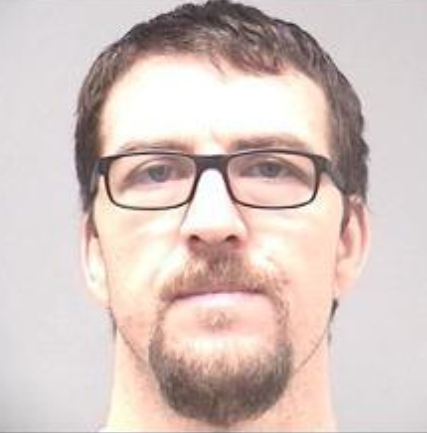
WICHITA, KAN. – A Kansas man was indicted Wednesday on charges that even though he already was a registered sex offender he produced and distributed child pornography, according to U.S. Attorney Stephen McAllister.
Merida is being held in Butler Co.
Daniel Eric Merida, 35, El Dorado, Kan., was charged in a superseding indictment with one count of producing child pornography, two counts of committing crimes against minors while registered as a sex offender, two counts of distributing child pornography, one count of possessing child pornography, one count of sending obscene material to a minor and one count of transporting child pornography. The crimes are alleged to have occurred at various times from 2014 to 2018 in Butler County, Kansas.
Upon conviction, the crimes carry the following penalties:
Producing child pornography: Not less than 25 years and not more than 50 years in federal prison and a fine up to $250,000.
Felonies involving minors while a registered sex offender: A term of 10 years, consecutive to sentences on other counts that include Distributing child pornography: Not less than five years and not more than 20 years and a fine up to $250,000.
Possessing child pornography: Not less than five years and not more than 20 years and a fine up to $250,000.
Sending obscene material to a minor: Up to 10 years and a fine up to $250,000.
Transporting child pornography: Not less than five years and not more than 20 years and a fine up to $250,000.




 Today
Today