American College of Cardiology NCDR Chest Pain̶MI Registry Platinum Award recognizes high standards of patient care
HaysMed has received the American College of Cardiology’s NCDR Chest Pain̶MI Registry Platinum Performance Achievement Award for 2019. HaysMed is one of only 225 hospitals nationwide to receive the honor.
The award recognizes HaysMed’s commitment and success in implementing a higher standard of care for heart attack patients and signifies that HaysMed has reached an aggressive goal of treating these patients to standard levels of care as outlined by the American College of Cardiology/American Heart Association clinical guidelines and recommendations.
To receive the Chest Pain̶ MI Registry Platinum Performance Achievement Award, HaysMed has demonstrated sustained achievement in the Chest Pain̶ MI Registry for eight consecutive quarters and has performed at the top level of standards for specific performance measures. Full participation in the registry engages hospitals in a robust quality improvement process using data to drive improvements in adherence to guideline recommendations and overall quality of care provided to heart attack patients.
“As a Platinum Performance Award recipient, HaysMed has established itself as a leader in setting the national standard for improving quality of care in patients with acute myocardial infarction,” said Michael C. Kontos, MD, FACC, chair of the NCDR Chest Pain – MI Registry Steering Subcommittee, Virginia Commonwealth University Medical Center. “By meeting the award requirements set forth in the registry, HaysMed has demonstrated a commitment to providing reliable, comprehensive treatment for heart attack patients based on current clinical guideline recommendations.”
The Center for Disease Control estimates over 700,000 Americans suffer a heart attack each year. A heart attack occurs when a blood clot in a coronary artery partially or completely blocks blood flow to the heart muscle. Treatment guidelines include administering aspirin upon arrival and discharge, timely restoration of blood flow to the blocked artery, smoking cessation counseling and cardiac rehabilitation, among others.
“This award reflects the ongoing commitment of DeBakey Heart Institute, HaysMed, and the University of Kansas health system to the goal of improving the cardiovascular health of our patients in western and central Kansas. Congratulations to all involved!” said Jeffery Curtis, FACC, FACP, director of Cardiology Services.
Chest Pain̶MI Registry empowers health care provider teams to consistently treat heart attack patients according to the most current, science-based guidelines and establishes a national standard for understanding and improving the quality, safety and outcomes of care provided for patients with coronary artery disease, specifically high-risk heart attack patients.
The American College of Cardiology envisions a world where innovation and knowledge optimize cardiovascular care and outcomes. As the professional home for the entire cardiovascular care team, the mission of the college and its more than 52,000 members is to transform cardiovascular care and to improve heart health. The ACC bestows credentials upon cardiovascular professionals who meet stringent qualifications and leads in the formation of health policy, standards and guidelines. The college also provides professional medical education, disseminates cardiovascular research through its world-renowned JACC Journals, operates national registries to measure and improve care, and offers cardiovascular accreditation to hospitals and institutions. For more, visit acc.org.
When the cancer clinic at Mercy Hospital Fort Scott closed in January 2019, cancer patients such as Karen Endicott-Coyan had to continue their treatment in different locations. Endicott-Coyan has a rare form of multiple myeloma and now drives an hour from her farm near Fort Scott to Chanute for weekly chemotherapy injections. (Christopher Smith for KHN)
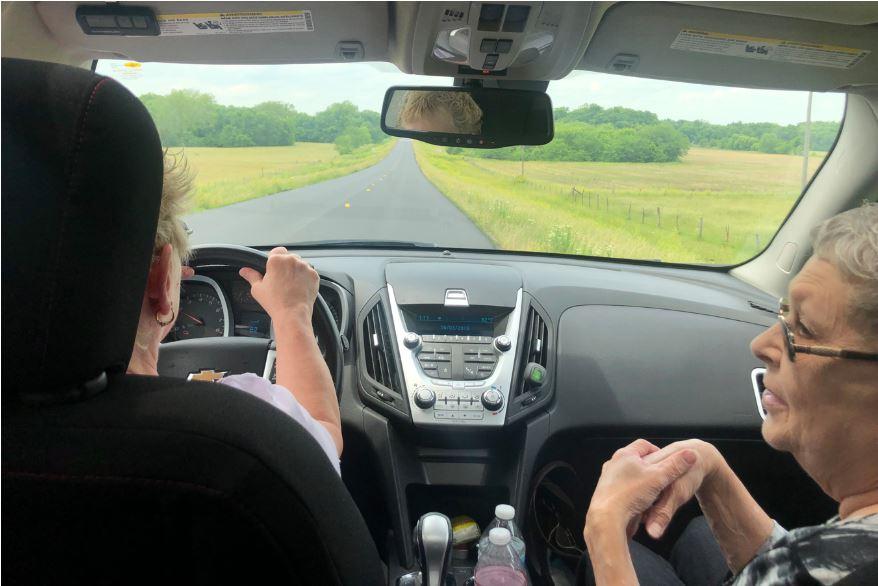
One Monday in February, 65-year-old Karen Endicott-Coyan gripped the wheel of her black 2014 Ford Taurus with both hands as she made the hour-long drive from her farm near Fort Scott to Chanute. With a rare form of multiple myeloma, she requires weekly chemotherapy injections to keep the cancer at bay.
She made the trip in pain, having skipped her morphine for the day to be able to drive safely. Since she sometimes “gets the pukes” after treatment, she had her neighbor and friend Shirley Palmer, 76, come along to drive her back.
Continuity of care is crucial for cancer patients in the midst of treatment, which often requires frequent repeated outpatient visits. So when Mercy Hospital Fort Scott, the rural hospital in Endicott-Coyan’s hometown, was slated to close its doors at the end of 2018, hospital officials had arranged for its cancer clinic — called the “Unit of Hope” — to remain open.
Then “I got the email on Jan. 15,” said Reta Baker, the hospital’s CEO. It informed her that Cancer Center of Kansas, the contractor that operated and staffed the unit, had decided to shut it down too, just two weeks later.
“There are too many changes in that town” to keep the cancer center open, Yoosaf “Abe” Abraham, chief operating officer of the Cancer Center of Kansas, later told KHN. He added that patients would be “OK” because they could get treated at the center’s offices in Chanute and Parsons.
From Fort Scott, those facilities are 50 and 63 miles away, respectively.
For Endicott-Coyan and dozens of other cancer patients, the distance meant new challenges getting lifesaving treatment. “You have a flat tire, and there is nothing out here,” Endicott-Coyan said, waving her arm toward the open sky and the pastures dotted with black Angus and white-faced Hereford cattle on either side of the shoulderless, narrow highway she now must drive to get to her chemo appointment.
Nationwide, more than 100 rural hospitals have closed since 2010. In each case, a unique but familiar loss occurs. Residents, of course, lose health care services as wards are shut and doctors and nurses begin to move away.
But the ripple effect can be equally devastating. The economic vitality of a community takes a blow without the hospital’s high-paying jobs and it becomes more difficult for other industries to attract workers who want to live in a town with a hospital. Whatever remains is at risk of withering without the support of the stabilizing institution.
The 7,800 residents of Fort Scott are reeling from the loss of their 132-year-old community hospital that was closed at the end of December by Mercy, a St. Louis-based nonprofit health system. Founded on the frontier in the 19th century and rebuilt into a 69-bed modern facility in 2002, the hospital had outlived its use, with largely empty inpatient beds, the parent company said. For the next year, Kaiser Health News and NPR will track how its citizens fare after the closure in the hopes of answering pressing national questions: Do citizens in small communities like Fort Scott need a traditional hospital for their health needs? If not a hospital, what then?
Reta Baker, the hospital’s president who grew up on a farm south of Fort Scott, understood that the hospital’s closure was unavoidable. She scrambled to make sure basic health care needs would be met. Mercy agreed to keep the building open and lights on until 2021. And Baker recruited a federally qualified health center to take over four outpatient clinics, including one inside the hospital; former employees were bought out and continue to operate a rehabilitation center; and the nonprofit Ascension Via Christi Hospital in Pittsburg reopened the emergency department in February.
But cancer care in rural areas, which requires specialists and the purchase and storage of a range of oncology drugs, presents unique challenges.
Rural cancer patients typically spend 66% more time traveling each way to treatment than those who live in more urban areas, according to a recent national survey by ASCO, the American Society of Clinical Oncology. Dr. Monica Bertagnolli, a cattle rancher’s daughter who is now chair of ASCO’s board, called this a “tremendous burden.” Cancer care, she explained, is “not just one visit and you’re done.”
ASCO used federal data to find that while about 19% of Americans live in rural areas, only 7% of oncologists practice there.
People in rural America are more likely to die from cancer than those in the country’s metropolitan counties, according to a Centers for Disease Control and Prevention report in 2017. It found 180 cancer deaths per 100,000 people a year in rural counties, compared with 158 deaths per 100,000 in populous metropolitan counties.
The discrepancy is partly because habits like smoking are more common among rural residents, but the risk of dying goes beyond that, said Jane Henley, a CDC epidemiologist and lead author of the report. “We know geography can affect your risk factors, but we don’t expect it to affect mortality.”
From an office inside a former Mercy outpatient clinic, Fort Scott’s cancer support group, Care to Share, continues its efforts to meet some of the community’s needs — which in some ways have increased since the Unit of Hope closed. It provides Ensure nutritional supplements, gas vouchers and emotional support to cancer patients.
Lavetta Simmons, one of the support group’s founders, said she will have to raise more money to help people pay for gas so they can drive farther to treatments. Last year, in this impoverished corner of southeastern Kansas, Care to Share spent more than $17,000 providing gas money to area residents who had to travel to the Mercy hospital or farther away for care.
According to the U.S. Centers for Disease Control and Prevention, cancer kills more people in rural America than in the country’s metropolitan counties — 180 deaths per 100,000 people versus 158 deaths per 100,000 people. (Sara Jane Tribble/KHN)
The group expects to spend more on gas this year, having spent nearly $6,000 during the first four months of 2019.
And the reserves of donated Ensure from Mercy are running out, so Simmons is reaching out to hospitals in nearby counties for help.
With Mercy Hospital Fort Scott closed, the likelihood of residents here dying from their cancer will grow, experts worry, because it’s that much harder to access specialists and treatments.
Krista Postai, who took over the Fort Scott hospital’s four primary care clinics, said it’s not unusual for her staff to “see someone walk in [with] end-stage cancer that they put off because they didn’t have money, they didn’t have insurance, or it’s just the way you are. … We wait too long here.”
‘If they can’t cure me, I’m done’
Art Terry, 71, a farmer and Vietnam veteran, was one of them. Doctors discovered Terry’s cancer after he broke a rib while baling hay. When they found a mass below his armpit, it was already late-stage breast cancer that had metastasized to his bones.
With his twice-weekly chemotherapy treatment available in the “Unit of Hope,” Terry spent hours there with his son and grandchildren telling stories and jokes as if they were in their own living room. The nurses began to feel like family, and Terry brought them fresh eggs from his farm.
“Dad couldn’t have better or more personalized care anywhere,” said his son, Dwight, bleary-eyed after a factory shift.
Art Terry, center, stands for a family photo at the Mercy Hospital Fort Scott cancer unit before its January closure. From left are Terry’s daughter-in-law, Sabrina; granddaughters Aubry and Shaylee; son Dwight; and grandson Blaiton. (Courtesy Dwight Terry)
Terry knew it was difficult to find trustworthy cancer care. The shortage of cancer specialists in southeastern Kansas meant that many, including Mercy Hospital Fort Scott’s patients, counted on traveling oncologists to visit their communities once or twice a week.
Wichita-based Cancer Center of Kansas has nearly two dozen locations statewide. It began leasing space in Fort Scott’s hospital basement in the mid-2000s, the center’s Abraham said. The hospital provided the staff while the Cancer Center of Kansas paid rent and sent roving oncologists to drop in and treat patients.
At its closing, the Unit of Hope served nearly 200 patients, with about 40% of them on chemotherapy treatment.
When Art Terry was diagnosed, his son tried to talk to him about seeking treatment at the bigger hospitals and academic centers in Joplin, Mo., or the Kansas City area. The elder Terry wasn’t interested. “He’s like, ‘Nope,’” Dwight Terry recalled. “I’m going right there to Fort Scott. If they can’t cure me, I’m done. I’m not driving.’”
In the end, as the elder Terry struggled to stay alive, Dwight Terry said he would have driven his father the hour to Chanute for treatment. Gas — already a mounting expense as they traveled the 20 miles from the farm near tiny Prescott, Kan., to Fort Scott — would be even more costly. And the journey would be taxing for his father, who traveled so little over the course of his life that he had visited Kansas City only twice in the past 25 years.
As it turned out, the family never had to make a choice. Art Terry’s cancer advanced to his brain and killed him days before the hospital’s cancer unit closed.
What happens next?
Debbie Endicott, Karen Endicott-Coyan’s sister-in-law, drives to chemotherapy in Chanute. The trip takes an hour on mostly narrow, two-lane highways from Endicott-Coyan’s home south of Fort Scott. ‘You can see there are no gas stations, there is nothing in the way,’ Endicott-Coyan says. ‘There isn’t anything.’ (Sara Jane Tribble/ KHN)
As Endicott-Coyan and her friend Palmer drove to Chanute for treatment, they passed the time chatting about how the hospital’s closure is changing Fort Scott. “People started putting their houses up for sale,” Palmer said.
Like many in Fort Scott, they had both spent their days at the Fort Scott hospital. Endicott-Coyan worked in administration for more than 23 years; Palmer volunteered with the auxiliary for six years.
The hospital grew with the community. But as the town’s fortunes fell, it’s perhaps no surprise that the hospital couldn’t survive. But the intertwined history of Mercy and Fort Scott is also why its loss hit so many residents so hard.
Fort Scott began in 1842 when the U.S. government built a military fort to help with the nation’s westward expansion. Historians say Fort Scott was a boomtown in the years just after the Civil War, with its recorded population rising to more than 10,000 as the town competed with Kansas City to become the largest railroad center west of the Mississippi. The hospital was an integral part of the community after Sisters of Mercy nuns opened a 10-bed hospital in 1886 with a mission to serve the needy and poor. Baker, Mercy Hospital Fort Scott’s president, said the cancer center was an extension of that mission.
The Unit of Hope began operating out of the newest hospital building’s basement, which was “pretty cramped,” Baker said. As cancer treatments improved, it grew so rapidly that Mercy executives moved it to a spacious first-floor location that had previously been the business offices.
“Our whole purpose when we designed it was for it to be a place where somebody who was coming to have something unpleasant done could actually feel pampered and be in a nice environment,” Baker said.
The center, with its muted natural grays and browns, had windows overlooking the front parking lot and forested land beyond. Every patient could look out the windows or watch their personal television terminal, and each treatment chair had plenty of space for family members to pull up chairs.
Karen Endicott-Coyan and her husband, John Coyan, laugh while sitting in their kitchen. John, 74, began showing signs of dementia in 2015. Together, they run a cow-calf operation on 240 acres south of Fort Scott and go to church every Sunday. (Christopher Smith for Kaiser Health News)
When Endicott-Coyan and Palmer arrived at the Cancer Center of Kansas clinic in Chanute in February, things looked starkly different. Patients entered a small room through a rusted back door. Three brown infusion chairs sat on either side of the entry door and two television monitors were mounted high on the walls. A nurse checked Endicott-Coyan’s blood pressure and ushered her back to a private room to get a shot in her stomach. She was ready to leave about 15 minutes later.
The center’s Abraham said the Chanute facility is “good for patients for the time being” and not a “Taj Mahal” like Mercy’s Fort Scott hospital building, which he said was too expensive to maintain. Cancer Center of Kansas plans to open a clinic at a hospital in Girard, which is about 30 miles from Fort Scott, he said.
Some oncology doctors would say driving is not necessary. Indeed, a few health care systems across the country, such as Sanford Health in South Dakota and Thomas Jefferson University Hospitals in Pennsylvania, are administering some chemotherapy in patients’ homes. Oncologist Adam Binder, who practices at Thomas Jefferson in Philadelphia, said “over 50% of chemotherapy would be safe to administer in the home setting if the right infrastructure existed.”
But the infrastructure — that is, the nurses who would travel to treat patients and a reimbursement model to pay for such care within our complex health care system — is not yet in place.
Back in the car, Palmer took the wheel and Endicott-Coyan began planning for future cancer treatments in the void left by Mercy Hospital Fort Scott’s closure. “I put a note on Facebook today and said, ‘OK, I have drivers for the rest of February; I need drivers for March!’”
This is the first installment in KHN’s year-long series, No Mercy, which follows how the closure of one beloved rural hospital disrupts a community’s health care, economy and equilibrium.
SHAWNEE COUNTY — Law enforcement authorities are investigating a suspect on child sex charges.
Lawrence photo Shawnee Co.
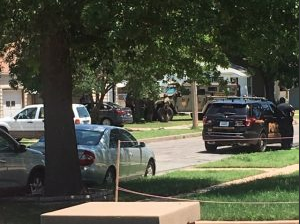
Just after 7:30a.m. Friday, police in conjunction with the Federal Bureau of Investigations served a search warrant at a residence in the 2100 Block of SW Fairlawn in Topeka regarding crimes involving exploitation of children, according to Lt. Andrew Beightel.
Police arrested Antonino Jo Von Lawrence 30, of Topeka, at a separate location without incident and hewas booked into Shawnee Co Department of Corrections on requested charges of sexual exploitation of a child, aggravated criminal sodomy, aggravated indecent solicitation of a child, electronic solicitation and aggravated human trafficking.
Authorities released no additional details Saturday.
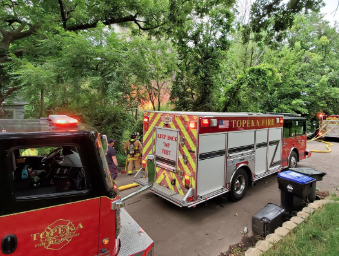
About 5:15 p.m. Saturday Hays emergency responders were dispatched to a structure fire in a residence in the 200 block of Ash St. in Hays.
The reporting party told Hays dispatch a fan had caught in on fire inside a bedroom and all occupants and pets were outside of the home according to scanner traffic.
Utilities were cut to the residence while emergency responders were on scene.
By 5:45 p.m. the fire was reported out after a check of the entire building was completed.
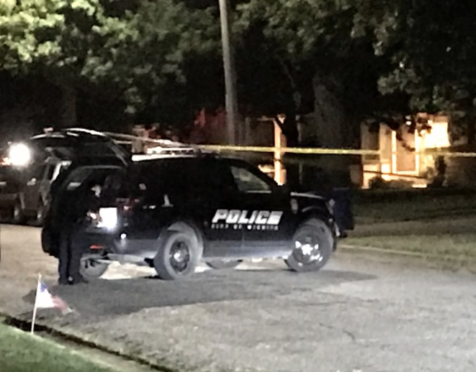
Wichita police say the shooting happened around 10 p.m. Friday in the Benjamin Hills neighborhood.
The man had just returned from a trip to the grocery store after work to his home when he was shot. A person with knowledge of the investigation told the newspaper that the victim had been robbed.
Police have not released the victim’s name.
Police are searching for a suspect and have asked anyone with information about the crime to call CrimeStoppers.
Our unclaimed property division at the Kansas State Treasurer’s office takes in millions of dollars in new
property a year. Each piece of property has a story, and it is up to us to use the details we have to help find out who it belongs to. Sometimes, though, that story takes a lot more work to figure out. Money and property can come to us with no name, address, or other important details making it nearly impossible to return the property to the rightful owner. We love it when we can connect the dots and get someone’s property returned to them, whether big or small.
In a case we’ve been working on for the past year, a property came to our office with little identifying
information to help us get it back to its rightful owner.
Last month we received a call from a woman who had been searching for the sale proceeds from her father’s home. It had gone to auction after he passed away, and the money never made it back to her or her brother, both heirs of their father’s estate.
Our unclaimed property division began their skilled work at checking the documentation she had against
county records, last known addresses, and other necessary identifying information.
After a diligent effort on their part, they found the match, and the woman and her brother were successfully reunited with the over $50,000 in cash from the sale of their late father’s home.
Both siblings were very grateful for the work done on their behalf and delighted to finally have the mystery of the missing money solved.
We have over $300-million in unclaimed property still waiting to be claimed and want to encourage Kansans to take a minute to check our website, www.Kansascash.com, and see if any of it belongs to them. Remember, we never charge for searches or returning unclaimed property, so it’s important to be wary of those who do. We’ve returned a record amount to Kansans for the past two years in a row, and would love to have more and more success stories like this one in the year ahead.
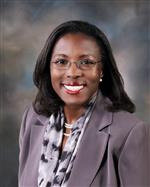
TOPEKA – Governor Laura Kelly appointed Dr. Tiffany Anderson to the Postsecondary Technical Education Authority.
“Dr. Anderson is the right choice for this important assignment,” Kelly said. “She’s highly qualified, driven, and knows education at every level, to include higher education.”
Currently, Anderson serves as superintendent for the Topeka public schools district, USD 501. She also served as a school superintendent in Missouri and Virginia. Since 2003, she’s been an adjunct professor in the Department of Educational Leadership for Kansas State University. Anderson received her doctorate and master’s degree in education leadership and a bachelor’s degree in elementary education from Saint Louis University, Mo.
Dr. Anderson currently resides in Overland Park. She succeeds Sabrina Korentager.
The authority is composed of 12 members. Four members are appointed by the Kansas Board of Regents. Three members are be appointed by the governor. One member is appointed by the president of the Senate, and one member is appointed by the speaker of the House of Representatives.
Regarding the governor’s appointments, one represents Kansas business and industry, and two represent the general public.
HUTCHINSON, Kan. (AP) — The Reno County attorney says 10 officers who fired at a suspect during a confrontation at a Hutchinson home last month will not face charges.
County Attorney Keith Schroeder announced Friday the officers were acting to defend themselves and others when they fired at least 150 rounds at 21-year-old Brendan Jones. Jones was shot at least eight times but survived.
Hours after a standoff began, Jones agreed to come out of the home. He says Jones walked outside raised a handgun and fired at least 11 shots at officers, who returned fire.
Jones photo Reno Co.
Police say Jones and another man, Tyson Samuels, holed up in the house after shooting another man at a different location. Samuels surrendered before the gun battle between Jones and police.
ELLSWORTH COUNTY — Two people were injured in an accident just before 9a.m. Saturday in Ellsworth County.
The Kansas Highway Patrol reported a 2002 Ford F150 driven by Chantrielle Porter, 21, Wichita, was eastbound on Interstate 70 just west of the K-156 Junction. The driver fell asleep. The pickup drifted into the median, struck a drainage berm, went airborne and vehicle came to rest on the passenger side.
Porter and a passenger Derrick Cottner, 35, Wichita, were transported to the hospital in Ellsworth. Both were properly restrained at the time of the accident, according to the KHP.
KANSAS CITY (AP) — A 20-year-old man has pleaded guilty to kicking a cat like a ball on a Kansas City high school football field in an act that was captured on video and posted to Snapchat.
Image courtesy Kansas City Animal Control
Johnathan Taylor, of Kansas City, was sentenced to two years of probation after pleading guilty Thursday to misdemeanor animal abuse. He also was ordered to perform 80 hours of community service and to donate $500 to an animal shelter.
Court records say the cat was found dead in May 2018 at Center High School, where Taylor had been a student.
Police say the person who recorded the video identified Taylor as the man kicking the cat in the video. A voice can be heard on the recording yelling “field goal!”
U.S. Sen. Jerry Moran (R-KS) with World Food Program USA
By WORLD FOOD PROGRAM USA
WASHINGTON, D.C. – Throughout our nation’s history, leaders from across the aisle have dedicated their careers to ending global hunger.
Senator Jerry Moran from Kansas is one of those leaders. Senator Moran is chair and co-founder of the Senate Hunger Caucus and a member of the Senate Appropriations Subcommittee on State and Foreign Operations, and throughout his career, he has worked with the World Food Programme to implement programs and policies that promote food security. We recently sat down with Senator Moran to learn more about his commitment to feeding hungry families across the world.
WFP USA: Why do you personally care about global food security?
Sen. Moran: The call to feed the world has been answered by so many Kansans before me. Each of us is taught at a young age that it is our duty to help those in need. Kansans take that moral responsibility to heart. As individuals, we help our neighbors. Through churches and local organizations, we feed our communities. And as a country, America leads the world in providing food for millions of people in need of assistance around the globe.
WFP USA: Imagine you’re hosting a town hall meeting in Kansas and you’re met with skepticism about global engagement generally or food aid in particular. Why should Kansans and the rest of America care about global food security?
Sen. Moran: American farmers are linked to global markets and, by extension, to the wellbeing of people everywhere. Today, 821 million people around the world suffer from chronic hunger. About 113 million are facing immediate, life-threatening hunger. America’s international food assistance programs build stronger markets and more stable societies. They also provide a reliable market for American farmers right now when they need it most.
Food security also contributes to our national security. When governments cannot feed their own people, chaos and violence often follow. Food assistance provided by the United States leads to greater stability in regions of the world important to America’s strategic interests. When parents have access to food, they can provide a better future for their children. And when hunger no longer impedes a child’s ability to learn, they can remain and thrive in school, leading them down a path to greater opportunities.
While our country’s collective moral convictions make fighting hunger the right thing to do, the benefits we receive as a nation from reducing global food insecurity also make it the smart thing to do.
WFP USA: America has always been a leader in the fight against global hunger. Looking back at our history of hunger relief, what are key U.S. policies and programs that have made a big difference in reducing hunger abroad?
Sen. Moran: Kansans in particular have a long history of leading the fight to end global hunger. Most notably, Senator Bob Dole from Kansas (a Russell native) worked to expand our nation’s efforts to provide food to the most vulnerable populations around the world, including young school girls, through the Dole-McGovern Food for Education Program. It is an honor to continue this tradition and example set by Senator Dole as we continue the fight against hunger.
And, of course, Food for Peace has also been instrumental in fighting global hunger.
WFP USA: Let’s look specifically at the Food for Peace Program. This year marks its 65th anniversary. What role has this program played in addressing global hunger?
Sen. Moran: Since Food for Peace was signed into law 65 years ago by President [Dwight] Eisenhower, a native Kansan (from Abilene), it has reached over 4 billion people in the world. Food for Peace is the cornerstone of U.S. international food aid programs. It provides U.S.-grown food to hungry people in some of the most dangerous and hardest to reach areas in the world, including in conflict zones. From the aftermath of the Korean War to conflicts in the Middle East, Africa and South Asia today, Food for Peace continues to provide hope for people who have nowhere else to turn. With several areas of the world facing famine or near-famine conditions today, Food for Peace has never been more important to addressing global hunger.
WFP USA: How are you currently working to fight global hunger? Are there any pieces of related legislation that you’re passionate about passing to advance this cause?
Sen. Moran: As a member of the Senate Appropriations Committee, I work to prioritize funding for our international food aid programs, including Food for Peace and Dole-McGovern. Each year, Congress must decide how to allocate limited funds among many important policies across government. I fight for international food aid programs to be at the top of the priority list because these programs help save lives around the world, contribute to global stability and provide important markets for American farmers.
WFP USA: Sen. Moran, you serve a large agriculture producing state. How do you see food assistance programs creating and expanding markets for U.S. agriculture products?
Sen. Moran: Kansas is a top wheat, sorghum and beef producing state. We also grow corn, soybeans and cotton, and are one of the fastest growing dairy production states in the nation. Kansans’ ability to earn a living in rural areas is by exporting the food and fiber we grow to consumers around the world. Through international food aid programs, we are helping to connect the bounty of food that farmers and ranchers produce in Kansas with people facing starvation around the world.
Good harvests, coupled with a lack of markets, have made large stockpiles of grain a familiar site across the state in recent years. I pulled over to the side of the road to take a photo in Kensington, Kansas of a huge pile of sorghum on the ground because all of the grain elevators were full. I’ve shown that photo to President Trump, Secretary Perdue and others to illustrate the importance of export markets for Kansas farmers and ranchers. The photo has also raised the question – how do we do better at getting the large amounts of food we grow in Kansas to people who are facing hunger and starvation?
WFP USA: What is your hope for the future of America’s role in global food security? What do you think we need to do as Americans to ensure that everyone across the world has the food they need to not only survive, but also reach their full potential?
Sen. Moran: In my lifetime I believe we can end hunger, malnutrition and achieve food security across the world. We can accomplish this if America continues to lead the world in combatting hunger. This is an issue in which the morally correct thing to do is also what’s in the best interest of our country. By continuing to invest in Food for Peace, Dole-McGovern and other international food-aid programs, we will save lives around the world and reduce conflict by promoting greater social and economic stability.
To read the full World Food Program USA Q&A with Sen. Moran, click here.