To find out more about The Post Podcast, or subscribe to mobile notifications click here.
Year: 2019
Foundations fund purchase of Hays Public Library bookmobile

 HPL
HPL
A bookmobile is coming to Hays! With funding from the Dane G. Hansen Foundation and the Hays Public Library Foundation, the Hays Public Library is purchasing a bookmobile to expand outreach services.
The bookmobile will allow the library to move beyond the building to provide books and other resources at locations throughout the community. A Dane G. Hansen grant of $76,200 and a matching contribution from the Hays Public Library Foundation will pay for the $152,400 bookmobile.
The bookmobile, which is expected to be delivered early next year, will be equipped to provide a variety of library services. Making regular stops at popular locations around the community, patrons will be able to get a library card, browse the collection, and request alternative items for future stops. The bookmobile also will be a wi-fi hotspot for patrons who need access to the internet. Visits to senior living facilities and early childhood centers will be standard practice for the bookmobile.
“The Hays Public Library is so much more than a nice big building on Main Street full of books and computers,” said Hays Public Library Director Brandon Hines. “We know that to provide the level of excellence of service we strive for and to provide an optimal return of value to our community, we must get outside the walls of the library. We are already doing this in a number of ways. The acquisition of a bookmobile will greatly enhance our ability to be embedded throughout the various sectors of our community and provide services to those who can’t or don’t regularly come through the doors of the library.”
Adding a bookmobile to the library’s services has been a goal of Outreach Coordinator Vera Elwood, who conducted much of the research into vehicle specifications and funding opportunities. Unfortunately, Elwood is leaving the library later this month for a new position closer to her family, and so the library is currently advertising for a new Outreach Coordinator to oversee this project and outreach services.
The Hays Public Library Foundation is a volunteer group that helps address emergent and unexpected needs of the library through supplemental investments and funding, such as assisting with the purchase of the bookmobile. The Hays Public Library Foundation was established in 2001. For more information or to get involved, visit the library website.
The Dane G. Hansen Foundation was established as a charitable organization in 1965, with the primary goal of making the communities of Northwest Kansas better places to live. Established through a generous estate donation from Dane G. Hansen, the Foundation awards grants and scholarships every year to qualified recipients in Northwest Kansas who demonstrate a strong desire for community improvement.
“We can’t wait to deploy this incredible tool,” Hines continued, “and are immensely thankful to the Dane G. Hansen Foundation and Hays Public Library Foundation for making this possible.”
You can keep up to date on bookmobile project and find out more about other library programs by visiting hayslibrary.org or calling 785-625-9014.
Reptile personalities shine at Sternberg’s ‘Meet the Animals’

By CRISTINA JANNEY
Hays Post
The Sternberg Museum’s Discovery Room was abuzz on Friday with children ooh-ing and aww-ing.
Some cautiously approached Alicia Gaede, naturalist, and stroked African Savannah water monitor Kwaai’s head. Once Alicia or one of the children stroked just the right spot at his ears, Kwaai closed his eyes and flicked his tongue in apparent pleasure.
His name, Kwaai, means fierce, but he is very gentle for his carnivorous species. He eats insects and mice and even once popcorn chicken. He regularly dons a harness and accompanies Gaede on walks around the museum. He has also become a popular museum ambassador, participating in birthday parties and other public events.
 “When people meet him, they can’t believe he acts so much like a dog,” she said. “He is our scaly puppy, and we have one downstairs that is our scaly cat. The one downstairs wants to be carried everywhere. If you make him angry, he will poop on you.”
Kwaai was someone’s pet. The owner could no longer take care of him, so Kwaai came to live at the Sternberg two years ago.
“He was here for a while, and we were just trying to make him healthy again,” Gaede said. “When I got this job here, I decided to make him able to be handled. It was really a fast turnaround, maybe two weeks when he was looking for people to be touched.
“He was interested to go for walks. He likes to take baths and curl up in a towel. He will sleep with you for hours curled up in a towel. It is like I am walking around with this really weird baby.”
Kwaai was accompanied Friday by Toothless, one of the museum’s chuckwallas.
 Chuckwallas are native to the Arizona desert. Much smaller than the Savanah water monitor, Toothless easily fit in handler and volunteer Malachi Chance’s hand. Chance, 11, has been volunteering at the museum for seven years.
Chance ran into a little problem when Toothless climbed up his shoulder and into his hair, but Chance was able to extract him with hurting himself or the chuckwalla.
While humans secrete salt when they sweat, chuckwallas spit it out of their noses. Toothless’ roommate is Hiccup. Gaede said Hiccup is a little larger and may be a female. The chuckwallas will soon be getting three new roommates — Sonoran desert toads that recently came to the museum after being illegally trafficked.
The toads’ natural habitat is also the Arizona desert.
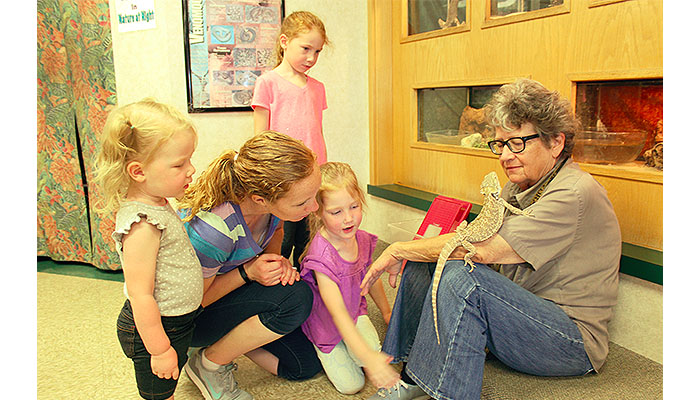
Thea Haugen, retired Sternberg naturalist, was showing off bearded dragon, Yoshi.
The dragon belongs to one of the museum staff members and is a frequent guest at museum programs.
Bearded dragons eat both vegetables and insects like crickets.

The reptiles’ visit was a part of the Meet the Animals program at the Sternberg. The program started in June is supposed to run through the end of July from 11 a.m. to noon each Friday. However, Gaede said the program has been so popular she might extend it into August, at least until school starts.
“A lot of kids are afraid of reptiles or amphibians,” she said. “It is different than seeing them behind glass. They are not moving a lot, and a lot of people think our animals are fake. So being able to meet them like this shows them that they are not quite as scary. … People are taught to be afraid of these things.
“I love that we can not only teach them about species, but about our animals individually, because reptiles, personally I believe, they can have personalities.”
People see a snake and they automatically think it is venomous, Gaede said. However, only a small portion of the snakes in Kansas are venomous.
The program is free with admission. New animals will be featured each Friday.
Keep up with what’s happening at the museum on the Sternberg’s Facebook page or visit its website at https://sternberg.fhsu.edu/.
Kansas man critically injured in shooting, teen suspect in custody
SHAWNEE COUNTY — Law enforcement authorities are investigating a shooting and have a suspect in custody.

At approximately 12:13 p.m. Tuesday, the Shawnee County Emergency Communications Center received a call about a possible disturbance in the 1300 block of NE Forest Avenue in Topeka, according to Lt. Jennifer Cross.
While officers were en route to the area, dispatchers received an additional call that a (shooting) had just occurred at the same location. Upon arrival, officers located a man later identified as 29-year-old Daniel Dirk suffering from what appeared to be life-threatening injuries. AMR transported him to a local hospital.
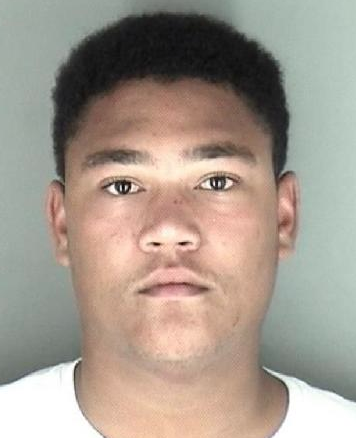
A short time later, officers conducted a traffic stop in the area. Police believed Colby Dean Brown, 19, of Topeka was connected to the incident.
He was taken into custody for questioning and later booked into the Shawnee County Department of Corrections on requested charges of aggravated assault, aggravated battery, and criminal damage to property. Brown and Dirk were known to each other prior to this incident, according to police.
Kansas Farm Bureau Insight: Plentiful harvests
 By KIM BALDWIN
McPherson County farmer and rancher
We recently wrapped up our wheat harvest. Although our crew experienced a short harvest in comparison to previous years, we are still very thankful for the crop and for the safety of our workers.
Historically, our wheat harvest generally wraps up around the start of another season: Vacation Bible School.
Families have many choices to consider when sending their kids to a VBS in our area. Whether it’s in the morning, evening or over the weekend, there’s a VBS that works for every family’s schedule.
Some VBS programs are known for their well-organized activities, convenient transportation services, expertly designed T-shirts, deliciously prepared meals, fun incentives or live music from contemporary bands.
In the small town where my children attend school, all of the churches join forces — regardless of denomination — and organize one big, week-long community VBS. While the location changes annually, the collaborative spirit remains consistent year after year. The numbers of children in attendance are quite impressive, and it truly is a tradition for our small town.
Beyond the borders of our town, a group of small country churches — including my family’s church — have also faithfully pooled their resources to provide a week of VBS for any child, from any family, from any community. It’s officially known as Monitor Community Vacation Bible School, but I refer to it as our “Simple Little Country VBS.”
Our VBS averages 25 kids from pre-kindergarten to ninth grade in attendance every year. I’ve taught the oldest group of students ever since I moved to Kansas nearly 10 years ago.
We work on a limited budget. Snacks might consist of cheese and crackers, homemade trail mix or popsicles. Recreation includes games of Red Rover or freeze tag in the church’s yard. Crafts are simple creations that become cherished masterpieces using items like rocks and sticks that have been gathered from outside. Music consists of an experienced piano player and songs sung long before my husband attended as a child. We dig into the daily messages using finger puppets, or reenactments by the older students, or discussions. And regardless of age, the kids work hard on their memory verses throughout the week.
The week wraps up with an evening program where people from area country churches show up to support the kids and listen to them sing their songs and view the student-produced skits from our week of lessons. Afterward, we all enjoy fellowship in the church basement while munching on homemade cookies everyone has provided.
It’s a beautiful testimony to the spirit of our community. And while there may not be many of us, we recognize the importance of continuing our little country VBS.
Given all of the options available to families within our county when it comes to VBS, I’m always quite surprised we have the consistent numbers that we do. I’d almost classify it as a miracle.
It shouldn’t surprise me though. There’s something powerful about the simplistic nature of our week. While our VBS is small, it is still mighty. There’s something that happens that brings kiddos and our small group of workers back year after year.
It’s simple and sweet, and it’s one of the many reasons why I love our simple, little country VBS.
While we’re finalizing our scale tickets and getting some much-needed rest from our wheat harvest, I can’t help but be thankful for the plentiful harvests that take place throughout our area during this time of the year.
“Insight” is a weekly column published by Kansas Farm Bureau, the state’s largest farm organization whose mission is to strengthen agriculture and the lives of Kansans through advocacy, education and service.
USGS: Small earthquake shakes north-central Kansas
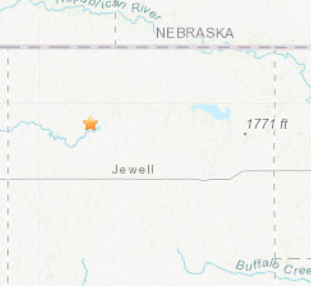

JEWELL COUNTY —A small earthquake shook north central Kansas Wednesday.
The quake just after 3a.m. measured a magnitude 2.7 and was centered approximately 7 miles northwest of Mankato in Jewell County, according to the U.S. Geological Survey
There are no reports of damage or injury, according to the Jewell County sheriff’s department.
These are the first quakes in Kansas since a series of quakes reported in northwest Kansas in late June, according to the Kansas Geological Survey.
FHSU’s Shepherd returns to Hays for autographs after rookie NFL season



FHSU Athletics
Former standout Tiger football player Nathan Shepherd, now a member of the New York Jets, will be back in Hays on Wednesday. He will be signing autographs and taking pictures at the Smoky Hill Country Club for approximately 30 to 45 minutes, beginning at 1 p.m. The public is invited.
For those planning to attend, use the south door (red door on the left) to enter the facility from the parking lot.
Shepherd just completed his first year with the New York Jets in 2018 after he was selected in the third round of the NFL Draft following his outstanding career as a defensive lineman at Fort Hays State University. Shepherd recorded 15 tackles in his rookie season with the Jets.
🎥 W. Kansas farm/ranch family receives award for conservation dedication
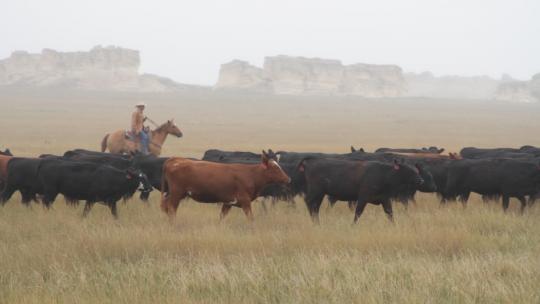

SCOTT CITY — For more than 40 years the Stacy Hoeme family in Scott City has been on the cutting edge of conservation practices that help their farm’s profitability, soil health, water quality and wildlife habitat.
Their dedication to conservation was recognized by Sand County Foundation as the recipients of the 2018 Kansas Leopold Conservation Award.
Stacy Hoeme and his son, Chaston, farm about 9,000 acres along the Smoky Hill River, and another 10,000 acres in Scott County.
Thanks to a grazing program developed on their western Kansas farm and ranch, the Hoeme family’s land boasts an array of plants that supports some of the largest known populations and densities of lesser prairie chickens.

The Hoeme’s ranch hosted the largest study ever conducted on the rare bird.
They also participated in a large research project that sought to learn why mule deer were in decline.
When biologists wanted to re-establish swift foxes on tribal lands in South Dakota, they captured, transported and released 12 swift foxes from the Hoeme’s land.
The insights gained on their land have influenced how government, conservation partners, and other landowners manage the landscape for wildlife.
 ABOUT THE SAND COUNTY FOUNDATION
In 1967, Sand County Foundation in Madison, Wisconsin, created a successful partnership among a group of private landowners to protect the land surrounding the famous “Shack” property of Aldo Leopold, America’s foremost conservation thinker. This pioneering cooperative venture led landowners to commit to voluntary conservation while raising awareness of Leopold’s land ethic, which inspires thousands of other owners of working land.
When Leopold wrote his visionary A Sand County Almanac, published in 1949, he introduced conservation ideas that penetrated the public’s conscience just as much then as they do today. Leopold advanced individual responsibility for private land management, and recognized that a landowner’s profitability and economic growth are tied to conservation success. Since its publication, A Sand County Almanac has been described as the most influential conservation book. It remains a best selling environmental book, demonstrating how relevant these ideas are today.
We’ve come a long way since mobilizing our first landowner partners to conserve Leopold’s sandy farmland in Wisconsin. Today, our impact spans the U.S., and is a direct reflection of what our donors and partners can achieve when landowners are encouraged to lead the way to improving our nation’s natural resources.
– SUBMITTED –
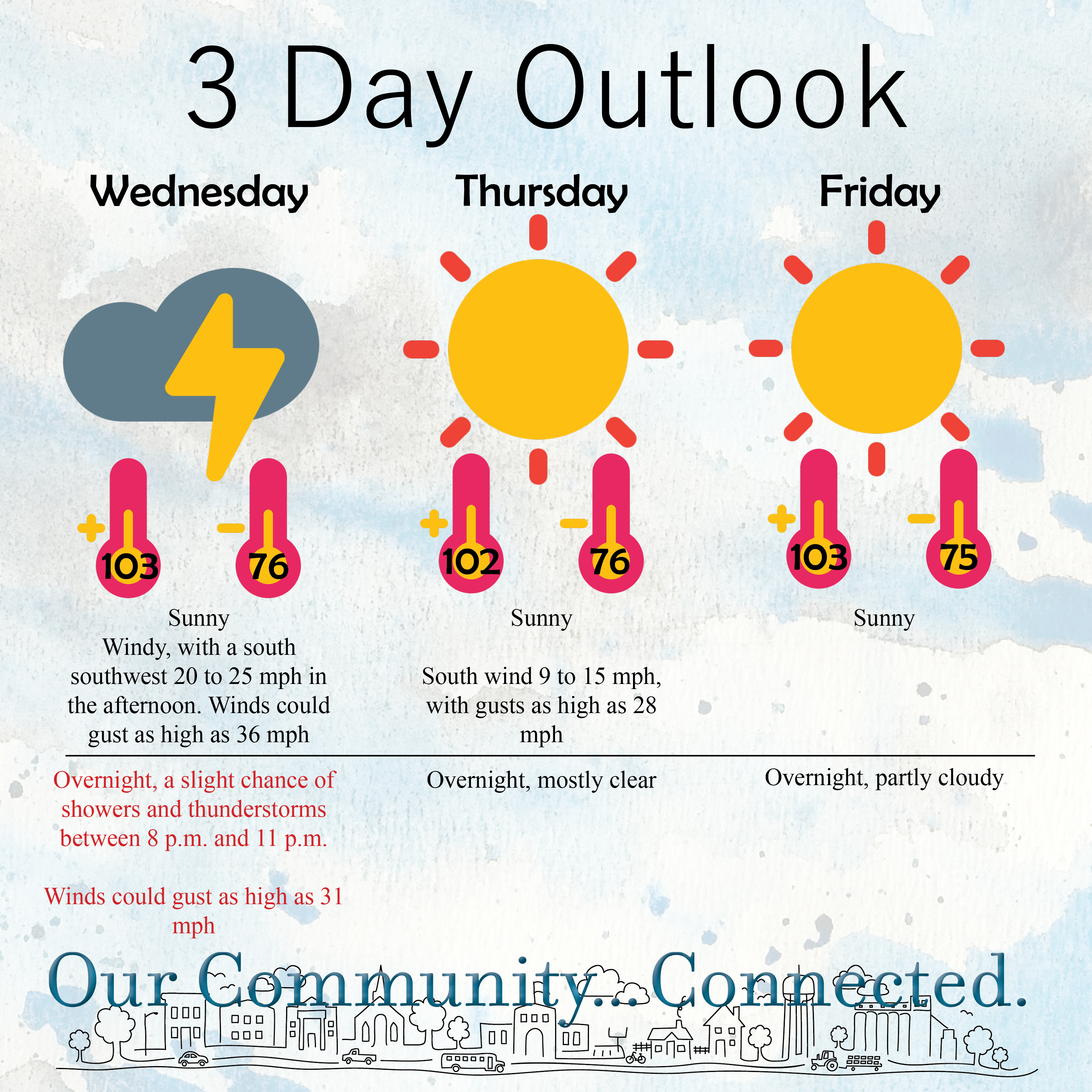
Three-day weather outlook


Now That’s Rural: John and Jina Kugler, Bug Hounds LLC


By RON WILSON
Huck Boyd National Institute for Rural Development
Let’s go to a retirement home in Illinois where a contractor is using a highly sensitive bed bug detection system. This system is self-propelled, 100% natural, highly accurate in detecting bed bugs, and when it’s done, it just might climb up on your lap and lick your face. This detection system is a dog. Today we’ll learn about an innovative Kansas couple that is building a business using canines for locating bed bugs.
John and Jina Kugler are the founders of this business known as Bug Hounds LLC. John grew up at Lebanon, Kansas, where he enjoyed hunting dogs. He met Jina in school and they later married. K-State drew John and Jina to Manhattan. She studied education and became a teacher and is now a school counselor in Wamego. John is a manager of a public facility in Topeka.
One day a bed bug surfaced in his facility, so he arranged for a pest control company to come clean out the problem. The company brought in a dog as a locator.
“I was skeptical,” John said. After he saw the dog work successfully, he was convinced that this was a service which others could use. After lots of research, he and Jina began their own business to offer this service, called Bug Hounds LLC.
“We are not exterminators, we’re locators,” John said. “However, we have expanded our locating business to include Convectex heat treatment equipment rental.” The Kuglers have trained dogs with an amazing knack for locating bed bugs by scent.
Their lead dog is a beagle named Beddy with an amazing sense of smell. Beddy has 300 million olfactory receptors. The part of her brain devoted to analyzing smell is 40 times that of a human. This enables Beddy to be able to smell out a bed bug at any stage, whether egg, nymph, or adult.
Bed bugs need to feed on human blood. They got their name because a bed was a great source for them to find human contact, but chairs or other personal contact items are also common hosts. In other words, bed bugs can be anywhere there are people. Bug Hounds enables anyone to locate the bed bugs for treatment.
The company website describes their service as “discrete and accurate bed bug location for businesses and individuals.”
“The huge advantage of the dogs is to pinpoint exactly where the bed bugs are,” Jina said. Otherwise, a person could spend thousands of dollars on wasted treatments.
When assisting a customer, the Bug Hounds crew would typically go into a customer’s home or business after hours and walk the facility with a dog and a tap stick. Tapping the stick can disrupt bed bugs, causing them to emit even more scent. The dogs are trained to alert by stopping or pawing at the site of the bed bugs. These amazing dogs are 95% to 98% accurate.
In some cases, Bug Hounds will contract with a place of business to do repeat, regular screenings. Bug Hounds has been hired by pest control companies to locate bugs, but they work with anyone. Bug Hounds serves private residences also.

Having a clean house is no protection against bed bugs. The pests will go wherever there are people. “We’ve found bed bugs in cluttered houses, and we’ve found bed bugs in really nice and clean places,” John said. An adult female averages laying 500 eggs.
Bug Hound’s business has taken them as far away as Illinois and Oklahoma City. Son Jayson has now joined the company, along with three more dogs. The dogs need constant training, which they love. “We’ve tripled our business,” John said.
That’s impressive for a business founded by a man from the rural community of Lebanon, population 218 people. Now, that’s rural.
For more information, go to www.bug-hounds.com.
It’s time to leave this facility in Illinois, where an amazing, four-legged detection system has located exactly where the bed bug pests can be found. We salute John, Jina, and Jayson Kugler for making a difference with this unusual type of canine entrepreneurship. This business has successfully gone to the dogs.
USDA: Only 40% of transferred ag researchers will move to Kansas City
KANSAS CITY (AP) — The Department of Agriculture says fewer than 40% of the researchers whose jobs are being transferred from Washington, D.C., to Kansas City will make the move to the Midwest.

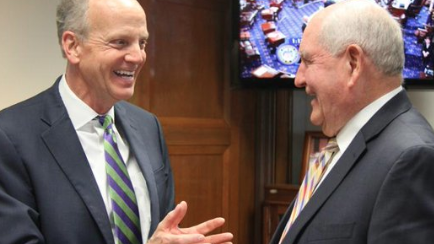
U.S. Agriculture Secretary Sonny Perdue announced in June that the USDA would move more than 550 jobs in two research agencies to Kansas City. A USDA spokesperson told The Star Tuesday that 145 workers will follow their jobs to Kansas City, while 250 will leave the agency, meaning about 37% accepted the transfers.
The USDA says the figures may fluctuate. Employees can change their decision until they are expected to report to Kansas City on Sept. 30.
Members of the Kansas and Missouri congressional delegations and the states’ governors praised the USDA’s move when it was announced, saying the agencies are a good fit for the region. But critics argued that moving them will make it harder for federal policymakers to get objective research that might raise questions about President Donald Trump’s policies.
It’s not yet clear whether the researchers will work in Kansas or Missouri. Economic development officials from both states worked to lure the jobs and cities in both states are working to land the USDA offices.
Perdue said that moving most employees out of Washington would bring the Economic Research Service and National Institute of Food and Agriculture closer to farmers and agribusinesses they serve. He also said the USDA would save about $20 million a year on rent and other employee costs, freeing up extra dollars for research.
Critics said the research agencies have lost veteran employees and been unable to fill vacancies since the USDA announced last year it was considering moving their headquarters.
The American Federation of Government Employees, which represents workers at the two research agencies, opposed the plan. Employees at both recently unionized.
The Economic Research Service examines a wide range of issues, including the rural economy, international trade, food safety and programs that provide food assistance to poor Americans. The National Institute of Food and Agriculture provides grants for agricultural research.
Livestock owners alerted to virus in nearby states
 KDA
KDA
MANHATTAN — With Texas, Colorado and New Mexico reporting multiple confirmed cases of vesicular stomatitis virus (VSV), the Kansas Department of Agriculture is encouraging livestock owners to be aware and take precautions, particularly with animals that may be comingling with other animals at competitions and similar events. At this time, there have been no cases of VSV reported in Kansas.
VSV is a viral disease which primarily affects horses, but can also affect cattle, sheep, goats, swine, llamas and alpacas. The disease is characterized by fever and the formation of blister-like lesions in the mouth and on the dental pad, tongue, lips, nostrils, ears, hooves and teats. Infected animals may refuse to eat and drink, which can lead to weight loss.
There are no USDA-approved vaccines for VSV.
The primary way the virus is transmitted is from biting insects like black flies, sand flies and midges. Owners should consider treatments to reduce insects where animals are housed. VSV can also be spread by nose-to-nose contact between animals. The virus itself usually runs its course in five to seven days, and it can take up to an additional seven days for the infected animal to recover from the symptoms. Premises with animals diagnosed with VSV are quarantined until at least 14 days after the last affected animal is diagnosed.
VSV is considered a reportable disease in Kansas. Any person who suspects their animals may have VSV should contact their local veterinarian or state animal health official.
KDA has implemented increased importation requirements from the affected regions to help prevent the spread of VSV into Kansas. Likewise, many states have now enhanced their importation requirements as well. Therefore, animal health officials strongly encourage all livestock owners and veterinarians to call the animal health authority in the destination state for the most current import requirements prior to travel.
The latest VSV situation reports are available at this USDA website: https://www.aphis.usda.gov/aphis/ourfocus/animalhealth/animal-disease-information/cattle-disease-information/vesicular-stomatitis-info.
If you have questions or are seeing suspicious lesions on your animals, please contact the KDA Division of Animal Health at 785-564-6601.
Kan. man sentenced for burglary, gun battle with police
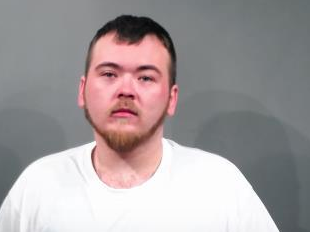
WICHITA, KAN. – A man who shot at police and was wounded when officers returned fire was sentenced Tuesday, to more than 23 years in prison, according to the Sedgwick County District Attorney.

Elijah K. Martinez, 22 of Wichita, was found guilty in May of attempted murder of a police officer, aggravated assault of a law enforcement officer, flee and elude, felon in possession of a firearm and other crimes that occurred on December 27, 2017, in the area of Interstate 235 and Central in Wichita.
Martinez and his girlfriend stole a car in east Wichita and were spotted stealing mail on the west side of Wichita later in the day.
A homeowner in the area of 13th and Tyler called police and followed Martinez to a small business near Central and Interstate 235.
When officers arrived at the business, Martinez pulled a gun and opened fire at the officers before fleeing in a vehicle.
Officers returned fire on two occasions, wounding Martinez in the jaw and back of the head.
After he was wounded, Martinez led officers on a high-speed chase that ended in the parking lot of a video store at Maple and Maize Road.
On Tuesday a Sedgwick County judge sentenced Martinez to a total of 281 months in prison and ordered that he register as a violent offender when he is released.
The sentence also included a series of burglaries in Wichita’s College Hill neighborhood that occurred in the fall of 2017. Martinez and two other men, Timothy Smith and Michael Baker, were convicted of five home break-ins. Of the 281 months in prison that Martinez was ordered to serve, 247 months were for the attempted murder case and 34 months for the burglaries.
Martinez also was ordered to pay $31,123.27 in restitution for property losses in the cases.