ARLINGTON, Texas (AP) – The latest from the first day of Big 12 football media days Monday at AT&T Stadium. (all times local):
12:30 p.m.
New Kansas coach Les Miles says top running back Pooka Williams has been reinstated to the team, seven months after he was arrested and charged with domestic battery in a case involving an 18-year-old woman.
Williams later reached a domestic violence diversion agreement with the local district attorney’s office.
Miles says Williams, who will be suspended for the season opener Aug. 31 against Indiana State, went through a legal investigation and code of conduct proceedings with the university.
Williams ran for 1,125 yards and seven touchdowns as a freshman last season. Miles was the head coach at Oklahoma State from 2001-04 before going to LSU, where he won a national championship.
—
9:45 a.m.
The Big 12 commissioner says there is no discussion of expansion at any level in the smallest Power Five conference.
“I don’t expect that to be an active topic on anybody’s agenda in the conference in the foreseeable future,” Commissioner Bob Bowlsby said, responding to a question about alignment at the start of Big 12 football media days.
Bowlsby said Monday that the league likes the 10 teams that it has, along with the full round-robin schedules that allows. There are also increasing record revenues, with the league distributing about $38.8 million to each school during the last academic year.
Bowlsby said the Big 12 also had a tremendous year competitively, with four national championships throughout the league.
—
9 a.m.
The Big 12 has a grand stage as it opens football media days at AT&T Stadium in Arlington, Texas.
Commissioner Bob Bowlsby and five coaches will be on the raised podium set up near midfield under the huge video board that hangs over the home field of the NFL’s Dallas Cowboys. It is also where the Big 12 will play its championship game in December.
After Bowlsby delivers his annual address, the coaches will take their turns. New Kansas coach Les Miles will be first, followed by TCU’s Gary Patterson, Oklahoma State’s Mike Gundy, new Texas Tech coach Matt Wells and Oklahoma’s Lincoln Riley. The coaches and select players from their teams will be available in the afternoon.
The other five teams will be featured Tuesday.
This is the first time the league is holding its media days inside the giant stadium. The festivities the last two years were held at The Star in Frisco, the practice facility for the Cowboys.
—
2 a.m.
Oklahoma is again favored in the Big 12 after winning the last four conference titles. Kansas is expected to still be on the other end of the standings, even with a new coach that has a national title to his credit.
New Jayhawks coach Les Miles, the 65-year-old former Oklahoma State coach who later won a national championship at LSU, will be the first coach to take the podium at Big 12 football media days Monday. That will be after Commissioner Bob Bowlsby kicks off the two-day talkfest with his annual address.
Players and coaches from Oklahoma and Kansas will take part Monday, along with Oklahoma State, TCU and Texas Tech. The second day, Tuesday, will feature Baylor, Iowa State, Kansas State, Texas and West Virginia – and the only two quarterbacks scheduled to appear this week.
The Big 12 is holding its media days for the first time at the home stadium of the NFL’s Dallas Cowboys, where the league plays its championship game.
The 65-year-old Miles, after more than 2 1/2 seasons out of coaching, is one of four new Big 12 coaches. The others are Texas Tech’s Matt Wells, West Virginia’s Neal Brown and Kansas State’s Chris Klieman, who won four FCS national titles the past five years as head coach at North Dakota State.
SEDGWICK COUNTY — Law enforcement authorities are investigating a suspect on drug charges after a chase involving a bicycle and police vehicle.
Derek Johnson photo Sedgwick County
Just before 12:w30 a.m. Sunday, police in the area of Pawnee and Seneca were looking for a suspect in an aggravated assault – domestic violence case, according to officer Kevin Wheeler. It was reported that the suspect was riding a bicycle.
The officers observed a man later identified as 23-year-old Derek Johnson riding a bicycle east on Pawnee from Seneca, matching the description of the suspect. The officers activated their overhead lights and attempted to stop the man. He refused to stop and fled on the bicycle south onto the side walk on McLean Street and the officers followed as Johnson continued to flee.
He then abruptly stopped on the sidewalk and the patrol vehicle bumped the bicycle and Johnson fell. EMS transported him to an area hospital for minor injuries and he was released prior to being booked into jail on requested charges of flee and elude police, unlawful possession of methamphetamine and an outstanding warrant.
The investigation determined he was not involved in the earlier domestic violence report.
The WPD requested the Kansas Highway Patrol (KHP) to investigate the accident to provide transparency and avoid conflicts of interest. An internal review will be done by the WPD, which is standard protocol in accidents involving police vehicles.
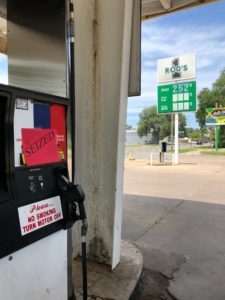
SALINA — Rod’s Convenience Stores in Salina have been allowed to reopen.
Zachary Fletcher, public information officer for the Kansas Department of Revenue, told Salina Post Monday morning that Rodney Bradshaw, owner of the stores, entered into an acceptable agreement with KDOR and the stores were allowed to open.
On Thursday, KDOR agents, accompanied by the Saline County Sheriff’s Office, executed tax warrants and closed Rod’s Convenience Stores for nonpayment of Retailers Sales Tax totaling $49,540.23. The warrants were filed in Saline County.
The businesses affected are located at 1717 W. Crawford, 1401 S. Santa Fe, 1339 N. Ninth, 220 W. Magnolia, 1619 W. Magnolia, 2140 W. Crawford, and 680 S. Phillips.
SALINE COUNTY —A rural Saline County man is dead following a farm pond accident overnight.
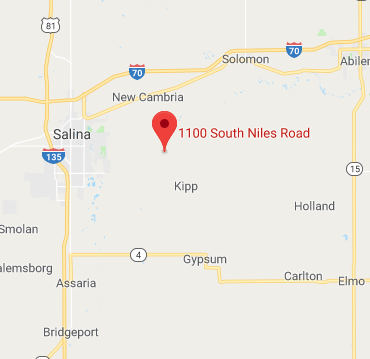
Just before 2:30 a.m. Monday, deputies were called to the 11000 block of South Niles Road east of Salina for the report of a possible drowning, according to Saline County Sheriff Roger Soldan.
Errol Redden, 75, of rural Saline County, had gone out about 9:30 p.m. Sunday to clean a clogged overflow pipe on a pond on his property. When he didn’t return, Redden’s wife called their son to check on him.
Redden’s body was found with his arm sucked into the overflow pipe. It appeared that he was unable to free his arm and drowned, according to Soldan. The suction in the pipe was so strong that firefighters were called in to remove the body.
Ellis County officials are hoping a federal program that helped the city of Hays pay for planned reconstruction of Vine Street will help the county move forward with the Northwest Business Corridor project.
The county submitted its grant application Friday, ahead of the Monday deadline for the U.S. Department of Transportation’s Better Utilizing Investments to Leverage Development (BUILD) Grant.
The county has been working on making improvements to 230th Avenue and Feedlot Road to complete the bypass around Hays, dubbed the Northwest Business Corridor, for several years, and the BUILD Grant could go a long way toward paying for the approximately $10.78 million project.
Phillip Smith-Hanes
“We’ve been working very hard for about two months now on that application,” County Administrator Phillip Smith-Hanes said. “Its 30 pages of documentation that you have to put together, answering specific questions.”
According to the DOT, the BUILD program was developed to make investments in infrastructure across the county, and there has been almost $2.4 billion awarded to 233 projects rural projects since 2009.
The city of Hays was awarded just more than $6 million. The grant application from Ellis County will total approximately $8.7 million.
Smith-Hanes said officials believe there is about $900 million available through the BUILD grant program nationally.
After setting aside $800,000 for the project in February, the county commission voted last week to set aside another $100,000 for the project. All $900,000 was transferred from the Special Road and Bridge Fund.
Public Works Director Bill Ring told the commission that the additional funds were needed to equal 20 percent of what was requested in the grant.
The proposed improvements would consist of a complete rebuild of 230th Avenue north of Hays. The road is currently rock and it would be upgraded to pavement. It would also address the width and steepness of the hills in the road.
Feedlot Road from 230th Avenue to U.S. 183 would also see improvements.
Smith-Hanes said there has been significant industrial development in that region and there are a lot of businesses in the area that could benefit from the improvements.
At last week’s county commission meeting, Commissioner Dustin Roths reiterated his support for the project.
“I can’t express enough how important I think it is to commerce and all of northwest Kansas,” he said.
Smith-Hanes also said the engineering firm, Driggs Design Group of Manhattan, has been a big part of putting together the grant.
The DOT will announce grant recipients in November or December.
Ring said if the county were to receive the grant funding, construction would start in the spring of 2020.
WASHINGTON (AP) — The Trump administration on Monday moved to end asylum protections for most Central American migrants in a major escalation of the president’s battle to tamp down the number of people crossing the U.S.-Mexico border.
According to a new rule published in the Federal Register , asylum seekers who pass through another country first will be ineligible for asylum at the U.S. southern border. The rule, expected to go into effect Tuesday, also applies to children who have crossed the border alone.
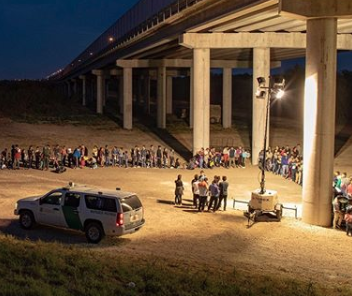
Migrants who crossed the Rio Grande near McAllen, TX, surrender to U.S. Border Patrol agents. From here, they will be transported to a processing center.- photo courtesy U.S. Customs and Border Patrol
There are some exceptions: If someone has been trafficked, if the country the migrant passed through did not sign one of the major international treaties that govern how refugees are managed (though most Western countries have signed them) or if an asylum-seeker sought protection in a country but was denied, then a migrant could still apply for U.S. asylum.
But the move by President Donald Trump’s administration was meant to essentially end asylum protections as they now are on the southern border, reversing decades of U.S. policy on how refugees are treated and coming as the government continues to clamp down on migrants and as the treatment of those who made it to the country is heavily criticized as inhumane.
Attorney General William Bar said that the United States is “a generous country but is being completely overwhelmed” by the burdens associated with apprehending and processing hundreds of thousands of migrants at the southern border.
“This rule will decrease forum shopping by economic migrants and those who seek to exploit our asylum system to obtain entry to the United States,” Barr said in a statement.
The policy is almost certain to face a legal challenge. U.S. law allows refugees to request asylum when they arrive at the U.S. regardless of how they did so, but there is an exception for those who have come through a country considered to be “safe.” But the Immigration and Nationality Act, which governs asylum law, is vague on how a country is determined “safe”; it says “pursuant to a bilateral or multilateral agreement.”
Right now, the U.S. has such an agreement, known as a “safe third country,” only with Canada. Under a recent agreement with Mexico, Central American countries were considering a regional compact on the issue, but nothing has been decided. Guatemalan officials were expected in Washington on Monday, but apparently a meeting between Trump and Guatemalan President Jimmy Morales was canceled amid a court challenge in Guatemala over whether the country could agree to a safe third with the U.S.
American Civil Liberties Union attorney Lee Gelernt, who has litigated some of the major challenges to the Trump administration’s immigration policies, said the rule was unlawful.
“The rule, if upheld, would effectively eliminate asylum for those at the southern border,” he said. “But it is patently unlawful.”
The new rule also will apply to the initial asylum screening, known as a “credible fear” interview, at which migrants must prove they have credible fears of returning to their home country. It applies to migrants who are arriving to the U.S., not those who are already in the country.
Trump administration officials say the changes are meant to close the gap between the initial asylum screening that most people pass and the final decision on asylum that most people do not win. But immigrant rights groups, religious leaders and humanitarian groups have said the Republican administration’s policies amount to a cruel and calloused effort to keep immigrants out of the country. Guatemala, Honduras and El Salvador are poor countries suffering from violence .
The treaties countries must have signed according to the new rule are the 1951 Convention relating to the Status of Refugees, the 1967 Protocol or the Convention against Torture and Other Cruel, Inhuman or Degrading Treatment or Punishment. But, for example, while Australia, France and Brazil have signed those treaties, so have Afghanistan and Congo, places the U.S. does not consider safe.
Along with the administration’s recent effort to send asylum seekers back over the border , Trump has tried to deny asylum to anyone crossing the border illegally and restrict who can claim asylum, and the attorney general recently tried to keep thousands of asylum seekers detained while their cases play out.
Nearly all of those efforts have been blocked by courts.
Meanwhile, conditions have worsened for migrants who make it over the border seeking better lives. Tens of thousands of Central American migrant families cross the border each month, many claiming asylum. The numbers have increased despite Trump’s derisive rhetoric and hard-line immigration policies. Border facilities have been dangerously cramped and crowded well beyond capacity.The Department of Homeland Security’s watchdog found fetid, filthy conditions for many children. And lawmakers who traveled there recently decried conditions .
Immigration courts are backlogged by more than 800,000 cases, meaning many people won’t have their asylum claims heard for years despite more judges being hired.
People are generally eligible for asylum in the U.S. if they feared return to their home country because they would be persecuted based on race, religion, nationality or membership in a particular social group.
During the budget year for 2009, there were 35,811 asylum claims, and 8,384 were granted. During 2018 budget year, there were 162,060 claims filed, and 13,168 were granted.
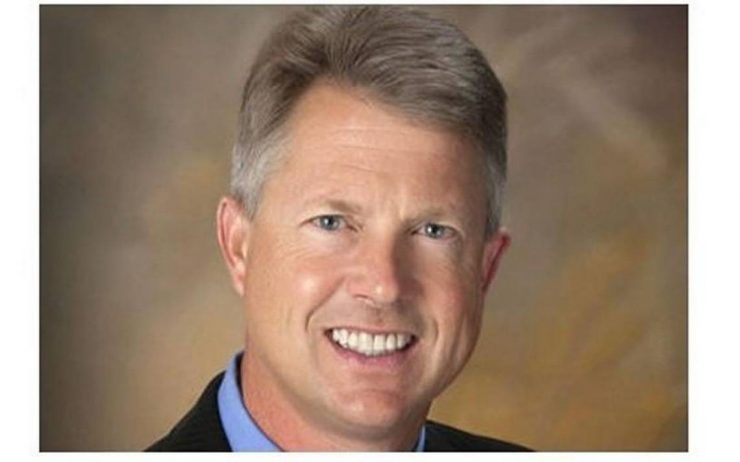
Dr. Roger Marshall, R-Great Bend, is the First District Kansas Congressman.
Friends,
It was a busy week in Washington as Congress has returned to work on the Hill after the Fourth of July holiday.
I enjoyed my time back home and feel newly energized in my mission to serve on behalf of Kansans in DC. Despite constant rains and delays, I am glad to see that wheat harvest is in full swing in the Big First, with above average yields being recorded in several counties across the state. It’s the hard work by Kansas Agriculturalists that has made us the top winter wheat producing state in the nation yet again – with nearly 1.4 Billion dollars’ worth of winter wheat produced in 2018, as reported by the USDA last week. This accomplishment, and many others by our farmers and ranchers, demonstrates how much we have to gain by passing trade agreements like USMCA, and why ratifying the agreement in Congress continues to be one of my top priorities.
Food For Peace
The Food for Peace initiative started as an idea by Kansan Peter O’Brien from the Cheyenne County Farm Bureau and eventually became law when President Dwight D. Eisenhower codified it in 1954. The Food for Peace program commits the United States to donating surplus grains and other food products to developing countries in lieu of monetary donations, seeking to support our partners around the world while simultaneously encouraging future trade opportunities. To date the program has reached more than 4 billion people who struggle with food insecurity, helping families around the world lead more healthy and productive lives. I was proud to have supported its reauthorization as part of the 2018 Farm Bill and with the program’s 65th anniversary on Wednesday my fellow colleagues and I gathered to show our continued commitment to addressing hunger and food insecurity around the world.
Rural Broadband Connectivity
The Commodity Exchange, Energy and Credit Subcommittee held a hearing on Thursday morning to discuss the importance of broadband access and ways increased connectivity can continue to help communities across rural America. From access to telemedicine services, educational resources, or new precision agriculture technologies, an internet connection allows folks in rural communities to have the same opportunities as those in big cities while still preserving our rural way of life. Broadband access has been a top issue at many of my recent town halls, and I appreciated the opportunity to discuss this issue with my colleagues on the Agriculture Committee.
Meeting with Sorghum CEO
On Wednesday, National Sorghum Producers CEO, Tim Lust, came by the office to talk about the current economic climate in the grain industry. I am proud to report that Kansas continues to the be number one sorghum producing state and we are seeing good numbers out of the Big First so far this year.
We discussed the ongoing trade dispute with China, USMCA, some potential domestic growth opportunities from his sector, mainly from the gluten free market, and also the ongoing work to implement the 2018 Farm Bill.
My door is always open to producers and I thank Tim for making the trip to DC to meet with me.
Supporting the Working Blind and Disabled in the AbilityOne Program
This week, I joined my colleagues in the House and Senate in sending a letter to the Department of Veterans Affairs (VA) clarifying Congress’ decades long commitment in providing meaningful employment for the disabled through the AbilityOne Program. AbilityOne, a public-private partnership, provides vocational assessments, employment training, and placement assistance to both the disabled and disabled veterans. This program provides jobs not only at our VA facilities, but also on our military bases and other federal agencies.
I have long followed policies affecting this program and was surprised to learn of recent changes that could take away any current AbilityOne contracts from non-profit organizations employing the blind or severely disabled – many of which include disabled veterans. In our letter, I ask that the VA find a balance of maintaining current employment contracts with non-profits and Service-Disabled Veteran-Owned Small Businesses.
To learn more about the issue and read our letter, Click Here.
Fighting for a Cure
During my time in Congress, I’ve met with many patient advocates passionate about health care and it is incredibly rewarding to hear from young Kansans discussing policies they care about. This week, I met with a Russell County high school student named Kalli, who is serving as the 2019 Children’s Congress delegate of JDRF, a leading global type 1 diabetes patient organization. Kalli, along with her mother, shared their personal story of living with type 1 diabetes and the realities of managing Kalli’s health care costs. “A positive attitude and an amazing support system,” are what Kalli said are her two secret weapons to living a healthy life.
A community leader and athlete, Kalli gave me a photo journal that contained stories of her perseverance, but she and her mother also brought their personal story to the intersection of policy. Kalli asked that I continue supporting the Special Diabetes Program for Type 1 Diabetes. The program, which is up for reauthorization this year, is a collaborative effort between the National Institutes of Health and the Centers for Disease Control and Prevention to conduct research on the prevention and cure for type 1 diabetes. I assured her that I would continue to fight for those suffering from this disease and that I would continue to support innovation that leads to better devices for diabetes management, and hopefully one day, a cure.
NTCA’s Women in Telecom Fly In
On Wednesday, a handful of female telecommunications executives from across Kansas met with my staffer, Katie Moore, along with staff from the rest of the Kansas House Delegation. These women represent companies that are working hard to deploy broadband service across rural communities in our state, and came to D.C. to highlight issues they face in achieving that goal. Updating broadband maps across the country to give federal agencies a better idea of where to direct funding remains a top issue, impacting many internet service providers across Kansas. I appreciate them taking the time to share their concerns with my office, and look forward to working with them on these issues moving forward.
Infrastructure Innovation
For months now, we have been working on an infrastructure package, and I have met with many constituents to discuss the importance of surface transportation programs as part of that goal. On Thursday afternoon, the Science Committee’s Research and Technology Subcommittee discussed how research is a critical part of investing in our national infrastructure, from developing more resilient building materials to the adoption of new transportation technologies innovation continues to drive the conversation. Investing in research can help keep costs low while also improving safety and efficiency in transportation-related sectors.
Welcoming Our New Interns to DC
I want to give a warm welcome to our second session of summer interns: Sarah, Seth, and Aaron. Sarah is here representing the town of Paradise, where she grew up on a 250-head registered Angus cattle ranch. She is going into her junior year at Kansas State University and is majoring in business marketing with a minor in agricultural economics. Seth comes to us from Natoma. Going into his senior year at West Point, Seth is majoring in US history. Another Wildcat, Aaron, is also going to be a Senior and is double majoring in history and political science, and is also part of the Air Force ROTC program. I am glad to have them as a part of our team and look forward working with them this summer.
Reintroducing the ACCESS Act
This week I joined Representatives Richard Hudson (R-NC) and Larry Bucshon, M.D. (R-IN) in introducing H.R. 3656, the ACCESS Act, a bill that would provide much needed reforms to medical malpractice. As an OBGYN before serving in Congress, I served as an expert witness in medical liability lawsuits and have seen the many flaws of the system from the inside out.
The ACCESS Act would limit the fees trial lawyers can charge in a health care lawsuit and establishes a fair share rule where damages are allocated in direct proportion of fault. It also ensures that expert witnesses representing either side of a dispute practice medicine in the state where the alleged malpractice was performed.
The Congressional Budget Office estimates these reforms would save well over $50 billion over a 10-years. They also estimate premiums for medical malpractice would drop an average of 25-30% over time. Thankfully, much needed malpractice reform was addressed in Kansas over 20 years ago and I’m thankful that many of our Kansas associations are supportive of this bill.
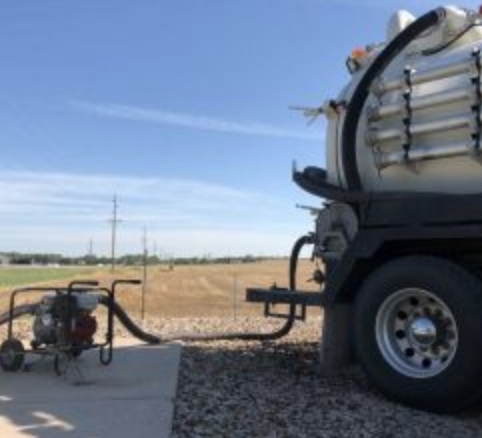
The sewer line contents are being trucked to the Hays wastewater treatment plant.
Residents and pets should not enter these waterways
TOPEKA – Kansas Department of Health and Environment has issued a stream advisory for Big Creek in Hays downstream of the intersection of 27th Street and U.S. 183 Bypass on the west side of town. The stream advisory is a result of a sewer line break earlier in the week. The City of Hays is working to replace the sewer line and no sewage is currently being discharged into Big Creek.
Elevated bacteria levels were recorded at downstream locations of Big Creek and other contaminants may be present in the stream from the sewage spill. Residents and pets should not enter Big Creek at this time.
KDHE is determining if any sources upstream of Hays are contributing to the elevated bacteria levels. KDHE will rescind the advisory once water samples show no health risk and water contact in the creek has been deemed safe.
Myrtle Marie “Myrt” (Cline) Oswald, 93, of Russell, Kansas, and formerly of Luray, passed away Saturday, July 13, 2019 at the Health Care Resort of Wichita, Kansas.
Myrtle was born on April 16, 1926 on the Cline farm east of Bunker Hill, Kansas and was the daughter of John Marion and Marie T. “Daisy” (Sechtem) Cline. She grew up in Bunker Hill and graduated from Bunker Hill High School in 1943 and attended one year at Ft. Hays State University and one year at Brown Mackie College of Salina.
Myrtle was united in marriage to Ralph Laverne Oswald of Luray on February 16, 1947 in Salina, Kansas. The union was blessed with four children; John, Cheryl, Roger and Janis. They made their home in Luray until moving to Russell in 2016. Myrtle was a devoted wife and homemaker for her children and also worked part-time at the People State Bank as a teller. She wrote articles for the Natoma/Luray Independent and served on the Russell County Election Board. While her boys were young, she was a Cub Scout Den Mother. She was a member of the Luray United Methodist Church and enjoyed square dancing, gardening, quilting, crocheting and scrapbooking. For more than 28 years she and Ralph enjoyed RV traveling as “snowbirds” in Texas and Yuma, Arizona.
Myrtle’s surviving family include her husband of 72 years, Ralph; daughters, Cheryl Gibson of Pittsburg, Kansas and Janis Kelley of Frontenac, Kansas; sons, John Oswald (Judith) and Roger Oswald (Sue) all of Wichita, Kansas; sister, Phyllis Hampl (Eldon) of Luray, Kansas; eight grandchildren, Nathan Moore (Anita), Jordan Moore (Gary), Joshua Barr (Kristin), Jared Barr (Natalie), Jordan Barr (Elba), Morgan Douglas (Allan), Alicia Simon (Michael) and Grant Kelley; and 11 great grandchildren.
Myrtle was preceded in death by her parents, sister Lois Crissman, half-sister Bessie Phillips and son-in-law Neil Gibson.
Celebration of Myrtle’s life will be held at 10:30 AM, Wednesday, July 17, 2019 at the Luray United Methodist Church with Pastor Les Rye officiating. Burial will follow at the Luray City Cemetery. Visitation will be held from 2:00 PM to 7:00 PM, Tuesday, July 16, 2019 at Pohlman-Varner-Peeler Mortuary of Russell, with the family present to greet friends from 6:00 PM to 7:00 PM. A Memorial has been established with Luray United Methodist Church. Contributions and condolences may be sent to Pohlman-Varner-Peeler, Russell, Kansas
PALM HARBOR, Fla. (AP) — A 75-year-old Florida man says he kicked an alligator in the snout after it attacked his dog.
Buddy Ackerman says the 8-foot (2.44-meter) gator came from a retention pond near his Palm Harbor condominium earlier this week and grabbed the dog while they were out for an early morning walk.
He kicked the gator until it let go of the golden retriever. Neither animal was injured.
The Tampa Bay Times reports that Florida wildlife officials came and trapped the gator later that day.
MONTPELIER, Vt. (AP) — Almost three dozen cannabis plants have been found growing in the flower beds in front of the Vermont Statehouse, police said Friday.
A visitor to the Statehouse alerted police to what turned out to be 34 plants found by officers this week among the cultivated flowers that line the walkway in front of the building in Montpelier.
Workers for the branch of state government responsible for the gardens might have found more plants, said Capitol Police Chief Matthew Romei.
The chief said that he didn’t know whether the immature plants were marijuana or hemp and that he doesn’t intend to have the plants tested to see because he foresees no criminal case.
In Vermont, possession of small amounts of marijuana for recreational use is legal, but it remains illegal to grow it in public. Farmers can plant hemp as a cash crop.
“The only way we can make a criminal case is if someone comes down and claims it,” Romei said Friday.
Officials have made similar discoveries in the Statehouse flower gardens in previous years, Romei said, but it was the first instance in the two years he has been chief.
“This was a humorous thing to come back to off from vacation,” Romei said of Monday’s discovery.
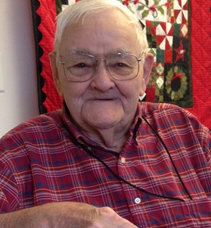
William “Bill” Wray Evans, age 88, passed away on Saturday, July 13, 2019 at Wichita County Long Term Care in Leoti, Kansas.
Bill was born July 19, 1930 in LaJunta, Colorado, the son of Henry “Hank” Hobson & Alice (Goudy) Evans. A resident of Leoti, Kansas, since 1954 moving from Twin Falls, Idaho, he was a farmer.
Bill was a member of the First Baptist Church in Leoti, Kansas
On January 30, 1954, he married Bertie Ann Adam at Crowley, Colorado.
Bill’s surviving family includes-
His wife
Bertie Evans-Leoti, Kansas
Five Children-
Patsy & Bob Zeller-Garden City, Kansas
Gail & Gene Wells-Garden City, Kansas
Linda & Dan Cress-Aurora, Colorado
Jeanie & Mike Thimgan-Greeley, Colorado
Joni Evans-Greeley, Colorado
One brother-
George Evans-Scott City, Kansas
Thirteen Grandchildren and Fourteen Great Grandchildren
His parents and four siblings precede him in death.
Funeral Services will be held at 2:00 p.m. Thursday, July 18, 2019 at the First Baptist Church in Leoti, Kansas with Pastor Gary Salmans officiating.
Burial will be in Leoti, Cemetery in Leoti, Kansas.
There will be no calling times.
Memorials may be given to the Wichita County Long Term Care in Leoti, Kansas in care of:
Price & Sons Funeral Home
PO 161
Leoti, Kansas 67861