Hays Community Theatre Presents: Hays Has Humor Stand Up Comedy Showcase — featuring professional comedians from Kansas City, Salina, Russell and Hays — will be 8 p.m. Saturday at 121 E. Eighth. Doors open at 7 p.m., and admission is $5. Concessions and drinks will be available. The show is suggested for ages 17 and older.
Rod Reyes, originally from New York City, has 30 years experience writing and performing alongside his late brother Rick Aviles. Rod moved to Kansas City and has been developing his craft performing all over the country. A regular in NYC’s biggest clubs, Rod has worked with Dave Chapelle, Chris Rock, Dave Attell, Jay Mohr, Gilbert Gottfried and Lewis Black.
Romie Lee, from Salina, is a two-time finalist in Wichita’s Funniest Person Contest. He been seen on FOX and WB comedy showcases, and he performs throughout the Midwest. His debut album, Romie Lee “Morbidly Hilarious,” is available on Itunes, Spotify and Pandora.
Sheldon Schwien is from Russell and is a regular at the Hays Has Humor stage. He can mostly be found shouting on local street corners and posting reviews on his YouTube page “Syko711Slim.”
Jeff Leiker is a Hays native who moved to Topeka for a few years and got involved in the local comedy clubs. He’s brought his love for making people laugh back to Hays and started Hays Has Humor as an outlet for local comedians to hone and present their craft.
Martin HawverWell, you almost hate to make the comparison — but we will — that the first year of the Gov. Laura Kelly administration and the first year of the Republican Legislature’s battle against much of what got her elected ended in a draw.
She won some, the Legislature won some, and there were a few nice little, but not earthshaking, changes made to the state.
Almost, and here’s that ugly comparison, like leaving the new cat while you went to the store and finding on return that it had used the litter box. What an admittedly small relief.
But this is just year one of the Kelly regime, and the first year of a split (mostly in the House) Republican Party in the Legislature battling each other to see who is in charge. And while there was the persistent back-and-forth over public policy, over “how Kansans want things,” lawmakers and the governor actually got some good things done. Just not headline-grabbing stuff that they can brag about this summer while lawmakers gear up for next year’s elections which put every House and Senate seat up for grabs.
The session, though, did create new and powerful political issues for the election-year Legislature which convenes Jan. 13, 2020, and will probably create the issues that Kansans will be voting on that fall.
No action on income taxes, either for individual voters or for the multinational corporations which employ many of them. That’s the No. 1 issue in an election year, and the clear fight will be just how the Legislature and governor spread them across the state—to businesses or voters, or to voters and businesses in some proportion that will get lawmakers re-elected.
The tax issue? That’s going to be finger-pointing at the federal government which lowered rates two years ago that increased Kansans’ taxable income base. Who gets helped, of course, is the election-year session issue, but this year’s failure of the Legislature to override Kelly’s veto means little likelihood of a retroactive cut which would boost state revenue loss. It means essentially a year’s bonus for the Kansas treasury, and failing to reduce Kansas income taxes is politically different from affirmatively acting to raise Kansas taxes. Or so we’ll hear during next session.
No action on expansion of Medicaid to maybe 100,000 or more Kansans (the numbers are unclear now and will remain so until provisions of an expansion bill are adopted). That was a big issue in Kelly’s election campaign. Not sure whether that got her elected, or whether not being conservative Republican then-Secretary of State Kris Kobach tipped the balance.
After the roadblock this year, look for a tense election-year Medicaid expansion bill, one that is designed by Republicans to tightly limit qualification for the health care and fought by Democrats for exempting some needy Kansans from health care coverage. That’s the fight that will brew all summer in a Senate interim committee.
But this session, which actually didn’t produce a lot of new law most Kansans will notice, provided a warm-up for the real test of the governor: The 2020 election in which the entire House and Senate will stand for re-election. That’s the test that will determine whether the final two years of Kelly’s (first?) term will put her stamp on this Republican state.
The line-item budget veto overrides by the Legislature? Good as talking points, but don’t really amount to earth-shakers on the campaign trail…
Round 1 is a draw. We’ll see who gains ground with lawmakers at home.
Syndicated by Hawver News Company LLC of Topeka; Martin Hawver is publisher of Hawver’s Capitol Report—to learn more about this nonpartisan statewide political news service, visit the website at www.hawvernews.com
Steve GillilandWe recently had to cancel or at least postpone a planned fishing excursion to Glen Elder Lake because of the high flood waters, the condition of the lake and the nasty weather at the time. We try to plan a fishing trip each spring to a Kansas lake known for its walleye fishing in hopes of adding a few bags of walleye and crappie fillets to our freezer. Interestingly enough, Glen Elder Lake is the location of a Kansas Dept of Wildlife, Parks and Tourism (KDWPT) walleye study beginning this year.
I talked with the KDWPT fisheries biologist Scott Waters whose territory includes Glen Elder. It seems walleye behavior is different in each body of water, so when money became available to fund selected studies, Scott submitted an application and was selected for funding of a 3 year walleye study there in Glen Elder Lake.
In early spring, 60 walleye, split evenly between males and females 17 inches and longer were captured with gill nets and trap nets. The fish were taken to shore and placed in an anesthetic bath for several minutes, then a small incision was made in the underside of each and a small ultrasonic transmitter was inserted. Three tiny sutures and a drop of glue was used to close the incision and they were given an antibiotic to prevent infection. When the anesthetic had worn off and all fish were acting normal again, they were returned to the lake. The transmitters have a range of 1 kilometer and will help biologists learn more about walleye mortality rates, movement, home range and habitat there in Glen Elder Lake.
Each fish also has a pink tag in its dorsal fin with its study ID number, KDWPT contact info and a message offering $100 for each transmitter returned from legally kept fish. KDWPT is also asking anglers to report the length and location of each tagged fish they catch that is too short to legally keep, and return it gently to the lake.
Scott and his crew will take to the water a couple times each month to track the fish manually, plus they will be tracked more frequently during certain periods of the year. When a fish is located, water depth and temperature, the identification number of that fish and the GPS coordinates where it’s found will be recorded. Daily movement patterns will also be studies by tracking some fish daily. Angling mortality will be noted when transmitters are returned and natural mortality will be assumed when transmitters show no movement over time. Scott also hopes this study will help them know how many fish pass through the gates out of the lake.
This study is unique for Kansas and will give biologists answers about walleye life that will help them better manage walleye in Glen Elder and other walleye fisheries in Kansas. KDWPT is asking for anglers help by returning transmitters and by recording information from fish not kept. Updates will be provided throughout the study to help fisherman learn more about walleye daily and seasonal patterns and habitat.
When Scott and I spoke this week, 7 tagged fish had been recorded caught and 10 – 15 were assumed to have already gone down stream and out of the lake through the gates. Returned transmitters will be reprogrammed and placed in additional fish. So if you get to fish Glen Elder this year, please help with this study if given the opportunity, to help insure a good supply of walleye fillets for all our freezers! Continue to Explore Kansas Outdoors.
Steve Gilliland, Inman, can be contacted by email at [email protected].
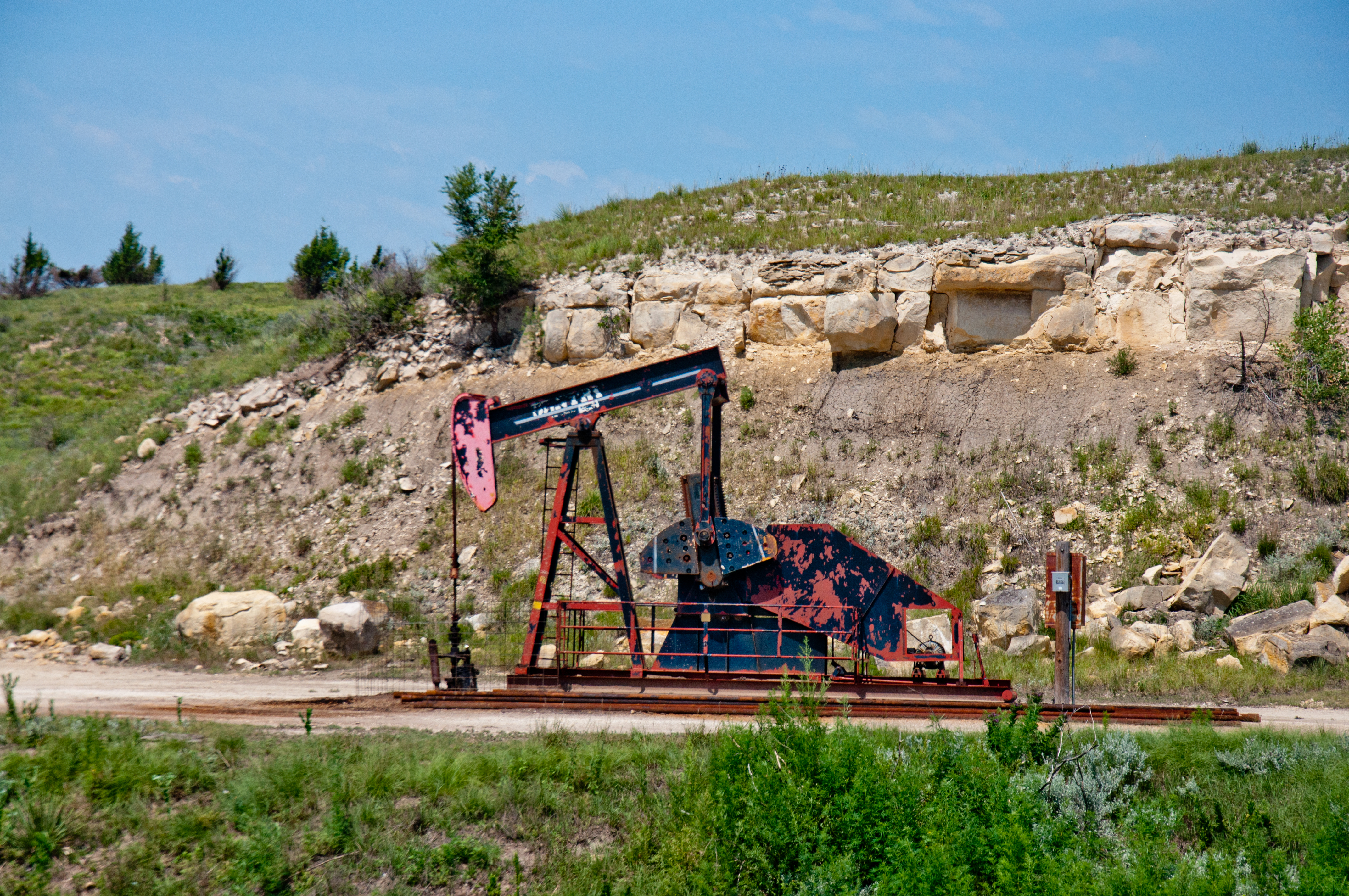
West Texas Intermediate crude for July delivery gained 21 cents on the Nymex by lunchtime Monday to trade at $53.70 a barrel. The near-month contract dropped more than five percent on Friday (5/31), to its lowest weekly finish in nearly four months.
The current posted price for Kansas Common crude at CHS in McPherson by Monday was $43.75 per barrel. That’s three dollars less than the posted price last Thursday.
The weekly rig report from Independent Oil and Gas Service showed showed a 62% drop in the number of active drilling rigs in Kansas last week. The total in Western Kansas was down 15 to just eight active rigs. That matches the statewide increase in rigs listed as “pending their next location assignment.”
Baker Hughes reported an increase of three oil drilling rigs nationwide last week to 984 active rigs. New Mexico was up two while Texas and Oklahoma each dropped one rig.
Last week saw six new drilling permits approved across Kansas, all of them west of Wichita including one in Barton County. Regulators have approved 364 permits for drilling at new locations across Kansas so far this year.
Independent Oil & Gas Service reported 18 newly completed wells last week, 655 so far this year. There were four new well-completions east of Wichita and 14 in Western Kansas including one in Stafford County.
Royal Dutch Shell and the Italian oil company Eni face additional corruption allegations over a Nigerian oil deal. Bloomberg reported the West African country’s government filed additional claims in its lawsuit, saying it believes a handful of executives, including CEOs, were tied to more than $1 billion in bribery payments. In court documents filed in early April, the Nigerian government said the oil companies’ senior managers agreed in 2011 to make a large payment for an offshore oil block, understanding the money would trickle down to government officials and senior executives from both companies. The allegations are the latest bombshells in a years-old dispute over exploration rights that has spread to courtrooms throughout Europe.
Pioneer Natural Resources Co. is asking senior managers to retire as the Texas shale oil driller shrinks spending, sells assets and raises dividends. About one third of the company’s top executives were asked to leave, according to an announcement by CEO Scott Sheffield. That announcement shortly after the explorer disclosed plans to sell or find partners for some oil fields including the divestiture of its entire South Texas portfolio. That deal was expected to trigger a pre-tax, non-cash loss of $550 million.
One of the ways Occidental Petroleum hopes to cut costs to help pay for its very expensive takeover of Anadarko Petroleum is to sell that company’s fleet of aircraft. The move is steeped in irony, as Oxy’s corporate jets were recently the focus of activists digging into the company’s shareholder returns. As reported by Bloomberg, Occidental is not selling its own planes, which became notorious as executives flew to Paris, the Hague and Omaha, Nebraska in what became a very visible effort to line up backing for its $38 billion acquisition of Anadarko. Occidental said Anadarko’s four planes would be on the company’s hit list when the takeover closed. The company said it sees about $2 billion in annual cost cuts once it closed the deal.
Mexico has moved to bolster investor confidence in its embattled state oil company. Officials including the president announced an $8 billion syndicated loan and some huge new tax breaks for the energy producer. Pemex officials signed the financing agreement with three financial groups including with JPMorgan Chase. The company will use $2.5 billion of the funds to refinance existing debt, while the remaining $5.5 billion will replace some credit lines.
One of the world’s largest oilfield services companies filed for Chapter 11 Bankruptcy protection last month. World Oil reports the move may give Weatherford International enough room and time to turn around its struggling operations. The firm announced that it has executed a restructuring agreement with a group of senior note-holders that collectively holds 62% of the company’s senior, unsecured notes. The proposed restructuring plan should significantly reduce the company’s long-term debt and related interest costs. World Oil says it should also provide access to additional financing and establish a more sustainable capital structure.
It not clear how long the rule-making process will take, but there are some in the state of New Mexico that are hailing a new law as one of the “greatest environmental accomplishments” ever to come out of the state Legislature. The Albuquerque Journal reports the law will allow the oil and gas industry’s produced wastewater to be recycled for use outside the industry. The newspaper reports New Mexico’s “Produced Water Act” takes effect in July, and could mark a sea-change in the desert state’s future. They could see some 40 billion gallons of new water resources each year. One company has already filed an application for a permit. Encore Green Environmental hopes to use wastewater from booming operations in southeastern New Mexico to increase vegetation for ranching and erosion control in desert areas.
The U.S. Energy Information Administration says New Mexico now boasts two of the top crude-oil-producing counties in the nation. Both are in the Permian Basin in the southeast corner of the state along the Texas border. EIA said Lea County was the No. 2 oil-producing county in the country in January behind North Dakota’s McKenzie County. McKenzie County produced 17.3 million barrels in January while Lea County produced 14.6 million barrels. Lea County had more than twice the number of operating rigs as McKenzie County. New Mexico’s Eddy County was listed as the No. 6 top oil-producing county, pumping 10 million barrels during January.
The Kansas City Royals have selected Bobby Witt Jr., a shortstop from Colleyville Heritage High School (Texas), with the second overall pick in the 2019 First-Year Player Draft. Witt Jr. is the third player chosen second overall in Royals history, joining Alex Gordon (2005) and Mike Moustakas (2007).
He is the son of right-handed pitcher Bobby Witt, who played 16 seasons with seven different teams in the Majors from 1986-2001, and was the third overall pick by Texas in the 1985 Draft. The Witts are the ninth father-son duo selected in the first round and the first to be selected within the first three picks. They pass Tom Grieve (6th overall in 1968) and Ben Grieve (2nd overall in 1994) as the highest-drafted father-son duo.
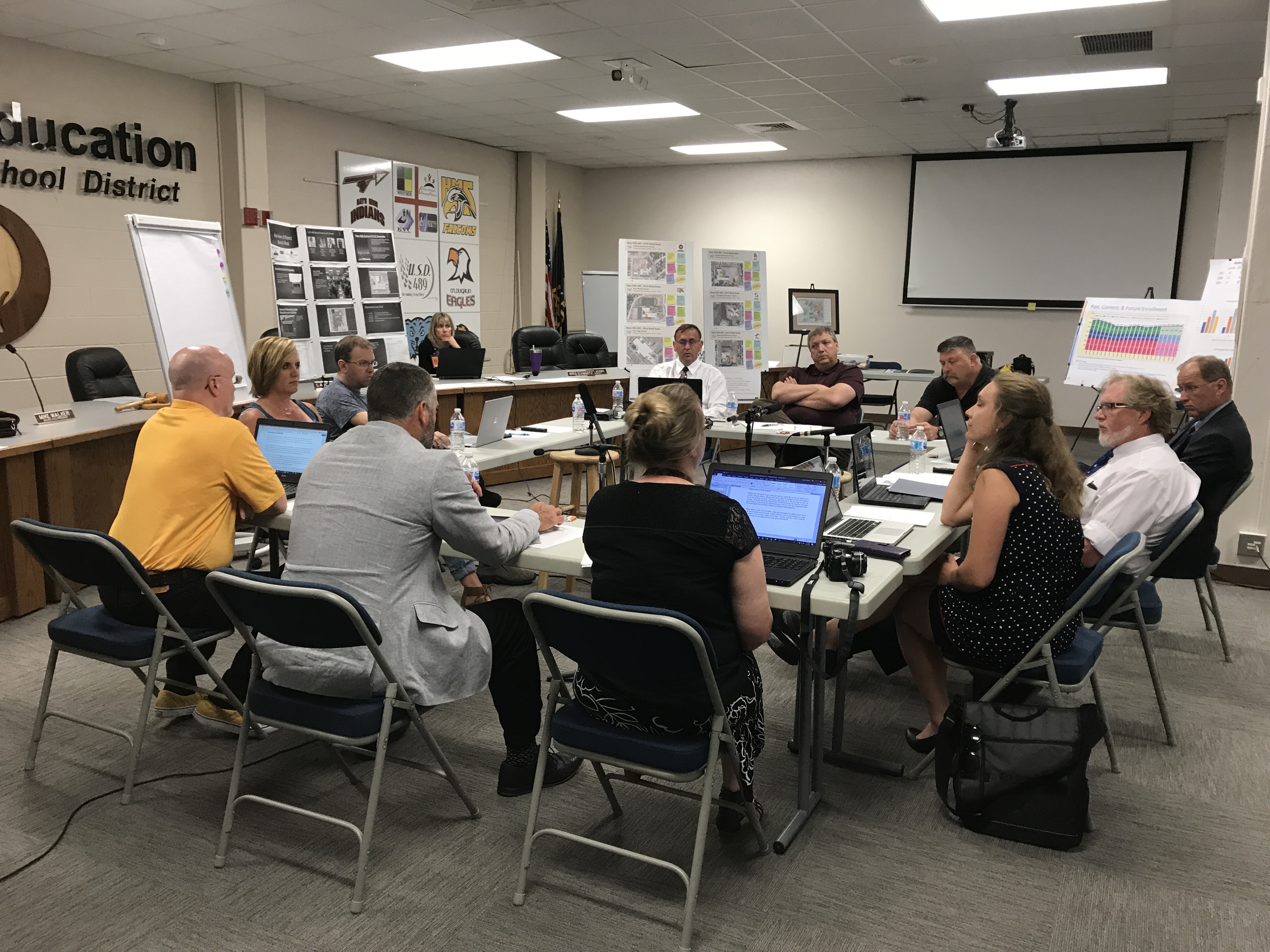
The Hays USD 489 school board is setting its sights on a bond election in 2020.
Board members directed staff during a facilities planning meeting Monday night to develop time lines for either a spring or September 2020 school bond election.
The Hays district has had two failed bond elections in three years — one in 2016 and another in 2017. The district has only had one $10 million bond in the last 40 years.
No decisions have been made as to what the school bond issue will contain, but the board continues to come back to three issues on its priority list — finish upgrades to the Hays High School HVAC system, renovate and expand Roosevelt Elementary School and expand the cafeteria at Hays Middle School.
Rusty Lindsay, USD 489 buildings and grounds director, said he receives the most complaints about the district’s HVAC systems, and those issues are spread across all buildings. He also said HVAC is an area that has the highest likelihood of a catastrophic failure.
Addressing the HVAC systems in a bond would leave more money in the yearly capital improvement budget to complete projects at other buildings, Lindsay said.
Roosevelt Elementary School is the newest of the four elementary schools. Adding two sections of each grade to Roosevelt would allow the district to vacate Lincoln Elementary School, which is more than 90 years old and has substantial infrastructure problems.
The district may also be able to reap savings from the efficiency of having three versus four elementary buildings.
The board members discussed the need to do smaller bonds over shorter time frames. They discussed trying for a 10 to 15-year bond with a tax ask of $10 to $15 per month on a $150,000 home.
Board member Lance Bickle said he still hoped the district could establish a long-range plan for what it hopes to accomplish in incremental bonds over multiple 10-year bond cycles.
However, Superintendent John Thissen said planning too far in advance could doom the bond the board is working on now. Further needs can be very different in 10 years than they are now.
“This is the first base step,” he said. “No matter what happens in the future, this needs to be done.”
He added if the district did these three base projects, it would have flexibility to move in a variety of directions in the future.
The board agreed to have time set each month on their agenda to discuss the bond issue. In July, the board will look at a timeline for the bond. Lindsay will report back to the board in August.
TOPEKA, Kan. (AP) — A Kansas commission voted Monday to give state employees a break on health insurance rates after they endured years of significant increases.
The Kansas Employees Health Care Commission voted unanimously to either reduce state employees’ rates 6% for plans that include spouses, families or retirees, while keeping other plan rates flat. At the same time, the state will increase its contribution to the state insurance fund by 4.5%, The Topeka Capital-Journal reported.
Under former Gov. Sam Brownback, the state reduced contributions by 8.5 % in 2015 to secure cash to balance the state budget, then imposed rate increases from 2016-18 of 36.7 %, 30.4 % and 31.7 % for employees with spouses or families participating in the state insurance plan.
“There was no way an employee could have begun to plan for those types of increases,” said Kansas Insurance Commissioner Vicki Schmidt, a Republican who was elected in November.
As the state shifted the burden of supporting the health care fund to employees, fund reserves dropped from $195 million in 2014 to a low of $24 million in 2017. After Monday’s decision, the reserve balance is expected to increase from $48 million to $52 million next year.
“You can argue pretty conclusively the reason the balance slipped so low is the state lowered its contributions substantially at a time when expenses were going up,” said Duane Goossen, the interim secretary of administration under Gov. Laura Kelly, a Democrat.
Cheryl Buxton, president of the Employee Advisory Committee, which includes current and former employees who are active in the health insurance plan, said employees will be pleased with the combination of decreased health insurance costs and a pay increase the Legislature included in the new state budget.
Commissioners expressed interest in passing along more savings but long-term forecasts suggested modest increases would be needed to maintain a targeted reserve balance as health costs rise.
“I would not support getting wild and crazy with minus 30% increases,” Schmidt said. “We have to be responsible, I understand. We’re adulting now.”
The committee also approved savings for employees using a high-deductible plan. After the deductible is met, employees will pay 10% of health costs instead of the current 20% rate. And employees who leave state jobs will be allowed to keep their health insurance through the end of the month. During Brownback’s administration, workers lost their insurance the day their employment ended.
————-
TOPEKA, Kan. (AP) — Gov. Laura Kelly’s administration is considering changes — and possible reductions — in health insurance premiums for state employees after three years of steep price increases.
Vicki Schmidt, Kansas Insurance Commissioner, is a member of the health care commission
State employees faced insurance premium increases of more than 30 percent for three consecutive years during Republican Gov. Sam Brownback’s administration. That came while millions of dollars in state payments were diverted from the health insurance fund to help balance the state budget.
Kelly said she was troubled by mismanagement of the state employee health insurance plan during the last administration. She says her administration has been reviewing options to help give state employees some relief.
SEDGWICK COUNTY — Law enforcement authorities are investigating an armed robbery and have three teen suspects in custody.
Location of the reported armed robbery Google image
Just after 3a.m. Monday, police responded to report of an armed robbery at a convenience store in the 3700 Block of North Maize Road in Wichita, according to officer Charley Davidson.
A 20-year-old female store employee called 911 and told police armed suspects entered the business and demanded money. An officer with Maize Police observed the three suspects leave the business in a black Ford F150, according to Davidson. The officer attempted to stop the pickup but the driver refused to stop.
During a pursuit, the driver crashed the pickup on West Street under Kellogg and the three suspects, two 17-year-old and a 16-year-old in the vehicle fled on foot and were later arrested without incident.
They were transported to a local hospital for treatment of minor injuries and later booked in the Sedgwick County Juvenile Detention Center on requested charges that include felony evade and elude, aggravated robbery and kidnapping.
Investigators also learned the Ford F150 and gun were stolen, according to Davidson.
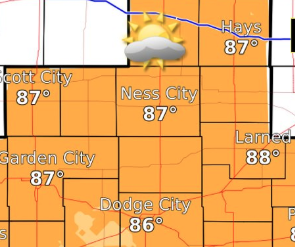
Tuesday Mostly sunny, with a high near 87. Southwest wind around 9 mph.
Storms will develop in eastern Colorado and move into western Kansas late this afternoon. A storm or two could contain hail and wind gusts. #kswxpic.twitter.com/iw1Taf3YcM
Tuesday Night A 20 percent chance of showers and thunderstorms after 8pm. Partly cloudy, with a low around 61. South southwest wind 6 to 9 mph.
WednesdayA slight chance of showers and thunderstorms before 8am, then isolated showers and thunderstorms after 2pm. Mostly sunny, with a high near 86. West wind 5 to 7 mph becoming east in the afternoon. Chance of precipitation is 20%.
Wednesday NightScattered showers and thunderstorms, mainly after 8pm. Mostly cloudy, with a low around 62. East southeast wind 5 to 8 mph. Chance of precipitation is 40%.
ThursdayScattered showers and thunderstorms. Mostly cloudy, with a high near 79. Chance of precipitation is 50%.
Thursday NightScattered showers and thunderstorms, mainly before 8pm. Mostly cloudy, with a low around 61. Chance of precipitation is 50%.
GREAT BEND – A Kansas man was sentenced Monday to 21 years in prison after pleading guilty to second degree intentional murder, according to Kansas Attorney General Derek Schmidt.
Chaz Zachery Stephens-photo Barton Co.
Chaz Stephens, 26, Hoisington, pleaded guilty in April to second degree intentional murder in connection with the March 2018 death of his girlfriend’s two-year-old daughter in Hoisington.
Authoriteis found the body of Iviona Lewis northwest of Hoisington.
The child was last seen four days earlier on a Sunday at her home in Hosington. She was not reported missing until Tuesday afternoon.
Hoisington Police Chief Kenton Doze said the girl’s mother was visiting her brother in Great Bend, and the delay in reporting Iviona’s disappearance was caused by confusion over who was supposed to be caring for her.
The case was investigated by the Kansas Bureau of Investigation, the Hoisington Police Department and the Barton County Sheriff’s Office, with assistance from several other law enforcement agencies. Assistant Attorney General Adam Zentner and former Assistant Attorney General Lyndzie Carter of Schmidt’s office prosecuted the case.
KANSAS CITY, KAN. – A Kansas man was sentenced Monday to four years in federal prison for helping to move 168 pounds of marijuana from one house to another to keep police from finding it, according to U.S. Attorney Stephen McAllister.
Felipe Cano-Porras, 32, Kansas City, Kan., pleaded guilty to one count of conspiracy to distribute marijuana. Law enforcement had a house in the 900 block of Riverview in Kansas City, Kan., under surveillance when Cano-Porras and another man came out.
In the house, investigators found 186 pounds of marijuana in suitcases, 704 grams of methamphetamine, three firearms and more than $25,000 in cash.
In his plea, Cano-Porras admitted he and another moved the marijuana, the methamphetamine, the guns and the cash into the house from another residence.