We have a brand new updated website! Click here to check it out!

Turning education into a home: NCK Tech house ready for auction

By JAMES BELL
Hays Post

Construction is finished and now NCK Technical College, 2205 Wheatland, is getting ready to sell a custom-built house at public auction at 7 p.m. Tuesday, May 21, for the first time in four years.

The project was overseen by Doug Marrs, NCK instructor of construction and cabinet making, once again this year.

Almost all aspects of the custom-built home — from design to finishing — were completed by NCK Tech students under the watchful eye of Marrs, who served as the general contractor on the project.

“It is a pretty good-sized home,” he said.

With the two cantilevers, the three-bedroom, three-bath house measures 1,960 square feet and was built to specifications of the latest International Resident Code.

“This house could be moved anywhere in Kansas,” Marrs said, adding it likely would be able to be moved to other states by the winning bidders.

The house was built to be extremely energy efficient, with an abundance of insulation and low-wattage lighting.

Insulation installed in the walls and attic goes far beyond minimum requirements.

“So this house is super-insulated, with very little air infiltration,” Marrs said. “Turn on every light in this house on, let it run 24 hours, it might cost you a quarter. Half a breaker is all it takes to run the lights.”

The usage of the urethane foam was one of only two aspects of the build that were not completed by the students, due to the specialized equipment needed and time constraint.

The trusses were brought in from a local company as a way to save time on the project as well as allowing the project to skip the building certification process that would be required in Hays when building trusses.

With the completion of construction last Friday, the house is ready for the move and to be plugged into its new location, with power and water fully functional inside the house and heating and air conditioning duct work in place.

“This house is pressure checked,” Marrs said. “Everything on this level works.”

Completely ready to go, the house utilizes some of the best materials along with side high-tech touches.

“All the cabinetry is done in solid cherry. There are not too many houses that have solid cherry cabinetry,” Marrs said. “There is 1,300 square feet of solid cherry in this house.”

Several pieces of the kitchen cabinets are integrated in a way that could not be purchased and gives the area a unique design.

“It gives it a lot more character and is prettier that way,” Marrs said.

While he approves of the features put into the house, Marrs points out almost all aspects of the build are specified by his students.

“In essence, when it comes down to it, is not my house. It is their house, and they will take possession of it,” he said.

The project started with 14 students coming up with individual plans.

“From there, the students all get together and make a determination as to which plan they like,” Marrs said.

They then take all the elements from the plans they like and combine them into the final plan for the house.

“That is how we end up with a floor plan that is buildable and sellable,” Marrs said.

While the house was built using classic materials, giving it a unique look, the students included some high-tech features.

“We are a tech college, so we try to throw in some of the new and more innovative things that are out there in the industry today,” Marrs said.

Some of the features of the house included a fireplace integrated into the living room with a drop-down television mount above the mantel, another television mount in the ceiling of the master bedroom, Bluetooth connected bathroom lights and a ring doorbell.

(Story continues below)

Funds from the sale are used to cover the cost of the materials and taxes, with the intention of the project being, at minimum, revenue neutral.

Any profit from the sale will go back into the college.

“The whole intent is to sell this for what we have got into the materials, so we can go back next year and do the same thing over,” Marrs said.

Monetary concerns aside, the entire project must also fit into the academic school year, giving the students approximately eight months to complete the house.

“We don’t let any grass grow on our feet, because we do not have time,” Marrs said.

While the only reward for the fast and furious work is course credit, he believes it gives the students a leg up in the job market.

“A lot of businesses and business owners know that coming out of this school they have some background, they are not green off the street,” Marrs said.

That experience, he feels, is invaluable for his students as they enter the job market.

“Technical education is on the increase and has been for the last four or five years. It will continue, we are so far short on people,” Marrs said. “This is probably the best learning situation you can have when it comes to house building.”

There are not many schools left in the state that build a full house, he added, with most teaching individual construction elements on a modular basis.

“This is the real deal. You make a mistake, you will have to fix it, you will have to deal with it in the end, just like you would out there in the real world,” he said. “We feel there is nothing that compares to it.”

Pictures highlighting the progress of the construction can be found on the NCK Tech website.

A full list of the house features can be found here.

FHSU Honors College welcomes fifth class of new members

FHSU University Relations

The Honors College at Fort Hays State has selected 42 new students for the 2019-20 academic year.

“The new, incoming 2019-20 class of the FHSU Honors College truly represents the best of the best,” said Matt Means, director of the Honors College. “These 42 individuals bring to the university a vast array of prior accomplishment; they have amassed a significant collection of leadership and academic successes that portend extraordinary futures at FHSU and beyond.”

“The Honors College set a new record for number of applications received this year, maintained a 90-percent yield rate among those accepted, and will grow to a total program size of around a hundred this fall,” he said.

“These new students are joining a program of great strength and will become part of an ethos that has established a high bar of success,” said Means.

The college offers three exclusive scholarships: The Regents Scholarship, the Tier 1 Scholarship and the Tier 2 Scholarship, all of which are renewable for three additional years.

The Regents Scholarship covers full tuition and fees up to 18 credit hours, room and board and includes $450 per semester for books. The Tier 1 Scholarship provides students with $4,000 for tuition and $6,000 for room and board. The Tier 2 Scholarship provides students with $3,500 for tuition and $3,200 for room and board.

New members are listed alphabetically by hometown. The list does not include students who requested privacy.

ALMENA (67622): Micah Kasson, an incoming freshman majoring in graphic design, is a 2019 Norton High School graduate.
ANDOVER (67002): Hannah Wiebe, an incoming freshman majoring in psychology, is a 2019 Andover Central High School graduate.
BELOIT (67420): Autumn Sneath, a sophomore majoring in general science, is a 2018 Beloit High School graduate.
BOGUE (67625): Seth Thompson, an incoming freshman majoring in general science, is a 2009 Hill City High School graduate.
BOULDER, Colo. (80303): Reilly Madden, an incoming freshman majoring in communication sciences and disorders, is a 2019 Boulder High School graduate.
COLBY (67701): Isabel Rosales, a sophomore majoring in biology, is a 2017 Colby High School graduate.
CONCORDIA (66901): Grace Carder, an incoming freshman majoring in art education, is a 2019 Concordia High School graduate.
Kali Harvey, a freshman majoring in radiologic technology, is a 2018 Concordia High School graduate.
GREAT BEND (67530): Kaitlin Adams, a sophomore majoring in management, is a 2017 Great Bend High School graduate.
HAYS (67601): Kallie Leiker, an incoming freshman majoring in chemistry, is a 2019 Hays High School graduate.
Rebekah Porter, an incoming freshman majoring in accounting, is a 2019 Hays High School graduate.

HOUSTON, Texas (77084): Franklin Solorio, a freshman majoring in marketing, is a 2018 Mayde Creek High School graduate.
HOXIE (67740): Brynn Niblock, a sophomore majoring in biology, is a 2017 Hoxie High School graduate.
LAWRENCE (66049): Lydia Wood, an incoming freshman majoring in psychology, is a 2019 Lawrence Free State High School graduate.
LEE’S SUMMIT, Mo. (64082): Lily Flint, an incoming freshman majoring in nursing, is a 2019 Lee’s Summit West High School graduate.
LYONS (67457): Brady Stephenson, a sophomore majoring in finance, is a 2019 Little River High School and Kansas Academy of Mathematics and Science graduate.
McPHERSON (67460): Ashley Achilles, an incoming freshman majoring in management, is a 2019 McPherson High School graduate.
OLATHE (66062): Natalie Miller, a freshman majoring in political science, is a 2018 Olathe South High School graduate.
OMAHA, Neb (68137): Tanner Lukowski, an incoming freshman majoring in management, is a 2019 V.J. and Angela Skutt Catholic High School graduate.
PRATT (67124): Jorja Elliott, a freshman majoring in biology, is a 2019 Pratt High School and Kansas Academy of Mathematics and Science graduate.
PRETTY PRAIRIE (67570): James Budge, an incoming freshman majoring in marketing, is a 2019 Haven High School graduate.
RUSSELL (67665): Alexia Charbonneau, a sophomore majoring in biology, is a 2017 Russell High School graduate.
SAN ANTONIO, Texas (78258): Daniel Huantes, an incoming freshman majoring in physics, is a 2019 Ronald Reagan High School graduate.
SCOTT CITY (67871): Brenda Aguirre-Apodaca, a sophomore majoring in biology, is a 2018 Scott Community High School graduate.
SHARON SPRINGS (67758): Hayley Pierce, an incoming freshman majoring in psychology, is a 2019 Wallace County High School graduate.

STERLING, Colo. (80751): Jordan Matthews, an incoming freshman majoring in chemistry, is a 2019 Merino High School graduate.
STILWELL (66085): Kimberly Stone, a freshman majoring in political science, is a 2018 Stanford University Online High School graduate.
TONGANOXIE (66086): Rose Reilly, an incoming freshman majoring in biology, is a 2019 Lawrence Virtual High School graduate.
WAMEGO (66547): Caden Moore, an incoming freshman majoring in political science, is a 2018 Wamego High School graduate.
WASHINGTON (66968): Malari L’Ecuyer, an incoming freshman majoring in music, is a 2019 Washington County High School graduate.
WHITE CITY (66872): Jamie Beck, an incoming freshman majoring in chemistry, is a 2019 White City High School graduate.
WICHITA (67230): Isabelle Reynolds, a sophomore majoring in biology, is a 2018 Andover High School graduate.
WICHITA (67211): Megan Roth, a sophomore majoring in social work, is a 2017 Wichita East High School graduate.

Prairie Doc Perspectives: Thumb-sucking and other addictive behaviors

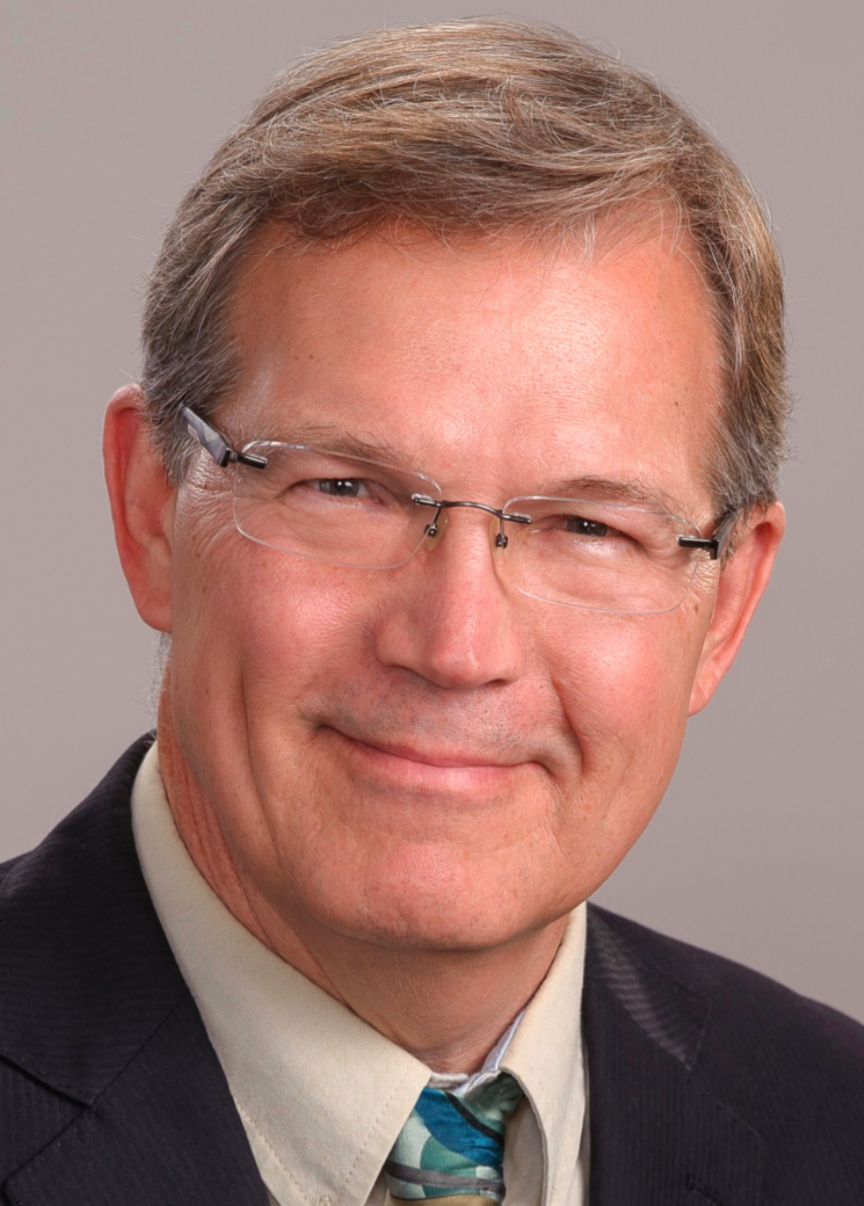
Rick Holm

Addiction can be defined as the compulsive repeated use of a drug or substance (such as alcohol) or performance of a behavior (such as gambling). Dependence is different, occurring when repeated use of a drug (such as heroine) results in physical dependence which causes an unpleasant feeling of withdrawal when the drug is stopped. Addiction and dependence can occur separately, although they often run together.

At five-years-old, I was a thumb-sucker. I recall not being proud of it as my folks seemed progressively upset about my “addiction.” The process that finally helped me quit was when I was told I would not visit my grandma in Minneapolis until I stopped sucking my thumb. I remember many struggled attempts at quitting before I finally shook the monkey off my back. Addiction is a human condition that can affect any one of us.

The people in this country are currently caught in a terrible maelstrom of opioid addiction from which human beings of all ages, races and economic status seem unable to escape. Twice as many people suffocated to death from opioids last year than died of vehicular crashes. According to the website DrugFree.org, in 2010, something like 23.5 million people in the U.S. (about one in every ten over the age of 12) were addicted to alcohol, drugs, or something. Of those addicted, only one in ten would ever get help.

One expert stated that the financial and emotional toll of addiction is greater than the combined consequences of diabetes mellitus and all cancers put together. Think of all the lung disease and cancer that results from smoking; the cirrhosis and liver failure as well as the dementia that results from alcohol; the dental problems from methamphetamine use; and all the social consequences of addiction including accidental vehicular crashes, suicides, homicides, criminal behavior and incarceration.

Despite all this doomsday talk, I think we have room for hope if we realize that none of us is immune and everyone should take precautions. We should start with an open-eyed and honest approach with our youth, teaching the truth about addiction without making addictive behaviors a “forbidden fruit.” Our country desperately needs affordable addiction and mental health treatment options, available to all, without the negative stigma (and often unhelpful incarceration) that can follow. Spending for prevention and treatment of addiction would save us all significantly more than it would cost.

We also need more research to better understand addiction and what influences addictive behavior, even that as seemingly benign as sucking one’s thumb.

For free and easy access to the entire Prairie Doc® library, visit www.prairiedoc.org and follow The Prairie Doc® on Facebook, Instagram and Twitter featuring On Call with the Prairie Doc® a medical Q&A show streaming live on Facebook most Thursdays at 7 p.m. central.
-0-

Why Kansas Cops Don’t Want To Legalize Marijuana — Medical Or Otherwise

When it comes to marijuana, Kansas is a red state in an increasingly green country.

Three of its neighbors — Colorado, Oklahoma and Missouri — have legalized some form of the drug in recent years. Yet Kansas remains one of four states in the country without a comprehensive medical or recreational marijuana program.

Law enforcement agencies in Kansas say legalizing even medical marijuana could lead to more black market activity. But it’s hard to know what impact marijuana could have because the state doesn’t collect much information about it.

That’s not for lack of trying. This spring, the Legislature passed a bill allowing patients and caregivers to possess CBD — one chemical in marijuana — containing small amounts of THC, a psychoactive component of the plant. The Kansas Health Institute reports that lawmakers have introduced 18 medical marijuana bills since 2006. This year, one got a hearing at the Capitol.

But law enforcement officers representing several of the state’s agencies and professional organizations testified against it. The bill never made it to a vote.

“I only ask that you give deference to the experience, to the opinions of the law enforcement community,” said Kirk Thompson, director of the Kansas Bureau of Investigation, the top law enforcement agency in the state. “We’ve seen the negative side of this issue.”

The agency denied requests for an interview with Thompson and didn’t answer emailed questions about its marijuana enforcement strategy. But Thompson’s statement echoes the position of many of the state’s law enforcement agencies and organizations.

They argue that even legalization of medical marijuana would increase car accidents and violent crime and make it easier for foreign drug cartels to move weed onto the black market.

Law enforcement officers say weed is inherently tied to violence, especially from Mexican cartels. And they report an increase in marijuana-related traffic stops in Kansas, especially since Colorado legalized recreational sales of the drug in 2014.

“In every way, marijuana is driving up public health and public safety concerns,” said Jeffrey Stamm, executive director of the Kansas City-based Midwest High Intensity Drug Trafficking Area, under the Office of National Drug Control Policy. “In terms of the psychopharmacology, the economic, the criminal, the social costs of marijuana use, cops, in fact, are the experts.”

But ultimately, it’s hard to know what impact marijuana has on public safety in Kansas because the state doesn’t collect much of that information.

Anecdotes and Statistics

The federal Drug Enforcement Administration publishes data on its Cannabis Eradication Program, including arrests, number of plants seized and the value of assets seized in each state.

But the Kansas Bureau of Investigation doesn’t do the same.

KBI says in 2018, more 45% of its crime lab’s blood drug tests came back positive for THC. In 2013, only 29% of those blood tests indicated the presence of THC. But the agency doesn’t track the total number of marijuana seizures in the state, nor does it track the total number of marijuana arrests.

In an email, a spokeswoman said the agency’s statewide crime reporting system was “extremely outdated,” deriving statistics from police reports that don’t distinguish which specific drugs were involved in an incident.

The agency also doesn’t track the origin of marijuana seizures in Kansas — whether the drugs came from inside the state, from another U.S. state such as Colorado or California, or from an international source like a Mexican cartel.

A 2016 survey of law enforcement agencies conducted by the Kansas Attorney General’s office found that it’s hard for police to conclusively find out where drugs are from. They rely on statements from suspects, receipts,  labels on packages, or stops near Kansas’ western border to determine whether marijuana comes from pot-friendly Colorado.

Some survey respondents said they had made an increasing number of arrests for DUIs and people carrying marijuana products, especially edibles, since 2014. Others, however, noted no increase or said sample sizes were too small to tell.

Kansas Highway Patrol Lt. Chris Bauer, who teaches officers to recognize whether drivers have been using drugs, said the patrol has noticed an increase in drivers being impaired by marijuana. The Highway Patrol says 62% of lab tests of impaired drivers in 2018 came back positive for THC. Two years earlier, 54% of labs found traces of the drug. Yet those tests aren’t always a reliable indicator of how recently someone used cannabis.

In a phone interview, Bauer said he believes the increase is a result of “society’s changing attitude toward cannabis, and then also the fact that we’re surrounded by states who now have legalized it.”

In 2018, the Kansas Highway Patrol confiscated 13,029 pounds of marijuana in 322 seizures.  In 2017, the agency made 399 seizures and confiscated 7,488 pounds.

Bauer said many troopers have begun getting rid of small amounts of marijuana by the side of the road during traffic stops, rather than arresting and charging everyone for possession. Those stops don’t get recorded.

“Maybe we don’t want to take everybody to jail for a small amount of marijuana,” Bauer said. “Jails are full. We sort of have to triage what we’re doing.”

Kansas Department of Transportation data shows that drug-related traffic collisions have remained at about 0.5% of all accidents over the past decade, but the agency does not collect information on specific drugs.

‘Arrows in Their Quiver’

State Sen. David Haley, a former prosecutor who co-sponsored the medical marijuana bill in the Kansas Senate this year, said the state has a strong law enforcement lobby. He thinks officers want to keep marijuana illegal as a pretext to stop and search people.

“I think law enforcement wants to keep as many arrows, if you will, in their quiver,” he said. “I can’t think of any other reason that their lobby has been so adamant.”

Brian Leininger, another former prosecutor who now works as a defense attorney in DUI cases, agrees.

“Police and other government officials have a lot of social capital,” he said. “They want the status quo. They make their living enforcing the drug laws.”

For about five years, Leininger served as the general counsel for the Kansas Highway Patrol. As a private defense attorney, he still speaks with police regularly and says officers often tell him they oppose the state’s marijuana laws but don’t think they can speak out publicly.

“All the time, officers tell me and other people that ‘it’s really foolish this is illegal. I wish they’d just make it legal. It would make my job easier,’” Leininger said. “‘Alcoholics are violent and dangerous and bad drivers. People under the influence of marijuana are generally calm.’”

He thinks attitudes will change as older officers start retiring and societal attitudes continue to change.

“As the officers get younger, a higher and higher percentage of them grew up with marijuana,” he said. “Eventually, when 45 of the other states have legalized it entirely, maybe Kansas will come around.”

Nomin Ujiyediin reports out of Topeka for the Kansas News Service. You can reach her on @NominUJ

Partly sunny, mild Saturday, chance of storms late

Today
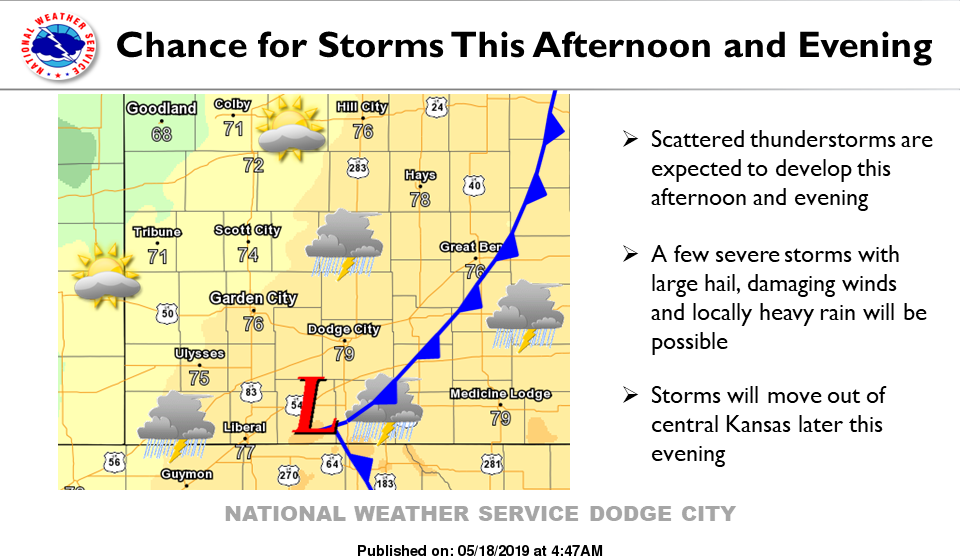
Mostly sunny, with a high near 77. West northwest wind 7 to 9 mph becoming east northeast in the afternoon. A 30 percent chance of showers and thunderstorms mainly after 4pm.
Tonight
Showers and thunderstorms likely, mainly before 1am. Some of the storms could be severe. Mostly cloudy, with a low around 49. East wind 11 to 15 mph becoming north northwest after midnight. Chance of precipitation is 60%. New rainfall amounts of less than a tenth of an inch, except higher amounts possible in thunderstorms.
Sunday
Sunny, with a high near 69. North northwest wind 8 to 15 mph.
Sunday Night
Isolated showers after 1am. Mostly cloudy, with a low around 46. East wind 7 to 14 mph. Chance of precipitation is 20%.
Monday
Periods of showers and possibly a thunderstorm. High near 57. Breezy, with an east wind 15 to 21 mph, with gusts as high as 31 mph. Chance of precipitation is 80%. New rainfall amounts between three quarters and one inch possible.
Monday Night
Showers likely and possibly a thunderstorm before 1am, then showers and thunderstorms likely after 1am. Cloudy, with a low around 52. Breezy. Chance of precipitation is 70%. New rainfall amounts between a half and three quarters of an inch possible.
Tuesday
Scattered showers and thunderstorms before 1pm, then isolated showers. Partly sunny, with a high near 70. Breezy. Chance of precipitation is 50%.
Tuesday Night
Partly cloudy, with a low around 45. Breezy.
Wednesday
Mostly sunny, with a high near 75.

Public input needed for Kansas Monarch Conservation Plan

KDWPT

PRATT – The Kansas Department of Wildlife, Parks and Tourism (KDWPT) is seeking public input on Kansas’ Monarch Conservation Plan through May 30. The Kansas Monarch Conservation Plan outlines a 20-year objective to conserve, enhance and create pollinator habitat on private, public and urban lands through non-regulatory, voluntary efforts.

Kansas is a national stronghold for monarch conservation and is uniquely positioned to conserve and enhance large acreages and landscapes ideal for monarch migratory and breeding habitat.

The Kansas Monarch Conservation Plan serves as a guiding document to support ongoing and future conservation efforts, taking into account that successful implementation of the plan will require a multi-sector approach. For this reason, KDWPT has collaborated with individuals from ranching and farming organizations, conservation organizations, industry, agencies, academia, and tribal nations – representing 68 organizations – to set voluntary goals for the conservation of monarchs and other native pollinators.

Any individual or entity planning, implementing or funding monarch conservation activities in Kansas should reference this document and consider providing input.

To view the draft version online, visit https://ksoutdoors.com/Wildlife-Habitats/Wildlife-Conservation/Kansas-Monarch-Conservation-Plan.

For more information on the plan, and to provide input, contact Megan Rohweder at [email protected].

Police: Car stolen in Kansas in 1993 found in Missouri barn

JOHNSON COUNTY —A 1991 Mustang 5.0 stolen in Kansas back in October 1993 has been recovered. Captain Fredrickson, who took the report as a patrolman got the call Thursday, according to a social media report form Overland Park Police Chief Frank Donchez.

The car was recovered in a Missouri barn and identified by the Missouri State Highway Patrol.

Police: 2 Kan. teens hospitalized after shot during drug transaction

SHAWNEE COUNTY — Law enforcement authorities are investigating a shooting and have a suspect in custody.

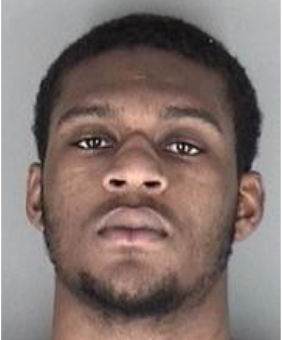
Trevon Williams photo Shawnee Co.

Just after 7:30 p.m. police responded to an apartment complex in the 3500 block of SW 29th in Topeka in reference gunshots in the area, according to Lt. Andrew Beightel.

While officers were investigating the crime scene at the apartment, one  juvenile teen male and one juvenile teen female arrived at an area hospital by private vehicle with non-life threatening gunshot wounds. The victims are expected to make a full recovery.

Through the investigation it was discovered that this incident was a direct result from a narcotics transaction, according to Beightel.

Information gleaned from the investigation, police were able to locate and arrest the suspect, later identified as Trevon Leson Williams, 18 yrs. old of Topeka.

Police booked Williams into the Shawnee County Jail on requested charges of aggravated battery and criminal discharge of a firearm.


Kansas again keeping foster kids in offices

By JOHN HANNA Associated Press

TOPEKA, Kan. (AP) — Abused and neglected children are again sleeping overnight in the offices of Kansas foster care contractors because homes cannot be found for them quickly enough.

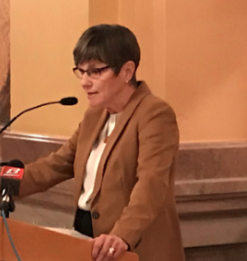
Since January, when Democratic Gov. Laura Kelly took office, more than 70 children have been kept overnight in the offices of the two nonprofit agencies providing foster care services. Her Republican predecessor’s administration kept children from sleeping in offices during its final months after threatening publicly to fine contractors — a threat Kelly’s administration has dropped.

The state Department for Children and Families provided statistics in response to questions from The Associated Press after it received a tip that the practice had returned. Kelly, legislators and child welfare advocates have repeatedly cited the practice as a sign of serious problems in the child welfare system since it came to lightin 2017.

“We need to build capacity to make sure that we’re able to find stable placements with family or with licensed foster homes or in the right facility for every youth,” DCF Deputy Secretary Tanya Keys said during an interview. “So, one is too many.”

Kelly, a state senator before being elected governor last year, was a vocal critic of fiscal and social services policies under former Republican Govs. Sam Brownback and Jeff Colyer. She said during her campaign last year that fixing the troubled child welfare system was a top priority and told The AP in February, “These kids are ultimately in my charge.”

“She is aware of the problem,” spokeswoman Ashely All said, adding that the governor receives frequent briefings on child welfare issues. “She is working with the (DCF) secretary to address it quickly.”

The department’s statistics showed that four children were kept overnight in the offices of its two foster care contractors, KVC Health Systems and St. Francis Ministries, in January and February. The figure jumped to 12 in March and 35 in April and was 16 for the first 11 days of May.

The department said no children were kept overnight in contractors’ offices in October, November and December 2018. Colyer, who became governor when Brownback resigned to take an U.S. ambassador’s post in January 2018, cited it as an accomplishmentfor his short administration as he left office.

DCF officials said children began staying overnight in offices again partly because bad winter weather made it less safe to move them. Keys said some children have behavioral problems that make it problematic to put them with other children, so that it’s harder to find homes for them. Others simply have been taken into state custody late in the day, she said.

Also, DCF officials said, the number has tended to spike during April and May, though they could not pinpoint why.

The return to having foster children stay overnight in offices received little public attention since Kelly became governor.

“It doesn’t matter if there’s a Republican in office or if there is a Democrat in office,” said state Sen. Richard Hilderbrand, a Republican from southeast Kansas who’s been monitoring child welfare statistics for weeks. “The kids are the kids. That doesn’t change, and that’s who we’re supposed to take care of.”

The number of foster children sleeping in offices this spring is less than the 85 in April 2018 and 69 in May 2018. The number dropped sharply after that, to four in July 2018.

“We are making progress, but we continue to work on long-term solutions,” All said, citing those numbers. “This continues to be a priority for the governor.”

The problem received fresh attention in September 2018, when the number rose to 14 and an 18-year-old man was criminally charged with sexually assaulting a 13-year-old girlwho had stayed overnight in a contractor’s suburban Kansas City office months before. Kelly called the case a “nightmare.”

Colyer’s DCF secretary, Gina Meier-Hummel, announced plans in September 2018 to fine contractors if foster children slept overnight in their offices, just before the number fell to zero for three months.

“What’s cause the change is backing off the contractors being fined if they don’t address the issue,” said state Sen. Molly Baumgardner, a Kansas City-area Republican, adding that having children sleep in offices again is “very troubling.”

DCF’s current spokesman, Mike Deines, said the agency is forgoing fines to concentrate on “the underlying cause.”

Keys said the department is working to recruit new foster parents to add to the state’s 2,000 or so licensed foster homes and to find relatives for children more quickly. The state had about 7,600 children in its foster care system in April — 46 percent more than 10 years ago.

“We don’t have any evidence that there were any fines levied,” Deines said.

The practice came to light during a September 2017 meeting of a task force created by the Legislature to investigate problems in the child welfare system. Kelly said at the time that it had probably been happening for some time and that she’d rather have children safe in caseworkers’ offices than “dumped off somewhere.”

“It will always be an issue if we don’t keep on top of it,” Hilderbrand said.

Police ask for help to locate woman in connection with Kan. shooting

SHAWNEE COUNTY —Law enforcement authorities are investigating a shooting and asking the public for help to locate a suspect.

Jessica Spencer photo Topeka PD

Just before 8p.m. Thursday, police were dispatched to a residence in the 1500 Block of SE 23rd Street in Topeka in reference a disturbance and argument between two people known to one another, according to Lt. Andrew Beightel.

While enroute to the call a person that was at the scene called into police dispatch and advised that one of the parties had been shot. Upon officers arrival they located an adult male victim suffering from a non-life threating gunshot wound. He is expected to make a full recovery.

Officers interviewed witnesses, the victim and collected evidence from the scene. Through the investigation it was discovered that this incident was a result from the argument that citizens originally had called in.

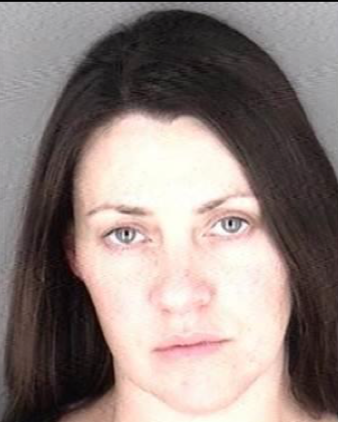
Officers are now looking to speak with 36-year-old Jessica Joann Spencer in connection with this incident. If you know her whereabouts or any information on this incident please contact the Topeka Police Criminal Investigation Bureau at (785) 368-9400 or Shawnee County Crime Stoppers at (785) 234-0007. You can also make anonymous tips online at www.p3tips.com/128

2 charged in death of missing Kan. man after body found in stolen RV

WICHITA, Kan. (AP) — Two people are charged with first-degree murder in the stabbing death of a man whose body was found inside a vehicle taken from his home.

Royce Thomas has previous convictions for violation of offender registration from a previous sex crime in Colorado, according to the KBI offender registry
Micaela Spencer photo Sedgwick Co.

25-year-old Royce Thomas and 24-year-old Micaela Spencer, both of Wichita, are both charged in the death of 50-year-old William Callison.

Police say friends reported they last saw Callison on Sunday evening. On Monday afternoon, they called police to report someone was driving Callison’s truck.

Investigators later found the truck and a connected recreational vehicle in the driveway of a private home. Callison’s body was inside the RV.

Thomas and Spencer made their first court appearances Thursday.

They both also face two counts of theft and other charges.

They each remain jailed on $500,000 bond.

Despite protests, Missouri’s Legislature passes 8-week abortion ban

JEFFERSON CITY, Mo. (AP) — Missouri’s Republican-led House on Friday passed sweeping legislation designed to survive court challenges, which would ban abortions at eight weeks of pregnancy.

If enacted, the ban would be among the most restrictive in the U.S. It includes exceptions for medical emergencies, but not for pregnancies caused by rape or incest. Doctors would face five to 15 years in prison for violating the eight-week cutoff. Women who receive abortions wouldn’t be prosecuted.

Republican Gov. Mike Parson is expected to sign the bill .

Several women dressed as characters from the “The Handmaid’s Tale” watched the debate silently. The Margaret Atwood book and subsequent Hulu TV series depicts a dystopian future where fertile women are forced to breed.

The Missouri legislation comes after Alabama’s governor signed a billWednesday making performing an abortion a felony in nearly all cases.

Supporters say the Alabama bill is meant to conflict with the 1973 Roe v. Wade decision that legalized abortion nationally in hopes of sparking a court case that might prompt the current panel of more conservative justices to revisit abortion rights.

Missouri Republicans are taking a different approach.

GOP Rep. Nick Schroer said his legislation is “made to withstand judicial challenges and not cause them.”

“While others are zeroing in on ways to overturn Roe v. Wade and navigate the courts as quickly as possible, that is not our goal,” Schroer said. “However, if and when that fight comes we will be fully ready. This legislation has one goal, and that goal is to save lives.”

Kentucky , Mississippi , Ohio and Georgia also have approved bans on abortion once fetal cardiac activity can be detected, which can occur in about the sixth week of pregnancy. Some of those laws already have been challenged in court , and similar restrictions in North Dakota and Iowa previously were struck down by judges.

If courts don’t allow Missouri’s proposed eight-week ban to take effect, the bill includes a ladder of less-restrictive time limits that would prohibit abortions at 14, 18 or 20 weeks or pregnancy.

“Laundry, bleach, acid bitter, concoction, knitting needles, bicycle spokes, ballpoint pens, jumping from the top of the stairs or the roof,” Democratic Rep. Sarah Unsicker told colleagues on the House floor. “These are ways that women around the world who don’t have access to legal abortions perform their own.”

A total of 3,903 abortions occurred in Missouri in 2017, the last full year for which the state Department of Health and Senior Services has statistics online. Of those, 1,673 occurred at under nine weeks and 119 occurred at 20 weeks or later in a pregnancy.

About 2,900 abortions occurred in 2018, according to the agency.

The wide-ranging bill also bans abortions based solely on race, sex or a diagnosis indicating the potential for Down Syndrome.

It also requires a parent or guardian giving written consent for a minor to get an abortion to first notify the other parent, except if the other parent has been convicted of a violent or sexual crime, is subject to a protection order or is “habitually in an intoxicated or drugged condition.” A change was made after hours of late-night negotiations in the state Senate to also remove the requirement when the other parent lacks legal or physical custody.

___

Kansas governor vetoes 2nd GOP tax relief plan

TOPEKA, Kan. (AP) — Democratic Gov. Laura Kelly has vetoed a tax relief plan from the Republican-controlled Kansas Legislature for the second time in two months.

Kelly’s action Friday is likely to lead to an effort by GOP lawmakers to override her veto on May 29, their last day in session this year.

She said the measure would “decimate” the state budget.

The bill was designed to provide relief to individuals and businesses that have been paying more in state income taxes because of changes in federal tax laws at the end of 2017.

It would save taxpayers roughly $90 million during the budget year beginning in July and about $240 million over three years. It was less than half the size of a GOP tax relief plan that Kelly vetoed in late March.

Copyright Eagle Radio | FCC Public Files | EEO Public File