We have a brand new updated website! Click here to check it out!

Advanced tornado research underway in central Kansas

By TIM UNRUH
Salina Airport Authority

Tiny anemometer propellers turned in a gentle indoor breeze Tuesday while curious humans milled about several peculiarly outfitted vehicles.

Just outside of a big hangar at Salina Regional Airport, folks in blue jumpsuits stood watch on a National Oceanic and Atmospheric Administration Lockheed WP-3 Orion, a large plane loaded with radars and other weather gear.
This was the calm that some 50 scientists, weather experts and students are not here to experience during the early stages of a two-year operation known as Project TORUS. The acronym stands for Targeted Observations by Radars and UAS of Supercells.
The TORUS goal from now through June 16, is to simply learn more, said Adam Houston, lead project investigator from the University of Nebraska at Lincoln.
“We hope to improve weather forecasting and improve our fundamental understanding (of storms),” he said.
Relating the “observable” with the “unobservable” with cutting-edge instrumentation, Houston said, TORUS aims to research the relationships between severe thunderstorms and tornado formation, according to information provided at the Tuesday legislative briefing, media day, and open house.
“To do that, we really do need to get close to the storms,” Houston said.
Using the WP-3 from high elevations, gathering information from ground level, and for the first time utilizing drones at elevations below 2,500 feet, team members can attack supercells from more angles.
“We can drive up to the storm, and into the storm if necessary,” Houston said, “to get unique observations, but also coordinated observations to see how these relate to each other.” The operation will continue in 2020.
What the average person knows about these immense, dangerous, and sometimes deadly storms, might be thanks only to Hollywood, according to some during opening remarks.
Anthony Bruna, assistant legal counsel for U.S. Sen. Pat Roberts, R-Kansas, admitted his education came from the 1996 film, Twister.
“You guys are the real deal,” Bruna said to the Project TORUS crew after Tim Rogers, executive director of the Salina Airport Authority, spoke during the legislative briefing.
“Right now, we think of you as a bunch of crazy people who fly into storms, releasing sensors that resemble beer cans,” said Perry Wiggins, executive director of the Governor’s Military Council.
But he assured spectators that those associated with Project TORUS are dedicated professionals.
“I walked around and talked to to them. They have enough information to make your head explode,” Wiggins said. “It’s reassuring to know that we’ve got people like that on point to protect us, giving us time to basically get out of the elements.”
He resides in Chapman, in a house that was damaged by the 2008 tornado that ravaged the small eastern Dickinson county town, killing one and injuring many.
Wiggins wonders why people chase tornadoes.
“They wouldn’t drive toward gunfire, and sometimes these things are more dangerous than that,” he said.
Love of the weather excites Justin Kibbey, commander of the WP-3. His focus is completing missions.
“My main priority is us, to keep the plane safe and get the information to the scientists,” he said. “There’s a lot of expertise here, a lot of knowledge.”
Project TORUS “is going to be fabulous,” said Lisa Teachman KSN TV’s chief meteorologist in Wichita. She broadcast the weather forecast Tuesday at 5 and 6 p.m. from the airport.
Currently, she said, the lead time for an approaching tornado or severe storm is 13 to 14 minutes, and three out of four severe storms are not going to produce a tornado. Teachman aims to glean information from researchers that would add time and accuracy.
“This is like one of the real amazing scientific projects going on,” said Mark Robinson. He and Jaclyn Whittal, both storm chasers,  co-host a television show, “Storm Hunters” on The Weather Network, out of Toronto in southern Ontario, Canada.
They filmed interviews Tuesday, and plan on spending two weeks in Salina.
“What I want to learn is why one storm produces a tornado, and the other doesn’t,” Robinson said.
Displays in and out of the hangar Tuesday fascinated David Kraemer, professor of mathematics and computer studies at Kansas Wesleyan University, considering all of the coordination between government resources and universities.
UNL, the Cooperative Institute for Mesoscale Meteorological Studies at the University of Oklahoma, NOAA National Severe Storms Laboratory in Norman, Okla., Texas Tech and Colorado University in Boulder, are involved. A small group of students from University of Michigan are on the Texas Tech team.
Moms and kids marvel at stickers on the WP-3 aircraft Tuesday during the Project TORUS open house at Salina Regional Airport. The flag stickers show where the airplane has visited and red stickers commemorate weather events where research was done. Photos courtesy Salina Airport Authority

“To make it all work right is quite amazing. It’s a really good experience for these young kids,” Kraemer said. “All of these vehicles taking so many measurements together is really wild. I don’t covet anybody’s job on that plane.”

It’s what James McFadden lives for. He has flown in and out of hurricanes 578 times in his long career, and owns the Guinness World Record for being the oldest to fly through one.
“I love to fly and I love meteorology,” said McFadden, 85. “It’s why I got a PhD in meteorology. My peers were stuck in the lab. I get to see everything unfold right in front of me.”
The big plane is also known as a NOAA WP-3 Hurricane Hunter, that will chase storms in the nation’s belly.
It will work in concert with drones at lower elevations and vehicles collecting data from ground level.
This is the first time that unmanned aerial vehicles will be used for the research.
“It’s a cheaper solution and you don’t have to risk people’s lives by sending them into the storm,” said Anders Olsen, a sophomore at the University of Colorado.
He enjoys to be “part of such an awesome group,” while still in college.
Drones will normally perform one flight for each storm, said Eric Frew, professor of aerospace engineering science at CU-Boulder.
He’s not yet concerned that wind gusts would cause problems for the unmanned aircraft.
“We’ve been in high winds before, and have not seen this happen,” Frew said.
The project will cover 367,000 square miles from North Dakota to Texas and Iowa to Wyoming and Colorado.
Monica and Avery Hoy thoroughly enjoyed their Tuesday tour. They were part of a group of home-schooled students from Hutchinson.
“The airplane is very neat, with all the hurricanes it’s flown through, and the equipment inside” said Monica, 11, who is considering a career in meteorology.
“It’s definitely a strong option,” she said. “Storms are very interesting and exciting.”
Avery, 9, was partial to the ground vehicles inside the hangar.
“I kinda like that weather vane over there,” he said. “It has a big camera on the front.”

Project TORUS has numerous partners with $2.4 million from the National Science Foundation and funding support from NOAA. The TORUS project is led by the University of Nebraska-Lincoln. Partner institutions include: NOAA NSSL, NOAA Office of Marine and Aviation Operations, University of Oklahoma Cooperative Institute for Mesoscale Meteorological Studies, Texas Tech University, and the University of Colorado Boulder.

The above story was republished with permission from the Salina Airport Authority.
Suspect held on $1M bond for killing, dismembering Kan. man

LIBERTY, Mo. (AP) — A Kansas City man has been charged with fatally shooting another man, dismembering his body and then setting the remains on fire.

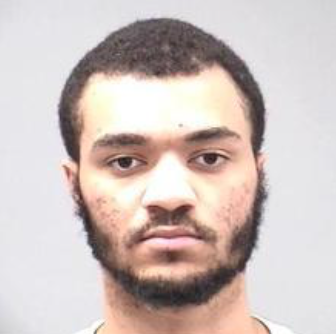
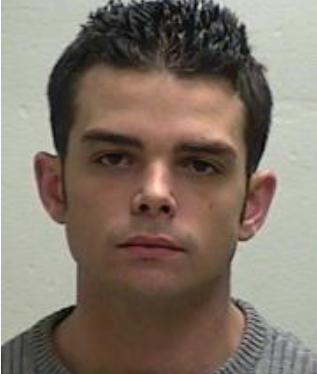
Colton Stock photo Clay County

Thirty-year-old Colton Stock was charged Tuesday with first-degree murder and three other felonies in the death of 35-year-old Matthew Calkins, of Gardner, Kansas.

No attorney is listed for him in online court records. Bond is set at $1 million cash only.

Police arrested him May 5 while responding to report of gunfire at a home where Calkins’ remains were found. An autopsy determined that Calkins was shot twice before his body was dismembered and burned.

Charging documents say Stock told officers that the shooting happened during a “fight for my life.”  Stock previously was charged with assaulting and shooting at another man at the home.

___

Kansas teen wounded in robbery faces 20-years in prison

KANSAS CITY, KAN. – A Kansas man pleaded guilty Monday to committing a liquor store robbery during which a clerk shot him in the leg, according to U.S. Attorney Stephen McAllister.

Rayquan Hill photo Butler Co.

Rayquan Hill, 19, Wichita, pleaded guilty to one count of robbery. In his plea, he admitted he and a co-defendant robbed F & K Liquor at 902 S. Woodlawn in Wichita.

A store clerk shot Hill in the leg during the robbery. Hill was arrested at the scene. The co-defendant was arrested later that day at work.

Co-defendant Jamaryus Moore, 20, Wichita, Kan. is awaiting sentencing.

Hill is set for sentencing Aug. 5. He faces a penalty of up to 20 years in federal prison and a fine up to $250,000.

Kansas woman alive after being hit by train

HUTCHNSON, Kan. (AP) — A 22-year-old Hutchinson woman is alive despite being hit by a train as she walked home from work.

Hutchinson police Lt. Rob Rowe says Anais Saulters suffered deep cuts and a broken arm when she was hit Monday night — apparently by the train’s cow guard.

Saulters told police she heard the train behind her but didn’t realize how close she was to the tracks.

Rowe said the BNSF Railway train was traveling about 25 mph when Saulters was hit. She was knocked over by the collision and crawled under the train to go to a nearby business to call 911.

Rowe says Saulters didn’t appear to be under the influence of drugs or alcohol when she was hit. She could be charged with misdemeanor trespassing.

Kan. registered offender jailed for incident that prompted officer shooting

SEDGWICK COUNTY — Law enforcement authorities are investigating a Kansas felon after an incident that led to an officer involved shooting.

Katie Evans has a previous conviction for felony aggravated battery, according to the KBI Offender Registry

Just after 11:30p.m. Monday, police were dispatched to report of a disturbance with a firearm in the area of Seneca and Harry, according to Lt. Jason Stephens.

As police arrived, they encountered a maroon SUV that matched a description of the suspect vehicle. When they approached the vehicle on foot, a woman occupant later identified as 30-year-old Katy Evans of Wichita pointed a gun at one of the officers. The officer responded by firing two shots at Evans. She was not wounded and was arrested without further incident.

Evans was booked on requested charges that include aggravated assault of a law enforcement officer and felon in possession of a firearm, according to Stephens.  She was also wanted for failure to appear and a violation of offender registration.

Police continue to investigate the original disturbance and are attempting to identify all the individuals involved, according to Stephens.

The officer is a 23-year police veteran and is on paid administrative leave, which is protocol for officer-involved shootings.

Kansas teen dies after rear-end semi crash

JOHNSON COUNTY — One person died in an accident just after 1:30p.m. Tuesday in Johnson County.

The Kansas Highway Patrol reported a 2004 Kia Sorrento driven by Dylan J. Garnett, 19, Shawnee, was westbound on Kansas 10 at Ridgeview. The Kia rear-ended a semi that had slowed due to traffic.

Garnett was pronounced dead at the scene and transported to Frontier Forensics.

The semi driver Michael R. Brown, 68, Topeka, was transported to Overland Park Regional Medical Center. Both drivers were properly restrained at the the of the accident, according to the KHP.

Denise “DW” Wolf

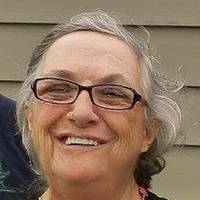
Denise “DW” Wolf, 62, passed away May 14, 2019, at Wilson Health and Rehab. She was born August 8, 1956 at Russell to Leven and Virginia (Plante) Wolf.

A lifetime Great Bend resident, Denise was a member of the Prince of Peace Parish at St. Rose. She loved bowling, CB radios, country music, John Wayne movies and especially loved spending time with her family and friends.

Survivors include, one brother, Dennis Wolf and wife Kandi of Great Bend; three sisters, Karla Vandivier and husband Paul of La Crosse, Paula Shaw and husband Kirby of Bison, and Lorain Sturn of Kansas City, MO; numerous nieces, nephews, aunts, uncles and beloved friends. She was preceded in death by her parents; and grandparents, Anthony and Amelia Wolf, and Joseph and Marcella Plante.

Visitation will be held from 3:00 to 9:00 p.m., Wednesday, May 15, 2019, at Bryant Funeral Home, with family present from 6:00 to 8:00 p.m. Funeral Service will be held at 2:00 p.m., Thursday, May 16, 2019, at Bryant Funeral Home, with Rev. Dick Ogle presiding. A private family inurnment will take place at a later date.

Memorials are suggested to the Golden Belt Humane Society, in care of Bryant Funeral Home.

🎥 Water conservation specialist: ‘Water deeply, infrequently this summer’

By BECKY KISER
Hays Post

Now that the sun is out and the temperatures are warming, Hays residents may want to start watering their yards and landscapes.

That’s not yet necessary, according to Hays Water Conservation Specialist Holly Dickman. Thanks to plentiful rains earlier this month, the soil is saturated.

“Only water when necessary,” Dickman stresses.

“Water deeply and infrequently during this time of year to encourage deep, drought tolerant roots. If we get good root systems under our turf grass, our trees, our shrubs, our flowers, we will be less in need of irrigation later on in the summer when it gets really hot and dry.”

You can check the soil saturation using a probe, such as a long screwdriver. When the probe hits resistance, it’s likely hit dry soil – the depth to which the moisture has reached.

Dickman recommends turfgrass or lawns be watered to a depth of 6 to 8 inches, while flowers and vegetable gardens should be watered to a depth of 8 to 12 inches. Trees and shrubs sold be watered to a depth of 12 to 18 inches where the bulk of their roots are located.

“Watering much deeper than these recommendations is a waste of water,” says Dickman.

It’s best to water early in the morning to take advantage of lower wind speeds, less evaporation and higher humidity levels.

“Watering at this time of day also allows plant leaves to dry off quickly, lessening the threat of potential disease problems,” Dickman added.

Limited outdoor watering hours will be in effect from June 1 to September 30 in Hays. No outdoor watering will be allowed between noon and 7 p.m. by city water customers or those with private water wells.

The Kansas Dept. of Agriculture’s Division of Water Resources issues the control order for private wells at the request of the city of Hays.

Ellis Co. commissioners support sales tax, but split on how much

By CRISTINA JANNEY
Hays Post

Ellis County commissioners agreed at their meeting Monday night they are interested in pursuing a countywide sales tax to help make up shortfalls in the county’s budget.

However, the commissioners disagreed about what form that tax should take.

The county is facing a budget gap of about $467,000 for 2020 with escalating deficits during the next four years. County Administration Phillip Smith-Hanes said several variables still need to be calculated into the budget, including potential increases in health care expenses, changes in the assessed valuation, and the final allocations to outside agencies.

The county has already discussed decreasing the percentage it pays for employee health insurance and funding for outside agencies.

Commissioner Dustin Roths said he favored a quarter-cent sales tax that would be dedicated to EMS. The tax is estimated to generate about $1.6 million in revenue.

The EMS budget is about $3 million, and it brings in about $ 1 million in revenue annually.

Commissioner Butch Schlyer said he preferred a half-cent sales that would be divided between the county and its cities. This would bring in an estimated $1.4 million to the county, but a large share of the money would go to the City of Hays per state statute.

The county sent letters to the four cities to determine if they would support a half-cent countywide sales tax. Ellis, Victoria and Schoenchen said they would be in favor of the tax, but wanted their share of the tax. The City of Hays did not respond.

“It is my contention that we are going to struggle to pass a sales tax in the county for roads without having the City of Hays on board with it,” Roths said. “I think for good reason we haven’t gotten a letter from the City of Hays. It is because they don’t need the money, and it’s not something they want to go out and sell to try to save us.”

Roths said the high-level paramedic EMS service is something that is not provided anywhere in northwest Kansas. He said it makes Ellis County attractive to retirees and is an economic driver.

“While I would love to help out the City of Ellis, the City of Schoenchen, the City of Victoria and I think because we already do help them as county with some of the throughways and their roads, I think the best course for us would be a quarter-cent sales tax dedicated to our high-level EMS service,” he said.

Schlyer said he favors the half-cent tax that would go into the general fund.

“I feel like if we hamstring ourselves by getting a dedicated sales tax just to EMS that is exactly what we are doing. It is dedicated to EMS,” he said. “If we have the half-cent sales tax, it will be better received by the cities in Ellis County and any money they generate — that is money they don’t have to levy against their property owners for projects they need to do too.”

Commission Chairman Dean Haselhorst said he thought both EMS and the Road and Bridge departments need funding.

“I don’t know how many roads we have in disarray in the county right now, but there is a bunch,” he said.

He also said he did not support cutting EMS service.

Roths said, “I do want it to be something that people will pass. Otherwise we do have to lower our standards at EMS. We do have to lower our standards at the sheriff’s office or we have to raise property taxes. We definitely can’t give raises at that point. We can’t do a lot of things that are in mind.”

Roths said he would allow a half-cent sales tax to go on the ballot, but he would not sell it.

“I would not be one who thinks a half cent is necessary, and that is because of the City of Hays,” he said. “They are doing fine financially, and they are the largest shareholder in a half-cent sales tax. They get over half of the money. …

“As a conservative politician who is not here to try to raise taxes, what is the minimum that we can raise them to cover our stuff and not lower our standards and who actually needs money in Ellis County to continue running a good, successful government entity? Who needs it to govern properly?”

The commissioners have not discussed whether or when the tax might sunset.

All three commissioners said they hoped to bring a sales tax issue to voters before the end of the year.

“My thought process is that we get that on the ballot in 2019,” Roths said. “My biggest fear of not having it on the ballot this year is that we go scorched earth on a couple of our departments. We lose some of our great employees, and we do it not knowing if a sales tax will pass in 2020. Then we struggle to rehire.”

Haselhorst, however, had some reservations about the timeline, saying he was unsure if there would be enough time to educate the public on a sales tax issue by the November election. He said the commission needs to vote on the sales tax at its next meeting in order to allow the maximum amount of time to promote the sales tax to voters.

Haselhorst said although the commissioners had three different positions as of Monday, they need to unify to move forward with a public vote.

“We are going to have to come together as one,” he said, “If we are going to go out and tell the public how we feel, we can’t have three different opinions. You have to be unified or don’t do it at all.”

In other business

The county has some excess funds from the last countywide sales tax, which were designated for county building projects. The commission is still working on an elevator project in the courthouse, a gym for the public safety staff and hopes to make some roof repairs with those remaining funds.

The City of Hays is due some of the remaining funds under state statute. The commissioners directed the staff to send a check to the city for half of what it is due until the remaining building projects can be completed.

Smith-Hanes also told the commission it plans to apply for a federal BUILD Grant to help fund improvements on the Northwest Corridor.


Ellis Co., business owners at odds over roads in incorrectly platted addition

By CRISTINA JANNEY
Hays Post

Businesses in the L. Kuhn Addition 4 want Ellis County to start maintaining its roads again.

However, County Public Works Director Bill Ring said the county stopped maintaining the road about two years ago when he learned the property was not properly platted.

This means the roads legally are on private property. According to state statute, the county can’t work on private property. It  also risks liability if it sends workers or equipment to the site.

285th Avenue was supposed to be developed as a second entrance/exit to the L. Kuhn Addition 4, but it is barricaded and overgrown with grass today.

Galen Romme, who represented the addition at the county commission meeting Monday, said it was the owners’ understanding the addition was properly platted by the City of Hays.

“We are just trying to figure out what we need to do to maintain [the roads] again and get back out there and help these businesses out,” Romme said.

Romme said there are about 45 people employed at businesses in the addition. Employers include the Frito-Lay distribution center, a FedEx facility and other businesses.

The addition lies within a three-mile zone in which both the city and county must approve the plat.

A final plat within the 3-mile Hays Extra-Territorial Zone is supposed to be approved by the Hays Planning Commission and then by the Ellis County Commission and finally by the Hays City Commission.

The final plat was approved by the city commission on Dec. 9, 2010, but it was never reviewed or approved by the county commission.

Ring with the assistance of the County Clerk’s office researched county records and found no reference to the plat in county commission records.

The city records indicated the city recommended the county commission approve the final plat contingent there would be a maintenance agreement with the county. No agreement was developed. The roads also were never inspected by the county, Ring said.

He questioned if the addition’s roads should be concrete or asphalt based on the amount of truck traffic in the addition. The addition also does not have a second entrance/exit to provide access for emergency vehicles.

“Some trucks have gotten stuck on the roadway going into the development, blocking other businesses access to their properties,” Ring said.

The addition has about 2,100 feet of roadway, not including a half roadway (285th Avenue) on the east side of the addition that was never fully developed.

“My position has to be protecting the best interest of Ellis County and keeping us out of any litigious situation,” Ring said. “Working on private property, again which is a violation of statute, is not in the best interest of Ellis County.”

Commissioner Butch Schlyer said he agreed with Ring, the county can’t work on private property because of liability issues.

Moe Road in L. Kuhn Addition 4

County Administrator Phillip Smith-Hanes asked if the final plat could still come before the county commission for approval. Ring said it was his understanding that it could, but he would have some stipulations on maintenance for the roads.

Romme said, “Going back to what we were told was that the city was in charge of that 3-mile area. The county acted accordingly like it was an approved plat all these years. Actions also speak volumes of words.”

Commissioner Dustin Roths said, “I figure we readdress it and figure out what we can possibly do to take care of these businesses and [find] where there was a mix-up between the city and the county and the developer. [Let’s] figure out how we can take care of them, but it can’t be at our cost initially. We don’t have the funds to do this.”

Commission Chairman Dean Haselhorst said the county has no idea if the road was constructed to county specifications. He said he thought the road would have to be brought up to county specifications before he would agree to approve the final plat.

Financial simulation gives Ellis Co. students a dose of reality

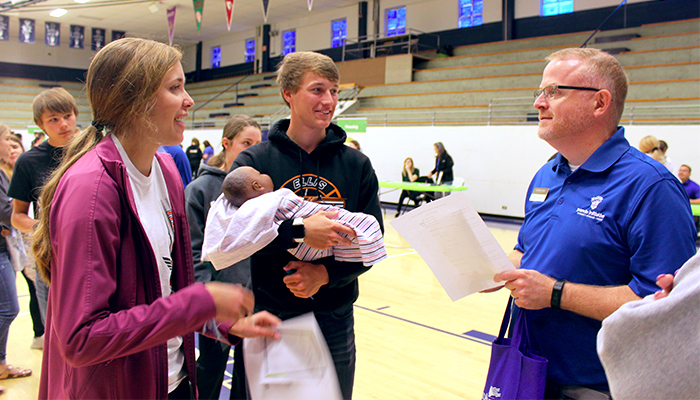
Maggie James and Brady Frickey from Ellis High School speak to RealityU Director Patrick Sehl on Friday at TMP.

By CRISTINA JANNEY

Hays Post

A group of local high school sophomores were jolted forward Friday into their 26-year-old lives to learn about what it really takes to financially support a family.

RealityU was sponsored by the United Way of Ellis County and included students from Ellis, Victoria and Thomas More Prep-Marian. However, Sherry Dryden, United Way executive director, said United Way would like to expand the program to Hays High School in the fall.

From left to right: Ellis students Nathaniel Wechsler, Sam Pyle and Austyn Jones participate in RealityU on Friday at TMP in Hays.

The students took a survey before arriving Friday at TMP for the RealityU simulation. Their career interests determined their occupation and salary. Their GPA and other factors also figured into credit scores.

The students were assigned children. Some couples carried dolls that cried throughout the simulation.

The students visited stations to learn more about the expenses they faced, some of which included groceries, transportation, health and car insurance, child care, utilities, and communication.

Students were allowed to choose what kind of vehicle or housing they wanted. In other cases, students rolled dice to learn their fate. For example, students rolled a dice to learn what percentage of their health insurance their employers were going to pay.

Students could also be assigned to the chance station. Students rolled dice to see if they would receive an addition to their income, such as a bonus at work or a tax refund, or if they would end up with an additional expense, such as a flat tire or a trip to the emergency room.

Many students were surprised about the cost of basic living expenses, including Victoria students Morgan Dorzweiler and Justin Braun.

The students had to budget $645 for child care for their one child. Dorzweiler was a real estate agent, and Braun was an auto mechanic.

The couple learned they would not be able to eat out as much as they might want to.

“You can’t always pick the highest and most expensive option when you are limited on money,” Braun said.

Clay Shaw and Evalyn Miller were assigned the professions of veterinarian and cosmetologist respectively.

“It costs a lot of money to live,” Miller said.

Shaw said he was surprised at how much the couple spent on clothes and food. The students spent $538 on clothing and $193 on food.

James Younger of Big Creek Crossing volunteered during the simulation. He said many of the students chose the most expensive clothing on his list.

“There were cheaper options on the sheet,” he told the students. “Don’t be afraid to speak up about that. It is our job in retail to go ahead and sell you the highest prices item to make the most money. Don’t be afraid to try to negotiate.”

Ellis students Abigail North, who was a certified athletic trainer, and Toby Woodworth, a construction laborer, were thrown a curveball when they learned they had to pay a $275 traffic ticket. Woodworth said he was also surprised by the cost of family health insurance.

Marcie Mayo, volunteer with Advanced Property Management, worked the chance table, and said many students were shocked about some of the unexpected expenses they could be hit with.

“It makes them aware of what’s going on,” she said of the students. “Like utilities … you have to pay for the lights to be on. They are seeing that. I do think it is beneficial.”

Linda Riedel and Marcie Pray of Platinum Group volunteered to help students learn about housing.

“They are trying to learn the values of life, and they are having to make decisions on whether to rent an apartment or purchase a home based off of their income,” Riedel said.

The students learned they had to pay extra for pets if they rented and they had to rent or buy a bigger space if they had children. Several couples pursued second jobs after they visited the housing table. The students also learned their pre-assigned credit rating had a significant effect on what they paid for housing.

Riedel said many students had not given much thought to the decisions they will have to make as adults.

“They are just trying to balance right now which way is the best way,” Riedel said. “It is creating an awareness where they are trying to figure out what their options are and what’s best for them.”

Ken Schoenrock, VHS teacher, said RealityU is helping the students get ready for life.

“At this point, they are still going through life thinking you work, you get a paycheck and then you get to go play,” he said. “This brings a little bit of light to what it is like when you get out of school and enter the real world.”

In the wrap-up session, one student said she was going to go home and thank her parents because she realized how much money they spent to raise her.

Fort Hays State qualifies five for NCAA DII Outdoor Track and Field Championships

INDIANAPOLIS, Ind. – Five Tigers have been selected to compete in the 2019 edition of the NCAA Division II Outdoor Track and Field Championships. The event will be hosted in Kingsville, Texas from May 23-25. For FHSU, four men and one woman earned the right to compete in the meet.

Alexcia Deutscher qualified in the javelin after throwing her best of 160 feet, 2 inches to sit her at No. 7 on the national performance list. Last season, Deutscher finished eight at nationals in her event when she recorded her top throw of 145 feet 4 inches.

Brett Meyer earns his qualification after hitting an automatic mark in the 1,500-meters with a time of 3:44.18. This time puts Meyer had No. 4 on the performance list. Last season, Meyer earned his fourth All-American trophy in two years after placing fourth in the event with a time of 3:46.43.

Philip Landrum qualified in the 200-meters following his time of 21.07 to put him at No. 24 on the national performance list. Kolt Newell will be heading to Kingsville to compete in the high jump where he turned in a qualifying mark of 6 feet, 11 inches to put him at No. 14 on the national performance list. The final Tiger to head to nationals is Ryan Stanley who will attempt to earn a title in the pole vault following his best height of 16 feet, 9 ¼ inches and a No. 10 placement on the national performance list.

Championship Schedule (PDF)

Below is the schedule for the Tigers at the 2019 National Championships

Thursday, May 23
Men’s pole vault finals (Stanley) – 2:30 pm CT
Men’s 1,500-meter prelims (Meyer) – 6:10 pm CT

Friday, May 24
Men’s 200-meter prelims (Landrum) – 5:50 pm CT

Saturday, May 25
Women’s javelin throw finals (Deutscher) – 11:30 am CT
Men’s high jump finals (Newell) – 5:30 pm CT
Men’s 1,500-meters finals (Meyer) 5:45 pm CT

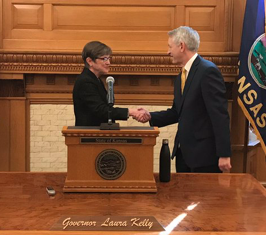
Kansas governor becomes 1st to have appeals judge rejected

TOPEKA, Kan. (AP) — The Kansas Senate has overwhelmingly rejected a nominee for the state’s second-highest court whose political tweets offended lawmakers.

The vote Tuesday was 38-0 against confirming Labette County District Judge Jeffry Jack’s nomination to the Court of Appeals.

Democrat Laura Kelly became the first Kansas governor to have an appeals court nominee rejected. Yet the Republican-controlled Senate’s vote also allowed Kelly to name a second nominee.

Kelly herself had urged senators to reject Jack after trying to withdraw his nomination in March. The state Supreme Court ruled Friday that a 2013 law didn’t allow her to withdraw Jack’s nomination. That forced Tuesday’s vote to keep Jack off the appeals court.

“A president who is objectively ignorant, lazy and cowardly,” read one tweet.

Jack’s nomination was doomed by tweets in 2017 that included vulgar language and criticism of President Donald Trump and other Republicans.

Copyright Eagle Radio | FCC Public Files | EEO Public File