We have a brand new updated website! Click here to check it out!

Hays USD 489 to receive about $1.3 M more in state funds in 2019-20

By CRISTINA JANNEY
Hays Post

The Hays school district is expecting to receive an additional $1.3 million in state funding in 2019-20 as part of a $90 million per year increase in statewide school funding approved by the Kansas Legislature this spring.

Keith Hall, USD 489 director of finance, announced the figure as part of a financial report at Monday night’s school board meeting.

Hall

However, as the evening progressed, multiple areas needing additional funding were discussed.

Hall said the district is still trying to recover from 2008 when the state starting reducing school funding.

He said this might be a good year to look at increasing balances in special funds, including the district’s contingency fund. The accounting recommendation is to have at least one month’s salary in reserve, which for Hays would be about $2 million. The district only has about $1 million in reserve now.

“We need to think about what our priorities are on money,” he said.

Assistant Superintendent Shanna Dinkel said the Legislature could place stipulations on the additional funds, including designating more money going to programs for at-risk students.

Current policy allows districts to use at-risk funds to pay for a portion of teacher salaries. However, she said that does not have a direct effect on increasing test scores.

Student fees

The administration has recommended reducing the student technology fee at the high school from $50 to $25. Superintendent John Thissen said he did not think as much money would be needed to make repairs on the district’s new computers. The district replaced computers at HHS at cost of $335,750 this fall.

Thissen

This would be part of a greater effort to reduce student fees, Thissen said. In 2017, the district reduced its textbook fee from $135 to $90.

However, in a report also given Monday night, Dinkel said the funds from the textbook fee go into the textbook/resources fund. A reduction in the fee has meant a reduction in the money going into the fund, yet the amount of money coming from the general fund into the textbook fund has not increased.

There have been times that money from general fund was transferred to the textbook/resource fund; however, most of the funding the past several years has come from the workbook/material fee collected at enrollment.

There is about $200,000 in the fund currently.

Dinkel said the district has funds to renew some of its subscriptions and buy supplemental materials, but does not have enough money to purchase any new curricula.

Maintenance salaries

Maintenance pay and benefits, $267,155 per year, are being paid out of the capital outlay budget.

The district has considered funding those salaries from the general fund, which would free up more money in the capital outlay budget.

See related story: USD 489 board president: Infrastructure plan is ‘triage list’

Paraprofessional insurance

Special education cooperative director Chris Hipp in his co-op update said recruiting and retaining paraprofessionals continues to be a challenge despite a pay raise of $2 per hour the board approved in 2018 for paras.

Most of the paraprofessionals are working part-time, which he said is not optimum.

“We have a whole of lot of part-time people who are stitching together and filling in to make the full-time positions that we need,” Hipp said.

The district has two benefit levels. Full-time employees on a single plan have 100 percent of their health insurance paid and family plans are highly subsidized. Part-time employees qualify for a plan, but it is considerably more expensive than the plans for full-time employees.

Hipp said moving paras to full-time would benefit the co-op operationally, but providing the same health benefits as full-time staff receive would cost the co-op $1 million — something it can’t afford.

Hipp suggested establishing a third level of benefits for paras that would pay less of a subsidy than full-time staff are receiving, but would be more affordable than the plan currently being offered to part-time staff.

The co-op is not planning any changes for the coming school year, but it continues to investigate the possibility of the change.

Classified pay schedule

Next year will be the first year the school district will not bargain with the custodian’s union. During its meeting Monday, the board discussed incorporating aspects of the custodian union’s contract, including items pertaining to pay, into the classified handbook.

Thissen said the district will have a pay study available in May. Administrators have discussed establishing a pay schedule for classified staff. It would be structure similar to the teacher pay schedule and include higher pay for experience and longevity.

Thissen said he believes implementing the pay schedule would take two to three years and cost $100,000 to $200,000.

The district has not approved a budget for next school year. Thissen said he would bring a list of recommendations for use of the $1.3 million to the board at an upcoming meeting.

Quinter brewer profiled by national association

Brewer Steve Nicholson stirs a batch of the Center Pivot’s signature Cracked Pepper Cream Ale. Hays Post file photo

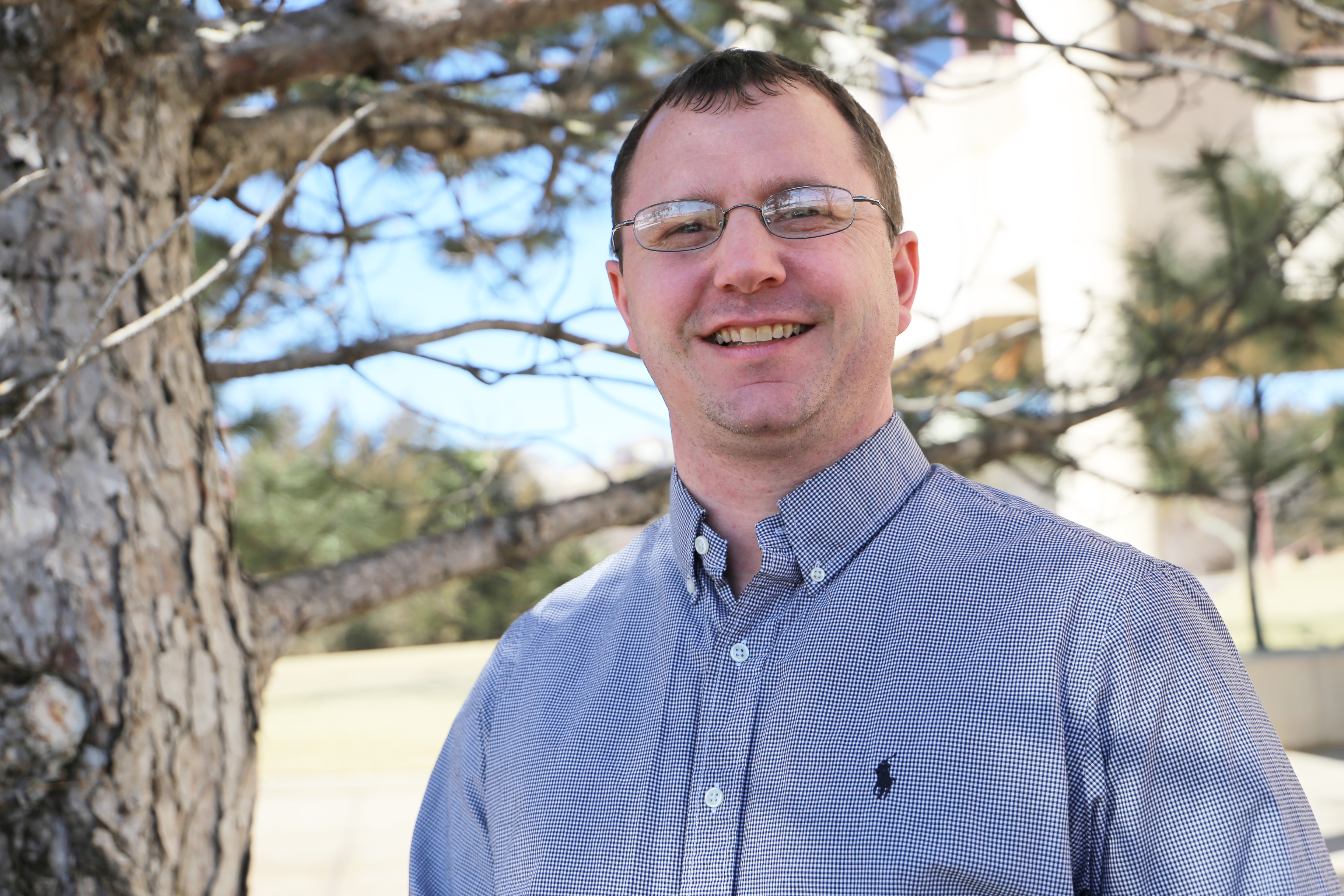
The Brewers Association, a nonprofit trade association that promotes American craft brewers, recently talked with Steve Nicholson, head brewer at Center Pivot Restaurant & Brewery in Quinter.

Click HERE to learn more about Center Pivot.

Click HERE to read Nicholson’s profile from the Brewers Association.

Searches of phones, laptops at U.S. airports rising, lawsuit says

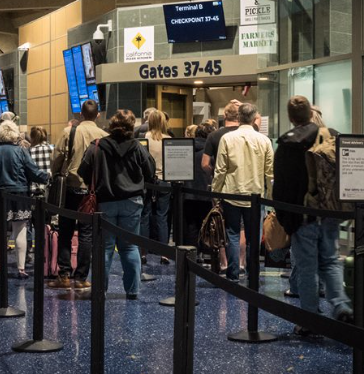
WASHINGTON (AP) — U.S. government searches of travelers’ cellphones and laptops at airports and border crossings nearly quadrupled since 2015 and are being conducted for reasons beyond customs and immigration enforcement, according to papers filed Tuesday in a federal lawsuit that claims going through electronic devices without a warrant is unconstitutional.

Photo courtesy Kansas City International Airport

The government has vigorously defended the searches, which rose to 33,295 in fiscal 2018, as a critical tool to protect America. But the newly filed documents claim the scope of the warrantless searches has expanded to enforce tax, bankruptcy, environmental and consumer protection laws, gather intelligence and advance ongoing law enforcement investigations.

Agents with U.S. Customs and Border Protection and U.S. Immigration and Customs Enforcement consider requests from other government agencies in determining whether to search travelers’ electronic devices, the court papers said. They added that agents are searching the electronic devices of not only targeted individuals but their associates, friends and relatives.

The new information about the searches was included in a motion the Electronic Frontier Foundation and the American Civil Liberties Union filed Tuesday in U.S. District Court in Massachusetts.

“The evidence we have presented the court shows that the scope of ICE and CBP border searches is unconstitutionally broad,” said Adam Schwartz, senior staff attorney for the EFF, based in San Francisco.

“ICE and CBP policies and practices allow unfettered, warrantless searches of travelers’ digital devices and empower officers to dodge the Fourth Amendment when rifling through highly personal information contained on laptops and phones,” he said.

The Department of Homeland Security did not respond to a request for comment. Both ICE and CBP said they did not comment on pending litigation.

When the suit was filed against the government in 2017, DHS officials said U.S. citizens and everyone else are subject to examination and search by customs officials, unless exempted by diplomatic status. The department has contended that no court has concluded that border searches of electronic devices require a warrant. Searches, some random, have uncovered evidence of human trafficking, terrorism, child pornography, visa fraud, export control breaches and intellectual property rights violations, according to the department.

The original case was filed on behalf of 10 American citizens and a lawful permanent resident from seven states who alleged the searches violated their constitutional rights. They asked the court to rule that the government must have a warrant based on probable cause before searching electronic devices at airports and other U.S. ports of entry.

A year ago, U.S. District Judge Denise Casper in Boston rejected the government’s request to dismiss the lawsuit, allowing the case to move forward. The ACLU and the foundation began gathering documents and deposition testimony. Based on the new information, they filed a motion Tuesday asking the judge to rule in their favor without a trial.

“This new evidence reveals that the government agencies are using the pretext of the border to make an end run around the First and Fourth Amendments,” said ACLU attorney Esha Bhandari. “The border is not a lawless place. ICE and CBP are not exempt from the Constitution and the information on our electronic devices is not devoid of Fourth Amendment protections. We are asking the court to stop these unlawful searches and require the government to get a warrant.”

The court documents claim that the agencies also assert the authority to search electronic devices when the subject of interest is someone other than the traveler, such as the business partner of someone under investigation. Both agencies also allow officers to retain information from travelers’ electronic devices and share it with other government entities, including state, local and foreign law enforcement agencies, the court papers claim.

NW Kan. airports among those receiving funds for improvements

TOPEKA – Forty-one projects totaling a combined award of $5 million have been granted for the Kansas Airport Improvement Program (KAIP) funding for planning, constructing or rehabilitating public use general aviation airports.

The aviation industry represents $20.6 billion economic impact and employs more than 92,000 Kansans. In addition, 94 percent of the state’s population is within 30 minutes of air ambulance operations.

Airports in Atwood, Hoxie, La Crosse, Oberlin, Quinter and St. Francis are among the grant recipients.

“We are proud of the collaboration between our department and airport sponsors to increase safety, enhance economic development and support the transportation needs of Kansans,” said Secretary of Transportation Julie Lorenz.

The KAIP program requires airport sponsors to share in project costs by paying a portion of the total project. The KDOT Division of Aviation, which manages the program, considered 119 project applications this year with a combined total value of more than $29 million.

“KAIP has not only funded key improvements at local airports, it has helped create a statewide aviation network that enhances both the health and economic wellbeing of the entire state,” said Bob Brock, KDOT Director of Aviation.

Communities selected for funding and the amount requested include:

Anthony – Airports Geographic Information Systems (AGIS) survey and flight check – $52,250

Atchison – Surface seal of runway – $56,925

Atwood – Update fuel card reader – $17,000

Augusta – Reconstruct apron access to community hangar – $76,500

Beloit – Airfield maintenance equipment – $16,250

Benton – 17/35 runway preservation – $321,867

Elkhart – Airports Geographic Information Systems (AGIS) Study – $76,000

Emporia – 1/19 runway sealcoat and preservation –$411,500

Fort Scott – Airports Geographic Information Systems (AGIS) updates and runway extension design – $152,000

Gardner – 8/26 runway/apron/taxilane pavement preservation – $90,000

Garnett – 1/19 runway seal and repair high severity cracks – $40,500

Hiawatha – 10/28 runway edge lighting design – $19,000; 17/35 runway edge lighting design – $19,000; taxilane renovation design and construction – $61,890

Hoxie – Phase II: runway rehab – $303,440

Independence – South apron runup area renovation – $721,500; fuel systems – $36,335

Kingman – Precision approach path indicator (PAPI) replacement – $182,963

Kinsley – construct tiedowns – $10,949

La Crosse – Operations support equipment – $45,000

Lakin – Automated Weather Observing System (AWOS) III – $176,250; 14/32 runway mill and overlay design and construction – $303,250

Liberal – Runway marking removal and replacement – $248,500

Oberlin – Height and hazard survey – $38,000

Ottawa – Pavement preservation on parallel and connection taxiway system – $173,250

Pittsburg –Replace Automated Weather Observing System (AWOS) ceilometer –$43,200; remove obstructing trees – $18,000

Quinter – Install Automated Weather Observing System (AWOS) III – $135,000

Rose Hill – Crack seal– $16,200; upgrade fuel credit card terminal – $14,875; mill and overlay runway 17/35 – $174,600

Salina – Phase II: ramp reconstruction – $720,000

St. Francis – Extend SE taxiway – $133,200

Kan. Farm Bureau Insight: Fire in the sky

Greg Doering
By GREG DOERING
Kansas Farm Bureau

While driving through the Flint Hills one evening recently I saw the most brilliant sunset. The day had been mostly overcast, with a gentle breeze from the northwest. It was a perfect day for prescribed burning in the nation’s largest patch of tall grass prairie.

I watched as flames licked at last year’s growth, stretching skyward as the sun dropped toward the horizon. The clouds broke, but the smoke-filled air dispersed purple, red and orange hues. It looked as if the burning prairie had ignited the entire sky.

It was a beautiful sight, and just a small part of the 2.5 million acres farmers and ranchers have ignited in the Flint Hills this spring. There are still a few days left in the season, which typically runs into early May.

Stretching from just south of the Nebraska border down into northern Oklahoma, the Flint Hills are home to the remains of an ecosystem that once covered much of the Great Plains. The rocky terrain saved nearly 10,000 square miles of tallgrass from being plowed under.

While I know the benefits of prescribed burning, it’s one agricultural practice that’s often misunderstood.

Fire is a vital tool to preserve this patch of grass. Without it, cedar trees and weeds take over robbing the grass of the nutrients and water it needs.

“We try to burn every year, so we have new fresh grass,” Lyon County rancher Jacquelyne Leffler said. “We do it for weed control, but we also want that fresh grass that gives us optimal gain for our cattle as well. We’re in the market to be profitable, too.”

Leffler and her family run a stocker operation that places 600-pound cattle on grass around mid-April.

“Hopefully when we pull them off in August, we’ll have around 2.2 to 3 pounds of gain per day,” Leffler said.

While fire is friendly to ranchers’ bottom line, it’s also good for the environment. Controlled burns kill weeds, nourish the soil, destroy parasites living in dead grass and help preserve the prairie ecosystem. Fire is vital to wildlife like prairie chickens and other grassland birds. Most of that can be achieved through other means, but Leffler said, those aren’t nearly as efficient as fire.

“It’s cheaper to be able to light a match and just have some water to control it,” Leffler said. “It makes it so our land is sustainable for the future generations that will be here.”

Safety is a key component of prescribed burns, Leffler said. And that starts with knowing where you’re burning.
“Our ground isn’t necessarily flat and smooth, so we try to make sure everybody knows where the bigger ditches are, Leffler said, noting that helpers also carry tools to cut fence if they need a quick escape route.

“We leave at least a 50-foot backburn anywhere we want the fire to stop.” she said. “Once we do that, we make sure everyone’s accounted for, and then we go into the process of lighting the head fire.”

Pushed by the prevailing wind, the head fire clears the land of cedars and other woody plants.

“That means more grass is going to be able to come up, so that means more feed for our cattle, which is going to contribute to those better gains,” Leffler said.

“Insight” is a weekly column published by Kansas Farm Bureau, the state’s largest farm organization whose mission is to strengthen agriculture and the lives of Kansans through advocacy, education and service.

TMP-M art students take 46 awards at Fort Hays show

TMP-M

On Wednesday, April 24, art students participated in the Fort Hays Art Show. First on the agenda was to set up the art display with 67 other high schools. Each school is given one booth per teacher to display student art work. The art work in each booth was judged and certificates of merit were given to each student that the judges deemed excellent.

After the students set up their work and looked over the competitions work, participants headed over to the Art Department where FHSU put on a great day of activities, including a chalk in and demonstrations from all of the departments within their art department. Students gathered up their work at the end of the day of activities. In addition, participants picked up their awards. The students were awarded 46 awards in total.

Award winners are:

Olivia Kershner – Oil Painting & Pencil Drawing
Hannah Flynn – Pencil/Pastel Drawing & Colored Pencil & Ceramics
Emily Schulte – Colored Pencil & Colored Pencil
Samantha Zimmerman – Ink Drawing
Mariana Ramirez – Pencil Drawing & Ink Drawing
Emilee Lane – Pencil Drawing
Julia Meitner – Pastel Drawing
Alex Herrman – Colored Pencil & Oil Painting
Abby Rueschhoff – Pencil Drawing
Anna Wiesner – Pastel Drawing & Ceramics
Blayne Riedel – Pencil Drawing
Izzy Peine – Acrylic Painting
Shannen Chin – Oil Painting
Avery Werth – Acrylic Painting
Kali Hagans – Ink Drawing & Ceramics
Colby Dreiling – Ink Drawing
Morgan Olmstead – Watercolor Painting & Ceramics
Dylan Werth – Colored Pencil & Pencil/Colored Pencil Drawing
Daniela Terrazas – Ceramics
Hayli Meier – Ceramics
Lexie Gottschalk – Ceramics
Brandon Karlin – Ceramics
Julia Werth – Ceramics, Ceramics, Ceramics
Gracie Loftus – Ceramics
Katie Hale – Ceramics, Ceramics
Ethan Atherton – Ceramics & 2 Computer Graphics
Kylie Dreiling – Ceramics
Gracie Jo Stanton – Ceramics
Kamryn Hudsonpillar – Ceramics
Colton Viegra – Ceramics
Abby Heimerman – Oil Painting

HHS softball sweeps Liberal

LIBERAL, Kan. – The Hays High softball team scored two runs in the top of the seventh inning then held off a Liberal rally in the bottom of the inning for a 5-3 win in game two of their doubleheader in Liberal Tuesday. The Indians won the opener 11-4.

Jaysa Wichers struck out the final three batters looking after giving up a run off a double and an error in the bottom of the seventh. Wichers struck out eight and didn’t allow a walk and picked up the win.

Kaitlyn Brown and Mckenszie Fagan both had three hits while Macee Altman drove in two runs.

The Indians scored five in the first and led 9-2 after three innings in the first game. Madelyn Waddell had three hits and Altman drove in four. Wichers went the distance in the circle with nine strikeouts and four walks.

The Indians improve to 8-6 on the season. They are in Maize for a triangular on Friday.

Update: Police find Kan. teen who escaped during transport for court

RILEY COUNTY— Authorities in Riley County located  a 16-year-old who escaped from a private Security Company while in transport for court proceeding Tuesday.

Just after 10:30 a.m. the teen identified as John Lewis Falley Wallace, according to the Riley County arrest report,  escaped near the intersection of 5th and Fort Riley Blvd in Manhattan, according to a release from the Riley County Police Department.

At the time of the escape, schools in the area were placed on secure campus mode, according to the RCPD. That was lifted at approximately noon.

The Riley County Police Department never indicated the escape presented a threat to the public. Police have not released details on how or where they located the teen.

Wallace is now being held for Interference with law enforcement officer; obstruct/resist/oppose misdemeanor warrant service or execution, according to the RCPD arrest report.

NOTE: Kansas state law allows law enforcement to release the names of juveniles age 14 and older involved in criminal cases

————-

RILEY COUNTY— Authorities in Riley County are searching for a 16-year-old who escaped from a private Security Transport while on the way for court proceedings near the intersection of 5th and Fort Riley Blvd in Manhattan just after 10:30 a.m. Tuesday, according to a release from the Riley County Police Department.

RCPD Officers have cleared the scene and all schools have come out of secure campus mode.

The Riley County Police Department does not believe there is a threat to the public and will continue to attempt to locate the juvenile.

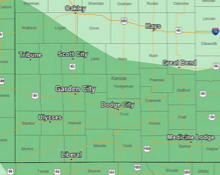
Partly cloudy, wet Wednesday

Wednesday A 20 percent chance of showers and thunderstorms after 3pm. Areas of fog before 9am. Otherwise, cloudy, with a high near 60. East northeast wind around 9 mph.

Wednesday Night Showers and thunderstorms likely, mainly between 7pm and 1am. Mostly cloudy, with a low around 42. Breezy, with a north wind 11 to 16 mph increasing to 18 to 23 mph in the evening. Winds could gust as high as 34 mph. Chance of precipitation is 60%. New rainfall amounts between a quarter and half of an inch possible.

Thursday Mostly sunny, with a high near 64. North wind 7 to 13 mph becoming east northeast in the afternoon.

Thursday NightA 50 percent chance of showers after 1am. Mostly cloudy, with a low around 43. East wind 5 to 9 mph.

FridayA 40 percent chance of showers before 1pm. Mostly cloudy, with a high near 68.

Friday NightMostly clear, with a low around 45.

Gov. prioritizes Corrections enhancements in budget amendment

Kansas Governor Laura Kelly (D)

OFFICE OF GOV.

TOPEKA – In an effort to address the prison crisis, Governor Laura Kelly added over $30 million to improve the safety, compensation and conditions in the Department of Corrections through her Governor’s Budget Amendment released Tuesday.

“When I took office in January, we found that numerous agencies were facing challenges far worse than we thought, especially the Department of Corrections,” Kelly said. “Our prisons were overcrowded, understaffed and in crisis. I’ve added significantly more funding to start addressing these issues immediately.”

On February 12, 2019, Kelly declared an emergency in the El Dorado Correctional Facility due to serious staffing shortages. The Kelly Administration has been working since then to put together a comprehensive plan to address these issues. Additional funding will provide a pay increase of correction officers, funds to ease prison capacity, buy new stab vests for officers, and increase funding to treat Hepatitis C.

“Corrections officers and staff have stood strong on the front lines in this crisis, but we must give them the support and compensation they deserve,” said Kelly. “I want to thank the employees for their hard work and commitment to public safety through this challenging time. Help is on the way.”

The Governor also adjusted the human service caseloads based on the consensus caseload estimates for FY 2019 and 2020 in the Department for Children and Families, Department for Aging and Disability Services, and the Department of Health and Environment.

Also included in the Governor Budget Amendments were enhancements to the Office of Information Technology Services for modernization, additional funding for the Board of Indigents’ Defense Services, a transfer of funds to settle litigation with the Insurance Department, funds to cover a revenue shortfall at the Osawatomie State Hospital, repayment for the Children’s Health Insurance Program (CHIP) Bonus, correction to the KPERS-School Employer Contribution, additional funding for disasters and other funding adjustments.

Read the full Governor’s Budget Amendment  memo.

Kansas man hospitalized, arrested after altercation with neighbor

SHAWNEE COUNTY — Law enforcement authorities are investigating a Kansas man for an alleged aggravated battery.

Campa-Vazquez -photo Shawnee Co.

Just after 11:00p.m. Monday, a citizen contacted the Shawnee County Emergency Communications Center about a disturbance involving neighbors in the 7200 block of SW Glencrest Drive, according to Sgt. Todd Stallbaumer.

Deputies responded and made contact with Alfredo Campa-Vazquez, 25, of Topeka, who had a gunshot wound to the leg resulting from an altercation when he attempted to enter a neighbor’s residence.

AMR transported Campa-Vazquez to a local hospital where he was treated and discharged to the custody of the Sheriff’s Office. He was then transported to the Shawnee County Department of Corrections and booked with a charge of Aggravated Battery.

Authorities released no additional details.

Suspect’s alleged connection to missing Kan. woman remains unsolved

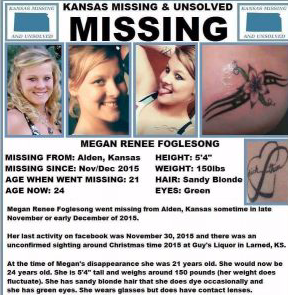
STERLING, Kan. — In taking his own life Monday following the shooting of the Rice County Sheriff and Undersheriff, David Madden may leave many questions unanswered. Authorities are still questioning witnesses about the shooting of two law enforcement officers in Rice County. Additionally, there are many unknowns about Madden’s connection to the disappearance of an Oneida, Illinois, woman more than three years ago.

Madden was a person of interest and even a suspect in the disappearance of Megan Foglesong, who was last seen in December of 2015 in Alden, Kansas.

On Tuesday, the KBI stated that the active warrant against Madden that triggered Monday’s shooting was not connected to the young woman’s case.

A Facebook page called “Bring Megan Home” that was started by friends and family of Foglesong had postings about the shooting and press conferences connected to the case.

David Madden photo KBI

Many on the page have long believed Madden was connected to the woman’s disappearance, but no arrests were ever made. However, the KBI did execute a search warrant at Madden’s home in 2017.

Calls made to the KBI for an update on the investigation into Foglesong’s case were not returned as of Tuesday evening.

Lawmakers seek probe in heatstroke death of football player in Kansas

NEPTUNE, N.J. (AP) — New Jersey’s U.S. House delegation called Tuesday for an independent investigation into the heatstroke death of a Kansas community college football player from their state.

Bradforth and his mother after his graduation from Neptune High School -courtesy Joanne Atkins-Ingram

The state’s 12 representatives wrote to Garden City Community College President Ryan Ruda requesting the probe of 19-year-old Braeden Bradforth’s death.

Bradforth, who was a defensive lineman from Neptune High School, died in August about an hour and a half after practice. An autopsy report from December blamed his death on exertional heatstroke.

School administrators said last year they were conducting an internal review of the circumstances of his death.

Messages seeking comment have been left with the college.

New Jersey’s representatives — 11 Democrats and one Republican — say the probe should at least review health and safety practices at the school.

“Most regrettably, the Bradforth family’s tragedy is not the first of its kind. Exertional heat stroke is one of the top three causes of sudden death in athletes, yet it is preventable,” the lawmakers wrote.

Bradforth was found unconscious by an athletic trainer outside his dorm room Aug. 1. He died that night at a hospital.

Bradforth is the second Garden City football player to die in two years. Sean Callahan, 19, a sophomore offensive lineman, died at a home in Kismet, Kansas, in May 2017 of what a sheriff’s office called natural causes.

Copyright Eagle Radio | FCC Public Files | EEO Public File