KANSAS CITY, Mo. (AP) — Authorities say officers responded to a brawl involving up to 300 teenagers at the Worlds of Fun amusement park in Kansas City, Missouri.
Kansas City police say several law enforcement agencies were called to the park Saturday night when an off-duty Clay County sheriff’s deputy reported several large fights involving mostly teenagers.
(2/2)The group of bad actors at WOF only represent a fraction of guests that were there to enjoy the attractions. It’s unfortunate that families & children had their evening disrupted by these events. We will continue to work with WOF to ensure the safety of their guests & staff.
Kansas City police said Sunday that no injuries were reported and no one was arrested. But police said the Clay County Sheriff’s Office issued some citations to people at the scene.
Worlds of Fun officials said in a written statement that local and park authorities broke up the altercation and removed those involved from the park.
SHERMAN COUNTY — One person was injured in an accident just after 10a.m. Sunday in Sherman County.
The Kansas Highway Patrol reported a 2008 Honda Civic driven by Laura Jon Michelle Foster, 27, Wellington, was eastbound on Interstate 70 five miles east of Kansas 184.
The Honda left the road to the left and the driver overcorrected. The Honda left the roadway to the right and struck the culvert in the south ditch.
Foster was transported to the hospital in Goodland. She was properly restrained at the time of the accident, according to the KHP.
BUNKER HILL – The Earl Bane Foundation has awarded Smoky Hills Public Television with a grant for the station’s Literacy Leadership program. The $6,000 grant will provide books to children in Head Start in Saline County and support children’s programming.
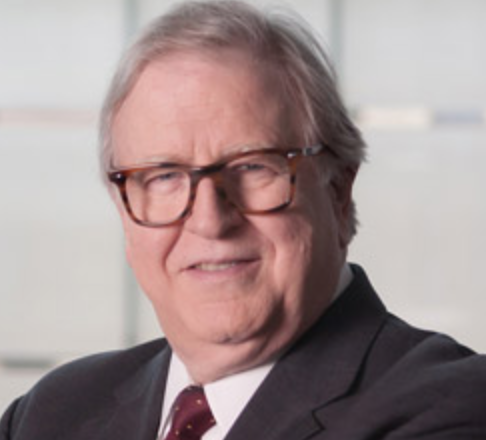
“At SHPTV, we encourage a love of reading at a young age through our book distribution and our PBS KIDS programming. The grant from the Earl Bane Foundation is what helps to ensure our mission of educating the youth in central and western Kansas, and we want to thank them for their continued support.” said Larry Calvery, Smoky Hills Public Television general manager.
The Earl Bane Foundation was established in 1994. Its giving supports primarily higher education, children, youth and social services for the educational, economic, scientific and religious benefit of Salina and Saline County.
Smoky Hills Public Television serves 71 counties in central and western Kansas and has been named the Kansas Association of Broadcasters Non-Metro Station of the Year.
SEDGWICK COUNTY — Law enforcement authorities are investigating a shooting that injured as many as four people.
Just after 10:30 p.m. on Friday, police responded to a check shots call at a business in the 1600 block of south George Washington Boulevard in Wichita, according to officer Charley Davidson.
Upon arrival, officers located a 27-year-old male, a 25-year-old male and a 20-year-old male with gunshot wounds to their bodies. The 27-year-old male and 20-year-old male were taken to Wesley hospital for treatment of non-life-threatening injuries. The 25-year-old male refused medical treatment.
At St. Joseph hospital, officers contacted a 19-year-old female who arrived with injury from a gunshot to her leg and elbow and gunshot damage to her vehicle. She was treated for non-life-threatening injuries.
The investigation revealed a party was being held at the business on south George Washington Boulevard when a disturbance occurred. Two unknown suspects fired multiple shots, striking the victims.
The first suspect is described as an unknown b/m. The second suspect is described as an unknown b/m, wearing red shorts, a red Nike shirt and was armed with a silver handgun.
Investigators have encountered a lack of cooperation during this investigation which has affected them being able to thoroughly investigate, according to Davidson.
TOPEKA – Mike Miller has been selected to be Assistant Secretary for Wildlife, Fisheries and Boating for the Kansas Department of Wildlife, Parks and Tourism (KDWPT). He replaces Keith Sexson, who retired last December after more than 50 years with the department. Miller will assume his new duties on Monday, April 22, 2019.
“Mike has been an invaluable member of our team for more than three decades. He has been involved in almost every aspect of the department and has a wealth of knowledge and experience to bring to his new role,” said Brad Loveless, KDWPT Secretary. “He is a great communicator and is well-respected by all who know him. I am looking forward to working closely with him as we grow our programs and serve our constituents.”
“I am humbled and excited to be a part of Secretary Loveless’ vision for KDWPT’s future,” Miller said. “Current Wildlife, Fisheries and Boating staff are as talented and dedicated as any I’ve seen, and I look forward to working with them to carry on the amazing legacies of previous assistant secretaries.”
Miller has worked for KDWPT for more than 35 years. He grew up in Greensburg and graduated from Kansas State University with bachelor’s degrees in Journalism and Graphic Design in 1982. After a short stint with the El Dorado Times newspaper, he was selected to be the wildlife illustrator for the Kansas Fish and Game Commission and Kansas Wildlife magazine.
He went on to serve as the magazine’s associate editor, editor, and his current position of chief of the Information Production Section, overseeing production of the magazine, all hunting and fishing regulation pamphlets, atlases and brochures and social media presence. In addition to his information duties, Miller also served as a special assistant to the Assistant Secretary, managing various special programs and committees, including Pass It On, a hunter recruitment and retention program.
Miller is an avid angler and hunter. He and his wife of 37 years, Lisa, make their home in Pratt where he will continue to work in the KDWPT Pratt Operations Office.
Students and faculty will participate in the 14th annual John Heinrichs Scholarly and Creative Activities Day, hosted by Fort Hays State University, on Wednesday, April 24, in the Memorial Union.
The day celebrates the research, scholarly and creative work conducted by varied disciplines within the university. Special activities will include seminars, research presentations and exhibits.
The main events include poster presentations and a creative works exhibition featuring student and faculty work from the College of Arts, Humanities and Social Sciences, the W.R. and Yvonne Robbins College of Business and Entrepreneurship, the College of Education, the College of Health and Behavioral Sciences and the Peter Werth College of Science, Technology and Mathematics.
Leslie Paige, director of the Office of Scholarship and Sponsored Projects, said the day “not only showcases the significant work being conducted by faculty and staff, but also exemplifies the opportunities FHSU students have to conduct research, engage in scholarship opportunities, and present creative works with guidance from their faculty mentors.”
Scholarly and creative activity encourages critical thinking, innovation, collaboration and leadership, she said.
The creative works exhibit will be in the Memorial Union’s Black and Gold Room from 8 a.m. to 3 p.m.
The poster presentations, with more than 100 posters by students and faculty will be in the Memorial Union’s Fort Hays Ballroom from 8 a.m. to 3:30 p.m. Poster creators will be available from 1 to 3 p.m.
Oral presentations will be in the union’s Pioneer Room and Stouffer Lounge from 8 a.m. to 12:30 p.m. A schedule of the oral presentations can be found at www.fhsu.edu/academic/research/saca/.
Presentations by entrepreneurship faculty fellows will be in the union’s Trails Room from 10 a.m. to noon.
Awards will be given at 3 p.m. for poster presentations to undergraduate, graduate, faculty and staff for empirical and non-empirical research and scholarly work. Awards for creative works and “People’s Choice Awards” will also be given.
“FHSU supports developing new areas of excellence in all disciplines as part of its mission to advance knowledge and further the economic growth of the state,” said Paige. “Participation provides the opportunity to clarify academic and professional goals while promoting advancement in a particular field of study.”
Named after the late Dr. John Heinrichs, who championed research at FHSU, the Scholarly and Creative Activities Day is sponsored by the FHSU Scholarship Environment Committee with support from the Office of the Provost, FHSU deans, the Kansas Academy of Mathematics and Science, the Graduate School and the Office of Scholarship and Sponsored Projects.
The exhibits and presentations are free and open to the public.
Artwork produced from a collaborative effort among Fort Hays State University students and clients of Developmental Services of Northwest Kansas will be on display and up for sale for about a month at the Hays Public Library.
The project – started by Amy Schmierbach, FHSU professor of art and design – is based on the model of Socially Engaged Art, which seeks to create art with communities for their benefit and for the benefit of public arts.
A ribbon cutting to feature the art project is set for 9 a.m. Tuesday, April 23, at DSNWK Employment Connections, 660 Commerce Parkway, Hays. The artwork then will go on display at the library, beginning with Hays’ Spring Gallery Walk on Friday, April 26. An opening reception will be held from 7 to 9 p.m. during the gallery walk.
Schmierbach and FHSU students collaborate and create art with clients served by DSNWK, providing workshops for structured art experiences revolving around weaving, drawing and photography. The goal of the project is to expand the arts in the Hays community to reach more individuals, specifically creating more opportunities.
Completed projects are being framed for sale. Funds from the sale of the artwork will go toward the continuation of the collaborative effort between Fort Hays State and DSNWK.
Tuesday’s agenda includes a short presentation about the artwork and speakers that will include: from DSNWK, a client and administrators; and from FHSU, President Tisa Mason, Professor Karrie Simpson Voth from the Department of Art and Design and students who helped with the project.
The Collaborative Art Project is funded by Kansas Creative Industries Commission Arts Integration Program-Innovative Partnerships, the National Endowment for the Arts, DSNWK and FHSU Undergraduate Research Grant.
JACKSON COUNTY — Two people were injured in an accident just before 10:30p.m. Saturday in Jackson County.
Photo courtesy Jackson Co. Sheriff
A 2005 Chrysler Town and Country van was westbound on Kansas 16 just east of B Road approximately a mile from the Pottawatomie County line, according to Sheriff Tim Morse.
The van rear-ended a farm tractor pulling an implement. Life Star Ambulance flew the van driver who sustained life threatening injuries to Stormont Vail in Topeka, according to Morse. Jackson County EMS transported a front seat passenger to Stormont Vail. A third occupant in the van was not injured.
The names of the victims, both residents of Corning, Kansas, have not been released.
The accident remains under investigation, according to Morse.
Gene PolicinskiFirst Amendment advocates may well be stuck sometime down the road with Julian Assange’s WikiLeaks defense — even if it sticks in some throats.
Assange currently faces extradition to the U.S. for prosecution on computer hacking charges related to WikiLeaks obtaining and posting classified military data, memos and such in 2010 from then-U.S. Army soldier Chelsea Manning. The specific charge sidesteps for now a collision with the First Amendment, which does not protect anyone from prosecution for criminal acts, such as breaking into government computers.
But as the Assange saga unfolds, a number of news outlets report that U.S. prosecutors may bring additional charges ranging from how Assange dealt with his sources to the dissemination — Assange would say “publishing” — of that stolen material. That’s where it will get sticky for journalists.
Those added charges likely would threaten legal protections afforded those who report confidential information obtained by others. One, known informally as the “over the transom” or “innocent third party” defense, protects those receiving and reporting information who are not involved in the act of obtaining it. A transom is a small window above a door that can be tilted open while the door below remains shut — hence, information dropped into a room “over the transom,” shields the party delivering it.
A 2001 Supreme Court decision in Bartnicki v. Vopper involved illegally intercepted telephone conversations. The 6-3 decision said that while the government certainly could charge persons who intercepted the calls, it could not successfully prosecute the radio host who was given a recording and played portions of those conversations over the air. The court noted the privacy aspects of the case gave way to reporting on matters of high public interest.
In the years since, journalists have relied on that ruling in reporting national security secrets and confidential city records. In turn, authorities have for various reasons focused on prosecuting the “leakers” rather than those who published the information. However, Bartnicki has not been directly tested in a national security setting — it was a civil lawsuit, not a criminal case.
At least one Justice Department prosecution came close to charging a journalist who received classified information. In 2013, Fox News reporter James Rosen was declared an unindicted co-conspirator under the Espionage Act during an investigation of a State Department employee who leaked information to him involving North Korean missile tests. The official was convicted under the Espionage Act, but Rosen was never prosecuted.
Assange, an Australian computer programmer and social activist at an early age, now loudly proclaims himself a journalist and that WikiLeaks is a news organization. But leading First Amendment lawyer Floyd Abrams has written a well-founded repudiation — WikiLeaks does no real reporting, adds no analysis or context and seemingly fails to consider the harm its “data dumps” of state secrets may cause others.
Others raise a pragmatic point — Assange’s release of state secrets has proven to be a major factor in discouraging Congress from enacting a proposed federal “shield law” that would (with no small amount of irony here) largely protect journalists from federal courts and grand juries demanding to know confidential sources.
But the American Civil Liberties Union, Committee to Protect Journalists and Assange’s lawyer Jennifer Robinson all said extraditing and prosecuting Assange sets a dangerous precedent for U.S. journalists who could to face similar charges brought by repressive foreign governments for publishing truthful information.
Some journalists and activists see a lack of support among U.S. editors and reporters as something more sinister, some writing that failing to back Assange exposes those journalists as unwilling to challenge government propaganda or power, even being “tools of the Empire.”
I’m for parsing things this way — consider Assange a political player who actively encourages information leaks and uses a journalist’s tools to influence political policy disputes, debates and decisions. Let him argue “free speech” rather than “free press.” There is an argument that even under the Espionage Act there is a defense of sorts — intent was in the public interest rather than in bringing harm to the United States. Chalk the unwillingness of many journalists in the U.S. to back Assange to something more pragmatic than philosophical. A friend and longtime journalist put it this way: “It’s how cops view someone who puts on a stolen uniform and badge.”
The U.S. government’s prosecution ultimately may rest on showing how — and to what degree — Assange cultivated Manning as a source. If he is found to have conspired with Manning on the theft, there’s no First Amendment or Bartnicki defense. Even there, though, the impact on journalists is concerning — the public is not served by restricting national security reporters to sitting in offices waiting for materials to land in their collective laps.
Any additional charges brought against Assange should be considered in the context that it is in the public interest that reporters be able to reach out to experts working on national security matters to discuss policy and even have conversations about how information might influence public views if disclosed.
Yes, that may well mean drawing a fine legal line between “cultivating” sources and conspiring with them. But we have all been well-served by disclosures in the public interest of secret or confidential government documents and information — from the Pentagon Papers to undisclosed telephone and internet surveillance programs to information that properly armored vehicles were not reaching U.S. troops overseas, causing unnecessary deaths.
Journalists are the watchdogs by which we all can know information improperly classified, withheld for political gain or around which legitimate debate should occur — a process that could also be described to operate in the interest of national security.
Gene Policinski is president and chief operating officer of the Freedom Forum Institute. He can be reached at [email protected], or follow him on Twitter at @genefac.
Editor’s Note: Kansas will allow its state Farm Bureau to offer health care coverage that doesn’t satisfy the Affordable Care Act after Democratic Gov. Laura Kelly on Friday declined to block a Republican-backed effort to circumvent former President Barack Obama’s signature health care law.
ByJIM MCLEAN Kansas News Service
In a recent national survey, farmers said the biggest threat to their livelihoods wasn’t low commodity prices or global trade policies. It was the rising cost of health insurance.
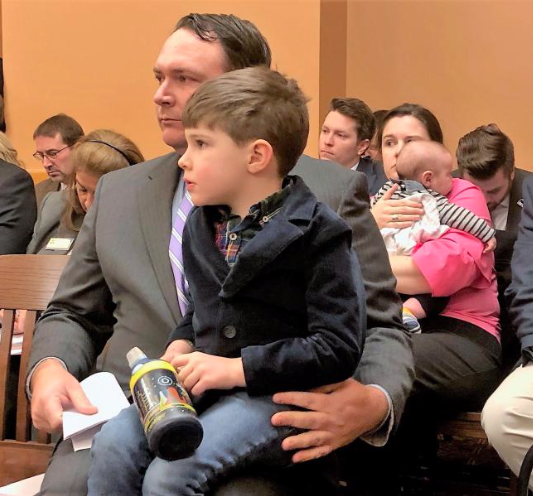
Tim Franklin drove to Topeka earlier this year for a hearing on the Kansas Farm Bureau’s insurance plans. JIM MCLEAN / KANSAS NEWS SERVICE
It’s one of the reasons why state farm bureaus have jumped into the insurance game in Iowa, Tennessee and Nebraska, and are trying to in Kansas.
Members of the Kansas Farm Bureau spend an average of 30 to 40 percent of their annual incomes on health coverage, according to KFB President and CEO Terry Holdren.
“Those are significant costs and they’re larger for most folks than their average mortgage payment,” Holdren told a Kansas legislative committee earlier this year.
Premiums for Tim Franklin, a farmer from Goodland in northwest Kansas, nearly doubled between 2015 and 2018 — and they’re still going up.
“In 2019, we’ll be paying just under $24,000 just in premiums for our family of five,” Franklin said at a hearing in Topeka for which he made the nearly five-hour drive. “Please give us some options.”
The Kansas Farm Bureau is behind a bill that would allow it to market non-insurance “health benefit plans.” According to Holdren, these would be up to 30 percent cheaper than what’s available through the federal health insurance marketplace, mainly, he said, because they would be exempt from state and federal regulations.
“This legislation … would give us the ability to say ‘no’ to folks if they don’t meet our underwriting standards,” Holdren told lawmakers.
In other words, KFB could screen applicants and reject those with expensive health care needs, such as pregnant women or people who need substance abuse treatment or prescription drugs — things that regulated insurance companies can no longer do.
The plans are similar to those offered since the 1990s by the Tennessee Farm Bureau and to coverage that the Iowa Farm Bureau recently began marketing to its members.
The Nebraska Farm Bureau’s health coverage is a bit different. For starters, it is limited to people who work in agriculture, whereas the KFB plans are available to all members as long as they pay the annual member fee.
But importantly, Nebraska also partnered with Minnesota-based Medica in order not to exclude people with pre-existing conditions. That difference, Medica Vice President Jay McLaren told Kansas lawmakers in a letter, guarantees coverage for all Nebraska farmers and ranchers who are “desperate for more affordable solutions.”
It’s that lack of a pre-existing conditions guarantee that has critics of the KFB plans concerned.
“We think the whole concept is unfair,” said Brad Smoot, the lead lobbyist for Blue Cross Blue Shield of Kansas, the state’s largest health insurer.
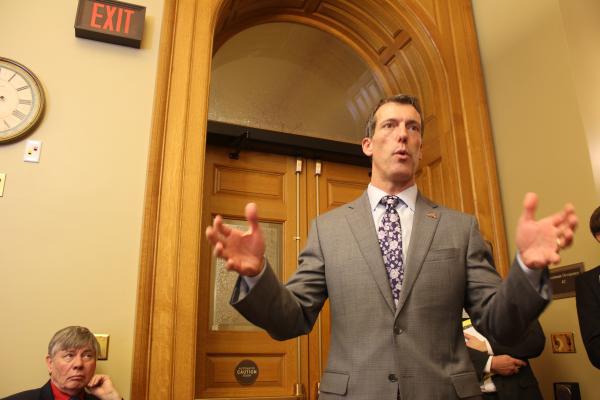
Terry Holdren is the president and CEO of the Kansas Farm Bureau. He says some KFB members have health insurance premiums that surpass the cost of mortgage payments.
CREDIT JIM MCLEAN / KANSAS NEWS SERVICE
Allowing the farm bureau to play by a different set of rules would result in siphoning healthy individuals from the insurance pool, leaving companies like BCBS of Kansas with people who are sicker and more expensive to cover.
Segmenting the marketplace like that would force insurers that are subject to state and federal regulations to raise premiums, former Kansas insurance commissioner Sandy Praeger said.
“The only people who benefit from chipping away at Obamacare are younger, healthier people,” said Praeger, a Republican who believes policymakers should strengthen the federal health reform law, not undermine it.
That’s happened in Iowa, according to Dennis Maggart, executive vice president of the McInnes Group, a regional insurance firm based in Kansas City, Missouri. Average premiums for regulated plans have nearly doubled since the Iowa Farm Bureau began marketing coverage similar to what the Kansas Farm Bureau is planning, he said.
And market disruption isn’t Praeger’s only concern. She believes the lack of state regulation will allow KFB to change the scope of its coverage whenever it needs to rein in costs.
“Even if you saw the plan today, it could change tomorrow and nobody would have the regulatory oversight to stop it,” she said.
Supporters of the Kansas Farm Bureau legislation acknowledge that the coverage it would authorize would be less comprehensive. But, they say, something is better than nothing.
“(Farm families) are not asking us to pass this bill, they’re begging us,” said Republican state Rep. Don Hineman, a farmer and rancher from Dighton.
But it would provide farm bureau members — like Sarah Schmidt and her husband, Jim — affordable options they don’t currently have. Schmidt said they’re trying to hang on to their family farm near Junction City, and health care costs are holding them back.
“This has been one of our greatest struggles, not only financially but emotionally,” Schmidt said, fighting to maintain her composure. “We’ve come back to our fifth-generation family farm and we would like to continue there.”
The bill made it through both chambers of the Kansas Legislature with the help of more than a dozen KFB lobbyists, and is now in the hands of new Democratic Gov. Laura Kelly.
Still, opponents haven’t given up, claiming there are technical problems with the bill’s language in urging Kelly to veto it.
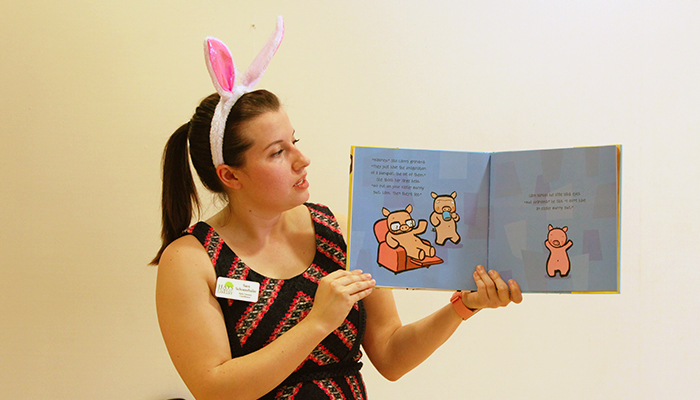
On Thursday, the Hays Public Library celebrated Easter early with story time, a visit form the Easter Bunny, Easter crafts and an Easter egg hunt.
The Easter egg hunt had about 200 eggs per age group. Library employees estimated about 200 children participated in the evening’s activities. All of the activities were free and open to the public.

















 Today
Today