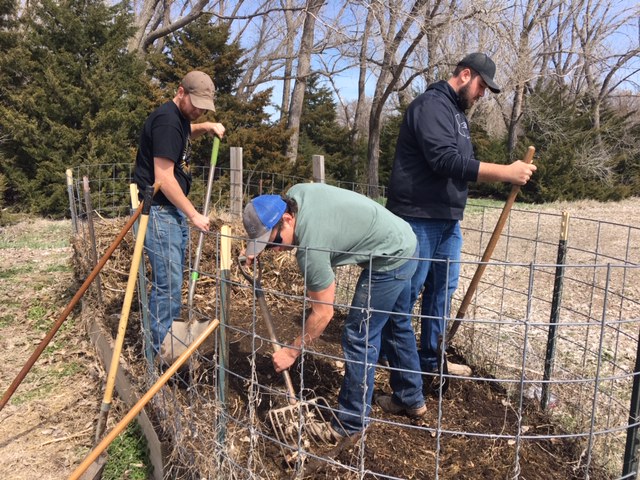
Members of Alpha Gamma Rho fraternity rake the compost pile at Victor E. Garden Wednesday as part of Greek Week activities. From left are: Aaron Satran, Brendon Crum and Braden Draper.
By RANDY GONZALES FHSU University Relations and Marketing
Students in Greek life at Fort Hays State University are more than happy to work for a good cause.
FHSU fraternities and sororities are wrapping up their annual Greek Week activities this week. Amidst the laughter and levity, Greeks take seriously their responsibility in giving back to the community. Whether it was at the Tiger Food Exchange, Victor E. Garden or other locations on campus, fraternity and sorority members donated an hour of their time in service earlier this week.
Aaron Satran, Ogallah senior and chapter president of Alpha Gamma Rho, helped flip the compost pile at Victor E. Garden, the university garden that was started several years ago as a service-learning project to provide students with hands-on experience and knowledge of sustainable, local food production for the university.
Satran said it was meaningful to help out.
“It’s important for our chapter – any organization – to give back,” Satran said. “I think most fraternities and sororities would agree we get a lot of help, not only from campus but the whole community.”
Two of Satran’s fraternity brothers, Ford junior Braden Draper and Holly, Colo. senior Brendon Crum, helped rake the compost pile, giving it the needed oxygen in the decomposition process. Satran admitted he was learning on the job, but willing to do the job was what mattered.
“Just taking an hour out of our day is not a big thing but goes a long way to show our appreciation,” Satran said.
Amelia Teter, an Alpha Gamma Delta sophomore from Topeka, also helped out at Victor E. Garden, ridding the patch of weeds in preparation for the growing season.
“In Greek life, one of the pillars is philanthropy,” Teter said. “It’s one of our main goals, to give back to the community. This is one way we can.”
Teter added that during Greek Week, each organization is assigned a project, but each chapter also has its own philanthropy which it assists throughout the school year.
“It says we want to give back to our community, just help in any way, even if it’s small like weeding a garden,” she said.
Grainfield senior Brett Zordel – coordinator for the Food and Hunger Initiatives program, which runs the food bank at Forsyth Library – said the Greeks’ assistance Tuesday was no small matter. Members of Delta Zeta sorority were one of the Greek organizations that helped organize the pantry’s contents.
“We got probably four or five months’ work done today,” Zordel said.
Greeks cleaned the pantry and sorted through cans of food. Food with old expiration dates went to the compost pile at Victor E. Garden, and food close to the expiration date was scheduled for donation to a local food pantry.
Taylor Cawley, Baldwin City sophomore, was hard at work with a half-dozen of her Delta Zeta sorority sisters. She said all thirty-four members of her sorority would chip in for at least an hour of their time before the day was through.
“We do this to stay involved,” Cawley said. “We enjoy the Greek life community so much, we want to give back to another community. Of course it’s work, but I’m here with six of my friends. You can always make it fun.”
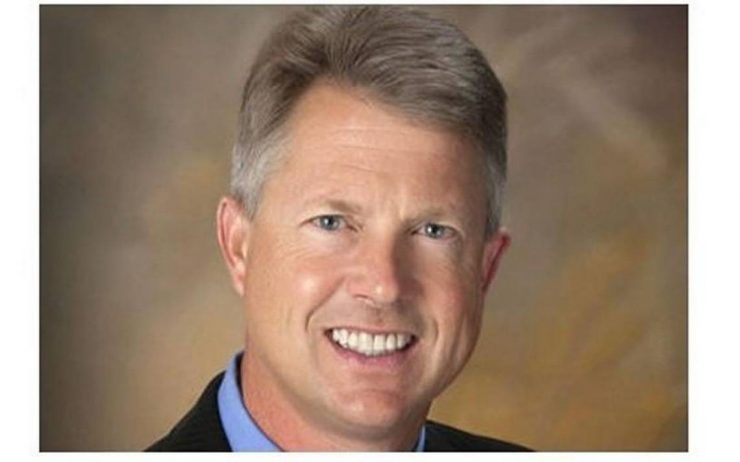
Dr. Roger Marshall, R-Great Bend, is the First District Kansas Congressman.
Friends,
This week in D.C. I continued to fight for the rights of babies across the nation. I am thankful for the pro-life community and the men and women of Congress who are willing to fight alongside those who do not have a voice. Fighting for the unborn, and now with the Democrat legislation on the state level that allows infanticide, those babies born alive from botched abortions, is a fight I will never stop fighting. This is very a personal fight for me as I’ve spent my entire life dedicated to bringing life into the world; I will never back down. I am blessed to represent so many men and woman who have made it consistently clear to me that they support me and support those most innocent and vulnerable, the unborn.
In other news this week, we met with many Kansans in here D.C. we touched on a variety of issues and had solution-based discussions ranging from Kansas water to USMCA updates, Home care and Hospice, to Crop Insurance. Our office also sponsored a two-day health symposium!
Now I am back in Sunflower State, enjoying my weekend with town halls and traveling across this Big First to sit down and check in with you! I hope you are available to join me. Stay tuned to our Facebook page where we are consistently posting our upcoming town halls and events.
Sat. 6th 8:30 A.M. – Hays Chamber Legislative Coffee – Fort Hays State University Memorial Union
Sat. 6th 10:30 A.M. – Ellsworth County Town Hall – Ellsworth Antique Mall
The Fight Continues…
Never in my wildest dreams did I think that when I came to Washington, I’d have to fight harder to save babies lives in Congress than I did in my 25 years as a practicing OB-GYN in the delivery room. It is mind-boggling how far the pro-abortion Democrats have gone when they refuse to advance legislation that would protect infants outside of the womb!
House Republicans have asked Nancy Pelosi 29 times now to bring the Born-Alive Abortion Survivors Protection Act to a vote, every time she has refused. The Born Alive Act would provide protections to babies that survive botched abortions and ensure that they receive the immediate medical care they desperately need.
This week I stood with the Pro-life community, and GOP Members in signing a discharge petition, with enough signatures, this petition would force every representative to go on record as to whether or not they support allowing babies, who survive botched abortions, to live. As a society, we have a moral obligation to stand up for our children. This legislation does just that, and for the life of me, I do not understand how this could be a topic with any room for debate.
Today, sadly only six states report when babies survive abortions, and even in those states it’s severely under-reported by the abortion provider, being that it behooves no abortionist to report this failure on their part (seeing as though their goal was for the baby not to survive the procedure.) Those six states are-Arizona, Florida, Michigan, Minnesota, Oklahoma, and Texas. In 2017 alone, at least 25 babies were born alive during abortions in these states. And again, we don’t know the data for 44 states, including California and New York, where the largest number of abortions happen. To me passing this law is common sense- these babies need this immediate care.
I want to thank the many constituents who have called in support of this legislation.
Outside of the Capitol, we discussed why this legislation is so important to the public and reporters with members, abortion survivors, physicians, and pro-life leaders. I addressed the media by telling very unforgettable experience I had while in residency trying to save a woman and her baby after she was rushed to our hospital following an abortion procedure gone wrong at a nearby abortion clinic.
Watch my remarks below: WARNING IT IS GRAPHIC.
Health Symposium Focuses on Care in Low-Income Communities
Earlier this week I sponsored a multi-day Health Care Symposium at the Library of Congress featuring presentations on graduate medical education, prior authorization, direct primary care, and much more!
It included experts from across the country, and even a keynote address by U.S. Department of Housing and Urban Development Secretary, a fellow physician, Ben Carson. Secretary Carson discussed the intersection of housing and health care, and the importance of providing safe and affordable housing. He also shared with us his experience from shifting from serving as a physician to HUD Secretary.
Pastor Stephen Broden
The following day I had the privilege of hosting Pastor Stephen Broden. The Pastor spoke to the group about the importance of having medical professionals place a larger emphasis on talking about policies plaguing low-income communities. He expressed his belief that Americans need full transparency when it comes to their health care and called on physicians to advocate for their patients and access to quality care both in and out of the doctor’s office. I am proud to have Pastor Broden working with our office to find solutions for low-income communities.
A huge thank you to all those who spoke and attended this two-day long event, and I assure you all that I am fighting hard to make some critical fixes to our health care system so that health care is affordable, provides families with patient choice, and offers complete cost transparency.
Kansans Stepping up to Help Flood Victims
Our neighbors in Nebraska are recovering from a fatal record-setting flood that took multiple lives, destroyed farmers land, and caused more than 20 counties to evacuate due to the widespread destruction. In true Kansas fashion, I have seen many Kansans posting and praying for Nebraska’s recovery! Kansans have even banded together with groups like the Kansas Farm Bureau and Kansas Livestock association making donations to help Nebraska rebuild after this tragedy that has caused more than 4,400 people to evacuate their homes.
The road to rebuilding their state’s infrastructure will be long and difficult, and in response, groups like Inman High School FFA, Bethany Home in Lindsborg, United Way, Boot Hill Distillery in Dodge, and so many more Kansas organizations are collecting household supplies and donations for Nebraska flood victims.
This week, Addy Tritt from Hays, Kansas made national headlines when she went to her local Payless shoe store and purchased more than 200 pairs of shoes to donate to the Nebraskans impacted by the massive flooding.
I am so proud to be a part of the Sunflower State where people band together to help others through difficult times. I love the compassion and love Kansans have, we help our neighbors in need and our communities, and that mentality extends far and wide as you can see in response to this devastating flood! So proud to be a Kansans and represent such wonderful and thoughtful people!
Kansas Leads in National Bio and Agro-Defense
I had the pleasure of meeting with a diverse group of representatives from different companies in the bioscience industry in Kansas. The Big First is well positioned to benefit from the investments being made as a result of the growth of this unique industry.
We spoke at length about the importance of the work being done at K-State to bring the National Bio and Agro-defense Facility (NBAF) online and how it will spur economic development across the entire State of Kansas.
I was also proud to learn of Kansan Erin Smith, a Thiel Fellow at the age of 18, for being recognized in this year’s Forbes 30 under 30 list. As a teenager, she developed a machine learning tool that can detect the early symptoms of Parkinson’s using only a computer and a remote webcam.
With your help, I look forward to further developing the “Silicon Prairie” as a premiere destination for new business, innovation, and growth that will benefit all Kansans.
Addressing the Cost of Funerals for our Nation’s Veterans
This week I was able to meet with the Kansas Funeral Directors Association. We discussed the importance of a bill I co-sponsored earlier this year, HR 497 – the BRAVE Act of 2019.
In 1917 Congress passed a law that authorized a burial allowance fund to cover funeral expenses for certain veterans. In 1973, they updated this law to better define the allowances for veterans based on whether their cause of death was related to their service or not. This law allowed for $2,000 to be issued to the families for the veteran’s funeral if their death was service- related, $780 if the veteran’s cause of death is not service-connected and they passed in a VA facility and $300 if their cause of death was not service-related.
However, back in 1973, the average cost of a funeral was between $1,200- $2,000 today the average funeral cost is between $7,000 and $9,000. That is why Congress introduced this legislation which examines these allowances and updates them so that they reflect the current cost and account for inflation.
Additionally, they brought to my attention HR 1835 – the Consensual Donation and Research Integrity Act of 2019. As of today, there is a lack of oversight on the donation of human remains. This legislation will be a safeguard and make sure that each remain goes to its respectful place. It will do this by creating a registration and tracking system. I am thankful for this educational meeting with them and their staff!
Addressing America’s Most Expensive Disease
This week I met with the Alzheimer Association and in this meeting I was joined by Glenda Owens from Garden City, Kansas. She shared her story about her father’s struggle with Alzheimer’s. In our meeting, the Association asked me to support funding for the BOLD Infrastructure for Alzheimer’s Act. Passed last Congress, this law authorizes $37 million over seven years to fund research and centers of excellence specifically for Alzheimer’s. I reassured them that I absolutely was behind them. I had voted yes for this bill and was happy to join my colleagues in sending it to the President’s desk.
Alzheimer’s, America’s most expensive disease, cost our healthcare system $277 billion last year, with Medicare and Medicaid paying for the majority of it. Alzheimer’s is a degenerative neurological disease affecting 5.5 million Americans. And sadly, this figure is expected to triple by 2050. Until a cure is found, we need to ensure patients have access to hospice and palliative care professionals to improve their quality of life.
For this reason, I am a cosponsor of HR 647, the Palliative Care and Hospice Education and Training Act, legislation that will provide funding support for Palliative Care and Hospice Education Centers and promote graduate medical education programs. In addition, it will enhance research in this field to build best practices and develop a more effective workforce.
I have also submitted a request to the Appropriations Committee to fully fund the 21st Century Cures Act BRAIN Initiative at the National Institutes of Health. Funded at the full level, Congress will continue to support health innovation and advancement to one day find a cure for this destructive and cruel disease!
USDA Improves Website for Farmers!
The week, the USDA launched two new features on farmers.gov. These two new features will help farmers with their H2A Applications and managing loans. Farmers across the country have said time and time again that they would like for the USDA to come up with innovative ways to support our farmers. I am glad to see that they have listened to farmers call to action and are making their website easier and more efficient to use!
WASHINGTON (AP) — Tensions are rising, fingers are pointing and the search for solutions is becoming increasingly fraught.
Overwhelmed by an influx of migrants at the U.S.-Mexico border that is taxing the immigration system, President Donald Trump is grasping for something — anything — to stem the tide.
Trump, who campaigned on a promise to secure the border, has thrown virtually every option his aides have been able to think of at the problem, to little avail. He has sent out the military, signed an emergency declaration to fund a border wall and threatened to completely seal the southern border.
On Thursday he added a new threat, warning of hefty tariffs on cars made in Mexico if the country doesn’t abide by his demands.
Now, with the encouragement of an influential aide and with his re-election campaign on the horizon, Trump is looking at personnel changes as he tries to shift blame elsewhere.
The first move was made Thursday, when the White House unexpectedly pulled back the nomination of Ron Vitiello to permanently lead U.S. Immigration and Customs Enforcement, where he had been acting director. The abrupt reversal was encouraged by top Trump policy adviser Stephen Miller and seen by some as part of a larger effort to bring on aides who share Miller’s hard-line immigration views.
“We may go a different way. We may have to go a very tough way,” Trump said in an interview with “Fox & Friends Weekend” that aired Saturday.
An empowered Miller is also eyeing the removal of Lee Francis Cissna, director of U.S. Citizenship and Immigration Services, which runs the legal immigration system, according to two people who spoke on condition of anonymity because they were not authorized to discuss internal staffing matters. The White House did not respond to questions Friday about whether Trump was on board with that plan.
Trump has become increasingly exasperated at his inability to do more to halt the swelling numbers of migrants entering the country. Aides, too, have complained they are stymied by regulatory guardrails, legal limitations and a Congress that has scoffed at the president’s requests for legislative changes.
“There is indeed an emergency on our southern border,” Trump said Friday during a visit to the southern border in Calexico, California, where his frustration was evident. “It’s a colossal surge and it’s overwhelming our immigration system, and we can’t let that happen. So, as I say, and this is our new statement: The system is full. Can’t take you anymore.”
He went on to flatly declare: “Our country is full.”
Immigration experts say Trump’s own immigration policies have caused so much chaos along the border that they may be encouraging illegal crossings. The furor over family separations last summer helped to highlight the fact that families won’t be detained for long in the U.S. if they’re detained at all. And metering, in which people are asked to return to a busy port of entry on another day to seek asylum, may have encouraged asylum-seekers to cross illegally, said Andrew Selee, president of the Migration Policy Institute, a nonpartisan think tank.
“This policy chaos, coupled with a sense that the U.S. government may at some point really shut down the border, has generated an urgency to migrate now while it is still possible,” he said.
Whatever the reasons for the migrant surge, there is a growing consensus that federal border resources are overwhelmed. While illegal border crossings are still down sharply from their peak in 2000, they have nonetheless reached a 12-year high. While most illegal border-crossers used to be single Mexican nationals coming to the U.S. in search of work, more than half are now parents and children who have traveled from Central America to seek refuge in the U.S.
Those families, along with unaccompanied children, are subject to specific laws and court settlements that prevent them from being immediately sent back to their home countries. Immigrant processing and holding centers have been overwhelmed, forcing officials to dramatically expand a practice Trump has long mocked as “catch and release.”
Indeed, ICE has set free more than 125,000 people who came into the U.S. as families since late last year and is now busing people hundreds of miles inland, releasing them at Greyhound stations and churches in cities like Albuquerque, San Antonio and Phoenix because towns close to the border already have more than they can handle.
Homeland Security Secretary Kirstjen Nielsen also has voiced increasing exasperation, equating the situation to the aftermath of a Category 5 hurricane.
“We have tried everything that we can at DHS,” she said Thursday on CNN. “We are out of the ability to manage this flow and they need help.”
She recently called on Congress to consider changes to the immigration system. But those efforts have so far landed with a thud.
House Democrats would almost certainly reject any plans to simply deport unaccompanied minors or otherwise rewrite the law governing asylum or family detentions that they see as protecting young migrants who are often fleeing difficult conditions. In the Senate, where Republicans have the majority, there’s little interest in big legislative proposals this year, especially on a divisive issue like immigration. Trump’s ideas could be especially tough for senators facing re-election in 2020 in Colorado, Arizona and North Carolina, swing states with sizable Latino and immigrant populations.
In the meantime, tensions between agencies and at the White House have been bubbling up. At Homeland Security, officials have expressed frustration with colleagues at the Health and Human Services Department and at the Pentagon, accusing them of doing too little to help. And there are complaints about the White House and what some see as an effort by Miller to dismantle the leadership of the department, in part to shift the blame away from the White House.
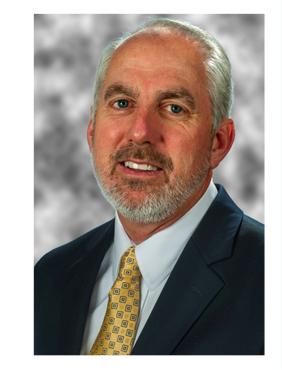
TOPEKA – Brad Loveless was confirmed by the Senate Friday as Secretary of the Kansas Department of Wildlife, Parks and Tourism (KDWPT). Governor Laura Kelly appointed Loveless in January 2019.
“Secretary Loveless is an experienced, respected leader of conservation and environmental programs in Kansas,” said Gov. Kelly. “I look forward to working with him to foster responsible stewardship of our natural resources and promote the state’s fantastic travel destinations and outdoor recreation opportunities.”
“I am grateful to Governor Kelly for the chance to lead an organization that I greatly respect and have worked with for many years,” said Secretary Loveless. “I have had the pleasure of getting to know many previous secretaries as well as the biologists, land managers and administrative staff. They’re great people and I look forward to working with them to serve this wonderful state.”
Loveless joined the department after a 34-year career with Westar Energy where he was most recently the senior director of environmental conservation and sustainability. Prior to that position, he was director of biology and conservation programs and earlier held environmental management positions at Wolf Creek Nuclear Operating Corporation. He also served as a leader of Westar’s Green Team, an active volunteer group of employees and retirees that helps with habitat improvement, environmental access and education, and enhancement of sensitive species.
A fisheries biologist by training, he is an avid angler, hunter and beekeeper.
The Cancer Council of Ellis County has received a $700 grant from the Midwest Energy Community Fund. The funds will be used to purchase a printer/copier that will replace a 14-year-old model.
“We are very excited to be a recipient of these funds. Now we can replace our copier/printer as they can no longer get parts for our model,” said Paula Flesher, CCEC executive director.
The mission of the CCEC is to provide services to individuals and families affected by cancer and to provide education about cancer to the general public. They do this through financial services, nutritional supplements, sunscreen education and equipment loans.
The Midwest Energy Community Fund was created in 2005, and provides funds to activities that focus on youth, arts, education, libraries, community events and similar projects. The Community Fund Committees determine who receives the award from $50 to $1,000.
SHAWNEE COUNTY — Interstate 70 reopened in Shawnee County early Saturday after a Friday morning crash that sent one person to a hospital.
The Kansas Highway Patrol reported a 2018 Buick Enclave driven by Cori R. Power, 52, Grantville, was westbound on Interstate 70 at Adams just after 11:50a.m.
The vehicle stopped suddenly due to an unknown dog in the roadway.
I-70 remains closed in Topeka as HAZMAT crews continue cleanup. Aircraft is overhead for photos and traffic control. pic.twitter.com/ptlknuL08y
GARDEN CITY, Kan. – The Hays High baseball team moved to 8-0 Friday with a pair of wins over Garden City at Clint Lightner Field. The Indians won game one 8-1 then took the second game 12-0. The Indians return home Tuesday for a single game with Great Bend at the Hays High Field.
Game 1: Hays 8, Garden City 1
Palmer Hutchison pitched five shuthout innings holding the Buffaloes to two hits while striking out six and walking one. Willie Sennett pitched the final two innings allowing a run on two hits with two strikeouts and two walks.
Cody Petersen had three of the Indians 13 hits including a double and drove in two. Brock Lummus hit a two-triple in the fourth to put Hays up 4-0 and finished with three RBIs.
Game 2: Hays 12, Garden City 0
Cody Petersen and Dylan Dreiling combined on a four-hit shutout in the second game. Petersen struck out six with two walks and three hits over four innings. Dreiling allowed one hit over the final two innings with four strikeouts and a walk.
Palmer Hutchison went 5-for-5 with two doubles and drove in four. His double in the second drove in Willie Sennett and Cody Petersen to put the Indians up 4-0. He doubled again in the fifth and scored on an error.
ELLSWORTH, Kan. – The TMP-Marian baseball team pushed their winning streak to four games with a pair of wins over Ellsworth Friday. The Monarchs won game one 9-5 then took the second contest 7-1 to move to 4-2 on the season. The Monarchs return home Tuesday for a doubleheader with Ellis.
Game 1: TMP-Marian 9, Ellsowrth 5
The Monarchs scored five in the sixth to break open a tight game then added a run in the seventh to go up 9-1. The Bearcats rallied with four in the bottom of the seventh. Carson Jacobs allowd on unearned run on four hits with eight strikeouts and a walk over 4 1/3 innings for the win. Mason Robbins allowed four runs on five hits over the final 2 2/3 innings.
Eston Brown had two of the Monarchs eight hits and drove in three. Tyson Dinkel and Brady Kreutzer both drove in a pair of runs.
Jacobs and Kreutzer both hit doubles for TMP’s only extra base hits of the game.
Game 2: TMP-Marian 7, Ellwsworth 1
Colby Dreiling and Brady Kreutzer combined to allow one run on six hits. Dreiling gave up the lone run while striking out four over six innings for the win. Kreutzer struck out the side with a walk in the seventh.
Kreutzer drive in four.His single in the first scoring Tyson Dinkel and Jace Wentling. He reached on an error which scored two in the second then drove in two more with a singleto center in the fourth.
Mason Robbins drove in a run with a double in the second to put TMP up 3-0.
MARYVILLE, Mo. – The Fort Hays State baseball team dropped the series opener to Northwest Missouri State on Friday 9-2. The Tigers moved to 3-25 overall and 2-17 in conference play, while the Bearcats moved to 15-15 on the season and 11-8 in MIAA action.
Marcus Altman had three of the Tigers six hits going 3-for-3. He hit a lead-off double in the third inning and two singles, one in the fifth and one in the eighth. Ryan Grasser, Jared Maneth and Tyler Olson were the only other Tigers to produce a hit in the contest.
Tiger starter Ryan Ruder pitched 2 2/3 innings of shutout ball before the Bearcats got to him with two runs in the third. An eight-hit, seven-run fifth inning chased Ruder from the game as NWMSU increased their lead to 9-0.
Jared Maneth put the Tigers on the board in the ninth inning lifting a fly ball over the left field wall for his first home run of the season. The 2-run blast scored Bryce Baumwart.
The Tigers and Bearcats will lace it up for game two of the series on Saturday with a first pitch slated for 2 p.m. from Bearcat Field.
The Cottonwood Chamber Festival takes places Friday, April 12, 7:30 p.m. at the First Presbyterian Church in Hays.
The Cottonwood Music Festival is dedicated to promoting chamber music for strings and piano, and is generously supported by Claire Matthews.
This year is a very special festival that will feature an evening of Baroque chamber music performed on period instruments – re-creations of instruments that would have been used during the 17th and 18th centuries. You’ll be able to travel back in time through the sounds of Baroque violin and cello, Baroque flute, viola da gamba, and harpsichord.
For people who love the music of Bach, Vivaldi, and other Baroque master pieces, this will be a unique concert. These kind of specialized historical musical performances most often happen only in large metropolitan areas, so be sure to catch this performance.
Guest artists include Ingrid Matthews, Baroque violin, Frank Nowell, harpsichord, Jim Fittz, Baroque cello, and FSHU faculty members Hilary Shepard, Baroque flute, and Benjamin Cline, Baroque cello and viola da gamba.
Free tickets are available online at www.hayssymphony.org, at the Hays Convention and Visitors Bureau, or at the Downtown Hays Development Corporation.
TOPEKA, Kan. (AP) — Democratic Gov. Laura Kelly’s veto of a Republican tax relief bill will stand because GOP lawmakers did not attempt to override it.
The Republican-controlled Legislature adjourned Friday for its annual spring break without an override attempt. The deadline for trying to override will pass before lawmakers reconvene May 1.
The bill was designed to prevent individuals and businesses from paying more in state income taxes because of changes in federal tax laws at the end of 2017.
Republican leaders said it would have prevented an unlegislated tax increase.
Kelly and fellow Democrats said the bill was fiscally reckless.
Republicans hold the two-thirds majorities needed in both chambers to override a veto but at least a few GOP lawmakers were expected to vote against overturning Kelly’s action, making an attempt futile.
SEDGWICK COUNTY —The Wichita Police Department needs help locating 29-year-old Nickole “Sarah” Donahue.
Nickole “Sarah” Donahue photo Wichita PD
Just after 8:30 p.m. Friday, officers responded to a check the welfare of a citizen call at the apartments in the 2000 block of north Old Manor in Wichita, according to officer Charley Davidson.
Upon arrival, officers contacted a 32-year-old female, who reported Donahue leaving home at approximately 12 p.m. stating she was going to Wichita State University. She did not return.
Donahue was last seen wearing a yellow shirt, white pants with white stripes, a white yarmulke. Donahue is confined to a battery powered wheelchair which has an orange flag and orange backpack on it. Donahue has been diagnosed with cerebral palsy and has no use of her legs and limited use of her arms.
If you know the whereabouts of Donahue or see her, please call 911 immediately.
President Trump recently signed an executive order to withhold federal funding from public and private colleges and universities that do not protect free speech on their campuses. Despite the dramatic lead-up, the order itself doesn’t say all that much. It requires public colleges to comply with the First Amendment and private colleges to comply with their own speech policies — things they’re already required to do — and unsurprisingly, it’s been described as redundant (it’s also been referred to as a “nothingburger”).
Of course, there’s still potential for the order to be enforced in a way that threatens civil liberties and comprises federal overreach, but that’s for our future selves to worry about. Today, I’m thinking about the impetus behind the order and Trump’s words when he signed it. “Under the guise of speech codes and safe spaces and trigger warnings, these universities have tried to restrict free thought, impose total conformity and shut down the voices of great young Americans,” he said last Thursday. Is that true? Are colleges actually eroding free speech and undermining First Amendment values?
Sure. But no more so than anyone else.
The Knight Foundation’s 2018 survey on campus free expression showed that a majority of college students think that free speech rights are extremely important to democracy — but at the same time think that campuses should be able to restrict things like hate speech and stereotypical costumes. Yes, this means students believe in free speech in the abstract more than they support it in reality — but they’re certainly not alone. The First Amendment Center’s annual State of the First Amendment survey consistently demonstrates that while a majority of Americans of all ages are generally supportive of the First Amendment, they’re less enthusiastic about it when it comes to real life scenarios.
In 2017, its results showed that conservatives were more likely than liberals to believe that government officials who leak information should be prosecuted and that the government should be able to hold Muslims to a higher level of scrutiny. Liberals — even the non-student variety — were more likely than conservatives to think that colleges should be able to ban speakers with controversial views and that people should not be able to express racist views on social media. And I probably don’t need to point out that the president’s call for free speech from young Americans is at odds with many statements he’s made in the past, about, say, taking a knee during the national anthem.
While everybody loves the First Amendment in theory, nobody’s all that fond of it in practice. We love speakers who articulate thoughts we were already thinking and barely tolerate the ones who contradict our world view. Most of us, even those of us long since graduated from college, struggle with the desire to relentlessly censor one another. Free speech makes hypocrites of us all.
That said, it’s hard to ignore the high-profile controversies that specifically involve campus speakers being shouted down by angry audiences or disinvited due to pressure from students. Considering that we live in a nation with more than 4,700 colleges and only about 50 have been embroiled in such controversies, I wouldn’t call it an epidemic, but it’s indisputable that these sorts of incidents happen on college campuses. But then again — where else would they happen?
The college campus is a unique and paradoxical place in our society. It’s where young people are supposed to learn to be adults. It’s also where they can engage in the kind of debates, activism and inquiry that most of them will, frankly, never have time for as adults. It’s a venue that’s frequently open to the public and it’s also the place that many students call home. It’s a bastion of elitism and it also provides more exposure to racial, economic and intellectual diversity than some students will ever get again. Colleges are, all at the same time, molders of the next generation, institutes for high-level research, conveners for the exchange of thoughts and ideas and businesses catering to the needs of their customers.
Fostering an environment for free speech is a tricky business, one that involves balancing numerous interests. Students and faculty should be allowed to express themselves and speech codes that prohibit offensive speech are almost always too broad or too vague to be constitutional. But that doesn’t negate the legitimate concern that speech from some students can have a chilling effect on the speech of other students. Student groups have the right to invite campus speakers, even if they’re controversial. But to punish students from protesting these speakers deprives them of their own First Amendment right to peacefully assemble. Of course, there’s another concern that allowing students to shout down a speaker deprives the audience of — their First Amendment right to listen and receive information. My point is that ensuring free speech for all is complicated.
In contrast, the narrative of free speech on college campuses under attack is refreshingly simple and, ironically, has led to some unnerving anti-speech laws — not just last week’s executive order; there’s nothing nothingburger-ish about proposed laws in Illinois, Minnesota, Missouri and South Carolina that would require public college administrators to suspend or expel students found guilty of “infringing the expressive rights of others” by protesting a campus speaker, or the one in Arkansas that would create criminal sanctions for that. Yet another example of First Amendment hypocrisy — defending one First Amendment right by limiting another.
Lata Nott is executive director of the First Amendment Center of the Freedom Forum Institute.Contact her via email at [email protected], or follow her on Twitter at @LataNott.