It’s so cold that…
you have to open the fridge to heat the house.
you eat ice cream to warm up.
the snowmen are begging to come inside.
Join fans of 99 KZ Country on Facebook: https://www.facebook.com/99KZCountry
It’s so cold that…
you have to open the fridge to heat the house.
you eat ice cream to warm up.
the snowmen are begging to come inside.
Join fans of 99 KZ Country on Facebook: https://www.facebook.com/99KZCountry
WICHITA, Kan. (AP) — Opening remarks Monday in the trial of a former Kansas legislator offered jurors contrasting portrayals of his handling of campaign funds.

Sedgwick County Commissioner Michael O’Donnell is accused of fraudulently taking $10,500 from campaign fundsfor his personal use. He faces 23 federal counts of wire fraud and three counts of money laundering related to his state and county campaign funds.
Jury selection took up most of the first day of the proceedings. The trial before U.S. District Judge Eric Melgren is expected to last five days.
The prosecution’s opening statement outlined O’Donnell’s extraordinary access to resources through his elected position and his access to campaign donations through his state and county campaigns. Prosecutors say he was a great fundraiser.
The defense in its remarks focused on explaining the legitimacy of the campaign funds, saying nothing illegal occurred and the checks were for legitimate work done on behalf of his campaign.
The indictment alleges O’Donnell wrote a series of checks in 2015 and 2016 from his “Michael for Kansas” and “Michael for Sedgwick County” campaigns to various people who would cash the checks. Prosecutors alleged some of the money went into his personal checking account and some to friends.
O’Donnell, a Wichita Republican, was elected to the Kansas State Senate in 2012 for a term that ended in January 2017. He did not run for re-election and instead ran for and won a seat on the Sedgwick County Commission. His term began in 2017 and is set to expire in 2020.
He remains free on bond and continues to serve as county commissioner.
___
WICHITA, Kan. (AP) — A former Kansas legislator accused of fraudulently taking $10,500 from campaign funds for his personal use goes to trial Monday in federal court in Wichita.
Sedgwick County Commissioner Michael O’Donnell has pleaded not guilty to 23 counts of wire fraud and three counts of money laundering related to his state and county campaign funds.
Defense attorney Mark Shoenhofer said that his client was innocent of the allegations when the charges were initially unsealed in May. O’Donnell and his attorneys did not immediately return messages left this week seeking comment.
The trial before U.S. District Judge Eric Melgren is expected to last five days.
O’Donnell, a Wichita Republican, was elected to the Kansas State Senate in 2012 for a term that ended in January 2017. He did not run for re-election and instead ran for and won a term on the Sedgwick County Commission that began in 2017 and is set to expire in 2020.
The indictment outlines a scheme whereby O’Donnell allegedly wrote a series of checks in 2015 and 2016 from his “Michael for Kansas” and “Michael for Sedgwick County” campaigns to various people who would cash the checks. Prosecutors alleged some of the money went into his personal checking account and some to friends. The indictment identifies the people who cashed the checks only by their initials.
Defense attorneys tried unsuccessfully last year to get charges dismissed, saying “overzealous prosecution” sometimes occurs when prosecutors throw a wide net on criminal corruption. His attorneys argued O’Donnell came to law enforcement’s attention during an investigation of other people in Wichita suspected of illegal gambling. Prosecutors subsequently indicted several local residents, including law enforcement officials, stemming from that gambling probe.
Several people, including then-Gov. Sam Brownback and other state officials, received notification letters in 2017 from the U.S. Justice Department telling them that the federal government intercepted phone calls between them and O’Donnell’s phone number. O’Donnell, a conservative known in part for championing tougher rules for welfare recipients, was a political ally of Brownback who won his legislative seat in the 2012 purge of Senate moderates.
He remains free on bond and continues to serve as county commissioner.
Attorney Austin Parker held a news conference in November during which he claimed three commissioners tried to fire then-County Manager Michael Scholes after he cooperated in the FBI investigation of O’Donnell. Parker, who represents then-County Counselor Eric Yost, told reporters there is an FBI investigation into that effort and that Yost had been interviewed twice by FBI agents on that subject.
It is unclear whether that investigation is ongoing, but no charges related to Yost’s allegations have been filed. Kate Flavin, the county’s spokeswoman, said there have been no further developments.
Scholes and Yost left their county positions after reaching termination settlements with the commission.
Commission Chairman David Dennis said in a statement released through Flavin it was not appropriate to comment on O’Donnell’s case because the charges are not related to the county.
 FHSU University Relations
Customer service is no longer face-to-face conversations and phone calls. Rather, businesses are increasingly interacting with their customers online utilizing Facebook posts, tweets, snaps, and texts.
Learn more about digital customer service strategy at “Customer Service in the Digital Age: First Impressions Matter 2.0,” a new workshop from Fort Hays State University’s Management Development Center.
This follow-up to the popular “First Impressions Matter” workshop will be from 8:30 a.m. to noon on Wednesday, Feb. 27, in the Trails Room of the Memorial Union on the FHSU campus.
This training will give participants tools to begin implementing a service culture within their organizations’ digital channels, including on their websites, social media channels, and instant messaging. Specifically, the facilitators will cover what to do when an angry customer posts a negative review, as well as discuss chatbots and self-serve customer service.
Participants can also expect to examine a variety of helpful online service-oriented tools, as well as learn about updates on where the customer service industry is headed in the future.
Dr. Stacey Smith, chair of the Department of Applied Business Studies Department, and Hannah Hilker, training specialist at the Management Development Center, will facilitate.
Each person who completes the workshop will receive a completion certificate. The cost is $119. Hays Area Chamber of Commerce members are eligible for a 15-percent discount.
Registration is available online at https://webapps.fhsu.edu/MDC2.0/Default.aspx
To learn more about this workshop or receive discount codes, contact Hannah Hilker, 785-628-4121 or [email protected]

It’s going to take a few days, but the first and biggest fight of new Gov. Laura Kelly and, well, apparently the entire Legislature, will break out this week.
The bell that started the first round: Friday’s 117-0 passage by the House of the Senate’s unanimously passed on Valentine’s Day of a short little bill that sends $115 million to the Kansas Public Employee Retirement System to pay back the $97 million (plus interest) that it didn’t pay in 2016.
Repaying debt…not a bad idea, except that everything is different when the Legislature is dealing with the pension fund that, while “not actuarially balanced,” is still making those monthly pension check payments to retirees.
But here’s the big fight over the very first bill passed by this year’s heavily Republican Legislature to the brand-new Democrat governor Kelly: pay KPERS now, or pay KPERS later…
Why is this so mesmerizing? Because the governor clearly lost her argument to the Legislature for her own KPERS plan. Now, she can sign the bill, reluctantly, and say she just didn’t want to waste time with a veto.
Or, she could veto the bill and get overridden. Hard to say who would want to be in that picture with her.
Or she could just put it in her desk drawer, and after 10 days it becomes law anyway with none of her DNA on it.
The governor hasn’t said what she intends to do with the bill.
There really isn’t a good choice for her, and it’s going to be interesting to see how she describes what she’s going to do with the bill. A well-thought-out explanation is necessary, one that will make the ultimate beneficiaries of the pension program believe she’s working for their best interests.
The “pay KPERS now” side of the issue makes sense to pay back money that lawmakers borrowed from the pension fund back when the state was scrambling to keep its annual balance out of red ink. That $97 million non-payment to KPERS was needed as the state started a series of tax increases to dig out of the former Gov. Sam Brownback “lower taxes and the economy will boom, and we’ll take in more money” experiment which just didn’t work.
The “pay KPERS later” side of the issue? Well, Kelly had a different idea. Refinancing the pension fund’s actuarial shortfall (basically the amount it would need to pay off all its members in one day) over another 30 years brings smaller annual payments that the state is more likely to actually pay. Everyone gets paid, it just takes longer…and the state pays interest on that refinancing for 30 years, a long time.
***
The politics are interesting, because that borrowed money is from the schools/state workers’ section of the pension fund. Democrats voted for the bill because those two categories of pensioners are often solid Democrat voters.
Republicans decry that interest the state would pay on refinancing the pension system under the Kelly plan. They’ve made a big deal out of the $24,000 per day interest the state is running up by not paying that $115 million now. They apparently pay cash for their cars and houses.
What happens next? Nobody but the governor knows. But whatever Kelly does, it is going to influence future governor-Legislature fights, and whatever happens, she’ll go into Round 2 of the prize fight a little weakened.
Dramatic, and it might tell the future. Or at least change the relationship between the governor and the Legislature.
Get your bets down…
Syndicated by Hawver News Company LLC of Topeka; Martin Hawver is publisher of Hawver’s Capitol Report—to learn more about this nonpartisan statewide political news service, visit the website at www.hawvernews.com

By KIM BALDWIN
McPherson County farmer
During certain parts of the year I secretly cringe when someone walks into my house. It’s not that I don’t like visitors; it’s more about what my houseguests might see when they enter our home. In the winter and spring, odds are my floors will have some mud deposits that someone tracked in. In the summer and fall, dirt clods and seeds sprinkled around my house are a given.
“It’s just part of life,” I tell myself. Even then, at times it still creates a bit of uneasiness for me when someone comes to visit.
My concerns about my house have had to take a backseat though, as we have an extended houseguest this year. My farmhouse — in all its seasonal, messy glory — has been on full display as we have opened our home to a high school foreign exchange student. She’s a Sicilian from a large city who is accustomed to warm weather, ocean views and pasta. Lots of pasta.
In preparing for her exchange experience, she watched all the Hollywood teen movies to help her formulate an understanding of what life would be like for her in America. There were dance routines, musical interludes, mean girls, study groups and school dance scenarios that she studied.
She made a conscious choice to come to the United States to study and participate in the lifestyle and culture. Little did she know, the images, events and people portrayed in the movies she studied in preparation for this once-in-a-lifetime experience would be very different from her reality: life on a farm in rural, central Kansas.
Our family’s goal is to carry on our business as usual while also working to give her the best possible experience this year. It’s safe to say Hollywood didn’t prepare her for the majority of it.
Common conveniences including accessibility to a mall, a movie theater, a great pizza place and a coffee shop are all still possible, although getting there requires a bit more planning and miles on our part.
She’s experienced early drives into town to get to school, dirt road treks required to get to a classmate’s house, small class sizes at our rural school where the math teacher is also the cross country and scholars bowl coach, making selections at our small town grocery store and the beauty of a community coming together for a weeknight high school basketball game.
She’s had friendly conversations with folks during a community meal served family-style at a local church, checked out books from our local library, discovered butterscotch, experienced slow Wi-Fi, which affects her Netflix viewing. She’s also learning the beauty of Amazon’s two-day shipping.
She’s watched our farm dog give birth, and she’s held a piglet in her arms. Our local FFA chapter members welcomed her and then put her to work , and she has experienced the joy (and chill) of traversing the farmyard on an inner tube pulled by a four-wheeler following a recent snowstorm.
While the clothes shopping options are limited, especially for a teenager who usually spends portions of her weekends visiting shops trying on clothes with her friends for fun. She’s beginning to realize that we have to plan our shopping adventures a little more than she would in Sicily. And, thank God almighty, it only took two trips to Wichita to secure the prom dress!
After multiple video calls with her family and Snapchat posts seeking advice, she has even purchased her own pair of cowboy boots. The girl is committed and living a life she didn’t even know existed. To say she’s adjusted nicely is a huge understatement. She has become part of our small, rural community, and she has fully embraced the lifestyle and all the community has to offer.
While she has learned and experienced a lot during her time with us, I know my family has gained some valuable lessons as well. And for me, allowing her to view our farmhouse in all its seasonal, messy glory is something I’ve been able to relax about. After all, it is just a part of life for our farm family here in rural, central Kansas.
“Insight” is a weekly column published by Kansas Farm Bureau, the state’s largest farm organization whose mission is to strengthen agriculture and the lives of Kansans through advocacy, education and service.

Women’s health can be directly tied to the burden of household responsibilities. In a 2016 study, researchers found that women are more often the primary parent of children, the one who determines family healthcare decisions, the caregiver for the elderly parents on both sides and the one that does more of the cooking and dishes, cleaning, laundry and grocery shopping. Other studies have found that doing dishes alone was particularly burdensome.
The U.S. Bureau of Labor says our society is getting somewhat better in sharing the household work, but a difference still remains. For example, in 2003, men participated in food preparation and clean-up on average of 35 percent of his days, and in 2015 it was 43 percent. Nice to see an eight percent improvement but the women’s share in 2015 was still 70 percent. In 2015, women participated in cleaning housework 50 percent of her days while it was 22 percent for men. Lawn and garden work was the only chore accomplished more by men than women.

How much does this happen because the man is often the primary earner? In another study done at Indiana University in 2016, they studied household work in families where the woman’s income was larger than the man’s. They found that household burdens seemed not to align with income but rather with the traditional roles of masculinity and femininity. They also found that in same-sex couples, gender identity still directs roles. We haven’t reached equality of the sexes at work and we haven’t reached equality at home, either.
This is important because of the possible negative effect it may have on family relationships. There are studies to show that each person in a household has expectations and responsibilities, whether it be the alpha mom, the alpha dad, the children or even the grandparents. If the woman (or the man) expects the other to pitch in but ends up stuck with all the chores, she or he may be disappointed, embittered, angry and feeling abused. If those hard feelings are not resolved and are covered up, then depression may be the result.
When one member of the family is hurting, everyone feels the pain. Research data from Myrna Weissman PhD, a professor of psychiatry, shows that mental illness and depression spreads within a household. Strong emotional sharing occurs there, and when emotional pain of one person in the family is treated and improves, everyone gets better.
Simply helping with the dishes might be an enormous step toward making a happier home.
For free and easy access to the entire Prairie Doc® library, visit www.prairiedoc.org and follow The Prairie Doc® on Facebook, featuring On Call with the Prairie Doc® a medical Q&A show streaming live most Thursdays at 7 p.m. central.
HUTCHINSON — A man who was extradited to Kansas from Florida and charged with three felonies entered a guilty plea Monday to one of the counts against him.

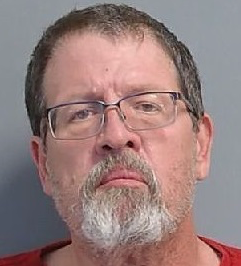
Charles E. Richmond, 57, was charged with rape, aggravated criminal sodomy and aggravated indecent liberties with a child. He entered a plea for the aggravated indecent liberties charge and the other two charges were dropped.
The alleged crimes occurred over a period from Jan. 1, 2013, to Dec. 31, 2017. The child told investigators she had been molested by Richmond more than 100 times.
The conviction falls under Jessica’s Law statutes, meaning he could face a life sentence. However, both sides will be able to argue disposition in the case.
Sentencing is scheduled for April 12.
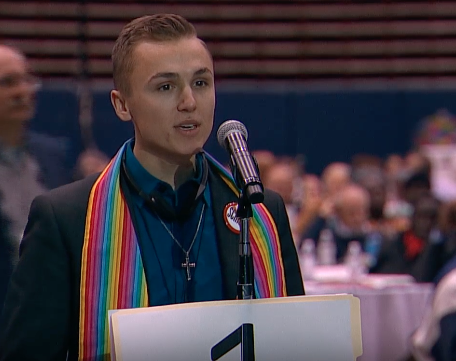
ST. LOUIS (AP) — The United Methodist Church teetered on the brink of breakup Monday after more than half the delegates at an international conference voted to maintain bans on same-sex weddings and ordination of gay clergy.

Their favored plan, if formally approved, could drive supporters of LGBT inclusion to leave America’s second-largest Protestant denomination.
A final vote on rival plans for the church’s future won’t come until Tuesday’s closing session, and the outcome remains uncertain. But the preliminary vote Monday showed that the Traditional Plan, which calls for keeping the LGBT bans and enforcing them more strictly, had the support of 56 percent of the more than 800 delegates attending the three-day conference in St. Louis.
The primary alternative proposal, called the One Church Plan, was rebuffed in a separate preliminary vote, getting only 47 percent support. Backed by a majority of the church’s Council of Bishops in hopes of avoiding a schism, it would leave decisions about same-sex marriage and ordination of LGBT clergy up to regional bodies and would remove language from the church’s law book asserting that “the practice of homosexuality is incompatible with Christian teaching.”
Monday’s voting did not kill the One Church Plan but makes its prospects on Tuesday far more difficult.
As evidence of the deep divisions within the faith, delegates Monday approved plans that would allow disaffected churches to leave the denomination while keeping their property.
“This is really painful,” said David Watson, a dean and professor at United Theological Seminary in Dayton, Ohio, who was at the gathering. “Our disagreement has pitted friend against friend, which no one wanted.”
Formed in a merger in 1968, the United Methodist Church claims about 12.6 million members worldwide, including nearly 7 million in the U.S. While other mainline Protestant denominations, such as the Episcopal and Presbyterian (U.S.A.) churches, have embraced the two gay-friendly practices, the Methodist church still officially bans them, even though acts of defiance by pro-LGBT clergy have multiplied and talk of a possible breakup has intensified.
The strong showing for the Traditional Plan reflects the fact that the UMC, unlike other mainstream Protestant churches in the U.S., is a global denomination. About 43 percent of the delegates in St. Louis are from abroad, mostly from Africa, and overwhelmingly support the LGBT bans.
“We Africans are not children in need of Western enlightenment when it comes to the church’s sexual ethics,” the Rev. Jerry Kulah, dean at a Methodist theology school in Liberia, said in a speech over the weekend. “We stand with the global church, not a culturally liberal church elite in the U.S.”
The Africans have some strong allies among U.S. conservatives, including the Rev. John Miles II, senior pastor of First United Methodist Church in Jonesboro, Arkansas, who opposes same-sex marriage and gays in the pulpit.
“I have a very difficult time even though I have gays in my family and in my church,” he said. “I know it grieves them and it grieves me to grieve them. But it’s just what we believe is the truth.”
In recent years, the church’s enforcement of its LGBT bans has been inconsistent. Some clergy members have conducted same-sex marriages or come out as gay from the pulpit. In some cases, the church has filed charges against clergy who violated the bans, yet the denomination’s Judicial Council has ruled against the imposition of mandatory penalties, which typically called for an unpaid suspension of at least one year.
The Traditional Plan would require stricter and more consistent enforcement.
Among the outspoken supporters of the more permissive One Church Plan was the Rev. Adam Hamilton, a pastor in Leawood, Kansas, who said it offered a way for Methodists “to live together — conservatives, centrists and progressives — despite our differences.”
For LGBT Methodists, it is a time of anxiety.
“For me it’s about who’s in God’s love, and nobody’s left out of that,” said Lois McCullen Parr, 60, a church elder from Albion, Michigan, who identifies as bisexual and queer. “The Gospel I understand said Jesus is always widening the circle, expanding the circle, so that everyone’s included.”
Tuesday Scattered snow showers before 11am. Cloudy, with a high near 20. Wind chill values as low as -5. North northeast wind 5 to 10 mph. Chance of precipitation is 30%.
Tuesday NightMostly cloudy, with a steady temperature around 20. Light and variable wind becoming north northeast 5 to 9 mph after midnight.
WednesdayMostly cloudy, with a high near 19. Wind chill values as low as -1. North northeast wind 8 to 13 mph.
Wednesday NightMostly cloudy, with a low around 13. Northeast wind 5 to 8 mph becoming south after midnight.
ThursdayPartly sunny, with a high near 29.
Thursday NightMostly cloudy, with a low around 18.
FridayPartly sunny, with a high near 34.

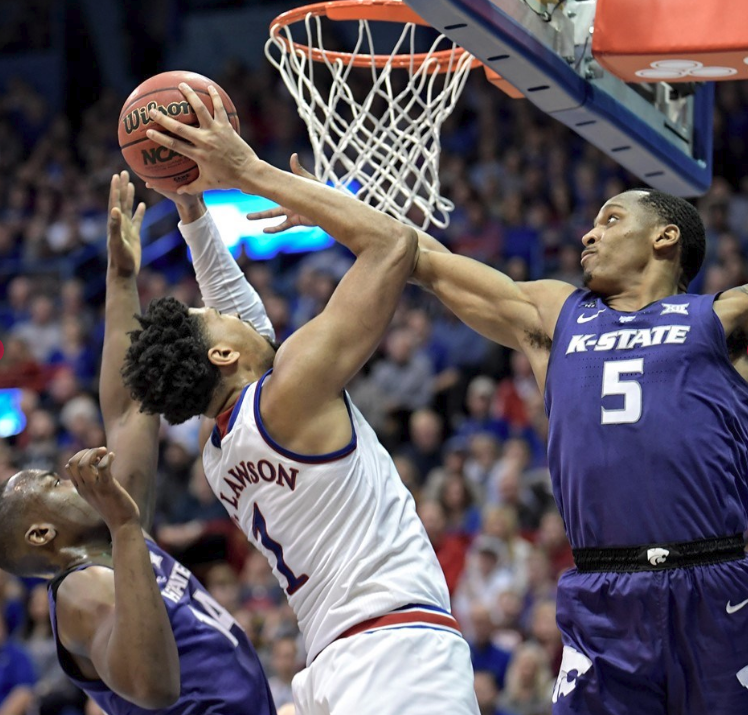
Dedric Lawson had 18 points and 14 rebounds to cement his front-runner status for Big 12 player of the year, and No. 15 Kansas pounded No. 16 Kansas State 64-49 to keep alive its hopes of a 15th consecutive conference championship
LAWRENCE, Kan. (AP) – Dedric Lawson had 18 points and 14 rebounds to cement his front-runner status for Big 12 player of the year, and No. 15 Kansas pounded No. 16 Kansas State 64-49 on Monday night to keep alive its hopes of a 15th consecutive conference championship.
Devon Dotson added 16 points and fellow freshman Quentin Grimes had 12 for the Jayhawks (21-7, 10-5), who moved within a game of the league-leading Wildcats (21-7, 11-4) with three to play.
Texas Tech, which roughed up the Jayhawks on Saturday, is a half-game back in second place.
There was a sense of desperation in the air inside Allen Fieldhouse, where Kansas – despite all the injuries and unrest this season – had not lost in 19 games. And it manifested itself in the kind of cutthroat defense that coach Bill Self’s teams have become accustomed to playing over the years.
The Wildcats shot just 32 percent from the field, struggled with turnovers at key junctures and never seemed as comfortable as they were at Bramlage Coliseum, where they roared past the Jayhawks nearly three weeks ago to seize control of the conference race.
Kamau Stokes led the Wildcats with 12 points, but nobody on coach Bruce Weber’s team got into much of a rhythm. Floor leader Dean Wade was held to eight points and five boards before fouling out with 3:35 to go, and leading scorer Barry Brown Jr. finished with four points on 1-of-8 shooting.
It was a masterful defensive effort by a Kansas team that had been searching for an identity.
The Jayhawks doubled Wade in the post. They got big man Makol Mawien into early foul trouble. And they ultimately forced off-balance jumpers and deep 3s as the shot clock was winding down.
Meanwhile, Kansas turned its defense into just enough offense to rip off a 12-2 run midway through the half, and that was responsible for the 34-27 lead the Jayhawks took to the locker room.
The in-your-shorts defense was just as responsible for extending the lead in the second half.
Kansas State missed three shots on its first trip down the floor, three more on its next, and its first 10 out of the break. The Jayhawks took advantage by converting a couple easy layups, and Grimes shrugged off a season-long slump to hit an open 3-pointer and push the lead to 41-27 with 16 minutes to go.
Suddenly, a field house stirring with anticipation and jammed to the rafters was roaring.
Wildcats guard Xavier Sneed went to the bench midway through the second half with cramps, and that seemed to spoil a brief surge. The Jayhawks’ defense took care of every other Kansas State run, closing the door not only on a comeback but any hopes of delivering a knockout blow in the Big 12 title chase.
BIG PICTURE
Kansas has been short-handed with Udoka Azubuike out with a season-ending wrist injury and senior guard Lagerald Vick on a leave of absence. But forward Mitch Lightfoot provided a huge lift off the bench in the first half, and he wound up with nine points and five boards in 31 minutes.
Kansas State still has not swept a season series from the Jayhawks since the 1983 season, and the Wildcats have not won back-to-back games against Kansas since 1993-94. But they still command the Big 12 heading down the stretch, and they have extra time to prepare for Baylor on Saturday.
UP NEXT
Kansas heads to Oklahoma State on Saturday.
Kansas State plays Baylor on Saturday night.
KANSAS CITY– A Kansas City man with prior felony convictions for child pornography was sentenced in federal court Monday for receiving child pornography over the Internet, according to the United State’s Attorney.

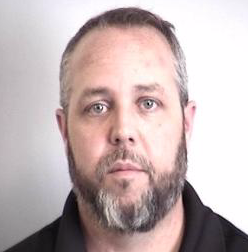
Travis E. Fleming, 44, was sentenced by U.S. District Judge Stephen R. Bough to 15 years in federal prison without parole. The court also sentenced Fleming to 20 years of supervised release following incarceration. The court ordered Fleming to pay $5,000 in restitution to each of three identified victims of sexual abuse portrayed in the images of child pornography that he possessed.
Fleming was convicted in federal court in 2010 of two counts of receiving child pornography and two counts of possessing child pornography, for which he was sentenced to six years and six months in federal prison without parole. He was on supervised release at the time of this offense.
On Sept. 20, 2018, Fleming pleaded guilty to receiving child pornography. Fleming admitted that he had 256 images of child sexual abuse (including bondage) on his cell phone. Some of the victim children ranged in age from four to 10 years old. A forensic examination determined that Fleming did the bulk of his viewing of child pornography in the dark web.
Fleming’s probation officer discovered the cell phone during a home visit on Nov. 16, 2017. Fleming admitted that he had been accessing the internet since at least February 2017. Among the conditions of Fleming’s supervised release was that he not possess any type of computer or electronic device with access to any on-line computer service.
 BLM
BLM
WASHINGTON – The Federal grazing fee for 2019 will drop to $1.35 per animal unit month (AUM) for public lands administered by the Bureau of Land Management and $1.35 per head month (HM) for lands managed by the USDA Forest Service. This represents a decrease from the 2018 Federal grazing fee of $1.41 per AUM.
An AUM or HM—treated as equivalent measures for fee purposes—is the use of public lands by one cow and her calf, one horse, or five sheep or goats for a month. The newly calculated grazing fee was determined by a congressional formula and takes effect March 1, 2019. The fee will apply to nearly 18,000 grazing permits and leases administered by the BLM and nearly 6,500 permits administered by the Forest Service.
The formula used for calculating the grazing fee was established by Congress in the 1978 Public Rangelands Improvement Act and has remained in use under a 1986 presidential Executive Order. Under that order, the grazing fee cannot fall below $1.35 per AUM/HM, and any increase or decrease cannot exceed 25 percent of the previous year’s level.
The annually determined grazing fee is established using a 1966 base value of $1.23 per AUM/HM for livestock grazing on public lands in Western states. The figure is then calculated according to three factors—current private grazing land lease rates, beef cattle prices, and the cost of livestock production. In effect, the fee rises, falls, or stays the same based on market conditions.
“The BLM and Forest Service are committed to strong relationships with the ranching community and work closely with permittees to ensure public rangelands remain healthy, productive working landscapes,” said Brian Steed, BLM Deputy Director for Programs and Policy. “Fifty percent of the collected grazing fees deposited into the U.S. Treasury are returned to the Range Betterment Fund for on-the-ground range improvement projects. Portions of collected fees are also returned to the states for use in the counties where the fees were generated.”
The grazing fee applies in 16 Western states on public lands administered by the BLM and the Forest Service. The states are: Arizona, California, Colorado, Idaho, Kansas, Montana, Nebraska, Nevada, New Mexico, North Dakota, Oklahoma, Oregon, South Dakota, Utah, Washington, and Wyoming. Permit holders and lessees may contact their local BLM or Forest Service office for additional information.
The BLM manages more than 245 million acres of public land located primarily in 12 Western states, including Alaska. The BLM also administers 700 million acres of sub-surface mineral estate throughout the nation. The agency’s mission is to sustain the health, diversity, and productivity of America’s public lands for the use and enjoyment of present and future generations. Diverse activities authorized on these lands generated $96 billion in sales of goods and services throughout the American economy in fiscal year 2017. These activities supported more than 468,000 jobs.
BOYS PREP BASKETBALL
Bishop Seabury Academy 75, Heritage Christian 34
Independence Home School 61, Hyman Brand 47
SM North 55, Mill Valley 46
Class 2A Sub-State
Bennington 62, Canton-Galva 35
Central Heights 48, Jayhawk Linn 44
Ellis 48, Oakley 41
Ellsworth 40, Ellinwood 37
Garden Plain 61, Bluestem 27
Hillsboro 78, Wabaunsee 64
Hoxie 69, Oberlin-Decatur 38
Humboldt 78, Southeast 50
Hutchinson Trinity 73, Wichita Independent 20
Inman 63, Ell-Saline 30
Lakin 64, Syracuse 60
Lyndon 43, Pleasanton 23
Maranatha Academy 80, KC Christian 69
Marion 55, Rossville 39
McLouth 73, Atchison County 27
Medicine Lodge 44, Remington 41
Mission Valley 66, Herington 14
Ness City 61, Meade 58
Northeast-Arma 52, West Elk 44
Northern Heights 62, Goessel 33
Oskaloosa 67, Jefferson North 56
Pittsburg Colgan 56, Oswego 29
Plainville 76, Smith Center 44
Pratt Skyline 75, Elkhart 36
Republic County 40, Jackson Heights 37
Salina Sacred Heart 53, Sterling 41
Sedgwick 52, Conway Springs 39
Stanton County 61, Sublette 33
Valley Heights 61, Horton 33
Wichita County 46, Trego 44
Yates Center 51, Uniontown 21
Class 3A Sub-State
Girard 58, Riverton 23
Smoky Valley 40, Norton 35
Class 4A Sub-State
Atchison 71, Labette County 5
El Dorado 56, Winfield 50, OT
Mulvane 73, Wellington 59
Paola 51, Baldwin 32
Class 5A Sub-State
Wichita Northwest 68, Valley Center 64
Class 6A Sub-State
Hutchinson 55, Wichita West 49
GIRLS PREP BASKETBALL
Class 2A Sub-State
Inman 41, Ell-Saline 11
Jackson Heights 45, Republic County 44
Plainville 53, Smith Center 50
Class 3A Sub-State
Baxter Springs 62, Galena 40
Beloit 50, Rock Creek 37
Burlington 56, Fredonia 15
Cheney 58, Belle Plaine 25
Cherryvale 44, Caney Valley 38
Cimarron 50, Holcomb 44
Clay Center 57, Concordia 26
Colby 58, Goodland 30
Columbus 49, Frontenac 34
Erie 43, Douglass 31
Eureka 67, Prairie View 33
Girard 64, Riverton 25
Halstead 43, Wichita Collegiate 28
Haven 50, Chaparral 18
Hays-TMP-Marian 59, Hoisington 37
Hesston 45, Kingman 23
Jefferson West 69, West Franklin 13
KC Bishop Ward 48, Silver Lake 36
Larned 45, Hugoton 32
Marysville 52, Holton 38
Nemaha Central 56, Maur Hill – Mount Academy 22
Norton 39, Smoky Valley 24
Osage City 48, Neodesha 45
Riley County 53, Minneapolis 48
Riverside 47, Pleasant Ridge 0
Royal Valley 64, Perry-Lecompton 34
Russell 60, Lyons 20
Sabetha 58, Hiawatha 26
Scott City 59, Southwestern Hts. 24
St. Mary’s 64, Council Grove 48
Wellsville 47, Santa Fe Trail 21
Class 5A Sub-State
Arkansas City 46, Valley Center 37
Salina South 46, Great Bend 37
Topeka West 54, KC Turner 19
Class 6A Sub-State
Wichita West 63, Junction City 36