TOPEKA, Kan. (AP) — Kansas regulators have ordered Kansas Gas Service to return more than $17.9 million in tax savings to its customers.
The Kansas Corporation Commission said in a news release Monday that its order will mean a one-time bill credit of $22.78 for residential customers.
The agency says the savings are the result of a federal law that reduced the corporate tax rate from 35 percent to 21 percent in January of last year. The Commission had required utilities to track and keep separate savings from the tax cut pending its review.
Kansas Gas Service had asked to keep the savings to offset its service costs, but the Commission determined that was not in the public interest.
Kansas Deputy Transportation Secretary Lindsay Douglas; Congressman Roger Marshall; Representative Ken Rahjes; Senator Rick Billinger, and Kansas Commerce Secretary David Toland
By BECKY KISER Hays Post
“Partnership” was the most-often used word by local, state and federal officials during a tour Friday afternoon of the Ellis County Northwest Business Corridor road improvement project.
Those riding on the two-hour bus tour, initiated by Rep. Barb Wasinger of Hays (R-111th Dist.), included numerous government and business representatives of Ellis County, Hays, and the state of Kansas, along with First Dist. Congressman Roger Marshall (R-Great Bend).
The corridor is north of Hays, defined as U.S. Highway 183 and Feedlot Road running two miles west to 230th Ave., then south two miles on 230th to Interstate-70 and the Highway 183 Bypass.
Planned road improvements to the Ellis Co. Northwest Business Corridor. (Click to enlarge)
The plan calls for a paved 8-inch concrete road capable of handling large truck traffic and oversized loads.
Wasinger is a former Ellis County and Hays city commissioner. She’s very familiar with the concerns.
“I told him [interim Kansas Commerce Secretary David Toland] how important it was, how dangerous the road was and how much we needed the support of the governor and all the different divisions of the state,” Wasinger said after the tour. “It doesn’t take much to learn once you’re on that road how dangerous it is for these enormous vehicles to be going down there.”
The corridor carries a high percentage of large truck traffic with Midwest Energy’s Goodman Energy Center and Hess Services both located on 230th Avenue. The bus stopped at both facilities for quick guided tours.
Between the bypass exit and the entrance to Goodman Energy Center, the hills on 230th Avenue vary 67 feet in elevation.
Midwest Energy’s Bill Dowling talks about the dips in 230th Ave.
Midwest Energy actually has a safety directive in place for when big contractor loads drive in and out of the Goodman driveway
“These are long trucks with 80-foot poles on them,” Bill Dowling, Midwest Energy Center Engineering and Energy Supply Vice President, told the tour group.
“We station a pickup up on the top of the hill with its flashers on in an attempt to slow down the traffic. The sight lines on that road are terrible,” Dowling said. “It is a bit of a risk every time you get on and off 230th.”
A semi drives past the USD 489 bus transporting the tour group on 230th Ave.
The traffic is often speeding and there are no shoulders along the road.
“When you go through these facilities, you see what commerce is and you see what’s important to Hays, Ellis County and all of northwest Kansas,” said Dustin Roths, Ellis County commissioner.
Hess Services currently has 355 employees and about 50 contractors working at its primary facility at 1789 230th. Co-owners and brothers Dan and Mark Hess told the tour they plan to expand their company if it can acquire the necessary infrastructure, including the corridor project.
Dan Hess leads a tour of Hess Services with 1st. Dist. Congressman Roger Marshall, state representative Ken Rahjes of Agra, Ellis Co. Commissioner Dean Haselhorst and county public works director Bill Ring, immediately behind him.
Ellis County has already approved $800,000 for road improvements for the Northwest Business Corridor.
“When I got on the commission, this project looked vitally important to me,” Roths said. “We’re hoping we can find other people to make this happen.”
Roths heard a lot of comments about Hess from tour participants from outside of Hays who “couldn’t believe this exists in this part of the world.”
“Huge credit to Hess Services and their company, its growth and their vision. So now it’s time for us to do our part, in my opinion. It’s time for the government to do what it’s supposed to do which is provide that infrastructure so that they can continue to grow and thrive.”
Interim Kansas Commerce Secretary David Tolan talks with Susan NeuPoth Cadoret, KS Dept. of Commerce, (L) and State Representative Barb Wasinger of Hays (R) following Friday’s tour.
Also on the tour were Kansas deputy Transportation Secretary Lindsey Douglas, state Sen. Rick Billinger of Goodland and Susan NeuPoth Cadoret, Business & Community Development Director for the Kansas Dept. of Commerce (KDC).
Admittedly, KDC doesn’t focus much on infrastructure in the state, but she “saw some really impressive job opportunities,” NeuPoth Cadoret said following the tour. “There’s also some potential for additional growth that’s coming so I can see the importance and the value of having this road hard-surfaced and completed.”
A private developer has approached the city of Hays in the past year about constructing a travel plaza at the intersection of 230th Ave. and 55th Street. There has also been discussion about potential housing and a commercial site just north of I-70 on the west side of 230th.
Wasinger said she has “accomplished the first step” in the road improvement plan “with collaboration and the help of everybody.”
“It just shows we all want to work together to take care of the needs of rural Kansas and Ellis County. The next step is to not let this excitement die.”
Those on the tour also included representatives from Fort Hays State University, Grow Hays, and the Northwest Kansas Economic Innovation Center.
According to information provided by Ellis County to tour participants, the Northwest Business Corridor improvements would cost $11,079.33. Additional improvements on 55th Street would increase the total to $15,734.862.
TOPEKA, Kan. (AP) — Kansas Gov. Laura Kelly pledged Monday to give legislators and the general public more information about children who run away or go missing from the state’s foster care system, starting with a daily count.
The new Democratic governor announced the launch of a website for the state Department for Children and Families that will provide statistics about missing foster children. Kelly also promised that multiple legislative committees will receive information about specific cases if they sign a confidentiality agreement.
The announcements came less than a week after a Republican-controlled Senate committee had a hearing on a bill aimed at ensuring that the governor and Legislature would be notified within 72 hours of a foster child going missing. The Public Health and Welfare Committee endorsed the measure Monday, sending it to the full Senate for debate.
Kelly was a state senator before her election as governor last year and had criticized DCF over what she saw as its lack of transparency under Republican governors. She said in October 2017 that she was “flabbergasted” when state foster care contractors disclosed that more than 70 children were missing, though DCF officials said it was in line with national averages.
“The additional transparency can only help to educate the public and legislators about the processes used by DCF to locate these vulnerable citizens,” Kelly said in a statement.
On its new website, DCF reported that 80 foster children were missing as of Friday, and almost all of them were runaways. Fifty-seven of them, or 71 percent, were 16 or older.
Kelly said information about specific cases would be made available to legislative committees that deal with the budget, the court system, juvenile justice and child welfare, as well as an audit committee. She also said DCF will release demographic information about missing children to local news organizations.
In recent years, the department has faced questions about several high-profile deaths of abused children after DCF was alerted to problems. Until September, some children in state custody slept overnight in foster care contractors’ offices, including a 13-year-old girl who in May was raped in an officeby an 18-year-old man also in state custody.
The bill before the Senate would require contractors to notify DCF within 24 hours when a foster child goes missing and DCF to notify the governor and the Legislature within another 48 hours. The department initially opposed it, expressing concern that the state could lose federal dollars if missing children’s names became public.
Sen. Molly Baumgardner, a Louisburg Republican, said Monday that putting a notification requirement in state law will prevent DCF officials or future governors from backing off Kelly’s promises of transparency. She saw Kelly’s announcement as positive.
“There isn’t enough information being shared,” she said. “It’s wonderful when people are listening.”
Other lawmakers in both parties also praised Kelly’s actions.
“We all are in agreement that we to do the best for our kids and keep them safe,” said House Speaker Ron Ryckman Jr., an Olathe Republican. “Transparency and accountability are things that we’re striving for, especially inside DCF.”
We are at halftime of the 2019 Kansas Legislative session. At the time I am writing this column, we have a few days of being on the floor debating and voting on many bills, then those that pass will move to the Senate and vice-versa. While we have not had a huge number of bills, we are at the point in the session where some important topics are being worked on.
On Friday, the House unanimously approved SB9, 117-0, that would pay $115 million of what is owed to Kansas Public Employee Retirement System of KPERS.
Some of the highlights of the bill include: 1) Meet the actuarial required payment (ARC). This will be the first time this has occurred in 25 years. 2) Increase the school group’s funding ratio, which is hovering too near critical status. The school group has the lowest funded ratio currently at 61.6%, which is close to the critical code red status of funded ratio of 60% or lower. 3) The overall funded ratio of 70%, a milestone accomplishment. 4) KPERS states that postponing the payment costs $630K monthly or approximately $20K/day. While Governor Kelly was not pleased with this bill, every Republican, Democrat and Independent voted in favor of the legislation. It is assumed this will be the first bill she will sign as Governor.
We have been busy in taxation committee. Last Monday, a hearing was held on HB 2261, which would reduce the state sales tax rate on food from 6.50% to 5.50%.
The fiscal note from the Division of the Budget noted that the state’s revenues would decrease by $50 million for FY 2020, and roughly $55 million for FY 2021 and beyond. It is estimated that the cost to implement modifications to the sales tax system would be $2.8 per year and would require six full time employees in addition. Because 16.154% of the total state sales tax revenue is devoted to the State Highway Fund, the fund would decrease by approximately $11 million per year.
Proponent testimonials primarily focused on the fact that the state sales tax rate (6.50%) and local sales tax rates are applied to groceries results in tax up to 11% on food in some areas of the state. Any reduction of the sales tax rate on food would provide financial relief on all Kansas families, and would chiefly assist low income households. Additionally, some proponents drew attention to food deserts and how a high rate of sales tax on food hurts rural grocers.
Opponents to lowering the food sales tax asserted that low income families would stand to benefit greater with a lower sales tax rate in general, rather than a reduction specifically on food. It was also argued that the bill ought to be more inclusive of other items such as candy, which is excluded from the bill’s provisions. It was also noted that some states pick and choose which foods and food products may be excluded from a lower sales tax rate, such as candy and soda. Per the Tax Foundation’s report Sales Tax on Soda, Candy, and Groceries, 2018, 38 states and the District of Columbia fully or partially exempt food sales tax, and 62% of those states exclude either candy or soda from that exemption.
While I have been a strong advocate for reducing sales tax on food, I continue to believe we need to make meaningful reform and a 1 percent decrease, while helpful, seems more like politics that real relief for individuals and families in Kansas.
The other big issue has been SB 22. This is a bill that would make several changes to Kansas income tax provisions in response to changes to the federal tax code in 2017. The bill would decouple state and federal tax codes from changes made in the 2017 tax cuts and allow Kansans to itemize deductions on their state returns when using the standard deduction on their federal returns.
On the first day of testimony, the committee concentrated on the individual components of the bill. The Olathe Chamber of Commerce, the Overland Park Chamber of Commerce, and the Regional Wichita Chamber of Commerce, the National Federation of Independent Businesses, the Kansas Realtors Association, the Kansas Chamber and several other organizations voiced their support for this bill. They stated that decoupling from the federal tax code would allow individuals and businesses to be protected from an unfair tax increase. This would be a tax increase if no remedy is made at the state level, a tax increase that some Kansans cannot afford.
Opponent testimony included the Kansas Center for Economic Growth, Kansas Interfaith Action, the Mainstream Coalition, and the Kansas Appleseed Center for Law and Justice. The opponents asserted that SB 22 proposes a huge new tax experiment that Kansas cannot afford. It was stated that the bill is not revenue-neutral and would solely favor multinational corporations.
On the second day of testimony, the committee focused on the corporation components of SB 22. The committee heard from Brian Hamer, counsel at the Multistate Tax Commission and Michael Hale, Kansas Department of Revenue on what is happening in other states. In addition, the committee reviewed the Global Intangible Low-Taxed Income (GILTI) information provided by the Tax Foundation on January 28. From testimony, GILTI is a guardrail, “intended to tax what are deemed the supernormal returns of foreign subsidiaries, less a deduction, less a calculated partial credit for foreign taxes paid.” GILTI would help curb international tax avoidance techniques like profit shifting to low-tax countries.
During the hearing, the committee heard from proponents Eric Stafford (Kansas Chamber), David Rankin (Seaboard), and Alex Orel (Kansas Bankers Association). Stafford’s testimony was the for businesses, conformity without modification results in a significant tax increase and that Kansas should decouple from the federal corporate income provisions. Rankin also supports decoupling, which would prevent the state from taxing foreign income that historically has not been taxed. Orel’s testimony centered on the FDIC premiums income tax modifications. Orel supports the bill, which treats all financial institutions the same, rather than how the federal tax reform treats them (eliminated the ability of certain financial institutions to deduct the costs of their FDIC premiums). The Bankers Association is asking for Kansas to reinstate the full deductibility of this cost.
Additional written testimony notes that without SB 22, Kansas businesses will pay more in Kansas taxes. Passage of the ill, would “ensure Kansas remains competitive internationally as well as competitive with other states” (Century Link testimony). Other considerations raised where that taxing foreign source income raises serious legal and policy issues, likely to be challenged in court. Most states do not tax this income. If Kansas were to tax, it would place businesses at a competitive disadvantage with other states (Cargill testimony).
We will take action on this bill soon.
I was happy to welcome legislative pages from Palco this week: Samantha Clark, Luke Voss and Austin Stohs, they were accompanied by Shawn Clark.
Reps. Wasinger, Rahjes and Cong. Marshall tour Hess Services, Hays, Feb. 22. (Photo by Hays Post)
Also on Friday, Commerce Secretary David Toland and a group from Ellis County toured portions of the city and learned more about a proposed project to work on the Highway 183 by-pass north of Interstate 70. Representative Wasinger and I were pleased to host the secretary and representatives from the Department of Transportation along with Congressman Dr. Roger Marshall.
We are having town hall meetings in the 110th District on Friday: 8:00-9:00 a.m. at the Ellis Pubic Library; 9:45-10:45 a.m. at the Stockton City Building; 11:15-12:15 a.m. Branding Iron II in Phillipsburg; 1:30 -2:30 p.m. Norton Public Library and 3:15-4:15 p.m. at the Graham County Courthouse in Hill City.
If you come to Topeka during the session, my office is in Room: 149-S. My phone number is (785) 296- 7463 and email is: [email protected] and you can always try my cell number is (785) 302-8416.
I hope to see you at one of the legislative updates on March 1st. It is my honor to by your representative.
Rep. Ken Rahjes (R-Agra), is the 110th state representative and chairman of the Higher Education Budget Committee. House District 110 includes Norton and Phillips counties as well as portions of Ellis, Graham, and Rooks counties.
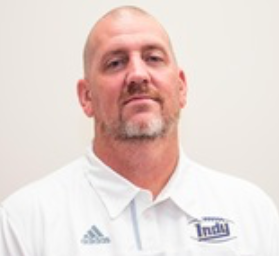
INDEPENDENCE, Kan. (AP) — Jason Brown, the junior college football coach whose program was chronicled in the Netflix series “Last Chance U,” has resigned after an inflammatory series of text messages in which he allegedly told a German player: “I’m your new Hitler.”
Coach Brown photo courtesy Independence CC athletics
Brown said in a statement posted on social media that a story on the texts in the Montgomery County Chronicle made it “nearly impossible to say” at Independence Community College.
The story reported a text exchange between Brown and freshman Alexandros Alexiou, who had posted the messages on social media. In one text message, Brown referred to disciplinary points that the German player had accrued, berated him and said, “I’m your new Hitler.”
School President Dan Barwick said in a statement it was investigating the text messages.
Brown’s team was profiled by “Last Chance U” during the 2017 season and again last season, when the Pirates finished 2-8. That season is scheduled to air later this year.
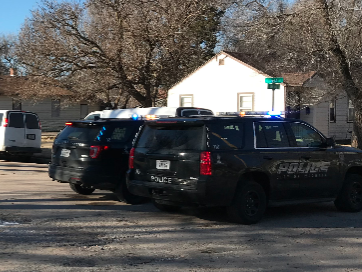
SEDGWICK COUNTY—Law enforcement authorities are investigating a shooting and asking the public for assistance with information.
Police on the scene of Sunday’s shooting investigation -photo courtesy KWCH
Just after 5a.m. Sunday, police responded to report of a shooting in the 1100 Block of South Fern in Wichita, according to officer Paul Cruz. Offices found a 27-year-old victim with in a vehicle with a gunshot wound to the head. EMS transported to man to a local hospital for treatment of critical injuries.
Police are working to determine if the victim was shot someplace other than in the vehicle. They have not released whether or not the victim lives at the address.
Anyone with information on the incident is asked to contact police.
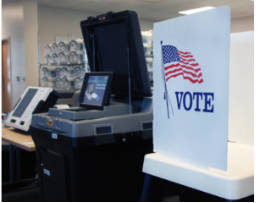
TOPEKA, Kan. (AP) — Kansas lawmakers are considering a proposal that would require election officials to notify voters before they throw out ballots because of problems with signatures.
The proposal comes after last year’s GOP primary for governor between Kris Kobach and then-Gov. Jim Colyer was decided by only a few hundred votes.
Currently, Kansas law allows election officials to throw out ballots with signature problems unless the voter fixes the signature by the end of Election Day.
The proposed law would require election officials to try to notify voters whose write-in ballots are missing signatures before the ballots are counted at county canvass meetings. The change would also apply to voters whose ballot signatures don’t match signatures on file with county offices.
A legislative committee on Friday sent the bill to the Senate floor.
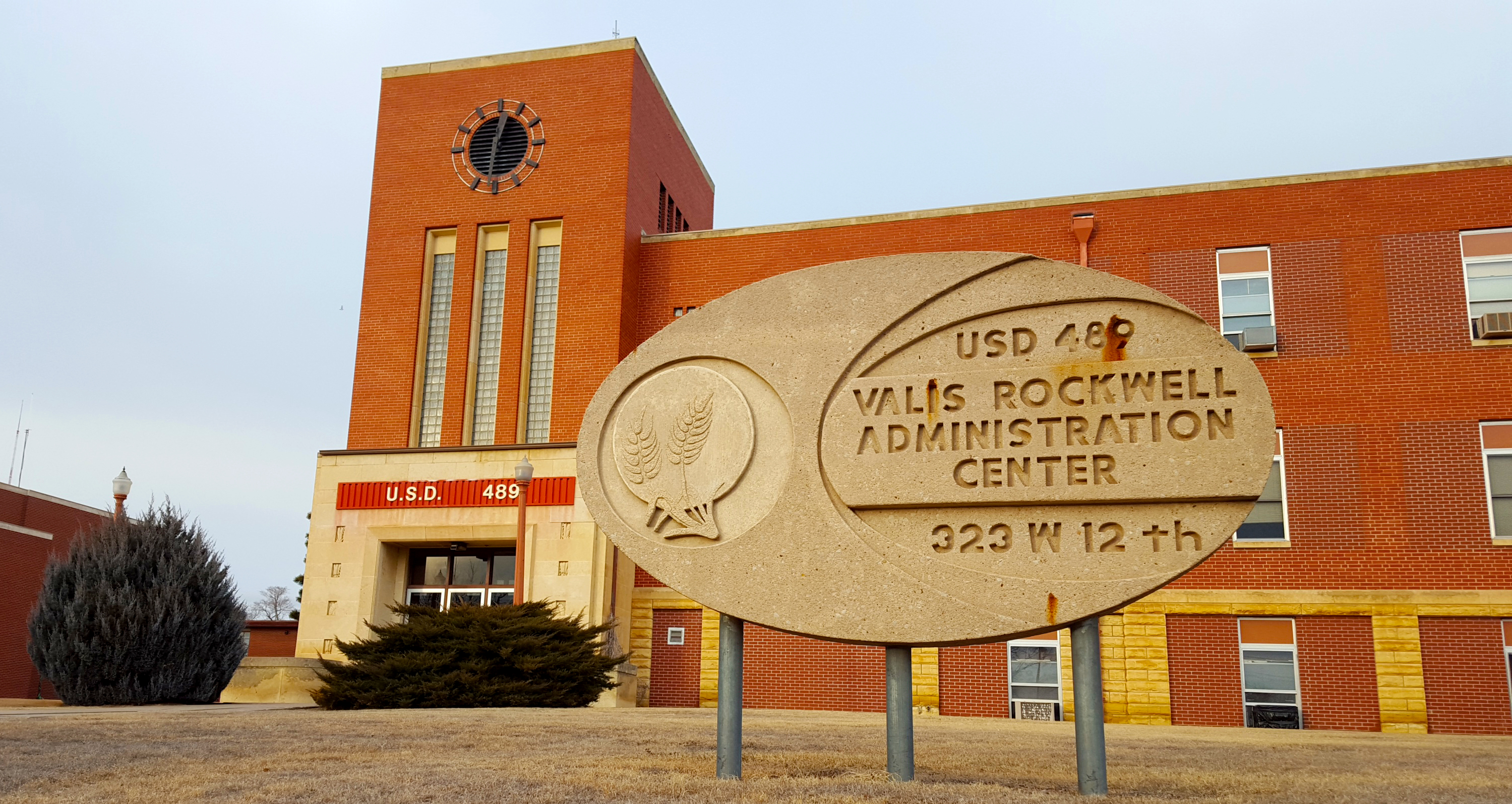
Despite a study on migrating Hays Middle School to Chromebooks next year, the Hays USD 489 Technology Committee is recommending the district purchase more iPads for HMS.
The Hays USD 489 school board will consider the iPad purchase at its meeting tonight.
A cost analysis compared iPads, Chromebooks and a Dell Windows operating system. The windows system was over budget.
The iPads came in at $254,320, and the Chromebooks came in at $317,612. The committee based the estimates on a purchase of 680 iPads with the staff using the machines they have now.
However, a switch to a new platform, would mean 40 more devices would have to be purchased for staff. The committee also took into account that the district would be able to continue to use the software it has now and additional training would not be needed for the iPads.
The iPads also scored higher on potential resale after four years, when the devices will be cycled out of use at the school. The iPads had an estimated resale value of $60, whereas Chromebooks only had a projected resale value of $10 each.
Board members asked the district to study the use of Chromebooks to determine if the devices would be cheaper than the iPads the district is currently using.
The district has a one-to-one policy for computers. Devices are on a four-year replacement plan, which administrators hope will decrease costs and keep budgets more consistent.
Interest-based bargaining
The school board will also consider moving negotiations to a interest-based bargaining system. Board member Paul Adams suggested the change at a recent meeting.
IBB is a collaborative approach to resolving labor and management disputes, according to the Federal Mediation and Conciliation Service. Through the process, parties proactively identify durable solutions to outcomes at the bargaining table. Agreements are based on mutual and individual interests rather than positions.
Kathy Rome, KNEA UniServ director, said the district used IBB in the past, but moved back to position bargaining.
During a recent public comment session with incoming Hays superintendent, Ron Wilson, she said local teachers are interested in going back to IBB.
Wilson is the current superintendent at Heringotn and has used IBB in teacher negotiations there.
Bond work
The district will continue to discuss a future school bond issue.
At the Jan. 28 school board meeting, DLR Group, the district’s architect, along with Nabholz Construction presented a list of possible bond projects totaling $29.4 million. These included finishing air conditioning projects at the Hays High School, expanding the cafeteria at HMS and renovating Roosevelt Elementary School to accommodate five sections of each grade.
The board is set to:
• Designate agents for teacher negotiations.
• Adopt a renewal of the five-year capital outlay resolution. The capital outlay mill levy is now at 8 mills.
• Review the administrative contracts for building-level certified administrators for the 2019-2020 school year.
• Review the proposed 2019-20 school year calendar created by the calendar committee.
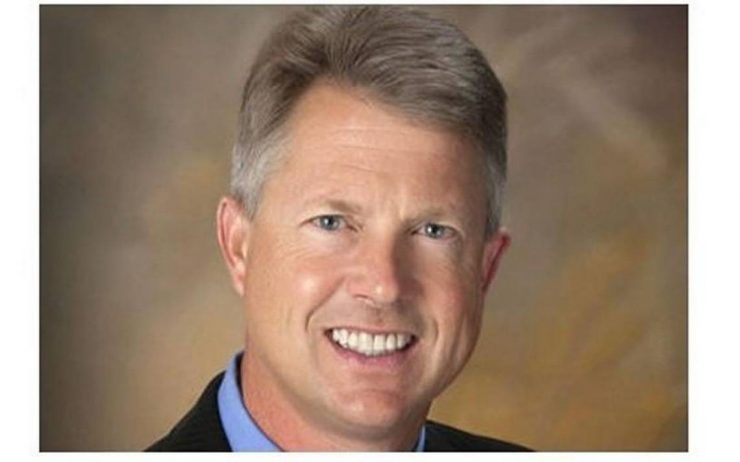
Dr. Roger Marshall, R-Great Bend, is the First District Kansas Congressman.
Friends,
Last week I had the chance to attend the groundbreaking ceremony of the new VA facility in Wichita named in honor of Sen. Bob Dole. The new facility will provide much-needed care for veterans across Kansas.
Laina and I also, visited our daughter, son-in-law and grandsons. I was thankful for some much needed family time.
VA Ribbon Cutting
I was honored to be part of the official groundbreaking ceremony for the new 12-bed, $4.4 million, substance abuse facility at the Robert J. Dole VA Medical Center.
Each month the Wichita hospital sends 15 to 20 veterans to Leavenworth or Kansas City for treatment, for addiction treatment. This new development will help address the much-needed support that our Veterans deserve. I did some work at the Wichita VA Hospital as a medical student, I know how impactful this center will be, and share Senator Dole’s goal of wanting our nation’s soldiers to have access to not only the best but also convenient, care.
Ribbon cutting for substance abuse facility at Robert J. Dole VA Medical Center
At the celebration, I was able to deliver a message from Senator Dole on the importance of this facility. He wrote, “More than just a groundbreaking, today marks a moment of real progress in the way we take care of our nation’s heroes. ‘Comprehensive care’ of our veterans now includes the entire spectrum of care — supporting these men and women in all aspects of their well-being.”
I believe the new in-patient facility will provide life-saving treatments for veterans across Kansas and is a huge step forward in the fight against addiction and veteran suicides.
Exploring the Sugar Land
Recently I had the privilege to visit my daughter and son-in-law and grandchildren. On my visit, we celebrated both my daughters and grandson ROW’s birthdays and got to take a look into Florida’s agriculture scene. We met with sugar farmers in Belle Glade, Florida.
I got a chance to talk to farmers about the state of agriculture in Florida and how their workflow relates to our producers back home in Kansas. While they grow a very different type of crop from what we’re used to in Kansas, share similar views on the ways that Congress can best serve American farmers.
Understanding the sugar industry is important to all of us on the House Agriculture Committee, and it’s helpful to understand the relationship between all agricultural products.
I was incredibly impressed with their attention to being ecologically friendly. For instance, during the sugar milling process (the process in which you take sugar cane and turn it into sugar), no water leaves the plant. It’s an entirely closed system that wastes no water.
They also take the by-products from the sugarcane processing and use it to generate all of the electricity consumed by the plant. Then they make that same by-product – the fiber in the cane stock where the sugars have been extruded – into biodegradable tableware, plates, and cups.
VA Appeals Modernization Act
The U.S. Department of Veterans Affairs recently announced the implementation of the Veterans Appeals Improvement and Modernization Act of 2017. I was proud to vote for the legislation and am hopeful it will bring meaningful changes to the VA system.
I want to give a shout out to our team, during my time on the Hill our office has helped nearly 100 veterans that expressed to us that they were experiencing issues with the VA or Department of Defense. The Modernization Act will allow the VA to process our inquiries faster and find timely resolutions for our veterans. One of the most important things I can do as an elected official is advocate for our veterans.
Congressman Marshall’s team
Welcome to the Team, Michael
We have officially welcomed Michael Brooks to the team as our new Legislative Director. Michael graduated from the University of Kansas and previously worked for U.S. Congressman Kevin Yoder. This week Michael hit the road across the Big First to meet with people and introduce himself. In Lyons, Kan., Michael toured Kansas Ethanol and hosted a round table with Central Kansas producers and industry leaders. In Garden City, he visited a cotton gin, dairy, and feedlot to discuss the farm bill, renewable fuel standards, and immigration policy. Please join me in welcoming Michael to the office.
Dr. Roger Marshall, R-Great Bend, is the Kansas First District Congressman.
Steve GillilandShow me one person who doesn’t have some sort of love-hate relationship with snow. It seems as though a person either love it or hates it, and for some of us it depends upon the day. It’s hard to explain how something that makes the landscape suddenly seem so sparkling clean and pure can turn on you in an instant and ruin your day. I was reminded this week how much I love to watch snow fall and how beautiful it makes everything it touches, but also how much I hate removing it from my driveway. I’m kind of a purist in that I believe God put it there and I don’t want to shovel it and take away any satisfaction He might get from taking it away himself! Yes, to the traveler, home owner, maintenance man and commuter, snow is often an unwelcome inconvenience. To the outdoorsman, however, snow opens up a whole new world of opportunities.
For the outdoors photographer or painter there is no other canvas that compares to an outdoor scene sporting a fresh snowfall. Suddenly, as if by magic, the mundane becomes majestic, the drab becomes dynamic and the everyday becomes extraordinary. Outdoor spots we pass daily with no recognition suddenly become scenes from a calendar. Like the lava lamps of days gone by, the look of the landscape slowly changes from hour to hour with the wind.
Obviously skiers and snowboarders live for fresh snow. After an overnight snowfall, hills too steep to climb become mere carnival rides beneath their feet. Cross country skiers can, in one day, see country it would take them several days to see on foot without the snow. And let’s not forget the farmers. As a rule of thumb, ten inches of snow equal one inch of rain and snow supposedly brings with it good nutrients too, so even though the last thing our fields need at this particular time is more moisture, our Kansas wheat and alfalfa can always benefit from the snow in the long run.
Hunters and trappers can benefit greatly from a fresh snowfall. Tracks of deer, coyotes, bobcats and other game animals are tough to spot in our often dry Kansas soil, so trying to learn their movement patterns can rely on being fortunate enough to see the animals themselves. Remember going to dances back-in-the-day when your hand was stamped with a mark that only showed up under a special “black light?” That mark was there the whole time but only became visible when put under the light. Just like the black light, snow suddenly shows tracks of wildlife that have been traveling those same paths for months, but leaving no visible signs.
After a significant snowfall a few years ago, I spent time scouting an area I still had yet to trap. It was a soybean stubble field along the river where my wife harvested her first deer several years before. Besides hordes of deer tracks, I followed 2 sets of bobcat tracks as they meandered back and forth across the field and between several freshly made brush piles. I tracked a coyote for several hundred yards and was able to observe exactly how it related to certain land features. I followed coyote tracks on a frozen drainage ditch and could see where it had stopped to nose around under logs and other attractions. Its tracks showed me cattle trails it had traveled along the steep banks and where it had entered and left the ditch. Closing my eyes, I could almost see these animals as they left the footprints that held my attention.
So, the next time it snows, after you’ve shoveled the driveway, cleaned the walks, swept the deck and cursed the weatherman, grab your camera or walking stick and head for the woods. It will definitely influence your relationship with the “white stuff” as you continue to Explore Kansas Outdoors
Steve Gilliland, Inman, can be contacted by email at [email protected].
Sat., May 4, 2019 at 8 a.m. the Victoria Junior High Leadership team will host a charity 5K run/walk to benefit the St. Fidelis Emergency Fund. The fund benefits community members and travelers regardless of religious affiliation.
The run will begin at Victoria Junior/Senior High School, 1105 10th Street, Victoria, Kansas.
Registration is $25.00, and runners or walkers should bring a can of non-perishable food with them the day of the race.
Participants who register before April 22, 2019 will receive a race t-shirt.
For more information, or to register, please contact Carolyn Nelson at [email protected].
The Dane G. Hansen Museum, Logan, is pleased to offer a Floral Design class on Thursday, April 4. Participants will learn to work with greenery and flowers, and by the end of class, will have their own floral arrangement to take home. Class will begin at 7:00 p.m. and will be led by Mrs. Gottstine’s Plant and Soil Class from Logan High School.
This enjoyable learning opportunity is offered to the public through the Hansen Museum’s Continuing Education Program with funding from the Hansen Foundation. Registration fee is $25.00 per participant, with discounts available to Patron and Sustaining Hansen Museum Members.
Please call the Museum to sign up before March 15.
For more information, please contact Director Shari Buss at 785-689-4846.
The Museum is open weekdays 9-12 and 1-4; Saturdays 9-12 & 1-5; Sundays and holidays 1-5. We are closed Thanksgiving, Christmas, and New Year’s Day. The Museum is handicap-accessible and thanks to the generosity of the Dane G. Hansen Foundation, there is never an admission fee.