MARYVILLE, Mo. – The Fort Hays State men’s track and field team ended a successful weekend at the 2019 installment of the MIAA Indoor Track and Field Championships with a 6th place team finish. Alongside the strong team performance, multiple Tigers completed record-breaking and high-placing finishes. The event last Feb. 22 – 24 and was hosted by Northwest Missouri State in Maryville, Mo.
Among the highlights for the team on the weekend was the distance medley relay team claiming the title in their event. The quad, consisting of Brett Meyer, Israel Barco, Malcom Gardner and Seppe van ‘t Westende completed the relay with a new school and MIAA record time of 9:52.80. This also gives the Tigers the 10th-best time in NCAA Division II.
Meyer defended his previous MIAA title in the mile with a time of 4:09. 98, followed closely by van ‘t Westende in fourth place at 4:12.01 and Oscar Carmona clocking a seventh place finish at 4:16.26. Philip Landrum completed his weekend with an upset in the 60-meters with an NCAA Division II qualifying time of 6.83 to win the event.
Matthew Pieper earned a new school record in the decathlon with a fourth place finish by accumulating 5,083 points. This total also gave Pieper an improved provisional. Kolt Newell earned an NCAA qualifying mark in the high jump by finishing in the runner-up position with a jump of 6 feet, 11 ½ inches. This was also a personal best for Newell. Lucas Broxterman finished the high jump in eighth
place.
In the 5,000-meters, Carmona clocked a fifth place finish with a time of 14:57, while teammate Layton Werth captured eighth place at 15:01. Landrum documented a fourth place finish in the 200-meters with his time of 21.73, an NCAA provisional.
In the pole vault, Ryan Stanley finished in seventh place with a mark of 15 feet, 5 ¾ inches.
Up next, the Tigers await their fate at the 2019 NCAA Division II Indoor Track and Field Championships. The event runs from March 8-9 at Pittsburg State University.
KANSAS CITY(AP) — A Lee’s Summit teenager has been sentenced to 15 years in prison in the stabbing death of a woman who was attacked at a car wash.
Joshua Trigg -photo Jackson Co.
Seventeen-year-old Joshua Trigg was 13 when 49-year-old Tanya Chamberlain, of Lee’s Summit, was kidnapped from the car wash and killed in 2015.
Lee’s Summit police say the teens drove away with Chamberlain in her car. Police tried to pull the car over and the two teens ran. She had been stabbed or cut 49 times.
Trigg’s co-defendant, Trevon Henry, was sentenced in January to two life sentences plus 50 years. Henry was 14 at the time of the killing.
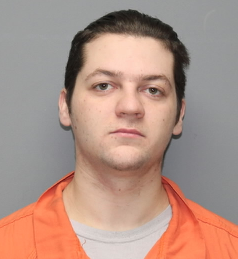
HUTCHINSON, Kan. — A Kansas man waived his preliminary hearing Friday and entered a plea to one of six charges in a connection with felony flee and attempt to elude officers.
In October, Tyler Humphries, 22, Hutchinson, led Reno County sheriff’s deputies on a brief high-speed chase in a stolen vehicle.
Humphries -photo KDOC
Sheriff’s deputies were looking for the stolen vehicle at a mobile home park in Yoder when Humphries fled east toward Haven. He then turned north to the intersection of Haven Road and Illinois where he got out of the vehicle and waited for deputies to arrive. He then surrendered.
Humphries is serving a sentence for three counts of theft from 2017 and following his plea to one count of felony flee and elude the other charges were dropped.
He will be sentenced on March 29. He has six previous convictions that include theft and criminal damage to property, according to the Kansas Department of Corrections.
TOPEKA — A new bill proposed in the Senate on Thursday could take some financial burden off grandparents who are primary caregivers and providers for their grandchildren.
The Kansas Senate Judiciary held a committee meeting on Feb. 21 to discuss amendments made to SB166, which deems children as foster children under the grandparents as caregivers act.
The bill, which was introduced on Feb. 13, states, “If a person meets the financial eligibility requirements developed by the secretary, a grandparent shall be eligible to participate in the program if such grandparent: (1) Is 40 years of age or older (2) Has the grandchild placed in such grandparents custody by the state, is the legal guardian of the grandchild or has other legal custody of the grandchild; and (3) has an annual household income of less than 300 percent of the federal poverty line.”
The two amendments made to the bill previously required that the grandparent be 50 years of age or older and have an annual household income of less than 130 percent of the federal poverty line. The change in the percentage allows for more grandparents to qualify for the benefits of the program.
Some stipulations with the bill are that the grandparent is not eligible if the parent or parents of the child are living with said grandparent. The grandparents will be required to meet eligibility requirements each year to continue in the program.
With this bill, qualifying grandparents are reimbursed $200 per grandchild per month until they are 18 or reach the age of 21, if the child is in full-time attendance at a secondary school or postsecondary educational institution.
Sen. Randall Hardy (R-Salina) testified in support of the bill. He was invited to attend a group meeting called Grandparents as Parents, which met at the Child Advocacy and Parent Services (CAPS) agency in Salina. Here, he said was informed about the problem of parents who don’t work out to be adequate parents for their children.
“I attended one of their meetings and it was at the same time heartbreaking and hopeful,” he said.
The parents’ stories moved Hardy, which led to his increased support of the bill. He brought with him a copy of an email sent to him the night before, displaying a first-hand account of a grandparent’s experience.
In the email, Kimberly Dykes, 59, explained how difficult her and her husband’s lives have been without the assistance of this program from the federal government.
“We couldn’t get the parents to sign releases and they would not show up to do any of the needed things for the children,” Dykes wrote. “They did not provide any financial assistance for their children.”
Sen. Vic Miller (D-Topeka) asked about the age restriction at the end of the testimony.
“What would it matter if they were 39 or 40?” Miller asked.
Hardy responded that this was to make the bill palatable, but is something that could be revisited.
Hardy also said the bill is similar to one that didn’t pass in the House. If passed, this bill would take effect on July 1, 2019.
Olivia Schmidt is a University of Kansas senior from Lawrence studying journalism.
UPDATED Sunday afternoon: The Kansas Bureau of Investigation has canceled the Silver Alert for Juanita L. Stecher. She was found deceased in Reno County.
——-
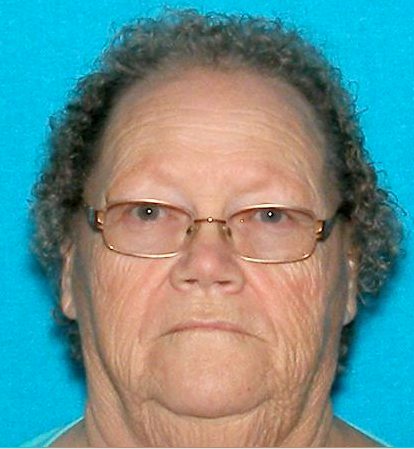
SEDGWICK COUNTY – The Cheney Police Department has requested that the Kansas Bureau of Investigation (KBI) issue a statewide Silver Alert for a missing Derby woman.
Photo courtesy KBI
According to the KBI, the whereabouts of Juanita L. Stecher, 74, are unknown, and the public’s assistance is requested to help locate her. Stecher is a white female with short, grey hair and blue eyes. She wears gold glasses.
Stecher was last seen near Central and Maize in Wichita at approximately 5 p.m. Friday, Feb. 22. She was in a Silver 2013 Chevy Equinox with disabled tag 67754. She called family indicating her car was stuck in the mud, and she was unsure of her location. She may have been near the Cheney area.
If you see Stecher or her vehicle, please immediately contact the Cheney Police Department at (316) 213-5831.
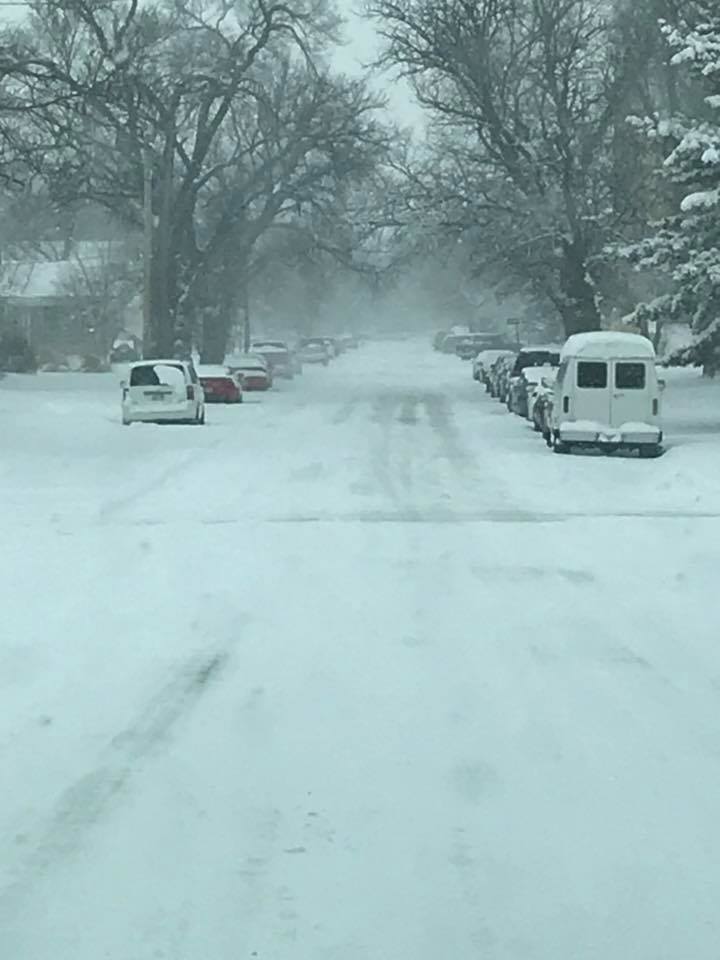
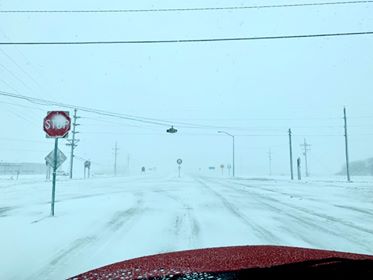
The Snow Emergency was lifted in Hays just before noon Sunday. Street plowing continues. (Photo courtesy HPD)
CITY OF HAYS
City Manager Toby Dougherty has ended the Winter Storm Traffic Emergency plan for the city of Hays.
People who live or work along emergency snow routes can now return to their normal routine of parking on the snow routes.
The city of Hays Public Works Department will continue with snow removal operations throughout the day. Tonight the crews will focus on removing snow from the downtown area.
While the worst of the winter storm is over, the Hays Police Department is asking that motorists limit their travel if at all possible. Those that must travel are advised to do so with caution, and are encouraged to give themselves extra time to reach their destination. Please remember to drive slow, pay attention to vehicles in front of you, and allow for extra stopping distance.
KNOXVILLE, Tenn. (AP) — Helen Ryde is a devout, gay United Methodist on a 600-mile personal prayer journey.
Helen Ryde-courtesy photo
Her trip across four states comes days before United Methodists from around the world consider if their denomination should allow same-sex weddings and LGBTQ clergy. Ryde’s traveling from her western North Carolina home to St. Louis, Missouri, where she’ll attend the UMC 2019 Special Session of the General Conference.
Last Tuesday, Ryde stood on the white-columned porch of East Knox County’s 160-year-old Pleasant Hill United Methodist Church to pray a short, impassioned prayer and leave a “letter of love.”
She’ll repeat that prayer and leave that letter at dozens of churches in North Carolina, Tennessee, Kentucky and Illinois.
Her prayer to a “loving and gracious God” thanks each church for worshipers’ “life and witness.” It asks God to give every congregation “a holy boldness to stand up for and show your love to all who have been discarded to the margins of their community, whoever and wherever they may be.”
The prayer includes a sentence of inclusion, the focus of Ryde’s intercession and trip. It asks that lesbian, gay, bisexual, transgender and queer people at every church she visits “know how fearfully and wonderfully made they are, how beloved by God they are, and may they be surrounded in love and care and kindness.”
“That’s the piece I really hope people think about,” Ryde told USA TODAY Network Tennessee. “Who has been among them? Who is among them? How have they known they are loved and accepted and cared for, by God and by the congregation?”
Avoiding interstates to find churches
Ryde set her path to visit 66 UMC churches, plotting locations on a Google map to avoid interstates. But she may need to skip a few locations; she’d fallen behind her strict schedule by Tuesday.
In St. Louis, she isn’t a delegate at the Feb. 23-26 conference. She’ll be among those Methodists watching as 864 clerical and lay delegates consider the denomination’s stance on human sexuality. Delegates will consider proposals to strengthen the UMC current ban on same-sex marriage and gay clergy or to change the policy to be more inclusive of the LGBTQ community.
The plans come after years of debate among the second largest denomination in the United States. What happens could set denominational policy but fracture the church, causing congregations and individuals to leave.
John Wesley and a Prius
Ryde’s road trip companion is a tiny, game-size piece metal statue of UMC founder John Wesley. Wesley’s riding a horse. Ryde’s driving a Prius.
With Wesley in her pocket, Ryde travels a lot for her job. A United Methodist since 2005, she’s now the southeast region organizer for Reconciling Ministries Network. RMN is an unofficial caucus organization of Methodists who seek the church’s complete inclusion of LGBTQ individuals.
She says this circuit-riding route is a personal one.
“I wanted to ground my trip in something that meant something,” Ryde said. “I wanted it to be a meaningful journey. One of the things that sets United Methodists apart is that it’s a connectional, not a congregational, church. So I thought a way to celebrate and remember that would be to stop at all these churches and leave my letter and pray the prayer.
“For me, it was about reminding myself of the importance of this connection and the importance of us being able to continue to influence folks to move in a more inclusive direction.”
While she visited Tuesday with friends at Knoxville’s Church Street UMC, Ryde doesn’t expect to see many people on her route. At most, she’s a stranger looking to give a prayer and leave a letter. Securing that envelope can be challenging; not every building’s got a mailbox. At Pleasant Hill, she stuck the letter between the church’s two double front doors.
She hopes churches will share her message. “I hope they will know they are connected to people who want to stay connected as United Methodists and who also desperately want a church that is inclusive, welcoming, celebrating and affirming of LGBTQ people.”
A deeply divided denomination
In St. Louis, delegates are to debate keeping or removing language in the church law book called the United Methodist Book of Discipline. The current language prohibits same-sex marriage and says self-avowed practicing homosexuals” cannot be ministers. The book states the practice of homosexuality is incompatible with Christian teaching.
Among the delegates are 12 ministers and lay representatives from the Holston Conference. The conference includes 872 congregations in East Tennessee, Southwest Virginia and north Georgia.
The general conference is the top policy-making body for United Methodists, which includes more than 12.6 million members worldwide. The long-running debate over human sexuality and Biblical interpretation has deeply divided many Methodists. Both conservative, traditionalist groups like the Wesleyan Covenant Association and the progressive RMN have taken stances. Both groups have representatives in the Holston Conference.
Remaining a Methodist
Ryde joined the UMC as an adult. She grew up in evangelical nondenominational churches in England. From age 19 to 32, she tried to “pray away the gay” with efforts that included therapy, counseling and exorcism.
“It doesn’t work,” she says. “I always said I never fell out with God about it. I like to say when you come out and decide to be who you are, you don’t have to move to America. But I did.”
She joined the UMC after moving to Massachusetts and finding she “really missed being in a worshipping community.”
Whatever happens at the general conference, Ryde will remain a Methodist. “I feel that until God tells me something different…I feel as though this is what I’m supposed to be doing.”
Hays resident Joe Edwards measured 8.5″ of snow in his yard Sat.
By BECKY KISER Hays Post
So here it is. The answer to what you’ve been wondering about since yesterday’s blizzard.
The official amount of snow measured Sat., Feb. 23, at the K-State Agricultural Research Center south of Hays is 7 inches, yielding 0.52 inches of moisture.
So far in 2019, Hays has received 1.65 inches of moisture. The seasonal snowfall to date is 25.80 inches.
Saturday’s high temperature was 31 degrees with peak wind gusts hitting 41 mph, causing drifting snow. The overnight low dropped to 11 degrees.
Frontier Park bridge
Frontier Park Sat. afternoon (Photo courtesy David Koshiol)
8.5″ of snow in one Hays yard (Photo courtesy Joe Edwards)
Vine and Old Highway 40 Bypass at 2 p.m. Sat. (Photo courtesy David Koshiol)
The Kansas Zeta chapter of Sigma Phi Epsilon fraternity at Fort Hays State University recently won four awards for excellent alumni engagement and undergraduate student mentorship. The awards were presented at the Carlson Leadership Academy held in Dallas.
Dr. Joey Linn, vice president for student affairs, was presented the University Partner of the Year Award.
Dr. Taylor Kriley, director of inclusion and diversity excellence, won the Outstanding New Volunteer Award.
The undergraduate Sigma Phi Epsilon chapter was recognized with the Excelsior Award.
The local Sigma Phi Epsilon alumni volunteer corporation earned the Alumni and Volunteer Corporation Operational Excellence Award.
“These awards recognize the outstanding ways in which Sigma Phi Epsilon alumni and volunteers are mentoring undergraduate students. These individuals represent the best of Sigma Phi Epsilon and Fort Hays State University,” said Dr. Vincent Bowhay, alumni volunteer corporation president.
Sigma Phi Epsilon was founded Nov. 1, 1901 at the University of Richmond in Virginia and has since initiated over 325,000. The Kansas Zeta chapter at Fort Hays State was established in 1958 and re-established in 2012.
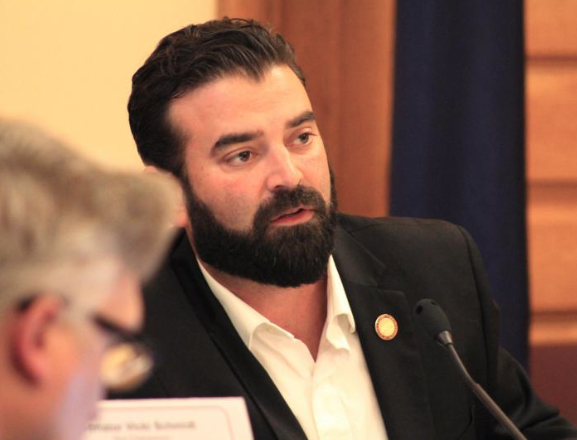
Twice, Rep. Jarrod Ousley introduced bills that would create a watchdog over the Kansas agency in charge of looking after children from troubled families.
Rep. Jarrod Ousley, a Merriam Democrat, at a meeting of the Child Welfare System Task Force. Ousley has twice introduced a bill to establish independent oversight of the state child welfare agency, but is now pushing it to next year. FILE PHOTO / KANSAS NEWS SERVICE
Ousley says he’s dropping the idea of a state child advocate. For now.
Instead, the Merriam Democrat wants to give the new Democratic administration a shot at reforming the Department for Children and Families before bringing in an outside office to look over its shoulder.
The office would have the power to review investigations and decisions made by the DCF, but it would be housed in the Department of Administration. That separation is key for child welfare advocates, who want to ensure DCF can’t retaliate against an advocate who turns up mistakes or wrongdoing.
The bill didn’t even make it to a floor vote last year. After reintroducing the idea this year, Ousley this week yanked it. Instead, he’ll revisit the proposal next year. The lawmaker said he wants to give Gov. Laura Kelly’s administration a year to get a handle on child welfare issues.
Ousley’s child advocate bill was sunk last year, in part, by DCF’s objection. He’s hoping to earn the support of the new governor and new head of DCF by giving them some time before setting up an outside advocate’s office.
“I’d rather delay the year,” he said, “get it right, and get it moving forward without any obstruction than to risk getting nothing at all.”
Kelly made child welfare a central tenet of her campaign. She’s said fixing and increasing funding for DCF is a high priority for her first year in office.
Ousley said DCF doesn’t plan to oppose the bill, but that the governor wanted time to get settled and attack pressing child welfare problems first.
Kelly spokeswoman Ashley All didn’t say whether the governor favors setting up an advocate’s office, but did say the administration is prioritizing other issues, like adding social workers and funding foster care prevention.
“We must first stabilize this agency and the child welfare system before we can make other significant changes,” she said in an email.
But others are concerned about the harm that can be done in another year without that kind of oversight.
Judy Walsh strongly supports the bill, which she says could have helped protect her grandson, Adrian Jones. The boy died as a result of abuse in 2015 despite multiple reports to the state abuse hotline and several DCF investigations.
She said she’s been frustrated with the slow pace of change in the three years since Adrian’s death. She worries pushing this bill back a year is a sign that Kansas is losing momentum on policy changes in child welfare.
“I just worry that there’s going to be more children falling through the cracks,” Walsh said.
The cost to kids of waiting a year is Ousley’s biggest concern in pushing the bill to 2020.
“A year in a child’s life is a very long time,” he said.
Missourians worried their abuse reports weren’t adequately investigated by the Department of Social Services, foster parents who think their knowledge is being ignored by their caseworker, or aunts questioning why their nephew was placed in a foster home when they had offered their open bed can call or email the office to have their concerns reviewed.
The Missouri Office of the Child Advocate exceeds goals in getting in touch with complainants and completing its investigations in a timely manner. In 2017, it contacted complainants within three business days 94 percent of the time. It wrapped up investigations within 45 business days 87 percent of the time.
In Kansas, where DCF has missed federal standards for timely handling of its cases, having an office without the baggage of a poor track record could be a boon for public trust.
“It’s an extra check and balance on the system that anybody, anybody can access,” said Lori Ross, president of the child welfare advocacy organization FosterAdopt Connect.
Ross said having an office that allows people to feel heard would also help Kansas with one of its particular challenges in foster care — retaining foster parents.
“That very basic level of, ‘Hey, I hear you have a concern, and it’s valid enough that I’m going to look into it and get back to you,’” said Ross, “that in itself is retention.”
FORD COUNTY— Two people died in an accident just after 5:30p.m. Saturday in Ford County.
The Kansas Highway Patrol reported a 2002 Subaru Impreza driven by Luis Diego Galvan-Gomez, 21, Dodge City, was eastbound on U.S. 50 two miles east of Wright.
The driver lost control of the vehicle. It traveled left of center. A 2003 Peterbilt semi driven by Ronnie R. Lindsely, 68, Bath, Illinois, struck the Subaru.
Galvan-Gomez and a passenger Maritza Isabel Zamora, 21, Dodge City, were transported to Western Plains Medical where they died.
The crash on U50 east of Ford County rd 119 is now a double fatal. U50 is still closed. Stay out of area. Be safe.















 Today
Today