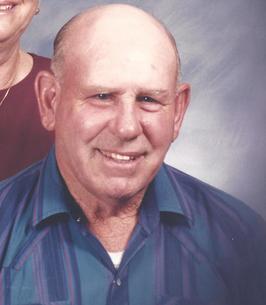
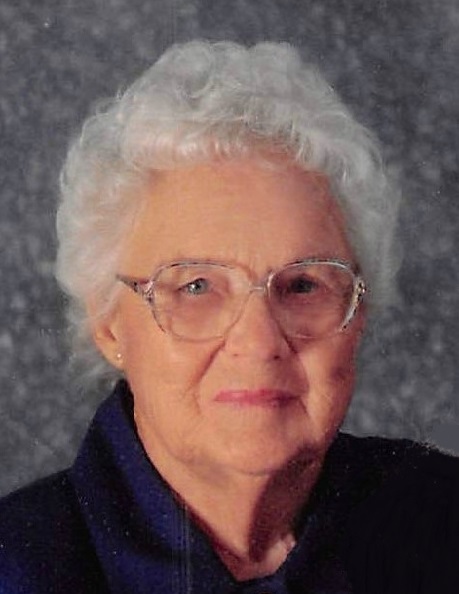
Sunday, May 5th, 1957 – Monday, February 18th, 2019
An obituary is pending with Baalmann Mortuary.
Click HERE for service details.
Sunday, May 5th, 1957 – Monday, February 18th, 2019
An obituary is pending with Baalmann Mortuary.
Click HERE for service details.
By STEPHEN KORANDA
Kansas News Service
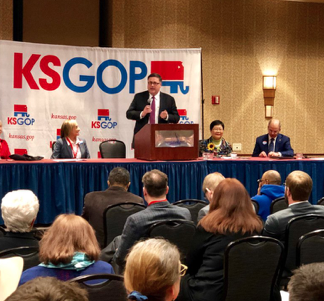
The new chairman of the Kansas Republican Party is focused on winning back the governorship and the 3rd Congressional District. He told party leaders this weekend how he plans to do it.
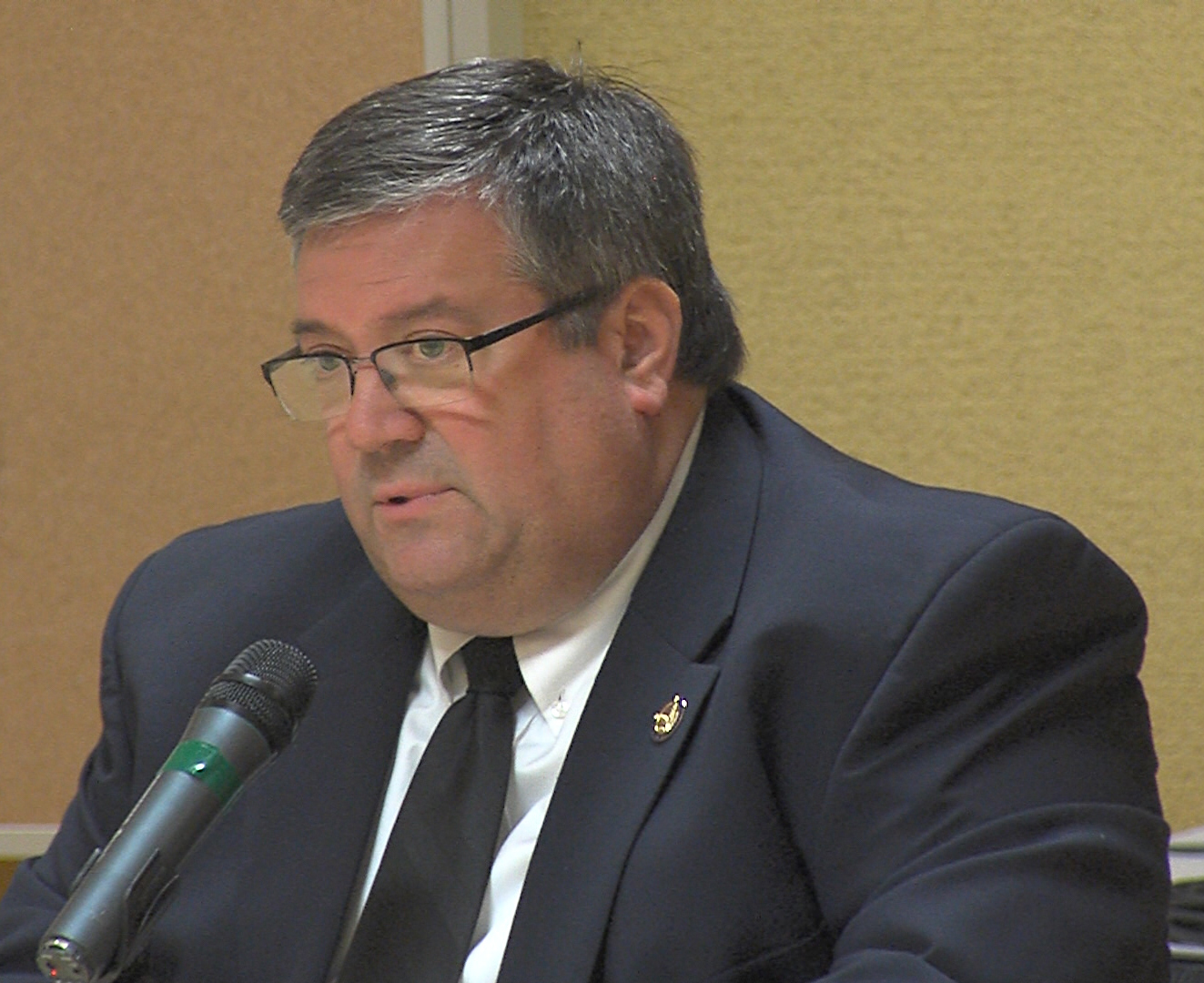
Johnson County attorney Mike Kuckelman was the only one to present a full slate of leadership candidates for party officials to consider at their state convention Saturday.
Virginia Crossland-Macha is the party’s new vice chair. She’s currently a member of the Kansas State Fair Board with connections to the construction industry.

Emily Wellman will serve as party secretary and Bob Dool, who was treasurer for Kris Kobach’s gubernatorial campaign, will now be treasurer of the party.
Kuckelman told the GOP activists gathered for the convention that the party needs to improve its fundraising and engage unaffiliated voters in order to boost turnout and rebound from some stinging recent losses.
He urged the crowd to be prepared to pay for outreach to gather more votes.
“I will be asking for money. It’s just that important,” Kuckelman said. “We need the money to get this done.”
He joked that some Republicans might start hiding their wallets when they see him coming.
The Kansas GOP’s new leader takes over not long after Republicans saw their streak of congressional and statewide wins broken in 2018.
While Republicans held all other statewide offices and congressional seats, Democrat Sharice Davids unseated four-term 3rd District Rep. Kevin Yoder in the Kansas City area. And Democrat Laura Kelly beat the polarizing former Secretary of State Kris Kobach by a five-point margin in the governor’s race as she drew some Republican and unaffiliated voters.
Well over 500,000 Kansas voters are unaffiliated – nearly a third of the total registered.
“They don’t know who to vote for,” Kuckelman said Saturday. “They don’t understand why they should be a part of the Republican Party.”
Along with engaging unaffiliated voters, Kuckelman said Latinos could also be key to reinvigorating the Kansas GOP.
Latinos make up about 6 percent of the state’s eligible voting population.
Kuckelman said in an interview that immigration rhetoric from President Donald Trump and others makes them harder to reach.
“If you look at the Republican platform, we’re strongly in favor of immigration,” he said. “What the Republicans are opposed to, everyone I assume is opposed to, is people who violate the law.”
The state party platform calls “legal immigration … a blessing to this country,” but emphasizes border security, opposes sanctuary policies, and asserts that employers should have the right to fire workers who are not competent in English.
Kuckelman has represented Republicans in a number of high-profile legal fights.
Currently, he is representing the Kansas Senate’s majority leader in a defamation lawsuit against the Kansas City Star. He’s also defended a Republican House member charged with lying about his residency during the 2018 campaign. Kuckelman has called that charge “politically motivated.”
In 2014, Kuckelman also helped U.S. Sen. Pat Roberts successfully fend off a complaint that he didn’t really live in Kansas to stay on the ballot.
Outgoing Kansas GOP Chairman Kelly Arnold decided not to run for reelection after six years in the post.
Kelly led the party through that contentious 2014 campaign when Roberts and then-Gov. Sam Brownback faced tough challenges but both ultimately won reelection.
But in 2016, conservatives lost some of their grip on the Kansas Legislature, with more moderate Republicans and Democrats winning dozens of seats – enough to form a coalition majority to reverse Brownback’s signature tax cuts and pass school funding increases conservatives had long fought.
Conservatives regained some ground in 2018 and Republicans maintained their dominance in the Legislature, but after the fall elections several moderate lawmakers defected to the Democratic Party.
Kuckelman is promising to build more unity in the Kansas GOP.
To conservative John Hoffman, from Maple Hill, building unity doesn’t mean putting together a more moderate party platform.
He said members of the Republican Party should support the platform. If they can’t, they should consider whether the GOP is the right fit.
“They get to the point where they can’t agree … they leave. That seems to be a logical result,” he said.
The contentious gubernatorial primary between Kobach and then-Gov. Jeff Colyer – two conservatives with very different styles – also left divisions. Hoffman is typical of party members who want to see more unity.
“There was not very much party unity coming out of the primaries,” he said. “I’m hoping that we can get a little more organized.”
Despite his calls for outreach, Kuckelman doesn’t expect to moderate the party’s platform.
“Republicans in Kansas are always conservative,” he said. “I think it will continue to be a conservative party.”
Stephen Koranda is Statehouse reporter the Kansas News Service. Follow him on Twitter @kprkoranda.

Hello from Topeka!
This is the two-minute warning for the first half of the 2019 Kansas Legislative Session. Most of next week will be spent on the house floor all day debating and voting on the bills produced through the committee process.
With that being said, it is time for a round of legislative updates on Friday, March 1st. There will be a more detailed schedule next week also check on kenforkansas.com or my social media channels.
Now, let’s get to some of the big items this past week: On Thursday, February 14th, the House considered HB 2197, which would reamortize KPERS for thirty years. This bill was introduced by Gail Finney (D-Wichita) on behalf of the Governor. The bill is the cornerstone of the Governor’s budget proposal. It proposes to extend the time that KPERS is not fully funded and this refinancing frees up some short-term dollars to support the Governor’s proposed spending increases.
The bill received a public hearing in the Financial Institutions and Pensions Committee and opportunity was provided to debate and amend the bill. It was imperative to see if this bill had any support before considering the entirety of the Governor’s Budget. With one third of the session in the books, house budget committee members needed to know if this “crucial” part of the Governor’s proposal had support.
On a motion to advance HB 2197 to final action, the motion failed with a super majority opposing the measure, effectively killing the bill. The vote was 36 in favor and 87 against. I along with all the remaining Republicans voted against advancing the bill and they we were joined by four Democrat colleagues. Supporting reamortization would extend the time KPERS is not fully funded by 15 years and leave a debt legacy of $7.4 billion more just to fund the Governor’s spending increases today. Protecting our retirees, responsibly paying down debt, and ensuring that future Kansans don’t have to incur massive debt for current spending are all priorities for our members. We stood together in defense of those priorities and against bad policy that violated them.
Also, this past week, as a member of the House Appropriations Committee we heard the Governor’s Supplemental Budget bill, HB 2121. Appropriation adjustments to the current approved budget for FY 19 include: $9.3 million SGF for a one-time payment to the federal government for debt setoff settlement agreement; $2.2 million SGF for the KanCare Clearinghouse; $6 million for revenue shortfalls at the four State Hospitals (Osawatomie, Larned, Kansas Neurological Institute, and Parsons); and $1.4 million SGF for medical contract funding in the Department of Corrections. Additionally, the Supplemental bill reflects caseload adjustments.
Additionally, the Governor added language replacing current law on the Budget Stabilization Fund, modifying how deposits and withdrawals would be made to the Fund. She also set up an deposit/withdrawal arrangement for a Debt Repayment Fund. The Governor’s Supplemental bill also pays the Pooled Money Investment Board loan in full, eliminating planned transfers to pay the interest-free loan off in FY 20-FY 24. The Governor also eliminates the transfer from the SGF to the KPERS Trust Fund of up to $56 million if SGF receipts are above the April consensus estimates.
The other budget bill, the Mega bill, is HB 2122.
The House Appropriations Committee has begun the process of considering Budget Committee recommendations this week. Those recommendations and any changes made by the Appropriations Committee will eventually become a budget bill for consideration by the House. The last of the Budget Committee reports will be made to Appropriations on March 13. The budget bill will be finalized in Appropriations after that date.
And on Wednesday, a Joint meeting of the House and Senate Education Committees were held to hear the Dyslexia Task Force Report. The Task Force was created in 2018 Sub. for HB 2602, a bill crafted and worked by the 2018 House Education Committee. The Task Force met five times during the 2018 Interim. The four Subcommittees met for additional days.
The Legislation provided a charge of four areas to study: 1) Research and recommend evidenced-based reading practices to address dyslexia or characteristics of dyslexia for use by schools. 2) Research and recommend high-quality pre-service and in-service professional development activities to address reading difficulties like dyslexia, including identification of dyslexia and effective reading interventions to be used in schools and within degree programs, such as education, reading, special education, speech-language pathology, and psychology. 3) Study and examine current state and federal laws and rules and regulations, and the implementation of such laws and rules and regulations that affect students with dyslexia. 4) Identify valid and reliable screening and evaluation assessment and protocols that can be used and the appropriate personnel to administer such assessments in order to identify children with reading difficulties, such as dyslexia or the characteristics of dyslexia as part of an ongoing reading progress monitoring system, multi-tiered system of supports, and Child Find special education eligibility for students.
The leadership of the Dyslexia Task Force was Chairperson Jim Porter (State Board of Education) and Vice-Chairperson Rep. Brenda Dietrich (R-Topeka). The Task Force organized its recommendations around the structure of the four subcommittees that were created: Pre-Service and Inservice Professional Development; Screening and Evaluation Process; Evidence-based Reading Practices; and Current State and Federal Law. The recommendations did not include any proposed legislation but did recommend that the Legislature reappoint the Dyslexia Task Force to meet once per year for three years to monitor progress of implementation of the recommendations. Also included was that the Legislature provide funding for: school districts to train staff on dyslexia and to train college of education professors who teach reading. A bill to reauthorize the Task Force has not been introduced this session.
Nearly all the recommendations provided guidance to the State Board of Education. Specific recommendations included: requirements for standards; examinations of certain teacher candidates on the science of reading; and encouragement of colleges of education to develop a course of study with a specialization in dyslexia and dyslexia-like characteristics.
We had a great group from Norton at the capital this week, they met with several new cabinet secretaries and had lunch with a number of members of the house and senate including Lt. Governor Lynn Rogers.
If you come to Topeka during the session, my office is in Room: 149-S. My phone number is (785) 296- 7463 and email is: [email protected] and you can always try my cell number is (785) 302-8416.
I hope to see you at one of the legislative updates on March 1st. It is my honor to by your representative.
Rep. Ken Rahjes (R-Agra), is the 110th state representative and chairman of the Higher Education Budget Committee. House District 110 includes Norton and Phillips counties as well as portions of Ellis, Graham, and Rooks counties.
 Veta Marie Fischer, 91, passed away February 18, 2019, in Salina, Kansas.
She was born November 27, 1927 in Kinsley, the daughter of Otto and Aurelia V. Matzek Whitcomb. She was a homemaker.
She was a member of the Larned United Methodist Church, local Bridge Club and she enjoyed playing Pitch and was the best baker in the world.
On February 16, 1947, she married Rex Dean Fischer in Larned. He died April 9, 2002.
Survivors include: daughter Tami Fischer, Salina; a daughter-in-law Rita Fischer, Salina;
one grandchild, Renee Fischer, Denver, Colorado, and nieces and nephews.
She was preceded in death by her husband, her parents, a son, Michael Fischer, sisters Velma Lindsay Malone, Virginia Yates Thomas, and Verle Hilton.
A graveside service will be held 2 p.m. on Thursday at Larned Cemetery, Larned, Kansas, with Rev. Bethann Black presiding. Visitation will be held from 9 a.m. to 8 p.m. Wednesday at Beckwith Mortuary, Larned.
Memorials may be sent to St. Jude’s Children’s Research Hospital and Salina Animal Services, in care of Beckwith Mortuary, P.O. Box 477, Larned, KS 67550.
 Richard Lee Norton, 83, passed away on February 17, 2019, at the Rhode Island Suites in Ransom, Kansas. He was born on July 29, 1935, on the Family Farm south of Utica. He was the son of Thomas and Juanita (Lehman) Norton.
Lee was raised in the Utica community where he graduated from the Utica High School in 1953. After a year of study at Fort Hays State University, Lee joined the United States Navy. After an honorable discharge, Lee returned to FHSU to continue his studies.
He married Delphine Rogers on July 31st, 1959, in St. Francis, Kansas. They returned to the family farm where Lee worked with his father. He was very active in his community throughout his life. He was a member of the McKinstry-Jones Post American Legion, Post Number 380 and the United Methodist Church, both of Utica. He was also a member of the Scott City Masonic Lodge. Lee refereed basketball for several years and was an avid sports fan. He frequently attended local high school activities. After retirement, Lee and Delphine enjoyed wintering in Arizona but returned home to be close to family.
Survivors include his wife, Delphine; son, Dr. Randy Norton and his wife, Dr. Judy Norton of Utica; daughter, Brenda Dinges and her husband Darren of Ness City; three sisters, Faye Bauer of Hays, Wilma Ochs of Granbury, Texas, and Judith Carter of Fountain, Colorado; 4 grandchildren and 5 great-grandchildren. He was preceded in death by his parents and step-mother, Elizabeth Russell Norton; one sister, Jeane Borthwick; and two brothers, Leonard and Clell Norton.
Funeral service will be on Thursday, February 21, 2019, 2:00 p.m. at the United Methodist Church, Utica, Kansas. Burial in the Utica Cemetery. Friends may call Wednesday, February 20, 2019, at the Fitzgerald Funeral Home, Ness City from 9:00 a.m. until 9:00 p.m. with the family present from 6:00 – 9:00 p.m.
Memorial contributions may be given to the Utica United Methodist Church or the Hospice of the Prairie, Dodge City.
 Alvin C. Johnston, 84, died on Saturday, February 16, 2019 at Scott County Hospital in Scott City. He was born on December 3, 1934 in Lane County the son of James Clark & Bessie Gladys (Edmundson) Johnston. He married Janie Wilson on February 3, 1968 at Dighton. She died on July 9, 2013.
Alvin graduated from Dighton High School in 1953. He attended the farm management program at Kansas State University. He then served in the United States Army and was stationed in California. After his discharge he returned to the family farm and was a lifelong farmer- stockman. He was a member of the United Methodist Church, Kansas Livestock Association and past board member of the Farm Bureau Board, FSA Board and the family was active in 4-H and Alvin was the Beef Leader. He enjoyed bowling, playing the guitar, his hunting trips to Arkansas and Colorado and attending the annual 3 I show.
He is survived by his 2 Sons- Von (Nancy) Johnston and James Johnston both of Dighton, Sister- Elsie Beth Speer of Dighton, 3 Grandchildren and 2 Great-Grandchildren.
Funeral Service will be at 10:30 AM Wednesday at United Methodist Church with Rev Berniece Ludlum officiating. Burial will be in Dighton Memorial Cemetery with military rites by Kansas Army National Guard Honor Guard. Memorials are suggested to United Methodist Church in care of Boomhower Funeral Home. Friends may call from Noon to 8:00 PM Tuesday at Boomhower Funeral Home.
Condolences may be posted at www.garnandfuneralhomes.com.
 Joan Hartley of Goodland, KS, a longtime resident of Morningstar Care Home of Neodesha, died Sunday, Feb. 17, 2019, at Morningstar Care Home. She had celebrated her 100th birthday on Dec. 6, 2018.
Joan was born Dec. 6, 1918, in Ames, KS, to John Ira and Blanche (Raney) Miller.
In 1936, she graduated as valedictorian from Moreland High School in Moreland, KS. She attended Ft. Hays College where she received her teaching certificate. She taught for several years in a country school in western Kansas.
She was united in marriage to James Willard Hartley on Aug. 24, 1940, at the Methodist parsonage in Goodland. Willard and Joan began their lifetime of farming and ranching, establishing their own farmstead in northeast Sherman County. It remains an active farming operation. They were married for 68 years and were blessed with four daughters, Janet, Judy, JoAnne and Jackie. Willard preceded her in death in 2008.
When her children were young, she was both a 4-H and Brownie Scout leader. She enjoyed watching sporting events, the art of writing letters, playing bridge, golf, horseshoes and fishing. Joan also enjoyed boating, snowmobiling and playing pitch with her daughters. She planned many trips which included trips to two World’s Fairs.
Joan is survived by three daughters, Judy Siruta of Goodland, JoAnne Harper and her husband, Terry, of Neodesha and Jackie Witherspoon and her husband, Gary, of Shell Knob, MO; 17 grandchildren, Jim, Jeff and Joel McNerney, Brian, Scott and John Shuman, Barbara Shafer, Lynn and B.J. Baird, Chanda Shelton, Brooke Baird, Quinn Jones, Abbey Thomas, Wyatt Harper, Kyle Witherspoon, Kara Broeker and Brad Witherspoon; 32 great-grandchildren; two great-great-grandchildren; and many nieces and nephews.
In addition to her husband, she was preceded in death by her parents; one daughter, Janet; four sisters, Irene, Clare, Lucille and Jewell; four brothers, Faye, Jim, Wayne and Jack Miller; and two grandchildren, Travis and Ryan.
Click HERE for service details.
Lillian M. Weber, age 87, of Hays, KS, passed away on Tuesday, February 19, 2019 at Locust Grove Village in La Crosse, KS.
Funeral services are pending and will be announced by Brock’s-Keithley Funeral Chapel & Crematory, 2509 Vine St., Hays, KS 67601.
Bradley Waters was born to Ross and Florence Waters in St. Francis, Kansas on July 20, 1935. On Sunday, February 17, 2019, while in the St. Francis hospital, Bradley departed this world after 83 and a half years.
Bradley was the first born child of Ross and Florence Lorenzen Waters. Royce, Patty (Jankovits), and Lyle completed their family. Bradley was preceded in death by his parents and siblings.
Bradley graduated from Bird City High School in 1953 and then attended Pittsburg State for one year and then came back to do what he loved most, farming.
Family and farming took priority in Bradley’s life. He was proud to be the third generation owner and operator of the farm west of Bird City.
He was baptized as a child in the Bird City Methodist Church where he served in many capacities during his 83 years.
In 1959, he and Barbara Ough were united in marriage at her parent’s home. She was the love of his life. This union was blessed with four children, Greg, Ann, Matt and Jon.
Bradley loved attending school activities especially sports and music concerts that his children and grandchildren participated in.
The communities of Bird City and St. Francis were also blessed by his commitment to serve and support community events and organizations.
Bradley is survived by his wife Barbara of nearly 60 years; Greg, his wife Lisa sons Eric and Logan; Ann, her husband Doug, sons Ethan and Alex; Matt, his wife Karoline, daughters Bridget Martorano, Tiffani Bair, sons, Evan and Brock; and Jon, his daughters Tommy Ann and Hally Rae and son Lincoln. He also leaves behind many cherished nieces, nephews, cousins, and in-laws.
Bradley was a strong, quiet man but would love to surprise people with his off the cuff comments and make people laugh with his quick wit. He will be greatly missed by all whose lives he touched.
Memorial services for Bradley will be held on Wednesday, February 20, 2019 at 2:00 PM CT at the Immanuel United Methodist Church in Bird City with Pastor Kevin Dixson officiating. Inurnment will be held at a later date in the St. Francis Cemetery, St. Francis, KS.
Memorial contributions may be made to the Church of your Choice or to the Cheyenne County EMS and may be left at the services or mailed to Knodel Funeral Home, P.O. Box 606, St. Francis, KS 67756.
Memorial service arrangements have been entrusted to Knodel Funeral Home in St. Francis.

By CRISTINA JANNEY
Hays Post
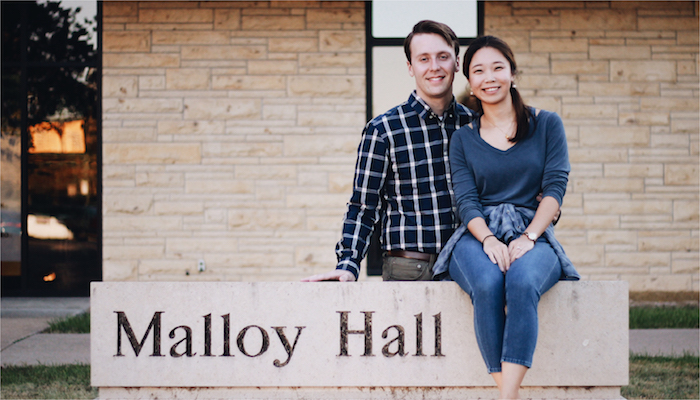
FHSU student Yuchen Wang-Boswell wanted to go home to visit her family during the summer of 2017, but President Donald Trump was in his first year in office, and the new administration was coming down hard on immigration with his newly instated travel ban.
Wang-Boswell was in the country legally on a student visa, but with nationalist sentiments running high, Fort Hays State University’s international student office advised Wang to stay in the States.
Wang-Boswell went three years between visits with her parents. She has since married an American and is embroiled in what she admits will likely be a prolonged and expensive process of applying for permanent residency in the United States.
She said she did not think Americans understood the complexity of the U.S. visa and immigration system or what it means to students or immigrants like herself.
Wang, who will graduate in May, said she thinks the perceived change in attitude toward foreigners in the United States has resulted in fewer students deciding to study in the United States.
Carol Solko-Olliff, FHSU director of international student services, said although FHSU has not seen a significant decrease in international student enrollment, nationwide universities are reporting a dip in international student enrollment. Some are attributing the decrease to election of President Trump.
Nationally, international student enrollment in the U.S. dropped by 6.6 percent during the 2017-18 school year, and universities and colleges reported further declines as of the fall of 2018.
The university can help international students prepare their VISA applications, but it has no control over whether those visas are granted. Solko-Olliff said the university has also seen an increase in the number of student visas that have been declined since Trump took office.

Both Wang-Boswell and Kingsley Udenze of Nigeria, were approved for their visas on their first attempts. However, Udenze said of the 20 people ahead of him the day he interviewed for his visa at the U.S. consulate, all 20 were denied. One friend applied five times for a student visa before he was accepted.
Only a fraction of the FHSU’s on-campus student body is international students — 4.5 percent. Most of the university’s international students come from China, but the college has 32 countries represented on campus.
The school’s cross-border program has an enrollment of about 3,500 students in China. The university also has international students who take courses online. Solko-Olliff said she predicted the number of international students taking online courses will increase.
“Some of the immigration rhetoric is for the border and people who are coming across who aren’t documented, and so sometimes I think our international students who are documented get blurred into that conversation,” Solko-Olliff said.
Wang-Boswell said although she encountered many friendly people in Hays, she had also experienced stereotypes.
“The other thing I personally feel people think about foreigners is ‘You are an immigrant. You don’t have value.’ They underestimate your value and abilities. They think you are poor and uneducated that is why you escaped your original country to come to the states,” she said.
The international students Hays Post spoke to said choosing to study at FHSU was highly influenced by the quality of the programs at the university.
Udenze, who is pursing a a degree in cyber security, said his program of study is not offered in Nigeria, yet he sees it as an emerging industry in his country. He said he appreciated FHSU’s efforts to make him feel at home on campus.
Affordability, cost of living and safety were other factors that led the students to choose to study at FHSU.
Despite a dip in international student attendance in the U.S., the number of FHSU domestic students wishing to study abroad has remained strong, Solk0-Olliff said. Just as the United States has become more selective in issuing visas for international students, U.S. students wishing to study internationally are seeing more stringent requirements for their visas, Solk0-Olliff said.
She said she thinks this has arisen from a heightened concern globally over terror threats. Students, as well as visiting faculty and researchers, are monitoring closely by the government. Information on the students and faculty are entered into a federal database.
Solko-Olliff said she thought it is unfortunate international students are having more difficulty coming to the United States to study because of the benefits they receive from the experience and what they offer to their fellow FHSU students and the Hays community.
“I think our campus is open and embraces international students. Obviously in a community, they bring cultural diversity to our campus and to our classrooms,” she said. “We are very rural, and it is very important for our domestic students to have that interaction with people from other backgrounds and countries and cultures. That is part of that liberal arts education.”
International students also engage residents in the Hays community through speaking engagements and visits to schools and community groups.
“I think they are ambassadors for their countries so we can learn more about misconceptions that Americans have, for instance about China or South Korea, about different countries. Then it helps our students to learn America is not that bad of a place.
“I think that exchange and interaction people have is so important to dispelling misconceptions, which is why it is disheartening students are having a difficult time coming to the U.S. to learn more about America but also educationally. When they go back to their countries and they are in government or leadership, they can rely back on their experience in the U.S., which hopefully was positive, and hopefully make change in their countries.”
Not only is the visa process time-consuming and complex, but it also can be expensive. Students also have to consider travel and living expenses once they are in the United States to study.
“They come to the U.S. They are coming for either two years or four years depending if they are undergraduate or graduate. They have two suitcases, so they can’t bring everything with them. They bring what they can and then they are going to buy the other things they need. Aside from the vast cultural diversity they bring to campuses, they bring a large economic impact to communities and, quite honestly, to the state of Kansas because they have to buy things when they come here.”
A round-trip ticket home to Nigeria costs about $3,000. As a result, Udenze hasn’t been home since he started his program at FHSU. He missed his sister’s wedding, the birth of her baby, and his brother’s wedding.
Wang-Boswell had not intended to stay in U.S. when she applied to study aboard. She intended to return to China, but after three years of dating, her husband, a classmate, he popped the question.
Wang-Boswell is set to graduate from FHSU in May. She said people assumed after she married, she automatically became a U.S. citizen. This is not the case. There are many steps she has to take. First, she has to apply to change her status from a student to a permanent resident, an application that could be denied.
The application packets is several inches thick and she and her husband, Korby, have hired an immigration attorney to help with the application process. She said she and her husband both have graduate degrees, but they still find the application difficult to understand. She said she feels lucky she and her husband have the means to pay the application fees and for an attorney.
“Think about those people who have limited resources and limited education or who do not have money, and they have to leave their original country and move to the States for their own safety. How are they going to get it done?” she said.
Her decision to remain in the United States with her husband has been a difficult one for her family in China. She is her parents’ only child. She also will be facing more time away from her parents as she can’t leave the country during the residency application process.
“I think my mom is pretty chill and flexible about it,” she said. “I remember one year after I studied here, she said, ‘I think you are happier and you are doing what you want to do,’ which is awesome. But my dad was closed-minded. At the beginning, it was hard for him to understand. He was, ‘Why? What is the point? You are far away from home. We can’t take care of you. You can’t see us regularly.’ I think eventually they understood, and now are happy for me, and they think I am happy, and I am valued.”
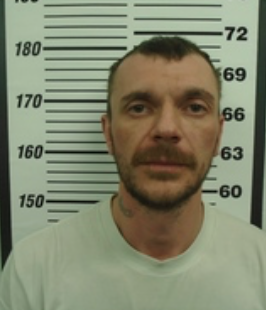
CHEROKEE COUNTY — Law enforcement authorities are investigating an aggravated battery and have a suspect in custody.


Deputies responded to a gunshots in the 400 Block of Park Avenue in Baxter Springs, Kansas on February 6, according to a media release.
At the scene, officers found a victim Eric Ashley who was transported to an area hospital for treatment of a head injury. They also arrested one suspect at the scene identified as 39-year-old Charles Applegate and began the search for a second suspect identified as 36-year-ld Samuel Reffett, according to the release.
Just after 9p.m. Sunday, Reffett surrendered himself at the Cherokee County Sheriff’s Office, according to a social media report. He is being held on a $50,000 Bond for Second Degree Attempted Murder and Aggravated Battery with a Deadly Weapon, according to jail records.
 Q: Did you hear about the race between the lettuce and the tomato?
A: The lettuce was a “head” and the tomato was trying to “ketchup”!
Join fans of 99 KZ Country on Facebook: https://www.facebook.com/99KZCountry
FCFH
 The registration deadline for The Amazing Race: First Call Community Challenge by First Call For Help is quickly approaching this Sunday, and we would love to have more teams.
Feel free to use the information below or you may go to our website at https://firstcallelliscounty.com/AmazingRace.
We could also take a few more volunteers to help with the challenge sites.
First Call For Help is hosting a fundraiser, The Amazing Race: First Call Community Challenge 2019 Saturday, March 2nd 2019 and… WE WANT YOU! Similar to The Amazing Race TV show, solve clues, complete challenges and enjoy the morning with your teammates having fun and assisting local families in need.

Select your team of 4, along with a Team Name and decide whether or not you want to wear costumes. Collect your donations of at least $75 a person or $300 per team and register by Friday, February 22, 2019.
For more information or to register please go to https://firstcallelliscounty.com/AmazingRace OR call 785-623-2800.
Want to compete, but can’t find a full team? Call us at First Call For Help and we can register you over the phone and put a team together!
We are also accepting a few more volunteers so call us.
All proceeds benefit the Emergency Crisis Fund serving Ellis County families.