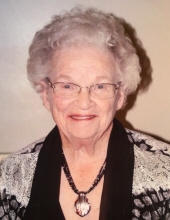
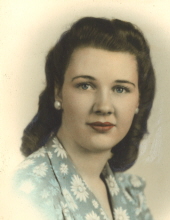
Hedwig (Hedy) Matthew was born on March 5, 1923 in Victoria, Kansas. She passed away on January 23, 2019 at Brookdale Senior Living in San Antonio, Texas. She was the beloved wife of Gail Eugene Matthew and mother of Sharon and Richard.
Hedy was the daughter of Anselm and Hermalina Leiker Dreiling and sister to four brothers Othmar, Daniel, Gilbert and Wilfred and three sisters, Lioba, Blanche, and Mary. Hedy was the much loved grandmother to four greatly cherished grandchildren, Tristem Laux, Addison Matthew, Beth and James Millican and a great grandson, Michael Charles Millican.
With her naval officer spouse and children Hedy traveled extensively, and finally settled in Prescott, Arizona after the death of her husband. She lived there for many years with her extended family making new friends and a new life for herself, but in her heart she was never far from her formidable and resilient German heritage in Victoria. She was always a part of that very special community. Hedy moved to San Antonio, Texas in 2014 to be closer to her daughter and granddaughter who were with her when she departed this world.
She was a consummate homemaker, baker and friend. Hedy left behind many greatly loved nieces, nephews, cousins, and friends throughout the country. She will be buried in the Victoria, Kansas cemetery through Cline’s Mortuary, returning at last to the home she loved.
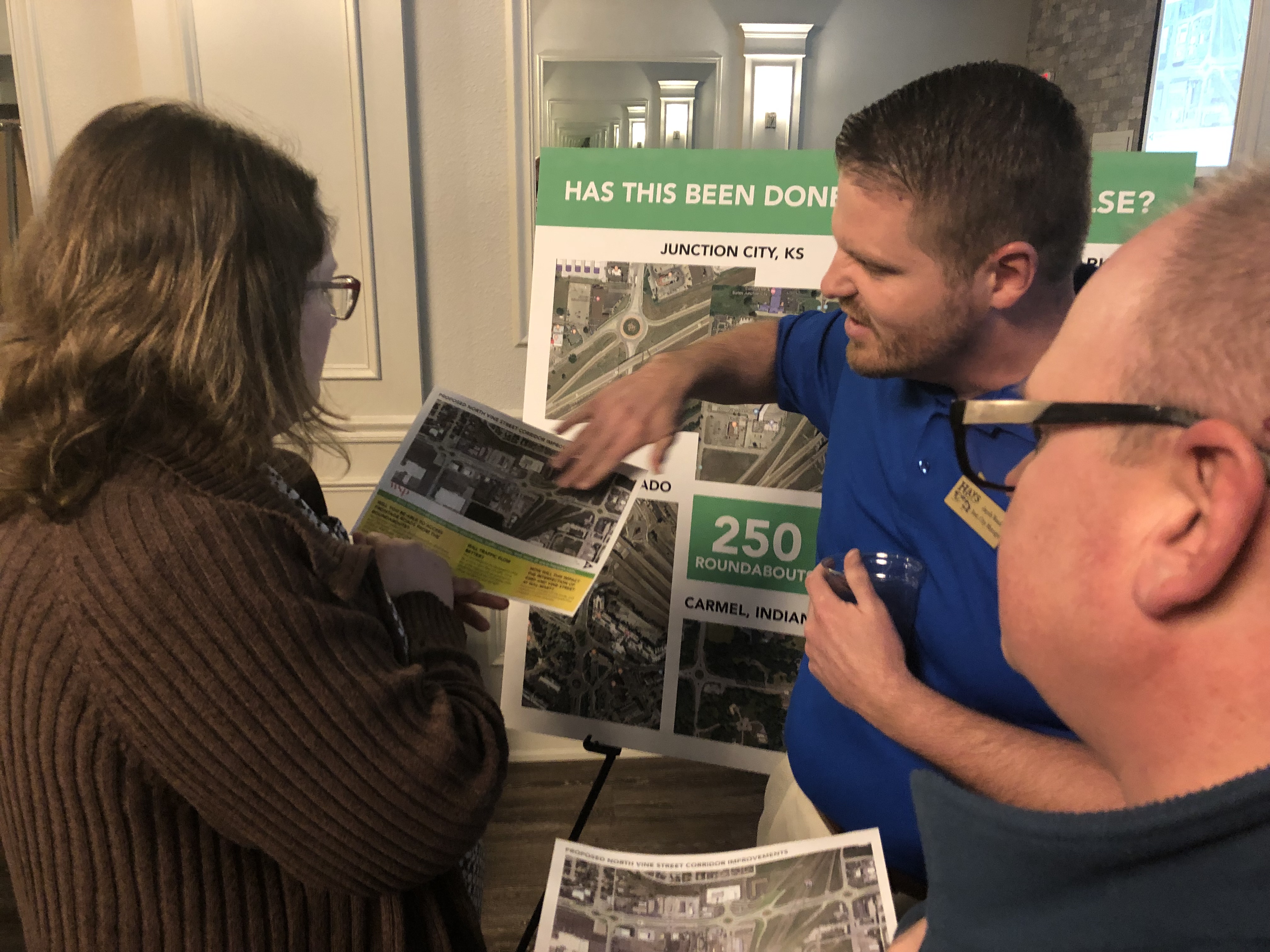
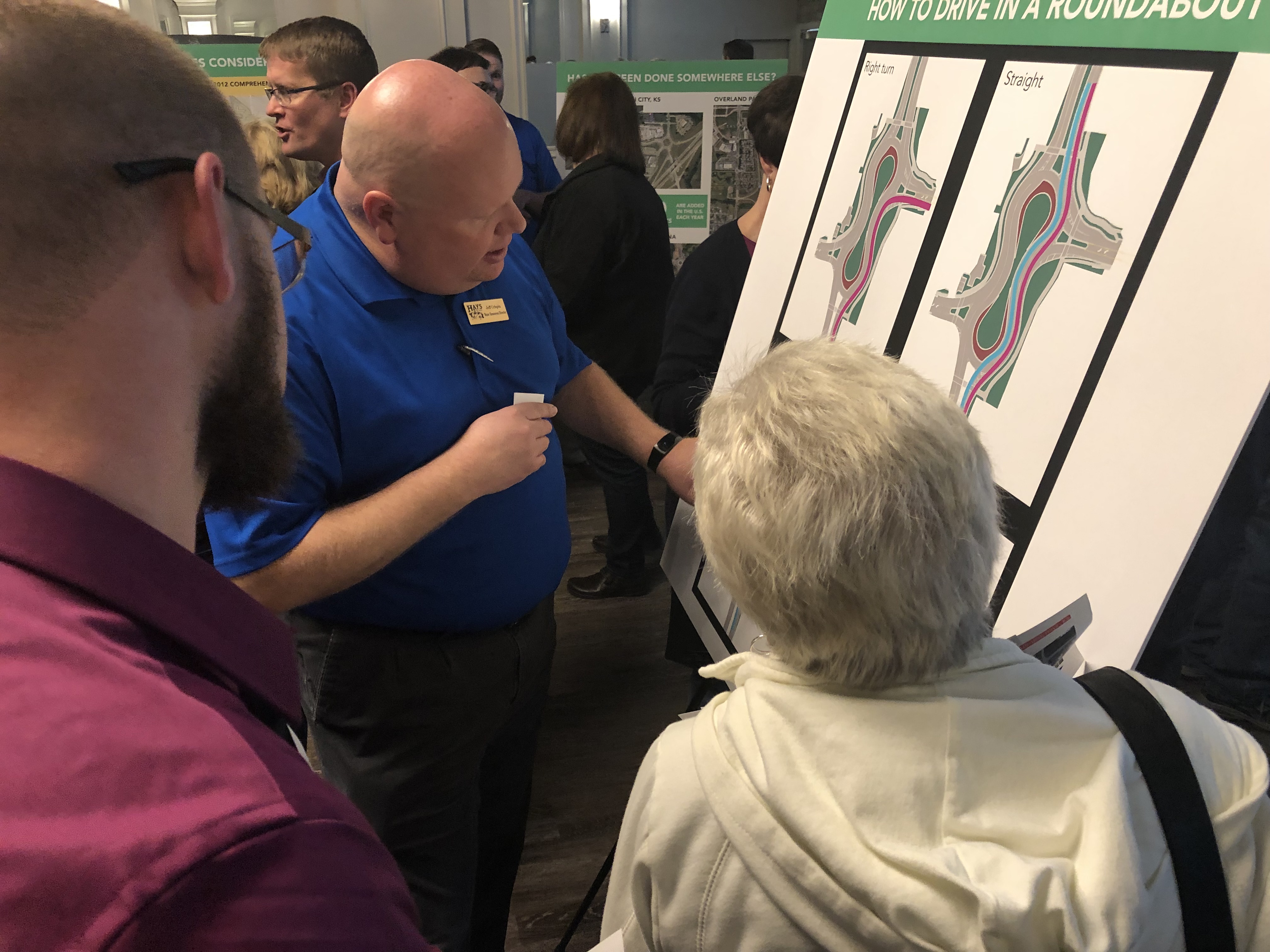
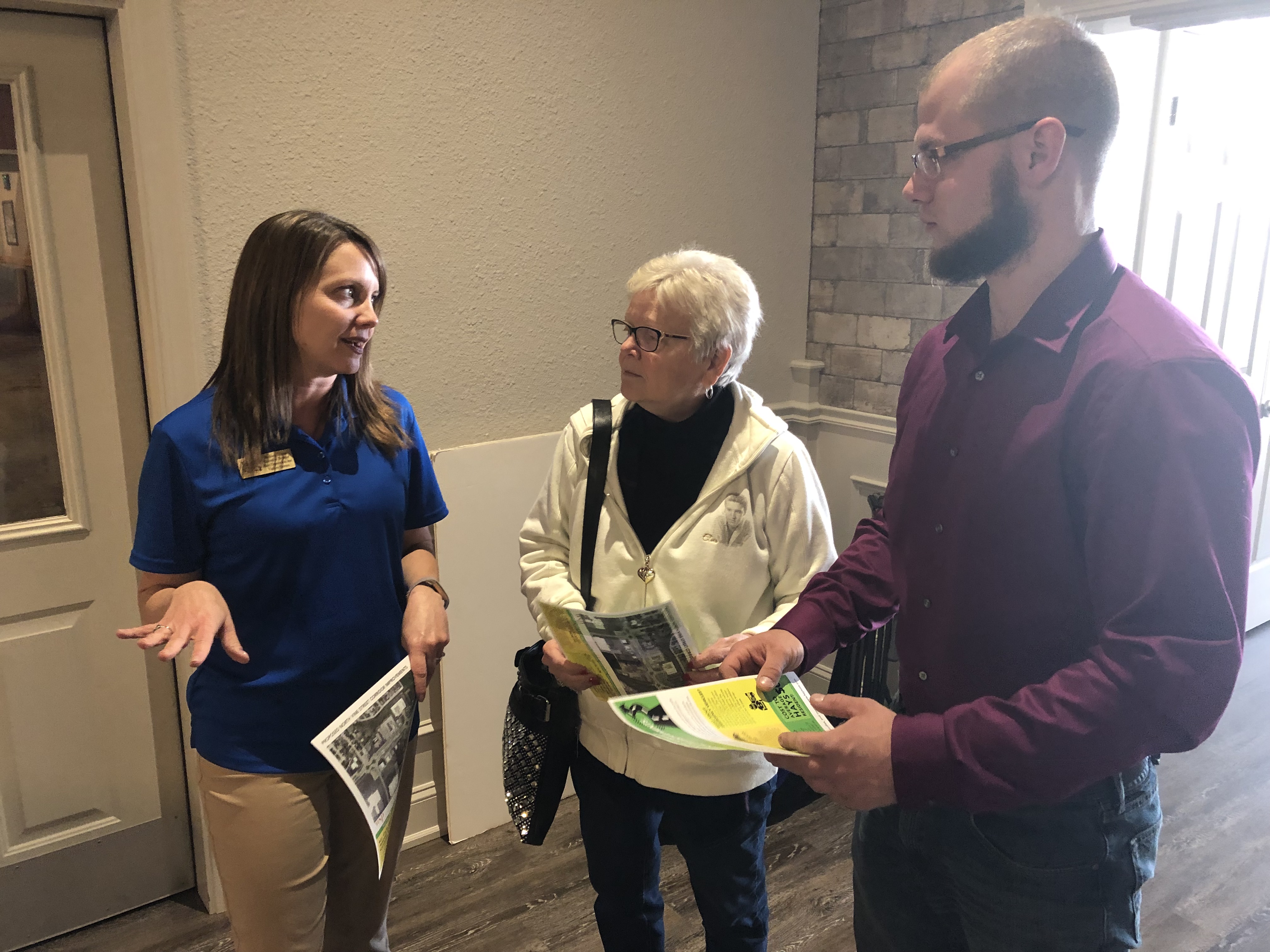
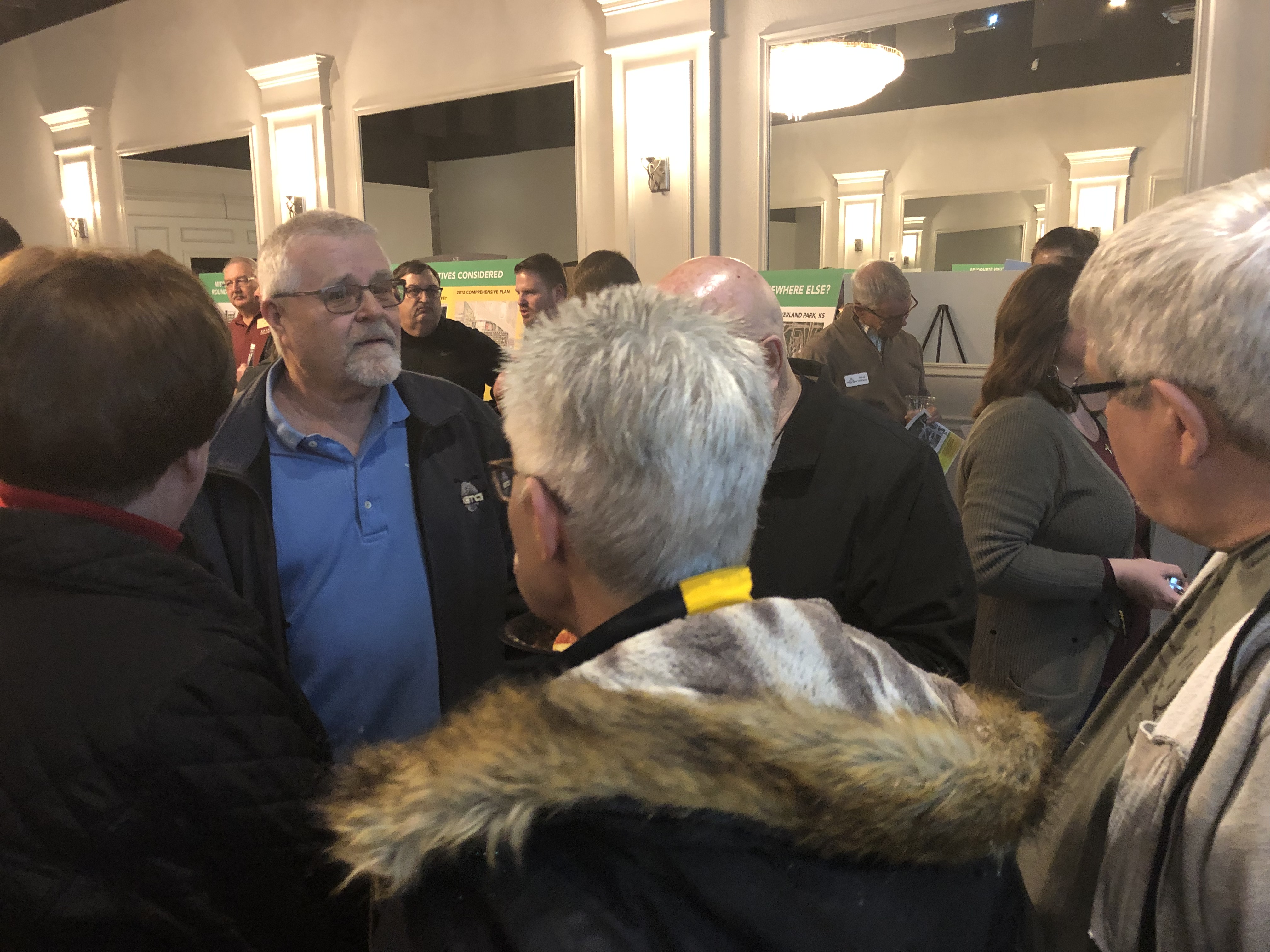
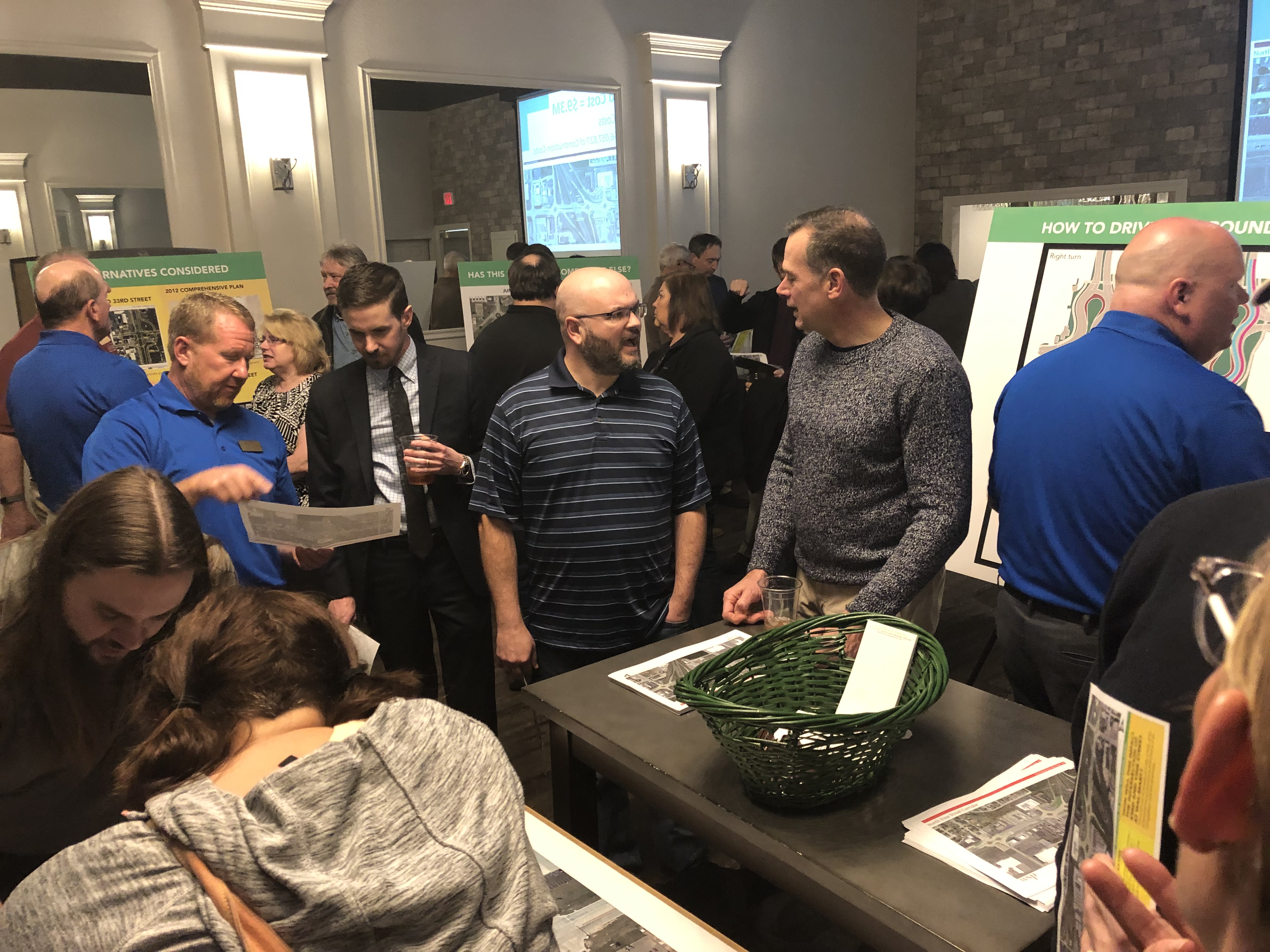
The city of Hays hosted an information session Tuesday night about the proposed North Vine Street Corridor Improvement Project.
By BECKY KISER Hays Post
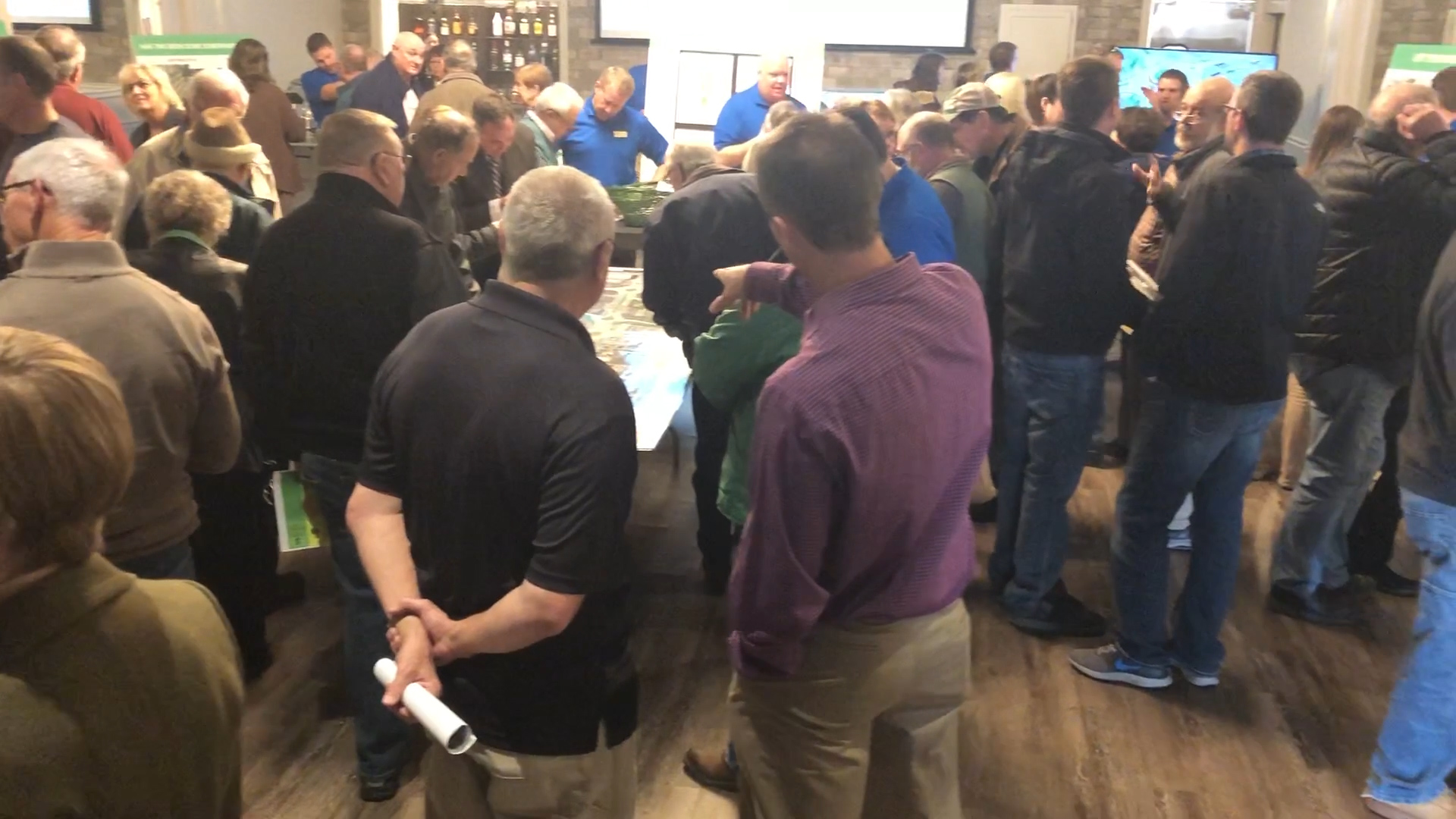
Within the first 15 minutes, 80 people gathered Tuesday night for the city of Hays’ open house to see the design concept for four proposed traffic roundabouts on north Vine Street.
They were greeted — and counted — by Melissa Dixon, executive director of the Hays Convention and Visitors Bureau.
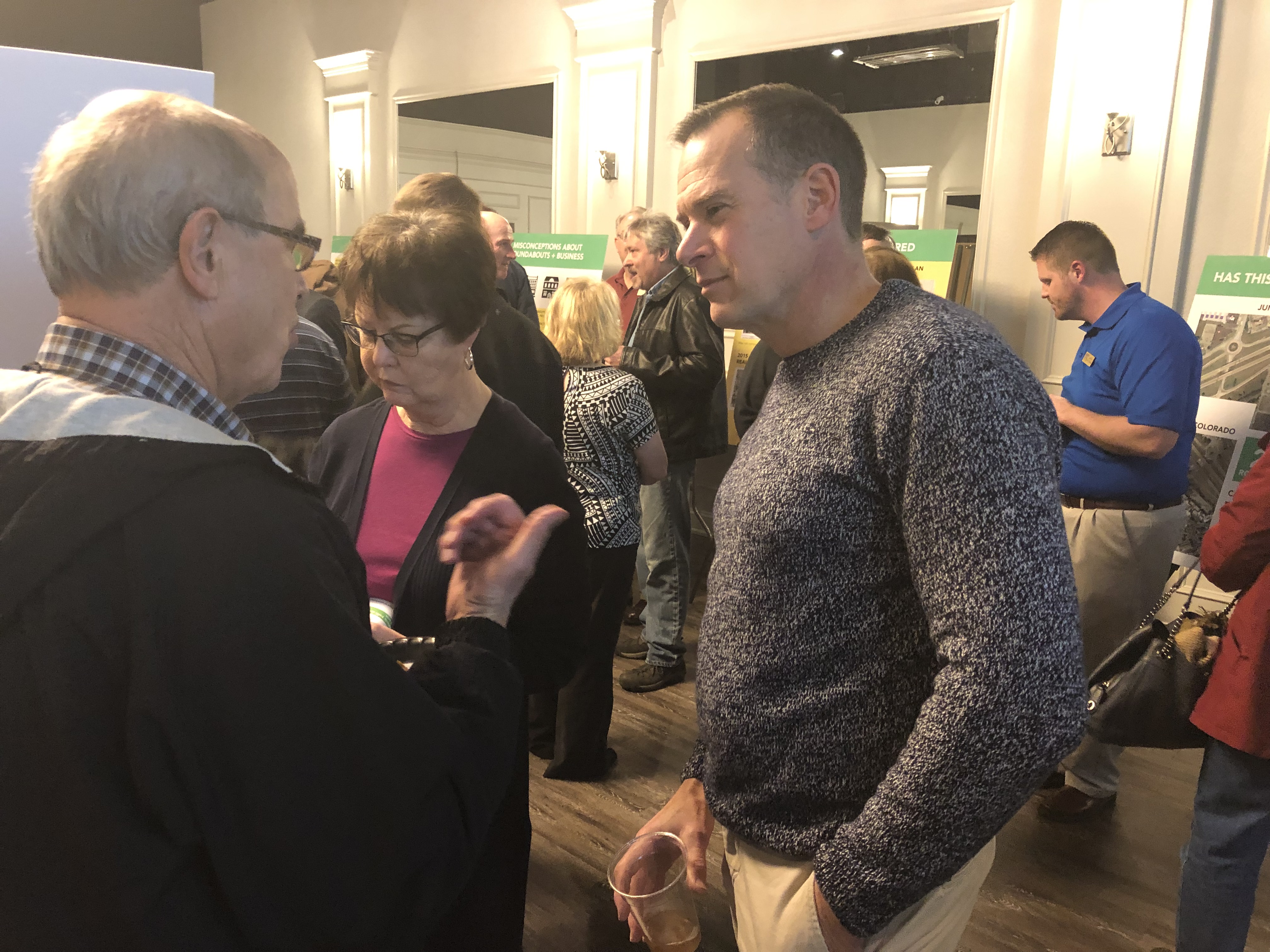
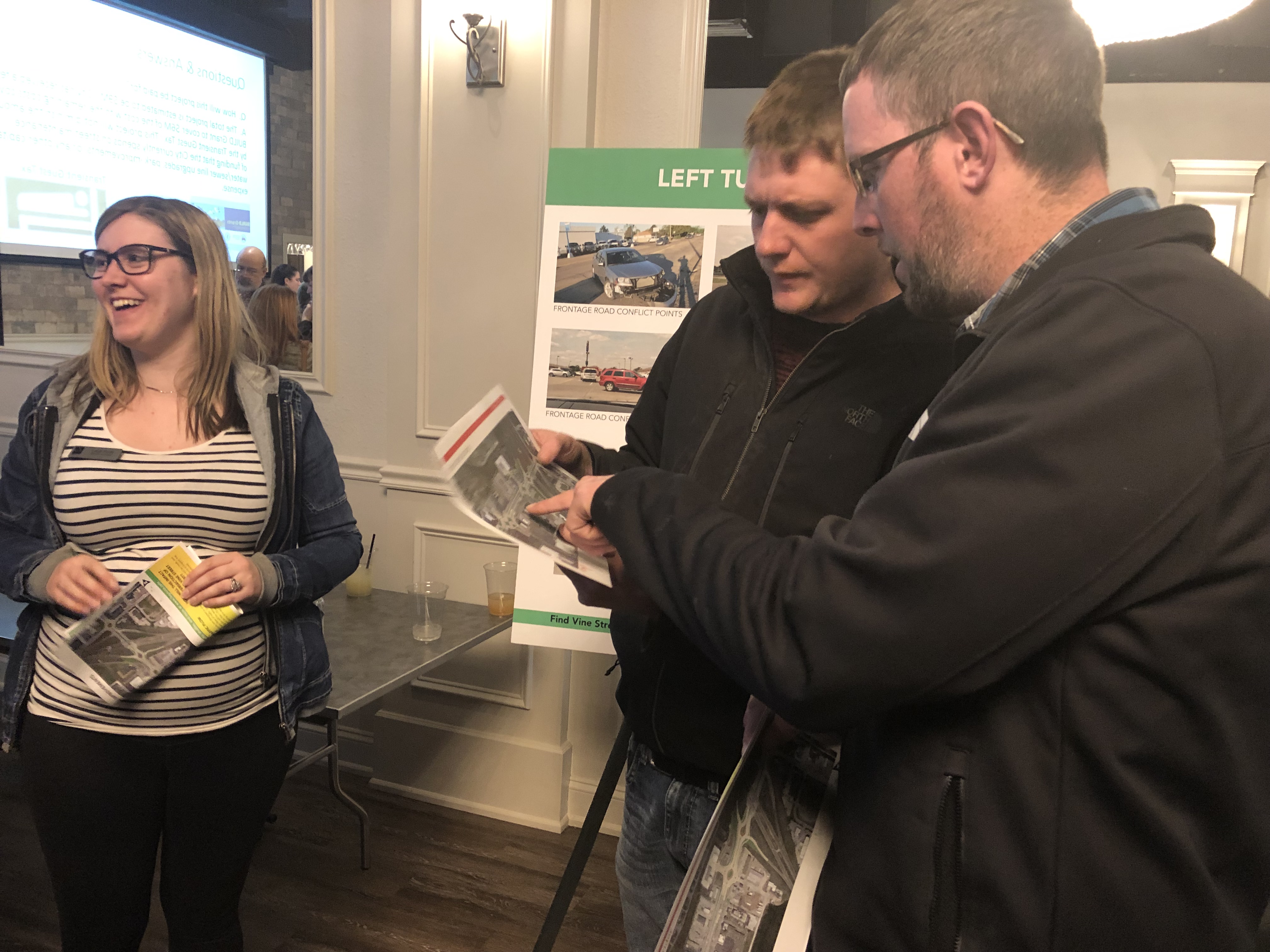
More than 200 people attended the two-hour event at The Venue in Thirsty’s Bar & Grill, where city staff, wearing bright blue polo shirts, were on hand along with project engineers from WSP and the Kansas Department of Transportation to answer questions from the public.
“I was hoping for a good turnout,” said James Meier, city commissioner, “but this is better than I expected.” Meier, who favors the roundabouts, said he hoped the information “alleviates some fears” residents might have.
Mayor Henry Schwaller said he talked to more people opposed to the project than in favor of it.
“This gives everyone a chance to see what the project will probably look like and how it works. This is a design. It’s not been approved,” he said.
Schwaller has said previously he is a “roundabout skeptic.”
He agreed the situation at 32nd and 33rd streets creates the most dangerous intersection in the city and “something has to be done.” Schwaller also sees a problem at 37th Street, where the former Ambassador Hotel was located.
“We can’t put a stoplight there. The Kansas Department of Transportation won’t allow us that,” he said.
The rest of the proposed project is too big to work, Schwaller said, “particularly for visitors coming from out of town. Getting through that gauntlet can be pretty daunting.”
Still, Schwaller concedes the city commission will “go for what the majority wants.”
RELATED: Hays Post conducted two polls, one on HaysPost.com and the other on Facebook, asking the public for their opinion of the proposed north Vine Street improvements.
The city is still waiting for final design on the project. Preliminary design is expected to be completed in March with a final design in November, according to John Braun, the city’s project manager. Bid opening would begin in April 2020 with construction planned to start in June 2020. The work is scheduled to be finished in November 2021.
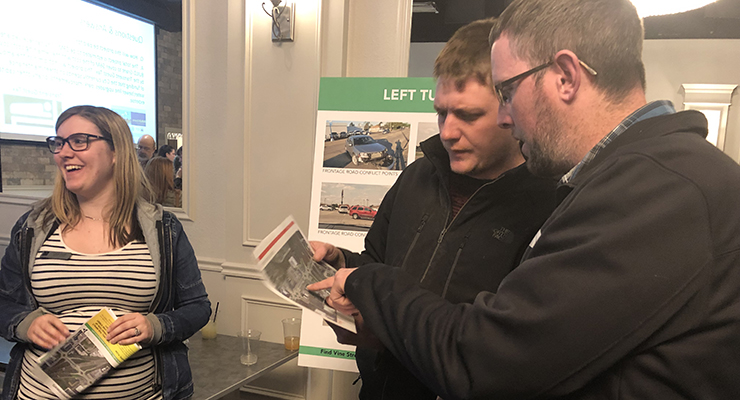
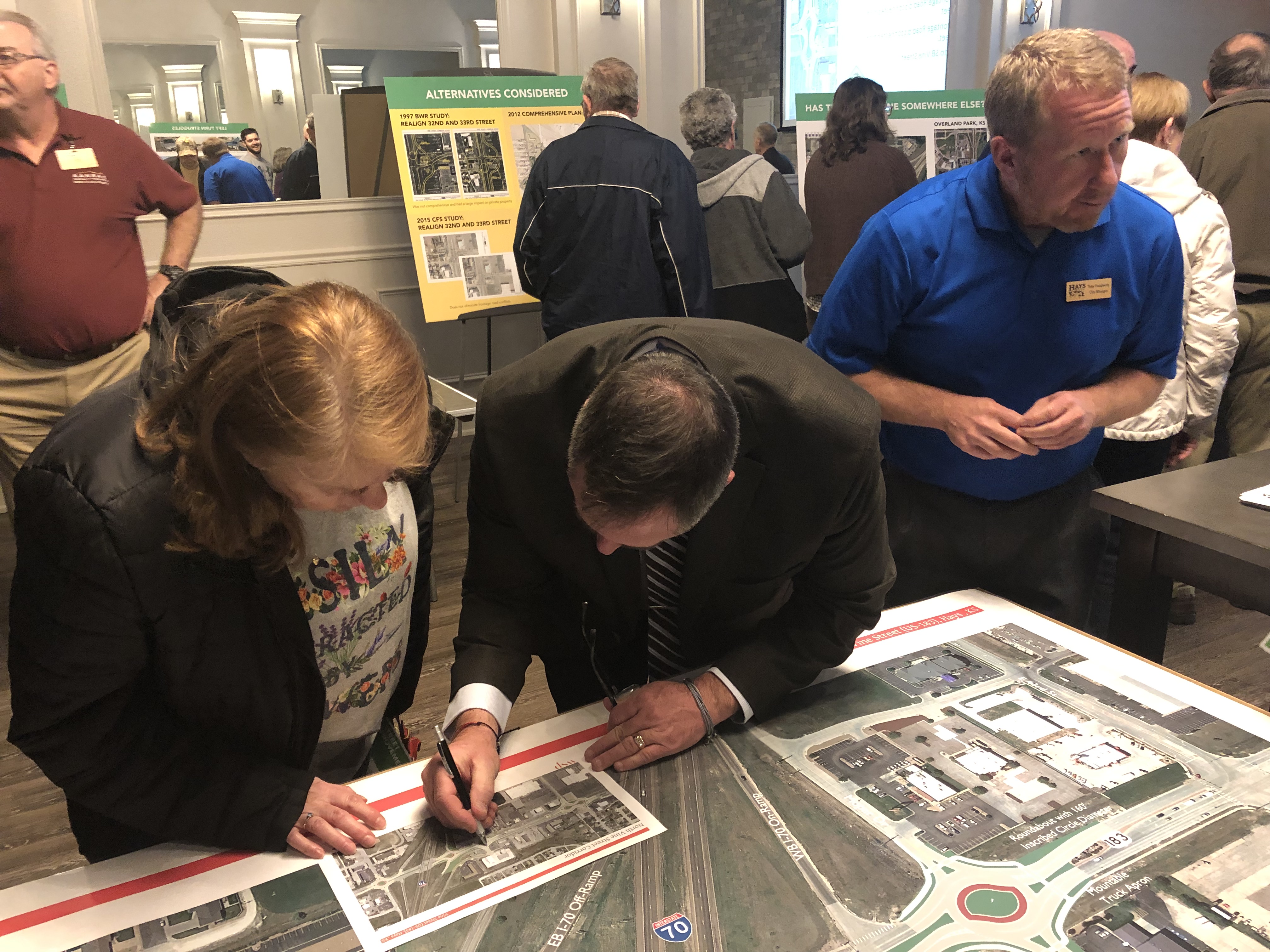
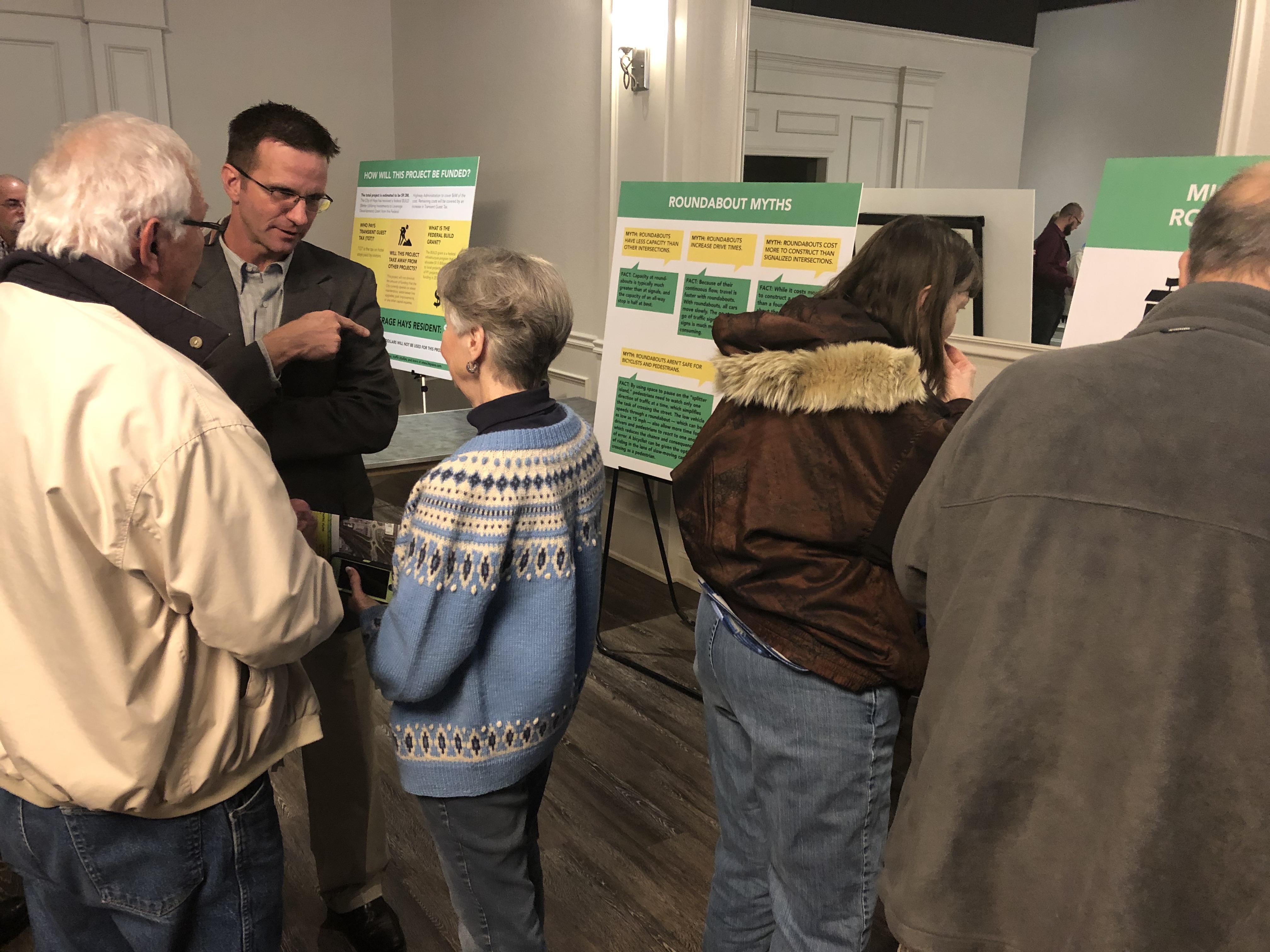
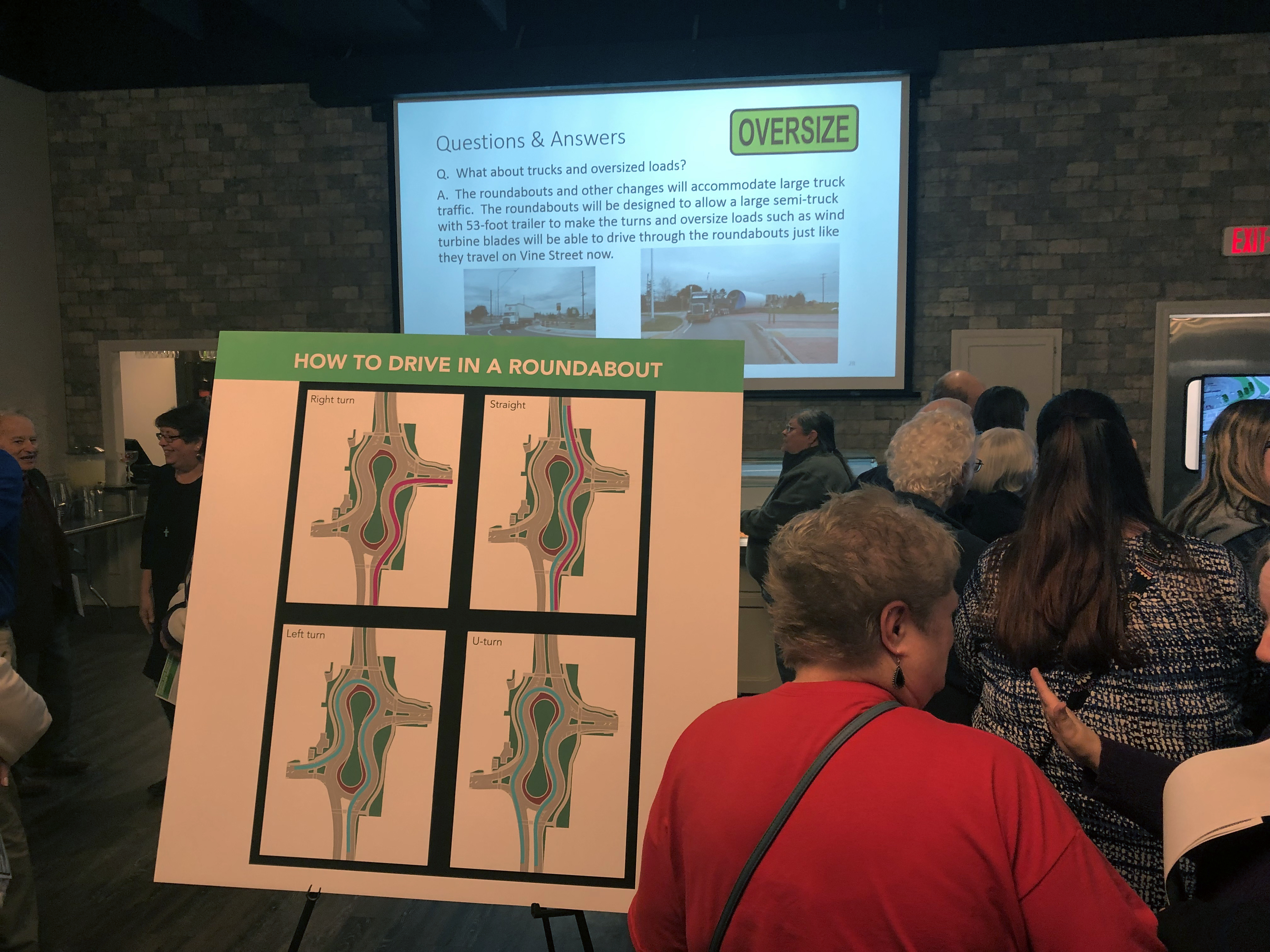
The conversation was non-stop in the meeting room. Posters depicting often-asked questions and the answers were set up on easels around the room perimeter. One poster showed four previous design plans to improve safety which were all rejected.
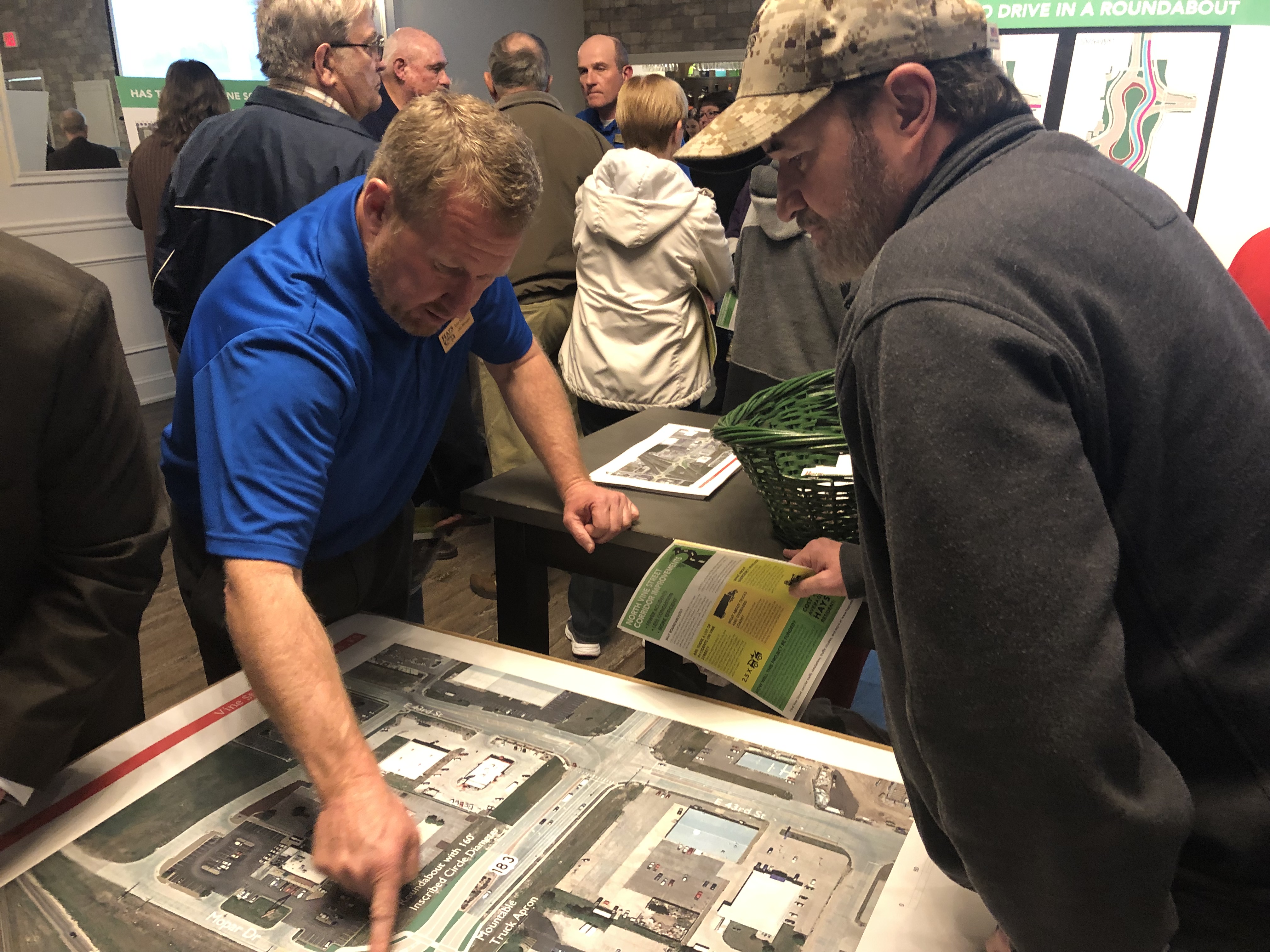
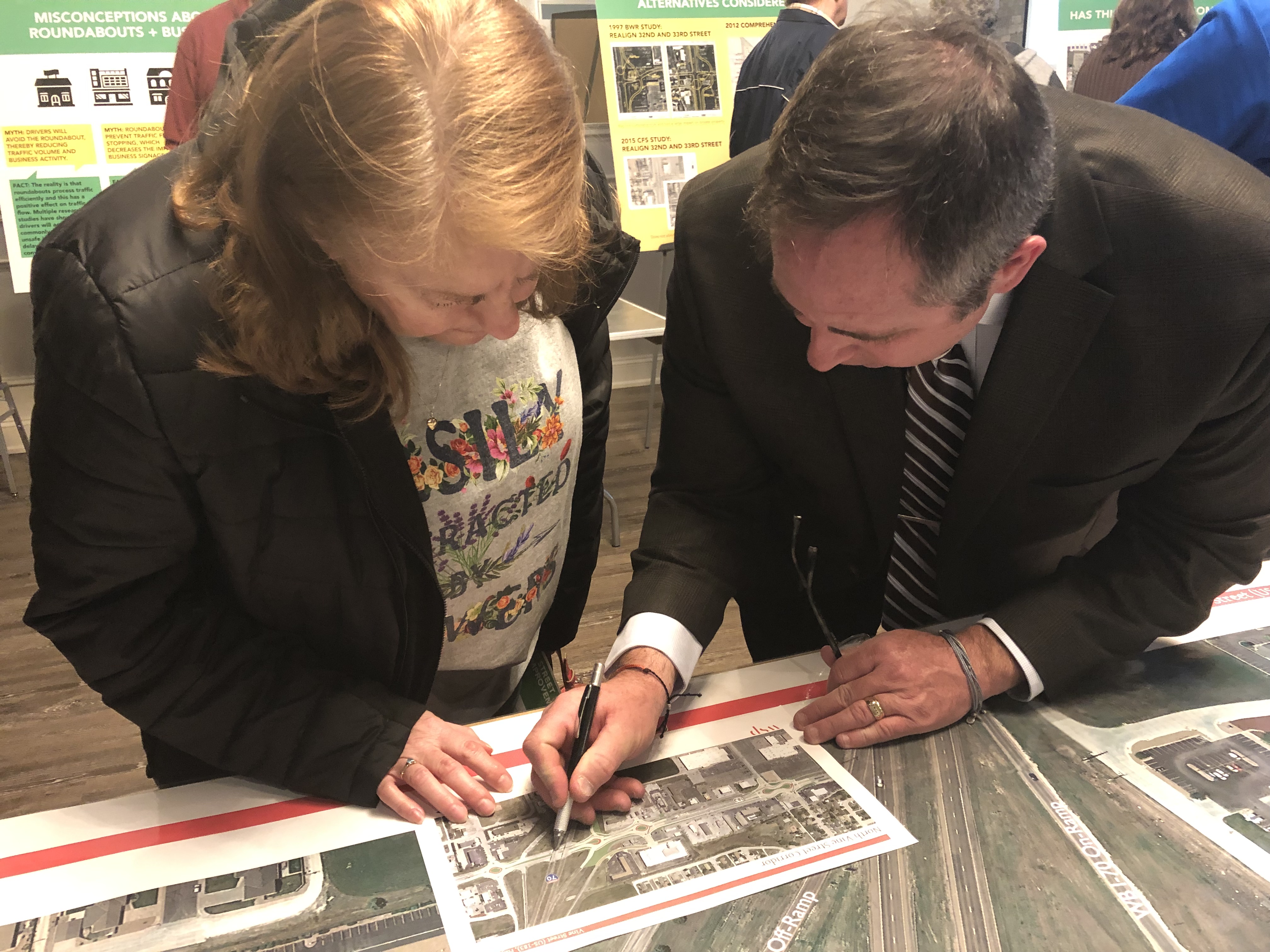
An oversized map of the Vine Street traffic corridor design between 32nd and 41st streets was laid out on a table in the middle of the room. People crowded around it the entire evening, pointing to specific areas with their questions. Staff and engineers used dry erase markers on the map to illustrate their points.
(Click to enlarge)
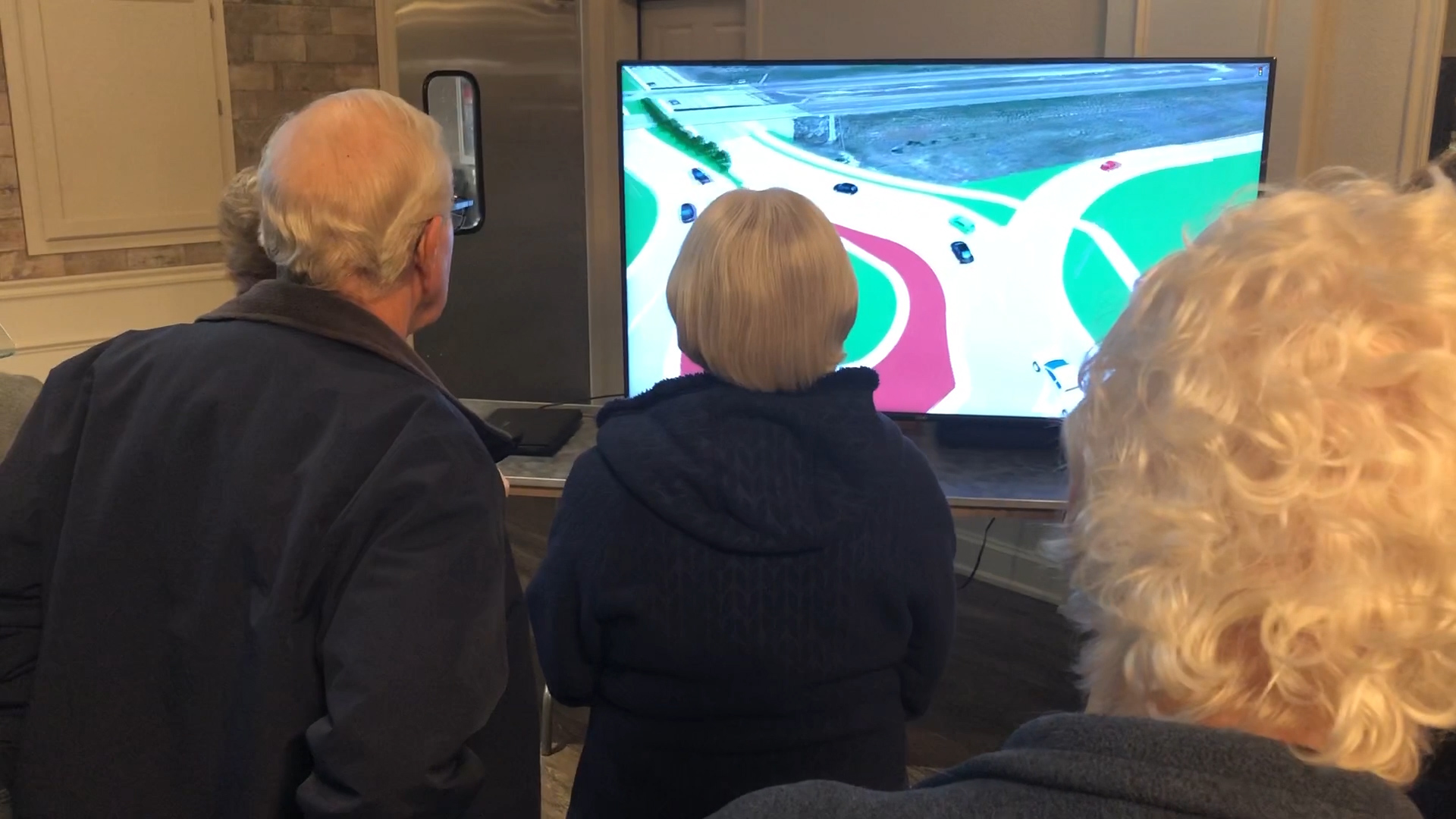
A large-screen TV continuously played the simulated corridor traffic flow through the roundabouts at 32nd/33rd, 37th, 41st and the westbound Interstate 70 exit ramp.
The simulation, created by Jay Aber, senior traffic engineer at WSP Engineers, Lenexa, uses a four-year study of Hays traffic in the corridor.
Another video screen scrolled through questions and answers with graphics showing examples of the changes.
Marcie Pray lives in Victoria and works in downtown Hays. She’s driven through traffic roundabouts in bigger cities.
“I think it’s becoming an accepted thing although it’s very intimidating to us drivers who are little older,” Pray said with a laugh. “You gotta know which lane you’re getting into and how to get around to where you’re trying to get at.”
She described the open house as “overwhelming but informative.”
A simulation of traffic flowing through proposed Hays roundabouts.
“But I think the best was the video. That was tremendous. First of all, I didn’t realize it was actually Hays video, and that really shone the light. And seeing the traffic flow was really helpful,” Pray said.
Aber answered several questions about how semis would get through a roundabout.
“U.S. 183 is a really important freight corridor. The highway is Vine Street itself. Obviously you have a lot of regular trucking. You also have a lot of oversize loads, including wind turbine towers and blades.
“One of the early requirements for this project was that two semi-trucks could drive side by side through the entire corridor,” said Aber.
“It’s also designed for the wind turbine blades specifically because they’re roughly the length of of two and half semi-trucks together. The wheels track really far outside of any kind of typical truck.
“So we also designed it so that a wind turbine blade on a 180-foot long truck can drive through the corridor without needing to stop traffic or to stop and use any special rear-wheel turning.”
Even though the proposed $9.3 million project would be funded by a $6 million federal grant and a dedicated 20-year 2 percent increase in the transient guest tax, 77-year-old Tom McClelland believes it’s “a waste of money.”
“I wish I was 35, 40 years younger. I’d buy a piece of property close and buy wrecker trucks because I think there’s gonna be a lot of them (wrecks),” the retired McClelland said. “All the people that are for this are telling me that’s not gonna happen, that there’ll be minor crashes. No T-bone wrecks but I can see a lot of side-swiping.”
Hays Police Chief Don Scheibler
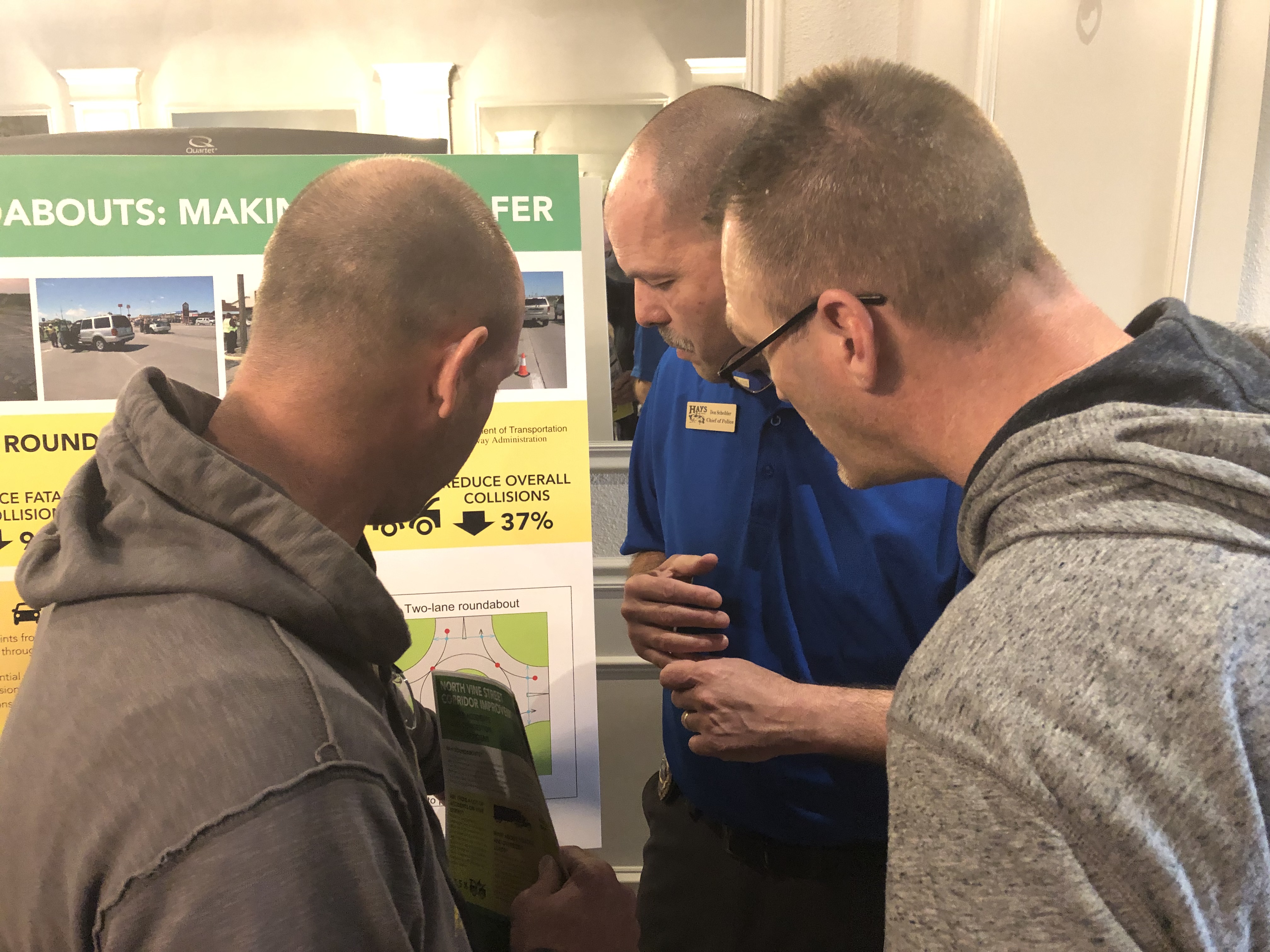
Hays Police Chief Don Scheibler talked about roundabout safety to the crowd, using statistics from the U.S. Department of Transportation.
According to the Federal Highway Administration, roundabouts reduce fatality collisions by 90 percent and injury collisions by 75 percent. Overall collisions in a traffic roundabout are reduced by 37 percent.
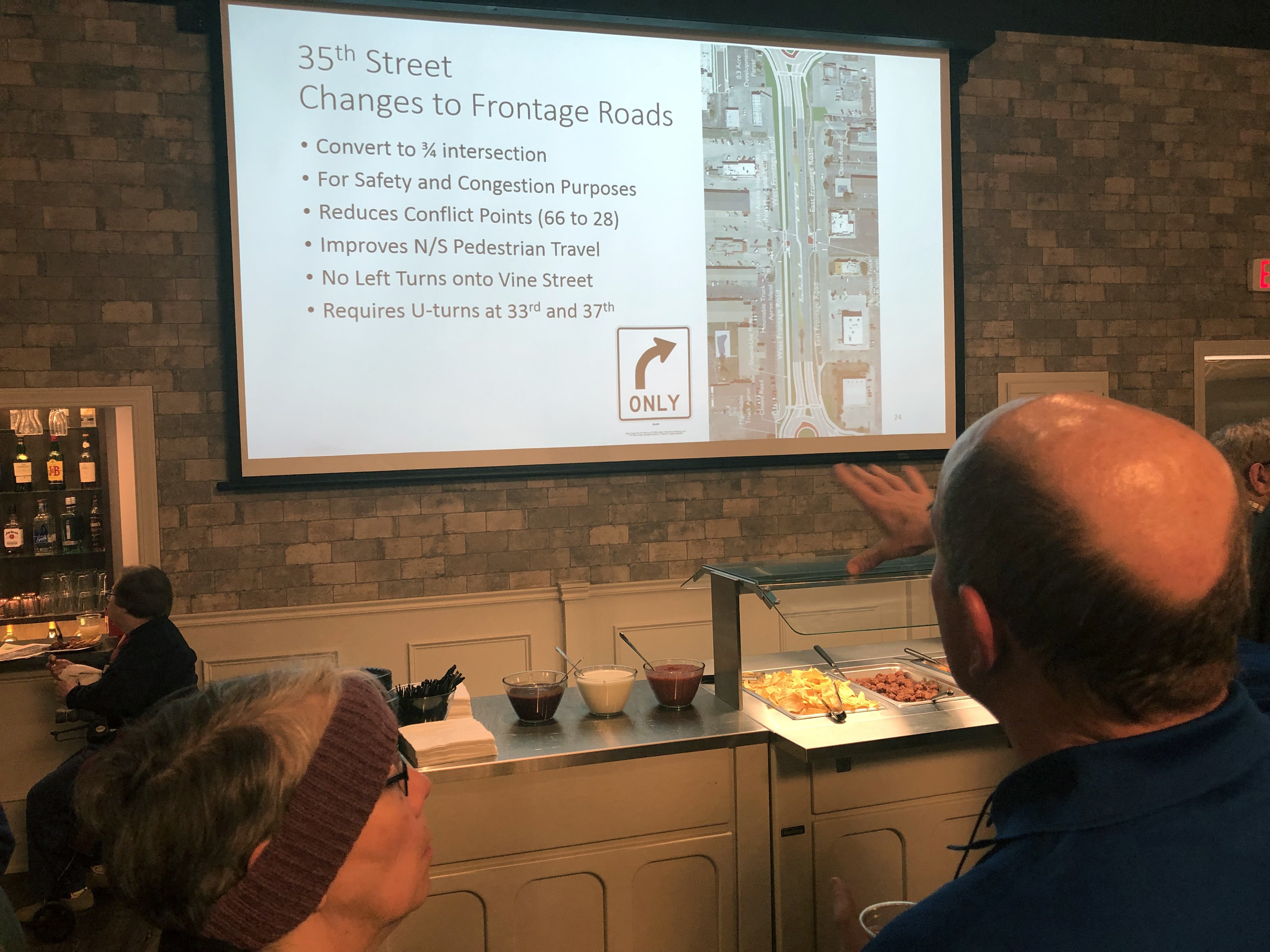
The roundabouts would reduce the current number of vehicle conflict points from 32 to 8. Scheibler prefers to call them “contact points.”
“The current configuration really encourages aggressive driving through this area on Vine,” Scheibler said. “To make it through all the traffic lights, you have to speed.”
Scheibler also pointed out the driving speed in a roundabout is reduced. “Somebody may be going 40 miles an hour right now on Vine. That’ll be slowed down to about 25 miles an hour.”
The four-year traffic study of the Vine Street corridor from 32nd to 41st showed there were 124 vehicle accidents; 119 of those occurred in intersections.
With the elimination of traffic signals by the roundabouts at 32nd/33rd and the I-70 ramps, the potential of head-on and T-bone collisions typical in signaled intersections, are also eliminated. Vehicle crashes are more likely to be side-swipes at much lower speeds, Scheibler explained.
The project design is also safer for pedestrians, reducing conflict points from 24 to 8.
Existing frontage roads would be disconnected from 32nd and 37th. Frontage roads will only have access to Vine at 35th, which will be changed to a 3/4 intersection. That would allow right and left turns from Vine but only right turns onto Vine.
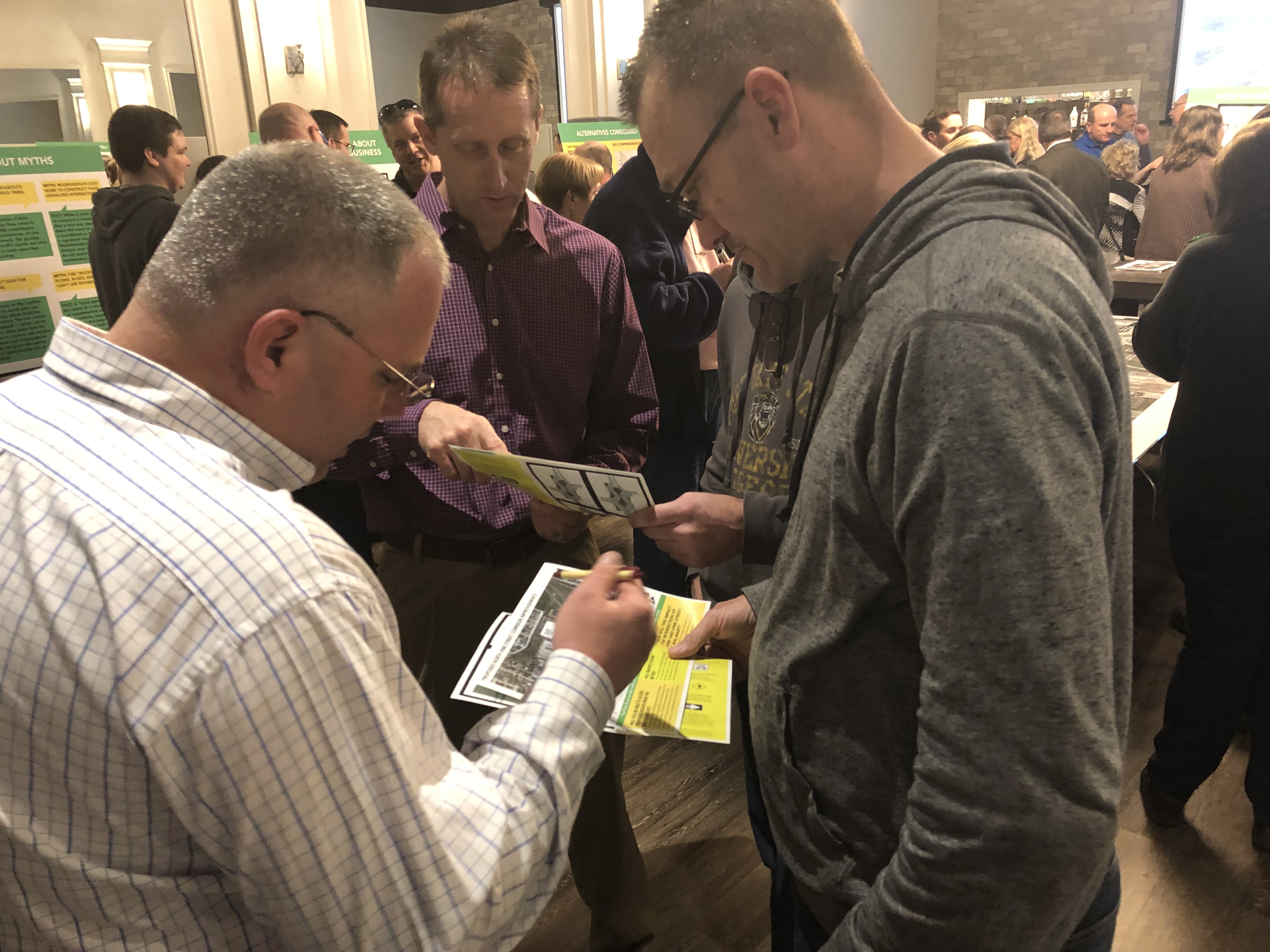
Attendees were given handouts and copies of the poster boards to take home for further study.
Pray is somewhat sure the roundabouts would be a positive addition to Hays. “I think it is. It’s just going to take a learning curve to accept it.”
The traffic simulation video and copies of the poster handouts are available on the city’s website www.haysusa.com.
Hays Mayor Henry Schwaller
Asst. City Manager Jacob Wood
Water Resources Dir. Jeff Crispin
CVB Exec. Dir. Melissa Dixon
City Commissioner Ron Mellick
City Manager Toby Dougherty, Ellis Co. Commissioner Dustin Roths, City Commissioner James Meier, Mayor Henry Schwaller
Police Chief Don Scheibler
City of Hays Project Dir. John Braun
The city of Hays hosted an information session Tuesday night about the proposed North Vine Street Corridor Improvement Project.
Thousands of Kansas children and teens go without vaccines that could save their lives.
A series of policy changes, though, could protect more Kansans against everything from cervical cancer to swift-acting meningococcal disease.
The changes
(1) The meningococcal vaccine may soon join the list of immunizations required to attend school in Kansas. The Kansas Department of Health and Environment is going through regulatory steps for that potential change, which could take effect as early as the 2019-20 school year.
Outbreaks of meningococcal disease are rare but aggressive and scary where they occur. Nearly a third of patients suffer serious effects, such as brain damage, loss of limbs or even death.
Kansas would require the vaccine that protects against four types of the disease. A separate vaccine against another type seen in recent college campus outbreaks would not be required.
(2) Starting in July 2020, vaccination reports will all feed into a statewide database that clues physicians to patient needs. Today, not all providers use it. Eventually, if a parent takes her teen son to a new doctor within state lines, that doctor will have a reliable record. Maybe the teen got his first HPV shot, for example, but still needs one or two more.
The same change will help health officials better spot patterns and troubleshoot.
Take the question of access: It’s not even across the state. Not all doctors carry all recommended vaccines. Some may refer patients to county agencies many miles away. Others might vaccinate a privately insured patient but turn away one on Medicaid. Still others may do the exact opposite. Such scenarios hinge on nitty-gritty details like cost, batch size and vaccine stock.
“Like most things in public health, everything is local,” said Phil Griffin, who directs immunization efforts at the state health department. “There’s multiple layers of complications.”
(3) Kansas pharmacists can give children the flu shot as early as age six. As of 2017, however, they can also administer other recommended vaccines to kids as young as 12.
Since kids at that age generally don’t visit their doctors as often as when they are very young, public health experts hope families may at least drop by a local pharmacy to get vaccines and that that will gradually boost the state’s teen immunization rates.
Kansas vaccine rates
Federal data on the subject are far from perfect. But compared to other states, Kansas seems to have particularly low vaccine rates against meningococcal disease and against cancers caused by the nearly ubiquitous Human Papilloma Virus.
In Kansas, hundreds of children catch vaccine-preventable diseases each year. (Or thousands, if you count the flu.)
Pahud, a professor affiliated with with the University of Missouri-Kansas City and the University of Kansas, says a small percentage of parents oppose all vaccines for religious or other reasons.
But that means many families not getting the vaccines don’t share that opposition — all the more incentive for researchers to home in on the obstacles.
Those obstacles likely vary by vaccine. Take these three recommended pre-teen/teen vaccines: For every 10 Kansas teens, nine get the Tdap shot against tetanus, diphtheria and whooping cough. Yet only seven get the meningococcal shot. Five start the HPV vaccine series. Fewer complete it.
“Really, if the kids are able to get the Tdap,” says Gretchen Homan, chair of the Immunize Kansas Coalition, “they should be able to get the other two.”
But so far, only Tdap has been required for school. Because it’s required for attendance, it’s easier to find at your doctor’s office.
What of the other two? Experts say some physicians don’t talk to families about vaccines that are recommended though not required at school. That sends parents the wrong message, says Homan, a pediatric professor at the KU School of Medicine-Wichita.
“To them,” she said, “if I don’t bring it up, it’s not important.”
The HPV vaccine, meanwhile, meets with resistance from parents who fear it leads to promiscuity. Studies have not found a link.
Nervousness about those parental concerns appears to deter some pediatricians from even recommending the vaccine, said Roy Jensen, head of KU’s Cancer Center. They fear offending parents and losing patients.
Yet, he said, researchers have found that a strong recommendation from a family’s doctor often overcomes parental concerns.
“If that recommendation is made,” he said, “then pretty much the HPV vaccine rates go up, and are more or less congruent with Tdap and the other early adolescent vaccines.”
The CDC says “almost every person who is sexually active will get HPV at some time in their life” without the vaccine. Most of the time, the infection simply clears up without problems. Other times it causes cancer, particularly of the cervix, vulva, vagina, penis, anus, or throat.
Kansas health officials want to prevent those cancers, but haven’t added HPV vaccine to the list of school requirements.
Doing so works better when vaccines already have a statewide reach of nearly 70 or 80 percent, state health officials say. Otherwise, it can cause a public backlash.
“Our ultimate goal,” said Griffin, from the state health department, “is that we have full herd immunity with every vaccine-preventable disease.”
ENGLEWOOD, Colo. — A person with knowledge of the deal tells The Associated Press that the Denver Broncos have agreed to acquire Baltimore Ravens quarterback Joe Flacco for a fourth-round pick in this year’s draft.
The person to the AP spoke on condition of anonymity Wednesday because neither team announced the deal, which was first reported by ESPN. NFL rules prohibit teams from discussing trades until the start of the league year on March 13.
Flacco, the MVP of the 2013 Super Bowl, became expendable in Baltimore with the emergence of rookie Lamar Jackson.
The Broncos found themselves in the market again for a quarterback after Case Keenum’s middling debut in Denver last season, when he threw for 18 touchdowns and 15 interceptions. The team went 6-10.
The Hays USD 489 school board voted Monday to reduce the driver’s education fee by $25 for the upcoming summer session.
Driver’s education fees for in-district students will be $225 and cost for out-of district students will $275 for the summer 2019 session.
The program had a balance of about $80,000, and the administration recommended the fee change to reduce the surplus over time.
The program is also using part of the surplus to extend class time for students.
Board member Greg Schwartz, who voted against the fee resolution, asked if this is the correct time to reduce the fee with looming shortfalls in the budget.
“It is easier to leave and adjust later than to cut it and try to figure out where the money is going to come from after you have already cut the fees and now you are sitting on summer or the eve of summer and that opportunity is gone,” he said.
Superintendent John Thissen said the driver’s ed program is separate from the general budget and it was not the district’s goal for the program to be a money maker for the district.
Board member Paul Adams noted Kansas has a lack of driver’s education programs. He said he wanted to leave room for the program to grow if necessary. No college in the state is currently offering a driver’s education instructor certification program.
Adams said he thought the district should also look at reinvesting in additional driver’s ed materials. He said he wanted to ensure the program resulted in extremely safe students on the road.
“If we have a surplus, let’s put it to work in a creative and positive way,” he said.
The board also approved summer school fees, which will remain the same as 2018. Fees will be $200 for out-of-district students, $100 for in-district students and $10 for students receiving free or reduced-cost lunches.
Capital outlay
The school board heard a report from interim director of finance Keith Hall on the capital mill levy resolution.
The board has to renew the mill levy, which is now at 8 mills, every five years. The levy generates about $2.5 million per year.
The district is at the maximum it can levy for capital outlay. It can only vote to keep the levy the same or lower it.
The mill levy pays for building maintenance, lease purchases and custodial salaries. The lease purchases include items such as computers, vehicles and projects, such as the middle school HVAC system.
The board has discussed moving the custodial salaries, which are about $300,000 per year, back into the general fund.
The board will vote on the mill levy at its next meeting on Monday, Feb. 25.
In other business, the board:
• Approved contracts for Assistant Superintendent Shanna Dinkel and Director of Special Education Chris Hipp.
• Heard a report on Kansas Education Systems Accreditation survey results
• Discussed the designation of teacher negotiating agents for the board. Thissen suggested himself, Bill Jeter, board attorney, Keith Hall and perhaps a board member be appointed to the negotiating team. The board will vote on the agents at its next meeting.
The girls and boys 1A basketball regional brackets have been released. The semifinals and finals will be broadcasted on 101.9 The Bull KKQY on Thursday, Friday and Saturday. You can listen on 101.9 FM, hayspost, and the KKQY App.
I keep a note on my desk that begins: “It is about the people we have helped, the stewardship we have invested in, and the seeds we have planted in the lives of others … .” I don’t recall where I saw that phrase, but I think about those words daily as I serve this university, and they make me smile because they are truly imbedded in the culture of FHSU. We may not get everything right 100 percent of the time, but our impact, kindness, and effectiveness are remarkable.
I am so lucky to be the recipient of many messages about the profound impact our faculty and staff have had on the lives of our students. Take, for example, this letter written to a freshman seminar instructor by Logan Behr, a May 2018 graduate. I shared his story at my inauguration, but it bears repeating. He wrote:
“I just wanted to reach out to let you know that I am doing well. My life is busier and fuller than I ever could have imagined. And through it all, I have never forgotten what you did for me. During freshman seminar, we took a self-evaluation quiz. Afterwards, I met with you in your office, where we learned that the evaluation gave me a 25% chance of ever earning a college degree. I was devastated. Until I heard your response: ‘That’s a bunch of BS.’ Those words gave me motivation like you wouldn’t believe. You gave me confidence that I could actually graduate. You even gave me a graduation tassel to keep me focused on that goal. This past May, I received a Bachelor of Science degree in Geology, with a minor in Business Administration, and a certificate in Geographic Information Systems. That graduation tassel still hangs on my wall as a reminder of all the opportunities I have because you invested in me.”
Notes like this show that we walk our talk when we say that FHSU is a student-centered university, when we say that we support our students, who all come from diverse backgrounds, each an individual with unique stories, hopes, and dreams. Our faculty and staff invest in each person, taking the time to make one-to-one contact, build confidence, and nurture individual success.
At the same time that we are building the confidence of our students, we are serving our community. In an earlier column I shared a little bit about out Neuromuscular Wellness Center, which provides health-related fitness activities, functional movement, fall prevention and clinical exercise training for community members dealing with neuromuscular conditions. The people served may be stroke survivors or have been diagnosed with conditions such as Parkinson’s disease, paralysis, multiple sclerosis or a variety of similar conditions. The center in itself is a great way to serve the community and is just one of the ways in which we invest in stewardship.
Combine that example of stewardship with how our faculty use the center as a way to teach our students, and you have a powerful blend of learning and making a difference. Recently I saw a note from Schuyler Brown (’18). Schuyler is currently studying for his doctorate in physical therapy. He wrote in part:
“Anyone wishing to work with/care for patients in a therapy-based setting should be required to spend time in Dr. Charmane Kandt’s Neuromuscular Wellness Center. Looking back, my time in the Neuro Center helped me gain confidence and get comfortable with establishing a therapeutic alliance, something highly emphasized in PT school. Working with the Neuro Center also helped with establishing a sense of compassion for patients/clients. I can’t thank Charmane enough for all the things she taught me about biomechanics, gait patterns, and genuinely caring about the people you are working with.”
The seeds we have planted are clearly producing harvests in the lives of alumni. Alumna Jennifer Lapka is the founder and president of Rightfully Sewn, Kansas City, a nonprofit organization providing seamstress training to at-risk women as well as residencies for fashion designers, helping them develop business plans, form networks and connect with media opportunities and potential clients. The six women of the inaugural seamstress training group represented a wide range of demographics with four on refugee status, from Iran, Syria, Congo and Afghanistan.
Jennifer received our young alumni award this past year. Her acceptance remarks were powerful, and her impact on our world, one woman at a time, is clearly making our world a better place. Talk about putting her degree to work!
There are many, many more examples of how Fort Hays State University does more than just award degrees. We focus on the people we help, we invest in modeling and producing stewardship, and we nurture the lives of others. That is what we do every day, and it is why Tiger Nation is thriving.
WICHITA, Kan. (AP) — A Kanas girl has died just days after going home following a 457-day hospital stay.
Zei -(center) on the day she left the hospital photo courtesy Children’s Mercy
Zei Uwadia’s mother says her daughter died Tuesday, less than two weeks after returning to Wichita . She left Children’s Mercy Hospital in Kansas City on Jan. 31 — a day before her 17th birthday.
Uwadia was hospitalized after her lungs failed without explanation. During the hospital stay, she became the first patient to walk on an invasive form of life support at the hospital. Hundreds of thousands of people watched her walking on videos posted online. Hospital staff lined her path, applauding and wiping away tears.
The hospital said in a statement that everyone there was heartbroken by Uwadia’s death but inspired by her “fighting spirit.”
The USD 388 Board of Education has announced the selection of Corey Burton, as the new superintendent.
Burton will take the reins on July 1, 2019 after the retirement of Robert Young at the end of the 2018-2019 school year.
Burton is currently serving as the Ellis JH/SH principal and has done so for 13 years.
Previously, Burton served as Principal at Hillsboro Middle School and as District Curriculum Coordinator for USD 410 for three years and prior to that position, he also served in Hillsboro High School as a Business/Computer Teacher for from 1994-2003.
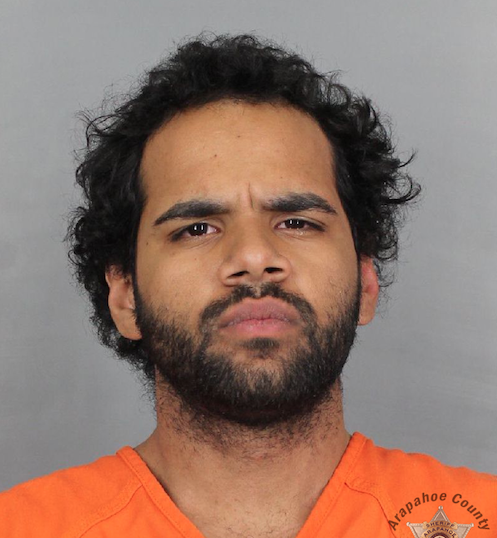
The search for a suspect wanted on an arrest warrant in connection with a reported Feb. 2 sexual assault in the 400 block of West Seventh, has been canceled by the Hays Police Department.
In a news release Tuesday night, Assistant Chief Brian Dawson said 23- year-old Tre Miekale Carrasco has been apprehended in Aurora, Colorado.
“Tre M. Carrasco was arrested last night in Aurora, Colorado, by the Aurora Police Department, and is being held on our arrest warrant. We will continue to work with the Aurora Police Department and the Kansas Bureau of Investigation on our ongoing rape investigation involving Carrasco,” the HPD said in a Wednesday news release. “The Hays Police Department would like to thank the following agencies in helping apprehend Tre M. Carrasco: The Kansas Bureau of Investigations, the Kansas Highway Patrol, the Kansas Department of Corrections, the United States Marshalls Office, the Ellis County Sheriff’s Office, the Thomas County Sheriff’s Office, the Colby Police Department, Platte County Wyoming Sheriff’s Office, the Denver Police Department, and the Aurora Colorado Police Department.
“Carrasco is innocent until proven guilty in a court of law.”
Ellis County could earn an additional $50,000 for charitable grants in the community through a county-wide “Twice as Nice” gift matching campaign.
In February, the Dane G. Hansen Foundation will match all public gifts to the Ellis County Legacy Fund at the Heartland Community Foundation, up to $50,000. Donations will be matched dollar for dollar, at a maximum of $5,000 per donor. If the $50,000 goal is met this year, the fund will gain a total of $100,000.
Over the past two years, the “Twice as Nice” campaign has raised over $200,000 for the Legacy Fund, which to date has granted $8,825 to charitable projects in Ellis County.
“As the Legacy Fund grows, the grants back to the county will grow as well,” said Sandy Jacobs, executive director of the Heartland Community Foundation.
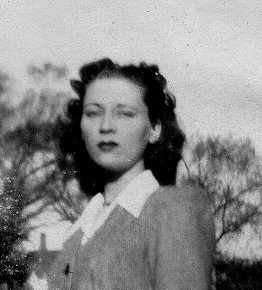
 Hedwig (Hedy) Matthew was born on March 5, 1923 in Victoria, Kansas. She passed away on January 23, 2019 at Brookdale Senior Living in San Antonio, Texas. She was the beloved wife of Gail Eugene Matthew and mother of Sharon and Richard.