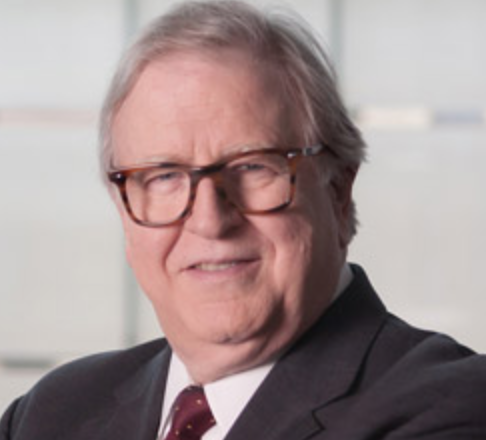
LAWRENCE, Kan. (AP) — A Silicon Valley company has donated $2 million to the University of Kansas to support research related to cryptocurrency and digital payments, such as Bitcoin.
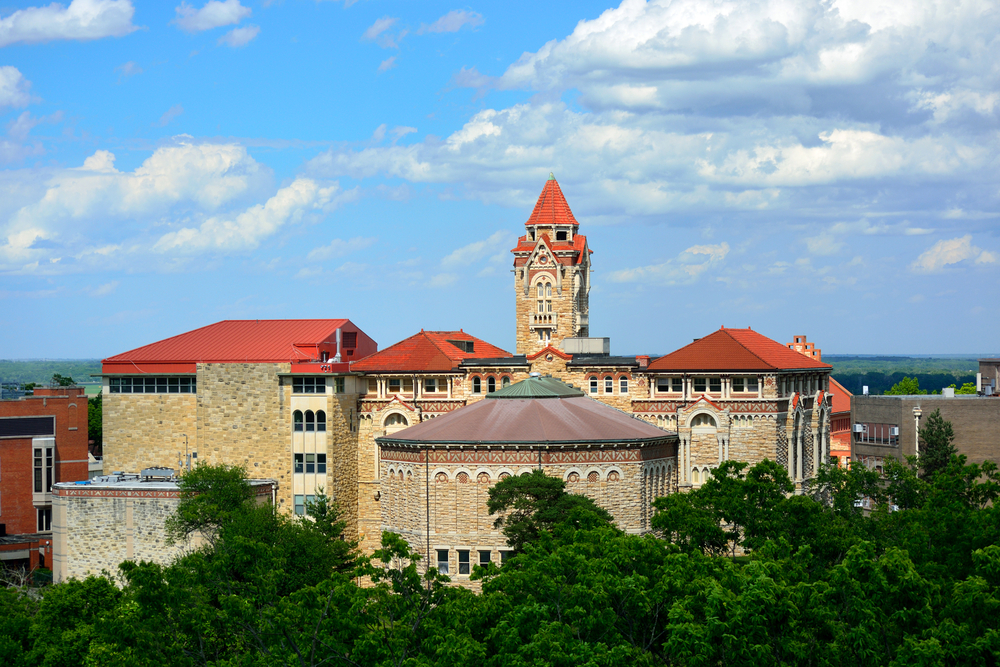
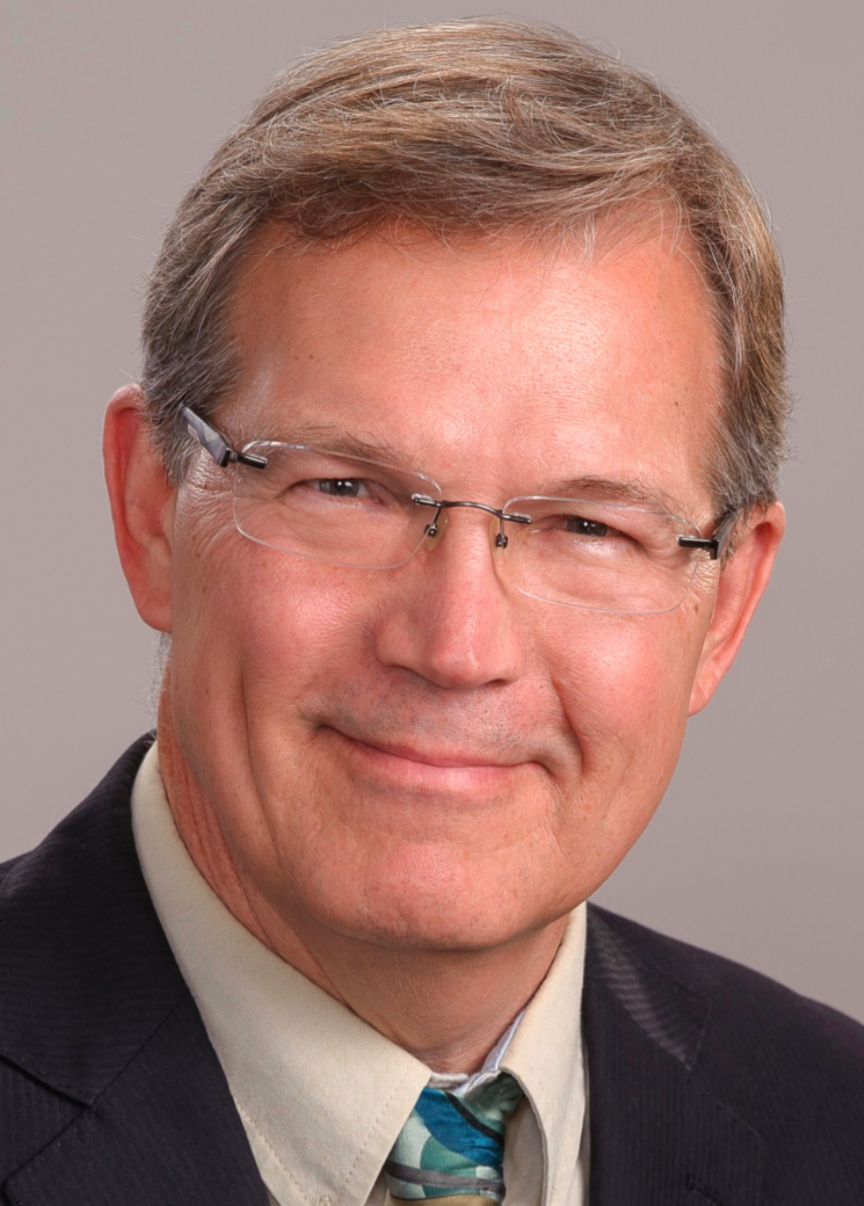
photo courtesy University of Kansas
The university says in a news release that the donation from Ripple will provide $400,000 each year for five years. It will go to the Information and Telecommunication Technology Center at the Kansas School of Engineering.
The university will determine its own research topics and Ripple, which provides digital commerce services, will collaborate with students and faculty and provide technical resources and expertise.
The gift also will support the KU Blockchain Institute, a student-led organization that promotes the use of blockchain technology. Blockchain is a digital record that is often used to track the use of cryptocurrency, or digital money.
RILEY COUNTY — Law enforcement authorities are investigating a Kansas felon on a host of new charges.
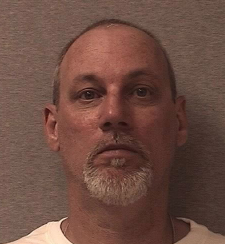
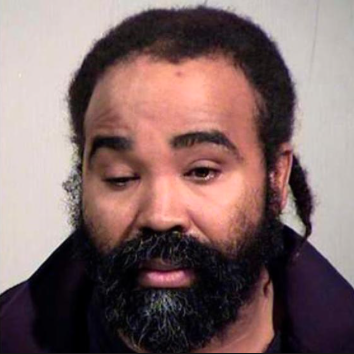
Anthony Moss -photo KDOC
Just after 3:30p.m. Thursday, police arrested 51-year-old Anthony Moss of Manhattan in the 400 Block of South Manhattan Avenue, according to the Riley County Police Activity report.
Moss is accused of giving a worthless check, theft by deception, mistreatment of dependent adult, two counts of forgery, two counts of making false information and a Riley County District Court Warrant for four counts of giving a worthless check.
Moss is being held total bond of $24,000.00.
Moss has previous convictions for theft, drugs, burglary and violations of the offender registration, according to the Kansas Dept. of Corrections
The Certified Public Accounting firm of Brungardt Hower Ward Elliott & Pfeifer, L.C is pleased to announce the addition to the Hays office professional staff of Chris Dunn in the tax and audit departments and Dawn Radican in the payroll and bookkeeping departments.
Dunn is a graduate of UMKC with a Masters in Accounting. He was previously employed with Sizewise Rentals in Ellis. Dunn is originally from Auxvasse, Missouri.
Radican is a graduate of the United State Army School of Finance. She was previously the owner of Radican Family Services, LLC in Russell. Radican is originally from Bellevue, Washington.
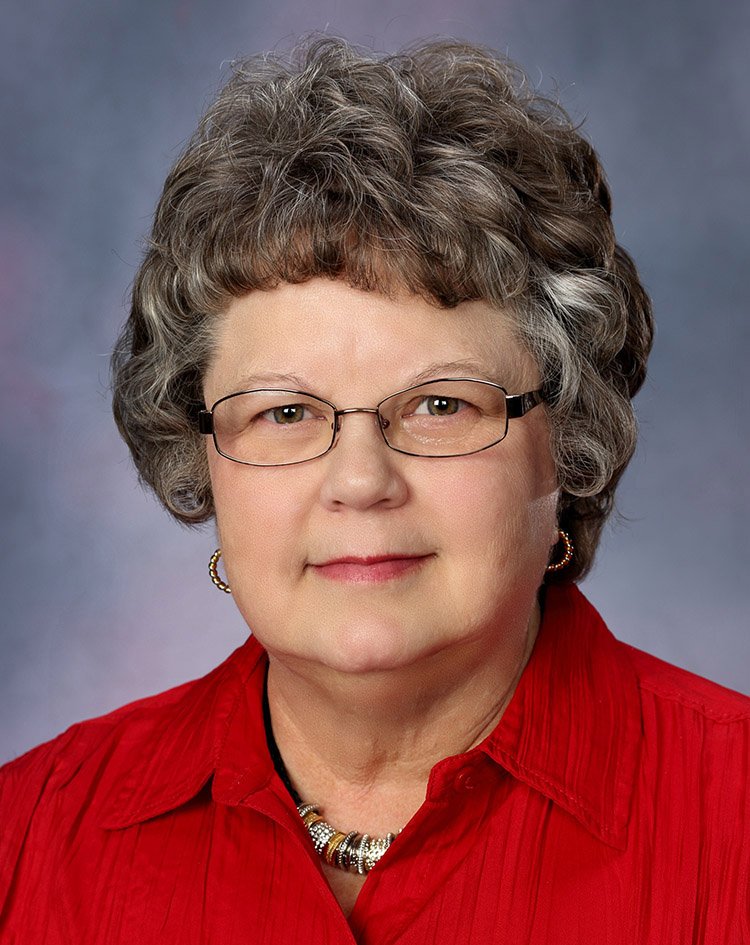
Dawn Radican
Brungardt Hower, with offices in Hays and Garden City, serves clients in central and western Kansas.
LAWRENCE — More than 6,100 undergraduate students at the University of Kansas earned honor roll distinction for the fall 2018 semester.
The students, from KU’s Lawrence and Edwards campuses and the schools of Health Professions and Nursing in Kansas City, Kansas, represent 91 Kansas counties, 44 other states and the District of Columbia, and 48 other countries.
The honor roll comprises undergraduates who meet requirements in the College of Liberal Arts & Sciences and in the schools of Architecture & Design; Business; Education; Engineering; Health Professions; Journalism; Music; Nursing; Pharmacy; and Social Welfare. Honor roll criteria vary among the university’s academic units. Some schools honor the top 10 percent of students enrolled, some establish a minimum grade-point average, and others raise the minimum GPA for each year students are in school. Students must complete a minimum number of credit hours to be considered for the honor roll.
Area students, listed by county, include:
Ellis
Brandon Bollig, Ellis, College of Liberal Arts & Sciences
Raina Basso, Hays, College of Liberal Arts & Sciences
Raegan Billinger, Hays, College of Liberal Arts & Sciences
Madison Crees, Hays, College of Liberal Arts & Sciences
Taylor Dinkel, Hays, College of Liberal Arts & Sciences and School of the Arts
John Drees, Hays, College of Liberal Arts & Sciences and School of Education
Alex Feyerherm, Hays, College of Liberal Arts & Sciences
Lacey Gregory, Hays, School of Journalism
Zachary Hopp, Hays, School of Education
London Keller, Hays, College of Liberal Arts & Sciences
Kelly Koenigsman, Hays, School of Education
Mark Loftus, Hays, College of Liberal Arts & Sciences
John Lowry, Hays, College of Liberal Arts & Sciences
Jordyn Manhart, Hays, School of the Arts
Payton Markley, Hays, College of Liberal Arts & Sciences
Lily Meska, Hays, College of Liberal Arts & Sciences
Matthew Moeder, Hays, College of Liberal Arts & Sciences
Tanner Moore, Hays, School of Pharmacy
Graydon Olson, Hays, School of Engineering
Gage Phillips, Hays, School of Engineering
Trenton Potter, Hays, School of Engineering
Cassandra Quinby, Hays, College of Liberal Arts & Sciences
Scott Ring, Hays, School of Engineering
Brianna Romme, Hays, College of Liberal Arts & Sciences
Nathan Romme, Hays, College of Liberal Arts & Sciences
Dawson Rooney, Hays, School of Engineering
Sarah Rooney, Hays, College of Liberal Arts & Sciences
Gracie Schmidt, Hays, College of Liberal Arts & Sciences
Anna Speno, Hays, College of Liberal Arts & Sciences
Owen Toepfer, Hays, College of Liberal Arts & Sciences
Jodi Veach, Hays, College of Liberal Arts & Sciences
Ethan Waddell, Hays, School of Business
Britney Werth, Hays, College of Liberal Arts & Sciences
Ryan Wooldridge, Hays, School of Pharmacy
Jasmine Zerr, Hays, College of Liberal Arts & Sciences
Fengxue Zhang, Hays, College of Liberal Arts & Sciences
Madisyn Gerhardt, Victoria, School of Health Professions
Graham
Tara Brachtenbach, Hill City, College of Liberal Arts & Sciences
Norton
Layton Miller, Norton, College of Liberal Arts & Sciences
Callie Uehlin, Norton, College of Liberal Arts & Sciences
Osborne
Kaelan Cameron, Osborne, College of Liberal Arts & Sciences
Phillips
Faith Hofaker, Logan, College of Liberal Arts & Sciences
Kayla Hofaker, Logan, College of Liberal Arts & Sciences
Logan Kiser, Logan, School of Pharmacy
Brant Cox, Long Island, School of Education
Braden Juenemann, Phillipsburg, School of Engineering
Stephen Sage, Phillipsburg, School of Pharmacy
Kathleen Still, Phillipsburg, College of Liberal Arts & Sciences
Macye Witmer, Phillipsburg, College of Liberal Arts & Sciences
Rooks
Hannah Berland, Damar, College of Liberal Arts & Sciences
Madison Karlin, Plainville, School of Architecture & Design
Lexi Winklepleck, Stockton, School of Business
Russell
Jeddrek Rowden, Lucas, College of Liberal Arts & Sciences
Ryan Birky, Russell, College of Liberal Arts & Sciences
Taelyr Blehm, Russell, College of Liberal Arts & Sciences
Kierra Mitchell, Russell, School of Journalism
Jill Schulte, Russell, School of Nursing
Smith
Camden Dietz, Smith Center, College of Liberal Arts & Sciences.
MANHATTAN — Applications to obtain a license to participate in the new Kansas Industrial Hemp Research Program are now available on the Kansas Department of Agriculture website. Applications are now posted as the regulations for the program became effective Fri., Feb. 8.
The Kansas Legislature passed K.S.A. 2-3901 et seq. in April 2018, enacting the Alternative Crop Research Act and charging KDA with implementing the new Industrial Hemp Research Program. The program allows for the licensing of growers, distributors and processors of industrial hemp as part of a research program. To be considered for a research license for the 2019 growing season, applicants must submit a research license application, including a research proposal, along with all required attachments, applicable fees, and fingerprint cards and waiver forms to submit to a state and national criminal history check.
All application materials must be submitted in complete form to KDA by Friday, March 1, 2019, to be considered for a license. The applications will be reviewed and background check information will be submitted to the Kansas Bureau of Investigation, and applications that meet all requirements will be approved for licensure. Upon conditional approval, applicants will be required to pay the license fee and then will be issued a license.
KDA is committed to serving Kansas farmers, ranchers and agribusinesses and providing an environment that enhances and encourages economic growth of the agriculture industry and the Kansas economy. The opportunity to grow a new crop in Kansas offers potential for diversification for Kansas farmers looking for an alternative crop, or for new farming enterprises interested in cultivating industrial hemp.
The application forms and additional instruction — along with much more information about the new Industrial Hemp Research Program in Kansas — can be found at the KDA industrial hemp website: agriculture.ks.gov/IndustrialHemp.
Please address questions about the applications or the Industrial Hemp Research Program to [email protected] or call KDA at 785-564-6700.
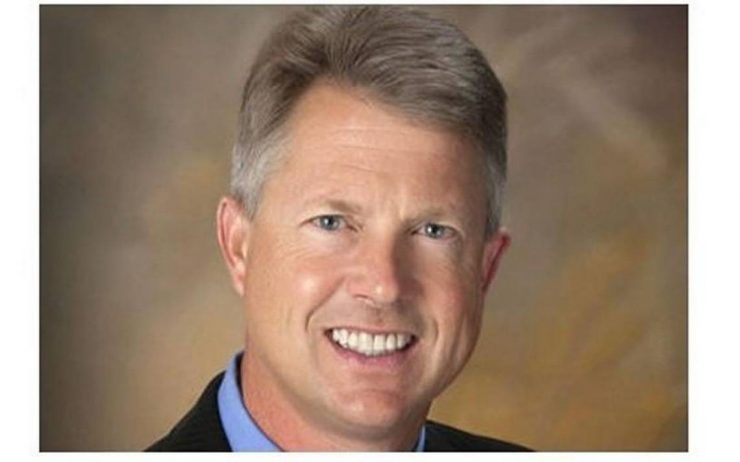
Dr. Roger Marshall, R-Great Bend, is the First District Kansas Congressman.
First off, what a game on Tuesday! I hope you had the chance to watch the incredible win by the Kansas State Wildcats over the KU Jayhawks! Admittedly, I was checking the score throughout the State of the Union. K-State ended rival Kansas’s eight-game winning streak with their 74-67-win Tuesday night. Go Cats!
This week we heard President Trump discuss American exceptionalism and the endless opportunities for success that our nation has when we put politics aside and work together. President Trump made it clear that his vision for success is only possible when both parties come to the table.
I am hopeful that we can take President Trump’s call for unity seriously, and begin to work closer with each other understanding that we have one goal, a better America. I was sent to Washington to do what is best for Kansas and America, not bicker and play party politics. I am continuing to try to work with members up here and negotiate to find victories and ways we can work together.
President Trump Delivers Unifying State of the Union Address
This Administration has been focused on lifting regulatory and tax burdens, unleashing our economy and most importantly keeping our country safe.
President Trump called for Congress to ‘show the world that America is committed to ending illegal immigration and putting the ruthless coyotes, cartels, drug dealers, and human traffickers out of business.’ I stand with the President on this issue and agree that we must secure our border by building the wall. Simply put, walls work, and I hope that we can find a win-win solution to the crisis on our southern border in these continued negotiations.
During the speech, Trump also outlined other priorities for the 116th congress including lowering the cost of health care and protecting patients.
As a physician, I want to lead the charge for all people to have meaningful access to health care. Of course, that includes people with pre-existing conditions, but we shouldn’t stop there. We must also help the millions of people who have been failed by the current healthcare system.
I am excited to work with the President on this critical issue.
A compromise funding deal will need to be reached by next Friday to avoid another government shutdown, and it must include funding for the border wall. If an agreement is not made, this will only further highlight the Democrats unwillingness to try to work on a compromise. The American people have spoken, and they want the wall. I sincerely pray and hope that Nancy Pelosi will start to at least try to work with Republicans and even moderate Democrats within her own party to come up with a solution to secure the border and put an end to this national security and humanitarian crisis.
On Thursday, my wife Laina and I attended the National Prayer Breakfast where President Trump delivered a beautiful message on why faith is crucial to the success of our great nation. In his speech, he said, “We are blessed to live in a land of faith where all things are possible. Our only limits are those we place on ourselves.”
This yearly prayer breakfast serves as a reminder of both the responsibility and privilege it is to serve our great nation. We prayed together and called on the lord to guide our hand to make the right decisions. So much of the decisions we make here in Washington rely upon strength and guidance from God. It was an honor to attend and join my colleagues and the many people across the nation that gathered to pray with us as well.
America has always done its best work when it is united, and I was pleased that President Trump reiterated his call for unity and led us in prayer asking for the Lord for strength and guidance.
It is also important to remember the deep roots Kansas has in this yearly tradition. President Eisenhower, who grew up in Abilene, Kansas, was the first president to join members in their informal prayer event in 1953. Since that year it has been honored as a nationally recognized event, and to this day, every president since Ike has attended.
Infanticide in New York
I am outraged by the new legislation in New York that supports abortions all the way until the due date of the baby. Congress, the medical community, and the American people need to stand up to this legislation and denounce these immoral, murderous procedures. This law combined with Virginia Governor Ralph Northam’s comments regarding a live birth abortion have enraged not only myself, but millions of people across the country that recognize abortion as what it is – murder. I think House Minority Whip Steve Scalise (R-LA) put it best what he said “it woke a sleeping giant.” I hope and pray that this newly awakened spirit of morality and respect for the dignity of life will win out in the end and result in an end to the practice of abortion in this country.
150 Years of Little Sweden, USA
This week, I introduced a resolution celebrating the 150th anniversary of Lindsborg, Kansas. This legislation also recognizes and applauds the people who have made the town culturally rich and vibrant.
Lindsborg, located in McPherson County, was established on February 20, 1869, by Swedish immigrants who settled in the area.
It is a great honor to sponsor this resolution that celebrates a very special town to my family. I, myself, am one-quarter Swedish and am very proud of that. My family moved to the United States from Sweden in the early 1900s, first settling around Chicago then moving to White City, KS. Eventually, they found their way to rural Butler County, where they settled on 160 acres and raised their own cattle, chicken, pigs, eventually evolving that farm into the multi-faceted Kansas farm that it is today.
Growing up in a family with Swedish roots, we still celebrate Swedish traditions today. At every Christmas dinner, we have various Swedish dishes including pickled herring, anchovies, hardtack crackers, and Swedish candies all bought from shops in Lindsborg. I greatly value my heritage and am especially proud to sponsor a resolution supporting Lindsborg, ‘Little Sweden, USA.
Qatar: US Ally or Global Menace?
On Wednesday, I had the privilege of delivering the opening remarks at the Middle East Forum’s “Qatar: U.S. Ally or Global Menace?” conference in Washington, D.C. I spoke about President Trump’s strong stance against radical Islamic terrorism and governments that support it.
I also discussed the importance of standing alongside Israel, an important ally of over 60 years with a unique bond to the United States.Today, this alliance remains stronger than it has ever been before. However, there are still many groups that threaten violence against Israel and the United States. Iran and Qatar’s well-documented support for extremism has fueled bloodshed throughout the region and around the world.The U.S. and Israel must continue to stand together to counter destabilizing activity, stop the financing of terrorism, and end the proliferation of missiles.
I am proud to stand with President Trump in his efforts to counter foreign aggression and Islamic terror and to promote peace and stability across the globe.
Legislation Honors Ft. Riley Fallen Soldiers
This week, I introduced legislation with Sen. Roberts and Sen. Moran that honors those who have made the ultimate sacrifice while serving in the First Infantry Division. The legislation allows for additions to the First Division Monument located on White House grounds. Freedom isn’t free, and this legislation is an excellent reminder of that. I am both humbled and proud to recognize these service members on this historic monument at the White House.
This monument was developed to honor the heroic efforts of the 1ID soldiers who fought in World War I and has been modified throughout the years to include Big Red One soldiers who lost their lives. This legislation will ensure those that paid the ultimate sacrifice serving our country will be honored.
Marshall Joins Bipartisan Group in Reintroducing Violence Against Women Health Act
This week, I joined a group of bipartisan legislators in reintroducing H.R. 973, the Violence Against Women Health Act. This legislation builds on the Violence Against Women Act (VAWA) by emphasizing efforts on behavioral health, adding a focus on early childhood programs, and utilizing existing resources for coordination between providers and the Department of Health and Human Services.
Since its enactment, the VAWA has funded programs for prevention of domestic violence and resources for victims of sexual assault such as rape crisis centers and hotlines. VAWA health-related programs have trained more than 13,000 health care providers to assess for and respond to domestic and sexual violence.
I am proud to support this important piece of legislation that takes the great work of the VAWA program and expands it to help even more women and families.
For more details on this legislation, please click here.
Dr. Roger Marshall, R-Great Bend, is the U.S. Representative for the First District of Kansas.
The Hays Public Library will host “If These Walls Could Talk: Kansas Murals,” a presentation and discussion by Dave Loewenstein at 6:30 p.m. Feb. 28 at the library’s Schmidt Gallery. Members of the community are invited to attend the free program. Contact the Hays Public Library at 785-625-9014 for more information. The program is made possible by Humanities Kansas.
Explore the artists, meanings, and stories, behind the state’s rich collection of public murals as part of Hays Public Library’s Everything Kansas series. From the iconic John Steuart Curry murals in the Kansas Statehouse to the post office murals of the New Deal, these works tell us much about the people involved. Led by muralist Dave Loewenstein, this presentation explores the history of murals and examines the efforts that go into capturing a community’s story in public art.
Dave Loewenstein is a muralist, printmaker, arts organizer, and co-author of Kansas Murals: A Traveler’s Guide. In addition to his more than twenty public works of art in Kansas, Loewenstein’s murals can be found across the United States, Northern Ireland, South Korea, and Brazil.
“Kansas has more than 1,000 murals,” Loewenstein said. “They are our great outdoor museum, and tell us much about our history, hopes, and dreams.”
“If These Walls Could Talk: Kansas Murals” is part of Humanities Kansas’s Movement of Ideas Speakers Bureau, featuring presentations and workshops designed to share stories that inspire, spark conversations that inform, and generate insights that strengthen civic engagement.
For more information about “If These Walls Could Talk: Kansas Murals” in Hays, contact the Hays Public Library at 785-625-9014 or visit hayslibrary.org.
About Humanities Kansas
Humanities Kansas is an independent nonprofit spearheading a movement of ideas to empower the people of Kansas to strengthen their communities and our democracy. Since 1972, our pioneering programming, grants, and partnerships have documented and shared stories to spark conversations and generate insights. Together with our partners and supporters, we inspire all Kansans to draw on history, literature, ethics, and culture to enrich their lives and serve the communities and state we all proudly call home. Visit humanitieskansas.org.
The phone rang, and I answered it because the call was from a nearby community. No big surprise that the caller was obviously not from anywhere near, and the caller was asking for a donation for some organization in which I had no interest. I said, in a kindly tone, “No thank you,” and hung up. They will never end the call. YOU MUST HANG UP.
Financial abuse by telephone or internet has been called “the crime of the 21st century.” People of all ages are at risk, but scammers commonly target the elderly. Those of us past 65 are more often home to answer the phone, are apt to stay on the line longer and are less likely to report a crime. Making all of this worse, telemarketing crime is challenging to prosecute and, therefore, inviting to criminals.
There are plenty of bad guys out there. The National Council on Aging has written a compendium of common fraudulent traps that can result from telephone calls or internet messages. Here are some:
• Callers may pose as Medicare representative to obtain your personal numbers for the purpose of billing Medicare for bogus services. Remember, U.S. Government agencies will NEVER initiate a call.
• Because of outrageous prices for drugs, people are lured to purchase less expensive prescriptions from internet and out-of-country pharmacies. Beware that doses of drugs may be different than desired, and sometimes unsafe substances are added.
• Callers may be selling false or dangerous anti-aging products and claim reduced wrinkles or bags under eyes. Don’t trust them. Talk to your doctor.
• Con-artists may promise to split a large sum of money with you, provided you first agree to send a “good faith” donation to help cover shipping costs. Don’t believe it.
• “Hi Grandma, do you know who this is?” Never give out the name of a family member on an unsolicited call. They usually ask you for money for a fake emergency or rescue. Always check by calling family first.
• Especially after a major disaster, callers ask for “rescue money” to help those harmed which, of course, goes to the scammers, not those in need.
• Fake investment plans are everywhere. Strangers calling or emailing you with a great investment opportunity, should not be trusted, especially if it sounds too good to be true.
Take home message: Don’t respond to calls or emails from strangers selling or pushing you into something. Don’t donate to causes that you didn’t initiate. Beware of scammers. In a kindly tone, say, “No thank you,” and JUST HANG UP.
Rick Holm is a physician from Brookings, S.D. and the author of “Life’s Final Season.” Follow The Prairie Doc Facebook page for free and easy access to the entire Prairie Doc library of educational videos, podcasts and blog, featuring On Call with the Prairie Doc streaming live most Thursdays at 7 p.m. central.
TOPEKA — Less than a year after it was established, the State of Kansas Alzheimer’s Disease Working Group has presented the Kansas Alzheimer’s Disease Plan to the Legislature.
Kansas, prior to this plan, was the only state in the nation to not have a formal plan to address what Ann Elifrits, commissioner of the working group, called a “looming health crisis.”
“We are very behind other states,” said Elifrits, noting that Washington, D.C., and United States territory Puerto Rico already have implemented plans.
The plan is a call to action for state and local government, healthcare providers, educators, first responders, civic and faith communities and many other Kansas stakeholders.
Currently, there are 53,000 Kansans age 65 and older living with Alzheimer’s, according to the Kansas Department for Aging and Disability Services. This number is expected to increase to 62,000 by the year 2025. Alzheimer’s is the sixth leading cause of death of Kansans age 60 and older.
Not only is it a health crisis, but a financial crisis as well. Kansas spent $424 million Medicaid dollars on individuals with Alzheimer’s in 2018. These costs are expected to increase almost 26 percent from 2018 to 2025.
The financial burden affects the state and the estimated 151,000 caregivers and family members who provide care and support for someone with Alzheimer’s. According to the Alzheimer’s Association, the average cost of long-term care for a semi-private room in a nursing home is nearly $86,000 per year.
Former Gov. Jeff Colyer, by Executive Order 18-14, established the State of Kansas Alzheimer’s Working Group in June 2018. The executive order states the duties of the working group are to assess the current and future impact of the disease on Kansas residents and to develop a strategy to mobilize a state response to this public health crisis. The working group is run by the Kansas Department for Aging and Disability Services.
The working group endorses creating a state Alzheimer’s Disease Advisory Council. The council would monitor and report progress, as well as recognize the barriers to the implementation of the state plan.
Along with creating an advisory council, the plan offers multiple recommendations that can be made within the existing systems of care and services in Kansas. The key recommendations include requiring specific Alzheimer’s disease training for long-term care providers, the use of dementia screening tools to primary care physicians, a comprehensive statewide training program for all first responders and law enforcement agencies and the expansion of innovative adult day programs for individuals with Alzheimer’s in all Kansas counties.
The recommendations offered in the plan are only the first steps in addressing the public health crisis. A systematic change is necessary, which makes the need for action urgent.
“I really think there are things we can do in Kansas to make people more aware, and we’re missing those opportunities,” said Elifrits. “Our understanding of it is evolving, and we are hopeful there are effective treatments.”
Paige Henderson is a University of Kansas senior from Lenexa majoring in journalism.
PHOENIX (AP) — Arizona is trying to catch up to with a state law in Kansas and 9 other states allowing electronic monitoring and other technology aimed at deterring abuse of vulnerable people at long-term care facilities, following the rape of an incapacitated Phoenix woman who later gave birth.
Nathan Sutherland photo Maricopa County Sheriff
Cameras are most commonly used, but they pose privacy issues, and advocates and experts disagree about their effectiveness.
Some say video surveillance can help in criminal cases but may not stop attacks, while others have seen improvements and urge any effort to safeguard those who are aging, sick, disabled or otherwise unable to protect themselves.
The Arizona House is considering a measure that would let certain facilities install video surveillance in common areas. The providers would have to detail how to avoid privacy violations.
“We’re looking into how to make it so parents have more reliable ways to ensure their loved ones are safe,” Republican Rep. Nancy Barto, the measure’s sponsor. “I’m learning a lot of group homes already do this. Some of those policies are actually working.”
Arizona would join Illinois, Kansas, Louisiana, Maryland, New Mexico, Oklahoma, Texas, Utah, Virginia and Washington with laws or regulations allowing surveillance equipment inside nursing homes, assisted living centers and other group residential settings.
Most of those laws place the option and cost of electronic monitoring on residents and their guardians. A majority of the laws say residents or their surrogates can put a camera or monitoring device in their rooms but must notify the facility, among other conditions.
Carole Herman, founder of the advocacy group Foundation Aiding the Elderly, is not sure cameras would have helped her aunt, who died of bedsores in a nursing home but said that they might be useful in other cases.
Cameras in hallways can show who is at a patient’s bedside and how often the patient is getting care, she said. She questions why any facility would oppose them.
“The industry doesn’t want it obviously,” Herman said. “But if they care about these people, what’s the resistance to these cameras?”
Nicole Jorwic, director of rights policy at The Arc, a national advocacy group serving people with intellectual and developmental disabilities, cautioned that cameras are not a “magic pill.”
“Even if the law’s written perfectly well, it’s not going to capture every form of abuse and neglect,” Jorwic said.
While cameras could help catch abusers, it’s not clear they’re effective at preventing violence, said Brian Lee, a former Florida long-term care public advocate who heads the advocacy group Families for Better Care.
“As far as prevention, I don’t know,” Lee said, “but I’ve seen it used for prosecution.”
But one expert says a properly designed closed-circuit TV system with multiple monitoring points can be a good deterrent. A common mistake is to have one monitoring area that nobody is watching, which makes cameras reactive instead of proactive tools, said Steve Wilder, president of Sorensen, Wilder & Associates, an Illinois-based health care safety and security consulting group that works primarily with hospitals and senior living communities.
“A lot of facilities think cameras give the message of ‘We’re not a safe facility.’ Nothing could be further from the truth,” Wilder said.
Details were not known about the security system at the Phoenix facility, where a licensed nurse is accused of sexually assaulting a 29-year-old woman who had a baby boy Dec. 29.
Hacienda HealthCare said Thursday that it was closing the intermediate care facility that serves young people with intellectual or developmental disabilities and would work with the state to move patients elsewhere.
After the birth, the Arizona Department of Health Services implemented new safety measures at Hacienda, including more monitoring of patient care areas but not video cameras.
The department declined to comment on the surveillance legislation Thursday.
In Texas, a 2013 law allowing facilities to install and operate video surveillance equipment in common areas has made an impact, health officials said. Devices can only be placed in the state’s 13 intermediate care facilities, which serve nearly 3,000 patients with intellectual disabilities.
Cameras have both confirmed and cleared staff in allegations of abuse, neglect or exploitation.
“There was an initial rise as (the Department of Family Protective Services) was able to confirm cases more readily, but since then, the rates have fallen,” Carrie Williams, a Texas Health and Human Services Commission spokeswoman, said in an email.
New Jersey has taken a different approach. Its “Safe Care Cam” program aims to catch abuse or neglect by allowing residents to borrow a hidden camera.
A loaner camera led to the January arrest of a caretaker at an assisted living facility. The attorney general’s office said footage showed her slapping a 90-year-old bedridden woman on the hand and roughly pushing her head back onto a pillow several times. The victim couldn’t communicate verbally because of a stroke.
In Arizona, the lawmaker behind the camera legislation said it has “a good chance” of passing. As chairwoman of the House Health & Human Services Committee, Barto can likely get the measure a hearing.
Gov. Doug Ducey, a Republican, is usually skeptical of regulations and has touted his record of rolling them back, but the Republican has ordered agencies to improve protections for people with disabilities.
Arizona also is considering legislation that would require facilities like Hacienda to get a state license and conduct background checks of employees that care for clients. So far, neither bill is scheduled for a vote.
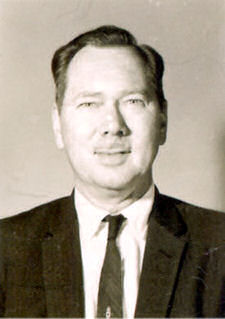
Don Wilcox circa 1951 (Photos courtesy Washburn University)
LUCAS – The new Don Wilcox Science Fiction/Fantasy Amateur Short Story Contest is an annual juried contest, a partnership between the Blue Hills Heritage Foundation of Lucas, Kansas and the Lucas Public Library.
It is for amateurs only (those who have never received money for published works). There is no entry fee. Awards will be given to the winners in each category.
The contest is divided into two divisions:
1. Young Adult (7-12 grades).
2. Adult.
(Note: this applies to the author’s age, not to the kind of story)
Short Story Submission Guidelines:
• All stories are limited to 7,500 words.
• Stories must be previously unpublished.
• No inappropriate language or explicitly mature themes. Submissions deemed to have such content by the contest organizers will be disqualified.
• Stories must be typed and in English.
• Submissions should be single-spaced in Times New Roman font, size 12.
• Submissions are to be printed hard copy and mailed to the following address:
Don Wilcox Story Contest
Lucas Public Library
P.O. Box 278 / 209 South Main Street
Lucas KS 67648
• Submissions will not be returned unless return postage is included.
• All stories are to be submitted with the following information on their author:
1. Name
2. Street address
3. Phone contact
4. Email address
5. Age of author
Contest Timeline:
February 1, 2019 – Contest is announced
May 1, 2019 – Deadline for submissions
July 1, 2019 – List of finalists for each category released
September 5, 2019 – Winners revealed
‘Fantastic Adventures-The Robot Peril’ by Don Wilcox, Jan. ,1940
The contest is in honor of Cleo Eldon “Don” Wilcox (1905-2000), Lucas, Kansas native and a popular science fiction/fantasy writer in the 1930s, 1940s and 1950s – the Golden Age of Science Fiction.
Mary Ann Steinle is the librarian for the Lucas Public Library in Lucas, Kansas. They can be reached at 785-525-6305, M-W & F-S.
The Blue Hills Heritage Foundation is a 501(c)3 nonprofit organization located in Lucas, Kansas, Von Rothenberger, Secretary/Treasurer. Their email is [email protected]. They can be reached at 785-469-7000.
Through a generous donation to the FHSU Foundation, Forsyth Library at Fort Hays State University has established the Lynn Haggard Undergraduate Library Research Award.
This $500 cash award will recognize a Fort Hays State undergraduate student for research that incorporates the use of Forsyth Library resources and demonstrates exemplary information literacy and research skills. The award is based on the student’s ability to find, evaluate and use library resources effectively in research and creative projects.
“The Lynn Haggard Undergraduate Library Research Award honors Lynn Haggard, retired Forsyth Librarian, and the 18 years she passionately served Forsyth Library for the FHSU community,” said Deborah Ludwig, dean of Forsyth Library.
The application cycle officially opens today, allowing undergraduate FHSU students to apply by submitting projects such as research papers, digital projects, videos, posters, compositions, and design portfolios. Applications must include short, reflective essays describing how library tools and resources were used in the projects.
A letter of support will also be required from a faculty mentor, confirming the project was completed in conjunction with an FHSU class or scholarly activity and that it meets discipline standards.
Submissions will be accepted until March 31. The winner of this inaugural award will be announced in May.
Applicants must have been enrolled as an undergraduate student at FHSU during the fall 2018 semester or in the spring 2019 semester. On-campus, online, and international students are all eligible. The winner will receive a cash prize of $500, and the winning project will be featured in the FHSU Scholars Repository (scholars.fhsu.edu).
Application details and additional information about the award are on the page at fhsuguides.fhsu.edu/lhulra.
“As a librarian, Lynn was a constant presence throughout the university community and was greatly involved in the community of Hays,” said Ludwig. “Her genuine care and support of students and the community continues in her retirement and her legacy as a librarian and educator will continue through this award.”
In more communities today than ever, student publications are doing double-duty — reporting news of schools and surrounding communities — and doing both well.
As a nation, and for anyone who supports a free press, that dual rule is worthy of notice, honor and support. We take note of the great work being done by journalists who happen to be students as we recognize the 50th anniversary of a major student-First Amendment decision by the U.S. Supreme Court.
The Freedom Forum Institute (FFI), the Newseum and the Student Press Law Center (SPLC) are declaring 2019 the “Year of the Student Journalist.”
As you might expect in today’s world, the life of student journalists and of the student press is not without challenge and obstacle, along with great dollops of good reporting.
As SPLC Executive Director Hadar Harris — with whom, in full disclosure, I and my FFI colleagues are coordinating this declared “Year” — recently wrote: “Student journalists play a key role in the civic life of their community. Not only do they report on important issues in the life of a school or school district, but as the number of professional journalists has dwindled, student journalists often also fill the gap in reporting on county, state and regional issues.”
“In 2014, a Pew research study found that student journalists made up 14 percent of the overall state house reporting corps. That number is certainly higher today. But student journalists and journalism education programs are under pressure. Student journalists have lesser First Amendment protections and are often subject to censorship, prior review, budget battles and other external pressures.”
For many who don’t often see student journalism, at the high school or college levels, the recollections are more likely than not to revolve around stories of “big games,” student elections or such. But in the 21st century, as newspaper circulation nationwide has continued to drop — more than 11 percent last year alone, reports document — more student journalists are reporting on stories and issues outside their school grounds or campuses.
In the past year, SPLC reports, students broke important stories about teacher misconduct (Utah), improper transfer of student athletes (Arkansas) and disciplinary charges by a state agency against an administrator (Vermont). Stories from students about teen pregnancy, drug abuse, mental illness and even how the recent partial federal government affected local businesses are now commonplace.
Sadly, school administrators censored those controversial stories in efforts not to make their schools look bad. In Texas, after students published editorials critical of the school administration, the paper was suspended and the unhappy principal banned all student editorials. In each case, the stories were reinstated, but the framework which allows for such censorship remains.
Just as we have not tolerated government control of what general news outlets can report, but hold them accountable for that reporting, we should adopt that same approach to student journalism. The Year of the Student Journalist will also highlight state-based student-led efforts to protect student press freedom and to prevent retaliation against advisers standing up for the First Amendment rights of their students. Such New Voices protections are in place in 14 states and are currently pending in eight more.
The legislation reflects changes in attitudes among our fellow citizens, according to the Freedom Forum Institute’s annual “State of the First Amendment” national survey. In 2014, the last year in which the direct question was included in the survey, 68 percent agreed that public school students should be allowed to report on controversial issues in their student newspapers without the approval of school authorities, while only 27 percent disagreed. When the question was first asked in 2001, Americans were almost evenly split on the question and those who strongly disagreed with the statement dominated the response.
As we saw demonstrated most tragically in the mass shootings at Marjory Stoneman Douglas High School in Parkland, Fla., nearly a year ago, student journalists can compete with professionals in reporting on even such horrific news.
As one student editor told me during a podcast interview just days later, the newspaper staff was making coverage plans even as the shots were still being fired, as they huddled in a closet for safety. The thinking: It was a big story, whether a faked attack or a real one.
Such an approach to covering the news — and the quality report that staff produced days later — is a professional approach to news that would bring credit to any newsroom.
In 1969, the U.S. Supreme Court ruled, 7-2, in Tinker v. Des Moines Independent School District that neither “students (n)or teachers shed their constitutional rights to freedom of speech or expression at the schoolhouse gate.”
Now, with that admonition in mind, and the realization that for many of us, student journalists will bring us the news of our town, school district or more, it’s time to support these journalists and their publications.
So let’s spend 2019 doing just that — in the “Year of the Student Journalist.”
Gene Policinski is president and chief operating officer of the Freedom Forum Institute. He can be reached at [email protected], or follow him on Twitter at @genefac . He was a student journalist at St. Joseph’s High School in South Bend, Ind., and on the Daily News at Ball State University.