
Looking through the lenses of intellectual and developmental disabilities (IDD), whether from a national perspective or a state perspective, there are concerns in the air. As a starting place, let me begin on the national front. I will focus on one upcoming Department of Labor rule impacting Community services and supports for persons with disabilities. From there I’ll circle back and touch on the corresponding Kansas connection.
The Department of Labor (DOL), is implementing a rule change that will impact how all businesses and non-profits pay overtime for salaried employees.
Developmental Services of Northwest Kansas (DSNWK) is a non-profit and an employer of nearly three hundred and fifty staff throughout northwest Kansas. Like most businesses, we have both hourly and salaried employees and this DOL change touches those who are salaried in a major way. The DOL website would provide the details, but in keeping it simple I’ll focus on the core issue. There are several conditions that must be met for a position to be appropriately classified as salaried, one of which includes a salary ‘floor’. Such a position must have an annual wage greater than $23,660. The trouble brewing relates to the DOL rule change that proposes to more than double this salary floor for this employee group, a 113% spike. With the stroke of a pen, a mandate will begin impacting every industry with salaried workers whose annual wage is under the new salary floor of $50,400.
The proposed overtime exemption rule threatens to put unreasonable strain on already overstrained providers like DSNWK, who provide community based supports for people with intellectual and developmental disabilities.
We have long-desired to elevate the wages of our hard-working hourly and salaried employees. We are primarily funded by state and federally matched Medicaid dollars. Most do not realize this, but we do not set the rates for those dollars needed for our services. For us, the rates are set by the State of Kansas. DSNWK, and providers like us, have been hindered for nearly a decade with stagnant reimbursement rates (no adjustments since 2008) and to worsen matters, reductions in resources have been experienced.
So the Perfect Storm strikes when costs are mandated by law to increase while there is no corresponding mechanism nor mandate to increase the rates to remain legally compliant. That Perfect Storm is set to strike in the near future with troubling effects nationally and here in the heartland, Kansas.
This storm has been on the horizon for months and we’ve seized opportunities to provide public comment sharing our concerns with the DOL (in September 2015) as well as with our members of Congress along the way. Let’s shift from a national focus to Kansas.
We are all quite aware of Kansas’ current and significant budget challenges. Legislators know the important work that lay ahead and what it takes to solve that challenge. Several legislators from NW Kansas have advocated with us and with persons with IDD, stressing that we not solve the budget problem on their backs or on the backs of their support system. That support system is made up of people supporting people – men and women who’ve made it their careers to support others.
These dedicated support workers deserve a living wage.
The stagnant rates for the services that we provide have hampered our ability to keep pace for this noble work done every day. The reality of deficit budgets on top of receiving no rate adjustments has created a no-win situation. Looking back as far as 1999, the cost of living (ie. the inflation rate) in Kansas has risen by nearly 43% while service reimbursement rates have only risen by 17.8% over that same period! How many businesses can continue under such challenges? We must! I believe action is needed to now to correct our course. I’m reminded of a quote from Mahatma Gandhi that is spot on for us here in Kansas. He shared, “The measure of a civilization is how it treats its weakest members.” People with IDD have the same inherent value as you and I, where each is welcome and all belong.
In the last several years we’ve been navigating and adapting to the new KanCare system which began in 2013. We are on now on the cusps of yet another major system overhaul looming in Kansas, called Waiver Integration. Because of space limits here, I’ll reference a piece of legislation, HB 2682 and a corresponding article, calling for a slowing down of that process. The KHI article, by Andy Marso, was dated 4/1/16 (https://www.khi.org/news/article/brownback-administration-sends-mixed-messages-on-waiver-integration).
We are in an “Action-Required” zone right now and need the support from all our elected leaders representing us both in Kansas and in Washington. The please ‘prevent-further-harm-of-our-system’ message must transform to please also ‘address-the-critical-erosion-of-the-community-service-system’.
I thank each citizen for becoming more informed. Knowledge and understanding leads to both responsible citizenship and action. I am also grateful to all our elected leaders who advocate with us and those we support. We have reached out on all levels, locally, at the state level and on the national level and will continue to do so moving forward.
In closing, let me suffice to say that Concern is in the Air – requiring common-sense Action. At DSNWK we remain committed to helping our community and those with intellectual and developmental disabilities to grow and be recognized for their inherent value and importance. Our gratitude is extended to all who join us in this great work.
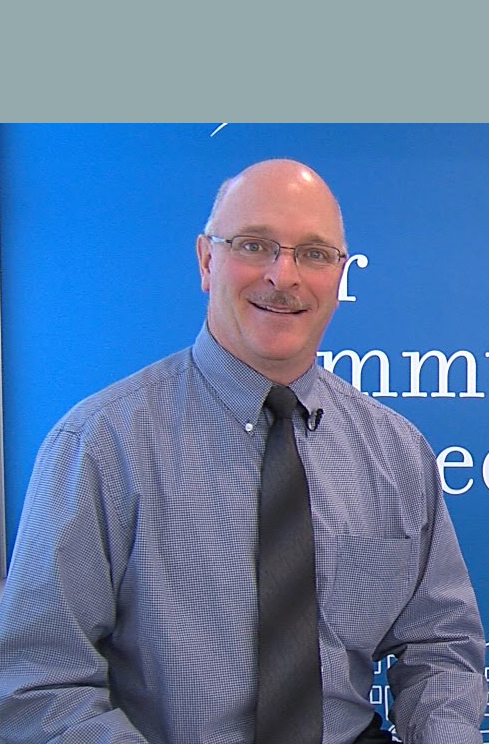
Jerry Michaud is President/CEO of Hays-based DSNWK.