We have a brand new updated website! Click here to check it out!

Kansas first responders recognized for Hurricane Harvey deployment

Crews in Salina preparing to deploy Aug. 31 to Hurricane Harvey (Photo courtesy Salina Fire Dept.)

OFFICE OF GOV.

TOPEKA – Governor Brownback and Lt. Governor Colyer on Wednesday recognized water rescue teams from agencies across Kansas who were deployed to Texas to assist in recovery efforts from Hurricane Harvey

The ceremony took place on the South capitol steps, and was followed by a reception at Cedar Crest that included the teams and their families.

The search and rescue teams, comprised of over 50 individuals from 16 different agencies across the state, deployed to Texas on Aug. 30 to assist with the floods after Hurricane Harvey. In addition to personnel, the deployment included hard bottomed, air, and inflatable boats. They all returned to Kansas on Sept. 5.

“We are proud of these individuals who were ready and willing to help when called upon. They were prepared with specialized swift water rescue training that allowed them to be of service in this unique kind of disaster. We thank them for their talents, abilities, and willingness to help others,” said Brownback.

The crews engaged in search and transportation operations for people and animals stranded by flood waters. Kansas search and rescue swift-water/flood teams, along with teams from the Kansas Department of Wildlife, Parks & Tourism, worked mostly in Katy, Texas, with teams from Oklahoma, Tennessee, and Missouri. Collectively, 15 strike teams consisting of five boat squads combined for a total of 75 water assets. Kansas strike teams searched close to 1,200 structures and evacuated 27 individuals. In total, the joint operation resulted in over 4,000 structures searched and over 100 evacuations. The teams also worked on other small assignments and were on standby as needed.

“What these brave men and women accomplished in serving our neighbors in Texas is a remarkable feat of collaboration and caring,” said Colyer. “They have represented our state well and we thank them for serving.”

“I am proud of the men and women from the many different Kansas organizations who did not hesitate when called upon for hurricane relief,” said Maj.Lee Tafanelli, the Kansas adjutant general. “I am especially proud that the Emergency Management Assistance Compact (EMAC), which guides the coordination of all these resources across the country is once again being managed right here in Kansas by the Kansas Division of Emergency Management.

“I would also like to remind Kansans that September is Preparedness Month. Though there are numerous skilled, courageous responders such as these, it is everyone’s responsibility to be prepared at home for an emergency. If you need information about what your family can do to be prepared, please visit www.ksready.gov.”

Agencies involved were: The Kansas Adjutant General’s Office, Kansas Fire Marshal’s Office, Kansas Department of Wildlife, Parks and Tourism, Chanute Fire Department, Derby Fire Department, Hutchinson Fire Department, South Hutchinson Police Department, Manhattan Fire Department, Mission Township Fire Department, Neodesha Fire Department, Newton Fire/EMS, Parsons Fire Department, Pittsburg Fire Department, Salina Fire Department, Saline County Sheriff’s Office, Sedgwick County Fire District #1, Shawnee Fire Department, and Winfield Fire/EMS.
🎥 More than 150 show for Strategic Doing: ‘All ideas are on the board’

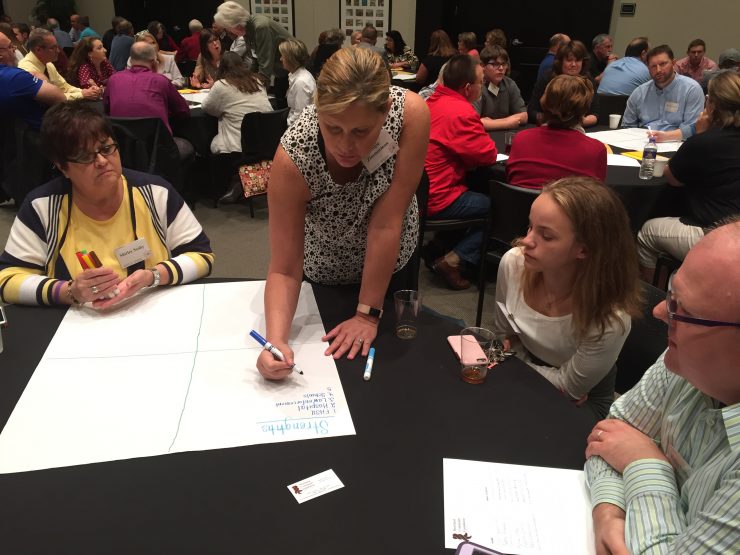
Facilitator Betty Johnson, Lawrence, is an FHSU graduate and Smith Center native.

By BECKY KISER
Hays Post

“All ideas are on the board,” so far.

More than 150 residents from throughout Ellis County gathered Monday night at Fort Hays State University’s Robbins Center for “Strategic Doing” hosted by the Heartland Community Foundation (Ellis, Rooks and Trego counties)  and the Dane G. Hansen Foundation, Logan.

It was the first of four meetings to guide Ellis County through the process of planning and implementing community improvements.

Strategic Doing starts with a SWOT analysis

Facilitator Betty Johnson, Lawrence, is an FHSU graduate and Smith Center native. She first directed the crowd to “not sit with your friends and co-workers. Meet somebody new.” After some shifting among chairs, the work began for each group at the 16 tables to conduct a SWOT analysis, determining the Strengths, Weaknesses, Opportunities and Threats for Ellis County.

Scott Braun, Anne Leiker, Bill Ring and Dave McDaniel listen to Johnson.

Ellis Mayor Dave McDaniel helped brainstorm ideas with his table mates who identified three priority projects of regional importance.

“Youth involvement, water, funding for school infrastructure repairs,” McDaniel said. “Lots and lots and lots of good ideas came forth tonight, and I hope we can expand on those and really get something going.”

Funding for the strategic projects will be provided by the Hansen Foundation over the next five years.

“I think this is an excellent opportunity,” McDaniel added.

Ellis City Council member Dena Patee and HCF Board Member Chris Sook, Hays

There were more strengths listed for Ellis County than ideas in the other three categories, including education, low crime, health care, the faith community, strong leadership and high-speed internet.

“Definitely a strength,” Johnson quickly agreed. “There are some rural Kansas communities still on dial-up modems,”she pointed out.

Many ideas, written on bright pink and yellow paper notes stuck to the walls, straddled more than one category.

“High-speed internet also provides an opportunity for the area”, Johnson said. “Being on I-70 is a transportation advantage, but it also brings the threat of drugs and human trafficking into the community.”

The audience was comprised of people from all walks of life, from seniors to youth, including a number of Hays High School DECA students.

Hays resident Dennis Schiel writes down a weakness of Ellis County while Rev. Celeste Lasich and a HHS DECA member look on.

One of the listed weaknesses, “resistance to change,” drew a round of applause from the crowd.

Other weaknesses cited were scarce water sources, a child care shortage, high land prices, high housing costs and no homeless shelter.

Dangers included falling prices for oil and agricultural commodities, the shrinking and aging population of northwest Kansas, few applicants for open jobs for first responders, and decreasing grants and financial aid from federal and state sources.

Several groups consider the need for a convention center as an opportunity, along with solar and wind energy development, ag exports, downtown Hays as a destination, regional sports at the Bickle-Schmidt Sports Complex, volunteerism and entrepreneurship.

Johnson urged attendees to find out more about the new Northwest Kansas Economic Innovation Center, a private foundation for which the Hansen Foundation provided the start-up funding. The center, based in Norton, is interested in attracting entrepreneurs, assisting with business succession planning, and adding to the quality of life in northwest Kansas.

Hays Mayor Shaun Musil and Ellis USD 388 Superintendent Bob Young

“For our next meeting, I will facilitate the true strategic doing. We’re going to move tonight’s process forward,” Johnson explained near the end of the evening. “There are four questions you need to answer. What can we do? What should we do? What will we do? And, what will we do in the next 30 days?

“Which of these ideas will become a reality in Ellis County?” asked Johnson.

That’s what participant Anne Leiker, director of the Center For Life Experience, wants to know. She had a mixed reaction to the meeting.

“I’ve done strategic planning several times, with Leadership Hays, Leadership Kansas, and other groups,” Leiker said afterwards. “We’re stretched with our resources and our people, and I can’t stretch any further. Now, we have the funding resource (through Hansen). Now, it’s time for people, and new people, to step up and take ownership of these ideas.”

HCF Exec. Dir. Sandy Jacobs addresses the crowd Monday night.

Heartland Community Foundation Executive Director Sandy Jacobs, who is also a Hays city commissioner, echoed the “doing.”

“Betty’s right. If we don’t come back together and take these ideas, move forward and say ‘I’ll take ownership,’ then we really messed up,” Jacobs said.

She was involved in drafting the 20-year comprehensive plan for Hays, which was adopted in 2012.

“I won’t be involved in anything that will sit on the shelf. I promise you, it’s not sitting on the shelf. Our city staff is looking at it all the time. If I forget about it, somebody in the community reminds me of it,” she said. “That’s the way I want this strategic doing to work. Whatever is going to come out of this group, I promise you it will not be a document on the shelf.

“It will live and breathe and change and do,” Jacobs promised.

The next strategic doing session is at 6 p.m. Monday, Nov. 20, at the Rose Garden Banquet Hall. Any interested community members are invited to attend.

Hansen grant funds new air packs for Ellis FD

Ellis Fire Chief Dustin Vine

ELLIS – The Ellis Fire Department will soon have new SCBA air packs.

Chief Dustin Vine reported to the Ellis City Council during their Sept. 18 meeting a $35,000 grant from the Dane G. Hansen Foundation, Logan, will be used to purchase 20 air packs. According to Vine, some of the packs in the EFD current inventory are more than 35 years old.

The complete meeting minutes follow.

ELLIS CITY COUNCIL
REGULAR MEETING
Minutes
September 18, 2017

CALL TO ORDER
Mayor David McDaniel called the meeting to order at 7:30 p.m. Present were Council members Bret Andries, Holly Aschenbrenner, Susan Eaton, Jolene Niernberger, Dena Patee, and Bob Redger. Also present were Public Works Director Alan Scheuerman, City Clerk Amy Burton, Police Chief Taft Yates, Fire Chief Dustin Vine, and City Attorney Olavee Raub.
PLEDGE OF ALLEGIANCE
AMENDMENTS TO AGENDA
City Attorney Olavee Raub requested an executive session at the end of the meeting.
PUBLIC PRESENT
Myles Vine, Barbara Perkins, Cheryl Kinderknecht, Glen Keller, Nickole Byers, Brian Raub, and Gary Luea (arrived at 7:35 p.m.)
CONSENT AGENDA
Council member Jolene Niernberger moved to approve the consent agenda containing the Minutes from the Regular Meeting on September 5, 2017, Bills Ordinance #2029, and the August manual journal entries. Council member Bob Redger seconded the motion. The Council approved the consent agenda 6-0.
PUBLIC COMMENTS
None
PRESENTATIONS OF AWARDS, PROCLAMATIONS, REQUESTS & PETITIONS (HEARINGS)
None
SPECIAL ORDER
Fire: Grant
Fire Chief Dustin Vine announced the Dane G. Hansen Foundation has awarded the Department $35,000 to put towards the purchase of twenty SCBA air packs. Some of the current air packs are over 35 years old.
Chief Vine discussed the recent diesel spills at Love’s Travel Stop. He has met with the managers at both Love’s and Casey’s General Stores to discuss future hazmat calls.
UNFINISHED BUSINESS
Water Exploration: Special Project
Mayor David McDaniel announced that one bid has been received to survey the property of the potential water well sites. City Clerk Amy Burton added that three bids were solicited, with one company not responding, and one company declining to bid due to current workload. Driggs Design Group submitted a bid for $4,925 to perform the nine steps outlined in their bid document. It was the consensus of Council to table consideration of the bid to the next meeting in order to discuss with a representative.
Streets: Repair/Maintenance
Public Works Director Alan Scheuerman reported that he and Buck Driggs, Driggs Design Group, have inspected the Dorrance Street Bridge for the reported settling concerns. The sidewalk has significant settling due to drainage; however, the driving surface does not appear to have major movement. Mr. Scheuerman stated the sidewalk will be elevated to properly re-route the drainage.
Museum: Contract
City Attorney Olavee Raub presented the initial drafts of the amended lease agreements with the Chrysler Museum and Railroad Museum. The drafts have not yet been reviewed by the respective Museum Boards. The revised agreements are the product of a joint meeting with City officials and the Museum Board presidents, and outlines procedures for repairs and improvements to the facilities.
NEW BUSINESS
General Government: Special Project
Cheryl Kinderknecht, representing the Tourism Committee, presented information about the Kansas Tourism Marketing Grant to help fund a new website for the City. Google also has a grant program available; however, the landing page must be a not-for-profit entity. The City would have to be a secondary link on the webpage. It was the consensus of the Council to continue to explore options on updating the City’s webpage.
REPORTS FROM CITY OFFICIALS
Public Works: Training
Council member Jolene Niernberger moved and Council member Bret Andries seconded a motion to allow Public Works Director Alan Scheuerman to attend the Kansas Association of Code Enforcement (KACE) conference in Mulvane on October 11th – 13th. The motion carried 6-0.
Sanitation: Special Project
The annual City-wide Cleanup will be October 4th. This will be held in conjunction with the Ellis High School Community Service Day on October 2nd.
Police
Police Chief Taft Yates discussed an issue with pedestrians climbing on the dam at Big Creek. Chief Yates would like to install signage warning pedestrians to stay off the dam or be charged with trespassing. City Attorney Olavee Raub stated the Police Chief has discretionary authority to place signs where he feels necessary, and may purchase the signs with the authority granted to him in the Purchasing Policy.
City Clerk
City Clerk Amy Burton presented the August Financial Statements consisting of the Statement of Accounts, Treasurer’s Report, and Security Deposit Worksheet.
The draft minutes from the Tourism Committee were reviewed.
Ms. Burton reminded Council of the League of Kansas Municipalities Regional Supper on October 4th in Hays.
Attorney
City Attorney Olavee Raub reported no changes in the pending code violation cases.
Mayor Update and Announcements
Mayor David McDaniel asked for the League Annual Conference attendees to provide a brief synopsis of the training attended at the next Council meeting.
EXECUTIVE SESSIONS
Mayor David McDaniel asked for a motion to recess into executive session at the request of the City Attorney. Council member Holly Aschenbrenner moved for City Council to recess into executive session for 20 minutes to discuss a potential claim against the City pursuant to the attorney-client privilege exception, K.S.A. 75-4319 (b)(2) with City Attorney Olavee Raub present. The open meeting will resume at 8:50 p.m. Council member Bob Redger seconded the motion. The motion carried 6-0. No action was taken in executive session.
POST EXECUTIVE SESSION
Council member Dena Patee moved and Council member Holly Aschenbrenner seconded a motion to allow City Attorney Olavee Raub and Mayor David McDaniel to enter into a negotiation settlement on a potential claim. The motion carried 6-0.

ADJOURNMENT
Council member Holly Aschenbrenner moved to adjourn the meeting. Council member Dena Patee seconded the motion. The motion carried 6-0. The meeting adjourned at 8:51 p.m.

Nearly 2 inches of rain in Hays Monday

By BECKY KISER
Hays Post

After a couple of 100 degree days last week, a welcome cool front also brought rain to the area Monday.

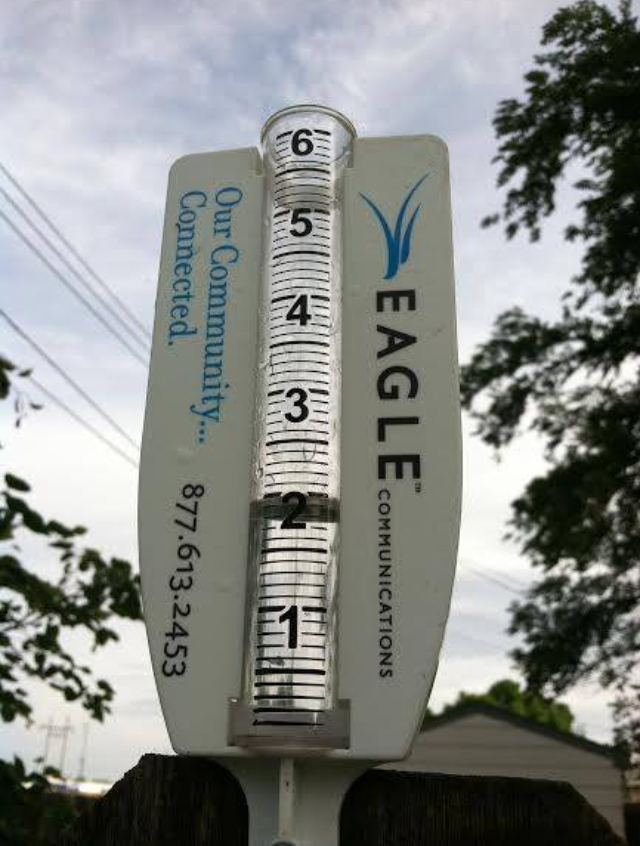
According to official statistics from the K-State Agricultural Research Center, Hays received 1.53 inches of rain, with thunder and lightening, by 9 a.m. Monday and another quarter-inch over night. The total amount of precipitation at the Eagle Media Center, 2300 Hall, was 1.66 inches.

So far in September, Hays has received 2.11 inches of rain for a total of 25.85 inches year to date.

Monday’s high in Hays was just 57 degrees with the overnight low at 50 degrees. One year ago on Sept. 25, the temperature reached a more normal 80 degrees.

NW Kan. judges on Supreme Court committee to review municipal court practices

OJA

TOPEKA — An ad hoc committee appointed by the Kansas Supreme Court will review bonding practices, fines, and fees of Kansas’ municipal courts to compile a “best practices” model for the courts to follow.

The committee will report its findings to the head of the Supreme Court’s Office of Judicial Administration and to the League of Kansas Municipalities within a year.

The action follows a national effort to improve community court practices, some of which have been criticized for adversely affecting the economically disadvantaged.

The committee, appointed by Chief Justice Lawton R. Nuss in an order signed September 6, is tasked with studying current municipal court practices, examining the practices in other courts across the country, and compiling proposed changes.

“The Supreme Court wants to ensure that the rule of law remains paramount in the Kansas system of justice,” Nuss said. “The important work of this committee should be of great help in not only maintaining fair and impartial courts for all but also recommending improvements where needed.”

The Kansas Supreme Court has constitutional oversight of all courts in the state, although local municipalities are responsible for funding their local courts and appointing and paying judges. The Office of Judicial Administration implements the rules and policies of the Supreme Court and oversees the operation and administration of the judicial branch.

Issues on bonding practices, fines, and fees came to the forefront two years ago when a number of national advocacy groups began challenging municipal court practices, arguing they were designed to create revenue rather than guarantee those arrested would show up for court.

Judge Brenda Stoss, who is municipal judge in Salina and New Cambria, will chair the ad hoc committee.

“This group provides a vehicle to study recent developments and review the current practices of courts in our state to provide Kansas courts with the practical information they seek,” she said.

Judge Amie Bauer, a municipal judge for Canton and Moundridge and current president of the Kansas Municipal Judges Association, said it is important to undergo this type of evaluation of municipal courts.

“By evaluating current practices and procedures across the state and developing some best practices, all Kansans will benefit, considering they are directly or indirectly affected by the judicial system in one way or another,” said Bauer, who also is serving on the committee.

Judge Katie McElhinney, municipal judge in Olathe and a member of the new ad hoc committee, said she has spoken about the topic the past two years at the Kansas Municipal Judges Association annual conference. The Supreme Court committee’s recommendations, she added, will have an even bigger impact.

“I think that by attacking this from a three-prong approach — the League of Kansas Municipalities, the Office of Judicial Administration, and the Kansas Municipal Judges Association — that we can get out best practices by going through city administrators and city attorneys, as well as through KMJA,” she said.

In addition to Stoss, Bauer, and McElhinney, those named to the Ad Hoc Committee on Bonding Practices, Fines, and Fees in Municipal Courts are:
Steve Baccus, municipal judge, Bennington, Minneapolis, Tescott, and Culver
Timothy Fielder, municipal judge, Girard, Frontenac, and Cherokee
Anthony Haffner, municipal judge, Oakley, Selden, Hoxie, and Hill City
Jennifer Jones, municipal judge, Wichita
Thomas Kemp, municipal judge, Elkhart
Ken Lamoreaux, municipal judge, Waterville and Marysville
Daniel Love, municipal judge, Dodge City
Jason Maxwell, municipal judge, Sublette, Liberal, and Satanta
Scott Miller, municipal judge, Lawrence
Bradley Ralph, city attorney, Dodge City
Richard Ress, municipal judge, Colby, Atwood, Brewster, and Rexford
Maurice Ryan, municipal judge, Kansas City, Kan.
Amanda Stanley, legal counsel, League of Kansas Municipalities
Karen Torline, municipal judge, Shawnee, Roeland Park, Edgerton, and Prairie Village
Scott Wright, municipal judge, Beloit

🎥 Outermost areas of ETJ may become eligible for large lot development

(Click to enlarge)

By BECKY KISER
Hays Post

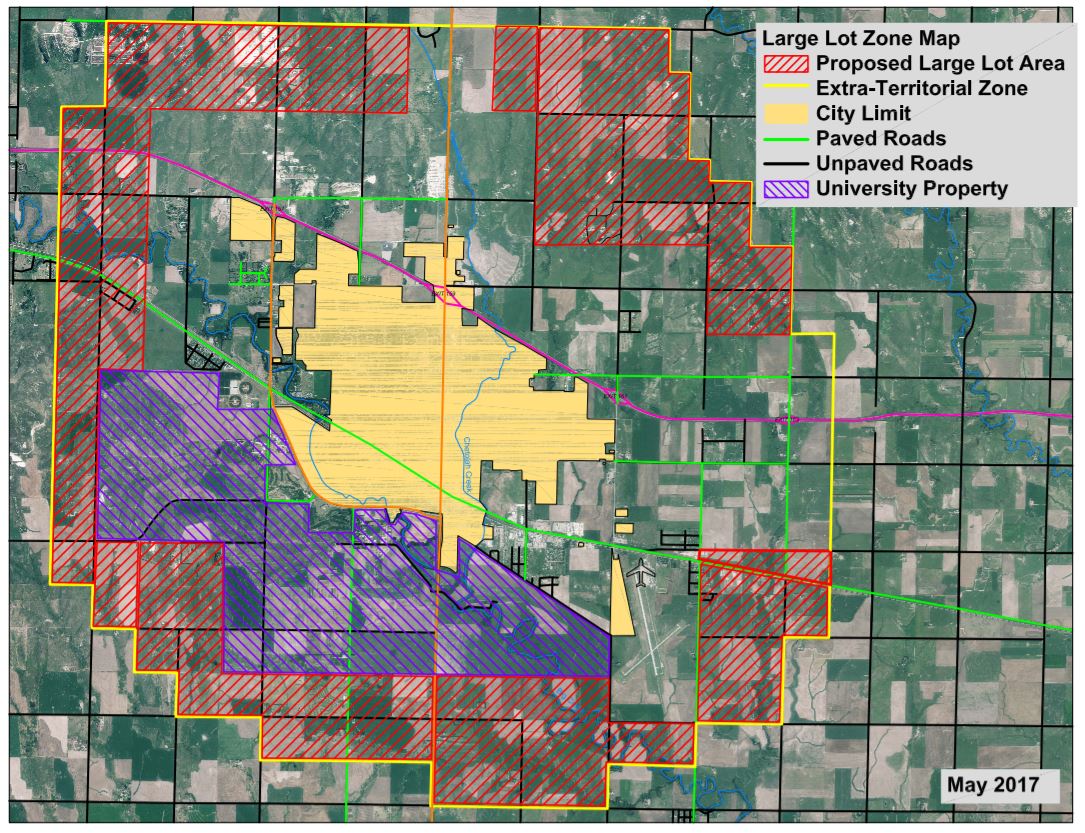
As far as the city of Hays is concerned,  the 3-mile Extraterritorial Jurisdiction (ETJ) surrounding its city limits is considered contiguous to Hays and unavailable for large lot development.

That is likely to change.

The intent of the ETJ is to provide a high level of protection for the city in future growth areas. The Hays Unified Development Code (UDC) states “Urban type development is not to be encouraged unless the city or the county agrees to provide the level of service necessary to provide a reasonable level of fire and police protection, a public water source, sanitation service, paved streets and administrative service, such as a coordinated street naming and addressing system.”

According to Public Works Director Jesse Rohr, “there has not been clear direction, guidance, or policy for the development of large lot subdivisions, especially those of approximately 1 acre in size or larger.”

City staff has been approached by the Hays Board of Realtors about allowing large lot developments within the ETJ. City and Ellis County commissioners discussed the matter during a joint meeting earlier this year and decided a policy should be created to guide such development.

City and county staff have jointly designed a map indicating areas where large lot development may be acceptable and have drafted a policy to help guide decision makers in approving such developments.

Rohr showed the proposed map to Hays city commissioners during their Thursday night work session.

Within the 900 square miles of Ellis County, the Hays ETJ is about 70 square miles while the actual city limits is about 10 square miles. The red-hatched area in the ETJ map is approximately 35 square miles.

(Click to enlarge)

“That red-hatched area we have vetted through the process and decided it’s probably okay for development,” Rohr explained. “It’s not in an area of future anticipated growth on the outskirts of the 3-mile ETJ and would have little or no impact on the future development of the city of Hays.

“If the land is not in the red cross-hatched area, it would be considered as contiguous and treated as such, just like it was abutting the city limits of Hays. Large lot development coming forward would likely not be recommended or approved in any area that is not in the red-cross hatch.

“The city commission, of course, would have the ultimate say,” Rohr stressed, “with this being a policy and not a regulatory authority.”

The policy has been revised to reflect the desire of a 2 acre minimum lot size rather than the 5 acres as originally proposed.

Any proposed large lot developments in the areas identified for large lot development would still be required to be vetted through the planning process of platting and rezoning. All authorities having jurisdiction would still review and approve the development to ensure roads, utilities, and emergency services are provided. The platting process as defined in the UDC would still preside over any proposed developments.

The Planning Commission meeting voted unanimously August 21 to adopt the draft policy and recommends the city commission adopt it.

City Commissioner Sandy Jacobs sat through the Planning Commission’s discussion.

“I was very impressed with how they approached this,” she said. “They really put a lot of thought into this process.”

City commissioners will consider approving the recommended changes at their Sept. 28 meeting. If approved, the policy and large lot zone map would become part of the official City Comprehensive Plan.

🎥 Study: Hays has highest housing costs in western Kansas

(Click to enlarge)

By BECKY KISER
Hays Post

Housing costs in Hays, and the percentage of income Hays residents pay for housing, are the highest in western Kansas.

Those are among the findings of a housing needs study conducted in June by the Fort Hays State University Docking Institute of Public Affairs for the city of Hays.

The study was commissioned by the city following a request in February by the Overland Property Group to build a multi-family housing project on East 5th Street. Their development model includes the use of tax credits and a Rural Housing Incentive District (RHID). In order to create an RHID a housing assessment must be completed.

Asst. Hays City Manager Jacob Wood

Assistant City Manager Jacob Wood presented the study highlights during Thursday night’s city commission work session.

The Docking Institute relied heavily on the methodology outlined in the Kansas Rural Housing Incentive District Act. The study analyzed Hays’ current and future supply of and demand for housing, any inadequacies in the supply of housing that may exist, and the importance of quality housing for the economic growth of the city.

An overview of the results include:
• Hays has a high proportion (43%) of older housing units built prior to 1970.
• A low proportion (0.1%) of housing units one year old or less exist, suggesting that relatively few new housing units are being built.
• Hays has high housing costs relative to the comparison communities in western Kansas, especially for lower-income households.
• U.S. Census population trends project continued population growth in Ellis County through 2060, while all eight (8) of its contiguous counties will experience declines in population, suggesting heavy migration into Hays and a high demand for additional housing.
• Even a moderate annual population growth rate of 0.25% would require more housing than what is currently being constructed.
• Housing costs in Hays, and the percentage of income Hays residents pay for housing, is the highest in western Kansas.

Most of the data is from the 2015 U.S. Census Bureau, which was a concern to the three commissioners at the work session. Vice-Mayor James Meier and Commissioner Lance Jones were absent.

Other information for the study came from state and federal agencies and public records from the city of Hays. Comparisons cities were Dodge City, Garden City, Great Bend, and Liberal in western Kansas and the university towns of Emporia, Pittsburg and Kearney, Nebraska.

“Our vacancy rate in 2015 of owner-occupied housing, 2.9%, and rental units, 5.3%, is low,” Wood told commissioners.

Mayor Shaun Musil and Commissioner Henry Schwaller, who owns rental property in Hays, immediately took issue with that finding.

“This summer there were a lot of vacancies,” Musil interjected. “There are right now,” Schwaller added, “more than 150 vacant rentals. This study is a snapshot in time and unfortunately, we’ve lost a lot of weight since 2015, so the snapshot is not accurate.”

Commissioner Sandy Jacobs pointed out the study was tied to the RHID Act specifically for the Overland group. “They needed that if they got their tax credits from the state,” she said.

Following Wood’s review, Schwaller presented findings of his own research from public records and from Wichita State University’s Center for Real Estate.

He first pointed out the price of oil, a major industry in Ellis County, dropped from $100 a barrel in 2015 to less than $40 a barrel, according to the U.S. Energy Information Administration. “The housing market in Hays slowed down dramatically after 2015,” Schwaller said.

Schwaller, a business professor at Fort Hays State University, also noted FHSU has built new student housing, with a net gain of 102 units since 2015.

Information from WSU (Click to enlarge)

As of Sept. 21, there were also 149 single family homes for sale in Hays. The WSU data indicates the average price of a house in Hays is $180,418, higher than the average in Garden City ($163,559), Salina ($145,379), Dodge City ($129,305) and Great Bend ($105,911).

“I think we need to spend a lot more time looking at this,” said Jacob. “I think the study is good for what it was; it did what it was supposed to do. But it didn’t really give me anything as a commissioner for what we need to do in our community for what’s happened since 2015.

“I think increasing the size of the Neighborhood Revitalization District (NRD) was brilliant, a great way to incentivize some changes in those properties,” she added as Schwaller and Musil nodded in agreement. “But I’m not sure what else we can do from an incentive standpoint for stuff like this. I’m listening, but I don’t know what it is today. I’m not criticizing the document. I think it needs to be expanded and other areas need to be looked at with current data as best as we can gather it.”

“I think for us to do anything more than the NRD is crazy,” Musil said, “It’s working. We need to give it time. Look around town now. A lot of new apartments are being built. I talked to a young lady who is going to school here and lives in the new apartments on 11th Street. She said they’re affordable and she really enjoyed it.”

The commission talked about the need for affordable housing based on the expectation of two retail businesses seriously considering opening in Hays. “Those are jobs that pay $10 or $11 an hour. It’s hard to live in these decent apartments on that wage,” Musil added.

Schwaller is also eager to expand on the housing study.

“Two weeks ago, the vice-mayor and I talked about primary employment. If we do want to get a firm that requires high-skill, high-wage labor, we would actually have a problem,” he said. “We do not have enough houses. In fact, there’s a lot of expensive houses just sitting there.

“I think working with the Hays realtors, who have an amazing data base, and Wichita State, I think we’re going to learn a lot more, with real numbers, about what’s going on with housing in Hays,” Schwaller concluded.

A link to the housing study by the Docking Institute is available on the city of Hays website.


🎥 City asked to reduce some building setbacks in Unified Development Code

(Click to enlarge)

By BECKY KISER
Hays Post

The Unified Development Code (UDC) for the city of Hays adopted a little more than a year ago has been working well, according to Jesse Rohr, the newly appointed Public Works Director who previously served as Planning Inspection Enforcement Superintendent.

However, developers and city staff have found one area they believe needs to be changed for commercial and industrial buildings.

(Click to enlarge)

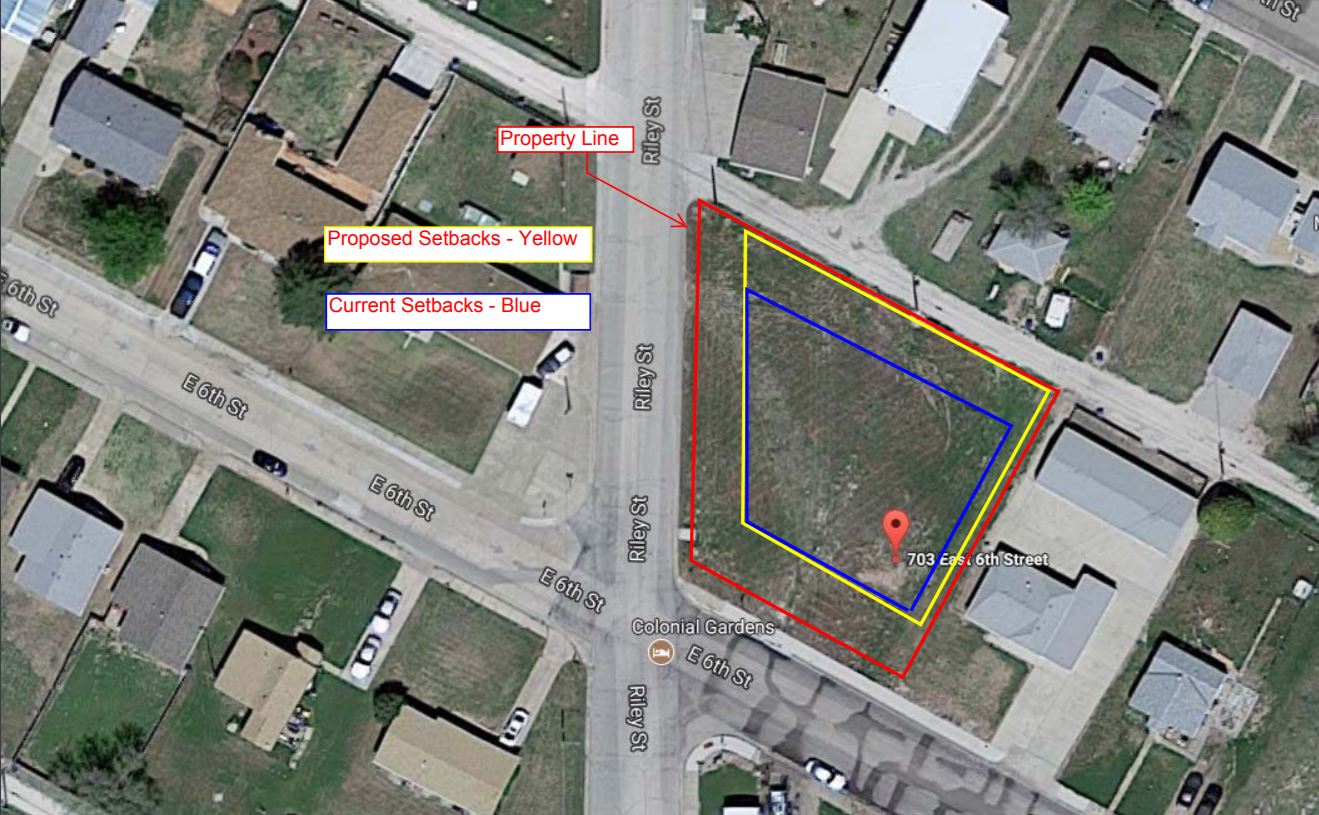
It pertains to setbacks required for commercial and industrial buildings. Rear and interior side yard setbacks have increased, but they are “changes that do not seem to benefit the developer or the city” Rohr wrote in a memo to commissioners. In some cases, setbacks went from 0 feet to 25 feet on certain commercial property and don’t allow a developer to take advantage of space that could be otherwise utilized for building.

Most commercial developments don’t have the need for a rear yard/open space or rear landscaping, Rohr noted. Parking is often in the front or the side and not in the rear.

City staff researched the issue and looked back on the previous regulations. “Most communities have what we are proposing,” Rohr told commissioners during their Thursday night work session. The Planning Commission agrees with the proposal. “If the proposed changes are adopted, the Planning Commission requests extra setbacks be required if and when a commercial property were to be adjacent to a residential zone property,” he added.

Rohr also suggested another change to the UDC to allow breezeways between primary and accessory structures, such as a house and a garage.

The city commission will consider approving the recommended changes to the UDC at their meeting Sept. 28.


🎥 City employee promotions; new HPD officer played for Hays Larks

Water Resources Dir. Jeff Crispin with Clint Barnes and Bob Shubert.

By BECKY KISER
Hays Post

Several promotions and new employee hires by the city of Hays were announced and presented by their department heads to city commissioners last Thursday.

Assistant Public Works Director John Braun took over as interim Public Works Director following the resignation of Greg Sund in May. “We did some shuffling,” City Manager Toby Dougherty explained, “and created a new department, the Office of Project Management. We put John in charge, which is right in his wheelhouse. He’s doing a great job.”

Jesse Rohr, the former Planning Inspection Enforcement Superintendent, was promoted to Director of Public Works.

Police Chief Don Scheibler introduced the newest officer on the force, Brandon Bell of Dallas. “Brandon was a standout high school and college baseball pitcher and he played here for the Hays Larks,” Scheibler told commissioners. While in Hays, he met his wife-to-be, a native of Atwood.

The Hays Police Department will play its annual softball game Sun., Oct. 8 against the Hays Fire Department. “Yes, we have a ringer,” Scheibler admitted with a huge grin on his face.

City of Hays Promotions/New Hires
Water Resources
Bob Shubert – Promotion from PT to FT – Equipment Operator
Clint Barnes – New Employee – Maintenance Worker

Public Works
Jesse Rohr – Promotion – Director of Public Works
Joe Billinger – Promotion – Inspector II

Police Department
Brandon Bell – New Employee – Police Officer

CMO – Office of Project Management
John Braun – Promotion – Project Manager

🎥 It’s Constitution Week

Mayor Shaun Musil greets Bunnie Bowen, Treasurer, Courtney-Spalding DAR Chapter.

By BECKY KISER
Hays Post

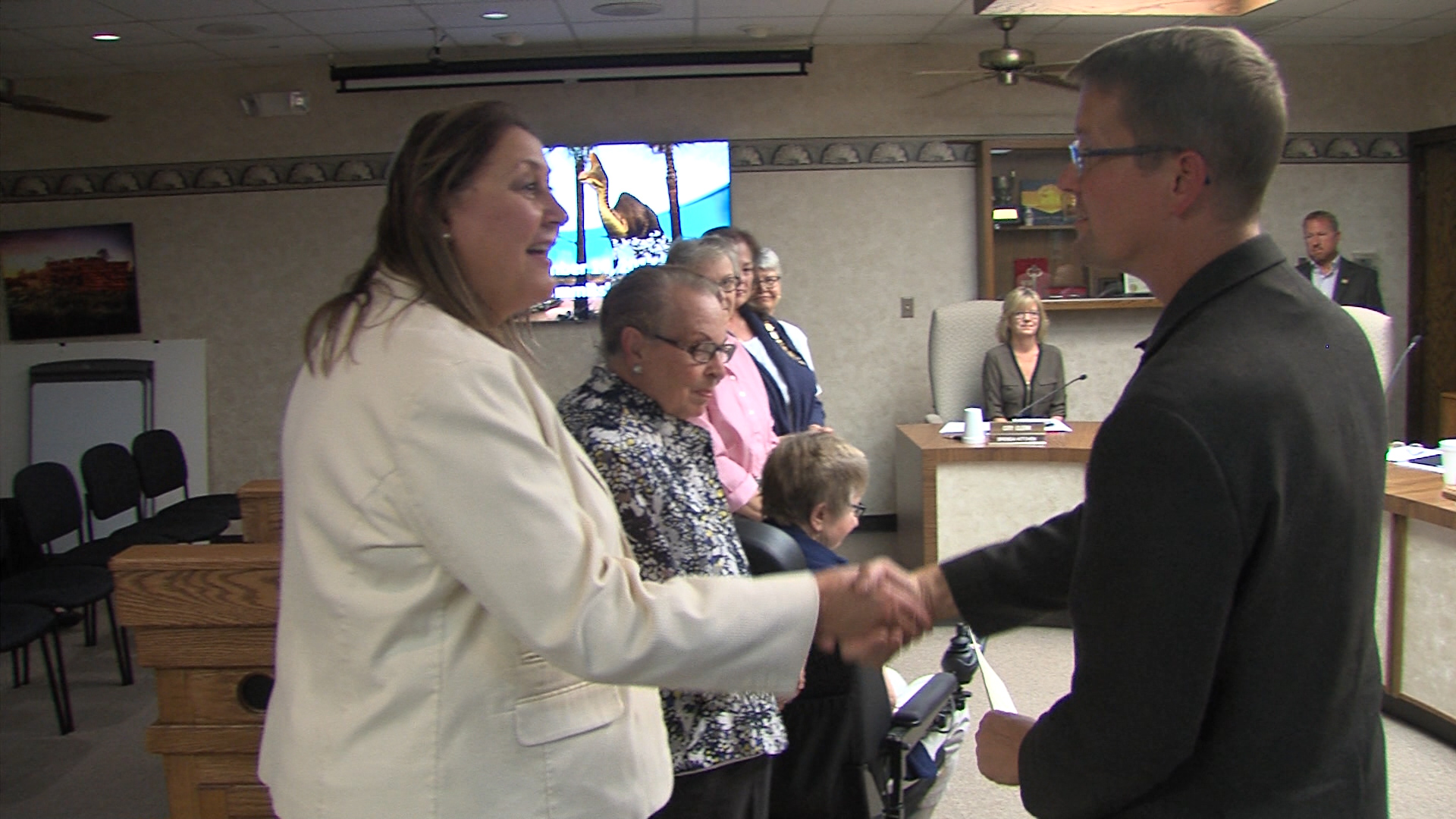
Several member of the local Courtney-Spalding Chapter of the National Society of the Daughters of the American Revolution (DAR) were on hand to watch Hays Mayor Shaun Musil read and sign a proclamation observing this as National Constitution Week.

Musil presented the signed proclamation to members Bunnie Bowen-Chapter Treasurer, Celia Nicholson, Donna M. Schmidt-Chaplain, Ruth Pruitt-Chapter Registrar, Sherrie Smith-Chapter Regent, and Judy Sherard.

The event celebrates the signing of the U.S. Constitution, Sept. 17, 1787. Constitution Week is Sept. 17-23.

The Courtney-Spalding Chapter of the Daughters of the American Revolution was organized in April 1926 with members from Ellis, Russell, Trego and Ellsworth counties. Its current goals stress membership growth, conservation, American History and Good Citizenship Awards to further the education and historic values of youth. The chapter focuses on U.S. flag presentations, supporting patriotism throughout the nation and supporting troops in Project Patriot.

The chapter name was derived from the ancestors of the two ladies instrumental in organizing the chapter, Coral Courtney Carter, whose ancestor was Thomas Courtney from Virginia and Mary Lois Ruppenthal, a descendant of Ezekiel Spalding from Massachusetts.

🎥 KSU, federal studies show benefits of traffic roundabouts

(Click to enlarge)

By BECKY KISER
Hays Post

An article by the Washington State Department of Transportation discusses federal studies which show traffic roundabouts improve safety and traffic flow, and are less expensive to build than traffic signal lights.

The article includes a Kansas State University study showing a 20 percent reduction in traffic delays.

According to Hays City Manager Toby Dougherty, installing a new traffic signal in Hays costs the city about $300,000.

Hays is considering a proposed three roundabout corridor on north Vine Street.

From the Washington State Dept. of Transportation:

Roundabout benefits
Improve safety
Studies have shown that roundabouts are safer than traditional stop sign or signal-controlled intersections.

Roundabouts reduced injury crashes by 75 percent at intersections where stop signs or signals were previously used for traffic control, according to a study by the Insurance Institute for Highway Safety (IIHS). Studies by the IIHS and Federal Highway Administration have shown that roundabouts typically achieve:

  • A 37 percent reduction in overall collisions
  • A 75 percent reduction in injury collisions
  • A 90 percent reduction in fatality collisions
  • A 40 percent reduction in pedestrian collision

There are several reasons why roundabouts help reduce the likelihood and severity of collisions:

Low travel speeds – Drivers must slow down and yield to traffic before entering a roundabout. Speeds in the roundabout are typically between 15 and 20 miles per hour. The few collisions that occur in roundabouts are typically minor and cause few injuries since they occur at such low speeds.
No light to beat – Roundabouts are designed to promote a continuous, circular flow of traffic. Drivers need only yield to traffic before entering a roundabout; if there is no traffic in the roundabout, drivers are not required to stop. Because traffic is constantly flowing through the intersection, drivers don’t have the incentive to speed up to try and “beat the light,” like they might at a traditional intersection.
One-way travel – Roads entering a roundabout are gently curved to direct drivers into the intersection and help them travel counterclockwise around the roundabout. The curved roads and one-way travel around the roundabout eliminate the possibility for T-bone and head-on collisions.

Curious to know more? Watch this video about how roundabouts improve safety.

Reduce delay, improve traffic flow
A single-lane roundabout in Skagit CountyContrary to many peoples’ perceptions, roundabouts actually move traffic through an intersection more quickly, and with less congestion on approaching roads. Roundabouts promote a continuous flow of traffic. Unlike intersections with traffic signals, drivers don’t have to wait for a green light at a roundabout to get through the intersection. Traffic is not required to stop – only yield – so the intersection can handle more traffic in the same amount of time.

Studies by Kansas State University https://www.ksu.edu/roundabouts/ measured traffic flow at intersections before and after conversion to roundabouts. In each case, installing a roundabout led to a 20 percent reduction in delays. Additional studies by the IIHS of intersections in three states, including Washington, found that roundabouts contributed to an 89 percent reduction in delays and 56 percent reduction in vehicle stops.

Less expensive
The cost difference between building a roundabout and a traffic signal is comparable. Where long-term costs are considered, roundabouts eliminate hardware, maintenance and electrical costs associated with traffic signals, which can cost between $5,000 and $10,000 per year.

Roundabouts are also more effective during power outages. Unlike traditional signalized intersections, which must be treated as a four-way stop or require police to direct traffic, roundabouts continue to work like normal.

Less space
A roundabout may need more property within the actual intersection, but often take up less space on the streets approaching the roundabout. Because roundabouts can handle greater volumes of traffic more efficiently than signals, where drivers may need to line up to wait for a green light, roundabouts usually require fewer lanes approaching the intersection.

Good locations for roundabouts
Roundabouts are safe and efficient, but they are not the ideal solution for every intersection. We look at several factors when deciding to build a roundabout at a specific intersection. Engineers consider these characteristics when determining the best solution for a particular intersection:

Accident history – data about the number of accidents, type of crash, speeds, and other contributing factors are analyzed.
Intersection operation – the level of current and projected travel delay being experienced, and backups on each leg of the intersection.
Types of vehicles using the intersection – we look at the different kinds of vehicles that use the intersection. This is especially important for intersections frequently used by large trucks.
Cost – this includes the societal cost of accidents, right-of-way (land purchase) requirements, and long-term maintenance needs.

Hot, but no record in Hays

By BECKY KISER
Hays Post

Yes, it was unusually hot Thursday in Hays, about 10 degrees warmer than average for this time of year.

According to official statistics from the K-State Agricultural Research Center south of town, the high for Sept. 14 was 99 degrees. The record temperature for Sept. 14 is 102 degrees set in 1978. One year ago on Sept. 14, the high in Hays was 89 degrees.

Thursday’s overnight low was 70 degrees.

The weather forecast calls for an elevated fire danger Friday, with blowing wind and a another hot day. The weekend is expected to bring cooler temperatures and a chance of rain.

🎥 Roundabouts could fix logistical challenges in N. Vine Street corridor

A double roundabout is proposed for 32nd and 33rd Streets. (Click to enlarge)

By BECKY KISER
Hays Post

Improving traffic flow along the north Vine Street business corridor was mentioned during last week’s city commission work session as a key to helping grow sales tax revenues in Hays.

Thursday night, newly appointed Project Director John Braun presented an updated concept for three traffic roundabouts to be built at 33rd, 37th and 41st Streets. The proposed street improvements have the conditional support of the Kansas Department of Transportation (KDOT) and federal highway officials.

A few concepts have been developed at least since the early 1990s to improve the configuration of the roads accessing Vine Street, including the 2012 Hays Comprehensive Plan which would have aligned 32nd and 33rd Streets. But all “fall short in solving the root of the problem,” Braun said.

A KDOT-funded Traffic Engineering Assistance Project study (TEAP) was also conducted at the time the Comprehensive Program was being finalized.

“The major problem is the close proximity of the frontage roads to Vine Street at the access points, the intersections of 32nd, 33rd, and 37th and 41st Streets,” Braun declared. All the commissioners agreed.

The demolition underway of the Ambassador Hotel, 3603 Vine, and clearing of the 5-acre lot will soon open redevelopment of that land. City staff has been worked with WSP Engineering the past two years to conduct a traffic impact study and create a concept plan to improve the north Vine Street corridor.

“The important point is that the frontage roads are disconnected from Vine at these intersections and the stacking capability is increased for vehicles wanting to enter Vine Street on the west side,” Braun explained. Right-turn-only lanes would be created at the east and west-bound I-70 off ramps. Stoplights at 32nd, 33rd and the I-70 exit ramps would be removed, leaving only those at 29th and 43rd Streets.

Braun cautioned many tweaks would be needed if the project goes ahead. Business owners along the corridor have been advised of the proposal. Representatives of The Pheasant Run restaurant were in the audience Thursday, listening carefully.

“This makes so much sense,” Commissioner Sandy Jacobs said enthusiastically.

A double roundabout or “peanut” is proposed at 32nd and 33rd. Access points at 35th Street would be reduced to 3/4 access intersections, increasing traffic safety by significantly reducing the current number of conflict points from 66 to 28.

Pedestrian and bicycle traffic also would be made safer. Vehicle traffic will be slower at the roundabouts which have pedestrian refuges in the centers.

“The locals avoid these areas because they know the back ways.” said City Manager Toby Dougherty. “We have a lot of visitors coming in off I-70. They’re the ones having problems getting in and out. It will have to be very well signed.” Commissioners agreed traffic roundabouts are becoming more common in many towns and drivers are more familiar with them. “People learn to get in the correct lane to get in the roundabout and get in the correct lane to get out of them,” Jacobs added.

As yet, there is no cost estimate of the work. “This is not going to be cheap,” said Commissioner Henry Schwaller. Commissioners gave permission to Dougherty and Braun to get a firm cost estimate from WSP.

“We’re going to explore some grant opportunities,” Dougherty assured the commission. “KDOT might have a little money to throw at it. If certain types of redevelopment take place along the corridor you could use the TIFF money to help fund it, possibly some CID or Transportation Development District money. There’s possible other monies for the greenways and pedestrian infrastructures. You might be able to use some CVB money for that.

“It depends on what redevelops and how. This is about visitors and pedestrians and getting people around in the corridor. You might have to pull money from a lot of different sources.”

Assistant City Manager Jacob Wood is looking into the possibility of a federal TIGER grant for infrastructure.

“The 80/20 grant monies from KDOT are no more,” Dougherty said. “Going to them and asking to pay for 80 percent, that’s not going to happen, as you guys well know. The 41st Street project, that was our last project funded that way.”

“KDOT is indicating it may still have some Corridor Management money,” interjected Braun. “There may be a slight possibility there.” Hays used some of those monies on the Vine Street improvement project between 13th and 27th.

A video simulation of the proposed roundabout corridor (see above) is available on the city’s website, www.haysusa.com. The model is based on actual peak-hour traffic in Hays.

Copyright Eagle Radio | FCC Public Files | EEO Public File