We have a brand new updated website! Click here to check it out!

WAYMASTER: From the Dome to Home

Rep. Troy Waymaster, R-Bunker Hill, 109th District

Kansas Day
Kansas celebrated its 156th birthday on Sunday, January 29. The Kansas House of Representatives celebrated Kansas Day this past Monday on January 30 and recognized Robert Bergen, artist and creator of the 22 foot bronze Kansa warrior statue on top of the statehouse dome and the filming crew for the documentary film, “Home on the Range.” In addition to the activities on the House floor, there were opportunities to view the “Home on the Range” at the Capitol. Kansas entered the Union as the 34th state on January 29, 1861.

Appropriations
On Monday, January 23, the Appropriations Committee held a hearing on House Bill 2002. This bill exempts Legislative Post Audit (LPA) from paying the Monumental Building Surcharge to the Department of Administration. LPA was exempt from paying the fee during FY’16 and FY’ 17, due to a proviso in the 2015 budget bill. The Committee passed out the bill favorably on Tuesday. The Committee also heard recommendations regarding the FY’17 budgets from the Transportation/Public Safety Budget, Agriculture and Natural Resources Budget, and K-12 Education Budget Committees. The Appropriations Committee viewed these recommendations, however, the committee stated it would deal with most of the recommendations when the rescission bill is finally worked in the full committee. On Wednesday, the Committee heard from the General Government Budget and Social Services Budget Committees. Then on Thursday, the Committee held a hearing on House Bill 2052, the rescission bill, and House Bill 2161, which liquidates the long-term investment fund. This week, the Appropriations Committee heard from the Higher Education Budget Committee, the Kansas Lottery and Racing and Gaming Commission, held a hearing on House Bill 2109 and House Bill 2072. On Friday, we began hearing FY’ 18 and ’19 budget recommendations from the General Government Budget Committee.

Taxes
On Monday, the Committee continued its hearing on House Bill 2023, which would require non-wage business income to be included as income for Kansas income tax purposes. After the hearing, Acting Revenue Secretary Sam Williams provided the Committee with a revised fiscal note, increasing the revenue estimates to $230.9 million in FY ’18 and $181 million in FY ’19. On Tuesday, the Committee discussed Sales Tax Exemptions. Committee members heard from Tom Browne, Jr., Department of Revenue. He covered the three categories of exemptions: Legal, Conceptual, and Public Policy. The Committee selected several exemptions for further study. Additionally, the Department was tasked with looking at taxing exemptions at a lower rate, possibly for a limited number of years and the impact that might have on the streamlined tax agreement and administration costs involved. Last Wednesday, the Committee received a briefing on tax rates from Chris Courtwright, Kansas Legislative Research Department, and the Department of Revenue. This week’s agenda included testimony on a selected number of sales tax exemptions, and then on Tuesday, the Committee heard public testimony on the Governor’s tax proposal.
Home on the Range Film at the Capitol

Documentary
On January 30, the documentary film “Home on the Range,” was shown at the Capitol as a special premiere for guests, staff, and legislators in honor of Kansas Day. The film tells the story of the song, the cabin and the lawsuit that determined the song’s origins. The film features the talents of Rance Howard, born in Dexter, KS; Buck Taylor; Mitch Holthus, who grew up in Smith county near the famous cabin, and Thomas Leahy, who portrayed Dr. Brewster M. Higley in the film. Celebrating Kansas Day while at the premiere were Ken Spurgeon, the director of the film; Shawn Bell, a co-producer; Neil Bontrager, a co-producer and editor; Orin Friesen, co-writer and music producer for the film; and Grammy winning artist, Michael Martin Murphey.

Floor Action: House Bills Advance
Four bills in the Kansas House of Representatives moved into final action last week. The first bill, House Bill 2026, which makes changes to the Board of Nursing’s reinstatement of revoked licenses provisions, and passed final action on Thursday January 26 with a vote of 106-14. The second bill, House Bill 2025, advancing to final action on Thursday, January 26, as well. House Bill 2025 allows the Kansas Board of Nursing to hire more than one Assistant Attorney General. Another bill was House Bill 2027 which advanced into final action on Thursday January, 26. This bill allows physicians to situationally bill patients for anatomic pathology services. The final bill was House Bill 2028, and it advanced on Thursday as well. House Bill 2027 alters the Mental Health Technicians Licensure Act by removing the Board of Nursing’s conduction of mental health technician exams and provisions of fee payments.

Contact Information
As always, if you have any concerns, feel free to contact me (785) 296-7672, visit www.troywaymaster.com or email me at [email protected]. Also, if you happen to visit the statehouse, please let my office know.

It is a distinct honor to serve as your representative for the 109th Kansas House District and the state of Kansas. Please do not hesitate to contact me with your thoughts, concerns, and questions. I always appreciate hearing from the residents of the 109th House District and others from the state of Kansas, as well.

Troy L. Waymaster, (R-Bunker Hill) is the 109th Dist. State Representative and chairman of the House Appropriations Committee.

Poverty simulation to be held on FHSU campus

fhsu-poverty-glp-socmedFHSU University Relations and Marketing

The Global Leadership Project at Fort Hays State University will host a community action poverty simulation (CAPS) at 1 p.m. Saturday, Feb. 4, in the Fort Hays Ballroom in the Memorial Union. This learning tool was created as a way to help people understand the realities of poverty.

Three billion people in the world live in poverty, or on less than $2.50 a day.

During the simulation, participants role-play the lives of low-income families; some are Temporary Assistance to Needy Families recipients, some are disabled, and some are senior citizens on Social Security.

Participants will have the stressful task of providing for basic necessities and shelter on a limited budget during the course of four 15-minute “weeks.” They will interact with human service agencies, grocers, pawnbrokers, bill collectors, job interviewers, police officers, and others.

Although play money is used, CAPS is not a game. It is a simulation that enables participants to look at poverty from a variety of angles, and then to recognize and discuss the potential for change within their local communities.

The simulation was designed to sensitize to the realities of poverty those who frequently interact with low-income families, and to create a broader awareness of poverty among policy makers, community leaders, and others.

CAPS is presented utilizing a kit purchased from the Missouri Community Action Network.

The kit was funded by the FHSU Psychology Club, the Departments of Philosophy, Political Science, Leadership Studies, Applied Business Studies, and the Center for Civic Leadership.

🎥 UPRR lease would allow Downtown Pavilion Project to move ahead

The project includes a restroom (gold box) in UP Park and an open-air pavilon
The project includes a restroom (gold box) close to Main Street and an open-air pavilion in the east edge of Union Pacific Park at 10th and Main.

By BECKY KISER
Hays Post

Although not ideal, a property lease has been negotiated with Union Pacific Railroad that would allow the Downtown Pavilion Project to move forward in Hays.

Assistant City Manager Jacob Wood updated city commissioners during their work session Thursday night.

“It’s been a long and arduous process with UP,” Wood said. “We did not get a lot of concessions on the lease. They are not willing to bend too much.”

City Attorney John Bird began lease negotiations with the railroad last year in July.

“The pavilion will increase foot traffic in the area of their railroad tracks, and they’re not real excited about that. The lease is basically a 30-day termination lease. It’s very broad and for almost any reason they can say ‘we’re done with this’ and they would require us to remove the building,” Wood explained.

However, the city is requiring an indemnification agreement with Downtown Hays Development Corporation (DHDC). “DHDC will remove the building if UP were to call the lease. The city would not be left on the hook,” Wood assured commissioners.

Two other areas of contention are a requirement for more insurance than the city normally would have, and the release and indemnity provisions of the lease do not comply with city ordinances.

The indemnification agreement, which Wood said DHDC has agreed to, obligates DHDC to pay the annual $3,000 lease fee, requires DHDC to remove the structure should Union Pacific terminate the lease and requires DHDC to complete construction of the structure should Fort Hays State University not be able to participate in the project.

Annual costs to be paid by the city total $1,294 which includes utility bills for restroom heat and electric meters, janitorial supplies and the additional insurance required by UP. Wood told commissioners the restroom has been ordered will be installed as soon as it arrives, estimated to be within six to eight weeks.

The project was first presented to the city May 5, 2016, by DHDC and a group of FHSU Construction Management students for construction of a pavilion and restroom to be located adjacent to Union Pacific Park on 10th Street in downtown Hays.

City commissioners will vote next week whether to sign the UP lease and DHDC indemnification agreement.

pavilion site plan
Downtown pavilion site design by FHSU

Last August, DHDC received a $100,000 grant from the Dane G. Hansen Foundation to be used to match private donations already secured by DHDC for the project. The funds will be used for construction materials. Labor will be provided by FHSU students and city of Hays employees.

🎥 City ‘dodged a bullet’ in Phase 1 of wastewater treatment plant rebuild

Project Manager Stan Christopher's summary of what went wrong during Phase 1 design-work by CDM Smith.
Project Manager Stan Christopher’s summary of what went wrong during Phase 1 design work by CDM Smith. (Click to enlarge)

By BECKY KISER
Hays Post

“Cooperation began breaking down” between the city of Hays and CDM Smith, the Wichita firm hired in January 2016 for the Phase 1 design services and development of a GMP (Guaranteed Maximum Price) for rebuilding the city’s aging wastewater treatment facility.

That’s what Project Manager Stan Christopher of HDR Engineering, hired as Owner Representative by the city in April 2015, told city commissioners Thursday night.

CDM failed to meet the required deadlines and failed to stay within the city’s $27.6 million budget, Christopher reported. “They were way over their head in their submittals. I truly believe they did not have the resources to do the job and get it done in five months. They were behind in the first milestone,” he said.

CDM’s winning bid included engineering fees about half a million dollars less than the other two finalists. CDM Vice President Bruce Barnes appeared before the commission Dec. 10 and said he expected the project to be completed 45 days ahead of the deadline. Barnes was fired from CDM four months into the project, according to Christopher.

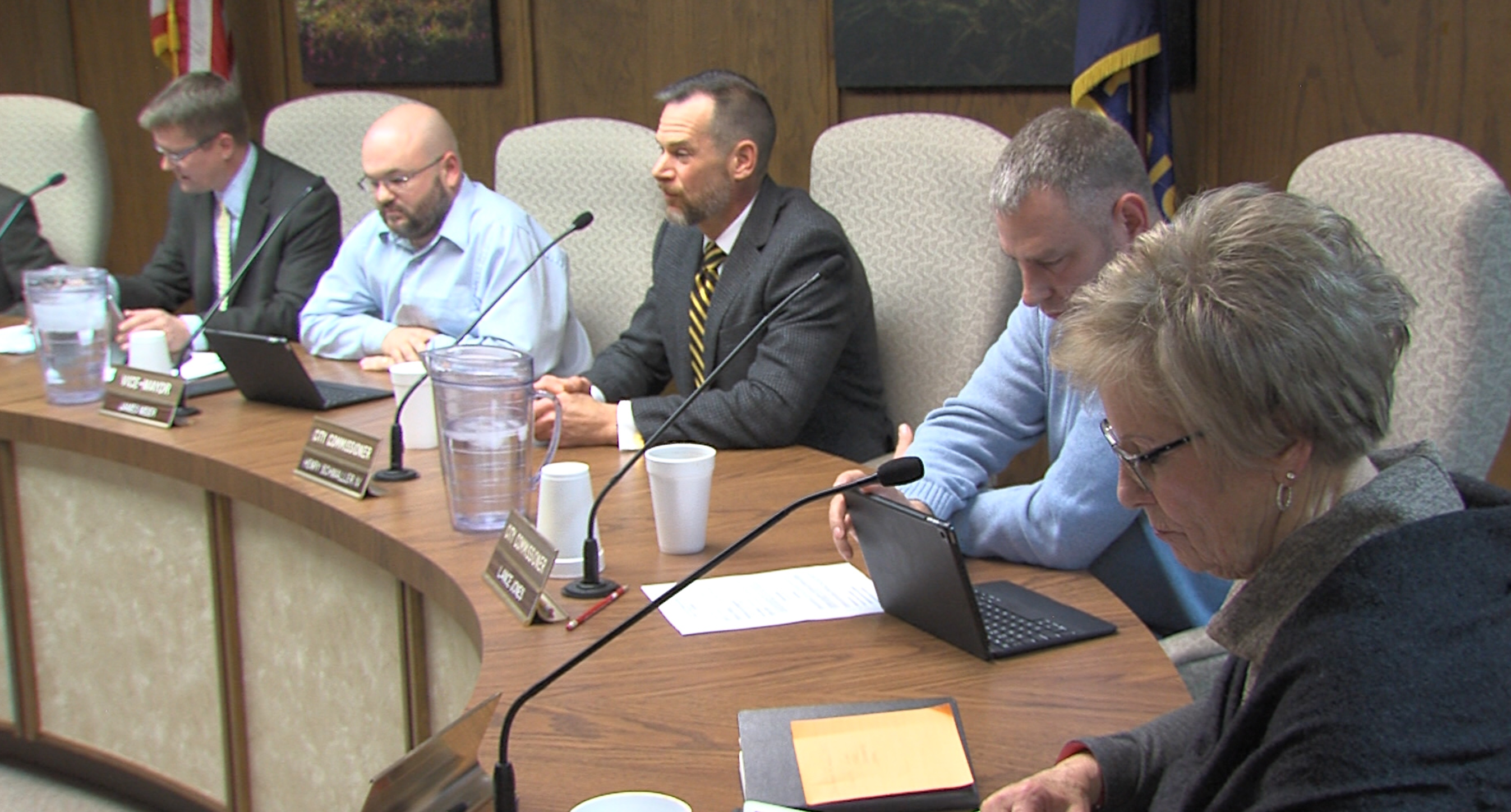
Commissioners were pleased with the agreement at the time, but Thursday night, Vice-Mayor James Meier said now “it feels like a ‘bait and switch.'”

Vice-Mayor James Meier called CDM's work a 'bait and switch.'
Vice-Mayor James Meier called CDM’s work a ‘bait and switch.’

“(Barnes) also said it was going to be under budget…So, I don’t know how you sit here now looking back on that from a year ago and not feel like it was just a complete bait and switch and we were just bald-faced lied to,” Meier said.

The city notified CDM Aug. 18, 2016, it would not accept the firm’s $30.7 million GMP.

Commissioners agreed to the recommendation from Christopher and Water Resources Director Johnny O’Conner to  issue an RFP (Request For Proposal) to the two other finalist design-build teams, Burns & Mac/CAS Construction and Black & Veatch/Garney, asking them to submit lump sum proposals for the Phase 2 construction agreement. The recommendation will be voted on during the Feb. 9 commission meeting.

“We dodged a huge bullet,” said Commissioner Henry Schwaller. He pointed out the decision to use the Design/Builder process for the $30.26 million makeover–the city’s most expensive project ever undertaken—was a good one. “We would have gotten that plant. We would have paid for it and been litigating if not for Stan and city staff following through,” he said as the other commissioners nodded in agreement.

The Hays wastewater treatment plant (WWTP) was built in 1953. The rebuild to meet stricter effluent discharge requirements is being financed by the city’s State Revolving Fund loan from the Kansas Department of Health and Environment (KDHE). The work was to have been completed by July 1, 2018. KDHE has agreed to extend the deadline until August 1, 2019. “They were very accommodating,” said City Manager Toby Dougherty. “They even asked if we needed more money. We told them ‘no,’ we’re okay on the money side.”

City staff has reported they are “confident any added costs can be absorbed without increasing the amount borrowed from the State Revolving Loan Fund or increasing wastewater rates.”

Project Manager Stan Christopher, HDR, and Johnny O'Connor, Hays Water Resources Director, said necessary will continue on the wastewater treatment plant for another year.
Project Manager Stan Christopher, HDR, and Johnny O’Connor, Hays Water Resources Director, said any necessary repairs will continue on the wastewater treatment plant for another year.

There have been major equipment repairs made recently at the WWTP, according to O’Conner, who assured commissioners “we’ve got it in our budget to maintain the plant and trying not to purchase new equipment to keep it running and repaired.”

Commissioner Lance Jones was absent from the meeting.

🎥 Firm hired for Phase 1 of Hays wastewater treatment plant upgrade ‘failed’

Bruce Barnes, CDM Smith, talks about Phase 1 of the Hays wastewater treatment plant upgrade and expansion. during the Dec. 15, 2015 city commission meeting.
Bruce Barnes, CDM Smith vice president, talks about Phase 1 of the Hays wastewater treatment plant upgrade and expansion. during the Dec. 15, 2015, city commission meeting.

By BECKY KISER
Hays Post

The Wichita firm hired by the city of Hays a year ago for Phase 1 design services to rebuild the city’s aging wastewater treatment plant did not do the job to the city’s satisfaction.

According to a memo to city commissioners from Water Resources Director Johnny O’Conner, CDM Smith failed to meet required deadlines and failed to stay within the city’s budget for development of a GMP (Guaranteed Maximum Price).

Timeline for the wastewater treatment plant project (Click to enlarge)

“At the 90% (completion) milestone, CDM Smith was at $35 million, well over the City’s budget of $27.6 million,” O’Conner wrote in his memo. “We did not receive a formal GMP until August of 2016. When we did receive the GMP proposal, it was for $30.7 million. CDM was aware of the budget from day one.”

City staff, along with Project Manager Stan Christopher of HDR Engineering, want to issue an RFP (Request For Proposal) to the two other finalist design-build teams, Burns & Mac/CAS Construction and Black & Veatch/Garney, asking them to submit lump sum proposals for the Phase 2 construction agreement. O’Conner included in his memo to commissioners that “HDR immediately noticed CDM trending over budget and made every effort to keep them on track.”

Assistant City Manager Jacob Wood said “we had to go back to the drawing board a little bit with the process.”

“We want to get another design/build firm on board to do Phase 2 of the project which will actually be 100% of the design. So the new firm would complete the design that CDM started and then they would actually go in to the construction part of that process,” Wood explained. “We’re going to talk to commissioners (at Thursday’s work session) about opening up bids for that process. There’s still two firms that were in the running when we initially did the search that we will ask if they’re interested in bidding for the second phase of that project.”

“CDM Smith’s failure will likely add cost to the water treatment plant project,” O’Conner wrote in his memo. “Although several items will have to be re-engineered to bring down the total project cost,” city staff has reported they are “confident any added costs can be absorbed without increasing the amount borrowed from the State Revolving Loan Fund or increasing wastewater rates.”

Hays wastewater treatment plant

In September 2015, city commissioners voted for a triple-increase of rates for sewer customers over a period of six years in anticipation of the $30.26 million dollar wastewater treatment plant upgrade and replacement of aging sewer lines.

Click here for the complete agenda of the Feb. 2 work session.

🎥 City has no plans for tree limb removal

Tree limbs piled along the sidewalk on W. 17th Street Tuesday.
Tree limbs piled between the street and the sidewalk Tuesday on W. 17th Street.

By BECKY KISER
Hays Post

Although some residents have recently inquired, the city of Hays is not picking up downed tree limbs after the Jan. 15-16 ice storm.

“We typically only pick up tree limbs in residential areas when it becomes a matter of concern to the health and welfare of the residents,” Hays City Manager Toby Dougherty said Jan. 17.

“This was not anywhere a disaster-level event,” Public Works Director Greg Sund said this week.

“We’ve had some questions about whether the city is going to pick up the tree branches that were done from the ice storm. This wasn’t like last July’s event with the windstorm. The city is not going to be picking up branches and limbs that fell from this storm.

A large portion of a tree still lies in the yard of a house following the Jan. 15 ice storm.
A large broken tree branch still lies in the yard of a house near downtown Hays following the Jan. 15 ice storm.

“This is considered a personal responsibility and we want to remind people if they have lost branches and trees in the recent ice storm, they should take them out to the Ellis County Landfill,” Sund urged.

“Hays residents can dump tree limbs and branches out there free of charge. There is no cost in taking those out there,” he added.

FHSU ag students put on a good show

fhsu-denver-beef-show-2017-web
FHSU students at the annual National Western Stock Show with Nancy Bowling.

By DIANE GASPER-O’BRIEN
FHSU University Relations and Marketing

The Fort Hays State University Department of Agriculture prides itself on its hands-on learning opportunities for students at its 3,800-acre University Farm.

The department is getting even more attention these days because of a project that involved a large rancher from Newkirk, Okla.

Six FHSU students prepared more than 20 head of Hereford and Red Angus cattle for the annual National Western Stock Show last month in Denver.

It provided a unique opportunity to show cattle at one of the most prestigious stock shows in the country, often referred to as “the granddaddy of them all.”

The students took 14 head to the show and were rewarded with one of their pens of Herefords winning reserve grand champion honors in the winter heifer category.

Mike Stoppel, manager of the beef division for the University Farm, said a friend of his from Lucas had been preparing the Bowling Ranch cattle for the stock show in years past, but because of a personal commitment, he wasn’t able to do it this year. So he approached Stoppel about FHSU students taking on the job.

From the start of the project when the cattle were brought to the Fort Hays State campus in October to the final day of the show, it was a win-win situation for all involved, said Nancy Bowling, owner of the Bowling Ranch on the Kansas-Oklahoma state line south of Arkansas City.

“We’re helping kids, and it helps us,” said Bowling, who has operated the ranch alone with help from a ranch manager and several employees since her husband, Dan, died in 2012. “We’re contributing to their education.”

She is doing that in more ways than one.

In addition to taking several students along to Denver for the show, Bowling gave each student who participated in the project a $1,000 scholarship.

Having college students help with the show hasn’t gone unnoticed by other ranchers.

“The idea of us using college kids has been overwhelming,” Bowling said. “I have nothing but high praise how these students conducted themselves, and people were complimenting them and asking us about the college kids.”

Bowling is more than happy to tell them.

During the Hereford show, a commentary was read about each ranch as its cattle were presented in the ring.

“Nancy wrote up a unique little story about Fort Hays State students helping with her herd,” Stoppel said. “I have talked to numerous people in the industry, and they said it’s a great deal.”

From the time the cattle arrived in Hays, students were responsible for the care of a couple dozen Bowling cattle, from feeding and watering to grooming and breaking them to lead.

“They learned about nutrition and feed rations and grooming them,” Bowling said. “They experienced heifer breeding and even had to go through seeing what it was like losing a bull.”

Stoppel said the experience was invaluable.

“It definitely gave kids who hadn’t been exposed to anything like this before a different aspect of the cattle industry,” Stoppel said.

One of those students was Kylie Jones from Rexford, who graduated in December with a degree in animal science. Jones had worked at the University Farm since coming to FHSU in 2014, but she had never been to a stock show.

“I was excited for a new opportunity and to see a different side of the industry I’d never been around,” said Jones, who got in on the ground floor of the project when she accompanied Stoppel to Oklahoma to visit with Bowling about the project.

“I was able to build a relationship with the owner,” Jones said, “and that was a cool opportunity to get involved with the decision-making and planning from the beginning.”

Students who participated had a diverse experience range with preparation for stock shows.

Jones said she not only learned a lot from Stoppel but also from fellow students such as Garret Stoppel from Russell and Casey Jensen from Courtland. Both were involved with cattle in 4-H and FFA growing up and are sophomore agriculture business majors who are quite familiar with stock shows.

“Garret had grown up around all this, so he was able to teach me a lot about what was going on,” Jones said. “I learned a lot from Mike and my peers, getting their ideas about things.”

Garret Stoppel, Mike’s son, said it was a learning experience for him as well.

“The people who had never been exposed to something like this, it was very different for them than for someone like me who are up on this sort of thing,” he said. “I’ve been going to stock shows since I can remember.”

Jensen agreed.

“It was neat to see some of your fellow students experience something like this, something they had never seen before,” he said. “But it was also a learning opportunity for me. I knew the ropes, but it was different being able to show others who had worked at the beef unit the right way to do things for showing cattle.”

Jensen also understands the project also could have some long-term benefits for the students.

“You get to meet a lot of good people and make some connections at these shows,” he said. “With my family being in the Hereford industry, I already knew quite a few people, but we got introduced to a lot more people (in Denver), and I got to know Nancy Bowling better.”

Jensen also got to see first-hand his uncle win the Hereford Bull Pen Show.

“That’s a really big honor, so that was neat,” Mike Stoppel said. “The entire experience the students gained from this, they couldn’t have gotten in a classroom or even on the university farm otherwise without this opportunity.”

“It’s cool that we are building relationships with ranchers like that,” Jones said. “If we do a good job, they’re going to promote the college. It’s great advertising for our ag department, for students to see all the different opportunities they can have if they come to Fort Hays State.”

Don Benjamin, interim chair for FHSU’s Department of Agriculture, said he and other instructors in the department consistently look for hands-on opportunities for students to learn.

“Our goal is to involve the students in the farm,” he said. “You can teach them theory in the classroom, but you can’t teach them experience.”

Jones said that she is glad that FHSU is progressive in its teaching approach for ag students.

“I’m not a classroom learner; I’m more of a hands-on learner,” she said. “Besides working on the farm, we get to utilize a lot of different producers and feedlots around the area, so it’s great as much as my teachers utilize the farm to help us learn about different aspects of agriculture.”

Ellis mom and son to testify in favor of insurance coverage for eosinophilic medical nutrition

Joey Crnkovich, Ellis

By BECKY KISER
Hays Post

An Ellis mother and her 14-year-old son plan to testify Tuesday in Topeka in favor of a bill that would require private insurance companies to cover costs of a life-sustaining formula prescribed to Kansas residents with eosinophilic disorders.

Kellie Crnkovich and her son Joey support House Bill 2103 (Insurance Coverage for Amino Acid-Based Formula) introduced Jan. 19 by 79th Dist. Rep. Ed Trimmer (D-Winfield) to the House Committee on Insurance. 

Amino acid-based formula, also known as an elemental formula, is a type of hypoallergenic formula made from individual amino acids, the building blocks of protein needed for growth and development. The amino acids are in the simplest form, making it easy for the body to process and digest.

Eosinophilic disorders affect less than one percent of the population, and it is estimated fewer than 500 Kansans will need the formula long term. Joey Crnkovich is one of them.

“My son needs amino acid-based formula for nutrition. He has had to enroll in virtual school for his 8th grade year. We are hoping to get him healthy enough to return to regular high school in the fall at Ellis High where he misses his friends,” Crnkovich said. “Amino acid-based formula is necessary for him to do this.”

Joey is working with Dr. Stephanie Page, director of the Eosinophilic Esophagitis Program at Children’s Mercy Hospital in Kansas City and has been on the special nutrition for three months. “He’s finally started growing again and has gained 12 pounds,” his mother reported.

“Joey was diagnosed with Eosinophilic Gastrointestinal Disease (EGD) in July after months of tests. Eosinophils (white blood cells) are attacking his GI tract. It affects his esophagus, colon, and ileum,” she explained. “It causes severe pain and many times he can’t eat at all. Because the eosinophils are attacking the food proteins in the body,  we have to keep eliminating foods to try to stop his body’s reactions.”

Joey takes amino acid-based formula every day to supplement his nutrition. It’s expensive.

“A box of his formula costs $132, the cheapest from Amazon. This box has 27 eight-ounce boxes of the formula. So far he only needs a few a day as a supplement but for many children this is their only nutrition so they would drink nine or more boxes a day to meet their daily nutrition needs. Insurance does not usually cover this except in states that passed medical nutrition bills.”

Missouri, Colorado and Nebraska have passed such bills. Medicaid, Medicare and TRICARE also cover the costs.

According to the American Partnership for Eosinophilic Disorders, people with Eosinophilic Gastrointestinal Disease (EGID) are allergic or sensitive to food. The body mistakes foods as if they are parasites. In trying to protect itself, the body attacks the GI tract with white blood cells called eosinophils. When the eosinophils attack the tissue, they can cause inflammation, tissue damage, scarring and bleeding. This leads to very serious health problems, including failure to grow and thrive, uncontrollable vomiting, severe stomach and throat pain, nausea, inability to sleep, severe headaches and joint pain.

An amino acid-based
An amino acid-based nutrition formula

“Amino acid-based formula is the only FDA-approved treatment for EGID,” added Crnkovich.

Crnkovich knows of some parents who pay “$2,000 to $5,000 a month to get this this when insurance doesn’t cover it, causing serious financial hardship. It’s emotionally devastating.”

“They are spending more time trying to figure out how to pay for the medical nutrition that their children need rather than the energy that could be spent on taking care of their families.”

Crnkovich has sent emails to her legislators, Rep. Ken Rahjes, (R-Agra) and Sen. Rick Billinger, (R-Goodland)  asking for their support on House Bill 2103.


🎥 Creekside Estates Addition plat approved

(Click to enlarge)
Creekside Estates Addition final plat (Click to enlarge)

By BECKY KISER
Hays Post

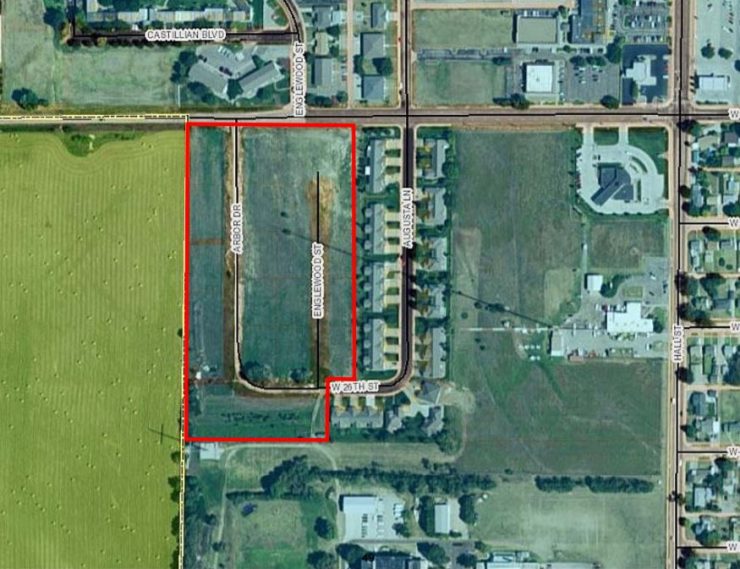
The Hays city commission added its stamp of approval Thursday night to the final plat of Creekside Estates Addition in northwest Hays.

The property, located south of 27th Street west of Hall Street, is already annexed into the city and zoned for residential development.

The 12.17 acre plat includes 12 lots ranging from 0.6 acres to just over 1 acre, as well as right-of-way dedication for the extension of Englewood Street. The property was originally platted as Arbor Valley Estates Addition, a portion of which is being vacated. It had already been reviewed and approved by the Hays Area Planning Commission and city staff in the utilities and water resources departments.

creekside-estates-addition-map-cu
(Click to enlarge)

Although it was a unanimous vote approval by commissioners, Henry Schwaller wondered about the size of the lots. “In the past we’ve been concerned about lots this big and I know there’s been some background discussion with the Planning Commission. Are we okay with big lots again?” Schwaller asked City Manager Toby Dougherty.

Dougherty reminded the commission it “pretty well set that precedent when you authorized the combining of four lots into one up by the Smoky Hill Country Club to create 0.85 acres there.”

Still, Dougherty said the commission needs to have a discussion about maximum lot size.

“When you discussed the Blue Sky Acres addition (south of Hays), the commission said we don’t want the 2 to 3 acre lot subdivisions in our city or next to the city.

“Everybody can spot a very large hamlet-type lot but where do you draw that boundary?  We do want to have a future discussion on whether or not to draw those boundaries,” Dougherty confirmed.

In the past, Schwaller recalled, “we had plats that had very large lots and the specials were onerous. I think there’s some economies of scale here (in Creekside Estates Addition) because half of the development is already done.”

Public Works Director Greg Sund explains the Creekside Estates Addition lots are deep and not very wide.
Public Works Director Greg Sund explains the Creekside Estates Addition lots are deep with little frontage.

Public Works Director Greg Sund pointed out that Creekside is “starting to go along the way our discussions have been going where these lots are deep but they don’t have a lot of frontage, so it doesn’t take as much (city) water, sewer and street to service them.”

“I was a little concerned about the lot sizes,” Commissioner Lance Jones said, “but where the flood plain runs through there, I understand why. Plus, this addition does align that street up (Englewood) which is another discussion we’ve been having, so I think you give a little, you take a little.”

The proposed plat aligns the new street with the existing Englewood St. located north of 27th St. and eliminates the dead-end on West. 26th St.

The city doesn’t necessarily “hate large lots,” said Vice-Mayor James Meier. “I think the concern originated out of taxes generated by those large lots are not paying for the (city) infrastructure that has to go in to service them. In this instance, I think that is not really a concern,” he added.

🎥 Sunday liquor sales in Hays unanimously approved

city-comm-ws-012617
Hays city commissioners approved Sunday liquor sales starting by April 8.

By BECKY KISER
Hays Post

Liquor sales on Sundays will be allowed in Hays starting no later than April 8, 2017, unless a petition is filed requiring a public election about the issue.

Hays city commissioners unanimously approved the ordinance Thursday evening with no public comment.

A similar ordinance was approved in 2005 and then overturned in an election by Hays voters.

Commissioner Lance Jones, who brought the issue to the table this time, noted he “thought it’d be a kind of controversial issue but so far I still haven’t received any emails or phone calls in support or against this item.

“It’s just something we ought to do, just getting rid of some regulation that shouldn’t have been there to start with.”

Jones pointed out “there will be a fiscal note to this,” although he acknowledged it may not be that much. He supported the change as a way to help bring in more money to the city’s general fund, which is financed solely by the city sales tax.

The sale of cereal malt beverages and alcoholic liquor in the original package will be allowed Sundays in Hays–except Easter Sunday–from 11 a.m. to 8 p.m., the same Sunday hours as allowed by Kansas law since 2005. Such sales are allowed 9 a.m. to 11 p.m. the other days of the week.

Sunday liquor sales are already allowed in incorporated areas of Ellis County, including Ellis and Victoria.

🎥 Newest Hays city commissioner sworn in

Hays City Clerk Brenda Kitchen (left) gives the oath of office to new city commissioner Sandy Jacobs (right).

By BECKY KISER
Hays Post

The newest Hays city commissioner was sworn into office Thursday evening.

Sandy Jacobs was selected by the other commissioners from six candidates to fill the unexpired term of Eber Phelps. He is now serving as the 111th District State Representative.

City Clerk Brenda Kitchen issued the oath of office to Jacobs at the beginning of the city commission meeting.

The commission then reorganized, which is traditionally done each January. This year, however, there were no changes.

The reason, according to City Manager Toby Dougherty, is because of legislation adopted last year by the state which moves municipal elections to November.

“The city commission used to have their municipal elections in April and the new commission would take seats at the first regular meeting after the elections. The new commission will now take seat in January of 2018. There was a nine-month period, sort of a gap, that it created,” Dougherty explained.

“The city commission decided at that time that Mayor Phelps would fill half of the gap and then Mayor (Shaun) Musil would fill half of the gap.

“This reorganization, which would normally be Mayor Musil’s term, will put you back on schedule so that next year you guys will reorganize in January and everybody would move just like normal.”

As a result, commissioners voted to retain Shaun Musil as mayor and James Meier as vice-mayor.

The unexpired term Jacobs is filling will end in January 2018. She thanked her fellow commissioners “for the welcome” and said she “appreciates the confidence in the commission for putting me in this position.”

Federal homeless count underway in Hays

hud

By BECKY KISER
Hays Post

There are homeless people living in Hays and Ellis County.

“It’s not a big homeless problem,” according to Linda Mills, regional coordinator of the Hays Homeless Coalition. “It’s different–different than what exists in urban areas and more populous states.”

“You don’t really see people living under bridges in Hays. What we have is more hidden. People are doubling up in living spaces with other people or ‘couch surfing,'” Mills explained.

The annual “Point In Time” count began Thursday and continues Friday at the Hays Public Library and at several agencies, including First Care Clinic and First Call for Help. The federal Housing and Urban Development (HUD) department requires that Continuums of Care conduct an annual count of homeless persons who are sheltered in emergency shelter, transitional housing, and Safe Havens on a single night.

hud-logoVolunteers are surveying the public and asking questions about where they spent the night Wed., Jan. 25. The survey is voluntary and individuals can opt out of answering any question. No personal information is collected.

When the random survey was conducted in 2015, out of the 50 people participating, “five were literally homeless,” Mills said. “Another 22 people were staying in motels where someone else had paid the bill.”

There is no homeless shelter in Hays or in the 18 counties of northwest Kansas. The nearest homeless shelter is 90 miles away in Salina and “sometimes we put people on the bus to Salina,” she said.

There are no services available locally for the homeless although there are some programs for homeless veterans. There is no local transitional housing.

Homeless people often have other problems, including mental illness, drug abuse or chronic unemployment which also need to be addressed, Mills said. “HUD, which focuses on veterans, works first to get them into housing, a roof over their heads.”

ks-statewide-homeless-coalition-bannerThe collected information will be entered into the Kansas MAAClink database, the Mid America Assistance Coalition, compiled into a statewide report, shared with the Kansas Statewide Homeless Association and submitted to HUD.

The county-specific results will be used when applying for federal and state housing grants.


Copyright Eagle Radio | FCC Public Files | EEO Public File