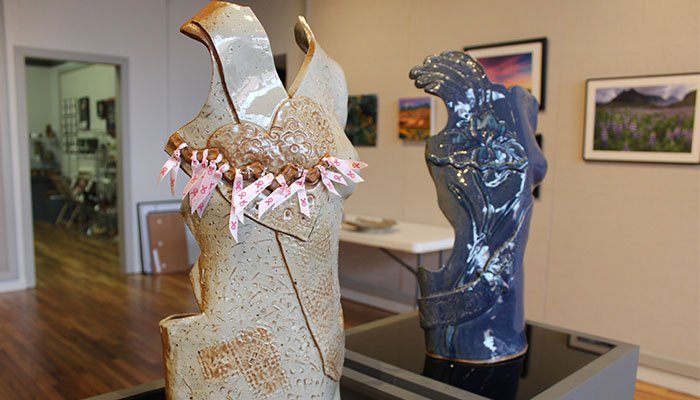
Two of three female ceramic torsos created by Dolores Baker of the Great Bend area that depict a women’s journey through breast cancer. The art is on display now at the Hays Arts Council.
By CRISTINA JANNEY Hays Post
Dolores Baker didn’t realize when she created three female figures representing a women’s journey through breast cancer she would soon be touched by the illness.
Baker created the ceramic models of women’s torsos in memory of friends and family members who had fought breast cancer and some who had lost their lives.
This female torso depicts healing, joy and beauty after breast cancer.
Baker had a biopsy once before for suspected cancer, but she thought she was in the clear. At the end of 2015, six months after she finished the cancer pieces, she went in for a routine mammogram, and the cancer was discovered. She was shocked. Breast cancer did not run in her family.
Baker thought she might be able to escape with just a lumpectomy. However, she ended up having radiation treatments and four surgeries, including the removal of both of her breasts.
The Hays Arts Council opened a new exhibit this week featuring artists from the Great Bend area. Baker’s torsos along with a series of masks titled “Faces of Breast Cancer” are part of the exhibit.
Baker is cancer-free now. She said the message she was trying to convey with the torsos has not changed even though her own body has.
“I think the main theme is that the feminine body is beautiful with or without breasts,” she said, noting that this is contrary to what our culture tells us.
Baker said she hopes the art pieces will spark discussion among the people who see them about the subject of breast cancer.
“I am thinking I want the subject of breast cancer to no longer be taboo,” she said. “When I was creating the pieces at the college, young women confided in me about their family members who had suffered from cancer and their own fears of being a gene carrier. I want people to be able to discuss the issue out in the open.”
Baker said after her battle with cancer, her perception of the art pieces changed.
“In some ways, there was a sense of transition and moving from grief to joy and interior growth,” she said.
Dolores Baker of the Great Bend area depicts the journey through breast cancer with her ceramic pieces. Baker, a cancer survivor, said the female form should be viewed as beautiful with or without breasts.
Six months after her surgeries, Baker created “Faces of Cancer,” a series of masks that she said reflected her own journey through breast cancer.
“There was grief and feeling broken. I believe there is a screw in the mouth of one of the faces. There was both fear and the anger and then moving on to just being puzzled and then to joy,” she said.
Baker, 75, has not always been an artist. She retired as elementary school teacher and the height of her artistic creations for many years was drawing stick figures. When she retired, she started doing creative writing, but saw a clay demonstration at Barton County Community College. Twelve years ago, she started taking classes from Bill Forst, making bowls and cups.
But Baker said she wants more, “Now I want to say something with my art.”
The other artists in the exhibit include Virginia Bitter, ceramics; husband and wife Rose Dudek, oils, and Steve Dudek, watercolors; and husband and wife Karole Erikson, photography; and Jay Miller, photography.
Both Erikson and Miller were recently featured in the Hays Arts Council’s Five State Photography Exhibition and have won awards in the past. They have also won placement in the HAC’s annual Smoky Hill Art Exhibition.
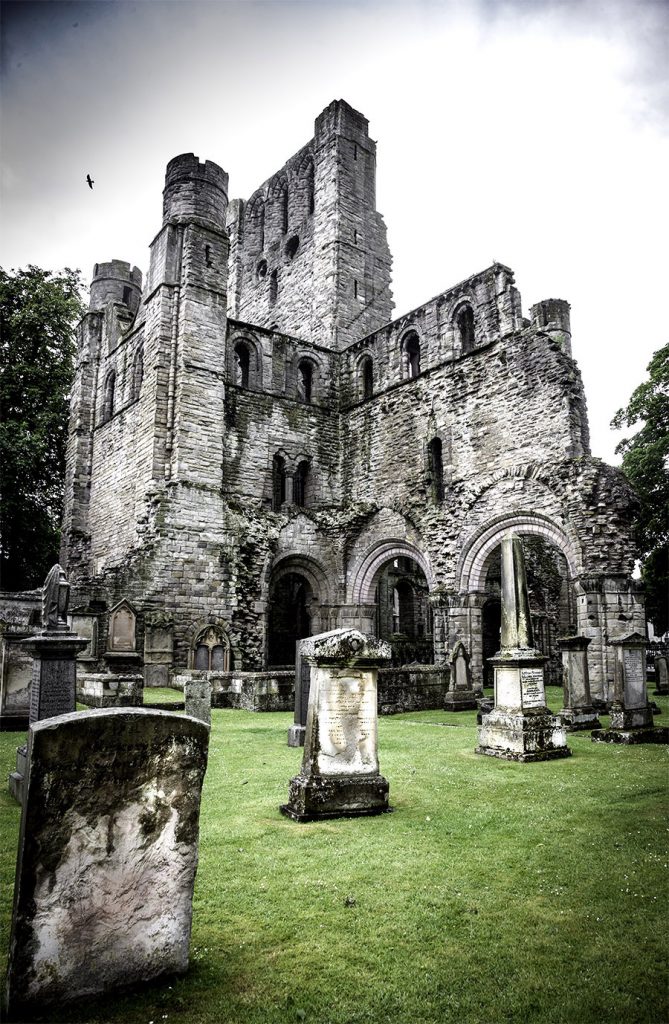
You will see wildlife photography from both artists side by side, but you will notice different styles. Miller has a portrait of a squirrel, near an image of taken by Erikson of a kingfisher snatching a fish out of the water. Miller also has a grouping of photos in the exhibit of a Kansas ranch during an annual burn, whereas Erickson’s images include scenes from decaying cemetery.
Steve Dudek is an award-winning watercolor artist and instructor at Barton County Community College.
Rose Dudek helped put together the exhibition. Brenda Meder, HAC executive director, described her art as nonobjective, abstract oils.
Bitter also has ceramics on display at the center, but Meder said the two artists have very different styles.
“There are very perceptible individualities to Virginia’s and Dolores’ ceramics,” she said.
The artists reception will be 7 to 9 p.m. Feb. 23. The exhibit will be on display until Friday, March 23.
Victoria Interested Parents will be providing a German meal from 5 to 7:30 p.m. Friday, Feb. 16 at the Victoria High School cafeteria.
The fundraiser will include homemade creamed dumplings and noodles and beans. Meals may be taken to go. All proceeds support VHS drug and alcohol free activities.
The Hays USD 489 school board could eliminate negotiations with its custodian’s union at its meeting Monday night.
The board is set to vote on opting out of the Public Employer-Employee Relations Act, which covers negotiations with the Service Employees International Union.
At the board’s Jan. 16 meeting, Superintendent John Thissen said he did not think the district needed to continue negotiations with SEIU.
There are 28 people covered by SEIU in the school district, 19 of which pay dues and are members of the union. The Hays school district is one of only two school districts in the state that negotiates with SEIU. The other is Wichita.
There are about 225 classified staff that do not have union representation. The district employees about 500 people. Teacher negotiations would not be affected if the district moves to opt out of PEERA.
In a written statement on Thursday, Esau Freeman of SEIU, said, “The members of SEIU Local 513 believe that remaining under PEERA is the best choice for all parties involved. We believe that a cooperative and harmonious relationship in the workplace is best obtained through the relationship defined under PEERA.
“Employees feel valued when they have a voice in the workplace and take ownership for their decisions. Under PEERA, employees have a reasonable assurance that their concerns will be heard and this helps operations and functions continue without interruption, and that is good for everyone, especially the people who matter most, the students. We look forward to resolving any concerns that board members may have and are hopeful that they will vote to maintain our current relationship.”
If the board votes to end its participation in PEERA, the district would still be required to negotiate with SEIU for one more year.
Technology Replacement Schedule
The board will also continue to discuss the district’s technology replacement schedule. The schedule would replace computers for the district’s one-to-one student technology program over four years. The cost of the schedule for student computers would be between $219,000 and $258,000 each year of the schedule.
The board will be given additional information Monday that includes a schedule of all district technology purchases.
At the board’s last meeting, some members questioned the need for the one-to-one program.
Administrative contracts
The board will consider the contracts for Superintendent John Thissen, Assistant Superintendent Shanna Dinkel and Raj Sharma, director of special education. Thissen has recommended the renewal of Dinkel’s contract. The special education cooperative board has recommended the board not renew Sharma’s contract.
In other business, the board will:
Continue to discuss long-range facilities planning
Hear a Kansas Education System Accreditation update
Discuss designating negotiating agents for HNEA and SEIU
Discuss appointment of a member to the Hays Area Children’s Center board
Discuss fees for summer school and driver’s education for 2018
Special Olympics Kansas is seeking volunteers for the state basketball and cheerleading tournament on March 16 and 17.
The Hays Area Chamber of Commerce, City of Hays, and Hays Convention and Visitor’s Bureau are asking community groups, schools, organizations and individuals to volunteer for the event.
To volunteer, visit www.ksso.org. You can also contact Tim Rehder at [email protected] or Bobbi Pfeifer, Hays CVB, at [email protected].
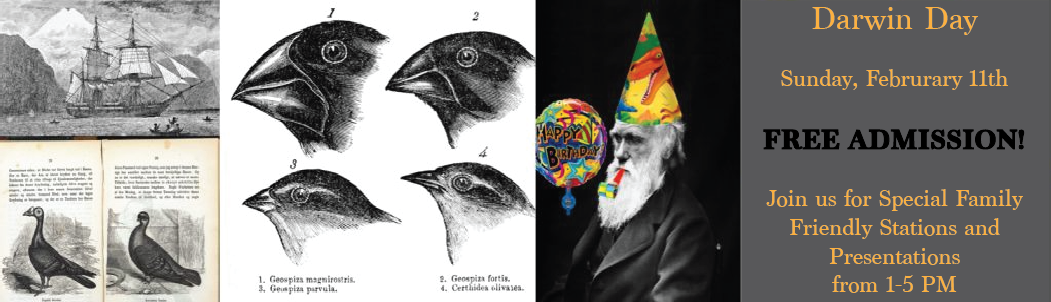
The Sternberg Museum of Natural History will celebrate Darwin’s Birthday from 1 to 5 p.m. Sunday with free admission to the museum and activities centered on everyday evolution.
Charles Darwin was actually born on Feb. 12, 1809, but the celebration is still giving the museum an opportunity to further science education in the community.
The four main aspects of evolution that will be presented will be animal husbandry, genetically modified organisms or GMOs, vaccinations and deforestation.
Jessica Barnett, who helped organize the event, said each topic will have stations manned with museum staff and FHSU graduate students and will have opportunities not only to discuss the topics, but also participate in hands-on activities.
“Every single day you come in contact with organisms that are evolving,” she said. “Whether that is humans that have evolved from other organisms or the corn that you are eating for dinner or your dog that has been selectively bred to be the modern-day equivalent of the wolf.”
The museum is using dog breeding as a way to illustrate artificial selection as opposed to natural selection. Barnett gave the example of floppy ears in dogs. Puppies have floppy ears, but in the wild in adult wolves, they are replaced by perky ears that are better for pinpointing sound during hunting.
“We choose to breed animals with floppy ears because they are so cute. It is so nice to rub their ears and let them flop around everywhere. It is adorable when they are adults, but we chose that,” she said. “That is not necessarily advantageous in the wild.”
Children will be able to “Build a Dog.” They will make dog puppets using features that have been artificially selected through breeding by humans.
Another example of artificial selection is the brassica plant. The plant was a leafy edible plant in about 4000 BC. It was bred into kale and eventually cauliflower, cabbage and broccoli.
As part of the GMO activity, the museum hopes to dispel some of the misconceptions of GMOs and focus on the science. Laura Wilson, PhD, said the definition of a GMO varies greatly depending on the source, whether it is a scientific, government or pro-organic group.
“We are not taking sides, we are just trying to keep a just-the-facts-mam attitude,” she said.
The vaccine presentation will look at how viruses mutate or evolve and how scientists have to modify vaccines to keep up with the changing organisms. Wilson said this is particularly pertinent with the flu epidemic in the U.S right now.
Children will be able to create their own viruses, and then the activity coordinators will try to develop vaccines that will keep the kids from accidentally killing everyone.
“That is a fun activity for kids to let them see how the flu virus evolves over time and how scientists do their best to anticipate what flu viruses might become problematic and how that changes year to year and why that is important to get [the flu shot] every year,” Barnett said.
On the subject of deforestation, the museum is trying to show how evolution changes plants and animals on an ecosystem scale.
The museum staff found a study on palm trees in the South American rain forest. The palm trees are being cut down and the groves fragmented, Wilson said. Toucans that feed off the palm trees are going extinct in these areas. Toucans typically carry the seeds of the palm trees. Now scientists are seeing palm trees with smaller seeds that can’t disperse their seeds as far because there are no toucans to carry the seeds.
“These kind of cascading effects within ecosystems due to deforestation and fragmentation make little islands out of what was a big expanse of land,” Wilson said. “This can cause changes to plants and animals.”
The museums live animal collection also will be on display during the event, and all of the normal exhibits will be open.
Several new exhibits will also be available to the public. The museum recently mounted a display of a new collection of minerals. The museum is constructing a new paleontology lab. Although it is not yet equipped, visitors can view the new space. A history of paleo art exhibit will also be on display.
CASA of the High Plains’ annual Valentine’s Dinner fundraiser set for Saturday is sold out.
The board would like to thank all those in the community who bought tickets for the event and businesses and individuals who donated monetary gifts as well as items for the dinner’s live and silent auctions.
All proceeds benefit CASA to help support the Court Appointed Special Advocates program, which appoints volunteers to serve as a voice for abused and neglected children in court.
Mark you calendar for next year’s dinner, which will be Feb. 9, 2019.
For more information on CASA or to learn how to become a volunteer, call 785-628-8641, see the CASA website or like the CASA Facebook page.
Victor J. “Vic” Schmidtberger, 91, of Quinter, formerly of Grainfield, died Thursday, Feb. 8, 2018.
He was born Aug. 24, 1926, in Pfeifer, Kansas, to Joseph and Anna Mary “Emma” (Mader) Schmidtberger. He attended grade school at a country school near their farm and high school in Grainfield, later receiving his honorary high school diploma.
Vic served in the United States Army stationed in Germany during WWII. As a telephone operator, part of his responsibility included handling orders to prepare troops for their return home. He enjoyed being a farmer and rancher. Vic was well known in area sale barns for buying and selling baby calves.
He was preceded in death by his parents; first wife, Esta; infant son, Mark Alan; sons-in-law, Eugene Baalmann, Kenneth Cooksey and Russell Baker; sisters, Irene Ziegler, Hilda Wolf, Albina Mowery and Marcella Heier and second wife, Jane.
He is survived by his children, Sylvia (Terry) Krannawitter, Hays; Lela Cooksey, Quinter, Kansas; Doris Schmidtberger-Baker, Lemon Grove, California; Delores (Danny) Lockhart, Oakley, Kansas; Leroy (Pam) Schmidtberger, Collyer, Kansas; Joe (Jennifer) Schmidtberger, Grainfield, Kansas; Delmar(Linda) Schmidtberger, California; Arnold (Kathy) Schmidtberger, Salina, Kansas; Alvera (Gary) Bruggeman, Oberlin, Kansas and Vicki (Sean) Timiney, Plantation, Florida; 29 grandchildren; and 25 great-grandchildren.
Visitation will be from 5 to 7:00 p.m. Sunday, Feb. 11, 2018, at the St. Agnes Education Center, Grainfield, with a Vigil at 7 p.m. Funeral Mass is 11 a.m. Monday, Feb. 12, 2018 at St. Agnes Catholic Church, Grainfield, with burial to follow in the Grainfield Cemetery. Memorials are suggested to the Grainfield Cemetery Fund, in care of Baalmann Mortuary, PO Box 204, Oakley, KS 67748. For condolences or information, visit www.baalmannmortuary.com.
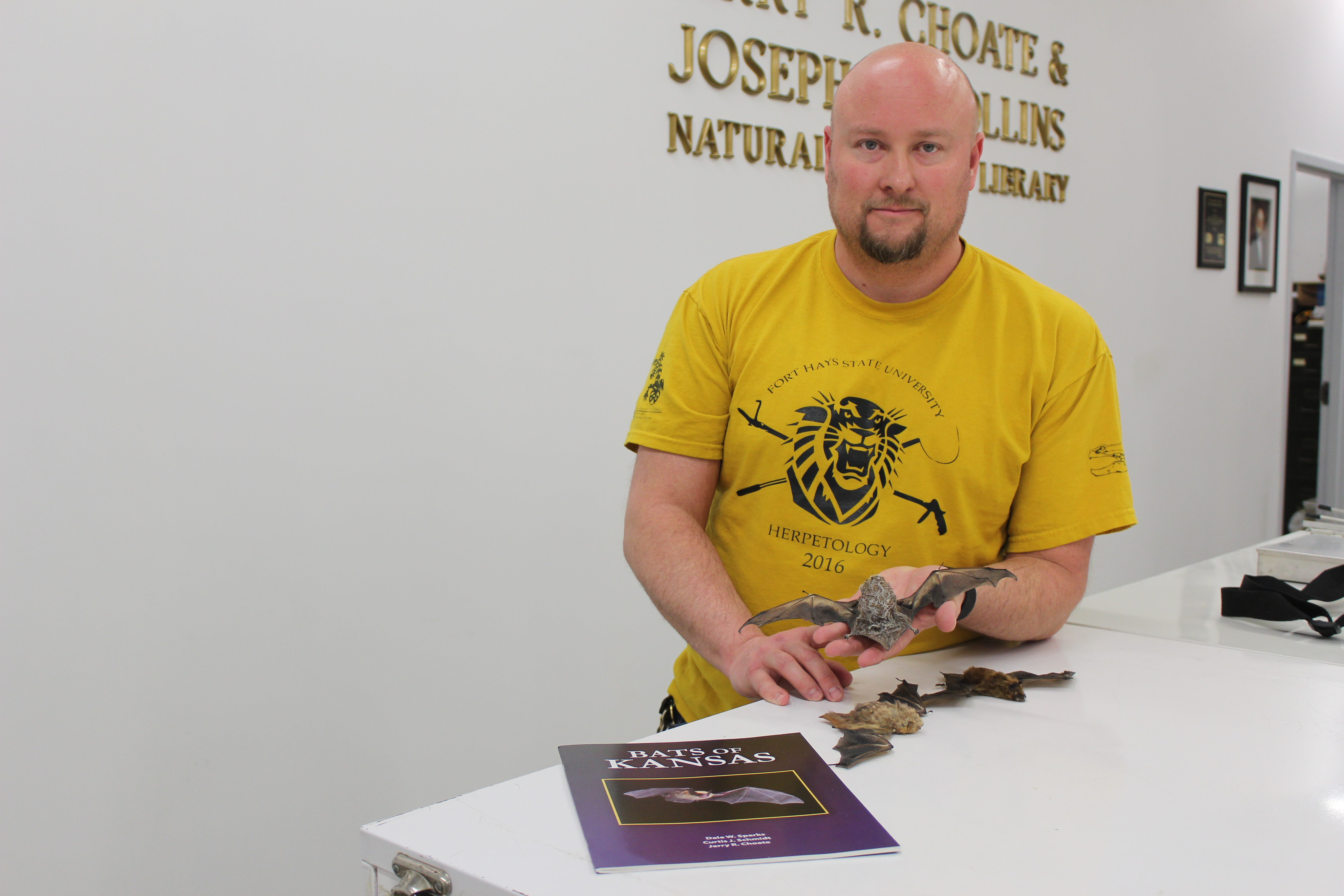
Curtis Schmidt, Sternberg zoology collections manager, holds a specimen of one of the 17 species of bats that are found in Kansas. Schmidt and his colleagues are researching threatened northern long-eared bats.
By CRISTINA JANNEY Hays Post
A researcher at the Sternberg Museum of Natural History is studying a disease that is wiping out a species of bats across the nation.
Curtis Schmidt, Sternberg zoology collections manager, Elmer Fink, PhD, along with others from Fort Hays State University, have been studying the northern long-eared bat. Schmidt, although primarily trained as a herpetologist, co-wrote a book on Kansas bats with former Sternberg director Jerry Choate and two other scholars in 2011.
The northern long-eared bat was listed as threatened on the endangered species list in 2015. The bats, which normally live in caves, are succumbing to a fungal infection called white-nose syndrome that proves fatal in almost all cases.
The fungus was not introduced to the U.S. until 2006, but since has been decimating bat populations by the millions.
The fungal infection has not yet been found in Kansas.
The fungus that is affecting the bats is normally found in soil. However, it is being brought into caves by humans. People pick up the fungi on their shoes and carry it from one cave to another. The infection is also transferred from bat to bat and is carried from cave to cave by infected bats.
Bats have extremely high metabolisms. They have to be constantly eating when they are awake. When insects are scarce during the winter, some bat species, including the northern long-eared bat, hibernate. The fungal infection disrupts the bats’ hibernation. They become active in attempts to fight the illness, yet can’t feed, and starve to death, Schmidt said.
“It’s just spreading like wildfire,” he said, “and right now we have no idea how to control it.”
Some populations are showing they are starting to evolve resistance to the disease. One scientific paper suggested ultraviolet radiation will kill the fungus, but the caves in which the bats live are not exposed to ultraviolet radiation. If this solution proves effective, humans may have to go into the caves and provide ultraviolet radiation to kill the fungus.
Schmidt and his fellow researchers have banded about 700 to 800 bats during the last three years primarily in Ellis, Rooks, Russell and Trego counties. The scientists use fine mist nets to catch the bats as they search for water in the early evening. Contrary to the saying “blind as a bat,” bats can see. The bats use memory to locate water. The don’t start to echo locate for prey until later in the evening.
Researches don’t know much about where the bats roost or hibernates in Kansas. The bats use caves in other areas, but there are no caves in the areas in which the bats live in Kansas.
The bats not only eat mosquitoes, but many insects that can be harmful to crops. Scientists estimate bats in the U.S. prevent billions in crop damage annually.
Schmidt acknowledged bats are often viewed negatively by the public. Seventeen species of bats live in Kansas, all of which are insect eaters. The bats not only eat mosquitoes, but many insects that can be harmful to crops. A study in Texas indicated bats had a $1.8 billion annual benefit to agriculture in the state.
The most common bat in Kansas is the big brown bat, and if you have seen a bat in Kansas that is probably what you observed.
Bats are actually quite abundant, but we just don’t usually see them because of their nocturnal lifestyle, Schmidt said.
“One thing people don’t realize is how abundant bats really are,” he said. “They are extremely abundant, very, very common. If we could actually see into the sky at night, you would see that the sky is full of bats, no matter where in the country you are.”
Schmidt will be giving a presentation at the Bat Fair from 2 to 4 p.m. Sunday at the Kansas Wetlands Education Center, 592 NE Kansas Highway 156, Great Bend.
He will be talk about a day in the life of a bat, which because of their high metabolism, involves primarily eating and sleeping.
Bats mate in the fall and the female bats will hold the live sperm until they are ready for the eggs to be fertilized in the spring. Bats, as mammals, give birth to live young and produce milk for their babies. Bats usually have two pup, but can have up to five. The baby bats grow rapidly and are able to fly and be independent of their mothers within two weeks.
Schmidt said he hopes through presentations such as the one in Great Bend he can raise awareness of the importance of bats.
“The No. 1 thing I like to promote is that they are OK, and they are good to have around,” he said. “I am really optimistic because it seems the more people are learning about them more recently with these diseases and things that are going on, the more people are appreciating and liking them. I have more people who come in and want to build bat houses because they realize how beneficial the bats are not only for agriculture, but for mosquitos and thing like that.”
Following Schmidt’s the presentation, children will be able to construct their own bats, complete a scavenger hunt in a “cave,” compare bat wing spans and “capture” and measure their own bats. KWEC will have live brown bats as well as several Sternberg Museum bat specimens on display.
The fair will also have examples and instructions on how to construct bat boxes, which can be used to attract bats to the yard.
For more information, contact KWEC at 877-243-9268.
Kansas entrepreneur Greg Orman formally launched his independent bid for governor recently and in doing so is challenging the two-party structure that has dominated U.S. politics for well over a century.
Orman believes voters are ready to break from the political status quo. They see effective governance threatened by mounting ideological polarization and the tightening grip that special interests hold on the two major parties.
Political scientists have documented through extensive research that party identification—the extent to which an individual voter identifies with one party or another—drives political behavior. Party identification develops through lifelong experience, rarely shifts over time, and mediates how a voter views candidates and issues.
H. Edward Flentje is professor emeritus at Wichita State University.
Based on this research most political observers believe Orman’s candidacy will hand the gubernatorial election to the Republican nominee for governor, given that Republicans outnumber Democrats by nearly two-to-one in Kansas.
To succeed as an independent candidate Orman will have to break the hold that party identification has on voting. He will have to convince both centrist Republicans and pragmatic Democrats to abandon their parties in voting for governor. He will also have to energize those not easily energized—registered voters unaffiliated with any political party—who number over 540,000 in Kansas, 30 percent of the total electorate.
Two-party dominance has been contested in the past, and four Kansas governors have been elected with less than 40 percent of the total vote—a mark Orman sees as achievable and one that would win a competitive three-way race. In those four elections, however, the victors were affiliated with one of the two major political parties.
Voters diverge from party alignment in voting based primarily on two factors: when they feel strongly about a candidate; and when they feel strongly about issues.
Orman has a head start in being known, as a result of his vigorous run for the U.S. Senate seat in 2014. According to surveys last year over half of all voters indicated they had heard of Orman. That number exceeded voter awareness of all other gubernatorial candidates, except for Secretary of State Kris Kobach.
Voters may know of Orman but are less certain as to who he is exactly and how they feel about him. In announcing his campaign Orman introduced himself as a family man, a political independent, and a problem-solving businessman guided by facts, rather than party ideology. How well he communicates those qualities and whether voters respond to them will be tested in the campaign.
Orman opened his campaign with a centrist message through unscripted, free-wheeling interviews with state and national media outlets and showed himself adept and articulate in addressing a broad range of issues—particularly for a businessman who has never held political office. He promised definitive policy statements as the campaign progressed.
Orman also quickly demonstrated his seriousness by raising the money required to launch an aggressive statewide campaign. Within a month he assembled from individual donors a campaign chest of $450,000, an amount that exceeds the fundraising of any other candidate, except for Colyer. Orman emphasized that no contribution was taken nor would be accepted from political action committees or lobbyists.
History is not on Orman’s side, but our current political turmoil gives him an opening to bend the arc of history. Kansas voters have not seen a competitive three-way race for governor since the 1930s but should prepare for one this coming November.
H. Edward Flentje is professor emeritus at Wichita State University and formerly served with Kansas Governors Bennett and Hayden.
Stephen J. Zerr Sr. died Wednesday, Feb. 7, 2018 at Citizens Medical Center in Colby.
He was born March 28, 1927 in Sheridan County. He was a retired plumber.
He was preceded in death by a grandson.
Survivors include wife Louella B. Zerr of Colby; son Stephen J. Zerr of Levant, daughters Maxine A. Adams and Karen S. Adams, both of Colby; sister Helen Normandan of Colby; six grandchildren; and 13 great-grandchildren.
Mass will be at 10 :30 a.m. Monday, Feb. 12 at St Frances Cabrini Catholic Church in Hoxie with Fr. Vincent Thu Laing officiating.
Visitation will be 2 to 6 p.m. Sunday, Feb. 11 at Kersenbrock Funeral Chapel in Colby. Rosary will be at 6 p.m. Sunday at Kersenbrock Chapel.
Burial will be in St. Frances Cabrini Catholic Cemetery in Hoxie.
Memorials will be designated at a later date in care of the funeral home.
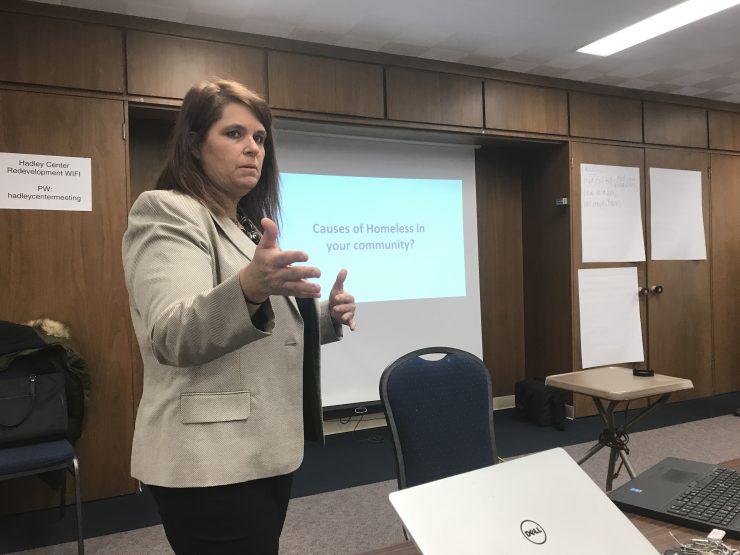
The Kansas Statewide Homeless Coalition gathered agencies Tuesday to talk about homelessness in northwest Kansas.
The Coalition has hired Amazing Traditions to do a needs assessment for the region, and representatives were in town to talk about the need for services, causes of homelessness, possible solutions and barriers to solutions during a meeting at the Hadley Center.
The Kansas Statewide Homeless Coalition is the lead agency in the continuum of care for homelessness. The lead agency provides education, structure, support, decision making and program evaluation. It is the overall umbrella for care services through HUD.
Kerri VanMeveren of Amazing Traditions talks to participants in a Kansas Housing Coalition focus group Tuesday in Hays.
The needs assessment helps the coalition understand where the greatest needs are and where they can provide the most support.
“It is really to get a temperature for the feeling in the community,” Kerri VanMeveren of Amazing Traditions, said of the focus group Tuesday. “Some communities have the not-my-backyard or a you-build-it-and-they-will-come mindset, which is important to understand what your community will accept. If there are great needs in the community and there is great disparity between need and the opportunity, are there some other things that need to take place before you put money in there, before it’s ready to be accepted?”
The Coalition applies for funding on behalf of a variety of agencies in the state. Currently there are no grant awards in the northwest region, said Linda Mills, director of First Call for Help and regional coordinator for the Coalition.
People in the Ellis County can apply for HUD programs, but Mills said most of the people who are seeking help from First Call for Help don’t meet the federal standards for assistance. To qualify for rapid rehousing funds, a federal housing program, a person or family has to be living on the street.
Many of the people in the community who do not have permanent housing in Ellis County are referred to as “couch homeless.” They may not have a permanent address, but are doubling up with other families on a temporary basis. Hays USD 489 Superintendent John Thissen said these families who are “couch surfing” are counted as homeless per state definition even though they are not considered homeless by federal standards.
The Kansas Statewide Homeless Coalition gathered regional agencies Tuesday to talk about homelessness in northwest Kansas.
Mills said when she first started with First Call for Help, the agency applied for emergency shelter grant funds, but the agency was unable to secure those funds for anyone, because the rental the person is applying for has to be at the fair market value set by the federal government. First Call couldn’t find any rental housing at or below the federal market value. Some rentals were as close as $10, but because it was over, the application was denied.
The fair market rent for a two-bedroom unit for Ellis County for 2018 is $710 a month. That includes all utilities.
Getting someone into a new home can be difficult. Section 8 housing has a long list. Hays Public Housing Authority has a waiting list of 60 to 70 with a waiting time of about a year. Mills said she can access resources for rental assistance, but not for a deposit and first month’s rent. First Call for Help had to refer out 187 people this year because of these barriers.
The group first discussed causes of homelessness in the region.
Sarah Wasinger of the Hays school district said high medical bills among family members have caused some students’ families to become homeless. Others acknowledged individuals and families struggle to qualify for Medicaid in Kansas.
Amy Bird of High Plains Mental Health said her agency has clients who fall in an insurance gap. They make too much to qualify for Medicaid but too little to buy insurance on the health insurance exchange.
Mills said Ellis County has a low unemployment rate, but workers still lack a living wage. Other jobs don’t provide enough hours or employers may lay off workers when work is slow, creating an inconsistent income for employees.
Thissen said Hays residents have a misconception there are no homeless individuals in the community because they don’t see people living on the street.
Mills said the community does have a homeless camp and last year there were eight individuals living there.
One reason, the community doesn’t see street homeless is because the community has no shelter, Bird said. Those individuals who are on the street are moved to communities, such as Wichita or Salina, where shelters exist.
Marqueia Watson of Amazing Traditions documents need for services, cause of homelessness, possible solutions and barriers to solutions during a meeting Tuesday at the Hadley Center.
A lack of affordable housing was also listed as a cause for homelessness in the community. The median home price in Hays is $195,000, according to Zillow.
Dennis Wilson of First Call for Help said substandard housing makes it difficult for those trying to buy homes to qualify for HUD funding.
Although there are an estimated 150 open rental units in the city today, finding quality rental housing and a good landlord can be difficult, said Sherry Dryden, executive director of the United Way of Ellis County.
Dryden said it is difficult for renters and agencies to know which landlords are good to work with. She said she had worked with a family whose floor fell out of their rental, and the landlord charged them to fix the floor.
Mills said she had worked with a family with water running inside the walls of the rental and they had little recourse to get their landlord to fix the problems.
“It is hard for us to advise them, because the city doesn’t really have any rental inspection, which I’m not necessarily saying we need to have that. I know that it would be hard for the city to enforce,” Mills said. “What is their (renters) route to get these problems fixed without the landlord taking retaliation on them and raising their rent or evicting them?”
Dryden said a lack of awareness among community members that homeless exists in the community can be a cause for homelessness in the community.
“You stated at the very beginning there are those communities that, I am not going to be politically correct, that basically have their heads in the sand and say we don’t have it—a homeless problem—or we want to make sure they go through (town) so we don’t have a homeless problem. So, to me, one of the causes is being naive and being in denial,” Dryden said.
Wasinger said, “They don’t think it is an issue because they don’t see them on the streets every day. It is not visible. They don’t think about those families that are couch surfing as being homeless. Yet, they are more susceptible to worse things happening to them because that person can say at any time, ‘Leave.'”
Mills said there is also a perception that the homeless need to just get jobs, but most of the people who First Call for Help sees are employed.
The group also discussed other issues that lead to homelessness, including generational poverty, substance abuse, criminal records, mental health issues, transportation costs and lack of awareness of services.
The group discussed services in the community where people are accessing help. Some of these include First Call for Help, Salvation Army, food banks, churches, Catholic Charities, Community Assistance Center, Harvest America, the school system and High Plains Mental Health. The group especially had high praise for the work of law enforcement in the community.
Among the solutions the group discussed were parenting classes, financial classes, support for those being released from jail or prison, a landlord rating system, Circles, case management, transitional housing, free community transportation with regular routes, medical insurance/expanded Medicaid, affordable day care, increased mental health funding, rental assistance and community education.
Mills said those in need don’t always know how to access service and they may not have the transportation to go all over town to seek help from multiple agencies. She said she would like to see better collaboration and communication between the community agencies.
The group said they would like to see case management offered to people who were homeless or at risk of being homeless. Bird said High Plains Mental Health offers case management, but clients have to be mentally ill and meet strict requirements for those services.
VanMeveren said case management has proven to be crucial for individuals in other communities to get back on track.
The group talked about the Circles program, which is a national program that provides volunteer mentors for people living in poverty, helps them set and reach goals, and access community resources. Mills said she has looked into the program.
In addition, funding is a challenge for all the organizations, the participants said.
Chris Dinkel of High Plains Mental Health and a Hays city commissioner, said the resources at High Plains are drawn very thin. High Plains covers a 20-county area and has seen an increase in demand for services every year for the last 10 years, but has seen a cut of 15 percent in state funding. Many clients are waiting three weeks or more for services.
The group noted there is a disparity in the amount of funding allocated for support services in western Kansas compared to eastern Kansas. Mills added lawmakers don’t account for the added cost of providing services over large rural areas. Many of the social services for northwest Kansas are centered in Hays, which is good for local residents, but makes access difficult for outlying communities.
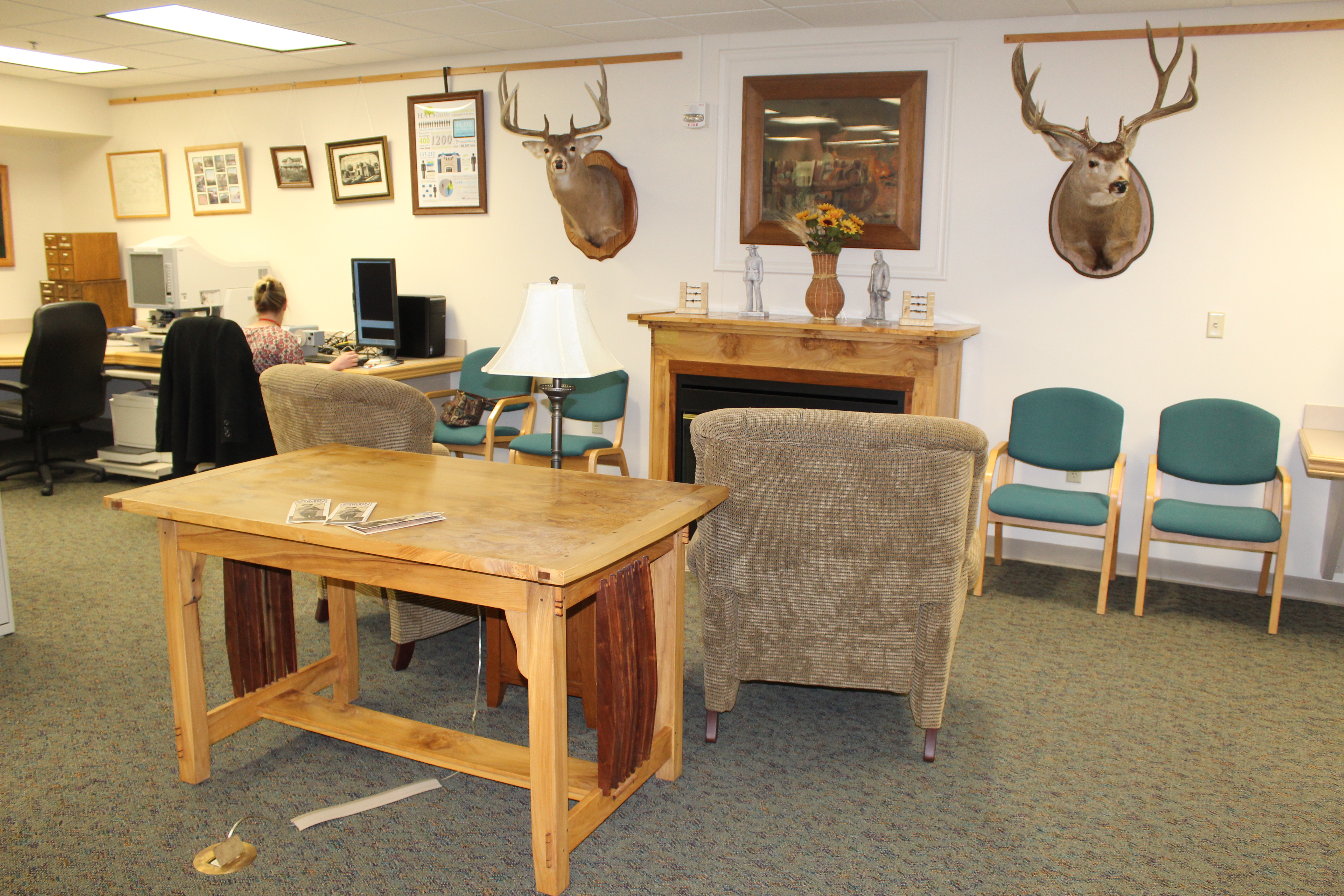
The Kansas Room recently made a large portion of its collection of books on Kansas and the Midwest and from Kansas authors available to the public for checkout.
By CRISTINA JANNEY Hays Post
The Kansas Room at the Hays Public Library is making its collection more accessible to the public.
Marissa Lamer, Kansas Room librarian, took the reins of Kansas Room two years ago and has been working to reorganize the collection.
Although some older and more fragile items from the collection will still have to be viewed within the confines of the Kansas Room, a selection of non-fiction and fiction that relate to Kansas and the Midwest will now be available for checkout.
The library has added an assistant for the Kansas Room, which has allowed the library to increase the hours staff is available to help library patrons do research. Research assistance will now be available 9 a.m. to 5 p.m. Mondays, 9 a.m. to 8 p.m. Tuesdays through Thursdays and 9 a.m. to 6 p.m. Fridays.
Marissa Lamar
“We are here to help, whatever it is,” Lamar said. “I love problem solving, and I am here as a resource.”
The fiction collection includes titles written about Kansas and those written by Kansas authors.
The nonfiction section includes books on the history, environment, politics and famous figures of Kansas and the Midwest. The collection even includes a section on Kansas crime, such as the infamous BTK serial killer.
This copy of an early map of Elis and Rush counties hangs on a wall in the Kansas Room in the basement of the Hays Public Library.
The library subscribes to a variety of periodicals on the Kansas history and the West.
In addition, the Kansas Room has a complete microfilm library of the Hays Days News plus other publications that predated the Daily News or had references to Ellis County or Fort Hays.
The earliest book in the collection dates back to the 1860s, but the Kansas Room also has a variety of first editions that were popular in the early 1900s.
Lamer said she would be happy to help local residents research family histories. A number of families have donated copies of books on their family histories to the library.
“You may want to start with us first so you don’t have to reinvent the wheel,” she said. “Someone may have already done a lot of the work for you.”
The Kansas Room also has books on the Volga Germans and census records from the Russian village from which the early Ellis County residents immigrated. These records have been translated into English. In addition, the library has a subscription to Ancestry.com, so you can research a variety of documents online that would normally cost you to access.
This copy of a land transfer signed by John Quincy Adams was donated to the Hays Public Library and now hangs in the Kansas Room.
“I really wanted to expand it,” Lamer said of the Kansas Room collection. “I didn’t want it to just be history. I wanted anyone who wanted to do a book report on the prairie environment or any research related to Kansas to be able to come here.”
Lamar said she has more projects ahead. She said she would like to better organize a collection of negatives donated from the Ekey family, who owned a photography studio in town. She estimated the negative collection spans from the 1930s through the 1980s. She said she hopes to get these photos entered into the library’s database, so they can be accessed easier.
Lamar also wants to further research a collection of Howard C. Raynesford letters and papers. Raynesford mapped trails in the area for the Butterfield Overland Dispatch, which ran wagons from Atchison to Denver.
The Kansas Room continues to accept donations of historical documents and photos and other Kansas-related materials. If you wish to make a donation, contact Lamar at 785-625-9014 or at [email protected].