We have a brand new updated website! Click here to check it out!

Election lawsuit against Rep.-elect Wasinger dismissed

Updated: 6:45 p.m. Thursday, Dec. 27 with quotes form Barb Wasinger.

By CRISTINA JANNEY
Hays Post

All parties who sued to contest the 111th District Kansas House race have agreed to dismiss the case.

Attorneys for Barb Wasinger, who was declared the winner in the race after a recount and those who filed to contest the race said paperwork to dismiss the case will be filed in district court Thursday.

The move to dismiss was announced during a pre-trial hearing in front of District Judge Blake Bittel at 10 a.m. Thursday.

Democrat Eber Phelps lost to Republican Wasinger by 35 votes after a recount was conducted.

The attorneys said the group of Ellis County voters who filed the lawsuit still have issues with how the election was conducted, but agreed to dismiss for the sake of judicial efficiency.

A group of seven Hays residents filed a lawsuit against Wasinger alleging voting irregularities led to Wasinger improperly being named the winner of the election. The group most notably included former Kansas State Sen. Janis Lee. Lee currently serves as vice president of the Ellis County Democratic Party.

Wasinger was present by phone for the pretrial hearing Thursday.

She said later in an interview with the Hays Post, ” I’m just delighted this is done and I’m looking forward to serving the 111th district.”

“Just as I have since Election Day, canvass, recount, and now the dismissal, I look forward to serving my constituents in the 111th District in the Kansas Legislature,” Wasinger said.

The lawsuit had been set for trial Monday, Dec. 31.

This clears the way for Wasinger to take her seat when the  Kansas 2019 Legislative session opens Monday, Jan. 14.

See related story: Judge sets date for Phelps/Wasinger election hearing

INSIGHT KANSAS: Teach for America and the Kansas teacher shortage

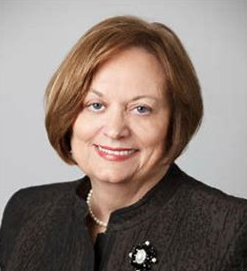
Dr. Sharon Hartin Iorio is Professor & Dean Emeritus at Wichita State University College of Education.

The Kansas teacher shortage reflects a national trend. When classes started this fall Kansas was 612 teachers short, up 19 percent from last year. Some positions still remain open. Furthermore, the cost of recruiting high-quality teachers has risen and become controversial.

A recent furor involves the cost and effectiveness of a Kansas contract with the not-for-profit teacher recruiting and training organization, Teach for America.

The heart of the debate is not the final 2018 payment to TFA which, as of this writing, is unannounced or the efficiency of last year’s TFA recruiters, who after agreeing to 12, placed only three teachers in Kansas.

The underlying dispute is about the merits of TFA. It’s an organization not well known among Kansans but often criticized by some Kansas educators.

TFA was born as a 1989 undergraduate thesis written by Princeton student, Wendy Kopp. Her idea led to creation of a homeland Peace Corps where recent graduates, regardless of college major, would commit to teaching for two years in inner-city and rural schools throughout the United States.  

Today TFA has taught more than 50 million students. This year in the Kansas City area there are 120 TFA teachers with 13 of those in Kansas City, Kansas, but none elsewhere in Kansas.

The teachers receive the going rate for new teachers by the school district where they are hired.  

TFA members undergo five weeks of pre-teaching training and participate in mentoring and professional development after that. In Kansas, TFA teachers must meet a state requirement of being enrolled in a master’s degree program.  

With goals of promoting equity, offering students effective instruction and mobilizing young teachers to become future leaders, what’s not to like? Critics voice two major complaints:

• TFA teachers are inexperienced and most are not prepared by colleges of education.

• The two-year teaching model, rather than a transforming students’ learning is a résumé-boosting experience that results in disruptive teacher turnover.  

In recent years, TFA has worked hard to address those issues. Moreover, teacher shortages and dramatic increases in high-need student populations have altered perceptions about what is adequate teacher preparation.  

Consequently state requirements for teacher preparation and university teacher education curricula have become similar to or are fewer than TFA requirements.

Individuals with bachelor’s degrees may become Kansas classroom teachers with a summer preparatory course; then they complete licensure coursework or a master’s degree through online and campus options.  

At least one Kansas university offers a program where para-professionals (classroom teacher-aides) work toward an elementary education bachelor’s degree through online coursework and mentorship and can become classroom teachers after about one year of coursework.

Reports differ but TFA data show at the end of five years, retention rates similar to that of all teachers in high-need schools and about 70 percent of TFA completers continue in an education-related career—school administration, elected public office, educational media, etc.  

The recent TFA recruitment contract was meant to address the teacher shortage. Good intentions turned out to be an administrative issue for state government and a TFA problem of achieving contract objectives.

During almost 30 years, TFA has made substantial contributions in high-need schools. It’s time to move on, from current contract issues and concerns of the past about TFA’s value, to consider the benefits a restructured teacher-placement division of TFA could bring to Kansas.

Sharon Hartin Iorio is a professor and Dean Emerita of Wichita State University College of Education.

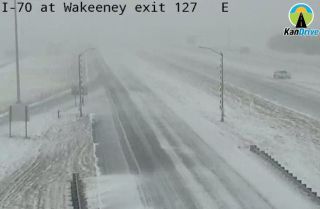
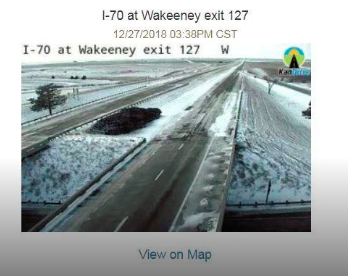
Update: I-70 reopened both directions Hays to Colorado

Courtesy of Bill Ring Sr.

Update 4:36 p.m.: I-70 has re-opened in both directions from Colorado to Hays.

Update: 2:34 p.m.:  I-70 is closed from Colorado to Wakeeney eastbound only. I-70 still closed from Hays to Colby westbound.

Update 12:20 p.m.: Interstate 70 will be closing westbound between Hays and Goodland as of 12:30 p.m. Thursday.

——

The Kansas Highway Patrol has reported that Interstate 70 is now closed between WaKeeney and Goodland due to hazardous winter weather conditions.


Trego County opens warming center

Hays Post

A warming shelter has been opened at the Trego County Fairgrounds Commercial Building by Tregp County Emergency Management for stranded motorists.

All motel rooms in WaKeeney are full, according Trego County Emergency Management.

“Our crews are doing their best as they continue fighting blowing snow on parts of I-70. Here’s a look at a few of our trouble spots. Be patient, we’ll get it reopened as soon as it’s safe to do so! Stay updated at kandrive.org. #kswx,” Emergency Management said just before 4 p.m. Thursday.


KHP confirms fatal accident near Oakley

The Kansas Highway Patrol reported the following on its Facebook as of 12:56 p.m.

“We now have a confirmed fatality crash on I-70 by Oakley at mile post 75.

PLEASE avoid driving if you can, if you have to be out in this, SLOW DOWN!”

More information will be released on the Hays Post as it becomes available.


Western Kansas warming centers open

American Red Cross

Due to the deteriorating conditions of the winter storm and extreme temperatures, the American Red Cross is partnering with Finney County Emergency Management and Thomas County Emergency Management to open temporary warming centers. The warming centers locations are:

• Finney County 4-H Building, 409 Lake Ave., Garden City

• Holcomb City Hall, 200 N. Lynch St., Holcomb

• Thomas County Emergency Management, 1255 Country Club Dr., Colby

Several western Kansas roads are closed so residents are urged to shelter in place until it is safe to travel. The warming center is available for motorists who may be stranded or power outages that result in home temperatures dropping to dangerous levels.

“The center is safe place where folks can warm up and wait out the storm. We can provide food, water, comfort, and information without sleeping services” said Red Cross Executive director, Becky LaPolice.

“The situation remains fluid and we will provide updates to available services as they develop.” Current road conditions are available at www.kandrive.org. “We can’t stress enough, the importance of monitoring road conditions,” said LaPolice.

Preparing ahead of time can save lives in the event of extreme cold. Cars equipped with an emergency kit should contain at a minimum, water, food, blankets, first-aid kit, ice scraper, gloves, jumper cables, flashlight and extra batteries. Stay inside vehicles if your car becomes stranded and call 911 for help. People who need to utilize the warming center please make sure to bring the following:

• Prescriptions and emergency medications • Foods that meet unusual dietary requirements • Extra clothing, pillows, blankets, hygiene supplies and other comfort items • Supplies needed for children and infants, such as diapers, formula and toys • Special items for family members who are elderly or disabled

WEATHER ALERTS AND FIRST AID TIPS — Download the Red Cross Emergency App for instant access to winter storm tips and weather alerts for their area and where loved-ones live. Expert medical guidance and a hospital locator are included in the First Aid App in case travelers encounter any mishaps. Both apps are available to download for free in app stores or at redcross.org/apps.

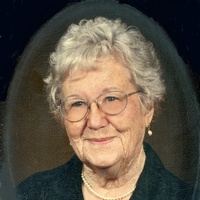
Genevieve Katherine Bellerive

Genevieve Katherine Bellerive

Genevieve Katherine Bellerive, 98, of St. Peter, Kansas, passed away Monday, Dec. 24, 2018, at Logan Manor in Logan.

Schmitt Funeral Home, WaKeeney, is handling arrangements.

Visitation will be from 5:30 to 7:30 p.m. Friday, Dec.28 at Schmitt Funeral Home, WaKeeney.

Prayer service will be at 7 p.m. Friday, Dec. 28 at the funeral home.

Mass of the Christian Burial will be at 10:30 a.m. Saturday, Dec. 29 at St. Michael Catholic Church at 40 Ainslie Ave., Collyer, KS 67631.

Gov. Colyer looks to the future

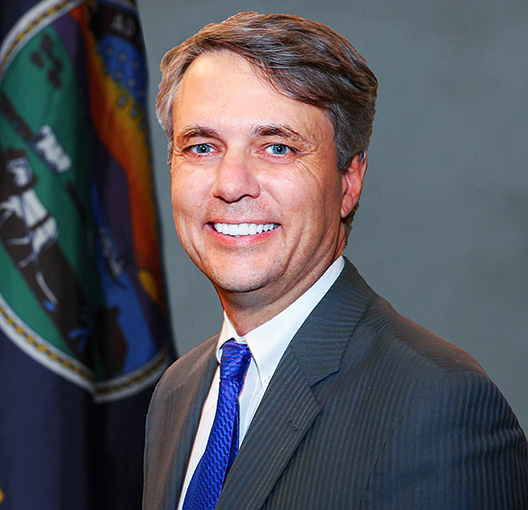
 TOPEKA, Kan. (AP) – Departing Kansas Gov. Jeff Colyer isn’t ruling out a future run for public office but says he will be looking at opportunities in both business and government service.

The Republican governor was not specific about his plans during a recent Associated Press interview, except to say he and wife Ruth will take “a little vacation” after leaving office Jan. 14 to Disney World.

2 slain deputies’ families hire lawyers to help prosecutors 

KANSAS CITY, Kan. (AP) – The families of two Kansas sheriff’s deputies who were overpowered by an inmate and killed have hired legal counsel to help prosecutors.

The Kansas City Star reports that husband-and-wife law partners, Tom and Tricia Bath, were retained to assist the Wyandotte County District Attorney’s Office in the prosecution of 30-year-old Antoine Fielder. He is charged with capital murder in the deaths of Theresa King and Patrick Rohrer last June. In Kansas, the intentional, premeditated killing of a single law enforcement officer is eligible for the death penalty.

Attorneys for Fielder have indicated they will oppose the Baths’ participation in the case. Though rarely done, Kansas law allows for crime victims to pay private attorneys to assist county prosecutors, who are required to recognize them as associate counsel.

United Way Days of Giving today through Sunday

Hays Post

Sherry Dryden, United Way executive director, will be on air on Eagle’s Hays area radio stations, 101.9 FM The Bull, 1400 AM KAYS, 103.3 FM The Mix, 99.5 K2 Country, and Hull Broadcasting’s 96.9 FM KFIX throughout the day today through Sunday for a push to make the agency’s fundraising goal.

The agency is only 50 percent to its $400,000 goal. It has extended its annual fundraising drive, which typically ends on Dec. 31, into January.

The agency fears funding will have to be cut to its partner agencies, which may mean the number of people served in the community and the number of services provided may have to be reduced.

See related story: Shortfall in United Way campaign could mean cuts to community services

In 2018, United Way supported local programs at 15 partner agencies.

These included the American Red Cross, Big Brother Big Sisters, Cancer Council of Ellis County, Catholic Charities, Center for Life Experiences, Cerebral Palsy Research Foundation, Court Appointed Special Advocates, Developmental Services of Northwest Kansas, Early Childhood Connections, First Call for Help, Hays Area Children’s Center, Options, Parents and Children Together, Salvation Army and Western Kansas Association on the Concerns for the Disabled.

There is still time to donate, and there are several ways to do so.

You can donate online, call United Way at 785-628-8281, send checks to P.O. Box 367, Hays, KS 67601 or make a donation or pledge in person at the United Way office at the Hadley Center, 205 E. Seventh St., Suite 111, Hays.

Kansas WIC remains open during federal government shutdown

TOPEKA – The Kansas Department of Health and Environment is letting residents know during the federal government shut down, the Women, Infants, and Children (WIC) program would continue to operate. This would include providing nutritional food benefits, nutrition education, breastfeeding support and referral services.

WIC is the USDA funded nutrition program for low-income pregnant women, infants and children from birth to age 5.

“All eligible participants would continue to receive WIC benefits and new applicants would be certified and receive benefits,” said Rachel Sisson, MS, director of the KDHE Bureau of Family Health before the shutdown. “There are 350 stores in Kansas authorized to provide WIC foods to clients. During a shutdown, all stores would continue to process WIC transactions and would continue to be paid for food purchased by WIC participants.”

The WIC program is administered by KDHE through contracts with county health departments. There are 120 county WIC clinics in Kansas where eligible participants may apply for services.

 Information about the Kansas WIC program is on the web at www.kansaswic.org.

 Planted wheat acres projected to hit 100-year low

By CHANCE HOENER 

The Hutchinson News

HUTCHINSON, Kan. (AP) – Over the past two years, the breadbasket of America has planted less and less wheat.

Acres planted to wheat in 2017 and 2018 neared 100-year lows, with last year’s 7.7 million wheat acres hitting the lowest point in 60 years. Low prices and a wheat surplus moved farmers away from the Kansas staple. This year, those problems combined with a delayed fall harvest and unfavorable weather to push wheat acres to what could be the lowest point in a century.

“Also this fall in addition to low prices, we had very wet weather, which delayed planting, and for many farmers, they simply could not plant wheat,” said Lane County wheat farmer Vance Ehmke.

Wet weather delayed planting in a couple of ways. It kept tractors and grain drills out of fields that were too soft, but also kept combines and grain carts out of the fields. Some farmers who planned to plant wheat following grain sorghum or soybeans didn’t have time to plant once harvest was over. Many were harvesting late into November.

Ehmke believes Kansas will see a 100-year low in planted wheat, because of delays from wet weather and the effects of the weather itself.

“My personal bet is that for the 2019 crop we will have the lowest acreage in over 100 years and will not harvest even 7 million acres,” Ehmke said. “We had fewer acres planted plus abandonment will be much higher than the normal 10 percent because many stands, especially in North Central, Central and South Central Kansas, are poor because of wet and cold weather.”

Unplanted acres that were meant for wheat won’t stay that way. Farmers will likely plant the fields to soybeans, grain sorghum or other fall harvested crops. Ehmke also expects to see a rise in triticale acres, a sort of wheat/rye combination. Ehmke said Kansas farmers planted 170,000 acres of triticale last year for hay, silage or grazing. He expects those numbers to increase in 2019.

“I guess everything I have said centers around the old saying that the cure for low prices is low prices,” Ehmke said. “If farmers don’t make any money doing something, they eventually quit doing it, and as is the case with wheat, when they cut back on production, surpluses disappear and prices go back up.”

While recent surpluses and low prices have driven Kansas farmers away from wheat, a report from a former Kansas State University Extension wheat marketing specialist outlined Western Kansas farmers have been losing money on wheat for some time.

Bill Tierney, who now works as a market analyst for Ag Resource in Chicago, authored the report using data from Agri Benchmark. Participants in the Agri Benchmark network use standard procedures to best replicate the “standard” farm in their country or region.

The data used by Tierney compares wheat growers in Western Kansas to those in Australia, Germany, Russia, Ukraine and more. The study looks at cost of production, yield and prices for the average farm in each country from 2013 to 2016.

The data shows that while Western Kansas enjoyed one of the highest prices for wheat — at around $5.41 per bushel — it also had one of the highest average costs of production over the four-year period at $5.69 per bushel.

Tierney said U.S. farmers may see better export prices due to cheaper freight costs.

“I think that overall, U.S. farmers enjoy relatively low total logistical costs (per mile to a Freight on Board terminal) compared to some other major exporters,” he said. “That means that the US farmer captures more of the FOB price paid for wheat.”

But with lower average yields and higher costs of production, the report notes from 2013 to 2016 the average Western Kansas wheat producer lost around 12 cents per acre — before low prices and unfavorable weather hit.

Ehmke doesn’t expect Kansas farmers to stop growing wheat. As there is less wheat, he expects prices to rise. Those prices could get very interesting in 2019, he said.

“A wise old man once told me that there is a reason why wheat goes to six dollars,” Ehmke said. “You ain’t got any!”

Gloria C. Schultz

Gloria C. Schultz, 76, passed away Dec. 24, 2018. She was born July 10, 1942 in Cleveland, Ohio, to Andrew and Ruth (Koeliger) Sivi.

Gloria lived in Cleveland until she was 6 years old and then her family moved to Denver, where she attended school. In 1979, she received her GED from Colby Community College.

Gloria married John Schultz on Feb. 28, 1962 in Denver. They moved to Oberlin in 1970. She was the USD Office Janitor for 20 years, retiring in 2006. She was a member of the American Legion Auxiliary, VFW Auxiliary and United Church, where she was also a council member.

Gloria was preceded in death by her parents.

She is survived by her husband, John of Oberlin, Kansas; sons: Danny Schultz and wife Angela of Fretch, Texas, Wesley Schultz of Oberlin, and Mark Schultz of Denver; daughter, Paula Henderson of Syracuse, New York; brother Thomas Sivi of Denver; 16 grandchildren and eight great-grandchildren.

A funeral service will be at 1 p.m. Friday, Dec. 28, 2018 at Pauls Funeral Home, 121 N. Penn Ave., Oberlin, KS 67749, 785 475-3127.

Burial will follow at Oberlin Cemetery.

Visitation will be from 10 a.m. to 1 p.m. before the service at the funeral home.

Memorial contributions may be made to the Decatur County EMT.

Condolences may be left at www.paulsfh.com

Copyright Eagle Radio | FCC Public Files | EEO Public File