We have a brand new updated website! Click here to check it out!

Teacher of the Month: Victoria teacher encourages kindness in classroom

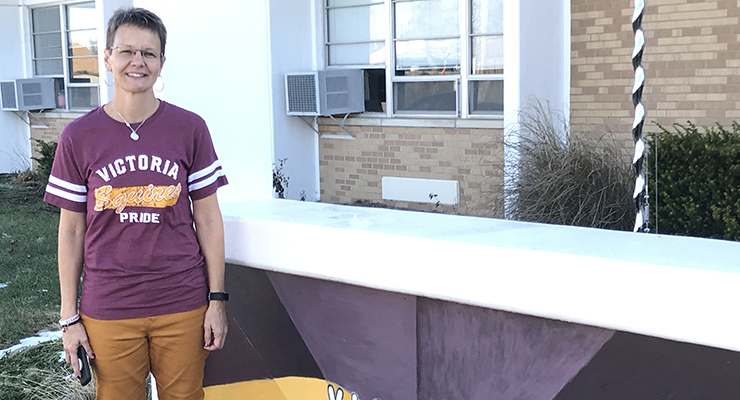
Shelly Huser, Victoria Elementary fifth-grade teacher, has been named November’s Hays Post Teacher of the Month.

By CRISTINA JANNEY
Hays Post

VICTORIA — Shelly Huser, a 22-year veteran teacher, learned firsthand how hurtful bullying can be.

Her brother, Ross, is physically and developmentally disabled. He was bullied when they were kids. She remembers the uncomfortable stares, the things people would say.

“The ‘retard’ word still makes me cringe when I hear it,” she said.

Huser, 48, shares that story with her fifth-graders on their first day with her at Victoria Elementary School in hopes they will learn to be kind to each other. She has an all-star board with pictures of her family on it. Her parents also used to bring her brother to games at the school, so many of the kids have been able to meet him.

“You don’t know what other people are going through,” she said.

It was this core of kindness and caring that earned Huser this month’s Hays Post Teacher of the Month award.

She was nominated by Shauna Chance. Both of her sons have been in Huser’s class.

“Ms. Huser is an amazing teacher,” Chance wrote in her nomination. “She has been part of the Victoria Elementary School that went above and beyond to care for the children in need of extra attention. … She makes learning fun and memorable. She is patient and supportive. My son tells me every day how amazing of a teacher she is. She makes each kid in class feel special.”

Huser has been at Victoria for 16 years, and also taught for a time at Otis-Bison.

Her fourth-grade teacher — Mildred Hladek at WaKeeney Elementary School — inspired her to be a teacher.

“She had baskets of extra papers on her windowsill, and we could take them if we wanted to. I would take those papers home, and my poor brother had to be my student. I had a classroom, and he would be my student. From that time on, that is what I wanted to do. I love it. I can’t imagine doing anything different.”

However, Huser almost left the profession after student teaching for a kindergarten class.

“When I did my kindergarten student teaching, I thought, ‘What have I gotten myself into?’ Because they couldn’t cut, they couldn’t hold pencils, they couldn’t do things. I think I went home everyday and cried and thought, ‘What have I done? I have wasted four years of my life, and I don’t want to do this.’ ”

She was able to student teach a fourth-grade class during inter-term, and she realized that was the student level with which she really wanted to work.

Her fifth-graders are on the cusp of junior high, and Huser said she really enjoys seeing the children grow during her year with them.

“They come in dependent on me, but they leave independent, and I like that whole transition where they are able to figure things out on their own,” she said.

Huser’s two big words for her class are expectation and accountability.

“I am going to expect you to do it, and then I’m going to hold you accountable to get it done,” she said.

When her students come into the fifth-grade, they sign a job contract that includes Huser’s expectations of them. They have time-card pay. If they do their job, they get time outside to play.

Her favorite aspect of teaching is the “ah-ha” moment.

“I think it is probably when the lightbulb comes on for kiddos when they really get it — whatever I am teaching or some kind of skill. That is probably the most fun, when they finally figure it out and are excited about that,” she said.

Huser covers many subjects in her classroom, but one of her favorites is social studies. The students study Native Americans, explorers, the American Colonies and the Revolutionary War.

Huser tries to give the students hands-on learning activities. They kids do explorer talk shows, a Revolutionary War ABC book and make brochures to convince people to move to the Colonies.

“I feel I try to get them back into that time and put themselves there,” she said. “I think that helps them understand it more.”

Huser said she struggled with the subject when she was an elementary student. She was very nervous about reading aloud in class. Instead of listening to the other students, she focused on only her text.

“As I got into high school, I really had to study and work hard because it didn’t come very easy for me,” she said. “I think that helps kids too, because I struggled with things, so I am able to help them if they have those problems.”

Huser recently resigned as the Victoria Junior High volleyball coach after 16 years. Her record was 132-52. Her team won the CPL tournament this year and placed in the top three nine of the 16 years.

“It was not necessarily about winning,” she said. “We did win a lot because of the talent. It was the teamwork part of things. Kids got along. Even when they weren’t friends off the court, they got along on the court. We stress that and being coachable and having a good attitude.”

Huser also enjoyed being able to coach her own daughters. Kristen, 23, is now the Victoria High School girls basketball coach. Kristen is coaching Huser’s youngest daughter, who is a 15-year-old freshman. She had all three of her children in class.

“How many moms get to do that?” she said.

Although it was a very difficult decision to leave coaching, Huser said she feels she made the right choice. Kristen is expecting a child, and Huser said she looks forward to being a grandma in April.

Over her career, she said teaching has changed.

“Kids have changed, and times have changed,” she said. “I feel like anymore I am still teaching the regular subjects, but there are a whole lot of life skills that I think teachers are doing more of. My theme in here is humble and kind. I fell like we are spending more time on those kind of things maybe more than math and reading.”

Every day, Huser has an MVP that helps lead the class. The MVP holds the door for the class as they go to assembly each morning. The students are supposed to say “thank you.”

“They’ll count and tell be, ‘Ms. Huser, I got 15 thank yous,'” she said. “I think it is those little things. That, again, is holding each other accountable.”
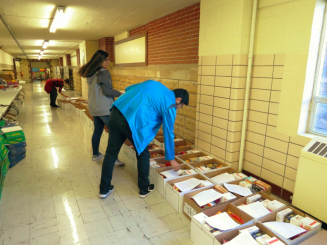
USD 489 Hope Pantry delivers Thanksgiving Boxes

USD 489

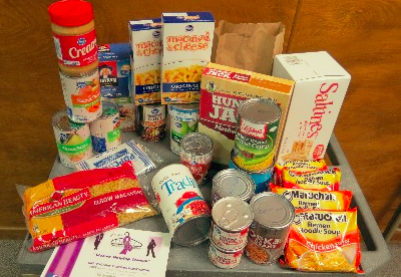
The USD 489 Hope Pantry kicked off the holiday season by spreading some holiday cheer to families in need throughout the district.

As family needs have increased during this school year, the need for boxes to distribute to families continues to grow. Seventy-two boxes were packaged with non-perishable food items and sent home to families.

The Hope Pantry will continue to provide assistance to families as long as resources allow.

Those wishing to contribute to help families in need, can donate non-perishable food items, hygiene products, and gently used clothing can be donated to the Hope Pantry at the district office.

Monetary donations will be used to purchase items for the holiday food and hygiene boxes.

Sportsmen’s Club celebrates more than 40 years in Hays

By CRISTINA JANNEY
Hays Post

The Hays Sportsmen Club recently concluded its fall leagues, but the club and its facilities have brought in thousands of shooters since it was founded 41 years ago.

The Sportsmen Club brings in about 150 to 160 shooters twice a year for spring and fall shooting leagues. The shooters are coming from surrounding communities, such as Russell, WaKeeney and Downs, and as far away as McPherson and Concordia.

The shooters and their families dine and shop in Hays, which is a boon to the local economy, said Kevin Campbell, club president.

Registered shoots bring in smaller crowds, but are two-day events and bring in participants from all over Kansas and out of state.

The club has extensive facilities that are used by club’s 300 members, as well as the public, law enforcement, Fort Hays State University and youth.

The club has seven trap fields, two skeet fields, the ability to throw five stand targets, pistol and rifle ranges, 12 camper hookups, and two clubhouses with heating and air conditioning that are also used for
functions of other organizations.

On the third Saturday of August, the club sponsors an annual Youth Outdoor Sports event, which includes the Bass Anglers, archery, paintball and skeet. The event hosts about 175 children annually.

4-Hers practice weekly at the club.

The Fort Hays State Shooting Club practices at the club twice a week and just brought home a national title.

During the team’s three-day invitational at the club in September, 135 individuals represented nine colleges. Club members estimated just the college shoot shot two and half tons of lead.

Pheasants Forever just had their annual kickoff for Pheasant season at the club on Nov. 9.

The law enforcement range has been used by the Hays Police Department, Ellis Police Department, Victoria Police Department, Ellis County Sheriff’s Department, Kansas Bureau of Investigation, Kansas Wildlife and Parks and Tourism, and Kansas Highway Patrol.

If you are not a club member, the club is open to the public from 4:30 p.m. until dark Mondays.

By providing a safe, legal place to shoot, the club prevents vandalism in the county. If people can shoot legally at the club, they are less likely to shoot up county road signs.

Stan Newell, who is on the club’s board of directors, has been shooting since he was young.

“It can be individual, but it is also a team competition,” he said. “You are competing against each other, but you are trying to shoot better than you did the last time. It is just fun.”

Campbell said, “It is similar to any other activity like golf. Once you do it, you kind of get involved in it and you stick with. I have been there since 1984.”

He said the club has grown significantly in its 41-year history. When Campbell started at the club, their leagues had about eight teams. This season, the club had 31 teams in the league.

The membership fee for the club is $125 per year. League fees are $60 per person per season.

The club’s quarterly meeting is coming up at 7 p.m. Tuesday, Nov. 20. The club’s Christmas potluck is set for 6:30 p.m. Tuesday, Dec. 18 at the clubhouse.

For more information about the club or its facilities see its website, follow the club on Facebook or call Campbell at 785 650-7656.

Alpha Delta Kappa donates to the USD 489 Hope Pantry

USD 489

The local Alpha Delta Kappa sorority recently donated $200 to the USD 489 Hope Pantry.

Both current and retired teachers belong to the Hays-area chapter.

The sorority has made generous contributions to the Hope Pantry over the past several years.

This donation will be used to help purchase food and hygiene products that will be given to families in need over Thanksgiving and Christmas break.

High Plains offers integrated mental health care in medical clinics

By CRISTINA JANNEY
Hays Post

High Plains Mental Health Center is reaching new clients and reducing stigma by serving patients through integrated care in medical clinics.

David Anderson, High Plains director of clinical services, said no stand-alone clinics should ever been built. Integrated care is where we should have been all along.

“The truth is, this agency has been around for 54 years,” he said. “If we could go back knowing what we know now, we won’t tell them to build a mental health center by itself. The separation of mental health and physical health is really artificial. We would say to them we should be in primary care settings and schools.

“That would reduce the stigma and have us providing and intervening where people are. We would be working hand-in-hand with the people we should be working with instead of where we are now, which is separate from them. It has taken us a half century to figure this out.”

Between 30 percent to 50 percent of primary care doctors’ patients also have mental health issues. Only about 49 percent of people who are referred to a mental health provider follow-up. The median time a person waits to access mental health care is 10 years.

However, about 80 percent of people see their primary care physician at least once a year.

Amy Bird

Anderson said some people, especially in small communities, may not want to be seen going into a stand-alone mental health center.

High Plain has started to offer a service known as side-by-side care, in which a therapist see clients in a medical clinic.

“The advantage is it reduces stigma because people can come, sit in a primary care clinic and get called in the back like everybody else. There is no differentiating why they are there,” he said.

If the a physician suggests a patient see a therapist for depression or anxiety, and that person is right down the hall, it can be easier to accept the help, said Amy Bird, integrated care/outpatient specialist.

Bird started seeing clients at the Hays Family Medicine in July. She sees clients there two days a week, and at the Phillips County Medical Clinic one day a week.

Bird said she has seen a decrease in stigma through her work in the side-by-side model.

“My clients really appreciate being in their primary care setting,” Bird said, “where a lot of times they have going for years so it is comfortable for them.”

Another significant advantage is Bird is able to coordinate care with the primary care providers.

“Through releases of information, we can talk about how the clients are doing,” Bird said. “Providers can let me know if they are concerned about some things. I can let them know if there are other concerns, so we are really treating the whole person instead of just looking at the mental health aspect or the physical aspect.”

Sessions may not be just for people who would be typically diagnosed with a major mental illness.

Almost any chronic medical condition is going to come with added stress, Bird said. A client may have issues with sleeping, anxiety or depression as a result. People often have to make big lifestyle changes to deal with chronic illnesses, and the therapist can help the client set goals and find coping strategies to handle the stress.

Bird’s sessions in the medical clinics are usually shorter, usually 30 minutes, rather than the full-hour therapy session at the mental health center. They are also more targeted and goal specific.

She helps her clients work on relaxation techniques to improve sleep or set goals to become more physically active.

At one time, a doctor might have prescribed medication for a patient who was having trouble sleeping, Anderson said.

“More and more if there is an opportunity for them to do behavioral work and talk to them about their sleep habits, they do that,” he said. “When do they go to bed? Do they go to bed at the same time? Are they avoiding any kind of alcohol or caffeine late at night? Are they using their electronics — all of the things that can disrupt a person’s sleep?”

Primary-care physicians have welcomed the change, Anderson said.

He said one doctor caught a therapist as the therapist was leaving a clinic and asked her what she had done to help his patient with her diabetes. He said it had never been under better control.

“The answer is that we haven’t done anything with her diabetes, but we got her depression under control,” Anderson said. “Once her depression was under control, she could do the things he wanted her to do to control her diabetes.”

Bird said integrated care is about care of the whole person.

“We know that mental health problem can affect physical problems, and physical problems can affect people’s mental health,” she said. “One of the things I want to emphasize is that we know a lot people are much more likely go to their doctor’s first even when it is a mental health problem rather than coming here.

“The other thing we know about treating mental health problems is that early intervention, just like physical problems, is key. When people go there and they have someone they can access in a place where they are comfortable, we know we are going to get better outcomes and ultimately they are not going to struggle so much down the road,” Bird added.

Colorado has been using integrated care models for some time. Anderson attended a panel discussion with primary care physicians on the model in Colorado, and one of the doctors compared it to a garage door opener.

“Before you had one, you didn’t really think you needed it and you just got by,” he said. “Then you find this and suddenly you go, ‘Why was I doing my work without having this?’ Like a garage door opener, once you have it, you don’t ever want to go back to not having one.”

High Plains has a 20-county catchment area. It covers 19,000 square miles and about 100,000 people. The agency has six full-time offices. In the other 14 counties, there are outreach offices in health clinics, hospitals or health departments. Therapists visit those outreach clinics for traditional mental health care one day a week, but therapists are not interacting with primary care physicians as they are in the side-by-side model. Many of these locations also have access to psychiatrists or therapists through telemedicine.

See Hays Post’s recent story on High Plains telemedicine: Telemedicine gives instant access to mental health services

Anderson said in the future there will be an increase in use of the side-by-side model and mental health professionals working more closely with primary care physicians.

Bird trained at Cherokee Health Systems in Knoxville, Tenn., which is a fully integrated health care model. At the location, mental and physical health is handled by the same team. Everyone who is being screened for physical health is also screened for mental health — and vice versa. Electronic medical records are co-mingled. Mental health and physical health service providers all dress the same so they are indistinguishable.

Anderson said this fully integrated model is where High Plains would like to be.

In the current side-by-side model, the clients who see Bird for mental health care are High Plains clients, and the two entities do not share electronic medical records. However, Anderson said he hopes that someday will change.

For more information about High Plains and its services, call 1-800-432-0333. If you are having a mental health emergency, call 911.

Also see Hays Post’s recent story on High Plains: Schwaller Center to offer care for uninsured

Telemedicine gives instant access to mental health services

Stephen Kuhl, High Plains Mental Health IT director, tests a telemedicine terminal at the Schwaller Center in Hays.

By CRISTINA JANNEY
Hays Post

Kansas just this year passed legislation to open more opportunities for telemedicine in the state, but High Plains Mental Health Center has been offering the service for almost 20 years.

Technology associated with service has greatly improved over the years and so has the center’s reach using the tech.

High Plains has 50 telemedicine interfaces at its branch offices and in medical clinics, emergency rooms and jails. Ellis County has a telemedicine unit in the court for mental health court, and High Plains is also connected to Larned State Hospital through the system.

In the last 12 months, High Plains has seen 3,500 clients for 4,500 visits via telemedicine.

“We have come to expect pretty quick access to things, and this is really a way to keep up,” Walter Hill, High Plains executive director, said. “If we order light bulbs from Amazon, they are here in two days as opposed to having to wait. We as culture, our expectations of access have increased. That is not bad. …

“Health care needs to be more responsive, and this is one of the tools that allows us to do that.”

High Plains covers a 20-county catchment area, which is about 19,000 square miles and covers about 100,000 people.

Before the advent of telemedicine technology, High Plains struggled to get therapists and psychiatrists to the far reaches of its coverage area. Today, for example in Sharon Springs, High Plains has a telemedicine unit in the rural health center.

When therapists physically had to travel to remote offices, the clients were limited to one therapist and scheduling only on the day the therapist was in town. Telemedicine increases provider choice and can increase the frequency a therapist can see a client.

Walter Hill, High Plains executive director, interacts through the telemedicine system.

The system involves cameras and television screens on both ends of the teleconference. The psychiatrist or therapist conducts a medication check or therapy session just as they would in a face-face session. If a client is seeing a psychiatrist through telemedicine at a branch office, a nurse on site would record vitals and relay them to the doctor.

Hill said nothing is lost in the video format, and research has born out telemedicine mental health is as effective as in-person services.

The telemedicine system reduces the time a client has to wait to be seen by a provider, especially in a crisis.

On-call clinicians do evaluations at night through emergency rooms or jails. HaysMed has a telemedicine unit on a cart that can be wheeled directly to a patient’s bedside.

High Plains contracts with a provider that also works with other community mental health centers across the state to provide 24/7 coverage for these types of evaluations. These contractors specialize in emergency mental health, just as a ER doctor would have a speciality in emergency medicine. High Plains has IT staff available 24/7 in case work is needed on the system.

“In the middle of the night, if someone was say in Goodland at the hospital or the police station, we would have to send a therapist from Colby,” Hill said. “If there was a patient at Norton and the on-call therapist was in Osborne, they would have to drive from Osborne to Norton, which often in the middle of the night would take two hours or more to get there. [Telemedicine] is relatively instantaneous.”

Reducing drive time is more cost efficient and helps the mental health center in recruiting staff. The system also saves drive and wait time for law enforcement officers who are either responding to a mental health emergency or dealing with an inmate who is being evaluated.

Telemedicine is still an emerging field, Hill said. In the future, telemedicine may allow more clinicians to work from their homes and someday even patients be seen from their homes. High Plains has looked at adding a part-time psychiatrist who lives in Texas and works from home.

“The whole nature of health care is being decentralized,” Hill said. “Telemedicine and Smartphone apps are the two big changes that are going to happen to health care and mental health. People can take more control of their services on their PC at home or in their smartphone app.”

For more information about High Plains and its services, call 1-800-432-0333. If you are having a mental health emergency, call 911.

Learn more about High Plains in the Hays Post’s recent story: Schwaller Center to offer care for uninsured.

🎥 TMP teacher runs annual Rotary Grocery Grab


By CRISTINA JANNEY
Hays Post

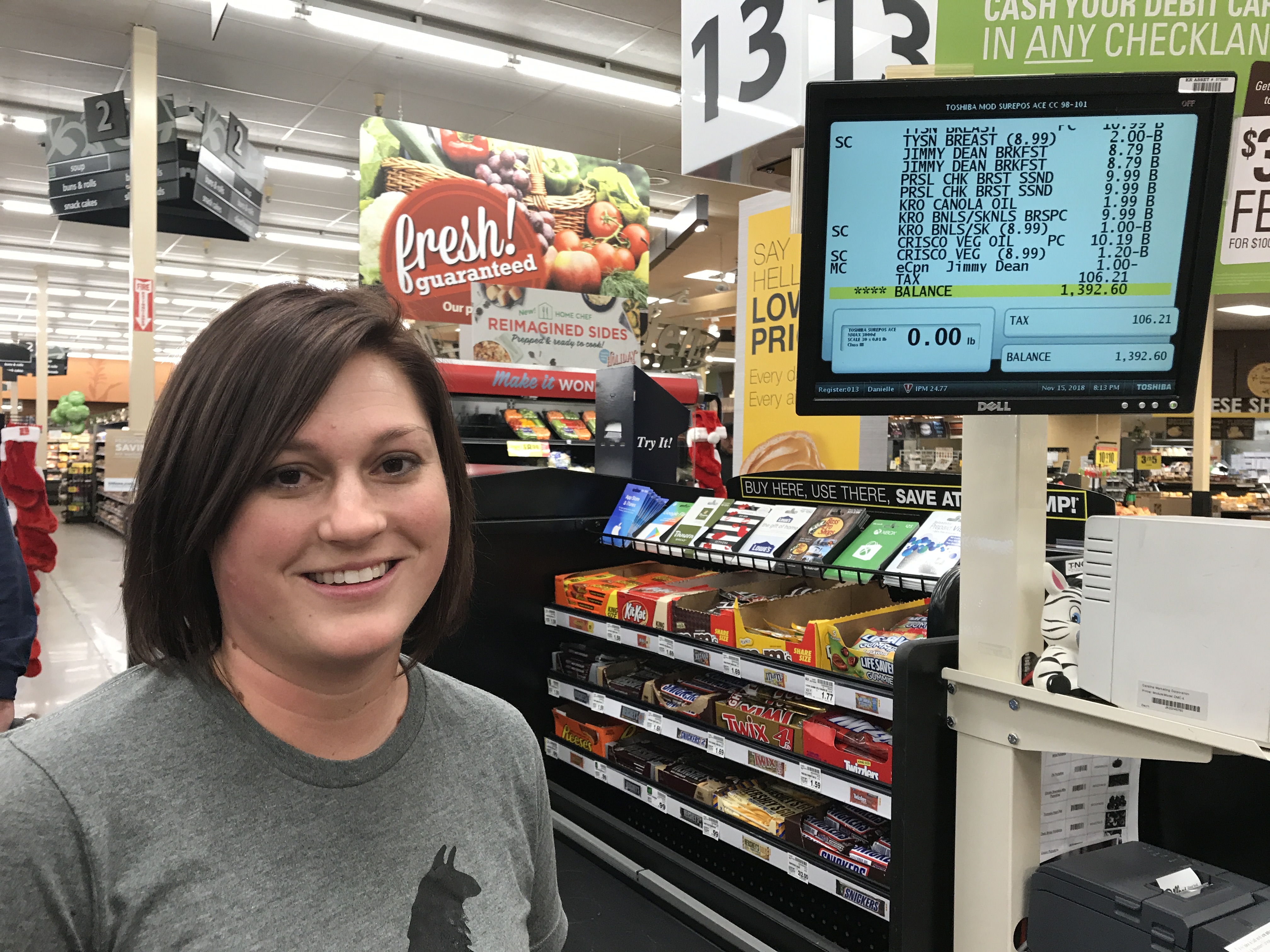
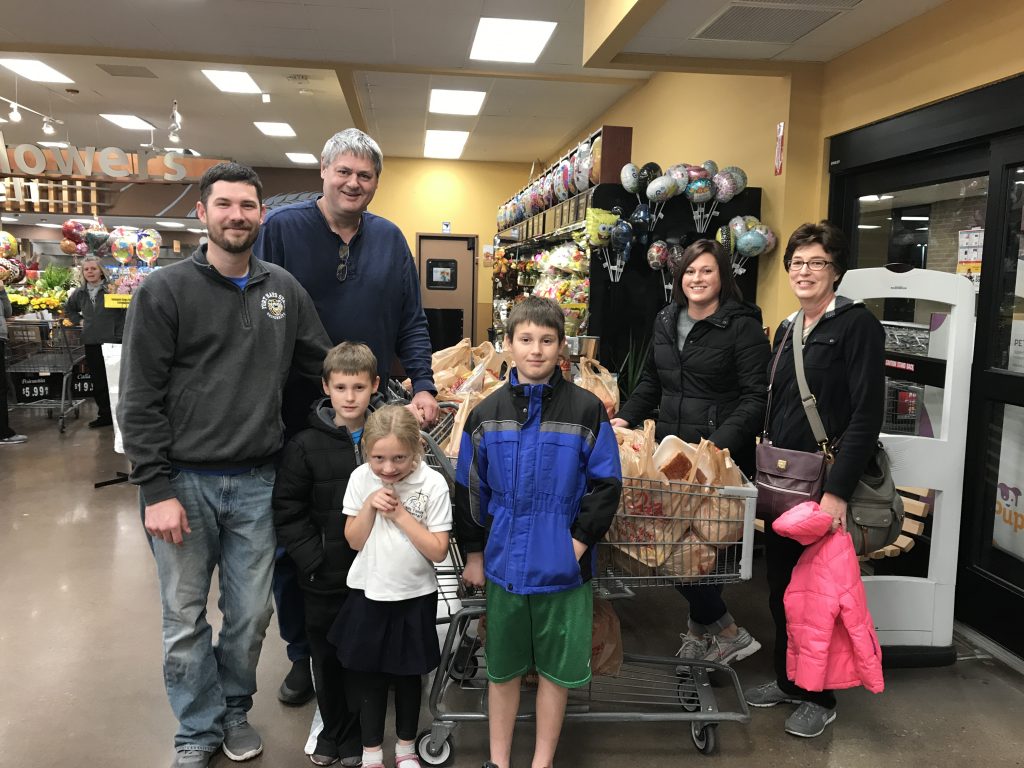
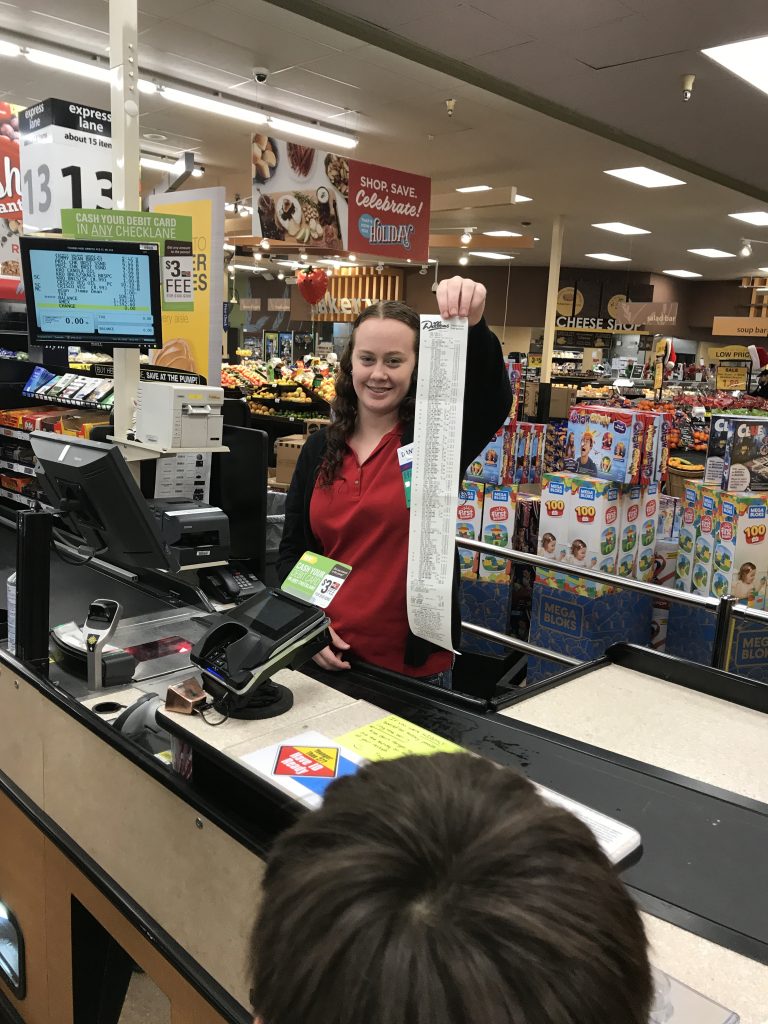
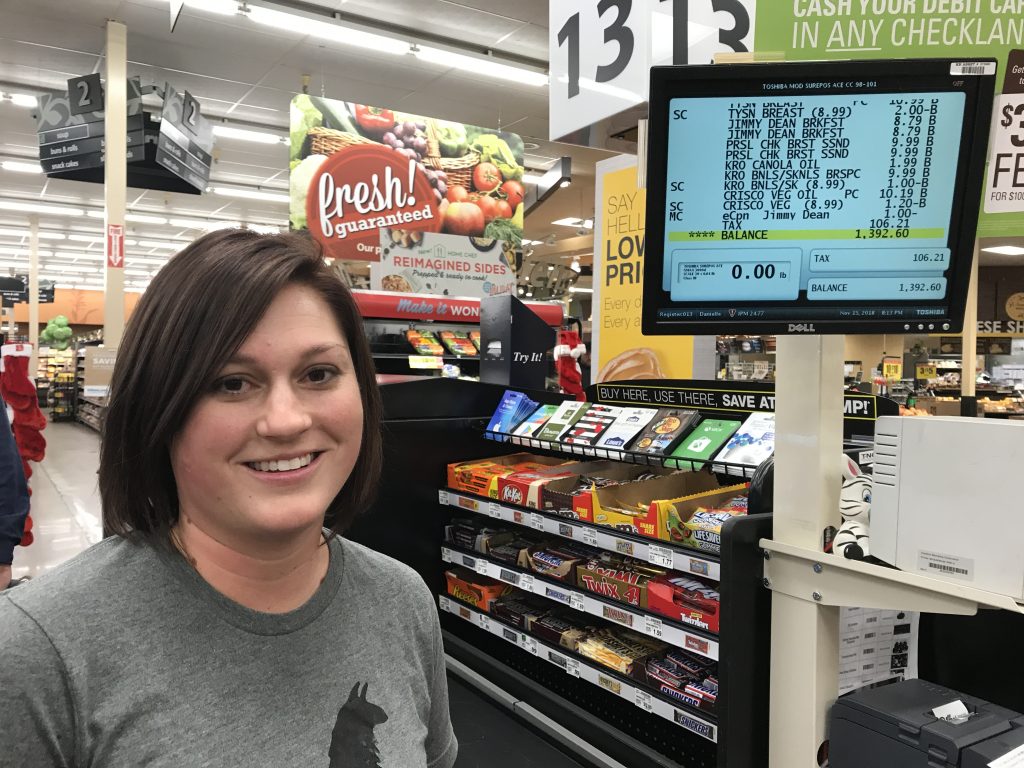
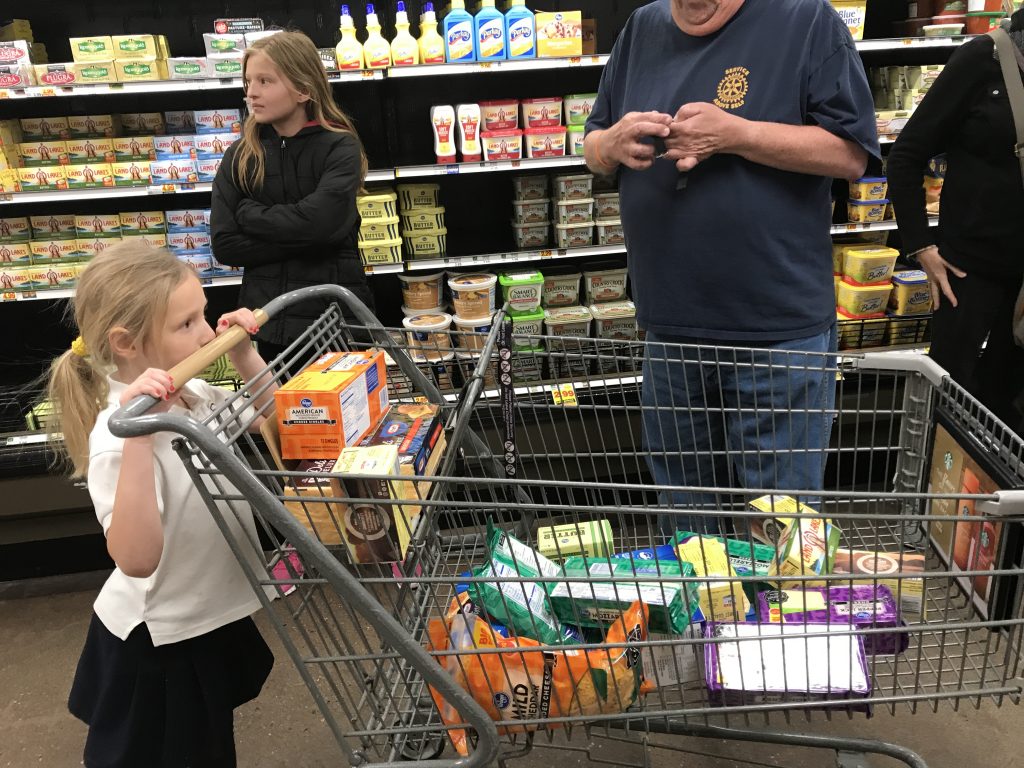
Melissa Pinkney, a Spanish teacher at Thomas More Prep-Marian, ran the annual Sunrise Rotary Grocery Grab on Thursday night at Dillons.

Her father, Mark Bieker, was the winner, but he let Melissa run for both he and his wife and Melissa’s family.

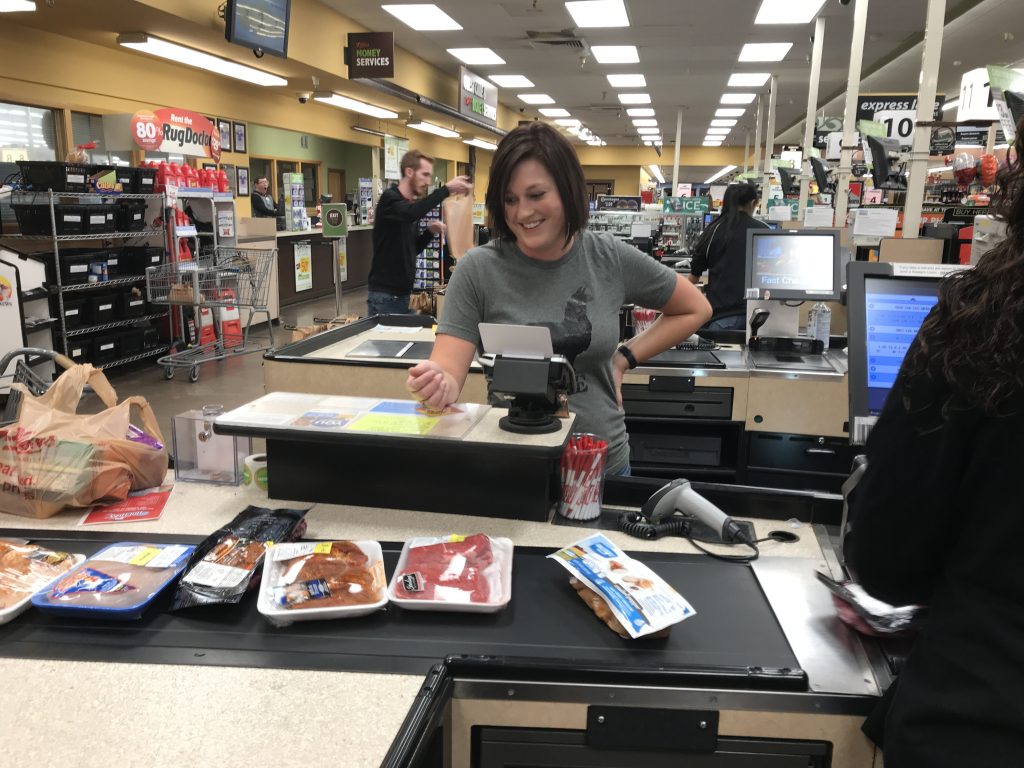
The run is five minutes long. It includes one minute in the meat department with a limit of two items each in that department and five items each in the other departments. Cosmetics and pharmaceuticals were excluded.

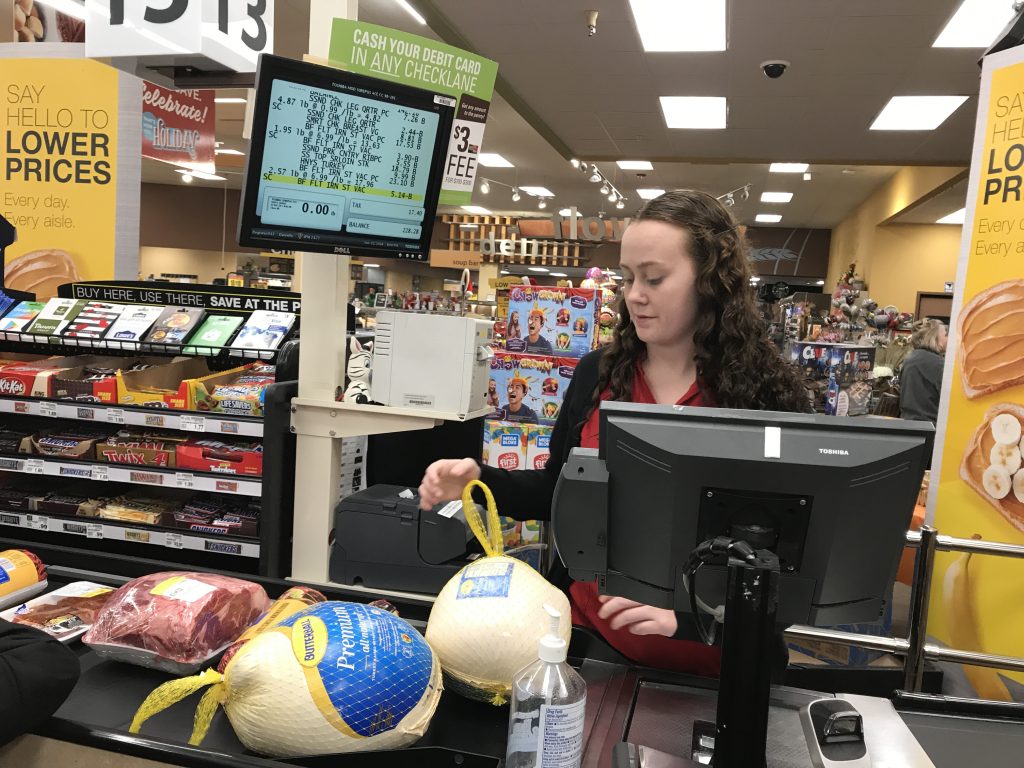
Pickney was able to bag a whopping $1,392.60 in groceries. Among her haul were two turkeys for the holidays, a ham, crab legs, prime rib, lobster tails, olive oil, boxes of coffee and plenty of corn dogs for the kids.

Pickney said she scoped out the store before her run. She was looking for items in bulk that her family could store or freeze. Although she had a plan, she found herself picking up some items on impulse. She also intended to hit the cereal aisle and missed that entirely.

“I am smiling and happy now, but I was nervous before,” she said.

Melissa and her husband, Jeff, live in Hays and have three children.

Once the grocery bill was paid, Sunrise Rotary earned about $1,000 on the fundraiser. The money will go toward a new restroom project Sunrise Rotary is working in cooperation with the City of Hays at Ekey Park.

“Our small club, just 18 members, works hard to raise funds for the park and our global mission of eradicating polio from the face of the Earth,” Larry Dreiling, club president, said.

Mandy Scott, Dillons operations assistant manager, said “We take pride in our community and participating in community events like this. We are more than happy to be a part of anything the community wants us to do.”


Gordmans joins the Marines in collecting Toys for Tots

Submitted

Gordmans is joining forces with the Marine Corps to share the magic of the holidays with children through Gordmans’ Toys for Tots Toy Drive, Nov. 20 through Dec. 4 at Gordmans stores across the country.

Stage Stores, parent company of Gordmans, also has contributed $100,000 to Toys for Tots. Gordmans is inviting its guests to participate in making a difference by purchasing and donating a new toy to Gordmans’ Toys for Tots in-store toy boxes.

In addition, Gordmans’ guests also have the option of purchasing a plush bear named Gordy Hugglesworth, which they can donate or take home to enjoy. For every Gordy plush bear purchased, Gordmans will donate $1 to the Toys for Tots Foundation.

In addition, shoppers who take a Gordy bear home can document his journey with photos on social media using the hashtag #GoGordyGo. For every photo and #GoGordyGo hashtag on social media, Gordmans will make an additional donation to Toys for Tots.

The Marine Toys for Tots program has been delivering hope to less fortunate children since 1947 and has distributed 548 million toys to date.

TriSpective event to offer insights into entrepreneurship

Submitted

Grow Hays invites the public to TriSpective, an event/panel at 6 p.m. Dec. 6 at BriefSpace, 219 W. 10th St.

TriSpective will consist of insights within public relations case studies, the ins and outs of being an entrepreneur, and the importance of branding.

The speakers will be Tim Speno, president and CEO of E2E Summit; Joseph Boeckner, owner of JoeBobOutfitters; and Scott Gross, owner of one44 Design.

They will share their insights and experiences.

The event is sponsored by Grow Hays, BriefSpace, ACA Buying group and FHSU PRSSA (Public Relations Student Society of America).


Kansas Western Horseman’s Association honors Ellis rider

Submitted

Cameryn Kinderknecht, 18, of Ellis with Troy Cooley, KWHA president, at this year’s awards banquet in Hutchinson.

The Kansas Western Horseman’s Association recently honored a local young rider as the High-Point Champion in her age group for the third year in a row. 

This year Cameryn Kinderknecht, 18, of Ellis and a KWHA member for six years, won the High-Point Champion Belt Buckle for the 14-17 age group. Not only did she win this year, but she has won the High-Point Champion for the past three years, a clean sweep of the 14-17 age group.

An advocate for KWHA, Kinderknecht has been on the Board of Directors as a junior representative since 2015 and has won the KWHA Scholarship for the past two years.

Kinderknecht has ridden horses since she was 4 and participated in KWHA horse shows since she was 12.

These accomplishments have helped Kinderknecht achieve her goals and chase her dreams as a horse rider and trainer. She has met amazing people and horse riders along the way in KWHA and encourages people to join the family-friendly organization as it presents opportunities and friendships like no other.

KWHA is a family-oriented organization that brings horse owners together to compete in various events.

The organization was started in 1948 and consists of numerous saddle clubs from all over the state of Kansas.

Horse shows are conducted every year, starting in March and ending Labor Day weekend with the annual state show.

To compete at the state show, you as a competitor must qualify with a total of four points in each event. Points are earned by winning first (four points), second (three points), third (two points), or fourth place (one point).

At a typical horse show, there are 10 to 15 different events, and there can be up to 100 riders at each show.

There are seven age groups: 1-9, 10-13, 14-17, women (18-50), senior women (50 and older), men (18-50), and senior men (50 and older).

Cameryn Kinderknecht riding.

The events range from slower judged events to speed events.

The KWHA Year-End Banquet is in November. This event recognizes those who have accumulated the most points throughout the show season and presents awards to the high-point earners.

KWHA prides itself in being a family-oriented organization where any rider of any age or skill level can ride, enjoy themselves and participate in activities with their beloved horses. To find more information on KWHA, you can visit the KWHA website www.kwhaonline.com.

Schwaller Center to offer care for uninsured

By CRISTINA JANNEY
Hays Post

High Plains Mental Health announced last week that it will expand services at the Schwaller Crisis Center to people who are uninsured.

The four-bed center, which is located in Hays, serves as a mental health crisis center for High Plains’ 20-county catchment area.

In the past, the center has provided care to Medicaid and private-pay clients. An increase in state funding allowed High Plains to expand its care to individuals who are homeless and experiencing a mental health crisis. State funding had been cut by almost a third in the last six to eight years, Walter Hill, High Plains executive director, said. Some of that funding has been restored.

The center provides 24/7 care as a voluntary alternative to hospitalization.

A sitting area at High Plains Mental Health’s Schwaller Center. The center provides 24/7 crisis care in a home-like setting.

Although crisis centers similar Schwaller are opening in metro areas such as Kansas City and Wichita, the Schwaller Center opened in 2002. The center opened after the in-patient hospital unit in Hays closed in the same year.

The center is a half-way point between outpatient treatment and hospitalization.

“There’s a gap between coming in once or twice a week or every couple of weeks versus going to a state hospital where it is locked and people stay overnight and see a psychiatrist,” Hill said.

Since the center opened, it has diverted 6,000 admissions away from Larned State Hospital and allowed people to find support locally. The center has also been used as transition between the hospital and home.

The center provides many of the same services as a hospital, such as access to a psychiatrist and therapy. However, it offers care in a home-like setting. The center has four private bedrooms, a community kitchen and dining room, as well as laundry facilities. The average stay at the center is three to five days.

Individuals receive support to cope with stressful circumstances, strengthen coping skills, improve sleep and manage daily life skills. They make meals with the staff or with the other individuals staying at the center. The staff may help individuals with life skills, such as managing money, and the staff can help connect the individuals with community resources to use when they leave the center.

Some clients are paired with case workers who help them access resources to look for a job, find a place to live or apply for health care.

Hill said individuals who stay at the center do a lot of work on goals on managing their symptoms. They create kits with reminders of how they can better cope with symptoms and stressors.

“It has reminders about those things so they can pull those reminders out about how do I deal with a situation when I am feeling so depressed or so anxious. How do I calm myself down? So it is really teaching self-help skills. It is probably the most important activity,” he said.

Dealing with your time and handling loneliness can be a significant problem for people who suffer from mental illness, and staff help clients with strategies to cope with those issues. Having the center in the community also means clients are closer to friends and family who can come visit during the individual’s stay.

“People still feel like they have a lifeline to pull themselves back into being on their own,” Hill said. “Sometimes going into the hospital increases their feelings of hopelessness and helplessness because they are so far away in a much different environment in a locked environment. This is not a locked environment like it would be at a state hospital.”

The clients receive medication reviews and work with the staff to create plans for transitioning back to independent living.

Sometimes people’s ability to cope gets worn down and having a place where those stresses are reduced is needed, Hill said.

“One of the key issues is [this is] a safe place where we can help them learn to deal with issues in their lives that are kind of coming in on them,” he said.

“Usually mental health issues at that level of severity are a combination of getting things rebalanced and then learning to deal with those things in life once things are stabilized in your nervous system so you are less depressed and you are thinking more clearly and are less anxious,” Hill continued.

High Plains covers 19,000 square miles and a population of about 100,000 people. Sometimes there is a waiting list for the center and people have to go to the hospital instead of using the center. However, Hill said there are no plans to expand the program. At this point, space and funding would be barriers, he said.

The Schwaller Center was named for Julia Schwaller, who was one of the founding members of the High Plains board.

For more information about High Plains and its services, call 1-800-432-0333. If you are having a mental health emergency, call 911.

National League of Cities announces support of STEM education

Submitted

Today, the National League of Cities announced $100 million in local partnerships to expand America’s innovation economy.

Hays was one of the cities included in the program.

Hays is connecting bilingual services to STEM career support and expanding the program from 25 to 500 participants.

Fort Hays State University’s Science and Mathematics Education Institute and United School District 489’s Migrant Education Program in partnership with the city of Hays and a host of civic partners commit to advancing the STEM and maker-centered learning of the city’s migrant families.

They hope to connect bilingual services with STEM career pathway opportunities and expanding to the general population in 2019 growing from 25 to 500 participants.

These investments come at a critical time when there is a growing need for resources to create startups and train the next generation of science and engineering talent in communities across America. Eighty percent of venture capital goes to just five metropolitan areas, and computer science is not offered in 75 percent of American high schools.

Cities must lead on the nation’s most pressing issues in the absence of federal leadership. Over the past year, NLC, with support from Schmidt Futures, has worked with city leaders, universities, the business community and the social sector to design innovative partnerships that harness the power of science, technology and entrepreneurship to build stronger, more equitable local economies.

Today, over 50 cities, ranging from rural townships and college towns, to major metros, as well as over 200 local partners, are announcing new and specific partnerships that will be supporting young businesses, leveraging technology and ensuring STEM education and workforce training for all. These new partnerships will:

  • Support new and expanded STEM initiatives that connect over 700,000 kids and workers to careers in technology. For example: Tampa, in partnership with 13 university, civic and private sector partners, will provide 600,000 regional K-12 students entrepreneurship training.
  • Partner cities with startups to improve government services in 15 municipalities. For example: Fourteen cities are partnering with City Innovate to establish or expand their local Startup in Residence programs. These programs connect startups with government agencies to co-develop technology solutions to pressing civic challenges.
  • Foster and resource local entrepreneurs in five cities. For example: Akron and the Greater Akron Chamber of Commerce are identifying and supporting 25 local companies that have business models that can grow into regional employment generators.
  • Create and improve eight innovation districts — urban neighborhoods that bring together researchers, workers and entrepreneurs — to ensure these areas benefit all. For example: Providence, with eight higher education institutions and two hospital systems, is creating a new
  • public-private-university partnership, the Urban Innovation Partnership, to collectively govern and develop two Innovation Districts within Providence.
  • Serve as living laboratories to translate university research to address critical social issues such as opioid overdoses, autonomous public transportation, cleaner electrical grids and climate change. For example: Tempe and Arizona State University are testing waste water for opioids to redeploy public services to neighborhoods in the most need.
  • Establish and fund significant, new public-private-civic partnerships that target timely local opportunities. For example: Hartford with Hartford’s insurance industry, led by Travelers, The Hartford, Cigna and LIMRA, and the non-profit StartupBootcamp, have joined together to make the city of Hartford the country’s premier destination for insurance technology startups.

Full list of cities making announcements today

Akron, Ohio

Ames, Iowa

Austin, Texas

Baltimore, Md.

Boulder, Colo.

Buffalo, N.Y.

Charleston, S.C.

Charlotte, N.C.

Chattanooga, Tenn.

College Park, Md.

Corpus Christi, Texas

Denver, Colo.

Erie, Pa.

Fort Collins, Colo.

Fremont, Calif.

Glendale, Calif.

Grand Rapids, MI

Greenville, S.C.

Groton, Conn.

Groton City, Conn.

Hartford, Conn.

Hays, Kan.

Henderson, N.Y.

Kansas City (Kan. & Mo.)

Las Vegas, Nev.

Long Beach, Calif.

Mobile, Ala.

Norfolk, Va.

New Haven, Conn.

New London, Conn.

Oklahoma City, Okla.

Peoria, Ill.

Pittsburgh, Pa.

Portland, Ore.

Providence, R.I.

Roanoke, Va.

Sacramento, Calif.

San Antonio, Texas

San Diego, Calif.

Syracuse, N.Y.

Tampa, Fla.

Tempe, Ariz.

Waco, Texas

Walnut Creek, Calif.

Washington, D.C.

West Palm Beach, Fla.

West Sacramento, Calif.

Other Commitment Makers to Local Activity

Citizen Schools

Johnson C Smith University

Marketplace.city

Portland State University

The U.S. Patent and Trademark Office

Trinity University

Midwest Energy gives USD 489 grant for migrant program

USD 489

The USD 489 Migrant Education Program received a $315 grant from Midwest Energy.

The grant was written by Starla Gano, who serves as the district’s migrant services coordinator.

The Kansas Migrant Education Program is designed to address the unique needs of migrant children and their families and offers support for high-quality and comprehensive educational programs to reduce the educational disruption and other problems that result from repeated moves. It seeks to ensure migrant children are provided appropriate educational and supportive services to address their special needs.

This grant will help children receive full and appropriate opportunities to meet the same challenging state academic content and student academic achievement standards that all children are expected to meet.

The grant will allow for the purchase of Science Technology Reading Engineering Arts & Math (STREAM) learning experiences with learning labs.

Copyright Eagle Radio | FCC Public Files | EEO Public File