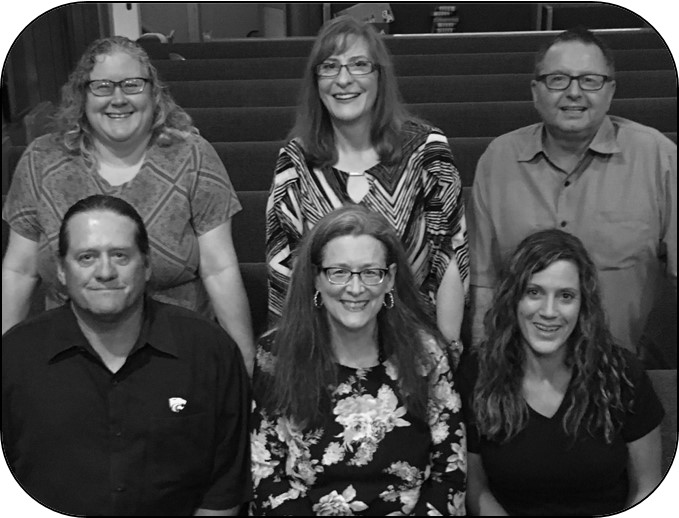
Cast—Seated: Ward Craig, Sheryl Krug, Nikki Kuntzsch. Standing: Debora Kreutzer, Crystal Craig, Alan Templeton. Not pictured: Monica Harrison
RUSSELL—Russell Community Theater wraps up the 2018 season with “A Bad Year for Tomatoes“ Oct. 16-20.
RCT volunteer, Mitch Hunsley, steps into the director chair once again and is presenting the second John Patrick script produced this season. The cast includes RCT veterans Crystal Craig, Ward Craig, Debora Kreutzer, Sheryl Krug and Alan Templeton. Rounding out the cast are two actors making their RCT debut – Monica Harrison and Nikki Kuntzsch.
In “A Bad Year for Tomatoes,” actress Myra Marlowe leases a house in a tiny New England town where she hopes to get away from it all. Her long-time agent is finally letting her relax a bit, but her nosy neighbors are a different matter. In an attempt to gain some privacy, she invents a crazy sister who is “locked in an upstairs room.”
Complications arise when the local handyman develops feelings for “Sister Sadie” and the neighborhood ladies decide it’s their duty to save Sadie’s soul. A desperate announcement from Myra ends in an accusation of murder and the arrival of the sheriff.
Performances run Tuesday through Saturday, Oct. 16-20 at the RCT Playhouse (Fifth and Kansas, Russell). Show time is 8 p.m. Admission is $12 or by season ticket. “A Bad Year for Tomatoes”is presented by special arrangement with Dramatists Play Service, Inc., New York.
Russell Community Theater is a non-profit theater company in Russell. The sole purpose of RCT is to produce theater for the community and the surrounding area. Completely volunteer-driven, RCT is supported financially solely through ticket admissions and gifts from those supportive of community theater. Since its inception in 1986, RCT has presented 93 full-scale theatrical productions. For more information, call 785-483-4057 also find the group on Facebook.
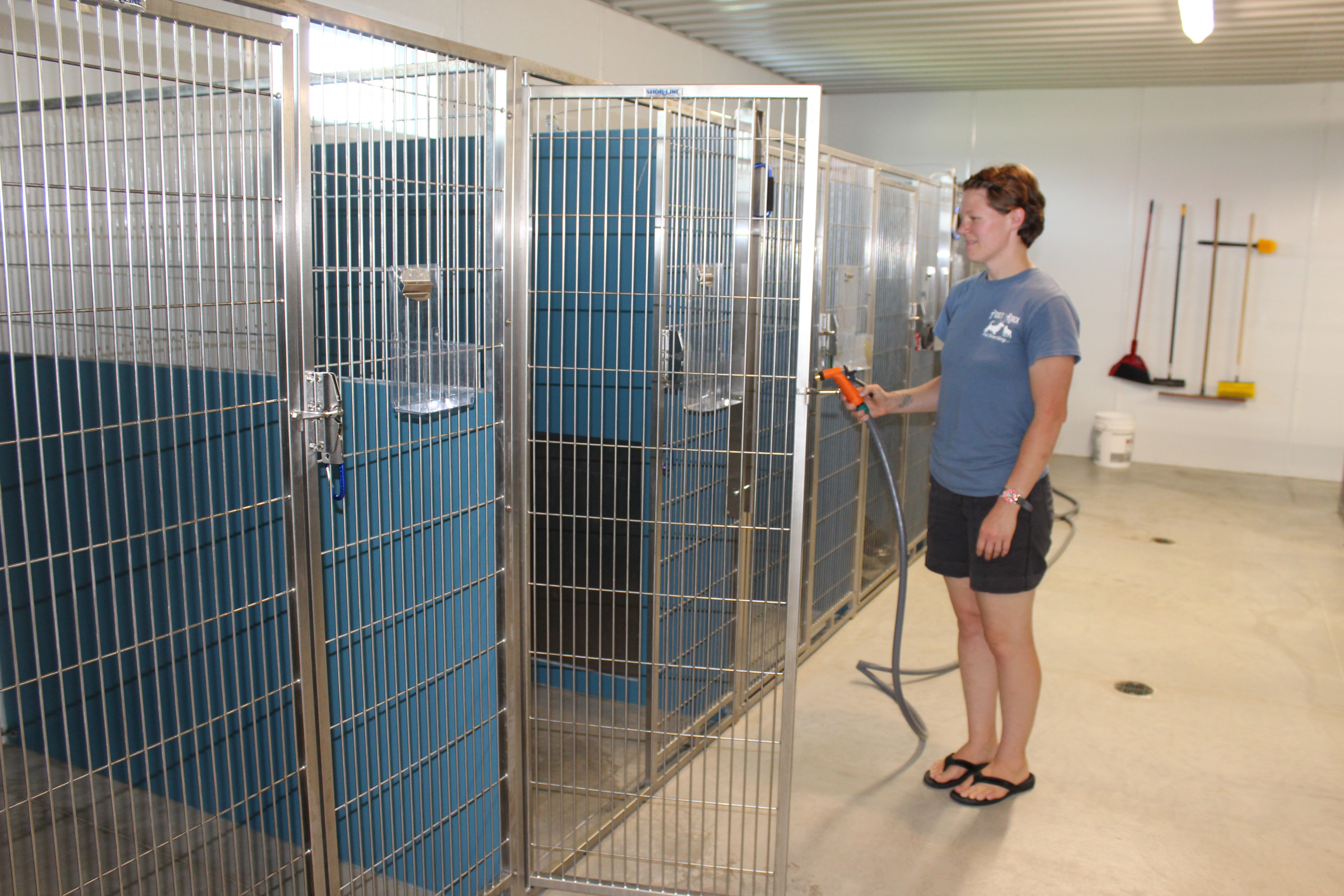
Kylie Sander, co-owner of Post Rock Pet Boarding, prepares to spray out one of the kennels at the facility.
By CRISTINA JANNEY Hays Post
Two young entrepreneurs launched their new pet boarding business in Hays with the help of the E-Community Loan program.
Kylie Sander and Heather Holliman-Pope received $30,000 toward the $300,000 cost of their new Post Rock Pet Boarding facility on East 13th Street in Hays. The business opened in May.
Post Rock Pet Boarding has space for 45 to 60 pets for overnight or day boarding. The business also offers bathing, nail trims, ear cleaning and anal gland expression.
Sander and Holliman-Pope said the loan and the help of Grow Hays made getting their business off the ground much easier.
“I think they did a great job. (They had) just a lot of knowledge and a lot of information, and they were always there to answer questions, so I think it is a great resource base,” Holliman-Pope said.
Ellis County is one of 60 counties in the state to participate in the E-Community Loan program.
The program, administered by Grow Hays, helps entrepreneurs start or grow their businesses or purchase an existing business.
Ellis County has $100,000 available per year in low-interest loans. Grow Hays has eight loans worth $168,800 outstanding to local business currently. The loan amounts range from $4,800 to $45,000.
The program does not have enough capital to make an impact on a large business.
“This is the small guy who is wanting to grow or is wanting to start something, a new business, pursue a dream maybe. That’s who this is targeted to,” Doug Williams, Grow Hays interim director, said.
The E-Community Loan program is designed to provide gap financing, he said. Typically, a bank makes a loan for the bulk of the financing, and the E-Community Loan program makes up the rest, as down payment can be a problem for small businesses.
In Ellis County, some of the other businesses that have taken advantage of the program are Sake2Me Sushi & Seafood Grille, Hickok’s Steakhouse and Thirsty’s Brew Pub & Grill.
The loan can be applied to a variety of uses for for-profit businesses, including working capital; purchase of land, real estate, inventory or equipment; or purchase of an existing business. Funds can be used to renovate a building or storefront if it is for use for a specific business.
Grow Hays is working with a business owner right now to finish her basement to accommodate her business, Williams said.
The loan money that is repaid goes back into a regional account to be loaned to other businesses. The original funds for the statewide program came from tax credits.
Generally, a business will work with the Small Business Development Corporation at Fort Hays State University to develop a business plan and then complete the application for the E-Community Loan program.
These plans will include a projection for sales and amount of startup capital the business will need. Generally, applicants go to the bank to apply for a primary loan. Then Grow Hays becomes involved through the bank or the client for help with gap funding.
Grow Hays has a committee specifically designed to review the loan requests.
The interest rate on the loans run 3.5 to 5 percent.
“We typically try to stay right around the prime rate, which is a good rate typically for gap financing,” Williams said. “Most of the time they would not find that favorable of a rate with a bank or financial institution for the money they need to bridge the gap of what the bank is going to loan them and what they are going to come up with.”
The program benefits the entrepreneur because it forces them to go through the process of developing a business plan. It also makes available what essentially is a 100 percent loan, Williams said.
“Banks are typically not going to make a 100 percent loan, so we bridge the gap and provide that financing that they need to actually be able to purchase something or start something where they wouldn’t be able to otherwise because they didn’t have the funds,” he said.
Although Sander and Holliman-Pope put in some of their own money for a cash down payment, most of their startup capital came from the their bank loan and E-Community Loan.
The Post Rock Pet Boarding owners said they could have started the business without the loan, but it would have been much more difficult.
“We would have had a much smaller facility, and not been able to do as much as we wanted to,” Sander said.
Sander and Holliman-Pope said Post Rock Pet Boarding has been very busy this summer. They both said they would recommend the E-Community Loan program to other entrepreneurs trying to get their businesses off the ground.
Because of the nature of this type of financing, there is a higher rate of default. The program can ask a business to put up collateral for the loan. Grow Hays is not financially liable if a business defaults. The E-Community Loan program has the discretion to pursue collection or legal action, at their expense, and if funds are recovered, they are to be returned to the E-Community regional bank account, according to the NetWork Kansas website.
Williams said economic growth is the ultimate benefit from the E-Community Loan program.
“It allows people who may not otherwise be able to start that business, buy that business, grow that business to do that, provide jobs for people and provide economic growth in the region and in the state,” Williams said. “That is why the fund was put in place, and that is what it does.”
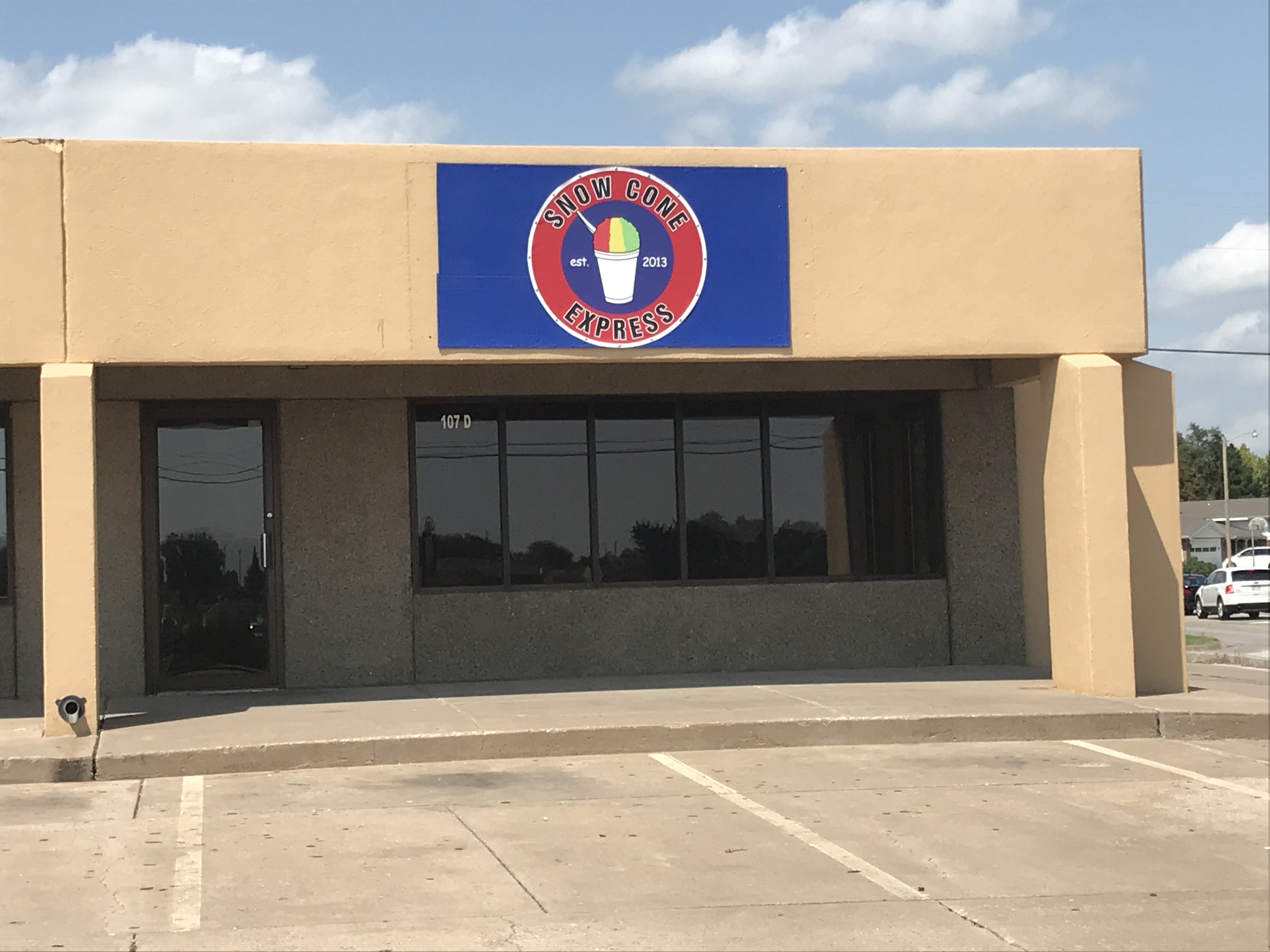
Snow Cone Express’ new location at Oak and 27 streets.
By CRISTINA JANNEY Hays Post
Snow Cone Express is opening at its new location at Oak and 27th Street at noon on Friday.
The store recently closed its location at Big Creek Crossing.
The new store is in Oak Plaza in the corner store that borders Oak Street, across the street from Papa Murphy’s Pizza.
Jarett Gross, owner, said he decided to move to a store front to increase his visibility and foot traffic.
The new location is just down the street via sidewalk from Wilson Elementary School and Hays Middle School.
Gross has been in the mall for several years and said he had a good experience with the mall, but thought it was time for a change.
The last day for the store in the mall was Aug. 20. Gross has had his snow cone trailer open in the Oak Plaza parking as the new building was being made ready for move in.
Winter hours in the new store will be noon to 8 p.m. Tuesdays through Saturdays, noon to 6 p.m. Sundays and closed on Mondays.
The new location is slightly bigger than Gross’ spot in the mall, and he will be able to offer a larger dinning area.
In addition to snow cones, Snow Cone Express offers chili, hot dogs, nachos, jumbo soft pretzels, walking tacos and taco burgers. During the winter, Gross plans to bring back his large cinnamon rolls.
“We will see how the community responds,” Gross said. “If we get busy, we will add more stuff to the menu.”
Branson Hoffman, Big Creek Crossing marketing director, said mall management was sad to see Snow Cone Express leave. The mall has not secured a new tenant for Snow Cone Express location as of yet.
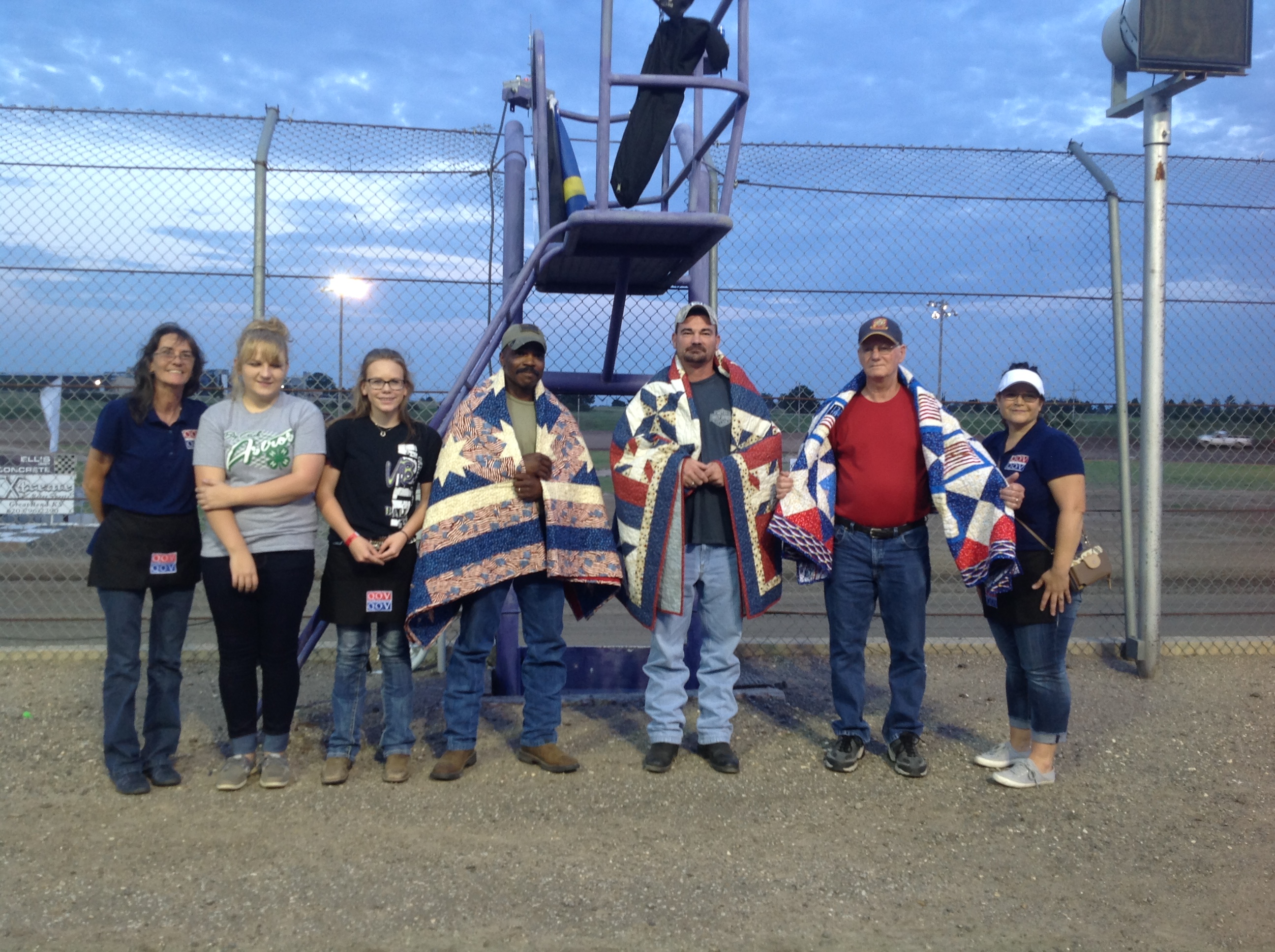
Veterans left to right Dave “Spud” Richardson, Leonard Kern and Jim Dinkel receive Quilts of Valor Saturday at RPM Speedway. Kansas Grateful Stitchers Connie Haselhorst, Jamie Werth, Bonnie Werth, and Nicole and Kylie Dreiling helped with the project. Courtesy photo
Staff Sgt. Leonard Kern did not receive the welcome home from war he thought he should have received, but he received a gift Saturday that honored him in a way he did not think possible.
Four servicemen were honored by Quilts of Valor during the RPM Speedway races on Saturday. Quilts of Valor makes quilts for both veterans and active service personnel who have been affected by war. Those men who received quilts were Kern, David “Spud” Richardson, Jim Dinkel and Stan Dreiling. Dreiling was not able to attend the ceremony Saturday.
Staff Sgt. Kern, 41, of Hays served from 1995 to 2009. He served a two-year deployment overseas. He was first deployed to Korea, but once his unit was set to come home, they were rerouted to serve another year in Iraq.
Most service personnel are deployed for no longer than a year. The extra time overseas was taxing on the soldiers. Kern said he was lucky. He came home unscathed and so did all the men under his command. Others in the 503rd Infantry Regiment were not so lucky.
Twenty men in the command of 600 died and 150 were injured. Some of the soldiers who came back to the states with him had received three Purple Hearts.
“When we came home, our family and friends were there,” he said. “There was no parade. … There damn should have been.”
The long deployment took with heavy action in Iraq took its toll on the men when they returned home as well.
The group had a high rate of domestic violence and DUI.
Leonard Kern receives his quilt. Courtesy photo
Kern comes from a long line of military men. He never wanted to admit to PTSD but said he knows he brought home some of his experiences from war. He said he is not always the man he wants to be.
“I have heightened awareness,” he said. “I walk into a room, and I judge people. I am looking for where the threats are. I had that before, being in the military, but being in combat heightens that.”
Receiving a quilt from the Quilts of Valor program was the honor he felt he and his fellow soldiers should have received when they came home from Iraq. He said he was elated to receive the quilt.
“I think it was the coolest thing that has happened to be since I got back,” he said. “It made me happy. I was very impressed.”
Kern’s boss’s daughter nominated the group of men for quilts and her aunt helped her sew them.
“I gave her a hug, and then I gave her another hug,” he said. “It was awesome.
Kern, who now works as a mechanic, said his experience in Iraq has resulted in him not taking life for granted.
“I just take one day at a time, because every day could be your last,” he said.
David Richardson
Despite some of the ugliness Sgt. First Class David Richardson has seen in the world, he said his service made him see other cultures in a new light and gave him optimism for change.
David Richardson receives his quilt. Courtesy photo
Richardson served in the Army from 1989 to October 2015. He served in different roles, but his most recent duties were in artillery. He had multiple overseas deployments including Germany, Bosnia, Desert Storm, Iraq and Africa.
Each theater gave him a unique perspective into the people of those regions.
Richardson, 47, Victoria, was part of the peacekeeping mission in Bosnia after the brutal civil war ravaged in that region. The country split on ethnic lines when it declared independence from Yugoslavia in the early 1990s. An estimated 100,000 people were killed in the war, and 2.2 million people of all ethnicities were displaced.
During his first deployment to Bosnia, Richardson was part of security forces attempting to separate the Bosnians from the Serbs. When Richardson reached the region for the second time, the fighting had calmed, but the destruction was evident.
“In Croatia and some places in that area, you could see the destruction, especially in downtown Sarajevo,” he said. “There is sniper alley. You could see where the Serbs had just sat up on the ridge line and pounded the town, the buildings and Olympic stadium. You did not have to look far to see the damage.”
Richardson said he took satisfaction in helping the people of Bosnia rebuild after the war.
“When you work with people who have been, so to speak, beat down and have no idea how to rebuild from there, they always need help,” he said. “To be a part of something like that — to rebuild a nation, to rebuild a country — it is a wonderful feeling because at the end of the day, you have that sense of accomplishment.
“We tend to go places and people back home don’t understand why we are in theaters. As a soldier, you get to see those things,” he said of the rebuilding, “and you get to see the day-to-day changes. It always gives you that opportunity to see that change is possible. I believe in myself that it makes you a better person to see how fortunate we are back home as a people versus how some of these people live in other countries.”
Richardson was only deployed during Desert Storm for six months. He said the deployment was so short and focused that he had little time to soak in what was happening around him.
Iraq, however, was a whole different story.
Richardson was the team leader of a six-member quick reaction force. His group’s mission was to respond when a convoy encountered an improvised explosive device or enemy ambush. They engaged the enemy and helped the convoy reach safety.
“Iraq was more ramped up,” he said. “Every time you went outside of the wire, your head was on a swivel. You were looking around. You were making sure, first of all, that your team was going to be safe and you are going to be safe and you are keeping the routes and the convoys safe.”
The city’s especially were hotbeds of enemy activity. Quiet and calm was not a good sign.
“One day, you are driving through a city and it is business as usual and then, the next day, it is quiet, so it was kind of an eerie feeling,” he said. “Yesterday, you went through that town and everyone was playing and business as usual. Then you roll through the next day, and no one is around. It was like ‘OK, something bad is going to happen.’ Not all of the time did it happen, but most of the time it did whether it be an IED or ambush or something like that. Most of the time we were able to push through it and just keep going.”
Despite the violence Richardson experienced in Iraq, he urges others to judge people as individuals instead of stereotyping.
“I think you are going to have bad people and you are going to have good people no matter what you do, no matter what theater, whether it is in the United States or a foreign country,” he said. “There are people who there is no way to convince them there is something outside of hate and discontent. Then there are people who are there who actually need the help.
“I think throughout my experience it helped me to read people better. You never judge a book by its cover. You have to get through the first chapter or least the first couple of pages to understand how things are and how these people live on a day-to-day basis. You can’t go out there and say I don’t think this of this guy or these people because of this or that. It is just wrong. You have to speak to these people, see how they act, how they react, how they think.
“If you ever get a chance to go over to a foreign country and see how they run things versus the way we do things here, I think a lot people’s eyes would open up. It is not what most people think it is.”
Richardson’s last deployment was to Monrovia, Liberia, a coastal nation in West Africa. Liberia has suffered through two civil wars during the last 40 years. More than 250,000 people have been killed. Although peace was reached, the conflicts wreaked havoc on the country’s economy. Eighty-five percent of the Liberian people live below the international poverty line, which was calculated by the World Bank in 2015 to be $1.90 per day. Richardson’s mission in Liberia was to train Liberian troops.
“By the time I left, there were several people throughout the Liberian army who I had become friends with,” he said, “and I still talk to via Facebook. I like to check up on them and see how things are going. It is a sense of accomplishment. It is something that made me feel like I did something, and I did something right.
“It is not about me doing something for myself. It is about me doing something for my country. If we can better our country, then [we] can teach these other countries this is how we do things to better ourselves. It is not that hard. It does take time. It doesn’t happen over night.”
Richardson, who is now the parts manager at Dreiling Field Service, said he was pleased to receive a quilt, but said he thought others were more worthy.
“I am very thankful I am being honored with this and for this, but I guess my biggest thing is that even if I am getting something, there is more we can do for our soldiers who are out there and veterans who are out there,” he said. “I think we need to recognize those soldiers also.”
“People who have not served in the service do not understand the sacrifices a soldier makes, nor do they understand what sacrifices the families make. It is not just the soldier who is deploying. In a sense the soldier’s spouse, children and family, they are deploying too. They have to change their lifestyle because that soldier, sailor or airmen is not going to be around for a year, eight months, six months. It is very hard. It is not easy for people to make change like that. They also need recognition.”
Jim Dinkel
Jim Dinkel receives his quilt. Courtesy photo
Spec. Fourth Class Jim Dinkel, 69, Hays, was drafted during the Vietnam War, but served as part of the U.S. forces in Korea from 1968 to ’70.
He entered the military as an infantryman, but because of a lack police, he was given on-the-job training to become an MP. He and his peers patrolled the Second Infantry Division, which was roughly the size of Ellis County.
Although Dinkel was never in combat, tensions were running high along the DMZ at that time.
“The North Koreans intimidated back then, just as they do now,” he said.
During Dinkel’s time in Korea, the Pueblo incident occurred. The North Koreans captured a U.S. naval vessel and held U.S. service personnel hostage.
On a Sunday in August 1969, North Koreans shot and killed eight UN command soldiers who were repairing a demarcation line tape at the DMZ.
Anti-military sentiments were prevalent during and after Vietnam, but Dinkel said he was spared much of this because he had been stationed in Korea instead of Vietnam.
“The guys coming from Vietnam, they went through hell,” he said.
Dinkel said his time in Korea made him more thankful for the advantages he has an American.
“I complain about a lot of foods we ate,” he said. “You go oversees and see a little farmer growing vegetables in a ditch. It had a pretty positive effect on me.”
Dinkel, retired, has been a longtime member of the VFW and a member of the VFW Honor Guard.
“It is an honor for me to get it,” he said of his Quilt of Valor, “but I think there are probably more people more deserving than me.”
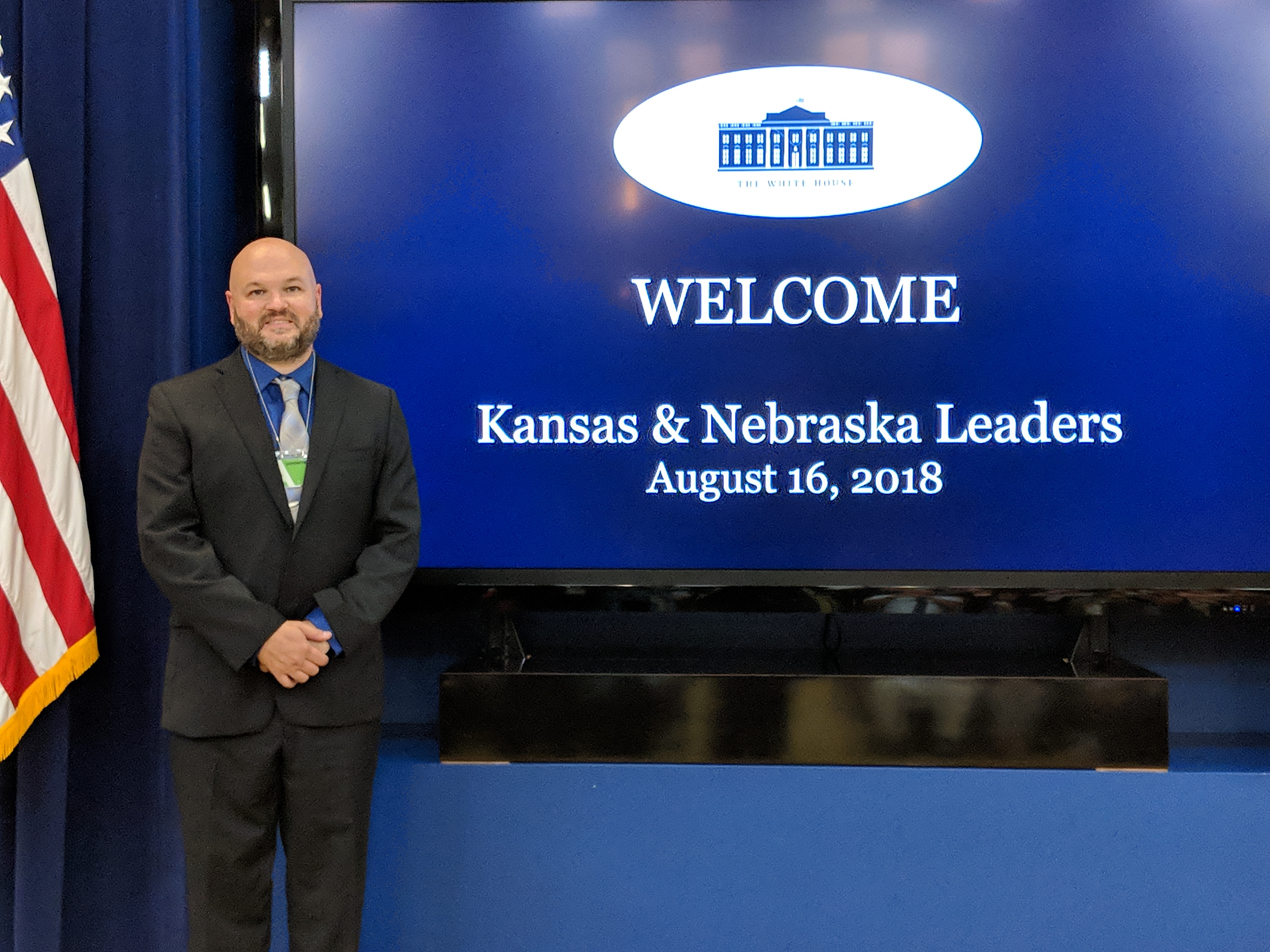
Hays Mayor James Meier at a conference for local leaders at the White House.By CRISTINA JANNEY Hays Post
Hays Mayor James Meier attended a White House conference for Kansas and Nebraska mayors and county officials on Aug. 16.
He heard from Cabinet-level leaders about issues facing local governments.
Although he thought the experience was a good networking opportunity, he said on one point the speakers did not go far enough—that was the opioid crisis.
Trump adviser Kellyanne Conway spoke to the group on the opioid crisis.
Although the Conway acknowledged the growing epidemic of opioid abuse and its effects on local government, Meier, a pharmacist, said Conway fell short of admitting the federal government’s culpability in the rise of the crisis.
“They had a good message. They realize the federal government has to get involved. The state government has to get involved. The local governments have to get involved,” Meier said. “They had a good message, and I think they realize that there is not a magic bullet. There is not one plan that is going to fix everything. But I think it is important to recognize why it is happening, so we can plan appropriately.”
He explained during the 2000s, the medical community encouraged providers to treat pain as a sixth vital sign.
“You were supposed to go into a patient’s room and say, ‘OK, rate your pain on a scale from 1 to 10,” Meier said. “If a patient said 10, even if they outwardly had no signs they were in any pain, you were supposed to treat them as if their pain was a level 10 and treat the pain because nobody should ever be in pain. That was the whole mantra.”
This was a part of health care accreditation process.
If a patient ranked their pain as a 8 or 9, they knew they were going to receive opioids, Meier said.
“We hear about the opioid crisis, but we never hear about why it’s happening,” Meier said. “I think the federal government has a real part to play in why this is happening in the first place. … What I did not hear was that the federal government was part of the problem to begin with, and I think they need to recognize they were a part of the problem.”
Conway gave the example of someone going to the dentist for a chipped tooth and receiving seven days of opioids and all of a sudden they are hooked. Meier said those things do happen.
Because of the crisis, the pendulum has started to swing back the other way. Doctors are afraid to prescribe opioids for anything for fear patients will become addicted, Meier said.
Meier works with cancer patients.
“I am really scared that five or 10 years down the road, people who really need opioids will not be able to access them,” he said.
Meier said he wanted to hear the federal officials say they are trying to work toward a happy medium.
“There are probably some commonsense things that we need to be putting in place to ensure that doesn’t happen, and I think those will be put in place,” he said of people becoming addicted. “We have to have a happy balance between those people who need short-term pain control from the dentist or for a broken arm and those people who have cancer that has metastasized to their bones and they need very high doses of morphine throughout the day just to be able to function.
“I don’t have an answer,” he said, “It just seems we are going from one extreme to another.”
The conference was organized by the Office of Intergovernmental Affairs. Other speakers at the conference included Ben Carson of Housing and Urban Development, a representative of the Department of Agriculture, assistant director for the Department of Education, representative of the EPA, and a representative from the International Trade Administration.
“I do think that this group that is in the White House right now is interested in ensuring local control,” Meier said. “I do think that is a theme that came through (the conference) that they think local control is best.”
Meier also was able to meet Vice President Pence.
“You got to shake the vice president’s hand. It doesn’t matter who it is, that is kind of neat thing to say you did,” Meier said.
Meier said he also benefited from being able to speak to mayors from other Kansas and Nebraska communities. The Kansas group visited Sens. Moran and Roberts during their time in D.C. He said he thought it was important to attend to give northwest Kansas a voice in Washington. He passed on information on the R9 Ranch water project.
The group also discussed a bill in Congress that would allow telecom companies to put infrastructure in local right of way without consulting the local municipality or paying a franchise fee. This has become an issue in the Kansas City area where companies are trying to upgrade to 5G.
Meier said the bill would be very applicable to Hays as well.
“Any city wants to be able to control its right of way and be sure things are being placed in an appropriate place and there is a fair playing field as far as paying franchise fees and things like that,” he said.
The senators also talked about commodity prices and trade, but had no details about how and when the president’s $12-billion aid package to farmers was going to be distributed.
The TMP-Marian Alumni Association invites the community to share in its 2018 Homecoming Celebration with any entries they would like to add to further enhance its parade.
Any groups that are interested in participating in the parade need to contact the Alumni Office at TMP-Marian prior to Friday, Sept. 14, at 785-625-9434 or [email protected].
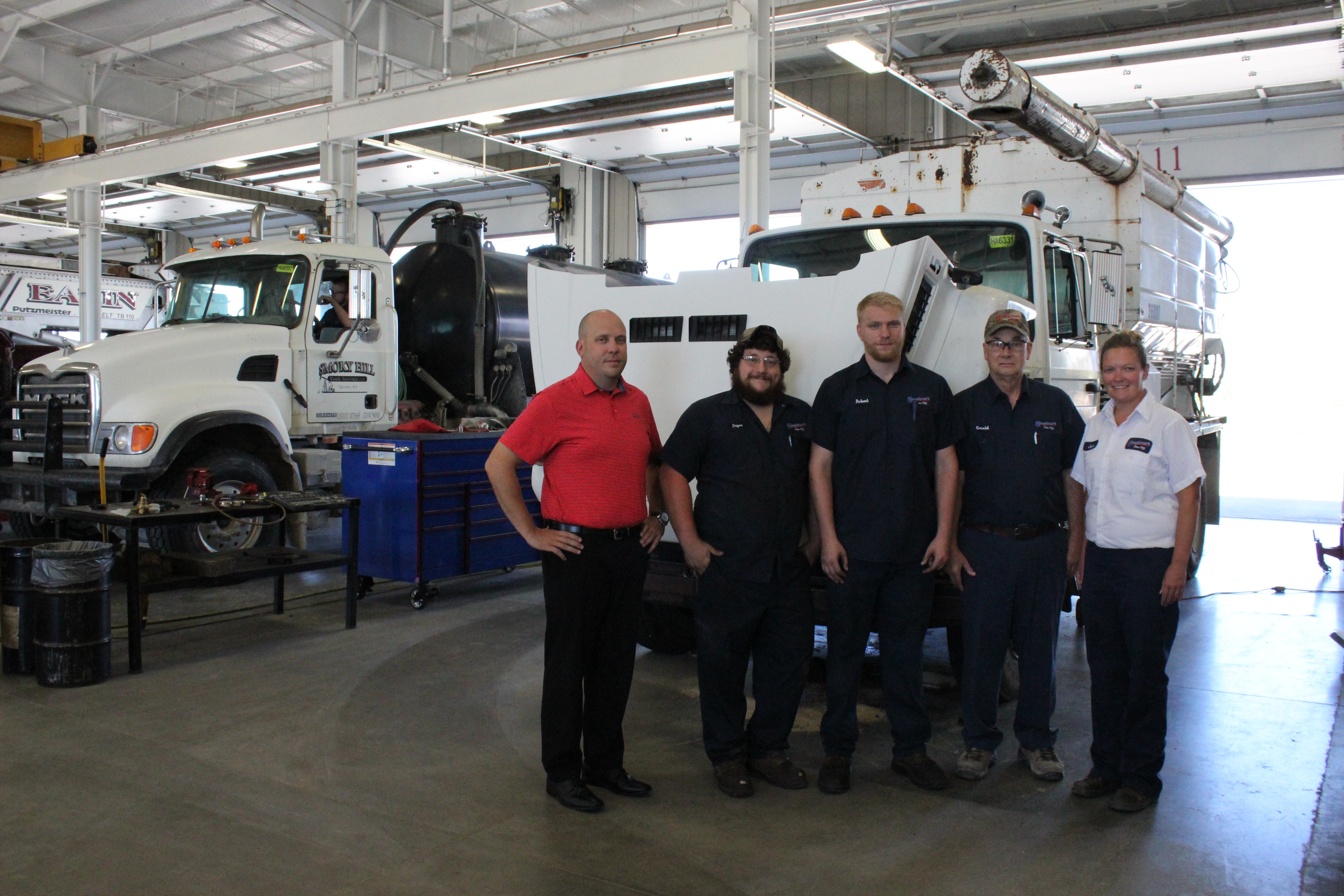
Although it’s headquarters are based in Amarillo, Texas, Bruckner’s, a Volvo and Mack truck dealership, also has 30 employees in Hays that are members of its company’s ESOP.
At least three other Hays businesses are in a group of about 4,000 companies nationwide that are 100 percent employee owned under a system known as Employee Stock Ownership Plans, or ESOPs.
ESOPs are retirement plans that are allowed under federal law, according to ESOP Association. Employees of an ESOP can become vested in the stock in their company in a variety of ways, including numbers of years of service.
Employees who are vested can take the cash value of their shares when they retire, leave the company or upon death or disability.
Bruckner’s has a similar story to the other ESOPs in Hays. The company was founded in 1932 by B.M. “Bennie” Bruckner Sr. in Amarillo as a single garage.
In the early days of the company, Bruckner created a 401(k) for his employees and was putting larger than average sums into the fund. Today, most companies match 401(k) contributions. Bruckner’s automatically puts a portion of the profits into its 401(k) plan regardless of employee contribution. This is in addition to the ESOP.
The company steadily grew until the third-generation Buckner brothers decided to sell the company to its employees in the 1980s.
Today, Bruckner’s has more than 800 employees in Kansas, Texas, Louisiana, Oklahoma, New Mexico and Colorado.
The company has had a location in Hays for six years and been at its current location at 2101 Commerce Parkway just off of Interstate 70 for three years. The Hays location is a Volvo and Mack dealer with full-service shop and parts counter.
Shawn Wasinger, Hays general manager and Hays native, was recruited to the company two years ago. He said the ESOP, as well as a generous 401K program, is a strong recruiting tool for the company.
“It makes it very attractive when you try to go out and get good employees and recruit strong talent to have that in you arsenal of tools,” Wasinger said. “(It) makes you more attractive to that group of individuals that you are trying to get a hold of.”
Bruckner’s contributes about 15 percent to 20 percent of its profits back to the ESOP, which is on the high side of average ESOP contributions, Wasinger said. Employees are fully vested with company after five years. Bruckner’s is also able to provide a little higher wage because of the ESOP, Wasinger said.
“(The ESOP) is very beneficial to the employees because it aligns us with the executive team,” Wasinger said. “We all become one to make our company better.”
Wasinger said a positive workplace results in better customer service.
“One of our core values is the customer service,” he said. “I am also a firm believer in treating your employees well and customer service just comes.”
ESOPs offer tax advantages to owners who are wishing to sell their companies, but they also offer a way for a family to give back to their employees.
“The ESOP is an attractive part of the company,” Wasinger said. “It shows that employees are important to them and employees come first, so that is why I think a lot of owners choose to sell the company back to the employees because it is their employees who made it for them and got it to where they are today.”
Tradehome Shoes
Tradehome has been privately owned since it was founded by Alex Mains in 1921 with the purchase of two shoe stores in the Twin Ports of Duluth, Minnesota, and Superior, Wisconsin. The owners of the company sold the company to the employees in 2014, and it became an ESOP.
Tradehome has 111 stores in 21 states across the Midwest. They carry over 150 brands of shoes.
You must be a full-time employee and 21 years old to participate in the Tradehome ESOP. Vesting is based in part on hours worked for the company. Tradehome in Hays has five employees.
Dan Smurawa, Hays manager, has been a manager for a little less than two years and is 20 percent vested in the company.
“Knowing that I can be an owner of a company just boosts my productivity, and I think it goes the same for a lot of Tradehome employees across the nation,” he said.
Smurawa said he saw many benefits to the ESOP.
Highly motivated employees provide better customer service, he said.
“I think I can hold my employees to a higher standard, representing us properly, going out and finding people who genuinely want to help our guests and fit them for what they need,” Smurawa said.
The ESOP is a recruiting tool for Tradehome. The starting manager salary also went up since the company became an ESOP.
“I think a lot of people look toward the future, and if there are benefits and retirement plans for them to plan for and look forward to, I think that can keep quality people too,” he said.
Smurawa is only 22, but he is already thinking about his future.
“I have been educated on compounded interest and the rule of 72,” he said. “Just looking at my parents, I think they could have benefited from early retirements and plans set in stone earlier. I think it is an important thing for our youth to be aware of and take advantage of.
“This isn’t my first retirement plan of sorts. I actually have another one. It is nothing I am in the dark about. There is always something I want to know about our ESOP and any way I can benefit myself and my family. Even at such a young time, the harder that I work now, can leave us better off sooner rather than at 65 when we are not as able to have fun and do the things we wish to do.”
Smurawa said he sees himself staying with Tradehome and building his ownership in the company. He said he is excited to hear news that the company is continuing to grow, which grows the value of the ESOP.
“Ultimately, I like to do what I do, and that is the most important thing,” he said.
Eagle Communications
Bob Schmidt and other in the early days at KAYS.
The Eagle Communications ESOP started with Bob Schmidt, who founded Eagle Communications in 1948.
Originally known as KAYS, Inc. and based in Hays, Eagle Communications began in the commercial television, radio broadcasting and cable television business. In 1989, the company sold its commercial television stations, and now concentrates on radio broadcasting, television, internet and telephone services.
Today, Eagle owns and operates 28 radio stations in Kansas, Missouri and Nebraska; and 60 cable systems in Kansas, Nebraska and Colorado.
In 1998, Schmidt had several options when it came to the ownership of the company, but he chose to sell the company to the employees through the ESOP.
Schmidt
The goal was to continue the benefit of local ownership and provide a pathway for the employees of Eagle to share in the rewards of the company’s success.
An Employee Stock Ownership Trust was created to hold the shares Schmidt sold to Eagle. The trust then took out a loan from the bank in order to pay Schmidt for the shares he sold to the company. Each year, Eagle made contributions to the trust, which in turn helped repay the bank.
In December 2012, the Eagle ESOP purchased all outstanding shares from Schmidt. With this purchase, the ESOP attained a 100 percent ownership position of Eagle.
As the company continues to grow, employee-owners have the opportunity for growth and are rewarded with shares that are distributed from the trust.
Rhonda Meyerhoff, senior marketing specialist, has worked for Eagle for 13 years.
Joining Eagle is like joining a family, she said.
She recalled a time she needed to unexpectedly take time off to care for her 3-month-old grandson. Not only did the company work with her to schedule time to be with her family, but President Gary Shorman personally checked with her to make sure her grandson’s childcare was taken care of when she returned.
“To me, that said at Eagle, family came first,” she said. “That meant something to me.”
Meyerhoff has operated her own business, but at Eagle she has all the benefits of ownership without the hassles of owning a business.
“When I owned my own business, I had to hire and fire and do payroll taxes,” she said. “Now I have all the benefits and I get to concentrate on what I like to do.”
Meyerhoff compared the ESOP to owning a home instead of renting. The employees take greater care of what they own.
“We are rewarded extra when we do extra,” she said. “If the company does well because of all the extra work, we will all benefit. We work together.”
Western Supply, which is headquartered in Hutchinson and has a showroom in Hays, also has an ESOP, but did not wish to participate in this article.
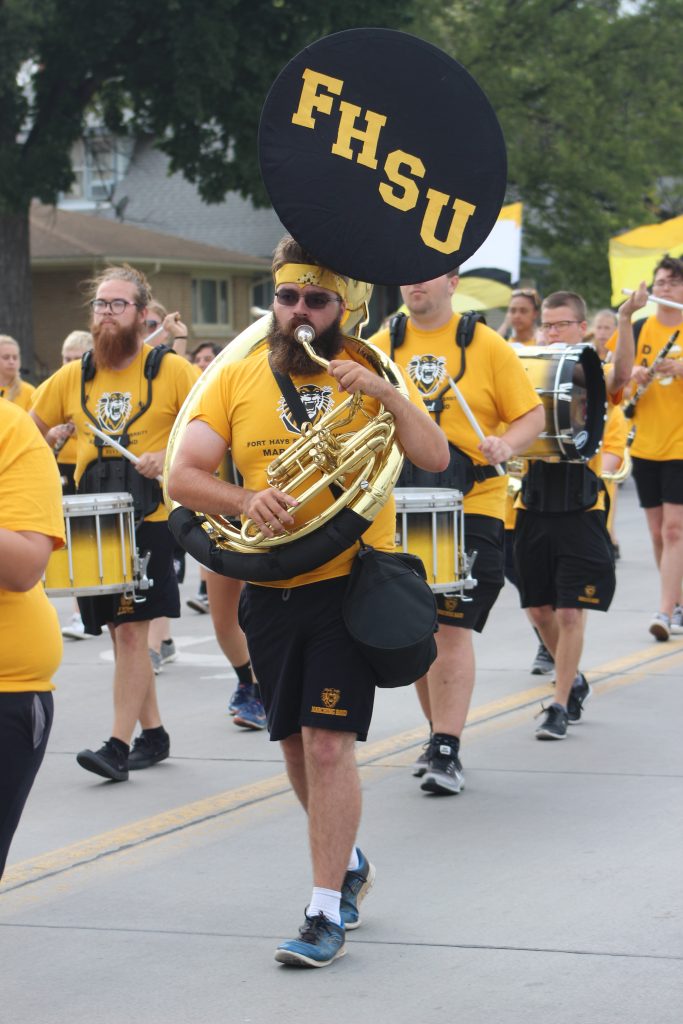
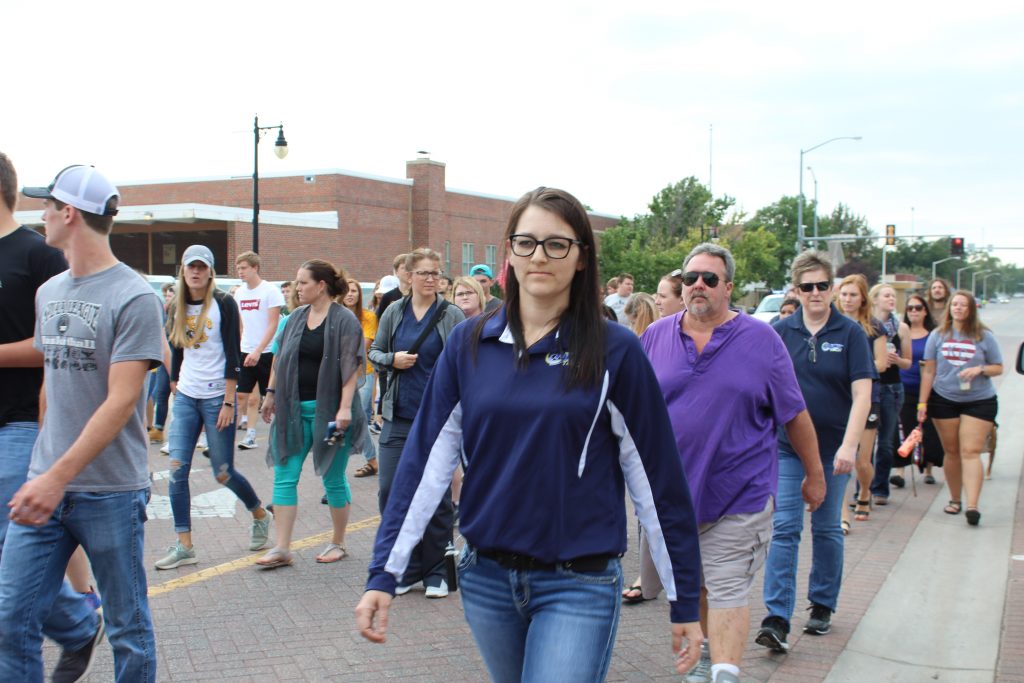
The band blared, local leaders lead chants and hundreds of students eager for free food and prizes marched down Eighth Street for the annual March to Main event on Tuesday night.
March to Main is organized by the Downtown Hays Development Corp. along with a committee of members from the Hays Convention and Visitors Bureau, Fort Hays State University and North Central Kansas Technical College. The event was open to FHSU, NCK Tech and Hays Academy of Hair Design students, faculty and staff.
The leaders of the participating institutions and Hays Mayor James Meier lead the students in a spirited rally before they were treated to free food and chances to win a part of $3,000 in prizes donated by local businesses.
“We have spent the last couple of weeks saying welcome to our university, but tonight we say welcome to our community,” Tisa Mason, FHSU president, said. “Our community is not only the university, it is Hays. Hays is where we get jobs. We hire you and work with your families, and we really appreciate the total support of the community. Shop locally when you can. Have safe, responsible fun.”
Danielle Markley, owner and director of education at Hays Academy of Hair Design, said “Welcome students! We are so excited for tonight. We are excited for the school year. I just wanted to let you know how blessed we are to be in this community with three higher education choices for all of you— Hays Academy, Fort Hays and NCK Tech.”
Students said the allure of freebies plus a desire to get acquainted or reacquainted with downtown drew them to the event.
“I think we hadn’t been in a couple of years, and we both didn’t work tonight, so we thought why not see what they were going to do this year, maybe get some free food, check out some of the shops we have not been to in a while and just see what was going to happen,” said Miranda Merrill, FHSU senior from Brookville.
John Holmes, FHSU freshman from York, Nebraska, was downtown on an assignment from his freshman seminar class.
Sitting on a curb eating free sandwiches, a group of FHSU freshmen were having a girls night out.
Riley Bretton of Phillipsburg said the event was a good opportunity to spend time with friends.
Kate Steimel of Spearville said she came to March to Main, “to learn more about the town and learn what Main Street has.”
Leonard the dog greeted students as they made a stop at The Niche.
Emily Weigel, owner of The Niche, said of the event, “It’s great, because it gets kids in the door and they can see what we are all about and maybe they will feel more comfortable coming back to us later. They get to see what downtown has to offer. We have lots to do here in Hays.”
National Alliance on Mental Illness Hays will meet from 6:30 to 7:30 p.m. Monday, Sept. 10 for the NAMI Connections Recovery Support Group and Family Support Group.
The education session will be 7:15 to 8:15 p.m. It is titled “Working Healthy” presented by Billie Crawshaw, Working Healthy benefits specialist for eastern Kansas
NAMI shares in the leadership and administration of the NAMI Hays Affiliate and is the point of contact for the public for information, referrals and support.
Supervised child care will be available.
The Center For Life Experiences provides the meeting facility and houses the affiliate’s reference library.
For more information, call Ann Leiker at 785-259-6859 or email [email protected].
Healing After Loss of Suicide will meet Wednesday, Sept. 5 and Wednesday, Sept. 26.
The group will gather Sept. 5 at 5:30 p.m. at Das Essen Hutte, 110 W. 11th St., Hays. It will gather at 5:30 p.m. Sept. 26 at Thirsty’s Brew Bar & Grill, 2704 Vine St.
On both nights a gathering will follow at 7 p.m. at the Center for Life Experience, 2900 Hall St., Hays.
The speaker topic on Sept. 5 will be “Engaging the Community to Bring Awareness.”
Supervised child care will be available both nights.
This program offers family members and friends of those who have lost a loved one to suicide a place to connect with others healing after loss of suicide.
For more information, call Ann Leiker at 785-259-6859 or email [email protected].
The Healing After Loss group will meet Tuesday, Sept. 4.
Diner will be at 5:30 p.m. at Das Essen Hutte, 110 W. 11th St., Hays.
The group will meet for dinner at 5:30 p.m. Tuesday, Sept. 18 at Thirsty’s Brew Bar & Grill, 2704 Vine St., Hays.
The group will gather both days after dinner at 7 p.m. at the Center for Life Experiences, 2900 Hall St., Hays.
Supervised child care will be available
This program offers mutual support for those who are healing from an adult loss in their lives such as a spouse, parent, sibling or friend. This group gives emphasis to the particular needs and situation of each individual by sharing the strengths and knowledge that each person brings to the group.
Many resources are available to the group through the Center for Life Experience library.
For more information, call Ann Leiker at 785-259-6859 or email [email protected].
LOGAN—The Dane G. Hansen Museum’s Continuing Education Program is excited to have local artist, Staci Hartman teach a 2-day oil painting workshop at the Dane G. Hansen Museum Sept. 7 and 8.
At this workshop, Staci will introduce oil painting basics, demonstrate techniques, and guide students in color development.This workshop is ideal for beginners as well as more advanced painters.
Students will work on value changes in a landscape; learn to add drama to their work, and take their painting from a representation of a photo to a work of art.
Cost of the workshop is $120 with discounts available for patron and sustaining Hansen Museum members.Artists may call 785-689-4846 for more information.
Hartman is a signature member of Oil Painters of America. She has been privileged to study with nationally recognized artists Kaye Franklin, Howard Friedland and David Vollbracht.
Museum hours are 9 a.m. to noon and 1 to 4 p.m. Mondays through Fridays; 9 a.m. to noon and 1 to 5 p.m. Saturdays; and 1 to 5 p.m. Sundays and holidays.The museum is closed Thanksgiving, Christmas and New Years. The museum is handicapped accessible and admission is always free thanks to the generous support of the Dane G. Hansen Foundation. For more information about this and other exhibits, contact Shari Buss at 785-689-4846.
What would a sweltering summer day be like without an occasional stop at the local ice cream parlor for a couple scoops?
Can you imagine eating piping hot chocolate cookies without a frosty glass of milk?
Imagine sipping a buttery glass of chardonnay without a couple of pieces of aged cheddar.
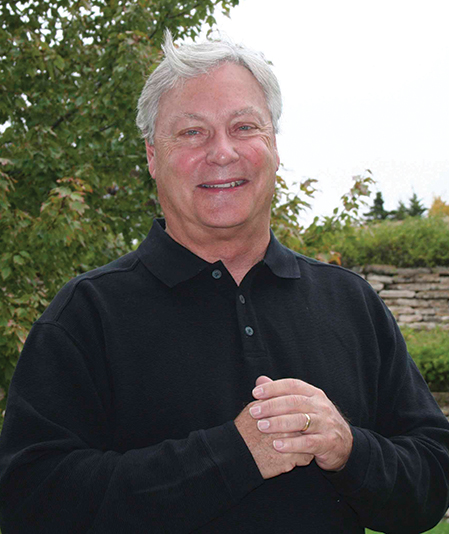
John Schlageck is a leading commentator on agriculture and rural Kansas. Born and raised on a diversified farm in northwestern Kansas, his writing reflects a lifetime of experience, knowledge and passion.
Every day in this great country of ours we can partake of these wholesome, nutritious dairy products; but if there were no dairy farmers, dairy cows or dairy industry, there would be none of these tasty treats.
Dairy products remain a major source of nutrients in our daily diets. If they’re not, they should be.
To find another source for the 300 milligrams of calcium found in either an eight-ounce glass of milk, a cup of yogurt or 1 ½ ounces of natural cheese, the average person would have to graze on eight cups of spinach, six cups of pinto beans or two and one-half cups of broccoli, according to the Midwest Dairy Association.
The primary nutrients found in milk and other dairy products are calcium, vitamins A and D, carbohydrates, phosphorus, magnesium, potassium, riboflavin and high-quality proteins.
U.S. dairy farmers provide an estimated $140 billion annually to this nation’s economy. Dairy farmers help sustain rural America. Even considering this nation’s continuing economic challenges, dairy farmers and companies are a lifeline to 900,000 jobs in this country.
Dairy is local. Dairy farm families are business owners. Every glass of milk and each dairy product produced by these family businesses brings vitality to local and state economies.
Kansas farms generate approximately $537 million in milk sales annually. In Kansas, the average dairy cow produces about seven gallons of milk per day. That’s more than 2,585 gallons of milk over the course of a typical year.
Growth in the Kansas dairy industry means economic growth and access to safe dairy products for local communities and the state. The Kansas ag growth dairy strategy has identified the expansion of the influence, presence and professional standing of the Kansas dairy industry as a priority.
This development has been fueled by the arrival of large-scale dairy operations, primarily in western Kansas. Milk production has doubled since 1994 and grown more than 25 percent in the last five years. There are now about 290 dairies in the state, milking 154,000 cows. It takes about 48 hours for milk to travel from the farm to the dairy case.
As in nearly every sector of the agricultural industry, the United States has more milk production than any other country in the world. This country has six major breeds of dairy cattle: Holstein, Jersey, Brown Swiss, Guernsey, Ayrshire and Milking Shorthorn.
Dairy cows begin producing milk after they calve, when they are about two years old. Most cows are milked twice a day in modern milking facilities that incorporate gentle machines attached and removed by dairy farmers.
Today, all milk sold in grocery stores is pasteurized during processing. During pasteurization, milk is briefly heated to a temperature high enough to destroy bacteria without affecting its flavor or food value.
Yes, since the first cow arrived in the Jamestown Colony back in 1611, America’s dairy farmers have been helping provide a healthy, nutritious food product. So, fill your glass with milk every day. Dip a couple scoops of vanilla ice cream on that piece of apple pie. Cut another slice of cheese for a summer snack. And give thanks to Kansas and America’s dairy farmers.
John Schlageck is a leading commentator on agriculture and rural Kansas. Born and raised on a diversified farm in northwestern Kansas, his writing reflects a lifetime of experience, knowledge and passion.