When I was a youngster, one of my favorite places to play was my Uncle Joe and Aunt Anna’s red barn. My Uncle Bernie’s farm sported a barn as well. Both were must stops when we visited our cousins.
The cluttered sanctuary of these wooden structures served up a smorgasbord of playing opportunities. Both barns offered a relaxing place, especially if it was raining or snowing outside and the weather was too bad to work.
Following World War II, farm mechanization signaled the end for many barns. Some were torn down. Others were abandoned or replaced with Quonset huts made of plywood and galvanized steel.
John Schlageck is a leading commentator on agriculture and rural Kansas. Born and raised on a diversified farm in northwestern Kansas, his writing reflects a lifetime of experience, knowledge and passion.
We didn’t own a barn on our farm/ranch in Sheridan County. Instead, my dad built a machine shed and another larger building we called, “The Big Shed.”
This wooden structure, complete with a tin roof and sides, measured 90-feet long. The Big Shed housed our tractors, grain drills, trucks and other farm equipment. When blessed with a bumper wheat crop, we cleared out all the machinery and filled the shed with golden grain.
But back to Uncle Joe and Aunt Anna’s barn. This old, faded out, red structure wasn’t built from lumber sawn from timber on the farm. Heck, on the High Plains where I grew up, farms and ranches didn’t grow trees until folks drove down to the creeks, dug up cottonwood saplings, carried them back home and planted them.
Why were so many barns painted red?
Probably because of the available ferric oxide used to make red paint. Readily available and inexpensive, red became the choice of colors for barns.
These outbuildings, dotting the prairie countryside, rarely showcased cleanliness or order. In Uncle Joe’s barn, dusty horse blankets and cobweb-covered horse collars hung from wooden pegs or rusty nails.
Hay tongs also competed for space. Here and there a busted plow stock leaned against a wooden wall. Some barn corners were crowded with pitchforks and an occasional come-along. Tangled, broken, bailing twine littered the damp dirt floor mingling with the smells of rusting iron, manure and mildewed leather.
As youngsters, we hid in the hay mow (rhymes with cow) or hayloft when our parents searched for us. While wooden steps or a ladder existed to crawl up to this upper floor, we’d try to find new routes to the top. We’d risk life and limb crawling up the side of the barn grabbing onto anything that would hold our body just to wind up in the loft.
Once inside this cavernous space, we’d marvel at the wooden pattern of the rafters and shadows high over our heads. We’d yell out at the pigeons or starlings who tried to invade our private world of kid adventures.
If there were bales or scattered hay outside one of the two large doors at either end of the hayloft, we’d often make the 15-20-foot plunge into the soft landing.
Hay was hoisted up and into the barn through these doors by a system containing pulleys and a trolley that ran along a track attached to the top ridge of the barn. Trap doors in the floor allowed animal feed to be dropped into the mangers for the animals. As pre-teen youngsters, these doors also made a perfect getaway during hide and seek as we jumped through and made our escape.
I loved to explore the tack room with all the bridles and saddles. Before I could ride a horse, I’d struggle to take one of the saddles off the wall so I could place it on a sawhorse and pretend to ride like my (cowboy) hero, Roy Rogers.
And finally, who could forget the many idioms we heard about barns as children. You remember, “You couldn’t hit the broad side of a barn. Were you born in a barn?” and my favorite, “Your barn door is open.”
Today, many of the old-fashioned barns we knew as kids are long gone. They’re mainly memories when folks with farm and ranch backgrounds visit at family reunions and weddings.
Still, these memories provide a warm glow of yesteryear. I’ll never forget the bitter cold days in January when the winter winds whistled under the eaves of my Aunt Anna’s barn and the icy rain played tic-tac against the cobweb-blotched windows…
John Schlageck is a leading commentator on agriculture and rural Kansas. Born and raised on a diversified farm in northwestern Kansas, his writing reflects a lifetime of experience, knowledge and passion.
The Hays USD 489 school board approved its 2018-19 $48.7 million budget for publication Monday night with a mill levy decrease.
The .767-mill levy decrease was the result of the end of a special mill levy of 0.646 mills for declining enrollment and an increase in assessed valuation.
The total mill levy for the school district will be 42.799 mills. The district’s local option budget will increase from 29 percent to 30 percent. The local option budget is taxes approved by a local school board and levied locally for the benefit of the local school district.
The capital outlay mill levy, which is used for maintenance, technology, vehicles and other large purchases, will stay at 8 mills.
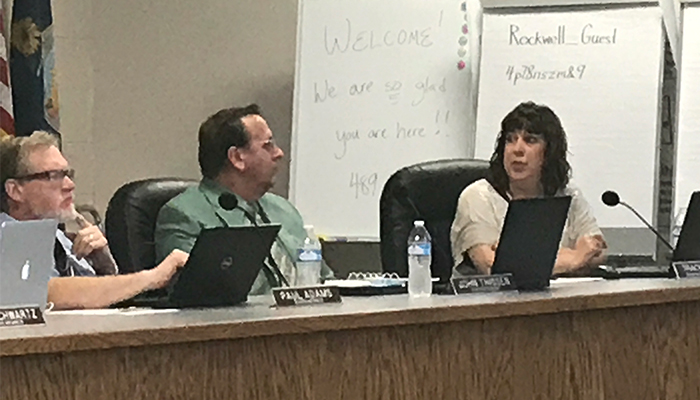
The school board members said little about the budget at the meeting Monday.
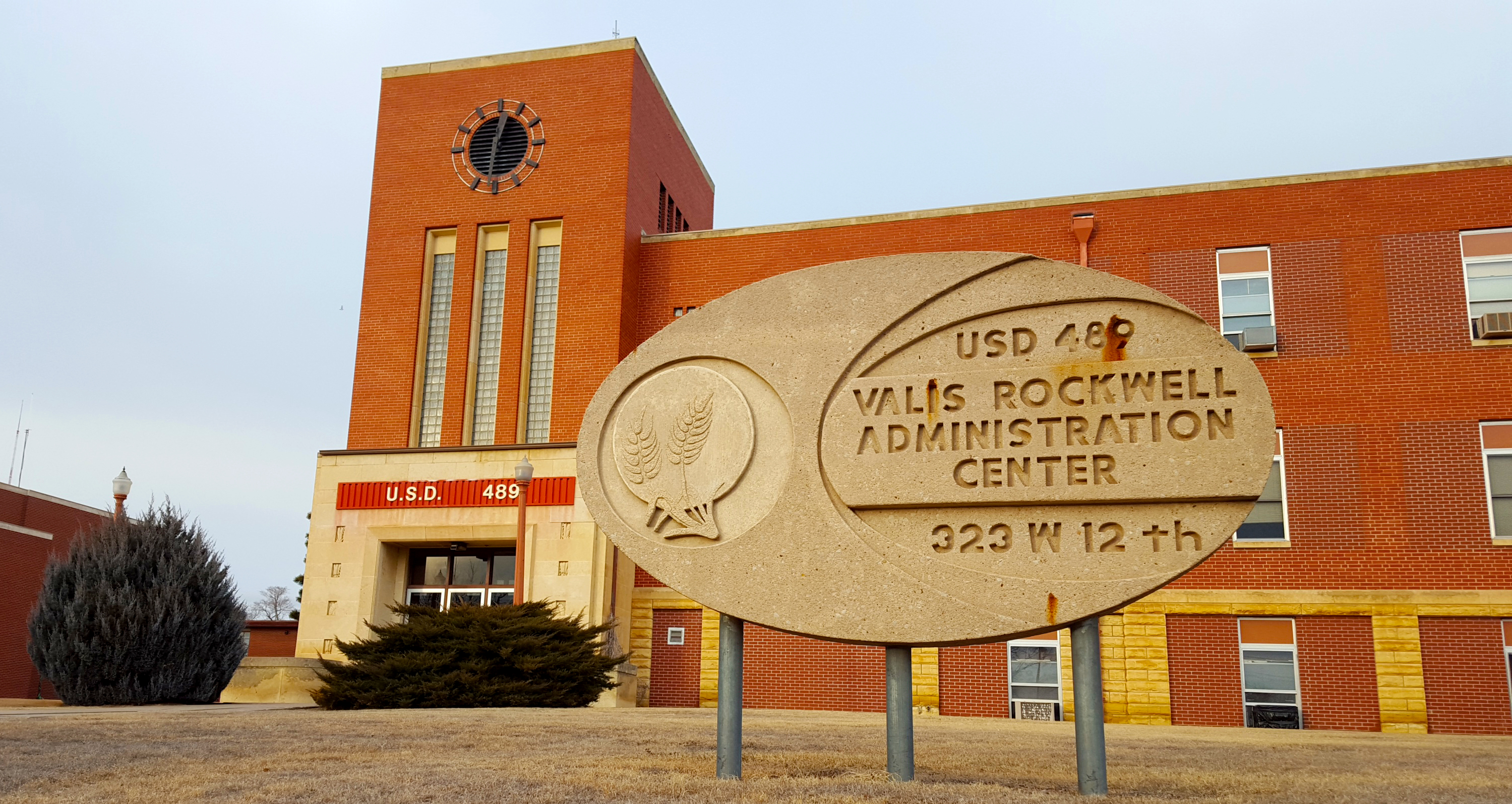
The public hearing on the budget was set for 6:30 p.m. Aug. 20 at the Rockwell Administration Center, 323 W. 12th St. Members of the public can speak at the budget hearing. Once the budget is published, the district can spend less than it has budgeted, but can’t spend more without republishing a new budget.
The school district also levies taxes for the Hays Recreation Commission. The rec commission’s general mill levy will stay at 3 mills, but its employee benefits and special liability levy will increase from 1.141 mills to 1.391 mills.
The school district has no control over the rec commission levy.
Assessed valuation for the district increased by almost $1.3 million to more than $316 million. The districts bonded indebtedness also dropped by more than $1.3 million.
The State of Kansas passed a school funding plan that will increase school funding by more than $500 million statewide over the next five years.
Hays’ total state funding increase will be about $2.1 million. The district also is forecasting it will see a federal funding increase of $156,040. However, once the loss of the declining enrollment levy, which was a temporary program, is figured into the budget, the district will gain less than $1 million in additional revenue for the coming school year.
Tracy Kaiser, director of finance, noted most of the additional funds will go toward, instruction, student support services and instructional support services.
Although the district’s total budget is $48.7 million for publication, the district will likely will not spend all of that money, as it will have carry over in funds such as capital outlay and nutrition services. The district had about $2.7 million in capital outlay carry over as of July 1.
The general fund budget is set at $18.9 million.
“The budget looks strong this year,” Kaiser said. “I feel really good about it.”
Enrollment
The school board also heard a report from assistant superintendent Shanna Dinkel on enrollment. She estimated about 89 percent of the district’s students were enrolled as of central enrollment last week. More than 1,300 of the district’s almost 3,000 projected students enrolled online prior to in-person enrollment.
Further information on enrollment numbers will be released at a later date.
The district also approved an agreement with Fort Hays State University on the use of Lewis Field.
Shirley Anne Woodside, 88, died on Aug. 3, 2018 at Ness County Hospital, Ness City. She was born on Nov. 5, 1929 in Quinter, Kansas, the daughter of Leon and Adeline Cates Coleman.
On June 24, 1951, she married Forrest Woodside in Denver, Colorado. He preceded her in death on March 5, 2017.
Shirley is survived by her son, Eric Woodside of Ness City; three daughters, Georganne and Gail Melton of Andover, Holly and James Hertel of Bazine, and Paula and Jon Allen of Edmond, Oklahoma; seven grandchildren; and eight great-grandchildren. She was preceded in death by her brothers, Richard and Charles Coleman.
Funeral service will be at 10 a.m. Friday, August 10, 2018 at the Cedar Village Care Center, Ness City, followed by burial in the Kansas Veterans Cemetery, Fort Dodge, Kansas. Viewing will be from 9 a.m. until 9 p.m. Thursday, August 9, 2018 at Fitzgerald Funeral Home, Ness City, with the family present from noon until 6 p.m.
Memorial contributions may be given to Praise Ranch, Pawnee Rock, Kansas.
The Hays USD 489 school board will vote on a draft of its 2018-19 budget at its meeting tonight.
The board will meet at 6:30 p.m. in the Toepfer Room of the Rockwell Administration Center.
The board will set the budget for publication and is anticipated to have a public budget hearing at 6:30 p.m. Aug. 20 at the Rockwell Administration Center, 323 W. 12th St.
Once the budget has been published, the district can decrease the amount spent, but can’t increase the amount spent without republication of the budget.
The budget process was delayed this year because the state was waiting on a Kansas Supreme Court ruling on the adequacy of state funding. The court ruled the Legislature has not provided enough money to public schools, but has given the state another year to increase funding.
Because of this delay, the USD 489 budget was not yet available to the public as of this publication of this story.
The board is also set to review enrollment data and vote on an agreement with Fort Hays State University on the use of Lewis Field.
Two kayakers near Hell Creek Bridge at Wilson Lake.
By CRISTINA JANNEY Hays Post
On the map: Wilson, Kansas Distance from Hays: 50 miles Drive time: 48 minutes
On my travels across Kansas, I have been to the Irish Festival in Chapman, the Scottish Festival in McPherson, Midsummer’s Festival (Swedish) in Lindsborg and, of course, Octoberfest in Hays.
Wilson is not shy about promoting its Czech heritage. In that vein, it commissioned a 20-foot-tall Czech egg, which stands in the center of town.
Christine Couch Slechta, Czech egg painter and designer of the giant Czech egg in Wilson.
Christine Couch Slechta was this year’s Czech Festival grand marshal. An art teacher, Slechta was the artist who designed the giant 7,000-pound fiberglass Czech egg.
Although she does not have any Czech heritage, she is known for her Czech egg art. Slechta, a long-time Wilson resident, learned the art from a Czech descendant who lived in Wilson. She gave me the lowdown on the eggs.
The eggs were originally given by young ladies to young gentlemen in Czechoslovakia during the Easter season. Symbols on the eggs indicated strength and positive outlook for the future. Slechta paints chicken, goose and ostrich eggs in both traditional Czech patterns and modern designs. The designs are painted first, and then the egg is punctured to empty the contents.
Czech immigrants settled in the Wilson area in 1874. Last weekend, the community celebrated its annual Czech Festival.
Giant Czech egg in Wilson.
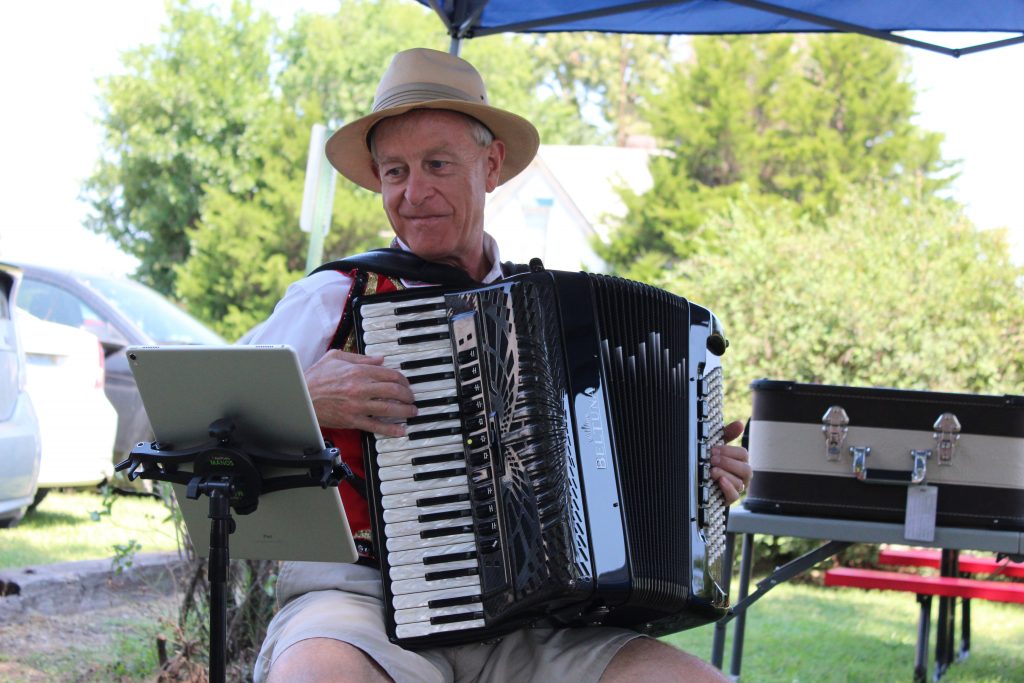
If you have a fine ear for polka, this definitely where you want to be. Young ladies also wear traditional dress to practice Czech folk dances.
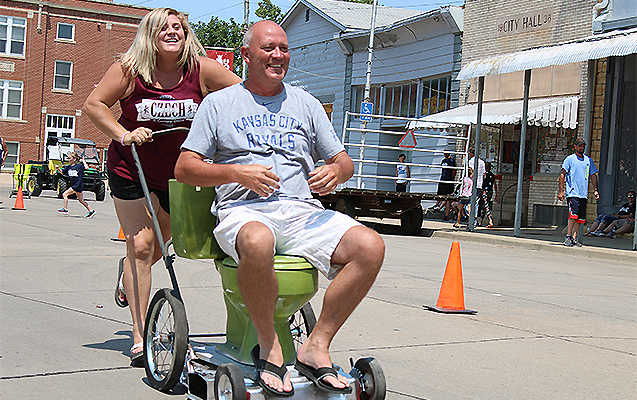
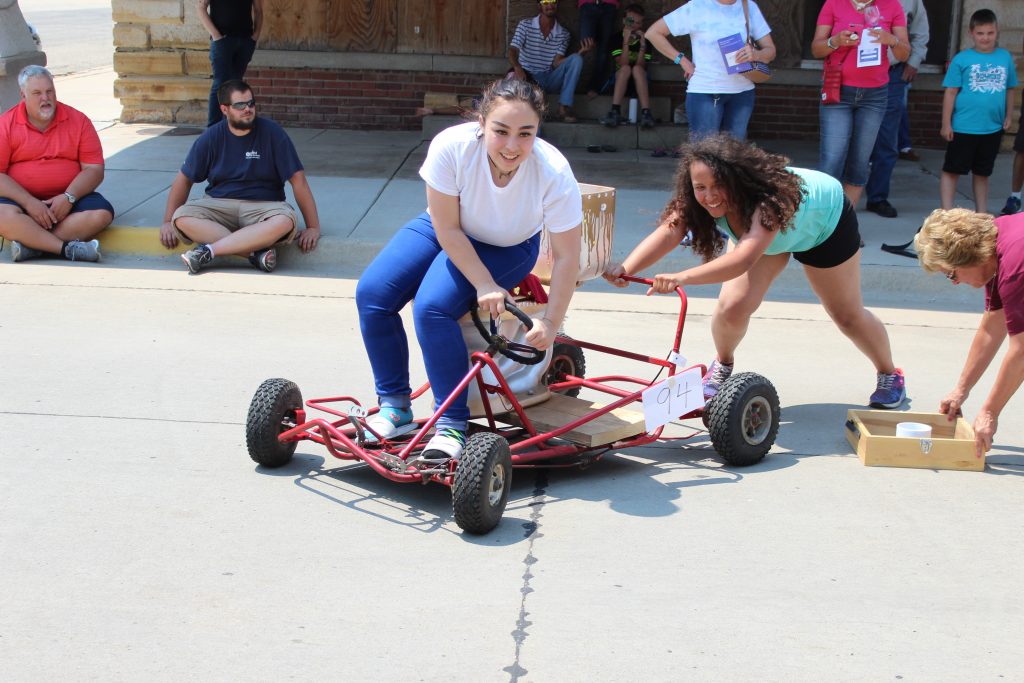
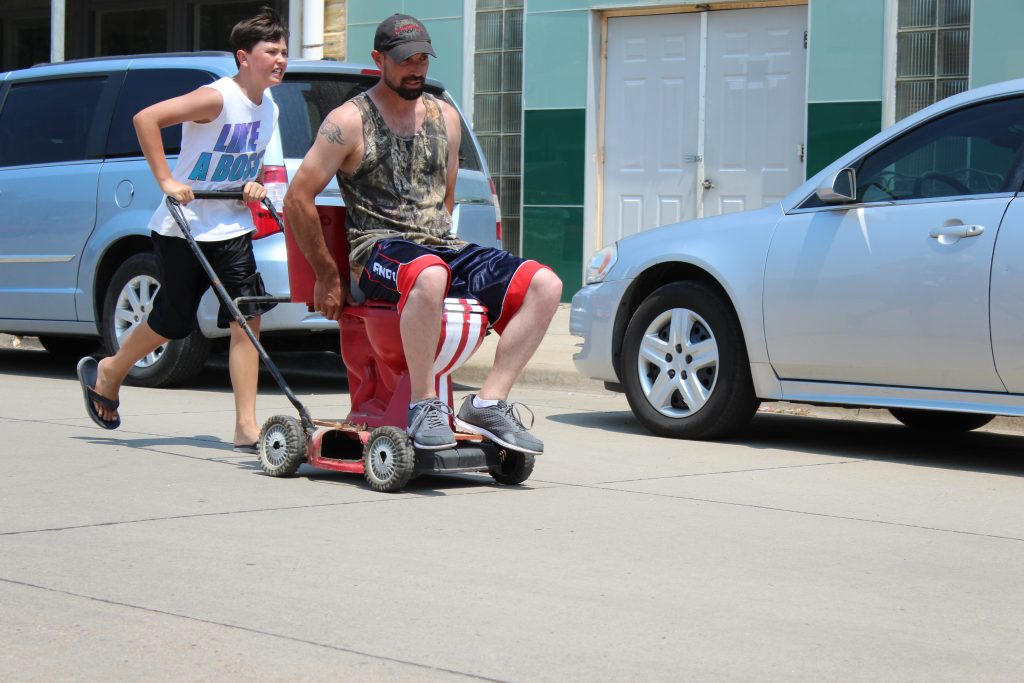
I don’t think this is Czech at all, but one of the featured events at the Czech Festival is toilet bowl races. Toilet bowls are mounted on old push lawnmower frames. One person rides, and the other person “drives” through an obstacle course. I have to give the people of Wilson points for creativity. It was a spectacle, but a bit anticlimactic. Even souped-up toilet bowls don’t go too fast.
If you are in Wilson for Czech Festival or during any other time of the year, there are a couple of foods you need to know about. One is the kolache. This is a sweet bread roll with a topping of fruit preserves. The other are case noodles. I was told this dish varies, depending how Czech you are. They are dough triangles containing cottage cheese and onion. They are usually boiled. Some serve them almost like a soup.
So I sampled both of these at Made from Scratch diner. They had a buffet and abbreviated menu due to all the visitors for Czech Fest, but look for a regular diner menu of stick-to-your ribs homestyle cooking, which includes gigantic bierocks and scrumptious pie. Don’t forget the homemade ice cream.
Enjoy the atmosphere of a 1950s soda fountain at Grandma’s Soda Shop and Diner, 2524 E. Owens, where you also can order kolaches and bierocks.
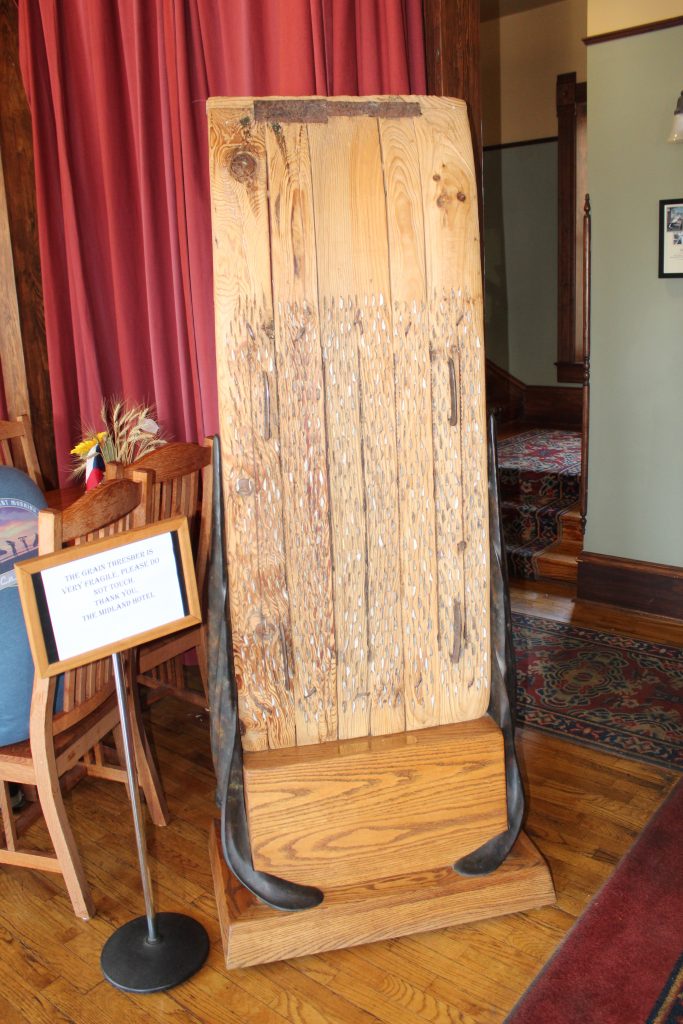
Antique threshing board on display at the Midland Railroad Hotel in Wilson.
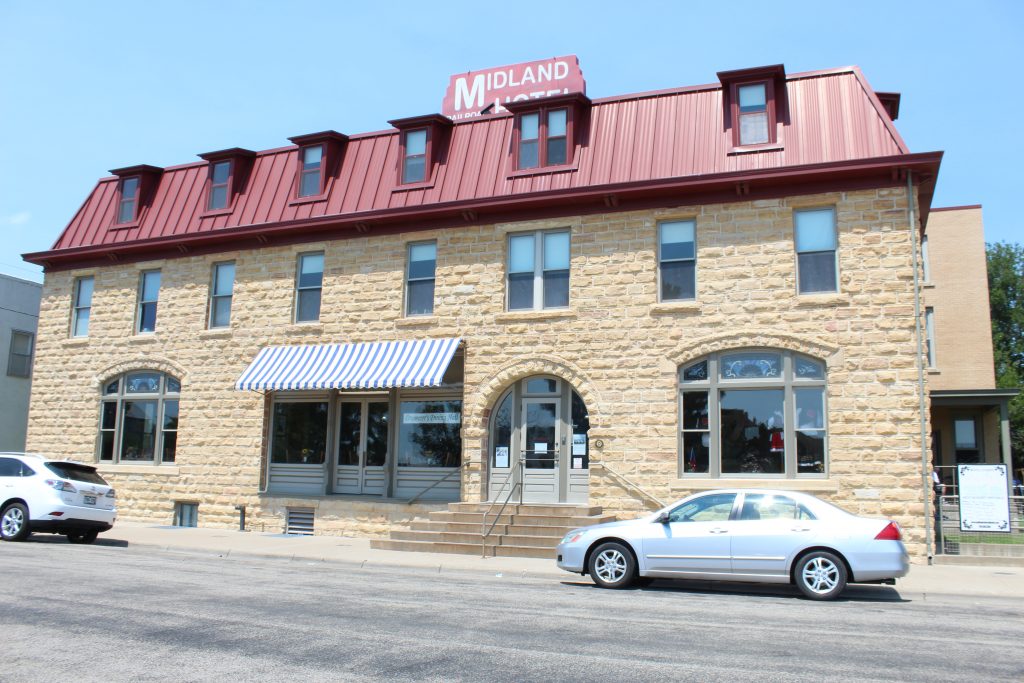
The Historic Midland Railroad Hotel, 414 26th St., offers steaks, sandwiches and pasta in the downstairs Sample Room, so named because the hotel was a popular stop on the Union Pacific route from Kansas City to Denver and businessman used the hotel to show off their wares.
The Drummer’s dining hall on the ground floor is available as an events venue. The hotel also offers special dinner events. Check their website for details.
The limestone three-story hotel was built in 1899 and is on the National Register of Historic Places. The hotel underwent an extensive $3.2 million renovation and reopened in 2003 with an interior reminiscent of its 1920s glamor. Today, the hotel has 28 rooms decorated with mission-style furniture, but with modern amenities like satellite TV.
Film buffs may recognize the building as a backdrop in the 1973 film “Paper Moon,” starring Ryan O’Neal and daughter Tatum.
Wilson’s round jail.
Also on the National Register of Historic Places is the town’s circular stone jail. The circular limestone structure was built as a water tower in 1907. It was used as a jail until 1963 to hold prisoners until they could he transported to the county jail.
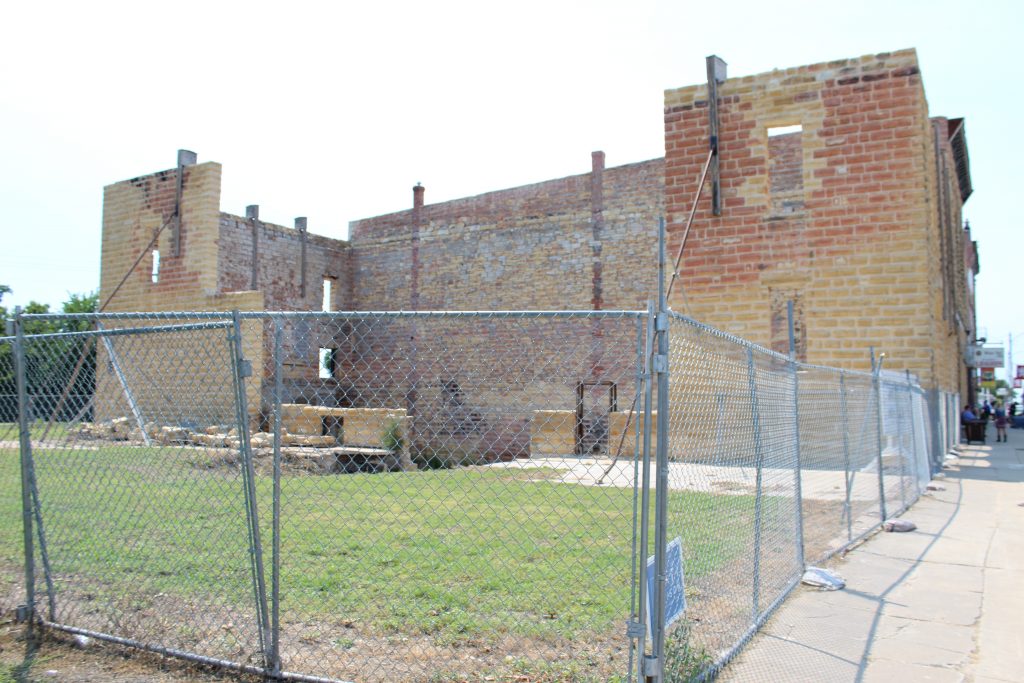
Unfortunately, one of the iconic Wilson landmarks, the limestone Wilson Opera House, built in 1901, burned in 2009. You can still see the shell of the building on Old U.S. 40 just down the street from the giant Czech egg. The opera house used to serve as the community’s historical museum, the Museum of Memories. The community hopes to resurrect the opera house by using the old stone to create a new pavilion.
Burnt metal, wood and nails left from the 2009 Wilson Opera House fire.
Almost all of the historical items in the former museum were lost to fire or water damage. After almost 10 years, a new museum, the Wilson Heritage Museum, has opened in the former Wilson World newspaper office, 411 24th St.
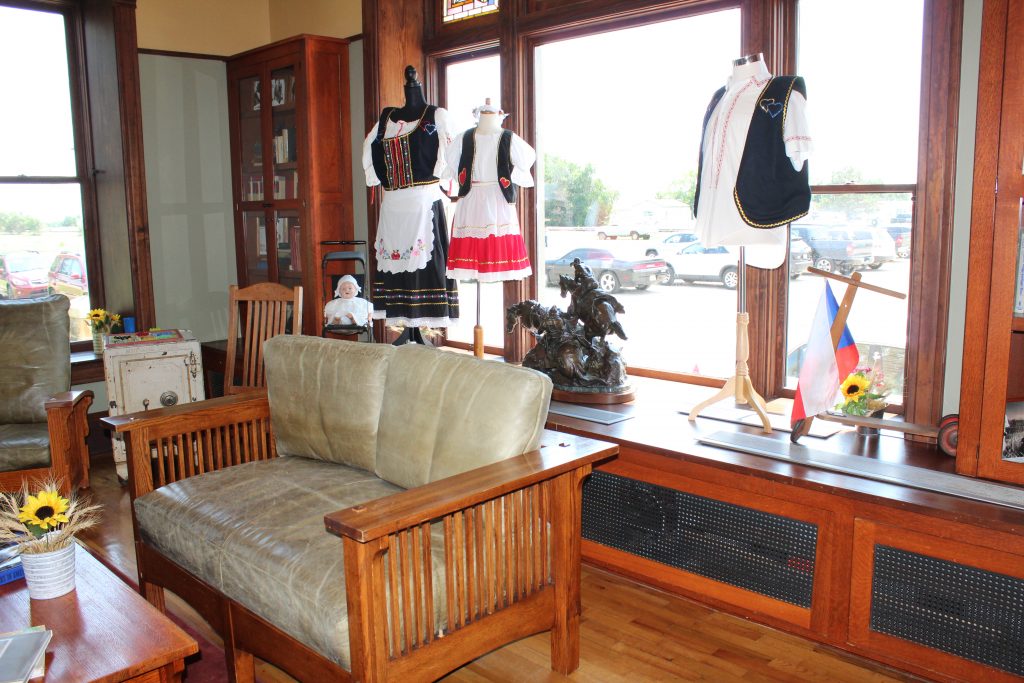
The museum has been open for less than a year, and had many visitors during the Czech Festival this weekend. The museum contains items from Wilson schools, business, veterans and churches. In addition, the museum has a small collection of items commemorating the community’s Czech heritage, including dolls in traditional dress and Czech glass. In a tribute to the fire, the museum has on display a piece of molten debris that was salvaged from the opera house fire.
Also of note are two military monuments in the community. The Wilson Cemetery at 1916 Second St. features a granite statue of Civil War Union soldier, and a metal lion’s head that once filled horse troughs. In 1919, the community dedicated the World War I monument in Legion Park that features a U.S. infantry soldier.
Kansas Originals is not in Wilson, but just north of Interstate 70 at the Wilson exit. The store is run by the Post Rock Opportunities Foundation, a nonprofit corporation. Its missionis to provide marketplaces for the work of Kansas artists, craftsmen and food producers and to promote tourism, according to its website.
This is more than a tourist trap. It houses a variety of handmade products, such as jewelry, blown glass and wood products. You can also pick from a variety of Kansas-made food products, like popcorn, salsa and sauerkraut. A bookworm, I always make a quick perusal of the book section, which features Kansas authors and topics. The store carries fiction, non-fiction, guidebooks and children’s books.
Boater at a dock at Wilson Lake, just below the dam.
We can’t talk about Wilson without talking about the 9,000-acre Wilson Lake. The Wilson I-70 exit will take you to the east end of Wilson State Park and is the best access to the dam. You can also access the Minooka Park section of the lake via I-70 exit 199 Dorrance and the Wilson Wildlife Area via exit 193, Bunker Hill.
You will need a state park pass to legally enter the state park. You can buy a year-long State Parks Passport for $15.50 when you pay your annual tags and taxes for your vehicle. You can also self-pay day passes or buy yearly passes for slightly more at a park office. The annual passes are good for any state park.
With its picturesque cliffs, Wilson is a popular spot with kayakers. There are plenty of places along the shoreline to put in, and the water is fairly clear for a Kansas body of water.
However, you do not have to have a boat to enjoy Wilson, the state park is internationally known for its 25-mile Switchgrass Bike Trail, which winds throughout the park and will take you through native grasses and wildflowers and near impressive rock features. There are shorter loops for those who aren’t up to riding the whole trial. You can hike and run sections of the trail, but it is recommended you go counterclockwise to bikers to avoid crashes.
A swallow takes off from a nest under Hell Creek bridge at Wilson Lake.
The trail head is at Switchgrass campground on South Shore Drive west of the Hell Creek Bridge. I picked up a Wilson Lake guide, printed by the Wilson Lake Area Association at Kansas Originals at the Wilson exit, which contains a state park map.
Wilson also offers both natural and paved hiking trails. The Cedar Trail in the Otoe area is a one-mile paved loop.
The second-annual Lovegrass Music Festival will be Aug. 10-12 at Lovegrass campground at Wilson Lake. It will feature country, bluegrass and folk music. For more information, contact Aimee Riegle at [email protected].
I usually shoot pictures rather than creatures; however, in addition to being a good locale for white bass and striped bass, the state park offers 8,069-acres of public hunting at Wilson.
If you travel to Wilson Lake dam via K-232, you will be on the Post Rock Scenic Byway, giving you beautiful views of the Kansas short-grass prairie and worth an afternoon drive in and of itself.
If you reach the dam, you will be fairly close to Lucas via Kansas Highway 232. Lucas, north on K-232, is worth a stop as well, but that adventure will be for an upcoming Day Trippin’. If you do decide to take the byway north to Lucas, look for faces carved into the region’s iconic post rock fence posts thanks to artist Fred Whitman.
Honestly, my next road trip is still up in the air, but I will definitely see you on the road soon!
The burned out shell of the Wilson Opera House.
Other links to check out while you are planning your trip:
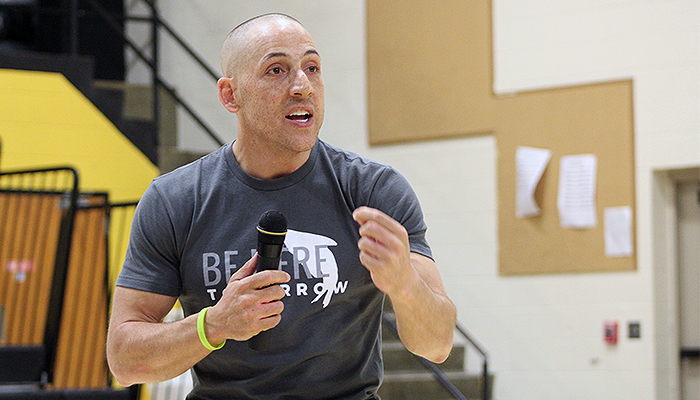
Kevin Hines’ message to the world is “Be here tomorrow!”
The message is all the more powerful because he was almost not here to share tomorrow.
Hines is one of only 36 people in 80 years to survive a jump from the Golden Gate Bridge. He is only one of five to be able to still walk and run.
“I am not just lucky to be alive,” he said. “I am blessed that I get to exist.”
To a packed crowd at Hays Middle School on Wednesday, Hines shared his journey from that dark day when he tried to kill himself by throwing himself off the bridge to a life of light.
Kool-Aid, Coca Coal and sour milk
Hines, 37, had difficult beginnings. Both of his parents were drug addicted. Hines and his infant brother were left regularly in seedy motels so his parents could score or sell drugs.
The boys were fed what their parents could steal — Kool-Aid, Coca Coal and sour milk.
When a hotel attendant finally reported the neglect to the police, the court documents read, “The children lie there in their own filth, screaming and crying not to be neglected, lying next to dangerous drug paraphernalia that had they touched it would have killed them.”
Although they entered the foster system, Hines and his brother both contracted a vicious case of bronchitis, and Hines’ brother, Jordache, died.
“People have looked at me as an adult and asked me, ‘Kevin, why does that matter? You were an infant. How can that affect you?'” Hines said. “If you don’t know, the first three to nine months of an infant’s life are the most crucial to their ability to connect, adapt, attach and be well in any future. If your first nine months of your life are filled with nothing but consistent trauma, at some point, something is going to give and you are going to have a hard time. And I would have that hard time and then some.”
Hines was in foster care for the first nine months of his life, but then he was adopted by Pat and Deborah Hines. Deborah wanted to adopt a sister for daughter, but after seeing Kevin in his red rubber ducky overalls, she fell in love.
Pat and Deborah took Kevin in, but he was violently ill over the next 30 days. No doctor could determine what was physically wrong with him. The medical profession finally concluded that his physical symptoms were all emotional.
Kevin’s biological father fought for custody of Kevin for two years before finally outside of a courtroom, he told Pat and Debbie, “‘Patrick, Deborah, I can do this no longer, please take care of my son.’ ”
Blessed childhood
“And they did,” Kevin said. “They took care of me, and they made me theirs. And I am a Hines.”
Kevin’s mother, Debbie, was an incurable optimistic, to the point of annoyance. Pat was not an optimist. He was tough. He played goalie in hockey without a mask.
“Pat Hines is a pragmatic pessimistic and stone-faced man,” Kevin said. “He is a man void of true emotion in my life, a man I had never seen cry in 19 years up to that point, not through hard times, not through deaths, not a tear dropped from that man’s eyes. I would not learn until years later when he and I would go to therapy why he was such a hardened soul and why he was so hard on me. He was like a drill sergeant who was never in the military.”
Pat’s father was in the military and was in the Battle of Okinawa. When he came home, he was a changed man. Pat’s parents, just like Kevin’s biological parents, had substance abuse issues. They were alcoholics and died of cirrhosis very young. Pat was left almost penniless to make his way in the world, Kevin said.
Pat and Debbie, who were white, adopted two other children. Kevin is mixed race, his brother is black and his sister is white. People stared, but Kevin said, “We were a family filled with love unconditionally, hope for the future and possibility. I thought growing up I had that traumatic infancy, but a beautiful childhood and adolescence. I thought to myself, How could anything go sideways from here?’
“I am going to grow up. I am going to go to that good school my dad’s always talking about. I’m going to get that great job he is always speaking of. I’m going to live the American dream. Then it happened.”
Things go sideways
“At 17 and a half years of age, it all came tumbling down, because of one thing — my brain.”
Hines was eventually diagnosed with bipolar disorder with psychotic features.
His mind was telling him things like he was a horrible person and he had to die.
“All of which was untrue,” he said. “I wish I know then what I know now, which is that my thoughts do not have to become my actions. …
“In the realm of suicidal thinking, this is very important because we think our thoughts own, rule and define our actions. Yet, in a suicidal crisis, they do not have to take us. We can always stay here.
“If you realize those thoughts don’t have to lead to an attempt, you can always survive. I live with chronic thoughts of suicide. They will never take me. Because every time I think of them, I will turn to the person to my right or the person to my left and say four simple and effective words, ‘I need help, now.’ ”
Hines said his family and friends know what that means and know what his triggers are. He has an emergency plan that he has shared with his loved ones.
“Even when I go sideways and I can’t see it, they have got my back,” he said.
He began to have delusions that the postal service was trying to kill him. If he saw a postal truck, he would run home, causing him to go into a debilitating asthma attack.
‘I wanted to tell’
Hines went from natural euphoric highs to the dark abyss that is depression.
“I would come crashing down into an insurmountable amount of pain that I could not bare on my shoulders,” he said. “At 19 I was done. I wish that morning that I attempted that I told my father the truth. …
“I wanted to tell the one man who loved me more than anything else in the world, arguably, the truth, but I couldn’t get the words out. Every time I wanted to tell my father what I was thinking, the voices in my head, (I had been hearing auditory hallucinations that no one else could hear) told me that I had to die.”
Every day, Hines would see death in the form of the grim reaper hover in through his window.
“Do you think I told anybody? No, I kept it inside, because I thought if I tell somebody what I am seeing, well, they are going to think I am crazy. I don’t use that word lightly.”
He buried all of his symptoms for two years. He silenced his pain.
“My new friends, if I am going to help you learn one thing today, and one thing only I have to ask that it be this,” he said. “When you go about the rest of your natural lives, when you walk out those doors, and you go about your day, do me a favor and learn from my mistakes and never again silence your pain. Your pain is valid. Your pain is real. Your pain is worth your time and others’ and your pain matters, ladies and gentlemen because you do.
“When we silence our pain and our struggle and our hardship, and we tell no one, it just grows and festers and morphs into rage and violence and substance abuse or domestic disputes, suicidal thoughts or actions.”
Life is a gift, Hines said, but he could not see that and on the Sept. 25 he boarded a bus for the Golden Gate Bridge.
‘Why doesn’t anybody care?’
He sat in the middle seat in the back row of the bus. He began to cry, softly at first, and then harder until finally tears streamed down his face. He then began to yell back to the voices in his head that were telling him to kill himself.
“Leave me alone, but I don’t want to die. I am a good person, why do you hate me so much? What did I ever do to you?”
The 100 people on the bus, said nothing … except for one man, with a smirk on his face said, “What the hell is wrong with that kid?”
“That is what is wrong with some of our society, today” Hines said, “our innate human ability to see someone who is in potentially the greatest pain they are ever experiencing and feel nothing for them, but fear of them and apathy toward them. That is a real problem. I believe if nothing else, this one thing — we are our brothers’ and sisters’ keepers.”
When Hines reached the bridge, still sobbing, he desperately wanted someone to stop him and ask him if he was OK. He wanted someone to stop him, to save him.
“All I wanted to do was live, while my brain was trying to kill me,” he said.
Bicyclists, joggers tourists and even police officers there to look for jumpers, passed him for 40 minutes and did not stop.
Although police are now trained to look for suicidal individuals at the bridge, a person still dies at the bridge every seven to 10 days.
Finally, a woman started to walk toward him, he thought finally someone is going to help me.
“I thought, ‘This is it! I don’t have to die today,” he said.
She reached out and handed him a camera and asked him to take her picture. Hines took the picture, she walked away.
“I used to be upset about this woman. I used to think, ‘Why doesn’t anybody care?” he said. “Everybody cared. Every member of my family, every one of my friends, my acquaintances would have been there to rip me from that rail to safety if they knew where I was and what I was doing. They would have saved me, guaranteed, and so would have yours because you care and you do matter. I couldn’t see it. I thought nobody cared. The voice in my head said, ‘Jump now,’ and I did.”
A friendly shark
Falling 225 feet, 25 stories at 75 mph in four seconds, he said he realized his value. He prayed to live.
“I had the instant recognition that I had made the biggest mistake of my life, and it was too late.”
He hit the water and it felt like hitting a brick wall. It shatter three vertebrae in his back, and the fragments came millimeters from severing his spine.
“I swam to surface, using only my arms, 70 feet with one breath and one thing on my mind — all I needed to do was live. I remember thinking that ‘If I die here, no one will know I didn’t want to. No one will ever know that I knew I made a mistake.”
As he struggled to stay afloat, something began to circle beneath him. He thought it was a shark. It pushed him up. He thought it was odd to have such a friendly shark. He named him Herbert. Much later, after doing a television interview about his experience, Hines received a letter from someone who had been standing on the bridge next to him on the day he jumped. He told Kevin, it had not been a shark that saved him, but a sea lion.
Why?
The Coast Guard pulled Hines from the water. As he was strapped to the backboard, a rescuer asked him, ‘Why?’
“You must stop asking why,” he said. “It is the wrong question. We don’t know what someone is going through up here. You never can entirely,” he said. “What we need to ask ourselves is ‘how.’ How do we look to the living and through community and togetherness to move forward?
“I don’t think we can move on from a suicide,” said Hines, who said he has lost seven people to suicide. “I think that is impossible. If someone tells you to move on from suicide, you tell them that Kevin Hines told you to tell them to sit down. You get to grieve those you love until the end of time. If you are not done grieving, you’re not.”
Uncle George
Hines still had a long road ahead. He was hospitalized for his suicidal depression seven times during the next 11 years. He had electroshock therapy after one stay in the hospital that included 60 days of suicidal crisis.
His Uncle George had been driving six hours to visit Kevin during each hospitalization. On his third hospitalization, his uncle brought him a magazine article.
His uncle said to him, “Kevin, your family can help you until you are blue in the face, but until you take 110 percent responsibility, young man, for the fact you have this disease and fight it tooth and nail every day with every fiber of your being, kid, ain’t nothing gonna change and you are going to be in and out of these places for the rest of your life. Is that what you want?”
Kevin responded, “No.”
George said, “Get it together, kid, we are counting on you.”
Kevin read the article. He learned there were techniques he could use to help his brain by creating routine—eating healthy most days, exercising, educating yourself about your diagnosis to learn tools to fight the disease. Music therapy at the hospital helped him to start sleeping again.
He read that 23 minutes of rigorous exercise lead to 12 hours of better mood.
He was finally honest in therapy.
Hines finally started to feel better. He met the woman who would become his wife.
“If we can find hope in the darkness of our hours, we can find purpose, and if we can find purpose, we can always stay here,” he said.
To end his presentation, Hines asked the audience to raise their cellphones and repeat after him …
“Be here tomorrow!”
If you or someone you know is struggling with depression, suicidal thoughts or mental illness, you can reach services through High Plains Mental Health by calling the center’s emergency line at 1-800-432-0333 24 hours a day.
You can also reach the National Suicide Prevention Lifeline 24/7 at 1-800-273-8255 or visit suicidepreventionlifeline.org.
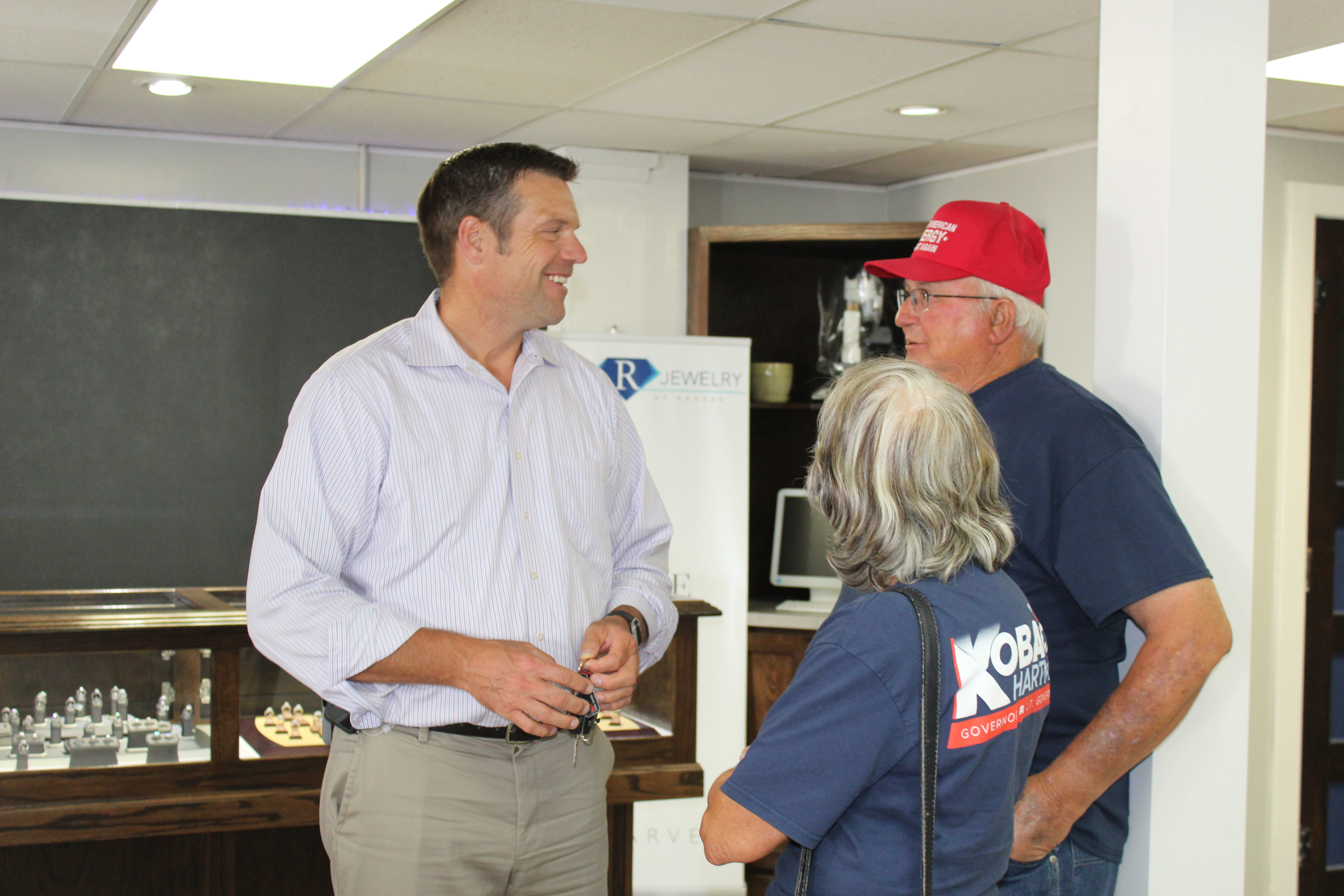
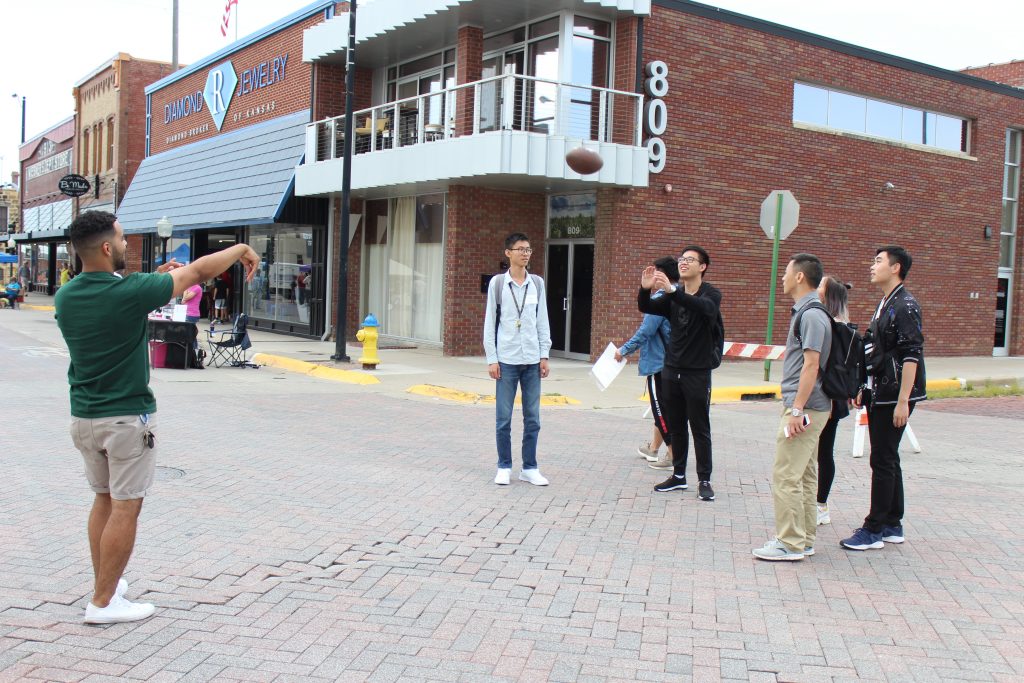
Republican Kris Kobach speaking to voters Tuesday at Diamond R Jewelry in Hays.By CRISTINA JANNEY Hays Post
Republican candidate Kris Kobach has pledged to cut taxes and reduce government spending if he is elected governor.
Kobach and running mate Wink Hartman were in Hays on Tuesday at Diamond R Jewelers for a campaign stop ahead of the Tuesday primary.
Kobach said his position on taxes separates him from a crowded ticket of Republicans, which also include Gov. Jeff Colyer, Insurance Commissioner Ken Selzer, Jim Barnett, Patrick Kucera, Tyler Ruzich and Joseph Tutera Jr.
Kobach is the only candidate in the race who signed a no-tax-increase pledge.
“Our objective is to cut taxes,” he said. “We are the high-tax state in the five-state area. It is ridiculous. Our sales taxes are eighth highest in the country. Our income taxes are highest in the region. Our property taxes are 15th highest in America. We are taxing our citizens to death here in Kansas. It has got to stop.”
Kobach claimed because of a combination of sales and income tax hikes in 2015 and 2017, the average Kansas family of four is paying $900 more in taxes.
“That’s money you save for the kids’ college. That’s a vacation. That’s food on the table. That’s a lot of things that the state of Kansas is now taking out of your pocket,” Kobach said. “Wink and I have a different attitude. It’s your money. It’s not the state’s money. We should be doing every single thing we can to try to get that money back to you, not thinking of ways to spend money.”
When federal tax reform was passed, the state saw a windfall of tax revenue. The Legislature chose not to pass that windfall back to Kansas residents. Kobach said he would use that additional revenue to implement a tax cut.
Brownback and Colyer made the mistake of making the tax cut in 2012, but not cutting the budget, Kobach said.
One way he would cut the budget is to reduce the state workforce through attrition. Kobach touted the cuts he made in his own department during his two terms as Secretary of State. Kansas ranks third in the nation for state and local employees per capita. He said that indicates there is room to cut.
Kobach said he would charge Hartman with helping find cuts in the state’s budget.
Kris Kobach’s running mate Wink Hartman with Diamond R Jewelry owner Dustin Roths.
“Under his direction, I will go to each department, each secretary,” Hartman said. “I will go through budgets, and we will cut unnecessary and wasteful spending without sacrificing service for the people of Kansas. You have got to be very careful.”
Kobach said he hoped tax cuts would draw new businesses to Kansas, but he said he would also work to contain or slow the growth of utility rates in the state. Kansas’ average electric rate is 13.4 cents per kilowatt-hour, but the surrounding states’ average 10.9 cents per kilowatt-hour.
Kobach also talked on illegal immigration, which has been not only a major point of his gubernatorial run, but a major issue in his stint as Kansas Secretary of State. He pushed for a law that required proof of citizenship in order to register to vote in Kansas, but that measure was challenged by the ACLU. The provision was struck down on appeal in May.
Kobach is now pushing to end in-state tuition for undocumented Kansas residents.
To qualify for the program, students have to have lived in the state since they were young children and graduated from a Kansas high school. As of fall 2017, 670 were using the program within the Kansas Regents system.
“The average college student graduates with $28,000 in debt,” he said. “Why is the state spending money to subsidize illegal aliens, paying two-thirds of their tuition when we have all this debt that Kansas kids are burdened with and many can’t even afford to go to college because of that debt? We should be taking that subsidy, those millions of dollars, and subsidizing Kansas kids, maybe not raising their tuition every single year. We could use that money to help our own kids to attend college.”
Kobach wishes to eliminate the last three sanctuary cities in the state.
“Some politicians are uncomfortable talking about the problems of illegal immigration,” he said. “They are too politically correct. They don’t want to make anyone angry. I don’t care. That is not me. I am happy to make people angry, because if you do the right thing, you are going to make some people angry.”
Kobach said he supports the president and his efforts on trade. Kobach pointed out he lives on working farm and has crops in the ground right now.
“It is counterproductive if people in the United States shoot darts at the president’s back while he is going into the negotiations with the Chinese, so I think we need to say we are behind him whatever the president does in these negotiations, we are with him,” Kobach said, “because if we don’t, we weaken the United States’ position.”
Also to help farmers, Kobach would seek to put a 2 percent lid on increases in ag property tax appraisals and limit reappraisal to once every three years, instead of every year, which is the current state policy.
Water is another issue that will need to be addressed to keep Kansas ag successful. Kobach said he supports local enhanced management areas, also known as LEMAs, which have been successful in other areas of the state.
Kobach also emphasized his pro-Second Amendment and pro-life stances.
He said he had goal of Kansas being the No. 1 state in the nation for protecting run rights, citing a slight slippage in the state’s ranking in a pro-gun poll for a law that prohibits carrying guns in medical facilities.
Kobach also told the crowd he supported term limits.
“We are one of the only states in the region that does not have term limits, and we need them,” he said. “Contrary to some people on the left, term limits don’t result in disaster for states or don’t result in legislators who don’t know anything. It results in new blood coming in — fresh blood, good ideas.”
There is still time to buy your ducks for the Big Brothers Big Sisters Duck Derby on Aug 8. at the Hays Aquatic Park.
There will be thousands of ducks racing around the Lazy River at Hays Aquatic Park. The festivities will be 5:30 to 8:30 p.m.
The ducks will be split into heats of about 2,500 ducks per heat. The top 500 ducks (from each heat) will get to compete in the big Championship Race. Prizes will be awarded to the first 10 ducks crossing the finish line at the Championship Race.
This year’s grand prize is a 2017 Nissan Versa.
Other prizes include Royals tickets, tickets to the Wildcat Classic, Bronson Traeger Grill, Amazon Echo and
six months of high-speed Internet, two all-sport FHSU general admission tickets, $250 Walmart gift card, golf outing, wine gift basket and beauty gift basket.
All proceeds from the event go to supporting the Big Brothers Big Sisters of Ellis County’s mentoring programs.
File photo
Jenny Bates, BBBS director, said at a recent Rotary meeting the local chapter currently has 130 matches.
“That means there are 130 volunteers in the community that are spending their time loving on these kids, just helping them and letting them know that they can get out of what is going on and do more,” she said.
Bates told the story of one young man who had a difficult home life. His mother was disabled and his older brother struggled with addiction. His Big mentor helped him get signed up for football.
“He made friends through that and was able to feel as if he was included in something and a part of something,” Bates said. “When he first started in the program to talk to him, he would never make eye contact.”
By the time this young man graduated, he had started to come out of his shell, and you could make eye contact with him, she said.
“When you are supporting the Duck Derby and adopting ducks to win these amazing prizes, you are also supporting these kids in the community, who need that help,” Bates said.
Bates also read a thank you note from a young lady who recently graduated high school. She had been matched since she was 5 along with her siblings in the BBBS program. She will be attending FSHU to study nursing.
“Thank you for all you do for the Bigs and Littles involved in the Big Brothers Big Sisters program,” she wrote.
You can adopt ducks at Bank of Hays, Big Brothers Big Sisters, Car Zone, Downtown Hays Development, Eagle Radio, Golden Plains Credit Union, Hays Hobby Shop, James Motor Company and Kwik Shop.
Cost for ducks:
Single Duck – 1 Duck for $5
Gaggle – 6 Ducks for $25 (1 free)
Flock – 12 Ducks for $50 (2 free)
Colony – 25 Ducks for $100 (5 free)
The Duck Derby Race is sponsored by Paul Wertenberger Construction & Insurance Planning. The Duck Dash is sponsored by the Cooper Family. Eagle Communications is a presenting sponsor.
There will be a Duck Dash for children younger than 12 years of age with brightly colored ducks sold for $2 per duck. There is no limit on number of ducks that can be bought. Each child will get to keep one of their ducks after the race to take home. The grand prize for the Duck Dash is a $125 gift certificate to Escape Hays. See the BBBS website for details on other prizes.
Grilled hot dogs, chips and water will be available starting at 5:30 p.m. sponsored by Midwestern Pipeworks and served by Horizon Appliance
Other children’s activities will include a Hula Hoop contest and duck waddle races sponsored by by Aflac and Bieker Insurance Agency.
File photo
Back again this year is the cardboard boat races dubbed the Western Well Regatta.
Businesses and teams of individuals are encouraged to build a “yacht” made solely of cardboard and duct tape to race in the Soggy Bottom Challenge. There will be four races with six boats participating in each race. The winner of each race will be awarded a Pizza Party for their business and receive five complimentary entries in the Duck Race. The boat with the fastest time will have the honor of naming the Soggy Bottom Challenge next year. Entry fee is $500. Call at 785-625-6672 for more information.
USD 489 central enrollment will be from 7 a.m. to 5:30 p.m. on Wednesday and from 10 a.m. to 7 p.m. Thursday at the Hays High School cafeteria.
At central enrollment, you can speak with any of the building administrators, get building-specific information, speak with the Nutrition Department, the Special Education Department, and many other services as well as community information.
If you need to pay enrollment fees, there will be an express line for people who have enrolled online and need only to make payment. If you have any questions, contact the Rockwell Administration Center, 785-623-2400, or your student’s school.
Hays High School 785-623-2600 Hays Middle School 785-623-2450 Lincoln Elementary 785-623-2500 O’Loughlin Elementary 785-623-2510 Roosevelt Elementary 785-623-2520 Wilson Elementary 785-623-2550 If you have problems going through the enrollment steps, you may contact Amy Arnhold at [email protected] for assistance.
Please also note any families with new students or incoming kindergarten students should attend central enrollment in person. Information regarding enrollment and the 2018-2019 school year can be found at https://www.usd489.com/?p=5559.
Democratic Secretary of State candidate Brian McClendon said he wants to make registering to the vote easier and voting more secure in Kansas.
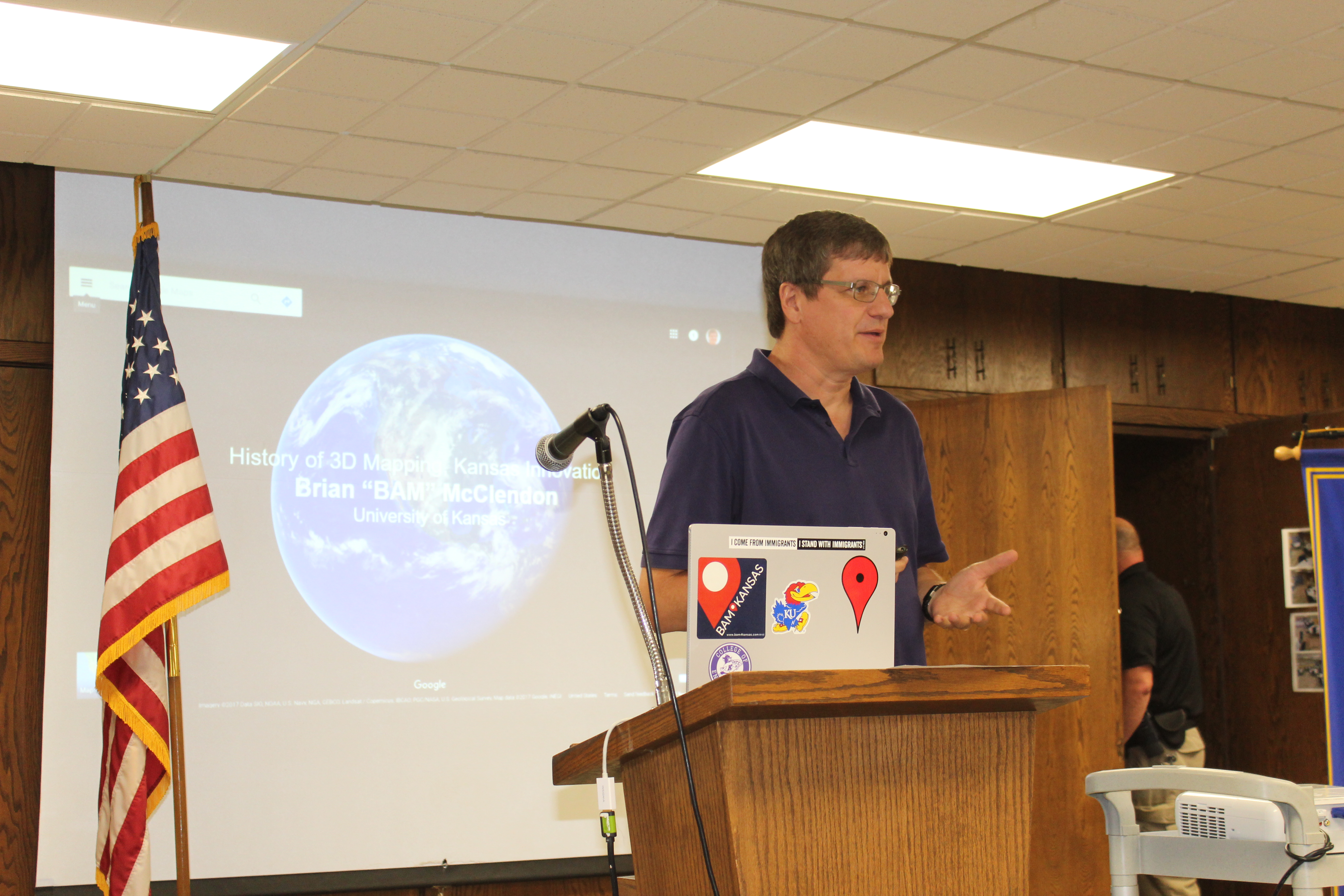
He was in Hays on Monday to speak to the Rotary Club.
McClendon said all states are facing election security problems, but he ranked Kansas’ concerns an 8 out of 10.
McClendon was the founder of the company that ultimately became Google Earth. He has also worked for Uber and currently is a researcher at the University of Kansas, his alma mater, and works with tech startups in Kansas.
McClendon spoke to a group at Hays High School in November about his time at Google and Uber.
Kansas Secretary of State candidate Brian McClendon speaks to the Hays Rotary Monday afternoon.
McClendon became active in Kansas voting issues when he helped develop a voter registration app for the state, ksvotes.org. It’s a web app, so type the web address into the web browser on your phone. The app uses the federal election form, can be accessed through a cellphone and sends an email to your county clerk’s office. The form takes less than three minutes to complete.
McClendon said more than 6,000 Kansans in 102 of the state’s 105 counties have been registered through the app, which he claims is more accurate than paper entry.
“I think as we roll up to the general election, we’ll get a lot more Kansans registered, get a lot more Kansans participating ” he said, “and I think that is important because I think we need to make some very good decisions this year. There are some very good people on the ballot. Let’s see if we can pick them, and have a good race in November.”
The site will allow you to make changes to voter registration, for example if you have moved. You can also check your registration. This will allow you to see your voting district, polling place and a sample ballot.
Secretary of State Kris Kobach, who is running for governor, has not gone on the record about the app. His office has given verbal approval of the use of the app, and the creators of the app have been receiving positive feedback from the state’s county clerk about the registrations they have been receiving.
Kobach championed a state law that required people to provide proof citizenship when registering to vote in Kansas. That portion of the law was struck down by the courts, and Kobach defended the state in its last appeal in May.
Kobach was given the ability by the Legislature to prosecute those who voted illegally. Kobach fought for the law on the grounds it was needed to keep illegal immigrants from voting. Only one non-citizen was successfully prosecuted in seven years for voting illegally. That was someone who had a green-card and was in the citizenship process.
The other eight people who Kobach prosecuted were all Trump voters who had voted in two states, McClendon said.
The law also blocked 35,000 Kansans from voting because they were unable to produce a birth certificate.
“We had 35,000 citizens disempowered for one apparently guilty immigrant citizen,” he said. “I think that is a terrible, terrible ratio and against everything that the United States stands for.”
A portion of that law that requires voters to present ID at the polls is still in effect. McClendon said he would support the voter ID portion of the law if Kansas can easily make IDs available for free to all non-drivers, but he said he did not think that was the current reality. Some counties have been proactive in getting IDs for people who can no longer drive or young people who chose not to drive.
On the issue of security, McClendon said he supported the use of paper ballots so that elections can be audited.
“Without a paper ballot, if a machine was compromised, you couldn’t detect it,” he said. “If we can detect it, we can stop it.”
He said the second step would be to use voting machines with better operating systems that can be tested from the outside more effectively.
McClendon also expressed concerns about the Crosscheck System. This system sends voter registration records from Kansas to 26 other states to determine if a person has moved out of state. However, there was a breach in the security of that system last year, when an election worker in Florida sent 945 Kansas voting records to a private person as part of an open records request. This information included partial Social Security numbers.
McClendon said Crosscheck is still vulnerable to hacking and could open the state up to lawsuits if the database is compromised.
He said there is a risk of someone hacking the voter registration files and moving or deleting voters’ registration records. This would mean people would have to vote provisionally, which could discourage voting. It could also result in long lines at the polls, which could also discourage voters.
“The biggest risk is really around people,” he said, “having people give out their password information, which allows a hacker to get in and allows them to portray themselves as one of our own employees. I would make sure through training that people don’t fall for these spear phishing techniques that are intending to steal identity and steal login information.”
He said both workers in the Secretary of State’s office and local county clerks’ offices need to have thorough training, something McClendon said he did not think is happening now.
McClendon also said he thought the state needs to invest more wisely in its technology.
“Right now the state struggles with technology purchases,” he said. “We spend $400 (million) to $500 million on technology each year, and if you look at systems like the DMV and the other purchases we have made, we do not spend it efficiently. I think there is an opportunity to make the state far more efficient and reduce costs in technology and get twice as much out of it.”
Although registration is closed for the Aug. 7 primary, you can still use the ksvotes.org app/website to register for the Nov. 6 general election. The deadline to register for the general election is Tuesday, Oct. 16.
In-person advance voting is under way and can be done at the Ellis County Clerk’s Office. Advance voting ends at noon on Monday Aug. 6. Primary polls will be open 7 a.m. to 7 p.m. Tuesday, Aug. 7. Find a list of polling places by clicking here.
A fitness class at SouthWind CrossFit does wall balls during a recent workout.
By CRISTINA JANNEY Hays Post
Tucker and Jill Mall and Josh Beiker recently realized their dream of owning their own building with the move of their business SouthWind CrossFit to the former Fire and Ice Club, 229 W. 10th, in downtown Hays.
“We had always envisioned owning the location that we are in, and we had actually tried to buy our old location,” Tucker Mall said.
The former club, with its 8,000 square feet of mostly open floor plan, was ideal for the workout facility. The move increased SouthWind’s space by about 3,000 square feet. SouthWind was formerly at 2005 General Custer.
The high ceilings at the new location also lend themselves well to the gym’s 15-foot rope climbs and workouts, such as wall balls in which participants throw a weighted ball and try to hit a mark on the wall near the ceiling.
SouthWind CrossFit is still waiting on some padding for the floor of their new space at 229 W. 10th St. The building used to be a night club.
Although the Malls and Beiker were not specifically looking to locate downtown, Tucker said they have been very welcomed by the downtown community.
Tucker said SouthWind will be expanding its offerings in its new location. This includes an expansion of its CrossFit Kids program and addition of CrossFit Teens.
CrossFit can be appropriate for a variety of ages and fitness levels. SouthWind also offers a Legends class for more mature or deconditioned athletes. Tucker’s parents participate in CrossFit, and they are over 60.
“My dad asked me, ‘When does it get easier?’ and I said, ‘When it gets easier, we’re not doing our jobs because we want to challenge you all of the time,’ ” Tucker said. “I have been doing this a little over six years now, and I keep coming back for more because there is always something more challenging, and it never gets stale, and it never gets old.”
CrossFit is defined as constantly varied, functional movement performed at high intensity. The workouts try to simulate movements that you would do in an average day, such as running, jumping and lifting. The wall ball workout, for instance, is a similar motion to Tucker tossing his child in the air at home when they are playing.
“We want to mimic everyday life and make your body more functional,” he said. “Eventually, we want you to have general physical preparedness. Your are generally physically prepared for anything that life can throw at you.”
Jill Mall works out at SouthWind CrossFit with one of the gym’s classes.
Jill Stecklein of Hays has been doing CrossFit for four years, a year and of half of which has been at SouthWind. She switched to CrossFit from primarily running, which was hard on her joints and she thought put her at risk for injury.
“I really like to do CrossFit because it has a wide variety of workouts that you get to do,” she said. “You get to work on strength training, flexibility, endurance. The classes are really greatly organized by all the coaches, and you’re led on how to do the movements. Throughout the workout, people are watching your form for you. The programming is really solid, so it helps me to get a workout really efficiently in an hour.”
Stecklein said an efficient workout is important to her because she is a mom and works.
Stecklein, 29, modified her workout and continued her CrossFit classes through her pregnancy with her son, Kolbe, who is 1 and a half.
“Also I really like the community of CrossFit,” she said. “Going to class with other people who have the same goals really helps to inspire you to really work toward your best and really work on your fitness goals.”
Tucker said he and Jill have tried to build a community at SouthWind CrossFit. Class sizes are small from between five and 20 people.
“The people you are working out with here are not just accountability partners, they are friends,” he said. “It is a family here. Everyone knows your name when you walk in the door. That is more powerful than anything else we have to offer here.”
SouthWind offers personal training. However, Tucker said coaching is strong even within the classes. SouthWind also requires all new members to participate in a program called On Ramp, which is four one-on-one classes that prepare you for group classes. Cost for a monthly membership is $90, which Tucker said is less than the average personal trainer.
SouthWind offers classes in the early morning, at noon and in the evening. More details can be found on their website.